Home Blog Page 320

Malaysian Home Ministry signs contract with Desan Shipyard on second multi-purpose mission ship

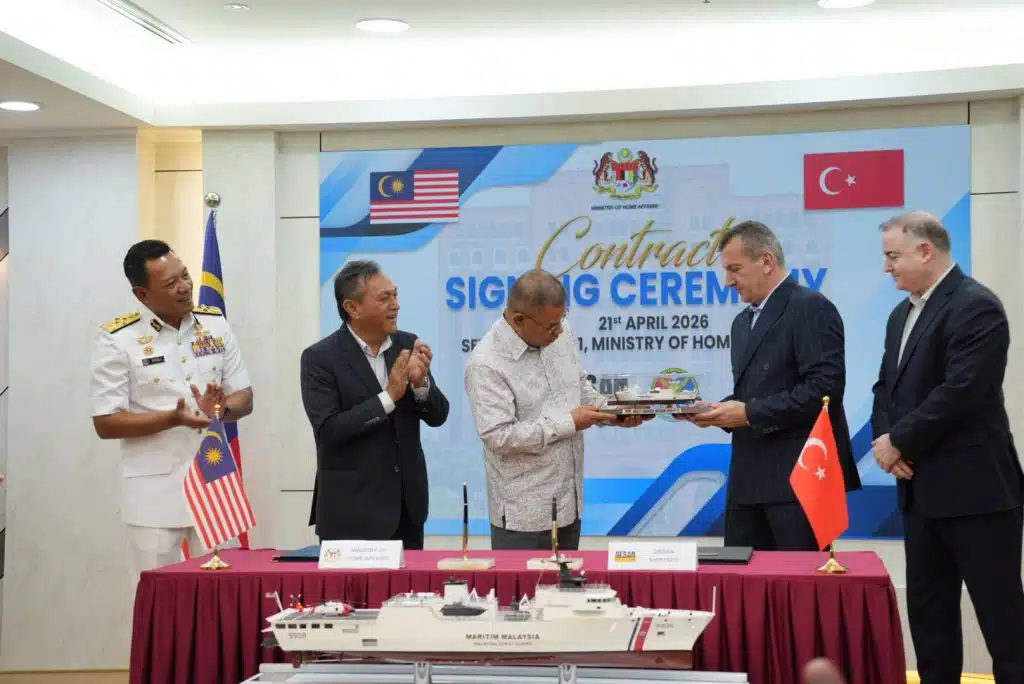
KUALA LUMPUR : Malaysia’s Ministry of Home Affairs officially signed a contract with Desan Shipyard for the construction of a second Multi Purpose Mission Ship for Malaysia’s coast guard on the sidelines of the 2026 Defence Services Asia (DSA) exhibition in Kuala Lumpur.

The $83.75 million contract was signed by Ministry of Home Affairs Secretary General Datuk Awang Alik Bin Jeman and Desan Shipyard’s Chairman of the Board Cenk İsmail Kaptanoğlu on April 21, with Home Minister Datuk Seri Saifuddin Nasution Bin Ismail witnessing the signing.

A letter of acceptance for the construction of the Multi Purpose Mission Ship was signed in January, with Desan announcing on 11 February that it had cut steel for the ship. In a statement, the Coast Guard said the contract covered a period between 1 February and 31 January 2028, with the Multi Purpose Mission Ship expected to be delivered by the end of December 2027.

The Multi Purpose Mission Ship is of identical design to the first Multi Purpose Mission Ship ordered from Desan in February 2025. The 99-meter ship will have a crew of 70 with room for an additional 30 passengers. It will have an at-sea endurance of up to 30 days, and will be equipped with four fast interceptor craft, and two unmanned aerial vehicles in addition to a helicopter deck, medical facilities and a detention facility on board.

According to the Malaysian coast guard, the increased cost of the second Multi Purpose Mission Ship is due to a combination of inflation, increased labor costs, and improved systems added to the ship.

Details on USV and Malacca shipyard

A Desan Shipyard representative at DSA 2026 told Naval News that one of the improvements was the inclusion of unmanned surface vehicles (USV) with the second Multi Purpose Mission Ship. The representative said the unmanned surface vehicle to be supplied would be manufactured by Aselsan. An Aselsan representative confirmed that the company planned to supply a variant of its Marlin series of USVs jointly developed with Malaysian firm Navamas for the Multi Purpose Mission Ship, but declined to provide further details.

Also during the exhibition, the Malaccan state government announced that it had broken ground on a shipyard that Desan will develop as part of a joint venture. The groundbreaking ceremony of the Enrique of Malacca Shipyard on April 21 was attended by Desan Chairman of the Board Cenk İsmail Kaptanoğlu and board member Hasan Ozgur Cilli, alongside Chief Minister of Malacca Ab Rauf Yusoh and other state government officials. According to the state government, the shipyard is planned to be completed within two years of the groundbreaking ceremony.

WISTA International introduces Associate Membership with collaboration high on Mid-Term Meeting agenda

LONDON: The WISTA International Executive Committee gathered in London from 17 – 19 April for its annual Mid-Term Meeting, with an agenda highlighting the role partnerships and collaboration continue to play in driving change in the maritime industry.

During the three-day programme, the Executive Committee met with WISTA International partners, including the International Maritime Organization (IMO) and the International Chamber of Shipping. Discussions focused on current and future collaborations, with an emphasis on increasing awareness of the importance of inclusion across industry projects.

Central to the outcomes of the Mid-Term Meeting was the approval of the WISTA International Associate Membership. This new level of membership will be open to corporate entities operating in the shipping, trading, logistics, energy and related sectors that support WISTA’s mission, but do not qualify as regular members of a National WISTA Association.

“We are pleased to announce that WISTA International will soon be accepting Associate Members, which will enable companies and institutions to join the global WISTA community and play an active role in our global network,” said Elpi Petraki, President of WISTA International.

“Our goal is to empower people so that they can reach their full potential. By broadening our membership, we can continue to make tangible differences at both an individual and corporate level.”

In his opening speech at the WISTA International reception held at the IMO, Secretary General, Arsenio Dominguez, also stressed the importance of collaboration.

“It is a combined effort, not something that is going to change overnight. But the more we keep having these conversations, understanding of what we are trying to do will increase, and the more that our message goes out, the more changes we can make. Thank you for your continued support to WISTA and the IMO – please continue to be outspoken, highlight the good things but also the areas where we need to make more progress.”

WISTA 1 1 WISTA International introduces Associate Membership with collaboration high on Mid-Term Meeting agenda

Hantavirus outbreak: Authorities evacuate suspected cases from cruise ship

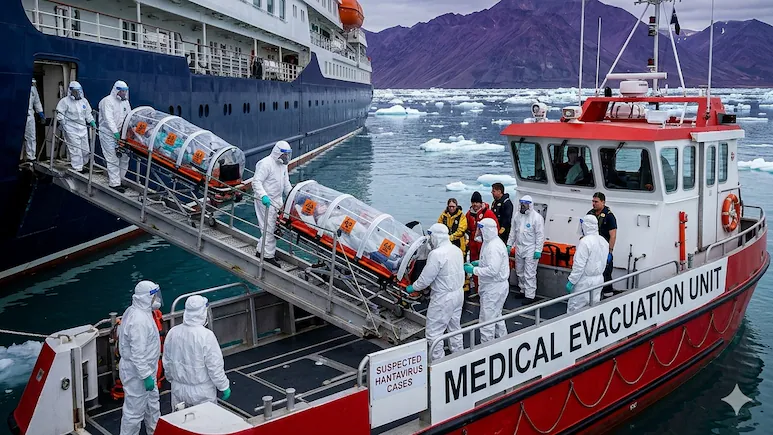
NETHERLANDS : Two seriously ill crew members on a cruise ship stricken by a deadly Hantavirus outbreak will be evacuated via Cape Verde to the Netherlands, allowing the vessel to sail on to Spain’s Canary Islands, the operator said Tuesday. Spain’s health ministry said the ship was due to arrive in the Canaries in “three to four days” but did not specify the port. “Once there, the crew and passengers will be duly examined, cared for, and transferred to their respective countries,” it said. The health ministry said the World Health Organization had explained that the Canary Islands were “the closest place with the necessary capabilities” medically.

The MV Hondius has been at the centre of an international health scare since Saturday, when the WHO was informed that the rare disease — usually spread from infected rodents typically through urine, droppings and saliva — was suspected of being behind the deaths of three of its passengers.

As others fell ill, passengers and crew have been in isolation after Cape Verde authorities barred the ship from docking.

The ship is anchored just off the island nation’s capital Praia.

The Dutch operator Oceanwide Expeditions indicated Tuesday that a solution was in sight, with plans to evacuate two sick crew members to the Netherlands for “urgent medical care”, along with a third person who had been in close contact with a German passenger who died on Saturday.

The WHO also said medical evacuation plans were under way.

Once the evacuation has taken place, MV Hondius “can continue its route”, Ann Lindstrand, the WHO’s representative in Cape Verde, told AFP. Oceanwide Expeditions meanwhile said its plan was for the ship to sail north “to the Canary Islands, either Gran Canaria or Tenerife, which will take three days of sailing”. 

  • ‘Complicated’ –

The cruise, which set sail from Ushuaia in Argentina on April 1 destined for Cape Verde, counted 88 passengers and 59 crew members, with 23 nationalities onboard, the WHO said.

One of the dead, a Dutch woman, had left the ship at the Atlantic island of Saint Helena and had flown to Johannesburg where she died on April 26.

Two hantavirus cases have been confirmed — including in one of the fatalities and a British passenger currently in intensive care in Johannesburg — with five further suspected cases, the WHO said.

Three of those seven have died; the one in Johannesburg was critically ill, and three still on board had reported milder symptoms, including one who is now asymptomatic, it said.

The WHO was trying to deduce how hantavirus had appeared on the ship, with the first person who died having developed symptoms on April 6.

Human-to-human transmission has only been reported in previous outbreaks of one specific hantavirus called Andes virus, which circulates in South America.

WHO epidemic and pandemic preparedness and prevention director Maria Van Kerkhove told reporters the virus species had yet to be confirmed, but highlighted that WHO had been told “there are no rats on board” the ship.

South African researchers were sequencing the data, said Van Kerkhove, who added that “our working assumption is that it is the Andes virus”.

“We do believe that there may be some human-to-human transmission that is happening among the really close contacts”.

  • Contact-tracing –

The first two fatalities were a Dutch couple — a man who died on April 11 and his wife who died after she disembarked in Saint Helena to accompany his body.

The wife was suffering from “gastrointestinal symptoms” and “deteriorated” during a flight to Johannesburg on April 25, the WHO said. She died the following day.

Efforts are under way to trace people on that flight, which South African-based carrier Airlink said was carrying 82 passengers and six crew.

The South African authorities had asked the airline to notify the passengers that they must contact the health department, a representative, Karin Murray, told AFP.

Van Kerkhove said the typical incubation period for hantavirus was between one and six weeks, leading the WHO to believe that the Dutch couple, who had been travelling in South America, “were infected off the ship”.

US military strikes Iran’s Qeshm Port, Bandar Abbas, reports Fox News

WASHINGTON DC: Following reports of multiple explosions near the Qeshm port and Bandar Abbas in southern Iran on Thursday (local time), Fox News Chief National Security Correspondent Jennifer Griffin, citing a senior US official, stated that the US military conducted strikes on these strategically vital maritime corridors of the Islamic Republic.

In a series of posts on X, the Fox News correspondent stated that the senior US official confirmed the strikes took place “moments ago” but stressed that the operation does not signal a return to full-scale conflict in West Asia or the end of the existing ceasefire arrangement.

“US military just carried out strikes on Iran’s Qeshm Port and Bandar Abbas: Senior US official tells me, but this is not a restarting of the war,” she wrote in one post.

In a subsequent update, she added that the official reiterated the action was limited in scope, saying it should not be interpreted as a broader escalation or a breakdown of current de-escalation efforts between the two sides.

“A senior US official tells me that it was a US military strike on Iran’s Qeshm port and Bandar Abbas moments ago, but added this is not a restarting of the war or end to the ceasefire,” Griffin posted.

These come after multiple explosions were reported near these sites in southern Iran, according to several reports from Iranian state media.

According to state media outlet Press TV, an explosion occurred at Bahman Pier in Qeshm during what it described as an exchange of fire between Iranian armed forces and “enemy forces”.

The report, citing local sources, added that multiple blasts were also heard near Qeshm Island and Bandar Abbas.

Iran’s state-run Islamic Republic of Iran Broadcasting (IRIB) similarly reported that the explosion took place at Bahman Pier during clashes involving Iranian forces and unidentified hostile elements.

The sites are a strategically vital maritime corridor for Iran’s regional security posture and global energy flows, enabling significant leverage over shipping through the Strait of Hormuz.

Source: ANI

US military intercepts Iranian-flagged oil tanker in Gulf of Oman, says US Central Command

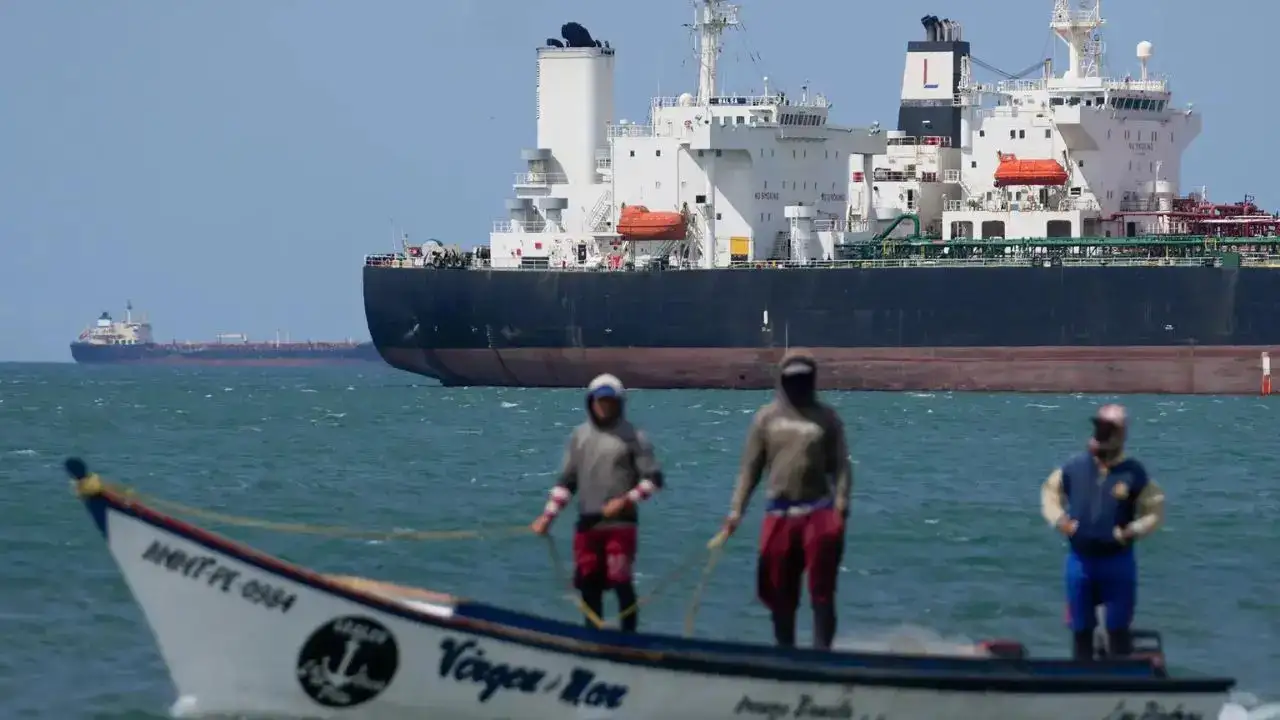
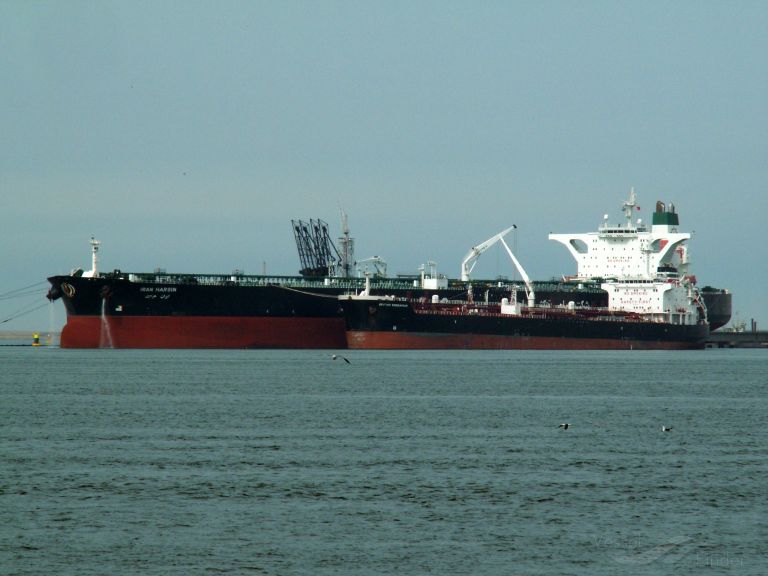
WASHINGTON : The US Military says it has intercepted and disabled an Iranian-flagged oil tanker in the Gulf of Oman after it allegedly attempted to breach a US-enforced maritime blockade and head toward an Iranian port.

In a statement, US Central Command said the vessel, identified as M T Hasna, was detected moving through international waters toward Iran earlier in the day. American forces issued multiple warnings, informing the ship that it was in violation of the blockade. According to CENTCOM, the crew failed to respond to repeated calls.

The US military said a Navy F A-18 fighter jet, operating from the aircraft carrier USS Abraham Lincoln, then fired 20 millimetre rounds at the vessel, targeting and disabling its rudder. Officials said the action prevented the tanker from continuing its course. CENTCOM added in a statement, “Hasna is no longer transiting to Iran”, and reiterated that the blockade on vessels attempting to enter or leave Iranian ports remains fully in effect.

There has been no immediate response from Iranian authorities regarding the incident. The development comes amid heightened tensions in West Asia, with increased military activity at sea and ongoing diplomatic efforts between Washington and Tehran to reach a broader understanding.

Tehran claims missile strike on American naval vessels after US attacked Iranian oil tanker

TEHRAN: Iran has claimed that its forces have targeted US naval vessels in the Strait of Hormuz following an attack on an Iranian-flagged oil tanker in the Gulf of Oman, in what appears to mark a sharp escalation in maritime tensions in the region.

According to Iran’s state-run Islamic Republic of Iran Broadcasting (IRIB) on Thursday (local time), a military official stated that after the US military attack on the Iranian tanker, “enemy units” operating in the Strait of Hormuz came under Iranian missile fire and were forced to retreat after sustaining damage.

“Following the attack by the US military on an Iranian tanker, the attacking enemy units in the Strait of Hormuz came under Iranian missile fire and were forced to flee after suffering damage,” the military official said as quoted by IRIB.

The Iranian claims come a day after the US Naval Forces fired on an Iranian-flagged oil tanker in the Gulf of Oman as part of its ongoing naval blockade against the Islamic Republic, claiming that the vessel failed to comply with the instructions from the American forces in the region.

According to a statement released by US Central Command (CENTCOM) on Wednesday, US forces acted after the vessel, identified as M/T Hasna, did not comply despite repeated warnings while transiting international waters toward an Iranian port.

“US forces operating in the Gulf of Oman enforced blockade measures by disabling an Iranian-flagged unladen oil tanker attempting to sail toward an Iranian port at 9 am ET, May 6,” the statement read.

According to CENTCOM, American forces issued multiple warnings to the tanker, informing it that it was in violation of the blockade. When the crew did not respond, US forces took action to stop the vessel.


“After Hasna’s crew failed to comply with repeated warnings, US forces disabled the tanker’s rudder by firing several rounds from the 20mm cannon gun of a US Navy F/A-18 Super Hornet,” the statement added.

The fighter jet involved in the operation was launched from the aircraft carrier USS Abraham Lincoln (CVN-72).

CENTCOM confirmed that the tanker is no longer proceeding toward Iran.

The US military reiterated that its blockade targeting vessels attempting to enter or leave Iranian ports “remains in full effect”, adding that forces are continuing to act “deliberately and professionally to ensure compliance”.

Source: ANI

Hapag-Lloyd strengthens presence in West Africa with new office in Benin

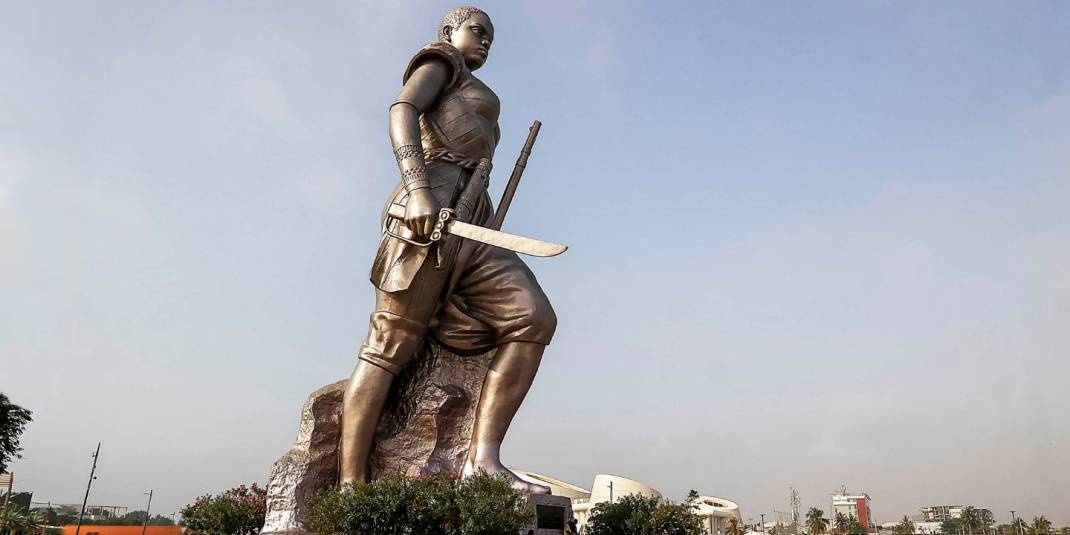
HAMBURG: Hapag-Lloyd is further strengthening its presence in West Africa with the opening of a new office in Cotonou, Benin. The office will open on May 20 and enable Hapag-Lloyd to serve customers in Benin even more directly through a dedicated local presence.

Benin is an increasingly important market within West Africa, supported by steady economic growth as well as ongoing investments in infrastructure and trade facilitation. The Port of Cotonou serves as a key gateway to the country and the wider hinterland, including neighbouring landlocked markets such as Niger and Burkina Faso. This positions Benin as an important logistics hub in the region.

Hapag-Lloyd has been serving customers in Benin through its regional network, with Cotonou playing a vital role in connecting West Africa to global trade lanes. The establishment of a dedicated local office marks the next step in further strengthening customer relationships, improving responsiveness, and providing tailored solutions aligned with local market needs.

“Opening our new office in Benin is an important step in strengthening our presence in West Africa,” said Jesper Kanstrup, Managing Director Sub-Region Africa at Hapag-Lloyd. “Benin plays an important role in our growth ambitions under Strategy 2030. With a dedicated local presence, we can be closer to our customers and partners while supporting the continued development of trade in the region.”

With its new office in Cotonou, Hapag-Lloyd reinforces its long-term commitment to quality and to serving customers throughout the region with reliable and efficient shipping solutions.

Lloyd’s Register grants approval for Navantia’s AI based Digital Twin framework

The approval marks a step forward in the assurance of AI enabled digital systems for naval platforms.

LONDON: Lloyd’s Register (LR) has issued an Approval in Principle (AiP) to the Spanish shipbuilder Navantia, S.A. (Grupo SEPI) for its AI-based Digital Twin Ready framework.

The approval follows LR’s technical assessment of Navantia’s development, governance and validation processes for digital twins, based on an air-cooling system digital twin developed for naval use.

While digital twins have gained traction in the commercial shipping sector, their uptake in naval applications has remained limited, largely due to the complexity of systems and the critical nature of operations.

The framework is intended to support the safe deployment of data-driven and machine learning-based condition monitoring, as well as digital health management systems, across future naval programmes.

The air-cooling system digital twin combines data-driven algorithms and machine learning models to analyse sensor data, monitor system behaviour and identify early signs of abnormal performance, supporting more informed maintenance and operational decisions. The air-cooling equipment used in this initiative were made available by Frizonia.

LR’s evaluation confirmed that Navantia has implemented defined processes covering data and requirements engineering, AI model development and training, uncertainty management and internal verification and validation. The work was assessed against LR’s ShipRight Digital Compliance Procedure for the Approval of Digital Health Management Systems.

Javier De Juana LR Lloyd’s Register grants approval for Navantia’s AI based Digital Twin framework

Javier de Juana, Naval Business Director, Lloyd’s Register, said: “As digital twins move from development to operational deployment, robust governance and independent assurance are becoming increasingly critical to ensure confidence in data driven technologies used on board complex naval platforms. This AiP demonstrates how those technologies can be assessed in a structured and repeatable way.”

The digital twin initiative is being implemented through Navantia’s COEX Digital Twin Centre of Excellence, which is intended to act as an enabling structure for the industrial adoption of advanced digital technologies across programmes.

Ana Moya LR Lloyd’s Register grants approval for Navantia’s AI based Digital Twin framework

Ana Moya, Chief Technology and Digital Transformation Officer (CTO) at Navantia, said:
“The assessment carried out by Lloyd’s Register validates the maturity of Navantia’s digital twin framework, particularly in areas such as data governance, model validation and lifecycle management. This provides a solid basis for applying AI enabled digital health systems to operational naval platforms.” 

Third WindWings® tanker “Monza” delivered to Union Maritime as wind propulsion scales amid IMO uncertainty

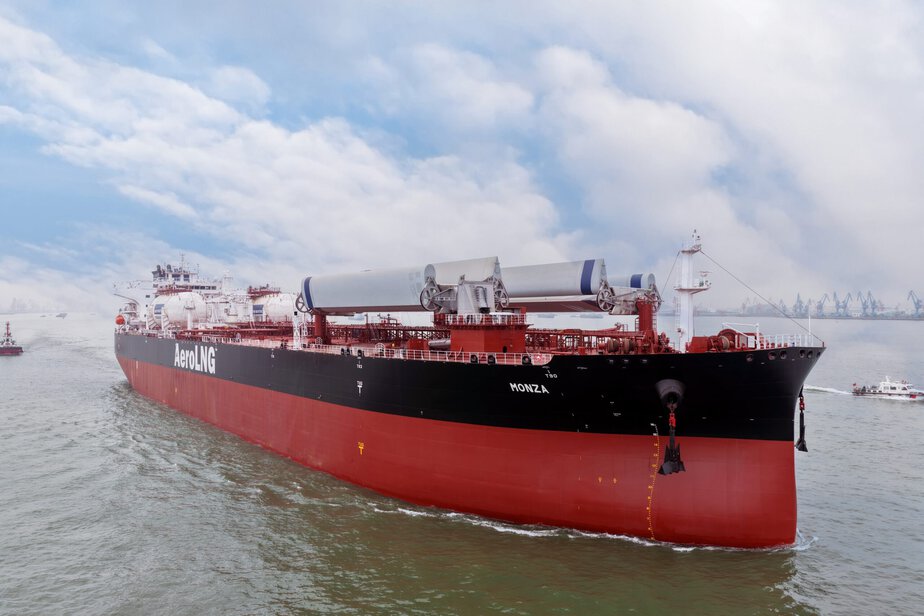
PORTSMOUTH: The LR2 tanker Monza, fitted with two 37.5-metre WindWings® developed by BAR Technologies, has been delivered to Union Maritime, marking the third vessel in the company’s newbuild series to adopt wind-assisted propulsion. Together, the vessels form the world’s first dual-fuelled LR2 tanker series combining LNG propulsion with WindWings® sail technology.

Built by Jiangsu Province, Yangzijiang Shipbuilding and equipped with WindWings® manufactured by CMET, the vessel adds to a growing number of large tankers integrating rigid wind propulsion technology.

Its delivery confirms that WindWings® installation is moving beyond first-of-a-kind projects into repeatable, commercial deployment across a series of vessels.

The milestone comes as debate at the IMO continues over the future of the Net Zero Framework and the role of market-based measures, with competing proposals offering varying levels of ambition and no clear consensus on carbon pricing.

For shipowners, this uncertainty is increasing pressure to adopt solutions that deliver immediate, verifiable emissions reductions without relying on the availability or cost of future fuels.

Wind propulsion is emerging as a critical solution for reducing emissions, offering a proven, fuel-agnostic pathway to meeting FuelEU Maritime and IMO targets Today, without reliance on uncertain future fuel supply or infrastructure.

By harnessing a free, zero-emission energy source, WindWings® deliver measurable efficiency gains, with performance already demonstrated in commercial service on vessels including Pyxis Ocean and Berge Olympus, as well as across Union Maritime’s LR2 newbuild series.

Monza is expected to deliver meaningful reductions in fuel consumption and emissions, consistent with results achieved on earlier WindWings®-equipped vessels, supporting compliance with global frameworks including FuelEU Maritime and IMO efficiency targets.

This growing programme brings together designers, shipbuilders, class and flag, reflecting increasing industry alignment and a broader shift toward the adoption of wind propulsion on large commercial vessels.

At the naming ceremony, Zhou Kewei, Deputy General Manager of Yangzijiang Shipbuilding Group, said, “The successful delivery of Monza demonstrates how wind-assisted propulsion can be integrated efficiently across a series of vessels. Through close collaboration with BAR Technologies, we are accelerating the industrialisation of low-carbon ship solutions and supporting the industry’s transition to more sustainable operations.”

Steve Windrim, Senior Client Relationship Manager, Account Lead for BAR Technologies, from Lloyd’s Register, added: “The delivery of Monza represents another important milestone in embedding wind-assisted propulsion within mainstream shipbuilding. Through rigorous classification processes and close collaboration with project partners, we are supporting the safe adoption of innovative technologies that will play a critical role in the maritime energy transition.”

Simon Bonnett, Deputy Commissioner of Maritime Affairs, the Republic of the Marshall Islands Maritime Administrator, said: “We are proud to support the deployment of technologies such as WindWings® that contribute to improving vessel efficiency and reducing emissions from international shipping. Monza highlights how innovative design, proven performance, and sound regulatory frameworks can deliver practical, forward-looking solutions while maintaining the highest standards of safety and compliance.”

John Cooper, CEO of BAR Technologies, said, “Monza is the third vessel in a series, and that matters. It shows wind-assisted propulsion is no longer a concept or a one-off installation; it is being delivered consistently on commercial ships.

At a time when regulatory direction remains uncertain, the industry cannot afford to wait. WindWings® are commercially ready Today, delivering measurable emissions reductions while maintaining future fuel flexibility.

This is about deployment at scale. That’s how shipping decarbonises.”

WindWings®, BAR Technologies’ patented three-element rigid wing design, deliver up to 2.5 times the lift of conventional single-element systems and operates without additional energy input. The system is fully automated, adjusting in real time to optimise performance across varying wind conditions.

Lauren Eatwell, Head of WindWings® at BAR Technologies, said: “With each vessel, we’re seeing increasing confidence in how wind propulsion can be integrated at scale. This is no longer about proving the technology, it’s about delivering it consistently across fleets, with predictable performance and clear operational benefits.”

With multiple vessels now delivered and more under construction, wind-assisted propulsion is transitioning from pilot installations to fleet-wide adoption.

For BAR Technologies, Monza represents another step in demonstrating that scalable, zero-emission technologies can be integrated into commercial shipping Today, regardless of how regulatory frameworks evolve.

Steelpaint completes MUR Shippping coating project

HAMBURG: Steelpaint GmbH, the German manufacturer of high-performance single-component moisture cure polyurethane (MCPU) coatings, has completed a test coating on MUR Shipping’s 63,000dwt bulk carrier African Bari Bird.

The project marks a first reference for the company’s advanced Stelpant system on an Indian managed vessel and represents a significant step forward in the company’s strategy to penetrate one of the world’s most active bulk carrier markets.

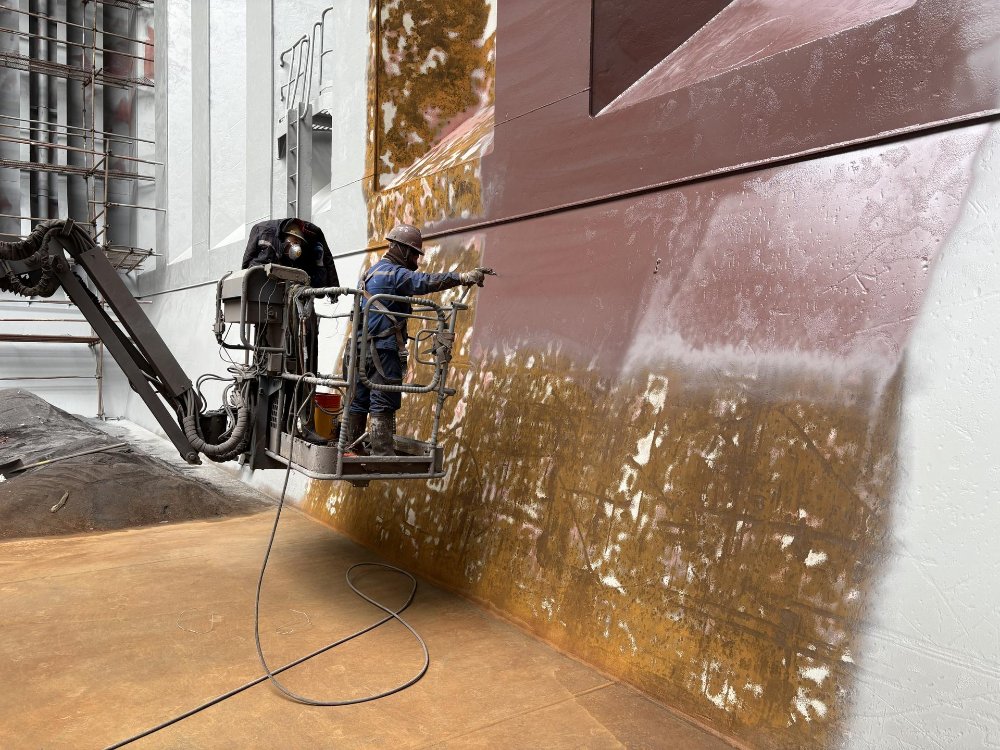
Coatings work was carried out at China’s Zeme Shipyard during a scheduled drydocking in December, with trial coats applied to a cargo hold forward hatch coaming, corrugated bulkhead, lower stool and tank top.

According to Li Yinlong, the General Manager of Steelpaint China,  MUR Shipping’s decision to trial the Stelpant system reflects the sector-wide challenge of keeping cargo holds protected against a relentless cycle of abrasion and corrosion that conventional coatings struggle to withstand.

“A pre-docking inspection of No.3 cargo hold recorded substantial degradation. Corrosion rates were about 30% on the hatch coaming, 60% on bulkheads, 80% on the lower stool and the tank top protection had gone completely. 100% corrosion combined with pitting,” said Li. 

Before Stelpant could be applied, all test areas were blasted to SA2 using copper slag abrasive and washed down with freshwater at 150 bar.

“The coatings team at the Zeme Shipyard, working with Steelpaint for the first time, handled the preparation very well indeed,” said Li. “Steelpaint cargo hold coatings do not require specific surface treatment and the yard was hugely impressed with the coating’s ease of application.”

The MCPU applied to hatch coamings and bulkheads comprised a reddish Stelpant-PU-Zinc primer at 100µm DFT, followed by Stelpant-PU-Combination300 – a micaceous iron oxide topcoat – at 150µm DFT. Lower stools and tank tops were coated with Stelpant-PU-Zinc at 125µm DFT followed by Stelpant-PU-Zinc in grey at 125µm DFT.

The No.3 hold was back in service within 24 hours.

Steelpaint Director Frank Müller said: “Cargo hold maintenance is one of the most significant ongoing costs for a bulk carrier operator. MUR wanted to put the Steelpant system through its paces properly, across the areas that take the hardest punishment.”

MUR Shipping’s 63-vessel fleet carries metals, minerals, agricultural products and specialist project cargoes, such as wind turbine components.

“Our first cargo hold trial with an Indian-operated bulk carrier represents a meaningful milestone for Steelpaint,” furthered Müller.

“It not only validates our technical approach in demanding marine environments but also gives us an authentic reference point as we engage with Indian shipowners, yards and technical decision-makers. Our aim is to support operators as they invest in fleet resilience and maintenance optimisation, aligned with India’s expanding maritime infrastructure and trade growth.”

India’s maritime sector is undergoing transformative growth, with significant investment commitments and policy reforms aimed at modernising ports, fleet capacity, shipbuilding and supply chains as part of the government’s Maritime India Vision.

Steelpaint’s Stelpant MCPU system is designed for high abrasion environments and is tolerant of elevated humidity levels, with application possible at relative humidity levels of up to 98%.

Unlike conventional multi-component epoxy systems, the corrosion protection technology removes mixing variability and enables rapid overcoating, reducing downtime risk during tightly scheduled drydockings.

First performance indications are expected within six months. A full evaluation across all trial areas should follow within the year, with the typical next step being application across a vessels complete cargo holds before any fleet-wide rollout is considered.