Home Blog Page 345

Truck Technology is protecting workers and road users on Indian Highways

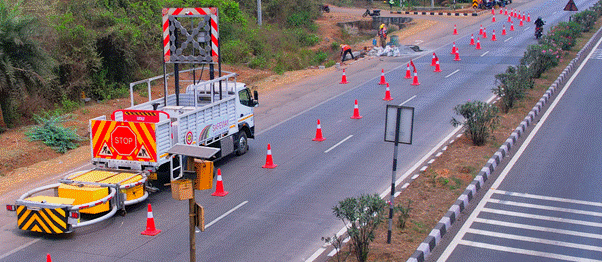
NEW DELHI : As the Ministry of Road Transport and Highways (MoRTH) actively expands National Highways, its focus is not just on faster connectivity but equally on bringing safety standards to a global level. Infrastructure development today is not only about building wider roads; it is about protecting every life that travels on them. With this vision, advanced safety systems like Truck Mounted Attenuators (TMAs) have been deployed on many sections of the highways, and these global practices are saving many lives, including those of on-ground workers and highway users.

Protecting Those Who Work on the Roads

Behind every highway upgrade and maintenance activity are hundreds of workers who operate in challenging and high-risk environments. Maintenance and construction zones on busy highways are among the most vulnerable areas, where speeding vehicles and limited visibility can lead to severe accidents.

To reduce these risks, MoRTH has consistently encouraged concessionaires to adopt advanced safety interventions across highway projects. Responding to this vision, one of the concessionaires has started taking a proactive step by deploying Truck Mounted Attenuators with integrated wig-wag warning systems.

This concessionaire operates and manages 9 National Highway projects spanning a cumulative length of 681 kilometres across Andhra Pradesh and Gujarat, making this deployment a significant milestone in highway safety management.

mORTH 2 1 Truck Technology is protecting workers and road users on Indian Highways

What is Truck Mounted Attenuators?

Truck Mounted Attenuators are specially designed impact-absorbing safety devices that play a critical role in protecting both workers and road users.

In the event of a collision, these systems absorb and dissipate kinetic energy, reducing the force of impact. This helps:

Protect maintenance crews working ahead of the vehicle
Reduce injury risks for occupants of the impacting vehicle
Minimize the severity of accidents in highway work zones
In many ways, TMAs act like an invisible shield — standing between danger and human life.

Early Warnings That Prevent Accidents

The deployed TMAs are equipped with high-intensity wig-wag warning lights, designed to flash in alternating patterns that form directional arrows. These signals provide clear and timely warnings to approaching drivers.

This feature is especially valuable:

On high-speed highway corridors
During night-time operations
In foggy or low-visibility conditions
By alerting drivers well in advance, these systems help prevent collisions before they occur.

Figures With a Purpose: Building Safer Highways

Across the 9 highway projects:

33 Truck Mounted Attenuators (TMAs) have been deployed
15 Towable Truck Mounted Attenuators (TTMAs) have been installed
All units comply with globally recognized safety standards, including MASH Test Level-3 (TL-3) and NCHRP 350 Test Level-3
These systems are designed to withstand impacts at speeds of up to 100 km/h
Turning Vision into Action on the Ground

This initiative reflects how MoRTH’s forward-looking safety vision is being transformed into real, measurable action on the ground. The commitment shown by the ministry and its concessionaire highlights the critical role they play in implementing global best practices and ensuring safer highways.

As India’s highways continue to grow wider and faster, it is equally important that safety grows stronger with every kilometre added. Solutions like Truck Mounted Attenuators represent the evolving identity of modern infrastructure — where development is not defined by speed alone, but by safe journeys, protected workers, and lives saved.

From Tamil shores to cold deserts: How the Spice and Silk routes reshaped trade

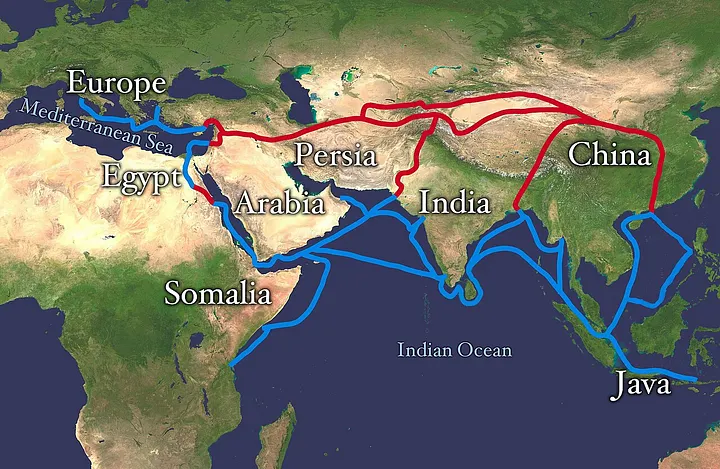
CHENNAI : The ancient world was shaped by the trade routes; merchants, priests, and saints travelled along them. The Spice Route and the Silk Route dominated for centuries and shaped many civilisations. The quest for colonisation emerged with the growing importance of these routes. Here is a knowledge nugget you can explore.

When Iran decided to choke the Strait of Hormuz, one of the busiest in the world, the uncertainty over this trade route created panic across the globe. The Strait of Hormuz controls 20–25% of the world’s oil supply; it ensures frequent supplies not only to eastern nations but also to many African countries, and to some extent, Europeans meet their oil needs through it.

“Trade route”, as the routes of the world, for centuries, have been shaping global dominance as well as determining who controls the world. In history, we have witnessed the rise and fall of many routes that once formed the backbone of the ancient and medieval world.

Estimates suggest that a majority of the population survived on these trade routes. Here, we try to understand the importance of these ancient routes and where they were prominent in the world’s geography.

New findings suggest that Tamil merchants were present in Egypt, suggesting wider ancient trade links than previously understood.

Tamil-Brahmi inscriptions in the Valley of the Kings include the name “Cikai Korran,” found in multiple tombs, pointing to travel beyond Red Sea ports such as Berenike.

The evidence suggests ongoing trade, with Tamil merchants exporting goods and likely engaging with Greek language and culture

Salt, spices, and essential commodities were all supplied across the major routes.

These routes became influential over time and witnessed cultural exchange in the centuries that followed, religion, science, and food travelled, and so did things that were not meant to, like bacteria, which caused millions of deaths.

  1. THE SILK ROUTE
    Many claims around the Silk Route emerged over time, and as William Dalrymple notes in The Golden Road, the route that came into the spotlight after the 18th century has been known for major exchanges across the world.

The Silk Road was one of the most predominant ancient trade route of the known world of that time, linking China with the Roman Empire. From the 1st century BCE, silk began moving westward and in return the route allowed the exchange of wool, silver, and gold.

Goods were not the only commodities exchanged along the route, but it enabled the exchange of ideas, technologies, religions, and art. Samarkand, the city in Central Asia popular as the origin city of the first Mughal emperor, Babur.

The route began in Xi’an and later covered the Great Wall, crossed the Pamir Mountains, and reached the Levant, where goods continued to Mediterranean ports.

The decline of the Roman Empire also saw the fall of the trade route which later became unsafe and less profitable for the merchants. The route later revived under the Mongols in the 13th century.

Marco Polo later travelled this route to China. Some historians also suggest that trade along the Silk Road contributed to the spread of the plague-causing bacterium Yersinia pestis.

  1. THE SPICE ROUTES
    The Spice Routes ran across the seas, linking Asia with Europe.India played a key role. The Western Ghats produced pepper, which moved through ports along the Malabar Coast. Traders from Rome, Arabia, China, and later Europe all arrived here.

Black pepper, native to Kerala, was one of the earliest traded spices. Records suggest its use dates back to 2000 BCE. In the 14th century, traveller Odoric of Pordenone noted its abundance in the region.

Even today, old paths in Wayanad, Idukki, and the Nilgiris trace these routes. They reflect how spices shaped trade, movement, and contact between regions.

Kerala’s Muziris once stood at the centre of this network. Between the 1st century BCE and 4th century CE, it linked India with Africa, West Asia, and Europe, exporting spices and importing gold and grain.

South Indian empires like the Cholas and Pallavas influenced the world from west to east through these routes. Pepper, cloves, cinnamon, and nutmeg were in high demand, but until the 15th century, Arab and North African traders controlled access, which ultimately led to high prices and making the commodities nothing less valuable to gold and silver.

The situation changed when European sailors found direct sea routes. From the 15th to 17th centuries, Portugal, the Netherlands, and England moved into trade, reaching India, Indonesia, China, and Japan. Control over spices led to wars, expansion, and new trade networks. Even Christopher Columbus set sail in 1492 partly in search of spices.

At the centre of this trade was Maluku, the only source of nutmeg and cloves at the time. Whoever controlled these islands controlled the market.

  1. THE TEA HORSE ROAD
    A 6,000-mile land corridor once linked China to Tibet and India through the Hengduan Mountains. Traders moved tea in exchange for Tibetan warhorses, often across steep terrain and river crossings.

The route saw organised trade by the 7th century, peaking during the Song dynasty. Records suggest thousands of horses were traded each year for large quantities of tea.

Its role declined with the rise of sea trade, but it returned during World War II when blockades cut off ports, turning it into a supply line between inland China and India.

  1. GRAND TRUNK ROAD
    The Grand Trunk Road has carried movement across the subcontinent for over two millennia. From the time of the Mauryan rule, the road played a major role in the supply of horses, food, spices, and armies.

Historians say that the success of the first Delhi Sultanate and later the Mughals depended on this route, as it allowed rulers easy passage as well as the smooth movement of large armies.

Rebuilt by Sher Shah Suri in the 16th century as the Shahi Road, it later became the GT Road under the British.

It linked Taxila to Bengal, moving traders, soldiers, and pilgrims. Today, its path still runs through north India and beyond, connecting Bangladesh to Afghanistan.

UNESCO data says the road begins in Chittagong in Bangladesh, passes through Howrah in West Bengal, stretches across the Gangetic plains of northern India to Lahore in Pakistan, and continues beyond the Hindu Kush to reach Kabul in Afghanistan.

  1. ANCIENT CARAVAN ROUTE (INCENSE ROUTE)
    The Incense Route connected southern Arabia to the wider ancient world. From around the second millennium BCE, traders moved incense, myrrh, and resins northwards for religious use.

To support this trade, kingdoms in Yemen built cities along the route. Over time, these stops became centres of exchange.

The route did more than carry goods, it linked cultures, leaving behind early signs of urban growth and cross-regional contact.

The International Spice Routes Conference, held from January 6–8, 2026 by the Muziris Heritage Project and Kerala Tourism, focused on the shared history of spice trade regions and their relevance today.

Seeing history through these routes offers a different perspective, where civilisations took new turns, merchants influenced nations, and religions gained importance. To some extent, the knowledge that travelled through these routes shaped history and led to many innovations.

If the Arab world had not restricted Europe’s trade with India and the east, these routes, or perhaps even the world, would neither have developed in the same way nor been colonised.

The knowledge of the Vedas spread through these routes, ancient science from Chinese civilisation reached Europe, and even the colonisation of the world became possible through them.

Source : India Today

X-Press Feeders updates HLS Service

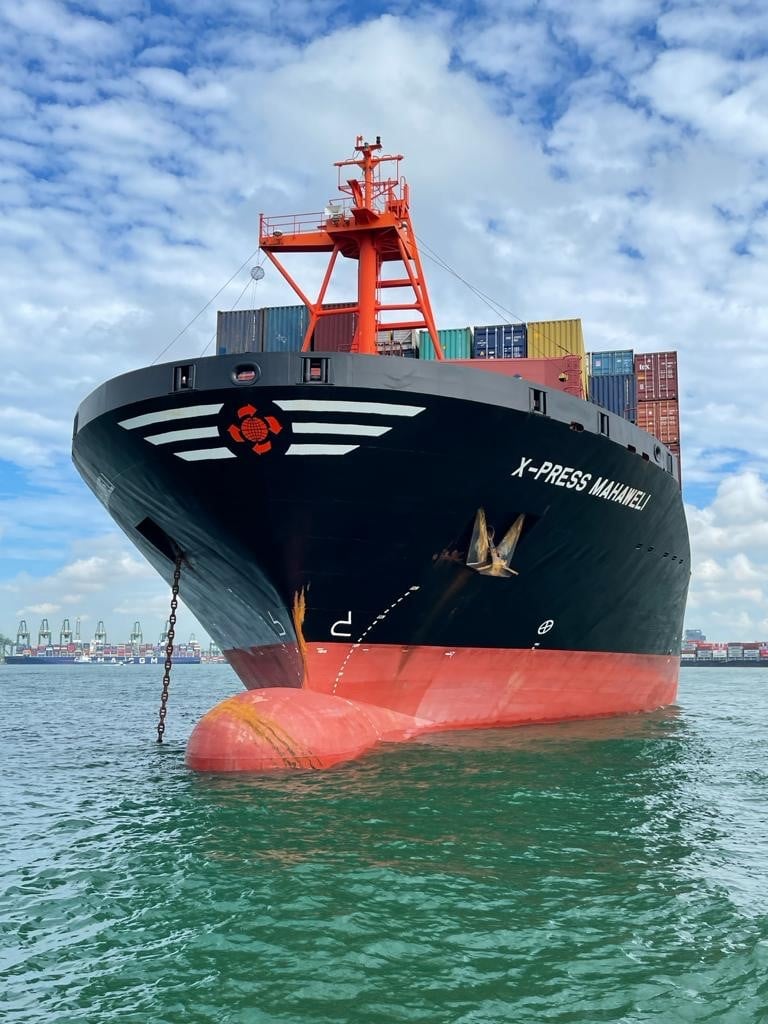
SINGAPORE : Update on X-Press Feeders, Hercules Service (HLS), effective 24 April 2026. The new rotation is: Laem Chabang – Singapore – Port Klang – Nhava Sheva – Mundra – Karachi – Port Klang – Singapore – Laem Chabang

This fixed-day weekly service provides a connection between Southeast Asia to the India West Coast, ensuring comprehensive regional coverage.

Operated by five vessels, each with a nominal capacity between 3,000 – 5,000 TEUs, this service also offers a direct connection between Thailand, India, and Pakistan.

X PRESS FEEDER3 X-Press Feeders updates HLS Service

3 Ships including Iranian vessel attempt to cross Hormuz despite Blockade

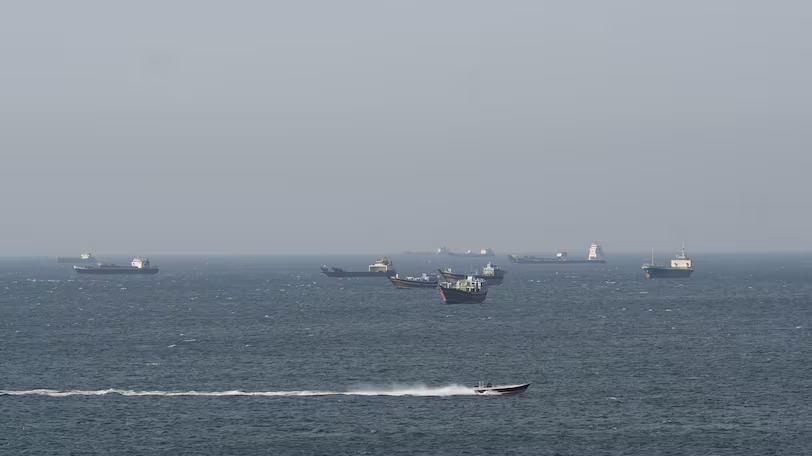
TEHRAN : Three vessels – two cargo ships and a fuel tanker – appeared to be attempting to transit the Strait of Hormuz early on Tuesday as US and Iranian blockades remained in place.

The Shoja 2, an Iranian-flagged cargo vessel, crossed the strait and moved into the Gulf of Oman, but has now stopped signaling its location. The progress of the ship is being closely watched after the US Navy seized another Iranian cargo ship on Sunday, the first capture since Washington imposed a blockade of the waterway last week.

The other two vessels have no clear links to Iran. The Lian Star, a general cargo ship flagged to Gambia, has crossed the strait and is now turning south toward the Gulf of Oman. The Ean Spir, a medium-range tanker with no identified owner, began sailing northeast from waters near Ras Al-Khaimah in the United Arab Emirates, and is now south of Larak island, indicating Shinas in Oman as its destination.

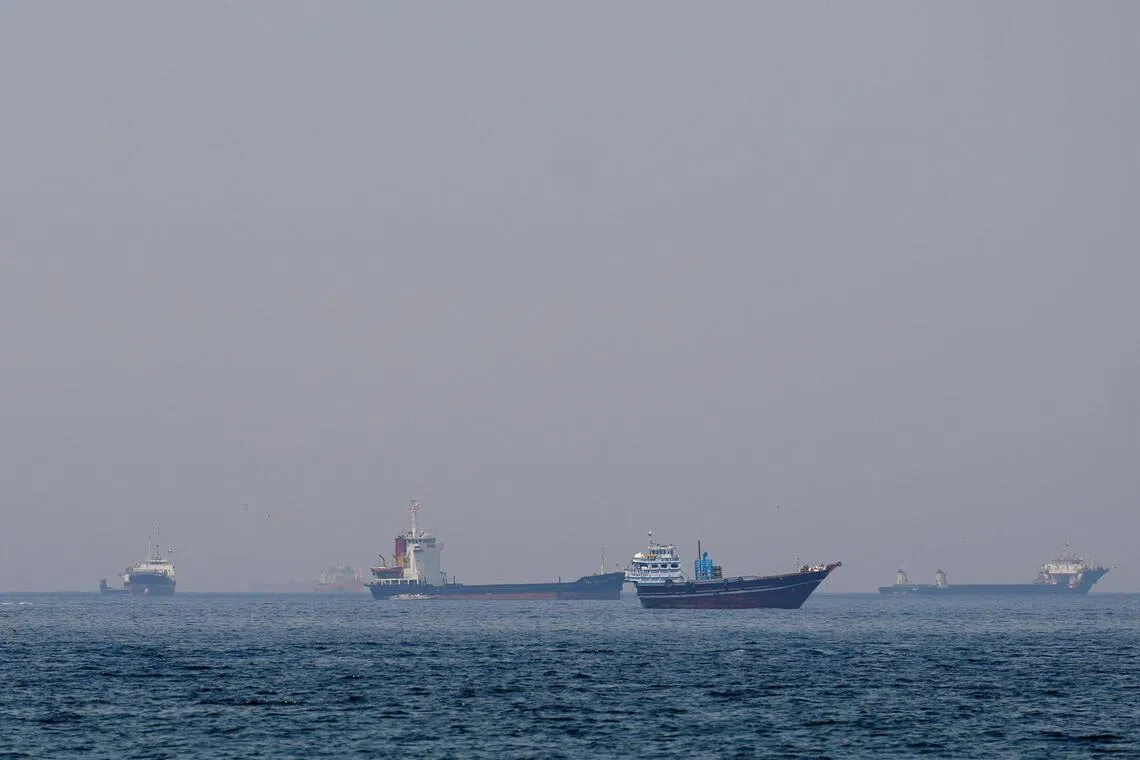
Otherwise, traffic through the vital waterway remained at a virtual standstill following a chaotic weekend in which Iran declared the corridor open before closing it again after the US declined to lift its blockade. Around 800 vessels remain stuck in the Persian Gulf.

President Donald Trump said on Monday that the American blockade would remain in place for now. The US leader said a two-week ceasefire with Iran, which expires Wednesday evening in Washington, was not likely to be extended. Talks between the two countries are expected to take place in Pakistan.

Traffic through the strait has been uncertain since the ceasefire came into effect. At least three Mediterranean Shipping Co. container ships and a MSC cruise liner, along with a handful of other passenger vessels, appeared to have exited the Persian Gulf on Saturday, hugging the Omani coastline.

On Monday, two Iran-linked liquefied petroleum gas carriers, and two oil product tankers – including one with Iranian ties – transited the strait in both directions.

The Lian Star is listed as being owned and managed by Mashini S, a company based in Dubai on the Equasis database, There were no contact details for the entity. Ean Spir doesn’t appear on any country’s sanctions list, while Equasis lists its flag as unknown – a common tactic among dark-fleet tankers.

Shipping data shows Strait of Hormuz traffic at virtual standstill

TEHRAN : Shipping traffic through the Strait of Hormuz was virtually at a standstill Monday, with only three crossings recorded in 12 hours, Reuters reported, citing shipping data.

The ​oil products tanker ​Nero, which ⁠is under British sanctions for Russian oil activities, left the Gulf and was sailing through the strait, according to satellite analysis from data analytics specialists SynMax and tracking data from the Kpler platform.

Two other ships – a chemical tanker and a liquefied petroleum gas (LPG) ⁠tanker – ⁠sailed into the Gulf through the critical waterway separately on Monday, the data showed.

The LPG tanker, Axon I, was under separate U.S. sanctions for Iran trading activities.

A cease-fire between the United States and Iran ⁠appeared in jeopardy on Monday after the U.S. said it had seized an Iranian cargo ship ​that tried to run its blockade and ​Tehran vowed to retaliate, refusing for now to join new ⁠peace ‌talks.

“Recent ‌weeks have brought several false ⁠starts, and although some ‌form of resolution is likely at ​some point, the timing ⁠of any durable breakthrough ⁠remains highly uncertain,” ship broker Clarksons said ⁠in a ​note Monday.

INS Sunayna arrives at Jakarta under Indian Navy’s IOS SAGAR Initiative, strengthening maritime ties with Indonesia

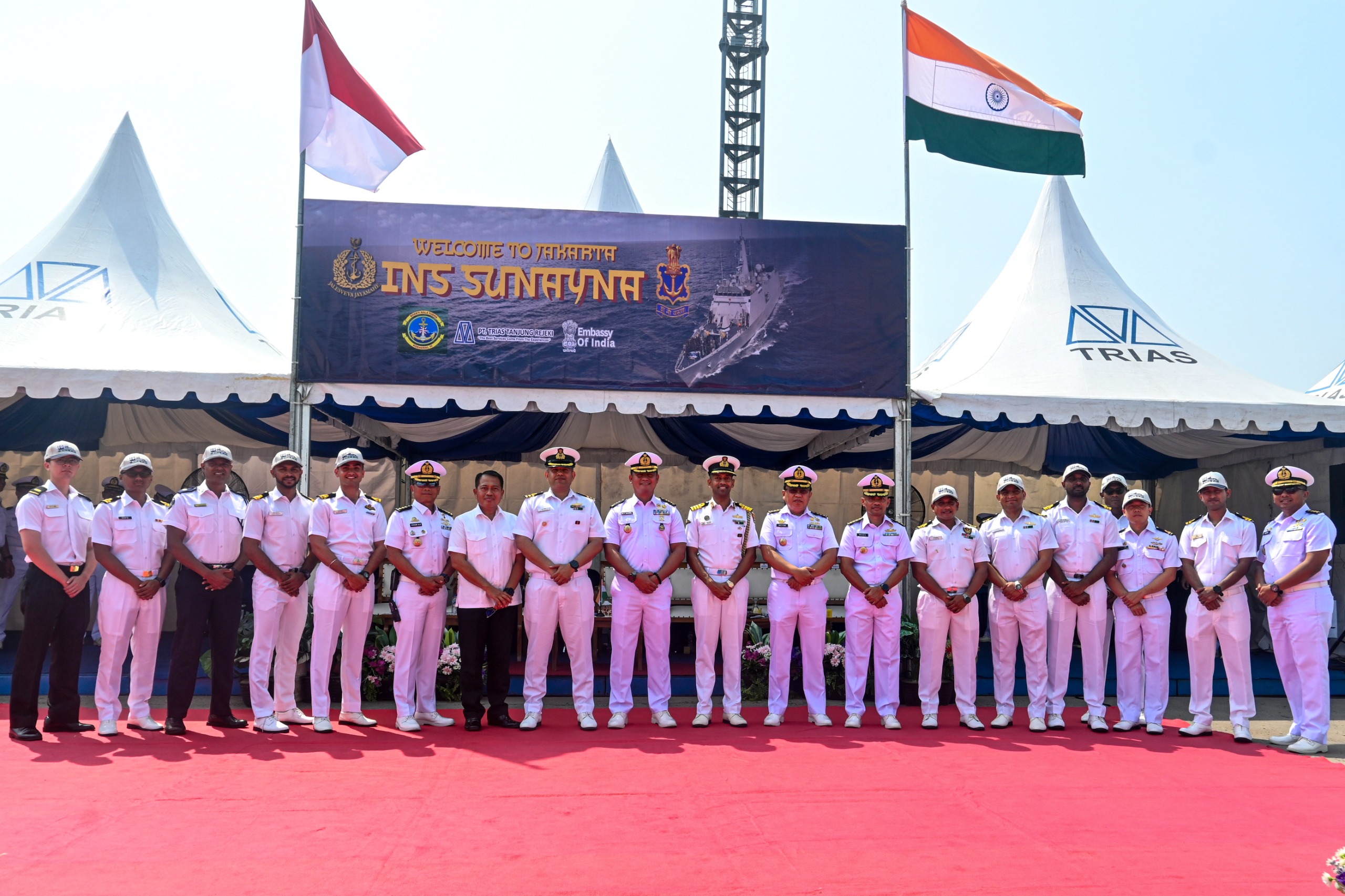
JAKARTA : Indian Navy’s INS Sunayna, an Offshore Patrol Vessel deployed under the IOS SAGAR initiative, arrived at Jakarta, Indonesia on 21 Apr 2026, marking the third port call of its operational deployment to the Indian Ocean Region.

The ship, with a multinational crew from 16 Friendly Foreign Countries onboard, transited the narrow Malacca and Singapore Straits prior to arrival, demonstrating high standards of interoperability and navigational proficiency.

IOS SAGAR is a practical expression of India’s vision of MAHASAGAR (Mutual and Holistic Advancement for Security and Growth Across Regions) and embodies the ethos of “leadership through partnership, strength through unity and progress through peace.” The mission completed its Harbour Phase from 16 to 29 March 2026 in India and is currently progressing through the Sea Phase (Apr–May 2026), which includes port calls at multiple Friendly Foreign Countries in the Indian Ocean Region.

During the port call at Jakarta, the ship will engage with the Indonesian Navy (TNI AL) through professional, social and sporting interactions. The Commanding Officer, INS Sunayna called on the senior leadership at Kodaeral III (Naval Regional Command III). Planned activities include professional exchanges, joint Yoga sessions, sporting events, ship visits by stakeholders and a deck reception. A Passage Exercise (PASSEX) with the Indonesian Navy is scheduled on departure.

The initiative underscores India’s Neighbourhood First policy and vision of MAHASAGAR, reaffirming that “a free, open and inclusive Indo-Pacific is in the interest of all nations”

Singapore launches OCEANS-X to Advance Maritime Digital Connectivity and Support Global Trade Flows

SINGAPORE: Singapore has launched OCEANS[1]-X, a new data and Application Programming Interface (API) eXchange platform developed by the Maritime and Port Authority of Singapore (MPA). It enables secure system-to-system connectivity across the maritime ecosystem, allowing maritime companies and government agencies to exchange trusted data directly. This in turn enables integrated digital services for better service delivery, more efficient port operations, smoother trade flows, and stronger connectivity with global ports. OCEANS-X can be accessed via https://go.gov.sg/OCEANS-X.

One of the first services available on OCEANS-X is digital port clearance. Today, ship masters and agents submit port clearance documents through the portal-based digitalPORT@SGTM. With OCEANS-X, shipping companies and agents can now connect their in-house or third-party systems directly to the OCEANS-X platform, for data required for port clearance applications to be transmitted directly to MPA digital platforms. This saves time, reduces errors, and enables ships to call at the Port of Singapore more efficiently.

OCEANS-X also enables the electronic exchange of ship certificates between Singapore and its partner ports, including those we have established Green and Digital Shipping Corridors with. This provides port authorities a more secure and authoritative basis for certificate verification, and streamlines port clearances by reducing reliance on paper documents and manual checks. This strengthens port-to-port connectivity and coordination across global supply chains.

OCEANS-X currently hosts over 100 APIs and datasets, and will support a wider range of digital services over time. Industry players and startups are welcome to develop, integrate and deploy new services, including analytics and AI-enabled tools on this platform. At the same time, academia and members of the public can access and use the maritime datasets that have been made public, for research and innovation. See Annexes for details of the datasets and OCEANS-X APIs[2].

[1] OCEANS stands for Open/Common Exchange And Network Standardisation.

[2] Some of these solutions will be showcased at Expo@SMW from 21 to 23 April.

Singapore’s Maritime Sector to Accelerate Artificial Intelligence (AI) Adoption Under New Partnership

SINGAPORE: The Maritime and Port Authority of Singapore (MPA) and the Singapore Shipping Association (SSA) have signed a Memorandum of Understanding (MOU) to accelerate the adoption of AI among maritime companies in Singapore to improve productivity and strengthen competitiveness. 

MPA and SSA will support maritime companies in adopting AI across key functions, including ship agency, ship management and chartering, shipping operations, as well as bunkering operations. Companies will be able to access a knowledge base of maritime AI use cases to inform their adoption plans, connect with solution providers, and pilot AI applications in their own operating environment. They can also draw on AI Singapore’s AI Readiness Index (AIRI) framework to understand their AI maturity and guide their next steps.

To support implementation, MPA and SSA will work with Institutes of Higher Learning and service providers to develop and roll out training programmes. These will equip employees with the skills required for evolving job roles and support companies in developing AI strategies. SSA has started initial runs of the AI training programme with 21 companies participating, and has a full rollout planned for later in 2026.   

Under the MOU, MPA and SSA will organise a series of industry engagements in the coming months, including the Maritime AI Forum in 2H2026. The Forum aims to raise awareness of AI and will provide an opportunity for companies to learn from real-world AI applications and identify practical use cases. MPA and SSA will also explore impactful AI innovation projects for the maritime industry.

Ang Wee Keong, Chief Executive, MPA said, “Artificial intelligence will increasingly shape how maritime operations are planned and executed. Companies that are able to apply AI effectively, whether in improving vessel performance, optimising port operations or enhancing decision-making, will be better positioned to operate efficiently and remain competitive”.

TS Teo, President, SSA, said, “AI is reshaping industries, and our maritime sector must move decisively to forge ahead. Through this MOU, SSA is committed to helping companies embark on the AI adoption journey. By equipping companies and their workforce with the required knowledge, the right tools and the relevant capabilities, we strengthen the competitiveness of Maritime Singapore.”

“K” LINE Participates in a Consortium of Carbon Capture, Utilization and Storage (CCUS) Hub Study in Asia

TOKYO:  Kawasaki Kisen Kaisha, Ltd. (“K” LINE) announced that it has participated in a consortium undertaking a pre-feasibility study to assess the development of Carbon Capture, Utilization and Storage (CCUS) hubs across Asia.

The consortium was comprised of leading steelmakers ArcelorMittal Nippon Steel India Private Limited, JSW Steel Ltd., Hyundai Steel Company and other value chain players, BHP, Chevron Australia New Energies Pty Ltd, Mitsui & Co., Ltd in August 2025. “K” LINE, participated in it in February 2026 as the strategic expert in shipping technology for carbon dioxide (CO2). Kobe Steel, Ltd. and Low Emission Technology Australia (LETA) also participated in it.

The CCUS Hub study is the first independent industry-led study of its kind in Asia and will examine the technical and commercial pathways to utilizing CCUS in hard-to-abate industries across Asia. The study will focus on the potential to develop large-scale projects which can repurpose, or store, captured CO2. 

Phase 1 of the study identified five key hub locations, located in India (two hubs), Indonesia, Malaysia, and Australia, from over 3,000 potential storage sites. In phase 2, the identified hubs will be further defined and optimized, with a focus on cost reduction, commercial model development, and more rigorous regulatory gap assessment.

“K” LINE will contribute the consortium by hands-on experience and operational know-how in LCO₂ transportation accumulated through participation in multiple CCS-related service such as “Northern Lights” in Norway and some government-supported projects in Japan. The “K” LINE Group is actively promoting a range of initiatives aimed at supporting its own decarbonization efforts and those of society in accordance with its long-term environmental guidelines, “K” LINE Environmental Vision 2050 *1.

*1 “K” LINE Environmental Vision 2050 – Blue Seas for the Future – is a set of long-term guidelines regarding the environment that was established in 2015 and revised in 2020.
https://www.kline.co.jp/en/sustainability/environment/management.html 

Asyad Group expands its operations to 76 cities worldwide, enhancing trade and logistics sector in the Sultanate of Oman

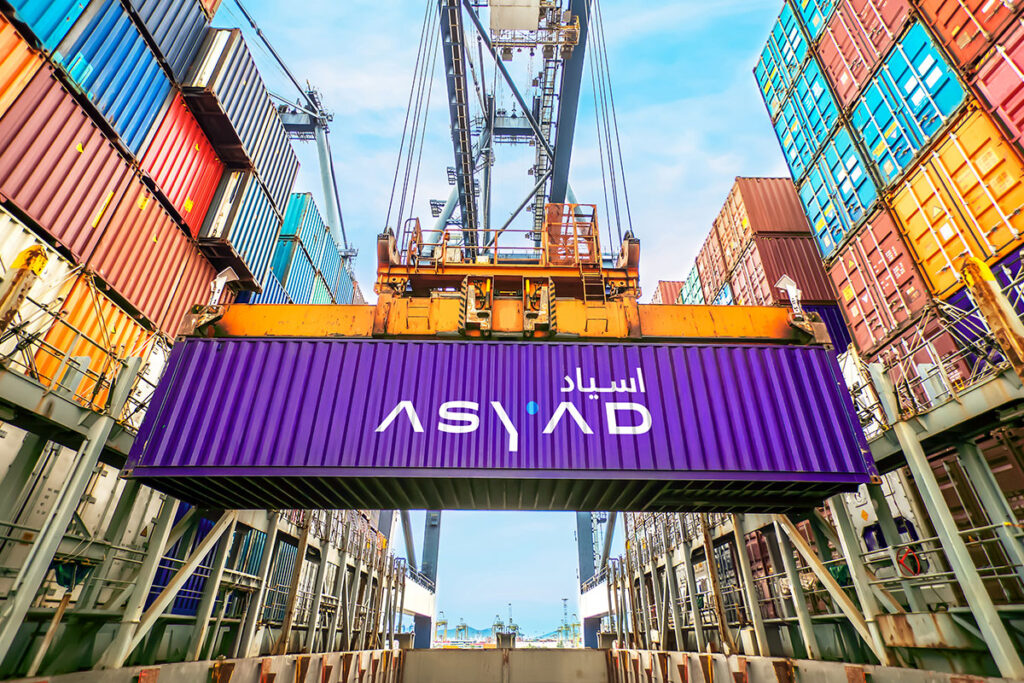
MUSCAT : In its second major international acquisition in less than two years, Asyad Group acquires a leading UK-based 4PL provider, expanding its technology-driven supply chain solutions to over 76 cities worldwide.

Accelerated Global Expansion: Following the acquisition of SFS in July 2024, Asyad Group continues its ambitious global expansion by acquiring Ligentia, a major 4PL provider, and extending its footprint to 24 countries.

Sustainable Value and Growth: The Group achieved exceptional growth over a decade, with turnover surging seven-fold from OMR 123m ($320m) in 2016, progressing towards an annualized level exceeding OMR 800m ($2.1b) in 2026.

Advanced Digital Integration: The acquisition integrates Ligentia’s sophisticated control tower AI driven platform ‘Ligentix’, offering customers superior end-to-end supply chain management with real-time visibility, ERP integration, and predictive analytics.

Enhanced Customer Value: The deal adds over 6,000 global clients and deep expertise in high-value sectors including retail, automotive, and e-commerce, significantly strengthening Asyad’s integrated logistics offerings for a diverse international customer base.
Strategic Market Dominance: This landmark transaction reinforces Asyad Group’s bullish global strategy, solidifying its position as a technology-driven logistics leader committed to reshaping international trade.

Asyad Group, the global integrated logistics provider announced its acquisition of Ligentia, a premier UK-based fourth-party logistics (4PL) provider. This landmark deal is the Group’s second major international acquisition in less than two years, following its acquisition of Skybridge Freight Solutions (SFS) in July 2024, and marks a significant acceleration of its ambitious global expansion strategy.

The acquisition of Ligentia expands Asyad Group’s formidable portfolio and growing global network to 24 countries and a presence in 76 cities. At the core of this integration is Ligentia’s proprietary digital platform, Ligentix, a sophisticated “control tower” that provides clients with real-time visibility, ERP integration, and predictive analytics. This technology will be a cornerstone of Asyad’s strategy to deliver unparalleled efficiency and reliability across the entire supply chain.

This acquisition represents a significant milestone in the Group’s global expansion strategy to build a diversified, integrated logistics platform with a strong international footprint. Over the past decade, the Group has demonstrated its ability to deliver sustainable growth, increasing its turnover approximately seven-fold from OMR 123m ($320m) in 2016 to an estimated annualized level exceeding OMR 800m ($2.1b) in 2026. This growth reflects the Group’s proven capability to expand and integrate its core platforms through disciplined investment.

Asyad Shipping has expanded its fleet from 52 to over 90 vessels serving more than 200 ports in 60 countries, while the Group has simultaneously expanded its ports and freezones portfolio, logistics and freight forwarding operations, and infrastructure assets including its flagship drydock and the pioneering Oman-UAE rail network. The Ligentia acquisition builds on this foundation, reinforcing Asyad Group’s ability to deliver integrated, multimodal logistics solutions across the full value chain.

“This acquisition marks a defining moment for Asyad Group. By integrating Ligentia’s advanced digital capabilities and global network with our world-class logistics ecosystem, we are accelerating our expansion into key international markets,” said Abdulrahman Al Hatmi, Group CEO of Asyad. He added: “This move underscores our commitment to providing smart, integrated logistics solutions that deliver long-term value for our clients and partners. Furthermore, it enhances our contribution to achieving the diversification plans of the Omani economy by connecting Omani ports, free zones, and economic zones to global trade routes. It will also create qualitative opportunities for Omani companies and small and medium enterprises, as well as generating high-quality employment opportunities for citizens. This contributes to increasing the volume of trade exchange through maritime and airports, and opens new horizons for the Omani private sector, thereby strengthening its ability to access international markets.”

This move significantly enhances Asyad Group’s value proposition for its more than 6,000 new global clients. The addition of Ligentia’s deep expertise in high-value sectors— including retail, automotive, manufacturing, and e-commerce — enables Asyad to offer a truly comprehensive suite of end-to-end 4PL solutions. Customers will benefit from a single, integrated partner that can manage complex global supply chains from the first to the last mile, backed by world-class technology and operational excellence. A regional supply chain control and analytics center will be established in Muscat, strengthening Oman’s role as a global coordination hub for international trade. The integration of Ligentia’s global network with Oman’s world-class port infrastructure is set to attract significant new trade flows, solidifying Oman’s strategic position on the world’s most critical trade corridors.

The acquisition is viewed as a monumental step for Ligentia as well, providing the strategic backing and global scale necessary to accelerate its growth and enhance its service offerings. The combined capabilities of both organizations will deliver unparalleled supply chain solutions that are not only efficient and reliable but also at the cutting edge of technology, meeting the complex demands of the modern global economy.