Home Blog Page 346

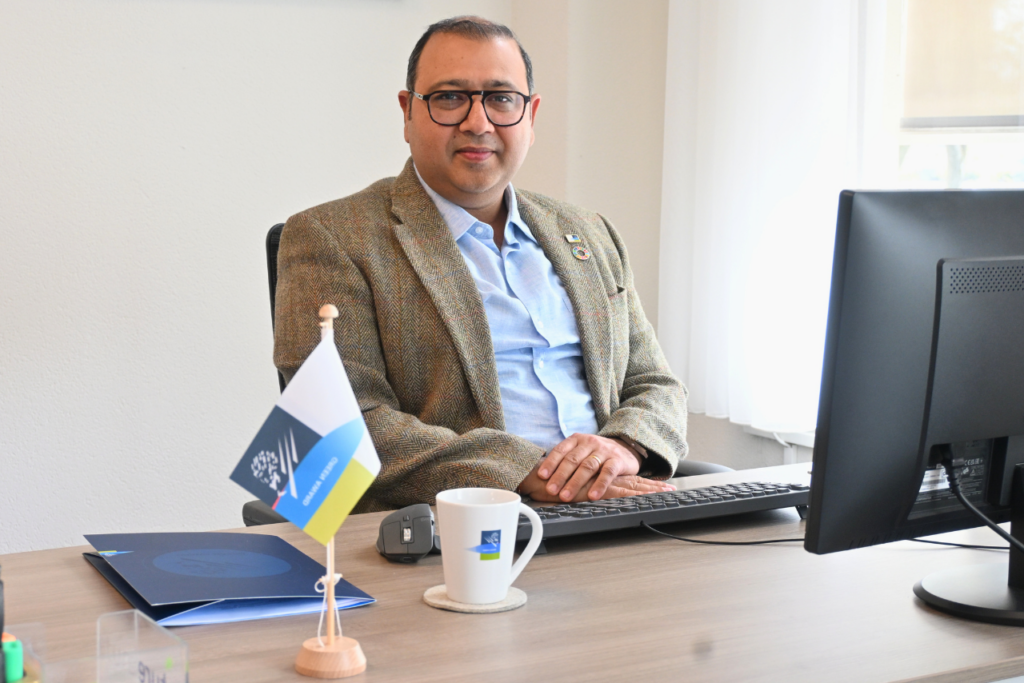
Green Award Foundation appoints Saurabh Sachdeva as Executive Director

ROTTERDAM: The Green Award Foundation (GAF) announces the appointment of Mr. Saurabh Sachdeva as its new Executive Director. Mr. Sachdeva will succeed Mr. Jan Fransen, who has led the Foundation with remarkable distinction for over thirty years and will retire upon completion of a planned handover.

Mr. Sachdeva joins GAF from BP Shipping, where he held various senior leadership positions for more than a decade across shipping. He has also most recently served as a senior executive with OCIMF, as its P&A Director and the Chief accredited representative to the IMO. He brings over 25 years of global industry and strategic leadership experience across shipping, oil & gas, and inland barging sectors and is a qualified Master Mariner.

The Executive Board welcomes Mr. Sachdeva, recognising this appointment as a pivotal step in GAF’s continued growth and commitment as a global hallmark for safety and environmental standards and certifications, covering ocean-going, port, and inland shipping sectors.

India and South Korea strengthen cooperation in Shipping and Maritime Logistics

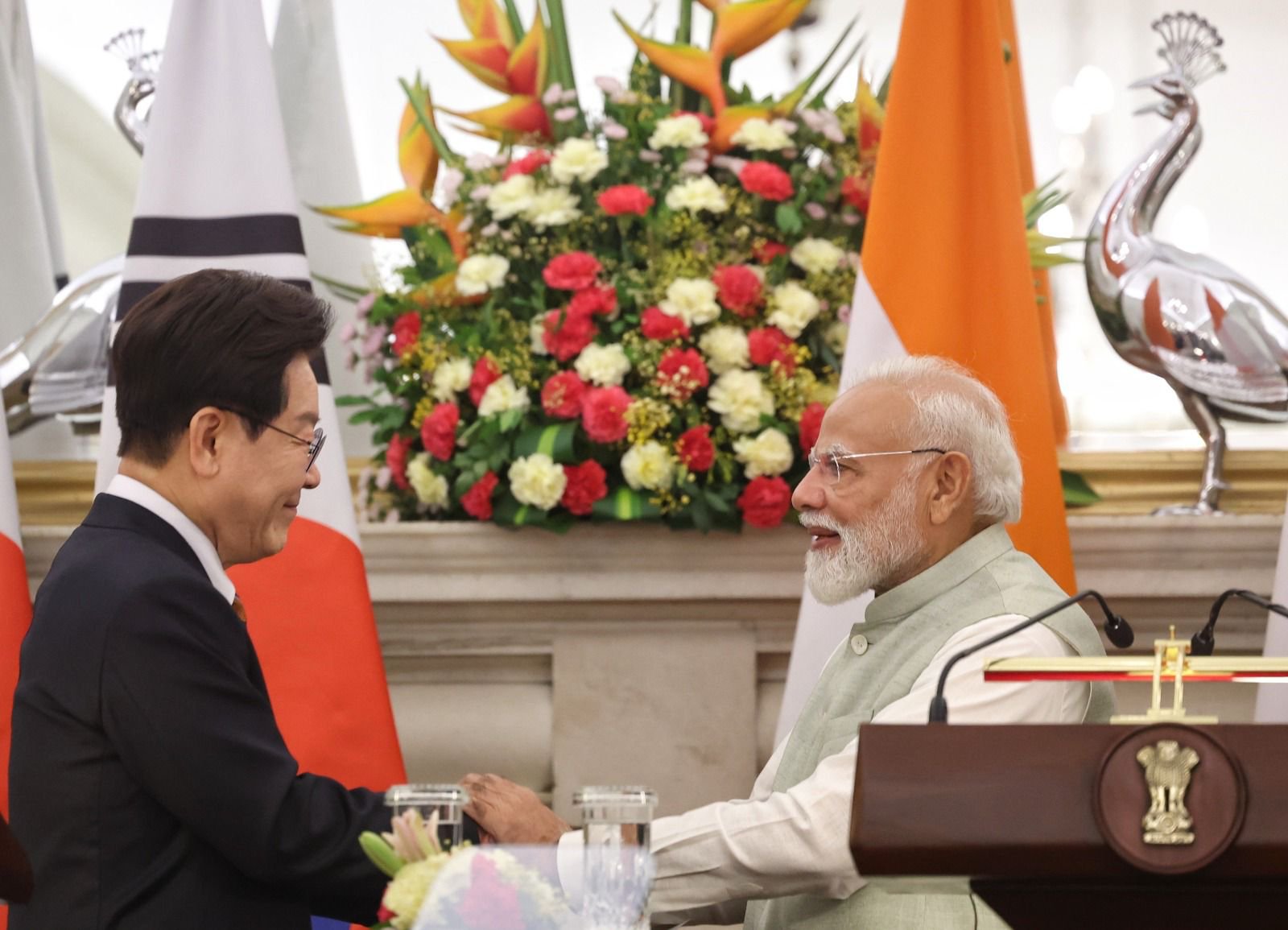
NEW DELHI: India and South Korea on Monday agreed to significantly expand cooperation in shipbuilding, shipping and maritime logistics, following talks between Prime Minister Shri Narendra Modi and South Korean President Lee Jae Myung.

The focus was on joint industrial partnerships, infrastructure development and skill building to support India’s growing maritime ambitions.

Under the framework, India highlighted its ambitious plan to procure over 400 vessels in the coming years, with an estimated value of Rs 2.2 lakh crore (approximately USD 25 billion). Both sides agreed to channel this demand into bilateral partnerships, creating a sustainable and resilient shipbuilding ecosystem.

The two countries emphasised collaboration to upgrade Indian shipyards, including support for brownfield expansion projects and the development of advanced facilities such as block fabrication units and new dry docks for constructing large and specialised vessels.

Recognising India’s policy and financial incentives for domestic manufacturing, the two sides said this would open up opportunities for Korean companies to expand into India, particularly in shipbuilding components and ancillary industries. They welcomed the establishment of a Mumbai branch of the Korea Marine Equipment Association and ongoing cooperation with the Korea Marine Equipment Research Institute.

In a boost to skill development, India and Korea agreed to work together on training programmes in the shipbuilding sector through a project led by the Korea International Cooperation Agency in partnership with India’s Ministry of Ports, Shipping and Waterways. The initiative is expected to enhance workforce capacity through development cooperation and public-private partnerships.

India South Korea 2 India and South Korea strengthen cooperation in Shipping and Maritime Logistics

The agreement also encourages Korean shipowners to utilise India’s financial and regulatory platforms, including GIFT City, to flag vessels in India, benefiting from flexible ownership norms and incentives. Officials noted that India’s growing pool of over 320,000 seafarers offers a strong workforce base for global maritime operations.

Both sides welcomed the signing of multiple memoranda of understanding, including cooperation on port development and infrastructure. This opens opportunities for Korean firms to participate in India’s port modernisation pipeline, estimated at USD 13.3 billion over the next five years, covering major projects such as the Vadhvan Port in Maharashtra and terminals in Odisha and Gujarat.

Further, companies from both countries have agreed to jointly design and manufacture next-generation maritime and port cranes in India, marking a step forward in industrial collaboration.

The two nations also encouraged deeper academic and research partnerships between institutions such as the Indian Maritime University and Korea Maritime and Ocean University, focusing on areas like green shipping, autonomous vessels, and port management.

Highlighting cultural ties, both sides acknowledged their shared maritime heritage and welcomed cooperation on maritime history projects, including India’s upcoming National Maritime Heritage Complex at Lothal in Gujarat.

India-South Korea shipbuilding collaboration to drive new phase of industrial ties: President Lee

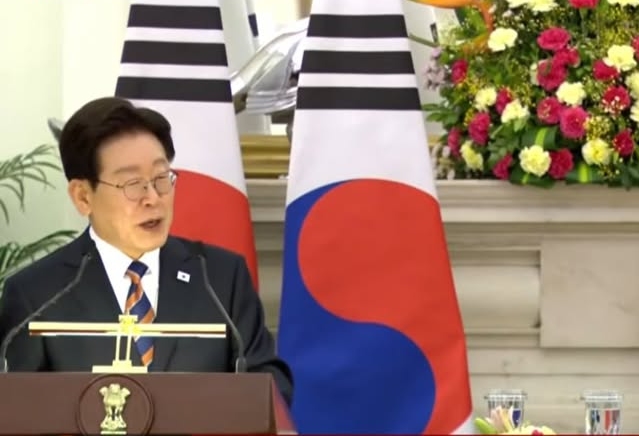
NEW DELHI: South Korean President Lee Jae Myung on Monday said that cooperation in the shipbuilding sector will mark a “new beginning” in industrial ties between India and South Korea, signalling a push to deepen bilateral economic engagement.

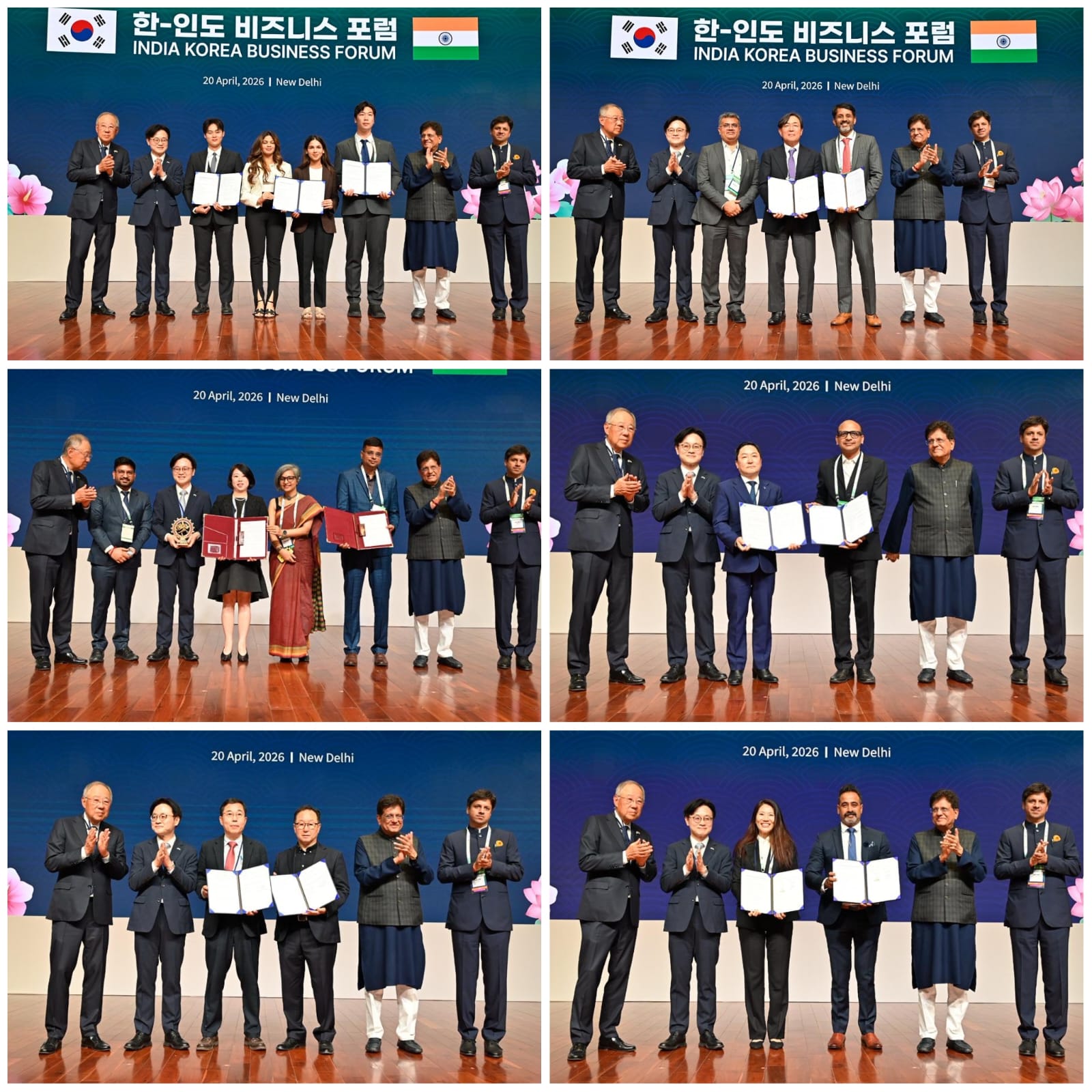
Speaking at the India-Korea Business Forum, he said, “Starting with today’s MOU signing to build a shipyard, I hope that we can expand cooperation in more diverse areas.”

He further expressed hope for early progress in upgrading the Korea-India Comprehensive Economic Partnership Agreement (CEPA), stressing the need for a stronger institutional framework to support businesses in both countries.

“I hope progress will be made in the negotiations to upgrade the Korea-India Comprehensive Economic Partnership Agreement to create an institutional framework for Korean and Indian firms to realise a stable and sustainable partnership. Prime Minister Modi and I have agreed to produce concrete results as early as possible,” Lee said.

Highlighting the broader trade outlook, the South Korean President noted that current bilateral trade does not reflect the true potential of the two economies. “Our current bilateral trade volume does not fully reflect the size and potential of India’s economy. There is significant room for growth. I expect our trade to double in the coming years,” he added.

Lee also underlined the complementary strengths of India and South Korea in advanced sectors. “India has world-class strengths in AI and software development, while Korea has strong capabilities in manufacturing, semiconductors, batteries, automobiles, and shipbuilding,” he said, calling for a “future-oriented partnership in high-technology industries.”

He emphasised that deeper cooperation is necessary in the current global environment. “In a world facing complex global challenges and restrictions on digital and economic connectivity, it is time to discard outdated ways of thinking and deepen cooperation,” he said.

The South Korean leader also pointed to growing business linkages between the two nations. “Companies such as Samsung, LG, and Hyundai have become deeply embedded in India’s economy, while Indian companies like Reliance, JSW, Tata, and Novelis are joining hands with Korean partners,” he said.

India and South Korea have signed 16 Memoranda of Understanding (MoUs) aimed at boosting trade, investment and cooperation in areas including shipbuilding and AI, and establishing a ministerial-level industrial cooperation committee dedicated to economic cooperation.

MoPSW Secretary leads high-level Indian delegation to Tuas Port, showcasing India’s push for smart and sustainable port development

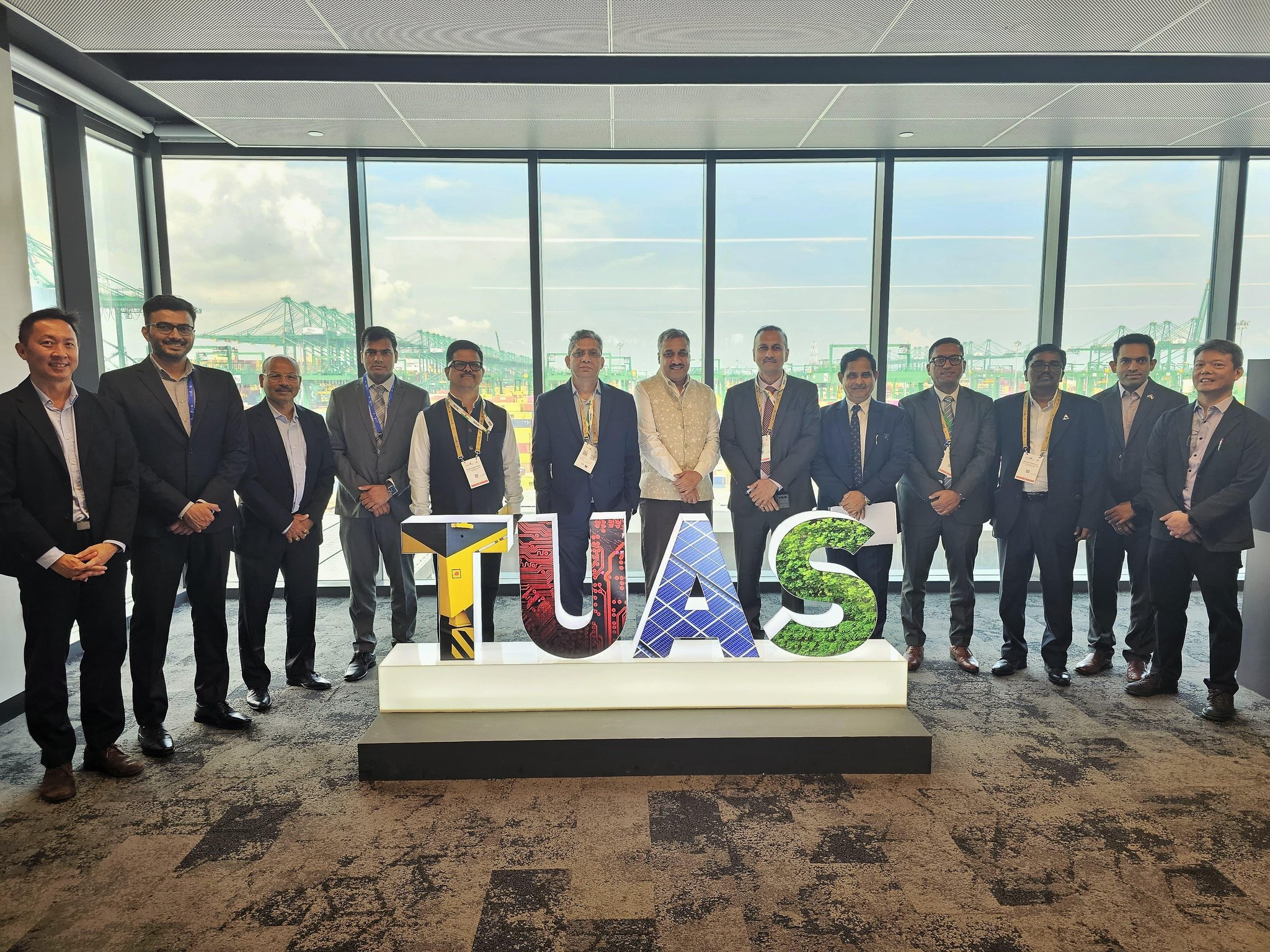
NEW DELHI : Shri Vijay Kumar, IAS, Secretary, Ministry of Ports, Shipping and Waterways (MoPSW), led a high-level Indian delegation on an official visit to Tuas Port, one of the world’s most advanced and fully automated container terminals, reaffirming India’s commitment to modernizing its maritime infrastructure in line with global benchmarks.

The delegation included Shri Venkatesapathy S, IAS, Joint Secretary (Ports, IT & E-Governance), Shri Susanta Kumar Purohit, IRSEE, Chairperson of V.O. Chidambaranar Port Authority, and Dr. Shilpak N. Ambule, IFS, High Commissioner of India to Singapore, along with other senior officials.

During the visit, the delegation was given an in-depth overview of Tuas Port’s cutting-edge infrastructure, including its use of automated quay cranes, driverless automated guided vehicles (AGVs), and a highly integrated digital command-and-control system that enables seamless, real-time operations. The port’s focus on sustainability—through energy-efficient systems, electrification, and green port initiatives—was also highlighted as a model for next-generation maritime hubs.

Officials engaged in detailed discussions with representatives of PSA International, the developer and operator of Tuas Port, on topics such as port automation, digitalization of logistics chains, cybersecurity frameworks, and capacity optimization strategies. The interaction also explored opportunities for knowledge exchange and potential collaboration in port-led development.

The visit provided valuable insights into how large-scale ports can leverage technology to enhance productivity, reduce turnaround times, and improve overall supply chain resilience. It also aligned with India’s broader vision under the Maritime India Vision 2030 and Amrit Kaal roadmap, which emphasize the development of smart ports, adoption of advanced technologies, and creation of globally competitive logistics ecosystems.

Shri Vijay Kumar noted that India is actively pursuing modernization initiatives across its major ports, focusing on automation, digitization, and green energy integration. He emphasized that learnings from global leaders like Tuas Port will play a crucial role in shaping India’s future-ready port infrastructure and strengthening its position in international trade.

The visit marks another step forward in deepening maritime cooperation between India and Singapore, while reinforcing India’s resolve to build efficient, sustainable, and technologically advanced port systems capable of supporting the country’s growing trade ambitions.

PM Modi welcomes Korean President Lee in India

NEW DELHI : Prime Minister Shri Narendra Modi on Monday warmly welcomed President Lee Jae-myung on his first official visit to India, marking a significant milestone in bilateral relations between India and the South Korea after a gap of eight years since the last presidential visit.

In his remarks, the Prime Minister described President Lee’s life and leadership as an inspiring example of service and dedication, underscoring the shared democratic values and strategic convergence between the two nations, particularly in the Indo-Pacific region. He highlighted that the visit reflects renewed momentum in the India–Korea Special Strategic Partnership and a mutual commitment to strengthening cooperation across key sectors.

Both leaders held comprehensive discussions covering trade and investment, technology collaboration, defence cooperation, and supply chain resilience. They emphasized the importance of expanding bilateral trade, facilitating investments, and enhancing cooperation in emerging sectors such as semiconductors, green energy, shipbuilding, electronics manufacturing, and digital innovation.

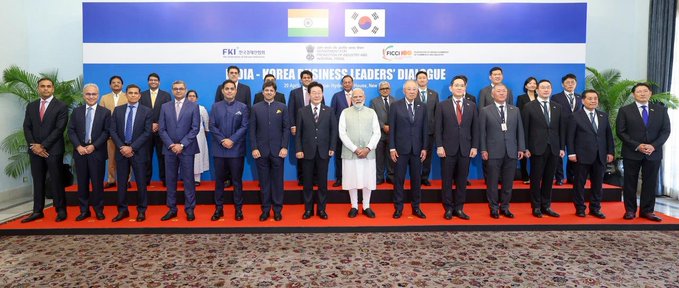
The India–Korea Business Leaders’ Dialogue, held alongside the visit, brought together top industry leaders from both countries and showcased the vast opportunities for collaboration. The dialogue focused on boosting industrial partnerships, strengthening manufacturing ecosystems, and leveraging each country’s strengths to enhance global competitiveness.

Prime Minister Modi noted that closer economic ties could unlock new avenues of growth and innovation, contributing to job creation and sustainable development in both nations. He also stressed the importance of people-to-people exchanges, cultural ties, and academic collaboration in deepening the partnership.

President Lee reaffirmed South Korea’s commitment to expanding its engagement with India, recognizing the country as a key partner in its Indo-Pacific strategy. He expressed optimism that the visit would pave the way for enhanced cooperation and a stronger, future-ready partnership.

The visit is expected to result in the signing of several agreements and memoranda of understanding aimed at accelerating collaboration in priority sectors, further cementing the India–South Korea relationship as a cornerstone of regional stability and economic progress.

India–Korea aim to Double Bilateral Trade to USD 54 Billion by 2030; Call to Unlock Next Phase of Economic Cooperation: Piyush Goyal

NEW DELHI : President of the Republic of Korea (ROK), H.E. Lee Jae Myung, said that India, as the world’s fourth-largest economy and home to 1.4 billion people, stands as a key pillar of the global economy.

Addressing the India–Korea Business Forum in New Delhi, he noted that there is significant scope to further expand business and trade, adding that bilateral trade has considerable room for growth and, with sustained efforts, is expected to double alongside ongoing negotiations on the Comprehensive Economic Partnership Agreement.

He emphasized the need to prepare high-tech industries for the future through collaboration and by leveraging India’s strengths in artificial intelligence. He further stated that cooperation in the shipping sector will be strengthened.

The President also underlined the importance of moving beyond economic cooperation to build strong people-to-people trust between the two countries.

Union Minister of Commerce and Industry Shri Piyush Goyal while addressing the opening session of the India–Korea Business Forum highlighted the signing of the Memorandum of Understanding (MoU) on the India–Korea Industrial Cooperation Committee, comprising four working groups on trade, industry, strategic resources, and clean energy, as a landmark step towards strengthening bilateral economic engagement. A total of 16 MoUs were signed today at India Korea Business Forum.

Shri Goyal further informed that Prime Minister Shri Narendra Modi and President Mr Lee Jae Myung have discussed the establishment of a large industrial township—a Korea-specific enclave in India with plug-and-play infrastructure to encourage greater investments and facilitate the entry of more Korean companies into the Indian market. He noted that this initiative will help Korean companies leverage India’s large domestic demand as well as its preferential access to nearly two-thirds of global GDP, enabled through nine Free Trade Agreements concluded over the past three and a half years with 38 developed economies.

Shri Goyal said that India and the Republic of Korea have been tasked by their leadership to double bilateral trade from the current USD 27 billion to USD 54 billion by 2030, requiring an annual growth rate of nearly 18%. He added that this target does not fully capture the true potential of the partnership and called for efforts to unlock the next phase of economic cooperation.

The Minister stated that both countries have agreed to work on a fast-track, mission-mode approach to upgrade the Comprehensive Economic Partnership Agreement (CEPA), including addressing non-tariff barriers, easing rules of origin, expanding market access, and facilitating greater ease of doing business to achieve a more balanced economic partnership.

He emphasized that sectors such as semiconductors, electronics, advanced manufacturing, e-mobility, green energy, shipbuilding, and digital trade offer strong complementarities between the two economies. He noted that India and Korea can collaborate through co-production, co-design, co-creation, co-innovation, and jointly serve global markets with high-quality and competitively priced products.

Highlighting India’s economic trajectory, Shri Goyal said that the country, currently a USD 4 trillion economy, is on a roadmap to reach USD 30 trillion by 2047, when it celebrates 100 years of independence. He described this transformation as a once-in-a-lifetime opportunity for businesses, driven by a large and talented young population, the aspirations of 1.4 billion citizens, and a rapidly expanding middle class with rising incomes.

He reiterated that despite global turbulence, India stands as an oasis of stability due to bold reforms, massive infrastructure investments, and a strong policy push towards ease of doing business, including simplification of compliance and reduction of regulatory burdens.

Recalling the long-standing relationship between the two nations, Shri Goyal said that India and Korea share time-tested ties spanning over two millennia, rooted in trust, shared democratic values, and strong civilizational bonds. He acknowledged the success of Korean companies in India and their contribution to the country’s growth story.

Shri Goyal concluded by expressing confidence that the visit would mark the beginning of a new chapter in India–Korea relations and extended his best wishes for continued collaboration and shared prosperity between the two nations.

President, FICCI and Vice Chairman, RPG Group, Shri Anant Goenka said that from semiconductors and electric vehicles to digital technologies and artificial intelligence, India’s scale aligns seamlessly with Korea’s innovation strengths. He noted that together, both countries can build a resilient and future-ready economic corridor.

Highlighting the ongoing reconfiguration of global supply chains, Shri Goenka stated that India and Korea have a unique opportunity to develop a diversified, innovation-led economic corridor that is less vulnerable to external shocks and geared towards long-term resilience.

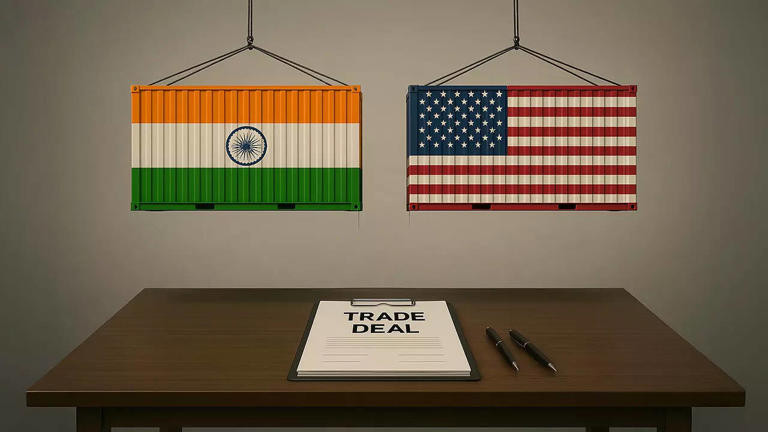
India, US continue to have “positive, productive discussions” on trade deal

WASHINGTON D.C.: A senior United States official has said that Washington and New Delhi are making progress toward a finalised India-US trade deal, as the two sides hold fresh negotiations in the American capital.

The official, speaking to ANI, said, “The Trump administration and India continue to have positive and productive discussions towards a finalised trade deal.”

The comment came in response to ANI’s question about the current status of the ongoing trade talks between the two countries in Washington, DC.

Indian delegates have been arriving in Washington for the latest round of negotiations. Another official familiar with the discussions, speaking on condition of anonymity, said the two sides are close to wrapping up an agreement, with most substantive issues already resolved.

“Most of it is almost done,” the official told ANI. “There aren’t many loose ends left.”

The upcoming discussions are expected to focus on resolving the remaining gaps in the agreement, gaps that the official described as few in number, with the bulk of the deal effectively ironed out.

The Indian delegation will engage with officials from the Office of the US Trade Representative (USTR). Leading the American side as chief negotiator is Brendan Lynch, Assistant US Trade Representative for South and Central Asia. India’s delegation is headed by Mr. Darpan Jain, Additional Secretary in the Department of Commerce, who has played a key role in the ongoing trade discussions with Washington.

Officials said the presence of senior representatives from both countries in Washington reflects the growing momentum behind the proposed trade framework. While specific details of the agreement remain undisclosed, the advanced stage of discussions has raised expectations that an announcement could be made soon.

The United States and India have been engaged in protracted trade negotiations aimed at reducing tariffs and expanding bilateral trade. A deal, if finalised, would mark a significant milestone in economic ties between the world’s largest economy and one of its fastest-growing major economies.

Earlier, on February 7, India and the United States announced they had reached a framework for an interim agreement on reciprocal and mutually beneficial trade. The framework reaffirmed both countries’ commitment to broader bilateral trade agreement (BTA) negotiations launched by US President Donald Trump and Prime Minister Shri Narendra Modi on February 13, 2025, aimed at enhancing market access.

US Ambassador to India Sergio Gor said an Indian trade delegation would be in the United States this week for BTA negotiations, calling it a significant step toward finalising the deal. In a post on X, he described the prospective agreement as a “win-win” for both nations.

“The Indian trade delegation will be arriving in Washington this week. A great step to finalise our bilateral trade deal. A win-win for both nations!” he wrote.

Commerce and Industry Minister Shri Piyush Goyal also said the first tranche of the proposed bilateral trade agreement with the United States is “almost finalised,” with discussions focused on securing preferential market access for India in the US market relative to its competitors.

“We have almost finalised our free trade agreement, the first tranche of the bilateral trade agreement with them. We are trying to close the Ts and dots on that and work out what would be the mechanism by which India can get a preferential access, market access in the US market compared to our competitors,” Goyal told reporters on the sidelines of the India-Korea Business Forum in New Delhi.

Source: ANI

Indian-Flagged Tanker safely transits Strait of Hormuz; Govt ensures Seafarer Safety and Operational Continuity

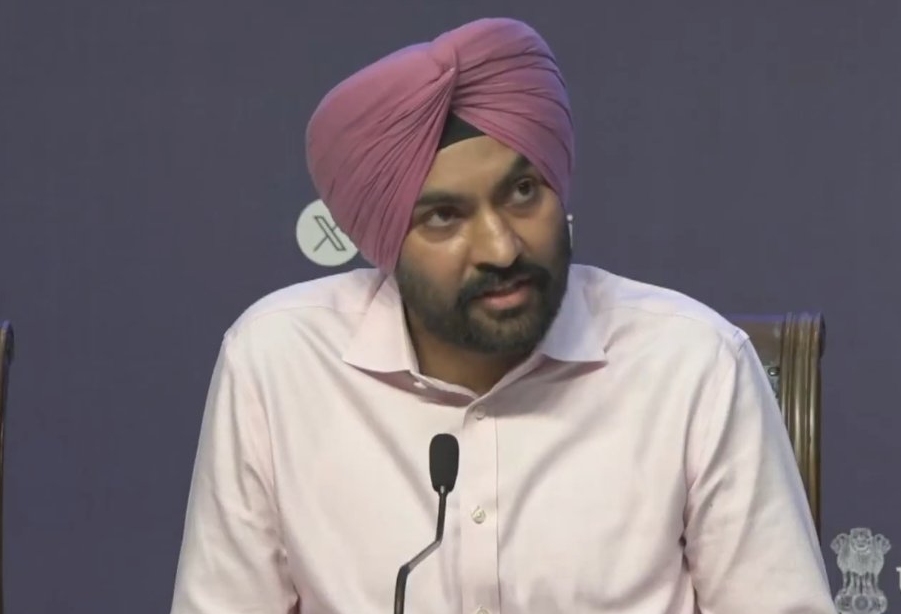
NEW DELHI: The Ministry of Ports, Shipping and Waterways (MoPSW) has informed that the Indian-flagged crude oil tanker Deshkarima, carrying 97,422 metric tonnes of crude oil, has safely transited the Strait of Hormuz on April 18, 2026. The vessel, with 31 Indian seafarers on board, is expected to arrive at Mumbai on April 22, 2026, said Mandeep Singh Randhawa Director, MoPSW.

In the past 48 hours, two Indian vessels — Sanmar Herald and bulk carrier Jagannath — reported a firing incident while transiting the Strait of Hormuz. Both vessels have since returned to safe locations. No injuries to crew members have been reported.

The Ministry is maintaining continuous communication with the crew and vessel owners and is closely monitoring the evolving situation to ensure the safety and security of Indian seafarers.

The Directorate General of Shipping (DG Shipping) control room, activated to respond to the situation, has handled a total of 6,918 calls and over 14,605 emails to date, including 25 calls and 135 emails in the past 24 hours alone.

As part of ongoing efforts, more than 2,563 Indian seafarers have been safely repatriated so far, including 25 in the last 24 hours from various locations.

Port operations across India continue to remain normal, with no reports of congestion or disruption.

The Government of India remains fully committed to safeguarding the interests of Indian seafarers and ensuring uninterrupted maritime operations. The Ministry continues to coordinate closely with the Ministry of External Affairs, Indian missions abroad, and key maritime stakeholders to address emerging challenges and maintain operational stability.

Cabinet approves two multitracking projects covering 15 Districts across the states of Uttar Pradesh and Andhra Pradesh

NEW DELHI : The Cabinet Committee on Economic Affairs, chaired by the Prime Minister Shri Narendra Modi, has approved 02 (Two) projects of Ministry of Railways with total cost of Rs. 24,815 crore (approx.). These projects include:

Name of ProjectRoute Length (in km)Track Length (in km)Completion Cost (Rs. in Cr.)
Ghaziabad – Sitapur 3rd and 4th Line40385914,926
Rajahmundry (Nidadavolu) – Visakhapatnam (Duvvada) 3rd and 4th Line 198 458 9,889
Total6011,31724,815

The increased line capacity will significantly enhance mobility, resulting in improved operational efficiency and service reliability for Indian Railways. These multi-tracking proposals are poised to streamline operations and alleviate congestion. The projects are in line with the  Prime Minister Shri Narendra Modiji’s Vision of a New India which will make people of the region “Atmanirbhar” by way of comprehensive development in the area which will enhance their employment/ self-employment opportunities.

The projects are planned on PM-Gati Shakti National Master Plan with focus on enhancing multi-modal connectivity & logistic efficiency through integrated planning and stakeholder consultations. These projects will provide seamless connectivity for movement of people, goods, and services.

The 02 (Two) projects covering 15 Districts across the states of Uttar Pradesh and Andhra Pradesh will increase the existing network of Indian Railways by about 601 Kms.

The proposed capacity enhancement will improve rail connectivity to several prominent tourist destinations across the country, including Dudheshwarnath Temple, Garhmukteshwar Ganga Ghat, Dargah Shah Wilayat Jama Masjid (Amroha), Naimisharanya (Sitapur), Annavaram, Antarvedi, Draksharamam, etc.

The proposed projects are essential routes for transportation of commodities such as coal, foodgrains, cement, POL, iron and steel, container, fertilizers, sugar, chemical salts, limestone, etc. The Railways being environment friendly and energy efficient mode of transportation, will help both in achieving climate goals and minimizing logistics cost of the country lowering CO2 emissions (180.31Crore Kg) which is equivalent to plantation of 7.33 Crore trees.

Ghaziabad – Sitapur 3rd and 4th Line (403 Km)

  • Ghaziabad – Sitapur is an existing double line section forming a key part of Delhi- Guwahati High Density Network (HDN 4).
  • The project is crucial for improving connectivity between the Northern and Eastern region of the country.
  • The existing line capacity utilization of the section is up to 168% and is projected to be up to 207% in case the project is not taken up.
  • Transverses through Ghaziabad, Hapur, Amroha, Moradabad, Rampur, Bareilly, Sahjahanpur, Lakhimpur Kheri and Sitapur districts of Uttar Pradesh.
  • The project route passes through major industrial centres – Ghaziabad (machinery, electronics, pharmaceuticals), Moradabad (brassware and handicrafts), Bareilly (furniture, textiles, engineering), Shahjahanpur (carpets and cement-related industries), and Roza (thermal power plant).
  • For seamless transportation, the project alignment is planned to bypass congested stations of Hapur, Simbhaoli, Moradabad, Rampur, Bareilly, Shahjahanpur, and Sitapur and accordingly, six new stations are proposed on the bypassing sections.
  • Key tourist/religious places along/near to the project section are Dudheshwarnath Temple, Garhmukteshwar Ganga Ghat, Dargah Shah Wilayat Jama Masjid (Amroha), and Naimisharanya (Sitapur) among others.
  • Anticipated additional freight traffic of 35.72 MTPA consisting of Coal, Foodgrains, Chemical Manures, Finished Steel, etc.
  • Estimated Cost: Rs.14,926 crore (approx.)
  • Employment generation: 274 lakh human-days.
  • CO2 emissions saved: About 128.77 crore Kg CO2 equivalent to 5.15 Cr trees.
  • Logistic cost saving: Rs. 2,877.46 crore every year vis-a vis road transportation

Rajahmundry (Nidadavolu) – Visakhapatnam (Duvvada) 3rd and 4th Line (198 Km)

  • Rajahmundry (Nidadavolu) – Visakhapatnam (Duvvada) section forms part of the Howrah – Chennai High Density Network (HDN).
  • The proposed project is part of quadrupling initiative of Howrah – Chennai High Density Network (HDN) route.
  • The project traverses through East Godavari, Konaseema, Kakinada, Anakapalle and Vishakapatnam districts of Andhra Pradesh.
  • Visakhapatnam is identified as an Aspirational District in the Aspirational Districts Programme.
  • It provides connectivity to major ports along the East Coast such as Visakhapatnam, Gangavaram, Machilipatnam and Kakinada.
  • The project route runs along the eastern coastline and is among the busiest, predominantly freight-oriented sections of the East Coast Rail Corridor.
  • The line capacity utilization of the section has already reached up to 130%, leading to frequent congestion and operational delays. The line capacity is expected to increase further due to proposed expansion of ports and industries in the region.
  • Project section includes 4.3 km rail bridge over Godavari River, 2.67 km viaduct, 3 bypasses and the new alignment is around 8 km shorter than the existing route, improving connectivity and operational efficiency.
  • The proposed section will also boost tourism by improving access to key destinations such as Annavaram, Antarvedi and Draksharamam etc.
  • Anticipated additional freight traffic of 29.04 MTPA consisting of Coal, Cement, Chemical Manures, Iron and Steel, Foodgrains, Containers, Bauxite, Gypsum, Limestone, etc.
  • Estimated Cost: Rs.9,889 crore (approx.)
  • Employment generation: 135 lakh human-days.
  • CO2 emissions saved: About 51.49 crore Kg CO2 equivalent to 2.06 Cr trees.
  • Logistic cost saving: Rs. 1,150.56 crore every year vis-a vis road transportation.

Prime Minister’s focus on railways:

Record budget allocation of Rs. 2,65,000 crore for FY 26-27.
Manufacturing more than 1600 locomotives- surpassed US and Europe in manufacturing of locomotive production
In FY 26, Indian Railways is expected to rank among the top three freight carriers globally, moving 1.6 billion tonnes of cargo.
India starts exporting metro coaches to Australia and bogie to United Kingdom, Saudi Arabia, France and Australia.

FedEx and IIT Madras successfully conduct India’s first Intra-City Drone delivery trials in Bengaluru

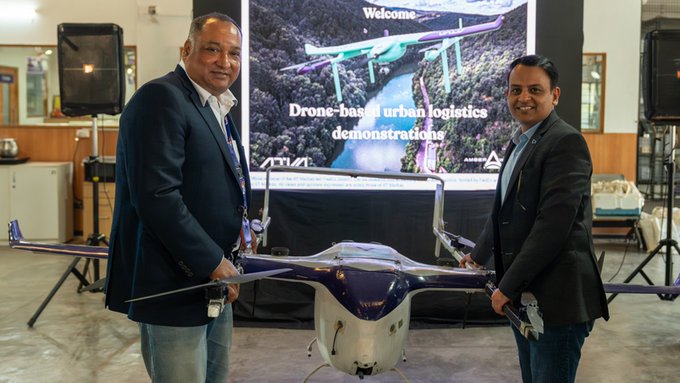
BENGALURU : Federal Express Corporation (FedEx) and the Indian Institute of Technology Madras (IIT Madras) have successfully completed India’s first intra-city drone delivery flight trials in Bengaluru. Conducted under the research framework of the FedEx SMART Centre at IIT Madras, this milestone underscores a commitment to advancing next-generation, technology-enabled supply chains.

The trials validated a mid-mile aerial logistics service connecting Electronic City Phase II with the vicinity of Bangalore International Airport. By utilizing aerial corridors, the initiative successfully reduced a typical 60-minute, 53 km road journey to a 39-42 km flight, completing the transit in approximately 21 minutes.

Technical operations were executed at an altitude of 120 metres, featuring safety protocols including autonomous flight termination, return-to-home capabilities, and anti-collision lighting. The flights were conducted in coordination with the Directorate General of Civil Aviation.

“This milestone reflects the FedEx SMART Centre’s research agenda across air cargo optimization and sustainable supply chain ecosystems,” said Nitin Navneet Tatiwala, vice president of marketing, customer experience, and air network, Middle East, Indian Subcontinent, and Africa (MEISA), FedEx. Prof. Satyanarayanan R. Chakravarthy of IIT Madras added that integrating aerial robotics marks a leap in creating progressive, high-impact logistics solutions.

Highlighting its long-term impact for Indian Logistics, Prof. Arshinder Kaur, professor in-charge, FedEx SMART Centre added, “The high-speed drone-delivery trials are a strong demonstration of the centre’s commitment to driving innovation across modern supply chains and accelerating cutting-edge technologies.”

The project was implemented in partnership with Amber Wings, an IIT Madras-incubated deep-tech start-up.