Home Blog Page 350

Xeneta Weekly Ocean Container Shipping Market Update: Spot Rates are easing

OSLO: The ocean freight market is sending very different signals depending where you look across global supply chains. Spot rates on European trades are easing.

Xeneta analyst insight

Peter Sand, Xeneta Chief Analyst said “The ocean freight market is sending very different signals depending where you look across global supply chains. Spot rates on European trades are easing – Far East to North Europe is down around 4% over the past week, Mediterranean down nearly 5%. But on the US-bound trades, rates are still climbing. Far East to US West Coast is up more than 50% since the end of February. That is not a market normalizing from the crisis caused by the Middle East conflict.

“The divergence tells us that the disruption from the Middle East conflict is far from over. Carriers have adapted on the European lanes – new routing patterns are in place and capacity is flowing more predictably. That is bringing some relief to shippers on those corridors. But none of that applies to the Transpacific or Transatlantic, where rates remain elevated and show no sign of retreating.

“Any talk of normalisation needs to account for the fact that the majority of global fronthaul trades are still deep in crisis-level pricing.

“Seasonal dynamics are also playing a role in the European softening – the second quarter is historically the weakest for container demand, which gives rates room to come off their highs. But this should not be mistaken for a structural improvement. The underlying disruption – longer transit times, lower schedule reliability, and the continued closure of the Strait of Hormuz – has not changed. What has changed is that carriers have found workarounds on certain trades.”

Data highlights -Market average spot rates – 17 April 2026

Far East to US West Coast: USD 2 833 per FEU

Far East to US East Coast: USD 3 894 per FEU

Far East to North Europe: USD 2 699 per FEU

Far East to Mediterranean: USD 3 842 per FEU

North Europe to US East Coast: USD 2 157 per FEU

Spot rate changes since the end of February – 17 April vs 28 February 2026

Far East to US West Coast: +51%

Far East to US East Coast: +44%

East to North Europe: +26%

Far East to Mediterranean: +21%

North Europe to US East Coast: +43%

XENETA Graph WRU rates 17 Apr Xeneta Weekly Ocean Container Shipping Market Update: Spot Rates are easing

Offered capacity on major fronthaul trades (4-week rolling average) – w/c 13 April 2026

Far East to US West Coast: −2.3% from a week ago

Far East to US East Coast: +4.4% from a week ago

Far East to North Europe: +8.5% from a week ago

Far East to Mediterranean: −2.1% from a week ago

North Europe to US East Coast: −9.0% from a week ago

XENETA WRU cap 17 Apr Xeneta Weekly Ocean Container Shipping Market Update: Spot Rates are easing

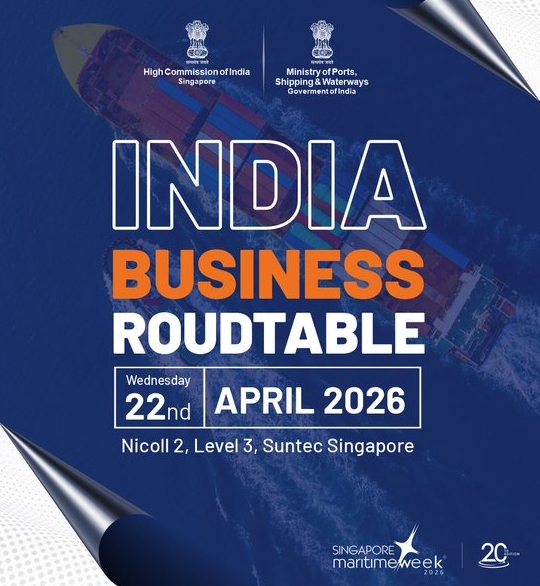
India Business Roundtable at Singapore Maritime Week 2026 Highlights India’s Strategic Maritime Vision

NEW DELHI: The Ministry of Ports, Shipping and Waterways, in collaboration with the High Commission of India in Singapore, will host the India Business Roundtable during Singapore Maritime Week 2026, bringing together global maritime leaders for a high-level dialogue on India’s rapidly evolving maritime landscape.

The Roundtable aims to underscore India’s strategic maritime ambitions, focusing on scaling infrastructure, advancing sustainability, and strengthening global integration. It will serve as a key platform for engagement among policymakers, industry stakeholders, and international partners.

Discussions will centre on critical areas such as maritime finance, port-led development, green energy transitions, ship ownership, and next-generation logistics—sectors that are pivotal to enhancing India’s competitiveness in the global maritime ecosystem.

Aligned with the vision of Viksit Bharat 2047, the initiative seeks to transform shared intent into enduring partnerships and actionable solutions, reinforcing India’s position as a leading maritime nation.

The Roundtable is expected to catalyse collaboration, promote innovation, and accelerate the adoption of future-ready maritime practices on a global scale. Entry to the event is by invitation only.

Iran reopens Strait of Hormuz as Trump says US blockade will continue until deal is made

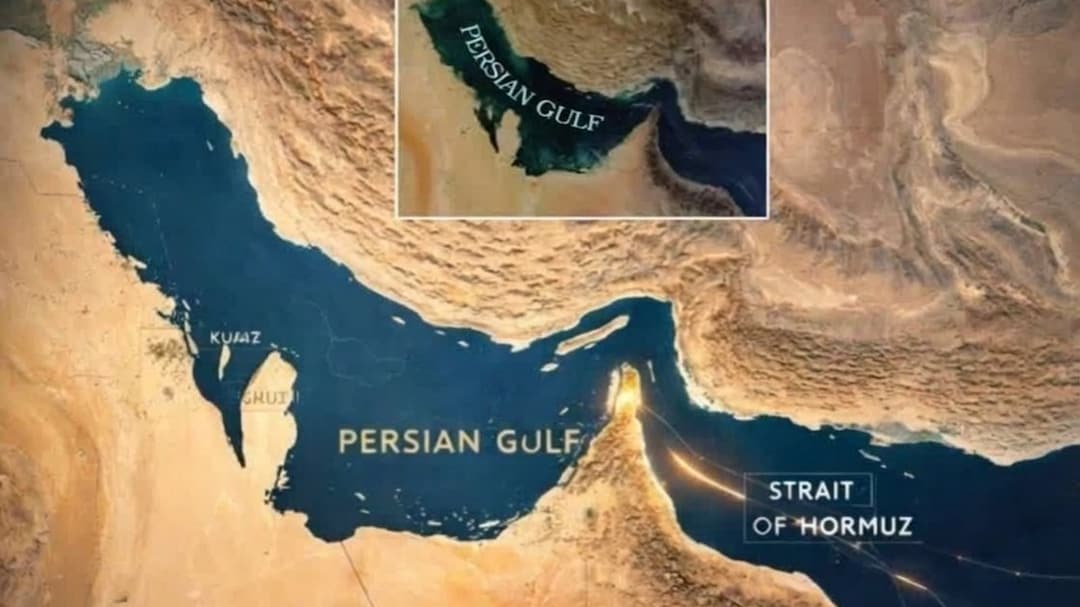
TEHRAN : Iran’s Foreign Minister Abbas Araghchi announced that the Strait of Hormuz will be “completely open” for the remaining period of the ceasefire. In a post on X, he said that the passage will be open for all commercial vessels.

“In line with the ceasefire in Lebanon, the passage for all commercial vessels through Strait of Hormuz is declared completely open for the remaining period of ceasefire, on the coordinated route as already announced by Ports and Maritime Organisation of the Islamic Rep. of Iran”, Araghchi wrote on X.

Meanwhile, US President Donald Trump also confirmed on social media that the Strait of Hormuz is “fully open”. “Iran has just announced that the strait of Iran is fully open and ready for full passage. Thank you!”, Trump wrote.

However, in a separate post, Trump clarified that despite the strait being open, the naval blockade by the US will continue in full force till the “transaction” with Iran is complete.

The Republican leader also claimed that Iran has agreed to “never” close the Strait of Hormuz again and that it will never be used against the world as a “weapon”.

Crude prices have tumbled 10 per cent after the announcement of the opening of the Hormuz Strait, according to the Associated Press.

Israel-Lebanon Ceasefire Deal
Trump on Thursday announced a 10-day ceasefire deal between Lebanon and Israel and said that he was trying to set up the first-ever meeting between the leaders of the two countries.

The ceasefire deal between the two warring countries came only as a part of the US’ efforts to reach a deal to end the war with Iran. Tehran had insisted that a Lebanon truce must be part of any agreement.

The US leader said the deal to halt hostilities came after “excellent” phone calls with Israeli Prime Minister Benjamin Netanyahu and Lebanese President Joseph Aoun.

“These two Leaders have agreed that in order to achieve peace between their Countries, they will formally begin a 10 day ceasefire at 5 P.M. EST,” or 2100 GMT, Trump said on his Truth Social network.

He later said he expected Netanyahu and Aoun to visit the White House “over the next four or five days”.

UK, France Welcome Strait Of Hormuz Reopening
The leaders of France and the UK have welcomed the announced reopening of the Strait of Hormuz but say it must become permanent

President Emmanuel Macron and Prime Minister Keir Starmer say they will keep planning an international mission to restore maritime security, with a meeting of military planners in London next week.

Speaking after a gathering of some 50 countries, Macron said “we all demand the full, immediate and unconditional reopening of the Strait of Hormuz by all parties.”

Starmer said the announcement by Iran and the US that the waterway is open must become “both lasting and a workable proposal.”

He said France and the UK will lead a multinational mission to safeguard shipping “as soon as conditions allow.”

IMO Secretary-General Calls for Urgent Global Action on Strait of Hormuz Crisis

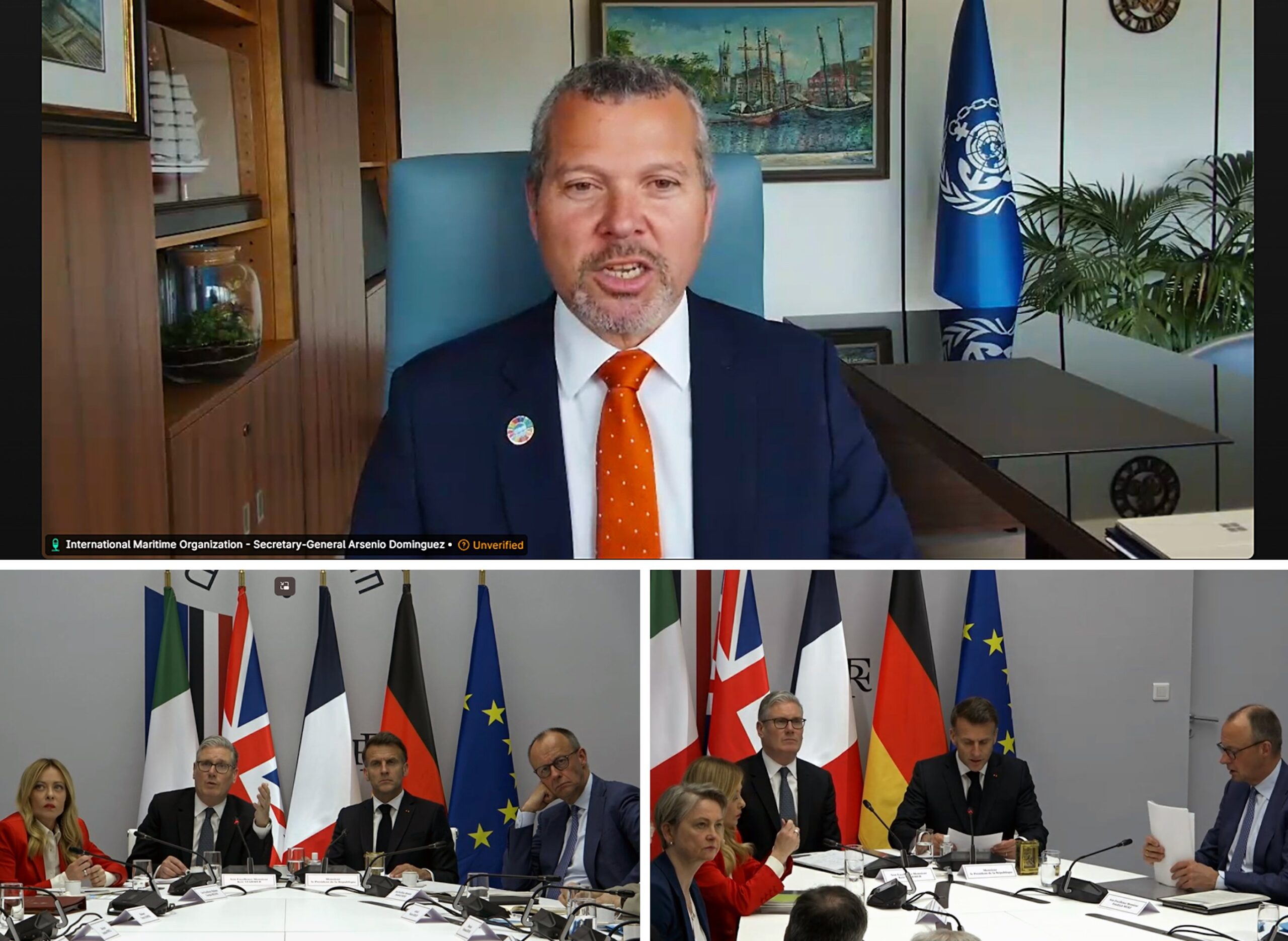
PARIS/LONDON: The Secretary-General of the International Maritime Organization, Arsenio Dominguez, has issued a strong appeal for immediate international cooperation to safeguard freedom of navigation and protect seafarers affected by the escalating geopolitical tensions in the Strait of Hormuz.

Delivering keynote remarks (virtually) France–UK Summit on Freedom of Navigation held on Friday (17th April) in Paris, the IMO Secretary-General highlighted the severe impact of the ongoing conflict on global shipping and maritime personnel.

Approximately 20,000 seafarers and nearly 2,000 vessels remain stranded in the Persian Gulf region, underscoring the urgent humanitarian and operational challenges confronting the maritime sector. The disruption, he noted, poses a direct threat to global energy supplies, food security, and economic stability.

Reaffirming the fundamental principles of international maritime law, the Secretary-General emphasized that freedom of navigation must be upheld without compromise. Referring to the United Nations Convention on the Law of the Sea, he reiterated that straits used for international navigation cannot be closed by bordering states, nor can tolls, fees, or discriminatory transit measures be imposed.

Any departure from these established norms, he warned, would set a dangerous precedent and undermine the stability and integrity of global shipping operations.

The Secretary-General further highlighted the longstanding traffic separation scheme in the Strait of Hormuz, established by the IMO in 1968 and jointly operated by Iran and Oman. This maritime corridor, governed under the SOLAS Convention, has ensured safe navigation for decades and remains central to current operational planning.

IMO Evacuation Framework Underway

In response to the crisis, the IMO has initiated the development of a dedicated evacuation framework aimed at facilitating the safe removal of stranded vessels and seafarers from the affected region. The framework is being developed in close coordination with regional stakeholders, including Iran, and with the support of relevant international partners.

The Organization has indicated its readiness to implement the evacuation plan without delay, subject to prevailing safety conditions.

Call for International Support

The IMO Secretary-General called upon governments and international partners to intensify diplomatic engagement with the IMO and the United Nations, with a focus on:

  • Upholding the principle of freedom of navigation
  • Rejecting unlawful tolls, fees, or restrictions on transit
  • Supporting the IMO-led evacuation of affected seafarers
  • Assisting in the clearance of navigational hazards, including mines
  • Providing technical and operational support to implement evacuation measures
  • Ensuring access to affordable insurance to enable the resumption of shipping operations

He also acknowledged the efforts of countries in the region that continue to supply essential provisions to seafarers and facilitate crew changes where possible.

Humanitarian Priority

Concluding his remarks, the Secretary-General stressed that seafarers and commercial shipping must not be used as leverage in geopolitical conflicts, underscoring the need to prioritize safety, welfare, and the uninterrupted flow of global trade.

Govt ensures Safety and Welfare of Indian Seafarers amid ongoing Maritime Challenges

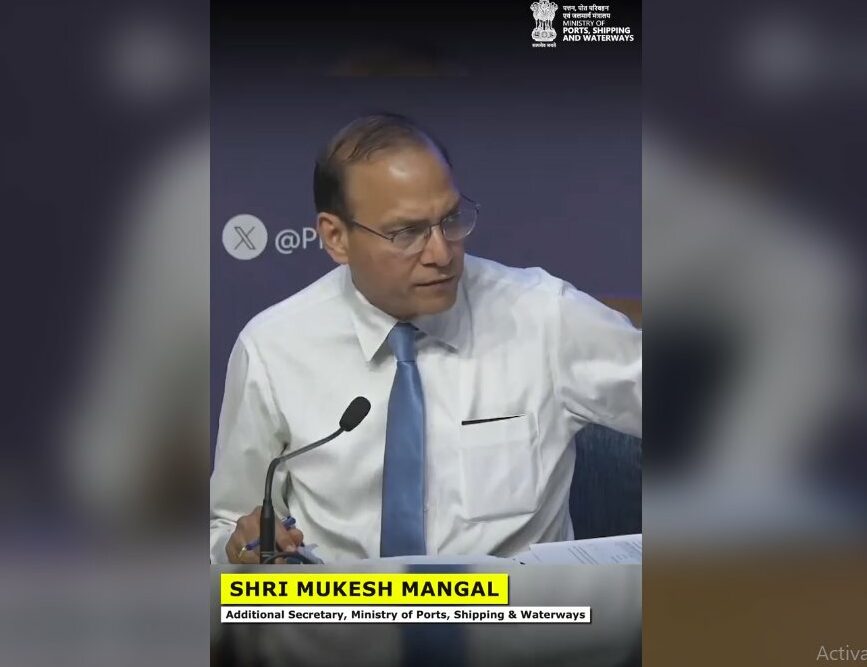
NEW DELHI: The Ministry of Ports, Shipping and Waterways (MoPSW), in close coordination with the Ministry of External Affairs, Indian Missions abroad, and maritime stakeholders, continues to actively safeguard the welfare of Indian seafarers while ensuring uninterrupted maritime operations, said Mr. Mukesh Mangal, Additional Secretary, Ministry of Ports, Shipping & Waterways on Friday.

As part of its ongoing efforts, the Government has confirmed that all Indian seafarers in the affected region are safe. Importantly, no incidents involving Indian-flagged vessels have been reported in the past 24 hours, reflecting the effectiveness of the monitoring and response framework in place.

The Directorate General of Shipping’s dedicated control room remains fully operational and responsive. Since its activation, the control room has handled 6,727 calls and over 13,900 emails, including 147 calls and 276 emails in the last 24 hours alone, demonstrating the scale and efficiency of assistance being provided.

In a continued effort to support Indian seafarers, the Government has successfully facilitated the repatriation of over 2,400 seafarers to date, including 30 individuals who returned safely from the Gulf region in the last 24 hours.

The Government of India remains steadfast in its commitment to ensuring the safety, security, and well-being of Indian seafarers across the globe, while maintaining the resilience and continuity of maritime trade.

NLDSL and Maharashtra Govt sign MoU to strengthen state Logistics, supporting Viksit Bharat

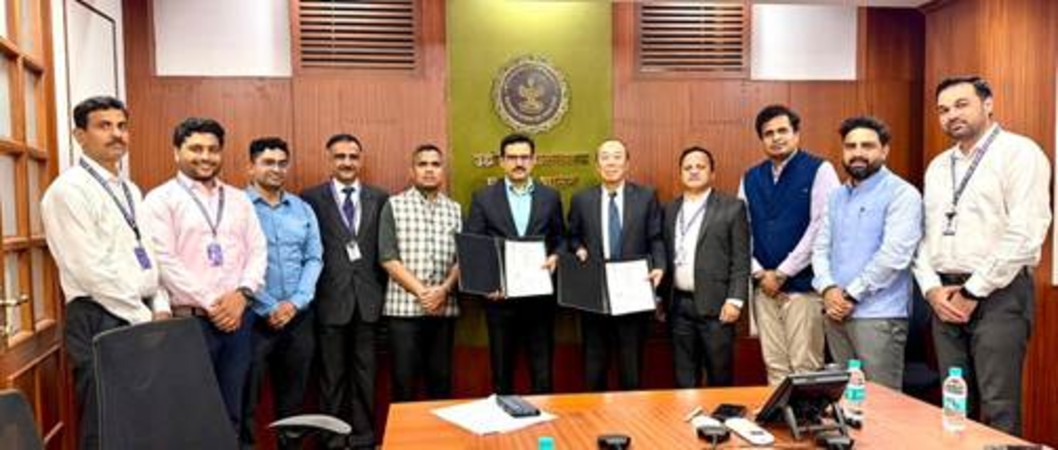
NEW DELHI : NICDC Logistics Data Services Limited (NLDSL) and Government of Maharashtra signed a Memorandum of Understanding (MoU) on 16th April 2026, to digitize the logistics landscape in Maharashtra by leveraging Unified Logistics Interface Platform (ULIP).

This collaboration is expected to bring visibility to streamline logistics operations, foster greater coordination among state departments, and support decision-making processes through real-time data insights.

The MoU was signed during an interactive ULIP workshop organised by the Directorate of Industries, Government of Maharashtra, with participation from representatives of over 10 state departments. The workshop focused on identifying how ULIP can be used to address logistics challenges in Maharashtra, particularly for MSMEs and small exporters, and improve visibility.

The workshop also featured live demonstrations of NLDSL’s key digital initiatives – Logistics Data Bank (LDB), Koyla Shakti – Smart Coal Analytics Dashboard, Track Your Transport, and Transport Management System (TMS), all powered by ULIP. These platforms demonstrate how real-time data can improve tracking, operational efficiency, and decision-making across the logistics value chain.

The initiative is being undertaken under the leadership of Shri Rajat Kumar Saini, IAS, CEO & MD, NICDC and Chairman, NLDSL. The MoU was formally executed by Shri Deependra Singh Kushwah, IAS, Development Commissioner (Industries), Government of Maharashtra and Shri Takayuki Kano, CEO, NLDSL, in presence of Shri Vaibhav Waghmare, IAS, Additional Development Commissioner, Directorate of Industries, Govt. of Maharashtra.

As part of this initiative, NLDSL will support the Government of Maharashtra in developing a unified digital platform that brings greater transparency to the State’s logistics operations. The platform is expected to enable faster decision-making and enhance the efficiency and global competitiveness of India’s logistics sector, supporting the vision of Viksit Bharat.

ULIP serves as a unified digital gateway, enabling seamless access to logistics-related data from multiple Government systems through API-based integration. It currently connects 45 systems across 11 Centra Ministries/ Departments through 137 APIs, spanning over 2,000 data fields. This ecosystem has powered the development of more than 240+ innovative applications, driving over 300 crore API transactions, demonstrating platform’s reliability and robustness.

NICDC is spearheading India’s industrial transformation through the development of smart industrial cities and integrated infrastructure. Following the success of 20 Greenfield Industrial Smart Cities, NICDC has now been mandated to implement the BHAVYA (Bharat Audyogik Vikas Yojana) Scheme. The scheme envisages the development of 100 investment-ready, plug-and-play industrial parks across the country, with an outlay of ₹33,660 crore. NICDC is also implementing major initiatives such as the PM MITRA Mega Textile Parks and the India Industrial Land Bank (IILB).

NICDC Logistics Data Services Limited (NLDSL), the logistics arm of NICDC, is playing a key role in transforming the logistics sector through digital platforms such as Logistics Data Bank (LDB) and Unified Logistics Interface Platform (ULIP). Established on 30 December 2015, it is a joint venture between NICDC Industrial Development Trust (NICDIT) and NEC Corporation of Japan.

IMO approves new guidelines on ship registration

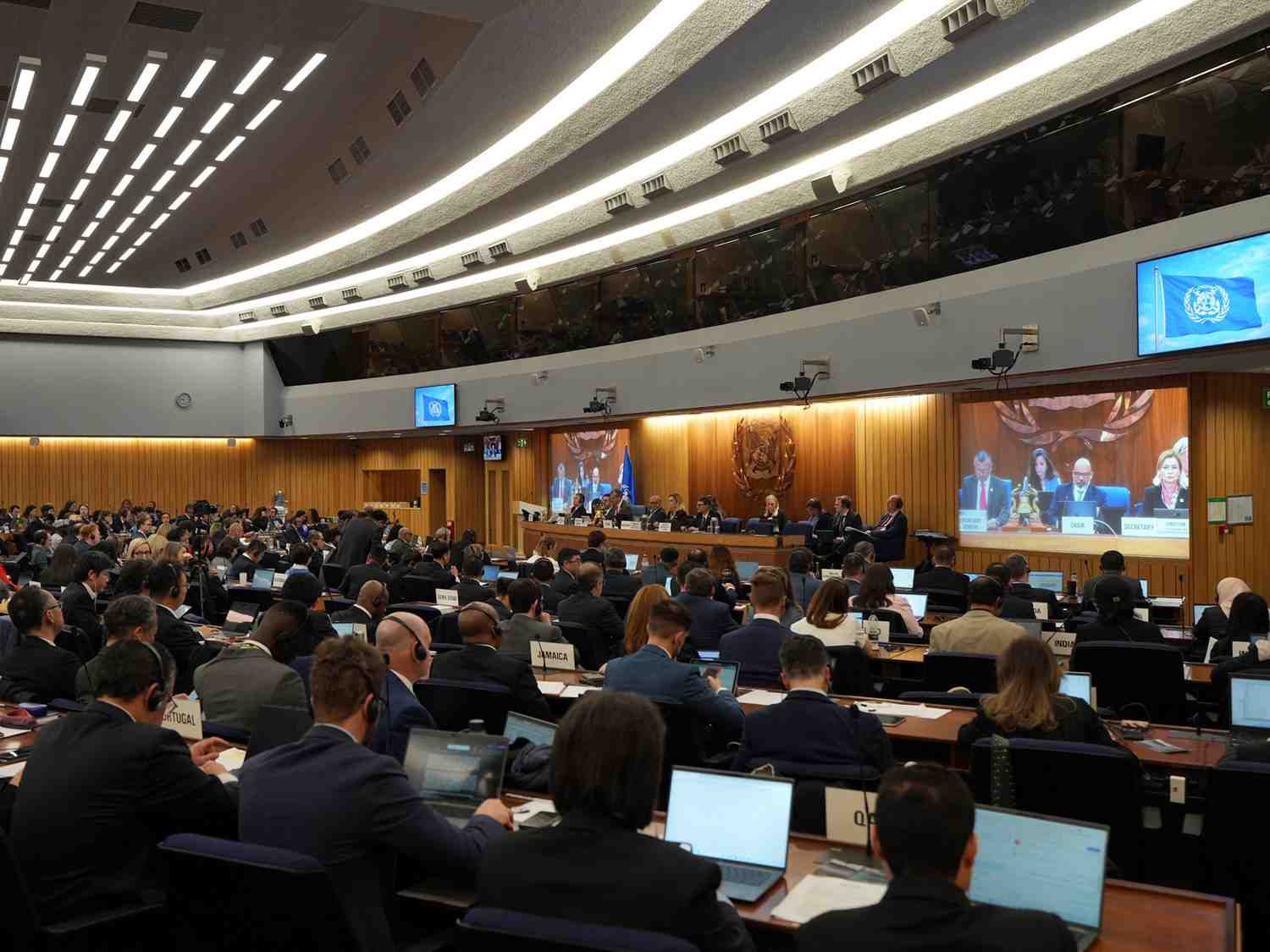
LONDON: The International Maritime Organization’s Legal Committee has approved a new set of guidelines to improve transparency and due diligence in ship registration, as well as prevent fraudulent registrations and misuse of flags.

The guidelines help to close a key regulatory gap for the maritime industry, given there is currently no binding international framework to regulate the registration of ships.

The newly approved Guidelines will assist new and existing flag State ship registries by providing practical measures to strengthen verification and due diligence, ensure accurate ownership records, and improve oversight of registration procedures.

Welcome step
Closing the 113th session of the Legal Committee held in London (13-17 April), IMO Secretary-General Mr. Arsenio Dominguez said:

“This is a welcome step towards ensuring due diligence in ship registration systems for the benefit of safety, protection of the marine environment and the well-being of seafarers, essential for the safety and security of international shipping. The Guidelines will also aid in eliminating cases of fraudulent registration.”

The Legal Committee noted that the number of ships flying a false flag had increased since the previous session in 2025, with 529 ships falsely flying the flag of a country in the past year. Nearly 40 Member States had seen cases of their flags being fraudulently used by criminal groups without their knowledge or consent.

The Guidelines focus on:

Legislation governance and control on who can perform registration of ships
Procedures for quality assurance in ship registration
Due diligence on ownership and ship identification
Due diligence on ship identity and eligibility checks
Information sources and information sharing.
The Committee also took decisions on the following issues:

Substandard shipping
The Committee re-established a correspondence group to continue working on the Regulatory Scoping Exercise to review IMO conventions and other tools available to Member States, with the aim of developing actions to prevent unlawful operations, including substandard shipping. The correspondence group will develop terms of reference for a working group to be convened at the next session to focus on the issue.

Strait of Hormuz
The Committee strongly condemned the threats and attacks against vessels in the Arabian Sea, Sea of Oman and the Gulf Region, particularly in and around the Strait of Hormuz.

The Committee strongly condemned the Islamic Republic of Iran’s threats related to the laying of mines in and around the Strait of Hormuz, in particular the Traffic Separation Scheme (TSS). It further condemned the reported toll system for vessels passing through the Strait of Hormuz and the discriminatory measures imposed by the Islamic Republic of Iran, which were contrary to the purposes of IMO.

The Committee affirmed that the Islamic Republic of Iran’s actions were contrary to the right of transit passage, which must not be impeded, through the Strait of Hormuz in accordance with international law.

Fair treatment of seafarers
The Committee noted with alarm that from 1 January to 31 December 2025, a total number of 410 new cases had been reported on the joint IMO/ILO database on seafarer abandonment, affecting more than 6,000 seafarers. These figures excessively surpass all the previous years’ record of reported cases. In 185 reported cases, there was no obligatory financial guarantee.

In addition, from 1 January 2026 a further 103 abandonment cases have already been recorded on the joint ILO/IMO database.

The Committee urged Member States to ratify the Maritime Labour Convention, 2006, including its 2014 amendments, and to apply the 2022 joint ILO/IMO Guidelines on how to deal with seafarer abandonment cases. It stressed that port, coastal and flag States must take seafarers’ rights seriously and cooperate with other stakeholders to resolve cases.

With regards to the ILO/IMO abandonment database, the Committee requested the Joint ILO/IMO Tripartite Working Group (JTWG) to consider creating a clear step-by-step guide (Standard Operating Procedure) with specific timelines and trigger dates, so authorities know exactly when and how to act quickly in urgent abandonment cases. It should not create extra administrative burden.

It asked the Task Force to recommend means to enhance the accuracy and verification of financial security documentation, through a secure reporting interface within IMO’s existing systems.

Liability and compensation regime related to alternative fuels
The Committee agreed that a regulatory gap existed in relation to liability and compensation for incidents involving alternative fuels used for ship propulsion and that existing international liability regimes do not adequately address the specific risks of these fuels – this gap must be addressed to ensure legal certainty and effective compensation for victims.

The Committee agreed there is a need to develop a dedicated regime, or amend existing ones, to ensure that their use in ship operation and propulsion is adequately covered. It established a correspondence group to continue the work on this matter and report back to the next session.

A full meeting summary will be published in due course.

DPA Kandla observes National Fire Service Week

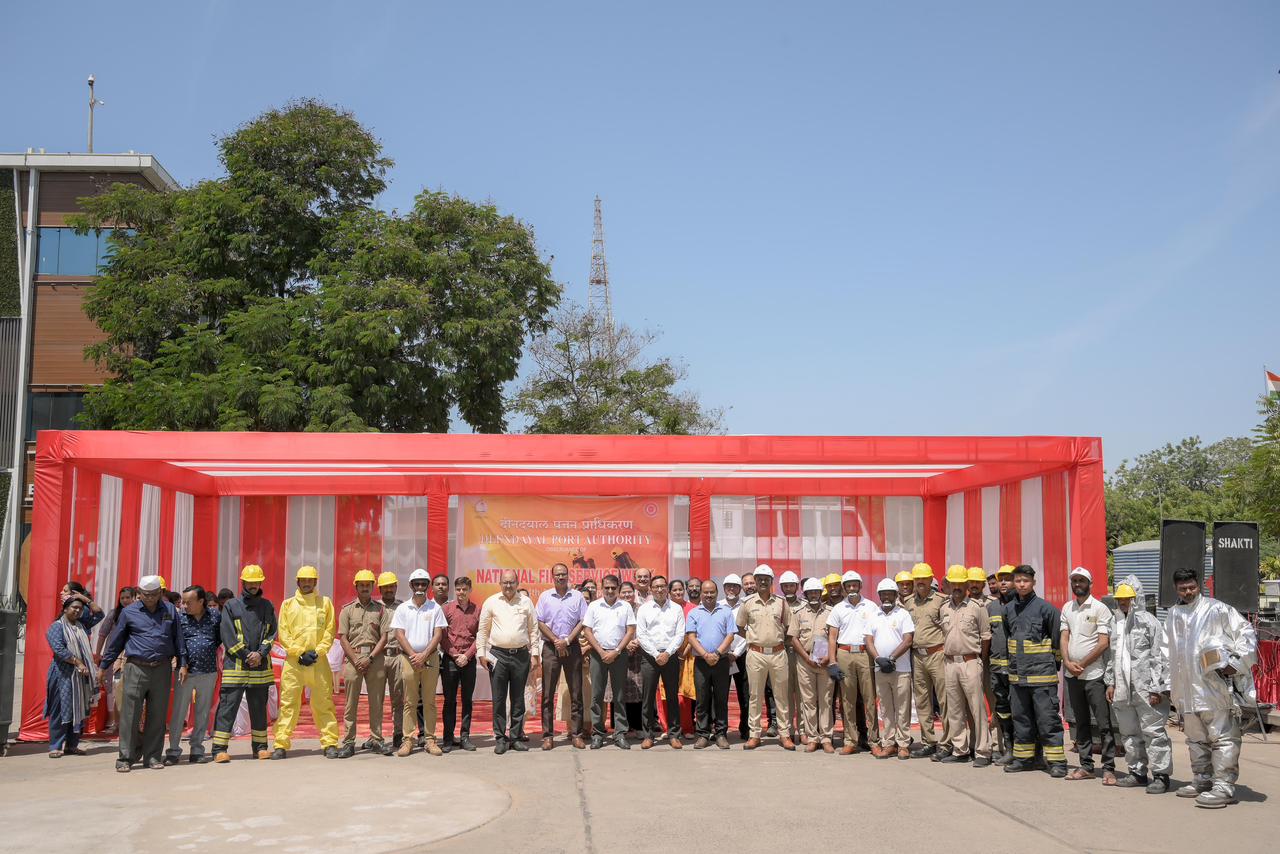
GANDHIDHAM : Deendayal Port Authority, Kandla observes National Fire Service Week from 14th to 20th April, paying homage to the brave fire personnel who laid down their lives in the line of duty. Mock Drill was conducted at Admin Building DPA, in the presence of Shri Nilabhra Dasgupta, IRS, Dy. Chairman. During the week,

DPA’s Fire Brigade is conducting fire safety awareness programmes, mock drills, demonstrations and training sessions across various locations. The observance is being carried out under the slogan: “Safe Schools, Safe Hospitals, and a Fire Safety-Aware Society – Together for Fire Prevention.”

81a29ea0 8b88 4c88 a073 f1e47fb2b691 DPA Kandla observes National Fire Service Week

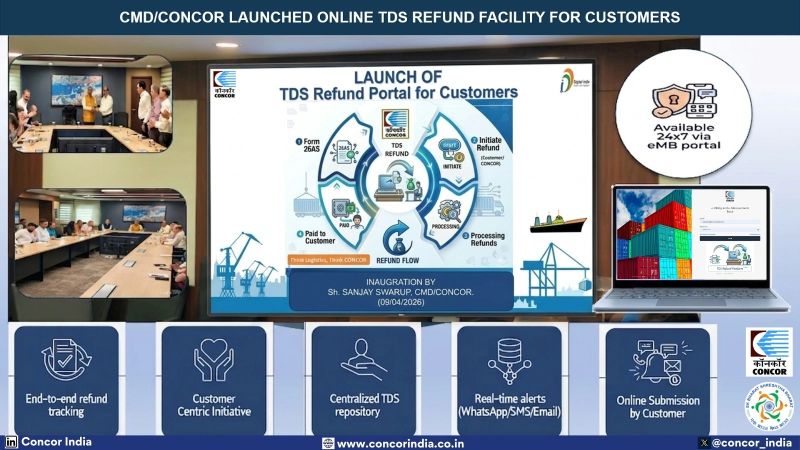
CONCOR launches online TDS Refund Portal to enhance customer convenience

NEW DELHI : Container Corporation of India (CONCOR) has taken a significant step towards digital transformation with the launch of its Online TDS Refund Portal on April 09, 2026. The portal was formally inaugurated by CMD Sanjay Swarup, reinforcing the organization’s commitment to improving customer experience through technology-driven solutions.

The newly launched portal is designed to streamline the process of TDS (Tax Deducted at Source) refunds for customers, making it faster, more transparent, and user-friendly. By digitizing the workflow, CONCOR aims to significantly reduce turnaround time, eliminate manual intervention, and provide real-time tracking of refund requests.

This initiative aligns with CONCOR’s broader strategy of adopting digital tools to enhance operational efficiency and deliver seamless services across its logistics network. The move is expected to benefit a wide range of customers by simplifying procedures and ensuring greater accountability in financial transactions.

Speaking on the occasion, CMD Sanjay Swarup highlighted the importance of leveraging technology to build a more responsive and customer-centric organization. He emphasized that such initiatives not only improve service delivery but also strengthen trust and long-term partnerships with stakeholders.

With the introduction of the Online TDS Refund Portal, CONCOR continues to advance its digital roadmap, focusing on innovation, transparency, and ease of doing business—further solidifying its position as a leading logistics service provider in India.

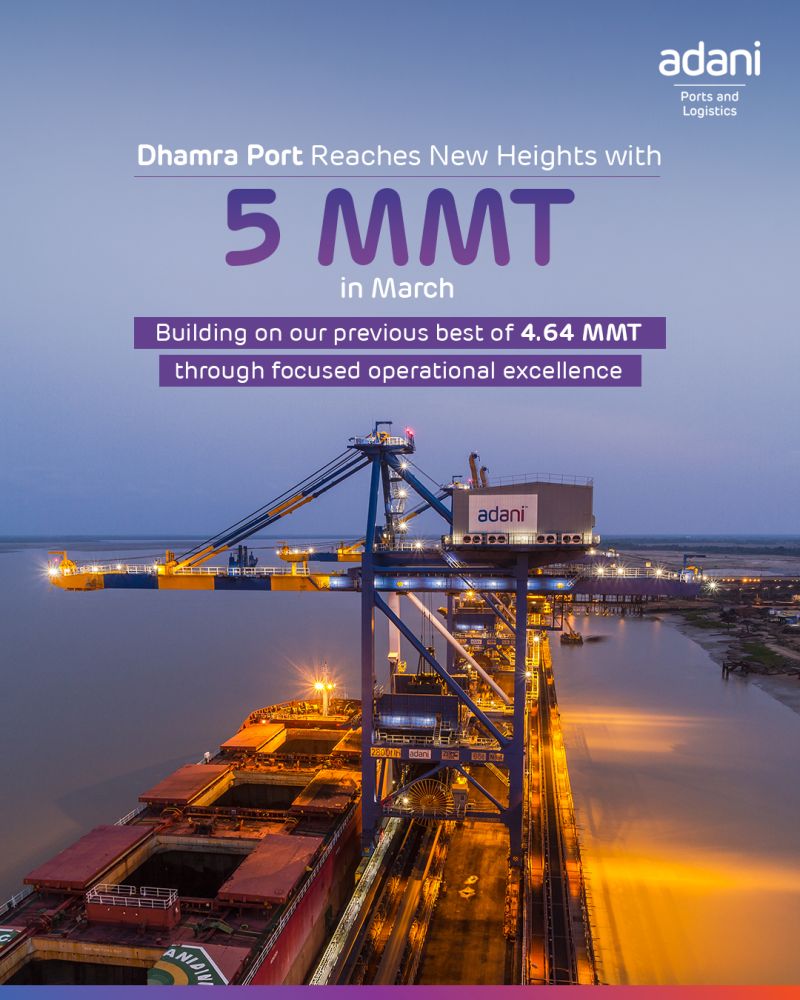
Adani Dhamra Port achieves record 5 MMT monthly cargo throughput in March 2026

BHADRAK : Adani Dhamra Port has set a new benchmark in operational performance by handling an all-time high cargo volume of 5 million metric tonnes (MMT) in March 2026, marking a significant milestone in its growth journey.

This milestone not only highlights operational excellence but also reflects the port’s growing contribution to strengthening regional supply chains and supporting India’s maritime growth story.

This record-breaking achievement reflects the port’s strong operational resilience, driven by seamless coordination across marine, logistics, and terminal teams, along with disciplined execution on the ground. The milestone underscores the port’s increasing role as a key gateway for bulk and containerized cargo on India’s eastern coast.

The surge in throughput was supported by enhanced berth productivity, faster vessel turnaround times, and optimized evacuation through rail and road networks. Strategic investments in infrastructure, mechanization, and digital systems have further enabled the port to handle higher cargo volumes with greater efficiency and reliability.

Handling a diverse cargo mix—including dry bulk, breakbulk, and container traffic—the port continues to strengthen its position as a preferred logistics hub for industries across eastern and central India. The achievement also reinforces supply chain stability for key sectors such as energy, metals, and manufacturing.

A spokesperson for the port acknowledged the contribution of all stakeholders, stating that the milestone was made possible through the relentless commitment of on-ground teams, strong collaboration with customers, and the continued support of partners across the logistics ecosystem.

As it builds on this momentum, Dhamra Port remains focused on expanding capacity, enhancing multimodal connectivity, and delivering consistent, high-quality service to meet the evolving needs of trade and industry.