Home Blog Page 349

VPPL CMD chairs high-level review on Vadhvan Port progress and way forward

MUMBAI : The Chairman and Managing Director (CMD) of Vadhvan Port Project Limited (VPPL), Shri Gaurav Dayal, IAS, convened a high-level review meeting to assess the ongoing developments and chart the way forward for the strategically significant Vadhvan Port Project Ltd. (VPPL) – 13th major port of India. The meeting focused on key aspects, including the project’s future roadmap, land acquisition for road connectivity, fisheries-related policy considerations, and updates on the Vadhvan Port skilling program aimed at local workforce skill development.

Dr. Indu Rani Jakhar, IAS, Collector and District Magistrate, Palghar, and Ms. Prerna Deshbhratar, IAS, Commissioner of Fisheries, Mumbai, Shri Ravish Kumar Singh, IRTS, Dy. Chairperson, JNPA and CEO, VPPL, were also present at the meeting and contributed to the discussions.

The meeting was attended by other senior officials and representatives from key central and state government departments and agencies, including authorities from port administration, district administration, law enforcement, forest and fisheries departments, as well as representatives from NHAI, DVET, Indian Railways, technical consultants, and other skill development institutions.
Discussions emphasized the need for expediting land acquisition processes for critical road infrastructure to ensure seamless connectivity to the port. The CMD underscored the importance of adopting a balanced approach in addressing fisheries-related concerns, ensuring that the livelihoods of local fishing communities are safeguarded while advancing project objectives.

Updates were also shared on the Vadhvan Port skilling program, which is designed to equip local youth with industry-relevant skills and enhance employment opportunities in the region as the project progresses. The CMD highlighted the importance of inter-agency coordination and directed all stakeholders to work in close collaboration to address concerns and maintain momentum in project execution.

About VPPL:
Vadhvan Port Private Limited (VPPL) is the 13th major port of India, a special purpose vehicle (SPV) formed between Jawaharlal Nehru Port Authority (JNPA) and the Maharashtra Maritime Board (MMB). Strategically located in Palghar district, near Dahanu, Maharashtra, VPPL is poised to be among the top 10 ports globally. The foundation stone for the port was laid on August 30th, 2024, by the Hon’ble Prime Minister of India, Shri Narendra Modi.

Committed to sustainability, VPPL will be 100% green from inception, ensuring minimal environmental impact. The port is set to enhance trade efficiency with the capacity to handle 24 million TEUs, stimulate economic growth, and contribute to regional development. Through initiatives like the Vadhvan Port Skilling Program, VPPL focuses on empowering local communities.
Shashi Tharoor spots silver lining as Hormuz tensions boost Kerala’s Vizhinjam Port traffic

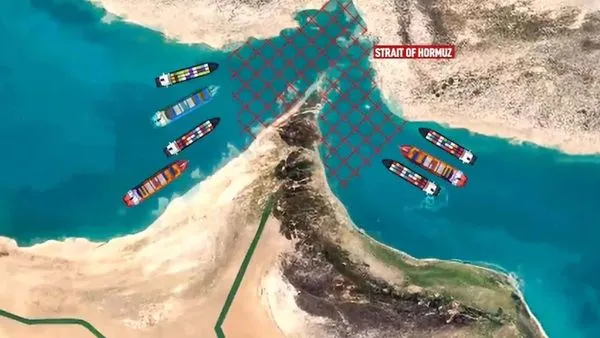
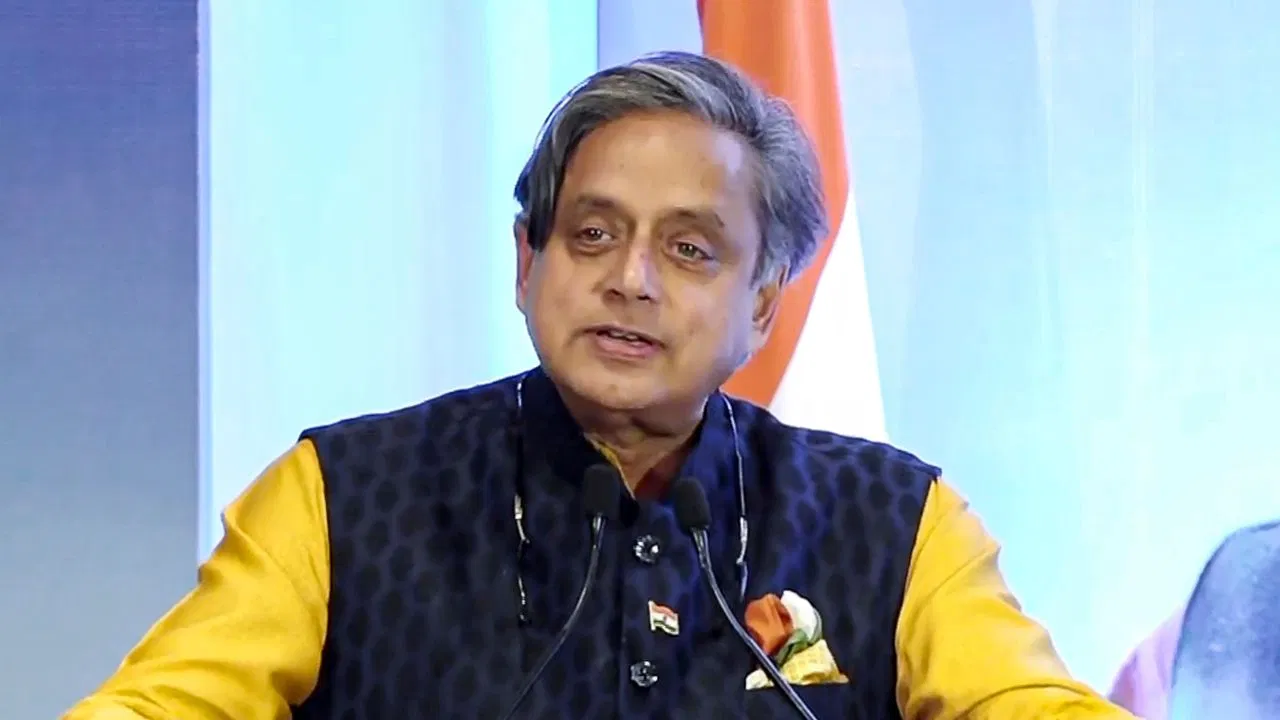
THIRUVANANTHAPURAM : Amid rising tensions in the Strait of Hormuz disrupting global shipping routes, Congress MP Shashi Tharoor has highlighted an unexpected opportunity for India, pointing to a surge in activity at Kerala’s Vizhinjam Port in his Thiruvananthapuram constituency.

In a post on X, Tharoor said nearly 100 vessels are either queued or seeking berthing at the port, signalling a shift in global maritime traffic. “The Strait of Hormuz crisis has shifted global shipping eyes to my constituency,” he wrote, calling it a significant moment for India’s maritime ambitions.

Vizhinjam Port, the country’s first deep-water transshipment hub, has seen rapid growth in recent months. Tharoor noted that the port handled its one millionth TEU (twenty-foot equivalent unit) in record time and is now fast-tracking Phase II expansion. In March 2026 alone, it handled 61 vessels, marking a new operational high.

The disruptions in the Strait of Hormuz, a key global shipping chokepoint, have pushed companies to look for stable alternatives. Tharoor said Vizhinjam is increasingly emerging as a reliable gateway in this evolving scenario.

“From handling its 1 millionth TEU in record time to fast-tracking Phase II, Vizhinjam is officially India’s transshipment answer to the world. When I first helped bring in the tender bid that made the port a reality, it was a long-shot project with plenty of sceptics and critics,” he said.

Recalling the project’s early days, Tharoor said it once faced significant doubt but has now transformed into a critical maritime asset. “With the world looking for a new, reliable gateway, Vizhinjam has answered the call,” he added, describing the port as a “global necessity.”

The port’s expansion plans further highlight its growing importance, with work underway to enable simultaneous berthing of up to five motherships, which is expected to significantly enhance capacity.

Tharoor also positioned Vizhinjam as a serious competitor to global hubs such as Colombo and Singapore, suggesting it could set new benchmarks in transshipment.

“61 vessels handled in March 2026 alone, a new record. 100 berthing calls pending. Expansion underway to accommodate 5 motherships simultaneously. We are witnessing the birth of a maritime giant that doesn’t just compete with global hubs like Colombo or Singapore; it sets a new standard,” he wrote.

As geopolitical tensions reshape global trade routes, Vizhinjam’s rise underscores how strategic infrastructure can turn disruption into opportunity, strengthening India’s position in global shipping.

Source : India Today

India ‘calls in’ Iranian envoy, conveys ‘deep concern’ after two oil tankers prevented from crossing Strait of Hormuz

NEW DELHI : Indian Foreign Secretary Vikram Misri on Saturday (April 18, 2026) met Iran’s ambassador to India, Mohammad Fathali, and conveyed India’s “deep concern” after two India-bound energy-carrying vessels were prevented from transiting the Strait of Hormuz by Iranian naval guards.

This is the first instance of India-bound energy carriers being prevented by the naval units of the Islamic Revolutionary Guard Corps (IRGC) of Iran during the ongoing fortnight-long ceasefire in the U.S.-Iran conflict, which came into effect on April 8. A day earlier, Iran’s Foreign Minister Seyed Abbas Araghchi had said that the Strait of Hormuz was “completely open” for the remaining period of the ceasefire.

“During the meeting, the Foreign Secretary conveyed India’s deep concern at the shooting incident earlier today (Saturday) involving two Indian-flagged ships in the Strait of Hormuz. He noted the importance that India attached to the safety of merchant shipping and mariners and recalled that Iran had earlier facilitated the safe passage of several ships bound for India,” the Ministry of External Affairs (MEA) said, adding Mr. Misri “urged the Ambassador to convey India’s views to the authorities in Iran and resume at the earliest the process of facilitating India-bound ships across the Strait.”

The Ministry described the meeting as the Ambassador being “called in”, not “summoned”.

Mr. Misri had represented India in an international meeting organised virtually by the United Kingdom and France on Friday, where at least 44 countries discussed the need for maintaining free and open navigation in the Strait of Hormuz.

In a social media post on Friday, Mr. Araghchi had said, “In line with the ceasefire in Lebanon, the passage for all commercial vessels through the Strait of Hormuz is declared completely open for the remaining period of the ceasefire”.

U.S. President Donald Trump also announced on the same day on his Truth Social platform that “Iran has agreed to never close the Strait of Hormuz again. It will no longer be used as a weapon against the World.”

However, soon after the announcement by Mr. Araghchi, the IRGC announced that the strait had reverted to “strict control” because of what it described as the U.S. Navy’s blockade of Iranian ships. The IRGC also termed it as acts of “piracy” by the U.S. Navy. In a statement shared by Tehran Times, Iran’s Khatam al-Anbiya Central Headquarters spokesperson said, “Following the U.S. violations, transit through the Strait of Hormuz has reverted to its previous state of strict military control.”

The strait has emerged as a critical chokepoint since tensions escalated after the U.S.-Israel attacks on Iran on February 28. Iran has maintained that navigation remains open. However, it has indicated that it would impose restrictions on ships belonging to the U.S., Israel and several other Western countries, while allowing China-bound ships to transit through the strait.

Source : HB

“You Gave Clearance”: Distress Audio From Indian Ship during Hormuz Firing

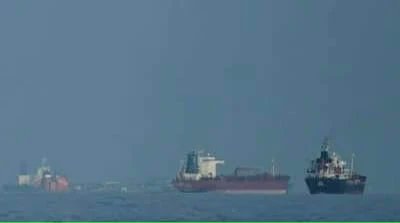
TEHRAN : Two Indian-flagged tankers turned back in the Strait of Hormuz after being fired upon by Iranian gunboats yesterday, as the waterway that carries one-fifth of the world’s oil and gas remains at the centre of confusion in the middle of a war between the US, Israel, and Iran. No injuries were reported, and the vessels were not damaged in the firing, sources said.

A distress message from one of the tankers has now emerged, capturing the confusion that ensued during the firing. A crew member on board the crude oil tanker, Sanmar Herald, is heard trying to communicate with the Iranian navy in a roughly 30-second audio shared by Tanker Trackers, a maritime intelligence firm that tracks shipments.

“Sepah Navy. Sepah Navy. This is motor tanker Sanmar Herald. You gave me clearance to go. My name is second on your list. You are firing now. Let me turn back,” the individual was heard saying.

Citing footage recorded by it, American broadcaster NBC also reported that the vessel was in the strait’s ‘Green Area’. The tanker had turned off its Automatic Identification System (AIS) while heading eastbound but turned it back on the eastern side.

The other vessel that came under firing was identified as Jag Arnav.

MEA Summons Iran Envoy

New Delhi summoned the Iranian ambassador after the incident and conveyed India’s “deep concern” over the firing incident. The Foreign Secretary “noted the importance that India attached to the safety of merchant shipping and mariners and recalled that Iran had earlier facilitated the safe passage of several ships bound for India,” the Ministry of External Affairs said.

“Reiterating his concern at this serious incident of firing on merchant ships, Foreign Secretary urged the Ambassador to convey India’s views to the authorities in Iran and resume at the earliest the process of facilitating India-bound ships across the Strait,” the MEA said. The ambassador “undertook to convey these views to the Iranian authorities,” the ministry added.

Confusion prevails on the strait’s operations as Iran may not be working as a cohesive system amid the war. Yesterday, Iran made a U-turn on its decision to reopen the Strait of Hormuz, citing the US blockade by as a ceasefire violation and leading several ships to abandon attempts to cross the crucial waterway.

“The control of the Strait of Hormuz has returned to its previous state…under strict management and control of the armed forces,” said Iran’s joint military command on Saturday.

This reverses Iran’s earlier decision to open the strait after a ceasefire was agreed to stop Israel’s war with Hezbollah.

The Iran Guards have now warned, in a statement issued through Tasnim news agency, that approaching the Strait of Hormuz would be considered cooperating with the enemy, and the violating vessels will be targeted.

A week earlier, Iran’s Ambassador to India Mohammad Fathali had told NDTV that the strait will remain open for Indian ships. “We have good contact with the [Indian] government for allowing their ships to sail through the Strait of Hormuz,” he had said.

Source : NDTV World

India-flagged vessels start sailing out of Persian Gulf

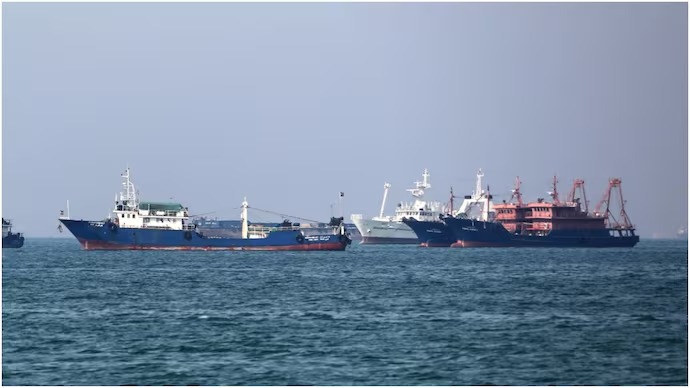
NEW DELHI : Hours after Iranian Foreign Minister Abbas Araghchi said that the Strait of Hormuz is “completely open”, Indian ships stranded in the Persian Gulf started sailing out, approaching the Strait.

The Hindu has been tracking Indian-flagged vessels and ships bound for India in the Persian Gulf for the past month. Most of these ships are critical to India’s energy needs and are carrying crude oil.

Crude oil tanker MT Desh Garima has set sail from the Ras Laffan port in Qatar. It had started its voyage on March 30 before anchoring in the Gulf.

Crude oil tanker MT Desh Garima has set sail from the Ras Laffan port in Qatar. It had started its voyage on March 30 before anchoring in the Gulf.

Desh Suraksha, another crude oil tanker carrying around 0.8 million barrels of crude oil, was nearing Iran’s Larak island. It too had been moored for close to three weeks after sailing out of the Al Rams port in UAE.

The very large crude container (VLCC) MT Desh Vaibhav, which is bringing around 2 million barrels of crude oil from Iraq’s Al Basrah, had been in the Gulf ever since the Iran war began on February 28, 2026.

Desh Vibhor, another VLCC, has started its homeward journey from Al Rams port. VLCC Sanmar Herald which departed from Al Basrah on March 5, 2026, too is on its way out.

Besides these, container ship CMA CGM Diamond, which had set sail from the Khalifa port in the UAE on March 30, 2026, but was anchored in the Gulf, is on its way to the Jawaharlal Nehru Port in Navi Mumbai.

Another container ship, CMA CGM Manaus, was approaching the Larak Island around 1.30 a.m. IST. Bulk carrier Jag Arnav too sailed out of the Al Jubail port in Saudi Arabia.

LPG tanker DV Sarv Shakti, a Marshall Island-flagged ship, which had left Ghantoot in UAE on March 3, 2026, was on its way towards the strait.

Marinetraffic.com showed that ships nearing the Strait of Hormuz are charting the course set by the Iranian regime. Last week, Iran released a navigation chart instructing ships to stay close to the country’s coast. The chart had marked a portion of the Strait, north of Oman, in red and had declared it a “hazard zone”.

On Friday (April 17, 2026), Reuters quoted a senior Iranian official who said that ships can sail through the Strait “but this needs to be coordinated ‌with Iran’s Islamic Revolutionary Guard Corps”.

“The Iranian official said transits would be restricted to lanes that Iran deemed safe, ⁠adding that military vessels were still prohibited from crossing the strait,” the report said.

Source : The Hindu

Seafarers’ Union appeals DG Shipping to ensure Safety of Indian Seafarers operating in Strait of Hormuz

NEW DELHI: Citing mounting security threats and deteriorating working conditions in West Asia and the Persian Gulf, the All India Seafarer Union (AISU) on Saturday appealed to the central government for immediate intervention to safeguard Indian seafarers operating in the increasingly volatile Strait of Hormuz.

In a letter addressed to the Directorate General of Shipping under the Government of India, All India Seafarer Union working President Mr. Abhijjet D Sangle said that the strategic waterway remains under restricted and controlled conditions, marked by heightened military presence, limited navigational freedom, and persistent risks to commercial vessels.

“Indian seafarers—who form a significant portion of the global maritime workforce—are particularly vulnerable as many are currently deployed on ships transiting or stationed in the Gulf region,” said Sangle.

While authorities have indicated that the Strait remains open, maritime movement continues to be tightly controlled, with heightened military presence, security clearances, and ongoing geopolitical tensions, he said.

“Reports of attacks on commercial vessels, the presence of sea mines, and restricted navigation corridors underline the persistent risks faced by seafarers transiting this region,” Mr. Sangle said.

According to Mr. Sangle, Indian seafarers who form a significant portion of the global maritime workforce, are directly exposed to these dangers.

“Many vessels with Indian crew members remain delayed, rerouted, or anchored under uncertain conditions, raising serious concerns over their safety, mental well-being, and contractual rights,” he said.

The union stressed that frequent incidents involving commercial vessels, coupled with potential maritime hazards, have created an atmosphere of uncertainty and danger. It noted that many Indian crew members are enduring extended periods onboard under stressful and potentially life-threatening conditions.

The union has further called for enhanced diplomatic engagement by the Ministry of External Affairs with regional authorities to secure safe passage for Indian-flagged and Indian-crewed vessels. It recommended establishing contingency support mechanisms to respond swiftly in case of emergencies, including evacuation if required.

Highlighting welfare concerns, the union urged shipping companies to prioritise timely crew changes, provide mental health support, and avoid prolonged anchoring of vessels in high-risk zones.

It also proposed a comprehensive war-risk compensation framework, including allowances, insurance coverage, and compensation mechanisms for seafarers deployed in conflict-affected waters.

Additionally, AISU called for stricter monitoring and compliance measures to ensure that shipping companies adhere to international maritime safety standards and Indian regulations, with accountability for negligence.

Source: ETV Bharat

India gets measures adopted on Seafarers Abandonment at IMO : DG Shipping

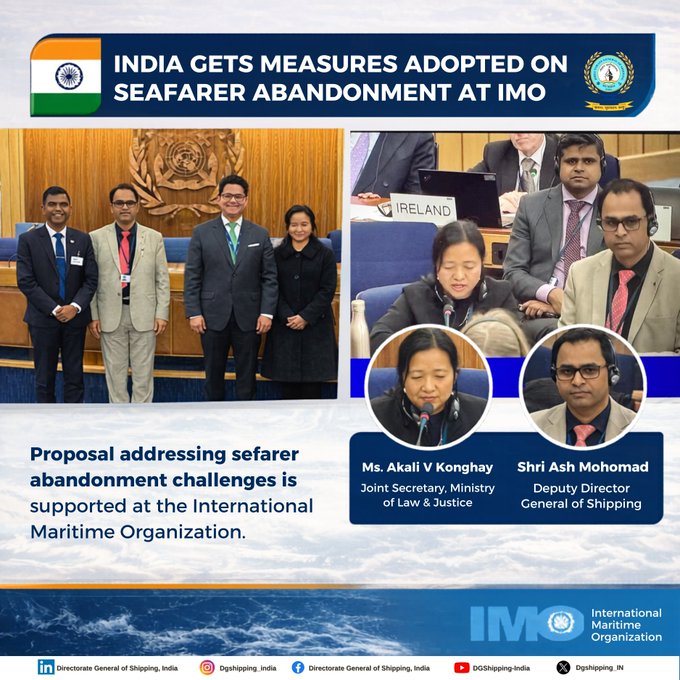
LONDON : India is pleased to share that its proposal submitted to the 113th Session of the Legal Committee of the International Maritime Organization (IMO) was accepted and supported by the Committee.

The proposal addressed the growing challenge of seafarer abandonment and emphasized stronger practical measures under the Maritime Labour Convention (MLC, 2006) and related guidelines for protection of the human element at sea. India highlighted operational gaps in activation of financial security, verification, and reporting mechanisms, and proposed drafting of a Model Standard Operating Procedure (SOP) with clear timelines and coordinated response measures for cases involving flag States, port States, and States of nationality, along with a secure web-based system to enhance coordination, reporting of data, and verification mechanisms.

The Indian delegation actively participated in the session and was represented by Ms. Akali V Konghay, Joint Secretary, Ministry of Law & Justice, GoI and Shri Ash Mohomad, Deputy Director General of Shipping, GoI at IMO Hqs London, along with online representation from the Indian Maritime Administration/ Industry representives from 13th April to 17th April, 26.

This reflects India’s continued commitment towards safeguarding seafarers’ welfare, strengthening maritime governance, and meaningful contribution to the progressive development of international maritime law under the auspices of International Maritime Organization.

The delegation also held meeting with Director IMLI, and interacted with Indian students who were on exposure visit to IMO from WMU and IMLI.

IOS Sagar departs Phuket, Thailand

NEW DELHI : Indian Ocean Ship (IOS) SAGAR – INS Sunayna departed Phuket, Thailand on 17 Apr 2026 on completion of a high-tempo three-day Operational Turnaround (OTR), marking the successful culmination of her second port call during the ongoing deployment.

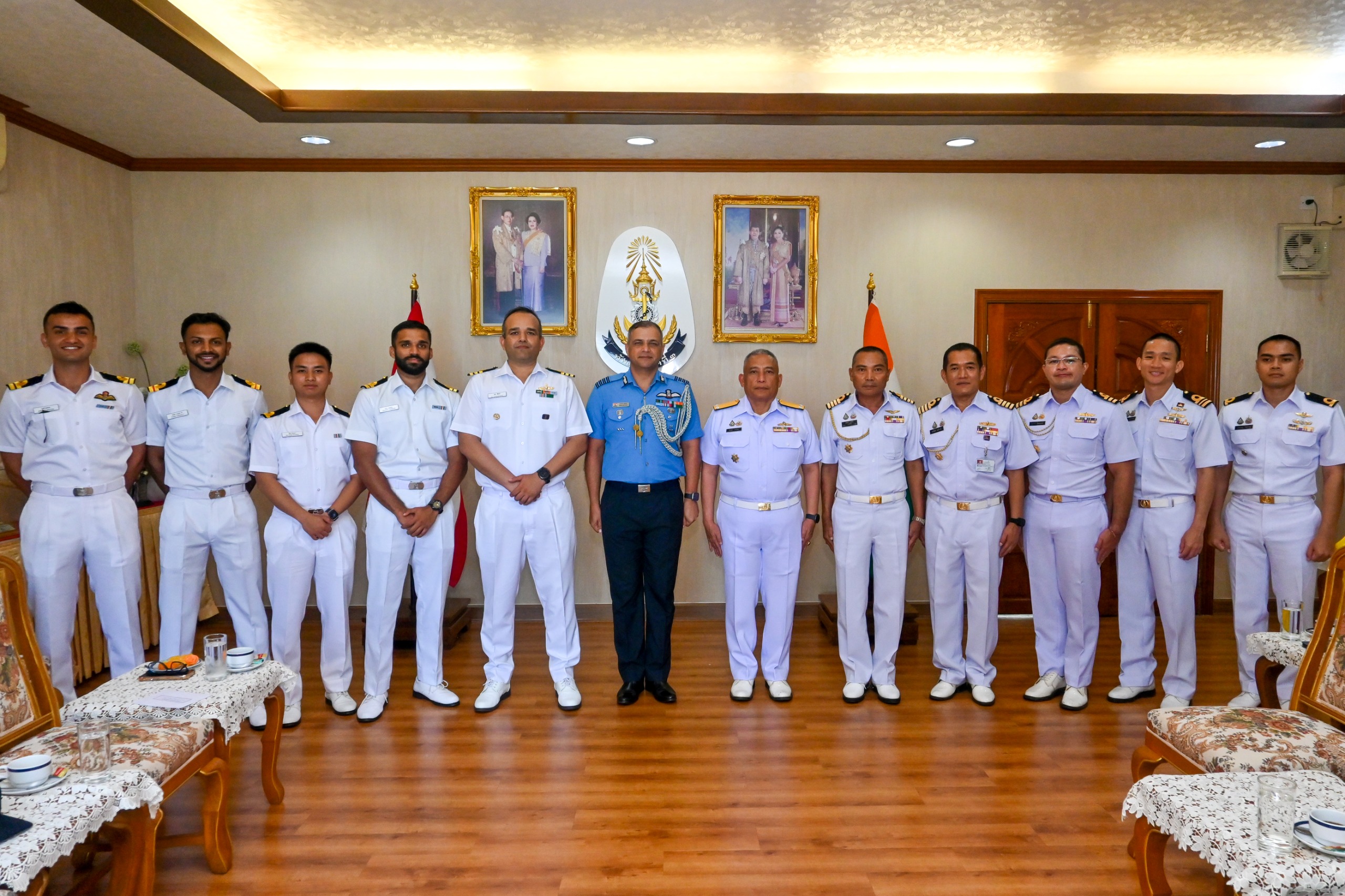
During the visit to Phuket, IOS SAGAR undertook a series of professional, strategic and cultural engagements with the Royal Thai Navy (RTN), significantly strengthening bilateral naval cooperation. Commander Siddharth Chaudhary, Commanding Officer, INS Sunayna called on Rear Admiral Sathaporn Wajarat, Chief of Staff of the Third Naval Area Command, RTN, reaffirming shared commitment towards maritime cooperation.

Professional and interpersonal ties were enhanced through a friendly football match and a joint Yoga session, participated by crew from IOS Sagar and RTN. A formal deck reception hosted onboard was attended by senior naval dignitaries, facilitating a platform for sharing insights on the IOS Sagar mission and discussions on maritime cooperation and regional security. The ship was opened to visitors, promoting people-to-people connect.

During a Passage Exercise (PASSEX) with HTMS Klongyai, operational interoperability was demonstrated, which included communication drills and formation manoeuvres, highlighting seamless coordination and “plug-and-play” capability between the two navies. The visit underscores the strong and enduring maritime partnership between India and Thailand, aligned with the MAHASAGAR vision of Mutual and Holistic Advancement for Security and Growth Across Regions.

IOS SAGAR has now proceeded to Jakarta, Indonesia, for the next port of call, continuing her mission to strengthen maritime cooperation in the Southeast Indian Ocean Region.

IRGC forces US troops to retreat from Strait of Hormuz after attack on Iranian ship: Iran media

TEHRAN: The Islamic Revolution Guards Corps (IRGC) has claimed that US forces stationed in the Sea of Oman were forced to retreat after firing at an Iranian merchant vessel, according to a report, Press TV reported.

Citing Mehr news agency, Press TV reported that the US forces operating in the region targeted an Iranian merchant ship in an attempt to compel it to return to Iranian territorial waters.

According to the report, the action came amid wider maritime tensions involving the Strait of Hormuz and the movement of international shipping vessels.

It added that the US move was linked to the closure of the Strait of Hormuz and the return of Indian and British merchant ships, as well as control measures carried out by the IRGC.

However, it emphasised, the Americans were forced to retreat and leave the area following the “timely presence and rapid response” of IRGC naval units in support of the Iranian vessel, as per a report by Press TV.

The report further stated that the United States had announced a naval blockade on Iran after failing to achieve its military objectives in what it described as a joint war of aggression with Israel that began in late February.

It said the blockade was imposed in response to Iran’s restrictions on transit through the Strait of Hormuz, a key global energy route that accounts for a significant share of worldwide oil supply.

Iran had briefly eased restrictions on non-hostile commercial shipping in the Strait on Friday amid efforts to negotiate a permanent end to the conflict, as reported by Press TV.

However, the IRGC Navy said in a statement on Saturday that Iran had closed the Strait of Hormuz after the United States allegedly maintained its blockade on Iranian ports in violation of a two-week ceasefire announced by US President Donald Trump on April 8.

“However, due to the violation of the ceasefire conditions, and as the American adversary has not lifted the naval blockade on Iranian vessels and ports, the Strait of Hormuz has been closed as of this evening until this blockade is removed,” the IRGC said.

Earlier on Sunday, Tasnim news agency reported that Iranian Armed Forces intercepted two oil tankers sailing under the flags of Botswana and Angola in the Strait of Hormuz and turned them back.

Zim strike halts operations as takeover tensions escalate

HAIFA: Approximately 900 Zim employees covered by a collective agreement have been on strike since Thursday afternoon. The strike follows disputes that arose during negotiations between the workers’ union and management over a new collective agreement, as part of the planned transfer of control of the company.

The talks are being conducted between the union and representatives of Zim’s board and management, alongside representatives of the German shipping company Hapag-Lloyd and the FIMI fund, which are expected to acquire ownership of the company. Negotiations between the parties are set to continue over the weekend, with management aiming to restore normal operations by early next week.

Zim’s workers’ union declared a labor dispute at the beginning of the year, even before the signing of the sale agreement, due to its opposition to transferring control to foreign ownership. The declaration allows employees to initiate a strike at any time. The current action, excluding around 80 employees on personal contracts, has effectively led to an almost complete shutdown of Zim’s operations in Israel, including ship unloading.

Union chairman Oren Caspi said that Hapag-Lloyd is seeking to push hundreds of employees into early retirement under terms that contradict the existing collective agreement at Zim. The company, for its part, said the committee declared a strike despite the parties having reached a preliminary understanding on the terms of a new collective agreement related to the change in control.

Zim CEO Eli Glickman to step down months after $4.2 billion sale
Israel faces strategic choice as Zim sale nears decision point
Zim seeks $924,000 bonus for CEO ahead of $4.2 billion sale

Zim is currently a company without a controlling shareholder. About two months ago, Hapag-Lloyd won a tender to acquire the company and partnered with the FIMI fund, to which it plans to sell the Israeli operations. As part of the deal, the two will acquire 100% of Zim’s shares for $4.2 billion. Zim is expected to be delisted from the New York Stock Exchange (NYSE), where it has been traded since its 2021 IPO at a valuation of $1.5 billion.