Home Blog Page 372

KLTTA & KCBA applaud Deendayal Port Authority’s No. 1 Rank amid Global Shipping Crisis

GANDHIDHAM : Amidst the challenging global shipping environment arising from the ongoing conflict situation in the Middle East following the attack on Iran by the United States and Israel, the maritime sector worldwide, including India, has faced significant disruptions. Despite these adverse conditions, Deendayal Port Authority (DPA) has achieved a remarkable milestone by securing the No. 1 position among major ports in India in terms of cargo handling.

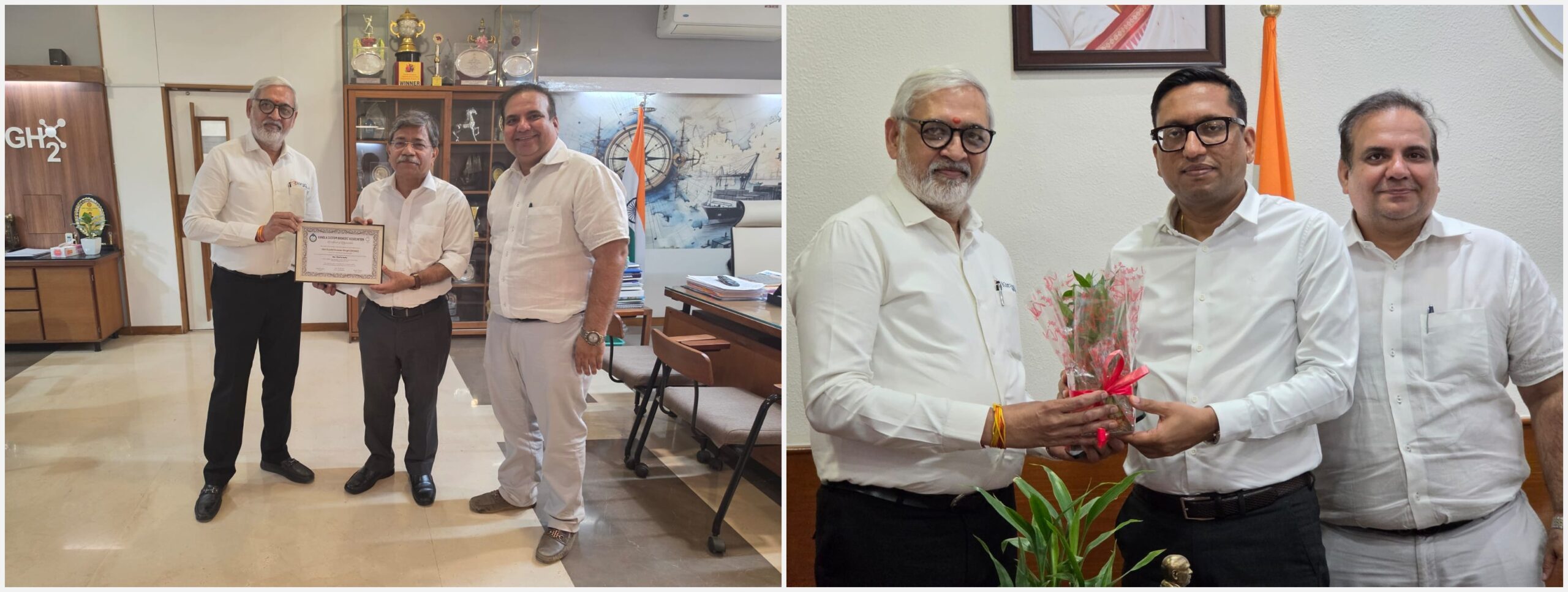
On this significant achievement, the Kandla Liquid Tank Terminal Association (KLTTA) and the Kandla Custom Brokers’ Association (KCBA) extended their heartfelt congratulations to the port administration.

Mr. Dinesh Gupta, Vice President of KLTTA, andMr. Keyur Thakrar, Secretary of KCBA, personally met the Chairman of DPA, Shri Sushil Kumar Singh, and Deputy Chairman Shri Nilabhra Das Gupta, to convey their appreciation for this outstanding accomplishment.

They acknowledged that under the able and dynamic leadership of the Chairman, Deendayal Port Authority has emerged as the leading major port in the country. They further stated that both associations remain committed to extending their full cooperation and support towards the continued growth and development of the port in the future.

This achievement underscores the resilience, efficiency, and operational excellence of Deendayal Port Authority in navigating global challenges while maintaining its leadership position in India’s maritime sector.

Govt considers more support for exporters as West Asia tensions drive up freight costs

NEW DELHI : The Government is considering additional measures to help exporters cope with disruptions arising from the West Asia crisis, including a possible extension of freight subsidies, as many are being forced to take longer shipping routes, officials said.

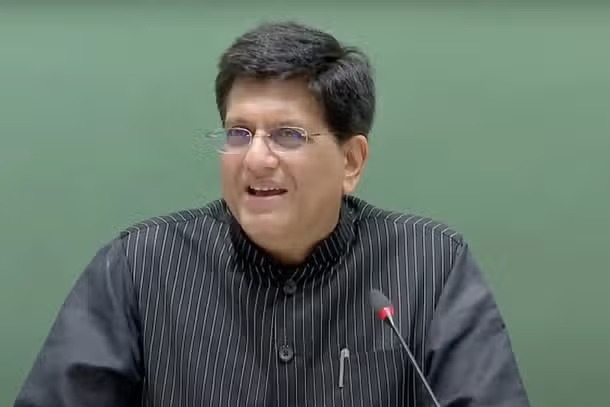
The Commerce and Industry Minister Shri Piyush Goyal said on Thursday that,“the government has already announced measures to help exporters tackle the impact of the West Asia crisis, and some more decisions are on the anvil,” .

An official said that while relief has been extended on insurance, the government is now examining the possibility of easing the burden of elevated freight rates, which have risen sharply for several destinations.

“All ministries and departments concerned are looking at various ways in which assistance can be extended to industry to cope with the crisis,” the official said.

Following the escalation of tensions in West Asia in recent weeks, shipping routes have been significantly disrupted, leading to higher freight and insurance costs, as well as concerns over the availability of key inputs, including petroleum products.

Trade impact
Goyal said he discussed the geopolitical situation in bilateral meetings with trade ministers on the sidelines of the WTO ministerial meeting in Cameroon, with many expressing concern over the impact on global trade.

“It has hurt the global economy. It is hurting global trade. The death and destruction of property and innocent lives is something that we are all concerned about. The difficulties in the free movement of goods across open seas is another issue we are collectively hoping can be resolved quickly,” he said.

India, however, has shown resilience on food and energy security, Goyal added. “Consumers are getting their LPG. Industrial LNG supplies have been reinstated to about 80 per cent, with several sectors receiving full supply. There is no shortage of petroleum products. Our refineries are operating at full capacity. There are sufficient crude oil stocks, and fresh shipments of crude oil, LPG and LNG are ensuring supply continuity,” he said.

‘India only country to lose mariners at Hormuz’: Foreign Secretary at UK-led Iran war talks

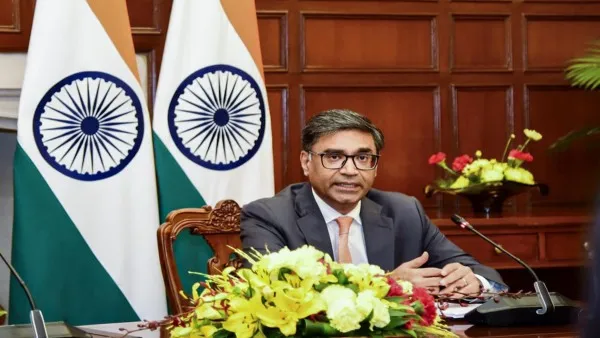
NEW DELHI : The Foreign Secretary Mr. Vikram Misri on Thursday joined UK-led talks on the reopening of the Strait of Hormuz and the ongoing conflict in West Asia.

India Joins UK-Led Talks With Other Countries On West Asia Conflict

At the virtual gathering, which was attended by more than 60 countries, Foreign Secretary Vikram Misri, who represented India, noted that it was the only country to have lost citizens in the conflict-hit Strait of Hormuz. At the multilateral meeting convened by the UK, New Delhi’s stance on the West Asian conflict was emphasised, along with the importance of principles of freedom of maritime navigation.

According to the Ministry of External Affairs (MEA), Misri “underlined that the way out of the crisis consisted of de-escalation and a return to the path of diplomacy and dialogue among all concerned parties.”

Misri further “emphasised the impact of the crisis on India’s energy security and the fact that India remains the only country to have lost mariners in attacks on merchant shipping in the Gulf,” the ministry said in a statement cited by the news agency ANI.

So far, at least three Indian sailors, all of whom served on foreign-flagged merchant vessels, have been killed in attacks in the Strait of Hormuz, said India’s Directorate General of Shipping.

The meeting was not attended by the United States, which has remained critical of the UK not helping Washington in attacking Iran. This meeting came as countries stepped up coordination to ensure stability in one of the world’s most vital energy corridors. India, too, is engaging with regional players in the Middle East, including Iran, to keep shipping lanes open, according to the MEA.

“We are in touch with Iran and other countries there to see how best we can get unimpeded transit and safe transit for our ships,” said MEA spokesperson Randhir Jaiswal at a press briefing.

He had said that the outreach was already yielding results. “Through this conversation that we have had over the last several days, we have had six Indian ships which have been able to safely cross the Strait of Hormuz, and we continue to be in touch with relevant parties,” Jaiswal stated, reported ANI.

Crude oil could hit $150 in extreme scenario, trigger global intervention: Vandana Bharti, SMC Global Securities

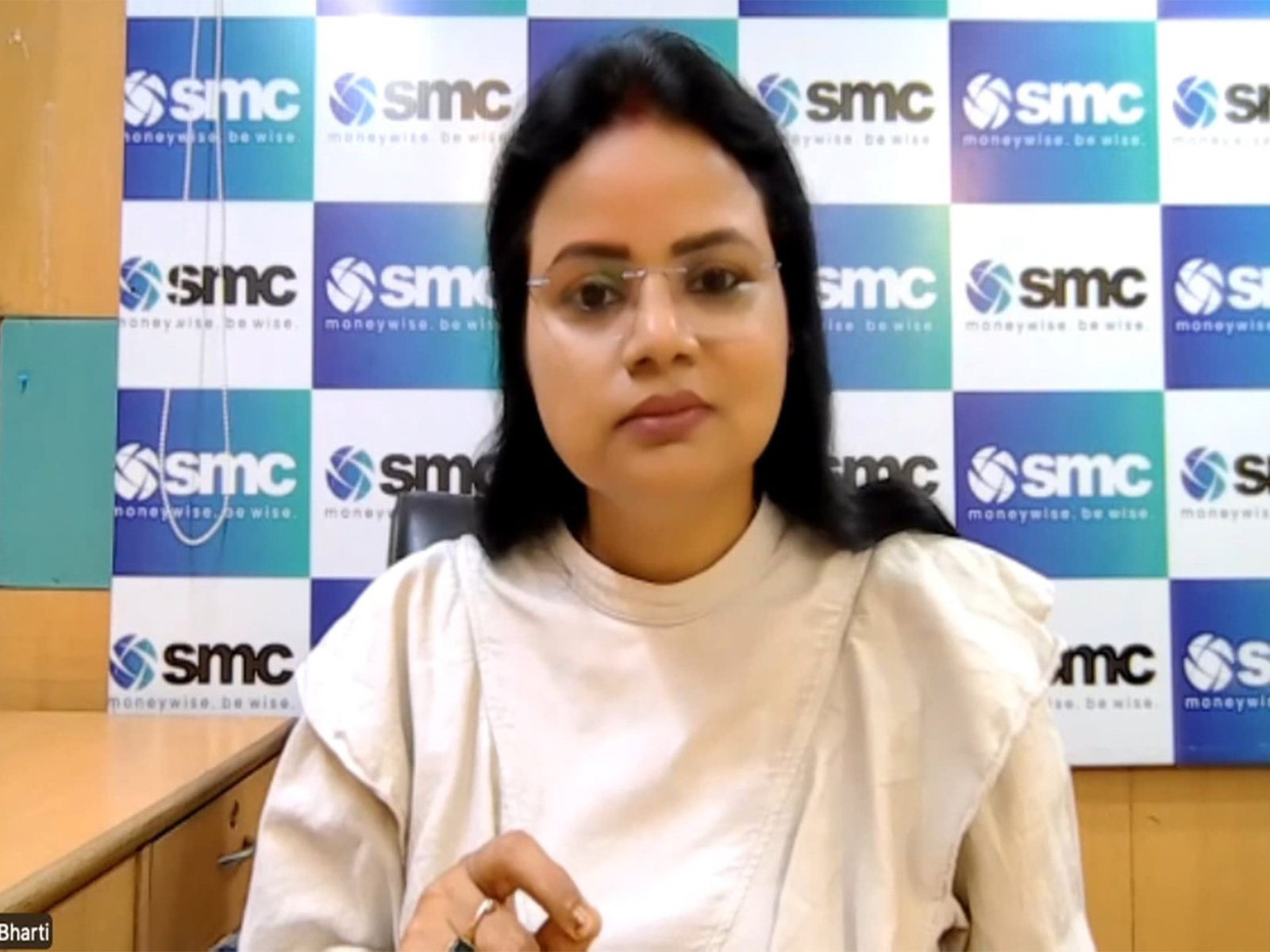
NEW DELHI: Crude oil prices could rise to USD 150 per barrel in an extreme scenario if the ongoing geopolitical tensions persist, potentially prompting global intervention, according to Vandana Bharti, Research Head – Commodity, SMC Global Securities.

“After USD 130, USD 150, I think many political alliance, they will come forward and they will stop it… USD 150 is itself a very alarming situation and many things are happening… otherwise, it will be a mayhem,” Bharti told ANI on Thursday.

Currently, global oil markets face supply disruptions of around 10 million barrels per day, with shipments through the Strait of Hormuz under strain. Asia, which accounts for 58.8 per cent of the global population, is among the worst-affected regions due to its heavy reliance on imported crude, she added.

Benchmark prices are already elevated, with WTI crude at USD 107-108 per barrel, Brent around USD 106, and Murban crude is above USD 113.

Bharti noted that India’s crude basket is “already near USD 150”, compared with USD 70-75 at the start of the year, reflecting higher freight, insurance and supply costs.

She said market positioning based on New York Mercantile Exchange (NYMEX) option data shows a significant build-up near the USD 120-150 levels, with some participants discussing the possibility of prices rising further if the conflict persists.

“Market is talking about USD 150… but USD 150 is something like extreme volatile situation would be there,” she said.

When asked about the possibility of crude oil touching USD 200 per barrel because of the war in the Gulf countries, Bharti said she did not endorse that view as a base case and instead pointed to likely intervention before such levels are reached.

Bharti said rising crude prices would begin to trigger policy responses even before extreme levels are reached. “USD 120, USD 130 will give pressure to Trump to go for a ceasefire,” she said, adding that higher prices would intensify economic stress globally.

She also pointed to domestic political pressure in the United States, noting that a prolonged price surge could force action ahead of mid-term elections. “He needs to go for a ceasefire before the mid-term election because it will hit the result,” she said.

At higher levels, coordinated global intervention is likely, she added. “Many countries, they will intervene… they will pressurize US to call for a ceasefire and all,” she said, referring to potential action if crude prices rise toward USD 150.

The economic consequences of rising crude prices are already visible. Bharti said every USD 10 increase in oil prices could reduce GDP growth by 0.5 percentage points (50 basis points), while prices above USD 120 could trigger stagflation, with growth slowing to around 0.9-1 per cent amid rising inflation.

The situation is further constrained by limited buffers. The United States has indicated availability of about 400 million barrels from its Strategic Petroleum Reserve, which Bharti said would cover only around 20 days of supply linked to Hormuz disruptions.
In India, domestic crude prices have surged sharply. MCX crude has risen from about Rs 6,000 before the conflict to above Rs 10,000, after touching a high of Rs 10,500, and could climb further to Rs 11,000-12,000, she said.

The rupee, currently at around 93.11 per dollar, could weaken to 97-98 if global crude prices rise to the USD 120-130 range, increasing the current account deficit and imported inflation.

Bharti also highlighted broader supply disruptions, noting that longer shipping routes via Africa have raised freight and insurance costs, while shortages are affecting multiple sectors, including helium supplies impacting MRI services.

While alternatives such as renewable energy and coal gasification are being explored, she said they are not immediate solutions.

“Renewable, it will take time… it will take decades,” she said, adding that coal has often acted as a “saviour” during energy crises.

Bharti said that although some countries, including India, continue to receive shipments, delays and payment challenges persist.

She warned that if the crisis extends beyond April or May, the economic impact could intensify significantly, particularly with rising summer energy demand.

“If it prolongs… then it will create a real havoc for Indian economy as well,” she said.

Source: ANI

GoI signs agreement to provide SAMPANN ‘platform-as-a—service’ to State Govt of Goa and Cochin Port Authority

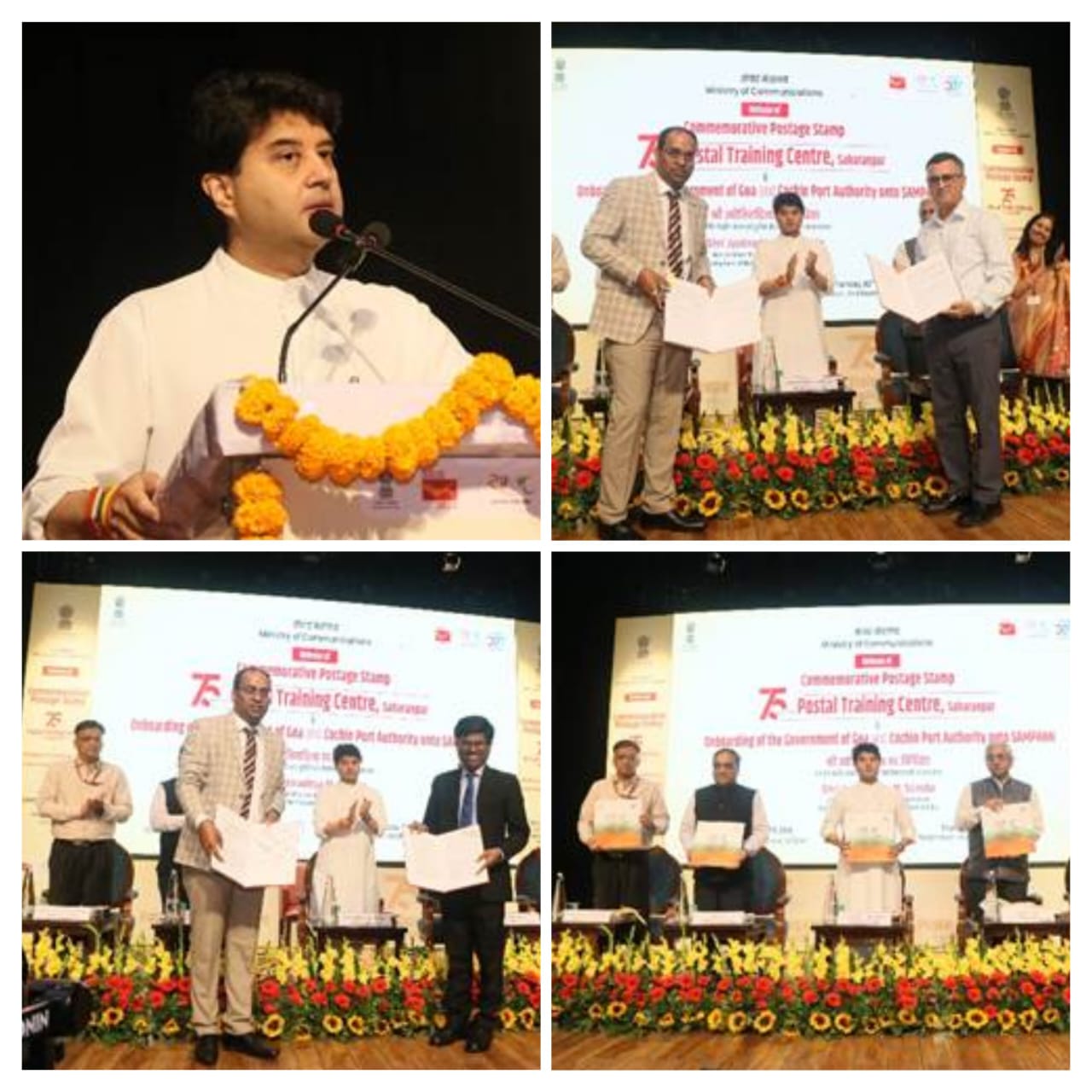
KOCHI : The Government of India today marked an important milestone in strengthening technology-enabled and citizen-centric governance with the signing of an Agreement for adoption of SAMPANN, the flagship digital pension and financial management platform of the Department of Telecommunications, by the State Government of Goa and the Cochin Port Authority (CPA).

The Agreement was signed by Shri G. Sandeep Kumar Goud, Dy. CGCA on behalf of the Office of Controller General of Communication Accounts (CGCA), Department of Telecommunications, Shri Kasivishwanath, Chairman, on behalf of the Cochin Port Authority and Shri Shakeel Ul Rehman Rather, Resident Commissioner, on behalf of the State Government of Goa.

SAMPANN (System for Accounting and Management of Pension) is a seamless online comprehensive pension management system developed in line with the vision of the Hon’ble Prime Minister’s Digital India Mission and covers the entire pension administration lifecycle, from case initiation to pension disbursement and accounting. Dedicated to the nation by the Hon’ble Prime Minister on 29th December 2018.

SAMPANN is a cloud-based, end-to-end pension management system of the Department of Telecommunications, managed by the Office of the Controller General of Communication Accounts (CGCA). It was designed to streamline pension sanction, authorisation, accounting and payment through a single digital platform.

The adoption of SAMPANN by the State Government of Goa and the Cochin Port Authority is expected to further the objective of modern, accountable and citizen-centric governance through reuse of proven national digital platforms.

Speaking on the occasion, the Hon’ble Minister of Communications said that “SAMPANN is now disbursing an average of Rs 1,650 Cr of monthly pension and total amount of about Rs 72,000 Cr has already been disbursed through it. He emphasized the change in governance approach under the Hon’ble Prime Minister Shri Narendra Modi Ji where in now the governance revolves around citizens rather than in the previous times citizens used to run around government offices for public services”.

Hon’ble Minister said, “DoT has today entered into an agreement with State Government of Goa and the Cochin Port Authority to take this concept of service to the doors of citizens to other institutions.” He congratulated Govt. of Goa and CPA for on-boarding onto SAMPANN and thanked them for placing their trust in SAMPANN portal.

He also instructed Department of Posts and Department of Telecommunications to work out the adoption of SAMPANN for the on-boarding of DoP pensioners.

The Hon’ble Minister of Communications also released the SAMPANN Coffee Table Book, highlighting the growing role of Digital Public Infrastructure in delivering seamless, transparent and efficient public services.

Emphasising on the Honourable Prime Minister’s resolve to the nation building, he added, “I am very confident that as we move forward, the Honourable Prime Minister’s resolve of Service before Self, resolve of Nation First, resolve of Atma Nirbharta and resolve of keeping our Tiranga aloft in the Global community of Nations, we commit that every single one of us will adhere to and dedicate ourselves as we go on this journey from Amrit Kaal to Shatabhdi Kaal”.

The event ended with a vote of Thanks by Ms. Vandana Gupta, CGCA wherein she expressed her heartfelt gratitude to the Honourable Minister of Communications for his time and also placing his trust in the team. She also applauded the DoP on completion of 75 years of PTC Saharanpur, and also for preserving the heritage of India through the conservation of PTC campus. She emphasized that pensioners do not belong to any single organisation or department rather they all deserve the best service from us and with this belief we want to share SAMPANN with all the pension disbursing organisations.

Tuticorin Container Terminal handles strategic MSC Veracruz call with operational excellence

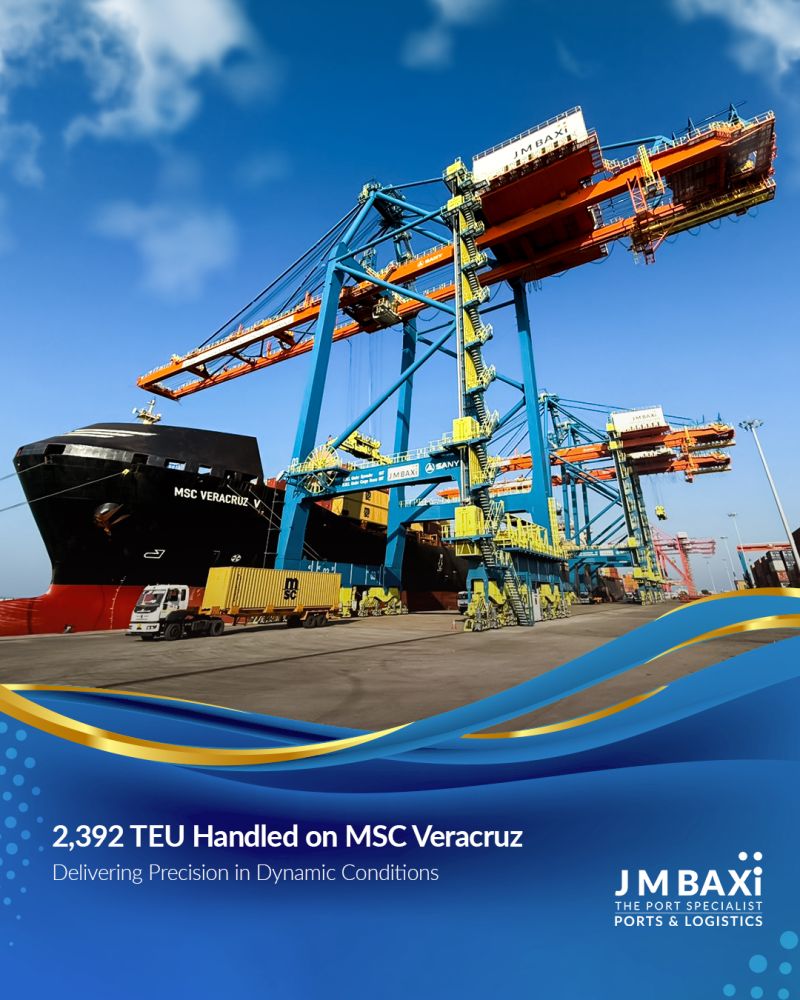
TUTICORIN : Demonstrating agility and operational excellence amid evolving global shipping dynamics, Tuticorin Container Terminal successfully handled a significant call by the vessel MSC Veracruz, managing a total volume of 2,392 TEUs.

Far from a routine port call, the vessel arrived carrying diverted Middle East transshipment cargo, requiring swift planning, seamless coordination, and precise execution under tight timelines. Rising to the challenge, the terminal’s teams ensured efficient handling of cargo, maintaining high standards of productivity and reliability.

In addition to cargo operations, the terminal also facilitated the timely evacuation and delivery of empty containers, providing crucial support to the India export market and ensuring exporters could maintain their shipment schedules without disruption.

This achievement underscores the strong collaboration across multiple functions, including Operations, Equipment Planning, Yard, Gate, and other support teams, all working in unison to deliver a smooth and efficient operation.

Notably, the milestone also highlights the pivotal role played by the women workforce at Tuticorin Container Terminal, who led operations with professionalism, efficiency, and a steadfast commitment to safety.

The successful handling of MSC Veracruz reinforces Tuticorin Container Terminal’s capability to manage complex and dynamic cargo scenarios while continuing to deliver value to global shipping lines and trade stakeholders.

Udupi CSL launches 70T Bollard Pull Green Tug UY 173 for Polestar Maritime

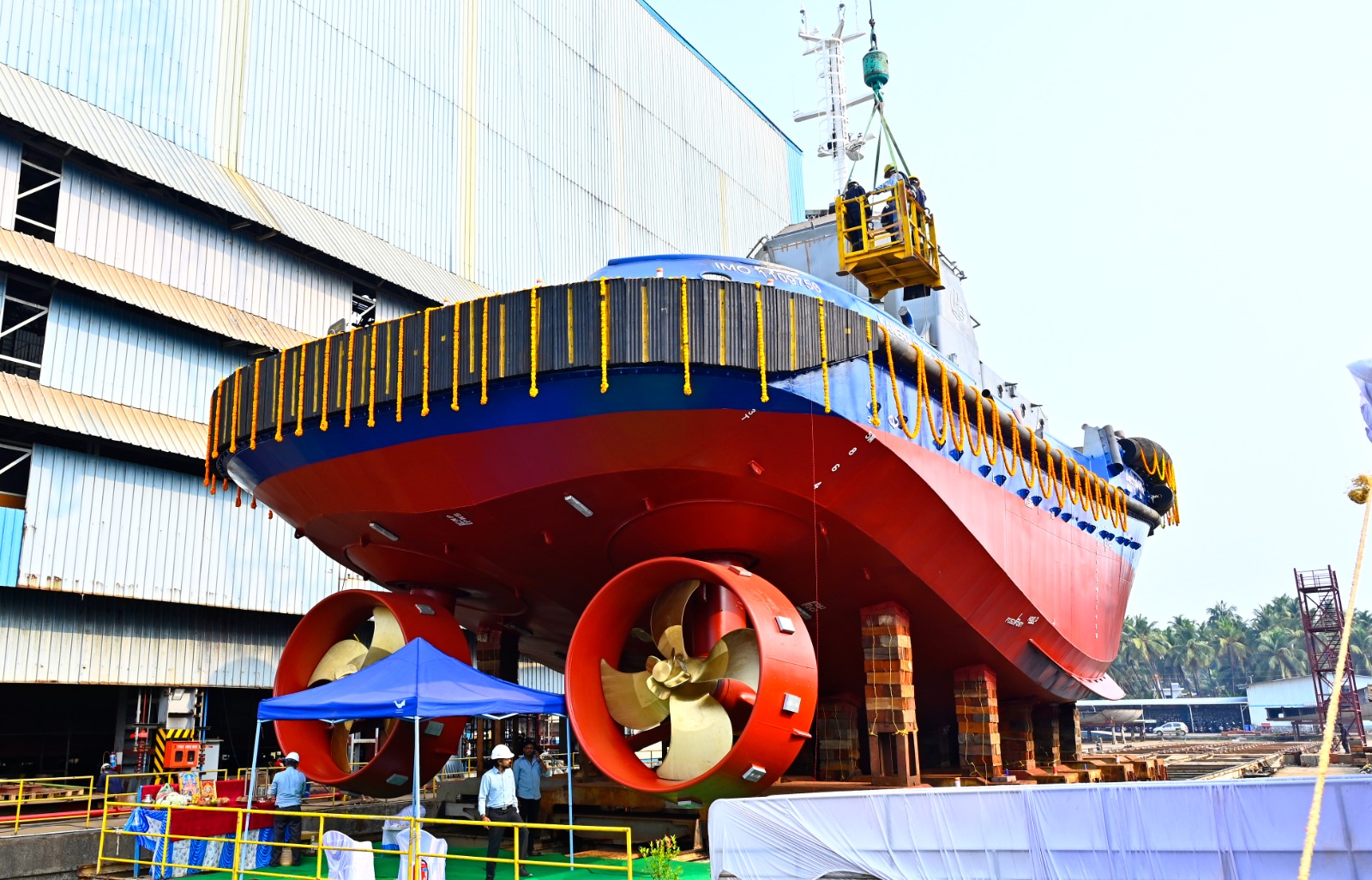
UDIPI : Marking a significant milestone in India’s shipbuilding journey, Udupi Cochin Shipyard Limited (Udupi CSL), a subsidiary of Cochin Shipyard Limited, has successfully launched the 70-ton Bollard Pull tug UY 173 for M/s. Polestar Maritime Limited.

IRCLASS CSL Udupi CSL launches 70T Bollard Pull Green Tug UY 173 for Polestar Maritime

Classed under the Indian Register of Shipping (IRClass), the tug represents a step forward in sustainable and efficient harbor vessel design. Built with advanced propulsion systems and enhanced maneuverability, UY 173 is tailored to meet the demanding requirements of modern port operations, including towing, berthing, and escort services.

The vessel incorporates eco-friendly design elements aimed at reducing emissions and improving fuel efficiency, supporting the maritime industry’s transition toward greener operations. Its construction underscores Udupi CSL’s growing expertise in delivering high-quality, technologically advanced vessels.

The launch also highlights the continued collaboration between Indian shipyards and maritime service providers in strengthening domestic capabilities, boosting self-reliance, and promoting sustainable growth within the sector.

UY 173 is expected to play a vital role in enhancing operational efficiency and environmental performance in port operations, further contributing to India’s vision of a modern, green, and globally competitive maritime ecosystem.

India wants preferential access to US market : Piyush Goyal

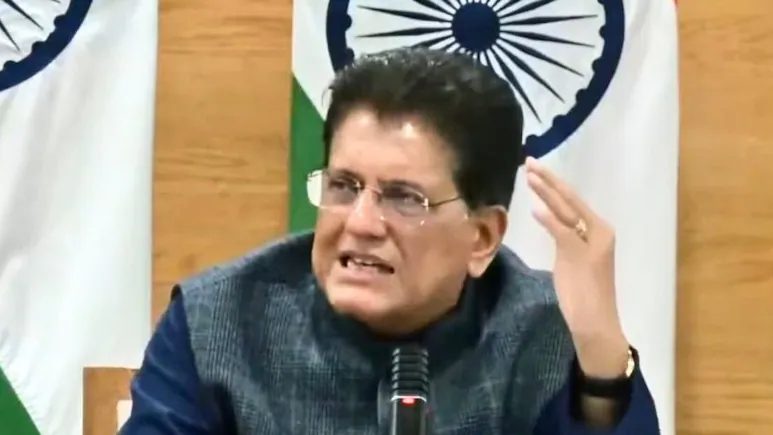
NEW DELHI : Commerce Minister Shri Piyush Goyal, on Thursday, said India’s relationship with the US remains strong, underpinned by a deep strategic partnership spanning technology, defence, trade and investments.

“Our relations are very robust. We have a deep strategic partnership on several aspects, on technology, on defence, on trade and on investments, and our approach is that India should get preferential market access,” Goyal told reporters in New Delhi after the 14th ministerial conference (MC14) of the World Trade Organisation.

The US has imposed a flat 10% tariff on imports from all countries after its Supreme Court struck down the reciprocal tariff regime, effectively eliminating any preferential treatment.

New Delhi had finalized an interim trade agreement with the US on 2 February, bringing down tariffs on its goods from 50% to 18%. Although the agreement was expected to be implemented in March, it has been delayed due to geopolitical developments. The US top court’s ruling against reciprocal tariffs has also created uncertainty about its rollout.

On WTO conference
Goyal said the MC14 involved detailed discussions on major global trade issues such as WTO reforms, fisheries subsidies, investment facilitation for development, e-commerce, agriculture, and broader developmental concerns.

He noted that three important decisions were taken, including steps to better integrate smaller economies into the multilateral trading system by improving trade logistics, connectivity and border procedures to boost their participation in global trade.

“India advocated bridging the digital divide in the e-commerce domain by strengthening digital infrastructure and skill development in least-developed and developing countries,” he said.

He further added that India has reiterated the need for a permanent solution on public stockholding for food security purposes and a special safeguard mechanism to protect farmers’ interests.

While discussing fisheries subsidies, Goyal said the discussions centred on tackling overcapacity and overfishing, with broad agreement among member nations to promote sustainable practices. “India has consistently followed sustainable fishing methods and remains committed to supporting small and artisanal fishermen,” he said.

He added that the government is closely monitoring fishing capacity to prevent overexploitation and is seeking a sufficient transition period to support the further development of the sector.

On the US-Iran war

Goyal also said that during his bilateral meetings with trade ministers on the sidelines of the WTO conference in Cameroon, several leaders raised concerns about the impact of the ongoing war.

“It has hurt the global economy. It is hurting global trade, particularly the death and destruction of property and innocent lives, which is something that we are all concerned about. The difficulties in free movement of goods in the open seas are another area that we are all collectively hoping can be resolved quickly,” he said.

He added that India has demonstrated resilience in terms of food and energy security and remains “pretty much” insulated and stable. “Consumers are getting their LPG. Industrial LNG supplies have now been reinstated to 80%, with many sectors receiving full LNG. There is no shortage of petroleum products. Our refineries are working full stream. There is a sufficient stock of crude oil and new shipments coming in of crude oil, LPG and LNG to ensure a pipeline for the future,” he said.

Source : Mint

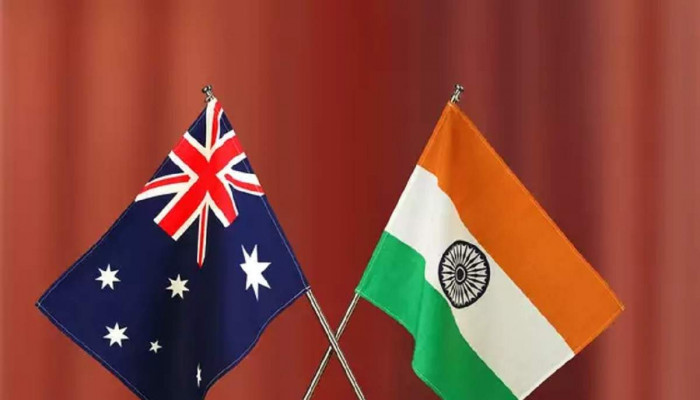
India–Australia trade reaches USD 24.1 billion in 2024–25 amid strong export growth

NEW DELHI : The India–Australia Economic Cooperation and Trade Agreement (Ind-Aus ECTA) completes four years since its signing on Wednesday, marking an important milestone in the evolving Economic Partnership between India and Australia. Since its signing on 2 April 2022, the Agreement has played a pivotal role in enhancing trade flows, fostering industry linkages, and creating new opportunities for businesses, entrepreneurs, and employment in both countries.

Over the past four years, the Agreement has continued to strengthen bilateral economic engagement, with both sides benefiting from improved market access and reduced trade barriers. India’s exports to Australia have more than doubled, rising from USD 4 billion in FY 2020–21 to USD 8.5 billion in FY 2024–25. During 2024–25, total bilateral trade stood at USD 24.1 billion, while India’s exports to Australia recorded an 8% growth over the previous year. In FY 2025–26 (up to February), India’s total trade with Australia stood at USD 19.3 billion.

Under the India–Australia ECTA, India granted preferential market access on 70.3% of its tariff lines, covering 90.6% of trade value, while Australia granted preferential market access on 100% of its tariff lines, corresponding to 100% of imports from India. Of this, 98.3% of tariff lines became duty-free immediately upon implementation, while the remaining 1.7% (113 tariff lines) are being phased out over five years. From 1 January 2026, all Indian exports are eligible for zero-duty market access into Australia.

Sectoral gains under the ECTA have become more broad-based, with notable growth in exports across textiles, pharmaceuticals, chemicals, and agricultural products. On the import side, the Agreement continues to facilitate access to essential raw materials such as base metals, raw cotton, chemicals and fertilisers, and pulses, which are critical for India’s manufacturing and industrial sectors. This complementary trade structure has strengthened supply chain resilience and supported domestic value addition.

A major milestone in bilateral cooperation was achieved with the signing of the Mutual Recognition Arrangement (MRA) on Organic Products between India and Australia on 24 September 2025. The MRA facilitates seamless trade in organic products by recognising each other’s certification systems, thereby reducing duplication, cost, and time for exporters. This step has strengthened cooperation in the organic sector and enhanced transparency and trust in organic trade practices.

The Agreement has emerged as a key pillar of bilateral engagement, delivering tangible benefits for businesses, MSMEs, workers, and consumers in both countries. As India and Australia commemorate four years of the Ind-Aus ECTA, both sides reaffirm their commitment to expanding trade, strengthening supply chains, promoting investment partnerships, and advancing the shared objective of taking the bilateral economic partnership to even greater heights.

India permits Exports of essential commodities to Maldives for 2026-27

NEW DELHI: India on Wednesday permitted export of specified quantities of certain commodities like eggs, potatoes, onions, rice, wheat flour, sugar, and dal for the Maldives for 2026-27.

The Directorate General of Foreign Trade (DGFT), in a notification, said these exports have been permitted to the Maldives under the bilateral trade agreement between the countries for 2026-27.

“Export of eggs, potatoes, onions, rice, wheat flour, sugar, dal, stone aggregate and river sand has been permitted to the Maldives… These exports shall remain exempt from any existing or future restrictions or prohibitions during this period,” the DGFT said.

In general, there is either a restriction or a prohibition on the export of some of these goods.

The specified quantity allowed includes eggs (448,913,750), potatoes (22589 tonnes), onions (37537 tonnes), rice (230429 tonnes), wheat flour (114,621 tonnes), sugar (67719 tonnes), dal (350 tonnes), stone aggregate (1,300,000 tonnes) and river sand (1,300,000 tonnes).

It said that for the exports of river sand and stone aggregate, CAPEXIL (a body to promote the export of chemical and allied products) will ensure that the suppliers/extractors have obtained appropriate clearances and mining of the sand is not undertaken in the coastal regulation zone area, which is prohibited under the coastal regulation zone notification.

Exporters have to obtain necessary environmental clearances from the designated nodal authority of the respective state governments from where sand and stone aggregate are obtained.

The 1981 India and Maldives trade agreement provides for the export of essential commodities.

Last year, too, India exported these goods.

“India remains strongly committed to supporting human-centric development in the Maldives, as part of its Neighbourhood First policy,” it noted.

The quota for river sand and stone aggregates, crucial items for the booming construction industry in the Maldives, has been increased.

Surrounded by the ocean, the islands in the Maldives and the many atolls don’t have enough river sand to support their construction industry, hence the need for importing sand and stone aggregates to the country.

The DGFT said that export of these commodities, will be permitted only through six Customs Stations – Mundra port, Tuticorin Port, Nhava Sheva, ICD Tughlakabad, Kandla Port, and Visakhapatnam Port.