Home Blog Page 371

2,000 Ships, 20,000 Sailors, SOS Barrage : Hormuz Blockade’s Human Cost

NEW DELHI : 2,000 ships, 20,000 sailors, food and water running out, and a blockade with no end in sight — as the war in the Middle East enters its fifth week and Iran’s threats choke the Strait of Hormuz, the lives of thousands of seafarers hang in the balance. The sailors are reaching out for help while stuck, not just due to the blockade, but also because of a complex web of maritime laws that grease the wheels of global trade but trap the sailors in situations like this.

Calls For Help

According to a report by news agency AFP, helplines for sailors are overwhelmed with messages from crews stuck in the Gulf. “Immediate supply of food, drinking water, basic necessities is required to sustain the crew,” read a message to the International Transport Workers’ Federation (ITF) Seafarer Support team.

“It is an extraordinary situation, there is a lot of panic,” Mohamed Arrachedi, ITF’s Network Coordinator for the Arab World and Iran, who is in charge of handling requests from sailors.

“I get calls from seafarers at two o’clock, three o’clock in the morning. They call me the minute they have access to the internet,” Arrachedi has told AFP. “One seafarer called in a panic, saying: ‘We are here bombed. We don’t want to die. Please help me, sir. Please get us from here,” he added.

Why The Sailors Can’t Leave

After the conflict began, the International Bargaining Forum declared the area around the Strait of Hormuz a war zone. In such a situation, seafarers are entitled to repatriation at the company’s cost and double pay for those working.

But many seafarers are on ships without these agreements, and the Hormuz blockade has hit them the worst. In a mail dated March 18, a seafarer said the ship’s operator was ignoring the crew’s requests to leave. “They are forcing us to continue to do cargo operations and STS (ship-to-ship operations) even (when) we raise our concerns about our safety and we are in a war-like area. They are keeping us in a position with no options,” read the email.

The Low Price Of Life

Lucian Craciun, one of the five members of ITF’s support team that is processing requests from seafarers, told AFP that about 50 per cent of the emails they have received are about pay. He said many seafarers choose to stay on the ships despite the danger because they cannot afford to leave.

AFP reported that in one email, a seafarer asked for confirmation if his salary would go from $16 a day to $32 because he was in a war zone. According to the ITF, such low salaries indicate that the shipowners do not have labour agreements to ensure decent pay. The AFP reported that seafarers working under such arrangements are particularly at risk because their contracts often do not cover operations in war zones.

The Shipping Maze

According to a report in Wired, modern shipping spans multiple jurisdictions, meaning a vessel can be owned in one country, registered in another, managed by a third party, and physically located elsewhere.

Now, in normal circumstances, this facilitates global trade. But during a crisis, such as now, there is no single authority clearly responsible for the seafarers. Any chance of return depends on all these jurisdictions working together.

The Wired reports that organisations such as ITF say intervention is possible, but depends on coordination across jurisdictions and cooperation from shipowners.

10 Sailors Dead

According to the International Maritime Organization, there have been 19 confirmed incidents involving vessels since the conflict began, and 10 seafarers have died in these incidents.

Iran has threatened to hit ships that try to cross the Strait, choking one-fifth of the world’s oil and gas supplies and triggering energy security concerns in Asian markets such as India and China.

The blockade of the Strait is driving inflation across the globe, and pressure is building on the US, which targeted Iran along with Israel on February 28.

Source : NDTV World

Indian Navy’s latest stealth frigate ‘INS Taragiri’ commissioned in Visakhapatnam

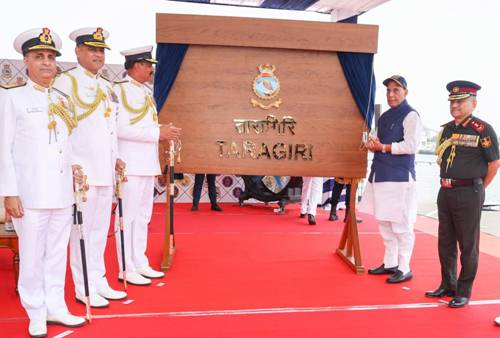
VISAKHAPATNAM: INS Taragiri, the fourth potent platform of the Project 17A class, was commissioned into the Indian Navy in the presence of Raksha Mantri Shri Rajnath Singh at Visakhapatnam, Andhra Pradesh on April 03, 2026. A masterclass in modern naval shipbuilding, this latest stealth frigate, with a displacement of approximately 6,670 tonnes, has been designed by the Warship Design Bureau and built by Mazagon Dock Shipbuilders Limited, with the support of MSMEs, for multi-role operations. It utilises advanced stealth technology to achieve a significantly reduced radar signature, providing a lethal edge in contested environments.

With over 75% indigenous content and built in significantly reduced timelines, INS Taragiri exemplifies India’s shipbuilding prowess and strong public-private collaboration. Raksha Mantri, in his address, described INS Taragiri as not merely a warship but a symbol of India’s growing technological prowess, self-reliance, and formidable naval power.

Defence Minister Rajnath Singh Indian Navy’s latest stealth frigate ‘INS Taragiri’ commissioned in Visakhapatnam

“This ship is capable of high-speed transit and can remain deployed at sea for extended periods. It is equipped with systems designed to monitor enemy movements, ensure its own security, and if necessary, deliver an immediate response. It features modern radar, sonar, and missile systems, such as BrahMos and surface-to-air missiles, which further augment its operational prowess. From high-intensity combat to maritime security, anti-piracy operations, coastal surveillance, and humanitarian missions, it fits perfectly into every role, making it a unique naval platform,” said Shri Rajnath Singh.

Raksha Mantri asserted that India, with a coastline stretching over 11,000 kilometers, is surrounded by the sea on three sides, and it cannot view its development in isolation from the ocean. He added that approximately 95 percent of the country’s trade is conducted via maritime routes, and energy security is dependent on the sea, which makes building a strong and capable Navy not merely an option, but an absolute necessity.

Highlighting the immense significance of the maritime domain in the evolving security landscape, Shri Rajnath Singh stated that the Indian Navy maintains a round-the-clock presence across the Indian Ocean region amidst the global uncertainties. “The vast expanse of the ocean contains numerous sensitive points, where our Navy has consistently maintained an active presence to ensure the smooth flow of goods. Whenever tensions flare, the Indian Navy steps-in to guarantee the security of commercial vessels and oil tankers. It is not only safeguarding India’s national interests, but is also prepared to take every necessary measure to protect our citizens and trade routes across the globe. It is this capability that firmly establishes India as a responsible and formidable maritime power,” he said.

Raksha Mantri added that in the modern digital era, the vast majority of the world’s data travels through undersea internet cables, and any damage to them could disrupt global order. He called to move beyond a traditional perspective on maritime security and view it through a comprehensive, future-ready framework. “We must not limit ourselves to safeguarding our coastlines; we must also ensure the security of critical sea lanes, choke points, and digital infrastructure that are inextricably linked to our national interests. The Indian Navy is proactively engaged in all these security endeavors. This approach prepares us for future challenges. Whenever India constructs and deploys advanced vessels such as INS Taragiri, it serves as a guarantee of peace and prosperity for the entire region,” he said.

Shri Rajnath Singh also pointed out that whenever a crisis arises, be it evacuation operations or humanitarian assistance, the Indian Navy invariably stands at the forefront, serving as a symbol of India’s core values ​​and unwavering commitment. “INS Taragiri will further augment the strength, values, and commitment of our Navy,” he said.

Reiterating the Government’s commitment to make the Indian Navy one of the world’s strongest in the times to come, backed by an indigenous industry, Raksha Mantri stated that defence manufacturing in the country is marching ahead as a national mission under Prime Minister Shri Narendra Modi’s leadership. “Today, we’re no longer confined to fulfilling our own requirements; we’re actively securing our place within the global supply chain. India’s participation is integral at every stage – from design and development to final deployment. It gives us confidence that we possess the capability to design not only our own security but also our future. INS Taragiri stands as an embodiment of this very vision,” he said.

Highlighting the transformation witnessed by the country in the last decade, Shri Rajnath Singh stated that the Government has created an ecosystem for the youth and the industry that consistently fosters innovation, manufacturing, and exports. He stressed that India has no alternative but to pursue self-reliance in defence to stay ready in the present uncertain times. He added that the security efforts must not confine solely to the domains of land, sea & air, but extend to space, cyberspace, and economic spheres. He pointed out that guided by that very vision, the Government has taken several major policy decisions, the results of which are now visible.

Raksha Mantri commended Mazagon Dock Shipbuilders Limited and other Defence Public Sector Undertakings (DPSUs) for their consistent positive contributions towards bolstering India’s security apparatus. He termed the 16 DPSUs as the hubs of Aatmanirbharta in defence. Raksha Mantri appreciated the efforts of DPSUs and the private sector in taking defence exports to an all-time high of Rs 38,424 crore in Financial Year 2025-26. “13-14 years ago, we used to export defence items worth Rs 1,200 crore. Today, it has reached almost Rs 39,000 crore. This is proof that India’s self-reliance is growing steadily, signifying that we are standing on our own feet,” he said.

Speaking on the occasion, Chief of the Naval Staff (CNS) Admiral Dinesh K Tripathi highlighted INS Taragiri’s rich legacy, recalling the erstwhile Leander-class frigate commissioned in 1980, which played a pioneering role in advancing India’s anti-submarine warfare capabilities and operational innovation. Reflecting on the evolving maritime security environment, he underscored the growing complexities of the Indian Ocean Region, shaped by dynamic geopolitics, emerging technologies, and non-traditional threats. The CNS emphasised the Navy’s commitment to remaining a combat-ready, credible, cohesive, and future-ready force to safeguard national maritime interests, anytime, anywhere, anyhow.

The momentous event was marked by the ceremonial breaking of the Commissioning Pennant and the maiden hoisting of the National Flag on the ship. Chief of Defence Staff General Anil Chauhan; Flag Officer Commanding-in-Chief, Eastern Naval Command Vice Admiral Sanjay Bhalla; CMD, Mazagon Dock Shipbuilders Limited Captain Jagmohan (Retd) were among those present during the commissioning.

INS Taragiri Navy Ship Indian Navy’s latest stealth frigate ‘INS Taragiri’ commissioned in Visakhapatnam

About INS Taragiri

This Frigate represents a generational leap over earlier designs, offering a sleeker form and a significantly reduced Radar Cross-Section that allows it to operate with lethal stealth. With indigenous content exceeding 75 percent, the ship highlights the maturity of a domestic industrial ecosystem that now spans over 200 Micro, Small and Medium Enterprises (MSMEs), contributing to the Government’s Aatmanirbharta initiative, supporting thousands of Indian jobs.

Beneath its sleek, modular exterior lies a powerhouse driven by a Combined Diesel or Gas propulsion engine and managed by a state-of-the-art Integrated Platform Management System. This technological sophistication ensures the vessel remains a versatile asset, capable of carrying out any mission assigned to the ship, anywhere and at any time.

The ship’s combat punch is world class, featuring a lethal array of supersonic Surface-to-Surface missiles, Medium Range Surface-to-Air missiles, and an advanced indigenous Anti-Submarine suite. In an evolving Indo-Pacific security landscape, this commissioning sends an important geopolitical signal: India is now a premier builder of complex warships, capable of maintaining a credible posture to deter potential adversaries and contribute to collective regional stability under the vision of MAHASAGAR.

As INS Taragiri joins the Eastern Fleet on the Eastern seaboard, the ship carries forward the proud legacy of her predecessor, honouring a name that has served the nation for decades. The message delivered on the deck today was unmistakable: India’s oceans are guarded by ships designed by Indians, built by Indians, and operated by Indians.

RoSCTL, RoDTEP extension will boost export competitiveness amid global uncertainty : PHDCCI CEO

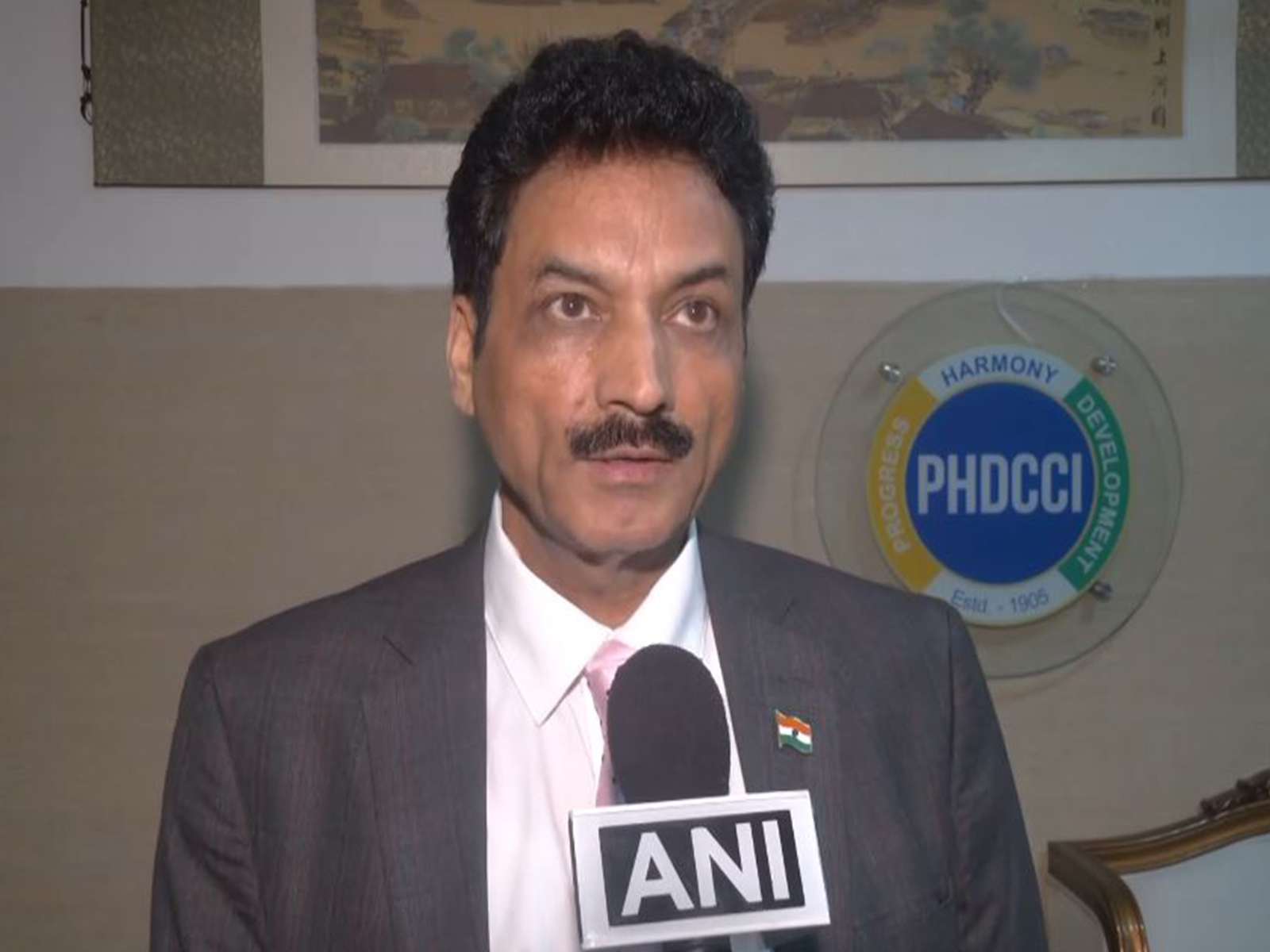
NEW DELHI : Amid the ongoing conflicts in West Asia, the continuation of schemes like RoSCTL (Rebate of State and Central Taxes and Levies) and RoDTEP (Remission of Duties and Taxes on Exported Products) helps reduce hidden taxes on exports, allowing Indian exporters to price their goods more competitively in global markets, said Ranjeet Mehta, CEO and Secretary General of PHDCCI.

Speaking with ANI, Mehta said, “RoSCTL and RoDTEP reduce embedded taxes, enabling exporters to offer more competitive prices globally,” adding that the schemes are critical in a highly price-sensitive international market.
He noted that the benefits are particularly significant for micro, small and medium enterprises (MSMEs), which form a large part of India’s export ecosystem.

The government of India has recently extended the RoSCTL Scheme for overseas shipments of apparel/ garments and made-ups up to September 30 this year. Simultaneously, the Centre has further allowed continuation of the RoDTEP Scheme till the next six months. This measure will support textile products not covered under RoSCTL. Mehta described the extension of RoSCTL as a “very welcome and much-needed step” at a time when global demand remains uncertain. “This will help improve liquidity for MSMEs, support employment and enhance the competitiveness of the textile and apparel sector,” he said.

The policy measures come amid ongoing geopolitical tensions that have disrupted global supply chains, impacting trade flows and increasing cost pressures for exporters. In such an environment, exporters are facing challenges including fluctuating demand, rising logistics costs and tighter margins in key markets. In addition to export incentives, the government has also exempted customs duty on certain critical petrochemical imports for three months until June 30 to ensure supply stability.

The move is expected to benefit sectors dependent on petrochemical feedstock and intermediates, including plastics, packaging, textiles, pharmaceuticals, chemicals and automotive components. “When input costs come down, it improves margins and working capital efficiency. This is a much-needed support for industry during times of uncertainty,” Mehta said, highlighting the complementary nature of cost-relief and export promotion measures.

He added that the government is maintaining close coordination with industry stakeholders and closely monitoring global developments. “There is continuous engagement and feedback, which enables timely interventions and reflects preparedness to deal with emerging challenges,” he said.

The combined impact of export incentives such as RoSCTL and RoDTEP, along with duty exemptions on pterochemicals, is expected to support Indian exporters in maintaining competitiveness in global markets even as uncertainties persist.

Source : ANI

French-owned ship crosses Strait of Hormuz after Macron’s ‘too much talk’ dig at Trump

MARSEILLE : A container ship declaring itself to have a French owner passed through the choked Strait of Hormuz on Thursday, a development that came after France President Emmanuel Macron took a dig at Donald Trump for “talking too much”.

According Marine Traffic data analysed by AFP news agency on Friday, the Maltese-flagged Kribi belonging to the French maritime transport group CMA CGM crossed the strait — which has been virtually blocked by Iran since early in the Middle East war — to exit the Gulf on Thursday afternoon.

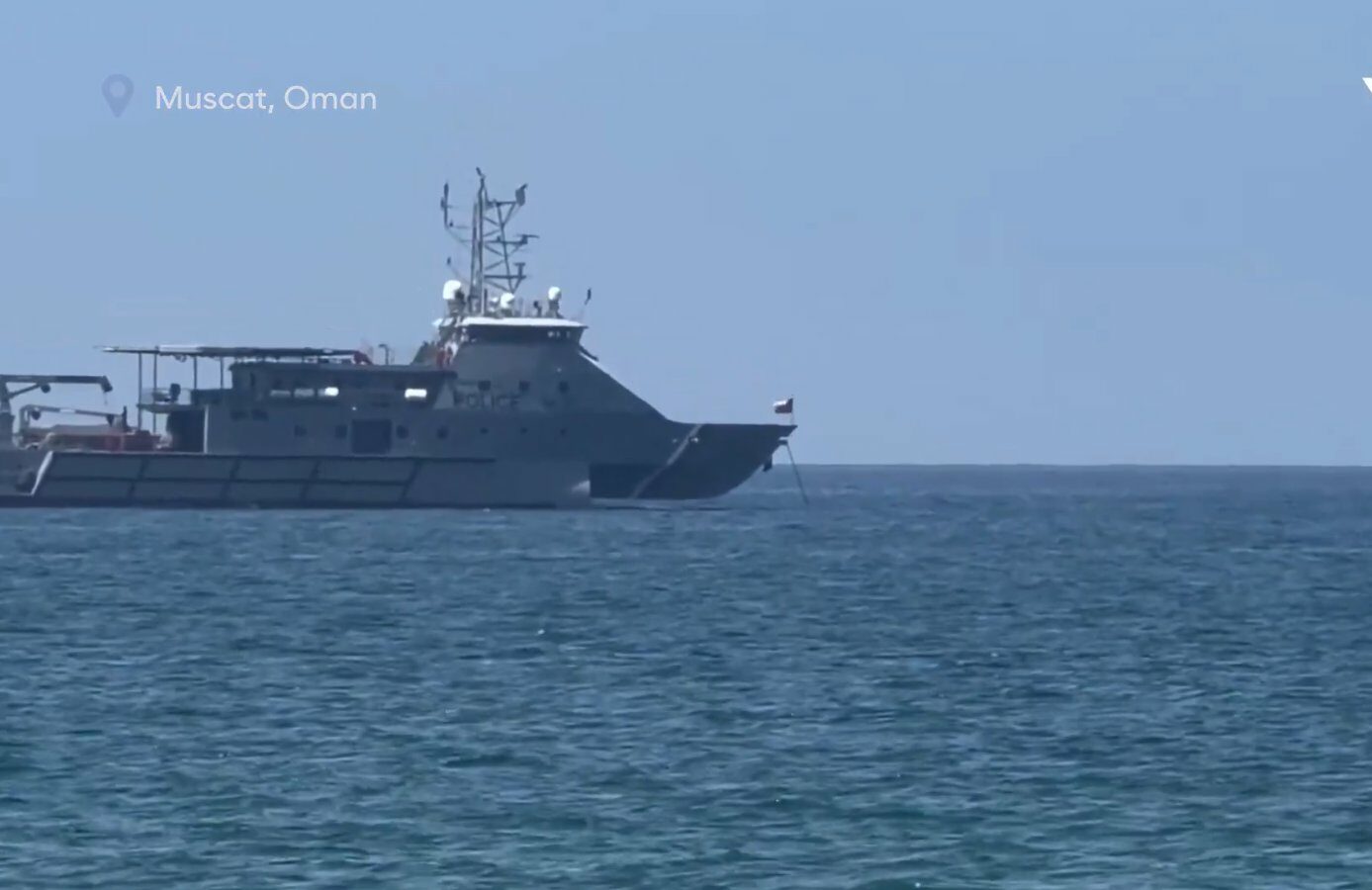
The ship was off Muscat, Oman on Friday morning, still broadcasting the message “owner France” on its transponder system in the field usually corresponding to the destination.

Ship Hormuz after Macron’s dig at Trump
The passage to the French-owned vessel through the Strait of Hormuz, movement in which has been practically halted due to Iranian retaliatory strikes after the US-Israeli offensive launched on February 28, comes a day after French President Emmanuel Macron said it would be “unrealistic” to try to reopen the the key waterway through military means.

US President Donald Trump in a prime-time White House address on Wednesday again said that countries that receive oil through the strait “must take care of that passage”. Trump, not very humbly, has been asking other countries to help in reopening the Strait through which a fifth of world’s oil and gas requirements travel.

“There are those who advocate for the liberation of the Strait of Hormuz by force through a military operation, a position sometimes expressed by the United States,” AFP quoted Macron as saying during a visit to South Korea.

“I say sometimes because it has varied, it is never the option we have chosen and we consider it unrealistic,” he said.

Macron said such an operation would take excessive time and expose those crossing the strait to “coastal threats”, particularly from Iran’s Revolutionary Guards “who possess significant resources as well as ballistic missiles”.

‘Talks too much’
Macron, who landed in South Korea on Thursday after visiting Japan, also appeared to express frustration at Trump’s statements on the conflict and his remarks on a past incident involving Macron and his wife. Trump also criticised NATO allies for not joining the war against Iran.

“If you create daily doubt about your commitment, you hollow it out,” Macron said apparently referring to numerous policy U-turns by Trump, adding that there is “too much talk… going off in all directions”

“We all need stability, calm, a return to peace — this isn’t a show!” AFP quoted Macron.

“You have to be serious. When you want to be serious, you don’t say the opposite every day of what you said the day before. And perhaps you shouldn’t talk every day,” Macron said on Trump’s address.

Trump on Wednesday, at a private lunch, had also poked fun at Macron’s marriage and accent, saying that French president’s wife “treats him extremely badly” and that Macron was still “recovering from the right to the jaw”.

Trump was referring to a May 2025 news video that appeared to show Brigitte Macron shoving the French president’s face on a trip to Vietnam, which Macron later rejected as part of a disinformation campaign.

On the visit to Seoul, Macron, who was accompanied by his wife Brigitte, said Trump’s comments were “neither elegant nor up to standard”. “So I am not going to respond to them — they do not merit a response,” Macron told reporters.

Hyundai Motor flags export disruptions as West Asia conflict hits shipping

MUMBAI : Hyundai Motor said ‌on Friday (April 3, 2026) that exports to Europe and North Africa, which typically transit ​through the West Asia, were being disrupted by the conflict in ⁠the region, underscoring growing strains on global supply chains.

The disruption highlights how the conflict is choking key shipping routes, driving up logistics costs, delaying deliveries and adding pressure on the automaker and ‌its suppliers.

Hyundai Motor, the world’s third-biggest automaker by sales with its affiliate Kia Corp, warned that even if the Iran war ended soon the ‌impact would linger. Kim Dong-jo, a senior vice president at Hyundai Motor’s ‌Global ⁠Policy Office, said rebuilding supply chains would take time.

“Even if the conflict ⁠ends, it will take a considerable amount of time to rebuild and restore existing supply chains,” said Mr. Kim, who was speaking at Pyeongtaek-Dangjin Port, southwest of the capital Seoul, where government officials, logistics firms and ​automakers met to assess the impact ‌of the war.

The meeting took place at the port where cars were lined up on the wharf to be shipped on a giant vehicle carrier, set to carry about 4,900 vehicles and bound for the U.S. west coast.

Mr. Kim ‌said rising logistics costs and raw material constraints linked to the conflict were ​also pressuring parts suppliers and production, adding that Hyundai was working with suppliers and the government to minimise disruption.

Hyundai Motor Group’s logistics ⁠unit, Hyundai Glovis , said it was currently unable to access some West Asia routes, forcing it to temporarily store cargo at alternative locations until conditions stabilise.

The company said that ‌while routes to North America’s west and east coasts have not been significantly affected so far, restricted access to the Middle East and higher fuel costs were hampering operations and efficiency.

South Korea’s Trade Minister Yeo Han-koo told the gathering that some shipments were being diverted to intermediate hubs such as Sri Lanka, where they are being held while companies reassess when transport can resume.

Last month, Reuters reported that some ‌used car exports from Japan were unable to enter Sri Lanka as ports became congested with cargo diverted ​from Dubai amid the West Asia conflict.

South Korea’s exports in March posted their strongest growth in nearly four decades, but shipments to ⁠the West Asia fell 49%. Auto exports were little changed, as supply disruptions offset strong demand ⁠for environmentally friendly vehicles.

Hyundai Motor said on Thursday (April 2, 2026) it sold 358,759 vehicles globally in March, down 2.3% from a year earlier, with domestic sales ‌falling 2.0% and overseas sales declining 2.4%.

Shares of Hyundai Motor and Hyundai Glovis closed down 1.2% and 0.7%, respectively, on Friday (April 3, 2026) versus benchmark KOSPI’s 2.7% rise.

Russia promises to increase oil, LNG supplies to India

NEW DELHI : Amid the oil shock and supply chain disruptions triggered by the U.S.-Israel war on Iran, Russia has assured that its energy companies have the capacity to “steadily increase” the supply of oil and liquified natural gas (LNG) to India, and also “continue” to address India’s fertilizer needs.

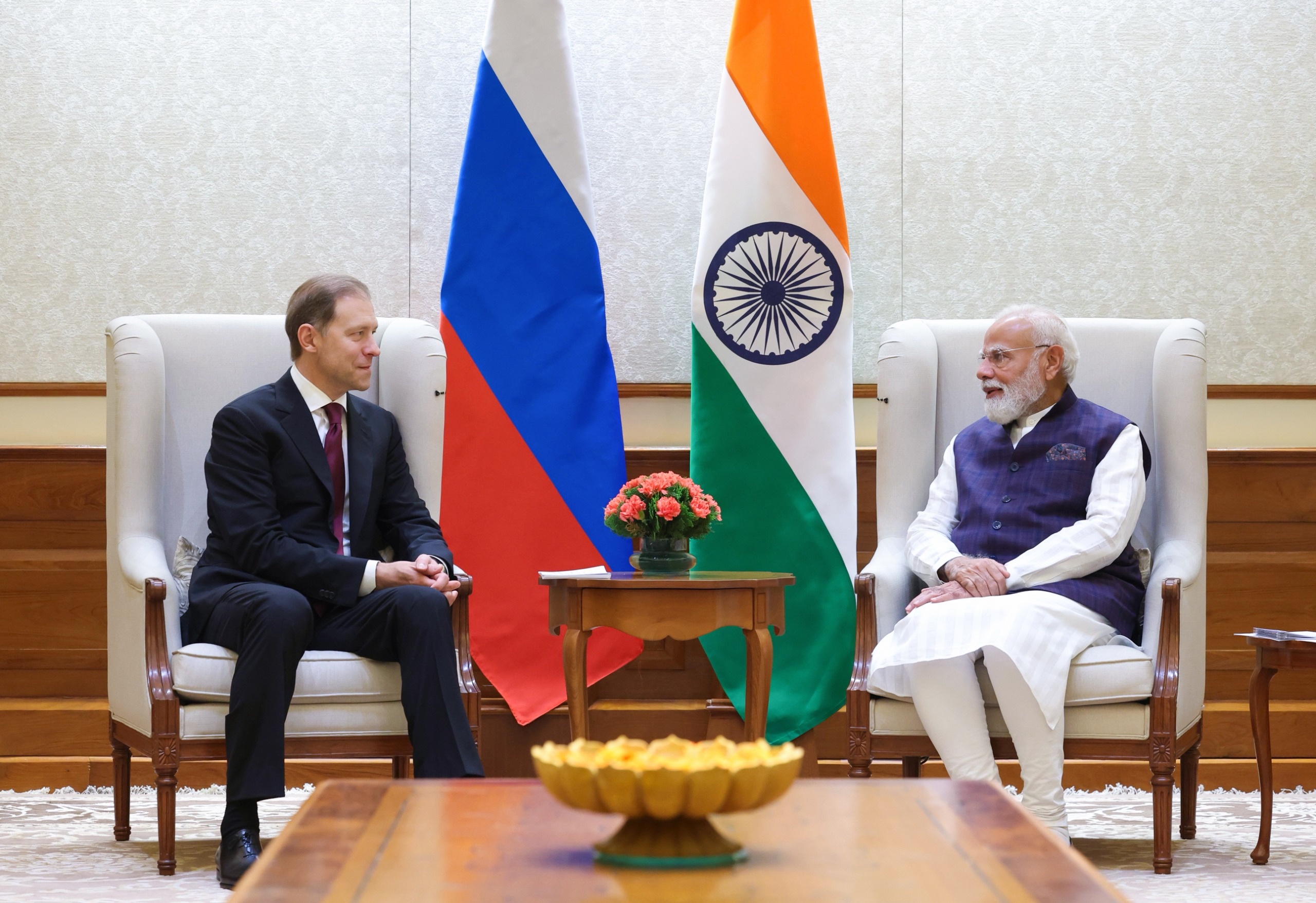
Russian Deputy Prime Minister Denis Manturov, on a two-day visit, called on Prime Minister Shri Narendra Modi on Thursday (April 2, 2026) and discussed the supply of fertilizers. He met with External Affairs Minister Dr. S. Jaishankar, Finance Minister Smt. Nirmala Sitharaman and National Security Advisor Ajit Doval, and the leaders discussed continued energy supply to India. The high-level Russian visit is being seen as part of the preparations by the two sides ahead of the upcoming BRICS summit to be hosted by India and the India-Russia annual summit scheduled in Russia this year.

“We discussed our mutually beneficial cooperation in trade, fertilizers, connectivity and people-to-people ties,” said Mr. Modi, who “welcomed sustained efforts from both sides” to realise the agreements of the 23rd India-Russia Annual Summit hosted here in December 2025.”

HE6tyE3bwAA16bW Russia promises to increase oil, LNG supplies to India

In a press note, the External Affairs Ministry said Mr. Jaishankar and Mr. Manturov “exchanged views on regional and global developments including the conflict in West Asia.”

According to the Russian embassy, Mr. Manturov said that Russia has increased supplies of “in-demand mineral fertilizers to India by 40 percent and is ready to continue meeting India’s needs for this product.” He also mentioned that a joint project for the production of carbamide (urea) is “under development”.

“Particular attention was paid to cooperation in the oil and gas sector. Denis Manturov confirmed that Russian companies have the capacity to steadily increase supplies of oil and liquified natural gas to the Indian market,” said the embassy readout.

Mr. Manturov said Russia will deepen nuclear cooperation with India. Other topics such as industrial cooperation, space and educational projects were discussed in the meetings.

Mr. Manturov’s Delhi visit, which ended on Friday (April 3, 2026), took place days after Russian Foreign Minister Sergei Lavrov and Mr. Jaishankar addressed a conference on bilateral relations through a video link on March 23, 2026, during which Mr. Lavrov indicated at Russia’s preparations for the annual summit.

Mr. Lavrov had expressed Russia’s support for the BRICS where India is the current Chair. The group has attracted attention in recent weeks as it has not made a statement on the evolving situation in West Asia, though Russia, India and China, who form a trilateral sub-group called RIC, have indicated that they will work closely within BRICS, Shanghai Cooperation Organisation and the UN on issues that affect common interests of the Global South.

This was followed by the March 30 Foreign Office Consultations between India and Russia led by Foreign Secretary Vikram Misri and Russia’s Deputy Foreign Minister Andrey Rudenko. This week, the Indian side hosted Vladimir Yakushev, First Deputy Chairman of the Federation Council (upper house) of the Federal Assembly of Russia. On Thursday, Mr. Yakushev met Deputy Chairman of the Rajya Sabha Harivansh Narayan Singh and Lok Sabha Speaker Om Birla. He also met Bharatiya Janata Party president Nitin Nabin.

The flurry of conversations between India and Russia has coincided with the growing energy insecurity in India and rest of South Asia as the war in West Asia continued in the second month. The U.S. had imposed penalty tariffs on India in August 2025 and made India cut down on Russian energy imports with the aim to force Russia make concessions in the war in Ukraine. However, in the backdrop of the crisis in the global energy market, the U.S. on March 6 issued a “temporary 30-day waiver” that let Indian refiners purchase Russian crude.

Source : The Hindu

3 Ships escape Hormuz Chokehold through new route along Oman Coast

TEHRAN : Three tankers broadcasting Omani ownership appeared to enter the Strait of Hormuz by hugging their home country’s coastline, indicating a different route to a northerly path through Iranian waters.

Two oil supertankers and a liquefied natural gas vessel headed east into the strait on Thursday, based on the satellite signals they were broadcasting.

All three vessels are managed by Oman Ship Management Company, according to the Equasis marine database.

The company couldn’t be reached for comment.

While the Strait of Hormuz has been largely blocked since the start of the conflict, Iran has begun to negotiate transit for a handful of vessels tied to friendly nations, which have followed an agreed northerly route through its own waters.

On Thursday, Iran’s state-run IRNA cited Iran Deputy Foreign Minister Kazem Gharibabadi as saying that Tehran is drafting a protocol with Oman to monitor traffic through the Strait of Hormuz.Muscat’s position on the comments was unclear.

The effective closure of the crucial waterway has upended global energy markets, sending prices surging and putting growing international pressure on US President Donald Trump.

Iran is also trying to set up a tolling system, seeking payments of as much as $2 million per voyage through the waterway.

The three ships transiting are particularly interesting because they are the largest type of oil tankers and would be the first LNG carrier to escape the gulf since the war began.

Each of the three ships was broadcasting that they were Omani when transiting.

They all stopped sending automated position signals at about 9:30 a.m.

London time, when they were approaching, or just rounding, the tip of Oman’s Mussandam Peninsula that juts northward into the strait.

It is unclear if they completed the journeys, but a crossing usually takes several hours.

Tracking ships entering and exiting Hormuz has also been complicated by the intense signal jamming in the area, as well as signal spoofing.

The tankers are each hauling about 2 million barrels of crude, while the gas carrier appears to be empty, the tracking data show.

One of the tankers loaded in Saudi Arabia in late February and was signalling its destination as Kyuakpyu in Myanmar, where a pipeline carries crude into western China.

The other carrier is carrying crude from Abu Dhabi to an undisclosed destination.

The route followed by the three ships lies to the south of the designated shipping lanes through the waterway, shown in orange in the map, and far from the more northerly path that runs between the Iran’s Larak and Qeshm islands taken by most ships leaving the Persian Gulf in recent days, shown in yellow.

That northerly route has been associated with Iranian demands to approve and charge a fee for ships to transit the strait.

But its shallower depth and tighter turns may make it unsuitable for the largest oil tankers.

ClassNK awards world’s first MASS notation to domestic container ship “Genbu”

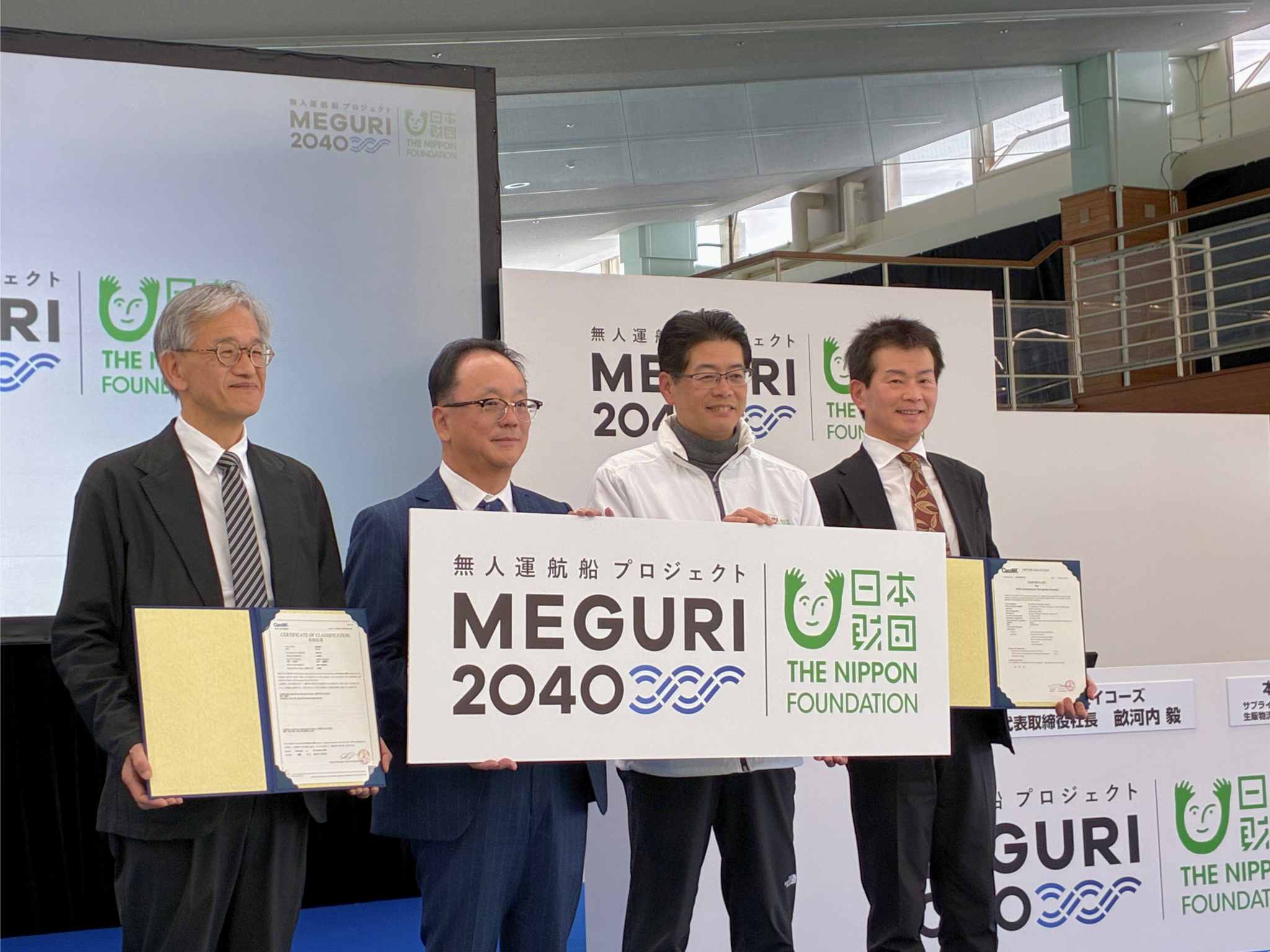
TOKYO: ClassNK has granted its “AUTO-Nav2(All)”*1 notation to domestic liner container ship “Genbu,” the only newly constructed autonomous ship under the MEGURI2040 Fully Autonomous Ship Program*2 by The Nippon Foundation. This notation identifies ships equipped with an autonomous navigation system approved by ClassNK, and it marks the world’s first case of an autonomous navigation notation being assigned to a vessel operating on medium- to long-distance coastal routes. The vessel was constructed by Kyokuyo Shipyard Corporation, with ship management handled by IKOUS Corporation and operations conducted by Suzuyo Marine Co., Ltd.

Fullty Autonomus Containership Genbu ClassNK awards world’s first MASS notation to domestic container ship “Genbu”

In recent years, the research and development of technology related to autonomous surface ships (MASS) has been actively carried out with the aims of improving safety by preventing human error and improving working conditions by reducing the workload on crew members. Particularly in Japan, autonomous ships are expected to contribute to securing daily routes to many inhabited remote islands and to the continuation of domestic shipping business due to the aging of seafarers. This notation is intended to support initiatives, toward the social implementation of these technologies reflecting the needs of the industry, from the standpoint of the classification society.

In order to address the new concept of autonomous and automated navigation systems, whose evaluation has been difficult under conventional regulatory frameworks, ClassNK released its “Guidelines for Automated/Autonomous Operation of ships.” These Guidelines have been developed based on insights gained through various demonstration projects, and outline the requirements for each stage of conceptual design, design development, installation, and maintenance during the operation of automated/autonomous operation technologies.

The autonomous navigation system installed on this vessel has been developed through the dedicated efforts of the diverse companies participating in the consortium of the project. ClassNK conducted an examination of the system, based on its guidelines. Upon confirming it complies with the prescribed requirements, the “AUTO-Nav2 (All)” was affixed to the vessel. By obtaining this notation, the vessel is able to respond to the industry’s need for an official evaluation of highly safe automated navigation technologies and to externally demonstrate their reliability.

ClassNK will continue to contribute to the advancement of technologies related to autonomous ships through the development of appropriate standards and certification activities, with the aim of reducing the burden on seafarers, promoting work style reform, and ensuring the stability of maritime logistics.

DPA Kandla conducts India’s first-ever methanol bunkering

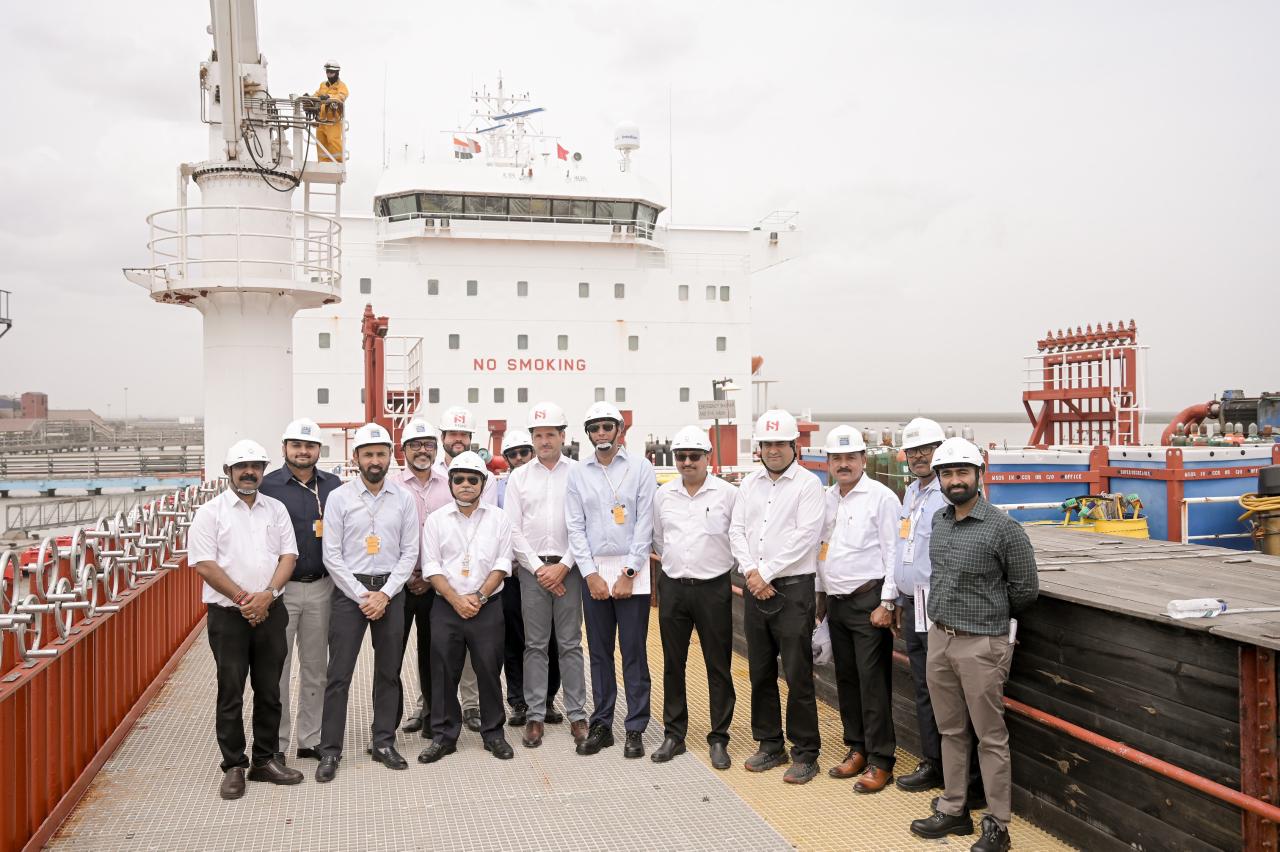
GANDHIDHAM : Kandla does it again-1st Methanol Bunkering In India. DPA Kandla successfully demonstrates Methanol Bunkering at Kandla – the First-Ever in India’s Port sector. A decisive step towards Maritime Decarbonization.

In a significant step towards greener maritime operations, Deendayal Port Authority (DPA), which operates Kandla Port, on Thursday announced that it has successfully conducted India’s first-ever methanol bunkering operation at a port.

Announcing the achievement, DPA stated, “DPA Kandla successfully demonstrates methanol bunkering at Kandla — the first-ever in India’s port sector. A decisive step towards maritime decarbonization.”

DPA Chairman Shri Sushil Kumar Singh IRSME said ,” A Big Thank-you to M/s. Stolt Tankers, JM Baxi, Aegis VOPAK and Indian Oil Corp. Ltd., for their participation in the joint exercise today !! Thanks to DNV for validating custody transfer process !!”

Methanol, considered a cleaner alternative fuel, plays a crucial role in reducing carbon emissions in maritime transport.

DPA BUNKERING DPA Kandla conducts India’s first-ever methanol bunkering

What is Methanol Bunkering?

Methanol bunkering refers to the process of supplying methanol fuel to ships for propulsion. Unlike traditional marine fuels such as heavy fuel oil or diesel, methanol burns cleaner, producing significantly lower emissions of sulphur oxides (SOx), nitrogen oxides (NOx), and particulate matter. It can also help reduce greenhouse gas emissions, especially when produced from renewable sources such as biomass or captured carbon.

Methanol is gaining traction globally as a viable alternative marine fuel because it is easier to store and handle compared to some other green fuels, and can be used in specially designed or retrofitted ship engines. As the shipping industry faces increasing pressure to cut emissions, methanol bunkering infrastructure is expected to play a key role in the transition towards sustainable maritime operations.

With this milestone, Kandla Port has once again positioned itself at the forefront of innovation in India’s maritime industry, setting a precedent for other ports to follow in the transition towards greener fuel solutions.

India–Korea Partnership boosts shipbuilding skills under Maritime Amrit Kaal Vision 2047

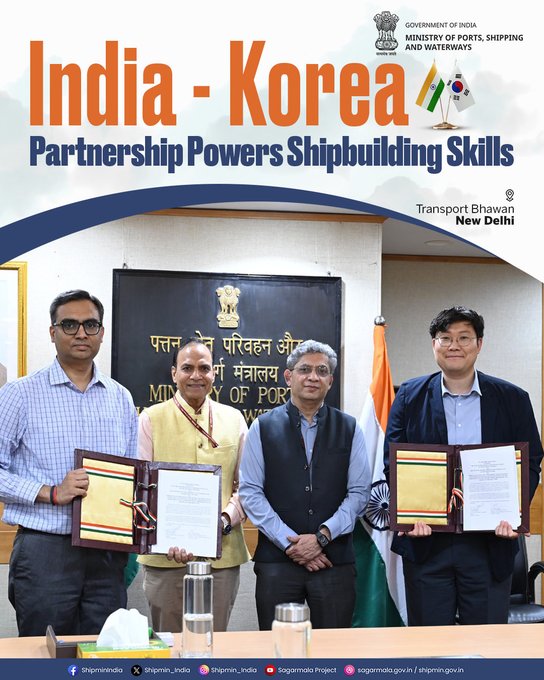
NEW DELHI : In a significant move to strengthen India’s shipbuilding ecosystem, the Ministry of Ports, Shipping and Waterways (MoPSW) has signed a Plan of Implementation (PoI) with the Korea International Cooperation Agency (KOICA). This collaboration marks a major milestone under India’s ambitious Maritime Amrit Kaal Vision 2047, aimed at positioning the country as a global maritime powerhouse.

The partnership focuses on building a future-ready workforce through structured skill development, capacity building, and technology collaboration. A key highlight of the initiative is the proposed establishment of a Shipbuilding Workforce Development & Technology Cooperation Center, which will serve as a hub for advanced training, research, and innovation in shipbuilding.

The project is expected to introduce global best practices from South Korea—one of the world’s leading shipbuilding nations—into India’s maritime training ecosystem. It will emphasize specialized skill development in areas such as hull design, modular construction, marine engineering, automation, and digital shipbuilding technologies.

The collaboration will also support workforce planning by assessing current and future skill requirements in India’s shipbuilding and ship repair sectors. Training programs will be aligned with industry needs, ensuring a steady pipeline of skilled professionals to meet growing domestic and international demand.

Additionally, the initiative aims to enhance institutional capacity by upgrading existing maritime training institutes, developing standardized curricula, and facilitating knowledge exchange between Indian and Korean experts. The partnership is also expected to attract investments, encourage technology transfer, and improve productivity and efficiency across Indian shipyards.