Home Blog Page 374

NMPA organizes Maritime Seminar on Maritime Adversities and Indian Port Act 2025

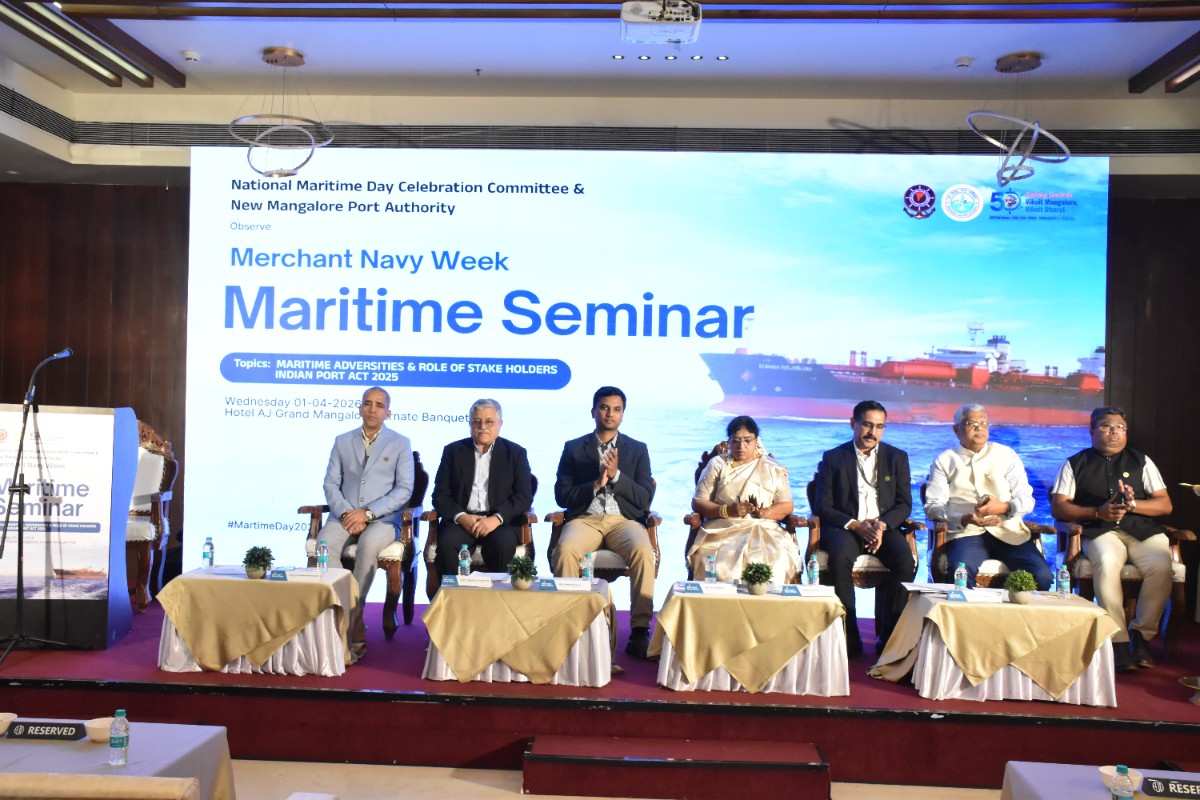
MANGALURU : New Mangalore Port Authority successfully organized the Maritime Seminar on the theme “Maritime Adversities and Role of Stakeholders” and “Indian Port Act 2025” on Wednesday, 01 April 2026 in Mangalore.

The seminar brought together maritime stakeholders, industry experts, port users, and government officials to deliberate on emerging maritime challenges and discuss the implications of the Indian Port Act 2025 in strengthening port governance and operational efficiency.

Capt. Manoj Joshi, Deputy Conservator, NMPA, welcomed the dignitaries and participants and highlighted the importance of collaborative efforts among stakeholders to address maritime adversities and ensure safe and efficient port operations.

Smt. S. Shanthi, Deputy Chairperson, New Mangalore Port Authority, presided over the function. Sri Darshan H. V. (IAS), Deputy Commissioner, Dakshina Kannada, inaugurated the seminar as the Chief Guest. Shri Nandakumar V. Pillai, Director (Refinery), MRPL, attended the programme as the Guest of Honour.

In her presidential address, Smt. S. Shanthi emphasized the importance of stakeholder coordination, preparedness, and adoption of best practices to overcome maritime challenges and enhance operational efficiency at ports. She also highlighted the significance of the Indian Port Act 2025 in strengthening regulatory frameworks and improving governance across ports. She also emphasised on significance of Maritime Week by highlighting its strength & future of maritime sector & contribution of ports, shipping, seafarers and all the stakeholders who keep trade and logistics moving.

Chief Guest Sri Darshan H. V. (IAS) appreciated the initiative taken by NMPA in organizing the seminar and stressed the need for strong coordination among government agencies, industry stakeholders, and port authorities to address maritime risks, security and ensure smooth port operations

Guest of Honour Shri Nandakumar V. Pillai highlighted the importance of port-industry collaboration and emphasized the role of ports in ensuring energy security and industrial growth in the region. The seminar featured insightful technical sessions by Capt. L. K. Panda, Former Nautical Adviser, Government of India, and Capt. Anand W. Karkare, Former Deputy Conservator, Mumbai Port Authority, who shared their expertise on maritime adversities, risk mitigation strategies, and regulatory aspects under the Indian Port Act 2025.

The seminar witnessed active participation from maritime stakeholders, shipping agents, port users, logistics operators, and officials from various government and private organizations

Ship Recycling Market under Strain as Geopolitical Factors Weigh on Economics

By Mr. Rakesh Khetan, CEO, Wirana Shipping

The global ship recycling market is moving into a more difficult quarter, with rising costs, rising steel prices, possible slowdown in local steel demand, energy shortages and exchange risks. Even within the Indian sub-continent these parameters can have differing impacts. As of today, Bangladesh and Pakistan hold firmer ground in terms of prices offered for recycling candidates, according to leading vessel cash buyer Wirana Shipping’s latest demo market report.

Wirana’s industry report points to a market that is becoming harder to read and harder to time. Steel and scrap indicators are improving across key destinations, but that strength is not flowing evenly into offers to recycling candidates. For shipowners, that means the gap between headline market sentiment and actual executable prices may widen but thanks to slower supply of recycling candidates that ship owners end up getting higher prices than market indications because there will always be some buyers who may decide to speculate to offer higher than current prices.

In India, recyclers are still offering the lowest price levels in the subcontinent even as local steel plate prices, local scrap prices and imported scrap prices have all moved higher. At the same time, energy shortages affecting steel mills have slowed local steel demand and added fresh pressure to sentiment. A partial relaxation of LPG supply to the steel sector may help, but the impact on Alang will depend on how supply conditions develop on the ground this week.

Bangladesh and Pakistan are showing firmer pricing signals. While sentiments of steel mills remain cautious, recyclers in both markets are in a stronger competitive position at present. That is leaving India with scale and capability, but without the pricing strength needed to pull in cleaner candidates in meaningful numbers.

Mr. Rakesh Khetan, CEO of Wirana Shipping, said: “The market is not short of recycling capacity, but the supply of recycling candidates continues to remain short. India has compliant yards, infrastructure and depth, but owners are still seeing a clear commercial gap when they compare executable levels across the subcontinent.

“This is where market conditions matter. Energy disruption, foreign exchange pressure and regional instability are feeding directly into demolition values. Ship recyclers have to factor in these costs in addition to the compliance cost.”

Wirana’s report shows that certified recycling capacity across South Asia continues to grow. Bangladesh now has 28 HKC certified facilities, Pakistan has three with more expected shortly, and India has more than 110 yards holding HKC Statements of Compliance.

Mr Khetan said: “The industry has invested heavily in compliance and capacity, but commercial reality also plays a dominant role in decision making process. If pricing in

India does not respond fast enough, majority of the ship owners will continue to look elsewhere, especially now that all the facilities they are looking at are HKC certified facilities.”

The report also points to broader geopolitical pressure feeding into the market. India’s currency has weakened sharply over the past month as the Middle East conflict continues to affect oil dependent economies. Bangladesh remains exposed through imported gas, while Turkey is also dealing with rising cost pressure linked to the same external environment.

At vessel level, supply remains slow to moderate, with medium sized dry bulk, LPG and offshore units circulating this week. Looking ahead, weaker LNG charter rates could bring more candidates into the recycling market, while firm dirty tanker earnings may continue to delay scrapping in the tanker segment.

Mr Khetan said: “This is becoming a more selective market. Sellers need to be realistic, buyers need discipline and both sides need to recognise that volatility is no longer a side issue. It is now central to demolition strategy.”

Wirana expects the coming weeks to be critical in showing whether India can recover pricing momentum, whether post Eid trading in Bangladesh drives stronger activity and whether Pakistan can maintain its recent firmness. As the second quarter begins, the ship recycling market is offering more optionality on paper, but greater complexity in practice.

Two tankers with 94,000 tonnes of LPG reach India from UAE via Strait of Hormuz

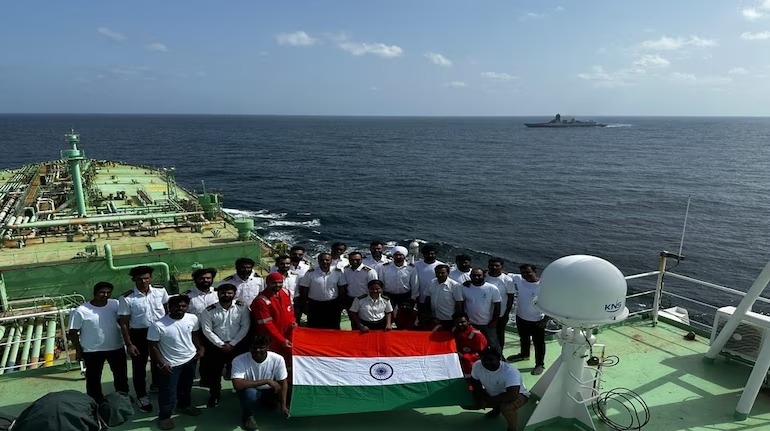
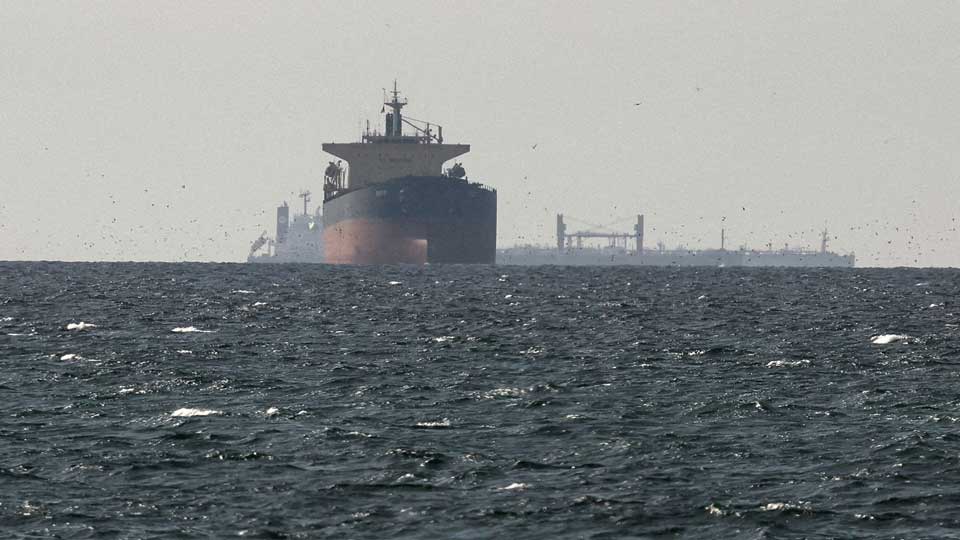
MUMBAI : Two Indian-flagged gas tankers carrying liquefied petroleum gas (LPG) have safely reached India from the UAE after crossing the Strait of Hormuz, a critical maritime energy chokepoint that has been restricted by Iran to most countries, with limited passage allowed to a few, including India, amid its conflict with Israel and the US.

The LPG carrier BW TYR arrived at Mumbai anchorage late on March 31, having departed from Ras Al Khaimah port in the UAE. The vessel completed the journey in six days and is carrying gas for Bharat Petroleum Corporation Limited (BPCL).

Another tanker, BW ELM, also crossed the Strait of Hormuz and reached near New Mangalore on April 1 at noon. This vessel is transporting gas for Hindustan Petroleum Corporation Limited (HPCL).

BW TYR has 27 Indian seafarers on board and is carrying 23,653 metric tonnes of propane and 22,926 metric tonnes of butane. BW ELM has 28 Indian seafarers on board and is loaded with 23,860 metric tonnes of propane and 23,139 metric tonnes of butane.

So far, eight Indian-flagged vessels have safely transited the strait. This was confirmed by Rajesh Kumar Sinha, Special Secretary in the Ministry of Ports, Shipping and Waterways, during a media briefing on recent developments in West Asia on March 30. Of the eight vessels, two tankers, carrying a combined LPG cargo of approximately 94,000 tonnes, have reached Indian shores.

At the press briefing, Sinha added that the government continues to monitor the situation closely, focusing on the safety of Indian seafarers, vessel movements and port operations amid the ongoing conflict in West Asia.

Currently, at least 10 foreign-flagged ships carrying energy supplies to India are stranded in the Persian Gulf. Additionally, 18 Indian-flagged vessels carrying LPG, crude oil, and LNG remain anchored west of the Strait of Hormuz, which has been significantly affected by the regional conflict.

The first crude shipment to reach India via the affected Strait of Hormuz arrived on March 12, after New Delhi’s Middle East diplomacy secured safe passage for its oil tankers following talks between External Affairs Minister S Jaishankar and his Iranian counterpart Abbas Araghchi.

“Build up some delayed courage”: Trump urges allies to “reclaim” Strait of Hormuz from Iran

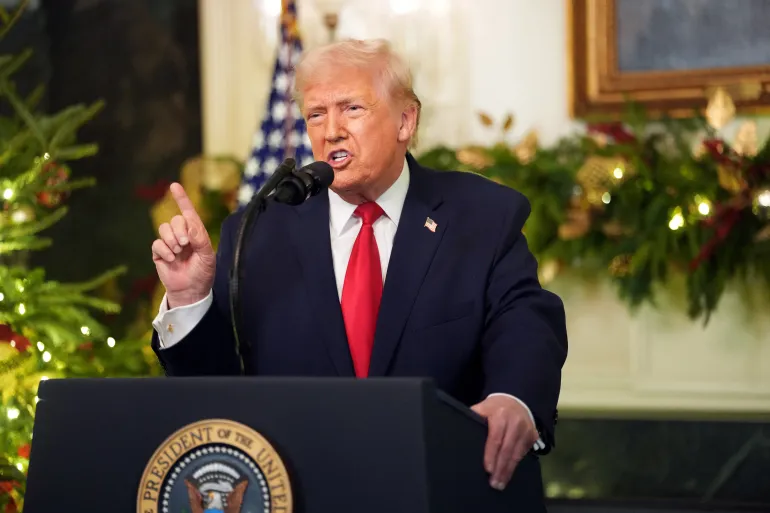
WASHINGTON: US President Donald Trump has called on oil-importing nations to “build up some delayed courage” and take responsibility for reclaiming the Strait of Hormuz, asserting that the burden of securing the Iranian-blocked waterway should be shared by international partners.

The President stated that these countries “[they] should have done it before, should have done it with us, as we asked.” He further urged them to “go to the strait and just take it, protect it,” as his administration continues its military campaign in the region.

The President maintained that the United States is “getting very close” to its targets, stating, “We are gonna finish the job.” He expressed gratitude toward regional partners, including Israel, Saudi Arabia, Qatar, the UAE, and Bahrain, noting they have “been great” and vowing that the US “will not let them fail in any way, shape or form.”

Portraying the conflict as a “true investment in your children and your grandchildren’s future,” the President claimed the global community is observing American military capability with awe. “The whole world is watching, and they can’t leave the power, strength and brilliance. They just can’t believe what they’re seeing,” he remarked.

The US President reiterated his stance that military action is essential to prevent Tehran from “acquiring a nuclear weapon.” This claim persists despite previous acknowledgements from his own intelligence officials that the Iranian leadership was not actively seeking such a maritime or tactical capability last year.

Addressing the domestic impact of the conflict, the President noted that “many Americans have been concerned to see the recent rise in gasoline prices here at home,” with costs at the pump increasing by over 25 per cent. He described this “short-term increase” as a direct result of “the Iranian regime launching deranged terror attacks against commercial oil tankers.”

According to the President, these actions serve as “yet more proof that Iran can never be trusted with nuclear weapons.” He warned that the US intended to “hit them extremely hard over the next two to three weeks,” adding a stern warning that forces would “take them back to the stone ages where they belong.”

The President clarified that “regime change was never our goal,” though he observed that “regime change has occurred because of their original leader’s death.” He cautioned that if no diplomatic agreement is reached soon, the US has “eyes on key targets” and is prepared to strike “every one of their electric generating plants very hard, and probably simultaneously.”

The President asserted that the US is currently “on the cusp of ending Iran’s sinister threat to America and the world.” He maintained that the military is “on track to complete all of America’s objectives shortly, very shortly.”

Source: ANI

Why a second global shipping chokepoint could soon live up to its name as the ‘Gate of Tears’

LONDON: If you’d never heard of the Strait of Hormuz before, you probably have by now. Iran’s effective closure of the waterway, which usually carries about 20% of the world’s oil and gas, has put severe pressure on the global economy. Now, some analysts are warning a new flashpoint could emerge: the Bab el-Mandeb Strait.

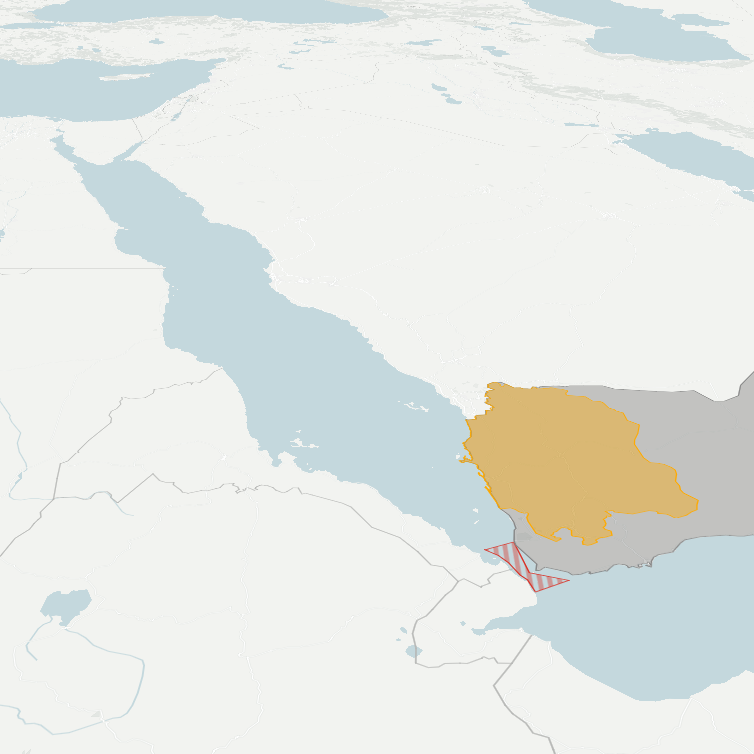
That’s because on March 28, the Houthis, a military group that controls large parts of northern Yemen and is aligned with Iran, entered the war, launching missiles towards Israel for the first time since the war with Iran began.

Yemen is situated on one side of the strait, and the Houthis have previously attacked shipping in the Red Sea, causing major disruption in late 2023 and 2024.

Bloomberg now reports Iran has approached the Houthis to prepare for a similar campaign.

Here’s why all eyes will be back on the Houthis, Bab el-Mandeb and the Red Sea, and what disruption of a second major chokepoint could mean for the world economy.

What is the Bab el-Mandeb Strait?
The Bab el-Mandeb Strait is about 30 kilometres wide at its narrowest point. It is situated between Yemen on the Arabian Peninsula to the northeast and Eritrea and Djibouti in Africa on the west.

Its name literally means “Gate of Tears” in Arabic, after its famously treacherous sailing conditions.

It has become so important because, along with the Suez Canal in Egypt, it allows ships to transit directly between the Mediterranean Sea and the Indian Ocean by passing through the Red Sea and the Gulf of Aden.

Before the Suez Canal’s opening in the 19th century, ships had to travel all the way around the southern tip of Africa to join these two points.

An oil tanker leaving Saudi Arabia to go to the Netherlands, for example, only has to travel 12,000 kilometres if it goes via the Red Sea, compared with more than 20,000 kilometres going south around Africa.

As you’d expect, that’s much faster too. According to the US Energy Information Administration (EIA), a trip between the Arabian Sea and the Netherlands that takes 34 days the long way around is shortened to just 19 days.

What passes through it?
In normal times, as much as 14% of global maritime trade goes through the Bab el-Mandeb Strait.

Detailed data on what passes through the Bab el-Mandeb Strait is somewhat limited. But fossil fuels are a major component.

The International Energy Agency (IEA) estimates that in 2025 about 4.2 million barrels of crude oil and petroleum liquids crossed the Bab al-Mandeb Strait per day. That’s about 5% of global production.

Given most ships use the Suez Canal as well, official data from the Suez Canal Authority allow us to paint a detailed picture of Red Sea shipping.

In the final quarter of 2025, about 40% of the 3,426 ships passing through the Suez Canal transported fossil fuels: (1,330 oil tankers, 88 liquefied natural gas (LNG) ships).

Bulk and general cargo made up another 40% (1,339 ships), typically transporting agricultural commodities such as corn, wheat and soybeans, and also coal and iron ore. Container ships made about 13% of the traffic (459 ships).

Notably, total traffic through the Red Sea has declined considerably since Houthi attacks on shipping in late 2023 and 2024, even though these attacks have largely stopped.

Can the strait be closed?
The Bab el-Mandeb Strait can’t be “closed” entirely. Its narrowest point is still a considerably wide waterway. And unlike the Strait of Hormuz, the Bab el-Mandeb Strait is not a “cul-de-sac”, where the passage is closed at one end with only one way out. Ships can still exit to the Mediterranean via the Suez Canal.

That’s little comfort for those bound for Asia, which would then have to round Africa to do so, adding weeks to the journey.

Notably, Saudi Arabia had already built a “Plan B” to avoid the Strait of Hormuz, called the East-West pipeline. This pipeline connects Abqaiq in the north with Yanbu on the Red Sea, and had already begun pumping oil at almost full capacity in response to the conflict.

But oil bound for Asia from this new exit point still has to pass through Bab el-Mandeb to avoid the long way around, meaning it could be disrupted.

We’ve been here before
To get a sense of how the Houthis could disrupt shipping again, we can look to the most recent Red Sea crisis.

According to the International Maritime Organization (IMO), 67 incidents were recorded between November 2023 and September 2024. Some ships only suffered minor equipment damage. But others faced severe fires, flooding and structural damage after being hit by missiles or drones.

However, there have been relatively few attacks since 2024. And the strait was never totally “closed” per se: some ships continued to pass through throughout the crisis.

The mere threat of attacks
These same tactics would probably apply today. But for shipping companies, the mere threat of attacks may be enough to slow or restrict shipping. There are significant risks to civilian crew, who face a threat to life.

Adding to this, insurance costs could become prohibitive enough to close the route in practical terms. Back in 2024, insurance costs were about 0.6% of the value of the cargo on a ship. After the Red Sea crisis, this rose as high as 2%.

The effective closure of both the Strait of Hormuz and Bab el-Mandeb at the same time would be severely disruptive to global supply chains and the global economy.

Source : The Conversation

Strait of Hormuz : Britain to unite 35 countries to reopen the Hormuz Strait

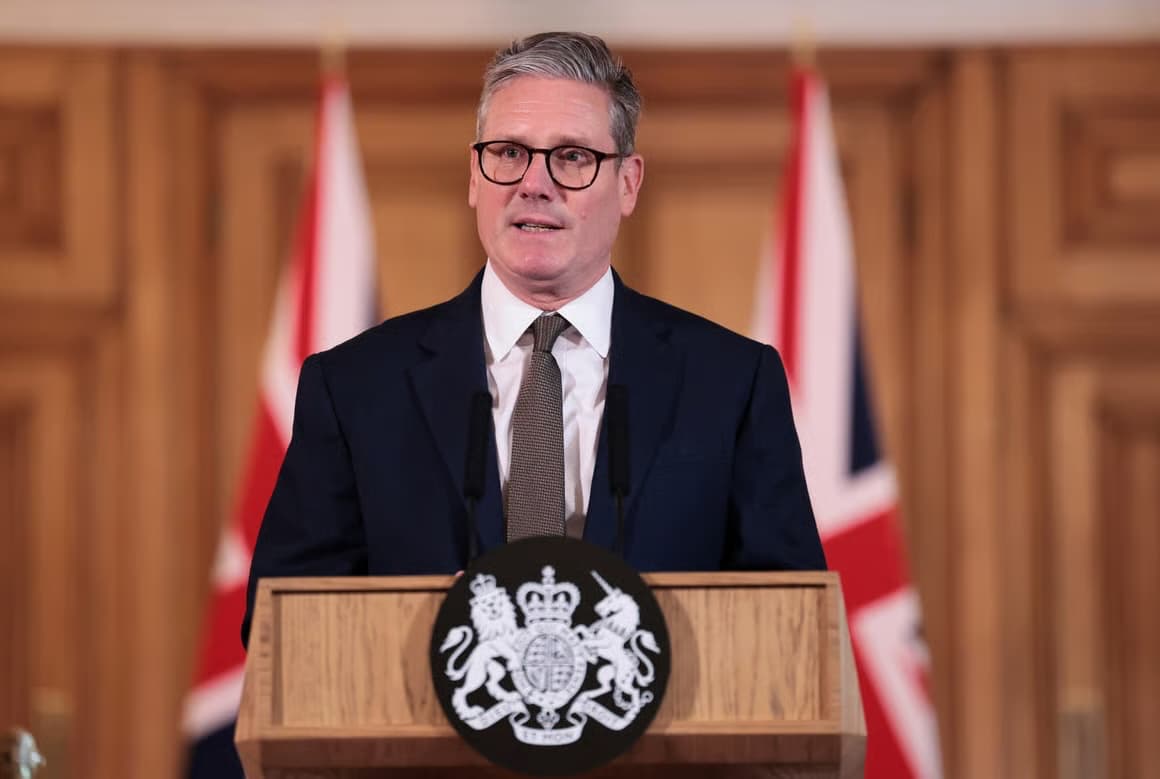
LONDON : The UK will host an international diplomatic conference this week on ways to reopen the Strait of Hormuz, Prime Minister Keir Starmer said. He further stated that 35 countries have signed a statement committing to work together on restoring maritime security to the key oil transport route.

The meeting will “assess all viable diplomatic and political measures that we can take to restore freedom of navigation, guarantee the safety of trapped ships and seafarers and resume the movement of vital commodities”, Starmer said.

“Following that meeting, we will also convene our military planners to look at how we can marshal our capabilities and make the strait accessible and safe after the fighting has stopped,” he added.

Britain, France, Germany, Italy, Japan and the Netherlands are among those to have signed it.

The British PM said the impact of the war would “define us for a generation” and could be similar to ​the increase in energy prices in the 1970s.

Trump’s Criticism Of Allies
Starmer’s comments come after repeated criticism from US President Donald Trump and a day after the Republican leader told off countries that did not help America in strikes against Iran to “go get your own oil”.

“All of those countries that can’t get jet fuel because of the Strait of Hormuz, like the United Kingdom, which refused to get involved in the decapitation of Iran, I have a suggestion for you: Number 1, buy from the U.S., we have plenty, and Number 2, build up some delayed courage, go to the Strait, and just TAKE IT”, Trump wrote.

Trump criticised European countries that refused to join the war against Iran, calling out Britain and France, as transatlantic relations deteriorate ​from the conflict that has driven up energy prices.

The president warned Britain and other countries to “start learning ​how to fight for yourself” because the US “won’t be there to help you anymore”.

After Starmer refused to join the US-Israeli war on Iran, his relationship with Trump publicly deteriorated.

Starmer initially denied a request from the US to attack Iran from two British bases but later agreed to allow what he calls defensive missions aimed at ​protecting residents of the region, ​including British citizens.

Asked about ⁠Trump’s criticism, Starmer said, “the US and UK are close allies and have been for a very, very long time” and he would act in the British ​national interest “whatever the pressure on me.”

Iran’s Chokehold On Hormuz Strait
Iran has threatened to hit ships that try to cross the Strait, choking one-fifth of the world’s oil and gas supplies and triggering energy security concerns in Asian markets such as India and China.

The blockade of the Strait is driving inflation across the globe, and pressure is building on the US, which targeted Iran along with Israel on February 28.

Government notifies Conditional Concessional Customs Duty for SEZ to Domestic Tariff Area sales to boost manufacturing capacity

NEW DELHI : In line with the Budget announcement 2026, conditional Customs Duty concessions have been notified on clearance of goods manufactured in Special Economic Zones (SEZs) to the Domestic Tariff Area (DTA) to improve capacity utilisation of manufacturing units impacted by global trade disruptions. The measure is expected to benefit approximately 1,200 SEZ manufacturing units by enabling economies of scale, reducing costs and enhancing resilience, while preserving the export-oriented nature of SEZs.

The measure allows eligible SEZ manufacturing units to clear goods to the DTA at concessional duty rates, subject to a limit of 30 per cent of the highest annual Free on Board export value achieved in any of the three immediately preceding financial years. Export benefits such as duty drawback on inputs are not permitted for such clearances to prevent double benefits.

The notification prescribes key eligibility conditions, including a minimum 20 per cent value addition within the SEZ, calculated using a defined formula based on assessable value and input costs.

The concessional framework covers a broad range of sectors including mineral products; chemical products; plastics and rubber; hides and skins, leather products and articles of furskins; wood, cork and paper; textiles and textile articles; footwear and headgear; stone, ceramic and glass; base metals and articles thereof; machinery and electrical equipment; vehicles, aircraft and transport equipment; optical, medical and scientific instruments; arms and ammunition; and miscellaneous manufactured articles. However, sectors such as agriculture (including marine and processed food products, tobacco, etc.), marble and granite, gems and jewellery, vehicles, toys and petroleum are excluded.

For availing concessional duty benefits, SEZ units are required to furnish a Development Commissioner’s certificate confirming compliance with conditions, along with a declaration to pay full duty in case of non-fulfilment. The units will also be subject to audit under SEZ Rules, 2006. The notification is effective from April 1, 2026 to March 31, 2027.

The above has been implemented vide Notification No. 11/2026-Customs dated March 31, 2026 issued under Section 25(1) of the Customs Act, 1962. The notification grants conditional customs duty concessions on goods manufactured in SEZs and cleared to the DTA, including reduced duty rates and, in certain cases, partial exemption from Agriculture Infrastructure and Development Cess. It applies to units that commenced production on or before March 31, 2025 and meet specified conditions, while excluding Free Trade Warehousing Zone units and goods imported into SEZs and cleared to DTA without adequate manufacturing.

As per Section 30 of the Special Economic Zones Act, 2005, clearance of goods from SEZs to the DTA is treated as imports into India and attracts applicable customs duties, which had affected the competitiveness of SEZ manufacturers. The present measure addresses this concern while ensuring a level-playing field for units operating in the DTA.

DGFT conducts special drive for expeditious disposal of Export Obligation Discharge Certificates

NEW DELHI : The Directorate General of Foreign Trade (DGFT), under the Ministry of Commerce and Industry, has successfully concluded a time-bound Special Campaign for the expeditious issuance of Export Obligation Discharge Certificates (EODCs) under the Advance Authorisation (AA) and Export Promotion Capital Goods (EPCG) Schemes. The campaign was conducted from March 1, 2026 to March 31, 2026 and was monitored through daily review meetings chaired by senior DGFT officials.

EODCs are critical instruments for the formal closure of export obligations. They enable the release of bank guarantees and bonds, reduce exporter grievance burden, and ensure effective compliance monitoring under India’s trade facilitation framework. The campaign has significantly accelerated disposal and will benefit exporters across the country.

EODC approvals in March 2026 recorded a sharp increase over February 2026, rising by 242 percent under the Advance Authorisation scheme and 234 percent under the EPCG scheme. A total of 12,690 EODCs were approved in March, compared to 3,747 in February, representing a more than threefold increase of 3.39 times. This reflects the effective mobilisation and coordinated efforts of DGFT Regional Authorities.

The campaign facilitated the clearance of 59 percent of the pending pipeline under the AA scheme and 54 percent under the EPCG scheme during March 2026, leading to a substantial reduction in backlog.

The Special Campaign resulted in the approval of 12,690 EODCs in a single month, compared to 44,018 approvals during the preceding eleven months from April 2025 to February 2026, underscoring the impact of focused administrative intervention in trade facilitation.

During March 2026, 13,238 out of 13,627 available AA EODC cases were processed, achieving a processing rate of 97 percent. Under the EPCG scheme, 8,281 out of 8,473 available cases were processed, reflecting a processing rate of 98 percent.

As a direct outcome of the Special Campaign, the number of in-progress cases declined significantly from 15,360 as on March 1, 2026 to 3,966 as on April 1, 2026. This reduction was achieved despite the addition of 6,740 new EODC cases during March 2026. The overall decline of 74 percent in in-progress cases highlights the effectiveness of the campaign in clearing backlog and expediting case resolution.

In view of the success of the campaign, the Special Drive for expeditious issuance of EODCs has been extended for a further period of two months from April 1, 2026 to May 31, 2026. Detailed guidelines for the extension were issued on March 30, 2026.

By enabling faster closure of export obligations, facilitating the release of blocked bank guarantees, and reducing the grievance burden on exporters, the initiative underscores the Government’s commitment to fostering an exporter-friendly ecosystem and enhancing ease of doing business.

Auto sector reports strong sales momentum; SUVs and exports drive growth across industry

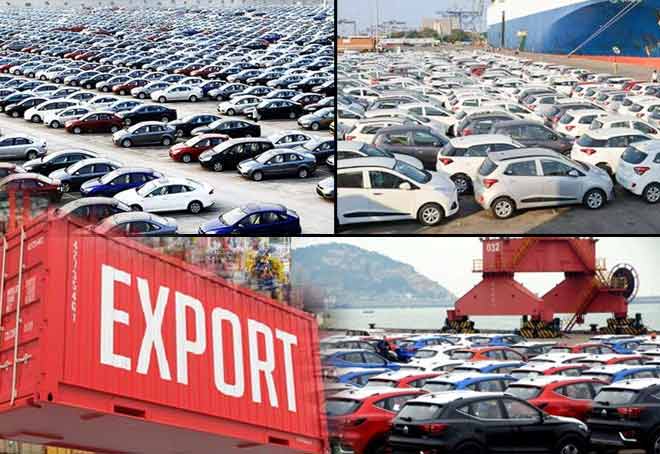
NEW DELHI: India’s leading automobile manufacturers reported strong sales momentum in March and the fourth quarter of FY2025-26, with companies such as Maruti Suzuki, Hyundai Motor India, Tata Motors, Mahindra & Mahindra, Ashok Leyland and Eicher Motors registering growth across key segments, including SUVs, commercial vehicles and exports.

The performance reflects continued demand for passenger vehicles and steady growth in commercial vehicle sales as the financial year closed on a positive note for the automotive industry.

Hyundai Motor India reported its highest-ever quarterly domestic sales in the January-March period of 2026. The company recorded total Q4 sales of 2,08,275 units, marking an 8.7 per cent year-on-year (YoY) growth, including domestic sales of 1,66,578 units and exports of 41,697 units.

The company also registered its highest domestic sales for the month of March with 55,064 units, while total monthly sales stood at 69,004 units, including exports of 13,940 units.

Commenting on the performance, Tarun Garg, Managing Director and CEO of Hyundai Motor India Limited, said, “Continuing the momentum gained in 2026, we have achieved the highest-ever quarterly domestic sales of 1,66,578 units in Q4 FY2025-26. We remain confident of sustaining the pace with upcoming product interventions like our recently upgraded Hyundai VERNA and EXTER.”

Tata Motors Passenger Vehicles also reported robust growth, with total passenger vehicle sales in domestic and international markets reaching 201,368 units in Q4 FY26 compared to 146,999 units in the same period last year.

The company’s total passenger vehicle sales for March stood at 66,971 units, registering a 29 per cent YoY increase. Electric vehicle sales also saw strong growth, rising 77 per cent YoY to 9,494 units during the month.

Shailesh Chandra, Managing Director and CEO of Tata Motors Passenger Vehicles Ltd., said the year marked a major milestone for the company. “We achieved our highest ever annual sales volumes of over 6.4 lakh units, delivering industry-beating growth of 15 per cent YoY,” he said.

Mahindra & Mahindra also posted strong growth in March, with total vehicle sales reaching 99,969 units, up 21 per cent year-on-year. The company sold 60,272 utility vehicles in the domestic market, reflecting a 25 per cent increase.

Nalinikanth Gollagunta, CEO of the Automotive Division at M&M Ltd., said, “The financial year ended on a very positive note, with Mahindra clocking its highest-ever volumes in both SUVs and LCV (<3.5T) segments, a significant milestone for the company.”

He added, “In March, we achieved SUV sales of 60,272 units, a growth of 25 per cent and LCV <3.5T sales of 24,928 units, a growth of 11 per cent YoY. Total vehicle sales stood at 99,969 units, a 21 per cent YoY growth.”

In the commercial vehicle segment, Ashok Leyland reported total vehicle sales of 25,381 units in March 2026, up from 24,060 units in the same month last year, reflecting a 5 per cent increase.

The company’s medium and heavy commercial vehicle (M&HCV) truck sales rose 11 per cent year-on-year during the month, while light commercial vehicle (LCV) sales increased 12 per cent.

Eicher Motors, through its subsidiary VE Commercial Vehicles Limited (VECV), also posted growth in truck and bus sales.
Total VECV sales stood at 13,311 units in March 2026 compared to 12,094 units in March 2025, marking a 10.1 per cent increase.
Domestic sales rose 13.6 per cent to 12,706 units during the month, while total exports stood at 407 units.

Meanwhile, Maruti Suzuki reported total sales of 225,251 units in March 2026, including domestic sales of 169,428 units and exports of 47,040 units.

For the financial year 2025-26, the company achieved total sales of 2,422,713 units — its highest-ever annual sales performance.
Overall, the strong performance across passenger and commercial vehicle segments highlights sustained demand in the Indian automobile market, with SUVs, electric vehicles and exports emerging as key growth drivers for manufacturers.

Source: ANI

Chinese container ships pass through Strait of Hormuz at second attempt, data shows

LONDON : Two Chinese container ships sailed through the Strait of Hormuz on Monday on their second attempt to leave the Gulf after turning back on Friday, ship-tracking data showed. The critical waterway has effectively been shut since the U.S.-Israeli war with Iran began on February 28. The vessels sailed in close formation out of the strait and into open waters, data on the MarineTraffic platform showed.

“Both vessels successfully crossed on a second attempt today, marking the first container vessels to leave the Persian Gulf since the start of the conflict, excluding Iranian flag vessels,” said Rebecca Gerdes, data analyst with Kpler, which owns MarineTraffic.

“Both vessels are steaming at an elevated speed toward the Gulf of Oman at the moment.” Officials from China’s COSCO, the shipping group that operates the two vessels, could not be reached for immediate comment.

COSCO, had said in a March 25 client advisory, that it had resumed bookings for general cargo containers for shipments from Asia to the Gulf including the United Arab Emirates, Saudi Arabia, Bahrain, Qatar, Kuwait and Iraq.

Iran has launched attacks on Gulf shipping and threatened more, stranding hundreds of vessels and 20,000 seafarers inside the Gulf. Energy exports including crude oil from Saudi Arabia and liquefied natural gas from Qatar have been effectively halted.

While there have been some discussions with Iran and countries such as Indian and Pakistan on getting their fleets through the strait, oil and tanker markets have been looking for any signs that shipping traffic has picked up pace. The majority of energy shipments that have passed through the waterway have related to Iran’s oil exports, with a few other ships managing to sail through every day.

Greek oil tanker departs A Greek-operated tanker bound for India carrying Saudi crude also exited the Gulf via the strait recently, LSEG ship-tracking data showed. The Maltese-flagged Marathi began broadcasting its position off the coast of India on March 26 after last reporting its position inside the Gulf on March 2.

The vessel was last seen off the west coast of India on Monday, the LSEG data showed. It was the third loaded crude tanker operated by Greek firm Dynacom to exit the Gulf since the Iran war began on Feb 28.

Dynacom did not immediately respond to a request for comment. Dynacom is one of the few shipowners willing to risk crossing the strait where the risks from Iran include possible floating mines, missiles and drones.

Companies making the voyage have used tactics including switching off their AIS tracking transponders and sailing at night to be less visible, sources have told Reuters.

Two Indian-flagged liquefied petroleum gas (LPG) tankers crossed the strait on Saturday, following two others which exited carrying critical supplies of the cooking gas bound for India in recent days.