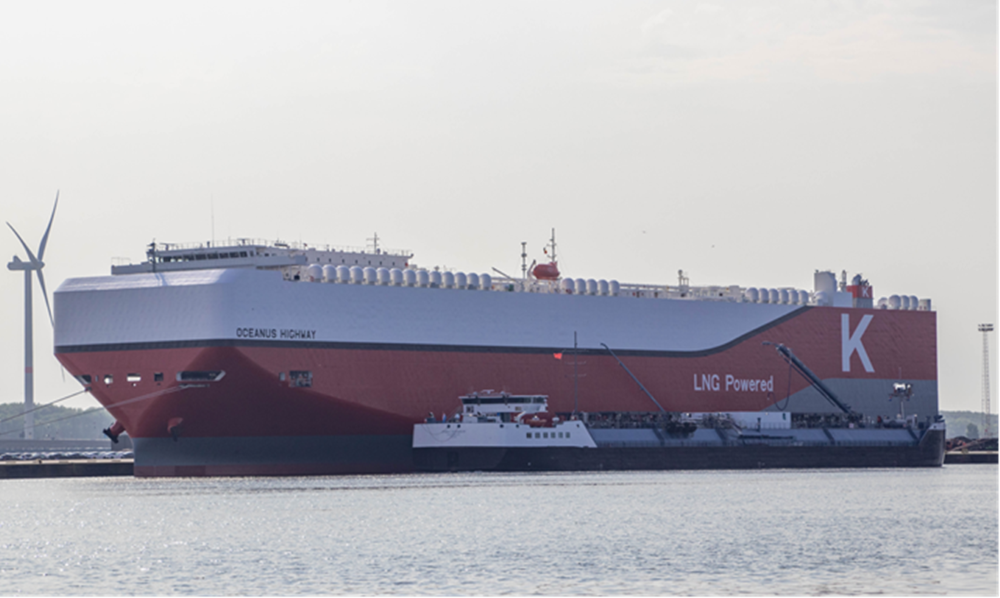
TOKYO: Kawasaki Kisen Kaisha, Ltd. (“K” LINE) is pleased to announce that it has signed an agreement to facilitate the long-term procurement of carbon-neutral bio-LNG fuel (liquefied bio methane, LBM), and it has started to use this fuel for LNG-fueled car carriers. It is expected that this procurement agreement will enable “K” LINE to reduce its greenhouse gas (GHG) emissions by around 60,800 tons*1 per year.
Bio-LNG fuel is an alternative to liquefied natural gas (LNG) that is produced from livestock excrement, food residue and other organic waste. It has been confirmed that the GHG emissions from the entire product lifecycle, from the manufacturing to the consumption of the fuel, are lower than the emissions from traditional fuels, and it can be used as-is in existing LNG-fueled vessels, making it very useful. Taking advantage of this characteristic, “K” LINE expects to use it in its existing LNG-fueled car carriers.
The bio-LNG that “K” LINE is now using is ISCC-EU certified,*2 ensuring a degree of sustainability that is in compliance with the European Union’s Renewable Energy Directive (RED). By proactively adopting internationally certified fuels like this, “K” LINE will help decarbonize entire supply chains in collaboration with cargo owners and other stakeholders.
In the “K” LINE Environmental Vision 2050 – Blue Seas for the Future –*3 , “K” LINE set the target of achieving net-zero GHG emissions in 2050. In line with this, “K” LINE has been working to introduce and operate LNG-fueled ships. The continuous use of bio-LNG is one of its key initiatives to achieve this target. “K” LINE will continue to work hard on the decarbonization of the marine transport industry, including through the use of carbon-neutral fuels and zero-emissions fuels.
*1 Greenhouse gas emissions reduction equivalent to 60,800 tons of carbon dioxide (CO2).
*2 The ISCC-EU certification program certifies that sustainable fuels derived from biomass and waste fulfill the European Union’s legal requirements. This certification is an assurance that sustainability and greenhouse gas emissions reduction standards are met in accordance with Renewable Energy Directive III (RED III).
*3 “K” LINE Environmental Vision 2050 – Blue Seas for the Future – is a set of long-term guidelines regarding the environment that was established in 2015 and revised in 2020. It lays out action plans for reducing GHG emissions, including the introduction of ammonia, hydrogen and other zero-emission fuels and bio-LNG, synthetic fuels and other carbon-neutral fuels.
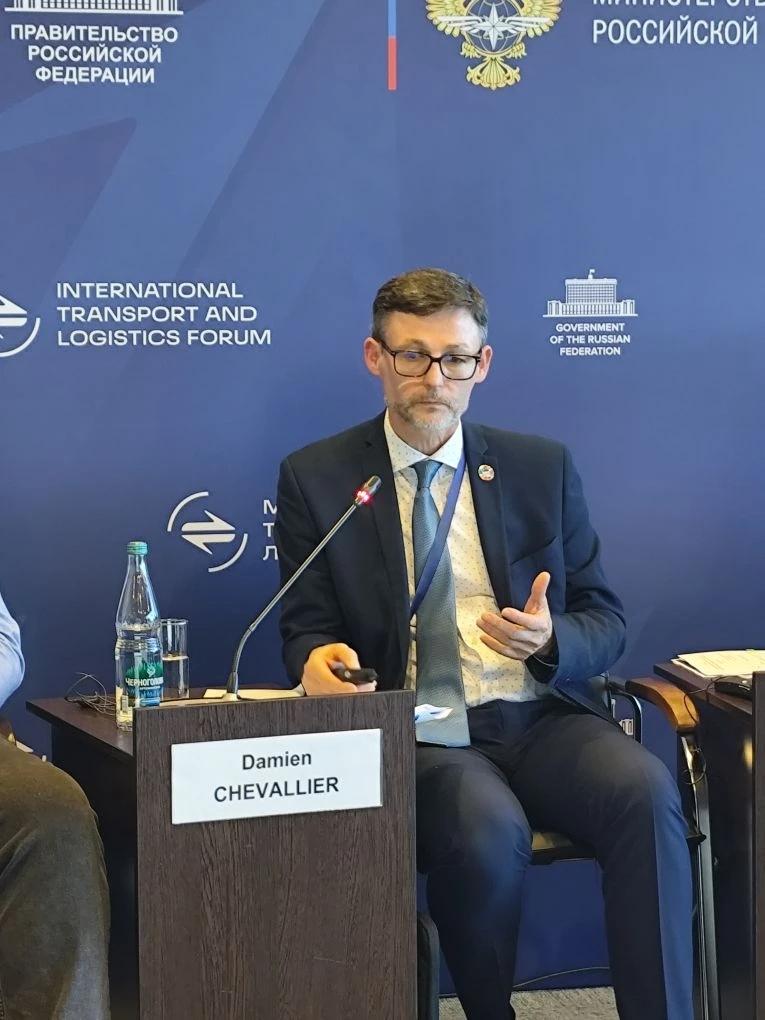
ST. PETERSBURG : Technological innovation within the maritime industry is resulting in rapid developments that will see the commercial use of autonomous ships, whether they are controlled remotely or are fully autonomous. Such change requires robust regulation to ensure the safety of life at sea, as well as of cargo on board and of the vessel itself.
IMO aims to integrate new and advancing technologies in its regulatory framework – balancing the benefits derived from new and advancing technologies against safety and security concerns, the impact on the environment and on international trade facilitation, the potential costs to the industry, and their impact on personnel, both on board and ashore. IMO wants to ensure that the regulatory framework for Maritime Autonomous Surface Ships (MASS) keeps pace with technological developments that are rapidly evolving.
In 2021 IMO conducted a regulatory scoping exercise on Maritime Autonomous Surface Ships that was designed to assess existing IMO instruments to see how they might apply to ships that utilize varying degrees of automation. The regulatory scoping exercise (RSE) for safety treaties was finalized at the 103rd Session of the MSC in May 2021, and for treaties under the purview of the Legal Committee, at its 108th session in July 2021. The FAL Committee approved the outcome of the RSE of treaties under its remit at FAL 46 in May 2022.
Developing a MASS Code Following the completion of the scoping exercise and work begun during the MSC’s 105th session, the MSC has been developing a draft a goal-based instrument regulating the operation of maritime autonomous surface ships.
MSC 108 (May 2024) approved the report of the third session of the Joint MSC-LEG-FAL Working Group on MASS (MASS-JWG 3).
MSC 109 (December 2024) agreed to a revised Road Map for the development of a MASS Code, as follows:
May 2026 – finalize and adopt non-mandatory MASS Code;
December 2026 – develop a framework for an Experience-building phase (EBP) post adoption of the non-mandatory MASS Code;
2028 – commence development of the mandatory MASS Code, based on the non-mandatory Code and result from the EBP and review conducted by the relevant sub-committees, and consider amendments to SOLAS (new chapter) for the Code’s adoption;
By 1 July 2030 at the latest – adoption of the mandatory Code, for entry into force on 1 Jan 2032.
Joint MSC/LEG/FAL Working Group A Joint MSC/LEG/FAL Working Group has been established as a cross-cutting mechanism to address common issues identified by the regulatory scoping exercises for the use of MASS conducted by each of the three Committees – MSC, Legal Committee and Facilitation Committee.
The Joint MSC/LEG/FAL Working Group on MASS (MASS-JWG) meets regularly. (Outcomes of these sessions on this page).
Interim guidelines for trials of autonomous ships The Maritime Safety Committee (MSC) 101st session in June 2019 approved Interim guidelines for Maritime Autonomous Surface Ships (MASS) trials. (MSC.1-Circ.1604).
Among other things, the guidelines say that trials should be conducted in a manner that provides at least the same degree of safety, security and protection of the environment as provided by the relevant instruments. Risks associated with the trials should be appropriately identified and measures to reduce the risks, to as low as reasonably practicable and acceptable, should be put in place.
Any personnel involved in MASS trials, whether remote operators or onboard, should be appropriately qualified and experienced to safely conduct MASS trials. Appropriate steps should be taken to ensure sufficient cyber risk management of the systems and infrastructure used when conducting MASS trials.
What did the regulatory scoping exercise look at? The scoping exercise was seen as a starting point that touched on an extensive range of issues, including the human element, safety, security, liability and compensation for damage, interactions with ports, pilotage, responses to incidents and protection of the marine environment. It involved assessing a substantial number of IMO treaty instruments and identifying provisions which:
applied to MASS and prevented MASS operations;
applied to MASS and did not prevent MASS operations and require no actions;
applied to MASS and did not prevent MASS operations but may need to be amended or clarified, and/or may contain gaps;
have no application to MASS operations.
The degrees of autonomy identified for the purpose of the scoping exercise were:
Degree one: Ship with automated processes and decision support. Seafarers are on board to operate and control shipboard systems and functions. Some operations may be automated and at times be unsupervised but with seafarers on board ready to take control.
Degree two: Remotely controlled ship with seafarers on board. The ship is controlled and operated from another location. Seafarers are available on board to take control and to operate the shipboard systems and functions.
Degree three: Remotely controlled ship without seafarers on board: The ship is controlled and operated from another location. There are no seafarers on board.
Degree four: Fully autonomous ship: The operating system of the ship is able to make decisions and determine actions by itself.
The outcome highlighted a number of high-priority issues, cutting across several instruments, that would need to be addressed at a policy level to determine future work. These involved the development of MASS terminology and definitions, including an internationally agreed definition of MASS and clarification of the meaning of the term “master”, “crew” or “responsible person”, particularly in Degrees Three (remotely controlled ship) and Four (fully autonomous ship).
Other key issues identified included the need to address the functional and operational requirements of the remote-control station/centre and the possible designation of a remote operator as seafarer.
Further common potential gaps and themes identified across several safety treaties related to provisions containing manual operations and alarms on the bridge; provisions related to actions by personnel (such as firefighting, cargoes stowage and securing, and maintenance); watchkeeping; implications for search and rescue; and information required to be on board for safe operation.
Where can I find the regulatory scoping exercise outcomes? You can download the results of the three Committees’ regulatory scoping exercises.
Outcome of the Maritime Safety Committee RSE on safety-related treaties: MSC.1-Circ.1638 – Outcome Of The Regulatory Scoping ExerciseFor The Use Of Maritime Autonomous Surface Ships… (Secretariat).pdf
Outcome of the FAL Committee RSE on the Facilitation Convention: FAL.5-Circ.49 – Outcome Of The Regulatory Scoping Exercise And Gap Analysis Of The Fal Convention With Res… (Secretariat).pdf
Outcome of the Legal Committee’s RSE on liability and compensation treaties: LEG.1-Circ.11 – Outcome Of The Regulatory Scoping Exercise And Gap Analysis Of Conventions Emanating From… (Secretariat).pdf
Why did IMO decide to look at the regulation of autonomous ships? IMO’s Strategic Plan has a key Strategic Direction to “Integrate new and advancing technologies in the regulatory framework”. Because of the cross-cutting issues relating to the commercial operation of autonomous ships that were identified by the regulatory scoping exercise, three IMO committees – the Maritime Safety Committee, the Legal Committee and the Facilitation Committee – are involved in work to ensure IMO instruments are fit for purpose and take account of the rapid technological developments taking place.
Are there already autonomous ships in operation? Autonomous and remote-controlled ships are being trialled in some sea areas.
Most predictions are that autonomous or semi-autonomous operation will be limited to short voyages, for example from one specific port to another, across a short distance.
Seminars on MASS IMO Seminar on implications, challenges and opportunities of Maritime Autonomous Surface Ships (MASS) for ports and public authorities (April 2024)
IMO/Republic of Korea Symposium on ʺMaking headway on the IMO MASS Code” (May 2023)
IMO Seminar on legal issues including UNCLOS and MASS (April 2023)
IMO Seminar on Development of a Regulatory Framework for MASS (September 2022)
Which treaties were looked at under the regulatory scoping exercise? Maritime Safety Committee (MSC)
The list of instruments to be covered in the MSC’s scoping exercise for MASS includes those covering:
safety and maritime security (SOLAS);
collision regulations (COLREG);
loading and stability (Load Lines);
training of seafarers and fishers (STCW, STCW-F);
search and rescue (SAR);
tonnage measurement (Tonnage Convention); Safe Containers (CSC); and
special trade passenger ship instruments (SPACE STP, STP).
Facilitation Committee
The Facilitation Committee considered the Convention on Facilitation of International Maritime Traffic (FAL Convention).
The FAL Committee’s RSE concluded that the FAL Convention is able to address MASS operations into the instrument without major amendments. The results of the RSE mainly demonstrate that sections 1, 2 and 4 of the FAL Convention require a review or interpretation to accommodate MASS operations. Most requirements in section 3 of the FAL Convention have no application to MASS, however some provisions may require amendments. Sections 5, 6 and 7 do not affect MASS and are applicable in their current wording.
Legal Committee
The Legal Committee’s work on the scoping exercise generally concluded that MASS could be accommodated within the existing regulatory framework of LEG conventions without the need for major adjustments or a new instrument. While some conventions can accommodate MASS as drafted, others may require additional interpretations or amendments to address potential gaps and themes that were revealed through the RSE.
It was noted that both the Maritime Safety and Legal Committees had concluded that the role and responsibilities of the master and the remote operator were high‑priority issues that must be addressed as a foundation for further work. Some specific legal terms required consideration in the context of harm caused by autonomous technology, like the concepts of “fault”, “negligence” and “intention”.
The LEG RSE concluded that consideration of these issues would best be addressed jointly between the committees, so that both technical and legal aspects and questions of liability are taken into account, while keeping in mind the different purposes and functions of conventions under the purview of LEG and those under MSC.
The most important of these were:
role and responsibility of the master;
role and responsibility of the remote operator;
questions of liability;
consistent definitions/terminology of MASS; and
carriage of certificates.
The United Nations Convention on the Law of the Sea (UNCLOS), was not considered as part of the LEG RSE, as it is not an IMO Convention. MASS will need to operate within the legal framework of UNCLOS and, thus, UNCLOS will need to be considered.
TOKYO: Japan Engine Corporation (“J‑ENG”) and Kawasaki Heavy Industries, Ltd. (“Kawasaki”) are jointly engaged in Green Innovation Fund Project “Development of Marine Hydrogen Engines and MHFS (Note 1)” of the New Energy and Industrial Technology Development Organization (“NEDO”), in cooperation with Mitsui O.S.K. Lines, Ltd. (“MOL”), MOL Drybulk Ltd. (“MOL Drybulk”), Onomichi Dockyard Co., Ltd. (“Onomichi Dockyard”), and Nippon Kaiji Kyokai (“ClassNK”).
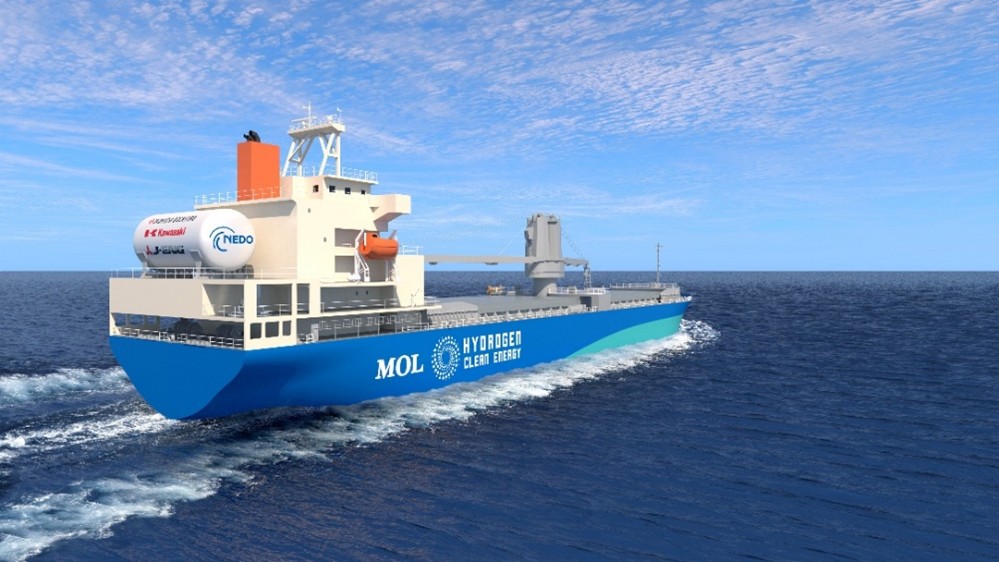
Within this project, J‑ENG has been developing a fully Japan-made, large, low‑speed, two‑stroke hydrogen-fueled engine. The world’s first (Note 2) full‑scale engine intended for installation on an actual vessel, 6UEC35LSGH, has successfully begun hydrogen co‑firing operation in all cylinders. To date, the engine has achieved a hydrogen co‑firing ratio of over 95% at 100% load, confirming both GHG reduction effects and stable operation. Verification testing will continue to further optimize performance under hydrogen co‑firing conditions.
In recent years, the development and demonstration of hydrogen‑fueled vessels have progressed in Japan and abroad. However, most initiatives focus on short‑distance, short‑duration, and low‑output operations—such as sightseeing boats or tugboats using compressed hydrogen—primarily for domestic coastal or port‑area applications. In contrast, this project combines the high‑efficiency, high‑output, low‑speed two‑stroke hydrogen‑fueled 6UEC35LSGH engine with liquefied hydrogen fuel, thereby enabling long‑distance, long‑duration, and high‑output operations. This represents a major technological milestone toward the practical use of large oceangoing hydrogen‑fueled merchant ships.
J‑ENG has accumulated expertise through fundamental studies on hydrogen‑related materials and combustion, as well as durability testing of hydrogen fuel injection systems. The new engine has been developed based on this accumulated knowledge. Once full-scale verification is complete, the engine is scheduled for shipment in January 2027 and will be installed as the main engine of a 17,500‑DWT hydrogen‑fueled multi-purpose vessel (“the Vessel”) designed and built by Onomichi Dockyard. The MHFS, a hydrogen fuel supply system for this engine, is being developed and manufactured by Kawasaki, and it will also be installed on the Vessel.
MOL and Onomichi Dockyard concluded a series of contracts for the construction of the vessel. In addition, through discussions among the relevant parties, agreements were reached on the specifications of various facilities required for the hydrogen‑fueled vessel, and related contracts were executed. The detailed design of the vessel is currently progressing smoothly.
The Vessel is scheduled to undergo three years of demonstration operation starting in FY2028 under the operation of MOL and MOL Drybulk. Throughout the development of the engine and MHFS, as well as the design, construction, and operation of the vessel, ClassNK will conduct safety evaluations.
With NEDO’s support, J‑ENG and Kawasaki, in collaboration with MOL, MOL Drybulk, Onomichi Dockyard, and ClassNK, will continue taking on the challenge of realizing the practical operation of merchant vessels powered by hydrogen fuel—paving the way toward a sustainable future for the maritime industry.
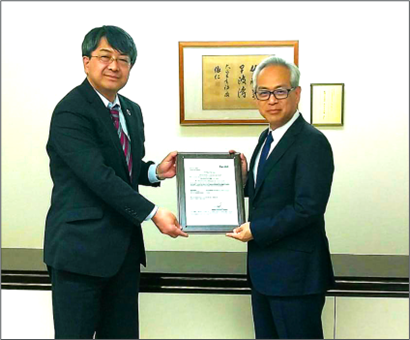
TOKYO: ClassNK has issued certificates of Approval of Manufacturing Procedure and Type Approval for a High-Corrosion-Resistant Type Semi-Parallel Wire Cable (SPWC) developed by KOBELCO WIRE COMPANY, LTD. This approval confirms that the product complies with the requirements specified in the ClassNK’s regulations, and represents first ClassNK approval for a high-corrosion-resistant SPWC.
The high-corrosion-resistant SPWC is a cable composed of polyethylene-coated strands made of 7 mm-diameter galvanized steel wires, and is said to have high fatigue strength and corrosion protection. It is expected to serve as a new option for mooring lines of floating offshore wind turbine structures, providing material characteristics distinct from steel chains and synthetic fiber ropes, and without limiting the mooring configuration.
Upon receiving the application from the company, ClassNK conducted examinations of the product based on its “Guidelines for Floating Offshore Wind Turbines”, confirmed compliance with the prescribed requirements, and consequently issued the certificates.
ClassNK will continue to contribute to the advancement and social implementation of new technologies for offshore wind power by conducting safety evaluations and other related activities.
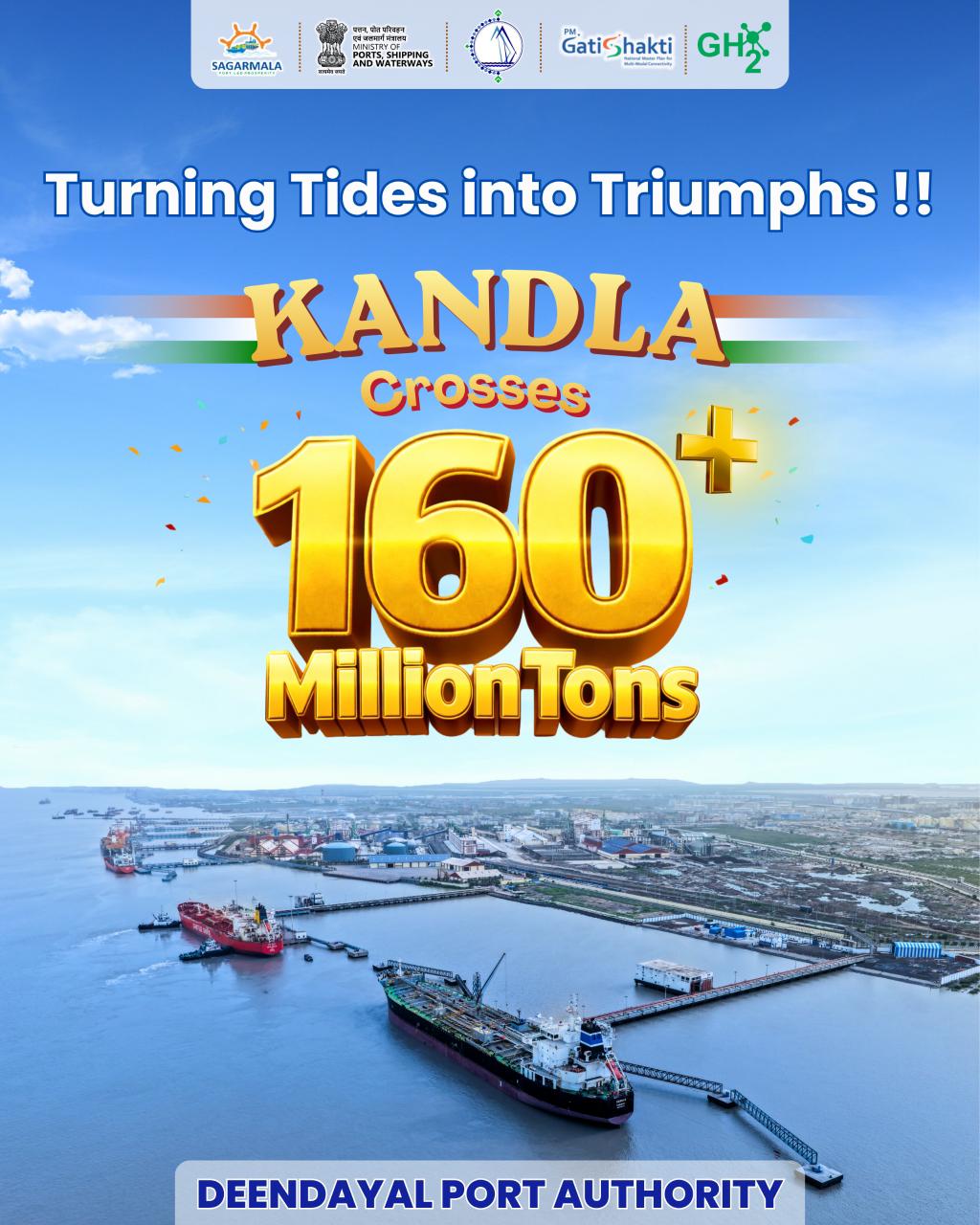
GANDHIDHAM : Kandla Port, under Deendayal Port Authority (DPA), has achieved a remarkable milestone by surpassing 160 million tonnes (MMT) of cargo handling, registering the highest-ever performance among all major ports in India. This landmark accomplishment underscores the port’s operational excellence, robust infrastructure, and unwavering commitment to efficiency and growth.
The achievement reflects consistent improvements in cargo handling capacity, streamlined logistics operations, and enhanced connectivity with the hinterland. Strategic initiatives focused on mechanization, digitization, and ease of doing business have played a pivotal role in driving this record-breaking performance.
On this occasion, Shri Sushil Kumar Singh, IRSME, Chairman, DPA, extended his heartfelt congratulations to all stakeholders whose collective efforts made this success possible. He acknowledged the invaluable contributions of port users, transporters, stevedores, shipping agents, customs officials, trade unions, port officials, and employees.
In his message, the Chairman paid special tribute to the port’s workforce, stating that the Shramik brothers and sisters remain the true partners in progress, whose dedication and tireless efforts continue to propel Kandla Port to new heights.
This milestone further reinforces Kandla Port’s position as a leading maritime gateway of the nation, playing a crucial role in supporting India’s trade and economic growth. With a continued focus on modernization, sustainability, and operational efficiency, the port is well poised to achieve even greater milestones in the future.
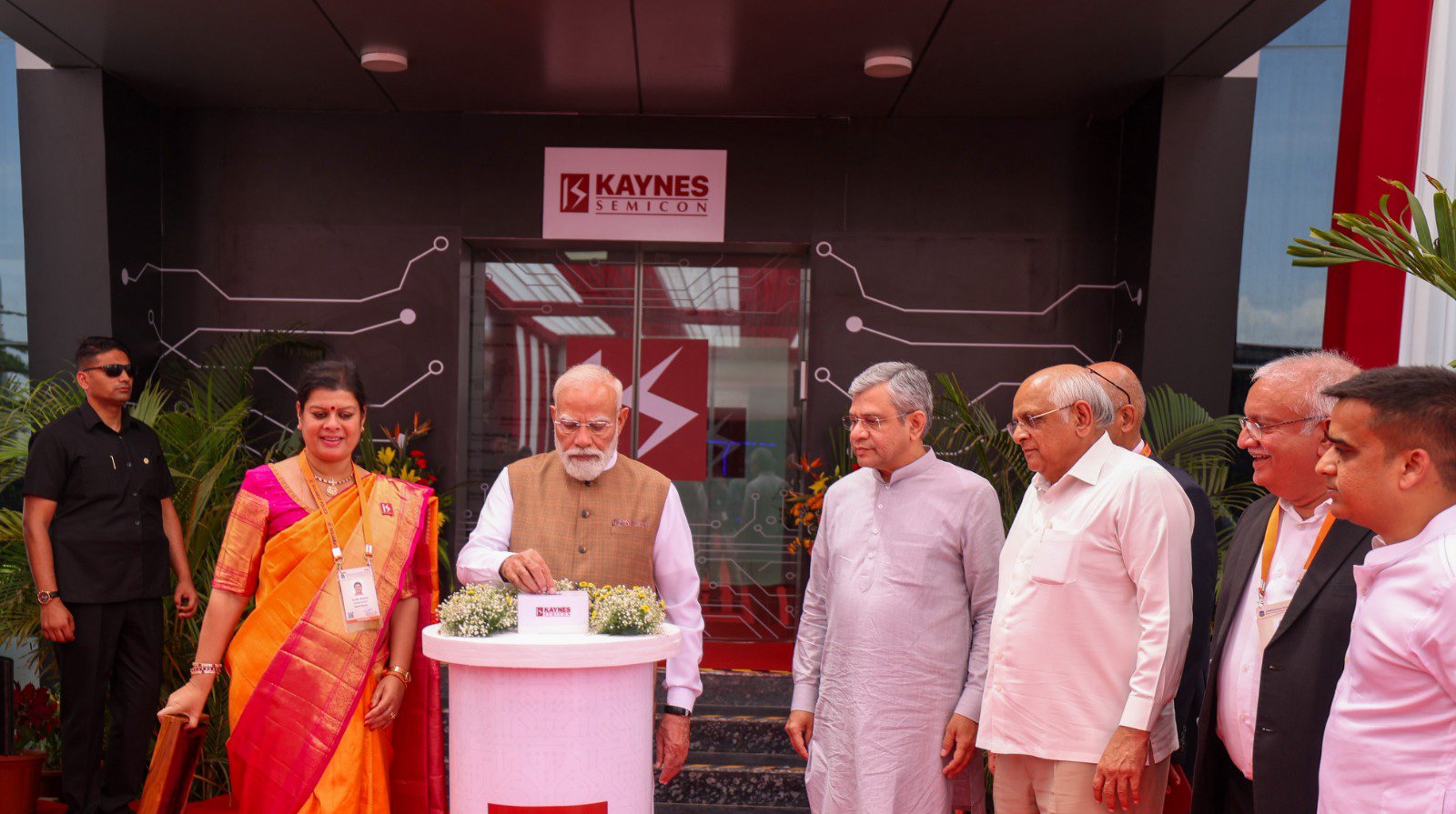
SANAND : Prime Minister Shri Narendra Modi, while inaugurating the Kaynes Semicon Plant at Sanand in Gujarat, stated that “a new bridge has been built between Sanand and Silicon Valley,” marking the current period as the “decade of India.” Highlighting the rapid growth of the domestic electronics landscape, the Prime Minister projected that by the end of this decade, “India’s semiconductor market could exceed USD 100 billion dollars“. He noted that the commencement of production at this facility signifies India’s strengthening role as a reliable semiconductor supplier in the global market.
The Prime Minister emphasized that India’s own company, Kaynes, has now become a strong part of the global semiconductor supply chain. According to the Prime Minister, the intelligent power modules manufactured at the Sanand plant are already witnessing high demand internationally.
“I have been told that a large part of the products made here have already been booked for export. For the California companies, Sanand’s plant is providing intelligent power modules,” he said, adding that these modules will reach American companies and “will give power to the whole world from there.”He described this as a moment of pride that characterises the mantra of “Make in India, Make for the world.”
Reflecting on the strategic importance of the sector, the Prime Minister noted that the global supply chain has faced significant disruptions due to pandemics and conflicts. “Friends, this 21st century has brought many challenges to the world from the beginning. The crisis is due to the pandemic, the conflict is due to the global supply chain. Whether it is chips, rare earth minerals, energy, they have been greatly affected by a conflict. These are things related to the rapid development of humanity. Therefore, it is very important for a democratic country like India to move forward in this direction for the development of the whole world,” he said.
“Atmanirbhar in the semiconductor sector is not limited to a single chip,” he stated, explaining that it provides strength to multiple sectors, including AI, electric vehicles, clean energy, and defense. The Prime Minister detailed the progress of the India Semiconductor Mission, which was initiated in 2021. He described the mission as an “announcement of India’s self-confidence” rather than a mere industrial policy.
Currently, 10 projects worth Rs 1,60,000 crore are being executed across six states. Following the initial success, the government had announced the Semiconductor Mission 2.0 in this year’s budget, shifting focus toward the production of semiconductor equipment and materials to create a “full-stack Indian semiconductor ecosystem.”
To support this industrial expansion, the Prime Minister highlighted the government’s focus on building a future-ready workforce. He announced that “more than 85,000 design professionals will be trained in India” shortly. Furthermore, approximately 400 universities and startups have been granted access to modern design tools, resulting in the design and manufacture of more than 55 chips already. “Our target is to make as many chips as we need in India,” he said, noting the high level of investor enthusiasm for this commitment.
The Prime Minister stated that the 21st century is a time to shape the future landscape through technology leadership. “India is working as a strategic asset in quantum computing. This will play a major role in strengthening India’s digital future,” he said. He expressed confidence that the products originating from the Sanand plant will eventually reinforce India’s identity as a “factory of the world.”
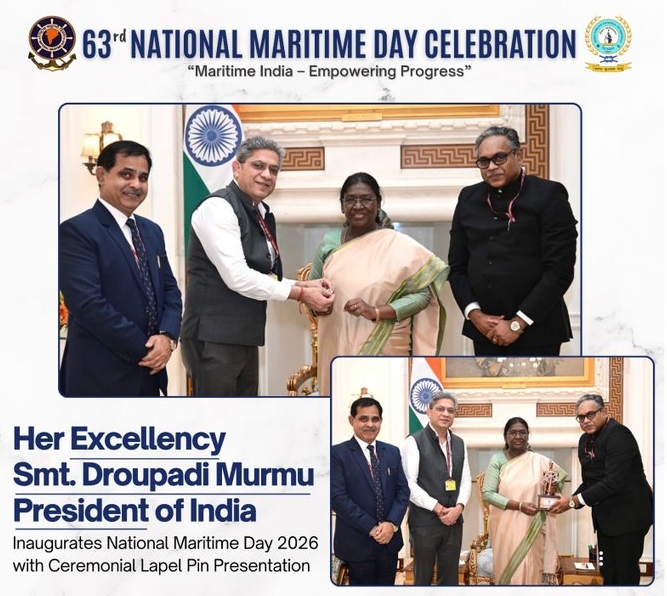
NEW DELHI: The 63rd edition of the National Maritime Day Celebrations (NMDC) 2026 was formally inaugurated at the national level with a ceremonial gesture underscoring India’s deep respect for its maritime community. The Hon’ble President of India, Smt. Droupadi Murmu, was presented with the NMDC commemorative lapel pin, symbolizing the official commencement of the nationwide celebrations.
The lapel pin was presented by Shri Vijay Kumar, Secretary, Ministry of Ports, Shipping and Waterways, marking a proud moment that reflects the nation’s recognition of the invaluable contributions made by seafarers and the maritime sector to India’s economic growth and global trade.
The inaugural ceremony witnessed the presence of key dignitaries from India’s maritime administration and industry, including Shri Shyam Jagannathan, Director General of Shipping, and Shri Binesh Kumar Tyagi, Chairman and Managing Director of Shipping Corporation of India.
This year’s celebrations are aligned with the theme “Maritime India – Empowering Progress”, emphasizing the sector’s pivotal role in driving national development and strengthening India’s position in global trade. The theme also highlights the country’s commitment to building a resilient, sustainable, and future-ready maritime ecosystem.
National Maritime Day, observed annually on April 5, serves as a tribute to India’s rich maritime heritage and the relentless dedication of its seafarers, port operators, and maritime stakeholders. The 2026 celebrations are expected to feature a series of events and initiatives across the country, reinforcing the importance of maritime excellence in shaping India’s economic future.
The inauguration sets a forward-looking tone for the celebrations, reaffirming India’s vision of leveraging its maritime strength as a cornerstone of progress and global connectivity.
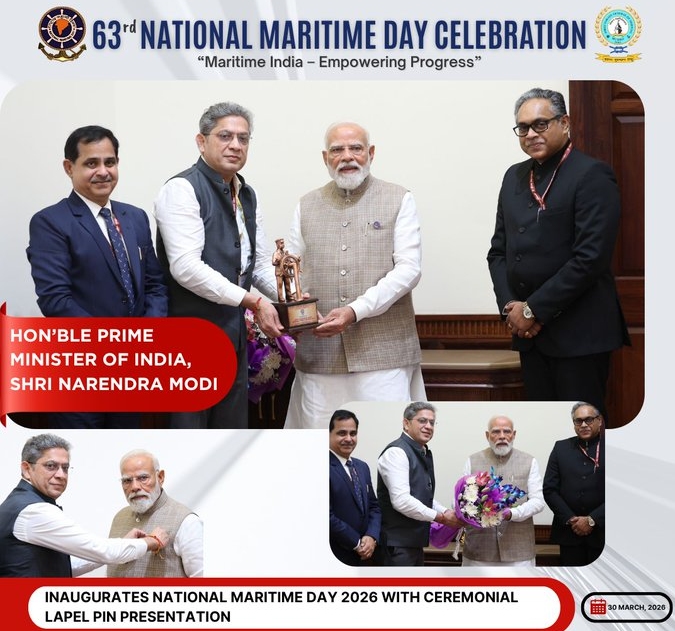
NEW DELHI: The 63rd National Maritime Day Celebrations (NMDC) 2026 commenced with a significant ceremonial gesture as the Hon’ble Prime Minister of India, Shri Narendra Modi, was presented with the commemorative NMDC lapel pin, formally marking the beginning of the nationwide celebrations.
The lapel pin was presented by Shri Vijay Kumar, Secretary, Ministry of Ports, Shipping and Waterways, symbolising the nation’s recognition of the unwavering dedication of its seafarers and the critical role played by the maritime sector in sustaining India’s trade and economic momentum.
The occasion was attended by prominent figures from India’s maritime administration and industry, including Shri Shyam Jagannathan, Director General of Shipping, and Shri Binesh Kumar Tyagi, Chairman and Managing Director of Shipping Corporation of India.
Aligned with the theme “Maritime India – Empowering Progress”, NMDC 2026 underscores India’s continued commitment to developing a dynamic, future-oriented, and sustainable maritime ecosystem. The theme reflects the government’s focus on enhancing maritime infrastructure, strengthening global trade linkages, and empowering stakeholders across the sector.
National Maritime Day, observed annually on April 5, celebrates India’s rich maritime legacy and honours the contributions of seafarers, port operators, and maritime professionals. The 2026 edition is set to feature a series of events and initiatives aimed at reinforcing the sector’s vital role in shaping India’s economic trajectory.
The commencement of NMDC 2026 in the presence of the Prime Minister highlights the strategic importance accorded to the maritime sector as a key driver of growth, connectivity, and national progress.
NEW DELHI : As many as 19 ships with LPG, crude oil and LNG meant for India are currently stranded in the Strait of Hormuz due to the escalating war in West Asia.
At an inter-ministerial briefing on the fallout of developments in West Asia, Rajesh Kumar Sinha, Special Secretary in the Ministry of Ports, Shipping, and Waterways, said 10 foreign-flagged vessels with energy cargo for India are currently stranded.
These include 3 vessels with LPG, four crude oil tankers and three liquefied natural gas (LNG) carriers.
Besides these, there are Indian-flagged vessels. These include three LPG tankers, one LNG carrier and four crude oil tankers. One empty tanker is being filled with LPG.
The vessels were among the 500-odd ships that were struck in the narrow strait amid the widening West Asia conflict.
So far, eight Indian flagged vessels have sailed out safely. These include two LPG carriers, BW TYR and BW ELM, carrying a combined LPG cargo of about 94,000 tonnes, which safely transited the war-hit zone in the last couple of days, he said.
While BW TYR is proceeding towards Mumbai with an expected arrival on March 31, BW ELM is en route to New Mangalore with an estimated arrival date of April 1, he said.
The US and Israel attacks on Iran and Tehran’s sweeping retaliation have all but halted shipping through the strait – the narrow shipping lane that is a conduit for oil and gas exports from Gulf countries to the world. Iran, however, last week said “non-hostile vessels” may transit the waterway after coordinating with Iranian authorities.
“Our first priority is to get Indian flagged vessels out,” Sinha said. “We are yet to reach the stage where we start sending back vessels (for refills).” He was asked whether India is considering sending vessels that have already discharged cargo at domestic ports back to Gulf countries to lift additional supplies.
He said his ministry has been closely monitoring the evolving situation in West Asia, particularly with regard to the safety of Indian seafarers, vessel movements and port operations.
“All Indian seafarers in the region are safe, and no incident involving Indian-flagged vessels has been reported in the past 24 hours. The situation has remained stable over the last 72 hours as well,” he said.
Previously, four Indian-flagged LPG tankers had safely sailed through the strait. Pine Gas and Jag Vasant, carrying 92,612 tonnes of LPG, reached Indian ports between March 26 and March 28. Prior to that, MT Shivalik and MT Nanda Devi, carrying about 92,712 tonnes of LPG, had reached Mundra port in Gujarat on March 16 and Kandla port, respectively, on March 17.
Besides, the Indian-flagged oil tanker Jag Laadki, with 80,886 tonnes of crude oil from the UAE, reached Mundra on March 18. Another tanker, Jag Prakash, carrying gasoline from Oman to Africa, had previously safely crossed the strait and is en route to Tanzania.
There are 18 Indian-flagged vessels on the west side of the strait, with 485 seafarers, he said.
Two other vessels are stranded on the east side.
Among the vessels on the west side are LPG carriers Jag Vikram, Green Asha and Green Sanvi. One empty vessel is being filled with LPG.
Other Indian flagged vessels in the zone include one liquefied natural gas (LNG) tanker, four crude oil tankers, one transporting chemical products, three container ships, and two bulk carriers. Additionally, one vessel is a dredger, and three were in dry dock undergoing routine maintenance.
Originally, there were 28 Indian-flagged vessels in the Strait of Hormuz when the war in West Asia broke out. Of these, 24 were on the West side of the Strait and four on the East side. In the last few days, six vessels from the west side and two from the east have managed to sail to safety.
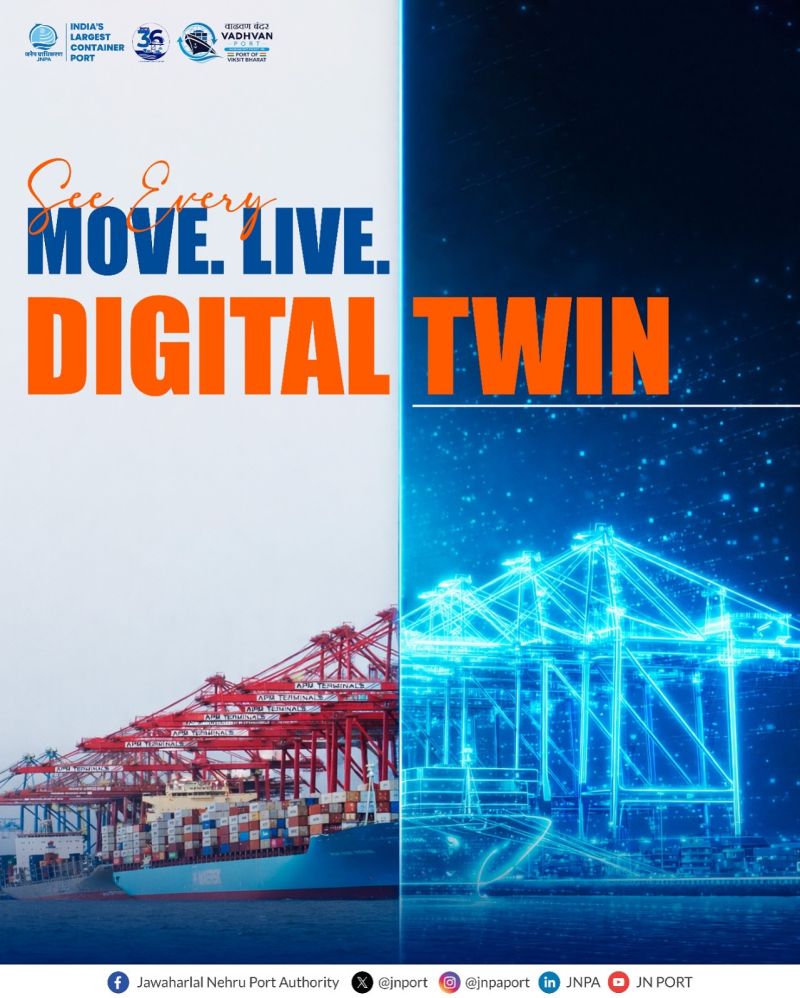
MUMBAI : Jawaharlal Nehru Port Authority (JNPA) has taken a significant step towards future-ready port operations by advancing the implementation of Digital Twin Technology, aimed at enhancing efficiency, sustainability, and operational intelligence across the port ecosystem.
The Digital Twin initiative is designed to create a virtual replica of the port’s physical assets, processes, and systems, enabling real-time monitoring, predictive analysis, and data-driven decision-making. This will support the optimization of both sea-side and land-side operations, ensuring improved planning for environmental management, enhanced safety standards, and strengthened hinterland connectivity.
By integrating key stakeholders—including shipping lines, terminal operators, customs authorities, transporters, and Container Freight Stations (CFS)—JNPA is developing a synchronized and collaborative digital framework. This integrated approach will facilitate seamless coordination, reduce operational bottlenecks, and drive overall efficiency in port operations.
In line with this vision, JNPA has floated a tender on the Government e-Marketplace (GeM) for the implementation of the Digital Twin project. This marks a crucial milestone in the port’s digital transformation journey, reinforcing its commitment to adopting cutting-edge technologies for smarter and more sustainable operations.
With this initiative, JNPA continues to position itself at the forefront of innovation in the maritime sector, paving the way for intelligent, resilient, and future-ready port infrastructure.