Home Blog Page 383

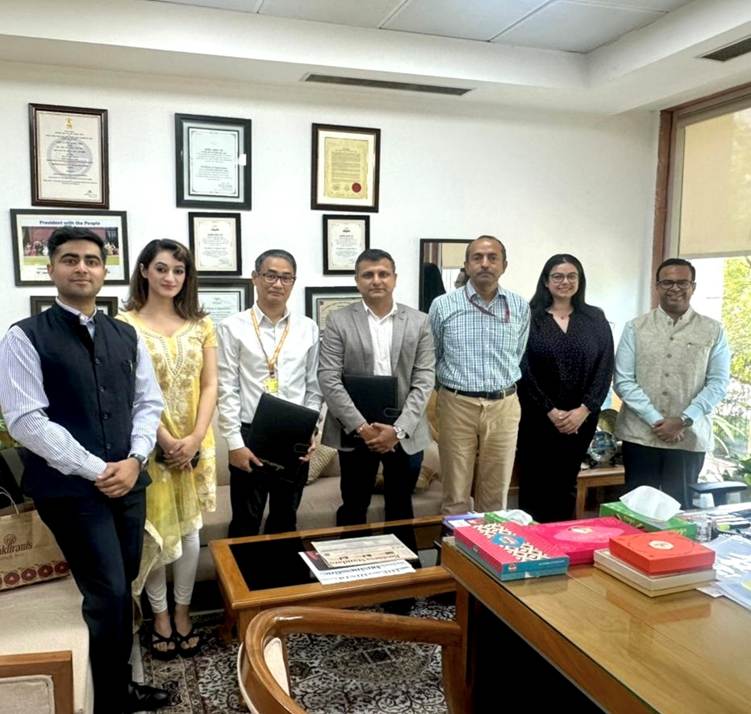
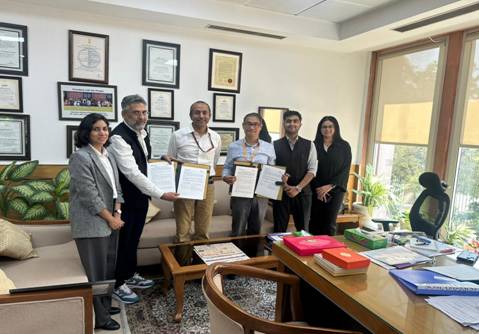
DPIIT signs MoU with a digital entertainment company KRAFTON India Pvt. Ltd

NEW DELHI : In a significant step towards strengthening India’s startup and innovation ecosystem, the Department for Promotion of Industry and Internal Trade (DPIIT), Ministry of Commerce and Industry, has signed a Memorandum of Understanding (MoU) with a digital entertainment company to support startups, innovators, and entrepreneurs across the country.

The collaboration aims to foster the growth of product startups working in areas such as digital entertainment, online gaming, esports, interactive media, and artificial intelligence-driven technologies. It seeks to enable startups to develop scalable and industry-relevant solutions through structured industry engagement.

As part of the initiative, startups will be provided access to mentorship, industry insights, knowledge exchange platforms, and curated engagement opportunities. The partnership will also facilitate startups in achieving key milestones such as Proof-of-Concept (PoC) development, market access, and integration into industry ecosystems, wherever feasible.

Speaking on the occasion, Joint Secretary, DPIIT, Shri Sanjiv stated that the collaboration represents an important step towards strengthening India’s digital and creative economy. He noted that such partnerships enable startups to innovate, scale, and build globally competitive solutions in emerging technology domains.

Under this collaboration, DPIIT will work with KRAFTON India Pvt. Ltd. to explore the organisation of innovation challenges under the Bharat Startup Grand Challenge, along with targeted hackathons, workshops, and masterclasses across domains such as game design, animation, immersive technologies, esports management, and artificial intelligence applications.

The collaboration will also facilitate industry interactions, knowledge exchange, and exposure to global best practices. Selected startups may gain opportunities for pilot collaborations, with potential for further engagement based on outcomes.

Additionally, the initiative will support ecosystem-building through outreach efforts and participation in Startup India programmes to enhance engagement across the startup landscape.

The MoU was signed by Deputy Secretary, DPIIT, Shri T. L. K. Singh and Head of Government Relations, KRAFTON India Pvt. Ltd., Shri Vibhor Kukreti, in the presence of senior officials from both sides.

DPIIT signs MoU with a leading Fintech Platform Razorpay, to strengthen India’s Startup Ecosystem

NEW DELHI : The Department for Promotion of Industry and Internal Trade (DPIIT), Ministry of Commerce and Industry, Government of India, has entered into a strategic partnership with a leading fintech platform, Razorpay, to strengthen India’s startup ecosystem. The collaboration has been formalised through the signing of a Memorandum of Understanding (MoU) aimed at supporting startups, innovators and entrepreneurs across the country.

The partnership seeks to empower startups with access to financial tools, founder enablement programmes and ecosystem support to accelerate growth. It is expected to assist early- and growth-stage startups in scaling efficiently by leveraging digital payment solutions, financial infrastructure and startup support initiatives. The collaboration will also provide incorporation support, mentorship and structured guidance to help startups formalise, build and expand their operations.

As part of this initiative, a dedicated platform, Startup Sahayak, has been launched to support early-stage founders. The platform aims to provide end-to-end assistance, including company incorporation, access to central and state government schemes and programmes, and guidance on funding opportunities, thereby enabling startups to access essential ecosystem support through a structured interface.

Joint Secretary, DPIIT, Shri Sanjiv, stated that the collaboration reflects the Department’s commitment to strengthening India’s startup ecosystem through partnerships with leading fintech players. He emphasised that facilitating seamless access to financial infrastructure and tools will play a crucial role in accelerating the growth of startups.

Chief Executive Officer and Co-founder, Razorpay, Shri Harshil Mathur, highlighted that the partnership is driven by a shared vision to enable innovation and make the entrepreneurial journey more accessible and scalable. He noted that with the increasing emergence of startups across the country, particularly in Tier 2 and Tier 3 cities, there is a growing need for robust infrastructure, mentorship and ecosystem support.

Under the collaboration, DPIIT and Razorpay will conduct regular knowledge sessions on topics such as applied artificial intelligence, marketing, product development and financial management through the Startup India Hub to ensure wider outreach. DPIIT-recognised startups will also be provided incorporation support with zero professional fees (excluding applicable government charges), along with access to credits and incentives across a range of financial and business tools.

Startups will also gain access to mentorship support, pitch deck reviews, application guidance and curated resources to support early-stage growth. Selected startups will be onboarded into curated founder communities to facilitate peer learning, networking and access to additional ecosystem support across domains such as engineering, hiring and marketing.

The collaboration will further explore the organisation of innovation challenges under the Bharat Startup Grand Challenge framework, with a focus on fintech-driven problem statements and digital innovation.

The MoU was signed by Deputy Secretary, DPIIT, Shri T. L. K. Singh and Chief Information Officer, Razorpay, Shri Arif Khan, in the presence of officials from both organisations.

QodeNext Partners with Clustag to Accelerate At Source RFID Adoption Across South Asia

MUMBAI: Qodenext, one of India’s fastest-growing supply chain traceability and automation service providers, has announced a strategic collaboration with Clustag to integrate advanced RAIN RFID intralogistics solutions into its technology portfolio. The partnership aims to help manufacturers across South Asia implement RFID at source to meet compliance requirements of major global brands.

The collaboration combines QodeNext’s regional integration capabilities with Clustag’s expertise in item level RFID encoding, verification and content control. Together, the companies will support suppliers in deploying accurate RFID tagging directly at the point of manufacture, an increasingly critical requirement for exporters in sectors such as fashion, sportswear and home goods.

QodeNext, which has a presence in major cities in India and boasts of more than 200 technical experts, will integrate the superior RFID systems of Clustag to enhance its end-to-end traceability services. The move will put the company in a position to better serve manufacturers who are shifting to digital supply chains and transparency standards that are required by global retailers.

The Asia Pacific region is witnessing rapid growth in RFID adoption, driven by regulatory pressures, supply chain modernization and the shift toward traceable production models. Leveraging more than 35 years of experience in automatic data capture technologies, QodeNext will act as a key implementation partner for factories, distribution centres and retail networks across India and Southeast Asia. Clustag will bring its ecosystem of RFID solutions, including encoding workstations, RFID tunnels for cartons and pallets, and its Zentup middleware platform, to major manufacturing hubs in the region. The company views South Asia as a strategic market where accurate at source encoding is becoming essential for global supply chain participation.

Under the alliance, manufacturers will gain access to integrated RAIN RFID solutions for encoding and verification at source, advanced hardware and software integration, turnkey factory implementations, and real time visibility across supply chains. The partnership will also provide local deployment support through QodeNext’s service network across India. 

Manolo Reguart, Strategy & Business Development Director at Clustag, highlights, “The Asian region is fundamental to ensuring reliable traceability at source. QodeNext shares our technological vision and brings exceptional integration and support capability. Together, we will accelerate RFID adoption in the world’s main manufacturing hubs.”

Commenting on the same, Mr. Alok Mishra, Vice President-Sales, Qodenext, said, “Adding Clustag’s advanced solutions to our portfolio enables us to offer a more robust and specialized RFID ecosystem for manufacturers, retailers and logistics operators in India. It is a partnership set to grow.”

This partnership is a huge milestone in bolstering the traceability infrastructure in the South Asia manufacturing system to help the exporters to not only adapt to changing compliance demands globally but also enhance efficiency in their operations and the visibility of their supply chains. With RFID being the new requirement of the international brands at the source, the collaboration is set to become significant in the speed of digital transformation in the production centers in the region.

D Depot Container Service (Thailand) partners with PT Good Logistics Terminal to establish inland container depot in Jakarta

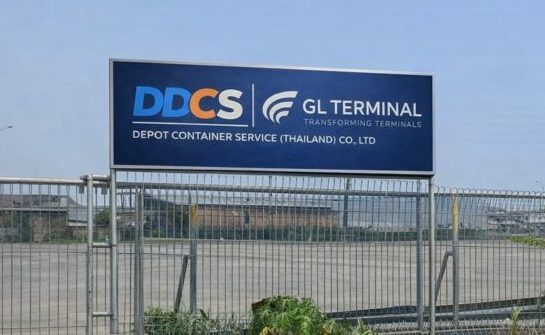
BANGKOK/JAKARTA: D Depot Container Service (Thailand) has announced a strategic partnership with PT Good Logistics Terminal (GL Terminal) to establish and operate a modern inland container depot in Jakarta, Indonesia. The facility will be developed at GL Terminal’s site near Tanjung Priok Port and will support container handling and depot services for the Indonesian market.

The depot is located on a 2.7 hectare fully concreted site approximately seven kilometres from Tanjung Priok Port, with direct access to the toll road network connecting the port with Jakarta’s logistics and industrial zones. GL Terminal will manage the day to day operations of the facility, providing local operational expertise and market presence in Indonesia.

D Depot Container Service provides container depot and logistics services across several Asian markets and works closely with international shipping lines and logistics providers operating across the region. The Jakarta facility extends the company’s presence into Indonesia while maintaining consistent service for customers operating across regional trade lanes.

“We entered Indonesia following strong demand from major ocean carrier customers seeking D Depot’s high service standards across Asia,” said Khun Fluke, Owner of D Depot Container Service (Thailand).

Paul Trachu, Executive Director of D Depot Container Service (Indonesia), said the partnership reflects the company’s focus on maintaining consistent operational standards across its regional network. “The ability to provide consistent service to our regional customers is of great importance to D Depot Container Service (Thailand) and we are pleased to partner with an organization that shares our values and commitment to customer service,” said Trachu.

Under the partnership structure, the Jakarta facility will operate under the D Depot brand, with GL Terminal responsible for the local operation of the depot and D Depot supporting the facility through its regional customer base and commercial relationships.

Nanang Faraq, Managing Director GL Terminal, said the collaboration allows both organizations to combine their strengths in serving international carriers operating through Indonesia. “GL Terminal is delighted to partner with D Depot Container Service (Thailand), leveraging both organizations’ strengths to serve their regional customers while capitalizing on GL Terminal’s local market presence and reputation among global carriers,” said Faruq.

Indonesia remains one of Southeast Asia’s most important container markets, with Tanjung Priok Port handling a large share of the country’s containerised cargo. As regional trade volumes grow and carrier networks expand, demand for well-located inland container depot capacity continues to increase.

Both organizations said the Jakarta depot represents the first stage of a broader collaboration. The partners expect to explore additional opportunities in other major Indonesian port locations as regional carrier demand continues to develop.

About D Depot Container Service (Thailand)

Founded in 1997, D Depot Container Service (Thailand) has developed into an established provider of container depot services supporting regional container logistics operations. The company works with shipping lines, container owners, and logistics providers to support container handling, storage, and operational requirements across Asian trade flows.

D Depot Container Service (Thailand) provides container depot operations alongside maintenance and repair capabilities and inland transport support. With decades of operational experience in the container sector, the company focuses on reliable execution, operational efficiency, and supporting customers that require consistent depot services across multiple markets.

About GL Terminal

GL Terminal is a bonded logistics center and integrated logistics service provider based in East Jakarta, Indonesia. Established in 2020, the company offers bonded warehousing (PLB), container depot and open yard operations, freight forwarding (sea, air, and land), customs clearance, and domestic transport and distribution services tailored to customer needs.

Backed by an experienced leadership team, GL Terminal emphasizes regulatory compliance, digital innovation, and customer-centric execution, enabling secure, visible, and efficient supply chain operations across domestic and international markets.

Iran demands crew, cargo details to send ships through Strait of Hormuz

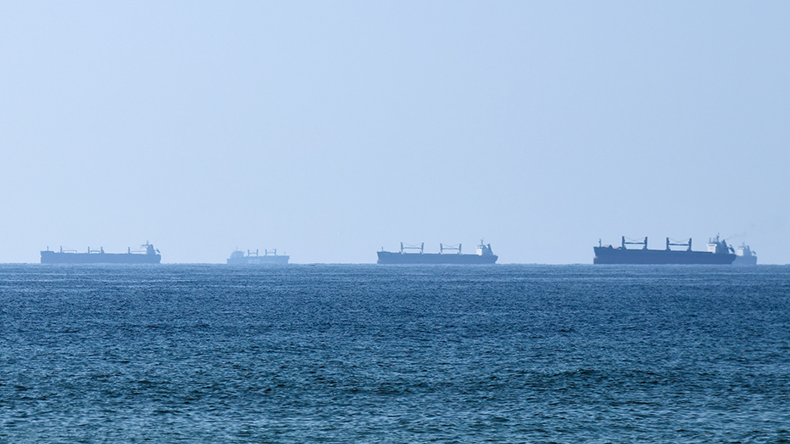
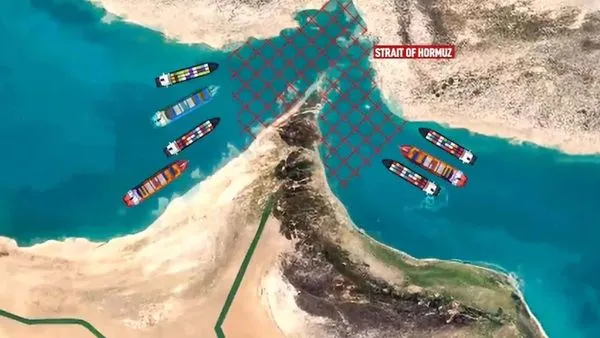
TEHRAN : Vessels seeking to transit the Strait of Hormuz under Iranian protection are being asked to provide lists of crew and cargo, along with voyage details and bills of lading, in order to secure a green light from the Islamic Revolutionary Guard Corps.

The process is still idiosyncratic and can vary from ship to ship, according to accounts from people familiar with the trade, but it points to Iran’s increasing efforts to assert control over the vital maritime channel with a semi-formal system as the conflict in the Persian Gulf extends into its fourth week.

Iran has requested payments from some but not all ships, according to the people, asking not to be named given the sensitivity of the discussions. These demands — channeled through intermediaries, and of differing size — are generally reserved for oil tankers, gas carriers or other vessels with high-value cargoes, they said.

Since US and Israeli strikes began almost a month ago, only a trickle of vessels have made it through the waterway, many of them Iranian or China-linked tankers. Those making it through with apparent protection from Tehran have mostly followed a similar route, hewing close to Iran’s coastline.

Iran said in a communique earlier this week that navigation continued for vessels from friendly nations “in co-ordination with the competent Iranian authorities.” While Iran’s Supreme Leader Mojtaba Khamenei has said Iran should keep the strait shut, the letter said the waterway remained open and “traffic has not been suspended.”

Iran war: Follow live coverage

The IRGC said on Tuesday that it had turned back a container ship for failing to comply with legal protocols and lacking permission to transit the strait.

After US President Donald Trump set a 48-hour deadline over the weekend for the reopening of Hormuz and then pushed that back, the US government has been pressing for talks with Iran. Developments including a 15-point plan to end the war have helped cool soaring oil prices on Wednesday — but there has been little sign of letup on the ground, or of immediate changes to traffic around Hormuz.

Asian countries have been acutely affected by the disruption in the energy trade from the Persian Gulf, with shortages of fuels across the region. India, among the most impacted, has seen a severe shortage of liquefied petroleum gas. Only a handful of Indian LPG tankers have made it through the strait — after talks between New Delhi and Tehran.

India has said international laws guarantee the right of freedom of navigation through the strait, meaning no fees could be charged.

Chinese government agencies charged with supervising shipping are aware of protection fees paid by some Chinese vessels through local agents, one of the people said, adding officials see little basis for such charges. That’s partly because transit rights are guaranteed by international law, but also because Beijing is a vital trading partner for the region and an economic lifeline for Tehran, buying up most of its oil exports.

Iran has said the full restoration of security and stability in the Strait is contingent on the end of military threats in the region.

Mawani : Kingdom opens new shipping route to Bahrain

RIYADH : The Saudi Ports Authority, known as Mawani, launched a maritime link with Bahrain through the Gulf Shuttle shipping service operated by MSC, via King Abdulaziz Port in Dammam.

It is part of the authority’s ongoing efforts to enhance maritime connectivity and expand shipping networks, the Saudi Press Agency reported on Wednesday.

The shuttle service connects King Abdulaziz Port with Khalifa bin Salman Port in Bahrain, with a capacity of up to 3,000 standard containers.

This initiative is part of Mawani’s efforts to strengthen the Kingdom’s position as a global logistics hub and a key link connecting three continents, the SPA stated.

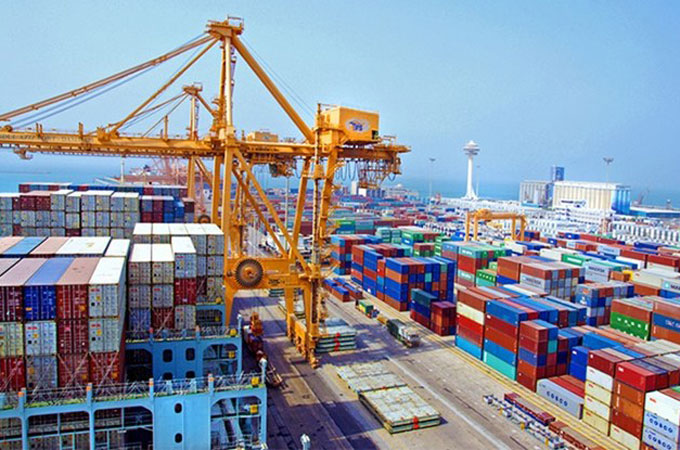
King Abdulaziz Port is one of the Kingdom’s vital ports connecting it to global economies. It is distinguished by advanced infrastructure and integrated logistics facilities and includes 43 berths, with a capacity of up to 105 million tonnes of cargo and containers.

GEODIS achieves milestone in decarbonization of urban logistics

PARIS: GEODIS has taken a further step in the decarbonization of urban logistics by deploying delivery solutions using alternative energies in the city centers of 100 major French urban areas.  The achievement helps to reduce urban pollution, improve air quality, and limit greenhouse gas emissions. This strategic milestone marks the acceleration of a transformation initiated several years ago and confirms the Group’s ambition to become a leading player in sustainable urban logistics. The next phase is now aimed at expanding this initiative to the 200 largest cities in France by June 2027, representing a significant scaling up of the program.

The deployment is part of a rapid transformation of urban logistics, driven by European decarbonization ambitions and evolving societal expectations from communities and clients, alike. Increasing density in city centers, the rise of e-commerce, and the demands expressed by its clients—who themselves are committed to reducing their environmental footprint—have shown that mere regulatory compliance is not sufficient.  It is therefore out of moral conviction, as much as operational necessity, that GEODIS embarked on this transition five years ago.

In these urban areas, GEODIS is redesigning its logistics models by combining vehicles powered by alternative energies, localized facilities, and cycle logistics, according to local circumstances.  In Lille for example, the establishment of an operational base at the river port brings logistics flows closer to the city center. In Paris, a fully intra-city organization already enables 100% electric distribution.

To support this transformation, GEODIS’s Distribution & Express business has been undergoing a profound modernization of its infrastructure.  Today, it operates more than 700 vehicles powered by alternative energies, which already accounts for 15.6% of its urban deliveries. The goal is to reach over 3,000 alternative energy vehicles by 2030, ensuring the longevity of this transition and meeting the needs of cities.

The use of HVO, a renewable biofuel compatible with existing engines, enables emission reduction while ensuring suitable autonomy for long-distance routes. Initially deployed in the Paris region, this technology will gradually be expanded to the rest of the network.

“This milestone demonstrates our determination to sustainably support the dissemination of these decarbonization efforts across France and to offer our clients innovative solutions suited to modern, responsible logistics. By now targeting 200 cities by 2027, we are pursuing our national ambition: to deploy, on a large scale, a more efficient distribution model that is fully integrated into the urban dynamics of tomorrow,” says Gilles Dêcher, EVP of Distribution & Express line of business at GEODIS Group.

Key appointments signal continuing growth plans for Thordon Bearings in commercial shipping

BURLINGTON: Thordon Bearings has announced two significant appointments which reinforce its commitment to meet growing demand for high performance, pollution-free seawater-lubricated bearings and seals in commercial shipping.

Anthony Hamilton has been appointed VP of Engineering and Product Development of Thomson-Gordon Group (TGG), the parent company of Thordon Bearings, with a mission to leverage group-wide capabilities in growing its merchant marine business. At the same time, Thordon Bearings has appointed Martin Linder as its new Merchant Fleet Marine Business Development Manager, Northern Europe.

Based in Burlington, Ontario, Canada, Hamilton has led TGG’s engineering and new product development as Technical Director since 2021. His new appointment recognizes the way his role has expanded over time across Hydro Engineering, Marine and Global Service & Support.

“Anthony has consistently offered strong technical leadership to match the depth of knowledge and experience he brings to the company,” said Anna Galoni, CEO, Thomson-Gordon Group. “He plays critical roles in innovation, advancing our product portfolio, and the delivery of exceptional service to our customers. His work across the group helps us to share expertise and insights, drive innovation and accelerate execution for our sector-specific customer groups.”

Based in Onsala, near Gothenburg, Sweden, Linder has spent his entire career in the maritime sector, developing relationships with shipowners and fleet managers across Europe and Asia. Fluent in Swedish, English and Japanese, and holding a degree in chemical engineering from Chalmers University of Technology, Sweden, he brings extensive experience from well-known marine sector OEMs involved in both water treatment and propulsion.

Linder will seek to consolidate and grow market share for Thordon’s propeller shaft bearing systems based on the proven benefits that tanker, bulk carrier, container ship and cruise ship owners have experienced with high performance seawater-lubricating bearings and seals. Eliminating the risk of seal damage and oil leaks from propeller shafts, Thordon users also profit from lower bearing wear and simplified maintenance routines.

Priorities for Linder also include building orders for the award winning Thordon-Blue Ocean Stern Space (T-BOSS®) – the design concept that replaces a ship’s sterntube with a dry chamber which allows for the inspection, maintenance or replacement of a seawater-lubricated single bearing and seal from the inside of the ship, while the vessel is afloat, and without having to withdraw the shaft or enter drydock. This has never before been possible. Owners specifying T-BOSS® would save CAPEX and OPEX that could exceed US$1 million over a ship’s life cycle, according to Thordon Bearings estimates.

PM Modi, President Trump discuss West Asia crisis; focus on keeping Strait of Hormuz open for shipping

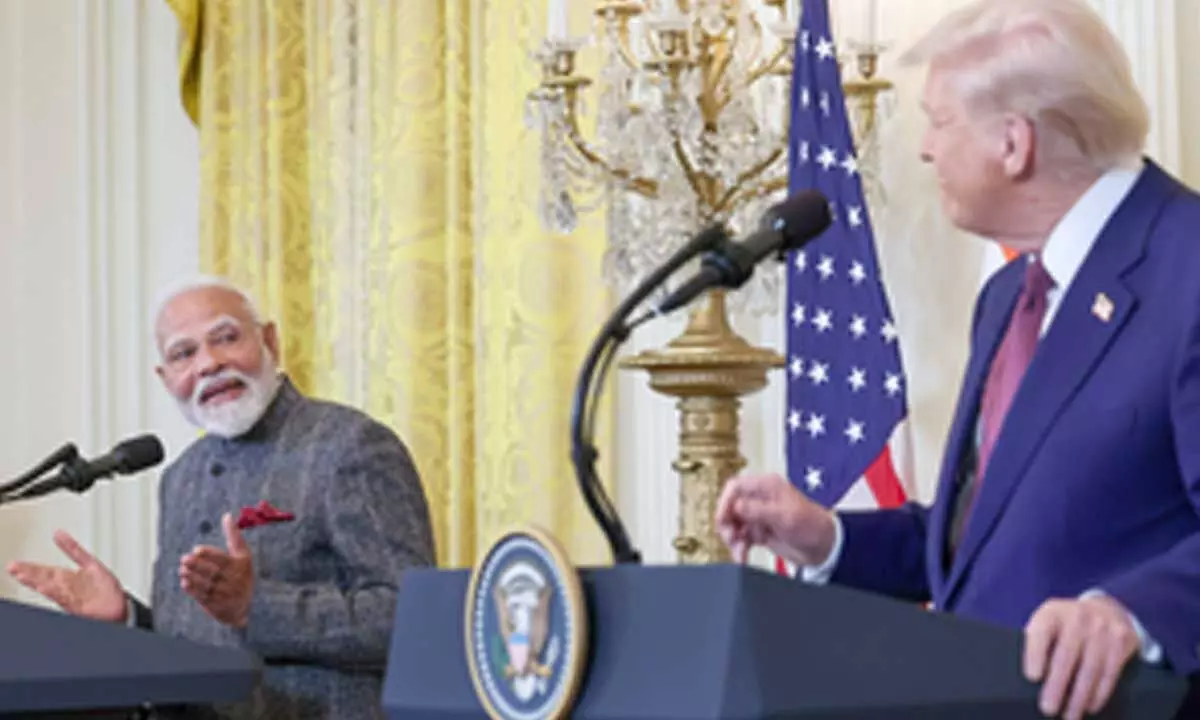
NEW DELHI : The Prime Minister, Shri Narendra Modi, received a call from the President of the United States of America, Mr. Donald J. Trump.

The two leaders had a useful exchange of views on the evolving situation in West Asia. The Prime Minister reiterated that India supports de-escalation and the restoration of peace at the earliest.

The Prime Minister underlined the importance of ensuring that the Strait of Hormuz remains open, secure and accessible, noting that it is vital for global peace, stability and economic well-being.

Both leaders agreed to remain in touch regarding ongoing efforts aimed at promoting peace and stability in the region.

In a post on X, Shri Modi said;

“Received a call from President Trump and had a useful exchange of views on the situation in West Asia. India supports de-escalation and restoration of peace at the earliest. Ensuring that the Strait of Hormuz remains open, secure and accessible is essential for the whole world. We agreed to stay in touch regarding efforts towards peace and stability.”

No permission required to sail through Strait of Hormuz : Indian Govt

NEW DELHI : Sailing through the Strait of Hormuz – the only sea channel linking the oil-rich Persian Gulf with open oceans – does not require permission from any country, a senior government official said as more Indian vessels prepared to sail through the war-hit zone.

Rejecting talks of stranded Indian vessels in the Persian Gulf being allowed to sail through the strait only after reaching some kind of an agreement with Iran, which controls the narrow shipping lane, Rajesh Kumar Singh, Special Secretary at the Ministry of Ports, Shipping and Waterways, said the movement through strait is taken by shipping companies and their contracting entities after considering safety and other conditions.

Movement of ships through the strait had come to a near halt after the US and Israel launched military strikes against Iran, and Tehran’s sweeping retaliation that hit US bases in the Gulf regions as well as Israel.

“No permission is required to sail through the strait,” Sinha said at the media briefing on the developments in West Asia. He was asked if New Delhi took permission or paid Iran for the movement of its stranded vessels, particularly those laden with LPG – a commodity that has become scarce in the country following the war.

The strait is covered by international navigation conventions, he said. “There is freedom for navigation through the strait. Since the strait is narrow, only the entry and exit lanes are demarked which need to be followed by shipping lines.

“The decision to sail (through the strait) is taken between the shipping company and the one which has chartered the ship… it is the decision of the charterer and shipping company when to sail or when not to sail,” he said. “Since these are special circumstances, they assess the situation with regard to safety, etc., before deciding. No permission is required.” Two more Indian-flagged LPG tankers, carrying about a day’s supply of the country’s cooking gas, on Monday crossed the war-hit Strait of Hormuz and are expected to reach Indian shores on March 26/27.

LPG tankers Pine Gas is carrying about 45,000 tonnes of LPG, and it is scheduled to reach New Mangalore port on March 27, while Jag Vasant with 47,612 tonnes of LPG will reach Kandla in Gujarat on March 26, he said. The two ships, carrying 92,612 tonnes of LPG, have 33 and 27 Indian seafarers onboard.

Both LPG tankers sailed through waters between Iran’s Larak and Qeshm islands — possibly to make their identity clear to Iranian authorities before they cross the strait, ship tracking data showed.

The two ships were among the 22 Indian flagged vessels that were stranded in the Persian Gulf after the war in West Asia nearly closed the Strait of Hormuz.

Previously, MT Shivalik and MT Nanda Devi, carrying about 92,712 tonnes of LPG, had safely reached the Indian shore.

Originally, there were 28 Indian-flagged vessels in the Strait of Hormuz when the war in West Asia broke out following US-Israel attacks on Iran. Of these, 24 were on the West side of the Strait and four on the East side. In the last few days, two vessels from each side have managed to sail to safety.

LPG carrier Shivalik reached Mundra in Gujarat on March 16, while another LPG tanker, Nanda Devi, reached Kandla port in Gujarat the next day. Two LPG carriers had started their journey on March 13 and crossed the Strait of Hormuz early on March 14.

Indian-flagged oil tanker Jag Laadki, with 80,886 tonnes of crude oil from the UAE, reached Mundra on March 18. Another tanker, Jag Prakash, carrying gasoline from Oman to Africa, had previously safely crossed the strait and is en route to Tanzania.

Of the 22 remaining Indian-flagged vessels in the war zone, 20 are on the West side of the Strait with 540 seafarers onboard, while two are on the East side.

The vessels stranded on the west side of the strait include five LPG carriers with about 2.3 lakh tonnes of cooking gas, he said, adding another empty vessel has started loading LPG.

Besides, one liquefied natural gas (LNG) tanker, four crude oil tankers, one transporting chemical products, three container ships, two bulk carriers and three were in dry dock undergoing routine maintenance.

He said that while the LNG ship is chartered by Petronet LNG Ltd, the LPG carriers have been hired by oil marketing companies, primarily Bharat Petroleum Corporation Ltd (BPCL) and Hindustan Petroleum Corporation Ltd (HPCL). The crude oil tankers have been chartered by Indian Oil Corporation (IOC), Reliance Industries Ltd and BGN International.

Overall, close to 500 tanker vessels remain confined within the Persian (Arabian) Gulf. These include 108 crude oil tankers, 166 oil product tankers, 104 chemical/product tankers, 52 chemical tankers and 53 other tanker types.

Analysts say Iran may be allowing select vessels to transit the strait after verification. A few vessels have transited outbound through the strait with a short diversion via the Larak-Qeshm Channel.

This, they say, appears to be a verification process whereby Iran confirms the ownership, cargo and vessel are not of the US, or belong to those that Iran has permitted transit to.

India imports about 88 per cent of its crude oil, 50 per cent of natural gas, and 60 per cent of LPG. Before the war broke out, more than half of the crude oil that India imported came from countries like Saudi Arabia, Iraq and the UAE, which use the strait for shipping.

As much as 85-95 per cent of LPG and 30 per cent of natural gas came through the strait. While the disruption in crude oil has been partially offset through alternative sources, such as Russia, West Africa, the US and Latin America, gas and LPG supplies to industrial and commercial users have been curtailed.

Source : PTI