Home Blog Page 382

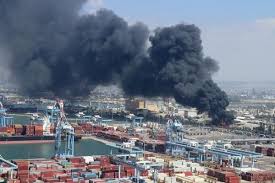
Iranian drones strike sensitive locations in Israel’s Haifa port as IRGC launches 82nd wave of attack

TEHRAN: The Iranian Army on Thursday (local time) stated that it had targeted sensitive locations in Israel’s strategic Haifa port with drones late Wednesday night, amid the conflict in West Asia, describing the US-Israeli joint military strikes on February 28 as an “unprovoked war of aggression” against the Islamic Republic, as reported by state media Press TV.

In a statement, as reported by Press TV, the Army said it launched a “massive drone attack” against a number of strategic and sensitive sites in the northern port city of Haifa.

The aerial operation was carried out in response to what Tehran termed the US-Israeli enemy’s claim that Iran’s missile and drone capabilities have been significantly degraded.

“The center for manufacturing and maintenance of various military vessels of the Zionist regime in the eastern Mediterranean Sea that played a key and sensitive role in logistics for the regime’s Navy as well as the huge fuel storage facilities for warplanes in Haifa port were, among others, targeted in the recent drone attack by the Islamic Republic’s Armed forces,” the statement read, as quoted by Press TV.

Separately, Iran’s Islamic Revolution Guards Corps (IRGC) announced the launch of the 82nd wave of retaliatory operations against the US and Israel, employing various types of missiles and drones in the region.

In a Thursday statement, as reported by Press TV, the IRGC said this latest wave was launched in retaliation for earlier airstrikes on critical infrastructure and civilian facilities within Iran. It noted that the operations began early Thursday and would continue throughout the day.

According to the statement, designated US interests in the Arifjan and al-Kharj districts of Saudi Arabia, the US Defence Logistics Site (kGL), Patriot radar systems in Bahrain’s Sheikh Isa region, support fuel depots for US forces, a hangar for P8 surveillance aircraft, a hangar for MQ-9 Reaper combat drones, and a satellite communications dish for drones at Ali al-Salem airbase were “devastated with a large swarm of kamikaze drones”, Press TV reported.

The IRGC said the retaliatory strikes were dedicated to fallen Iranians in the northern provinces of East Azarbaijan, Ardabil, Gilan, Mazandaran and Golestan.

It also stated that a military command centre in “the occupied territories”, as well as industries linked to the Israeli regime’s nuclear programme near the Dead Sea, were struck in an “impact-driven” attack.

The developments mark the latest escalation in the widening conflict between Tehran and the US-Israeli coalition, with both sides conducting sustained offensive operations across multiple theatres amid ongoing diplomatic talks.

Last week, an Iranian ballistic missile struck the Haifa oil refinery complex, a major oil refinery complex in Northern Israel, with Israeli sources confirming the strike, as reported by CNN.

Source: ANI

Debjit Roy assumes leadership as President of POMS India Chapter, strengthening Academia-Industry Synergy

AHMEDABAD : In a significant development for the operations and supply chain ecosystem, noted academician and researcher Prof. Debjit Roy has taken over as President of the India Chapter of the Production and Operations Management Society (POMS). The globally respected professional body is dedicated to advancing research and practice in production and operations management, playing a crucial role in fostering academic excellence, industry collaboration, and knowledge exchange.

Roy’s appointment marks a strategic moment for the India Chapter as it continues to expand its footprint in bridging academia with industry needs. Under his leadership, the organization is expected to further strengthen its role in shaping thought leadership and driving innovation in operations and supply chain management.

Prior to this appointment, Roy built an illustrious academic and research career across some of the world’s most prestigious institutions. His tenure includes impactful contributions at the Indian Institute of Management Ahmedabad, the University of Michigan Ross School of Business, Rotterdam School of Management Erasmus University, and the University of Wisconsin-Madison. Throughout his career, he has held key positions such as Professor, Area Chairperson, and Founding Co-chair of Transportation and Logistics initiatives.

Roy’s work has consistently focused on advancing research in operations and decision sciences, while also fostering global academic collaboration. His contributions have been instrumental in strengthening interdisciplinary research and developing frameworks that address real-world challenges in manufacturing systems and supply chain management.

He holds a Ph.D. and MS from the University of Wisconsin-Madison, specializing in Decision Sciences and Manufacturing Systems Engineering—an academic foundation that has underpinned his extensive contributions to research and thought leadership in the field.

With his deep domain expertise and forward-looking vision, Roy’s leadership is expected to usher in a new phase of growth for the POMS India Chapter. His appointment is poised to enhance research impact, encourage innovation, and promote stronger collaboration between academia and industry, reinforcing India’s position in the global operations and supply chain landscape.

Hapag-Lloyd publishes 2025 annual report and proposes dividend of EUR 3.00 per share

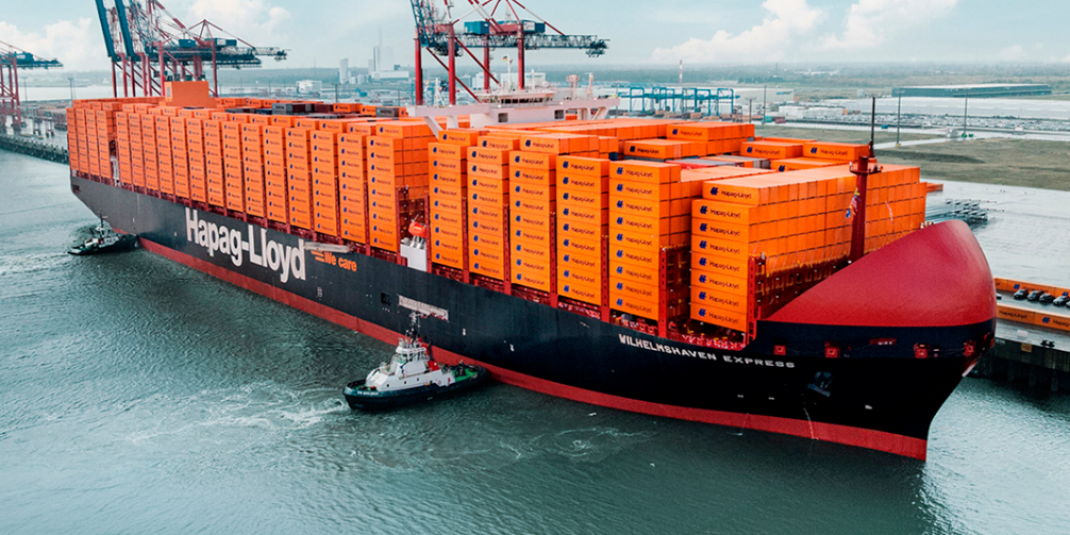
HAMBURG: Hapag-Lloyd published its annual report for the 2025 fiscal year on Thursday. The Group EBITDA stood at USD 3.6 billion (EUR 3.2 billion) and the Group EBIT at USD 1.1 billion (EUR 1.0 billion) while the Group profit amounted to USD 1.0 billion (EUR 0.9 billion). The result was at the upper end of the earnings forecast, but below the previous year, particularly owing to lower freight rates and higher operational costs.

“2025 was a good year for Hapag-Lloyd with solid results. We have grown our volumes and outperformed the market. Our Gemini network delivered 90% schedule reliability and customer satisfaction reached another record high. We invested significantly in fleet efficiency and modernization to further decarbonize our operations. Additionally, our growing terminals portfolio increasingly contributed to the success of our liner business,” said Rolf Habben Jansen, CEO of Hapag-Lloyd AG.

In the Liner Shipping segment, revenues increased to USD 20.6 billion (EUR 18.3 billion) in 2025. EBITDA declined to USD 3.5 billion (EUR 3.1 billion) and EBIT to USD 1.0 billion (EUR 0.9 billion). While transport volumes rose by 8% to 13.5 million TEU, backed by the successful implementation of the Gemini network, the average freight rate was down 8% to 1,376 USD/TEU due to growing capacity and increasing trade imbalances. Additionally, higher costs resulting from operational disruptions caused by new tariff policies, ongoing security tensions in the Red Sea, start-up expenses for the Gemini Network, and port congestion had a negative earnings impact. On the other hand, Gemini related cost savings started kicking in during the second half of 2025 and will be fully realized in 2026. One-time non-cash effects in the fourth quarter had a positive impact.

The Terminal & Infrastructure segment increased revenues to USD 514 million (EUR 455 million) in 2025, due to the acquisition and ramp-up of new terminals as well as strong growth in throughput as a result of rising synergies with the liner business. At USD 152 million (EUR 134 million), EBITDA was on the level of the prior year while EBIT declined to USD 66 million (EUR 58 million), owing to operational challenges and segment ramp-up costs.

Based on the solid earnings, the Executive Board and Supervisory Board of Hapag-Lloyd AG will propose to the Annual General Meeting a dividend of EUR 3.00 per share for the 2025 fiscal year – this corresponds to a total payout of EUR 0.5 billion.

For 2026, the Executive Board expects the Group EBITDA to be in the range of USD 1.1 to 3.1 billion (EUR 0.9 to 2.6 billion) and the Group EBIT to be in the range of USD -1.5 to 0.5 billion (EUR -1.3 to 0.4 billion). This outlook remains subject to considerable uncertainty due to the highly volatile development of freight rates and the conflict in the Middle East.

“At the beginning of 2026, adverse weather conditions weighed on our performance and the conflict in the Middle East is now causing considerable network disruptions and sharply increasing operational costs. Against this backdrop, we expect earnings in 2026 to be lower than in 2025. We will leverage increasing synergies from our Gemini network and accelerate our cost savings initiatives to counter these headwinds. Our customers can rest assured that we will do everything in our power to keep their supply chains intact. At the same time, we will maintain our growth trajectory by expanding our terminals portfolio under the Hanseatic Global Terminals brand and working decisively toward a successful completion of our merger agreement with ZIM,” said Rolf Habben Jansen. 

The detailed full-year 2025 figures, including explanatory notes relating to the performance measures EBITDA and EBIT referred to herein, can be found in the download section of the digital annual report.

KEY FIGURES (USD)* 

Group202520242025 vs. 2024
Revenues (USD million) 21,051 20,673 378 
EBITDA (USD million) 3,602 5,029 -1,427 
EBIT (USD million) 1,073 2,788 -1,715 
EBITDA margin 17% 24% -7 pp 
EBIT margin 5% 13% -8 pp 
Group profit (USD million) 1,044 2,588 -1,543 
Liner Shipping Segment202520242025 vs. 2024
Transport volume (TTEU) 13,486 12,467 1,020 
Freight rate (USD/TEU) 1,376 1,492 -116 
Revenues (USD million) 20,635 20,287 349 
EBITDA (USD million) 3,450 4,878 -1,428 
EBIT (USD million) 1,007 2,717 -1,710 
Terminal & Infrastructure Segment 202520242025 vs. 2024
Revenues (USD million) 514 434 80 
EBITDA (USD million) 152 151 1 
EBIT (USD million) 66 72 -6 

KEY FIGURES (EURO)*

Group202520242025 vs. 2024
Revenues (EUR million) 18,633 19,112 -479 
EBITDA (EUR million) 3,188 4,649 -1,461 
EBIT (EUR million) 950 2,577 -1,628 
Group profit (EUR million) 924 2,392 -1,468 
Liner Shipping Segment 202520242025 vs. 2024
Revenues (EUR million) 18,265 18,754 -490 
EBITDA (EUR million) 3,054 4,510 -1,456 
EBIT (EUR million) 891 2,511 -1,620 
Terminal & Infrastructure Segment 202520242025 vs. 2024
Revenues (EUR million) 455 401 54 
EBITDA (EUR million) 134 139 -5 
EBIT (EUR million) 58 66 -8 

* In individual cases, rounding differences may occur in the tables for computational reasons. 

Piyush Goyal urges industry to leverage FTAs with developed nations through Quality Focus

NEW DELHI : Union Minister of Commerce and Industry, Shri Piyush Goyal, said that in the last few years India has entered into nine Free Trade Agreements with 38 developed nations, covering many of the world’s advanced economies. He noted that these agreements provide preferential market access to nearly two-thirds of global trade and emphasised that Indian industry, farmers, MSMEs and artisans must leverage these opportunities through a strong focus on quality.

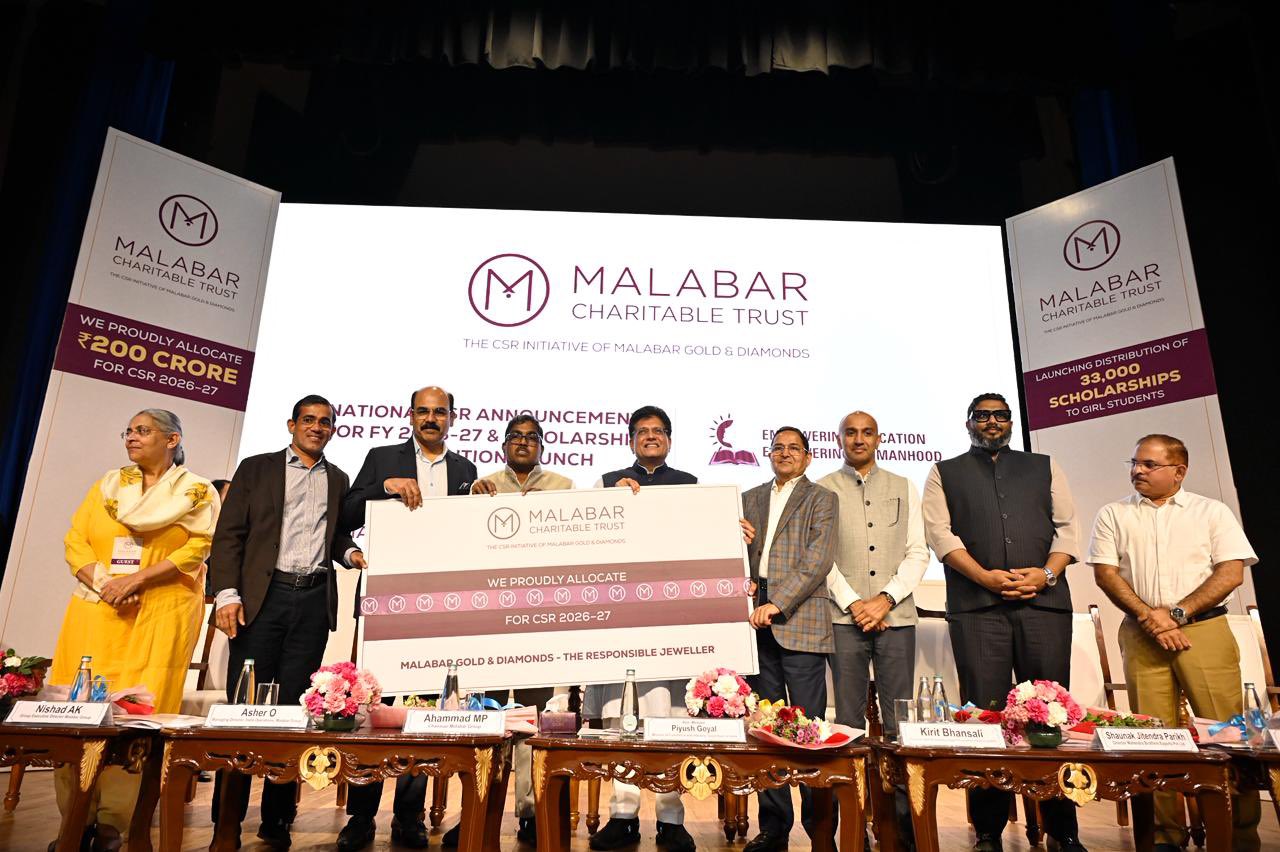
Addressing the National CSR Announcement for FY 2026–27 and Scholarship Distribution launch by Malabar Charitable Trust in New Delhi, the Minister noted that these agreements have opened up global markets for Indian goods and services at reduced or zero duty, giving Indian exporters a competitive advantage. He highlighted that sectors including MSMEs, farmers, fishermen, and artisans stand to benefit significantly from this expanded market access, provided there is a continued emphasis on high-quality production and services.

Shri Goyal also commended the commitment of allocating 5% of net profits towards corporate social responsibility (CSR), describing it as a significant step that goes beyond statutory requirements and sets an example for others to follow. He said it is truly remarkable to see the commitment with which corporate social responsibility has been taken up by the group, and expressed confidence that it would serve as a role model for many others.

Shri Goyal observed that the spirit of charity is deeply embedded in the ethos of Indian society, where individuals across all sections instinctively come forward to help those in need. He added that while the CSR framework has contributed to increasing participation, initiatives that go beyond mandated levels reflect a genuine commitment to social responsibility.

Highlighting the significance of the initiative, the Minister noted that such efforts validate the belief that organisations can voluntarily go beyond prescribed norms and contribute meaningfully to society. He also referred to instances where CSR commitments are often announced as future pledges, while emphasising the importance of current and tangible delivery.

Shri Goyal underscored the importance of women-led development, recalling that Bharat Ratna Dr. B.R. Ambedkar had emphasised that communities prosper when women prosper. He highlighted that under the leadership of Prime Minister Shri Narendra Modi, sustained efforts have been made to promote education and empowerment of girls, with a vision that every girl should have the opportunity to contribute to the nation’s development.

Emphasising inclusive development, the Minister stated that every citizen is capable and deserving of opportunity, and that the government is committed to ensuring access to basic necessities such as food, housing, healthcare, education, electricity, water and digital connectivity for all. He noted that such efforts are aimed at enabling every individual to participate in the journey towards a developed India.

He called upon all stakeholders to view citizens as contributors to the vision of Viksit Bharat 2047 and emphasised the importance of unity and collective effort. Referring to the spirit of solidarity witnessed during times of crisis such as the COVID-19 pandemic, he highlighted the need to transcend differences and work together as one nation.

The Minister also noted that despite global challenges, including ongoing conflicts impacting trade and logistics, India remains focused on strengthening its economic engagement.

Shri Goyal highlighted the importance of skilling and capacity building, including language training and quality education, to enhance global opportunities for India’s youth. He noted that initiatives supporting education, nutrition and social welfare contribute significantly to the country’s development journey.

Commending the efforts of all stakeholders involved, the Minister expressed confidence that such initiatives would encourage broader participation in social development and help expand opportunities for those who have not yet had access to them. He extended his best wishes for the success of the initiative and for the 33,000 children who will receive benefits and scholarships under the programme.

India–Russia manufacturing collaboration gains momentum at ‘Make in India’ webinar in Kazan

KAZAN : Strengthening bilateral economic engagement, a high-level Make in India Investment Promotion Webinar held in Kazan, highlighted the growing potential for India–Russia collaboration in manufacturing and industrial development.

The session commenced with opening remarks by Nidhi Kesarwani, Joint Secretary, Department for Promotion of Industry and Internal Trade (DPIIT), who emphasized India’s continued commitment to fostering global partnerships and providing a conducive, investor-friendly environment.

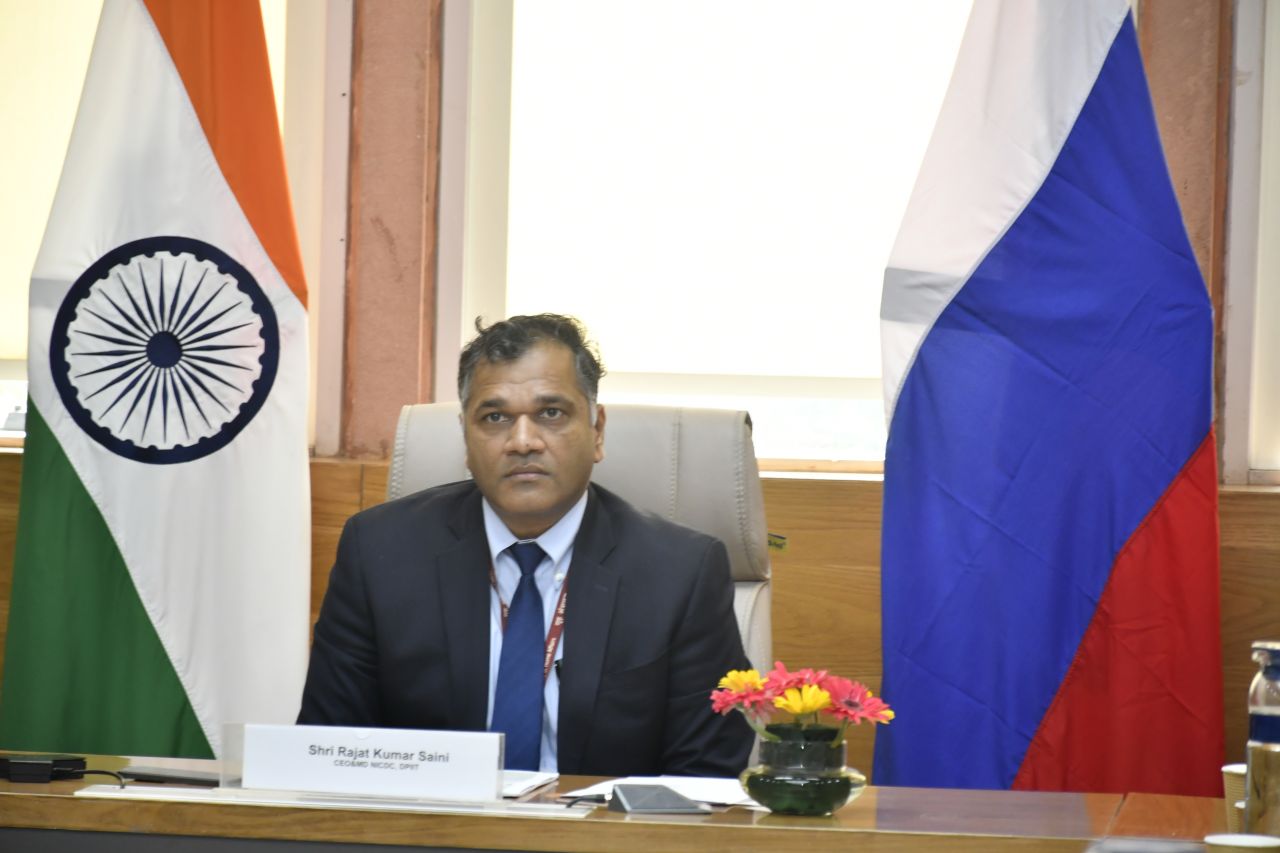
This was followed by a comprehensive presentation from Rajat Kumar Saini, IAS, CEO & MD of National Industrial Corridor Development Corporation (NICDC), who showcased India’s rapidly evolving manufacturing ecosystem. He highlighted the transformative role of industrial corridors, plug-and-play smart industrial cities, and Production Linked Incentive (PLI) schemes in driving large-scale manufacturing growth.

Shri Saini underscored India’s competitive advantages, including integrated infrastructure, progressive policy reforms, and the ability to offer scale, positioning the country as a preferred destination for global manufacturing investments. He also extended an invitation to Russian stakeholders to visit NICDC’s industrial smart cities and experience firsthand the infrastructure readiness and business opportunities available across India.

The webinar brought together key stakeholders from both countries and spotlighted promising avenues of collaboration across diverse sectors such as textiles, chemicals, food processing, green mobility, and logistics.

As India and Russia continue to deepen their economic engagement, NICDC reaffirmed its commitment to facilitating investments, enabling strategic partnerships, and developing future-ready industrial ecosystems that support sustainable and inclusive growth.

DBGT achieves historic milestone with first-ever 100% transhipment vessel call

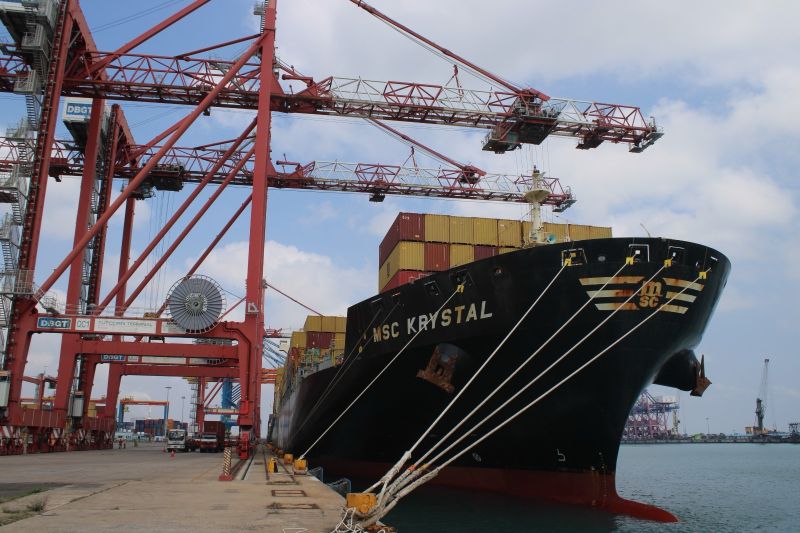
TUTICORIN : DBGT has marked a significant milestone in its operational journey with the successful handling of its first-ever 100% transhipment vessel call, reinforcing its emergence as a reliable gateway and growing transhipment hub on India’s eastern seaboard.

The vessel, MV MSC Krystal, berthed at DBGT on 26 March 2026 at 0145 hours and is scheduled to sail later on that day, handling approximately 1,307 TEUs of transhipment containers. This landmark call demonstrates DBGT’s capability to efficiently manage full transhipment volumes with precision planning, optimized berth utilization, and seamless yard coordination.

Supporting Trade Amid Challenging Conditions

Amid the ongoing Gulf crisis, DBGT played a proactive role in supporting shipping lines and EXIM trade by facilitating the smooth handling of crisis-affected and stranded cargo. Through agile planning, real-time coordination, and enhanced operational responsiveness, the terminal ensured continuity of supply chains during a period of disruption, reaffirming its role as a dependable logistics partner.

Strong Partnerships Enabling Seamless Execution

The successful execution of this milestone operation was made possible through the strong support and collaboration of V.O. Chidambaranar Port Authority (VOCPA) and Customs authorities. Their guidance, combined with DBGT’s operational expertise, ensured swift clearances, efficient vessel turnaround, and hassle-free cargo handling.

This achievement highlights DBGT’s growing capability to handle complex transhipment operations and underscores its commitment to delivering world-class, efficient, and resilient port services. With a focus on enhancing connectivity, improving turnaround times, and supporting global trade flows, DBGT continues to strengthen its position as a key node in the regional maritime logistics network.

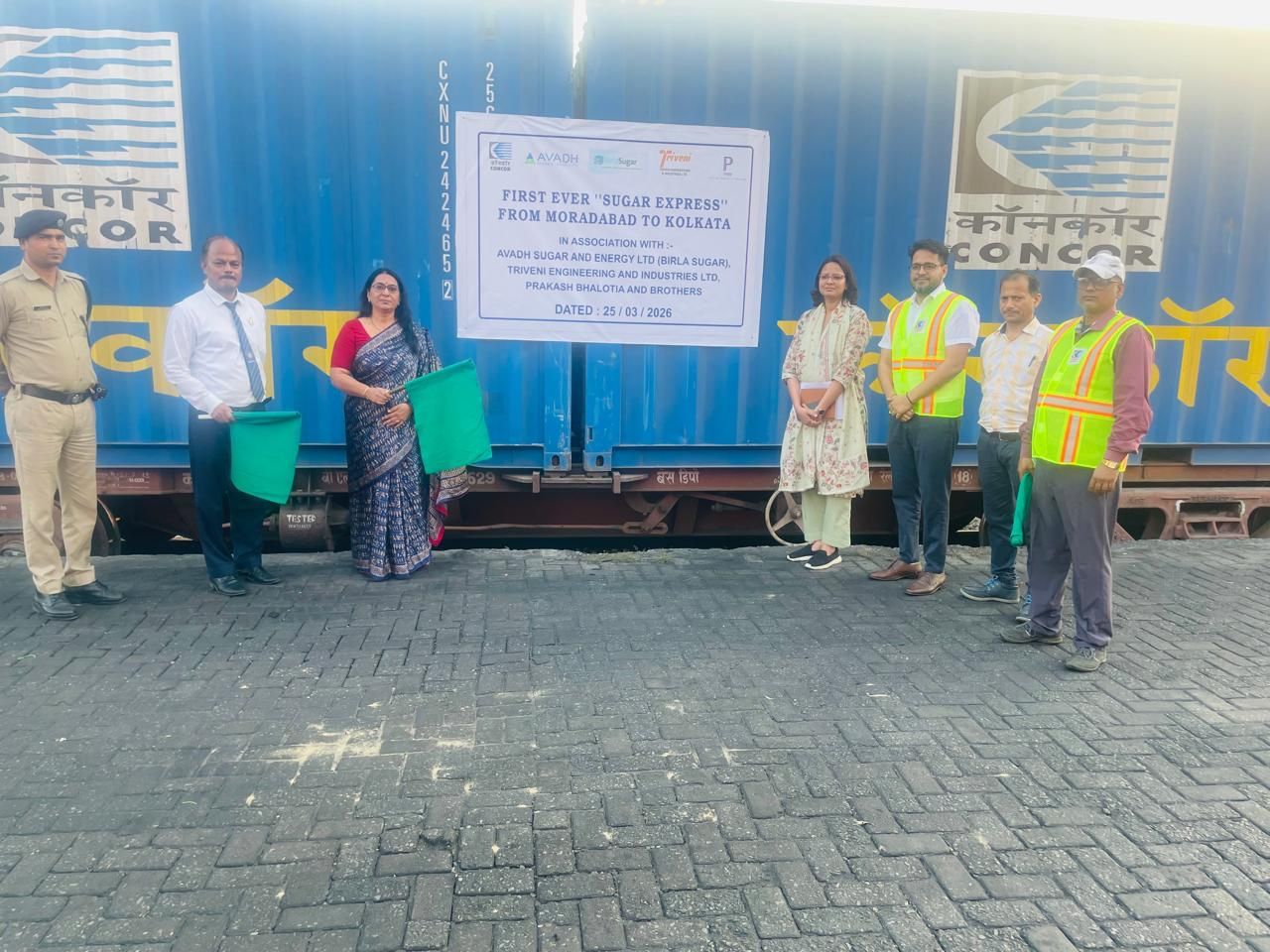
CONCOR ICD Moradabad flags off first-ever “Sugar Express,” boosting Green Logistics and Rail Cargo Efficiency

MORADABAD : In a significant milestone for rail-based freight movement, Container Corporation of India Ltd. (CONCOR), ICD/Moradabad, has successfully flagged off its first-ever “Sugar Express” train, marking a new chapter in efficient and sustainable sugar transportation.

The inaugural rake comprises 80 × 20-foot domestic containers loaded with sugar, moving from Moradabad to Shalimar (Kolkata). The operation has been executed in collaboration with Avadh Sugar and Energy Ltd. (Birla Sugar), Triveni Engineering and Industries Ltd., and M/s Prakash Bhalotia and Brothers.

A key highlight of the initiative is CONCOR’s seamless handling of first-mile and last-mile connectivity, ensuring smooth cargo movement across the supply chain. This integrated logistics solution has not only enhanced operational efficiency but also contributed to increasing the rail coefficient in sugar transportation, reinforcing a shift toward more environmentally sustainable logistics.

The train was ceremonially flagged off by Vinita Srivastava, Divisional Railway Manager (DRM), Moradabad, in the presence of Richa Sharma, Senior Divisional Commercial Manager (Sr DCM), Moradabad.

This pioneering initiative reflects CONCOR Moradabad’s continued commitment to delivering efficient, reliable, and cost-effective logistics solutions. It also underscores the organization’s customer-centric approach, focused on creating long-term value for stakeholders by enabling seamless, optimized, and eco-friendly cargo movement across the country.

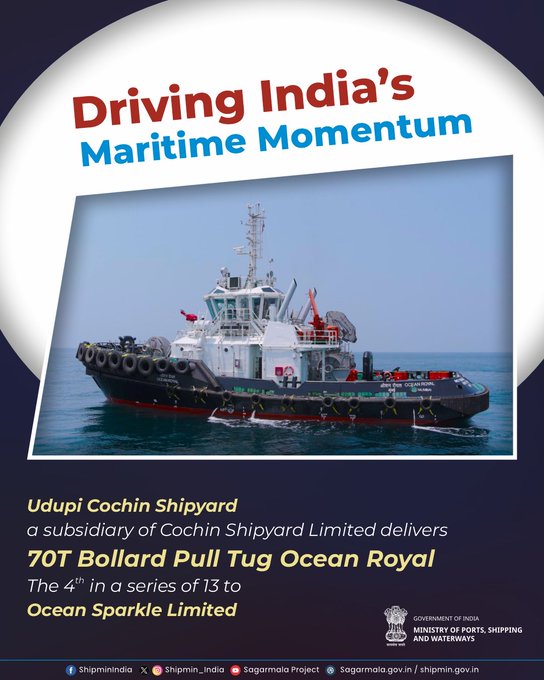
Udupi Cochin Shipyard delivers 70T Bollard Pull Tug ‘Ocean Royal’ ahead of schedule

KOCHI : Udupi Cochin Shipyard Limited (UCSL), a wholly owned subsidiary of Cochin Shipyard Limited under the Ministry of Ports, Shipping and Waterways (MoPSW), has successfully delivered the 70-ton Bollard Pull Tug Ocean Royal (UY 172) to Ocean Sparkle Limited.

This vessel marks the fourth delivery in a prestigious series of 13 state-of-the-art tugs being constructed by UCSL, showcasing India’s advancing capabilities in indigenous shipbuilding and maritime engineering. Notably, the tug has been delivered ahead of schedule, reflecting the shipyard’s strong project execution, adherence to timelines, and commitment to operational excellence.

Designed and built to meet global standards, Ocean Royal is equipped with advanced propulsion systems and modern firefighting capabilities, ensuring superior performance in harbor operations, towing, and escort services. With a bollard pull of 70 tonnes, the tug is engineered for high maneuverability, enhanced safety, and efficient handling of large vessels in challenging maritime conditions.

The successful delivery further strengthens UCSL’s position as a key contributor to India’s shipbuilding ecosystem and aligns with the Government of India’s vision of Atmanirbhar Bharat in the maritime sector. The project also underscores the growing synergy between Indian shipyards and private marine service providers in building a robust, self-reliant maritime infrastructure.

Speaking on the occasion, officials highlighted that the timely delivery of such technologically advanced vessels not only enhances coastal and port operations but also boosts employment, skill development, and ancillary industries associated with shipbuilding.

With several more vessels in the pipeline, UCSL continues to play a pivotal role in reinforcing India’s maritime strength and supporting the nation’s emergence as a global hub for shipbuilding and marine services.

CWC and MADC sign agreement to develop logistics hub in MIHAN

NAGPUR : The Central Warehousing Corporation (CWC) has signed an agreement with the Maharashtra Airport Development Company (MADC) to develop a multimodal logistics park within the MIHAN Special Economic Zone (MIHAN-SEZ) in Nagpur. Under the agreement, 19.92 acres of land have been allotted to CWC inside the MIHAN-SEZ area for modern warehousing and logistics facilities. The project will deploy advanced technology driven storage systems and cold chain infrastructure to handle a wide range of cargo including perishable goods and pharmaceuticals.

The park will feature integrated connectivity by road, rail and air to enable faster movement of goods and to reduce transit times across supply chains. Being located within a special economic zone, the facility will provide single window customs clearance to streamline import and export processes and reduce procedural delays. Officials have highlighted that these provisions should lower logistics costs and improve supply chain efficiency for firms operating in central India.

Nagpur’s position at the geographic centre of India has long underpinned its role as a national logistics hub and the new development is expected to strengthen that advantage. The project aligns with national efforts to enhance manufacturing competitiveness and to integrate Indian supply chains with global trade networks. State and central agencies anticipate coordinated logistics development that supports investment and industrial growth in the region.

The scheme is expected to create employment opportunities across logistics, supply chain and allied sectors, offering benefits to local youth and service providers. Investment in cold chain capacity is likely to support the pharmaceutical and food processing industries in the region. Authorities expect the park to act as a catalyst for broader economic activity in Maharashtra.

Reimagining India’s Logistics with AI, Automation, and Intelligent Connectivity

India’s logistics ecosystem is undergoing a rapid transformation, driven by the integration of artificial intelligence, automation, and real-time data visibility. As supply chains become more complex and demand for speed and transparency increases, technology-led platforms are stepping in to bridge long-standing inefficiencies.
From freight matching and predictive analytics to secure digital workflows and hyperlocal storage solutions, a new wave of logistics innovators is reshaping how goods move across the country. These platforms are not only improving operational efficiency but also enabling businesses to scale with greater confidence and control.

  1. TrucksUp
    TrucksUp is redefining full-truckload logistics through a tech-first approach powered by AI, machine learning, and IoT. By intelligently matching freight with available trucks, the platform addresses long-standing issues such as asset underutilisation and fragmented operations. With features like FASTag-enabled payments, smart fuel management, and real-time fleet tracking, TrucksUp brings transparency and efficiency to fleet owners and shippers. Its integrated ecosystem combines load management, financial services, and compliance tools into a single digital interface, enabling smarter decision-making and improved productivity across the logistics chain.
  2. Genefied
    Genefied is transforming supply chain visibility by combining AI-driven traceability with brand protection and customer engagement solutions. Its platform enables businesses to track products from manufacturing to end consumers while reducing counterfeiting risks. Through offerings like real-time tracking, digital warranties, and loyalty programs, Genefied converts operational data into actionable insights. This helps brands enhance customer trust, improve retention, and build more transparent, data-driven supply chains.
  3. RapidShyp
    RapidShyp is a tech-enabled shipping aggregation platform for eCommerce, D2C and B2B brands/enterprises looking to scale their business with reliable logistics services. The platform simplifies logistics by offering access to 16+ leading couriers through a single interface. It also offers one-click integration with popular eCommerce platforms such as Shopify, WooCommerce, and more. Leveraging cutting-edge technology to ease logistics challenges, features like a user-friendly Order Management System, AI-enabled courier recommendation engine, automated manifest and label generation, and streamlined shipping workflows ensure that operations are both efficient and hassle-free. Through its offerings, RapidShyp is empowering brands to focus on growth and customer satisfaction.
  4. Airattix
    Airattix introduces a unique, sharing-economy approach to logistics by connecting individuals with unused spaces to those seeking storage or fulfilment solutions. From warehouses to parking and luggage storage, the platform enables flexible and cost-effective space utilisation. By digitising access to idle infrastructure, Airattix addresses urban storage challenges while promoting more efficient and sustainable resource use.
  5. Roadcast
    Roadcast is a SaaS-based logistics automation platform designed to streamline fleet and last-mile operations through a unified system. Its AI-powered platform offers real-time tracking, route optimisation, and IoT-enabled monitoring for enhanced operational control. With capabilities spanning fleet management, video telematics, and yard operations, Roadcast helps businesses reduce costs, improve efficiency, and strengthen supply chain visibility across industries.
    As India’s logistics sector continues to evolve, the convergence of AI, automation, and connected ecosystems will play a critical role in shaping its future. These platforms are not just improving efficiency—they are redefining how logistics operates, making it more intelligent, scalable, and resilient for the next phase of growth.
  6. CJ Darcl
    CJ Darcl is leveraging advanced technologies to build a more efficient and sustainable logistics network. Its cloud-based transportation management system (TMS) offers end-to-end visibility, while GPS-enabled tracking ensures secure and timely deliveries. By integrating AI, data analytics, and automation, the company enhances route optimisation, demand forecasting, and fleet efficiency. Its sustainability initiatives, including electric vehicles and optimised routing, further strengthen its position as a forward-looking logistics player.