Home Blog Page 40

KMTC orders Six Boxships at CSSC Huangpu Wenchong

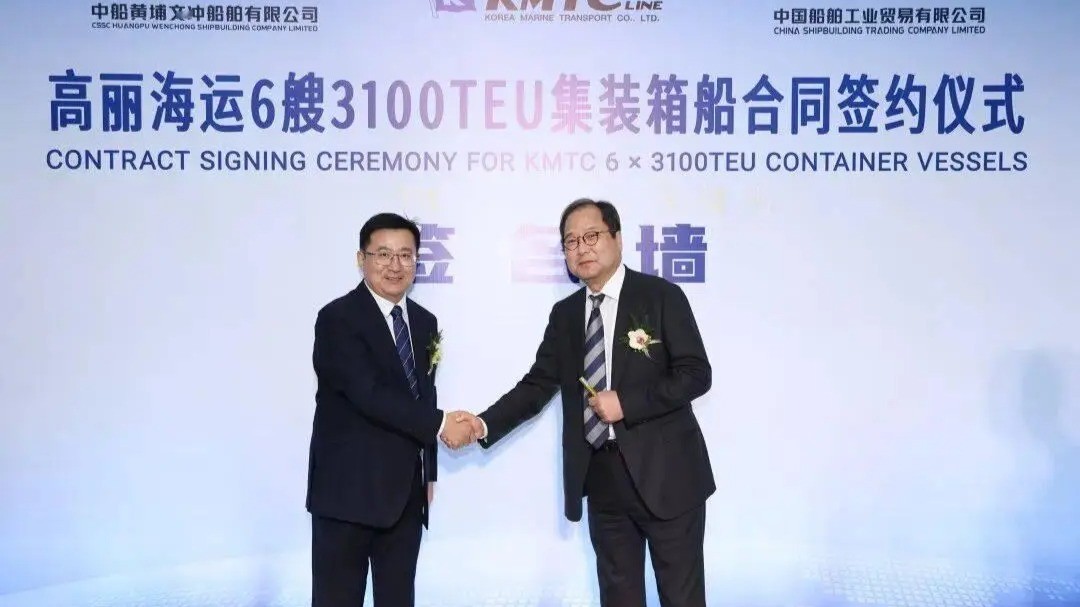
SEOUL: South Korean liner operator Korea Marine Transport Co., Ltd. (KMTC) has placed its first newbuilding order with a Chinese shipyard, signing for six 3,100-TEU containerships at CSSC Huangpu Wenchong Shipbuilding.

The contract was signed in Guangzhou on 26 October 2026 with Huangpu Wenchong and China Shipbuilding Trading Co., Ltd. (CSTC). The six vessels will provide a combined nominal capacity of 18,600 TEU. According to the shipyard, the agreement marks both KMTC’s first newbuilding project in China and its first order with China State Shipbuilding Corporation (CSSC).

KMTC joins a Korean customer base that already includes Sinokor, HMM, CK Line, Namsung Shipping and Namsung’s subsidiary Dongyoung Shipping. Their projects span small feeder containerships, midsize boxships and multipurpose heavy-lift vessels, illustrating the range of business Huangpu Wenchong has developed with South Korean owners.

A proven design adapted for KMTC

The vessels will be based on Huangpu Wenchong’s proprietary “Honghu”, or Swan, 3,100-TEU design, which has already attracted series orders from overseas customers. The yard said the design would be further refined to meet KMTC’s operating requirements, with improvements intended to enhance operating economics, flexibility and suitability for different services. Contract prices and delivery dates have not been disclosed.

KMTC has long focused on intra-Asian container shipping and has historically placed most of its newbuilding business with domestic yards. Its decision to commission six vessels in China therefore adds a new shipbuilding partner to its procurement programme. For Huangpu Wenchong, the project combines an established vessel design with customer-specific modifications as it begins working with another regional liner operator.

Korean orders accumulate in 2026

The KMTC contract follows several other Korean orders secured by Huangpu Wenchong this year. On 4 March, the yard and CSTC signed contracts with Namsung Shipping and its subsidiary Dongyoung Shipping for two 4,300-TEU vessels and two 1,900-TEU feeders. These were the yard’s first projects with the two companies.

Shipbroker G. Moundreas, in its weekly review dated 6 March, identified Namsung as the buyer of the 4,300-TEU pair and Dongyoung as the buyer of the 1,900-TEU vessels, listing delivery in 2028 for both programmes. The combination offers different operating capabilities within the same group: larger ships for routes with sufficient cargo volumes, alongside smaller feeders suited to a wider range of regional ports.

A further agreement disclosed in August covered two firm 6,400-TEU containerships for CK Line, with options for two additional vessels. Across these three disclosed programmes alone—Namsung and Dongyoung, CK Line, and KMTC—Huangpu Wenchong has secured 12 firm containership orders from Korean customers in 2026, plus two options. That total excludes earlier Korean projects and does not treat CK Line’s optional vessels as firm orders.

Cruise ship ‘Mein Schiff 3’ collides with ‘MSC Victorine’ in Germany, causing major damage and cancellation of voyage

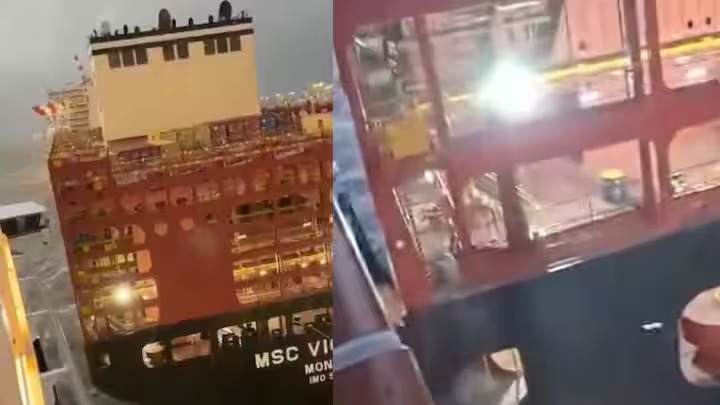
BREMERHAVEN : A cruise ship operated by TUI Cruises, Mein Schiff 3, collided with two container vessels while departing Bremerhaven Port in Germany on Sunday, October 25, amid strong winds and stormy weather conditions. The incident caused significant damage to the cruise liner and the large container ship MSC Victorine, while the planned cruise to the Canary Islands was subsequently cancelled. No injuries were reported among passengers or crew members.

The 293-metre-long Mein Schiff 3 was preparing to leave Bremerhaven for a scheduled 20-night voyage when a strong gust of wind reportedly pushed the vessel towards container ships berthed at the port’s Stromkaje terminal. Despite tugboat assistance, the cruise liner lost its intended clearance and struck the berthed vessels during the departure manoeuvre at approximately 5:30 p.m. local time.

MSC Victorine Sustains Approximately 10-Metre Hull Breach

The most significant reported damage was sustained by MSC Victorine, a container vessel with a capacity of approximately 16,520 TEU. The collision reportedly tore open a section of its port-side hull near the stern, creating a breach approximately 10 metres long. Damage was also reported to container guides and deck structures, with some containers potentially affected.

The damage was reported to be above the waterline, and authorities indicated that there was no water ingress. The incident nevertheless raised concerns over the vessel’s structural condition, cargo security and the inspections and repairs required before it could resume operations.

Cruise Ship Also Suffers Extensive Damage

The Mein Schiff 3 sustained damage to its outer hull, bridge area and several lifeboats, along with associated launching equipment. The vessel returned to its berth with tugboat assistance following the collision.

The incident also involved a second container ship, identified in reports as MSC Anne F, which reportedly sustained minor damage. Consequently, three vessels were reported to have been affected by the incident.

20-Night Canary Islands Cruise Cancelled

The collision significantly disrupted the travel plans of the passengers aboard Mein Schiff 3. The vessel had been scheduled to undertake a 20-night cruise covering destinations in Portugal, Madeira, the Canary Islands, Morocco and Spain.

Following technical inspections, TUI Cruises confirmed that the damage required urgent repair work at a shipyard and cancelled the planned voyage. The company expressed regret over the disruption and emphasised that passenger and crew safety remained its priority. Passengers were informed of the cancellation and arrangements were made to facilitate their departure from the vessel.

Investigation and Safety Inspections Underway

German maritime authorities are investigating the circumstances surrounding the collision, including the role of the strong winds and the execution of the departure manoeuvre. The precise sequence of events and the extent of the damage remain matters for the ongoing investigation.

All three vessels were reportedly prohibited from sailing pending further inspections and the necessary clearances. Repair requirements, vessel availability and potential disruption to cargo schedules are also likely to affect subsequent operations.

The incident highlights the challenges of manoeuvring large vessels in adverse weather conditions, even when tugboat assistance is available. It also underscores the importance of risk assessment, effective coordination between bridge teams and tug operators, and compliance with port safety procedures during vessel departures.

The collision at Bremerhaven serves as a reminder that adverse weather can create significant navigational challenges in confined port waters, with consequences for vessel safety, cargo operations and passenger travel.

Maritime industry advances harmonisation of digital emissions reporting

LONDON: The Tripartite Joint Industry Working Group (JIWG) has released two new frameworks that can help improve the exchange of operations and emissions data across the maritime industry.  

The JIWG, chaired by BIMCO, was established under the Tripartite, a forum bringing together shipowners and operators, shipbuilders, and classification societies. As part of its work to develop a common approach for Maritime Emissions Reporting, the JIWG has released version 1.0 of the Operational Vessel Data (OVD) and Vessel Emissions Reporting (VER) frameworks. The two frameworks complement each other and can help establish a common foundation for a more efficient exchange of data. 

Both OVD and VER are voluntary industry frameworks. They do not create new reporting obligations but provide a common approach that organisations may adopt to support more efficient and consistent data exchange. 

The JIWG’s development of the OVD and VER frameworks complements and builds on earlier work by BIMCO and IACS (International Association of Classification Societies) to add emissions-reporting data elements to the IMO Compendium on Facilitation and Electronic Business. While the IMO Compendium provides common definitions and formats for maritime information, the latest work adds a practical implementation framework for exchanging operational vessel data and verified emissions-reporting results between industry systems. 

The initiative also forms part of a broader move towards using the IMO Compendium as a common foundation for maritime data exchange. Emerging use cases covering port-call optimisation, electronic seafarer certificates and maritime emissions reporting demonstrate how common data definitions can support interoperability across different parts of the maritime sector. 

The work of the group addresses the common industry challenge of stakeholders facing different reporting systems and data formats which often result in the same information being mapped, entered and checked multiple times. 

The OVD and VER can support a more consistent, efficient and traceable exchange of data between ships, shipping companies, software providers, verification bodies and other authorised users. The approach will also make it easier to reuse data more consistently across the industry and connected value chains. 

JIWG Graph Maritime industry advances harmonisation of digital emissions reporting

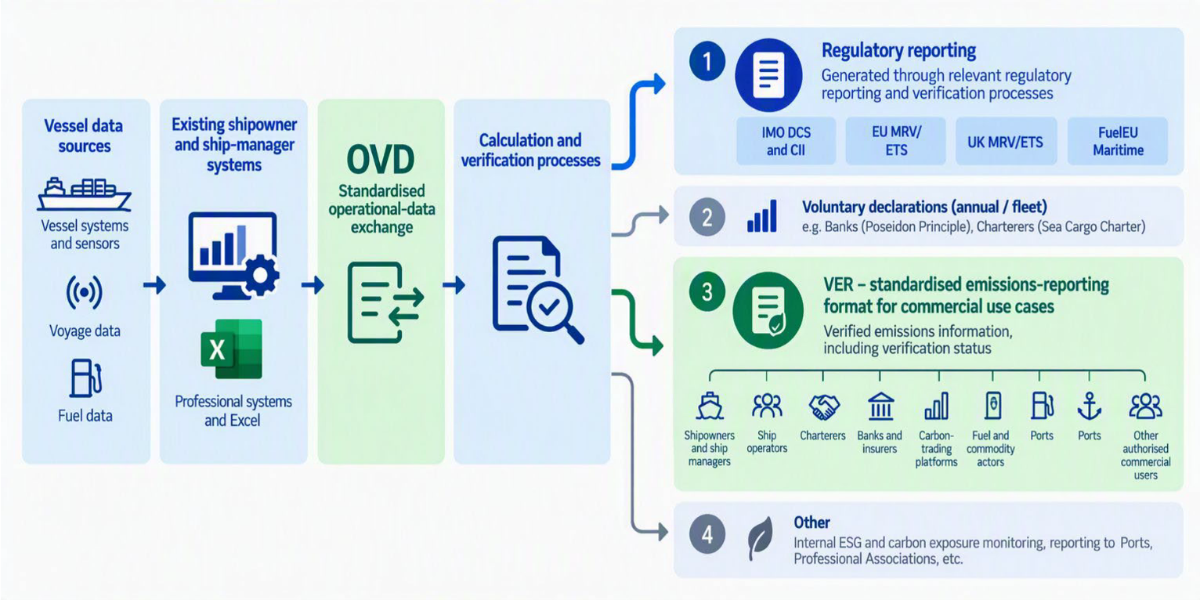
Two complementary parts of the data flow 
The OVD provides a structured format for exchanging operational vessel and fuel-consumption data. It defines common data elements, names, units and structures, allowing the information to be interpreted consistently by different systems and organisations. It does not prescribe how data must be collected onboard, which software must be used or where data must be stored, but instead provides a common approach for sharing such data across the maritime industry. 

The VER complements the OVD by providing standardised formats for emissions reporting in cases when commercial reporting practices and needs vary considerably. This could include charter-party performance, Emission Trading Schemes (ETS) cost allocation, FuelEU pooling and other commercial arrangements. The VER provides a common way to exchange emissions information, including its verification status for reporting periods that are defined by the user.

In practical terms, the OVD provides the underlying operational data layer while the VER provides a structured output solution for emissions information. In combination, the two solutions can help support the maritime industry’s objective of capturing data only once and reusing it for all relevant reporting, verification and other purposes. 

See also the illustration in the annex, which shows the exchange of operational and emissions data across the maritime industry. 

Responding to a growing reporting burden 
The need for accurate and trusted maritime emissions reporting has increased due to the IMO Data Collection System (IMO DCS) and the EU Monitoring, Reporting and Verification system (EU MRV). Although these requirements serve different purposes, the use of different datasets and system formats can create inconsistencies, repeated data mapping and manual work across the reporting chain. 

The Tripartite JIWG has therefore worked to develop a common approach that allows data to move between different systems, regardless of the technology or service provider used. The OVD builds on a framework initially developed by DNV and subsequently considered through the wider JIWG process. The VER builds on an initial draft prepared by ClassNK and was further developed collaboratively by the participating organisations. 

Industry collaboration and practical implementation 
As voluntary industry frameworks, OVD and VER version 1.0 provides a baseline for practical use and further development. Organisations can now consider how the formats may be applied within existing systems and processes. Experience from implementation and real-world use will help identify where definitions, guidance, tools or data structures may need further refinement. 
 
As part of the next phase, the Tripartite Joint Industry Working Group will also assess options for transitioning OVD and VER towards independent and broadly representative governance. The objective is to establish clear ownership, open participation, transparent decision-making and predictable change management, providing confidence that the frameworks can be maintained as neutral and accessible industry resources. 

The Joint Industry Working Group will continue to oversee the work while the governance alternatives are assessed and until an appropriate structure is ready to receive the frameworks. No final governance model has yet been selected. 

Quotes 
Yasuhiro Ikeda, Director, Digital Solutions Division, ClassNK 
“VER is the result of a truly collaborative effort across all participating organisations, and I would like to thank everyone who contributed to this achievement. By establishing a common foundation for trusted and interoperable emissions data exchange, VER will help improve efficiency, transparency and digital collaboration across the maritime industry. Version 1.0 marks an important beginning, and we look forward to expanding its value through practical use and continued industry cooperation.” 

Bjarte Walaker, Head of Maritime Deliveries, Veracity by DNV  
“After several years of developing OVD, DNV is very pleased to see its broad adoption and grateful to the shipping companies, solution providers and other contributors who have helped turn it into a formal industry standard. This shared commitment is essential to enabling more efficient, consistent and interoperable exchange of vessel data, helping to reduce friction and support innovation across the maritime industry and connected value chains.” 

Vincent Joly, Smartship Manager – Bureau Veritas Marine & Offshore 
“As reporting requirements continue to evolve, greater alignment in operational and emissions data is becoming increasingly important. Bureau Veritas has already adopted OVD for emissions data collection and supports this industry-led effort to establish common approaches for data exchange. These frameworks provide an important foundation for greater consistency across reporting and verification activities, enabling information to be shared and used more effectively across the maritime ecosystem.” 

Michela Schenone, Marine Digital and Class Solutions Operations Director – RINA 
“RINA believes that common industry standards are essential to make maritime emissions reporting more efficient, consistent and interoperable. RINA is taking practical steps to adopt OVD within its emissions reporting processes, supporting a common approach to data exchange across the industry. Continued industry collaboration will be key to achieving broad adoption and ensuring that these common frameworks deliver long-lasting value across the maritime sector.” 

Jeppe Skovbakke Juhl, Chief Naval Architect, Regulatory Affairs, BIMCO – chair of the JIWG 
“The maritime industry does not need more ways of exchanging the same information. It needs a common approach that allows data to move efficiently between organisations and systems. OVD and VER are an important step in that direction, reducing duplication and creating a stronger foundation for efficient and interoperable reporting.” 

Availability and next steps 
OVD and VER version 1.0, together with supporting material, are available on the BIMCO website: Emission reporting

The JIWG will continue to collect experience from practical use, consider the findings from the industry consultation and identify priorities for further development. An update on the work will be presented at the Tripartite meeting in Tokyo on 28 October 2026. 

About the Tripartite JIWG 
The Tripartite Joint Industry Working Group on developing a common approach for Maritime Emissions Reporting brings together representatives of shipowners and operators, shipbuilders, classification societies and supporting industry organisations. It is chaired by BIMCO and works through non-binding industry cooperation to develop a more common approach to the digital exchange of operational and emissions-related data. 

Participating organisations 
BIMCO (Chair), INTERCARGO, INTERTANKO, IACS Safe Digital Transformation Panel, ClassNK, DNV, Bureau Veritas, RINA (Class), Lloyd’s Register, ABS, Korean Register, Royal Institute of Naval Architects (RINA), and other participating organisations. 

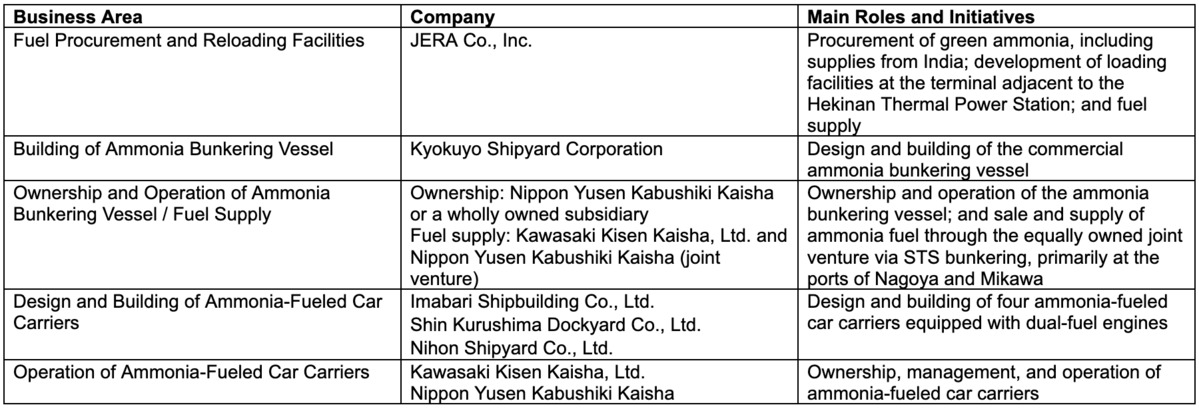
“K” Line – Seven Japanese Companies jointly announce to Build and Operate Four Ammonia-Fueled Car Carriers and Commercialize the Ammonia Bunkering Business

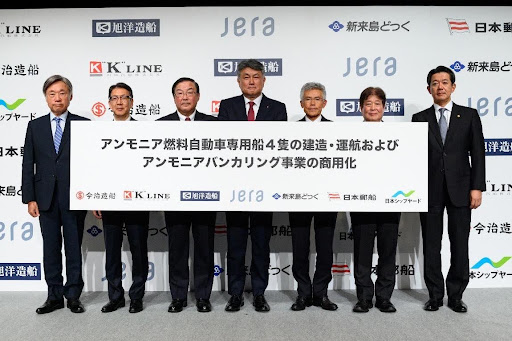
TOKYO:  Imabari Shipbuilding Co., Ltd. (“Imabari Shipbuilding”), Kawasaki Kisen Kaisha, Ltd. (““K” LINE”), Kyokuyo Shipyard Corporation (“Kyokuyo Shipyard”), JERA Co., Inc. (“JERA”), Shin Kurushima Dockyard Co., Ltd. (“Shin Kurushima Dockyard”), Nippon Yusen Kabushiki Kaisha (“NYK”), and Nihon Shipyard Co., Ltd. (“NSY”), Tuesday jointly announced that they have agreed to develop an ammonia fuel supply chain in Japan’s Chubu region and to build and operate four ammonia-fueled car carriers supported by the supply chain.

This project will be a comprehensive initiative to develop an integrated ammonia fuel supply chain, from the procurement of green ammonia and development of ship loading facilities to the construction of a dedicated bunkering vessel* with fuel supply through ship-to-ship (STS) bunkering,** and the operation of ammonia-fueled car carriers.

To address the need to reduce greenhouse gas (GHG) emissions from international shipping as well as customers’ Scope 3 emissions, the seven companies aim to establish a stable ammonia fuel supply system through the integrated development of the supply chain . This project will be the world’s first commercial supply chain, with the Chubu region serving as the hub, integrating fuel procurement, supply infrastructure at the Hekinan terminal, and vessel operations. 

Ammonia is a next generation fuel that emits no carbon dioxide (CO₂) when combusted and can be stored and transported in liquid form. In particular, steady progress is being made toward the practical use of low-carbon ammonia, which is produced with reduced CO₂ emissions during the manufacturing process, in the power generation sector. In the future, its use is also expected to expand into the transport sector, including maritime applications and other industries.

By combining their respective technologies, expertise, and infrastructure, the seven companies will establish an advanced integrated business model that brings together ammonia fuel procurement and supply, the construction of ammonia-fueled car carriers, and development of an ammonia bunkering vessel. Through this initiative, the companies will promote the decarbonization of international shipping through a Japanese industry  collaboration while also supporting the broader utilization of ammonia for industrial and other applications. In doing so, they aim to contribute to the realization of a sustainable society and the development of a low-carbon ammonia market.

* Bunkering vessel 
A specialized vessel used to supply fuel to ships at sea or in port. Under this project, a dedicated vessel will be built and operated with advanced systems to prevent leakage, along with other equipment designed to address ammonia’s toxicity and corrosiveness.
** Ship-to-ship (STS) bunkering
A method of supplying fuel in which a bunkering vessel comes alongside a vessel berthed at a quay or pier or at anchor and transfers fuel directly.

  • Fuel Procurement and Development of Ship Loading Facilities (JERA)

JERA is advancing the development of a lower-carbon ammonia value chain as part of its efforts to achieving net-zero CO₂ emissions from its domestic and overseas businesses by 2050, and contribute to global decarbonization and address the world’s energy issues. Its initiatives include the use of lower-carbon ammonia at the Hekinan Thermal Power Station for fuel substitution to decarbonize the thermal power generation business, and the installation of tank truck loading facilities to supply lower-carbon ammonia to other businesses.

Under this project, JERA will procure green ammonia produced using renewable energy. These supplies are intended to come from regions including India. In addition, JERA will develop new ship loading facilities at the ammonia receiving terminal adjacent to the Hekinan Thermal Power Station, which will establish a stable supply system for the bunkering vessel. JERA will contribute significantly to the decarbonization of international shipping and to Japan’s decarbonization efforts, with the Chubu region serving as a key hub.

  • Building of Ammonia Bunkering Vessel and Fuel Supply and Sales Structure (“K” LINE, Kyokuyo Shipyard, and NYK)

Kyokuyo Shipyard, which possesses advanced technical capabilities in building specialized vessels, will build the ammonia bunkering vessel. It is scheduled for completion in 2030, the same as ammonia-fueled car carriers. Following completion, the vessel will be owned and operated by NYK or a wholly owned NYK subsidiary.

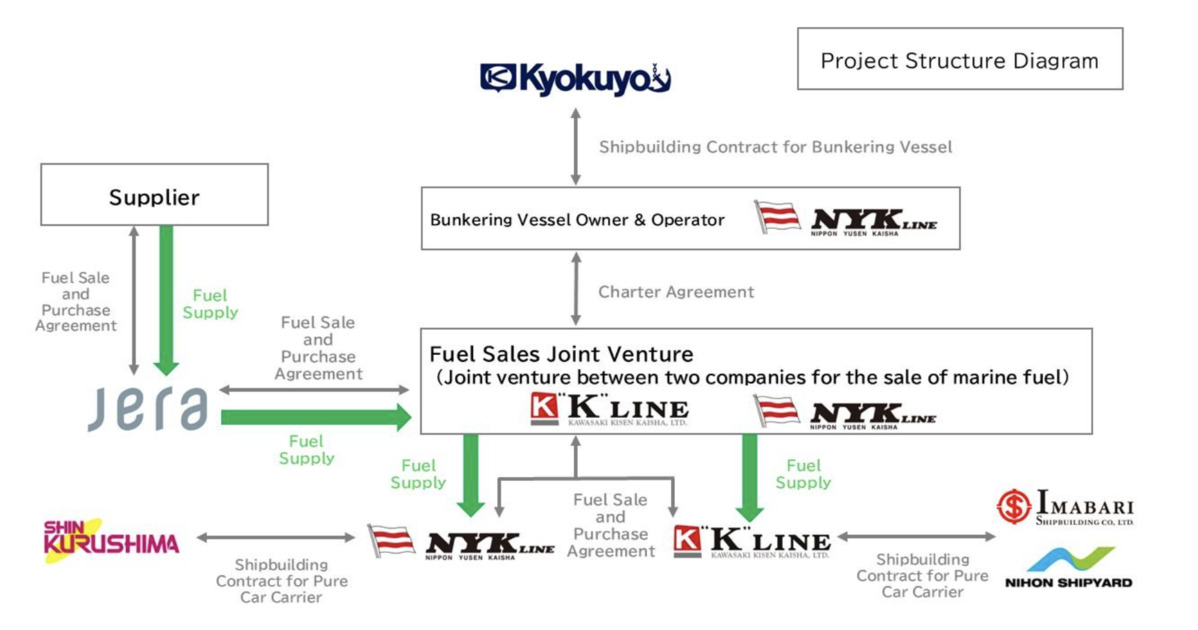
“K” LINE and NYK will also establish a fuel sales joint venture, equally owned by the two companies, to facilitate fuel sales and supply between vessels. Using a bunkering vessel owned and operated by NYK or a wholly owned NYK subsidiary, the joint venture will supply ammonia fuel to car carriers through STS bunkering.

By combining the stringent safety standards and operational expertise the two companies have accumulated in handling ammonia and LNG, they aim to establish a safe, highly efficient fuel supply system.

  • Building and Operation of Four Ammonia-Fueled Car Carriers (Imabari Shipbuilding, “K” LINE, Shin Kurushima Dockyard, NYK, and NSY)

“K” LINE and NYK are working to transition to next-generation fuels to achieve net-zero emissions by 2050 and provide cleaner transportation services that meet society’s growing need for low-carbon and decarbonized solutions. Under this project, each company will introduce two ammonia-fueled car carriers, for a total of four vessels. Following their scheduled completion in 2030, the vessels are expected to transport finished vehicles for customers including Toyota Motor Corporation.

The vessels will be Japan’s first ammonia-fueled car carriers. They will be equipped with dual-fuel engines capable of using ammonia as fuel, as well as fuel tanks with sufficient capacity to enable trans-Pacific voyages using ammonia fuel alone.

To ensure the safe use of ammonia, which is toxic and corrosive, the vessels will also incorporate a multilayered safety concept, including measures to prevent and detect leaks and to neutralize ammonia in the event of a leak.

Drawing on the world’s most extensive track record in building car carriers, Shin Kurushima Dockyard will lead the basic design phase. The vessels will then be jointly designed and built by Shin Kurushima Dockyard, Imabari Shipbuilding, and NSY — each bringing deep, proven expertise in car-carrier construction.

By bringing together their advanced technological and shipbuilding capabilities, the three companies aim to realize next-generation vessels that combine high safety in open-sea operations with world-leading environmental performance, thereby demonstrating the competitiveness of Japan’s shipbuilding technologies on the global stage.

Roles and Responsibilities

K Line Tab 1 "K" Line - Seven Japanese Companies jointly announce to Build and Operate Four Ammonia-Fueled Car Carriers and Commercialize the Ammonia Bunkering Business
Screenshot
K Line NYK "K" Line - Seven Japanese Companies jointly announce to Build and Operate Four Ammonia-Fueled Car Carriers and Commercialize the Ammonia Bunkering Business
Screenshot

Tanker owners can’t call a $140m ship too old to upgrade, says BAR Technologies

With new VLCCs ordered today won’t be delivering until 2029, most of the ships that will carry the world’s oil this decade are already trading

PORTSMOUTH:  With a 15-year-old tanker now worth more than a new one, owners have demolished their own favourite argument against retrofitting older ships, according to BAR Technologies CEO John Cooper.

Poten & Partners values a VLCC available for prompt delivery at around $235 million, compared with approximately $130 million for a newbuilding ordered today and due for delivery in 2029. Even a 15-year-old VLCC could command around $140 million, according to the shipbroker.

“The argument against retrofitting older ships has always been that it’s not worth spending money on a vessel near the end of its life,” said Cooper. “Well, the market has just put a $140 million price on a 15-year-old tanker. You can’t value a ship like that and then tell me it’s not worth improving.”

Cooper expects many of those ships, some of which would have been heading for recycling within a few years, to keep trading into the 2030s. Every extra year is another year of fuel bills, and on a deep-sea ship, wind is, he says, “the only propulsion energy that’s free at source”.

There is a regulatory argument, too. WindWings can reduce fuel consumption and CO2 emissions, potentially improving a vessel’s Carbon Intensity Indicator (CII) rating and helping owners maintain its commercial viability as efficiency requirements tighten. For owners extending the working lives of older ships rather than replacing them, wind propulsion offers a way to improve operational performance while reducing fuel costs, strengthening the case for life extension, not just fuel savings.

BAR has modelled what that means for a VLCC on a typical USA to JPN trade. A typical 5x 37.5m WindWings® installation would save around 2670 tonnes of fuel a year (at a utilisation rate of 80%), worth $2.27m ($850/t assuming VLSFO usage) in saved fuel costs, paying back in 4 years based on fuel savings alone (without accounting for any carbon-related costs or benefits). [If confirmed: The work can be done during a routine dry-docking.]  

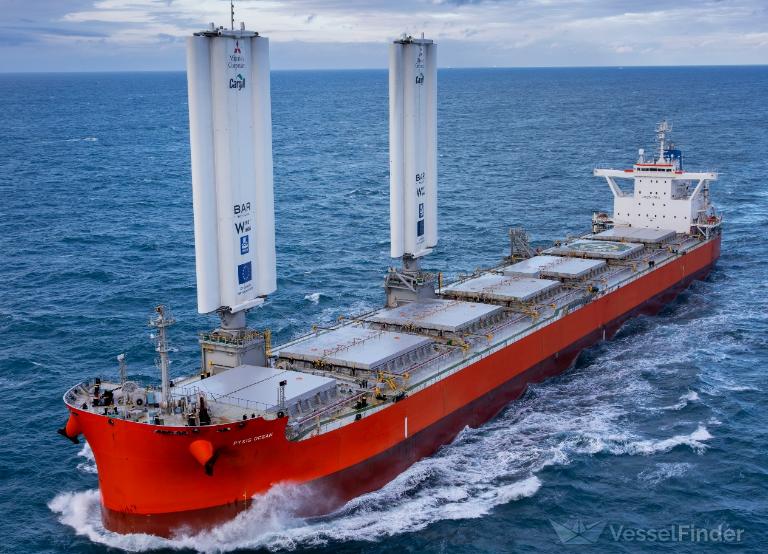
The technology is already working on existing ships. The bulk carriers Pyxis Ocean and Berge Olympus were both retrofitted with WindWings, and DNV independently recorded up to a 32% cut in main engine energy use on Pyxis Ocean in favourable conditions. Union Maritime has taken delivery of three WindWings-equipped LR2 tankers, with two more due in 2027.

“Shipping has spent ten years telling itself that decarbonisation happens on the order book,” said Cooper. “The order book is full until 2029. The ships that have to burn less fuel this decade are the ones sailing now. “So if the market is comfortable putting $140 million on a 15-year-old tanker, owners should be asking themselves whether it still makes sense not to spend a fraction of that improving the way it runs.”

About BAR Technologies

With an impressive heritage, having spun out of Great Britain’s former America’s Cup Team, BAR Technologies provides a wide range of design and engineering consultancy services across commercial ships, workboats, leisure boats, and engineered solutions. The company boasts a team of world-leading naval architects, optimisation specialists, fluid dynamists, and system engineers, all focused on delivering next-generation maritime technology.

About WindWings®

BAR Technologies’ patented three-element wing design is unique in the marketplace, delivering 2.5 times the lift of a single-element wing. Unlike other wind-assisted propulsion systems, WindWings® require no continuous power for suction fans or mechanical spinning. They automatically adjust camber and angle of attack for optimised efficiency across a wide range of wind conditions, offering a proven, scalable solution for emissions reduction.

WindWings® deliver an average of 1.5 tonnes of fuel savings per wing per day across global routes, positioning them at the forefront of commercially ready, zero-emission maritime solutions supporting decarbonisation at scale.

VesselNumber of Wings
Pyxis Ocean2
Berge Olympus4
Brands Hatch3
Spa2
Monza2
Albert Park3
Total16

EST-Floattech contracted by Damen Cargo Vessels to deliver two additional Octopus battery systems

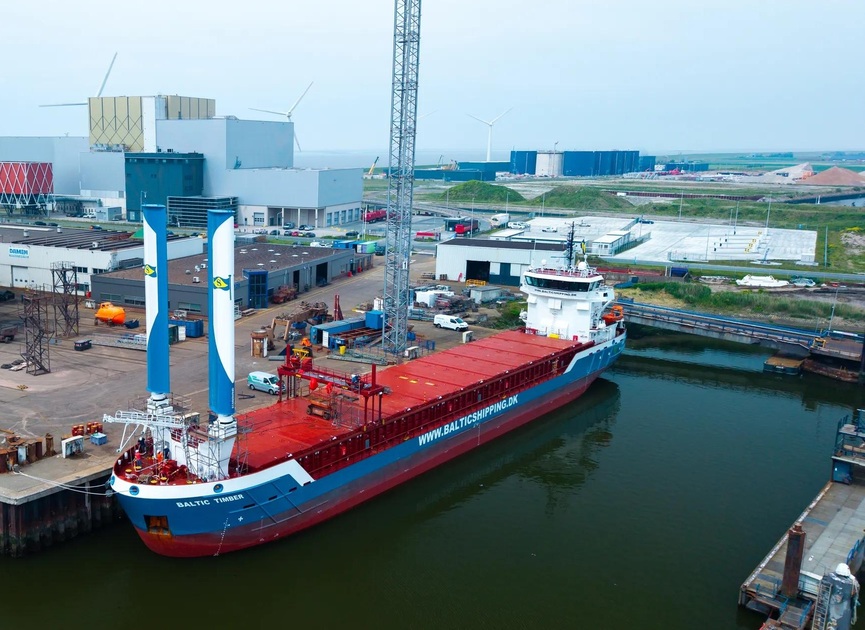
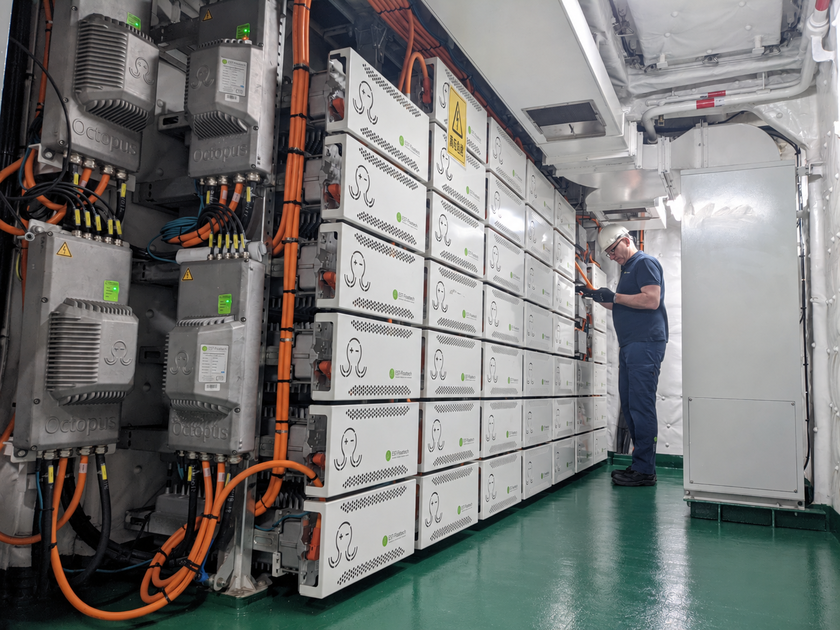
AMSTERDAM: Recently, Damen Shipyards Group contracted EST-Floattech to supply two battery systems, thereby renewing the framework agreement in place between the two companies since last year. The two Octopus Series battery systems are to be installed on board Damen Combi Freighter (CF) 3850 vessels.

Towards zero emissions

In November 2024, EST-Floattech and Damen Cargo Vessels signed an agreement, formalising their collaboration in a bid to make shipping greener. This latest order will bring the total number of EST-Floattech systems installed on CF 3850 vessels to nine.

CF3850 02 EST Floattech Battery Pack Service Engineer 1 EST-Floattech contracted by Damen Cargo Vessels to deliver two additional Octopus battery systems

Contributing to significant emissions reduction

The CF 3850 is a successful cargo vessel for short sea markets. Since releasing the next generation version of the vessel, Damen Cargo Vessels has received orders for 50 such vessels in just five years.

The CF 3850 is a standard, proven platform focused on the delivery of high levels of efficiency. In addition to its optimised hull form, the vessel is prepared for the integration of wide-ranging options for increased efficiency. These solutions work in concert with one another, each playing a part in the significant reduction of the vessel’s emissions.

One of these options is an EST-Floattech Octopus battery system, ranging from 240 kWh to 1,320 kWh, based on operator requirements. Depending on its size, the battery system enables peak shaving, bow thruster support and/or zero emission port calls.

Reliable solution for a proven platform

Arjan de Vries, Manager Procurements at Damen Cargo Vessels, said: “The CF 3850 is a proven vessel with an extensive track record. To ensure the continued reliability of the model in the market, we aim to integrate similarly proven options. With the EST-Floattech Octopus battery system, not only do we have a solution we can depend on, but we also have the modular flexibility to scale up to meet the specific requirements of our clients.”

Jelle Meindertsma, Sales Manager at EST-Floattech, said: “We were very pleased to receive this latest order from Damen Cargo Vessels. We greatly value their continued trust in EST-Floattech and the strong collaboration between our two companies. Applying our solutions in a proven vessel type such as the CF 3850 provides us with a unique opportunity to benchmark our performance, resulting in continual product evolution over successive generations. I look forward to continuing this cooperation as we, together with Damen, support vessel operators in achieving their goals for the energy transition.”

Bunker Quality Alerts prompt CMT concern over engine damage and repair costs

HAMBURG: Shipowners and operators need to maintain close checks on fuel quality following a series of off-specification alerts at major bunkering ports, advises German testing specialist CM Technologies (CMT), warning that contaminated or unstable fuels can result in costly engine damage and vessel downtime.

The advisory follows reports of fuel quality problems at Antwerp, Rotterdam, Houston, Singapore, Hong Kong, Piraeus and other bunkering locations during the past six months, involving excessive catalytic fines, poor fuel stability, high sediment levels and low flash points.

In part, the drop in fuel quality can be attributed to the supply chain disruption caused by the current geopolitical landscape and conflict, says David Fuhlbrügge, Joint Managing Director, CM Technologies (CMT).

“Although conflicts cannot be directly blamed for individual cases of contaminated or off-specification fuel, changes in the availability and sourcing of blending components are important factors shipmanagers need to consider when managing bunker quality,” he said. 

In August, fuel testing specialist VPS identified the Middle East conflict as a major factor behind both rising bunker prices and deteriorating fuel quality. It also issued 29 bunker alerts during the first seven months of 2026, with excessive catalytic fines and fuel stability problems accounting for 72% of them.

“With fuel supplies under pressure and ships taking bunkers from different ports and suppliers, crews need to be particularly careful about what is going into their tanks.”

Data published by West P&I in September, covering fuel samples tested between April and September 2026, found technical off-specification rates for heavy fuel oil (HFO) of 46.2% in Antwerp, 41.4% in Norfolk, 38% in the Panama Canal region and 35.5% in Rotterdam.

The same report identified elevated sulphur off-specification rates among very low sulphur fuel oil (VLSFO) samples tested in Rotterdam and Antwerp, although the club cautioned that the sample populations were comparatively small.

Fuhlbrügge said the findings reinforced the need for shipmanagers to remain vigilant over the quality of fuels taken onboard, irrespective of the bunkering location.

“Fuel quality should never be taken for granted. The consequences of getting it wrong can be expensive, not only in terms of machinery repairs but also the time spent dealing with blocked filters, damaged components and interrupted operations,” he said.

In July, alerts were also published concerning high abrasive content in HFO supplied in Houston and the Amsterdam–Rotterdam–Antwerp region, severe fuel stability concerns in Piraeus, high sediment in Las Palmas and low flash point fuels in Hong Kong and Singapore.

“Catalytic fines are particularly damaging if they are not adequately removed during fuel treatment. The abrasive particles can accelerate wear in fuel injection equipment, cylinder liners and piston rings, potentially shortening component life and increasing maintenance requirements,” said Fuhlbrügge.

Fuhlbrügge said the risks did not necessarily end once a bunker delivery had passed its initial laboratory checks.

“Shipowners need to know how the fuel will behave once it is onboard, particularly when different batches are stored or mixed. Two fuels may be stable individually but incompatible when combined. Finding that out after sludge has formed in the tanks can mean considerable cleaning work and avoidable expense.”

The commercial consequences are reflected in claims data from marine insurer Gard, which handled more than 70 bunker-related claims between January and May 2026, an increase of 50% over the corresponding period last year. Almost all involved fuel quality, with some vessels disabled or requiring towage.

Lloyd’s Register FOBAS has also suggested that fuels meeting routine ISO 8217 specifications can still cause operational problems, particularly where unusual blending components or poor compatibility affect fuel handling and treatment.

CMT supplies onboard test equipment for checking fuel compatibility, catalytic fines, water content, viscosity and density. Its compatibility tester, for example, allows engineers to assess the behaviour of different fuel batches before mixing, while its other instruments provide additional checks on fuel condition.

“Onboard testing complements independent laboratory analysis and established fuel management procedures,” said Fuhlbrügge.

“With the cost of replacement parts, maintenance and lost operating time, preventing fuel-related machinery problems is considerably preferable to dealing with the consequences.

“Crews need to remain alert to changes in fuel condition throughout storage, treatment and use. Bunkering may be a routine operation, but the quality of the fuel delivered should never be assumed.” 

Sarbananda Sonowal woos Korean firms for India’s shipyards, seeks global shipping rules all can follow

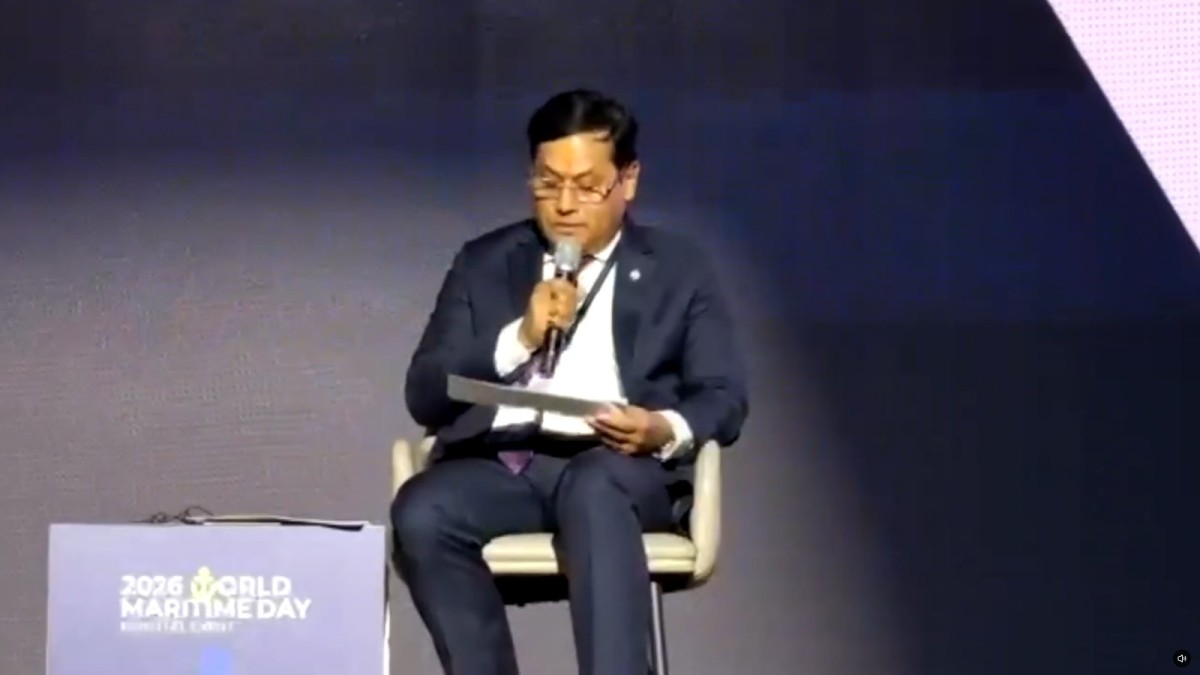
BUSAN : Union Minister of Ports, Shipping and Waterways (MoPSW), Sarbananda Sonowal, in Busan, South Korea, used a high-level ministerial roundtable on World Maritime Day and talks with South Korea’s marine equipment industry to press one case: India wants maritime rules that every country can put into practice, and partners willing to build and grow with India.

image003 20261026195707 f9cf1f Sarbananda Sonowal woos Korean firms for India's shipyards, seeks global shipping rules all can follow

Union Minister Sarbananda Sonowal spoke at the government roundtable at the World Maritime Day. Sonowal shared the stage with International Maritime Organisation (IMO), Secretary-General Arsenio Dominguez; Nam Jaeheon, South Korea’s Vice Minister of Oceans and Fisheries; Marianne Sivertsen Næss, Norway’s Minister of Fisheries and Ocean Policy; and Marina Hadjimanolis, Cyprus’ shipping Deputy Minister. Moon Seong-hyeok, a former South Korean minister of oceans and fisheries, chaired the session.

India’s starting point, Sonowal said, is that international standards should stay ambitious and universal, while their implementation recognises differences in national circumstances, development, technology and access to finance. He cited the principle of common but differentiated responsibilities and respective capabilities.

“The objective should therefore be common standards and outcomes, supported by cooperation that enables every Member State to implement them effectively,” Sonowal said.

The Union Minister called IMO conventions an “operational lighthouse” for shipping at a time of geopolitical instability, piracy and disruption in the Red Sea, protecting seafarers, trade and supply chains. The best way to narrow gaps, he said, is practical partnership: joint working groups that pair countries that have implemented a convention with countries still building the capacity, training surveyors and inspectors, helping draft laws and setting time-bound plans. The aim, he said, is to leave behind “permanent national capability rather than creating continuing dependence.”

India has done its own groundwork, Sonowal said. Five maritime laws enacted in 2025 took effect in March 2026, India’s Maritime Single Window covers 69 ports and terminals, and the Alang-Sosiya yard has 115 ship recycling facilities that comply with the Hong Kong Convention (HKC) within the IMO framework.

The same theme ran through Sonowal’s meeting with the Korea Marine Equipment Association, known as KOMEA, a group founded in 1980 that represents 304 equipment makers, design firms, shipbuilders and repairers. Its members include HD Hyundai, Hanwha Ocean and Samsung Heavy Industries.

KOMEA will open its first India office in Mumbai on Oct. 30, a step the two governments welcomed in April under VOYAGES, their framework for cooperation in shipbuilding, shipping and maritime logistics. In February 2025, the association offered to work with Indian yards on design, modernization, technology transfer, joint education programs and the local manufacture of marine equipment and spare parts.

“Every ship built in India needs engines, propulsion, deck machinery, and electrical and navigation systems,” Sonowal said. Much of that high-value equipment is imported today, he said, which is the opportunity for Korean suppliers.

KOMEA Chairman Ho-il Kang said members have begun preparing to enter the Indian market within the next two years. KOMEA members including SB Sunbo, Daeyang, KASEMEC, JO Engineering and others discussed their plans for possible investment in India’s maritime sector.

Sonowal made the business case with numbers. India approved a shipbuilding package worth about $7.8 billion in September 2025. Since scheme approval, the shipbuilding output rose 40% in 2025 on a year on year basis. The output has further grown by more than 80% in 2026. Since the scheme approval, the pipeline of vessels receiving direct government assistance covers more than 120 ships worth over $1.27 billion, with export orders making up more than 80% of the value. “We are already building for the world,” Sonowal said.

Further, demand from Government entities has also been aggregated by MoPSW to provide an order book visibility of more than 400 vessels worth about $23 billion to Indian Shipyards in the next 10 years.

He called the Mumbai office a long-term platform for Korean firms, whether through joint ventures, licensing or their own factories, and said the ministry stands ready to help them set up. The Minister’s four day visit continues tomorrow with additional meetings and visits.

India–South Korea Maritime Partnership gains momentum with KOMEA’s planned Mumbai office and focus on Green Shipping

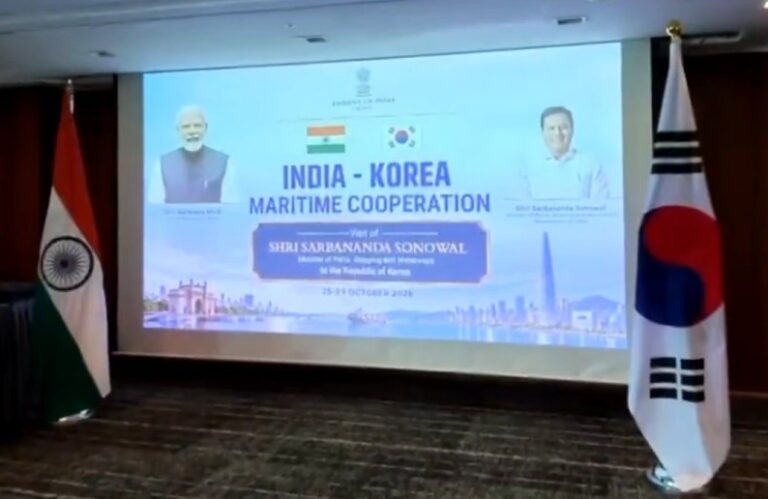
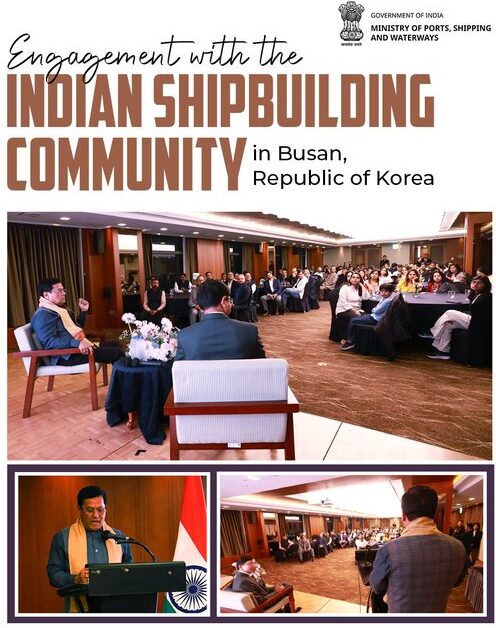
BUSAN : Union Minister of Shipping, Ports and Waterways Shri Sarbananda Sonowal said that, India has reaffirmed its commitment to strengthening maritime cooperation with South Korea, with a focus on shipbuilding, marine equipment manufacturing, green shipping and digitalisation. Shri Sonowal interacted with members of the Indian shipbuilding community in Busan, Republic of Korea, a global hub of maritime industry.

SONOWAL MARITIME BUSAN 1 1 India–South Korea Maritime Partnership gains momentum with KOMEA’s planned Mumbai office and focus on Green Shipping

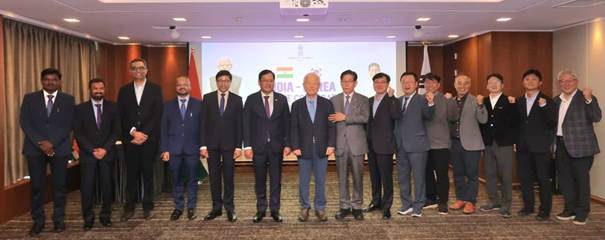
He appreciated their contributions and global expertise across leading maritime organisations, recognising them as a source of immense pride for India and an important asset in advancing the nation’s maritime ambitions During a productive meeting in Busan with the Korea Marine Equipment Association (KOMEA), led by its Chairman, Mr. Ho-il Kang, India invited Korean maritime industry leaders to explore new investment opportunities and deepen industrial collaboration in the country’s rapidly expanding maritime sector.

Representing more than 300 leading Korean marine equipment manufacturers and shipbuilding companies, KOMEA plays an important role in South Korea’s maritime industrial ecosystem. The planned establishment of its first office in Mumbai marks a significant milestone in bilateral maritime relations and is expected to facilitate closer industry engagement, technology collaboration and business partnerships between the two countries.

India Opens New Opportunities for Korean Maritime Industry

India’s maritime manufacturing sector is witnessing significant growth under the leadership of Prime Minister Shri Narendra Modi, supported by the government’s $7.8 billion shipbuilding package and the development of greenfield mega shipbuilding clusters.

Against this backdrop, Korean companies have been encouraged to leverage India’s expanding domestic vessel requirements through joint ventures, technology partnerships and local manufacturing. The collaboration aims to combine South Korea’s established expertise in marine equipment and shipbuilding with India’s growing manufacturing capabilities and market opportunities.

The initiative also aligns with the national vision of “Make in India, Make for the World,” with the potential to strengthen domestic supply chains, promote technology transfer, generate employment and enhance India’s competitiveness in the global maritime industry.

India Highlights Green Shipping and Maritime Digitalisation at IMO Event

India also highlighted its initiatives in maritime decarbonisation and digitalisation during the Government High-Level Roundtable held as part of the IMO 2026 World Maritime Day Parallel Event in Busan.

Emphasising the importance of sustainable and technology-driven shipping, India outlined its efforts to prepare the maritime sector for the global transition towards cleaner fuels, advanced technologies and smarter operations. These initiatives are aimed at supporting the decarbonisation of shipping while improving operational efficiency and strengthening the resilience of maritime supply chains.

A key priority is the upskilling of India’s maritime workforce in alternative green fuels and emerging technologies. India is also working towards its ambition of ensuring that one in every five seafarers globally is Indian, reinforcing the country’s position as a major contributor to the international maritime workforce.

Building a Sustainable and Future-Ready Maritime Ecosystem

India’s engagement with KOMEA and its participation in the high-level IMO roundtable reflect a broader commitment to strengthening international maritime partnerships. By combining manufacturing cooperation with green technology, digital innovation and workforce development, India aims to contribute to a more sustainable, efficient and resilient global maritime ecosystem.

The planned opening of KOMEA’s Mumbai office, alongside India’s expanding shipbuilding ambitions and green maritime initiatives, provides fresh opportunities to deepen India–South Korea cooperation and build a stronger foundation for long-term industrial collaboration.

These developments reaffirm India’s growing role in shaping the future of global shipping through innovation, international partnerships and sustainable maritime development.

Piyush Goyal advances India–Netherlands Economic Partnership, targets semiconductor and green energy investments

India and the Netherlands explore expanded collaboration in advanced technologies, semiconductor manufacturing, renewable energy, green hydrogen and resilient supply chains

THE HAGUE : Union Minister of Commerce and Industry Shri Piyush Goyal’s ongoing visit to the Netherlands is reinforcing the growing economic partnership between India and the Netherlands, with a strong focus on trade and investment, semiconductor technologies, advanced manufacturing, green energy and innovation. Through a series of high-level business engagements, bilateral meetings and industry interactions, the Minister is seeking to translate shared economic ambitions into concrete opportunities for investment, technology collaboration and sustainable growth.

The engagements underscore India’s expanding role in global manufacturing and technology value chains and the Netherlands’ potential as a strategic partner in strengthening industrial cooperation, developing resilient supply chains and accelerating innovation across emerging sectors.

Semiconductor Cooperation Emerges as a Key Priority

Strengthening cooperation in the semiconductor sector has emerged as a major focus of the visit. Shri Piyush Goyal met Mr. Stefan Tilger, Interim Chief Executive Officer of Nexperia, to discuss opportunities for greater collaboration in the semiconductor industry.

The Minister also held discussions with Mr. Wayne Allan, Executive Vice President and Member of the Board of Management of ASML, on expanding the company’s engagement with India and exploring opportunities in advanced semiconductor technologies, innovation and skills development.

With India strengthening its domestic electronics manufacturing capabilities, promoting semiconductor investments and developing a skilled technology workforce, collaboration with leading Dutch technology companies could open new avenues for technology partnerships, knowledge exchange and integration into global semiconductor value chains.

These discussions reflect the shared potential to build a more competitive and resilient semiconductor ecosystem by combining India’s manufacturing scale, talent pool and policy support with the Netherlands’ technological expertise and innovation capabilities.

India–Netherlands Business Forum Highlights Expanding Economic Opportunities

Addressing the India–Netherlands Business Forum alongside Mr. Sjoerd Sjoerdsma, Minister for Foreign Trade and Development Cooperation of the Netherlands, Shri Goyal highlighted the complementary strengths of the two economies and the considerable scope for expanding bilateral trade, investment and industrial cooperation.

The Minister emphasised opportunities across a broad range of strategic sectors, including semiconductors, green hydrogen, maritime cooperation, water management and resilient infrastructure.

India’s expanding market, skilled workforce, infrastructure development and reform-driven economic growth offer significant opportunities for Dutch businesses seeking to expand their international operations. At the same time, Dutch expertise in advanced technology, sustainable solutions and industrial innovation can contribute to India’s manufacturing ambitions and infrastructure development.

Shri Goyal encouraged Dutch businesses and investors to explore opportunities to invest, co-manufacture and co-innovate in India, translating the strong economic relationship between the two countries into tangible commercial outcomes and long-term prosperity.

Green Hydrogen and Renewable Energy Gain Momentum

Clean energy cooperation featured prominently in the Minister’s engagements. During his meeting with Mr. Occo Roelofsen, Founder and Chief Executive Officer of Power2X, discussions focused on strengthening India–Netherlands collaboration in green hydrogen, renewable energy and emerging technologies.

The engagement highlighted the potential for cooperation in clean-energy solutions, technology development and investment that can support the energy transition in both countries.

With India advancing its clean-energy ambitions and the Netherlands bringing expertise in sustainable technologies and energy systems, closer collaboration could create opportunities across the green hydrogen value chain, renewable energy infrastructure and emerging low-carbon industrial applications.

Such partnerships can also support the development of sustainable industrial ecosystems while creating new avenues for technology exchange, investment and business growth.

High-Tech Manufacturing and Regional Partnerships

Shri Goyal also met Mr. Arthur van Dijk, King’s Commissioner of the Province of Noord-Holland, to discuss India’s rapid infrastructure development, its emergence as an attractive global manufacturing hub and opportunities to deepen high-technology cooperation.

The discussions highlighted the importance of strengthening regional economic connections and creating opportunities for businesses to participate in India’s expanding industrial and infrastructure landscape.

Engagement with regional leadership and business stakeholders is expected to complement national-level cooperation by encouraging investment, facilitating business connections and identifying sector-specific opportunities for collaboration.

Business Leaders’ Roundtable Strengthens Investor Engagement

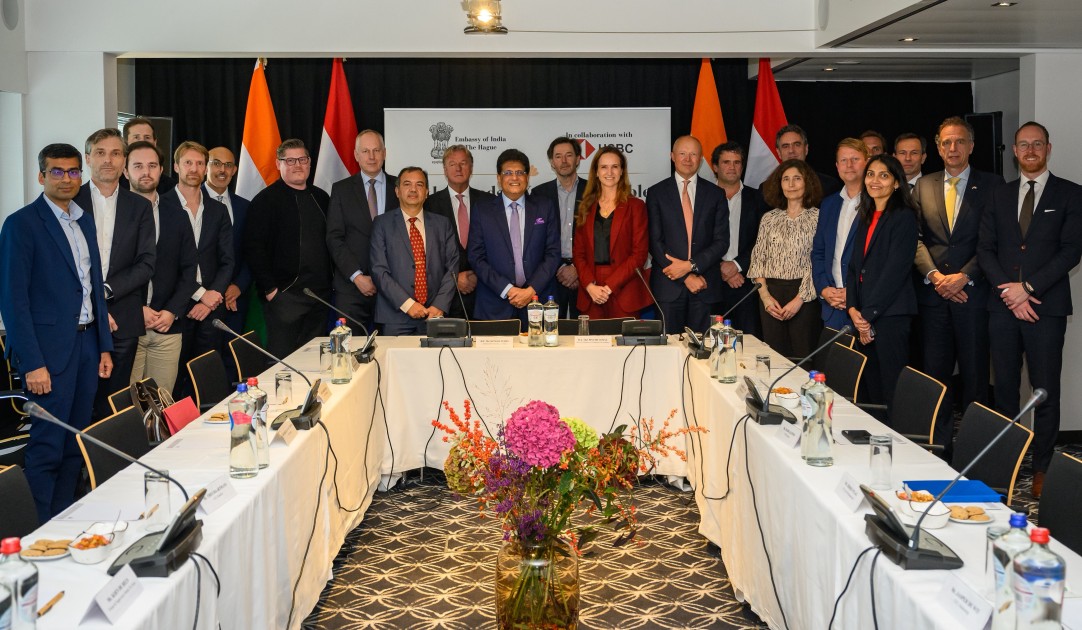
As part of the visit, Shri Piyush Goyal interacted with chief executives and business leaders from the Netherlands at a Business Leaders’ Roundtable. The discussions provided an opportunity to present India’s growth story, reform momentum and expanding investment landscape to the Dutch business community.

The Minister highlighted opportunities for Dutch companies to establish and expand operations in India through investment, co-manufacturing, technology partnerships and joint innovation.

The interaction also reinforced the importance of sustained engagement between policymakers and industry leaders in identifying investment opportunities, addressing business priorities and building long-term commercial partnerships.

Building a Stronger India–Netherlands Economic Partnership

The Minister’s engagements reflect the broadening scope of India–Netherlands economic cooperation, extending beyond conventional trade into advanced technologies, clean energy, manufacturing, infrastructure and strategic supply chains.

By bringing together global technology companies, clean-energy innovators, government representatives and business leaders, the visit seeks to strengthen commercial linkages and encourage greater participation by Dutch companies in India’s growth story.

The discussions also highlight the complementary advantages of the two economies: India’s scale, talent, growing domestic market and expanding manufacturing capabilities, alongside the Netherlands’ technological leadership, innovation ecosystem and expertise in sustainable development.

As both countries seek to strengthen economic resilience and respond to emerging global opportunities, closer cooperation in these strategic sectors can help unlock new investment flows, foster technology partnerships and generate sustainable business opportunities.

The visit marks an important step towards advancing a forward-looking India–Netherlands partnership built on trade, innovation, investment and shared economic prosperity.