Home Blog Page 418

BIMCO: “Shipping needs a different kind of leader today”

LONDON : Shipping has long rewarded technical excellence. The strongest leaders were the ones who understood operations inside out, including chartering, vessels, compliance and performance.

But that model is no longer enough.

When we spoke with Irene Rosberg, Director of the Executive MBA in Shipping and Logistics (The Blue MBA) at Copenhagen Business School (CBS), she pointed to a clear shift:
“There has been a major move from operationally focused leadership to a more strategic and sustainability-oriented model. The role of a leader has moved from managing ships to managing complex issues.”

Today’s leaders are not just managing assets – they are navigating uncertainty.

The technical trap
Many high-performing professionals are promoted because of their technical expertise. Yet leadership requires something different.

“Their technical superiority has often been the source of their success. But that is different from the strategic and people-oriented skills required to be a successful leader.”
The transition demands a mindset shift, from solving problems yourself to empowering others, and from focusing on how things are done to understanding why they are done.

Adaptability is the real competitive advantage
With geopolitical pressures, digital transformation and sustainability demands reshaping shipping, one capability stands out.

“Adaptability is key. In an industry facing constant disruption, you can only survive if you practice adaptability.”
Adaptability is no longer optional. It is essential.

The end of command-and-control
Leadership culture is also evolving.

“There is a need to move from command-and-control to a more inclusive, collaborative and trust-based leadership.”
Employees today expect empowerment. Innovation requires diversity. Performance depends on engagement.

Leaders who still rely purely on hierarchy are increasingly misaligned with the modern maritime workplace.

Can leadership be learned?
The assumption that leaders are simply “born” still exists in parts of the industry.

Irene disagrees.

“Structured leadership training can have a measurable impact. It accelerates individual careers and improves overall organisational performance.”

Leadership capability can be strengthened, refined and expanded, and doing so benefits both the individual and the organisation.

Preparing for the next level
For mid-career professionals aiming higher, Irene’s advice is practical:
“Shift from reactive day-to-day thinking to proactive, long-term strategy. Move from focusing on how work is done to why it is done.”

That mental shift often defines who progresses into senior leadership and who remains operationally excellent but strategically limited.

This April, Irene Rosberg will bring these insights to our Leadership Masterclass in Denmark. She will be joined by senior shipping leaders and expert speakers, offering a comprehensive leadership experience grounded in real-world insight and best practice from across the international maritime sector.
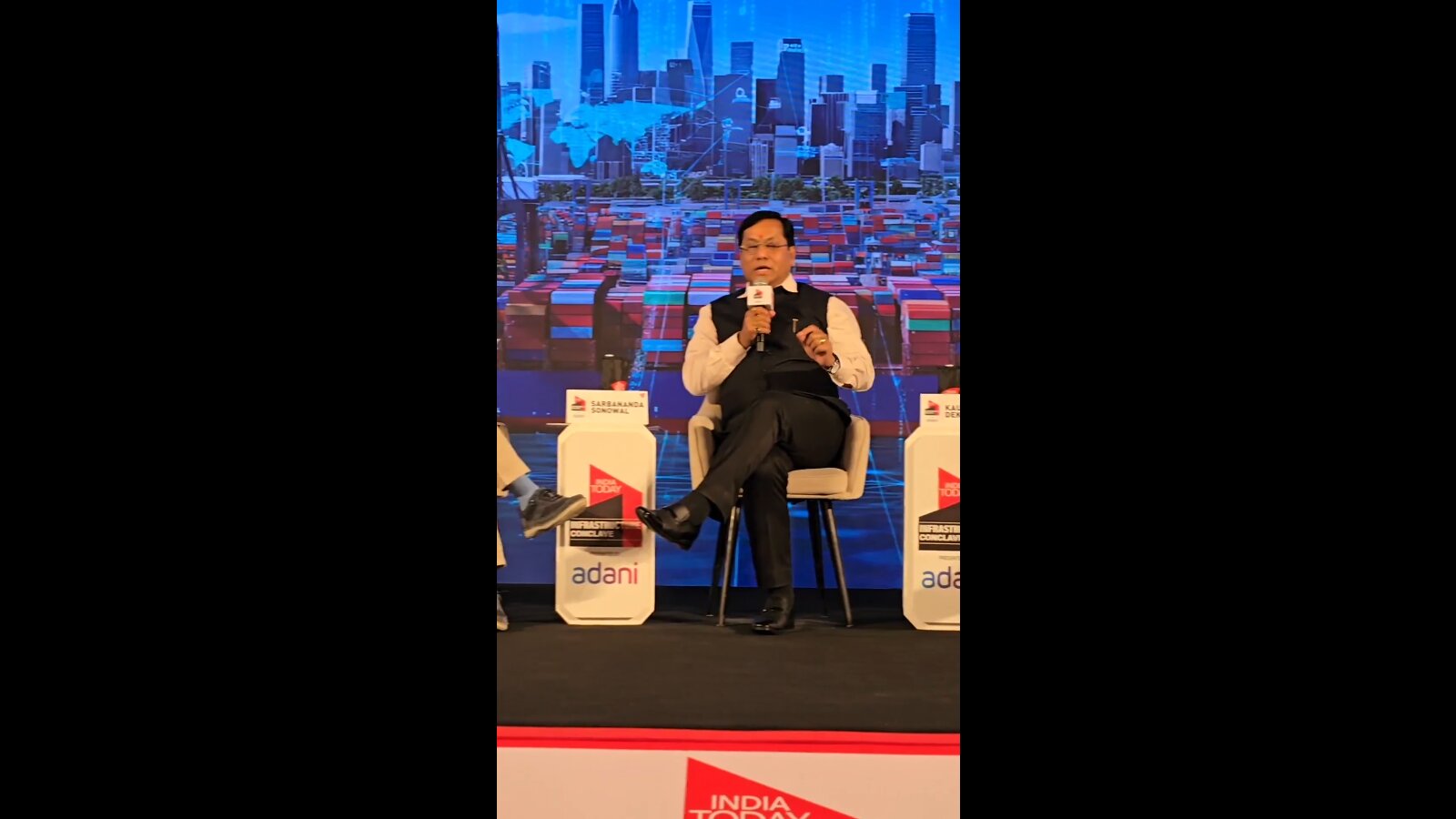
Sarbananda Sonowal highlights India’s Maritime Transformation at India Today Infrastructure Conclave 2026

NEW DELHI : Hon’ble Union Minister for Ports, Shipping and Waterways Shri Sarbananda Sonowal, addressed the ‘India Today Infrastructure Conclave 2026‘ in New Delhi, underscoring the unprecedented transformation underway in India’s maritime and logistics ecosystem.

Speaking at the high-level forum, Shri Sonowal highlighted how a historic infrastructure push, sustained capacity building, and far-reaching digital reforms are driving the rapid expansion of India’s Blue Economy. He emphasized that under the visionary leadership of Hon’ble Prime Minister Shri Narendra Modi, India’s maritime sector has emerged as a key pillar in the nation’s journey towards Viksit Bharat.

Transforming India’s Maritime Landscape

The Minister outlined major initiatives that are reshaping the sector, including:

  • Modernisation and capacity augmentation of major ports
  • Development of world-class port infrastructure under the Sagarmala framework
  • Enhanced multimodal connectivity linking ports with railways, highways, and inland waterways
  • Promotion of coastal shipping and inland water transport to reduce logistics costs
  • Green port initiatives focused on sustainability and decarbonisation

He noted that India’s ports are witnessing consistent growth in cargo handling capacity and operational efficiency, supported by mechanisation, automation, and policy reforms aimed at ease of doing business.

Digital Reforms & Ease of Doing Business

Shri Sonowal stressed that digital transformation has been central to the sector’s evolution. Key reforms such as port community systems, paperless documentation, real-time cargo tracking, and single-window clearances have significantly reduced turnaround times and improved transparency.

The Minister highlighted that these reforms have strengthened India’s competitiveness in global trade while creating a more investor-friendly maritime ecosystem.

Driving the Blue Economy Vision

Reaffirming the Government’s commitment to sustainable growth, Shri Sonowal stated that India’s Blue Economy strategy integrates port-led development, shipbuilding, cruise tourism, fisheries, and maritime innovation.

He emphasized that India’s strategic geographic location, expanding port capacity, and robust policy framework are positioning the country as a global maritime hub.

Concluding his address, the Minister reiterated that the maritime sector is not only facilitating trade but also generating employment, boosting coastal development, and contributing significantly to India’s economic resilience.

The participation of Shri Sonowal at the Conclave reflects the Government’s continued focus on infrastructure-led growth as a foundation for building a developed and self-reliant India.

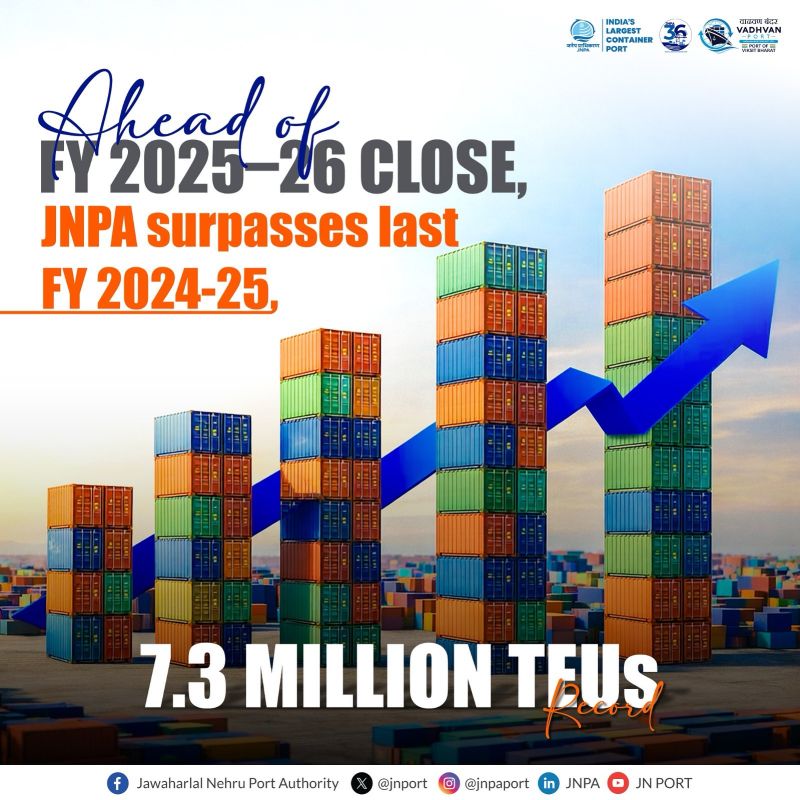
JNPA sets new all-time high with record container throughput

MUMBAI : Jawaharlal Nehru Port Authority (JNPA) has achieved a historic milestone by surpassing its previous all-time high container throughput of 73,01,509 TEUs, setting a new benchmark with handling of 73,31,054 TEUs during the current financial year.

With the financial year still underway, this remarkable achievement reflects the port’s operational excellence, robust infrastructure, and sustained growth trajectory. The milestone reinforces JNPA’s position as India’s leading container port and a critical gateway for the nation’s international trade.

The record performance has been driven by:

Enhanced terminal productivity across all container terminals

Seamless coordination among port stakeholders

Increased EXIM cargo volumes

Improved hinterland connectivity through rail and road networks

Strategic initiatives aimed at capacity augmentation and digitization

JNPA continues to benefit from its state-of-the-art container terminals, including advanced automation systems, deep draft berths, and efficient vessel turnaround mechanisms. The port’s strong connectivity to major industrial hubs across Maharashtra, Gujarat, and North India has further contributed to sustained cargo growth.

Officials noted that the steady rise in container handling volumes is also a reflection of growing confidence among global shipping lines, exporters, and importers who rely on JNPA as their preferred gateway.

With continued focus on infrastructure expansion, sustainability initiatives, and logistics integration, JNPA is poised for an even stronger finish to the financial year. The achievement aligns with India’s broader vision of strengthening maritime trade under the national port-led development framework.

This new record not only marks a significant operational milestone but also underscores JNPA’s commitment to enhancing India’s global trade competitiveness.

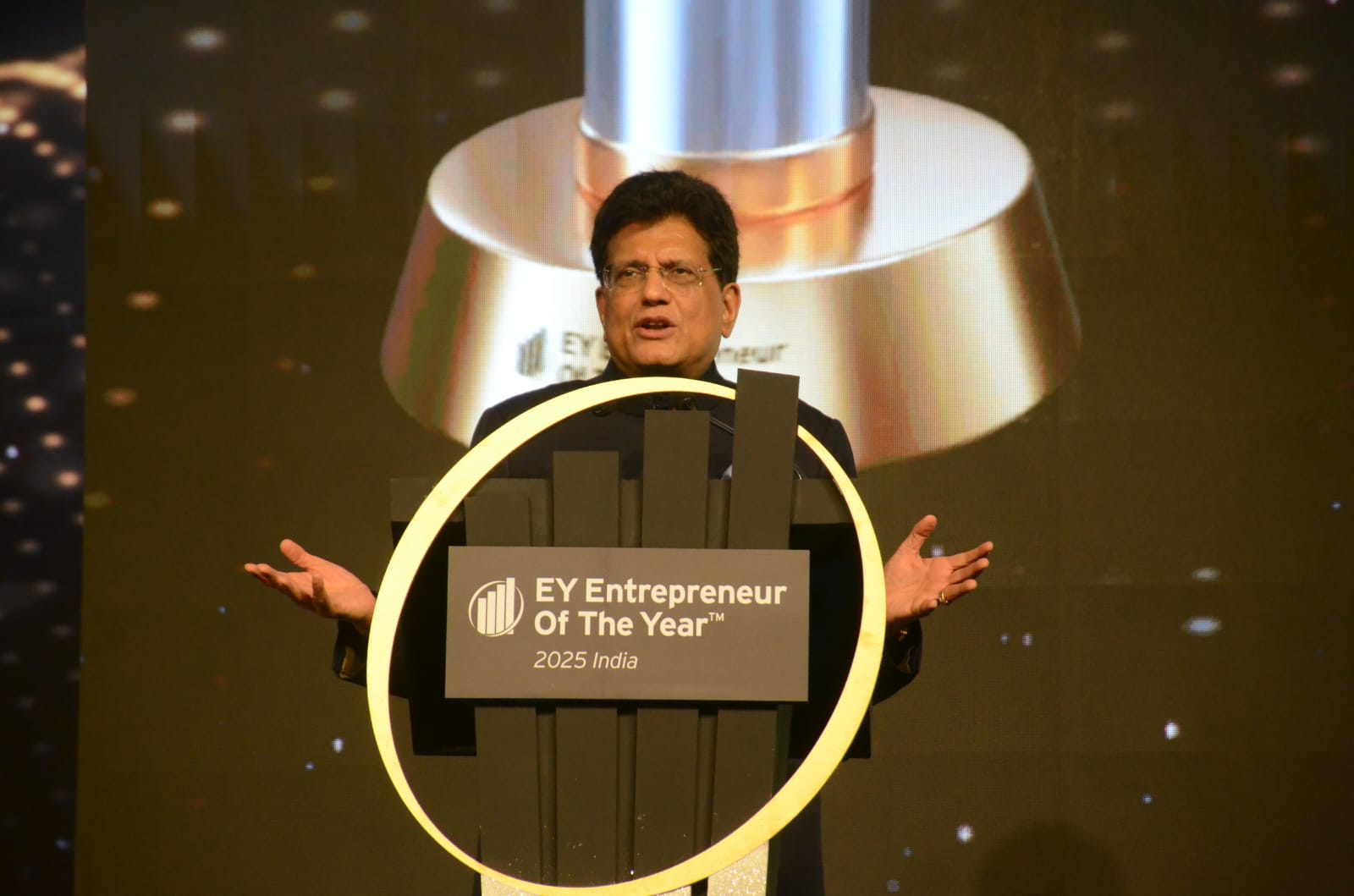
Piyush Goyal highlights youth power, AI and Global Trade while giving away the EY Entrepreneur of the Year Awards in Mumbai

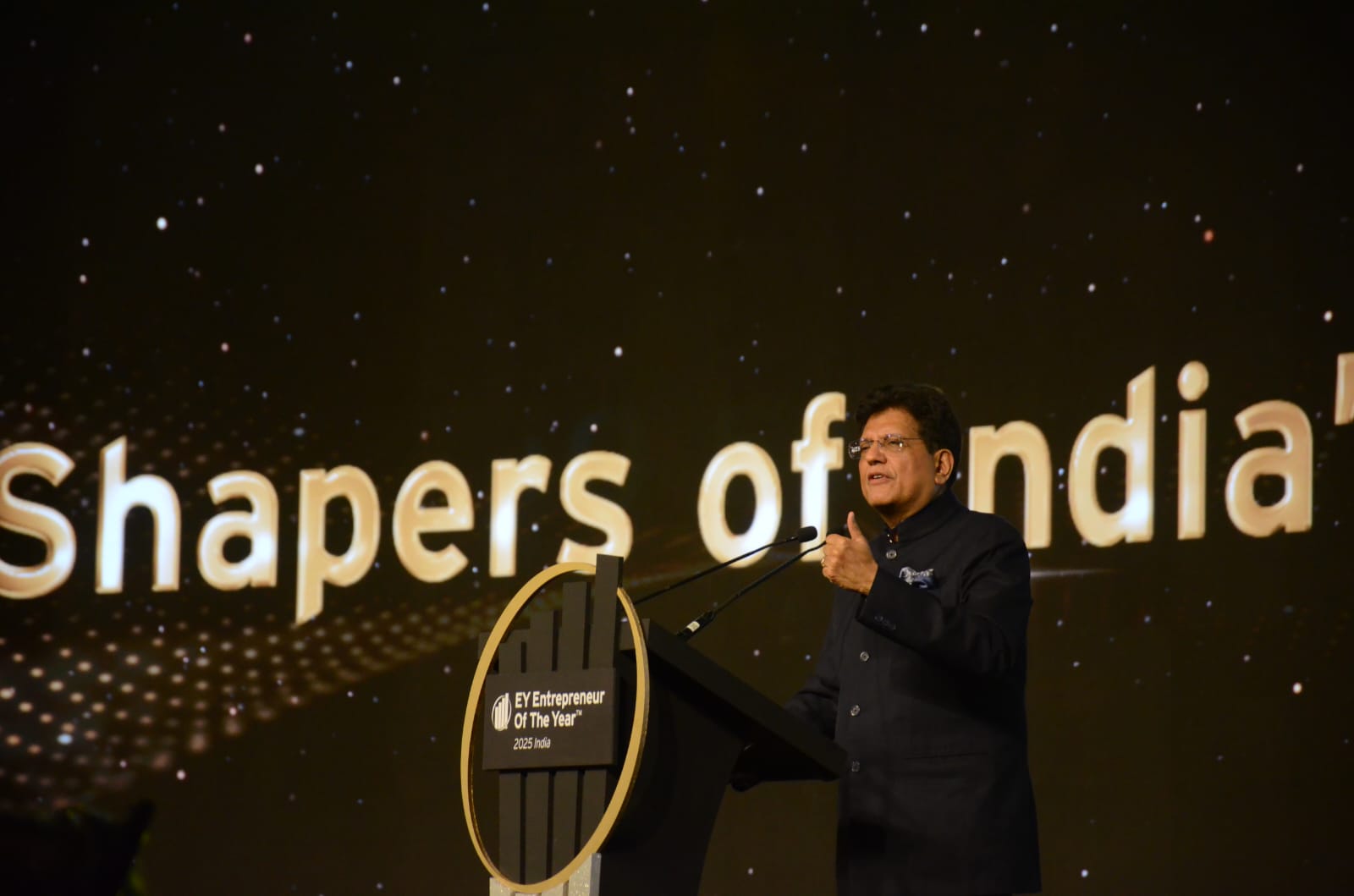
MUMBAI : Union Minister of Commerce and Industry Shri Piyush Goyal delivered the keynote address at the 27th edition of the EY Entrepreneur Of The Year Awards, here in Mumbai on Wednesday evening. The Union Minister gave away the awards in the program that brought together leading entrepreneurs, industry captains and startup founders from across the country.

Addressing the gathering, Shri Goyal underscored that India’s youth and human capital are at the heart of the nation’s growth story. Reflecting on interactions with founders and business leaders, the Union Commerce and Industry Minister said that passion, innovation and skilled manpower are India’s biggest competitive advantages. Referring to the recently concluded AI Summit in New Delhi, the Union Minister stated,  the global response demonstrated the depth and maturity of India’s innovation ecosystem and technological capabilities.

WhatsAppImage2026 02 25at10.29.58PMI7P2 Piyush Goyal highlights youth power, AI and Global Trade while giving away the EY Entrepreneur of the Year Awards in Mumbai

On concerns around Artificial Intelligence and employment, Shri Goyal said, AI would transform jobs rather than eliminate them. He noted that India produces around 2.3 million STEM graduates every year and possesses an unmatched pool of young, adaptable and ambitious talent. Drawing parallels with the Y2K era, he described AI as the next inflection point that will create better opportunities, higher-value work, stronger exports and deeper global integration for Indian businesses, while also increasing demand for skilled professionals in areas such as cybersecurity, data protection and system governance.

The Union Commerce and Industry Minister also highlighted India’s expanding global trade footprint, stating that the country has concluded nine Free Trade Agreements covering 38 nations, giving Indian businesses preferential access to nearly two-thirds of global trade. These agreements, will help Indian goods, services, agricultural and fisheries products, and labour-intensive sectors reach new markets, integrate into global value chains and enhance talent mobility, he further stated.

Emphasising that self-reliance does not mean isolation, Shri Goyal said, Aatmanirbhar Bharat is about building resilient, trusted and diversified supply chains through global engagement. Calling upon entrepreneurs and industry leaders to take global opportunities to MSMEs, farmers, exporters and fishermen across the country, Union Minister Shri Goyal expressed confidence that young India will lead the nation through Amrit Kaal towards becoming a developed economy by 2047.

Congratulating the award winners, Shri Goyal said India’s growth journey will continue relentlessly, powered by its entrepreneurs and youth, and urged all stakeholders to work collectively to realise the vision of Viksit Bharat.

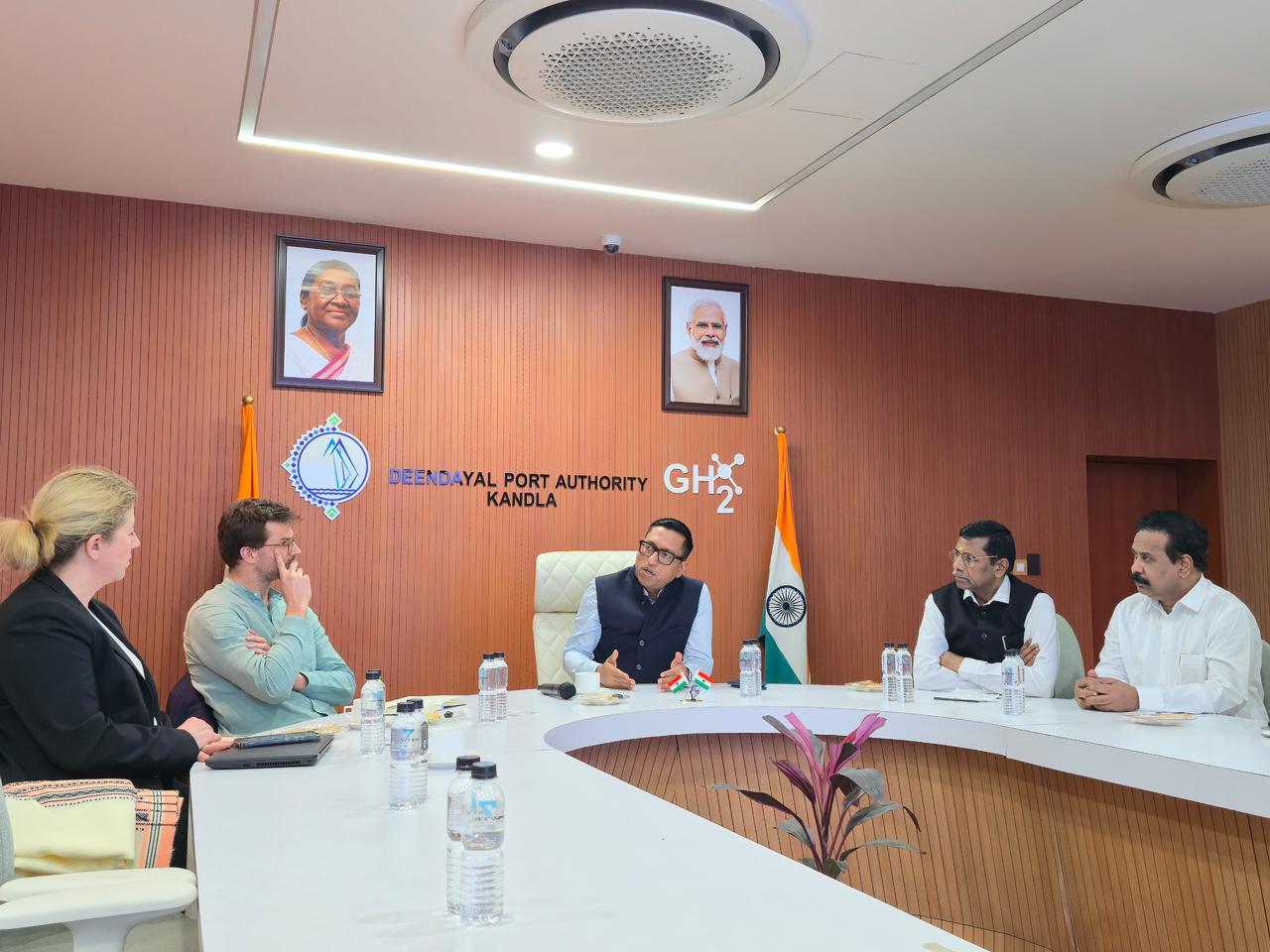
Belgian Hydrogen Council delegation visits DPA Kandla, explores Green Hydrogen Collaboration

GANDHIDHAM : A high-level delegation from the Belgian Hydrogen Council visited **Deendayal Port Authority (DPA), Kandla on Wednesday to explore potential avenues of collaboration in the rapidly emerging Green Hydrogen sector.

The delegation was warmly received by Shri Nilabhra Dasgupta, IRS, Deputy Chairman, DPA, who led a comprehensive interaction outlining the Port’s strategic roadmap for the development of Green Hydrogen infrastructure and allied clean energy initiatives at Kandla.

During the meeting, discussions focused on:

Development of Green Hydrogen production, storage and bunkering facilities

Opportunities for technology transfer and joint research initiatives

Investment prospects in port-led clean energy ecosystems

Strengthening Indo-Belgian maritime sustainability cooperation

Shri Nilabhra Dasgupta highlighted DPA’s commitment to aligning with the Government of India’s vision for a low-carbon economy and transforming Kandla into a future-ready green energy hub. He emphasized that port-led industrial clusters can play a catalytic role in scaling up Green Hydrogen adoption for shipping, logistics, and industrial use.

The delegation also visited the Make-in-India Green Hydrogen Plant at Kandla, where they witnessed firsthand the ongoing initiatives aimed at promoting indigenous clean fuel production. The plant demonstrates DPA’s proactive approach toward decarbonization, operational efficiency, and sustainable maritime growth.

Members of the Belgian delegation appreciated DPA’s forward-looking initiatives and expressed keen interest in exploring structured partnerships, technical collaboration, and long-term investment opportunities in the Green Hydrogen value chain.

The visit marks a significant step towards strengthening international cooperation in sustainable port development and clean energy transition, reinforcing DPA’s position as a pioneer in India’s green maritime transformation.

India has concluded nine free trade agreements covering 38 nations: Piyush Goyal

MUMBAI : India has concluded nine free trade agreements (FTAs), covering 38 nations, enabling the country’s shipments to get preferential access to nearly two-thirds of global markets, Commerce and Industry Minister Shri Piyush Goyal said on Wednesday.

Addressing the EY Entrepreneur Of The Year Awards ceremony here, Goyal said that these pacts will help Indian goods, services, agricultural and fisheries products, and labour-intensive sectors reach new markets, integrate into global value chains and enhance talent mobility.

He said that every country wants to enter into a trade deal with India and added that “I have had an engagement with Chile, which wants to conclude the FTA this week. We are launching (FTA talks with) Canada, hopefully when the prime minister (Mark Carney) is here on Monday.”

He said that India should be able to finalise the Terms of Reference and launch FTA negotiations with Canada.

Goyal underscored that India’s youth and human capital are at the heart of the nation’s growth story.

Reflecting on interactions with founders and business leaders, he said passion, innovation and skilled manpower are India’s biggest competitive advantages.

About the recently-concluded AI Impact Summit in New Delhi, the minister said the global response demonstrated the depth and maturity of India’s innovation ecosystem and technological capabilities.

On concerns around artificial intelligence and employment, Goyal said AI would transform jobs rather than eliminate them and noted that India produces around 2.3 million STEM (Science, Technology, Engineering, and Mathematics) graduates every year and possesses an unmatched pool of young, adaptable and ambitious talent.

Drawing parallels with the Y2K era, he described AI as the next inflection point that will create better opportunities, higher-value work, stronger exports and deeper global integration for Indian businesses, while also increasing demand for skilled professionals in areas such as cybersecurity, data protection and system governance.

Emphasising that self-reliance does not mean isolation, Goyal said Atmanirbhar Bharat is about building resilient, trusted and diversified supply chains through global engagement.

Calling upon entrepreneurs and industry leaders to take global opportunities to MSMEs, farmers, exporters and fishermen across the country, he expressed confidence that young India will lead the nation through Amrit Kaal towards becoming a developed economy by 2047.

Earlier in the day, participating in a panel discussion at the event, veteran banker and chairman of Gift City, Uday Kotak, said that AI is for real, and we can debate on the time and speed of change and disruption.

Stating that the SaaS (software-as-service) companies are in the ‘Vishnu phase’, Kotak said that software application companies may have moved to the ‘Maheshwari phase’.

He also said that Indian banks face an intermediary cost of 250 bps.

There is very high costs for regulations like CRR, Kotak said and added, “We must make sure there is no colonisation due to investments by the US and China.” He also urged that Indian businesses should invest 10 per cent of their revenue into R&D.

Sajjan Jindal, Chairman of the JSW Group, said that AI will only improve the productivity of businesses.

He said that costs will come down when productivity improves.

Jindal, however, said that India Inc was not spending enough in R&D while agreeing with Uday Kotak that the Indian companies were kind of living “Quarter se Quarter tak”.

He further said, “We have to learn from China on expansion. We are still 4-5 years away from having the bullet train started. China has thousands of kilometres of bullet trains running.” He said that the “government has to decide on how to learn from China. We need to take our relationship to another level.”

VOC Port Museum to showcase ancient trade routes, promote maritime sector: Chairman

TUTICORIN : The VOC Port museum project aims to showcase the historical importance of Tuticorin as a trade centre in ancient times, promote tourism and preserve India’s maritime history, a top port official said.

The museum will depict trade links of Tuticorin port with various countries dating back as long as 123 AD to the evolution of sea-based shipments during the pre- and post-British era, V.O. Chidambaranar Port Authority Chairman Susanta Kumar Purohit said.

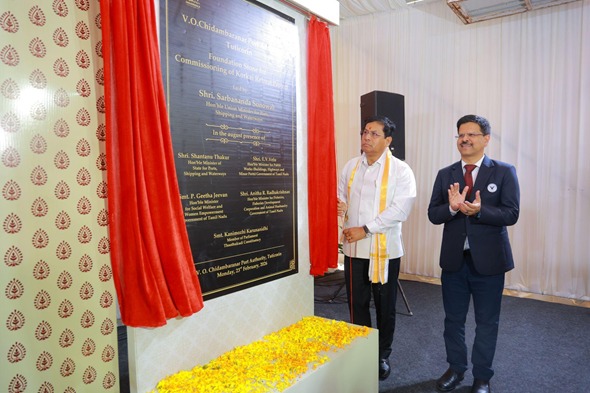
The museum has been inaugurated as part of Rs 1,500 crore worth of projects launched by Union Minister for Port, Shipping and Waterways Shri Sarbananda Sonowal in Tuticorin, Tamil Nadu on Monday. Purohit said the Maritime Heritage Museum is dedicated to freedom fighter VO Chidambaranar.

He said the project will deepen public awareness of India’s maritime history, promote tourism, and strengthen community engagement across the region.

“The history of Tuticorin port dates back as early as 123 AD. It was a major trade centre engaged in maritime trade with Western and Eastern countries. Tuticorin has been a centre for pearl fishery for centuries. Tuticorin was declared a minor anchorage Port in 1868,” Purohit said.
In ancient times, mainly pearls and spices were exported to Rome, China and several countries of South East Asia, he said.

The museum will share the struggles of freedom fighter V.O. Chidambaranar, who boycotted British Ships operating between Tuticorin and Colombo, and launched the Swadeshi Steam Navigation Company in 1906, which operated two vessels from Tuticorin to Colombo.

After Independence, the minor Port of Tuticorin handled a variety of cargo for the neighbouring countries like Sri Lanka, Maldives etc. and the coastal regions of India, he said.
Today, the port imports and exports wind blades, coal, iron ore, agri products, etc.

The Tuticorin Port Trust was renamed as V O Chidambaranar Port Trust in February 2011 and subsequently as V.O.Chidambaranar Port Authority in January 2022.

V.O. Chidambaranar Port is one of the major ports in the country. From April 2025 to January 2026, cargo handling increased 6 per cent to 35.97 million tonnes.Container volumes rose 9.40 per cent to over 7.16 lakh TEUs in the April-January period of the current fiscal year.

Source : PTI

PSA Antwerp receives five mega STS cranes for Europa Terminal under Project Emerald

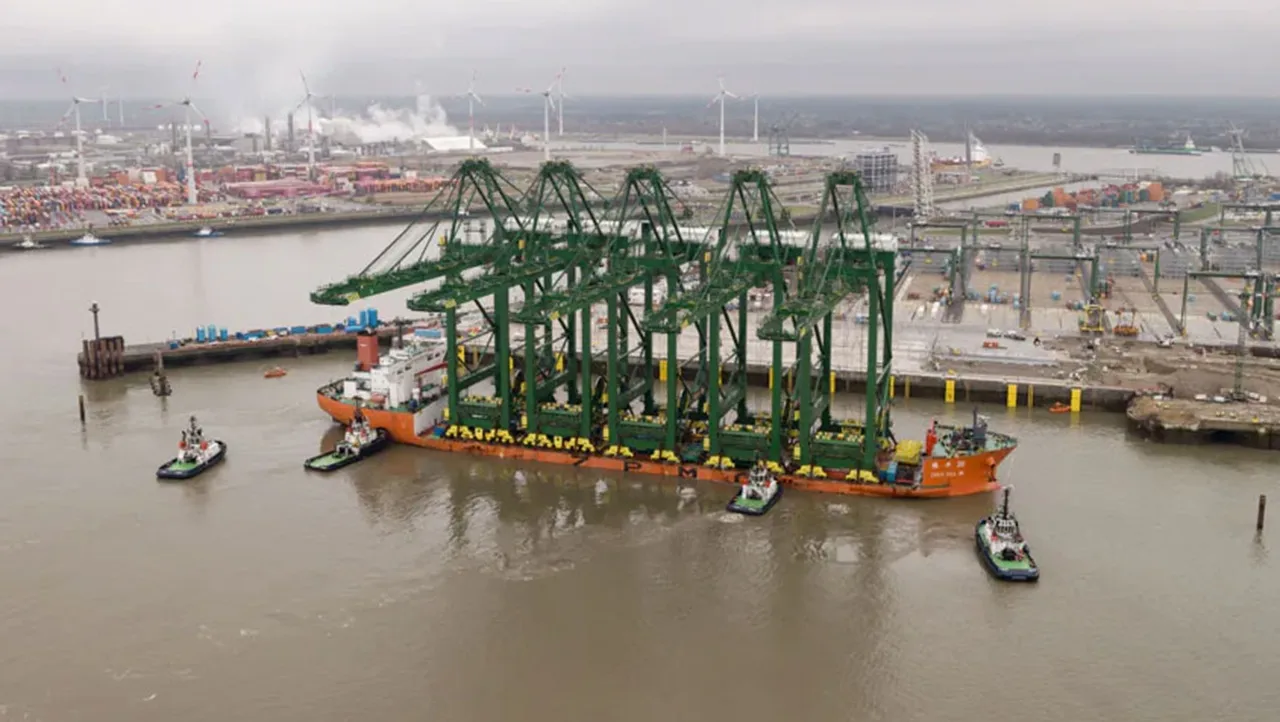
ANTWERP : PSA Antwerp has marked a key milestone in its Project Emerald with the arrival of five new mega ship-to-shore cranes at the Europa Terminal. The cranes were guided over the Scheldt river by tugboats.
The new cranes are purpose-built to handle the world’s largest container vessels and represent the largest STS cranes ever ordered for the Port of Antwerp. Their arrival supports the terminal’s preparation for the next generation of ultra-large container ships.

Capacity and operational performance
Once installed, the cranes will stand 52 metres high with an outreach of 71.8 metres, enabling them to handle vessels up to 26 containers wide. They feature a dual-hoist lifting capacity of up to 112 tonnes, designed to increase operational efficiency, berth productivity, and service reliability.

The cranes are a core component of the transformation of Europa Terminal, a joint project between PSA Antwerp and Port of Antwerp‑Bruges.

Safety, technology, and workforce
The equipment includes anti-sway systems, remote diagnostics, high-precision controls, and integrated digital monitoring. Operator cabins are ergonomically designed, and training will include a virtual-reality environment to support skills development and safety.

Integrated lashing platforms allow coning and deconing activities to take place on elevated platforms, creating separation between lashing teams and terminal traffic to reduce operational risk.

Sustainability features
The cranes are equipped with energy-efficient electric drives, regenerative power systems, and smart-grid compatibility, aimed at reducing energy consumption and emissions during vessel handling.

Project timeline and impact
The delivery marks progress in Phase 1 of Project Emerald, which combines infrastructure upgrades — including quay wall deepening, reorientation, and extension — with technology and sustainability measures.

According to Edward Tah, the project will increase Europa Terminal capacity by 800,000 TEUs annually and enhance operational efficiency, reliability, and sustainability.

Johan Klaps stated that the cranes demonstrate preparations to keep the port competitive and ready to receive the largest container ships. Work on the new quay wall is ongoing, with preparations underway for initial operations at the renovated section.

Following offloading, the cranes will undergo assembly, testing, and safety checks. They are expected to become operational in the second half of 2026, subject to project progress.

India becoming global manufacturing hub for smartphones as exports hit USD 30 billion: Ashwini Vaishnaw

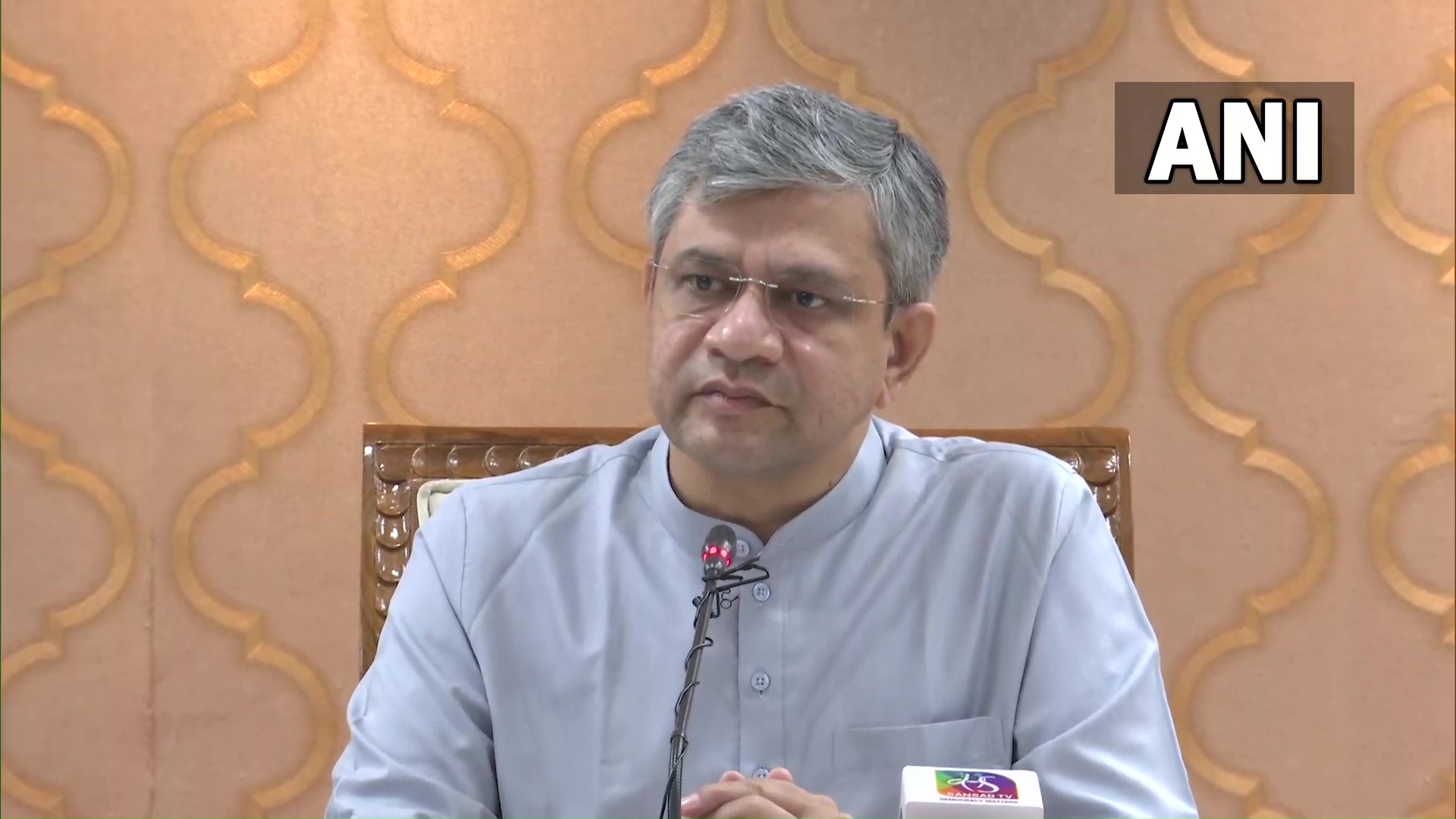
NEW DELHI : India is becoming the smartphone manufacturing factory for the world, with exports for the calendar year 2025 (January to December) reaching USD 30 billion, said Union Electronics and IT Minister Shri Ashwini Vaishnaw. In a social media post on X, the minister said, “India is becoming the smartphone manufacturing factory for the world.” Sharing the data, he added that the smartphone exports for the calendar year 2025 (January to December) reached USD 30 billion.

Last month, Vaishnaw had highlighted that India achieved record electronics exports of worth USD 47 billion (Rs 4.15 lakh crore) in 2025.
The Minister also noted that India’s electronics exports have grown 11x since 2014-15, when the BJP government assumed power.

Electronics is now India’s third-largest export item, providing 25 lakh new jobs, strong women’s participation, opportunities for MSMEs, and long-term skilling for the youth.
India saw a 6X ramp-up in electronics production, and exports increased 8X over the last 11 years.
Electronic goods production rose from Rs 1.9 lakh crore in 2014-15 to Rs 11.3 lakh crore in 2024-25. Exports during the period rose from Rs 0.38 lakh crore to Rs 3.3 lakh crore.

The PLI Scheme for Large Scale Electronics Manufacturing (LSEM) attracted over Rs 13,475 crore in investment, with production of Rs 9.8 lakh crore achieved, the Union minister said earlier in the year.
Notably, India is the second-largest mobile manufacturing country in the world. Mobile manufacturing units in India have risen from 2 in 2014-15 to about 300 now. In fact, 99.2 per cent of mobile handsets sold in India are ‘Made in India’.
Mobile phone production rose from Rs 0.18 lakh crore to Rs 5.5 lakh crore, while its exports rose from negligible Rs 0.01 lakh crore to Rs 2 lakh crore, reflecting the ‘Make in India’ initiative.
The government’s initial focus was on finished products. Now, the government is aiming to build capacity for modules, components, sub-modules, raw materials, and the machines that make them. The Electronics Component Manufacturing Scheme is supporting this shift.

Source : ANI

Hyundai Motor Company commences automobile exports from Talegaon Plant via Mumbai Port

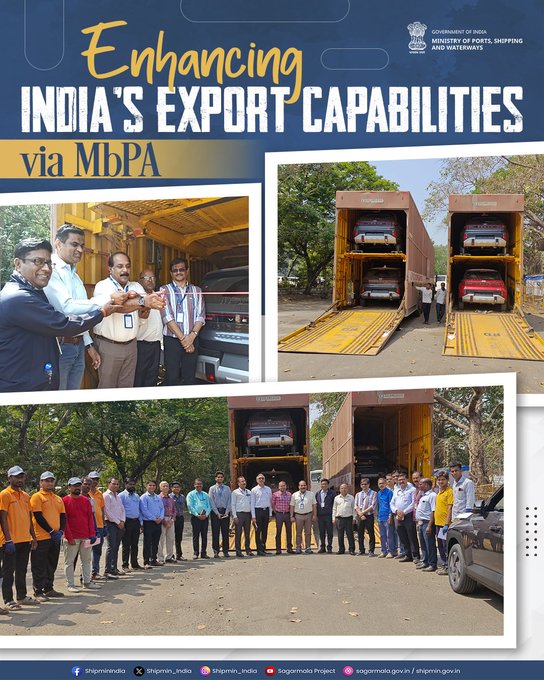
MUMBAI : In a significant boost to India’s automobile export landscape, Hyundai Motor Company has officially commenced automobile exports from its Talegaon manufacturing facility through Mumbai Port Authority, marking the company’s first-ever car export operations from the iconic Gateway Port of India.

The inaugural shipment was ceremonially flagged off in the presence of senior officials from Hyundai Motor India and Mumbai Port Authority, symbolizing the beginning of a new chapter in port-led automotive trade and logistics efficiency.

This strategic move aligns with India’s growing stature as a global automobile manufacturing and export hub. The Talegaon plant, equipped with advanced manufacturing capabilities and global quality standards, will now leverage Mumbai Port’s well-established maritime connectivity to serve key international markets.

Strengthening India’s Export Ecosystem

The commencement of exports from Mumbai Port underscores:

Enhanced port-manufacturer collaboration

Optimized supply chain efficiency

Reduced transit timelines for global shipments

Strengthening of Western India as a key automotive export corridor

Mumbai Port Authority has undertaken focused measures to streamline automobile handling infrastructure, improve cargo turnaround time, and ensure seamless roll-on/roll-off (RoRo) operations. The port’s strategic location, robust connectivity to industrial clusters, and modern cargo-handling systems make it a preferred gateway for automobile exports.

A Boost to ‘Make in India’

This development reinforces India’s “Make in India” vision by expanding global outreach for domestically manufactured vehicles. Hyundai’s decision to diversify export gateways further enhances resilience and flexibility in its logistics network while contributing to higher port throughput and trade volumes.

Officials highlighted that the collaboration is expected to generate additional economic activity, create employment opportunities across logistics and ancillary sectors, and strengthen India’s competitive positioning in the global automobile market.

Looking Ahead

With global demand for Indian-manufactured vehicles steadily rising, this milestone is expected to pave the way for increased export volumes in the coming months. The partnership between Hyundai Motor Company and Mumbai Port Authority represents a progressive step toward integrated port-led development and reinforces India’s maritime infrastructure as a catalyst for international trade growth.