Home Blog Page 431

Govt approves road projects worth over Rs 11,000 crore in Maha, Gujarat & Telangana

NEW DELHI : The government has approved road projects worth more than Rs 11,000 crore in Maharashtra, Telangana and Gujarat, according to official statements.

The Cabinet Committee on Economic Affairs on Friday approved the rehabilitation and upgradation of the Ghoti-Trimbak (Mokhada)-Jawhar-Manor-Palghar section of NH-160A in Maharashtra at a total capital cost of Rs 3,320.38 crore.

The region west of Nashik, particularly around Ambad and Satpur, hosts a dense cluster of industrial units developed by Maharashtra Industrial Development Corporation. This generates significant freight traffic, the Ministry of Road, Transport and Highways (MoRTH) said in a statement on Saturday.

The CCEA approved the rehabilitation and upgradation of the 154.635 km section of NH-160A in Maharashtra on Engineering, Procurement and Construction (EPC) mode, MoRTH said. The project has been proposed in line with the PM GatiShakti principles and will connect 6 PM GatiShakti Economic Nodes, 01 Social Nodes and 8 Logistics Nodes in the State of Maharashtra. This will have a positive impact on the Logistic Performance Index (LPI) of the country.

In a separate release, MoRTH said that the CCEA also approved construction of 4-lane sections of Dhamasiya-Bitada/ Movi and Nasarpore-Malotha in Gujarat at Rs 4,583.64 crore.

The 107.67-km long project is a part of NH-56 which starts at Nimbahera in Rajasthan and traverses through Dahod District in Gujarat, Alirajpur District in the State of Madhya Pradesh and then re-enters Gujarat near Chhota Udepur District, terminating at its junction with NH-48 near Vapi.

The project is designed for 100 km/h, enabling 70 km/h average speed which will cut travel time by 40 per cent – from 2.5 to 1.5 hours. The CCEA also approved widening of National Highway-167 with a total capital cost of Rs 3,175.08 crore in Telangana, MoRTH said in a separate release.

The project from Gudebellur to Mahabubnagar on the Hyderabad-Panaji Economic Corridor to 4-Lane Standard in Telangana with a total project length of 80.01 km and total capital cost of Rs 3175.08 crore will be executed in hybrid annuity mode (HAM) under NH (O) scheme (National Highways (Original).

Sugar exports reach 2.01 lakh tonnes till Feb of 2025-26 marketing year: AISTA

NEW DELHI : India has exported 2,01,547 tonnes of sugar through February in the current 2025-26 marketing year, with the United Arab Emirates the top destination, the All India Sugar Trade Association (AISTA) said on Monday.

Sugar exports remain under government control through quotas distributed proportionally among mills. The central government has approved total exports of 2 million tonnes for the 2025-26 marketing year (October-September), including an additional 500,000 tonnes permitted recently.

White sugar accounted for 163,000 tonnes of total shipments, with refined sugar making up 37,638 tonnes, AISTA said in a statement. The UAE received the largest volume at 47,006 tonnes, followed by Afghanistan with 46,163 tonnes, Djibouti with 30,147 tonnes, and Bhutan with 20,017 tonnes.

India’s sugar production is estimated to rise 13 per cent to 29.6 million tonnes in the 2025-26 marketing year ending September, excluding diversion for ethanol, AISTA said in its first estimate for the marketing year.

The trade body welcomed the government’s decision to allow the additional 500,000 tonnes of exports on a pro-rata basis to willing mills.

Unlike the initial 1.5 million tonne quota, which could be exchanged between mills, the new allocation cannot be swapped, AISTA said.

“This two-tier system will facilitate some export of sugar. Now the genuine exporting mills need not pay any premium to mills sitting idle on tradable quota,” AISTA Chairman Praful Vithalani said.

JSW returns to Wuhu Shipyard for more bulkers

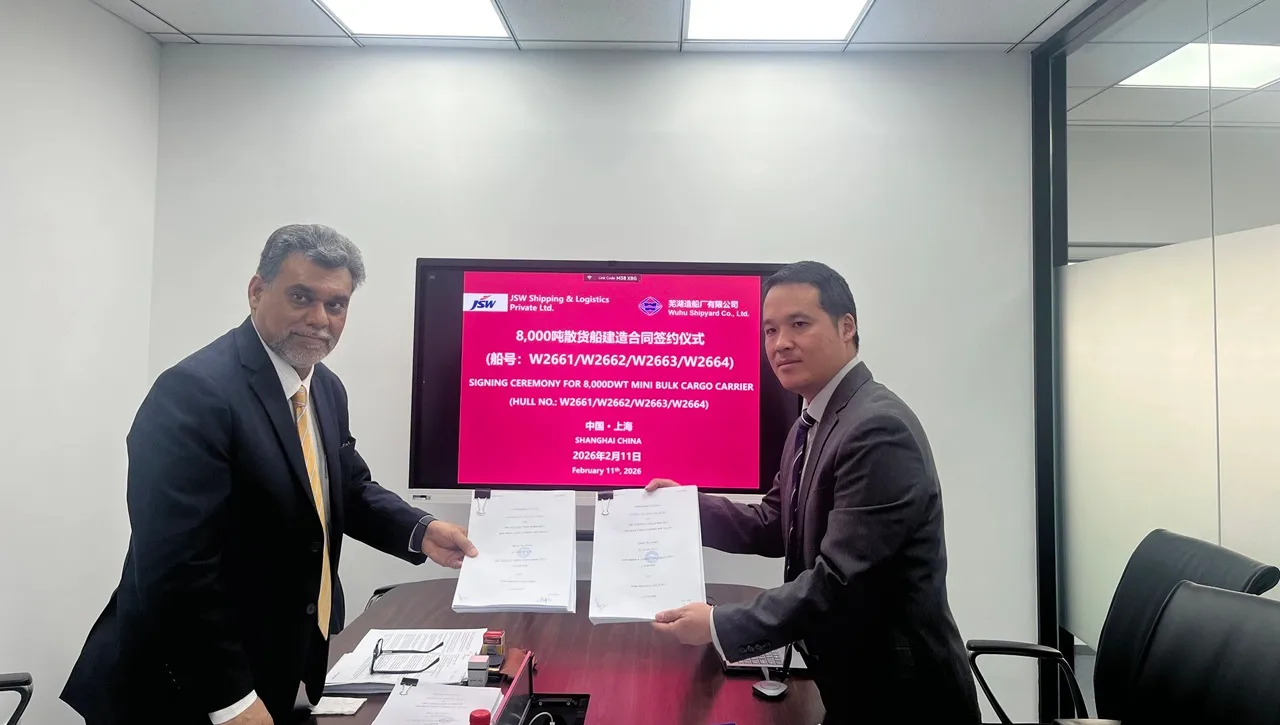
MUMBAI : JSW and Wuhu Shipyard have signed a new contract for four 8,000 dwt general cargo ships, marking their fourth collaboration following the successful delivery of ten bulk carriers.

Wuhu Shipyard said that as a leading industrial conglomerate and globally recognised shipowner in India, JSW Group’s repeated orders stand as strong proof of the shipbuilder’s technological expertise, construction quality, and reliable performance.

The newly contracted vessels measure 122 meters in overall length, 20 metres in molded breadth, and 7.2 metres in molded depth. Featuring a double bottom structure, the ships are equipped with a conventional diesel engine propulsion system, adopting a twin engine, twins crew and twin rudder arrangement.

Designed with two cargo holds and hydraulic folding hatch covers, the vessels are classed by the Indian Register of Shipping (IRS) and are suitable for the carriage of bulk cargoes in India’s domestic coastal waters.

With excellent economic efficiency and flexible, reliable operation, these new ships will further optimize JSW Group’s fleet structure and enhance the efficiency of its global logistics operations.

Source : Seatrade Maritime

DG Shipping ensures safe repatriation of Indian Seafarers; Reviews Overseas Detention and Abandonment Cases

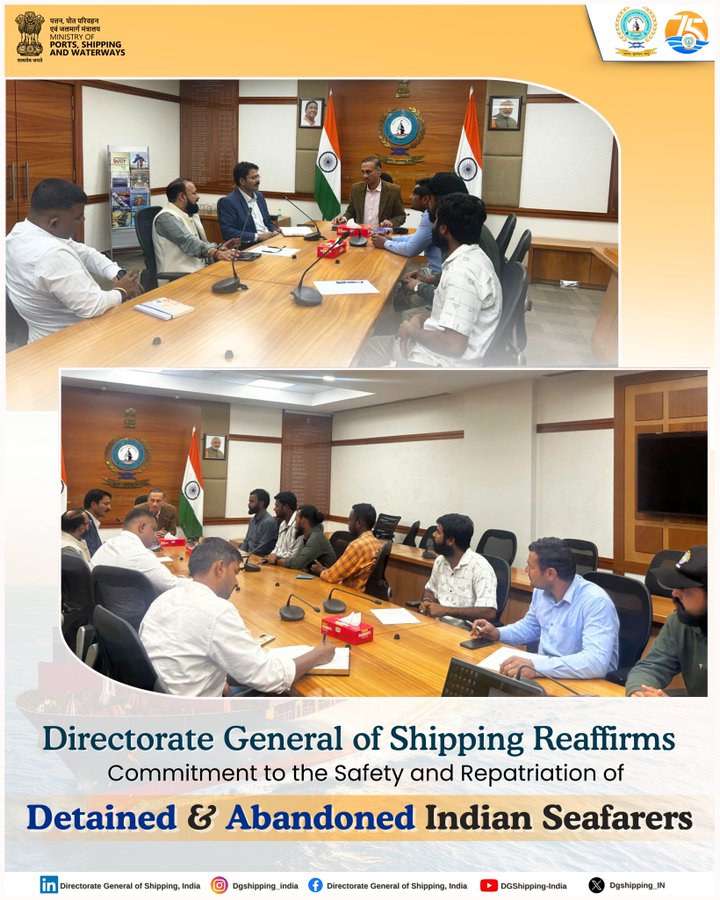
MUMBAI : Directorate General of Shipping, under the chairmanship of Additional Director General Shri Sushil Mansing Khopde, convened a high-level review meeting to examine recent cases involving Indian Seafarers facing detention and abandonment overseas.

The meeting reaffirmed DG Shipping’s unwavering commitment to safeguarding the safety, dignity, and timely repatriation of every Indian seafarer serving across global waters.

Successful Repatriations
In the case of Valient Roar, eight Indian seafarers who had been under detention were successfully repatriated to India. Following their return, the seafarers visited DG Shipping headquarters for a comprehensive debriefing session. During the interaction, they shared the full sequence of events and challenges encountered during the period of detention, offering valuable insights into the operational and legal complexities involved in such situations.

Similarly, in the case of MT Kashi, seven Indian seafarers have been successfully repatriated through coordinated efforts undertaken by the Directorate.

In another case concerning Reem Akheelej, seven Indian seafarers who were detained onboard the vessel have also been safely brought back to India. Upon arrival, they were invited to DG Shipping for a structured debriefing session to document their experiences and assess any additional support requirements.

Strengthening Institutional Response
These cases underscore the critical importance of a coordinated institutional response, robust legal preparedness, and sustained engagement with international stakeholders to protect the rights and welfare of Indian seafarers. The debriefing exercises will contribute to strengthening policy measures, enhancing preventive mechanisms, and improving crisis-response protocols.

DG Shipping reiterated its resolute commitment to standing by Indian seafarers in distress, ensuring that timely intervention, diplomatic coordination, and legal support mechanisms remain firmly in place.

“We remain steadfast in our mission — because every seafarer matters.”

NGT upholds environmental clearance for Great Nicobar project, directs strict compliance with EC conditions

NEW DELHI : The National Green Tribunal (NGT) on Monday directed authorities to ensure full and strict compliance with environmental clearance (EC) conditions while disposing of multiple applications challenging the Great Nicobar Island development project, holding that adequate safeguards are in place and found no grounds to interfere with the project at this stage.

In a detailed order dated February 16, a bench led by Chairperson Justice Prakash Shrivastava observed that a balanced approach is necessary, considering the project’s strategic importance and environmental sensitivities. The Tribunal concluded that concerns raised in the second round of litigation had already been addressed through safeguards and review by a High-Powered Committee (HPC), and therefore the project could proceed subject to strict adherence to EC conditions.

Examining the objections regarding ecological impact, the Tribunal found no violation of the Island Coastal Regulation Zone (ICRZ) Notification, 2019. On coral protection, it noted that studies indicated no major coral reef exists within the actual construction site at Galathea Bay. However, nearby coral colonies identified as potentially affected will be translocated under scientific supervision, and further monitoring will continue.

On the issue of environmental data collection, the Tribunal accepted the HPC’s finding that collecting baseline data for one season (excluding monsoon) was consistent with established guidelines for port projects. It added that authorities must ensure that construction does not lead to shoreline erosion or loss of sandy beaches that serve as turtle nesting grounds.

Addressing the claim that part of the project falls in CRZ-IA areas where port activity is prohibited, the Tribunal relied on ground verification by the National Centre for Sustainable Coastal Management, which concluded that no portion of the project area lies in CRZ-IA. It also noted that the project proponent is bound by EC conditions prohibiting any construction in restricted zones.
The Tribunal acknowledged that the integrated project, including an International Container Transhipment Terminal, township development, and a power plant, has strategic, defence, and economic significance for the country. At the same time, it emphasised that environmental safeguards must be strictly followed.

It highlighted several EC conditions, including conservation plans for leatherback turtles, megapodes, corals, and mangroves; the establishment of research stations; funding for biodiversity monitoring; and the creation of independent committees to oversee pollution control, biodiversity protection, and tribal welfare.

The NGT noted that in an earlier round of litigation, it had already declined to interfere with the environmental clearance and had set up a High-Powered Committee to review specific concerns. Since those issues have now been examined and safeguards incorporated, the Tribunal found no reason to revisit the clearance.

In disposing of the applications, the Tribunal directed regulatory authorities to ensure strict compliance with EC conditions, reiterating that any violation during execution could invite further legal challenge.

Source : ANI

Donald Trump’s maritime action plan seeks to resurrect US port fees

WASHINGTON : ON April 9, 2025, US President Donald Trump signed an executive order calling for the restoration of “America’s maritime dominance”. The order mandated that a Maritime Action Plan be published by November 5. It was belatedly released by the White House on Friday.

The MAP is a comprehensive blueprint covering shipyard incentives, workforce education and deregulatory actions. But the key language for ocean shipping is about a fee proposal.

The plan calls of a “universal infrastructure or security fee” on any foreign-built ships that call at US ports “to be assessed on the weight of the imported tonnage arriving on a vessel”.

The MAP offers examples of a fee of one cent per kilogram yielding around $66bn over 10 years and a fee of 25 cents per kg yielding close to $1.5tn.

“As foreign-built vessels benefit from US market access, this policy ensures they contribute to the long-term revitalisation of America’s maritime capabilities,” said the MAP.

Port fee income “could be used” for the Maritime Security Trust Fund. That fund will be created to support “investments in shipbuilding, fleet expansion, industrial base resilience and maritime workforce development”.

What matters to shipping is how high the fee per US call would be.

A penny per kg may not sound like much, but if you do the math per call, it is significant. A fee of 25 cents per kg would be cost-prohibitive — far higher than the fees on Chinese ships briefly enacted last year by the US Trade Representative.

The MAP’s focus on imports removes the threat to shipping of US exports of agribulk, containerised goods, crude, products, liquefied petroleum gas and liquefied natural gas.

However, the US has three seaborne categories of imports that would be materially affected by such a fee: containerised goods, oil and products, and vehicles.

Container shipping fees
Every boxship would pay a different fee, based on the number of loaded containers it carries and the kg per container.

One back-of-the-envelope method to assess the per-call cost is to look at total US imports measured by kg in relation to total imports measured by teu.

The US imported 209.3bn kg of containerised cargo in 2024, according to Census Bureau data. Containerised imports totalled almost 28.2m teu that year, according to Descartes.

That equates to around 7,500 kg of containerised cargo per imported teu. This could be conservative, given that the maximum payload weight of containers is three times that, but there are other published estimates that the average gross weight is around 10,000 kg per teu, with just over 2,000 kg of that being the equipment itself.

Assuming an arriving boxship is carrying 5,000 teu, and there is an average of 7,500 kg of cargo per teu, the port fee per US service string would be $375,000 or $75 per teu at one cent per kg. At 25 cents per kg, the fee would be prohibitively high: $9.4m per US service string or $1,875 per teu.

The countrywide cost for US containerised imports, based on 2024 Census Bureau data, would be $2.1bn per year at one cent per kg and $52.3bn per year at 25 cents per kg.

With last year’s USTR fees, container lines, with the exception of Cosco, were largely able to avoid the expense by shifting deployments and removing Chinese tonnage from US strings. A universal fee would offer no such escape route.

Tanker shipping fees
The proposed fee is significantly more onerous for tanker shipping than container shipping.

According to data from the Energy Information Administration, the US imported 827m barrels of crude in 2025, excluding imports from America’s largest source — Canada — which are primarily pipelined (EIA data was through November and annualised).

The US imported 632m barrels of products last year, according to EIA data. Refined products are heavily imported on the US east coast, and increasingly in California due to refinery closures.

The kg measure per barrel is different for different crude grades, based on API gravity, as well as for different refined products.

According to the Energy Institute Statistical Review of World Energy, a barrel of crude, based on worldwide average gravity, is 136 kg. A barrel of products (based on a basket of products at average API) is 124 kg.

On a back-of-the-envelope basis, this would put the cost of the universal fee at $1.9bn per year for US crude and products imports at one cent per kg, and $47.7bn per year at 25 cent per kg.

Most crude is imported to the US on aframaxes, with clean imports arriving on medium-range product tankers. These vessels were exempted due to their smaller size under the USTR port fees last year, but if the MAP port fees are truly “universal”, they wouldn’t be this time.

The Baltic Exchange US Gulf aframax index is based on a cargo size of 70,000 tonnes (70m kg), and the Baltic’s US east coast MR index is based on a cargo size of 37,000 tonnes (37m kg).

At those cargo sizes, an aframax loaded with crude would pay $700,000 per call at one cent per kg. The fee would be cost-prohibitive — $17.5m per call — at 25 cents per kg.

The standard MR would pay $370,000 per call at one cent per kg. The high end of the range is likewise too high for the voyage to occur: $9.25m per call at 25 cents per kg.

If ever enacted, universal port fees would be passed along to the oil shipper via the charter party. US importers would have to pass along the cost to consumers to maintain margins, meaning that the fee, in the case of tankers, would ultimately be paid by American drivers at the pump.

Car carrier fees
The closest precursor to the MAP’s universal fee proposal is the USTR fees that were briefly levied on vehicle carriers between October 14 and November 9, 2025. The USTR vehicle carrier fees, as in the MAP, targeted all foreign-built ships, not just Chinese tonnage.

Car carriers were charged $46 per net tonne when the USTR fees were in effect, a levy that in some cases exceeded $1m per US port call.

The average US vehicle weighed 4,371 pounds (1,983 kg) in 2024, according to the latest EPA Automotive Trends report. That would equate to an average fee of $19.83 per vehicle.

For a 6,000 ceu car carrier, the port fee would be $118,980 per call at one cent per kg or $3m per call at 25 cents per kg. For a 9,000 ceu car carrier, it would be $178,470 per call at one cent per kg and $4.5m per call at 25 cents per kg.

Car carrier companies faced difficulties passing along the USTR fee last year due to the terms of their long-term contracts with customers, but they are expected to renew contracts on terms that allow future pass-throughs.

To the extent they rewrite contracts, the universal port fee would ultimately be paid by US car buyers.

Land port maintenance tax
One of the concerns raised about USTR port fees was that they would push shippers to import cargo to Mexican and Canadian ports instead, then bring goods to the US by truck or rail.

The universal port fee would create an even greater incentive, because ocean carriers could not avert this levy by switching out tonnage as they did before.

The MAP proposes a “land port maintenance tax” for cargo that enters the US across borders from Mexico and Canada, an equivalent to the existing harbour maintenance tax. The proposed fee is 0.125% of the cargo value, as with the HMT.

“The absence of a fee comparable to the harbour maintenance tax at land ports incentivises shippers to route cargo through land borders, undermining the competitive of US maritime ports,” said the MAP.

But the land port maintenance tax only levels the playing field with the HMT, not with the proposed port fees. If carriers passed port fees along as surcharges, US importers would still have an incentive to route through Canada or Mexico — particularly if the fee turns out to be more than a penny per kg.

Feasibility of universal port fee
USTR port fees targeting China were suspended for one year as part of the US-China trade détente. The US port fees led to retaliation from China, which levied charges on US-linked vessels.

One question on the new proposal is whether a universal port fee that includes China would lead to retaliation, once again.

Another question is how the US would legally implement the fees.

Last year’s USTR levy was in response to an investigation and determination of unfair Chinese shipbuilding and maritime practices that followed an administrative procedure.

On one hand, the use of the USTR for universal fees seems implausible, because a new investigation would have to encompass South Korea and Japan, the very partners the MAP is seeking to entice into investing in US shipbuilding.

On the other hand, the USTR already did this once before, with fees on all foreign-built car carriers, which was simply tacked on as a separate annex to the existing China-related framework, despite accusations of regulatory overreach from the industry.

The other path for the universal port fees is through Congress.

“The Trump administration is compiling its own package of legislative proposals designed to strengthen the maritime industry,” said the MAP. “A whole-of-government approach, including support from Congress, is required to restore America’s dominance.”

MAP-related legislative proposals will be announced after the administration’s FY 2027 budget request is submitted. This was supposed to be submitted on February 2 but the administration has yet to do so.

If a specific universal fee level is drafted into a legislative package and more concrete expenses to US importers are calculable, the lobbyists from the energy, retail and auto sectors would swing into action with their respective allies in Congress.

Two bills have already been proposed to address America’s maritime industry shortfalls, the SHIPS Act and the Building Ships in America Act. If their lack of progress is any indication, shipping may not have to worry too much about universal port fees.

Source : Kuehne+Nagel

Hapag-Lloyd signs merger agreement with ZIM

Combined business would exceed a standing capacity of over 3 million TEU with more than 400 vessels and transport more than 18 million TEU p.a.
Customers to benefit from a significantly strengthened network
Special State Share (Golden Share) in ZIM held by the State of Israel to be transferred to a new dedicated Israeli container line owned by FIMI Opportunity Funds (FIMI)
Approvals of ZIM shareholders and regulatory authorities expected by late 2026

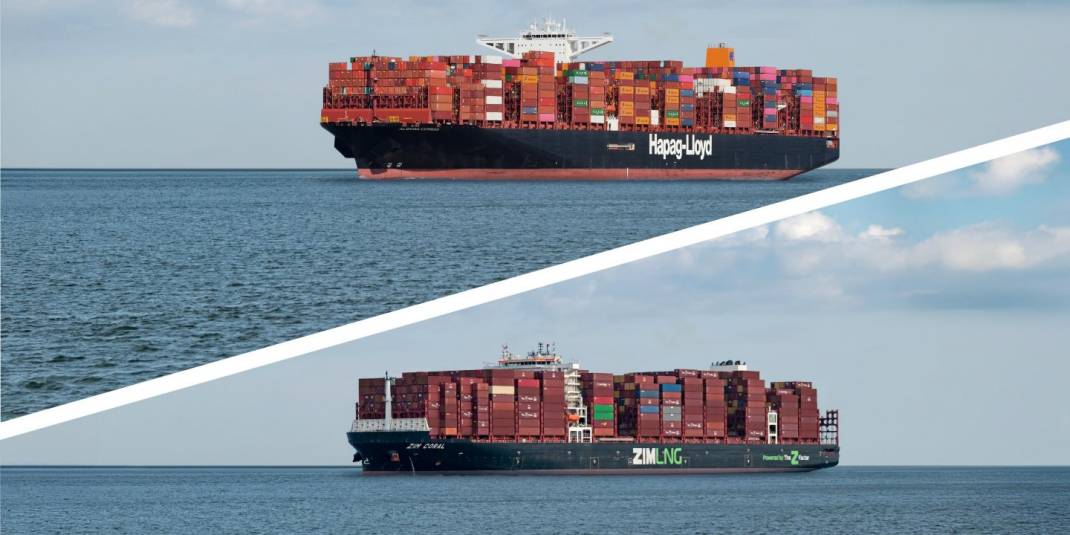
HAMBURG : Hapag-Lloyd signed an agreement with ZIM Integrated Shipping Services Ltd., the world’s 10th largest container shipping line, under which Hapag-Lloyd will acquire 100% of ZIM’s shares for a consideration of USD 35.00 per share in cash. The total transaction value amounts to over USD 4 billion.

FIMI, Israel’s largest and leading private equity fund, will take ownership of a carved-out container liner business that will serve some of the most important strategic trade-lanes, seamlessly connect to the global network of Hapag-Lloyd and in combination enhance and secure the global maritime connectivity for the State of Israel. The new container line will start with 16 modern, sizeable, and efficient vessels and take over full responsibility for ZIM’s Golden Share as well as the ZIM brand.

The completion of the envisaged transactions is subject, among others, to approval by ZIM’s shareholders and the relevant regulatory authorities.

The business combination of Hapag-Lloyd and ZIM would secure Hapag-Lloyd’s market position as the fifth-largest container shipping company worldwide with a modern fleet of over 400 vessels, a standing capacity of over 3 million TEU, and an annual transport volume of more than 18 million TEU. The combined business would strengthen the network on all major global trades and consolidate their leadership in key growth markets. The transaction is estimated to generate several hundred million USD of annual synergies. Hapag-Lloyd and ZIM will leverage the highly skilled workforce and cutting-edge technologies of both companies to build an even stronger combined team that will remain very customer centric, focused on profitable growth and delivering superior quality to customers around the globe.

“ZIM is an excellent partner for Hapag-Lloyd”, said Rolf Habben Jansen, CEO of Hapag-Lloyd. “Customers will benefit from a significantly strengthened network on the Transpacific, Intra Asia, Atlantic, Latin America and East Mediterranean. We share the same ambitions: great customer service, outstanding operational quality, and a commitment to digital innovation – all powered by the expertise and passion of our people worldwide. We will use this opportunity to create the best team from the exceptional talent in ZIM and Hapag-Lloyd – in Israel and around the globe – and we commit ourselves to build a very substantial and long-term presence in Israel. Together, we will set new benchmarks of excellence and secure our position as the undisputed number one for quality in our industry.”

“Today’s announcement is the culmination of a thorough strategic review conducted by ZIM’s Board of Directors dedicated to maximizing shareholder value. The decision reflects a comprehensive evaluation of all available options to ensure the best possible outcome for the company’s investors. We believe that it represents the most prudent and beneficial transaction for all ZIM stakeholders that further advances the tremendous value creation track record that we have established since our IPO,” said Yair Seroussi, Chairman of ZIM’s Board of Directors.

Ishay Davidi, Founder and CEO of the FIMI Funds: “FIMI recognizes and believes in the strategic importance for the State of Israel of a strong independent Israeli shipping company. We will create a stable Israeli company, the new ZIM, and view Hapag-Lloyd as a significant strategic partner for its on-going operations. New ZIM will integrate significant transatlantic capabilities, alongside additional shipping routes to Europe, Africa, the Mediterranean Sea and the Black Sea, supported by advanced global maritime transport capabilities, while continuing to place the customer at the center of its operations. New ZIM will work to provide its customers with the highest level of service. FIMI intends to leverage its experience and strategic capabilities to lead New ZIM toward stable operations and uncompromising quality, while maintaining a deep commitment to its employees, suppliers and customers”.

Until the closing of the transaction, Hapag-Lloyd and ZIM will remain competitors and do “business as usual”. Their operational collaboration will stay limited to existing vessel sharing and slot charter agreements. The necessary approvals of regulatory authorities and ZIM shareholders are expected by late 2026.

About Hapag-Lloyd

With a fleet of 305 modern container ships and a total transport capacity of 2.5 million TEU, Hapag-Lloyd is one of the world’s leading liner shipping companies. In the Liner Shipping segment, the Company has around 14,000 employees and 400 offices in 140 countries. Hapag-Lloyd has a container capacity of 3.8 million TEU – including one of the largest and most modern fleets of reefer containers. A total of 130 liner services worldwide ensure fast and reliable connections between more than 600 ports on all continents. In the Terminal & Infrastructure segment, Hapag-Lloyd has equity stakes in 22 terminals in Europe, Latin America, the United States, India and North Africa. Around 3,000 employees are assigned to the Terminal & Infrastructure segment and provide complementary logistics services at selected locations in addition to the terminal activities.

About ZIM

Founded in Israel in 1945, ZIM (NYSE: ZIM) is a leading global container liner shipping company with established operations in more than 90 countries serving approximately 33,000 customers in over 300 ports worldwide. ZIM leverages digital strategies and a commitment to ESG values to provide customers’ innovative seaborne transportation and logistics services and exceptional customer experience. ZIM’s differentiated global-niche strategy, based on agile fleet management and deployment, covers major trade routes with a focus on select markets where the company holds competitive advantages. Additional information about ZIM is available at www.ZIM.com.

About FIMI

FIMI is the leading private equity firm in Israel with more than $9 billion in assets under management. Since its founding by Ishay Davidi in 1996, FIMI has successfully completed 108 investments, executed 78 exits with total transaction value of more than $6 billion, and raised seven funds. FIMI is the largest industrial body in the Israeli economy and one of the biggest employers in the country. Companies controlled by FIMI have more than 50,000 employees in 50 factories around Israel and another 100 factories and companies worldwide.

Steelpaint coats fourth Xiamen Minhua Newbuild as Min Hua 17 approaches Delivery

Germany’s Steelpaint has successfully completed the application of a Stelpant corrosion-protection system to Min Hua 17, the latest in a series of newbuilding’s scheduled to enter service after the Lunar New Year.

The 12,000dwt multi-purpose cargo ship, the fourth vessel in the Xiamen Minhua Shipping fleet to use the polyurethane based zinc-rich primer, follows similar applications to Min Hua 9, Min Hua 15 and Min Hua 16. The Fujian Donghai Shipyard built all four vessels.

However, following the success of the first coating in the cargo holds of the 2024-delieverd Min Hua 9, the ship manager expanded the scope on subsequent ships to protect cargo holds, hatch covers and the main deck.

“When we first specified Steelpaint, we wanted to see how the coating would behave in service,” said Li Jianbin, General Manager of Xiamen Minhua Shipping. “What we observed was that the zinc primer remains intact when the topcoat is mechanically damaged, protecting the substrate from corrosion. The crew is better managing coating upkeep without repeated full-area touch-ups, which has reduced maintenance costs by about 50% compared to other types of coatings.”

Operational feedback was also gathered from an inspection of Min Hua 15 after one year of service carrying coal, general stores and containers.

Li Yinlong, head of Steelpaint’s operation in China, who attended the inspection, said the assessment reflected the crew’s direct experience.

“The vessel had been operating normally throughout the year,” he said. “When we inspected the coating during a scheduled port stay at in Lianyungang, the chief officer said he was satisfied with its condition. He also said routine maintenance work had been reduced and that repeated purchases of paint for touch-up work were no longer required.”

All four vessels in the series now have tank tops and lower stools/hoppers protected by two 80µm coats of Stelpant-PU-Zinc primer, followed by a 120µm application of a conventional topcoat epoxy. Other areas required only a single Stelpant primer coat.

With its high-solid formulation and finely meshed zinc pigments Stelpant-PU-Zinc can be applied in temperatures ranging from -5°C to +50°C, and with a relative humidity level as high as 98%.

Steelpaint Director Frank Müller said the project demonstrates how coating performance translates into specification decisions.

“In real trading conditions is exactly how coating performance should be evaluated,” he said. “The fact that each successive vessel has expanded the protected areas shows that the owner can see and quantify the benefit. For multi-purpose vessels, where coating damage is unavoidable, retaining primer integrity is critical to vessel safety and lifespan.”

Xiamen Minhua Shipping has confirmed that Stelpant will also be applied to a new series of 12,000 and 17,000 dwt multi-purpose cargo newbuildings.

Two other Chinese bulk carrier operators are currently trialling the corrosion protection system.

About Steelpaint GmbH

For more than 40 years, Steelpaint has enhanced the life and durability of heavy-industry facilities, particularly in the maritime sectors. Thanks to one-component polyurethane resins, the Germany-headquartered company’s special high-tech coatings have raised the technological bar in corrosion resistance, offering impressive benefits over conventional epoxy coatings solutions.

Steelpaint is a subsidiary of the coatings company Emil Harrasser, founded in Kitzingen, Germany in 1890. Its products are used widely in port and offshore facilities, sheet pilings, internal and external linings, tanks, bridges, and ship structures. They can be used in combination with cathodic protection.

Drydocks World joins the Maritime Emissions Reduction Centre as newest international member

LONDON : The partnership marks a significant step in the Centre’s international expansion and its focus on delivering practical decarbonisation solutions for the existing fleet.

The Maritime Emissions Reduction Centre (MERC) has welcomed Drydocks World, a DP World company, as its latest Centre member, strengthening the consortium’s technical depth and expanding its global network.

The signing of the agreement brings one of the world’s leading ship repair and retrofit facilities into the Athens-based non-profit industry collaboration, which was co-established by the Lloyd’s Register Maritime Decarbonisation Hub and leading shipowners Capital Group, Navios Maritime Partners, Neda Maritime Agency, Star Bulk and Thenamaris (Ships Management) Inc., with enabling support from Lloyd’s Register.

Drydocks World’s long-standing reputation for delivering complex engineering projects, coupled with its experience in integrating advanced technologies on board operating vessels, will be central to MERC’s next phase of collaborative work. With shipyards playing an increasingly important role in the integration of energy efficiency systems, Drydocks World expertise is expected to influence how technologies are assessed, prioritised and deployed across different vessel types.

Drydocks World enters the consortium at a time when MERC is broadening its research and development programmes. These include deeper technical studies into emerging energy efficiency technologies, practical pathways for integrating more complex systems on existing vessels, and expanded work across hydrodynamic performance, wind-assisted propulsion, alternative auxiliary power solutions and data-driven operational optimisation.

Nikos Kakalis, MERC Managing Director, said: “Drydocks World’s involvement provides an essential layer of applied engineering experience that complements MERC’s technical and analytical work. The organisation brings the kind of practical insight that is only gained through decades of delivering major retrofit projects. This expertise will help us understand not only what is technically possible, but what can be delivered efficiently and safely in a real shipyard environment.

“That combination of deep engineering knowledge and hands-on experience will help MERC ensure that emerging technologies can be installed safely, efficiently and in a commercially viable way.”

Captain Rado Antolovic, PhD, CEO of Drydocks World, said: “Joining MERC allows us to contribute our engineering and retrofit experience to a collaborative effort that is focused on solutions the industry can actually implement. The challenges of decarbonising the existing fleet require practical, evidence-based approaches, and we see real value in working alongside MERC’s partners to help shape technologies and integration strategies that will work across different vessel types.”

About the Maritime Emissions Reduction Centre

The Maritime Emissions Reduction Centre (MERC) was established through the joint initiative of six founding members — Capital Group, Navios Maritime Partners, Neda Maritime Agency, Star Bulk, Thenamaris (Ships Management) Inc., and Lloyd’s Register Maritime Decarbonisation Hub. These organisations united around a common purpose: to accelerate the reduction of greenhouse gas emissions from the global shipping fleet.

Each founding member brings a unique set of capabilities, perspectives, and commitments. Together, they have created a neutral, collaborative platform designed to deliver practical, scalable solutions. MERC focuses on enabling evidence-based innovation and supporting the maritime sector’s transition to a more efficient, lower-emissions future.

About The Decarb Hub 

The Lloyd’s Register Maritime Decarbonisation Hub (commonly known as The Decarb Hub) is an independent, non-profit initiative established through a partnership between Lloyd’s Register Foundation — a global charity with a mission to engineer a safer world — and Lloyd’s Register Group, a global provider of maritime professional services with over 260 years of heritage. This partnership brings together the Foundation’s public benefit mandate and focus on societal resilience, with the Group’s deep technical expertise and trusted relationships across the maritime industry. Positioned at the intersection of these two organisations, the Hub is uniquely equipped to accelerate the safe, sustainable, and human-centric decarbonisation of global shipping — combining neutrality with influence, and research with real-world application. For more information, go to www.thedecarbhub.org

About Lloyd’s Register

Lloyd’s Register (LR) is a global professional services group specialising in marine and offshore engineering, technology and digital solutions. We were created more than 260 years ago as the world’s first marine classification society to improve and set standards for the safety of ships.  

Today we are a leading provider of classification and compliance services to the marine and offshore industries, helping our clients design, construct and operate their assets to accepted levels of safety and environmental compliance.  

We also provide advisory services and digital solutions, supporting fleet and voyage performance and optimisation.  Our digital solutions are relied upon by more than 30,000 vessels, following the acquisition of OneOcean in 2022 and Ocean Technologies Group in 2024.  

In the race to zero emissions, our research, advisory and technical expertise and industry-firsts are supporting a safe, sustainable maritime energy transition.  

Lloyd’s Register Group is wholly owned by the Lloyd’s Register Foundation, a politically and financially independent global charity that promotes safety and education.

About Lloyd’s Register Foundation

Lloyd’s Register Foundation is an independent global charity that supports research, innovation, and education to make the world a safer place. Its mission is to use the best evidence and insight to help the global community focus on tackling the world’s most pressing safety and risk challenges. For more information, please visit www.lrfoundation.org.uk

System now the main cause of Ballast Water Treatment compliance detentions

Results from last year’s Concentrated Inspection Campaign (CIC) on ballast water management has revealed a marked change in regulatory compliance failures, which now include the actual performance, operation, and maintenance of installed ballast water treatment systems.

According to Charlène Ceresola, BWT Project Manager and Regulatory expert at BIO-UV Group, Port State Control (PSC) data show that while documentation and record-keeping issues remain widespread, the most serious non-compliances are technical in nature.

“When you look at the total number of compliance failures, documentation still ranks high,” she explains. “But once you focus specifically on deficiencies serious enough to result in a ship being detained, the majority are associated with the ballast water treatment system itself.”

On the 3-month period, she says the ballast water system itself accounts for 46% of all detainable deficiencies, followed by deficiencies in crew training (21%) and the Ballast Water Management Plan (15%).

As in 2024, the most frequent deficiencies reported by the Paris Memorandum of Understanding on Port State control related to poor ballast water record book-keeping, inadequate crew training, system unfamiliarity, and invalid or missing certificates.

“The number does not imply widespread system failure, but it does mean that when an issue escalates to the point of detention, it is very often because the system has been poorly maintained and not performing as it should,” Ceresola says. “Ship managers and crews must start addressing these gaps in system upkeep; it will cost them substantially more than a new UV lamp.”

Ceresola notes spare part availability has emerged as a decisive factor behind corrective actions, with some operators struggling to find components for legacy systems.

“The CIC results have highlighted how quickly minor issues can escalate when systems are poorly maintained or when crews lack the tools or system knowledge. “You cannot fix a neglected system the day before an inspection,” she says. “If you do not have the spare parts, there is no way to catch up overnight.”

She says ballast water training and familiarization remain uneven across the industry and are often not yet treated as a core operational competence.

“Work is underway at IMO level to better integrate ballast water management into standard maritime education and certification frameworks, but in the meantime, the responsibility rests with ship management. Crews must be properly trained on the specific BWTS installed onboard and regularly refreshed to account for turnover and operational drift.”

Alongside these findings, the CIC results have also reinforced concern that some manufacturers can be unresponsive to customer service and after sales requirements, leaving shipowners exposed when inspections identify weaknesses onboard.

“Reliable support, spare-parts availability, on-going system training on are now critical elements of compliance, not optional extras,” she says. “More suppliers do need to commit to aftersales support. This will ensure system performance remains compliant throughout the system’s life, while refresher familiarisation addresses the realities of crew turnover. This is how PSC detentions are avoided.

About BIO-UV Group

For more than 35 years, BIO-UV Group has designed, manufactured and marketed ultraviolet (UV-C), ozone, AOP and salt-electrolysis water-treatment systems for a range of applications: swimming pools, aquaculture, aquariums, industrial process water, wastewater and drinking water. In 2011, it expanded its offering to include ballast-water treatment systems for ships. The company manufactures its products at specialised production sites in Lunel and Muret, France, and in Great Britain, allowing it to respond rapidly to clients’ specific needs worldwide. Listed on the stock exchange since July 2018, the company recorded consolidated revenue of €35.9 million in 2025 and currently employs 150 people. More than 50% of Group sales are generated internationally.

www.bio-uv.com