Home Blog Page 445

India-US trade deal to drive 25% export growth for gems and jewellery, says GJEPC Chairman

MUMBAI: The gems and jewellery industry in India expects a significant recovery following the announcement of a trade agreement with the United States. Kirit Bhansali, Chairman of the Gems and Jewellery Export Promotion Council (GJEPC), stated that the agreement, set to be finalised in March, will provide much-needed relief to a sector that has struggled with high tariffs over the last year. He noted that the US remains the most critical market for Indian exports, and the deal is expected to reverse a sharp decline in trade volumes.

“Our entire sector was worried for the past six months,” Bhansali said. He explained that exports to the US had previously plummeted, with overall shipments falling by 44 per cent and exports of blue diamonds dropping by 60 per cent. With the new agreement in place, Bhansali expressed optimism for the near future. “With a new hope and expectation, we hope that we will be able to export 20-25 per cent more to the US this year,” he added. He credited the Ministry of Commerce for its consistent dialogue with Washington to secure the interests of the Indian jewellery sector.

The industry has also welcomed the recent Union Budget, particularly for its focus on small businesses. Bhansali highlighted that more than 80 per cent of the people in the gems and jewellery industry work within the Micro, Small, and Medium Enterprises (MSME) sector. He noted that the budget’s allocation for these businesses will directly address long-standing issues regarding manufacturing and credit.

“For the first time in the budget of Azad India, 7 lakh crore has been allocated for MSMEs,” Bhansali said. He mentioned that the industry had specifically requested easier access to bank finance for these smaller units. “Many steps have been taken to increase MSMEs and to increase manufacturing. I welcome this in the budget,” he stated, adding that these policies will help the sector grow within the national economy.

Regarding broader international trade, Bhansali emphasised that India is committed to strengthening ties with all friendly nations through Free Trade Agreements (FTAs). While acknowledging the massive scale of the US market, he pointed out that previous agreements with countries like the UAE and the UK have already yielded positive results. He noted that income from the UAE has grown significantly since the FTA was signed four years ago.

Source: ANI

Government revises Startup recognition criteria; Turnover limit raised to Rs 200 crore

NEW DELHI: The Government of India has notified revised recognition criteria for startups, marking a significant shift in the eligibility framework to support the evolving innovation landscape. According to the Department for Promotion of Industry and Internal Trade (DPIIT), the turnover limit for an entity to be recognised as a startup has been increased from Rs 100 crore to Rs 200 crore. This adjustment aims to support enterprises at various stages of their business lifecycle as the Startup India initiative completes a decade in 2026.

“Keeping in view the evolving startup ecosystem and the need to support startups with targeted benefits at various stages of their business lifecycle, the turnover limit for recognition as a startup has been increased from Rs 100 crore to Rs 200 crore,” DPIIT said in a statement.

The new framework introduces a specific sub-category for “Deep Tech Startups,” targeting entities engaged in breakthrough technologies. For these ventures, the government has expanded the age limit from 10 years to 20 years from the date of incorporation.

Additionally, the turnover limit for deep tech entities has been set at Rs 300 crore. The government noted that this step addresses “the unique requirements of deep tech entities operating in areas with long gestation periods, high R&D intensity, and capital-intensive development cycles.”

In a move to foster grassroots innovation, the eligibility for startup recognition has been extended to cooperative societies. This includes Multi-State Cooperative Societies registered under the Multi-State Cooperative Societies Act, 2002, and those registered under State and Union Territory Cooperative Acts.

DPIIT stated that this inclusion is intended to “support innovation-driven growth at the grassroots in agriculture, allied sectors, rural industries, and community-based enterprises.”

The revision follows observations that the startup ecosystem has shifted toward longer innovation cycles and higher capital intensity. DPIIT noted that several “innovation-led enterprises currently outgrow existing age or turnover limits while still in critical development or validation stages, resulting in premature loss of recognition and access to policy support.” The updated criteria follow extensive consultations with various stakeholders, ministries, and departments.

Recognised startups under this framework remain eligible for benefits including, access to government funding schemes, tax exemptions, and regulatory relief. These reforms are intended to “provide a more predictable, inclusive and future-ready policy environment for founders and to attract long-term patient capital into high-technology and R&D-intensive sectors.” The initiative has recognised over 2 lakh entities since its launch in 2016.

Source: ANI

Mazagon Dock Q3 Results: Profit Up 9%, Dividend Of Rs 7.5 Declared

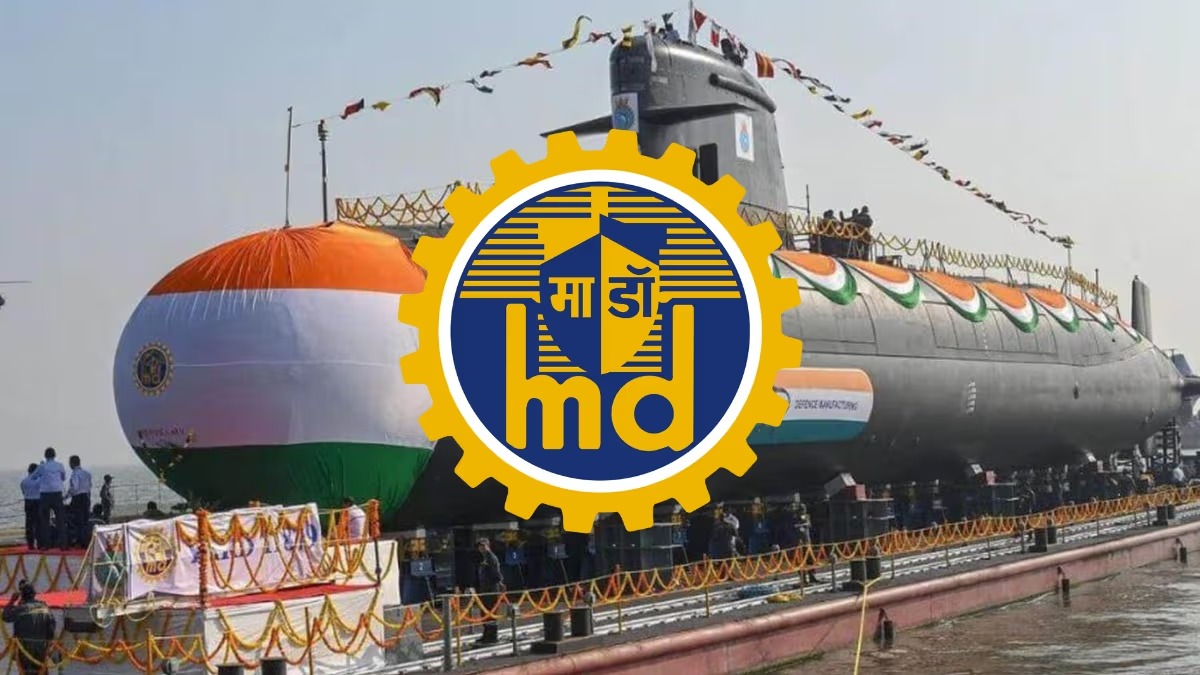
MUMBAI : Mazagon Dock Shipbuilders Ltd. logged a consolidated net profit of Rs 880 crore in the quarter ended December 2025, marking a 9% uptick as compared to Rs 807 crore in the year-ago period, according to the consolidated financial results declared on Thursday.

The defence firm’s revenue saw an uptick of 14.6% to Rs 3,601 crore as compared to the previous year’s Rs 3,144 crore. Its earnings before interest, taxes, depreciation and amortisation was up 8.6% at Rs 887 crore from the prior financial year’s Rs 817 crore.

The firm declared its second interim dividend of Rs 7.5 per share, Rs 5 each full paid-up. The record date for determining the eligibility of investors will be Feb. 13. The dividend will be paid to the concerned investors by March 7.

INS Sudarshini’s first port call in Oman, fostering international maritime cooperation

INS Sudarshinis 1 INS Sudarshini’s first port call in Oman, fostering international maritime cooperation

KOCHI : Indian Navy’s sail training ship INS Sudarshini has made her first port call at Salalah in Oman on 02 Feb 2026, marking the first international port call of her iconic transoceanic voyage – Lokayan 26. The arrival at Oman represents a key milestone in the ship’s ten-month long deployment, aimed at showcasing India’s rich maritime heritage and fostering international maritime cooperation.

INS Sudarshini sailed from her home port, Kochi on 20 Jan 2026, steering through the seasonal winds of the Arabian Sea, completing the first leg of her voyage. The port call underscores the deep-rooted maritime ties and strategic partnership between India and Oman. During the three-day visit, a range of professional interactions and training engagements with the Royal Navy of Oman are planned. The ship will also be open to school children and local residents, promoting maritime awareness and people-to-people connect.

The ongoing voyage of Lokayan 26 continues to serve as a symbol of India’s seafaring legacy and the Indian Navy’s enduring commitment to maritime diplomacy, goodwill, and international cooperation across the oceans.

Madras Port & dock employees union objects to Chennai Port’s proposed equity stake in Bharat Container Line

CHENNAI : The Madras Port & Dock Employees Union (CITU) has objected to the Centre urging the Chennai Port Authority (ChPA) to invest 5 per cent equity in the proposed Bharat Container Line (BCL).

The union’s vice president T Narendra Rao, quoting media reports, said the Government proposes to float BCL with equity participation from various State-owned entities including Shipping Corporation of India – 30 per cent; Container Corporation of India – 30 per cent; Sagarmala Finance Corporation – 20 per cent; Jawaharlal Nehru Port Authority – 10 per cent; ChPA – 5 per cent and VOC Port Authority – 5 per cent.

While the objective of reducing India’s heavy dependence on foreign shipping lines is laudable, the financial burden of achieving this objective should not be unfairly transferred to already-stressed Major Port Authorities, the Union said.

Further, major Port Authorities like Chennai, Cochin, Mormugao, Kolkata, and Mumbai are already struggling with severe financial constraints due to huge pension liabilities. ChPA alone has to safeguard the interests of nearly 2,500 serving employees and about 15,000 pensioners, Rao said.

Compelling ChPA to invest 5 per cent equity in BCL will adversely affect its financial viability and may push the Port back into a cycle of fiscal stress, thereby rendering the survival and welfare of employees and pensioners extremely uncertain. The appropriate course to fund BCL would be through direct budgetary support, or route investments through financially capable CPSEs and dedicated maritime finance institutions, he added.

SCI and CONCOR are Navratna CPSEs with relatively strong balance sheets. Sagarmala Finance Corporation has been specifically created to finance maritime projects. However, in contrast, Chennai Port Authority is not financially positioned to absorb fresh equity risks unrelated to core port operations, said Rao.

“We strongly urge that the Ministry of Ports, Shipping & Waterways be requested to desist from compelling Chennai Port Authority to invest any equity in Bharat Container Line, and to safeguard the financial stability of the Port along with the interests of its employees and pensioners,” said Rao.

IKEA, Flipkart Group successfully trial electric trucks on long distance routes with Climate Group

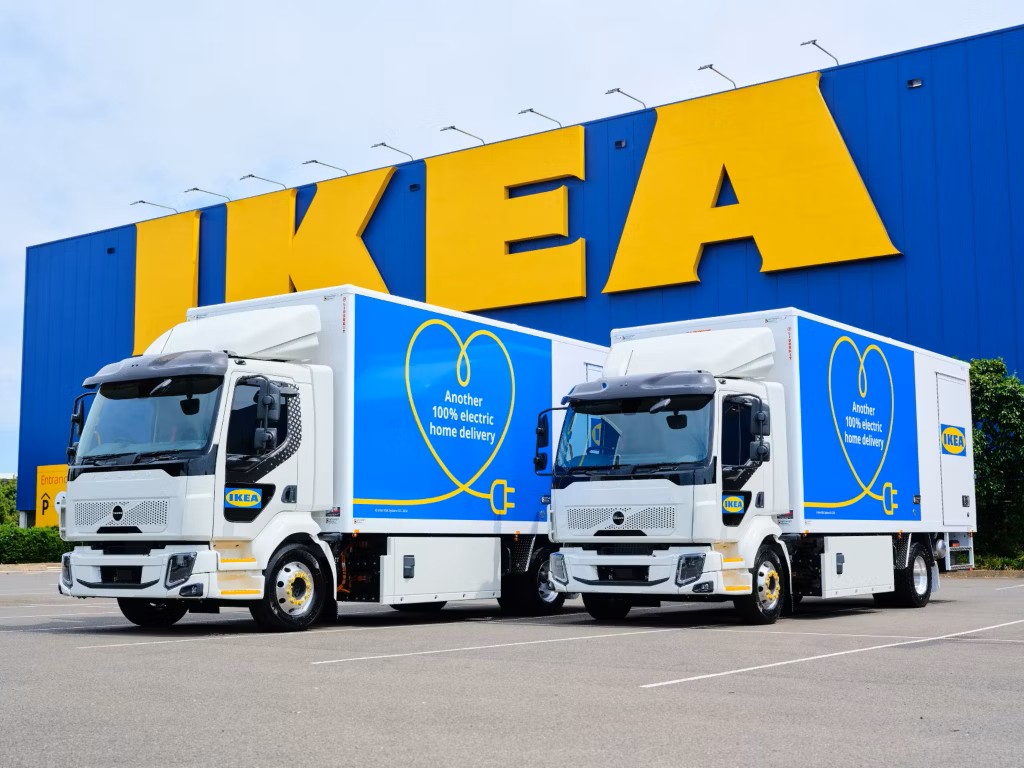
NEW DELHI: IKEA Supply AG and Flipkart Group have successfully piloted long distance e-trucking, marking a significant step towards the use of long-haul electric road transport in India’s complex e-commerce logistics. The pilots are the result of a strong collaboration across the transport sector, with Climate Group providing project design and implementation support.

Atul Mudaliar, Director of Systems, Climate Group said: “IKEA and Flipkart Group did not wait for the perfect conditions. They tested electric trucks in real-world conditions for long-distance operations, using available charging. Climate Group’s EV100 programme exists to catalyse this kind of ambition. More Indian companies can use pilots for large-scale electric truck deployment. This will also help identify priority freight corridors and remove uncertainty among the logistics sector on truck adoption.”

A first-of-its-kind effort in the country, IKEA used a 55-tonne electric truck to cover the 1,200 km distance from Pune to Hyderabad and back, using electric charging infrastructure available at public locations along the route such as highway motels.

Unlike petrol pumps which are widely available for diesel trucks, access to charging docks has until now been limited in the country. This is the first time a pilot was designed to test out public charging infrastructure, with success. The electric truck ferried commercial loads, showing the maturity of electric truck technology alongside the steady roll-out of highway charging networks.

Ewelina Taylor, Global Transport Manager, IKEA Supply AG: “Electrification of transport plays an important role in phasing out fossil fuels and reducing greenhouse gas emissions in the IKEA supply chain. We are aiming for zero emission transportation and 100% renewable energy across our operation for the supply of IKEA products between suppliers and retailers. This pilot showed us that decarbonising long-haul freight by transitioning to electric can be commercially viable. It also demonstrated that the technology is ready to meet targets we’ve set under Climate Group’s EV100 programme. The trial highlighted the crucial need for route planning including availability of high-capacity chargers and optimising use of small-capacity chargers on the highways for large-scale deployment. We are proud to lead the change to electric trucks in India.”

The pilot brought together IKEA, BLR Logistiks, SANY, Statiq, pManifold and Climate Group, highlighting the importance of coordinated action between shippers, logistics service providers, original equipment manufacturers, charge point operators and technical experts. Unified efforts like these are essential for large-scale electrification of medium- and heavy-duty trucks in India, grounded in strong techno-commercial viability.

Mrinmoy Dasgupta, Business Development Manager, Supply Chain Operations Category Land- South Asia, IKEA Supply AG: “Our main concern was whether an electric truck could complete a 1,200 km round trip without compromising our delivery schedules. The two successful runs between Pune and Hyderabad have instilled confidence in the readiness of e-trucks for Indian highways. The vehicle performed well, navigating heavy monsoon rains and varied terrain with the same reliability as our diesel fleet. We used public charging stations along the route, showing that the existing infrastructure can support heavy-duty e-freight. This experience has demonstrated the feasibility of scaling electric truck operations. We have moved from testing a concept to proving a viable solution for more sustainable freight operations across India.”

In the pilot with Flipkart Group, trial runs were conducted along the Delhi–Jaipur and Delhi–Agra corridors, with Golden Aero Logistics as the logistics service provider and Kalyani Powertrain as the electric truck manufacturer. These inter-warehouse trials focused on time-sensitive operations and provided practical insights into deploying electric trucks within their e-commerce supply chains.

Nishant Gupta, Head of Sustainability, Flipkart Group, said: “Decarbonising our e-commerce supply chain has been a phased, deliberate journey for Flipkart, beginning with large-scale last-mile electrification and now expanding into upstream logistics. With over 20,000 electric vehicles deployed during the recent festive season, the successful trials of the long-haul 32-feet electric truck pilot on corridors such as Delhi–Jaipur and Delhi–Agra represent the next chapter of our transition as part of our commitment to Climate Group’s EV100 initiative. While commercial viability will guide how electric trucks scale, pilots like these, alongside our work on partner enablement, training and infrastructure, are essential to building a low-emissions logistics ecosystem at scale.”

IKEA and Flipkart Group have been members of Climate Group’s EV100 programme, with the ambition to be zero emission shippers by 2040.

Together, the IKEA and Flipkart pilots establish a credible case for scaling electric trucks operations and offer a practical framework for future collaborations in this sector.

Maersk flags 2026 earnings hit as Suez return, overcapacity hit freight rates

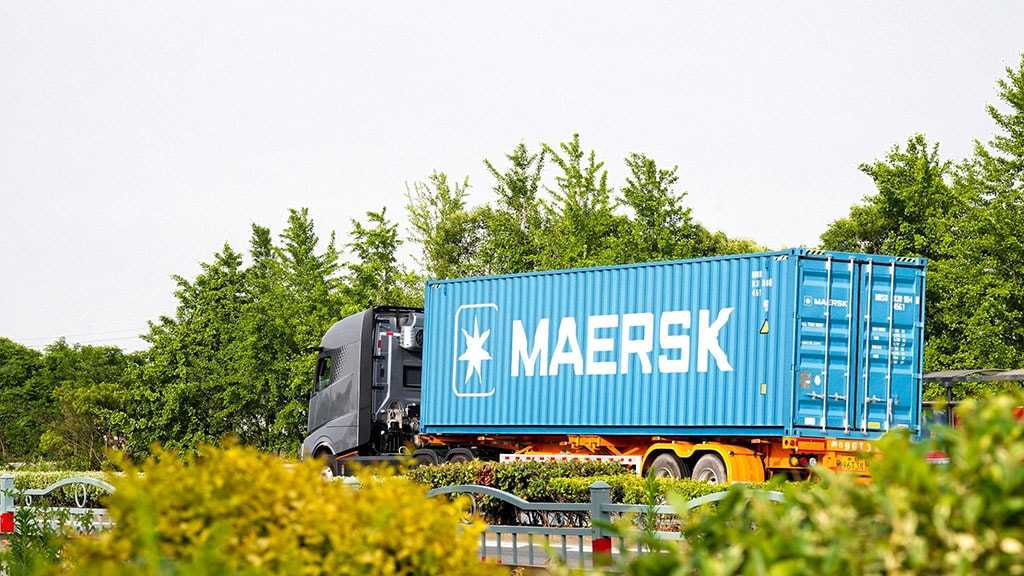
COPENHAGEN : Danish shipping giant Maersk, opens new tab said on Thursday falling freight rates, driven by container-vessel overcapacity and the gradual resumption of shorter Red Sea routes, could halve earnings in 2026, dragging its shares down sharply.

Maersk, which reported a fourth-quarter operating profit roughly in line with forecasts, expects strong demand for shipping goods at sea, boosted by consumer spending, but an influx of new vessels and an expected full resumption of Red Sea routes that cut journey times will weigh on freight rate

“New ships are coming in, and at the same time, shipping through the Red Sea is likely to reopen, which will free up ship capacity. All of this will put pressure on freight rates this year,” CEO Vincent Clerc said at a press conference.

Maersk shares take a hit after recent rise

Fourth-quarter underlying earnings before interest, tax, depreciation, and amortisation (EBITDA) came in at $1.84 billion, just shy of analysts’ forecasts of $1.88 billion.
Maersk, which is often seen as a bellwether for global trade, projected global container-volume growth of 2% to 4% for 2026, a slowdown from 5% in 2025, citing recession risks in the global economy.

It also expects underlying earnings before interest, tax, depreciation and amortisation (EBITDA) of $4.5 billion to $7 billion this year, a steep decline from $9.53 billion logged in 2025, with analysts anticipating $6.49 billion. Its shares, which have risen around 80% since April last year, were trading 5.5% lower by 1014 GMT.

SCRAPPING SHIPS AND INCREASING CAPACITY
Shipping companies, including Maersk and Hapag-Lloyd, opens new tab, are weighing returns to the critical Asia-Europe Suez trade corridor after vessels were rerouted around Africa in late 2023 following attacks in the Red Sea.
Maersk also announced plans to extend the operational lifespan of its container vessels from 20 to 25 years, reducing scrapping activity and adding further capacity. New vessels are expected to increase capacity by 5% this year.
“Many had hoped that more ships would be scrapped to offset the arrival of many new ships,” said Jyske Bank analyst Haider Anjum. “But when you extend their lifespan, it points in the other direction, and it means that freight rates will come under further pressure as capacity increases so much.”

The resumption of Red Sea shipping routes is set to free 6%-7% of global container shipping capacity this year, Clerc said. While these shorter routes reduce transit times on critical corridors such as Asia-Europe, they also exacerbate overcapacity in the market.
“Demand in the global economy is super strong,” Clerc said, while pointing out that “the supply side shapes the current situation that we face in the shipping sector”.
As part of broader cost-cutting measures to navigate increased uncertainty and pressure on profitability, Maersk will reduce its share buyback programme and cut 1,000 administrative jobs.

Source : Reuters

DSV eyes lower freight rates, but port pressures as Red Sea routes resume

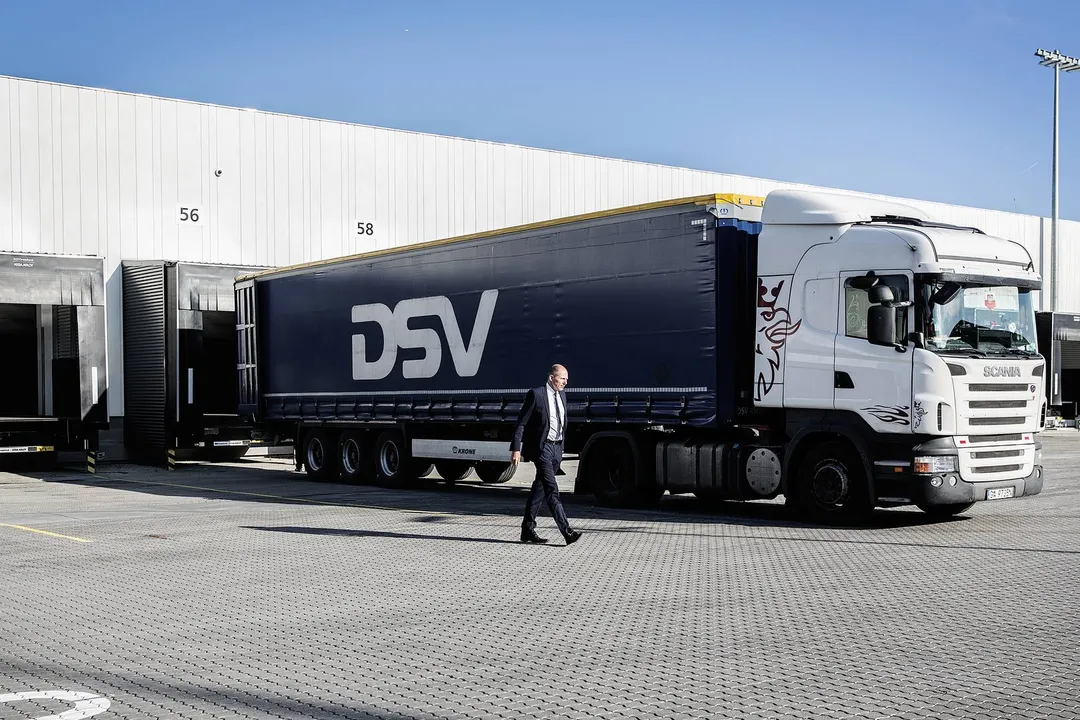
COPENHAGE : DSV the world’s largest freight forwarder, said on Wednesday that a resumption of transit through the Red Sea should push freight rates down but could also add pressure on ports. Shipping companies are weighing a return to the critical Asia-Europe trade corridor after vessels were rerouted around Africa in late 2023 following attacks from Yemen’s Houthis in the Red Sea.

“That will free up some capacity obviously if you get the transit time reduced quite a bit,” Chief Financial Officer Michael Ebbe told an investor call. He added that this would put pressure on freight rates.

“Though it remains to be seen if everybody of the carriers will start to reroute again, I think that will put some temporary pressure on some of the ports in Europe,” Ebbe added. Shipping group Maersk said on Tuesday it would resume some transit routes through the Red Sea and the Suez Canal this month under its shared services network with Hapag-Lloyd.

SCHENKER INTEGRATION SEEN FINALISED BY END 2026

DSV expects global air and sea freight volumes to increase around 2% to 3% this year, in line with or slightly lower than global GDP forecasts. The company posted fourth-quarter operating profit before special items of 5.59 billion Danish crowns ($884.38 million), just below analysts’ average estimate of 5.64 billion crowns in a company-provided poll.

It forecast a full-year operating profit before special items of 23 billion to 25.5 billion crowns and proposed a dividend for 2025 of 7 crowns per share.
DSV said it now expected to complete the integration of German rival DB Schenker by the end of this year. It had previously expected the integration to run until the end of 2028.

Source : Reuters

MacGregor secures major order for large AHC subsea crane on new-generation Floating Wind Farm Construction Vessel

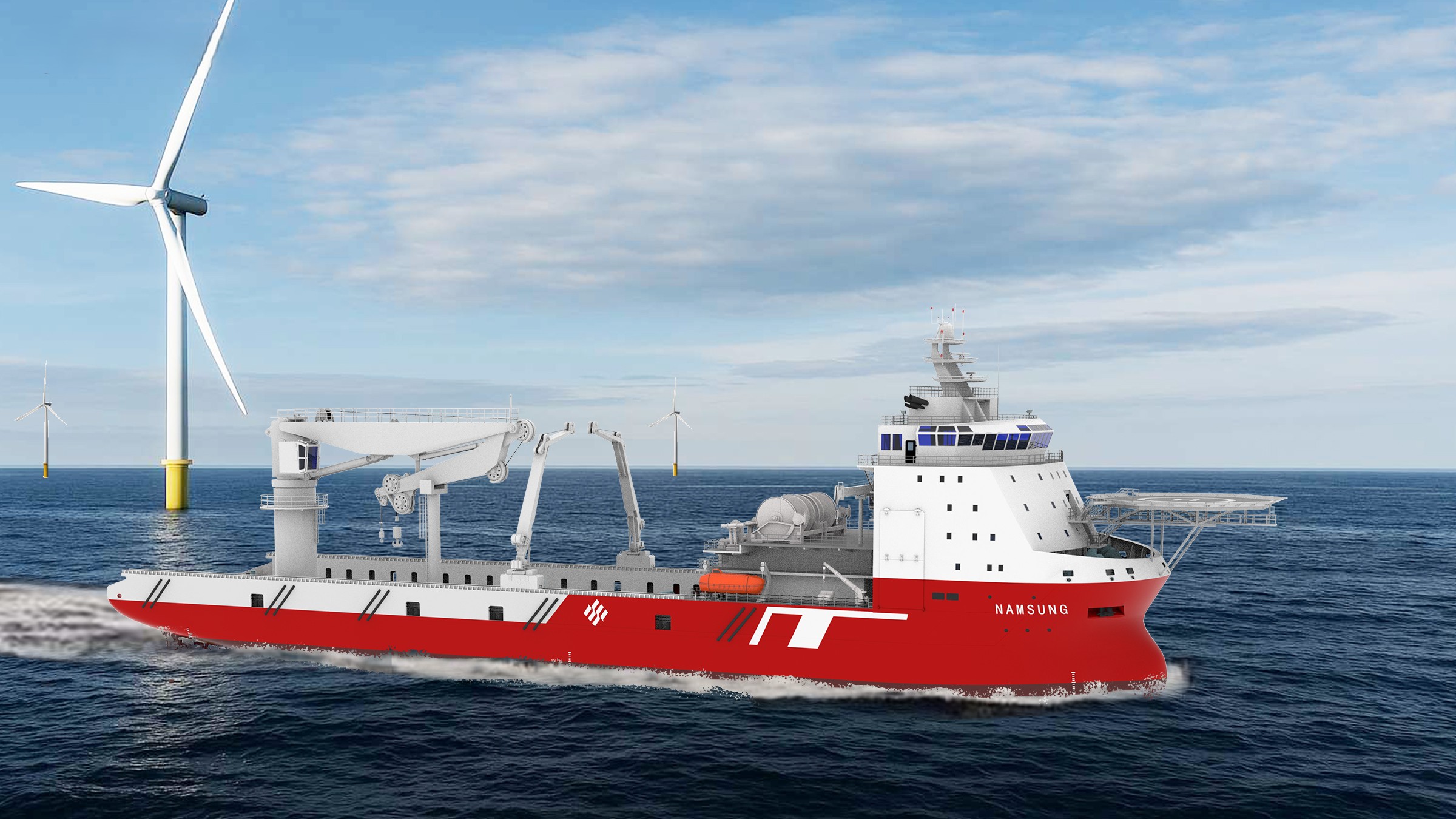
HELSINKI: MacGregor has been selected to supply a substantial 400-tonne Active Heave Compensated (AHC) subsea crane for a new 127-metre Floating Wind Farm Construction Vessel (FWCV). Purpose-built for the burgeoning floating offshore wind market, the new vessel is a significant development for the industry and requires one of the largest subsea AHC cranes ordered in recent years.

The order is booked into MacGregor’s first quarter 2026 order intake.
 
The contract for MacGregor is with Chinese shipyard, Jiangsu Dajin Heavy Industry Co., Ltd. Operations will be managed by Hana Shipping Co., Ltd.
 
The 400-tonne SWL AHC subsea crane is a critical piece of equipment for the new FWCV, which is specifically designed to support mooring operations, cable laying, and other essential construction activities for floating wind projects. The vessel’s first project is anticipated to be at the Ulsan Floating Wind Farm Construction, located 70 km off the coast of Ulsan, South Korea.

Delivery of the crane is scheduled for the end of 2027, with the vessel’s delivery following in Q2 2028.
 
“This significant contract win underlines MacGregor’s position as one of the few global suppliers capable of delivering AHC subsea cranes of this size and complexity with the track record of proven performance in service,”
said Lucie Addicks, Executive Vice President Offshore Solutions Division, MacGregor. “This order demonstrates how MacGregor offers not only technically robust and efficient solutions, but also close cooperation with project partners that is backed up by the local presence to support the yard and the ship in service.“
 

The level of integration required for this crane design, particularly due to the under-deck location of its main hoist, necessitates very close cooperation with the shipyard. The proximity of MacGregor’s production facilities to the shipyard, along with readily available local resources, will ensure a smooth and efficient project execution.

India-US trade deal shows power of new India : Gujarat CM

AHMEDABAD : The India-US trade deal reflects the power of New India and strengthens Prime Minister Shri Narendra Modi‘s ‘Make in India, Make for the World’ vision, Gujarat Chief Minister Shri Bhupendra Patel has said.

He said the deal, struck under the leadership of PM Modi, will benefit citizens of the two large economies and create new opportunities.

The historic deal will boost exports of products from sectors including textiles, pharma, chemicals, petroleum, gems and jewellery in which Gujarat is a manufacturing hub and a leader, Patel said in a statement. Not only this, Gujarat’s manufacturing sectors, trade and industry, and MSME will also directly benefit, he said.

When the world’s two largest democracies move forward together, it carries the spirit of world welfare, the CM said.

“In that direction, this trade deal is also the beginning of a new chapter in the progress of bilateral relations between India and America. As a result of this deal, the vision given by the Prime Minister of ‘Make in India, Make for the World’ will get more strength,” he added.

Patel stated that the US tariff on Made in India products at 18 per cent is a significant boost for manufacturing, MSMEs, exporters and job creation, which will open new doors for entrepreneurs and startups to wider markets around the world.

“This agreement will increase India’s global economic presence. With the decisive leadership and citizen-centric diplomacy of PM Modi, India-US relations will also boost global peace and prosperity. On behalf of all the citizens of Gujarat, I congratulate the Prime Minister for this historic bilateral trade agreement,” he said.

Source : PTI