Home Blog Page 444

TEA engages Indian Consulate in Birmingham on UK FTA, Trade Promotion and Market Access

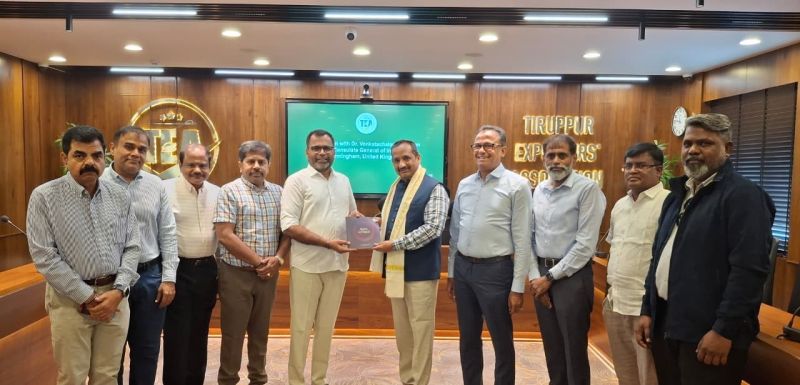
TIRUPUR : The Tiruppur Exporters’ Association (TEA) held a strategic interaction with Dr. Venkatachalam Murugan, Consul General of India in Birmingham, to discuss the progress of the India–UK Free Trade Agreement (FTA), market access opportunities and measures to strengthen India’s apparel exports to the United Kingdom.

During the meeting, TEA highlighted the significant potential of the UK market, which imported over US$ 19 billion worth of apparel in 2024, while India’s share remains below 6%, indicating substantial headroom for growth. The association emphasized that the proposed FTA could enhance India’s competitiveness through tariff rationalisation, improved market access and streamlined trade procedures.

TEA sought clarity on the expected timeline of the FTA and underlined the importance of early conclusion of the agreement to help Indian exporters compete more effectively with countries enjoying preferential access to the UK market.

The association also requested detailed information on major textile and apparel trade fairs in the UK and explored possibilities for coordinated participation by Tiruppur-based exporters. In addition, TEA sought support from the Consulate in facilitating visa recommendation letters for members travelling to the United States for business promotion activities.

To strengthen outreach in the UK, TEA proposed targeted advertising in Drapers Record magazine to enhance visibility of Indian manufacturers among UK buyers. The association further suggested organizing focused buyer–seller meets, particularly aimed at MSME exporters, to expand direct engagement with retail chains and sourcing agencies.

Dr. Murugan informed that more than 150 Indian companies participate in UK trade fairs annually and encouraged greater participation from Tiruppur exporters. He also drew attention to the State Facilitation Fund and advised TEA to coordinate with the Market Access Initiative (MAI) team for financial and logistical support for trade promotion activities.

Both sides discussed the need for sustained institutional engagement, capacity building for exporters, and enhanced branding initiatives to position India as a reliable and sustainable sourcing destination in the UK market.

TEA reiterated its commitment to working closely with the Indian Consulate and relevant authorities to expand export opportunities, enhance MSME participation and strengthen India’s footprint in the UK apparel sector.
Product tanker makes maritime history as the largest fishing vessel broken up for scrap

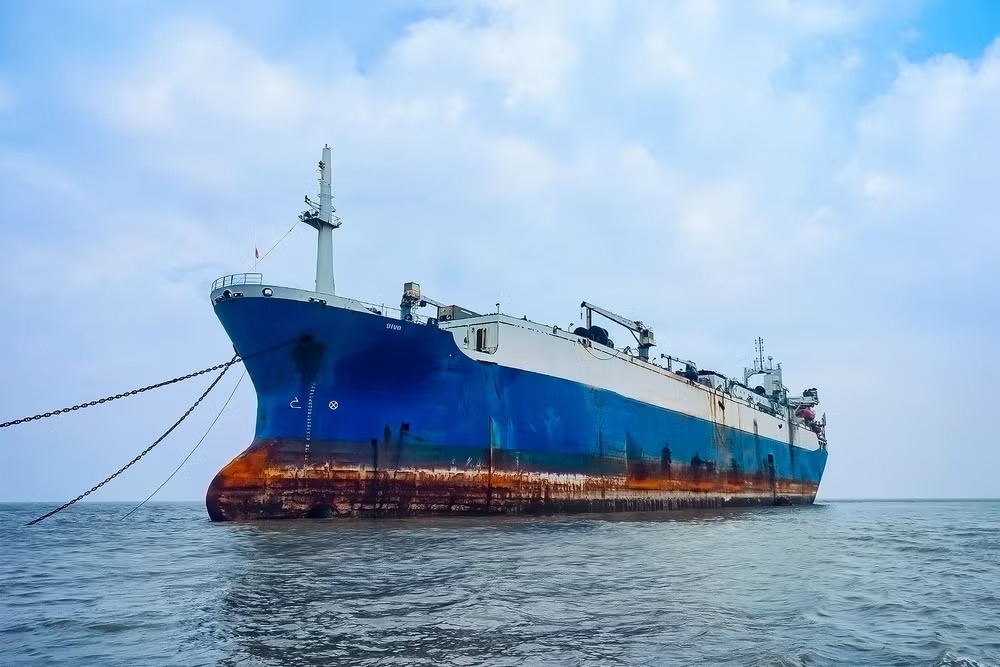
When Norwegian shipowner Anders Jahre took delivery of the product tanker newbuilding Freeport Chief in 1980, little did anyone at the company know that it would set a world record at the end of its long career, as the largest fish factory vessel ever recycled.

In 2008, after a career hauling refined products around the world for a variety of owners, the tanker was converted into a giant 36,500-dwt fish factory vessel capable of staying at sea for six months while it processed up to 547 tonnes of fish daily.

Its task under South Korean, Chinese and most recently Russian ownership was to station itself in the world’s fishing grounds and process the vast quantities of fish caught by a fleet of accompanying trawlers.

Environmentalists, concerned about the detrimental effect such large-scale fishing would have on fragile marine ecosystems, branded it the Death Star, a reference to the giant Star Wars spaceship capable of destroying entire planets.

The end came for the ship, then named Vladivostok 2000, in 2024 when Russian owner Pacific Marine Trawlers sold it to Indian ship recycling firm Priya Blue Industries for $12.15m.

Renamed Divo for its delivery voyage, it was beached at Alang in November 2024. The final demolition work was completed on 8 January this year.

Priya Blue said in a press release to TradeWinds: “The dismantling of highly specialised fish factory vessels is among the most technically demanding segments of global ship recycling, requiring heavylift capability, controlled cutting, hazardous material management and rigorous safety and environmental compliance.”

Priya Blue was subsequently awarded a Guinness World Records achievement for recycling the largest fish factory vessel ever built.This is the second such award the recycler has received.

In 2010, Priya Blue earned a Guinness World Record for demolishing the largest vessel ever sold for recycling.

This was the 564,800-dwt Mont (built 1976), a giant storage tanker better known in its crude-carrying days as the Seawise Giant and Jahre Viking.

Source : Trade Winds

Klaipėda Port takes a major step toward its largest-ever expansion

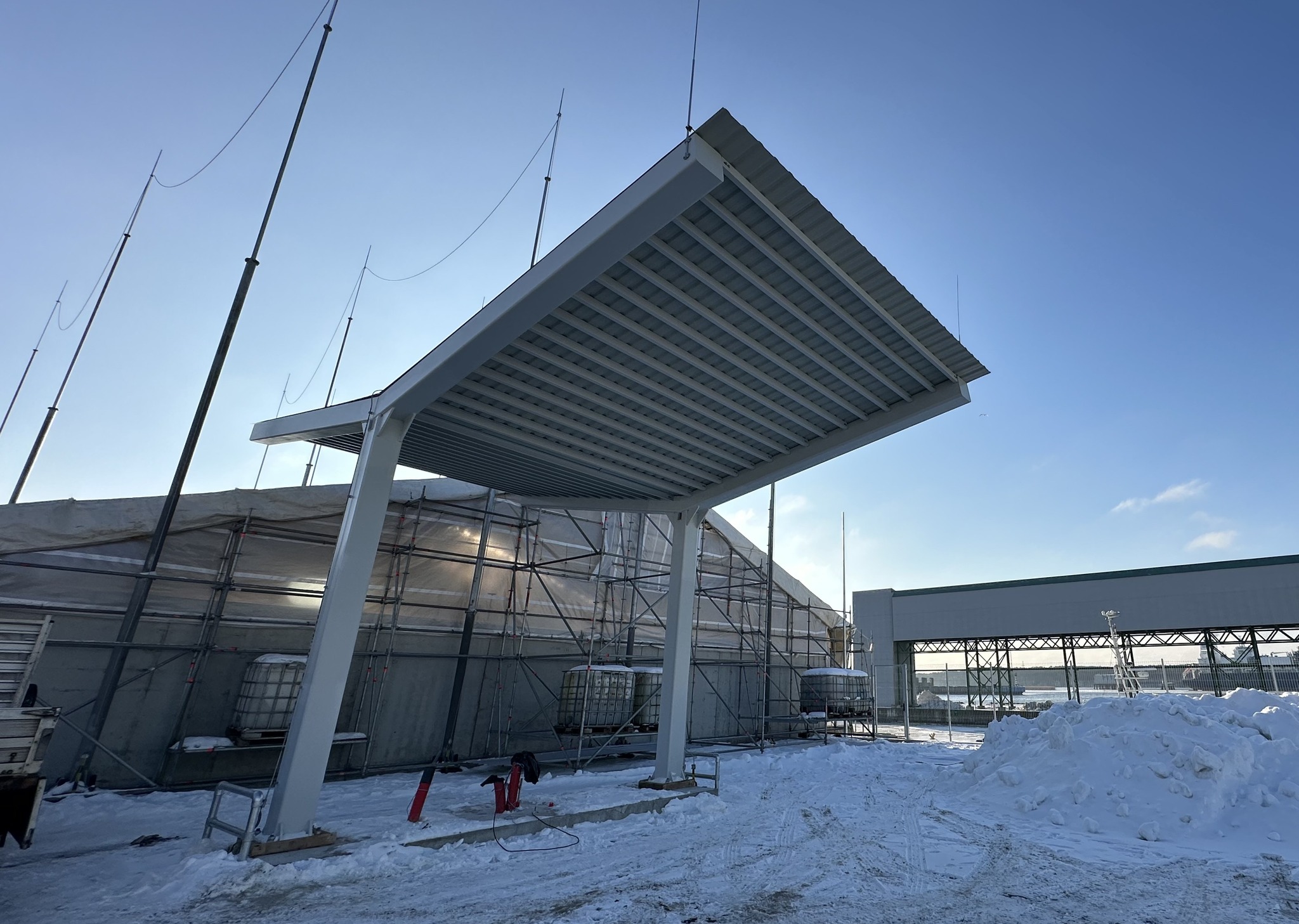
KLAIPEDA: The Klaipėda State Seaport Authority has taken a major step forward in the development of the port’s southern area by launching the procurement process for contractors under the first phase of the project. The selected contractor will be responsible for the construction of the southern port gates.

“For several years now, we have consistently highlighted both the need and the importance of developing the southern part of the port. By announcing this first-stage tender, we are taking a  tangible step toward the start of the largest project in the history of the Port of Klaipėda. We plan to begin actual construction works already this year,” says Algis Latakas, Director General of the Klaipėda State Seaport Authority.

Breakwaters play a crucial role from an environmental perspective. In the future, the southern gates complex will also include a marina and a quay. The construction of the southern port gates marks the very first step in the overall development of the southern port area.

Currently, Klaipėda Port faces a lack of space for future development. The southern expansion will open the door to new terminals and enable the port to accommodate the world’s largest vessels.

The Klaipėda Southport Development Project involves reclaiming approximately 100 hectares of new port territory and constructing 1.3 kilometers of new quays.

KR, Korean Government and Industry Partner Join Forces to Set International Standards for Ammonia Effluent Discharge

BUSAN: As the maritime industry accelerates its transition to zero-carbon fuels in line with the International Maritime Organization (IMO)’s 2050 net-zero target, ammonia-fueled ships are emerging as a promising next-generation solution. While the IMO has established interim guidelines to facilitate the use of ammonia as a marine fuel, international standards governing the safe treatment and discharge of toxic ammonia effluent generated during vessel operations have yet to be developed.

During the operation of ammonia-fueled ships, effluent containing toxic ammonia may be generated. Unlike typical aqueous ammonia, this effluent exhibits different physical and chemical characteristics, and the lack of clearly applicable international standards has created uncertainty for ship design, operation, and environmental management.

In response, KR (Korean Register), in collaboration with the Ministry of Oceans and Fisheries (MOF), five major Korean shipbuilders including HD Hyundai Heavy Industries, HD Korea Shipbuilding & Offshore Engineering, HD Hyundai Samho, Samsung Heavy Industries, and Hanwha Ocean, as well as the Korea Testing & Research Institute (KTR), officially launched an international working group in June 2025 to develop safety management and marine discharge standards for ammonia effluent.

The establishment of this joint working group followed Korea’s proposal at the IMO Sub-Committee on Carriage of Cargoes and Containers (CCC) in 2024, which highlighted the need for dedicated ammonia effluent safety standards. The proposal granted official approval at the 83rd session of the Marine Environment Protection Committee (MEPC) in April 2025.

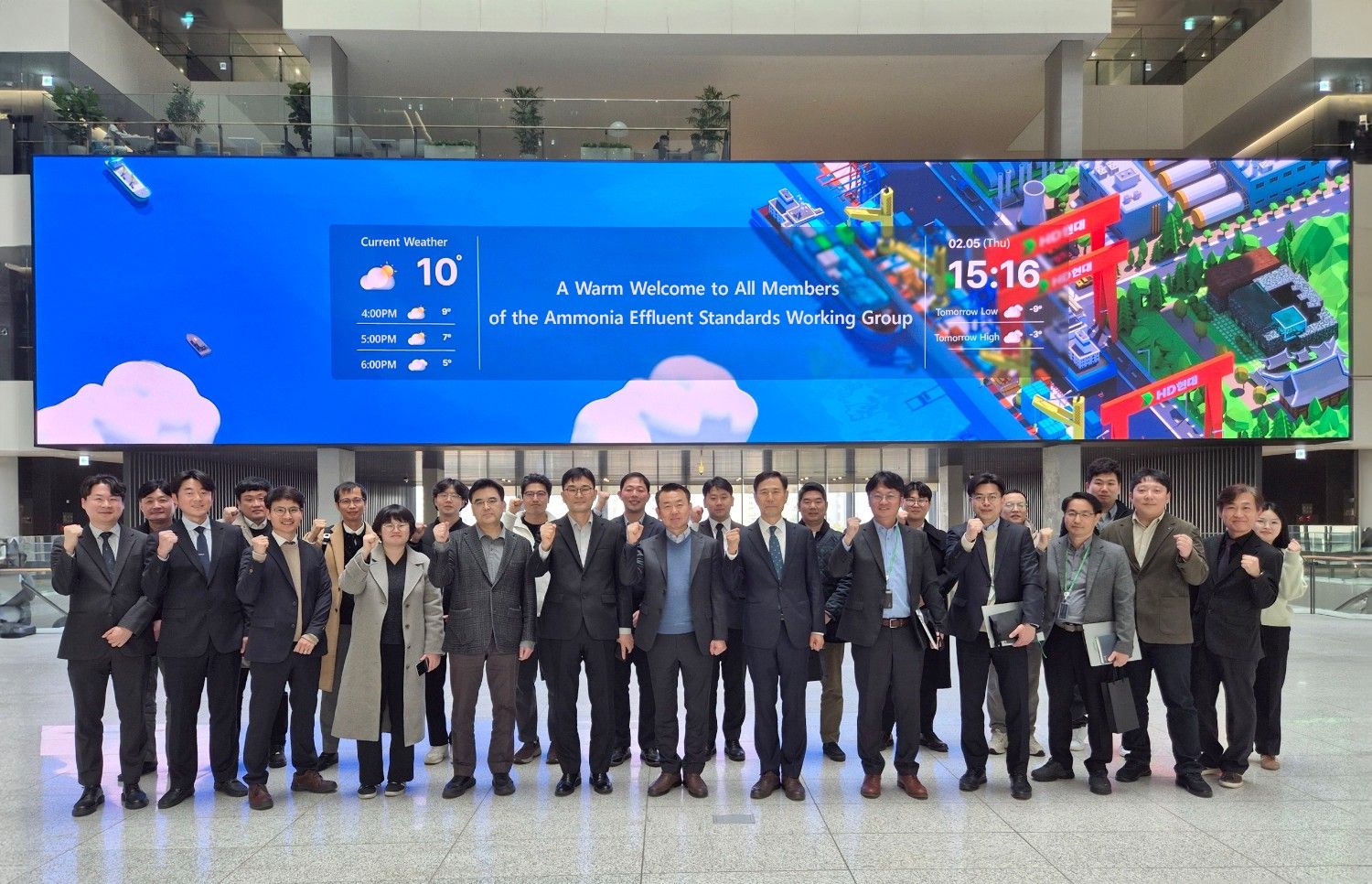
To commence its activities for 2026, the working group convened on February 5 at the HD Hyundai Global R&D Center, reinforcing inter-organizational cooperation on the development of international standards. Over 2026 and 2027, the group plans to submit draft international standards to the IMO Sub-Committee on Pollution Prevention and Response (PPR), positioning Korea at the forefront of global discussions on ammonia effluent management.

At the upcoming 13th session of the IMO PPR, scheduled for later this month, the Korean government delegation will underscore the urgency of establishing guidelines for ammonia effluent management and marine discharge standards, and propose the formation of an Expert Group for in-depth technical discussions. KR is leading these international deliberations by providing technical evidence on safe discharge limits, based on its environmental impact assessment of ammonia effluent.

This international standards development initiative presents a significant opportunity to embed Korea’s shipbuilding technological capabilities and operational experience into global regulations. From a regulation-driven industrial development perspective, this will strengthen the competitiveness of the Korean maritime industry as the market of ammonia-fueled ships expands.

KR’s Executive Vice President, KIM Kyungbok, stated, “This year’s IMO meetings mark the beginning of substantive international discussions on ammonia effluent safety standards. Drawing on KR’s technical and regulatory expertise, we will play a leading role alongside the Korean government and industry to ensure that proven domestic technical standards are effectively incorporated into international rulemaking.”

India and Gulf Cooperation Council sign terms of reference for India–GCC FTA

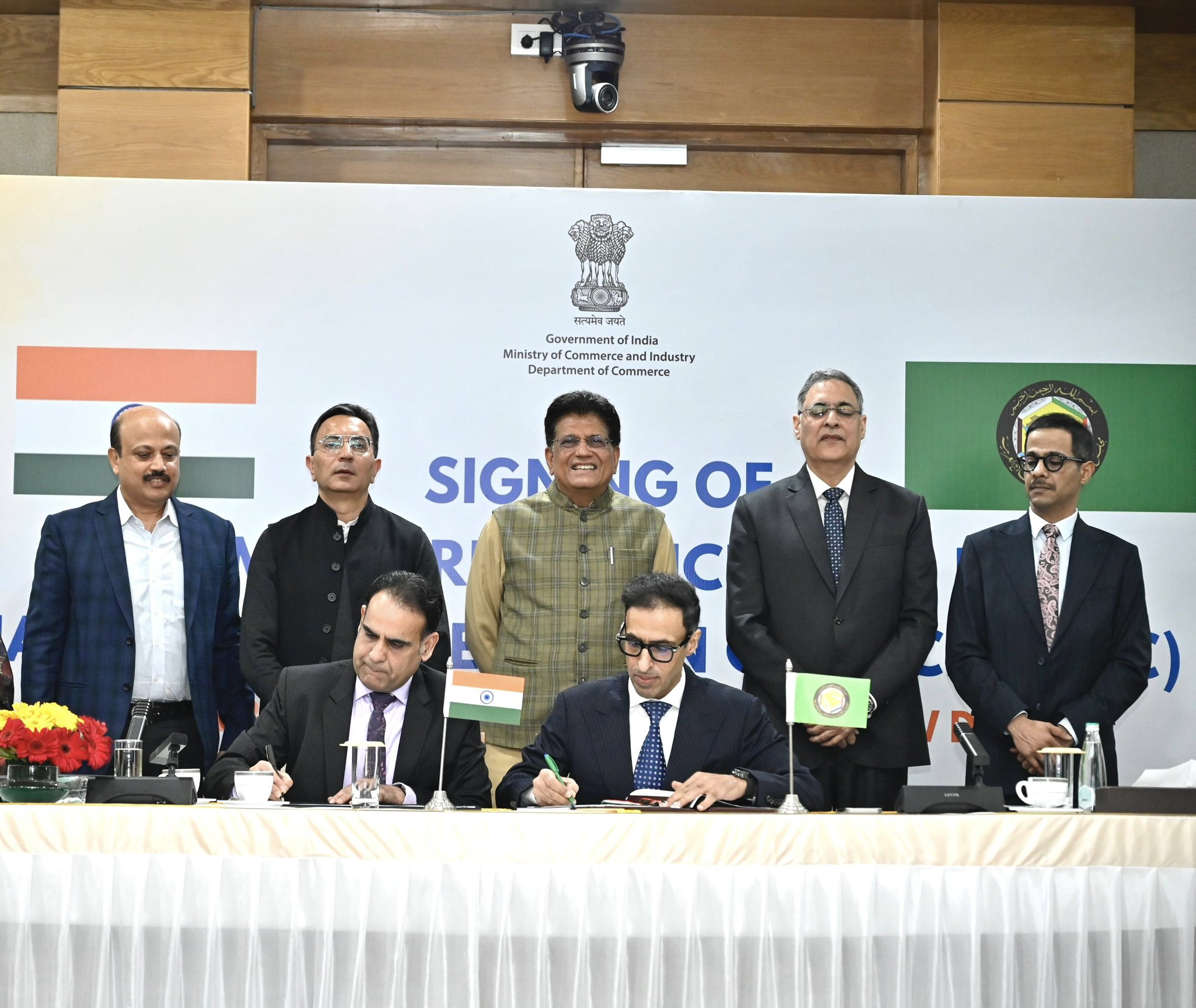
NEW DELHI : The Terms of Reference (ToR) for the India-GCC Free Trade Agreement (FTA) were signed between Shri Ajay Bhadoo, Additional Secretary and Chief Negotiator, Department of Commerce and Dr. Raja Al Marzouqi, Chief Negotiator, Secretariat General of the Gulf Cooperation Council, on 5 February 2026 at Vanijya Bhawan, New Delhi. The signing took place in the presence of Union Minister of Commerce and Industry Shri Piyush Goyal, Union Minister of State for Commerce and Industry Shri Jitin Prasada, and Commerce Secretary Shri Rajesh Agrawal.

The ToRs will guide the negotiations for the GCC-India FTA by defining its scope and modalities.

During the signing ceremony, Shri Piyush Goyal emphasized that the FTA will be a force multiplier for the global good. He underlined that the FTA will bring predictability and stability, taking the relationship between the two sides to greater heights. He exuded confidence that FTA will enable seamless flow of goods, and services and attract investments while expanding job opportunities and fostering food and energy security for the region, elevating our deep economic ties.

Chief Negotiator, Secretariat General of the Gulf Cooperation Council, Dr. Al Marzouqi, underscored that GCC and India have shared historic trade relations and that the signing of ToRs marks the commencement of negotiations towards a mutually beneficial FTA. He highlighted that the FTA will further reinforce relations between India and GCC, particularly in the context of prevailing global uncertainties.

During his visit, Dr. Raja Al Marzouqi met with Shri Rajesh Agrawal. The discussion focused on bolstering overall economic partnership between India and the GCC and advancing cooperation in the areas of mutual interest.

The India–GCC FTA holds significant potential to unlock and expand trade with an important region, with which India has longstanding historical ties in trade and commerce. India’s trade with GCC stood at USD 178.56 billion (Exports: USD 56.87 billion; Imports: USD 121.68 billion) in FY 2024-25, accounting for 15.42% of India’s global trade. In the last five years, India’s trade with the GCC has expanded steadily, registering an annual average growth rate of 15.3 per cent.

Key exports from India to GCC include engineering goods, rice, textiles, machinery, gems and jewelry. Key sectors of imports from GCC primarily comprise crude oil, LNG, petrochemicals, and precious metals such as gold. Collectively, the GCC countries represent a market of 61.5 million people (2024) and US$ 2.3 trillion in terms of GDP at current prices, ranking 9th globally in this category. The GCC region is also a significant source of FDI for India, with cumulative investments exceeding USD 31.14 billion as on September 2025.

The GCC is also home to nearly ten million members of the Indian community. These strong and enduring people-to-people ties are further reinforced by the substantial presence of Indian companies across the region.

India-US joint statement on trade deal “expected in next 4-5 days”: Piyush Goyal

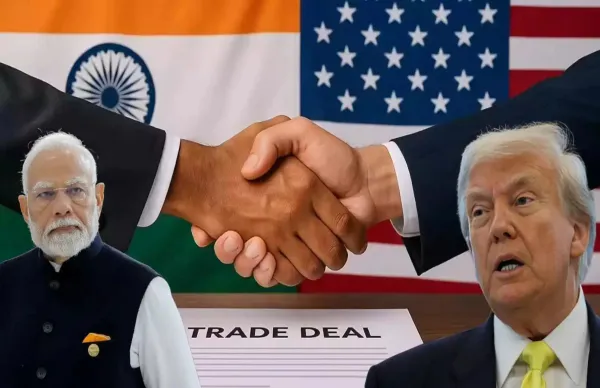
NEW DELHI: Union Minister of Commerce and Industry Shri Piyush Goyal announced on Thursday that the first tranche of the bilateral trade agreement between India and the United States is now ready, with a joint statement expected to be issued within the next four to five days. A formal legal agreement on the trade deal is expected to be signed around mid-March, he said.

Shri Goyal said that after the joint statement is released, the US is expected to issue an executive order to reduce tariffs to 18 per cent.

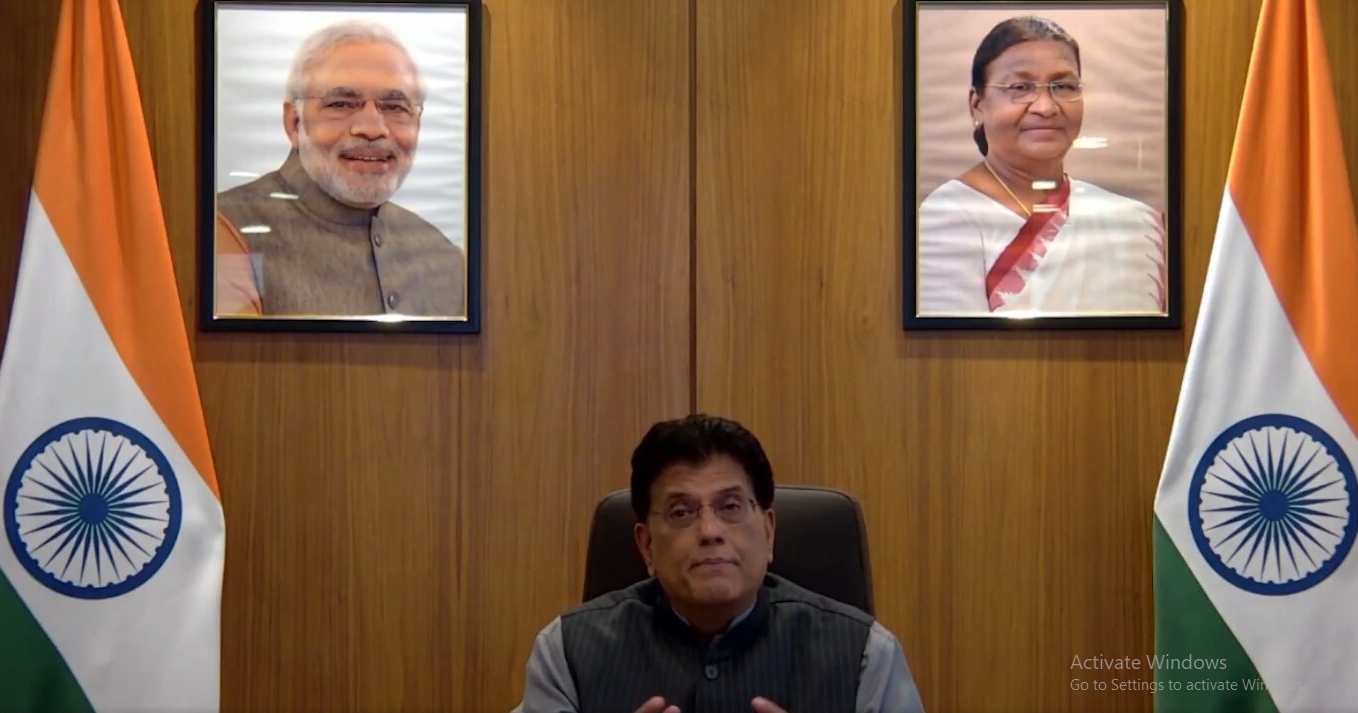
The Union Minister said this today during the signing ceremony of the Terms of Reference (ToR) for a Free Trade Agreement (FTA) between India and the Gulf Cooperation Council (GCC). Highlighting the scale of the upcoming engagement with Washington DC, Goyal stated, “Our orders for US aircraft and engine etc will alone cross USD 100 billion.”

Providing technical clarity on the procedural aspects of the deal, Commerce Secretary Shri Rajesh Agrawal explained the distinction between the two nations’ tariff structures. “Their (US) tariffs are executive tariffs. Our tariffs are MFN tariffs. So (our) MFN tariffs reduction only can take place after the legal agreement has been signed. That will only happen after the legal agreement has been signed,” Agrawal said.

On Wednesday, Goyal said that India and the US are complementary economies and the trade deal between the countries is beneficial for both parties.

Since Prime Minister Shri Narendra Modi‘s visit to the US in February 2025, the two sides have been negotiating a bilateral trade agreement (BTA) that would benefit both.

On February 2, a phone call between Prime Minister Narendra Modi and US President Donald Trump led to the announcement of the trade deal.

Addressing concerns raised by some members in the Lok Sabha, Goyal said, “Negotiators from both sides have been at various levels over the past year. During the negotiations, both sides safeguarded their important and sensitive sectors from the trade deal, at the same time ensuring maximum benefits for both countries.”

During these negotiations, Goyal said the Indian side secured protection for its sensitive sectors, particularly agriculture and dairy.“There were sectors which were important and sensitive from the US point of view. After negotiations for nearly a year, both sides have been successful in finalizing several areas of the bilateral trade agreement,” he said, speaking in the Lok Sabha.

The BTA, formally proposed in February 2025 following directives from the leadership of both nations, seeks to more than double bilateral trade, from the current USD 191 billion to USD 500 billion by 2030.

Mewnwhile at the signing ceremony today featured a high-level delegation, including Commerce Secretary Rajesh Agrawal, Chief Negotiator for India Ajay Bhadoo, Chief Negotiator for the GCC Raja Al Marzouki, Director General for FTA at the GCC Abulrazzaq Aljraid, and Additional Secretary at the Ministry of External Affairs Aseem Mahajan.

Reflecting on the historical depth of the partnership, Goyal observed that while formal discussions have been ongoing for two decades, the two regions have functioned as trading partners for over 5,000 years. “This will able to free flow of goods and services and take our bilateral relations to greater heights,” the Minister said, adding that India is actively pursuing FTAs with developed nations to expand its global economic footprint.

According to Goyal, the agreement will provide “a great opportunity to our MSMEs, farmers, fishermen, youth and manufacturing.” He specifically identified food processing, infrastructure, and the petrochemical industry as sectors that will “hugely benefit” from the high-quality companies and increased market access fostered by the pact.

Source: ANI

CONCOR signs MoU to form Bharat Container Shipping Line

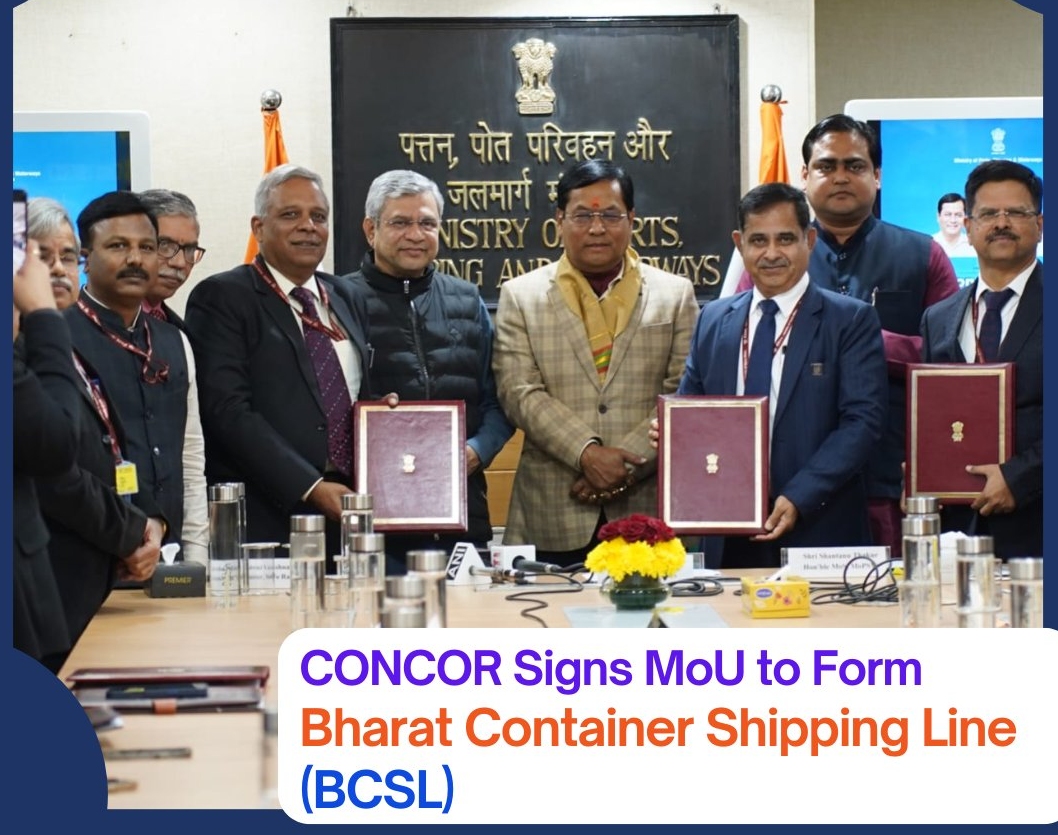
NEW DELHI:In a significant step towards strengthening India’s container shipping capabilities and advancing maritime self-reliance, Container Corporation of India Ltd. (CONCOR) has signed a Memorandum of Understanding (MoU) with key maritime stakeholders for the formation of the proposed joint venture, Bharat Container Shipping Line (BCSL), according to a Press Statement.

The MoU was signed on 3 February 2026 at New Delhi with the Shipping Corporation of India (SCI), V.O. Chidambarnar Port Authority (VOCPA), Jawaharlal Nehru Port Authority (JNPA), Chennai Port Authority (CPA), and Sagarmala Finance Corporation Ltd. (SMFCL).

The MoU signing took place in the august presence of Shri Ashwini Vaishnaw , Hon’ble Union Minister for Railways, and Shri Sarbananda Sonowal , Hon’ble Union Minister of Ports, Shipping and Waterways. The ceremony was also attended by Shri Shantanu Thakur , Hon’ble Union Minister of State for Ports, Shipping and Waterways.

The proposed JV, BCSL, aims to acquire, own, lease, and operate container vessels, containers, and related assets for EXIM and coastal trade, enabling integrated end-to-end multimodal logistics solutions by leveraging the collective expertise of ports, shipping, rail, and maritime finance stakeholders.

The formation of BCSL is also expected to promote the growth of ancillary industries such as container manufacturing and shipbuilding , providing a strong boost to India’s maritime ecosystem. CONCOR is expected to hold a 30% stake in the proposed JV, which will function as a national carrier for comprehensive multimodal logistics services.

APMT Mumbai achieves highest monthly volume in its history in January 2026

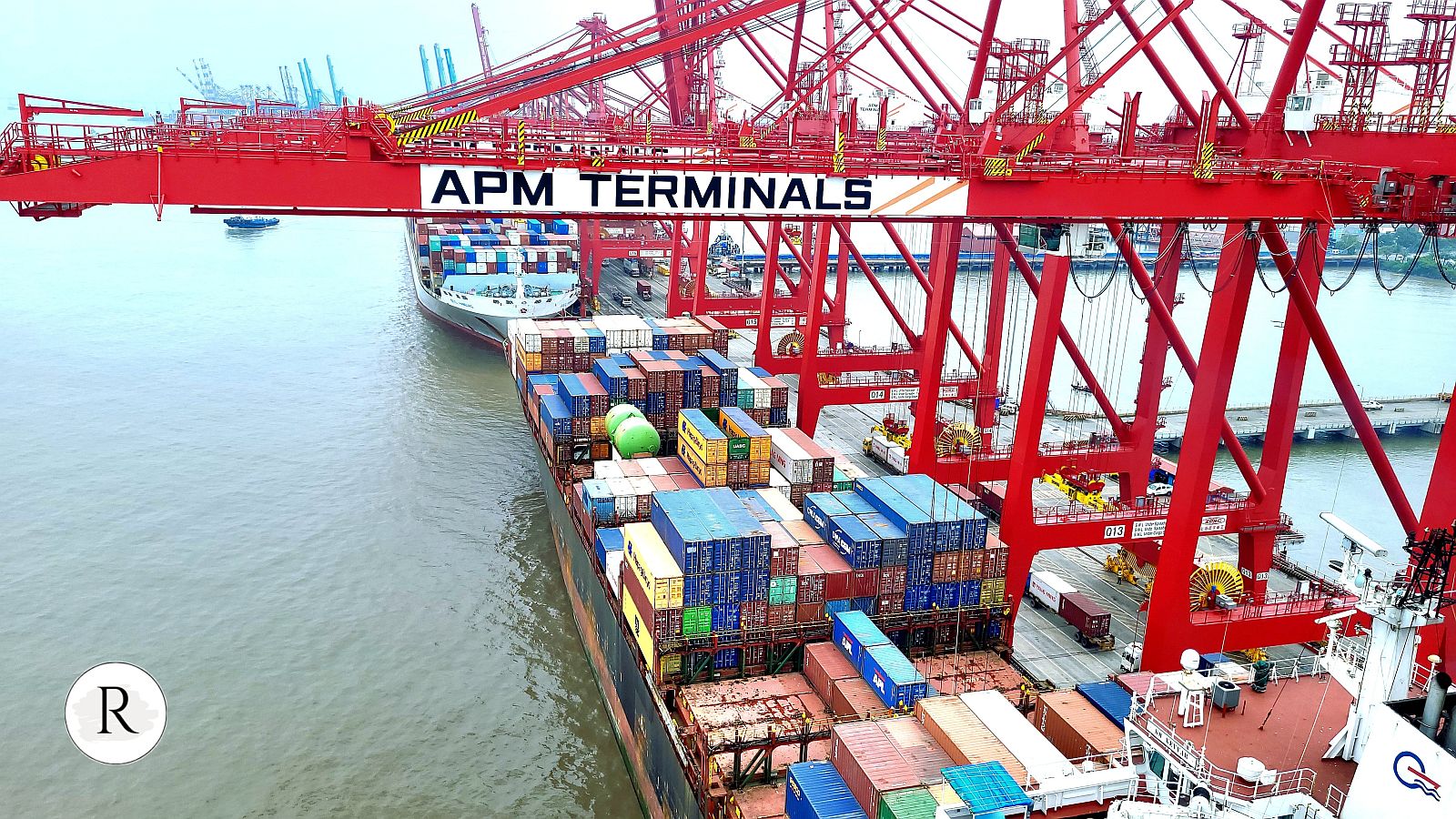
MUMBAI : Gateway Terminals India ( APMT Mumbai), at JN Port, has always been committed to deliver precision, reliability and operational excellence for its customers consistently, safely, and at scale. As it steps into 2026, the terminal has set a new industry benchmark in the very first month of the year.

This January, GTI achieved the highest monthly volume in its history — 2,11,846 TEUs — along with a record 1,29,722 moves, marking the highest move count ever recorded in a single month at the terminal. What makes this accomplishment even more significant is that it delivered this performance with just 712 metres of quay length, showcasing the strength of its planning, processes and people, highlighted a communique.

These achievements are far more than operational records. They reflect GTI’s continued commitment to ensuring that its customers experience faster vessel turnarounds, improved schedule integrity and consistently elevated service quality.

Speaking about the achievement, Mr Kumar Divya, Chief Commercial Officer, GTI, said: “There are not many terminals in the world that can claim to handle 200k plus TEUs on 712 m of berth. Precise planning and a host of new initiatives has helped elevate operational excellence at GTI. We are ready, with our people, processes and infrastructure, to meet the growing expectations of our customers and to support their business ambitions in the coming years, and we do all of this with uncompromising safety discipline.”
This milestone reinforces the terminal’s long standing vision: The Best Container Terminal Operator in India for All Stakeholders.

“As we continue through 2026, we will keep raising the bar on operational excellence, safety leadership and customer experience. We will continue to strengthen our position and deliver on today’s potential and tomorrow’s ambitions,” as per the release.

US-India trade deal: Tariffs reduced to zero

WASHINGTON : The US said India will lower tariffs on a “vast array” of American industrial and agricultural goods, such as “fruits, vegetables”, to zero per cent under the trade deal announced by President Donald Trump.

The US described this as a “big win” while noting that India will continue to control “certain key areas” that enjoy protection.

“This is it. The time has come, and now we have the deal. We’ll finish papering it, but we know the specifics. We know the details. It’s a very exciting opportunity,” United States Trade Representative Jamieson Greer said Tuesday in an interview to CNBC Squawk Box.

Greer said that the US will continue to maintain some level of tariff against India – 18 per cent – “because we have this giant trade deficit with them, but they’ve also agreed to reduce their tariffs for us on a variety of agricultural products, manufactured goods, chemicals, medical devices, etc. It’s an exciting opportunity for both countries,” he said.

Giving details of the deal, Greer added that with India right now, on industrial goods, the average tariff is about 13.5 per cent.

“That’s going to go to zero for virtually everything. When I say virtually, I mean 98-99%. On the agricultural side, there’s a vast, vast array of agricultural goods. So it will go to zero,” he said.

“India, like every country in the world, including the United States, has some protection around certain key areas where they’ll continue to control that. We’ll continue to work on access. But for a variety of things, tree nuts, wine, spirits, fruits, vegetables, etc, they’re going down to zero. This is a big win,” Greer said.

Separately, the USTR said in a post on X that “India will lower tariffs on a wide array of US industrial and agricultural goods to 0%. President Trump’s historic deal with India delivers unprecedented market access for American farmers and producers.”

On the non-tariff barriers, he said that getting rid of tariffs is one thing, but often, the non-tariff barriers pose problems.

“So we have an understanding and agreement with the Indians as well on a variety of technical barriers to trade areas where they have not accepted US standards.

“We know American goods are safe, we know they’re effective, etc. We have effective regulation in the US, sometimes too effective. So we have an agreement with them on a process for recognising certain US standards. They obviously have their own political considerations, and they have their own processes for accepting those standards, but that’s a key portion of this trade agreement that should open up this market of over a billion people to US goods,” Greer said.

When asked about Delhi’s Russian oil purchases, Greer said that prior to 2022-23, India really didn’t import Russian crude.

“They took advantage of a situation where Russian crude was trading at a discount because they couldn’t get it to any other countries because of sanctions. President Trump very accurately…put the Indians on notice that we view this as supporting the Russian war effort.”

“And starting at the end of last year, the Indians started winding down their purchase of Russian oil. We’ve been monitoring that. They’ve been diversifying purchases of energy from the US, not just oil, but also gas, propane, and other things. That’s been going up. We’ll keep monitoring that. Obviously, they want to diversify from other sources too, whether it’s Venezuela or the Gulf, etc. There are a lot of opportunities to do this. The Indians are making the right choice,” Greer said.

In a Truth Social post on Monday, Trump had said that, effective immediately, the two sides agreed to a trade deal under which the US will lower its reciprocal tariff imposed on India from 25 per cent to 18 per cent. India will also move forward to reduce its tariffs and non-tariff barriers against the United States to “zero”.

“The Prime Minister also committed to ‘BUY AMERICAN’, at a much higher level, in addition to over $500 BILLION DOLLARS of U.S. Energy, Technology, Agricultural, Coal, and many other products.

“Our amazing relationship with India will be even stronger going forward. Prime Minister Modi and I are two people who GET THINGS DONE, something that cannot be said for most,” Trump said.

US Secretary of Agriculture Brooke Rollins also thanked Trump for “once again” delivering for American farmers.

“New US-India deal will export more American farm products to India’s massive market, lifting prices, and pumping cash into rural America,” Rollins had said in a post on X.

Noting that in 2024, America’s agricultural trade deficit with India was $1.3 billion, she said India’s growing population is an “important market” for American agricultural products and the deal will go a long way to reducing this deficit.

“America First victory on top of the dozens of deals for agriculture,” Rollins had said.

Source : PTI

India in continuous discussions over Chabahar Port amid US policy changes

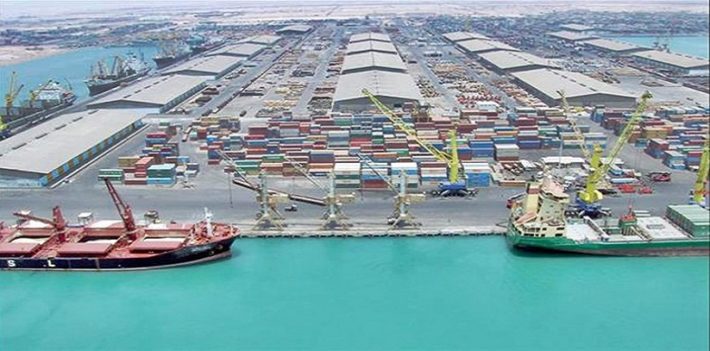
NEW DELHI : The Government informed Parliament about key developments concerning the Chabahar Port project, stating that it remains in continuous dialogue with all stakeholders regarding the implications of recent changes in US sanctions and tariff policies on India.

Leader of the Opposition in the Rajya Sabha, Mallikarjun Kharge, sought clarification from the government on whether the impact of these policy changes has been assessed and asked for details on the financial commitments and expenditure made by India towards the project over the past five years.

In a written response, Minister of State for External Affairs Kirti Vardhan Singh said that a long-term contract was signed on May 13, 2024, between India Ports Global Limited and Iran’s Ports and Maritime Organization for the operation and supply of equipment at the Shahid Beheshti Terminal of Chabahar Port. He stated that India has fulfilled its commitment of US$120 million for port equipment procurement, with the final installment transferred on August 26, 2025.

Kharge also inquired whether diplomatic engagements had taken place with the United States or other partners over the past two years regarding the project, and what contingency measures were being prepared to ensure India’s continued participation. The Minister noted that on September 16, 2025, the US Department of State announced the withdrawal of sanctions waivers granted in 2018 under the Iran Freedom and Counter-Proliferation Act of 2012, which had supported the reconstruction and economic development of Afghanistan. The withdrawal was to take effect from September 29, 2025. However, following discussions with the US, the waiver was conditionally extended until April 26, 2026.

He added that the Government of India is actively engaging with all relevant stakeholders to address the evolving situation and safeguard its interests in the Chabahar Port project.