Home Blog Page 447

India-US Trade deal protects dairy, key agriculture products; no duty for $40 billion exports

NEW DELHI : The India-US Trade deal exempts Indian dairy and “sensitive” agriculture items from its ambit, provides for zero-duty access to over $40 billion worth of Indian goods, and reduces customs duties on labor-intensive Indian merchandise such as textiles, leather goods, marine products, chemicals, and certain agricultural items, including processed food, to 18% from day-one, people aware of the development said on Tuesday.

Elaborating upon the basic contours of the deal announced by President Donald Trump on Monday, the people cited above said the 25% punitive tariff imposed on Indian goods for purchasing Russian oil will be removed in a couple of days. Besides, the 25% reciprocal tariff imposed on goods worth about $30 billion (labour-intensive items) will become 18% days after the deal is formalised through a joint statement, they added, requesting anonymity. They were citing bilateral trade data for the calendar year 2024

“Indian exporters were struggling to survive in their biggest market against the cheaper labour-intensive products of competing countries such as Bangladesh, Cambodia, Vietnam, Indonesia, China, Malaysia and Thailand because of the huge duty differential. They paid around 19%-20% against Indian exporters being charged 50%. Now, after the deal, Indian exporters will have about 1-2 percentage point duty advantage,” one of them said.

Competing countries have higher import duties in the US market. For instance Vietnam is 20%, Malaysia 19%, Bangladesh 20%, Cambodia 19% and Thailand 19%.

Union commerce and industry minister Piyush Goyal said in New Delhi that the sensitive agriculture and dairy sectors were safeguarded in a deal that will boost labour-intensive and export-oriented sectors. “This is truly a deal that every Indian can be proud of,” he added.

US Trade Representative Jamieson Greer said in an interview that India had agreed to reduce tariffs on US exports and that India’s industrial goods tariffs will go to zero from 13.5%. “India is maintaining some protection around agricultural goods,” he told CNBC in the interview.

The developments came a day after Prime Minister Shri Narendra Modi announced that Indian goods will face a reduced US tariff of 18% after a phone conversation with Trump, who said the two sides had concluded a trade deal whereby New Delhi will cut its tariffs to zero and buy American goods, including energy, worth more than $500 billion.

The announcement concluded nearly 12 months of tense negotiations that saw bilateral ties nosedive. India’s labour-intensive sectors were the worst hit by the US tariffs that were the highest (50%) among competing countries. The sectors mainly comprised textiles and apparels, leather and footwear, marine products, chemicals, plastic, rubber, home decor, carpets, machinery, certain agri items, and processed agriculture products, the people cited above said.

According to them, the governments of both sides are finalising a joint statement, which will formalise the contours of the deal. Subsequently, the two sides will seal the deal after legal scrubbing. “Most of the provisions of the deal will come into force after the joint statement. Some of them could have certain specific timelines,” a second person said adding that the deal has already been negotiated in a structured manner, so it will be implemented expeditiously.

Indian government officials declined to comment on specific details of the deal before the formal joint statement as there could be some last-minute adjustments. They said, requesting anonymity, that the joint statement will formalise the understanding arrived at after lengthy negotiations.

Both Goyal and Greer separately hinted that the final language of the deal was yet to be firmed up.

“We will be shortly issuing a joint statement by both countries, along with the details which we will be shortly inking between the United States of America and India. And as soon as the final understanding of the deal is inked and the joint statement is finalised, technical processes are completed, full details will be shared,” Goyal said in Delhi.

“But I can assure the people of India, I can assure 140 crore brothers and sisters, that this is a deal that will make every Indian proud, that will protect the interest of every Indian, and provide huge opportunities for all the people of India, and will protect the sensitive sectors, the interests of our agriculture and our dairy sectors in full respect, opening up huge opportunities for our labor-intensive sectors, export sectors in textiles, plastics, apparel, home decor, leather and footwear, gems and jewelry, organic chemicals, rubber goods, machineries, so many products, aircraft components,” he said.

Greer said the Trump administration was working on finalising the trade agreement.”We’ll finish papering it, but we know the specifics, we know the details,” he added.

Earlier in the day, US secretary of agriculture Brooke Rollins had said that Washington will export more farm products to India as part of the deal that will pump more cash into rural America.

”Thank you US President Donald Trump for ONCE AGAIN delivering for our American farmers. New US-India deal will export more American farm products to India’s massive market, lifting prices, and pumping cash into rural America. In 2024, America’s agricultural trade deficit with India was $1.3 billion. India’s growing population is an important market for American agricultural products and today’s deal will go a long way to reducing this deficit. America First victory on top of the dozens of deals for ag,” she said on X.

According to the people mentioned above, the $500 billion purchase commitment is spread over five years and involves items that are primarily and essentially imported by India. “For example, with its rapid economic growth, India needs airplanes worth over $100 billion, including parts. Similarly, it will involve imports of crude oil and gas (liquefied natural gas or LNG) worth billions of dollars every year. According to available data, in the month of November 2025 alone, India saw 47.6% annualised jump in import of crude oil from the US at over $1.9 billion. In volume terms, the jump was 31.4% to 5,385,271 tonnes.

The $500 billion purchase commitment will also involve import of precious metals and stones such as diamonds (except for gold, which will have some kind of tariff rate quota or TRQ), for value-addition in India, hi-tech products, equipment for data centres and global capability centres (GCC) and semiconductors. It will also involve collaboration in the artificial intelligence (AI) sector. “All these technological items and sectors are important for India’s growth and to make it a developed country, thus it will help the Indian economy immensely,” the first person said.

India may get zero duty exports to the US after the trade deal for goods worth about $10 billion, which America allows to almost all of its FTA partners. This is as per the US’ Annexure III, which is Potential Tariff Adjustments for Aligned Partners (PTAAP). According to the US government websites, about 2,000 products are eligible for reduced or zero duties under PTAAP, covering sectors such as natural resources, coffee, tea, fruits such as bananas and oranges, tomatoes, and fruit juices. This is besides the $4 billion worth of Indian goods already exempted, such as certain agri products, papers, and minerals.

To be sure, the US does not levy any tariff on these items for anyone.

As pharmaceuticals and mobile phones were already exempted, they will remain under the exempt category even after the deal, people mentioned above said, adding that they are exempt because they are also part of the PTAAP.

Apart from that, there are items worth $12-13 billion on which the US has imposed safeguard duties, such as steel, aluminium, auto and auto components and copper. The matter is under the ambit of the World Trade Organization and these safeguard duties are levied on everybody, the people mentioned above said.

Items from the US with high sensitivity may continue to enjoy duty protection in India, while the least sensitive American goods will get zero-duty access immediately.

Sensitive items include dairy, cereals, maize, meat, poultry, rice, wheat, GM foods, soybeans and ethanol.

Moderately sensitive items such as almonds, pistachios, cherries and hazelnuts may have tariff rate quotas, while others such as lettuce and some oils will have duty phase-out arrangements over 3-10 years.
India committed to no longer purchasing Russian oil, $500 billion of investments into U.S.: White House

WASHINGTON : The White House has hailed a new trade agreement with India, saying the country has committed to “no longer” purchasing Russian oil, with Prime Minister Shri Narendra Modi also agreeing on investments of $500 billion across key American sectors.

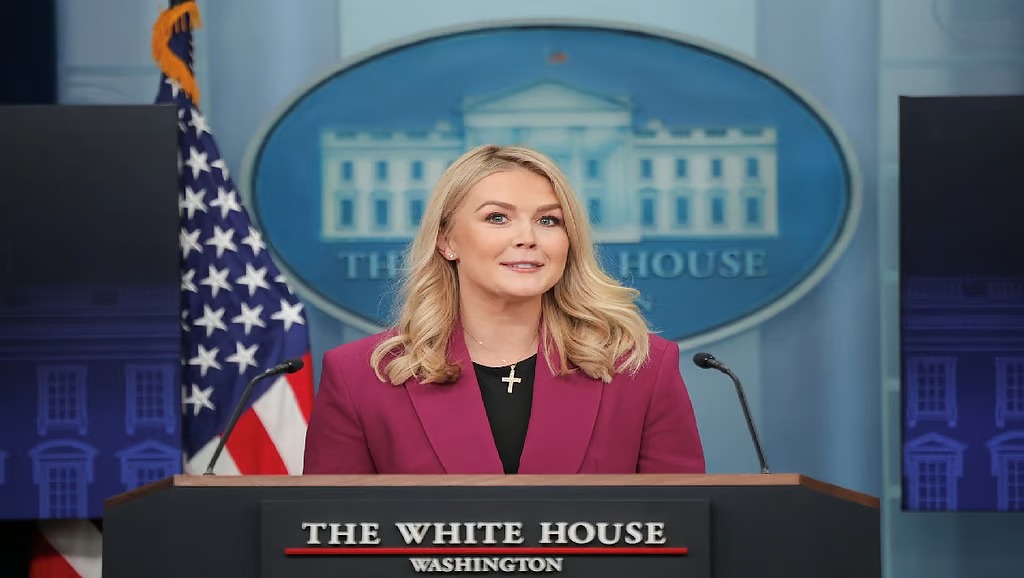
These remarks were made by White House Press Secretary Karoline Leavitt on Tuesday (February 3, 2026).”The President struck another great trade deal with India. He spoke with Prime Minister Modi directly. They share a very good relationship. India is committed to not only no longer purchasing Russian oil, but buying oil from the United States, also perhaps from Venezuela too, which we know will now have a direct benefit on the United States and the American people,” Ms. Leavitt told reporters Tuesday (February 3, 2026).

She further said that in addition to that, Prime Minister Modi “committed to $500 billion of investments into the United States, including for transportation, for energy and for agricultural products as well. So this is another great trade deal thanks to President Trump.”

How India-US trade talks unravelled
A timeline of how India, once seen as the frontrunner for a U.S. deal, ended up facing steep tariffs after U.S. President Donald Trump escalated tensions, and called it a “dead economy.

Earlier, speaking to Fox News about the India-U.S. trade deal, Ms. Leavitt said the two leaders had a “great call” on Monday (February 2, 2026), following which the bilateral trade deal was announced.

“…when it comes to Prime Minister Modi, I know he [Mr. Trump] particularly enjoys their relationship and has a deep respect for the Prime Minister and for his country of India.“They had a great call. It was very productive yesterday, and they struck a deal in which India has agreed to stop purchasing Russian oil to buy more American oil from the United States of America, and potentially from Venezuela too,” she said.

Ms. Leavitt added that Trump and his national security team are “now dictating” the commerce of Venezuela and those oil sales.

“So this directly benefits the American people as well. And in addition, India has agreed to invest more in the United States because of President Trump’s call to action on that phone call yesterday. Prime Minister Modi committed to USD 500 billion of purchases of US energy, transportation, and agricultural products,” she said.

Ms. Leavitt said the U.S. tariff on India will now be at 18%, but American exports to India will face a tariff of 0 per cent, so this is a great deal and a huge win for American workers, businesses and consumers alike.”

The Trump administration had imposed 50% tariffs on India, including 25% for Delhi’s purchases of Russian oil.

In a Truth Social post on Monday (February 2, 2026), Mr. Trump had said that, effective immediately, the two sides agreed to a trade deal under which the U.S. will lower its reciprocal tariff imposed on India from 25% to 18%. India will also move forward to reduce its tariffs and non-tariff barriers against the United States to “zero”.

“The Prime Minister also committed to ‘BUY AMERICAN’, at a much higher level, in addition to over $500 BILLION DOLLARS of US Energy, Technology, Agricultural, Coal, and many other products.

“Our amazing relationship with India will be even stronger going forward. Prime Minister Modi and I are two people who GET THINGS DONE, something that cannot be said for most,” Mr. Trump said.

Mr. Modi said it was wonderful to speak with his “dear friend” Mr. Trump. “Delighted that Made in India products will now have a reduced tariff of 18 per cent. Big thanks to President Trump on behalf of the 1.4 billion people of India for this wonderful announcement,” Mr. Modi said.

“When two large economies and the world’s largest democracies work together, it benefits our people and unlocks immense opportunities for mutually beneficial cooperation. President Trump’s leadership is vital for global peace, stability, and prosperity. India fully supports his efforts for peace. I look forward to working closely with him to take our partnership to unprecedented heights,” Mr. Modi said.

India relaxes baggage norms, allows 40 gm jewellery Duty-Free

NEW DELHI : Under new baggage rules, notified by the Central Board of Indirect Taxes & Customs (CBIC), now, a female travelling from abroad can bring 40 grams of jewellery, and a male 20 grams, without a value cap, provided they have spent more than one year there.

The new notification says, the cap has been 40 grams and 20 grams, but there were value caps of ₹1 lakh and ₹50,000. “A resident or tourist of Indian origin residing abroad for more than one year, on return to India, shall be allowed duty free clearance of jewellery upto a weight of forty grams, if brought by a female passenger or twenty grams if brought by a passenger other than a female passenger in bona fide baggage”.

New rules have also changed the duty-free allowance. Accordingly, for resident Indians, tourists of Indian origin, and foreigners with a valid visa other than a tourist visa, it would be ₹75,000; for tourists of foreign origin and crew members, it would be ₹25,000 and ₹2,500, respectively.

Duty-free allowances
New rules have also changed the duty-free allowance. Accordingly, for resident Indians, tourists of Indian origin, and foreigners with a valid visa other than a tourist visa, it would be ₹75,000; for tourists of foreign origin and crew members, it would be ₹25,000 and ₹2,500, respectively.

Passenger-friendly measures
“These measures reflect facilitative and revised provisions for international passengers and in line with new economic conditions, rising travel volumes and passenger expectations. The changes have been aimed at in consultation with stakeholders including Ministries, airport operators, and feedback from passengers, etc. These Rules will simplify procedures, enhance transparency, enable electronic and advance declarations and ensure smooth clearance,” a CBIC statement said.

Transfer of residence
Under the transfer of residence benefits, a person staying abroad for up to 1 year will receive ₹1.5 lakhs. For a period between 1-2 years and above 2 years, it would be ₹3 lakhs and ₹7.5 lakhs, respectively. “The transfer of residence benefits has also been simplified and modernised by having only a single rationalised list of duty-free articles, with an overall value cap as per eligibility,” the statement said.

Laptops and pets
Further, “Duty-free import of one laptop (for passengers above 18 years) and pets incorporated into the Rules,” it said, while adding that the facility of issuance of a temporary baggage import certificate or export certificate for temporary carriage of goods brought in or taken out, respectively, has been envisioned for hassle-free clearance at arrival and to avoid unnecessary detention of goods.

Simplified procedures
“The revised framework focuses on higher duty-free limits, reduced detention, digital and simplified processes, simplified procedures to enhance passenger convenience, while strengthening India’s position as a globally connected and tourism-friendly destination through uniform implementation across Customs formations,” the statement said.

Smart Freight Centre appoints Capt. Prashant S. Widge as Director Maritime & Executive Director India

NEW DELHI: Smart Freight Centre (SFC) has announced the appointment of Captain Prashant S. Widge as Director Maritime & Executive Director India. In this dual leadership role, Capt. Widge will lead SFC’s strategic expansion in India while overseeing and scaling its global maritime workstream.

Capt. Widge brings over 25 years of sea-to-boardroom experience across the maritime, shipping, logistics and sustainability ecosystem, spanning seafaring command, enterprise leadership, policy engagement and large-scale transformation. He joins Smart Freight Centre from A.P. Møller – Maersk, where he most recently served as Head of ESG, Public & Regulatory Affairs, South Asia, and as the company’s principal representative in the region.

At Smart Freight Centre, Capt. Widge will be responsible for shaping the next phase of SFC India’s growth and impact, aligned with SFC’s global strategy and priorities. His mandate includes defining and delivering the strategic roadmap for SFC’s global maritime portfolio; advancing zero-emission freight adoption; strengthening emissions accounting and data-driven decarbonisation; developing scalable finance and market interventions; and building robust public – private partnerships across maritime, aviation and multimodal freight.

Prof. Dr. Ing. Christoph Wolff, CEO of Smart Freight Centre, said:

“We are delighted to welcome Capt. Prashant to Smart Freight Centre. His maritime expertise and proven leadership at the intersection of sustainability, policy and complex stakeholder systems significantly strengthen our global capability. His deep understanding of India’s freight, regulatory and industrial landscape will be instrumental in accelerating SFC India’s impact and positioning the country as a leader in zero-emission freight pathways.”

Capt. Prashant pioneered Maersk’s global ship recycling program from policy to execution, co-conceived the Ship Recycling Transparency Initiative (SRTI), and represented the company in the Climate Group’s Steel Zero Initiative. He drove global decarbonisation efforts with the IMO, EU, and industry coalitions, advanced green-fuel origination with governments and suppliers, and, as Group Representative for South Asia, built Maersk’s public and regulatory affairs function, elevated India’s strategic profile through the India Growth Council, and co-founded IN-DK Green Transition and IN-EU aggregator partnerships.

Capt. Prashant S. Widge,  Director Maritime & Executive Director India

“Smart Freight Centre occupies a uniquely credible position in the global freight ecosystem, translating data, standards and collaboration into real-world emissions reduction. As freight decarbonisation moves from ambition to execution, my focus will be on building scalable, outcome-oriented programmes that align policy intent, industry readiness and investment confidence.

I look forward to working with governments, industry leaders and ecosystem partners to accelerate zero-emission freight across road, maritime, aviation and multimodal supply chains.”

About Smart Freight Centre

Smart Freight Centre (SFC) is a global non-profit advancing climate action in the freight sector. Since launching its India program in May 2023, SFC has worked closely with NITI Aayog’s e-FAST initiative to promote freight electrification and reduce emissions. Under its Pilots to Pathways: SFC Corridor Initiative, Smart Freight Centre is advancing the scaled deployment of Zero-Emission Trucks (ZET) along key freight corridors. The initiative brings together shippers, charge point operators, regulators, and policymakers to aggregate demand, plan renewable-powered charging infrastructure, and mobilize ecosystem-wide implementation.

China’s shipbuilding sector maintains global leading position in 2025

China’s shipbuilding industry maintained the world’s largest market share in terms of three major indicators for the 16th consecutive year in 2025, according to data released by the Ministry of Industry and Information Technology on Sunday.

The country’s shipbuilding output reached 53.69 million deadweight tonnes (DWT) in 2025, up 11.4 percent year on year and accounting for 56.1 percent of the global total.

New orders reached 107.82 million DWT last year, representing a 69-percent share of the global market.

As of the end of December 2025, the sector’s holding orders stood at 274.42 million DWT, up 31.5 percent from the previous year. This volume accounted for 66.8 percent of the global market share.

ClassNK Fleet Cost Simulation’ receives ‘Best Project Innovation Award’ at Saudi Maritime Awards

TOKYO: The service ‘ClassNK Fleet Cost Simulation’*1 provided by ClassNK has been honored with the Best Project Innovation Award at the Saudi Maritime Awards, hosted by Robban Assafina, the maritime media platform in the Middle East and North Africa (MENA) region. The award ceremony took place on 29 January in Jeddah, Saudi Arabia.

The Saudi Maritime Awards, in strategic partnership with the Transport General Authority of Saudi Arabia, were established to recognize and honor notable figures in the maritime and shipping sectors for their significant accomplishments and consistent high-level performance in areas such as ports, shipping, and related industries.

The service received the Best Project Innovation Award, which is presented to new and innovative projects and products which have contributed positively to the industry generally, amid the challenges facing the maritime industry, mainly sustainability & zero emissions.

This award recognized the comprehensive value of the ‘ClassNK Fleet Cost Simulation’, which estimates cost impacts on behalf of clients under GHG‑reduction regulations such as the EU‑ETS, FuelEU Maritime, and IMO’s mid‑term measures. In this service, a simulation tool is provided that visualizes each step of the calculation process.

In addition to features such as transparent calculation logic, secure offline desktop operation, and a high degree of customization to reflect each client’s specific conditions, the tool has been widely regarded as contributing to significant streamlining of complex regulatory cost calculations, improved accuracy in decision‑making for decarbonization‑related investments, and reduced compliance risks through alignment with the latest regulatory requirements.

These combined practical contributions and strong user evaluations were comprehensively acknowledged, leading to the recognition received this time.

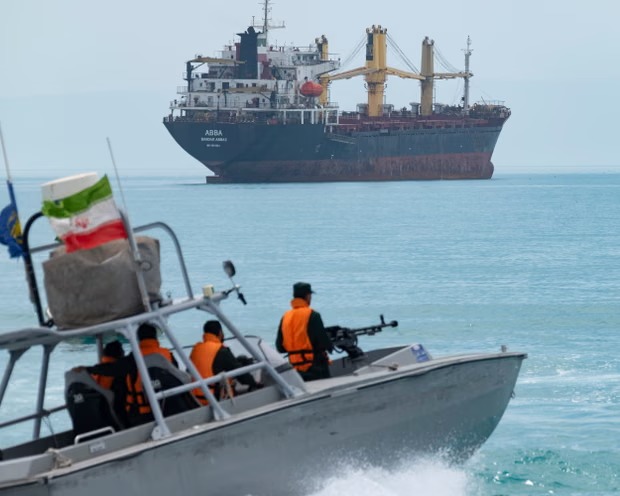
Iran tensions: Armed boats harass ship in Strait of Hormuz

A ship sailing through the Strait of Hormuz has reported being harassed by several armed boats.

The unnamed vessel was travelling 16 nautical miles (30 km) north of Oman when it was hailed on VHF, the master told the UK Maritime Trade Operations Centre.

The request was ignored, and the vessel continued its journey, the report added.

The incident comes amid high tension in the region as the US ratchets up pressure on Iran over the country’s nuclear programme.

Iran had planned live-fire naval exercises in the area this week, but subsequently called them off. The drills would have encompassed the northbound transit corridor for shipping.

Nuclear talks are scheduled in Istanbul on Friday.

Iran has also been brutally tackling protests in the country, with estimates of thousands killed in the crackdown by state security forces.

Wärtsilä: All-Time High Operating Result and Cash Flow in 2025

HELSINKI: This release is a summary of Wärtsilä’s Financial Statements Bulletin January–December 2025. The complete report is attached to this release as a pdf file.

October–December 2025 highlights

  • Order intake in Marine and Energy combined increased by 6% to EUR 1,746 million (1,645), while the organic growth, which excludes FX impact and the impact of acquisitions and divestments, was 11%
  • Total order intake decreased by 11% to EUR 2,220 million (2,491), while the organic growth was -4%
  • Service order intake decreased by 5% to EUR 959 million (1,007)
  • Net sales in Marine and Energy combined increased by 18% to EUR 1,657 million (1,406), while the organic growth was 23%
  • Total net sales increased by 8% to EUR 2,002 million (1,854), while organic growth was 16%
  • Book-to-bill amounted to 1.11 (1.34)
  • The comparable operating result increased by 23% to EUR 256 million (209), which represents 12.8% of net sales (11.3)
  • The operating result increased by 10% to EUR 251 million (229), which represents 12.5% of net sales (12.4)
  • Earnings per share increased to EUR 0.32 (0.27)
  • Cash flow from operating activities increased to EUR 652 million (437)

January–December 2025 highlights

  • Order intake in Marine and Energy combined increased by 17% to EUR 6,866 million (5,875), while the organic growth, which excludes FX impact and the impact of acquisitions and divestments, was 20%
  • Total order intake remained stable at EUR 8,102 million (8,072), while organic growth was 6%
  • Service order intake remained stable at EUR 3,740 million (3,812)
  • The order book at the end of the period remained stable at EUR 8,248 million (8,366) after elimination of approximately EUR 900 million related to the divestments in Portfolio Business
  • Net sales in Marine and Energy combined increased by 12% to EUR 5,542 million (4,949), while the organic growth was 15%
  • Total net sales increased by 7% to EUR 6,914 million (6,449), while organic growth was 11%
  • Book-to-bill amounted to 1.17 (1.25)
  • The comparable operating result increased by 20% to EUR 829 million (694), which represents 12.0% of net sales (10.8)
  • The operating result increased by 16% to EUR 833 million (716), which represents 12.1% of net sales (11.1)
  • Earnings per share increased to EUR 1.06 (0.85)
  • Cash flow from operating activities increased to EUR 1,598 million (1,208)
  • Dividend proposal: EUR 0.54 base dividend per share (0.44) and EUR 0.52 extraordinary dividend per share, totalling EUR 1.06 per share

Wärtsilä’s outlook

Marine

Wärtsilä expects the demand environment for the next 12 months (Q1/2026-Q4/2026) to be similar to that of the comparison period.

Energy
Wärtsilä expects the demand environment for the next 12 months (Q1/2026-Q4/2026) to be better than in the comparison period.

Energy Storage
Wärtsilä expects the demand environment for the next 12 months (Q1/2026-Q4/2026) to be better than in the comparison period. However, the current geopolitical uncertainty particularly impacts this business and may affect growth.

In general, Wärtsilä underlines that the current high external uncertainties make forward-looking statements challenging. Due to high geopolitical uncertainty, the changing landscape of global trade, and the lack of clarity related to tariffs, there are risks of postponements in investment decisions and of global economic activity slowing down.

Håkan Agnevall, President & CEO: Order intake increased in Marine and Energy, all-time high operating result and cash flow in 2025
“2025 was a strong year for Wärtsilä. Despite increased uncertainty, the global economy showed greater resilience than anticipated. We continued steady progress in both the marine and energy markets. Order intake for Marine and Energy increased, and we delivered all-time high order intake, net sales, operating profit and cash flow for the year.

In the energy market, global power consumption continued to grow as electrification accelerates, industries expand, and the need for data centre capacity rises. The transition towards renewables continued to advance, and investments in renewables are expected to have posted another record high year in 2025, supported by favourable economics. This trend continues to drive demand for Wärtsilä’s balancing solutions, both for engine power plants and battery energy storage systems.

In 2025, Wärtsilä continued its growth in the data centre segment. These applications require highly reliable and efficient power solutions to support their critical operations, and our medium-speed engine technology is well suited to meet these demands. During the year, we secured our first two projects in the US, which together included delivering 789 MWs of power from Wärtsilä engines. We continue to see interesting opportunities in this market going forward.

In the marine market, the year was impacted by geopolitical tensions and shifting trade patterns. Ordering eased across most vessel segments compared to the extraordinary activity seen in 2024, but the market sentiment for Wärtsilä’s key customer segments remained on a good level. The decarbonisation transition continues, despite the IMO’s postponement in October of a decision regarding the adoption of global regulations on shipping emissions. This postponement opens the door to a more fragmented landscape of carbon pricing mechanisms introduced by individual regions and countries. However, we continue to support our customers on their decarbonisation journey, offering a wide range of solutions ranging from improving fuel efficiency to abatement technologies such as carbon capture, and to alternative fuel and hybrid technologies.

In 2025, Wärtsilä’s order intake increased organically by 6%. Equipment order intake increased in both Marine and Energy. In Energy Storage, the order intake was below the levels seen in 2024, but revived during the last quarter of the year. The Energy Storage business continues to face headwinds from elevated US tariffs and regulatory changes particularly related to FEOC (Foreign Entity of Concern), as well as intensified competition in other markets. Service order intake remained stable, supported by good development in agreements, while retrofits and upgrades decreased. The rolling 12-month book-to-bill ratio in service remains well above 1, indicating future growth. Organic net sales increased, with growth both in equipment and services.

The comparable operating result increased by 20% to EUR 829 million, representing 12.0% of net sales in 2025. The result was supported by good development in Marine, Energy and Portfolio Business, while the result in Energy Storage decreased, mainly due to lower volumes.

Cash flow from operating activities was at an all-time high level, following the improved result and a good level of received customer payments. We expect the negative working capital level to be sustained over the next years, and will continue our active efforts to manage working capital to maintain it well below the long-term historical average.

We took several steps during the year to increase our delivery capacity, positioning Wärtsilä to meet growing market demand in energy and marine. In April, we announced the expansion of our R&D testing and manufacturing capacity at our state-of-the-art Sustainable Technology Hub (STH) in Vaasa, Finland. After the reporting period, we communicated a total expansion of our production capacity at STH by 35%. The expanded capacity will enable Wärtsilä to deliver a higher volume of engines, and better support both customer needs and continued long-term business growth.

The new production capacity will be installed within the previously announced expansion of STH, and is expected to be commissioned in the first quarter of 2028. In November, we announced the expansion of our main spare parts distribution centre in Kampen, the Netherlands and in December, we reported a strategic partnership with Siempelkamp Giesserei, a key supplier of large engine blocks for Wärtsilä engines, to strenghten our supply chain.

In 2025, we also made great progress in streamlining our business portfolio in order to become a more focused and profitable company. We divested the Automation, Navigation and Control Systems (ANCS) business in July and Marine Electric Systems in October. Additionally, we announced the divestment of the Gas Solutions business in December 2025. Subject to approvals, this transaction is expected to be completed in the second quarter of 2026.

In March, we concluded the strategic review of Energy Storage and Optimisation business, and decided to separate it as an individual segment. Following the new reporting structure, we also set new financial targets. Marine and Energy combined has delivered good growth and reached an operating margin of 13.8% during 2025. The US tariffs were only introduced shortly after the conclusion of the strategic review, and the Energy Storage market environment was especially affected. In Energy Storage, the low order intake in 2025 puts significant pressure on profitability going forward. For 2026 we still need orders to cover the costs of the business. While we remain focused on profitable customer segments, we are also looking at measures that improve the competitiveness of the Energy Storage business.

We expect the demand environment for the coming 12 months to be better than in the comparison period in Energy and Energy Storage, while the demand environment in Marine is expected to remain at a similar level. We see that the growing demand for electricity, data centre power solutions and renewable energy will continue to drive the demand for both Energy and Energy Storage businesses. Despite a good level of order intake in Q4, it is worth noting that the order intake in the comparison period of last 12 months for Energy Storage was weak. The current high external uncertainties continue to make forward-looking statements challenging.

At Wärtsilä, we are in a unique position to contribute to the decarbonisation transformation of our two industries, while continuing to deliver profitable growth and sustainable long-term value to our shareholders. I would like to express my sincere thanks to our customers, partners, our engaged Wärtsilä team, and our shareholders for your trust and support. Wärtsilä can make a difference for the future and I am excited to have the opportunity to continue this journey together with you all.”

Wärtsilä presents certain alternative performance measures in accordance with the guidance issued by the European Securities and Markets Authority (ESMA). The definitions of these alternative performance measures are presented in the Calculations of financial ratios section.

BOARD OF DIRECTORS’ DIVIDEND PROPOSAL
The Board of Directors proposes to the Annual General Meeting that a base dividend of EUR 0.54 per share plus an extraordinary dividend of EUR 0.52 per share, totalling EUR 1.06 per share, shall be paid for the financial year 2025. The dividend shall be paid in two instalments.

The first instalment of the base dividend of EUR 0.27 per share plus an extraordinary dividend of EUR 0.52 per share, totalling EUR 0.79 per share, shall be paid to the shareholders who are registered in the list of shareholders maintained by Euroclear Finland Oy on the dividend record day of 16 March 2026. The payment day proposed by the Board for this instalment is 23 March 2026.

The second instalment of EUR 0.27 per share shall be paid in September 2026. The dividend record date of the second instalment shall be 16 September 2026, and the second instalment of the dividend shall be paid to shareholders who are registered in the list of shareholders maintained by Euroclear Finland Oy on such day. The Board proposes the second instalment is paid on 23 September 2026.

In accordance with the Company’s dividend policy, the Company aims to pay a dividend of at least 50% of earnings. The amount of the base dividend of EUR 0.54 per share is the basis for future dividend distributions in accordance with the policy.Full Report

Source: Wärtsilä

Modi Govt’s Atmanirbhar container drive takes shape with Bharat Container Shipping Line MoU

Union Ministers Sarbananda Sonowal, Ashwini Vaishnaw attend MoU signing as national container line plan aligns with CMAS incentive

Proposed ₹59,000-crore Fleet and Domestic Container Manufacturing to Anchor India’s EXIM Logistics Strategy

IRFC, SMFCL Tie Up With VoC Port for ₹15,000-Crore Outer Harbour Expansion

NEW DELHI : The Union Government moved a step closer to building an integrated, domestically anchored container ecosystem as a Memorandum of Understanding (MoU) was signed for the establishment of the Bharat Container Shipping Line (BCSL). The MoU signing was held in the presence of Union Minister of Ports, Shipping and Waterways (MoPSW), Shri Sarbananda Sonowal and Union Minister for Railways, Information and Broadcasting, and Electronics and Information Technology, Shri Ashwini Vaishnaw, signalling a coordinated push across shipping, ports & rail-linked logistics. The Union Minister of State for MoPSW, Shantanu Thakur also attended the ceremony.

The BCSL MoU was signed among the Shipping Corporation of India (SCI), Container Corporation of India (CONCOR), Jawaharlal Nehru Port Authority, V.O. Chidambaranar Port Authority (VOCPA), Chennai Port Authority, and Sagarmala Finance Corporation Limited (SMFCL), under the aegis of the Ministry of Ports, Shipping and Waterways (MoPSW). This MoU aligns with the spirit of the Container Manufacturing Assistance Scheme (CMAS) announced in the Union Budget 2026–27.

Alongside the BCSL MoU, a separate tripartite MoU was signed for financing the Outer Harbour Project at V.O. Chidambaranar Port Authority (VOCPA), Tuticorin, between VOCPA, Indian Railway Finance Corporation Limited (IRFC) and SMFCL.

The agreement provides for joint funding of up to ₹15,000 crore for eligible projects aimed at port capacity expansion under the Sagarmala Programme and the PM Gati Shakti National Master Plan. The financing framework focuses on debt funding for breakwater construction and allied onshore-offshore facilities, primarily through a Hybrid Annuity Model (HAM).

Sarbananda Sonowal, Union Minister for Ports, Shipping and Waterways (MoPSW) stated that these initiatives, including BCSL and the Outer Harbour financing, are strategic steps towards building national shipping capability in the container segment, enhancing port infrastructure, and aligning with the vision of Atmanirbhar Bharat and Maritime Amrit Kaal 2047.

Sonowal said, “These MoUs mark the translation of our dynamic Prime Minister Narendra Modi ji’s Atmanirbhar Bharat vision into concrete maritime capability. The Bharat Container Shipping Line, aligned with the Container Manufacturing Assistance Scheme (CMAS) announced in Budget 2026–27, will anchor India’s container trade in Indian hands, while the Outer Harbour financing strengthens our port backbone. It is likely play a multiplier role to enhance our strategic and commercial presence in global maritime trade. Together, they advance the journey towards a Viksit Bharat—with resilient supply chains, stronger multimodal connectivity and a decisive Indian presence in global maritime trade under Maritime Amrit Kaal 2047.”

Union Minister for Railways, Information and Broadcasting, and Electronics and Information Technology, Ashwini Vaishnaw said, “It is a proud moment to see a long-pending vision becoming a reality. Under the guidance of Hon’ble Prime Minister Shri Narendra Modi ji, we are ensuring that there are no delays in approvals and that projects move ahead with speed and efficiency. This initiative will be highly beneficial. With the new shipping and container line being developed in partnership with CONCOR, we can build a robust, world-class container ecosystem across India with investments of about ₹15,000 crore. Following our initiatives in shipbuilding financial assistance, ship recycling, and broader maritime development, the launch of this container line is a strong next step.”

Speaking on the occasion, the Union Minister of State for MoPSW, Shantanu Thakur said, “Both MoUs demonstrate the remarkable foresight of Hon’ble Prime Minister Shri Narendra Modi ji, whose leadership continues to drive India’s maritime resurgence, making the country a global force not just on land, but also on the seas. I congratulate all the partners involved and wish them great success in realising this collective vision.”

India, currently the world’s fourth-largest economy, is projected to reach a GDP of about $7.3 trillion by 2030, a trajectory expected to significantly increase export-import volumes and containerised cargo traffic. It is believed that the absence of a strong Indian container carrier has historically exposed exporters and importers to volatile freight rates and global supply shocks.

SCI signs MoU to form Bharat Container Shipping Line, boosting India’s Maritime Self-Reliance

NEW DELHI : The Shipping Corporation of India Ltd (SCI) on Tuesday signed a Memorandum of Understanding (MoU) with Container Corporation of India Ltd (CONCOR), Jawaharlal Nehru Port Authority (JNPA), Sagarmala Finance Corporation Ltd, V.O. Chidambaranar Port Authority, and Chennai Port Authority for the formation of Bharat Container Shipping Line (BCSL)—a landmark initiative aimed at strengthening India’s container shipping capabilities and enhancing maritime self-reliance.

The MoU was signed in the august presence of Shri Sarbananda Sonowal ji, Hon’ble Union Minister for Ports, Shipping and Waterways; Shri Ashwini Vaishnaw ji, Hon’ble Union Minister for Railways; and Shri Shantanu Thakur ji, Hon’ble Minister of State for Ports, Shipping and Waterways.

The proposed Bharat Container Shipping Line is envisioned as a strategic national carrier that will augment India’s presence in global container trade, reduce dependence on foreign shipping lines, and provide reliable, cost-effective container shipping services for Indian exporters and importers. The initiative aligns with the Government of India’s broader objectives under Atmanirbhar Bharat and the Sagarmala programme to build an integrated, resilient, and globally competitive maritime ecosystem.

Speaking on the occasion, the Hon’ble Ministers emphasized that the collaboration between leading public sector entities across shipping, ports, rail logistics, and maritime financing reflects a holistic approach to strengthening India’s logistics and supply chain infrastructure. The initiative is expected to enhance connectivity, promote multimodal logistics, and support the growth of India’s foreign trade.

The signing of this MoU marks a significant step forward in India’s journey towards becoming a major global maritime hub, reinforcing the nation’s commitment to sustainable growth, operational efficiency, and long-term strategic capacity building in the shipping sector.