Home Blog Page 448

Vijay Kumar Secretary MoPSW, chairs Review Meeting with major port chairpersons

NEW DELHI : Shri Vijay Kumar, IAS, Secretary, Ministry of Ports, Shipping & Waterways (MoPSW), chaired a comprehensive review meeting with the Chairpersons of Major Ports to assess overall performance and review the progress of key initiatives across the port sector.

During the meeting, detailed discussions were held on operational performance, cargo throughput, capacity utilization, infrastructure augmentation, and financial sustainability of major ports. The review also covered the implementation status of ongoing and upcoming projects aimed at improving efficiency, productivity, and competitiveness of Indian ports.

The meeting deliberated on strategic priorities to strengthen port-led development, enhance multimodal connectivity, and improve service delivery, in alignment with India’s broader maritime, logistics, and trade growth objectives. Special emphasis was placed on accelerating last-mile connectivity projects, optimizing port logistics, and ensuring seamless integration with rail, road, and inland waterways networks.

Key initiatives under flagship programmes such as Sagarmala, PM Gati Shakti, and Digitalisation of Port Operations were reviewed. The Secretary underscored the importance of adopting advanced digital solutions, automation, and green technologies to improve turnaround times, enhance transparency, and promote sustainable port operations.

Shri Vijay Kumar highlighted the need for timely project execution, stakeholder coordination, and proactive planning to meet future cargo growth. He also emphasized strengthening safety standards, improving ease of doing business for port users, and fostering innovation-driven growth across the maritime sector.

The Chairpersons shared updates on best practices, performance benchmarks, and challenges faced at their respective ports. The meeting concluded with a collective resolve to further enhance the efficiency, resilience, and global competitiveness of Indian ports, reinforcing their role as critical enablers of India’s economic growth and maritime leadership.
Paradip Port Authority wins first Prize at Swachhata Pakhwada Awards 2025

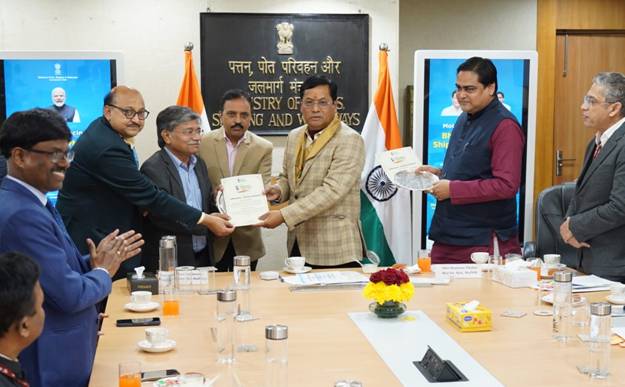
NEW DELHI : Paradip Port Authority (PPA) has been awarded the First Prize at the Swachhata Pakhwada Awards 2025, instituted by the Ministry of Ports, Shipping and Waterways (MoPSW), in recognition of its outstanding performance in cleanliness, sustainability, and community participation.

The award was presented by Hon’ble Union Minister of Ministry of Ports, Shipping and Waterways, Shri Sarbananda Sonowal, with Hon’ble Minister of State, Shri Shantanu Thakur and Shri Vijay Kumar, IAS, Secretary, of MoPSW, in attendance, at a ceremony held in New Delhi on Tuesday, 3rd February 2026. Shri P. L. Haranadh, IRTS, Chairman of Paradip Port Authority, received the honour on behalf of the port team.

Several MoPSW organizations have been recognized with the Swachh Bharat Pakhwada Awards–2025 for exemplary performance during Swachhata Pakhwada 2025 and Swachhata Hi Sewa 2025, marked by cleanliness drives, citizen engagement, advocacy, and Safai Mitra welfare, promoting a cleaner and more sustainable work environment.

This achievement marks a proud milestone, reflecting the port’s strong commitment to the ideals of Swachh Bharat Abhiyan, environmental stewardship, and inclusive development. Under the guidance of the Ministry of Ports, Shipping and Waterways, Paradip Port Authority successfully implemented the three core pillars of Swachhata Pakhwada 2025: Jan Bhagidari, Ek Ped Maa Ke Naam, and Safai Mitra Suraksha.

As part of Jan Bhagidari, PPA ensured large-scale public participation through cleanliness drives across schools, heritage sites, temples, beaches, ponds, and port premises. Activities such as cyclothons, Swachhata Raths, rallies, Swachhata Runs, human chains, and citizen-led drives under campaigns like Ek Din Ek Ghanta Ek Saath reinforced the message that cleanliness is everyone’s responsibility.

Under the Ek Ped Maa Ke Naam initiative, extensive plantation drives transformed neglected areas into clean green zones. A significant highlight was the plantation of 40,000 saplings at Paradip Sea Beach to mark the birthday of Hon’ble Prime Minister Shri Narendra Modi Ji, under the “Ek Ped Maa Ke Naam 2.0” campaign. This reinforced the port’s commitment to environmental protection, sustainable growth, and building a greener, healthier India.

The Safai Mitra Suraksha pillar focused on the welfare, safety, and dignity of sanitation workers. Medical check-ups were organized, and Safai Mitras were formally recognized, including special felicitation on the Prime Minister’s birthday, acknowledging their invaluable contribution to cleanliness.

PPA also conducted awareness campaigns against single-use plastics through street theatre, rallies, cotton bag drives, and citizen engagement under the theme End Plastic Pollution. Innovative initiatives like Scrap to Structure and exhibitions on Waste to Wealth showcased sustainable reuse of Swachh Bharat Mission assets, involving youth and local talent.

Additional activities included Swachhata-themed paintings, rangoli competitions, selfie booths, clean food street initiatives, blood donation camps, and renovation of the Administrative Building under Special Campaign 5.0, strengthening the culture of cleanliness across the port ecosystem.

Speaking on the occasion, Shri P. L. Haranadh, Chairman, PPA, stated that the award reflects the collective dedication of the workforce, contractual staff, stakeholders, and local community. He reaffirmed Paradip Port Authority’s ongoing commitment to cleanliness, sustainability, and meaningful community engagement.

The Swachhata Pakhwada Awards are an annual initiative of MoPSW, evaluating ports and maritime institutions across the country on cleanliness drives, waste management, green initiatives, and public participation. This recognition reinforces Paradip Port Authority’s leadership in advancing the Clean India Mission and setting benchmarks for sustainable port operations.

Adani Defence & Aerospace join hands with Leonardo Helicopters to build Integrated Helicopter Manufacturing Ecosystem in India

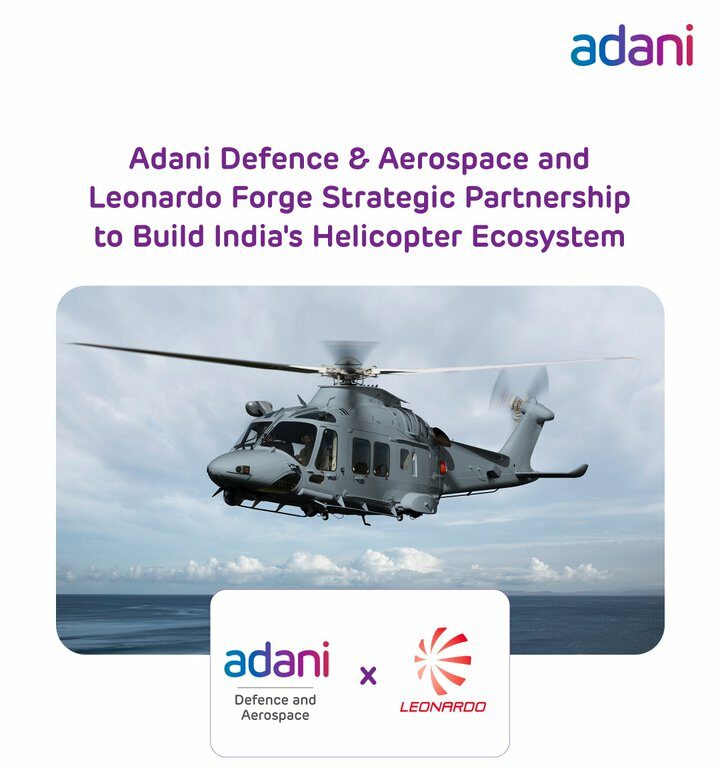
NEW DELHI : Adani Defence & Aerospace has announced a strategic collaboration with Leonardo Helicopters, marking a significant milestone in India’s journey towards building advanced aerospace and defence capabilities. The partnership represents a major step in strengthening indigenous manufacturing, supporting national security, and advancing the vision of Atmanirbhar Bharat.

Speaking on the development, Jeet Adani, Director, Adani Defence & Aerospace, said the collaboration reflects a shared commitment to India’s transformation and nation-building. He emphasized that the partnership goes beyond manufacturing, aiming to create a fully integrated aerospace ecosystem on Indian soil, encompassing design, production, assembly, testing, maintenance, and lifecycle support.

Under the strategic partnership, Adani Defence & Aerospace and Leonardo will work together to establish a comprehensive helicopter manufacturing ecosystem in India. The initiative is expected to significantly enhance domestic capabilities in rotary-wing platforms, reduce reliance on imports, and create a robust supply chain involving Indian MSMEs and technology partners.

The collaboration will also focus on skill development, technology transfer, and workforce training, contributing to employment generation and the development of a highly skilled talent base in the aerospace sector. By leveraging Leonardo’s global expertise in helicopter design and Adani Group’s manufacturing scale and infrastructure, the partnership aims to deliver world-class helicopter solutions for both domestic and international markets.

This strategic alliance strengthens India’s position as an emerging global hub for helicopter manufacturing, while supporting the requirements of defence, homeland security, emergency medical services, and other civil applications. It also aligns with the Government of India’s focus on boosting defence exports and fostering innovation-led growth in the aerospace sector.

Through this collaboration, Adani Defence & Aerospace and Leonardo reaffirm their commitment to nation building, accelerating India’s transformation towards greater self-reliance and helping shape a stronger, future-ready India in the global aerospace and defence landscape.

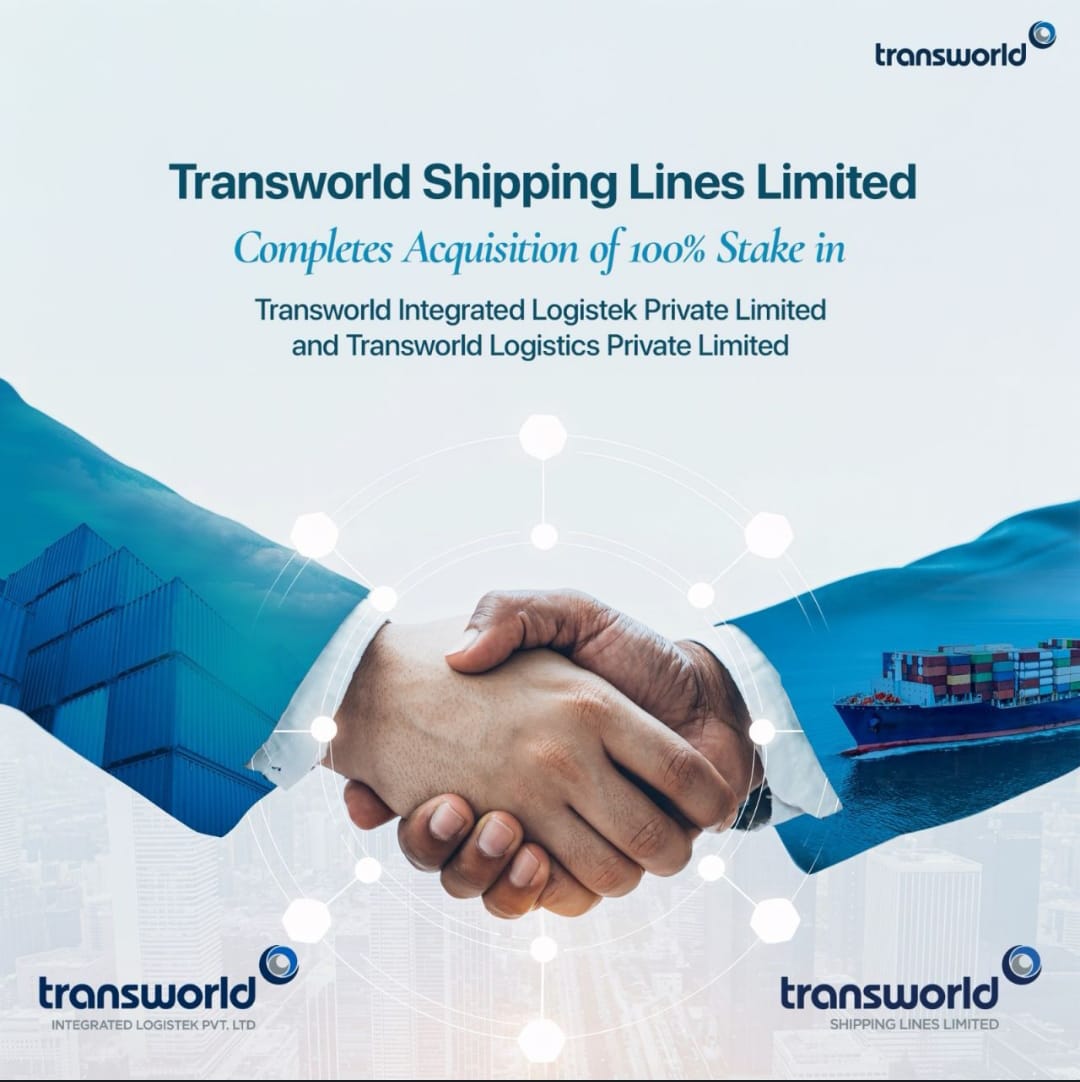
Transworld Shipping Lines Ltd completes acquisition of 100% stake in Transworld Integrated Logistek Private Limited and Transworld Logistics Private Limited

0

DUBAI : Transworld Shipping Lines Limited (formerly known as Shreyas Shipping & Logistics Ltd), a
prominent leader in the shipping and logistics industry, is delighted to announce the successful
acquisition of 100% equity stake in Transworld Integrated Logistek Private Limited (“TILPL”) and
Transworld Logistics Private Limited (TLPL). With this landmark transaction, TILPL & TLPL
become wholly owned subsidiaries of Transworld Shipping Lines Limited, further strengthening
the Company’s position as a comprehensive logistics solutions provider.

Strategic Rationale and Benefits
These acquisitions represent a pivotal moment in Transworld Shipping Lines Limited’s futur
strategy, reflecting the Company’s commitment to innovation, expansion, and value creation
for all stakeholders. The integration with both these entities will unlock diverse avenues for
growth as follows:

  • Accelerate Revenue Growth:
    By leveraging TILPL’s established market presence and operational expertise, the
    Company will unlock new revenue streams and drive sustainable financial growth. The
    expanded portfolio of services will cater to a broader spectrum of customer needs,
    enhancing overall competitiveness.
  • Diversify Offerings and Expand into Emerging Markets:
    The combined entity will be uniquely positioned to offer diversified logistics solutions,
    facilitating entry into emerging markets and key trade corridors. This strategic expansion
    will allow the Company to tap into high-growth regions and capitalize on evolving global
    trade dynamics.
  • Increase Global Outreach and Service Capabilities:
    With TILPL’s robust infrastructure and international network, Transworld Shipping Lines
    Limited will significantly enhance its global outreach. Customers will benefit from a
    wider range of integrated services, improved connectivity, and seamless end-to-end
    solutions across geographies.
  • Enhance Customer Acquisition and Retention:
    The acquisition is expected to strengthen customer relationships by delivering superior
    value, operational efficiency, and tailored solutions. The Company anticipates
    increased customer acquisition and improved retention rates, driven by its commitment
    to excellence and innovation.
  • Enhance Operational Efficiency and Cost-Effectiveness by Controlling Costs with
    In-House Vessels:
    This acquisition will allow direct control over a fleet of in-house vessels thereby reducing
    dependency on third-party shipping providers, minimizing external chartering costs and
    associated markups.
  • Enable Expansion into Broader Opportunities Across Multiple Ports:
    The Company shall now be poised to expand its presence across a wider network of
    ports, both domestically and internationally, by leveraging the established relationships
    and operational footprint of Transworld Logistics Private Limited, thereby Offer end-toend logistics solutions in new regions, catering to diverse customer needs and tapping
    into emerging trade corridors and Increase flexibility in cargo handling and routing,
    allowing the company to serve more destinations and adapt to shifting global trade
    patterns.
  • Strengthen Global Outreach and Customer Retention for the Group’s Service
    Capabilities:
    This acquisition is expected to Broaden its global reach, connecting with new markets
    and customers through enhanced logistics and shipping capabilities and deliver a
    deliver a more comprehensive suite of services, including freight forwarding, shipping
    agency, and integrated supply chain solutions, tailored to the evolving needs of
    international clients.
    Leadership Perspective
    Mr. Ramesh S. Ramakrishnan, Executive Chairman of Transworld Shipping Lines Limited,
    commented:
    “This acquisition is a pivotal step in our strategy to strengthen Transworld Shipping Lines
    Limited’s position as a global logistics leader. By bringing Transworld Integrated Logistek and
    Transworld Logistics into our fold, we are not only expanding our service capabilities and
    market reach, but also reinforcing our commitment to delivering innovative, customer-centric
    solutions. We look forward to leveraging synergies, driving sustainable growth, and creating
    enhanced value for our customers and stakeholders. Our combined strengths will enable us to
    respond more effectively to the dynamic needs of the global supply chain and set new
    benchmarks in operational excellence.”

About Transworld Shipping Lines Limited
Transworld Shipping Lines Limited, with its legacy of excellence and innovation, continues to
set industry standards in shipping and logistics. The Company’s unwavering focus on customer
satisfaction, operational efficiency, and strategic growth has established it as a trusted partner
for businesses worldwide.

Over $8 billion of India’s exports may still face higher tariffs even after India-US trade deal

NEW DELHI : Nearly a tenth of India’s exports to the United States, worth about $8.3 billion, will still face higher tariffs of 25 percent or more, despite the India-US trade deal coming into force, according to a Moneycontrol analysis. While the trade deal will bring down reciprocal tariffs to 18 percent, duties levied under Section 232 of the Trade Expansion Act of 1962 would remain untouched as they have for other trade agreements.

US President Donald Trump had raised duties to 50 percent on steel, aluminium and copper products, 25 percent on furniture and 25 percent on automobiles and auto parts.

These tariffs are justified on national security grounds and are based on investigations and recommendations rather than presidential emergency powers.

Donald Trump on February 2 announced a first tranche of trade deal with India, bringing down reciprocal tariff to 18 percent from 25 percent. “It was an Honor to speak with Prime Minister Modi, of India, this morning.

He is one of my greatest friends and, a Powerful and Respected Leader of his Country.. Out of friendship and respect for Prime Minister Modi and, as per his request, effective immediately, we agreed to a Trade Deal between the United States and India, whereby the United States will charge a reduced Reciprocal Tariff, lowering it from 25% to 18%.

They will likewise move forward to reduce their Tariffs and Non Tariff Barriers against the United States, to ZERO,” President Trump had tweeted on his social media platform Truth Social.

Section 232 measures cover a range of strategically sensitive products, including steel, aluminium, automobiles, timber, copper and certain categories of machinery and still apply to countries that have signed trade agreements with the US.

According to UN COMTRADE data, India exported about $8.3 billion worth of such goods to the US in 2024. This accounted for 10.4 percent of India’s total exports to the American market, which stood at roughly $80 billion that year. In effect, even a favourable court ruling would still leave around one in every ten export dollars exposed to US tariffs.

This exposure is unevenly distributed across sectors. India’s dependence on the US market is significantly higher in tariff-sensitive categories than in its overall export basket. While the US absorbed about 18.3 percent of India’s total exports in 2024, its share rose to 22.7 percent for products covered under Section 232, underscoring how heavily Indian producers in these industries rely on American demand.

Automobiles form the single largest block of exposure, with shipments worth $3.9 billion falling under the national security lens. Steel exports totalled around $2.5 billion, while aluminium shipments were close to $800 million. Together, these three categories account for more than 85 percent of India’s exports that remain at risk under Section 232 duties. Timber, copper and industrial vehicles add smaller but still meaningful amounts to the tally.

In proportional terms, the concentration is even starker. The US accounted for nearly 39 percent of India’s global timber exports in 2024, about 37 percent of aluminium exports, and roughly 34 percent of steel exports. Such heavy reliance means that even modest tariff barriers can have outsized effects on Indian producers’ margins, competitiveness and investment decisions.

DTDC welcomes Union Budget 2026 push to strengthen Multimodal Logistics and MSME Exports

MUMBAI: Reacting to the Union Budget 2026–27 presented by Finance Minister Smt. Nirmala Sitharaman, senior leadership at DTDC Express Ltd. said the Budget distinctly positions logistics as a strategic pillar of India’s economic growth, supported by higher public capital expenditure and a strong push towards multimodal connectivity.

Commenting on the policy direction, Mr. Abhishek Chakraborty, Chief Executive Officer of DTDC Express Ltd., said the focus on new freight corridors, inland waterways and coastal shipping creates an enabling environment for logistics players to optimise routing, improve delivery timelines and expand reach, particularly for MSMEs.

“The Union Budget 2026 distinctly positions logistics as a strategic pillar of India’s economic growth, backed by higher public capex and a clear push on multimodal connectivity via new freight corridors, inland waterways and coastal shipping,” Mr. Chakraborty said.

He highlighted that measures such as the ₹10,000 crore MSME Growth Fund and continued support for manufacturing ecosystems, including textile mega parks, would strengthen India’s export competitiveness, especially in the context of the India–EU free trade agreement, while driving demand for efficient logistics solutions.

From a customer perspective, Mr. Chakraborty said two announcements stand out — the complete removal of the ₹10 lakh value cap on courier exports and the proposed shift to faster, technology-enabled customs processes, including the Customs Integrated System and wider use of AI-led, non-intrusive inspections.

“Together, these can make cross-border shipping simpler, more predictable, and more scalable for small businesses and D2C brands,” he added, noting that DTDC aims to translate these reforms into clearer delivery commitments, improved visibility and smoother export–import handling for customers.

Echoing similar views, Mr. Aneel Gambhir, Chief Financial Officer of DTDC Express Ltd., said the Budget recognises logistics not merely as a support function but as a strategic growth enabler for the economy.

“Investments in high-speed rail corridors, inland waterways, data centres, and ease-of-doing-business reforms will structurally lower logistics costs, improve reliability, and accelerate the shift toward multimodal, technology-led logistics services,” Mr. Gambhir said.

According to him, the policy thrust creates a strong runway for organised logistics players to scale efficiently, while simultaneously supporting MSMEs and manufacturing-led growth across the country.

Hapag-Lloyd and Maersk to transit Red Sea with one Gemini service

HAMBURG: A.P. Moller – Maersk (Maersk) and Hapag-Lloyd have decided to change the routing of one of their shared services under the Gemini Cooperation, transitioning it through the Red Sea and the Suez Canal. All passages will be secured by naval assistance. 

The service in scope is the IMX service, which connects India and the Middle East with the Mediterranean. From mid-February, changes will be implemented on westbound sailings as of vessel “Albert Maersk” and on eastbound sailings as of vessel “Astrid Maersk”. 

When possible, Hapag-Lloyd and Maersk will also implement changes to the SE1 and SE3 services to go through the Red Sea and the Suez Canal at a later stage. In this respect, further information to customers and other relevant stakeholders will follow in due course. No further changes to the Gemini network related to the Red Sea are foreseen at this stage. 

The implementation will be carried out in a way that keeps disruption for customers to a minimum, upholding the Gemini Cooperation’s trademark of industry leading schedule reliability.

The highest possible security precautions will be undertaken, as the safety of the crew, the vessels, and the customers’ cargo remains the highest priority of both carriers. Maersk and Hapag-Lloyd will continue to monitor the security situation in the Middle East region very closely, and any alteration to the Gemini service will remain dependent on the ongoing stability in the Red Sea area and the absence of any escalation in conflicts in the region.

Maersk and Hapag-Lloyd launched their operational collaboration “Gemini Cooperation” on February 1, 2025. The cooperation’s network covers 29 shared mainliner and 29 shared shuttle services on East-West trade routes.

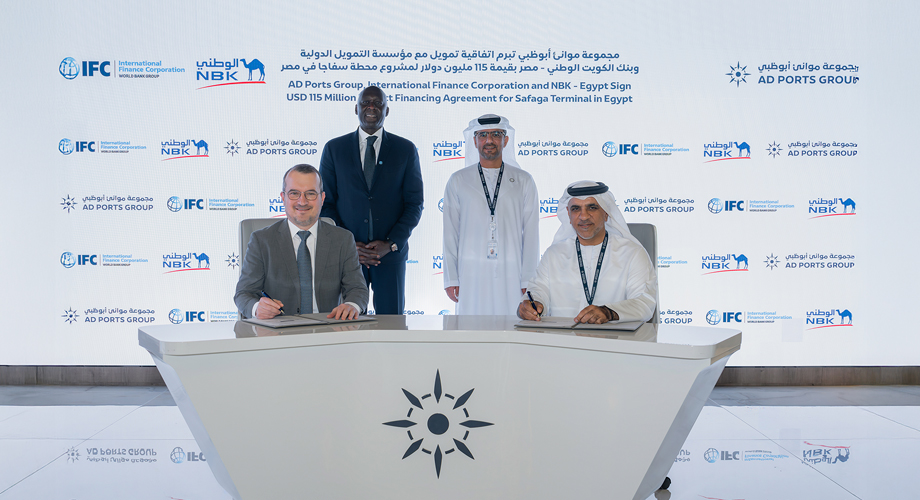
AD Ports Group secures USD 115 Million financing led by IFC and NBK – Egypt to advance Safaga Terminal in Egypt

ABU DHABI : AD Ports Group, a leading global enabler of integrated trade, industry and logistics solutions, has finalised a USD 115 million project finance facility to support the development of the Noatum Ports – Safaga Terminal in Egypt, reinforcing the Group’s long-term commitment to expanding critical port and logistics infrastructure across its key focus international markets.

The funding, backed by the International Finance Corporation (IFC) with participation from National Bank of Kuwait – Egypt (NBK – Egypt) and other institutional investors through the IFC managed co-lending portfolio program, carries a 15-year tenor and reflects strong international confidence in AD Ports Group’s operational delivery and Egypt’s strategic role in the global supply chain.

The financing has received the required approvals and financial close is expected to occur in Q1 2026, subject to the satisfaction of customary condition precedents.

The funding agreement supports the Group’s strategy to utilise long-term, multilateral-backed financing to support the delivery of strategic, international long-dated infrastructure assets in emerging markets.

Captain Mohamed Juma Al Shamisi, Managing Director and Group CEO, AD Ports Group, said: “This IFC-backed project finance facility reflects our prudent approach to funding long-term infrastructure assets in emerging markets through multilateral and institutional partnerships. The participation of IFC, NBK – Egypt, and other international investors supports the development of the Noatum Ports – Safaga Terminal and reinforces our growing presence in Egypt, a market of strategic importance to the global supply chain. Guided by the vision of the UAE’s wise leadership, we remain focused on delivering resilient, infrastructure assets that enhance connectivity, support sustainable economic growth, and create long-term value for our stakeholders.”

Makhtar Diop, Managing Director, IFC, said: “Enhancing trade is key to stimulating economic development, this transaction demonstrates how IFC can be a strategic enabler for South-South investments. The project will strengthen Egypt’s position as a central trade hub, lower costs for local businesses and create high-quality jobs, while also reinforcing the UAE’s position as a regional growth engine and a partner for deeper economic integration.”

Yasser El Tayeb, Vice Chairman, CEO & Managing Director, NBK – Egypt, said: “This landmark financing underscores NBK – Egypt’s commitment to supporting strategic infrastructure projects that drive sustainable economic growth along with having environmental impact reducing the CO2 emissions. Our collaboration with IFC and AD Ports Group reflects our confidence in Egypt’s logistics sector and its long-term potential.”

The USD 200 million Noatum Ports – Safaga Terminal, is located on Egypt’s Red Sea coast, and poised to be the first internationally operated port terminal in the Upper Egypt region. The terminal forms part of AD Ports Group’s broader strategy to build and operate high-performance port assets across high-growth trade corridors, particularly in Egypt, which has become one of the Group’s most important international markets.

AD Ports Group’s investments in Egypt include container shipping, terminal and stevedoring activities as well as maritime agency and cargo services. The Group is also developing cruise terminals in the Red Sea ports of Safaga, Hurghada, and Sharm El Sheikh. In 2025, the Group further expanded its portfolio through a 50-year renewable usufruct agreement to develop and operate KEZAD East Port Said, a 20 km² industrial and logistics park at the Mediterranean gateway of the Suez Canal.

Reinforcing its position as a key facilitator of trade across the Mediterranean and Red Sea regions, AD Ports Group has recently acquired a 19.328% equity stake in Alexandria Container & Cargo Handling Company (ALCN), one of Egypt’s largest container terminal operators. The Group has also recently announced its intention to launch a cash Mandatory Tender Offer to acquire an additional stake in ALCN, which would result in majority ownership and control of the company. ALCN operates two strategic Mediterranean terminals at the ports of Alexandria and El-Dekheila, complementing the Group’s expansion in Egypt while generating tangible financial returns.


Klaipėda Port takes a major step toward its largest-ever expansion

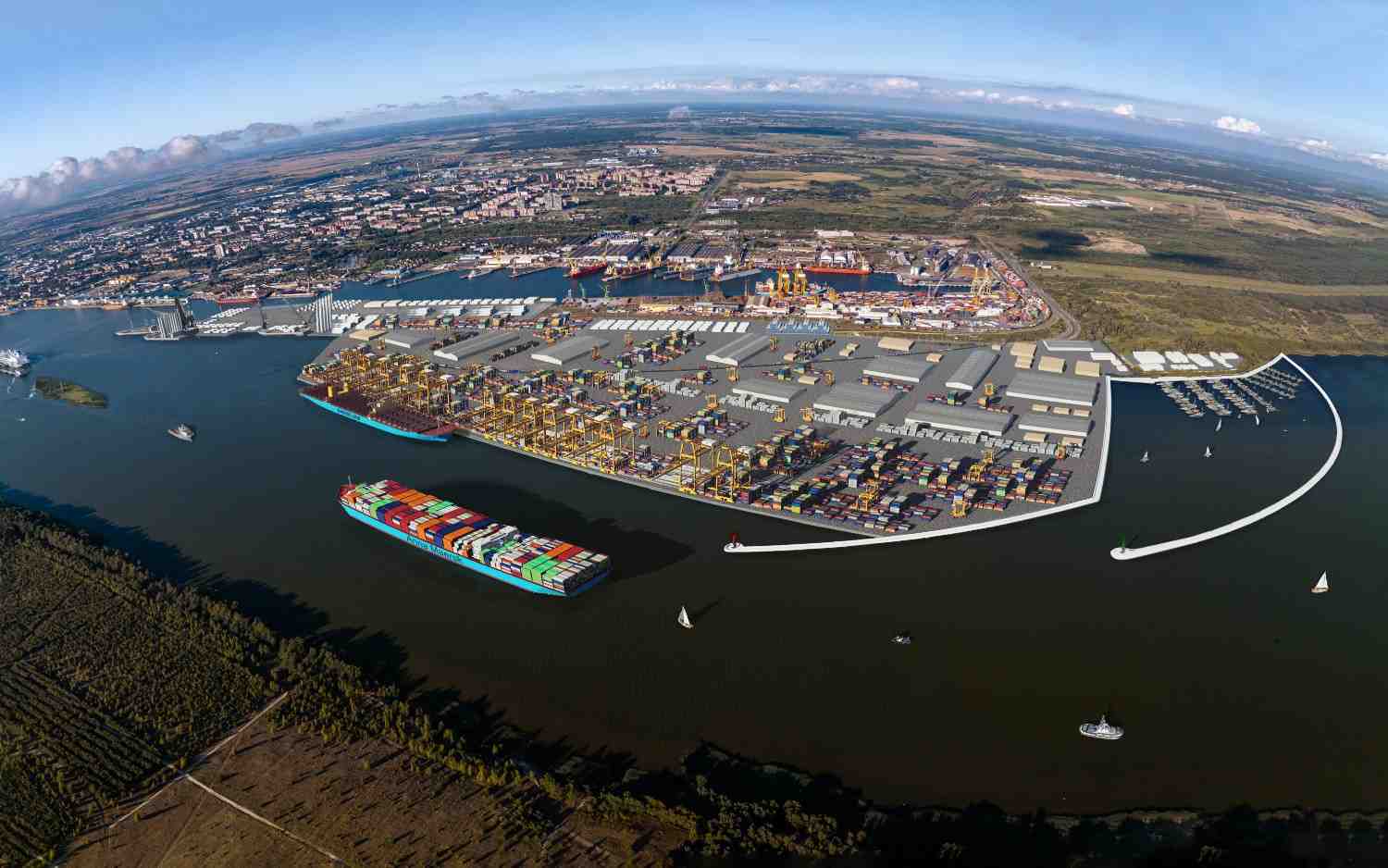
KLAIPEDA: The Klaipėda State Seaport Authority has taken a major step forward in the development of the port’s southern area by launching the procurement process for contractors under the first phase of the project. The selected contractor will be responsible for the construction of the southern port gates.

“For several years now, we have consistently highlighted both the need and the importance of developing the southern part of the port. By announcing this first-stage tender, we are taking a  tangible step toward the start of the largest project in the history of the Port of Klaipėda. We plan to begin actual construction works already this year,” says Algis Latakas, Director General of the Klaipėda State Seaport Authority.

Breakwaters play a crucial role from an environmental perspective. In the future, the southern gates complex will also include a marina and a quay. The construction of the southern port gates marks the very first step in the overall development of the southern port area.

Currently, Klaipėda Port faces a lack of space for future development. The southern expansion will open the door to new terminals and enable the port to accommodate the world’s largest vessels.

The Klaipėda Southport Development Project involves reclaiming approximately 100 hectares of new port territory and constructing 1.3 kilometers of new quays.

GCMD and CIMAC form Coalition partnership to advance ecosystem readiness for alternative fuels

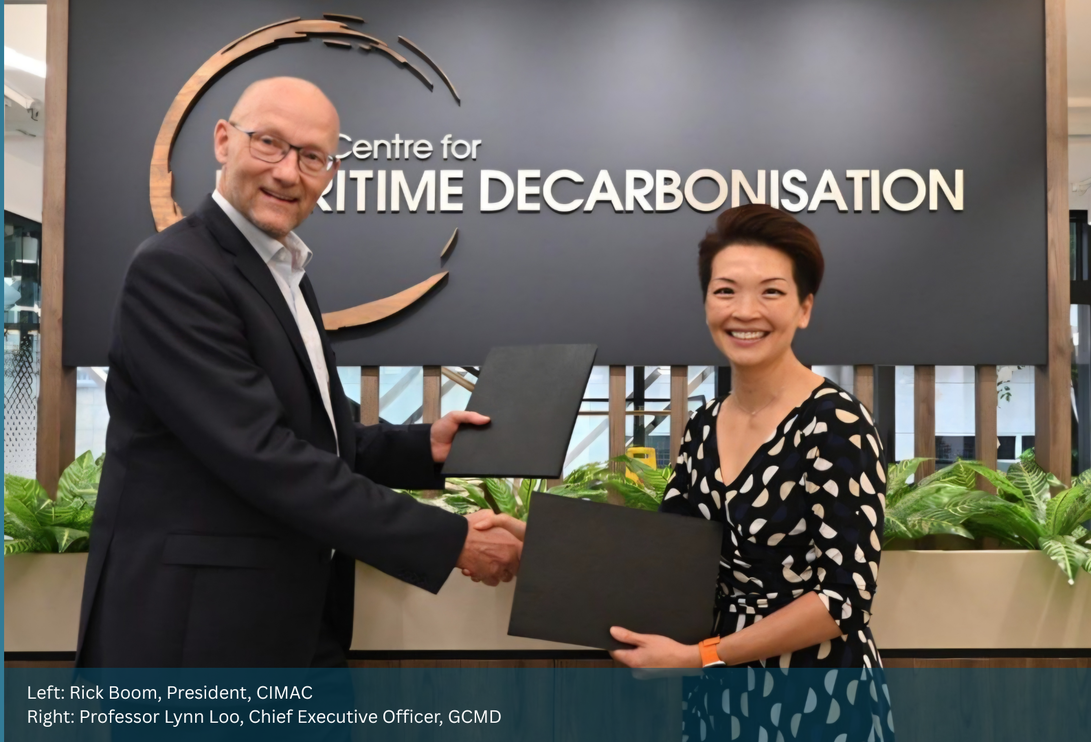
SINGAPORE: The Global Centre for Maritime Decarbonisation (GCMD) and CIMAC have signed a two-year Coalition partnership agreement to strengthen the maritime sector’s preparedness for alternative fuel deployment.

CIMAC, the leading global non-profit organisation promoting the development of ship propulsion, train drive and power generation, provides an established forum for technical exchange. GCMD brings complementary implementation experience, from executing pilots and trials across the maritime value chain, to identify the practical implications of deploying decarbonisation solutions.

Together, this partnership aims to inform industry action to support the safe and effective adoption of alternative fuels.

Adapting to a new fuels landscape
Rising demand for alternative fuels, alongside anticipated use of nascent fuels like ammonia as a marine fuel, with ocean-going vessels expected to enter service later this year, present both opportunities and challenges for low-/zero- carbon shipping.

As production of alternative fuels scales and adoption begins, changes to hardware requirements, testing standards, fuel quality frameworks and safe handling procedures will need to be developed, validated and operationalised.

Under this partnership, insights from GCMD’s pilots will feed into CIMAC working groups, contributing operational experience to inform the drafting of new standards and guidance on engine performance, fuel quality considerations, and deployment readiness.

Conversely, GCMD can leverage CIMAC’s deep technical expertise to ensure that its trials are aligned with evolving engine technologies, fuel specifications and industry practices.

Broadening industry reach through combined networks
GCMD works with stakeholders across the maritime value chain to execute pilots and trials, while CIMAC, through its annual congress and technical working groups, convenes industry experts on propulsion and fuel technologies and holds consultative status at the IMO.

By combining their respective networks, GCMD and CIMAC aim to engage upstream and downstream stakeholders, as well as regulators, to collaboratively tackle key maritime industry challenges.

Professor Lynn Loo, CEO of GCMD, said, “Following my keynote at the CIMAC 2025 Congress, discussions with CIMAC’s leadership quickly revealed strong alignment and complementary strengths. As alternative fuels introduce new chemistries and properties, solutions designed for today’s fuels will not automatically apply tomorrow. This partnership reflects our joint commitment to addressing these challenges through collaboration that is grounded in technical expertise and operational evidence.”

Rick Boom – President, CIMAC, said, “CIMAC collaborates closely with international partners to drive solutions for maritime transformation, contribute technical expertise to regulatory processes, and accelerate the decarbonisation of shipping. Its partnership with GCMD supports the development of standards and strategies for alternative fuels and sustainable propulsion systems aligned with global environmental goals. Together, CIMAC and GCMD aim to deliver practical, forward-looking solutions that speed the transition to a cleaner, more sustainable future for shipping.”