Home Blog Page 456

Wilson Sons launches tugboat to join a new series to meet demand from New Panamax ships

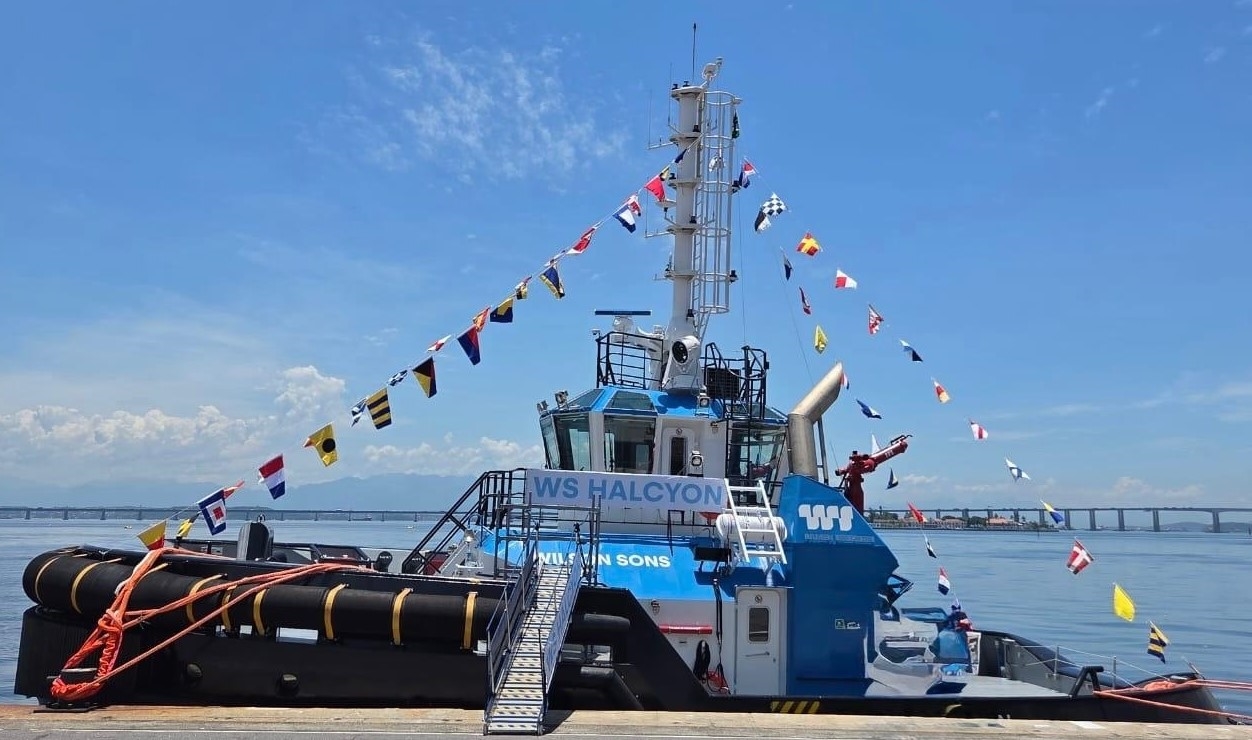
RIO DE JANEIRO: With over 188 years of experience, Wilson Sons held a launch ceremony for the tugboat WS Halcyon this Thursday, January 29th, in Rio de Janeiro. It is the first of a new series of three high-powered tugs.

Built at the company’s shipyard in Guarujá (São Paulo), WS Halcyon is a class 2312 tug (23 metres long and 12 metres wide) with azimuth propulsion and 70 tons of bollard pull, which is capable of supporting the world’s biggest ships on docking and undocking manoeuvres in Brazil’s main ports. Versatile, it is also equipped with a firefighting system with a capacity of 2,400,000 litres/hour of water (FiFi 1).

The new tugs are part of the company’s 80-tug fleet renewal strategy and support its commitment to modernizing its operations. Two more 2312 class tugboats are being built at the Wilson Sons shipyard, with delivery scheduled for mid-2026. 

For Márcio Castro, Executive Director of the Towage unit, this investment strengthens the company’s role in the Brazilian logistics chain. “Our focus is on ensuring safe, efficient, and reliable operations, directly supporting the flow of foreign trade and the development of Brazil’s port infrastructure,” he says.

With this new tugboat series, Wilson Sons will reach the milestone of 155 vessels built at its shipyard, which has more than 80 years of history.

About Wilson Sons

Recognized for its extensive experience of more than 188 years, Wilson Sons has a national reach and offers comprehensive solutions to over 5,000 clients, including shipping companies, importers and exporters, the offshore energy industry, renewable energy projects, the agribusiness sector, as well as other players across various economic segments

President Droupadi Murmu: ‘My Government Spent ₹25 Lakh Crore on Modern Infrastructure’

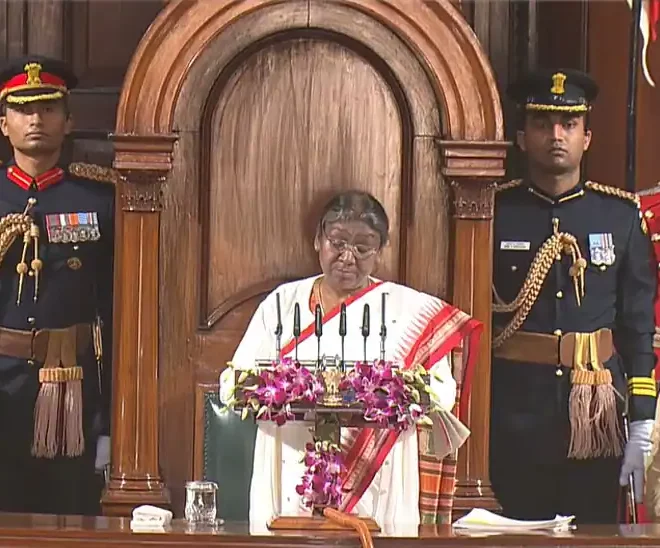
NEW DELHI: In her address to the Parliament, President Droupadi Murmu highlighted India’s significant economic and infrastructural strides. She stated, ‘My government has spent more than 25 lakh crores on the construction of modern infrastructure in the past few years,’ emphasizing that this investment has generated substantial employment for the youth.

The President noted that India has become the third-largest startup ecosystem globally, with nearly 2 lakh startups currently operational. She also lauded the expansion of Digital India and the 5G network across the country.

Highlighting achievements in sports, she congratulated the women’s cricket teams and announced that India has been tasked with hosting the 2030 Commonwealth Games.

Furthermore, she discussed the National Education Policy’s role in fostering innovation through Atal Tinkering Labs and the government’s commitment to making 1,000 ITIs future-ready under the PM Setu scheme to build an industry-ready workforce

“Focused investment in Ports & Logistics reflect a long-term policy vision to make India a Global Maritime Hub”: Sarbananda Sonowal

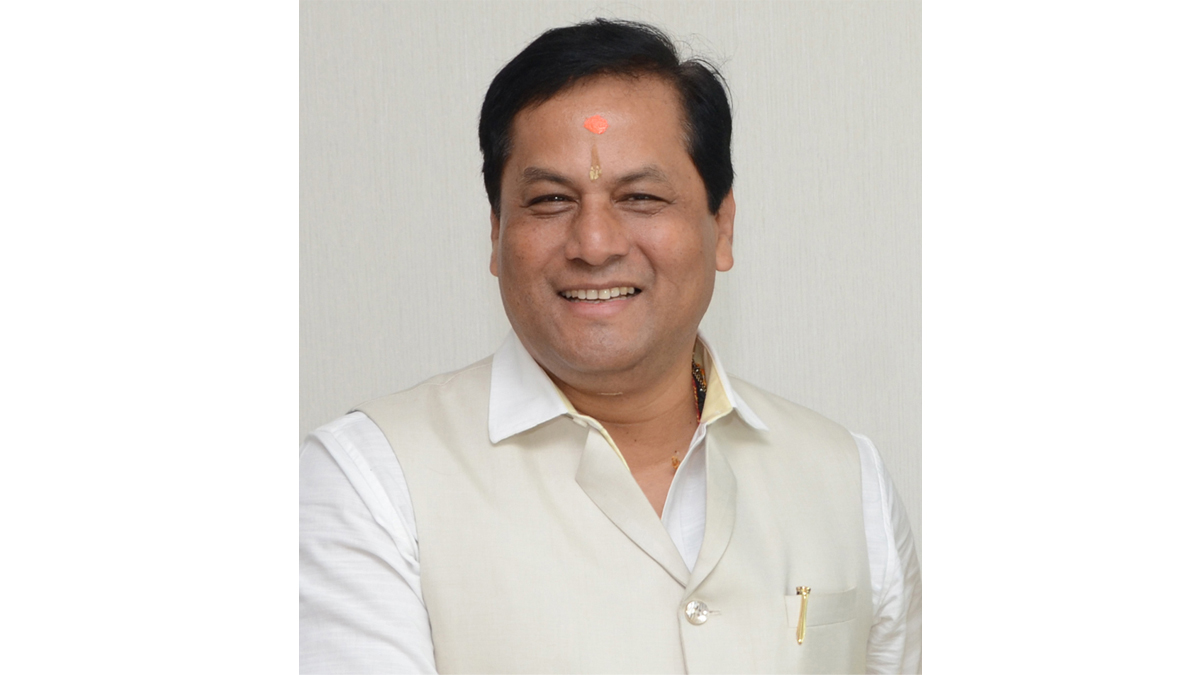
NEW DELHI : Union Minister of Ports, Shipping and Waterways (MoPSW) Sarbananda Sonowal termed the President’s address to Parliament as visionary which has reinforced the government’s long-term policy commitment to strengthening India’s maritime sector, inland waterways and blue economy, describing it as a clear affirmation of the national strategy to build globally competitive logistics and shipping capabilities.

“The Hon’ble President’s address has clearly reaffirmed the government’s unwavering commitment to strengthening India’s maritime sector, inland waterways and blue economy. The expansion of national waterways, major shipping reforms and focused investment in ports and logistics reflect a long-term policy vision to make India a global maritime hub while driving sustainable growth, employment generation and regional development,” Union Minister of Ports, Shipping & Waterways (MoPSW) Sarbananda Sonowal affirmed.

Earlier, the President of India, Droupadi Murmu underscored the government’s renewed focus on strengthening India’s maritime sector, inland waterways and blue economy, saying the expansion of national waterways and major policy reforms are reshaping logistics, trade and coastal livelihoods. In her address to a joint sitting of Parliament at the start of the Budget Session, Murmu said India has made significant progress in developing inland water transport infrastructure over the past decade.

“My government has also undertaken several steps for the development of inland waterways. Earlier, India had only five national waterways, which have now crossed the mark of 100,” the President said. She said the expansion has helped states in eastern India — including Uttar Pradesh, West Bengal and Bihar — emerge as logistics hubs, easing pressure on road and rail networks while lowering transportation costs.

President Murmu also highlighted the growing contribution of cruise tourism to regional economies. “Cruise tourism is leading to an increase in tourism in the areas near rivers and coasts, thereby strengthening the local economies,” she said.

Prime Minister Shri Narendra Modi said the President’s address reflected the government’s development priorities and future policy direction. “The Budget Session of Parliament commenced with Rashtrapati Ji’s inspiring address to both Houses. In our parliamentary traditions, this address has a special importance, as it spells out the policy direction and collective resolve that will guide our nation’s developmental journey in the coming months,” PM Modi shared his reaction on social media. He added that the address reflected India’s recent development trajectory while outlining a roadmap for the future.

The President also drew attention to the government’s efforts to strengthen the blue economy and expand livelihood opportunities linked to agriculture and allied sectors. “Today, along with foodgrain production, farmers are also being connected to livestock, fisheries and beekeeping as new avenues of economic progress,” President said. She said new policies have been framed to extend benefits of the Exclusive Economic Zone to fishermen living along the coastline and to enable utilisation of resources in the high seas.

Highlighting structural challenges in the shipping sector, Murmu said India had lost much of its maritime dominance after decades of neglect following colonisation. “Today, 95% of India’s trade is carried on foreign ships, with more than ₹6 lakh crore spent annually,” President said. She said the government is working to reverse this trend through a historic package of around ₹70,000 crore for the shipping sector, granting infrastructure status to large ships and revamping outdated maritime laws.

Union Minister for Ports, Shipping and Waterways (MoPSW), Sarbananda Sonowal said the President’s address reaffirmed the strategic importance of maritime development to India’s economic growth. “The expansion from five to over 100 national waterways has opened new economic corridors and strengthened multimodal logistics,” Sonowal said.

Sonowal added that inland waterways have emerged as a sustainable and cost-effective mode of transport under the Modi government, supporting regional development and reducing logistics costs. Focused investment in ports, shipping and cruise tourism is creating employment opportunities and boosting coastal economies, Sonowal added.

“With large-scale reforms, infrastructure investment and modernised maritime laws, India is steadily moving toward reclaiming its position as a global maritime nation,” Sonowal said.

MoPSW Secretary inaugurates Trade Promotion Centre and VOC Port Guest House in Chennai

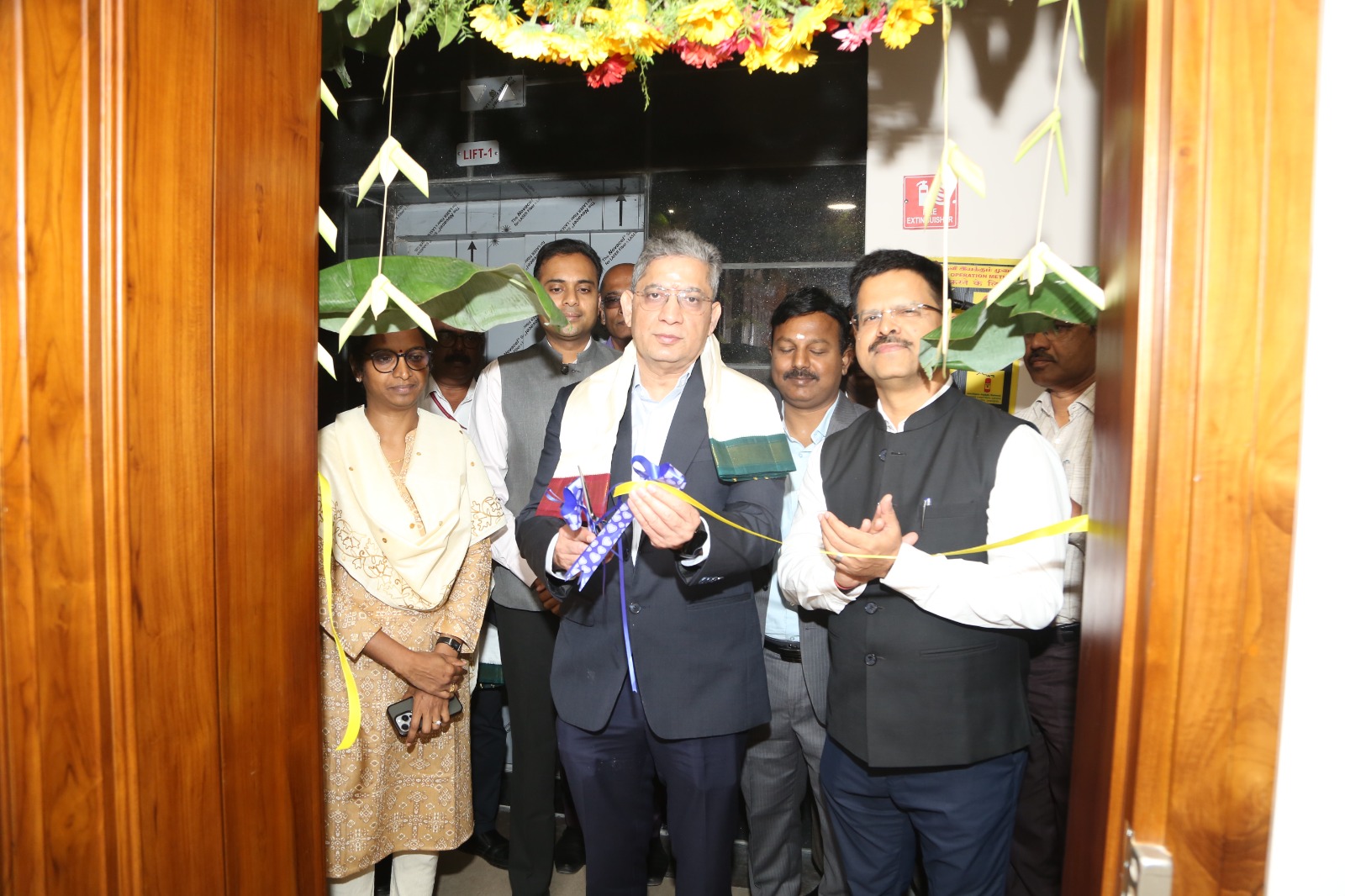
CHENNAI : Shri Vijay Kumar, IAS, Secretary, Ministry of Ports, Shipping and Waterways (MoPSW), on Wednesday inaugurated the Trade Promotion Centre and the VOC Port Guest House here at Chennai, marking an important step towards strengthening port-led development and stakeholder engagement at V.O. Chidambaranar Port.

The inauguration ceremony was held in the presence of Shri Susanta Kumar Purohit, IRSEE, Chairperson, V.O. Chidambaranar Port Authority, and Shri Rajesh Soundararajan, IAS, Deputy Chairperson, along with senior officials of the Port.

The newly inaugurated Trade Promotion Centre is envisioned as a dedicated platform to facilitate trade, enhance industry interaction, and promote collaboration among port users, logistics stakeholders, and allied industries. The VOC Port Guest House, equipped with modern amenities, is aimed at providing improved infrastructure support for visiting dignitaries, officials, and stakeholders.

These facilities are expected to play a key role in advancing port-led industrialisation, improving ease of doing business, and contributing to the economic development of the region, in line with the Ministry’s vision for integrated and sustainable maritime growth.

The inauguration underscores the continued commitment of the Ministry of Ports, Shipping and Waterways and V.O. Chidambaranar Port Authority towards infrastructure augmentation, trade facilitation, and strengthening India’s maritime ecosystem.

DPA Kandla signs agreement for 5 Mega Watt Green Hydrogen Plant

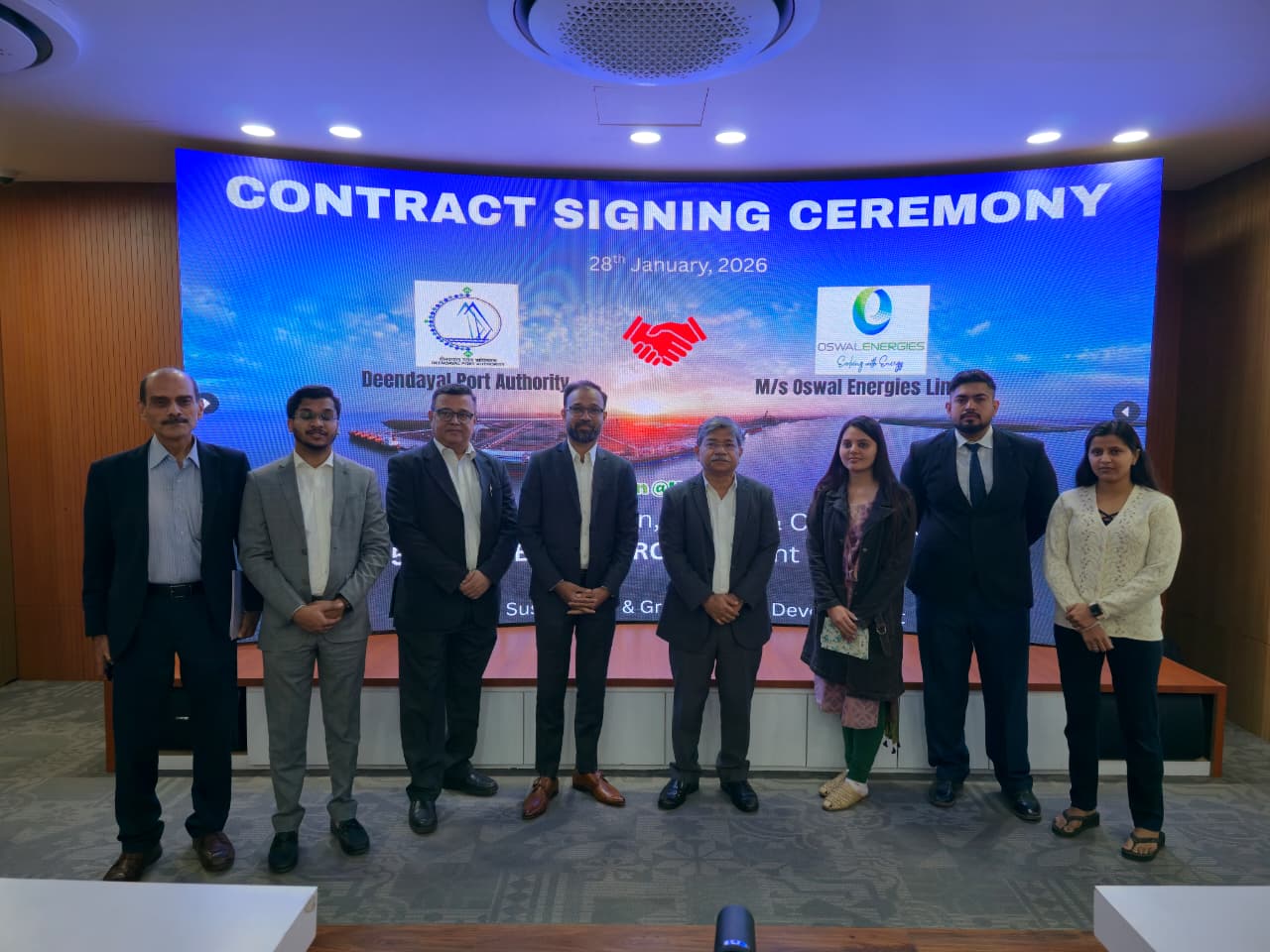
GANDHIDHAM : In a landmark step towards sustainable and future-ready port infrastructure, Deendayal Port Authority, Kandla has signed an agreement with Oswal Greenzo Energies, for the design, supply, installation, testing and commissioning of 5 MW Green Hydrogen Plant at Deendayal Port, Kandla.

This pioneering initiative places DPA, Kandla at the forefront of maritime decarbonisation in India, while strongly aligning with the Make-in-India – Make-for-the-World vision of the Hon’ble Prime Minister Shri Narendra Modi. The project also supports the objectives of the National Green Hydrogen Mission, reinforcing India’s commitment to clean energy leadership.Once operational, the 5 MW Green Hydrogen Plant is expected to produce approximately 840 Metric Tons of green hydrogen annually, enabling the use of clean fuel across port operations, mobility solutions and allied logistics activities. The project will play a significant role in reducing carbon emissions in the maritime, transport and logistics sectors, while promoting large-scale adoption of renewable energy at ports.

Speaking on the occasion, Shri Sushil Kumar Singh, Chairman, Deendayal Port Authority, stated:
“The signing of this agreement for India’s first port-based Green Hydrogen Plant marks a historic milestone for Deendayal Port Authority, Kandla and India’s maritime sector. This project reflects our strong commitment to the Hon’ble Prime Minister’s vision of Viksit Bharat and Atmanirbhar Bharat, while positioning Kandla as a frontrunner in green and sustainable port development. Through this initiative, DPA is taking a decisive step towards decarbonisation, clean mobility and a greener maritime future.”

Commenting on the achievement, Mr. Ratan Bokadia, Managing Director, Oswal Energies Limited, said that being part of India’s first port-led green hydrogen project is a proud moment for the company and a strong endorsement of its technical expertise, engineering capabilities, and execution strength in advanced hydrogen systems. He reaffirmed Oswal Energies Limited’s commitment to delivering the project to global standards while supporting India’s clean energy transition.

The project underscores DPA, Kandla’s focus on advanced technologies, renewable energy integration and innovation-driven solutions, further strengthening its role as a catalyst in India’s transition towards a low-carbon, sustainable and globally competitive maritime ecosystem

DP World Calls for Port-Led Multimodal Investments Ahead of Union Budget 2026

MUMBAI: As India prepares for the Union Budget 2026, global logistics major DP World has highlighted the critical role of strategic investments in port-led and multimodal connectivity to sustain the country’s economic growth and strengthen its position as a global manufacturing and trading hub.

Sharing his pre-Budget expectations, Mr. Rizwan Soomar, Chief Executive Officer and Managing Director, MENA (Middle East and North Africa) and India Subcontinent, DP World, said that India’s growth trajectory over the next decade will be determined by the strength and efficiency of its logistics backbone.

“Strategic budgetary investments in port-led, multimodal connectivity—particularly rail-based freight corridors, inland terminals, logistics hubs and green infrastructure—will reduce trade costs, improve manufacturing productivity, create employment and accelerate GDP growth,” Mr. Soomar said.

He emphasised that greater mobilisation of private capital and policy measures enabling a modal shift from road to rail and inland waterways would be essential to building a more efficient and sustainable logistics ecosystem. According to DP World, deeper integration of domestic supply chains with global trade networks can significantly enhance India’s competitiveness in international markets.

Mr.Soomar further noted that a Union Budget focused on multimodal logistics and green infrastructure would help India scale as a resilient, sustainable and globally connected manufacturing and trading hub, aligned with the country’s long-term economic ambitions.

Allcargo Logistics highlights Multimodal, Digital Push Ahead of Union Budget 2026

MUMBAI: As India prepares for the Union Budget 2026, Allcargo Logistics has underscored the need for accelerated multimodal logistics development, stronger digital infrastructure and greater private sector participation to enhance efficiency, reduce costs and support sustainable growth across the logistics ecosystem.

Sharing his pre-Budget perspective, Mr. Ketan Kulkarni, Managing Director & Chief Executive Officer, Allcargo Logistics, noted that India’s logistics sector is at a critical inflection point, driven by evolving consumption patterns and increasing demand for speed-driven, time-sensitive delivery models.

“India’s logistics ecosystem is at a critical inflection point, shaped by evolving consumption patterns and the rising demand for speed-driven, time-critical delivery models. As logistics operations move closer to consumption hubs, growing operational complexity is reshaping traditional supply chain structures,” Mr. Kulkarni said.

He emphasised that the Union Budget 2026 presents a significant opportunity for the government to reinforce its commitment to multimodal logistics by accelerating investments across rail, road, coastal shipping and inland waterways. According to Mr. Kulkarni, a more integrated multimodal network can help lower logistics costs, ease urban congestion and enable MSMEs to access faster and more cost-effective supply chains.

“We also anticipate continued emphasis on digital infrastructure and data-led platforms that enhance visibility, planning, and execution across the logistics value chain,” he added, highlighting the role of digital and AI-driven solutions in improving operational efficiency, resource optimisation and service predictability — key enablers for MSMEs aiming to scale sustainably.

Mr. Kulkarni further noted that targeted policy measures encouraging private participation in warehousing and last-mile infrastructure would strengthen India’s logistics competitiveness and help build a resilient and inclusive ecosystem aligned with the country’s long-term economic and sustainability objectives.

Jeena & Company calls for Infrastructure Push, GST Rationalisation Ahead of Union Budget 2026

MUMBAI: As the Union Budget 2026 draws closer, the freight forwarding and logistics industry is urging the government to reinforce its focus on infrastructure-led growth, faster multimodal connectivity and regulatory simplification to enhance India’s global competitiveness.

Jeena & Company, a global freight forwarding and supply chain solutions provider, highlighted the need for sustained policy support for the logistics sector, citing its growing importance in India’s trade, manufacturing and supply chain ecosystem.

Sharing his pre-Budget expectations, Mr. Gayomard Driver, Group Chief Financial Officer, Jeena & Company, emphasised that rationalisation of GST structures and customs procedures, along with policies aligned to evolving geopolitical supply-chain shifts, could significantly reduce logistics costs and improve capital efficiency.

“Continued government focus on infrastructure-led growth, faster multimodal connectivity, rationalisation of GST and customs procedures, and policy support aligned with geopolitical supply-chain shifts can lower logistics costs and strengthen India’s competitiveness as a global trade and manufacturing hub,” Driver said.

He further noted that positioning the logistics sector at the forefront of global competitiveness would require a sharper emphasis on sustainability, ease of doing business, targeted skill development programmes and accelerated adoption of technology across supply chains.

According to Jeena & Company, a Union Budget that combines enhanced infrastructure funding with simplified regulatory frameworks would not only boost India’s logistics capabilities but also create a stable and attractive environment for private capital participation, supporting long-term economic growth.

Paradip Port commissions shore-to-ship power supply system, sets new benchmark in Green Port operations

PPA Green Paradip Port commissions shore-to-ship power supply system, sets new benchmark in Green Port operations

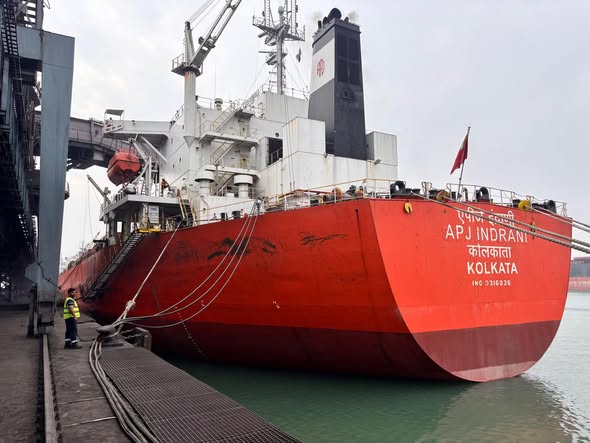
PARADIP : In a significant step towards sustainable and environment-friendly maritime operations, Paradip Port Authority (PPA) has become the second Major Port in India to successfully commission the Shore-to-Ship Power Supply System. The state-of-the-art facility was commissioned this afternoon at CB-1 Berth, where full load power was supplied to MV APJ INDRANI.

The commissioning of this advanced technology marks a major milestone in reducing emissions from berthed vessels by enabling them to switch off auxiliary engines and draw electrical power directly from shore. The initiative opens up a wide range of opportunities for vessels equipped with power-receival facilities and enhances the feasibility of deploying similar vessels operating between Paradip and other ports with shore power infrastructure.

Commenting on the achievement, Shri P. L. Haranadh, Chairman, Paradip Port Authority, said,
“The live monitoring panel and on-site operations reflect the efficiency and safety of this advanced setup. This achievement strengthens PPA’s commitment to cleaner, greener, and more energy-efficient port operations.”

The successful execution of the project stands as a testament to the technical expertise and dedication of the Electrical and Mechanical Engineering Departments of Paradip Port Authority. Their efforts have played a pivotal role in advancing PPA’s vision of pollution-free and carbon-emission–free shipping operations within the port ecosystem.

With this milestone, Paradip Port Authority continues to reinforce its leadership in adopting green technologies, aligning with national and global sustainability goals, and setting new benchmarks for India’s major ports.

India-EU FTA positions India to capture market share from Bangladesh

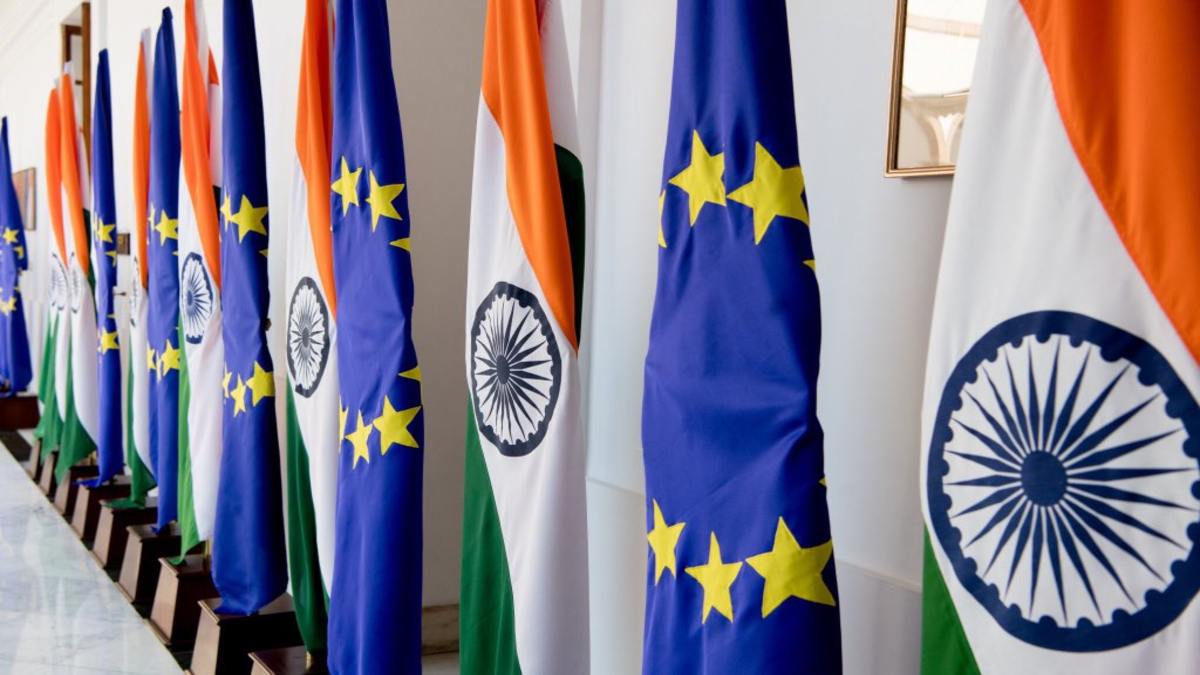
NEW DELHI : India–EU Free Trade Agreement (FTA) can give India a significant competitive advantage in apparel exports over rivals like Bangladesh, Vietnam, Turkiye, Pakistan, and China, and India’s cotton-dominant industry is a key strategic asset in this context.
Currently the EU has the following mix in terms of apparel imports:

1 India-EU FTA positions India to capture market share from Bangladesh

China and Vietnam have MMF apparels as major share while Bangladesh, India, Turkiye and Pakistan have cotton apparels as major share. Now the cotton share in specific can be tapped by India as summarised below:

  1. Tariff advantage: Level playing field with competitors

Before the FTA, Indian apparel exporters faced ~9–12 per cent tariffs in the EU on many products. Competitors such as Bangladesh, Pakistan, and Turkiye already had preferential or zero tariff access through existing schemes or agreements, giving them a clear price edge. The FTA eliminates tariffs (zero-duty) on nearly all apparel and textile tariff lines entering the EU. This corrects India’s long-standing tariff disadvantage vis-à-vis Bangladesh, Pakistan, and Turkiye.

  1. Trade share opportunity: Growing EU market presence

Right now, India’s share of the EU apparel market is relatively low (~4 per cent), while China, Bangladesh, and Turkiye command larger slices. Post this FTA, India’s share could rise to 8–9 per cent or more over the medium term as cost competitiveness improves. European brands are already showing interest in increasing sourcing from India.

  1. India’s cotton advantage

India’s apparel and textile industry is deeply integrated around cotton: India is one of the world’s largest cotton producers with strong capacity across spinning, yarn, fabric, and garmenting. This vertically integrated cotton ecosystem reduces dependence on external fibre sources and lowers costs for cotton-based products. In contrast, Bangladesh is a garment-centric economy but imports most of its fabric/yarn (often from India). Vietnam and China have strengths in man-made fibre (MMF) and synthetic garments, not just cotton. Pakistan also has cotton production but at a smaller scale and limited integration with large global buyers than India. Thus, cotton strength helps India in categories where Europe demands cotton apparel, home textiles and high-value cotton made-ups, sectors where raw material access and processing capacity matter a lot.

However, for MMF/synthetic heavy segments (where China, Vietnam excel), the advantage is less pronounced unless India scales up in those fibres too.

  1. Non-tariff and compliance factors

EU buyers increasingly emphasise standards like sustainability, traceability, and rules of origin, which can affect competitiveness. Indian exporters will need to meet EU regulatory and compliance requirements efficiently to fully benefit from the agreement.

  1. Overall competitive landscape vs major rivals

Overall, India has a big advantage with the India-EU FTA, specifically against countries like Bangladesh, Pakistan, and Turkiye. However, Vietnam and China still hold strong due to MMF dominance in apparel as well as due to China’s scale.

India’s apparel exports to the EU could nearly double from ~$7 billion today to $13–15 billion by 2032 under FTA conditions. India will likely overtake Pakistan and Turkey in key apparel segments and narrow gaps with Bangladesh and Vietnam. China will remain large, but India gains a tariff edge in cotton RMG, strengthening its position for EU buyers.