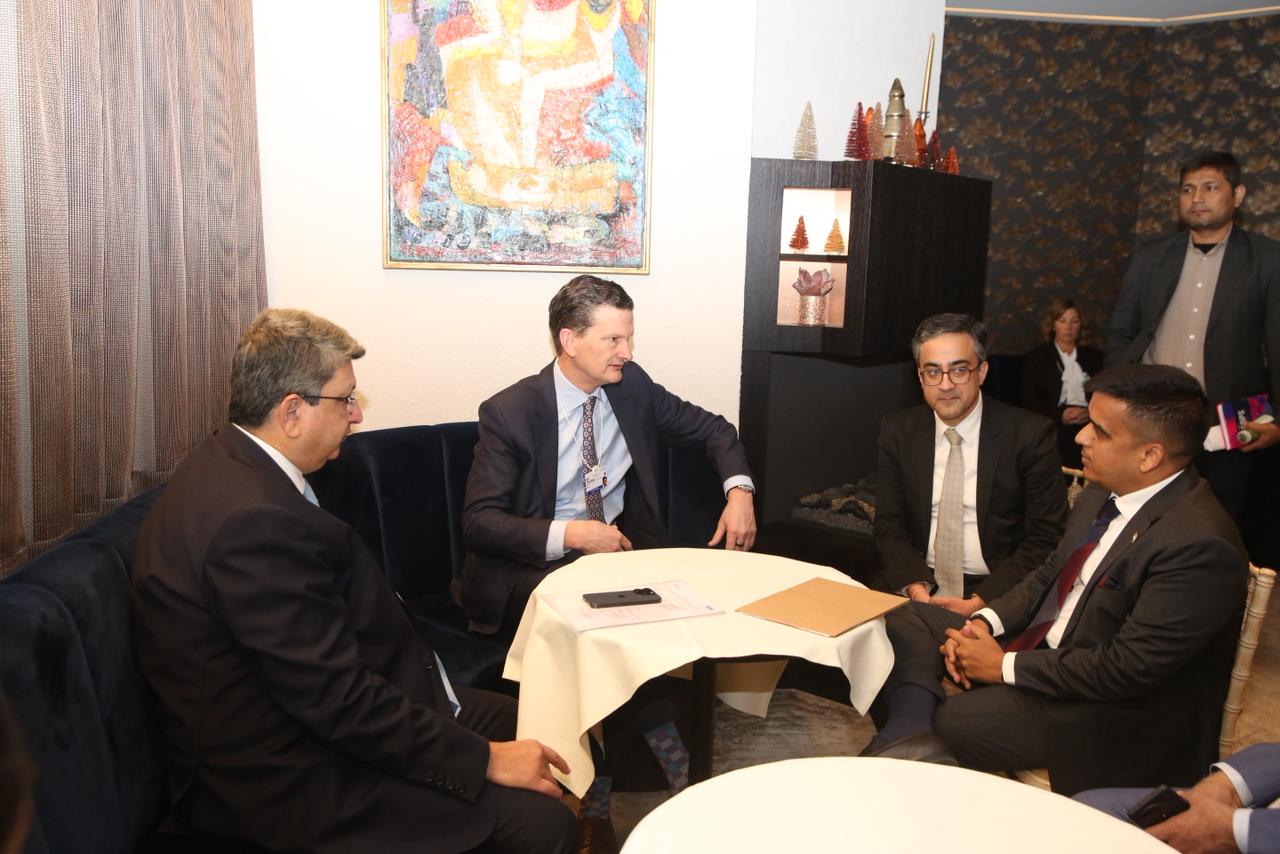
DAVOS: Gujarat Deputy Chief Minister and Industries Minister Shri Harsh Sanghavi held high-level strategic meetings with global technology giants, including NVIDIA and OpenAI, along with several other international leaders from the technology, energy and innovation sectors at the World Economic Forum (WEF) in Davos on Thursday.
Speaking with ANI, Shri Sanghavi said the discussions focused on artificial intelligence, advanced computing, data centers, and next-generation digital infrastructure, with Gujarat positioning itself as a preferred destination for high-tech and future-oriented investments.”
“Meetings also explored the integration of AI platforms such as Emerald AI, which address critical challenges like energy fluctuations, emergency power management, and efficiency optimization in data centers, key requirements for companies working on advanced AI and NVIDIA-powered computing systems,” he said.
“In addition, discussions with other technology leaders covered digital governance, healthcare technology, skill development, and industry-led innovation, aligning with Gujarat’s vision to move from being a traditional manufacturing hub to a global leader in technology-enabled manufacturing and services,” he added.
Shri Sanghavi, who also holds portfolios of Home, Transport, Sports & Culture and Tourism in the Gujarat government, said these interactions are expected to translate into technology partnerships, data centre investments, and innovation-driven projects in Gujarat in the near future, reinforcing the state’s ambition to emerge as a global hub for AI, data infrastructure, and sustainable technology.
At Davos, Sanghavi met Elica Kyoseva of NVIDIA to explore next-gen collaborations from quantum innovation to future-ready data centres, strengthening Gujarat’s role as India’s innovation powerhouse and a launchpad for frontier technologies.
Shri Sanghavi also held an interaction with Chris Lehane from OpenAI on advancing AI enablement and the next wave of high-tech transformation. “With robust digital infrastructure and a fast-growing talent base, Gujarat is building an ecosystem where responsible AI and world-class innovation can truly thrive,” he had said in a post on social media platform X.
He also held meeting with Mr. Jatin Dalal, Global CFO of Cognizant.“Cognizant’s TechFin Centre at GIFT City, Gujarat is emerging as a strategic hub for delivering advanced technology solutions to global clients. We discussed strengthening workforce readiness by leveraging Gujarat’s expanding pool of highly skilled technology professionals, and further deepening collaboration to support global innovation,” he said.
Speaking on his agenda at Davos, he said, “For the last three days, we have had 58 meetings with global leaders in different sectors, and we have received a very good response. This time, you can see a different flavour of India in Davos. You have seen many countries’ pavilions, but the Indian pavilion has a different flavour. This is the New India.“
DAVOS: DP World on Thursday signed an agreement with the Government of Madhya Pradesh to develop the Powarkheda Logistics Composite Hub, an inland logistics gateway designed to strengthen India’s export competitiveness and accelerate inclusive economic growth in Central India.
The agreement between DP World and the Government of Madhya Pradesh was exchanged at the World Economic Forum in Davos in the presence of Sultan Ahmed bin Sulayem, Group Chairman and CEO of DP World, and Dr. Mohan Yadav, Hon’ble Chief Minister of Madhya Pradesh.
It marks a significant step in positioning Madhya Pradesh as a key node in India’s global trade network, leveraging its central geography, export momentum, and rapidly expanding agri-processing and manufacturing base. With this development, DP World is enhancing the state’s infrastructure and supply chain capabilities to align with national trade ambitions and supporting long‑term economic growth.
Dr. Mohan Yadav, Hon’ble Chief Minister of Madhya Pradesh, said: “This agreement with DP World is aligned with Madhya Pradesh’s vision to accelerate exports and build modern, resilient infrastructure that serves both industry and agriculture. DP World Powarkheda Hub will strengthen our state’s role as a central trade and logistics engine connecting key districts and clusters to ports, enabling value addition, and creating new opportunities for farmers, businesses and investors.”
Sultan Ahmed bin Sulayem, DP World Group Chairman and CEO, said: “The DP World Powarkheda Hub is designed to be a high-efficiency inland gateway that brings producers and manufacturers in Central India closer to global markets. By integrating rail connectivity, warehousing, cold chain, and end-to-end cargo management in one location, we will help farmers, MSMEs and large industries reduce logistics costs, improve reliability, and compete more strongly in global trade corridors. This hub is more than a logistics project. It plays a vital role in advancing Madhya Pradesh’s logistics capabilities, supporting sustainable trade flows.”
Madhya Pradesh: India’s Emerging Export Engine
Madhya Pradesh recorded its highest-ever exports of INR 66,218 crore (nearly $8 billion) in FY 2024-25. The state is also one of India’s leading vegetable-producing regions, and part of the country’s second-largest basmati rice belt.
The Powarkheda Hub will significantly enhance access to global markets by enabling faster, more reliable, and cost-efficient containerised trade for key districts such as Dhar, Indore, and Raisen, all within reach of central rail corridors. These districts are driving growth across sectors from pharmaceuticals to textiles, aluminium products and agri-commodities.
Spread across 88.3 acres, the Powarkheda Hub is being developed as a rail-centric inland gateway connecting Central India directly to Jawaharlal Nehru Port (JNPA) at Nhava Sheva, India’s largest container port, located near Mumbai on the country’s west coast. The hub will offer:
Containerised EXIM rail connectivity to JNPA, supporting faster and more reliable port access.
Domestic container rail connectivity, linking Madhya Pradesh to major consumption centres.
Warehousing and temperature-controlled cold storage supporting agri and industrial supply chains.
25 acres of plotted land on lease at concessional rates for value addition, processing, manufacturing and cargo aggregation to help businesses cut costs and turnaround time.
On-site container services, including repair and maintenance, to support exporters and service continuity.
Expected impact:
Reduced post-harvest losses (estimated 20–25% in perishables) through stronger cold chain and storage, enabling higher-value market access.
Up to 30–40% reduction in transit time to JNPA compared to road transport.
Improved reliability with greater shift to rail, helping lower emissions and reduce road congestion.
NEW DELHI : Shri. Praveen Kumar, MD/DFCCIL, along with Shri. Anurag Sharma; Director/Infrastructure; Sh. Manish Kumar Awasthy, ED/Infrastructure; Sh. Ajay Kumar ED/Asset Management; Sh Y.P. Sharma GM/Infra and other senior officials reviewed a drone-based inspection system for track maintenance at New Dadri. The system focuses on identifying critical issues such as rail fractures, missing ERC clips, and other track anomalies, supporting faster and more accurate maintenance interventions.
During the visit, Shri Vivek Mishra, Co-Founder & CEO of M/s Raphe mPhibr, delivered a detailed presentation to the team led by the MD, explaining how advanced drone-based Maintenance and Safety surveillance can enhance monitoring of freight tracks. The demonstration highlighted how high-resolution imaging and real-time data can strengthen safety, improve inspection efficiency, and reduce manual risks.
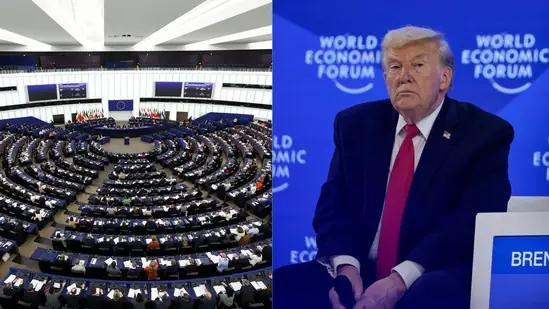
LONDON : EU lawmakers have agreed to hold off ratifying a key trade deal with the United States following President Donald Trump’s tariff threats over Greenland.
The warning shot from the European Parliament comes as the 27-nation bloc weighs how hard to hit back if Trump follows through against Washington’s long-standing allies.
The parliament was planning a vote in the coming weeks on removing tariffs on US industrial goods as part of the agreement.
A delay does not sink the deal, agreed in July with Trump after months of intense wrangling that saw Washington slap 15 percent tariffs on EU goods.
But by suspending approval it does send a strong message of discontent to the White House that EU lawmakers argued would unnerve American businesses.
“It is an extremely powerful lever — I don’t think companies would agree to give up the European market,” Valerie Hayer, president of the centrist Renew group, told journalists.
Trump has threatened to hit six EU countries — including powerhouses France and Germany — with tariffs for not going along with his demand to get Greenland.
EU leaders are set to hold an emergency summit in Brussels Thursday evening over the US threats against Denmark’s autonomous territory Greenland.
The bloc is weighing different responses if Trump does not back down, including putting last year’s trade deal on hold and hitting the United States with 93 billion euros ($108 billion) in tariffs.
The package of retaliatory tariffs was agreed at the height of the EU-US trade standoff last year, but was ultimately suspended until February 6 to avoid all-out trade war.
Beyond that, French President Emmanuel Macron is pushing to unleash the bloc’s potent anti-coercion trade instrument to use in case Trump makes good on his threats.
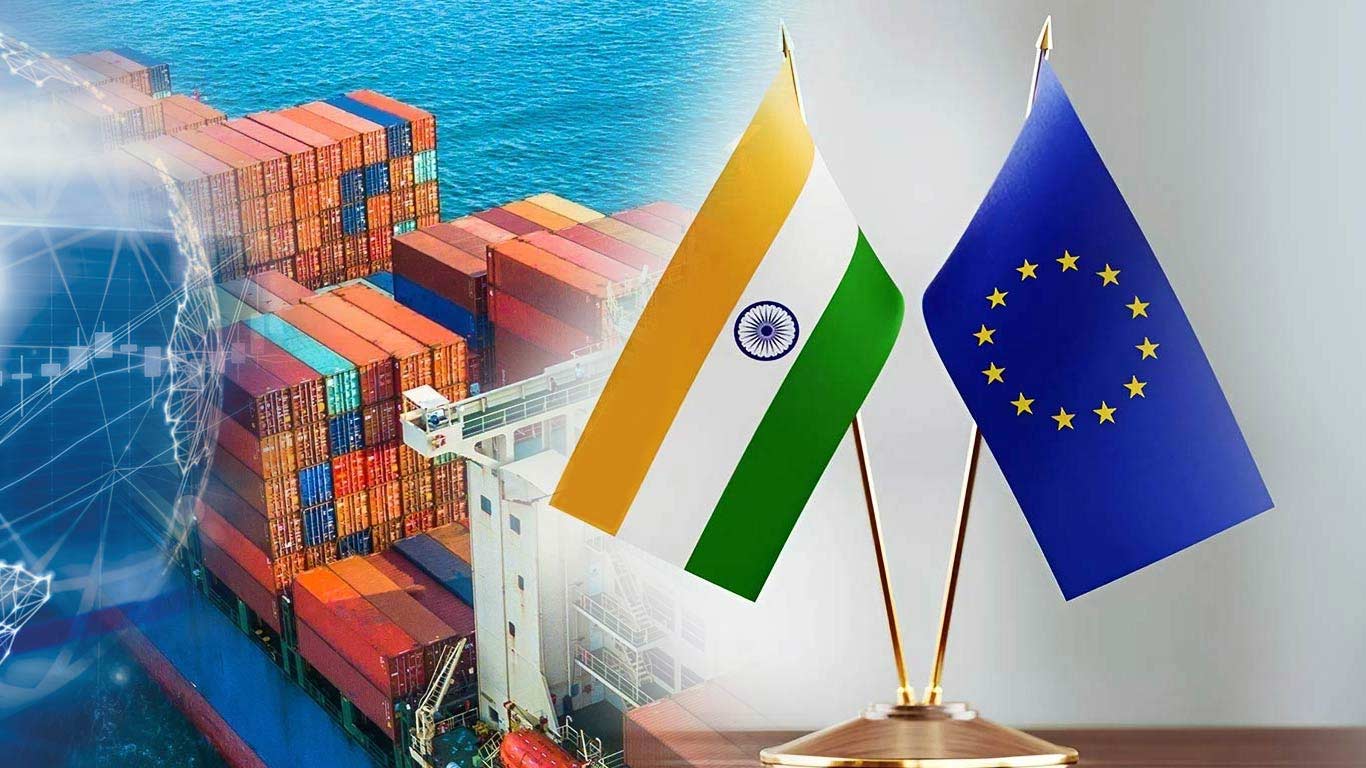
NEW DELHI : India stands to enhance its export competitiveness across nearly $5 billion worth of trade following the European Union’s agreement with the Mercosur bloc, even as New Delhi moves closer to sealing its own free trade agreement(FTA) with the EU.
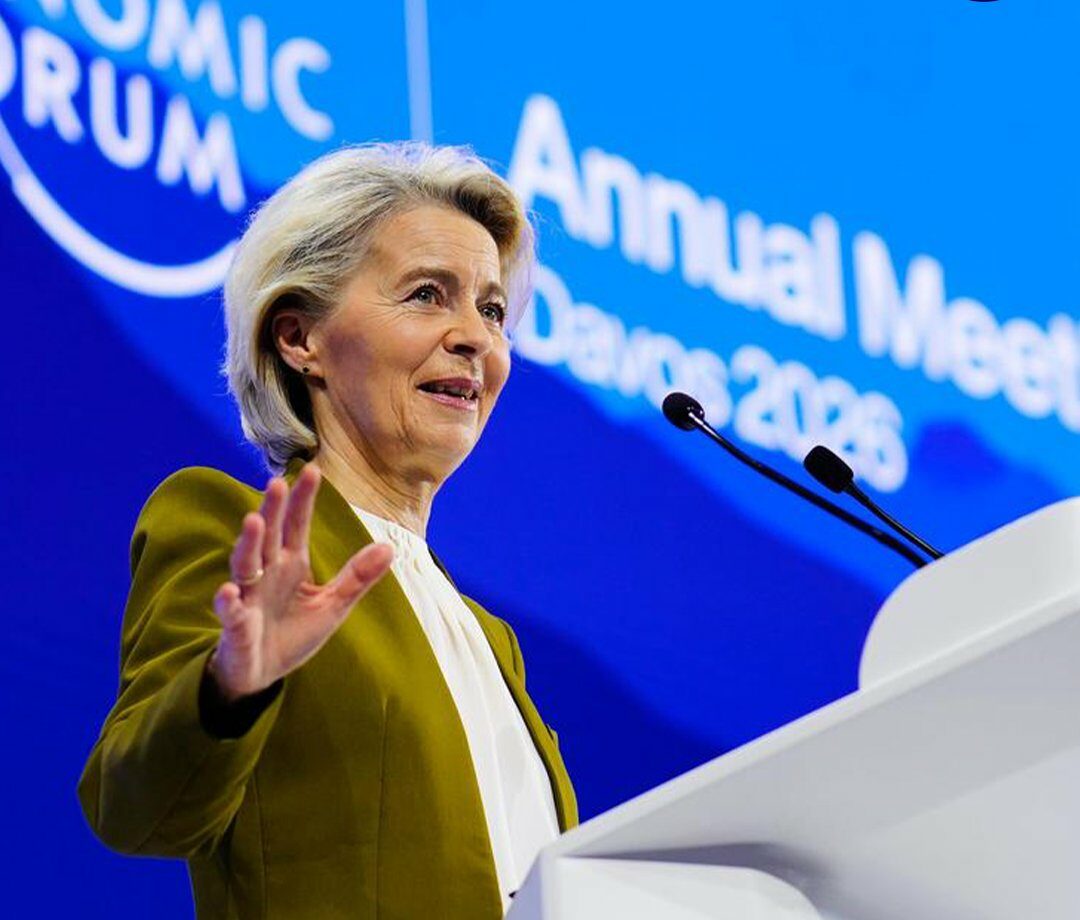
The development comes at a crucial juncture. India is engaged in advanced negotiations on a broad-based trade pact with the European Union—an engagement European Commission President Ursula von der Leyen has described as a strategic priority for the bloc. With the EU recalibrating its global trade relationships and seeking to diversify supply chains away from excessive reliance on a narrow group of partners, market dynamics within the region are undergoing a shift.
This realignment could work in India’s favour. In several product categories where Mercosur nations currently hold a dominant position, evolving tariff structures and sourcing strategies may create fresh opportunities for Indian exporters to gain ground and improve market access in the European market.
Much of the potential gain is concentrated in agriculture and processed food, sectors where India already brings depth, scale and a proven export base but has historically been constrained by Europe’s tariff regimes and regulatory thresholds. Among these, frozen shrimp emerges as a particularly strong contender. As trade equations shift, Indian exporters could tap into almost $525 million of European demand in this single category. Fresh grapes also feature prominently, with an estimated $131 million market that may become increasingly accessible as competitive barriers ease.
The opportunity, however, is not confined to food exports. Changes in sourcing dynamics could ripple into labour-intensive manufacturing, where India enjoys structural advantages. In industries such as apparel, leather products and light engineering, Mercosur suppliers often contend with higher freight costs and constraints on scalable production. Even a modest recalibration of EU sourcing strategies could tilt the balance in India’s favour—particularly if a forthcoming India-EU trade agreement delivers lower tariffs and smoother compliance pathways.
Chemicals and industrial intermediates represent another potential upside. As the European Union tightens environmental and sustainability norms, compliance costs for several South American exporters could rise, eroding their price competitiveness. This shift may work to India’s advantage, particularly for suppliers that have already aligned their operations with stringent global standards across diverse international markets. Over time, such regulatory asymmetries could help Indian exporters strengthen their foothold in select EU value chains.
Taken together, these developments point to an improvement in India’s competitiveness across nearly $5 billion of EU-bound trade, where supplier dynamics remain fluid. While the upside is far from automatic—and will hinge on the final contours and execution of India’s trade agreement with the European Union—the fallout from the EU–Mercosur deal offers a well-timed external tailwind for Indian exporters.
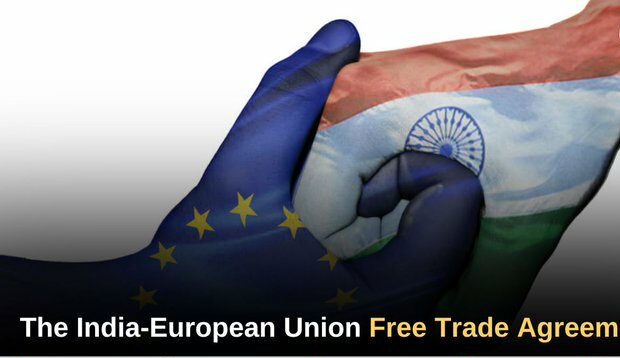
NEW DELHI : Indian textile and apparel exporters may gain a long-awaited level playing field in the European Union as the India–EU Free Trade Agreement (FTA) nears finalisation. The India-EU FTA is expected to be signed on January 27, with EU Commission President Ursula von der Leyen and European Council President António Costa in Delhi as the chief guests at the Republic Day parade on January 26.
In FY25, India exported $7.6 billion worth of textiles and apparels to the EU but tariffs ranging from 6 to 20 percent have eroded competitiveness, putting Indian suppliers at a disadvantage against competitors such as Bangladesh, which enjoys zero-duty access under the EU’s Everything but Arms (EBA) scheme, and Vietnam that enjoys tariff-free entry through its FTA with the 27-nation bloc.
Elimination of these duties under the India–EU FTA could lower prices for European buyers, boosting demand. Even a moderate drop in prices can raise Indian textile exports by roughly $1.5–2 billion a year. The estimate is based on applying the likely EU tariff cuts to India’s textile exports in FY25 and assuming that lower prices will boost demand by 15–25 percent, a standard method in trade analysis.
These gains will likely materialise only after the FTA is implemented, which could take at least a year after signing due to the EU’s lengthy ratification process.
In February 2025, India and the EU decided to ramp up talks for the proposed FTA, targeting to initially close it by the end of that year to tide over trade disruptions.
In FY25, India’s exports to the EU totalled $75.85 billion, while imports from the bloc reached $60.68 billion, making it the South Asian nation’s largest trading partner for goods.
Being negotiated for over a decade, the India-EU trade deal has 24 chapters across goods and services.
Better market access to the EU would be crucial given that Indian textile exports to the US are facing challenges due to steeper tariffs of 50 percent, compared with duties of around 20 percent for Bangladesh and Vietnam.
The US is the single-largest market for India’s textile and apparel exports, accounting for nearly 28 percent of the export revenue from the sector.
India’s exports of textile and apparel products to the US were valued at nearly $11 billion in FY25.
In FY25, India exported textile and apparel, including handicrafts, worth $37.7 billion, accounting for roughly 8.6 percent of the country’s outbound shipments.
NEW DELHI : The European Union (EU) has suspended export benefits to sectors such as textiles and plastics under a preferential scheme for India and two other countries effective from January 1. The commerce ministry said the move will not have any impact on the country’s exports to the 27-nation bloc, as from 2016, the EU has progressively suspended GSP tariff preferences for India across products, such as minerals, chemicals and textiles.
This was further widened in 2019 and 2023. “The same list was extended as per regulations released on December 1, 2025. From January 1, 2026, GSP preferential duties will be suspended for the same list of products until December 31, 2028,” the ministry said in a statement.
As a result of this phased product level graduation, for 2024-25, about 47 per cent of India’s exports to the EU, valued at USD 35.6 billion, are currently outside the scope of the GSP, with only 53 per cent (USD 40.20 billion) remaining eligible for the benefits.
However, experts and exporters have stated that the move will impact the country’s exports to the EU. The development is important as the two sides are likely to announce the closure of negotiations for a free trade agreement (FTA) on January 27.
According to the Official Journal of the European Union, the European Commission on September 25, 2025, laid down rules for the application of the regulation with regard to the suspension for 2026-2028 of certain tariff preferences granted to certain GSP beneficiary countries – India, Indonesia and Kenya. “It shall apply from 1 January 2026 until 31 December 2028…,” it said.
Commenting on the development, think tank Global Trade Research Initiative (GTRI) said from January 1, 2026, India faces a “major setback” in the EU market, as 87 per cent of its exports begin paying higher import tariffs following the European Union’s suspension of GSP (Generalised Scheme of Preferences) benefits.
Only about 13 per cent of exports, including agriculture and leather, retain the benefits under this scheme, it said. GSP concessions allowed Indian exporters to ship at less than MFN (most favoured nation) tariffs to EU markets. Now, concessions are suspended for 87 per cent value of Indian goods to the EU.
In simple terms, an apparel product facing a 12 per cent tariff paid only 9.6 per cent under the GSP. From January 1 this year, this benefit ends, and exporters must pay the full 12 per cent duty. The EU has removed GSP benefits across almost all major industrial sectors – minerals, chemicals, plastics and rubber, textiles and garments, stone and ceramics, precious metals, iron and steel, base metals, machinery, electrical goods and transport equipment – which together form the backbone of India’s exports to Europe.
The EU periodically reduces these benefits, as it did earlier in 2013 and 2023. This time, the concessions have been completely withdrawn for three years from 2026 to 2028.
“While there is optimism over the conclusion of the India–EU Free Trade Agreement, Indian exporters will, in reality, confront higher trade barriers in the near term, as the loss of GSP preferences coincides with the start of the tax phase of the EU’s Carbon Border Adjustment Mechanism (CBAM),” GTRI Founder Ajay Srivastava said.
With the FTA’s implementation likely to take at least a year, if not longer, India’s exports to the EU will face a difficult period marked by higher tariffs, rising compliance costs and weakened competitiveness, hitting exporters just as global trade conditions remain fragile, he said.
He also said that in highly price-sensitive sectors such as garments, this increase is enough to undermine India’s competitiveness and push EU buyers toward duty-free suppliers like Bangladesh and Vietnam. The EU’s GSP is a unilateral trade arrangement that allows developing countries to export to the EU at lower-than-MFN tariffs.
Countries are grouped by income and export competitiveness, and benefits are withdrawn through ‘graduation’ once exports in a product group become large over time. The EU’s move follows its GSP graduation rules, under which preferences are withdrawn once exports in a product group cross a threshold for three consecutive years.
“Accordingly, India has been graduated for 2026–2028 under Commission Implementing Regulation (EU) 2025/1909, adopted in September 2025. While legally justified, the economic impact is sharp,” Srivastava said.
India’s bilateral trade in goods with the EU was USD 136.53 billion in 2024-25 (exports worth USD 75.85 billion and imports worth USD 60.68 billion), making it the largest trading partner for goods. The EU market accounts for about 17 per cent of India’s total exports, and the bloc’s exports to India constitute 9 per cent of its total overseas shipments.
Federation of Indian Export Organisations (FIEO) Director General Ajay Sahai said the EU has withdrawn GSP tariff preferences on nearly 87 per cent of Indian exports, requiring most products to now enter at full MFN duty rates and eliminating an average of around 20 per cent tariff advantage earlier enjoyed by Indian exporters.
“This has materially weakened India’s price competitiveness vis-a-vis suppliers such as Bangladesh and Vietnam, which continue to benefit from duty-free or lower-duty access,” Sahai said. He said the impact is most pronounced for industrial exports, including minerals, chemicals, plastics, iron and steel, machinery, and electrical goods, which constitute a major share of India’s shipments to the EU and are now fully exposed to tariffs.
He added that preferential access is now limited to a small basket of products, mainly select agricultural items, leather goods, and handicrafts, together accounting for less than 13 per cent of India’s total exports to the EU.
NEW DELHI : In a decisive move to solidify India’s position as a global electronics hub and to promote domestic manufacturing of electronic goods, the Union Finance Ministry has announced the increase of Basic Customs Duty (BCD) on flat panel displays to 20 per cent. The move will also correct the inverted duty structure on the goods. The Ministry also reduced the BCD on open cells and key components to 5 per cent.
“In line with our ‘Make in India’ policy, and to rectify inverted duty structure, I propose to increase the BCD on Interactive Flat Panel Display (IFPD) from 10 per cent to 20 per cent and reduce the BCD to 5 per cent on Open Cell and other components,” the Finance Minister said in a post on social media platfom X.
To further boost local manufacture of Open Cells for LCD/LED TVs, BCD on parts of Open Cells is fully exempted, building on earlier reductions, it said.
“In 2023-24 budget, for the manufacture of Open Cells of LCD/LED TVs, I had reduced the BCD on parts of Open Cells from 5 per cent to 2.5 per cent. To further boost the manufacture of such Open Cells, the BCD on these parts will now sand exempted,” the ministry tweeted.
This policy evolution follows a successful blueprint established in the smartphone sector, where phased manufacturing programs successfully turned India into the world’s second-largest mobile producer. While the immediate impact may lead to a short-term price hike for imported high-end panels, the long-term outlook suggests a surge in domestic investment.
Local manufacturing giants and global OEMs are now pressured to localize their supply chains to avoid the 20 per cent penalty on finished goods. Ultimately, this move seeks to build a self-sustaining display ecosystem that not only meets domestic demand for LCD and LED products but also positions India as a competitive exporter of high-tech hardware.
NEW DELHI : As India’s Economy grows and consumption diversifies, freight movement has increased sharply, straining roads, fuel use, and air quality. To address this, Indian Railways, through its visionary Dedicated Freight Corridor (DFC) initiative, has introduced the innovative Trucks-on-Trains (ToT) service. Conceived as part of Indian Railways’ long-term freight transformation strategy, the DFC network provides the backbone that enables new-generation multimodal logistics.
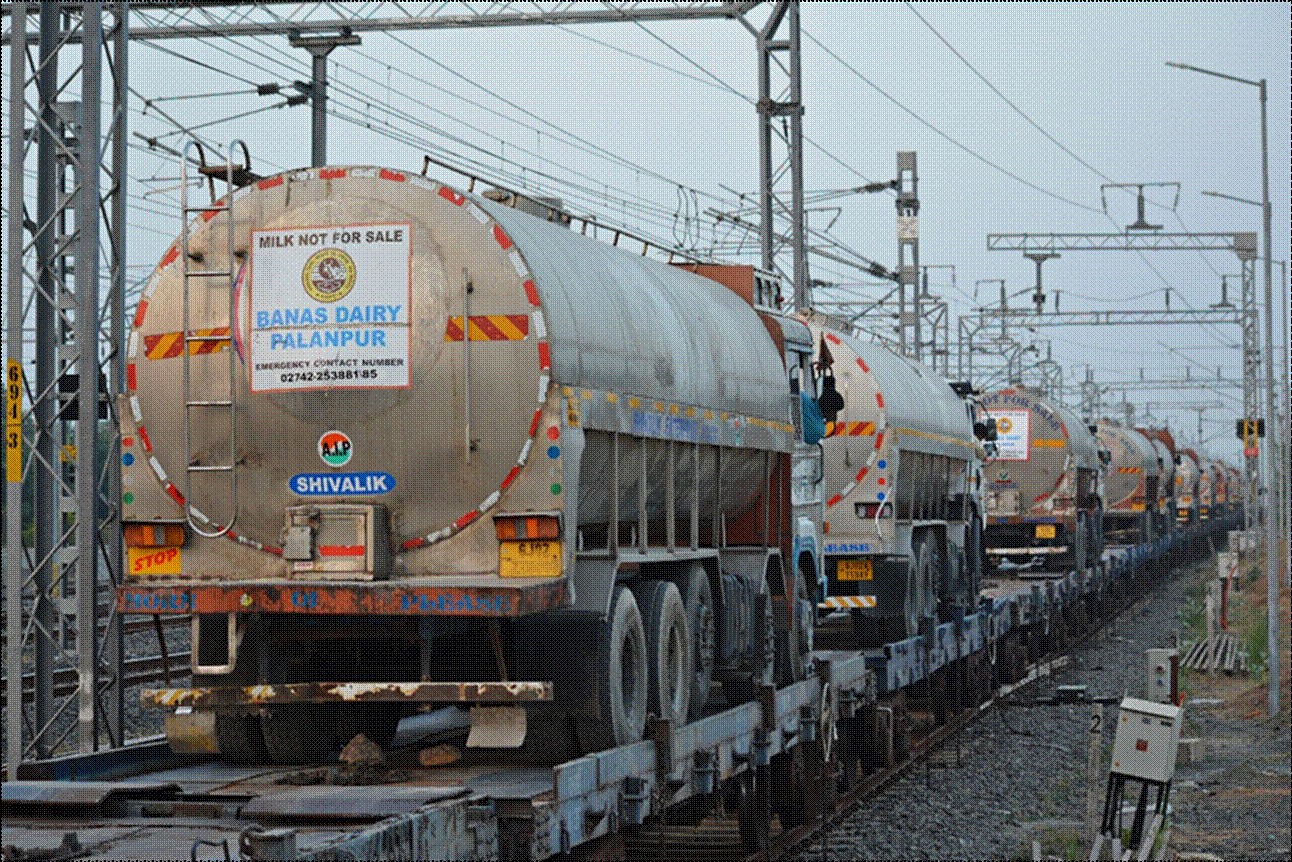
ToT integrates the flexibility of road transport with the efficiency and environmental benefits of electrified rail infrastructure developed under Indian Railways’ Dedicated Freight Corridor program. The service allows loaded trucks to be carried on specially modified flat wagons along the dedicated freight corridor. Trucks avoid long, congested highway journeys and travel by rail for the main haul. They then complete only short first- and last-mile road movements.
Economic Yet Reliable
At present, the ToT service operates between New Rewari and New Palanpur on the Western DFC network. It will be extended to additional sections as infrastructure development progresses. On the New Palanpur–New Rewari corridor, the service spans approximately 636 kilometres, cutting end-to-end transit time from nearly 30 hours by road to around 12 hours via the ToT service. This integrated road–rail solution enhances transit reliability, shortens turnaround times, and reduces overall logistics costs, while shielding long-haul freight movement from many of the uncertainties inherent in highway transport.
A key strength of the ToT lies in its simple and competitive pricing structure. Freight is charged on transparent weight slabs, ₹25,543 per wagon for trucks up to 25 tonnes, ₹29,191 for 25-45 tonnes, and ₹32,000 for 45-58 tonnes, while empty trucks are carried at only ₹21,894 per wagon. To further support the dairy sector, no GST is levied on milk tankers, making the service especially attractive for time-sensitive and perishable cargo. Enhancing operational flexibility, Open Indent booking has been available since January 2024, allowing customers to plan movements in line with their dynamic logistics requirements.
Operational data from the current financial year clearly reflects the growing traction of the service. During FY 2025 (April–December), the Trucks-on-Trains service handled a total of 545 rakes, moving more than 3 lakh tonnes of freight and generating revenue of ₹36.95 crore. This volume underscores ToT’s emergence as a commercially viable and scalable logistics product rather than a pilot-stage innovation.
A closer look at origin-wise performance further highlights its strength. New Palanpur alone accounted for 273 rakes, handling about more than 2 lakh tonnes and generating revenue of ₹20.18 crore, demonstrating strong adoption from western India’s freight clusters, particularly in dairy and FMCG segments. New Rewari contributed almost equally in operational terms, with 272 rakes, moving around 0.1004 million tonnes and generating ₹16.76 crore in revenue. Together, these terminals illustrate how strategically located nodes on the DFC can anchor sustained multimodal freight flows and drive corridor-based logistics efficiency. The service has witnessed strong patronage from western India’s freight clusters, particularly from major customers such as the Gujarat Cooperative Milk Marketing Federation (Amul) for milk and dairy products, along with other logistics service providers. The relaunch of the Trucks-on-Trains service through a Memorandum of Understanding with GCMMF in June 2023 significantly reinforced industry confidence and helped anchor regular volumes from the dairy sector.
Pioneering Modal Shift
One of the most significant strategic outcomes of Western Dedicated Freight Corridor Trucks-on-Trains service is the modal shift of long-haul freight from road to rail. By transferring the longest and most energy-intensive segment of truck journeys to electrified, high-capacity dedicated freight corridors, the ToT model helps decongest highways, reduce dependence on imported fossil fuels, and optimise national logistics costs. Each freight train has the potential to replace dozens of long-haul trucks, resulting in smoother traffic flow, lower accident risks, reduced diesel consumption, and diminished wear and tear on road infrastructure.
An important economic advantage for transporters is the avoidance of highway toll costs. Long-distance trucking on national highways involves significant expenditure on toll plazas, which escalates logistics costs and increases trip uncertainty. By shifting the long-haul segment to rail, Trucks-on-Trains enables operators to bypass these recurring toll expenses entirely, improving cost predictability and margins, particularly for high-frequency and long-distance movements.
Cleaner & Safer Transport
The environmental gains are reinforced by the fact that the entire DFC network is fully electrified. Shifting trucks from road to rail significantly reduces emissions of carbon dioxide (CO₂), nitrogen oxides (NOₓ) and particulate matter. As India’s power generation mix progressively incorporates higher shares of renewable energy, the carbon footprint of rail-based freight under the ToT model is expected to decline further. Beyond tailpipe emissions, Trucks-on-Trains also addresses the often-overlooked issue of road dust pollution. Heavy truck traffic is a major contributor to dust generation on highways, adversely affecting public health, agriculture, and roadside ecosystems. By moving truck traffic to rail corridors, ToT helps improve air quality for communities living along major transport routes. The tangible impact of this shift is clearly visible on the Palanpur–Rewari corridor, spanning approximately 636 kilometres. When trucking over this stretch is shifted to rail, nearly 48875 trucks are effectively removed from highways for the core journey, operating only for first- and last-mile delivery. This transition results in estimated diesel savings of about 88,81,285 litres, while preventing the emission of approximately 2,30,91,343 kilograms of carbon dioxide (CO₂). These figures demonstrate how corridor-based modal shift delivers measurable environmental and energy benefits at scale.
Another critical advantage of the service is its resilience to adverse weather conditions. Road transport in many parts of India is highly vulnerable to fog, heavy rainfall, extreme heat, and poor visibility, particularly in northern regions during winter months, where dense fog frequently disrupts highway movement and increases accident risks. Rail operations on dedicated freight corridors, equipped with advanced signalling and controlled right-of-way, are far less susceptible to such disruptions. By shifting the longest journey segment to rail, ToT enhances schedule reliability and ensures continuity of supply chains even under challenging weather conditions.
Long-distance truck driving is physically demanding and accident-prone. By reducing continuous and long driving hours, the ToT model lowers driver fatigue, improves working conditions, and contributes to safer highways with fewer collisions and casualties. Reduced road traffic also translates into lower infrastructure damage and reduced public expenditure on road maintenance.
A New Revenue Stream for Rail-Based Logistics
From a commercial perspective, Trucks-on-Trains has emerged a new and sustainable revenue stream for rail-based logistics. Since inception, the service has completed over 1,955 trips, handled more than a million tonnes of freight, and generated cumulative revenue exceeding ₹131 crore. Strong uptake from sectors such as dairy, automobiles, Fast-Moving Consumer Goods and food processing reflects growing industry confidence in the model. The relaunch of the service through a Memorandum of Understanding with the Gujarat Cooperative Milk Marketing Federation (GCMMF) in June 2023 further reinforced its credibility among large institutional shippers.
Looking ahead, scalability is being strengthened through the development of new-generation wagon designs under the Flat Multipurpose (FMP) platform, engineered to carry trucks more efficiently, safely, and at higher payloads. These wagons will enhance loading efficiency and operational flexibility across varying truck configurations. Simultaneously, the introduction of additional Origin–Destination points and terminals across the DFC network will reduce first- and last-mile costs and expand the service’s reach to new industrial clusters.
From a forward-looking perspective, the service opens new possibilities for Indian businesses seeking reliable, pan-India market access with predictable transit times. For perishable agricultural producers and food-processing industries, ToT enables true first-mile to last-mile integration. Fresh chikoo grown in Maharashtra can be transported from orchards to nearby ToT terminals, moved rapidly over the Dedicated Freight Corridor, and delivered by road to distant consumption centres with minimal handling and time loss. Similarly, onions from Nashik, one of India’s most important horticultural hubs can reach northern and eastern markets efficiently, reducing spoilage and price volatility.
Part of a Larger Multimodal Vision
Trucks-on-Trains is not a standalone initiative but a core component of Dedicated Freight Corridor Corporation of India Limited’s (DFCCIL) broader multimodal logistics vision. Alongside high-capacity freight corridors, multimodal cargo terminals and logistics parks, the service ensures that road and rail complement each other, deploying each mode where it is most efficient, economical, and environmentally sustainable.
In essence, Trucks-on-Trains represents a structural shift in India’s freight transport paradigm. By combining innovation, electrified infrastructure, competitive pricing, operational resilience, and clear environmental and social benefits, DFCCIL is demonstrating that freight movement can be efficient, reliable, and responsible at the same time.
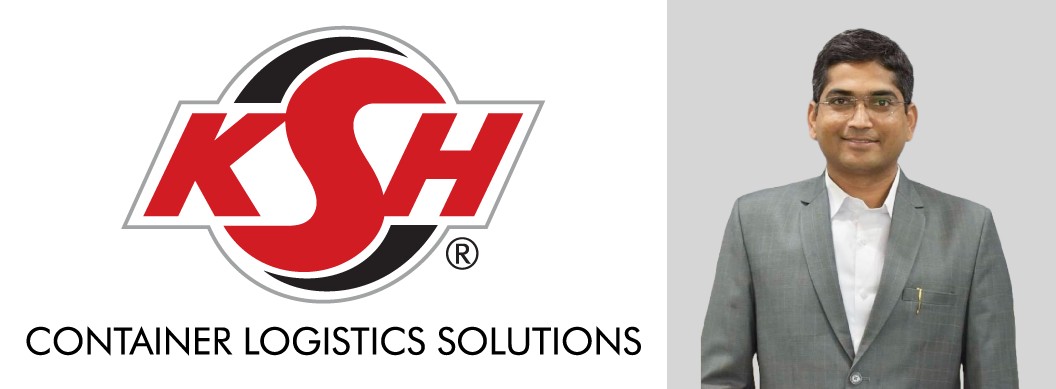
PUNE: KSH Distriparks, a leading supply chain player in India, announced the appointment of Dnyaneshwar Patil as General Manager – Commercials. In this role, he will focus on driving strategic growth in EXIM trade operations, strengthening partnerships with shipping lines and trade bodies, and positioning KSH Distriparks as a trusted custodian in India’s evolving logistics landscape.
The appointment comes at a pivotal time for KSH Distriparks. In 2025, the company scaled its annual handling capacity to 1.75 lakh+ TEUs by addressing a long-standing challenge faced by exporters in the Pune-Chakan industrial belt: the availability of empty containers at the hinterland level. By strengthening its empty yard capabilities and forging strategic alliances with global shipping lines, KSH Distriparks has helped improve turnaround times and reduce logistics costs for exporters.
With 2+ decades of experience across express logistics and freight forwarding, Dnyaneshwar brings deep commercial and operational expertise to the role. His career spans leadership positions at TNT Express, Aramex, Blue Dart, DHL, DSV, and Kuehne+Nagel, where he managed marquee customers across India and led strategic initiatives in sea logistics.
Commenting on his appointment, Dnyaneshwar Patil, GM – Commercials, KSH Distriparks, said, “ICD Talegaon plays a vital role in India’s trade infrastructure. I am excited to join a company that is deeply committed to transparency, efficiency, and customer-first solutions. This is an important phase for building logistics infrastructure that supports India’s export growth and global competitiveness.”
At KSH Distriparks, Dnyaneshwar will focus on elevating the company’s position through digital transformation initiatives, sustainable practices, and enhanced customer engagement. Key priorities include implementing process automation for operational efficiency, launching customer engagement programs with real-time visibility through CRM integration, developing sustainability projects for greener supply chains, and forging strategic alliances to expand service offerings.
Welcoming him to the leadership team, Malcolm D’souza, CEO at KSH Distriparks, shared, “Dnyaneshwar’s extensive experience across express logistics, freight forwarding, and national key account management makes him the ideal leader to drive our commercial strategy forward. His proven track record in building strategic partnerships and delivering operational excellence aligns perfectly with our vision to be recognized as a value-adding partner in global trade.”
Looking ahead, KSH Distriparks will continue to focus on strengthening inland trade infrastructure and supporting port decongestion, in line with the objectives of the PM Gati Shakti initiative.
About KSH Distriparks:
KSH Distriparks offers end-to-end solutions for import-export operations at ICD Talegaon. With a focus on transparency, efficiency, and sustainability, the company serves as a critical infrastructure partner in global trade, providing custodial services, warehousing, and supply chain solutions.
Part of the KSH Group, KSH Distriparks is committed to digital transformation, customer-centric service delivery, and building sustainable practices that support India’s growing trade ecosystem.