Home Blog Page 49

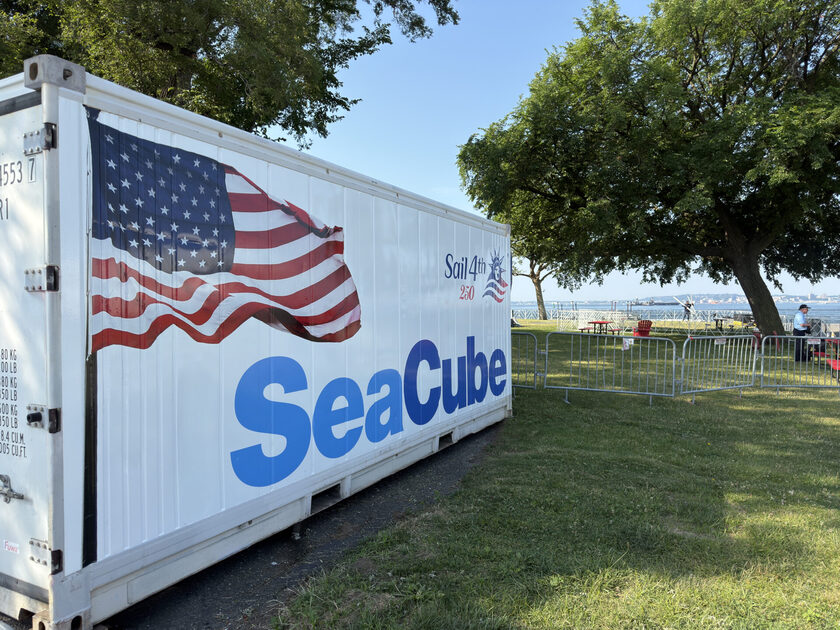
SeaCube to receive NDTA Corporate Distinguished Service Award at 2026 NDTA-USTRANSCOM Fall Meeting

MONTVALE ( NEW JERSEY): SeaCube Containers, a global leader in intermodal equipment solutions, will receive the NDTA Corporate Distinguished Service Award in recognition of its outstanding contributions as a corporate member of the National Defense Transportation Association (NDTA). The award will be presented during the 2026 NDTA-USTRANSCOM Fall Meeting, October 26-29 at the Gaylord Texan Resort & Convention Center in Grapevine, Texas.

Each year, the NDTA honors its corporate members who distinguished themselves during the previous year through their support and involvement in the organization and its mission.

“We are honored to be recognized by NDTA and to be part of a community that brings together government, military and industry to strengthen our nation’s defense transportation capabilities,” said Robert F. Sappio, CEO of SeaCube Containers. “The Fall Meeting provides an important forum for collaboration, and we value the relationships we have built through our involvement with NDTA.”

SeaCube has supported U.S. Transportation Command (USTRANSCOM) since 2019, providing intermodal equipment and transportation services to meet scheduled and mission-critical requirements. Through its Government Services business, SeaCube brings its equipment expertise, global reach and responsive service capabilities to help meet the complex transportation needs of the U.S. military and government agencies.

Co-sponsored by NDTA and USTRANSCOM, the annual Fall Meeting brings together senior military, government and industry transportation and logistics leaders to collaborate on challenges facing the defense transportation community. The 2026 meeting will focus on the role transportation and logistics capabilities play in supporting mission success, from humanitarian response to global military operations.

About SeaCube Containers

SeaCube is one of the largest purchasers and lessors of refrigerated containers in the world and is committed to investing in technologically advanced and innovative equipment solutions that safeguard cargo, improve service reliability, and help its clients reduce their carbon footprints while increasing profitability. SeaCube pairs its differentiated offering with an experienced team of industry professionals to create customized rental, lease and financing programs, provide premier customer support, and deliver added value

Soya IT Marine Solutions Selects Speedcast to deliver Connectivity Services for Wallenius Wilhelmsen’s Fleet

HOUSTON: Speedcast, a global communications and IT services provider and Tier 1 Starlink Enterprise Account leader, and Soya IT Marine Solutions have completed the deployment of upgraded digital connectivity solutions on 41 roll-on/roll-off (RoRo) vessels for global shipping and logistics company, Wallenius Wilhelmsen.

As part of a connectivity transformation program delivered by Soya IT Marine Solutions for the customer, Speedcast is delivering a global WAN, Starlink and Eutelsat OneWeb dual-LEO solutions, Iridium Certus and LTE-based back-up service across the RoRo fleet. The integration of these hybrid solutions brings ultra-high-bandwidth connectivity and a new level of digital enablement to Wallenius Wilhelmsen’s enterprise and crew communications.

Beyond enhanced operational connection, the fleet now has managed access to enterprise software on the bridge, while crew members can enjoy improved streaming and social media applications during off hours.

“A fleetwide upgrade program of this scale requires deep expertise in network management and configuration, all of which Speedcast has extensive global experience to successfully execute,” said Speedcast’s EVP, Global Sales, James Trevelyan. “This new partnership isn’t just about connectivity; it’s about making vessels digitally ready for the future, enabling secure, real-time data, strengthening operational performance, and improving the working environment onboard.”

Connectivity upgrades were conducted entirely remotely, made possible by the close collaboration between the two companies. Soya provides technical and operational support for Wallenius Wilhelmsen’s fleet, and in partnership with Speedcast’s Project Management teams, the deployment was completed with remote support for commissioning. This was key as the vessels only stay in port for a few hours at length and are traversing worldwide.

“Our objective was to modernize fleet connectivity for the customer while ensuring seamless integration with existing vessel infrastructure and business systems,” said Thomas Bergefall, Vice President Group IS/IT at Soya Group. “Speedcast brought valuable connectivity expertise to the project, helping us successfully deliver this fleet-wide upgrade. Delivering a corporate and crew solution that meets their unique needs, while supporting their long-term digital strategies, is what our team strives to accomplish, and we look forward to continuing carrying out that vision with Wallenius Wilhelmsen.”  

The Wallenius Wilhelmsen group is the world’s largest Pure Car and Truck Carrier (PCTC) vessel operator and a market leader in RoRo shipping and vehicle logistics, managing the distribution of cars, trucks, rolling equipment and breakbulk to customers all over the world. The company operates around 125 vessels in total, servicing 15 trade routes to six continents, a global inland distribution network, 66 processing centers and seven marine terminals.

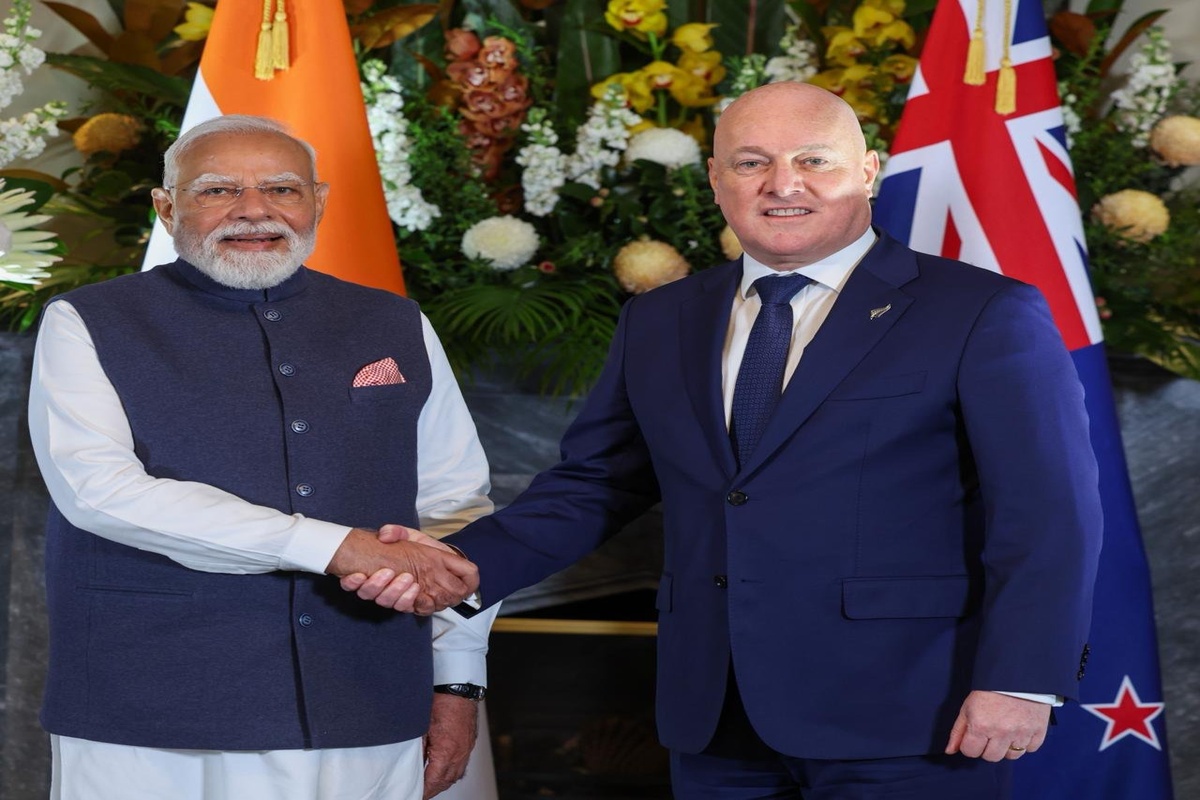
India–New Zealand FTA comes into force and opens new opportunities for Indian exporters

NEW DELHI: Union Minister of Commerce and Industry Shri Piyush Goyal and New Zealand’s Minister for Trade and Investment, Hon. Todd McClay, on Monday jointly announced through a virtual conference that the India–New Zealand Free Trade Agreement (FTA) will enter into force on 20 October 2026, on the occasion of Vijay Dashmi, a day symbolising victory and new beginnings..

Speaking on the occasion, Union Minister of Commerce and Industry Shri Piyush Goyal said, “Ours is a winning partnership, both on and off the field. The success of this agreement will be measured by the opportunities it creates and the difference it makes to the lives of the people of New Zealand and India. For India, 100% duty-free access to the New Zealand market opens significant new opportunities for our exporters, particularly MSMEs, artisans, farmers, and women entrepreneurs. For our farmers, the agreement combines new opportunities with appropriate safeguards. The Agricultural Productivity Partnership, with action plans for apples, kiwifruit and honey, establishment of Centres of Excellence, promote better orchard management, reduce post-harvest losses, and improve agricultural productivity, supporting stronger farm incomes across the country. The agreement also aligns with the vision of our Hon’ble Prime Minister for Viksit Bharat 2047: that is a developed and prosperous India built on competitiveness, innovation, productive capacity, and inclusive prosperity when India celebrates 100 years of independence.”

New Zealand’s Minister for Trade and Investment, Hon. Todd McClay, stated, “The entry into force of India-New Zealand Free Trade Agreement is a watershed moment in the relationship between our two countries. For New Zealand exporters, the FTA opens the door to 1.4 billion consumers and one of the world’s fastest-growing major economies. New Zealand’s current exports to India will benefit from tariff elimination or substantial tariff reductions. At the same time, all Indian goods will be able to enter New Zealand duty-free, creating new opportunities for Indian exporters and placing them on a level playing field with New Zealand’s other FTA partners. The success of this agreement will ultimately be measured by the opportunities it creates and the extent to which our businesses use it.”

Secretary, Department of Commerce, Shri Rajesh Agrawal, said, “FTAs are about creating a deep economic partnership between countries. As a part of the FTA, we see this partnership also driving a lot of New Zealand investment in India. All the other big economies around the Pacific have got a much deeper trade with New Zealand. This FTA opens up the opportunity that we can also be a major contributor to the bilateral trade between India and New Zealand. The job is now to translate this opportunity into actual benefits for our people. We are working with all the Industry and the associations to take this message forward to every district across the country.”

Under the leadership of Prime Minister Shri Narendra Modi, India and New Zealand have continued to deepen and expand their engagement. The FTA reflects India’s commitment to forging partnerships with developed economies that deliver market access, create employment opportunities and empower youth, women and MSMEs, in line with the vision of Viksit Bharat 2047

Representatives from industries in India and New Zealand also participated in the ceremony and spoke about opportunities created by the Agreement for their respective sectors, including services, footwear, engineering and agriculture.

On the occasion, the first-ever export of a JCB machine from India to New Zealand was flagged off by the Union Minister of Commerce and Industry. Flag-offs of a range of products across the agriculture, gems and jewellery, engineering, sporting goods, footwear and leather sectors are also planned for the entry-into-force day. These initiatives reflect the confidence of Indian manufacturers and the opportunities the Agreement opens up for exporters across the country.

New Zealand has eliminated customs duties on all tariff lines covering Indian exports, removing peak tariffs of up to 10%. Textiles, apparel, leather, footwear, gems and jewellery, engineering goods, automobiles and auto components, chemicals, pharmaceuticals, agricultural products and processed foods are expected to benefit. Duty-free access for wooden logs, coking coal and metal waste and scrap will further strengthen manufacturing and MSME supply chains. The pharmaceutical and medical device industries will benefit from streamlined regulatory processes.

New Zealand has made its best services offer in any of its trade agreements to date, with market access in around 118 sectors and Most-Favoured-Nation commitments in about 139 sub-sectors. For the first time, it has also provided dedicated access in Health and Traditional Medicine Services, covering Ayurveda, Yoga and other AYUSH systems.

Indian youth and professionals will have access to a quota of 5,000 Temporary Employment Entry visas and 1,000 Working Holiday visas every year. There will be no numerical cap on Indian students, with post-study work rights of up to three years for STEM Bachelor’s and Master’s graduates and up to four years for doctoral scholars.

The Agricultural Productivity Partnership is a key component of the Agreement, extending cooperation beyond tariff concessions to bring global technology, training and best practices to Indian farmers. It includes dedicated Action Plans for kiwifruit, apples and honey, with cooperation also extending to horticulture, forestry, livestock and fisheries.

New Zealand is providing technical assistance for establishing Centres of Excellence for kiwifruit, apples and honey. Under the Kiwifruit Action Plan, Phase I sites have been identified at Pfutsero in Nagaland and Magra in Uttarakhand. Two further Centres of Excellence for apples are proposed in Himachal Pradesh and Uttarakhand, while the Honey Action Plan envisages Centres of Excellence in Uttar Pradesh and West Bengal. These initiatives aim to support farmers through technology transfer, improved cultivation practices and enhanced productivity.

Representatives from Himachal Pradesh, Nagaland, Uttarakhand, Uttar Pradesh and Arunachal Pradesh, along with collaborating organisations from New Zealand, were present for the entry into force.

All Tariff Rate Quotas for apples, kiwifruit and Mānuka honey are formally linked to the delivery of the Action Plans, under the oversight of a Joint Agriculture Productivity Council. This links market access with farmer welfare.

New Zealand has committed to facilitate USD 20 billion of investment into India. The investment is expected to benefit agriculture, manufacturing, infrastructure and start-ups, and support innovation, entrepreneurship and employment generation under the Make in India vision.

To protect farmers, dairy producers, fisherfolk and rural communities, sensitive products such as dairy, sugar, edible oils and key agricultural commodities remain excluded from concessions. Robust Rules of Origin, a bilateral safeguard mechanism and strong anti-circumvention provisions will ensure that the benefits flow only to genuine Indian exporters.

The Agreement opens an advanced overseas market to India’s MSMEs, women-led enterprises, start-ups, artisans and first-generation entrepreneurs. Zero duty and faster customs processes will lower landed costs and widen their customer base. Structured cooperation will provide enhanced access to trade-related information and linkages with New Zealand’s SME ecosystem, with a specific focus on enterprises owned by women and youth.

New Zealand has also committed to facilitate the registration of Indian Geographical Indications, opening avenues for protection of products associated with rural artisans and traditional industries.

The India–New Zealand FTA is a people-centric and inclusive partnership, anchored in the vision of Viksit Bharat 2047 and the leadership of Hon’ble Prime Minister Shri Narendra Modi. It seeks to empower farmers, MSMEs, women-led enterprises, entrepreneurs, artisans, youth and professionals.

Negotiations were launched on 16 March 2025 and concluded on 22 December 2025, within nine months. The Agreement was signed on 27 April 2026. It supports the India–New Zealand Strategic Partnership: Roadmap to 2030, which sets an aspirational goal of doubling bilateral trade in goods and services to NZ$7 billion (₹35,000 crore) by 2030.

Gujarat Dy CM’s Japan visit focuses on fresh investments, technology partnerships

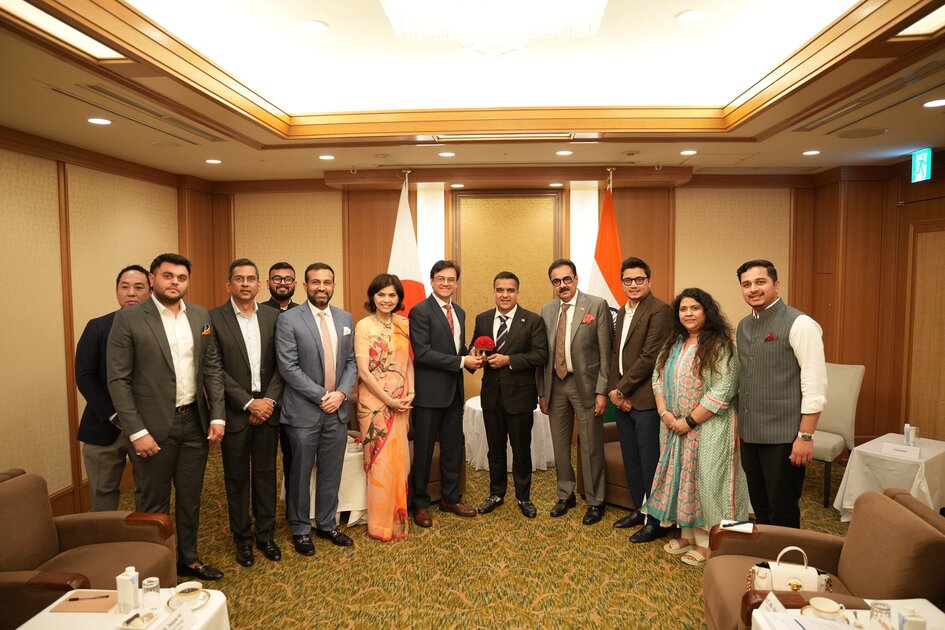
GANDHINAGAR: Gujarat Deputy Chief Minister Shri Harsh Sanghavi held investment discussions with Japanese companies across chemicals, life sciences, textiles and green energy during his visit to Japan, as the state seeks to attract fresh investments ahead of the upcoming Vibrant Gujarat Global Summit 2027.

According to a press release from the Deputy Chief Minister’s office, 11 engagements have been scheduled across Tokyo and Shizuoka, including meetings with companies, government-level discussions and a roundtable with textile industry representatives.

Four key meetings involving Ultrafabrics, Kaneka Corporation and Itochu Corporation were completed during the initial phase of the visit, while further engagements with Fujifilm Corporation, Yazaki India and Green Carbon were scheduled as part of the programme.

Discussions with Ultrafabrics Holdings President Yoshimura focused on investment opportunities in synthetic leather and related sectors. Sanghavi also met Kaneka Corporation President Isao Otsu to discuss potential partnerships in chemicals and life sciences.

Meetings with representatives of Itochu Corporation’s trading and green innovation business units focused on possible cooperation in green energy and global trade. The delegation also held discussions with Hireso on opportunities in cloud computing and Global Capability Centres (GCCs).

As part of the visit, Sanghavi is scheduled to meet Shizuoka Governor Yasutomo Suzuki for bilateral discussions on industrial development, advanced technologies and cooperation between Gujarat and Shizuoka. He will also invite the governor to participate in the upcoming Vibrant Gujarat Global Summit, the release said.

Further discussions with Fujifilm are expected to cover electronic materials and investment opportunities across its business portfolio. Meetings with Yazaki India and Green Carbon will explore potential investments and partnerships in automotive components and carbon credits, respectively.

The programme also includes a roundtable with Japanese textile investors and entrepreneurs to present Gujarat’s textile ecosystem, its new textile policy and opportunities in global exports. The state aims to encourage Japanese companies to consider investments in the sector and participate in the Vibrant Gujarat Global Summit.

The visit is part of Gujarat’s efforts to strengthen economic ties with Japan and attract investment across industrial sectors. The engagements are intended to explore opportunities for technology collaboration, trade and business partnerships, with the state looking to build on these discussions ahead of the summit.

Centre drives ₹18,400-crore maritime investment push in Thoothukudi

THOOTHUKUDI : The Government of India is spearheading a maritime infrastructure investment programme worth over ₹18,400 crore at V.O. Chidambaranar Port (VOC Port), Thoothukudi, reinforcing southern Tamil Nadu’s role in the country’s international trade, industrial development and emerging green energy economy.

Over a span of approximately six months, three major projects have been taken forward at the port – the ₹17,167-crore Outer Harbour Development Project, the ₹520-crore Berth No. 7 container terminal and a proposed ₹750- crore offshore wind terminal. The projects, being advanced through public investment and public-private partnership models, represent a major concentration of maritime infrastructure investment in the region.

VOC PORT SUSHANTA Centre drives ₹18,400-crore maritime investment push in Thoothukudi

The investment push comes as the Union Government seeks to expand India’s port capacity, accommodate larger international vessels and strengthen the logistics infrastructure supporting manufacturing and exports. Prime Minister Shri Narendra Modi, during his address in Chennai on 11 October 2026, highlighted the Centre’s decision to invest approximately ₹17,000 crore in developing VOC Port into a world-class mega container port and green energy hub. The Prime Minister emphasised that the project would enable the world’s ultra-large container vessels to call at Thoothukudi and help Tamil Nadu develop as a global centre for industry and transportation.

The Outer Harbour Project, approved by the Cabinet Committee on Economic Affairs in September, accounts for the largest share of the investment. It envisages new deep-water harbour infrastructure and container terminals capable of handling some of the world’s largest container ships. The project is expected to strengthen Thoothukudi’s prospects as an international container gateway and improve shipping connectivity for industries across southern India.

The development of Berth No. 7, involving approximately ₹520 crore, will further augment the port’s existing container handling capacity. Meanwhile, the proposed ₹750-crore offshore wind terminal will provide specialised infrastructure to support India’s offshore renewable energy sector.

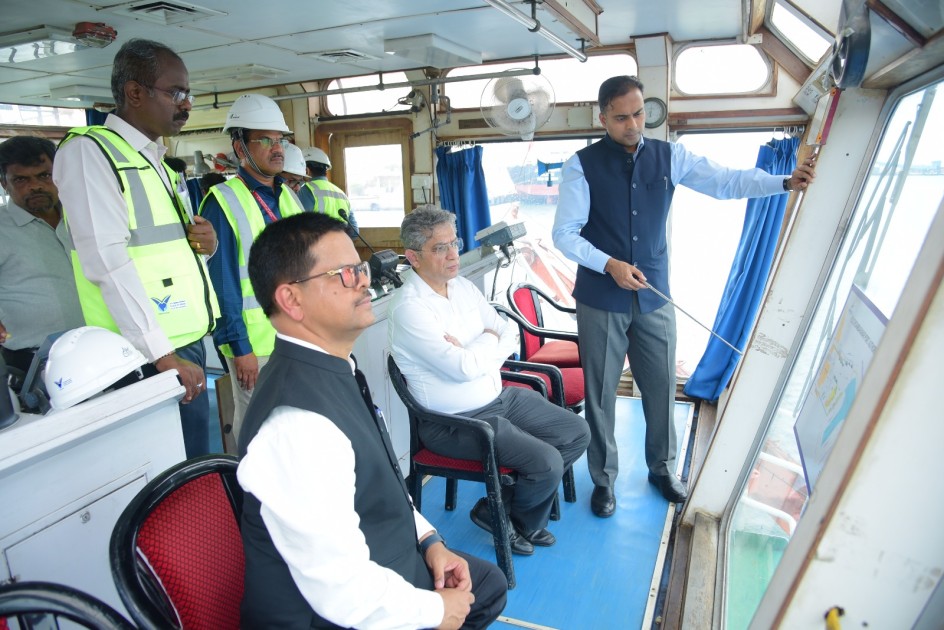
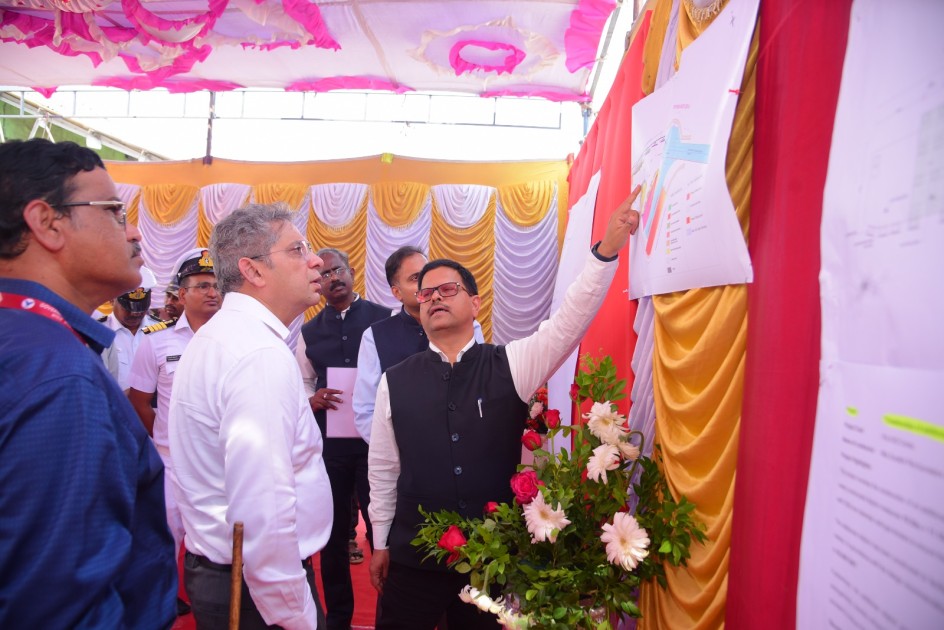
The developments formed the backdrop to the visit of Shri Vijay Kumar, IAS, Secretary, Ministry of Ports, Shipping and Waterways, Government of India, who reviewed major infrastructure projects and green maritime initiatives at VOC Port on Tuesday.

During the visit, the Secretary inspected the Green Hydrogen Pilot Plant, wind energy facilities and pilot methanol bunkering and refuelling infrastructure. The programme also included the inauguration of shore power facilities, additional mooring infrastructure and other operational improvements, alongside initiatives supporting cleaner port operations. The Secretary also flagged off 13 electric (EV) trucks at TICT as part of the port’s green initiatives and presented awards recognising excellence and outstanding achievements in port operations and development.

The Secretary reviewed the port’s Digital Twin and Port GPT initiatives and held discussions with terminal operators, traders and other maritime stakeholders. Port-led industrialisation and the proposed mega greenfield shipbuilding cluster also featured in the discussions, reflecting the effort to connect maritime infrastructure with wider industrial development.

The investments are expected to create opportunities for exporters, logistics operators, shipping companies and manufacturing industries across southern Tamil Nadu. Improved access for larger vessels, additional container capacity and specialised energy infrastructure could also strengthen the region’s ability to attract new industrial investments. The projects form part of the Union Government’s wider maritime development priorities under Maritime Amrit Kaal Vision 2047, which aims to expand India’s shipping capabilities, modernise port infrastructure and strengthen the country’s position in global maritime trade.

With investments spanning container terminals, deep-water infrastructure and renewable energy logistics, the Government of India’s development programme at Thoothukudi is set to strengthen southern Tamil Nadu’s role in India’s maritime and industrial economy.

Maersk partners with L&T for its first planned drydocking in India

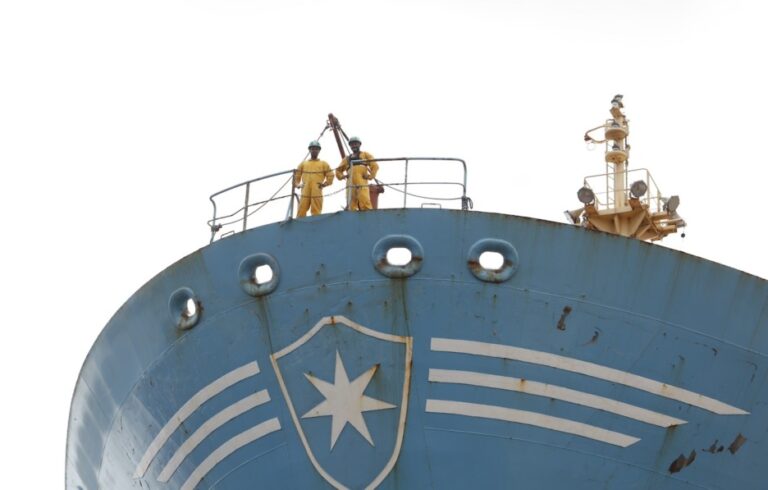
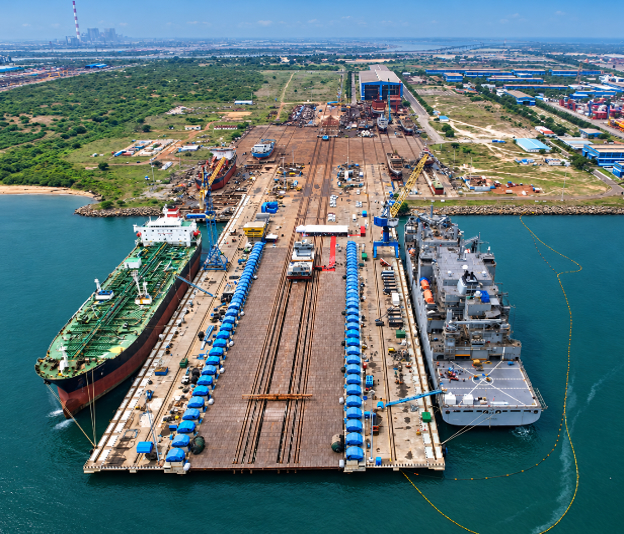
CHENNAI: A.P. Moller – Maersk (Maersk) will undertake its first planned drydocking in India, with the Singapore-flagged container vessel Maersk Chattogram scheduled to enter L&T’s Kattupalli Shipyard near Chennai, in October 2026.

LT Shipyard Maersk partners with L&T for its first planned drydocking in India

The activity marks the first operational milestone arising from the Memorandum of Understanding signed by Maersk and Larsen & Toubro (L&T) during India Maritime Week 2025. The MoU established a framework for exploring collaboration in shipbuilding, ship repair and exchange of knowledge on global standards and building world-class capability, capacity and resources.

Maersk Chattogram is expected to arrive at the shipyard on 20 October 2026, subject to operational and weather conditions. The planned drydocking forms part of the vessel’s normal lifecycle and will include its scheduled special survey, along with maintenance and overhaul work covering the hull and structure, machinery, equipment and propulsion systems.

Drydocking is a planned process in which a vessel is taken into a dry dock, enabling extensive inspection, maintenance and repair of such areas of the vessel that are ordinarily submerged, alongside work on machinery, equipment and propulsion system. It is essential to maintaining a vessel’s safety, seaworthiness, operational performance and reliability for the next five years. Maersk Chattogram will undergo a specialised lift out operation using India’s largest Shiplift system at L&T Shipbuilding, Kattupalli, to lift the vessel out of water.

Dinesh Kumar Balraj, Head of Fleet Operations East, A.P. Moller – Maersk, said, “The drydocking of Maersk Chattogram in India is a meaningful step towards turning our collaboration with L&T into action. We are aligning Maersk’s global technical requirements with India’s growing shipyard, supplier and maritime-service capabilities.” He added, “We believe India has strong potential to become an increasingly important global hub for maritime sector and we are committed to supporting that development through long-term partnerships, operational experience and knowledge sharing.”

Arun Ramchandani, Head – Precision Engineering & Systems, L&T, said, “The docking of Maersk Chattogram at Kattupalli advances our strategic partnership under the MoU and Framework Agreement signed between our organisations. Combining Maersk’s global maritime expertise with L&T’s shipbuilding capabilities, we aim to strengthen domestic capabilities and supply chains across the shipbuilding ecosystem. We share Maersk’s commitment to India’s maritime development and seek to play a key role in establishing India as a globally competitive maritime hub.”

The project is expected to bring together Maersk’s fleet and technical teams with L&T, Indian subcontractors, suppliers and maritime service providers. The partners will focus on safe, efficient execution, quality delivery and the exchange of operational knowledge throughout the docking.

The activity reinforces Maersk’s broader commitment to India’s maritime development and its belief in the country’s engineering talent, infrastructure and potential across the maritime value chain. It also reflects the long-term intent of the Maersk-L&T partnership, moving from an exploratory framework to a concrete vessel-maintenance project in India.

About A.P. Moller – Maersk

A.P. Moller – Maersk is an integrated logistics company working to connect and simplify its customers’ supply chains. As a global leader in shipping services, the company operates in more than 130 countries and employs over 100,000 people worldwide. Maersk is aiming to reach net zero emissions by 2040 across the entire business with new technologies, new vessels, and green fuels. For more information: www.maersk.com

DP World CEO urges India to rethink port concession model to attract long-term investment

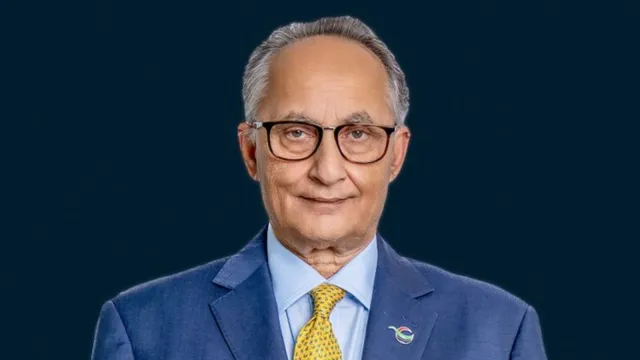
DUBAI: DP World Group CEO Yuvraj Narayan has called for a fundamental rethink of India’s port development model, arguing that traditional time-bound concessions discourage long-term investment and that joint ventures between governments and private operators could deliver more sustained infrastructure development.

“A 30-year concession means what? Just look at the life cycle,” Narayan said, contending that it can take years to build a port and stabilise operations, leaving operators with a relatively short period of high utilisation in which to recover their investments and modernise facilities.

“Why not JVs? Become a landlord. You have an operator, you agree on KPIs. It’s forever, till I break your trust. What’s the problem?” he said.

Under the model he advocates, the government would retain ownership of the underlying port infrastructure while partnering with private operators through longer-term joint ventures, with performance measured against agreed targets.

Narayan argued that such arrangements could encourage operators to invest in capacity upgrades and technology without the uncertainty of repeated tenders and contract renewals.

His comments come as DP World seeks to expand its presence in India, where it has pledged an additional $5 billion in investment to strengthen its ports, rail and logistics network. The company has already invested about $3 billion in the country over three decades.

DP World’s Indian operations span five container terminals with a combined annual capacity of 6 million TEUs, warehousing, freight forwarding, container freight stations, free trade warehousing zones and inland rail terminals.

The company is also expanding its integrated logistics network, including through the second phase of Nhava Sheva Business Park in Maharashtra, backed by an investment of about ₹500 crore, and is exploring further opportunities in port infrastructure, including Vadhavan.

The investments are aimed at improving connectivity between ports and inland markets, facilitating trade and strengthening India’s role in global supply chains.

Narayan said the company was prepared to invest a further $3 billion to $5 billion as opportunities emerged, but called for faster project execution and more predictable frameworks for private participation.

He criticised arrangements in which operators invest in infrastructure while facing revenue-sharing demands, tariff controls and the prospect of competing facilities being developed nearby.

“If you have your own stake, would you do that? You are destroying value immediately,” he said.

India also needed a clearer assessment of existing port capacity and utilisation before committing to further expansion, Narayan said, adding that DP World’s own ports were operating at full capacity, unlike parts of the wider Indian port industry.

He said India should focus on becoming a gateway for its own exports and imports rather than pursuing transshipment volumes as an end in themselves.

“India should only wish to be a gateway. To be a transshipment is a bad investment,” he said, arguing that the economic benefits of transshipment – the transfer of cargo between ships – largely accrue to shipping lines rather than flowing into the wider domestic economy.

A gateway strategy, by contrast, would connect Indian manufacturers and consumers to international markets while generating demand for inland transport, warehousing and other logistics services.

The distinction is significant as India invests in large port projects intended to accommodate bigger vessels and improve direct connectivity to global shipping routes.

The government approved the Vadhavan port project in Maharashtra in June 2024 at an estimated cost of ₹76,220 crore, with planned container-handling capacity of about 23.2 million twenty-foot equivalent units (TEUs). The project is designed to strengthen India’s maritime capacity and reduce dependence on overseas transshipment hubs.

Narayan said DP World would pursue opportunities in India’s port sector, including Vadhavan, while expanding its rail and inland logistics network.

He estimated that the Vadhavan project could entail about $10 billion in investment over 10 to 15 years, depending on its development phases.

Narayan’s call for a more durable infrastructure model comes as disruptions in West Asia expose vulnerabilities of global supply chains and increase the cost of moving goods.

He pointed out that restrictions on access to DP World’s Jebel Ali port in Dubai had disrupted a key logistics hub linking Asia with the Middle East, Africa and Europe. The consequences extended well beyond the Gulf, affecting cargo flows and creating congestion across other parts of the company’s network.

The disruption has reinforced the need for alternative shipping routes, additional capacity and more resilient supply chains, Narayan said, but warned that such measures would be expensive and could take years to implement.

Businesses that once prioritised lean inventories and just-in-time delivery are increasingly being forced to maintain alternative suppliers and routes, raising working-capital requirements and operating costs.

“Who do you think pays for all this disruption? You – as a consumer,” he said.

Narayan highlighted that globalisation had generated substantial wealth but distributed its benefits unevenly, contributing to political tensions and a broader breakdown in the international order.

He said the world was moving towards a more fragmented trading system without a clear replacement for the structures that had underpinned decades of global commerce.

He nevertheless expressed optimism that a political settlement would eventually emerge, saying DP World was willing to contribute to rebuilding damaged infrastructure and supply chains but was not positioned to drive international diplomacy.

Narayan also backed efforts to rebuild India’s domestic shipbuilding capabilities, describing a degree of self-sufficiency in strategically important industries as necessary.

Tie ups DP World has signed a memorandum of understanding with Cochin Shipyard to help develop maritime capabilities in India, he said.

The company is not itself a shipbuilder, but has expertise in ship repair, dry docks and engineering, procurement and construction services that could support the development of a broader maritime ecosystem.

On competition from Indian conglomerates investing in ports and logistics, Narayan said DP World’s international network offered a different proposition from businesses focused primarily on the domestic market.

“What is my offering to a business in India? … I can sell their hair extensions in Nigeria,” he said, illustrating how the company’s global connectivity could help Indian producers reach overseas customers.

For Narayan, the opportunity in India extends beyond building ports. It lies in linking domestic producers to international markets through an integrated network of maritime, rail and logistics assets – and in creating an investment framework that encourages private operators to keep improving those assets over the long term.

DGMA and Environmental Defense Fund (EDF) sign MoU to advance sustainable shipping and maritime decarbonization in India

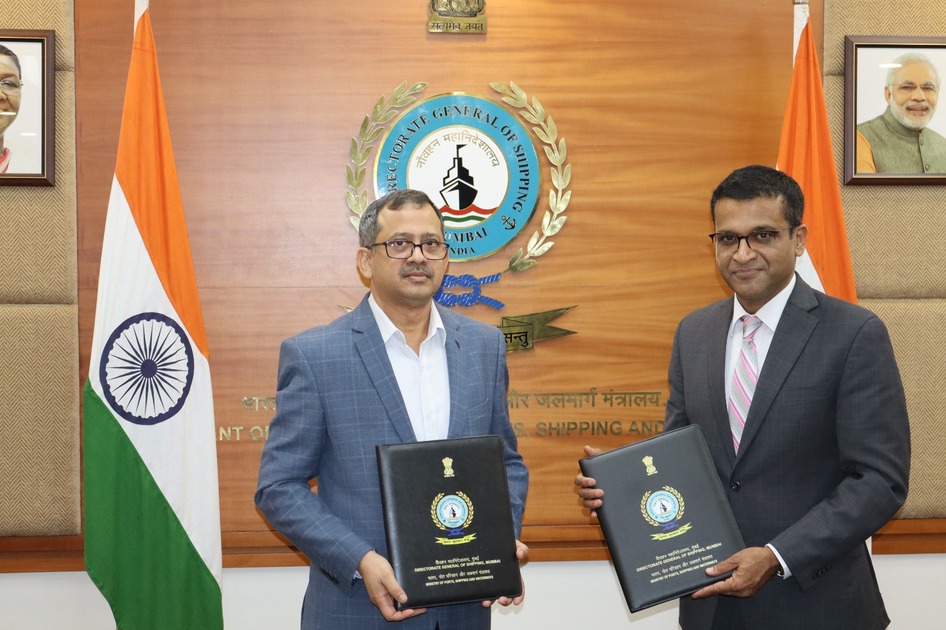
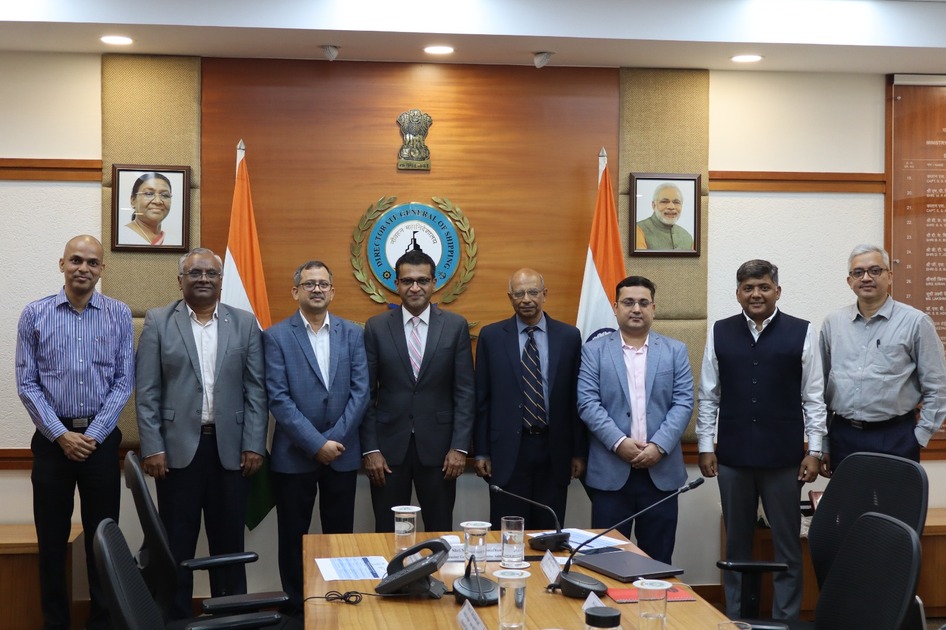
MUMBAI: The Directorate General of Maritime Administration (DGMA), under the Ministry of Ports, Shipping and Waterways, Government of India, and Environmental Defense Fund (EDF), Inc., a global environmental nonprofit organization, signed a Memorandum of Understanding (MoU) to advance sustainable shipping and maritime decarbonization in India.

The MoU establishes a non-financial framework for technical collaboration, research, capacity building and knowledge exchange to support India’s transition towards a cleaner, more efficient and globally competitive maritime sector. The partnership will bring together DGMA’s institutional and regulatory expertise with EDF’s global scientific, technical, economic and policy experience in advancing practical solutions for reducing maritime emissions.

The collaboration comes at an important time as India advances its maritime ambitions under Maritime India Vision 2030 and Maritime Amrit Kaal Vision 2047. With growing international momentum towards low- and zero-emission shipping, India has an opportunity to strengthen its position in emerging maritime fuel supply chains, sustainable shipbuilding, green port infrastructure and related investments.

Directorate General of Maritime Administration and Environmental Defense Fund Sign MoU to Advance Sustainable Shipping and Maritime Decarbonization in India 2 1 DGMA and Environmental Defense Fund (EDF) sign MoU to advance sustainable shipping and maritime decarbonization in India

Key areas of collaboration under the MoU include research and technical assessments of low-carbon and alternative maritime fuels, including their lifecycle emissions; maritime finance and investment opportunities; green ports and shore power infrastructure; electrification of small vessels; green procurement; and capacity building and knowledge exchange. The partnership will also facilitate stakeholder engagement and independent technical inputs to inform DGMA’s policy considerations and support India’s evolving maritime decarbonization framework.

“The maritime sector is central to India’s economic growth, trade and global competitiveness. As India strengthens its maritime capabilities, sustainability and decarbonization must become integral to our long-term development strategy. As we develop the National Maritime Decarbonization Policy Framework (NMDP), international technical cooperation and knowledge sharing will be important in translating our ambitions into practical action. Our collaboration with Environmental Defense Fund will help strengthen technical knowledge, facilitate the exchange of international best practices and support evidence-based approaches to cleaner maritime fuels, sustainable port infrastructure and investment. We look forward to leveraging this partnership to advance India’s maritime ambitions while building a more resilient, efficient and environmentally sustainable sector,” Shyam Jagannathan, IAS, Director General of Maritime Administration (DGMA), said.

“For the first time, the cleanest ship and the most competitive ship are becoming the same ship. India has an enormous opportunity to lead this transition, with ships built here, fueled here and crewed by our people. Through this partnership, we hope to bring together sound science, strong economics and meaningful stakeholder engagement to help keep Indian shipyards, ports and fuels competitive, reduce investment risks and accelerate the transition to cleaner shipping. Our role is to work alongside India’s institutions and industry to develop practical solutions that reduce emissions while creating lasting economic opportunities,” Hisham Mundol, Executive Director, EDF India, said. 

The partnership will focus on translating technical knowledge into practical and scalable solutions. Particular emphasis will be placed on understanding the lifecycle environmental performance of emerging maritime fuels, identifying economically viable decarbonisation pathways and helping create enabling conditions for investment in cleaner vessels, fuels and port infrastructure.

Through research, technical exchanges, stakeholder consultations and capacity-building initiatives, DGMA and EDF will seek to strengthen domestic expertise and support informed decision-making across India’s maritime ecosystem. The collaboration also aims to bring together port authorities, shipowners, cargo owners, fuel producers and other stakeholders to identify opportunities for accelerating sustainable maritime development.

The MoU reflects a shared commitment to advancing maritime sustainability in a manner that supports India’s economic priorities, strengthens energy and maritime security, and positions the country to benefit from the global transition towards cleaner shipping.

Global container freight prices surge 130% since February amid Middle East tensions: Jefferies

NEW DELHI: Global Container Freight Rates have surged 130 per cent since February 2026 amid renewed tensions in West Asia, raising concerns over shipping costs as India’s container-based export-import trade continues to grow, according to a report by Jefferies.

The report said global freight rates rebounded after steadily declining from early 2025, when elevated rates in 2024 began easing amid an improving demand-supply balance. The renewed increase in shipping costs has brought freight rates back into focus for businesses involved in international trade.

Jefferies said the potential impact of shipping lines returning to the Suez Canal, despite continuing tensions in West Asia, remains an important factor to monitor. The report noted, “Freight rates have risen 130 per cent since Feb-26, due to the impact of Middle-East tensions.” It added that “The potential impact of shipping lines’ return to the Suez Canal, despite Middle East tensions, is a key monitorable.”

The data highlighted in the report showed that global container freight rates rose from around USD 2,000–2,500 in February 2026 to approximately USD 4,000–4,500 in October 2026. This increase comes after rates remained relatively low in early 2026.

The report also mentioned that the increase in freight rates comes as India’s containerisable export-import trade recorded strong growth in September 2026.

According to the report, the value of this trade rose 23 per cent year-on-year during the month, supported by a 22 per cent increase in exports and a 23 per cent rise in imports.

Exports to the United States grew 48 per cent year-on-year in September. However, exports to the United Arab Emirates (UAE) and Saudi Arabia declined by 12-15 per cent year-on-year, according to Jefferies. The chart accompanying the report shows that global container freight rates had fallen substantially from their 2021-22 highs before recovering during 2024. Rates subsequently eased through much of 2025 and early 2026 before rising again in recent months.

The rebound in shipping costs comes at a time when international trade flows are expanding. However, the report’s figures do not establish that higher freight rates have already slowed India’s export-import growth.

Port traffic data also showed differing trends across the country. Volumes at major ports increased 13 per cent year-on-year in September 2026, while non-major port volumes declined 1 per cent. Among non-major ports, volumes at Gujarat ports rose 3 per cent year-on-year, while Maharashtra and Tamil Nadu ports recorded growth of 6-7 per cent. Major and non-major ports on India’s eastern coast, however, saw a sharp decline during the month, the report said.

Jefferies highlighted the potential return of shipping lines to the Suez Canal as a key factor to watch amid continuing Middle East tensions. Changes in shipping routes could affect global freight rates, making developments in the region important for businesses dependent on international cargo movement.

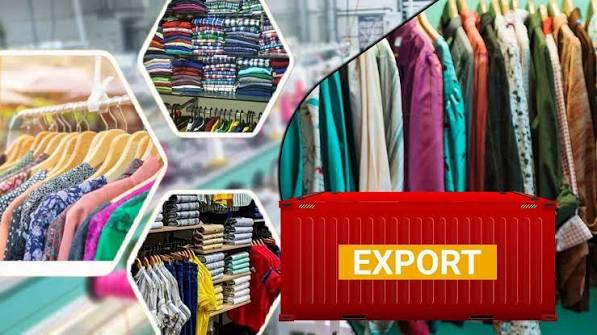
Garment exports have the potential to grow 25% next year: ITF

NEW DELHI: Indian garment exports have the potential for a 25% increase next year and will better performance in the three major markets – USA, UK, and the European Union. Prabhu Dhamodharan, convenor of the Indian Texpreneurs Federation (ITF), said in a press release that garment exporters are exploring new opportunities under the India–UK trade agreement, including setting up offices and design studios in London. Encouraging buyer responses will translate into higher orders from January. With regard to the European Union, implementation of the India–EU trade agreement next financial year will drive double-digit apparel export growth.

In the American market, with tariff concerns easing, India has an opportunity to regain the recently lost 2% market share within the coming quarter. A limited India–U.S. trade agreement, if finalised, will eventually help raise India’s traditional market share from 6% to 8%.

“With greater stability expected across these three major markets, we anticipate India’s monthly apparel exports rising from $1.2 billion to $1.5 billion in 2027 — a 25% increase. Indian exporters are simultaneously strengthening global competitiveness through technology, automation, and productivity improvements, positioning the industry for renewed export growth,” he said.

Total purchase of readymade garments by the U.S. declined 7.42% to $ 49.1 billion during January–August 2026. However, August recorded marginal growth of 0.46%, indicating early signs of market recovery. India’s apparel exports to the U.S. fell sharply by 26.4% to $ 2.7 billion, compared with 29.4% decline for China, 4.4% for Bangladesh and 0.8% for Vietnam. However, Cambodia grew 6.9% and Indonesia 2.6%, reflecting intense competition.

India’s traditional 6% U.S. market share dropped to 4% in August. Uncertainty over additional U.S. tariffs linked to Russian oil purchases had delayed orders from American buyers. Despite relatively stable volumes in other markets, India’s overall apparel exports declined around 7% during the first half of the current financial year. The recent indication that additional Russia-related tariffs will not be imposed for now has improved confidence among Indian exporters, he added.