
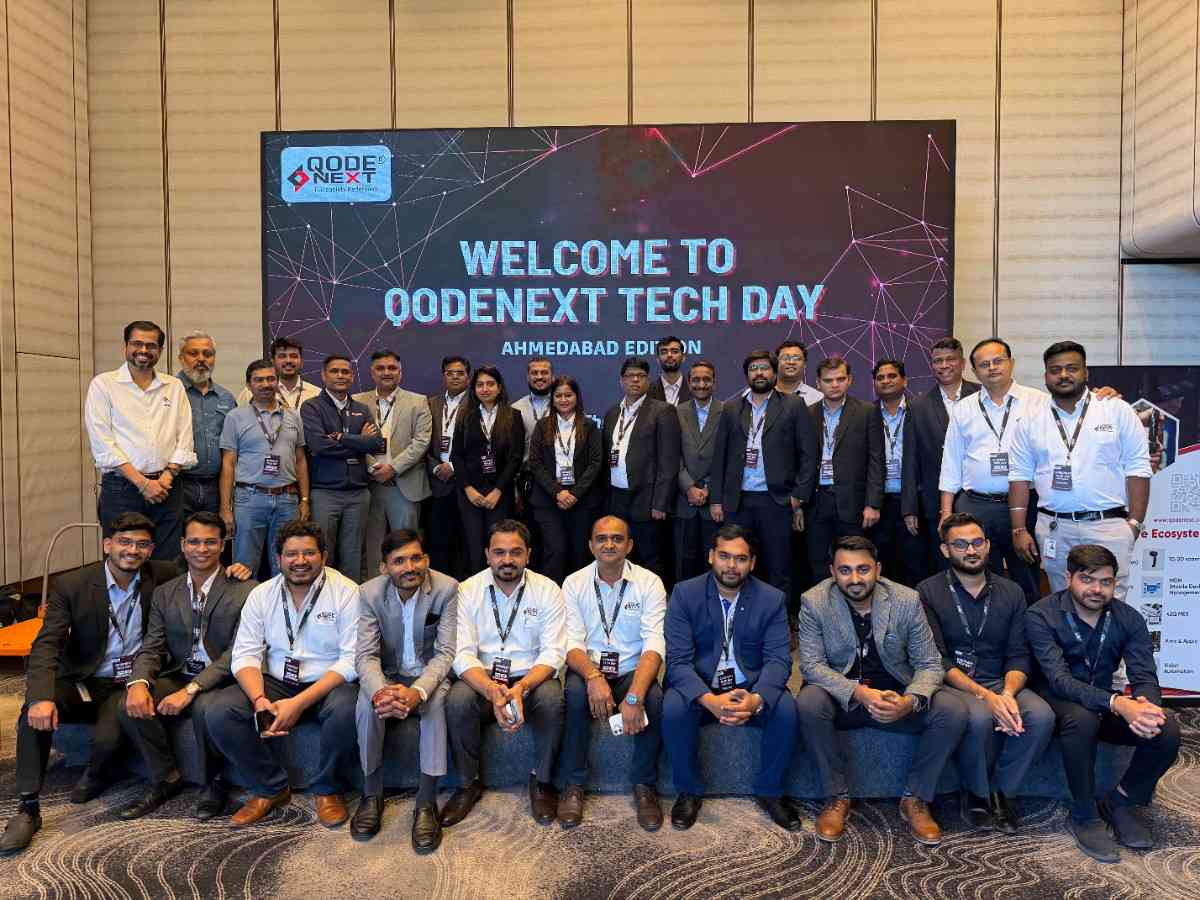
AHMEDABAD : QodeNext, India’s leading provider of integrated automation and traceability solutions for modern supply chains, recorded an encouraging response at the Ahmedabad edition of its Tech Day. The event brought together manufacturing, warehouse and operations leaders from across Gujarat’s industrial belt, reflecting the region’s accelerating focus on practical automation and execution visibility.
The Ahmedabad edition continued Qodenext’s ongoing effort to create forums focused on real-world automation challenges, moving beyond conceptual discussions to applied use cases. The conversations through the day centred on closing manual gaps, strengthening traceability and improving real-time operational control across factories and warehouses. Early discussions also touched upon how data-led identification and AI-enabled systems are steadily improving inventory accuracy and operational consistency, with specific performance metrics to be shared following detailed customer assessments.
The programme followed a structured flow, beginning with an overview of Qodenext’s automation, traceability and service support ecosystem, followed by demonstrations of industrial labelling and tapes, mobility-led workflows and real-time visibility systems deployed in high-volume environments. Live demos of RFID, vision systems and location-based tracking drew strong interest from teams exploring reliable options for tracking men, material and machinery with higher accuracy and lower dependency on manual processes.
Partner sessions added further depth to the discussions. Zebra Technologies highlighted device intelligence and AI-powered vision applications; Videojet shared insights on coding and marking technologies; Posbank discussed retail and warehouse automation practices; and 42Gears presented on secure remote device management for large mobile fleets. Doozy Robotics spoke about the role of autonomous mobile robots and trolley-based robotic systems in improving intra-facility movement and reducing manual material handling.
Commenting on the Ahmedabad edition, Mr Alok Mishra, Vice President – Sales, Qodenext, said, As India’s manufacturing ecosystem expands rapidly, with more than 1,000 new units added each month, operational complexity has doubled while tolerance for downtime has sharply declined. Yet, critical decisions are often made using delayed or incomplete data. This gap between infrastructure and intelligence is driving the need for real-time operational visibility. Manufacturers today are focused on zero line stoppages, end-to-end traceability, faster dispatches, and audit-ready compliance; key pillars for building resilient, future-ready operations.”
The event concluded with open discussions on how manufacturers can stabilise operations, modernise workflows and address long-standing visibility gaps across extended supply chains. With Gujarat continuing to strengthen its position as a manufacturing and logistics hub, Qodenext Tech Day in Ahmedabad reinforced the growing demand for dependable automation platforms. Qodenext plans to take the Tech Day series to additional industrial centres in 2026.
QodeNext Tech Day in Ahmedabad highlights the growing shift toward connected automation across Western India
GEODIS to strengthen its national road transport
network through the proposed acquisition of Malherbe
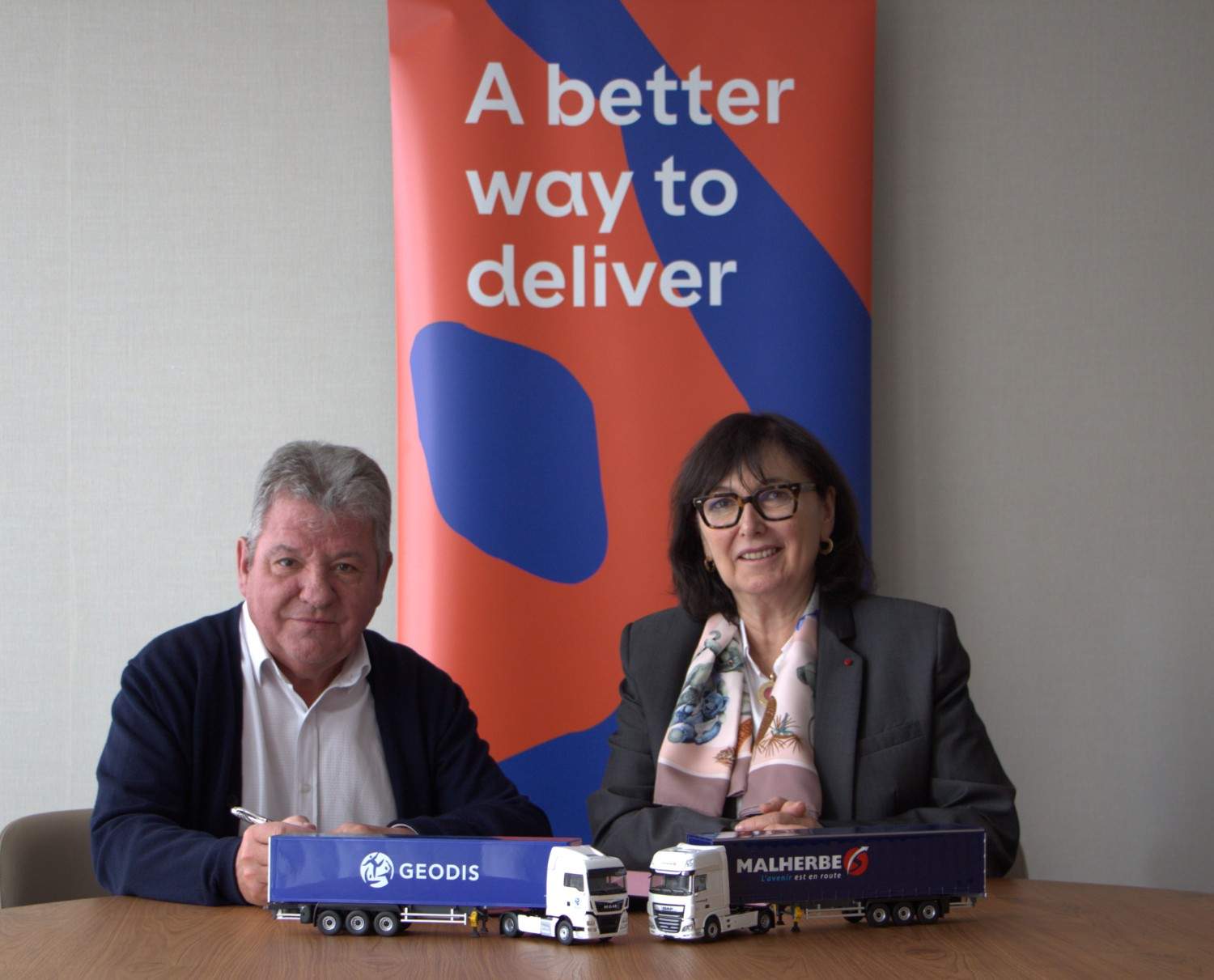
LEVALLOIS-PERRET: GEODIS has concluded an agreement to acquire Malherbe, a leading player in full truckload (FTL) road freight transport. This strategic operation will enable the Group to continue developing in the French road freight market for full and less than full truckloads, and to bolster its presence in the agri-food and mass retail sectors.
GEODIS has taken another step in its growth strategy with the planned integration of Malherbe, a leading specialist in full truckload road transport. The geographical and operational fit between the two entities’ operations will greatly increase the density of GEODIS’s national network, further improving the quality of service provided to customers.
This acquisition reflects GEODIS’s desire to extend its presence in the French road freight transport market, broaden its geographical coverage, and accelerate the growth of European road transport activities within its network. It will position the Group as a leader in the road transport sector’s transition to decarbonization. It will also enable the Group to strengthen its position in the agri-food market. The acquisition of Malherbe will place GEODIS among the top three players in the French market for full and less than full truckloads, with combined revenue of €2 billion.
Marie-Christine Lombard, Chief Executive Officer of GEODIS, commented: “The integration of Malherbe will represent an essential strategic lever in building a more resilient and sustainable nationwide network. Together, we will be able to offer a strong French alternative on the market, combining operational excellence, environmental performance and strategic autonomy in logistics.”
Malherbe was founded in 1956. It operates in France through an extensive network of 40 branch offices with its own fleet of around 1,500 trucks, and it employs more than 3,300 people nationwide. In support of its energy transition, Malherbe has implemented a comprehensive program since 2024 designed to diversify its energy sources, gradually electrify its fleet, and install charging infrastructure at several sites. This initiative aligns perfectly with GEODIS’s ambition to reduce the carbon footprint of its operations and promote more sustainable transport solutions.
The acquisition will be concluded on completion of the customary regulatory formalities.
World’s largest’ suction sail fitted to cargo ship in Spain, offers 7x more lifting force
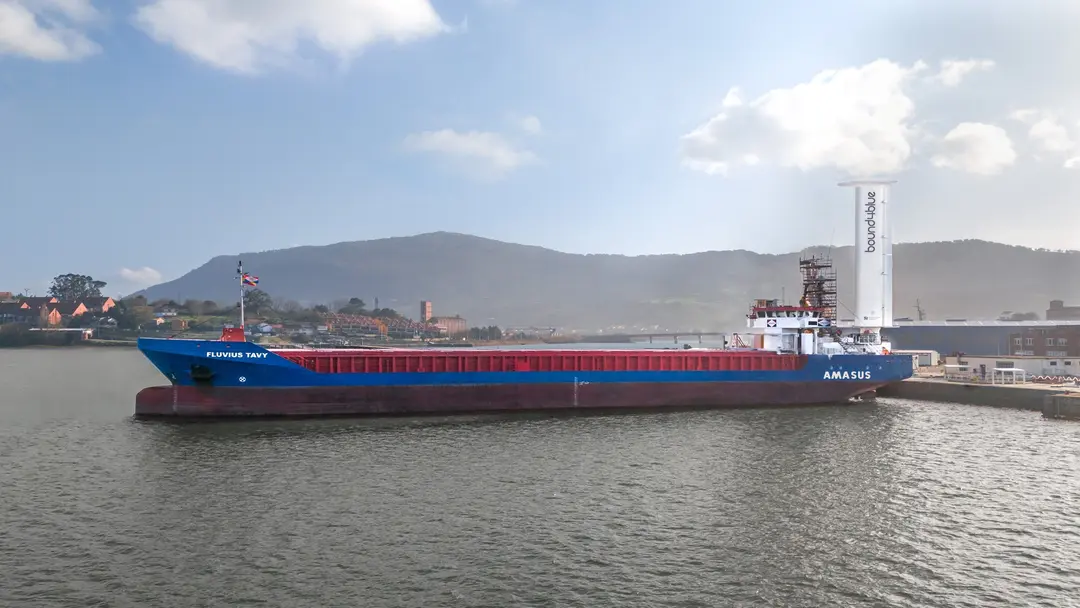
A Spanish sailmaker has just completed the installation of the largest suction sail ever fitted to a working cargo vessel as part of a wider push to cut fuel use and emissions in commercial shipping. Installed at the Astander Shipyard in Santander, Spain, the 72.2-foot (22-meter) eSAIL wind propulsion system was mounted on the Fluvius Tavy, a general cargo ship operated by Dutch maritime service provider Amasus Shipping.
Developed by bound4blue, a renewable maritime technologies company based in Spain’s autonomous region of Cantabria, the autonomous sail represents the second installation completed for the shipowner.
The installation underscored both the scalability of suction sails and the rising trust in wind power among shipowners. “We’re delighted to help forward-thinking owners and partners, like Amasus, turn their sustainability ambitions into profitable results,” Miguel Bermúdez, bound4blue CEO and Co-founder, said.
Wind-assisted ships
The project followed an earlier installation on Amasus’ Eems Traveller, which was the first general cargo vessel to operate with suction sails, after being equipped with two 55.8-foot (17-meter) eSAIL units.
Ever since, the DNV Type Approved system has been installed on vessels operated by owners such as Odfjell, Louis Dreyfus Armateurs and Eastern Pacific Shipping. The fuel and emissions savings have been proven and independently validated.
“Our collaboration with Amasus continues to demonstrate that wind propulsion is gaining broader acceptance as a practical, profitable, and, crucially a proven solution for an industry in transition,” Bermúdez commented.
The system uses aerodynamic suction to generate lift up to seven times greater than conventional rigid sails. It works by drawing air across an aerodynamically optimized surface. The technology operates autonomously and adjusts to wind conditions without crew input.
“This installation is particularly noteworthy as it is the largest suction sail ever fitted to a general cargo vessel and, following a previous installation on the Eems Traveller, a very clear endorsement of the value Amasus sees in our technology,” Bermúdez noted.
Bermúdez highlighted that the new installation is forecasted to deliver significant double-digit reductions in vessel fuel consumption and CO2 emissions.
Cleaner shipping
The retrofit was completed in a single visit to Astander, with all preparatory and installation work carried out within the vessel’s scheduled maintenance period.
Structural reinforcements and electrical adaptations were made to the deck to accommodate the sail’s foundation, after which the fully pre-commissioned unit was lifted into place in a streamlined, plug-and-play process.
“The decision to install a second eSAIL reflects how satisfied we are with the performance and how smoothly it has integrated into our day-to-day operations,” Amasus emphasized.
The sail was manufactured in Spain by Haizea-Tecnoaranda, a major manufacturer of large-diameter onshore and offshore wind towers, highlighting the country’s expanding role in advanced maritime engineering.
“We’re happy to continue working with bound4blue and would like to thank their team, as well as the yard, for another seamless and efficient Amasus installation,” the firm continued.
The company said its experience with bound4blue’s suction sails showed they are well-suited to short-sea general cargo vessels. “We’re now looking forward to seeing the fuel and emissions savings this new installation will deliver,” Amasus concluded in a press release.
Liberia, the Republic of the Marshall Islands, and the Republic of Panama continue to move forward with the International Flag-State Association

LONDON: The International Flag-State Association (IFA), an association of the world’s three largest registries, Liberia, the Republic of the Marshall Islands, and the Republic of Panama, has been meeting since 2021. IFA is the first alliance of its kind and was designed to allow its members to have a platform to more formally engage with respect to global challenges, stakeholder insight, and the development and implementation of international instruments to enhance maritime safety, security, the protection of the marine environment, and the welfare of seafarers, among others.
Unlike other maritime sectors, flag States previously lacked a dedicated and formal global platform. IFA aims to fill that gap. For example, in 2024, IFA members enhanced the capabilities of the successful Registry Information Sharing Compact (RISC) by improving the paths to information exchange through an integrated online database. The RISC database is an online tool for consultation among subscribed flag States that allows for easier access to details on problem vessels that may be evading regulations or engaging in suspicious activities.
While information sharing has been the priority to date for IFA, one of its next steps will be applying for consultative status at the International Maritime Organization to more actively contribute to international policymaking.
IFA founding member representatives include Alfonso Castillero, Chief Executive Officer, Liberian International Ship and Corporate Registry; Bill Gallagher, Senior Deputy Commissioner of Maritime Affairs, Republic of the Marshall Islands Maritime Administrator; and Alexander De Gracia, Deputy Administrator, Panama Maritime Authority. Collectively, these founding member representatives agree that:
IFA brings together the world’s most influential flag States, which represent more than 40% of the world’s gross tonnage, to promote higher maritime safety, security, environmental protection, seafarer welfare, and practical, globally harmonized rules and regulations. Shipping is a worldwide industry and maritime regulations must remain global.
Baltic Index falls to over one-month low

LONDON: The Baltic Exchange’s Dry Bulk Sea Freight index, which tracks rates for vessels transporting dry bulk commodities, fell to an over one-month low on Friday, as vessel rates weakened across the board.
The main index, which factors in rates for capesize, panamax and supramax shipping vessels, extended losses for the third straight session and was down 48 points, or 2.3%, to 2,023 points, its lowest since November 5. The contract was down over 8% this week.
The capesize index lost 51 points, or about 1.4%, to 3,624 points, its lowest level in one month. The contract fell over 2% this week.
Average daily earnings for capesize vessels, which typically transport 150,000-ton cargoes such as iron ore and coal, decreased by $428 to $30,052.
The panamax index fell 66 points, or 4.8%, to 1,323 points, its lowest level since June 10. The contract fell 21.6% this week.
Average daily earnings for panamax vessels, which usually carry 60,000 to 70,000 tons of coal or grain, decreased by $597 to $11,908.
Among smaller vessels, the supramax index lost 36 points to 1,222 points. The contract fell about 11% this week.
Source: Reuters
India and Oman sign a Comprehensive Trade Agreement advancing a new era of Economic Partnership and opportunity under the visionary leadership of PM Modi
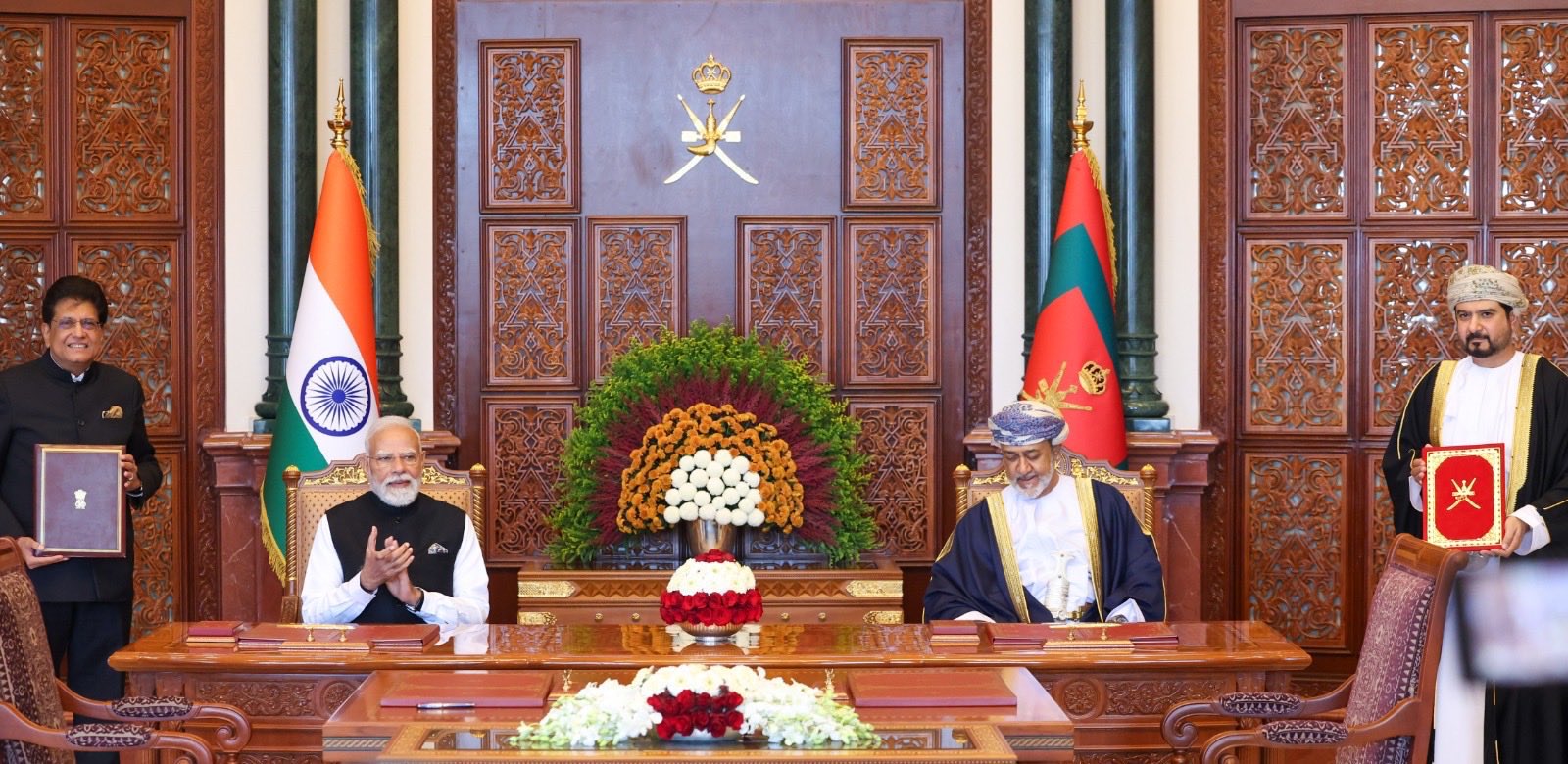
NEW DELHI : India and Oman have taken a significant step in building a stronger economic partnership with the signing of Comprehensive Economic Partnership Agreement day under the visionary leadership of Prime Minister Shri Narendra Modi. Commerce and Industry Minister Shri Piyush Goyal and Oman’s Minister of Commerce, Industry & Investment Promotion H.E. Qais bin Mohammed Al Yousef signed the agreement.
This Comprehensive Economic Partnership Agreement (CEPA) marks an important milestone in India’s engagement with the Gulf region and reflects the shared commitment to deepen bilateral economic integration. Oman is an important strategic partner in the region and is a key gateway for Indian goods and services to the wider Middle East and Africa. Nearly 7 lakh Indian nationals reside in Oman, including Indian merchant families with a presence of over 200–300 years, contributing significantly to Oman’s economy and society. Indian enterprises have built a strong presence in Oman, with over 6,000 Indian establishments operating across sectors. Annual remittances of around USD 2 billion further reflect the depth of economic engagement. Bilateral trade between India and Oman stands at over USD 10 billion, with strong potential for expansion under the CEPA framework.
This is the 2nd Free Trade Agreement signed in the last 6 months after United Kingdom and is a part of strategy to sign trade agreements with developed economies that are not competing with our labour-intensive interests and provide opportunities for Indian businesses.
The CEPA secures unprecedented tariff concessions for India from Oman. Oman has offered zero-duty access on 98.08% of its tariff lines, covering 99.38% of India’s exports to Oman. All major labour-intensive sectors including Gems & Jewellery, Textiles, leather, footwear, sports goods, plastics, furniture, agricultural products, engineering products, pharmaceuticals, medical devices, and Automobiles receive full tariff elimination. Out of the above, immediate tariff elimination is being offered on 97.96% Tariff Lines.
India is offering tariff liberalization on 77.79% of its total tariff lines (12556) which covers 94.81% of India’s imports from Oman by value. For the products of export interest to Oman and which are sensitive to India, the offer is mostly a tariff-rate quota (TRQ) based tariff liberalization.
To safeguard its interest, sensitive products have been kept in the exclusion category by India without offering any concessions, especially agricultural products, including dairy, tea, coffee, rubber, and tobacco products; gold and silver bullion, jewellery; other labour-intensive products such as footwear, sports goods; and scrap of many base metals.
The Services sector, a strong driver of India’s economy, will also see wide-ranging benefits. Oman’s substantial global services imports amounting to USD 12.52 billion, with the share of India’s exports in Oman’s global imports basket as 5.31%, indicating significant untapped potential for Indian service providers. The agreement features a comprehensive and forward-looking services package, with Oman extending substantial commitments across a broad spectrum of sectors including Computer Related Services, Business and Professional Services, Audio-visual Services, Research and Development, Education and Health Services. These commitments are expected to unlock significant new opportunities for Indian service providers, promote high-value job creation, and support expanding commercial engagement between the two countries.
A major highlight of the CEPA is the enhanced mobility framework for Indian professionals. For the first time, Oman has offered wide-ranging commitments under Mode 4, including a notable increase in the quota for Intra-Corporate Transferees from 20 per cent to 50 per cent, together with a longer permitted duration of stay for Contractual Service Suppliers—extended from the existing 90 days to two years, with the possibility of a further two-year extension. The agreement also provides for more liberal entry and stay conditions for skilled professionals in key sectors such as accountancy, taxation, architecture, medical and allied services, supporting deeper and more seamless professional engagement.
The CEPA further provides for 100 per cent Foreign Direct Investment by Indian companies in major services sectors in Oman through commercial presence, opening a wide avenue for India’s services industry to expand operations in the region. In addition, both sides have agreed to hold future discussions on social security coordination once Oman’s contributory social security system is implemented, reflecting a forward-looking approach to facilitating labour mobility and worker protection.
A landmark element of the Agreement is Oman’s commitment on Traditional Medicine extended across all modes of supply representing the first such comprehensive commitment made by any country, and creating a significant opportunity for India’s AYUSH and wellness sectors to showcase its strength in the Gulf region.
Apart from the above, provisions in CEPA also address non-tariff barriers persisting despite tariff concessions, limiting real market access.
This is the first bilateral agreement that Oman has signed with any country since United States of America in 2006.
Union Minister for Commerce and Industry, Shri Piyush Goyal, expressed profound gratitude to Prime Minister Shri Narendra Modi for his visionary guidance, stating: “The India-Oman CEPA strengthens the historical strong ties of India with Oman and signifies an ambitious and balanced economic framework that significantly enhances opportunities for Indian exporters and professionals. It unlocks nearly universal duty free access for Indian goods in the Omani market, expands services commitments across key high growth sectors, and ensures greater mobility for Indian professionals. The agreement reinforces India’s commitment to inclusive growth benefiting farmers, artisans, workers, MSMEs while safeguarding core national interests.”
The CEPA is expected to significantly boost bilateral trade, generate employment, expand exports, strengthen supply chains, and open new avenues for deeper, long-term economic engagement between India and Oman.
India-Oman FTA pact to infuse new energy into bilateral trade : PM Modi
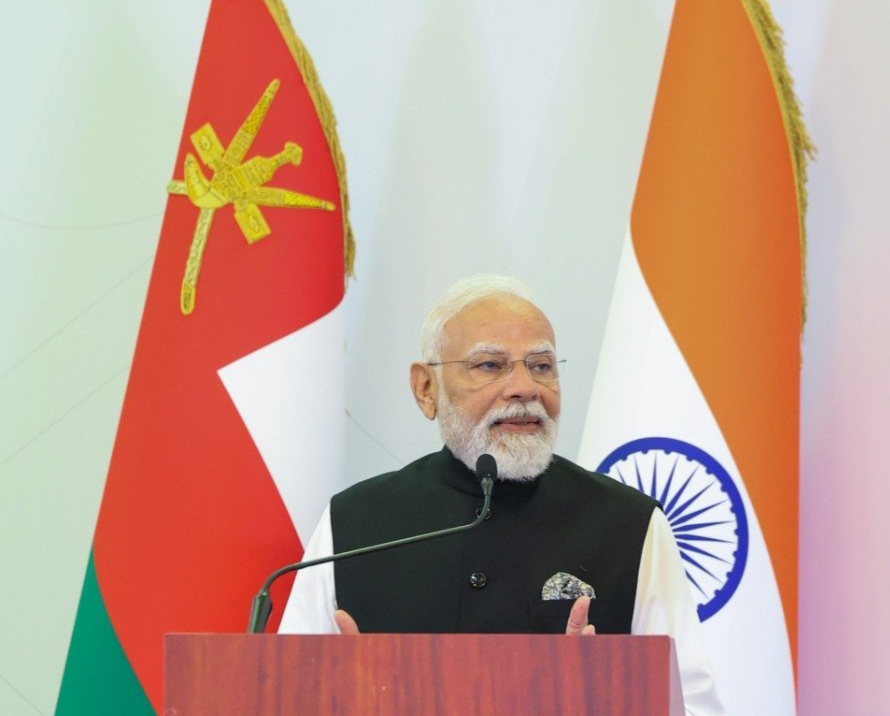
MUSCAT : Prime Minister Shri Narendra Modi on Thursday said the India-Oman Comprehensive Economic Partnership (CEPA) will infuse new energy into bilateral trade and investment ties while creating opportunities for mutual growth.
He was addressing the India–Oman Business Forum here.
In his address, Modi highlighted the centuries-old maritime trading ties between the two countries, from Mandvi to Muscat, which today form the bedrock of vibrant commercial exchanges. He said that 70 years of diplomatic relations represent the trust and friendship built over centuries.
India and Oman signed a free trade agreement on Thursday, which will provide duty-free access to 98 per cent of India’s exports, including textiles, agri and leather goods in the Gulf country. Describing the CEPA as the blueprint for India-Oman’s shared future, the visiting Prime Minister called upon business leaders to realise the full potential of the trade pact.
“Today, we are making a historic decision whose impact will be felt for decades to come. The Comprehensive Economic Partnership Agreement, or CEPA, will infuse our partnership with new confidence and energy in the 21st century,” he said. The pact, he said, will give new momentum to bilateral trade, instil new confidence in investment, and open new doors of opportunity in every sector.
Speaking about India’s economic success in the last 11 years, he said the country was well on its way to becoming the third largest economy in the world on the back of next generation reforms, policy predictability, good governance and high investor confidence.
“In fact, over the past 11 years, India has not only changed its policies, but it has also changed its economic DNA,” he said. He further added that India’s high growth of over 8 per cent in the last quarter in an environment of global uncertainty highlights its resilient nature and inherent strengths.
“India’s progress has always been a story of shared progress. When India grows, it makes its friends partners in its growth. We are doing the same today,” Modi said, adding that in India’s growth journey, there are ample opportunities for Oman.
The Prime Minister underlined that India is working at speed and scale to create world-class infrastructure, logistics, connectivity, trusted supply chains, manufacturing capacities and green growth to boost “ease of living” and “ease of doing business”.
He informed the gathering about the reforms, including Goods and Services Tax (GST) and Insolvency and Bankruptcy Code (IBC), that India has implemented in recent years.
Modi invited Omani businesses to look beyond traditional areas of energy, oil and gas, petrochemicals and fertilisers, and explore opportunities in the fields of green energy, solar parks, energy storage, smart grids, agri-tech, fintech, AI and cyber security.
He also proposed the creation of the India-Oman Agri Innovation Hub and India-Oman Innovation Bridge to make the business partnership future-ready.
The Prime Minister emphasised that these were not just ideas, but an invitation to invest, innovate and build the future together.
PM Modi arrived here on Wednesday on a two-day visit. India-Oman bilateral trade was about USD 10.5 billion (exports USD 4 billion and imports USD 6.54 billion) in 2024-25.
Union Govt clears ₹887 cr plan for world-class Mumbai Marina, aims to boost Coastal Shipping & Maritime Tourism
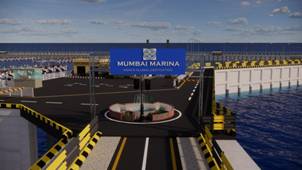
NEW DELHI : The Union Government has approved plans to develop a world-class marina in Mumbai Harbour at an estimated cost of ₹887 crore, a move expected to give a significant push to coastal shipping, maritime tourism and waterfront-led urban development in the country’s financial capital.


The proposed ‘Viksit Bharat Mumbai Marina’ has been cleared by the Ministry of Ports, Shipping and Waterways in line with the vision articulated by Prime Minister Shri Narendra Modi for creating global-standard tourism destinations and strengthening India’s maritime economy.
Speaking on the occasion, the Union Minister of Ports, Shipping & Waterways, Sarbananda Sonowal said, “This approval of the ‘Viksit Bharat Mumbai Marina’ marks an important step in our efforts to strengthen coastal shipping and maritime tourism. Guided by the vision of Prime Minister Narendra Modi ji, the project will create world-class infrastructure, open the waterfront for public use, encourage private investment and generate new employment opportunities. It will help position Mumbai as a global maritime tourism hub while advancing India’s broader blue economy goals.”
The project will be implemented through a hybrid development model, under which the Mumbai Port Authority will invest about ₹470 crore to construct the core marina infrastructure on an EPC basis, while a private operator will develop onshore facilities with an estimated investment of ₹417 crore. The ministry has approved the port authority’s investment, and tenders have been floated, with bids scheduled to close on Dec. 29, 2025.
“This project reflects PM Narendra Modi ji’s vision of positioning Mumbai as a global marina destination. The project will strengthen maritime tourism, attract private investment and create over 2,000 jobs across allied sectors, while opening new opportunities in coastal and blue economy activities,” added Union Minister Sarbananda Sonowal.
Planned over nearly 12 hectares of water area, the marina will have the capacity to berth 424 yachts of up to 30 metres in length. Marine infrastructure will include an approach trestle, piled breakwater, service platforms, pontoons and gangways designed to support safe and efficient yacht operations.
Onshore facilities to be developed by the private operator will include a marina terminal building, a Namo Bharat International Sailing School, a maritime tourism development centre, hotel and clubhouse facilities, a skill development centre, and yacht stacking and repair infrastructure No.
The project aligns with key national frameworks such as Maritime India Vision (MIV) 2030, Maritime Amrit Kaal Vision (MAKV) 2047, the Sagarmala Programme and the Cruise Bharat Mission, as well as the Port Master Plan 2047 of Mumbai Port Authority.
The marina is expected to generate over 2,000 jobs across marina operations, cruise services, hospitality and allied activities, while facilitating private sector participation in coastal infrastructure. It is also aimed at improving public access to the waterfront and strengthening Mumbai’s position as a major hub for maritime tourism and cruise traffic.
Marine exports see 20% growth in past few months : Piyush Goyal
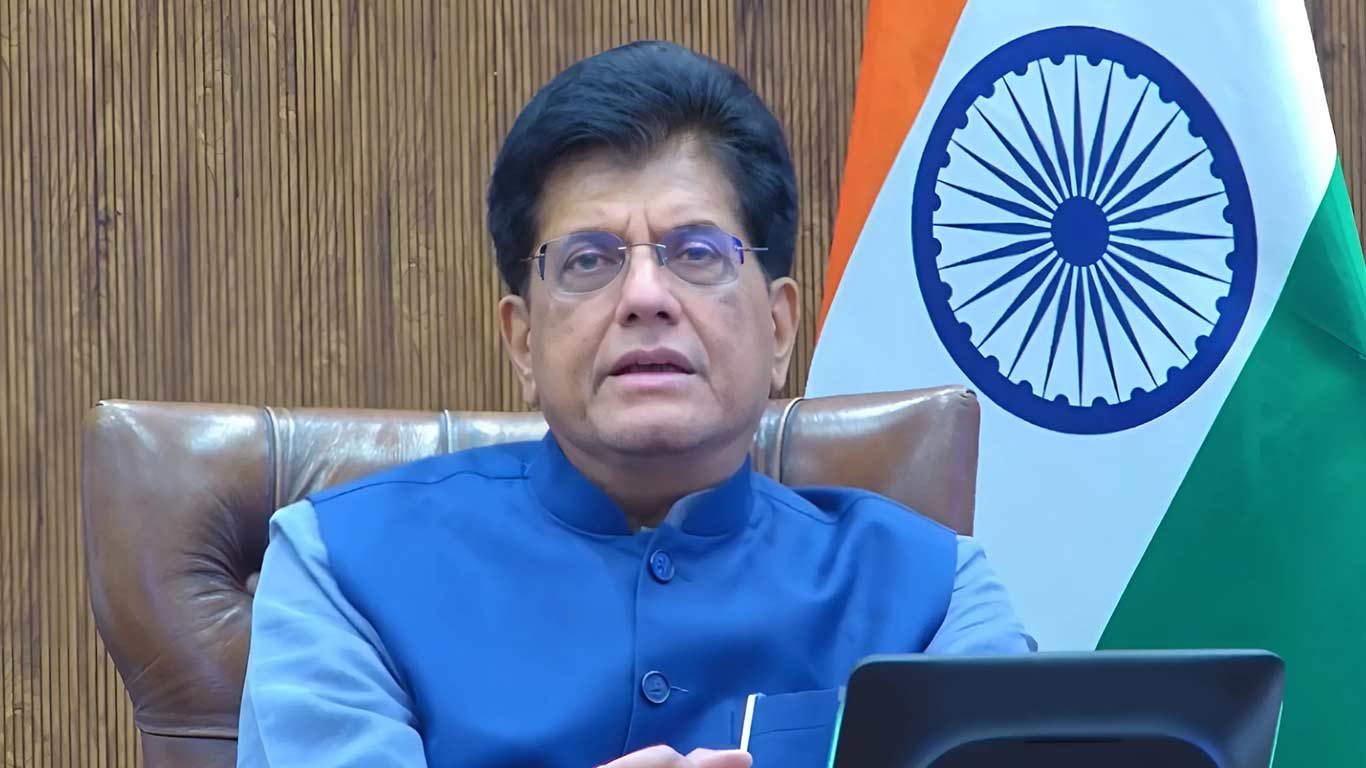
NEW DELHI : Marine exports have seen a 20% growth in the past few months despite the imposition of anti-dumping duty by various countries, the Lok Sabha was informed on Tuesday (December 16, 2025).
Responding to a supplementary question during Question Hour, Commerce and Industry Minister Shri Piyush Goyal said that the government is making focused efforts to ensure that marine fish exports go up. Mr. Goyal said, “In the last 12 months, 102 marine fish export establishments have been registered in the European Union, a bloc of 27 nations.” Similarly, 25 such establishments have been registered and approved in Russia.
He further added that as more such fish export establishments obtain registration and approvals in foreign territories, marine exports will see further growth.
Jitin Prasada, delivers the national statement at the High-level Meeting of the UNGA on the overall review of the implementation of the outcomes of the WSIS+20 in New York
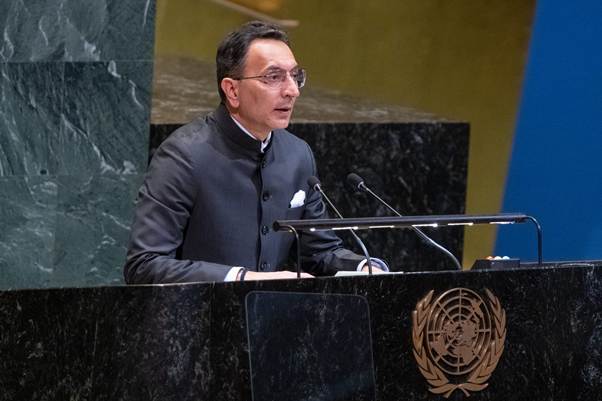
NEW YORK : Union Minister of State, Ministry of Commerce and Industry and Ministry of Electronics and IT, Shri Jitin Prasada represented India and delivered the national statement at the High-Level Meeting of the United Nations General Assembly (UNGA) on the overall review of the implementation of the outcomes of the World Summit on the Information Society (WSIS+20) in New York, USA on 16 December, 2025.
The World Summit on the Information Society (WSIS) was mandated by the UNGA in 2001 to harness the potential of knowledge and technology to support development for all and to ensure that their benefits reach all people and countries. The WSIS process was conducted in two phases- Geneva (2003) and Tunis (2005). Later the progress in implementing WSIS outcomes reviewed by UNGA during the WSIS +10 Review Process in 2015. The WSIS+20 Review in 2025, conducts a comprehensive review by taking stock of the achievements, key trends, progress and challenges over two decades since the inception of WSIS and outlines priority areas for focus.
Speaking on the occasion, Shri Prasada conveyed that over the past two decades, WSIS has demonstrated how digital technologies, when guided by shared values, can advance development, inclusion and human dignity. He further recalled Prime Minister Shri Narendra Modi’s emphasis that “global challenges demand that global action must match global ambition”.
Delivering the statement, Shri Prasada highlighted that India’s digital transformation has been a lived experience at population scale, driven by Digital Public Infrastructure (DPI) built as a public good – open, interoperable, secure and affordable by design. He added that platforms enabling digital identity, instant payments, digital documentation, telemedicine, online education and grievance redressal today serve people across diverse geographies, languages and income levels, ensuring that technology empowers the last mile and the last person.
Shri Prasada further recalled India’s launch of the Global Digital Public Infrastructure Repository during its G20 Presidency, reflecting the principle that digital public goods can act as an equaliser rather than a divider. He reaffirmed India’s commitment to sharing capacity, tools and knowledge with partner countries, guided by the ethos of “One Earth, One Family, One Future.”
On emerging technologies, Shri Prasada noted that Artificial Intelligence is central to the next phase of sustainable development. Through the IndiaAI Mission, India is investing in responsible AI ecosystems, expanding national compute capacity, creating repositories of reusable datasets through AI Kosh, and building Bhashini, an AI and NLP-enabled real-time translation tool, to make the content available in various languages spoken in our country. He added that India has also proposed the creation of a Global Repository of AI Applications to accelerate AI for social good.
Emphasising the importance of resilient semiconductor and electronics supply chains being foundational to digital transformation and AI at scale, Shri Prasada outlined the ongoing efforts made to strengthen domestic capabilities while deepening international partnerships to enhance global technology resilience.
Reaffirming strong support for the multistakeholder model of Internet governance, except in matters of national security, Shri Prasada stressed the importance of strengthening the Internet Governance Forum, advancing Universal Acceptance and Multilingual Access, promoting Open Standards, prioritizing DNS stability, and ensuring meaningful participation of the Global South.
Highlighting trust as the bedrock of the digital future, the Union Minister of State also emphasised the need to balance innovation with safety, privacy, human rights and sustainability. He also invited all Member States to the IndiaAI Impact Summit in February 2026, guided by the principle “Sarvajan Hitay, Sarvajan Sukhay”—Welfare of All, Happiness for All.
Concluding his statement, Shri Prasad also appreciated the stewardship of Mr. Ekitela Lokaale, Permanent Representative of Kenya, and Ms. Suela Janina, Permanent Representative of Albania, in facilitating the WSIS+20 outcome document. He added that WSIS+20 offers a defining opportunity to ensure that digital progress bridges divides, empowers societies and reinforces human dignity, and reaffirmed India’s readiness to work with all nations to build an inclusive digital future where no one is left behind.