Home Blog Page 515

Centre for Trade and Investment Law (CTIL) and Collaborating Institutions Organise Workshop on Investment Facilitation

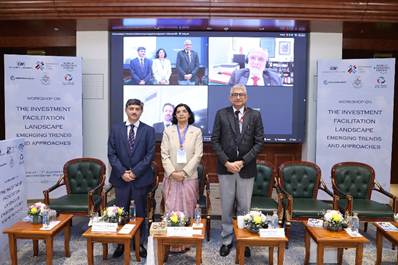
NEW DELHI: A workshop on “The Investment Facilitation Landscape: Emerging Trends and Approaches” was organised by the Centre for Trade and Investment Law (CTIL), Indian Institute of Foreign Trade, in collaboration with the Confederation of Indian Industry (CII), International Trade Centre (ITC), United Nations Conference on Trade and Development (UNCTAD), the World Bank and the World Economic Forum (WEF) at Bharat Mandapam, New Delhi.

The workshop aimed to examine emerging global trends in investment facilitation and ease of doing business, and brought together policymakers, experts and industry stakeholders for focused discussions. It comprised three technical sessions covering India’s Approach to Investment Facilitation, International Investment Facilitation Framework Landscape, Investment Facilitation and Ease of Doing Business, and Options for Investment Facilitation Cooperation. The sessions explored practical ways to align India’s domestic reforms with global best practices.

Senior government officials and national and international experts shared perspectives on various aspects of investment facilitation and its relevance to ease of doing business. Panel discussions highlighted India’s investment policy and ongoing reforms, including licence rationalisation, decriminalisation of minor offences, digital compliance measures, and balanced regulation of Intellectual Property and Artificial Intelligence, as initial steps to support both domestic and foreign investment. Speakers also noted rising foreign direct investment, particularly in services, and referred to initiatives such as the India–EFTA Trade and Economic Partnership Agreement (TEPA) as positioning India strategically within global value chains.

The discussions also examined investment facilitation from a WTO perspective, highlighting the “trinity” of investment protection agreements, cooperation and facilitation investment agreements (CFIA), and trade agreements with investment provisions. Comparative insights were drawn from countries such as Nigeria, Vietnam and Australia, demonstrating how investment climate reforms and effective grievance redressal mechanisms contribute to attracting and retaining investment.

Each technical session concluded with an interactive question-and-answer segment, enabling meaningful engagement between speakers and participants. The discussions were insightful and comprehensive, reflecting diverse domestic and international perspectives on investment facilitation and underscoring the workshop’s value as a constructive platform for policy dialogue and knowledge exchange.

The event featured addresses by Additional Secretary, Department of Commerce, Shri Amitabh Kumar; Additional Secretary, Department for Promotion of Industry and Internal Trade (DPIIT), Smt. Himani Pande; Secretary, Department of Land Resources, Shri Manoj Joshi; Chief Executive Officer, NITI Aayog, Shri B.V.R. Subrahmanyam; and Chief Economic Advisor to the Government of India, Shri V. Anantha Nageswaran.

ONDC Enables Fair, Transparent and Inclusive E-Commerce by Creating an Open, Non-Discriminatory Digital Marketplace

NEW DELHI: Open Network for Digital Commerce (ONDC), unlike traditional e- commerce platforms that operate in silos, creates an open ecosystem where sellers can reach customers across multiple platforms without being restricted by platform- specific terms and conditions. ONDC plays a big part in ensuring that small businesses, local traders and MSMEs are not digitally excluded in the emerging e-commerce environments by providing a fair, transparent, and non- discriminatory discovery within emerging e-commerce environments through open protocols that make all sellers equally visible across network regardless of size, scale or digital sophistication. Seller-side apps make their full catalogues discoverable to all buyer-side apps, while buyer-side apps discloses key parameters used for sorting or listing search results, enabling sellers to understand and improve their ranking. Common open specifications adopted by all network participants further enhance transparency and prevent opaque or biased listing practices.

Further, Ministry of MSME’s Trade Enablement and Marketing (TEAM) scheme promote adoption of digital commerce by SMEs, small sellers including Self Help Groups (SHGs), Farmer Producer Organisation (FPOs), artisans, rural entrepreneurs and local retailers through the ONDC. Under this scheme, these small sellers are provided support in digital literacy, awareness, cataloguing, and onboarding, with a focus on inclusivity by targeting 50% of beneficiaries as women-led SMEs.

As of 9 December 2025, there are a total of 1.16 lakh+ retail sellers live on the ONDC from over 630+ cities and towns across India. Metropolitan business district-wise classifications of sellers is however not maintained.

The ONDC network lowers entry barriers for small and micro businesses by enabling interoperability across multiple buyer and seller-side applications, thereby increasing competition in digital commerce. The presence of multiple platforms offering the same products and services promotes greater price transparency for consumers. Additionally, as sellers of different sizes and from diverse geographies become accessible on the network, consumers benefit from a wider selection of products and services, enabling more informed and competitive choices.

This information was given by the Minister of State for Ministry of Commerce & Industry, Shri Jitin Prasada, in a written reply in the Lok Sabha on Tuesday.

PLI scheme for Pharmaceuticals

NEW DELHI: The Production Linked Incentive (PLI) schemes implemented by the Department of Pharmaceuticals have led to avoidance of imports worth ₹3,591 crore of active pharmaceutical ingredients (APIs) and their key starting materials (KSMs) and drug intermediates (DIs), thereby reduction in import dependency. Scheme-wise details are as under:

  1. PLI Scheme for promotion of domestic manufacturing of critical KSMs/DIs/APIs in India (commonly known as the PLI Scheme for Bulk Drugs): The scheme aims to avoid disruption in supply of critical APIs used to make critical drugs for which there are no alternatives by reducing supply disruption risk due to excessive dependence on single source. As of September 2025, manufacturing capacity has been created for 26 KSMs/APIs resulting in cumulative sales of ₹2,315 crore from the beginning of the scheme, including exports of ₹508 crore, thereby avoiding imports worth ₹1,807 crore.
  2. PLI Scheme for Pharmaceuticals: The scheme aims to enhance India’s manufacturing capabilities by increasing investment and production in the sector and contributing to product diversification to high-value goods in the pharmaceutical sector. It incentivises production of high-value medicines such as biopharmaceuticals, complex generic drugs, patented drugs or drugs nearing patent expiry, auto-immune drugs, anti-cancer drugs, etc. as well as production of KSMs/DIs/APIs other than those notified under the PLI Scheme for Bulk Drugs, thereby contributing to self-reliance. 191 KSMs/DIs/APIs have been produced for the first time under the scheme resulting in cumulative sales of ₹8,110 crore from the beginning of the scheme till September 2025, including exports of ₹6,326 crore, thereby avoiding imports worth ₹1,784 crore.

Under the PRIP scheme, financial assistance is provided for the following:

  1. Financial assistance is provided to industry, MSMEs and startups to support research and development (R&D) for development of products and technologies (outputs) or expeditious validation of R&D outputs for market launch and large-scale commercialisation in three priority areas, namely new medicines, complex generics and biosimilars, and novel medical devices. Biosimilars are biological products aligned to reference products, which are similar in terms of quality, safety and efficacy to reference biological product licensed or approved in India, or any innovator product approved in the International Council for Harmonisation of Technical Requirements for Pharmaceuticals for Human Use (ICH) member countries. Thus, biosimilars include drugs that may be similar to drugs nearing patent expiry. Similarly, novel medical devices may include advanced diagnostic devices.
  2. Financial assistance is provided to the seven National Institutes of Pharmaceutical Education and Research for strengthening of research infrastructure through the setting up of Centres of Excellence at these institutes.

The tenure of the scheme under which three bulk drug parks have been approved is till March 2027. Details of the progress made in respect of the three parks are at Annexure.

Under the two pharmaceuticals PLI schemes, cumulative sales of ₹3,19,112 crore by approved pharmaceutical applicants have been reported since the beginning of the scheme till September 2025. This includes exports worth ₹2,04,238.12 crore, reflecting their global competitiveness.

Annexure

Details of progress made in respect of implementation of the projects approved for the bulk drug parks in Andhra Pradesh, Gujarat and Himachal Pradesh under the Scheme for Promotion of Bulk Drug Parks

Andhra Pradesh (status as of August 2025):

  1. Tender for development of internal roads, power, water, drainage and other utility buildings have been awarded and approximately 30% of the work has been completed on site.
  2. Fencing posts have been installed along a stretch of 29.3 km, external water pipeline has been procured and laying work is in progress.

Gujarat (status as of October 2025):

  1. Tenders for all common infrastructure facility (CIF) related works for development of road, drainage, water infrastructure, effluent collection and rack system have been awarded and approximately 75% of work has been completed on site.
  2. CIF utility tenders for development of common effluent treatment plant, solvent recovery, treatment storage and disposal facilities have been awarded in October 2024 and approximately 16% of work has been completed on site.
  3. A technical consultant has been appointed, for finalising the technical specifications and tender preparation for the Centre of Excellence.
  4. The Government of Gujarat has completed construction of an approach road of 4 km length and has initiated installation of a water pipeline to draw surface water from Narmada Canal located approximately 40 km from the park site.

Himachal Pradesh (status as of October 2025):

  1. Tender for the development of internal roads, drainage, bridges and water infrastructure has been awarded and work is in progress.
  2. Tender for site demarcation, grading and land levelling has been awarded, and work is in progress in park area covering 900 acres.

This information was given by Union Minister of State in the Ministry of Chemicals and Fertilizers, Smt. Anupriya Patel, in a written reply in Rajya Sabha on Tuesday.

Community Network Services (CNS) advances phased rollout of new PCS

LONDON: Community Network Services (CNS), a DP World company, has rolled out the latest phase of its new CNS Port Community System (PCS) to customers, marking a key milestone for the new digital platform.

The new PCS solution, built on the cloud‑based CARGOES platform, is set to replace CNS’ legacy Compass system. The platform features a modern, user‑friendly interface that improves navigation, boosts productivity, and streamlines time‑critical workflows.

The PCS rollout is progressing successfully, with the first phase completed through a carefully managed, location‑by‑location deployment, with the initial terminals now fully operational. CNS is preparing the next phase, expanding the PCS to additional key terminals, including DP World Southampton and DP World London Gateway.

Future‑ready by design, the PCS is positioned to support future integration with essential operational and management systems. It streamlines cargo workflows and leverages cloud‑native architecture to adapt to evolving business, commercial, and compliance requirements.

Matthew Bradley, Managing Director at CNS, said: “Compass has been an industry-standard solution since 2010, trusted by the ports and logistics community for more than a decade. The transition to the new PCS system takes everything our customers value about Compass and enhances it for the digital era. Our investment in the CARGOES platform will help ensure we’re ready to meet the regulatory and operational challenges of tomorrow and keep trade flowing for our customers.”

James Roth, Chairman and CEO, Seacon Group, said: “Working with CNS during the pilot phase of the new Port Community System has been seamless. The new CNS PCS platform has already demonstrated significant improvements in speed, reliability, and visibility across our export operations. Its intuitive design and integration flexibility make day-to-day processes more efficient and reduce manual intervention. We’re excited to see how this innovation will continue to enhance collaboration across the wider port community.”

Since its introduction in 2010, CNS’ Compass system has been central to trade logistics at UK and European ports, improving communication, visibility, and efficiency for shipping lines, freight forwarders, terminal operators, and customs brokers. The phased migration from the legacy Compass system to the new CNS PCS will ensure continuity of service for these mission-critical operations.

Lloyd’s Register Hellenic Technical Committee welcomes new leadership from Capital Ship Management Corp CTO

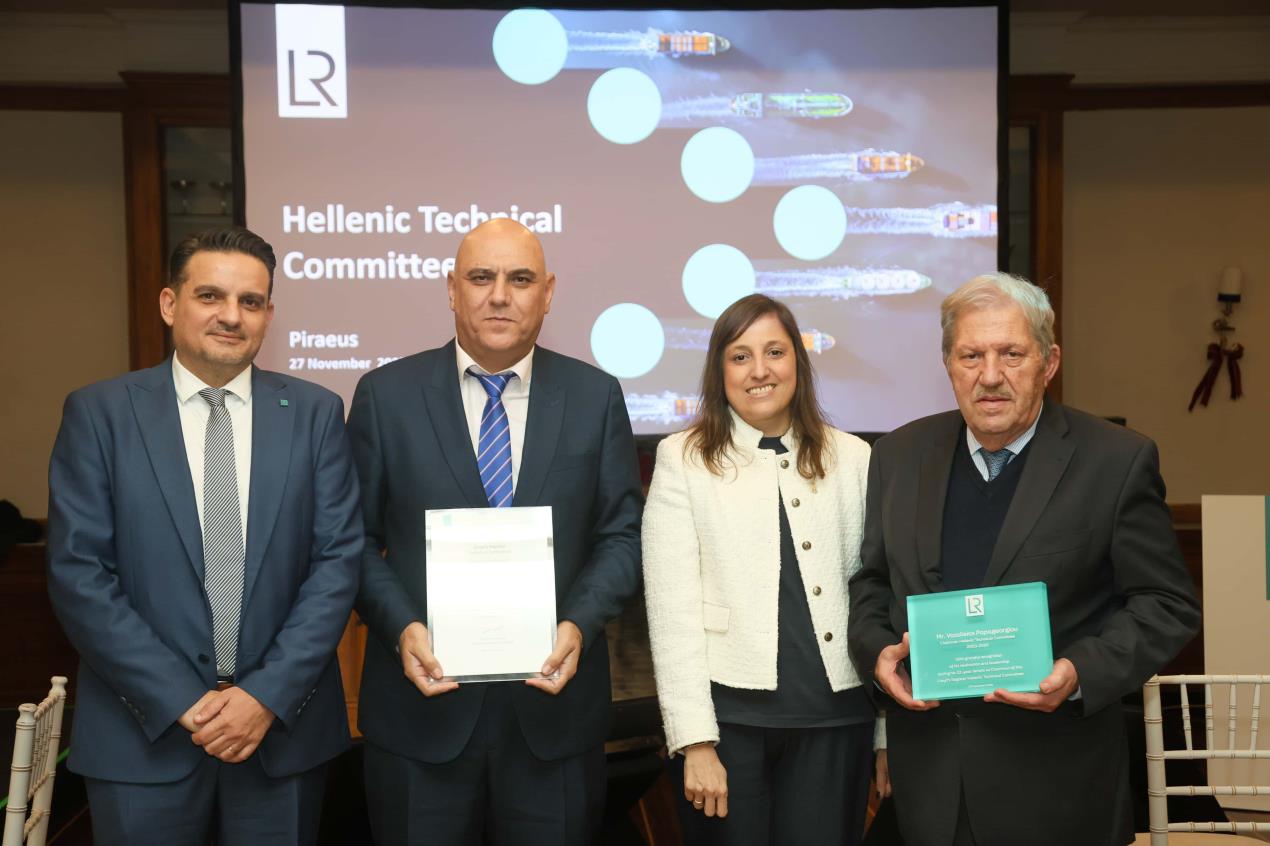
LONDON: Lloyd’s Register (LR) convened the latest meeting of its Hellenic Technical Committee (HTC) in Athens on 27 November, bringing together around 60 senior technical leaders and stakeholders from across the Greek shipping sector. The HTC continues to serve as an important forum dedicated to open technical dialogue and industry collaboration.

The meeting also marked a significant change in leadership. After 22 years of distinguished service as Chair, Vassileios Papageorgiou, Vice Chairman of the Tsakos Group, handed over the role to Nikolaos Vaporis, Chief Technical Officer of Capital Ship Management Corp. Papageorgiou’s leadership has been central to the Committee’s influence and its role in shaping LR’s engagement with Greek shipowners.

The HTC will continue to provide an essential platform for clients to exchange views on safety, innovation, digitalisation and compliance, and to contribute directly to the development of LR’s Rules and wider industry standards.

Elina Papageorgiou, Vice President Greece and Cyprus, Lloyd’s Register, said: “The HTC is a valuable forum for clients and stakeholders who value regular engagement and collaborative discussion on the technical challenges shaping their fleets and future investment decisions.

“We are deeply grateful to Vassileios Papageorgiou for his exceptional leadership and dedication over more than two decades, which have been instrumental in advancing the Committee’s impact. We also warmly welcome Nikolaos Vaporis as the new Chair and look forward to working with him as HTC continues to provide a trusted forum for technical insight, innovation, and collaboration that shapes future developments.”

Nikolaos Vaporis said: “Lloyds Register’s HTC has always played an important part in maintaining a constructive exchange between LR and the Greek maritime community. As the industry moves through a period of major change, this dialogue is essential. I look forward to supporting the Committee as it enters its next chapter.”

The event concluded with a reception that allowed further discussion between LR’s technical specialists and representatives from leading Greek shipping companies.

Austal USA expands digital transformation with SSI ShipbuildingPLM

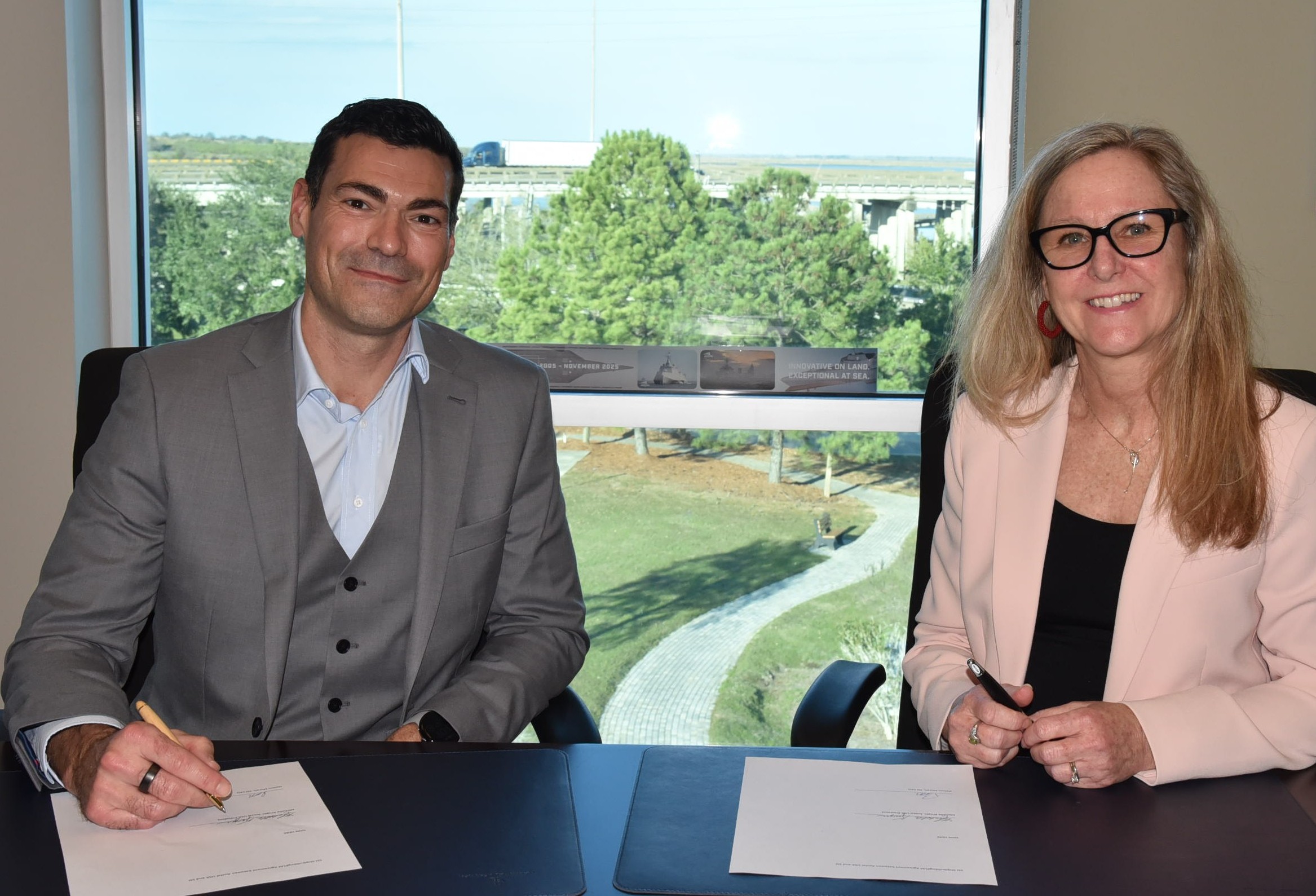
VICTORIA B.C.: SSI, a global leader delivering software, services, and expertise for the business of shipbuilding, Tuesday announced that Austal USA, a partner since 2005, will use its ShipbuildingPLM product lifecycle management (PLM) solution to further expand its digital transformation.

This decision reflects Austal USA’s pursuit of innovation and operational excellence in shipbuilding, showing how a shipbuilding-specific digital platform can accelerate production, reduce risk, and create a single source of truth across complex programs.

By leveraging ShipbuildingPLM, Austal USA is setting a new benchmark for how government shipbuilding programs can move fast, deliver consistently, and continuously improve at every stage of construction.

Since 2005, Austal USA has delivered 34 vessels to the US Navy using SSI ShipConstructor. For Austal USA, ShipbuildingPLM adds data-driven decision-making, streamlined workflows, and secure, traceable information across programs.

This solution will serve as the digital thread across all vessels and programs, from U.S. Navy and U.S. Coast Guard vessels to complex steel ships and module production for Virginia- and Columbia-class submarines. By providing a configuration-managed view of each program, ShipbuildingPLM will provide a tool to accelerate production, improve consistency, and reduce project risk.

“Austal USA is an innovative company, with a relentless drive to move forward,” said SSI CEO Denis Morais. “From aluminum U.S. Navy vessels to expanding into complex steel vessels and now submarine modules, Austal USA continues to push boundaries. Its adoption of ShipbuildingPLM reflects a deliberate approach to solving problems at a level not commonly seen in the industry, with a focus on incremental improvements that quickly add value and minimize risk. Austal USA moves fast, delivers results and inspires the industry to rethink what digital shipbuilding can achieve.”

“As our shipbuilding portfolio continues to evolve, the strength of our digital systems becomes increasingly important,” said Austal USA President Michelle Kruger. “ShipbuildingPLM supports a connected, controlled, and scalable way of managing vessel data across our business, which directly contributes to schedule confidence and program performance.”

The U.S. government trusts Austal USA to deliver complex programs on time and with high quality, a responsibility the company meets with a culture of speed, innovation, and continuous improvement. The long-standing partnership with SSI ensures Austal USA benefits from SSI’s ongoing platform enhancements, advanced integration capabilities, and dedicated support and professional services teams.

With over 20 years of collaboration, the SSI-Austal USA relationship reflects a shared commitment to innovation, operational excellence, and the future of digital shipbuilding.

Krey Schiffahrt selects Inmarsat NexusWave to support operational efficiency of its state-of-the-art newbuild project cargo carriers

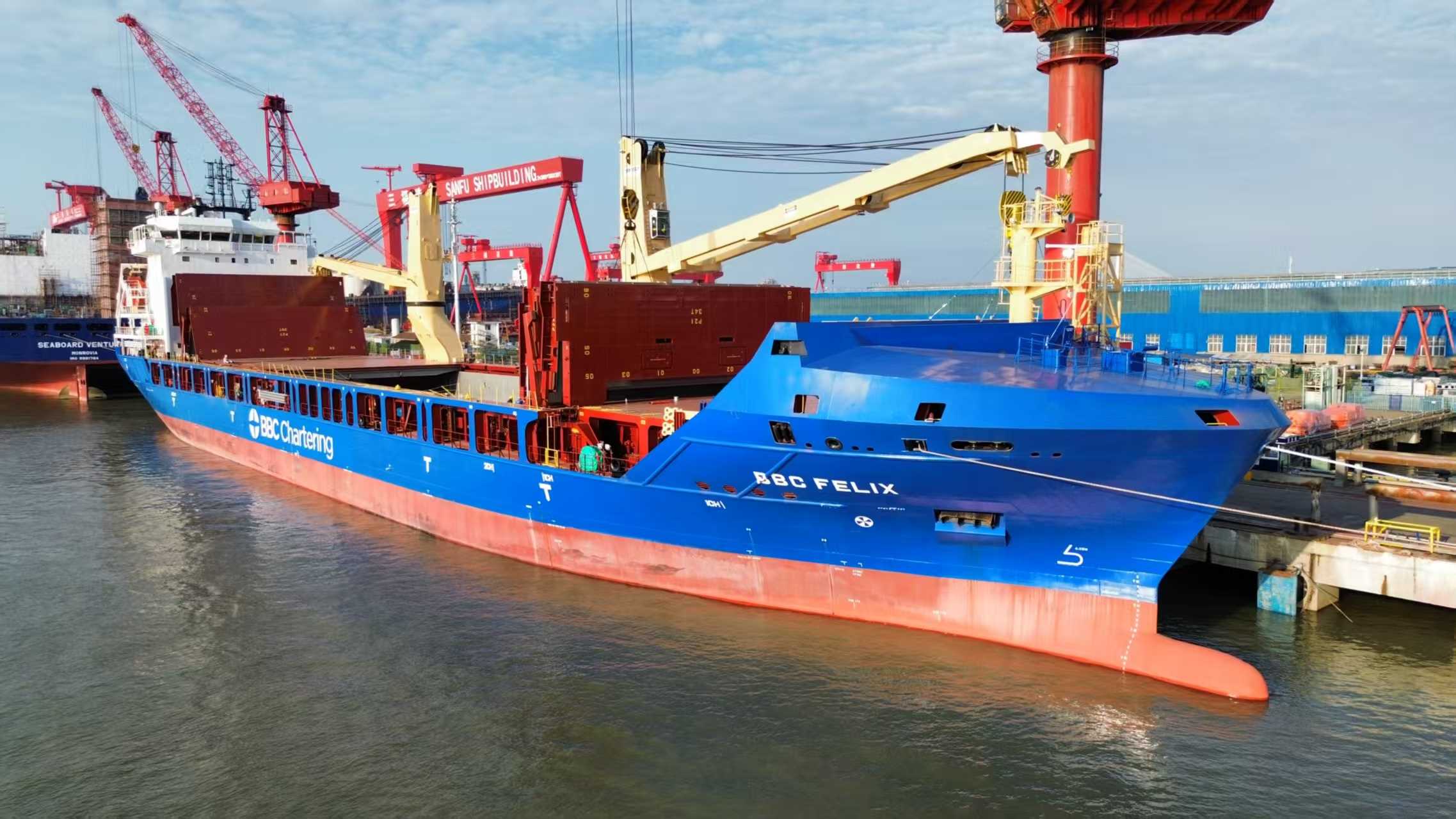
LONDON: Inmarsat Maritime, a Viasat (NASDAQ: VSAT) company, will deploy NexusWave on Krey Schiffahrt’s four newbuild heavy lift vessels. The deployment will enable the German ship manager to enhance operational efficiency and unlock the benefits of always-on, unlimited connectivity.

Inmarsat BBC 2 Krey Schiffahrt selects Inmarsat NexusWave to support operational efficiency of its state-of-the-art newbuild project cargo carriers

Krey Schiffahrt currently manages eight modern multi-purpose heavy lift vessels and is expanding its fleet to meet evolving project cargo demands. Its new, state-of-the-art project cargo carriers have been designed for operational flexibility, with optimised hull shapes and innovative propulsion systems that will reduce carbon dioxide emissions by over 35% compared to equivalent tonnage.

Inmarsat NexusWave will help ensure that performance monitoring and energy management systems remain seamlessly connected wherever the vessels operate. The bonded multi-network service is designed to combine global coverage, managed performance levels and unlimited data, and to deliver secure, high-speed and always-on connectivity for both operational and crew applications.

Captain Maxim Babenko, Nautical Superintendent, ISM, ISPS, Krey Schiffahrt, said: “Our new heavy lift vessels are designed to execute a variety of challenging projects with a high degree of efficiency, making reliable connectivity a must. NexusWave’s fully managed service and unlimited data will help to keep our critical systems connected at all times and enhance crew welfare. Partnering with Inmarsat gives us the confidence of a single, trusted provider for all of our connectivity needs.”

Jan-Henning Stehr, Sales Manager – Europe, Inmarsat Maritime, said: “State-of-the-art vessels require state-of-the-art connectivity – and Inmarsat NexusWave delivers exactly that. For Krey Schiffahrt’s newbuild project cargo carriers, NexusWave will provide seamless high-speed connectivity service that supports fuel efficiency, continuous monitoring, and crew wellbeing wherever they sail.”

DPIIT launches a digital sponsorship letter generation module under e-Production Investment Visa (e-B4 Visa)

NEW DELHI : Department for Promotion of Industry and Internal Trade (DPIIT), Ministry of Commerce and Industry has launched an online module for Indian companies to generate sponsorship letters for inviting foreign professionals for production related activities under the e-Production Investment Business Visa (e-B-4 Visa) on 29th November, 2025. The launch of this digital platform is a part of a series of reforms that the Government of India has instituted under the business visa regime for improving the ease of doing business in India.

In August 2025, the Ministry of Home Affairs issued a Circular for resolving certain issues related to employment visa, business visa and e-PLI business. As part of this circular, two activities which were earlier covered under the employment visa namely, Foreign nationals coming for installation and commissioning of equipment (i) as part of contract of supply of equipment and (ii) for which Indian companies pay fees or royalty, are now brought under the business visa regime. Further, a new sub-category of “Production Investment Visa” has been created under the Business Visa regime and called the “B-4 Visa” for enabling foreign subject matter specialists/ engineers/ technical people being engaged by Indian companies under the following categories: a) installation and commissioning; (b) quality check and essential maintenance; (c) production; (d) IT and ERP Ramp-up; (e) training; (f) supply chain development for empaneling vendors, (g) plant design and bring-up; and (h) senior management and executives to visit India for such production investment activities seamlessly. Moreover, the existing e-PLI business visa was dispensed with. The Ministry of Home Affairs also made amendments to relevant chapters of the Visa Manual, 2019.

As part of this reform, this Production Investment Visa will be issued as an e-visa and has to be applied for in the online Visa portal. Further, to facilitate the Visa application process for e-B-4 visa, Indian companies shall generate sponsorship letter digitally. For enabling this facilitation digitally, DPIIT had launched the e-Production Investment Business registration module on the National Single Window System (NSWS) on 29th November, 2025, which can be availed by PLI as well as non-PLI businesses.

Processes have been streamlined with simpler forms and recommendation requirement of the Line Ministry has been done away with. With this module, Indian companies and Limited Liability Partnerships (LLPs) can instantly generate sponsorship letters for inviting foreign professionals for production related activities under the e-B-4 Visa category on NSWS (https://www.nsws.gov.in). The Auto population of data and automatic authentication through existing data bases like MCA, GSTN etc. have eliminated the requirement of approval of line ministry. The unique ID of the generated Sponsorship Letter shall be referred by foreign professional when he applies for Visa on the e-Visa portal (https://indianvisaonline.gov.in) where the module has been integrated with NSWS through API.

Prime Minister meets with His Majesty King Abdullah II of Jordan

AMMAN: Prime Minister Shri Narendra Modi met with His Majesty King Abdullah II of Jordan on Monday. On arrival at the Al Husseiniya Palace, he was warmly received by His Majesty King Abdullah II and accorded a ceremonial welcome.

The two leaders met in restricted and delegation level formats. They warmly recalled their previous meetings and conversations and underscored the warm and historic ties shared by the two countries. They noted that the visit, coming at a time when the two countries are celebrating 75 years of the establishment of their diplomatic ties, makes it historic. Prime Minister appreciated His Majesty for his commitment towards strengthening India-Jordan ties. His Majesty conveyed strong support for India’s fight against terrorism and condemned terrorism in all its forms and manifestations. Prime Minster appreciated His Majesty’s leadership in tackling terrorism, extremism and radicalization and contributing towards global fight against these evils.

PM Modi Delegation with His Majesty King Abdullah II of Jordan Prime Minister meets with His Majesty King Abdullah II of Jordan

Both the leaders discussed ways to further deepen engagement between the two countries in the fields of trade and investment; defence and security; renewable energy; fertilizer and agriculture; innovation, IT and digital technologies; critical minerals; infrastructure; health and pharma; education and capacity; tourism and heritage; and culture and people-to-people ties. Noting that India was Jordan’s 3rd largest trading partner, Prime Minister proposed that the two countries should aim to enhance bilateral trade to US$ 5 billion over the next 5 years. He also called for collaboration between Jordan’s digital payment system and India’s United Payments Interface(UPI). Jordan is an important supplier of fertilizer to India, and companies on both sides are in discussions for further substantive investment in Jordan to meet growing demand for phosphatic fertilizer in India.

The leaders shared perspectives on the developments in the region and on other global issues. They reiterated the importance of restoring peace and stability in the region. Prime Minister reaffirmed India’s support for efforts being made to achieve durable peace in the region.

On the occasion of the visit, the two sides finalized MoUs in the fields of culture, renewable energy, water management, digital public infrastructure and twinning arrangement between Petra and Ellora. These agreements would give a major boost to India-Jordan bilateral ties and friendship. The talks were followed by a banquet dinner hosted by His Majesty King Abdullah II in honor of Prime Minister. Prime Minister invited His Majesty to visit India which he accepted.

Vijay Kumar, MoPSW Secretary visits DPA Kandla and lays foundation stone for developmental projects worth Rs. 193 Crore

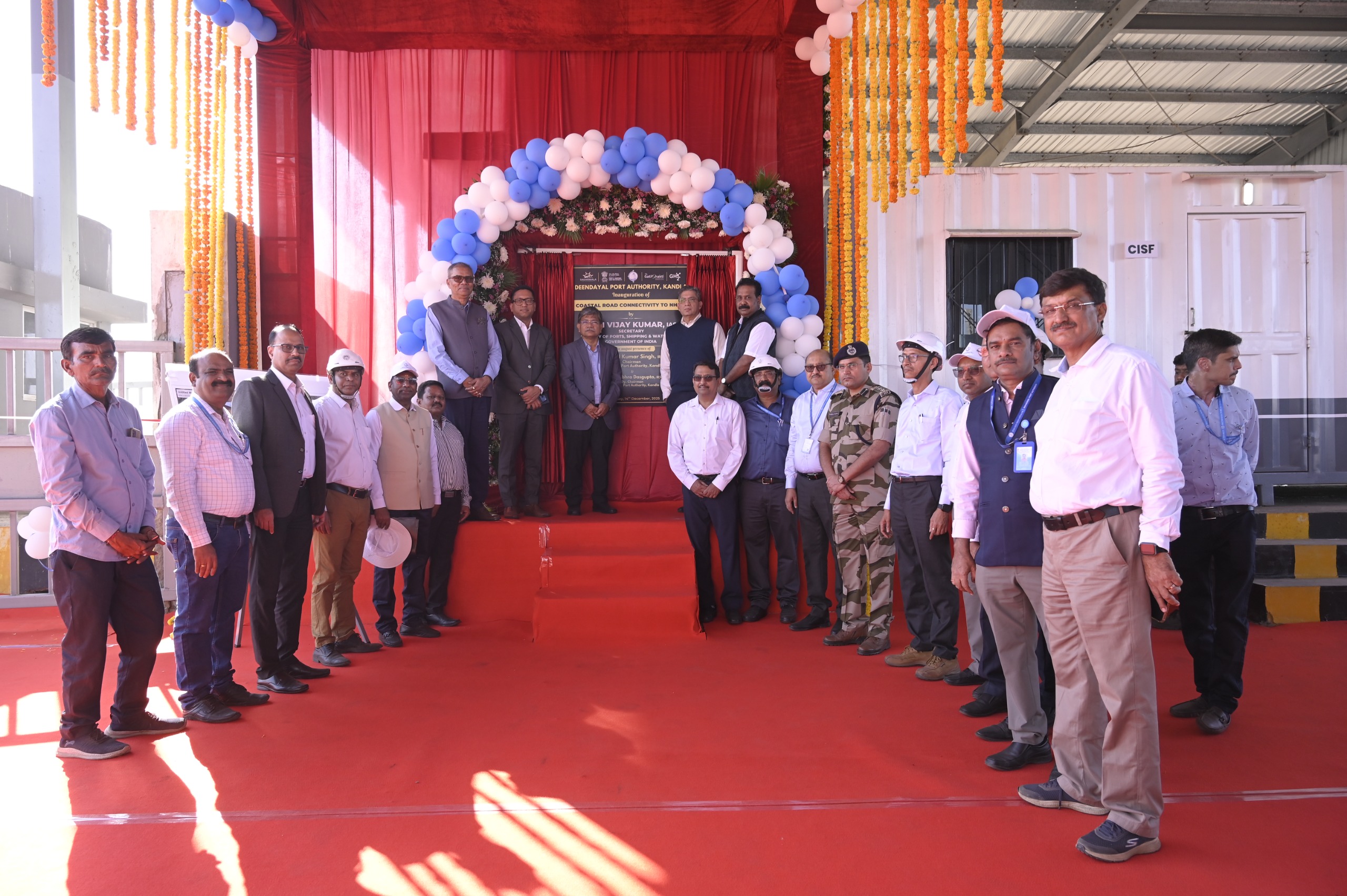
GANDHIDHAM : Shri Vijay Kumar, IAS, Secretary, Ministry of Ports, Shipping & Waterways (MoPSW), Government of India, paid an official visit to Deendayal Port Authority, Kandla . On his arrival, he was accorded a ceremonial Guard of Honour by the CISF Unit, DPA Kandla.

During the visit, Shri Sushil Kumar Singh, IRSME, Chairman, Deendayal Port Authority, briefed him on the Port’s strong performance, operational achievements and ongoing as well as upcoming development initiatives aimed at enhancing capacity, efficiency and sustainability. The Secretary
MoPSW appreciated DPA’s consistent growth trajectory and its strategic role in strengthening India’s maritime and logistics ecosystem.

A major highlight of the visit was the inauguration and foundation stone laying of multiple landmark developmental projects of Deendayal Port Authority, with a total project outlay of Rs. 193 crore. These projects are poised to significantly improve port infrastructure, accelerate cargo evacuation and support long-term expansion and modernization of the Port.

Projects Inaugurated:
• Reclamation of land for development of a Shipyard Facility at
Kandla.
• Coastal Road Connectivity linking the Port to National Highway141.
• Dome-Shaped Storage Godown No. 4, enhancing modern
storage capacity.
Foundation Stones Laid:
• Providing and laying of Chemical Product Pipeline from Oil Jetty
No. 7 to Y-Junction within the Oil Jetty Complex, Kandla.
• Upgradation of Fenders at Cargo Berth Nos. 1 to 6 at Deendayal
Port.
• Construction of E-Type Residential Quarters at Port Township,
Gopalpuri, Gandhidham.
• Construction of a Conference Hall at the Administrative Office
Building, Gandhidham.

Construction of a New Shopping Complex at Port Township,
Gopalpuri, Gandhidham.
• Construction of a Police Community Hall at Police Headquarters,
Shinay, under CSR initiatives.
Reinforcing DPA Kandla’s commitment to green and sustainable port operations, Shri Vijay Kumar, IAS also inaugurated the Fleet of Green VOLVO Electric Vehicle (EV) Loaders along with the Charging Bay,
marking another milestone in the Port’s green transition journey. Further, a significant step towards clean fuel adoption was taken with the award of LOA to M/s Thermax for the development of India’s first 5 TPD Green Methanol Facility at Deendayal Port, positioning Kandla at the forefront of alternative marine fuel infrastructure in the country.

In addition, the Secretary MoPSW attended a Stakeholders’ Meet in the presence of Shri Sushil Kumar Singh, IRSME, Chairman and Shri Nilabhra Dasgupta, IRS, Dy. Chairman. The interactive session witnessed
active participation from port users and stakeholders, leading to constructive deliberations and meaningful discussions on operational efficiencies, future opportunities and collaborative growth.