Home Blog Page 534

NYK named Two New LNG Carriers for QatarEnergy as Sharq and Shra’ouh

TOKYO: On December 3, a joint venture company comprising NYK, Kawasaki Kisen Kaisha, Ltd., MISC Berhad, and China LNG Shipping (Holdings) Limited held a naming ceremony for two new liquefied natural gas (LNG) carriers for QatarEnergy, the state-owned energy company of Qatar. The ceremony was held at HD Hyundai Heavy Industries Co., Ltd. (HHI) in Ulsan, South Korea. One vessel was named “Sharq” after an area east of Doha, Qatar’s capital, while the other was dubbed “Shra’ouh” after a Qatari island. The naming ceremony was attended by Takaya Soga, President & CEO of NYK, among others.

These two vessels will be the seventh and eighth of 12 new LNG carriers ordered by the joint venture company for QatarEnergy, the world’s largest LNG providers. Sharq is scheduled to begin transporting LNG worldwide in December. Shra’ouh is scheduled to commence service in January 2026. The NYK Group will provide ship-management services for Shra’ouh.

Vessel Features

These vessels are equipped with an X-DF 2.1 iCER engine, a highly fuel-efficient dual-fuel engine that uses fuel oil and boil-off gas as fuel. They also feature a reliquefaction device that effectively uses surplus boil-off gas, enhancing navigation efficiency while reducing greenhouse gas emissions, thereby reducing the environmental impact

Vessel Particulars

Cargo Capacity: approx. 174,000 m³
Length: approx. 299.00 meters
Beam: 46.40 meters
Main Engine: X-DF2.1 iCER (dual-fuel slow-speed diesel engine)
Shipyard: Ulsan Shipyard, HD Hyundai Heavy Industries Co., Ltd.

The core strategy of the NYK Group’s medium-term management plan, ” Sail Green, Drive Transformations 2026 ,” is to deepen the Group’s existing core businesses and invest in new growth businesses. In its Energy Business Division, NYK has centered its strengthened efforts on the LNG/LPG carrier business, which the company has positioned as a growth area. NYK will contribute to realizing a stable energy supply in Japan by leveraging the experience, know-how, and networks the NYK Group has cultivated as one of the world’s largest LNG carrier-owning and management companies.

Source: Nippon Yusen Kaisha

Women Drive a New Era in Greece’s Shipping Industry

ATHENS: Women in Greece are entering the shipping sector faster than ever before, and this shift is changing the direction of the entire industry. As global shipping deals with new technology, worker shortages and tougher climate rules, Greece now stands out as a leader. Women are not only joining the profession, but they are also helping shape its future.

Today, women make up 7.8% of Greek seafarers, while the share in Europe is 2.4% and the global average is just 1.2%. This difference shows how much attitudes have changed. Many young women now see shipping as a modern career path with real opportunities.

More women are joining the fleet every year
The rise in female participation is gaining speed. In 2024, Greece recorded 2,048 women seafarers, which is 11.4% more than the previous year.

Even more striking, the number has climbed 65.6% over the past five years. These gains show that women are becoming a key part of Greece’s maritime workforce.

Furthermore, this trend is happening at a time when ships and companies need new skills. As a result, women are finding more space to enter and succeed.

Technology creates new opportunities
Shipping is changing fast, and new technology is opening doors. Modern ships now rely on digital tools, automation and cleaner energy systems. Because of this shift, companies are looking for people who can work with data, software, safety systems and energy management.

As these new needs grow, more women in Greece are choosing shipping as a career. In fact, maritime schools are now training women for jobs linked to digital operations, energy performance and cybersecurity. Therefore, the link between women, Greece and shipping innovation is becoming stronger each year.

Policy support encourages more participation
International bodies also play a role in this progress. For example, the IMO offers programs that support women in maritime careers.

In addition, the European Union promotes equal access and training across the sector. These actions help Greece grow a skilled workforce that can meet future demands.

Women in Greece are helping ease the global officer shortage and strengthen the future of shipping
The global industry faces a serious challenge. Right now, there is an 8.5% shortage of qualified officers, and this may rise to 10% by 2030. As many experienced officers retire and fleets grow, companies are struggling to find enough trained workers.

Because more women are joining the field, Greece is helping to ease this shortage. Their increasing presence not only supports the national fleet but also strengthens global shipping.

A strong future built on inclusion
The rise of women in Greece’s shipping sector signals a major shift. With new training programs, European upskilling initiatives and a modern view of maritime work, women are building careers that match the industry’s new needs.

As a result, their impact is being felt in technical roles, leadership positions and research centers.

Greece sets a global example as women drive a new era in shipping
Although shipping has deep roots in tradition, Greece is proving that the sector can evolve quickly.

As more women join the workforce, the country is gaining new ideas, stronger teams and wider expertise. This progress not only benefits Greece but also offers a model that other nations may follow.

Women are now a driving force in Greece’s shipping sector, and their success is helping set a global benchmark for the future.

GEODIS pilots Southeast Asia’s First Cross-Border Trucking Service using Renewable Diesel

SINGAPORE: GEODIS, a global leader in transport and logistics, has announced the launch of the region’s first cross-border trucking operation to be powered by Neste MY Renewable Diesel™, marking a major milestone in the decarbonization of its regional road network.

The pilot features a dedicated Euro-5 truck travelling from Singapore to the Thailand-Malaysia border using renewable diesel supplied by Neste, the world’s leading producer of sustainable aviation fuel (SAF) and renewable diesel. Interion, a Singapore-based fuel solutions provider, will enable the fuel distribution and delivery for the pilot operations.

Renewable diesel, also known as hydrotreated vegetable oil (HVO), is produced from 100% renewable raw materials such as used cooking oil and animal fat waste. The use of Neste’s renewable diesel, enables up to 90% reduction in greenhouse gas (GHG) emissions compared to using conventional diesel across the lifecycle of the fuel. A drop-in fuel, renewable diesel can be used in existing diesel engines without any modification and offers an immediate and scalable pathway for lowering transport GHG emissions across operational fleets.

Conducted in collaboration with Neste and Interion, the pilot will evaluate real-world fuel performance, cross-border operational feasibility, supply chain reliability, and carbon-reduction outcomes. Insights gained will help shape GEODIS’ wider adoption plans for renewable fuels across the Asia Pacific region.

“We are proud to embark on the first-ever ASEAN cross-border decarbonization trucking pilot powered by renewable diesel . Transitioning to renewable fuels is a critical part of our mission to build a more sustainable supply chain for our customers and communities,” said Esther Cheong, Regional Sustainability Director, GEODIS Asia Pacific and Middle East. “Together with our partners Neste and Interion, we are demonstrating the practical benefits of renewable fuels and setting the groundwork for broader adoption across the region.”

“We are pleased to support GEODIS with our Neste MY Renewable Diesel, enabling immediate and meaningful GHG emissions reductions,” said Mario Mifsud, Vice President, Renewable Fuels Sales & Trading, EMEA & APAC, Neste. “Collaborations like this showcase how renewable fuels can lower the climate impact of road transportation in Southeast Asia.”

“As a trusted fuel distribution partner, Interion is proud to play a role in delivering cleaner energy solutions for the logistics industry,” said Peh Khian Hui, Director, Interion. “This pilot underscores how collaboration across the value chain can drive sustainable transformation.”

The initiative aligns with GEODIS’ broader strategy to reduce its emissions of greenhouse gases and atmospheric pollutants and managing its resources in a responsible manner. Following the pilot, GEODIS aims to build upon its decarbonization efforts for cross-border road operations and scale renewable fuel adoption across its fleet in the region.

The investment is also indicative of GEODIS’ SBTi approved commitment to addressing climate change. This strategy aligns with the 2015 Paris Agreement, seeking to limit global temperature rise to 1.5°C by the end of this century.

Ship rates spiking 467% marks upended trade across commodities

LONDON: Rates to ship commodities from energy to bulk ores across the world’s oceans are heading for a rare year-end surge as conflicts, sanctions, and swelling output upend global supply lines.

Daily earnings to transport crude on key routes have seen the biggest jump this year, up 467%, while rates to ship liquefied natural gas and commodities such as iron ore have increased more than fourfold and twofold, respectively. Freight costs typically dip at year-end due to seasonal weakness in demand.

Vessels are spending more time at sea transporting cargo, contributing to the spike, and several shipping executives expect tightness in the broader market to continue at least through early next year.

“We’re seeing an old school, extremely tight physical shipping market,” Lars Barstad, the Chief Executive Officer of Frontline Management AS, which operates a fleet of oil tankers, including very-large crude carriers, said on an earnings call late last month. “We’re not seeing any kind of weakness.”

For crude tankers, rates rallied following a ramp-up in Middle Eastern production, along with higher Asian demand for their barrels after US sanctions on two Russian oil giants. Meanwhile, the cost to ship LNG from the US to Europe recently climbed to the highest level in two years as new projects in North America tied up more vessels to deliver the fuel.

A benchmark measure for ships hauling bulk commodities, including grain and ore, rose to a 20-month high at the end of November as anticipation grew over a major iron ore project in Guinea coming online and weather-related delays off China squeezed supply. More broadly, hostilities around key routes have contributed to an overall increase in costs.

Attacks by Iran-backed Houthis in Yemen on merchant ships in the Red Sea have forced some vessels to transit around Africa, increasing so-called ton-miles — a key metric of demand that multiplies the cargo volume by delivery distances — signaling cargoes are being transported longer than usual.

Freight rates have eased slightly from a peak at the end of November, but elevated costs are reverberating across the shipping market. Buyers of US LNG have contemplated delaying cargo loading, while some owners of oil tankers are seeking to maximize earnings.

In recent weeks, supertanker operators have focused on longer journeys to lock in higher profits, forcing some Indian refiners to use two smaller vessels — rather than the usual one — to get their Middle Eastern crude purchases delivered on time, according to shipbrokers.

However, even as shipping companies enjoy a rare boom after years of bruising earnings, many are cautious about investing in the rejuvenation of fleets, or making big strategic decisions. New ships are expensive, while rates could plunge with more vessels and the potential reopening of the Red Sea.

“If you’re a shipowner, you have made money, you are not under distress,” said Jayendu Krishna, a director at Drewry Maritime Services. “But you’re not in a great party like mood,” due to the uncertain industry outlook, he added.

Source: Bloomberg

Bulker newbuilding contracting drops 54% to five-year low : BIMCO

LONDON: “Between January and November 2025, the capacity of bulker newbuilding contracting has fallen 54% y/y to 25m DWT, reaching its lowest level since 2020. Consequently, the dry bulk orderbook is now 4% smaller than a year ago, accounting for 11% of the dry bulk fleet. Contracting has likely eased due to a cloudy market outlook,” says Filipe Gouveia, Shipping Analysis Manager at BIMCO.

The number of ships contracted has seen an even steeper decline, down 61% y/y so far in 2025. Only 281 ships have been ordered, the lowest number since 2016. While contracting has fallen across all segments, orders in the capesize segment, which contains the largest ships in the dry bulk fleet, have been comparatively higher.

The outlook for freight rates over the next two years appears strongest for the capesize segment. Cargo demand growth could soften but sailing distances are expected to lengthen, boosting tonne mile demand. Furthermore, supply growth is estimated be low amid limited deliveries. Capesize ships face the longest lead times with 77% of contracting so far this year scheduled to be delivered after 2027.

BIMCO Chart Bulker newbuilding contracting drops 54% to five-year low : BIMCO

“Contracting in the supramax and panamax segments has declined significantly, falling 76% y/y and 55% y/y respectively. Both segments have comparatively large orderbooks and therefore an expected increase in ship deliveries in 2026 and 2027. In addition, their demand outlook appears weak, while a potential return of ships to the Red Sea poses a further downside risk to demand for these segments. These factors could lead to weaker freight rates over the next two years, which might be discouraging newbuilding contracting,” says Gouveia.

Chinese shipyards have received 81% of new orders in terms of ship capacity, up nine percentage points compared to 2024, at the cost of Japan’s market share. China has thereby remained by far the most dominant shipbuilding nation in the bulk sector in 2025, despite the previous announcement of the now suspended USTR port fees on Chinese built ships. Shipments to or from the US only account for 8% of global cargoes, which, paired with several fee exemptions, likely contributed to continued preference for Chinese yards.

One factor supporting newbuilding contracting is a 3% drop in prices since the start of 2025, compared to a 4% increase in five-year-old second-hand prices. Currently, a five-year-old second-hand ship will on average sell for 93% of the price of a newbuilt. This is a reflection of a strengthening of market conditions and freight rates during the second half of the year. While lower prices could theoretically encourage contracting, lead times for new orders remain high. Therefore, ships ordered today may be delivered under vastly different market conditions.

“In 2025, the share of contracted capacity designed to use alternative fuels has decreased, but the share designed to allow for future retrofitting has increased. This could reflect lingering uncertainty over the availability of alternative fuels. Overall, 12% of the current orderbook could use alternative fuels upon delivery, of which 48% could use methanol, 37% LNG and the rest could use ammonia,” says Gouveia.
Source: BIMCO

President of India Graces NAVY DAY Celebrations at Thiruvananthpuram

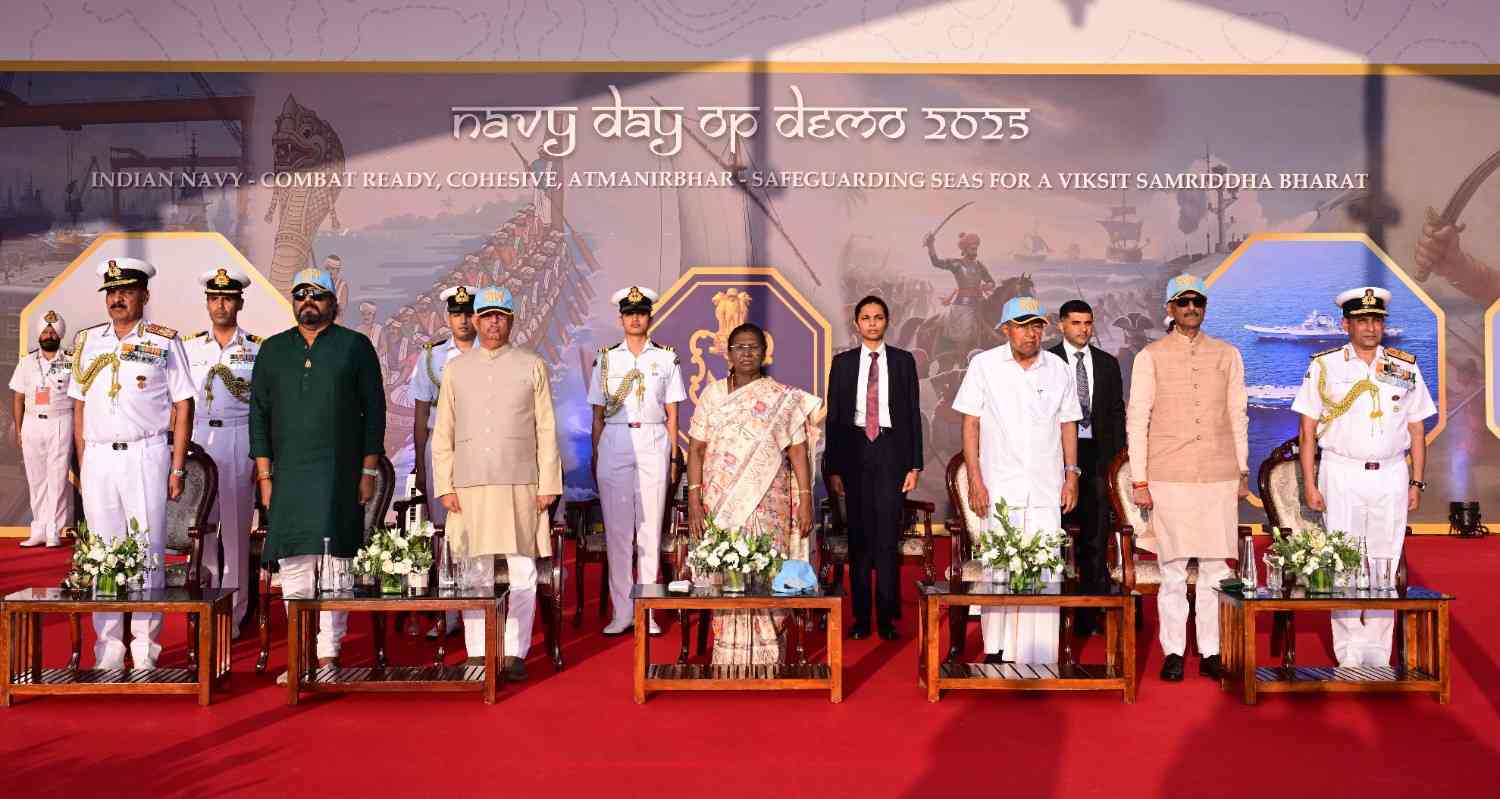
THIRUVANANTHPURAM: The President of India, Smt Droupadi Murmu, graced the Navy Day-2025 celebrations and witnessed the operational demonstration by the Indian Navy at Thiruvananthapuram, Kerala, on Wednesday (December 3, 2025).

PresidentofIndiaatNavyDay2025 President of India Graces NAVY DAY Celebrations at Thiruvananthpuram

Speaking on the occasion, the President said that the Navy Day is a celebration of selfless service and supreme sacrifice made by naval personnel in defence of our motherland. She stated that people of India are grateful to the men and women of the Indian Navy for their service to the nation. She commended them for their professionalism, passion and patriotism.

The President said that the Indian Ocean Region is a highly strategic and critical maritime space. It is a conduit for global energy supplies and trade. As India is positioned at its centre, we bear a special responsibility. We are committed to the idea of the oceans remaining open, stable and rules-based. As per our vision of ‘Vasudhaiva Kutumbakam’, India’s approach is collaborative rather than competitive. Our country is promoting shared awareness, capacity building, and the peaceful use of the seas.

The President said that the Indian Navy stands as the principal actor for the security of our seas. From deterring threats to combating piracy, from securing our Exclusive Economic Zone to ensuring freedom of navigation, the Navy’s role extends well beyond traditional defence. The Navy also exemplifies India’s humanitarian aspect. In crises across the Indian Ocean Region, it has acted as the first responder: evacuating citizens, providing succour, and delivering humanitarian assistance. She expressed confidence that new initiatives undertaken under the SAGAR vision will enhance maritime domain awareness, provide humanitarian aid, and ensure security for the international maritime community.

The President said that today, India is focusing on harnessing the potential of Blue Economy as a driver of sustainable development. The Indian Navy plays an important role in these efforts. By securing sea routes, protecting marine resources, preventing illegal activities, and supporting maritime research, the Navy strengthens our vision of safe, prosperous, and sustainable oceans.

The President said that modernisation, as well as development and adaptation of new technologies, is crucial for the combat readiness of any armed force. She was happy to note that the Indian Navy is demonstrating capability to design and build complex platforms in India itself. She expressed confidence that the Indian Navy will continue to develop indigenous technologies and contribute to achieving the goal of “Viksit Bharat”.

India Takes Major Green-Tech Leap as Sarbananda Sonowal Flags off Nation’s First All-Electric Tug Project

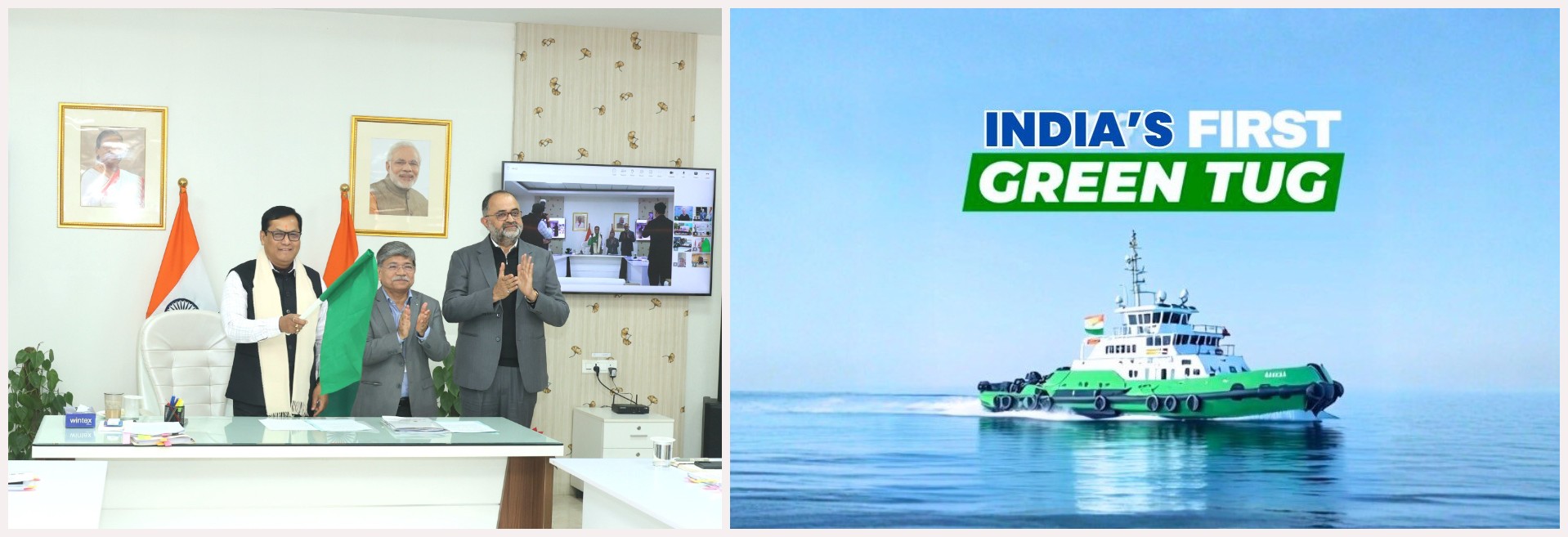
NEW DELHI/GANDHIDHAM: The Union Minister for Ports, Shipping and Waterways (MoPSW), Sarbananda Sonowal virtually flagged off the steel-cutting ceremony for India’s first all-electric green tug, marking a major milestone in the country’s shift toward sustainable and energy-efficient maritime operations. The tug, designed for Deendayal Port Authority (DPA) in Kandla, is being developed under the Ministry of Ports, Shipping and Waterways’ Green Tug Transition Programme (GTTP), a flagship initiative aimed at accelerating India’s maritime decarbonisation efforts.

The ceremony was attended virtually by Minister of State for Ports, Shipping and Waterways Shantanu Thakur; Secretary, MoPSW, Vijay Kumar, IAS; DPA Chairman Sushil Kumar Singh, IRSME; senior officials of DPA Kandla; representatives from Netincon and Ripley; technical experts from Kongsberg; and engineers from Atreya Shipyard, which is undertaking the tug’s construction.

Speaking at the event, Sonowal said that the launch of the country’s first all-electric green tug reflects India’s strong commitment to clean energy integration in the maritime sector. Sonowal emphasised that the project aligns closely with Prime Minister Narendra Modi’s vision of sustainable development, technological innovation and global leadership in green maritime capabilities.

“This milestone reinforces India’s determination to move toward a cleaner and more sustainable maritime future,” Sarbananda Sonowal said. “Under the dynamic leadership of Prime Minister Shri Narendra Modiji, India has embraced an ambitious roadmap for green growth. The Prime Minister has consistently championed environmental stewardship, energy transition and future-ready infrastructure. Today’s steel-cutting ceremony is a direct reflection of his commitment to building a greener, stronger and self-reliant maritime ecosystem.”

Sonowal added that the Prime Minister’s vision for a “Viksit Bharat” places maritime advancement at the heart of India’s economic transformation. “Prime Minister Modi has shown how innovation can drive national progress. The all-electric green tug is a shining example of how India is translating his vision into tangible, world-class assets that will serve our ports, protect our environment and elevate our global standing,” Sonowal said.

The new green tug for DPA will feature a 60-ton bollard pull capacity, ensuring silent operations, zero carbon emissions and optimised energy efficiency. Officials said the tug will set a benchmark for next-generation fleet modernisation across India’s major ports. The tug’s electric propulsion system, advanced navigation features and low-maintenance design are expected to significantly reduce operational costs and carbon intensity.

The GTTP, launched by the Ministry of Ports, Shipping and Waterways, aims to induct 50 green tugs by 2030, with 16 to be deployed in the first phase between 2024 and 2027. In Phase 1, two green tugs each will be stationed at DPA, Paradip Port Authority, Jawaharlal Nehru Port Authority and V.O. Chidambaranar Port Authority. One tug each will be deployed at the remaining eight major ports. Officials said that four major ports — DPA, VPA, JNPA and VoCPA — have already awarded work orders for induction of one tug each, with DPA becoming the first port to formally initiate construction.

Sonowal noted that DPA’s leadership in operationalising the GTTP demonstrates how Indian ports are moving decisively toward clean-energy solutions. “DPA’s initiative shows the world that India is serious about green ports and sustainable maritime logistics. This is not just a technological upgrade but a transformational step forward,” the Union Minister said.

The Minister also highlighted that the Make in India and Make for the World pillars continue to guide port modernisation efforts. He said the construction of this green tug at Atreya Shipyard supports India’s shipbuilding ecosystem and strengthens domestic manufacturing capabilities. “This tug is not only for India’s ports but for the world to see what India can build. It embodies our ambition to become a global hub for maritime innovation,” Sonowal said.

Officials from DPA explained that the tug’s construction schedule places India at the forefront of adopting electric propulsion for port operations. Once deployed, the tug will support harbor manoeuvring, escorting and emergency response activities, all with zero emissions. The project is expected to generate valuable data and operational insights that will contribute to future phases of India’s green tug expansion.

The Green Tug Transition Programme is one of the ministry’s flagship sustainability initiatives and supports India’s commitments under international decarbonisation frameworks. It also aligns with the Maritime India Vision 2030 and Amrit Kaal commitments outlined by the Prime Minister.

Sonowal concluded by saying that India’s progress in green maritime technology reflects a collective national effort inspired by the Prime Minister’s leadership. “Every innovation we undertake today is building the maritime foundation of a Viksit Bharat. Prime Minister Modi has given us the courage to think big and act decisively. This green tug is just the beginning of a new era for India’s ports,”Union Minister Sarbananda Sonowal said.

Russian President Putin to visit India for 23rd India-Russia Annual Summit

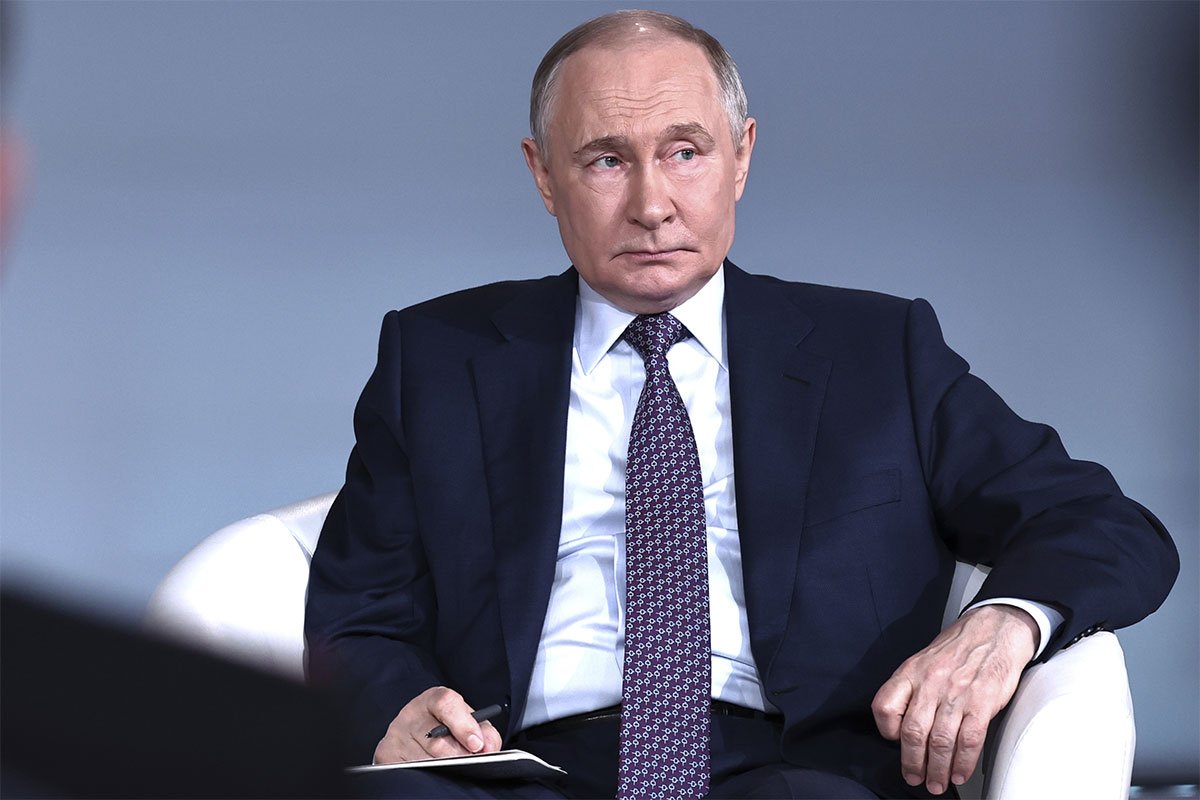
NEW DELHI: President of Russia Vladimir Putin will arrive in New Delhi today on a state visit to India for the 23rd India-Russia Annual Summit.

During the two-day visit, President Putin will hold talks with Prime Minister Shri Narendra Modi tomorrow. Both leaders will exchange views on regional and global issues of mutual interest.

A number of agreements are expected to be signed, including in areas related to trade, economy, healthcare, academics, culture and media. 

President Droupadi Murmu will also receive the Russian President and host a banquet in his honour. The visit will provide an opportunity for the leadership of India and Russia to review progress in bilateral relations, set the vision for strengthening the ‘Special and Privileged Strategic Partnership’.

The Annual Summit between the Prime Minister of India and the President of Russia is the highest institutionalised dialogue mechanism in the strategic partnership between India and Russia. So far, 22 Annual Summits have taken place alternatively in India and Russia.

Russia has been a longstanding and time-tested partner for India. The development of India-Russia relations has been a key pillar of India’s foreign policy.   

Since the signing of the “Declaration on the India-Russia Strategic Partnership” in October 2000, India-Russia ties have acquired a qualitatively new character with enhanced levels of cooperation in almost all areas.

During the visit of the Russian President to India in December 2010, the Strategic Partnership was elevated to the level of “Special and Privileged Strategic Partnership.”

Intensifying trade and economic relations has been identified as a priority area with a target of increasing bilateral trade to 100 billion dollars by 2030. Bilateral trade between India and Russia reached a record high of 68.7 billion dollars in 2024-25. 

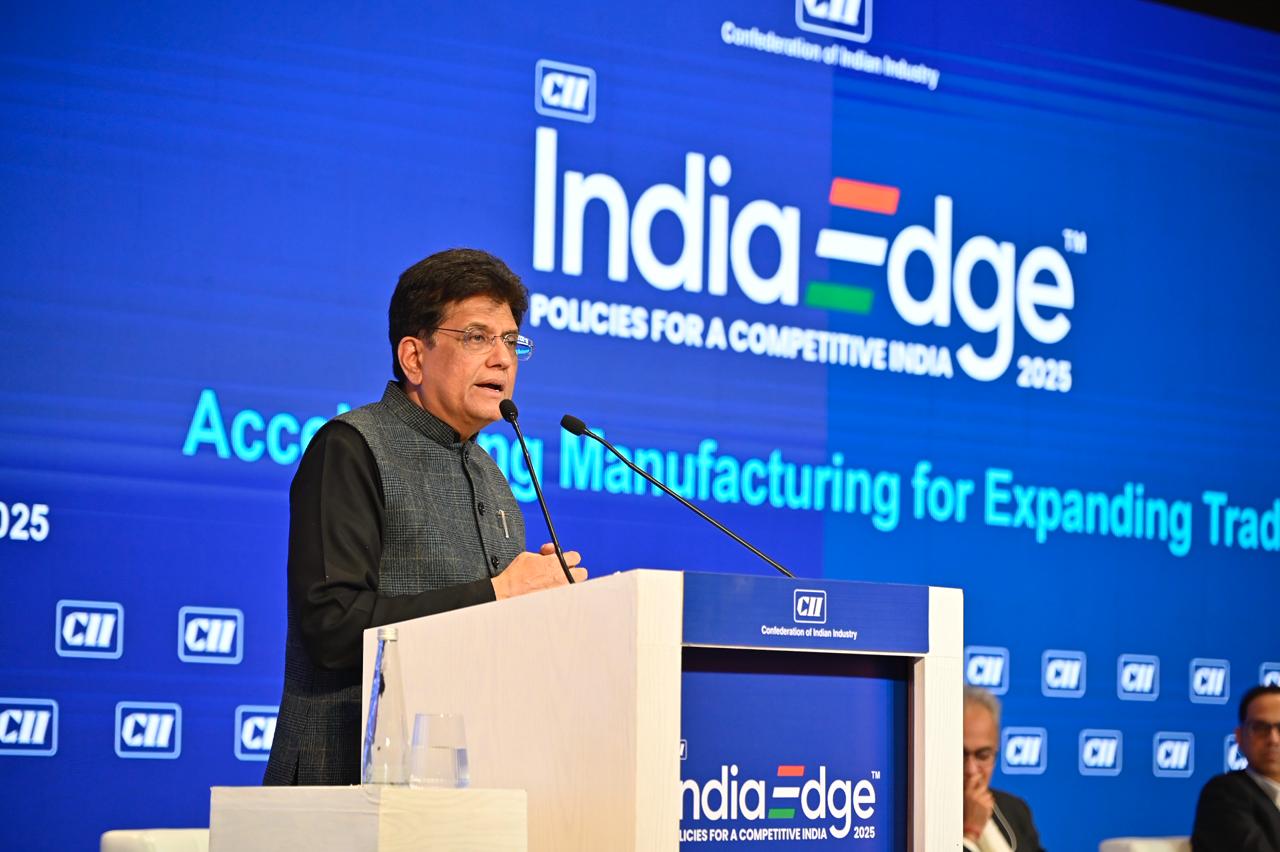
Innovation and Efficiency Key to Strengthening India’s Manufacturing Sector: Piyush Goyal

NEW DELHI: The Union Minister of Commerce and Industry Shri Piyush Goyal highlighted the importance of innovation, quality, design, sustainability and efficiency as key drivers of India’s manufacturing competitiveness while addressing the IndiaEdge event organised by the Confederation of Indian Industry (CII) in New Delhi on Wednesday.

Shri Goyal said that the Government, under the leadership of Prime Minister Shri Narendra Modi, is working with a clear vision to support the country’s economic progress. He referred to recent growth trends across agriculture, services and manufacturing, and pointed out that India’s manufacturing output has diversified into newer areas such as electronics, white goods, chemicals and petrochemicals.

The Minister highlighted the need for industry to remain competitive and responsive to global developments. He said that recent disruptions have underscored the importance of resilient supply chains and cautioned against overdependence on specific geographies. He emphasised the need to identify areas where domestic capacity and greater control over supply chains are essential.

Shri Goyal stated that industry collaboration is vital for expanding manufacturing output and noted that growth in manufacturing will further accelerate growth in services. He added that as India strengthens its presence in global markets, it must simultaneously remain open to competitive practices within the domestic economy.

The Minister observed that several States, including Uttar Pradesh and Odisha, have recorded rapid progress in recent years, resulting in increased local opportunities and reduced migration. He encouraged industry to provide suggestions on simplifying procedures, improving regulatory systems and strengthening the manufacturing environment. He noted ongoing Government efforts to ease compliance, remove obsolete provisions and modernise legal frameworks, including the introduction of the four Labour Codes. He said that 23 States have framed corresponding rules and that the Codes will enhance formalisation, ensure minimum wages and strengthen social security and workplace safety.

Shri Goyal underlined the importance of timely payments to MSMEs and said that prompt clearing of dues would significantly ease cash flow constraints and support MSME productivity and growth.

The Minister also emphasised the long-standing national focus on Swadeshi and self-reliance, noting their relevance in strengthening domestic manufacturing capabilities. He said that collective efforts of industry and Government will be essential in advancing the vision of Atma Nirbhar Bharat and achieving the national goal of Viksit Bharat 2047.

“India’s economy is on strong footing…”: Piyush Goyal on depreciation of Rupee against US Dollar

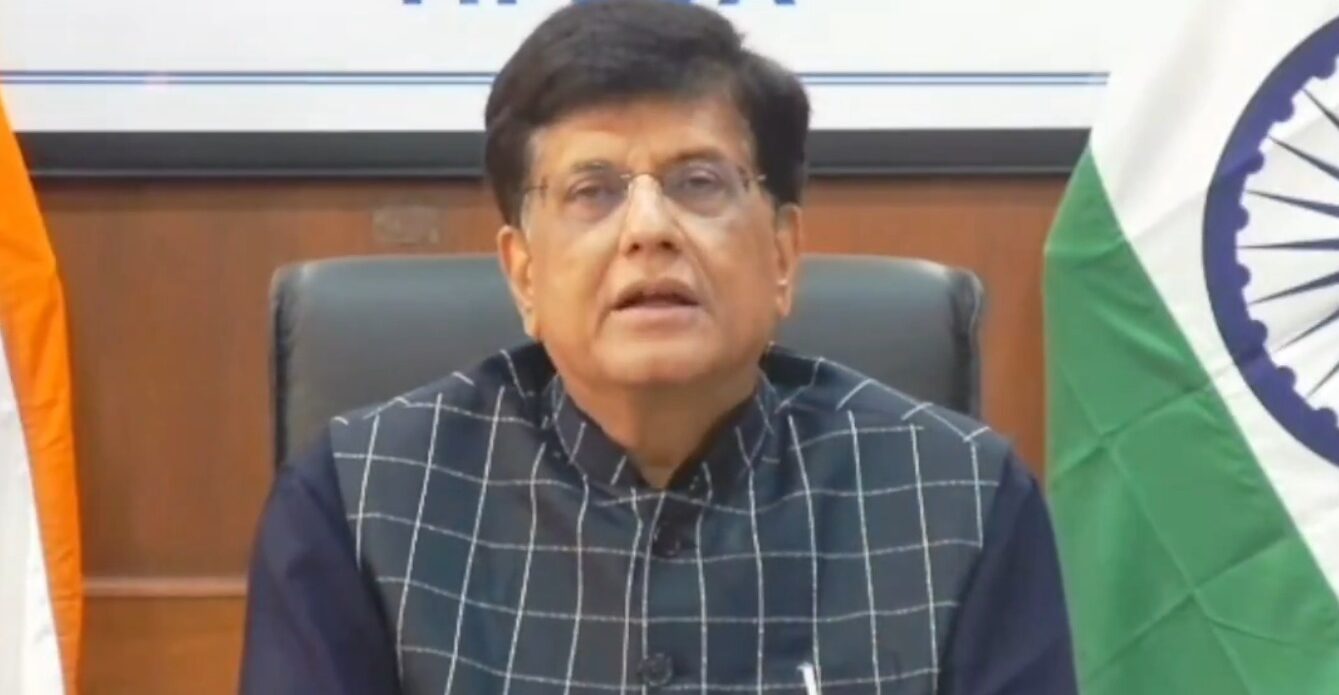
NEW DELHI: Union Commerce and Industry Minister Shri Piyush Goyal on Wednesday said the Indian economy remains on a solid footing, saying the country has seen the lowest-ever inflation in the last few months and foreign exchange reserves continue to be strong.

He said capital inflows, consumer spending, and various economic levers have demonstrated considerable positivity.

Goyal, who was answering a query on the depreciation of the rupee against US dollar, said the Indian economy continues to power on.

“Growth is at 8.2% even in Q2, beating all estimates. We have seen the lowest-ever inflation in the last few months. Foreign exchange reserves continue to be strong. Capital inflows and investments in infrastructure, consumer spending, all the levers of the economy have demonstrated a great deal of positivity. Merchandise exports are also on a strong wicket…If I aggregate October and November, there is growth in merchandise exports despite the global turmoil,” he said.

“This only goes to show that the economy is on a strong footing. We are working towards deeper integration with global trading partners, and in the months and days to come, you will hear a lot more about our own successful engagements with many of our trading countries,” he added.

The Indian rupee plunged to an all-time low against the US dollar on Wednesday, crossing the psychologically significant 90 mark amid foreign fund outflows.

The development came amid firm crude oil prices and perceived uncertainty around the India-US trade deal.

The Indian Rupee has been among the poorest-performing Asian currencies in 2025, falling by about 4-5 per cent.

Experts highlighted some sectors that could benefit from the plunging Rupee.

Sunny Agrawal, Head, Fundamental Research at SBI Securities, said, export-dependent sectors like Shrimp, Textile, IT, Pharma, Engineering, Metals, and Auto can benefit from the falling Rupee.

However, import-dependent sectors such as FMCG, Plastic polymers, Oil and Gas are expected to face cost pressure, he added.

India’s Chief Economic Advisor V Anantha Nageswaran downplayed concerns over the rupee weakening past 90 against the US dollar, asserting that the currency’s movement remains within manageable limits and has not created macroeconomic stress.

“I am not losing my sleep over it,” he told reporters on the sidelines of a CII summit, emphasising that the current level of depreciation has neither stoked inflationary pressures nor undermined India’s export momentum. “Right now it’s not hurting our exports or inflation,” he said.

Source: ANI