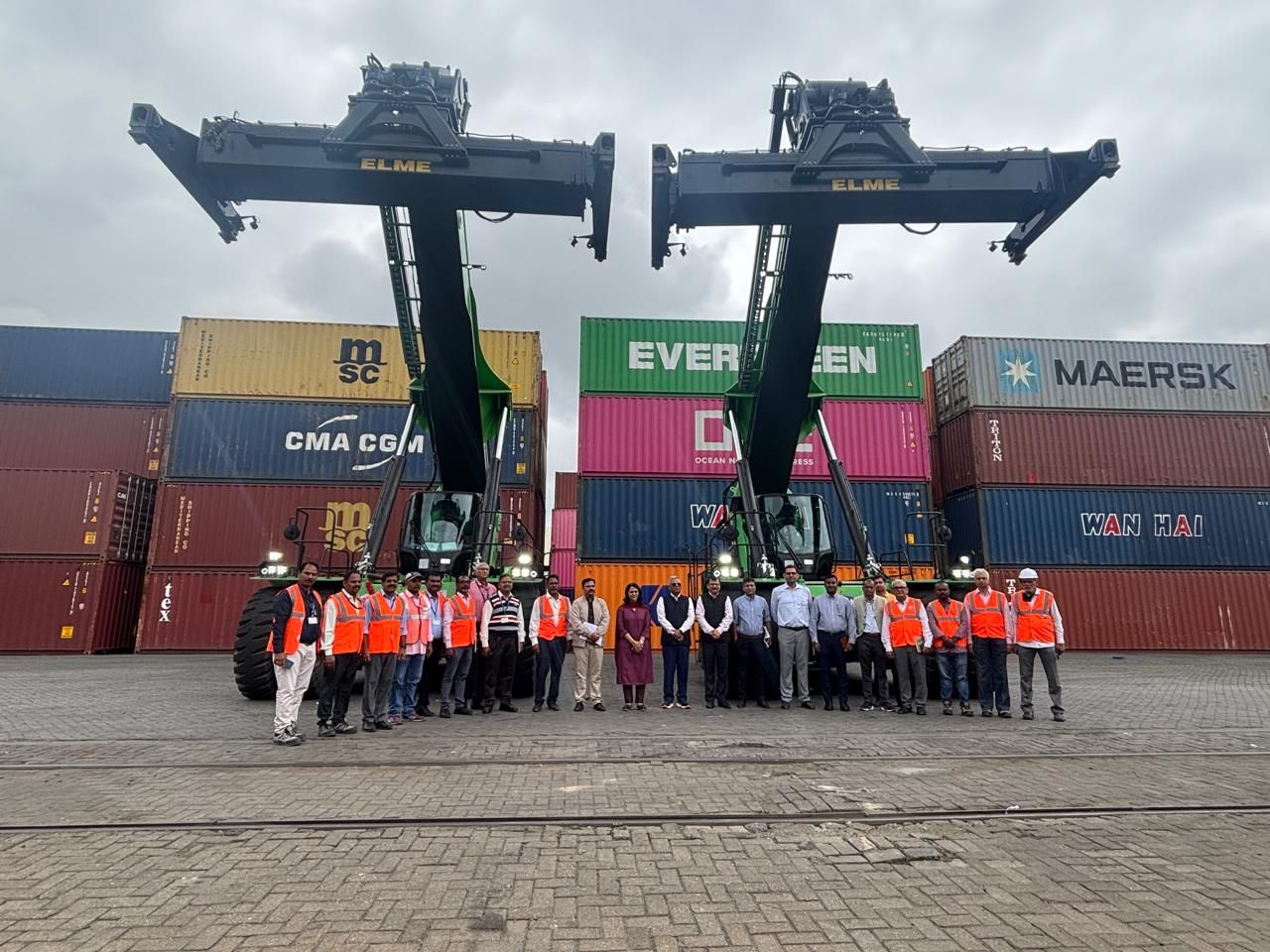
BENGALURU: In a significant stride toward sustainable logistics transformation, Container Corporation of India Ltd. (CONCOR) has commissioned two state-of-the-art Electric Reach Stackers (eRSTs) at Inland Container Depot (ICD), Whitefield, Bengaluru. The initiative reinforces CONCOR’s strong commitment to delivering clean, energy-efficient, and future-ready logistics solutions for the nation.
The inauguration took place in the esteemed presence of Shri Sanjay Swarup, Chairman & Managing Director, CONCOR, along with senior officials and key stakeholders from the logistics ecosystem.
The introduction of eRSTs marks a major leap in CONCOR’s decarbonization drive within the EXIM (export-import) logistics chain. By leveraging advanced electric container-handling equipment, CONCOR aims to significantly reduce carbon emissions while enhancing operational productivity and service reliability at its critical freight terminals.
Key Highlights of the Initiative:
Adoption of cutting-edge Electric Reach Stackers designed for high-performance green container handling
Substantial reduction in energy consumption and greenhouse gas emissions
Strengthening of sustainable multimodal logistics capabilities across the region
Speaking on the occasion, Shri Sanjay Swarup emphasized that sustainability and innovation remain at the heart of CONCOR’s growth vision. “We are committed to boosting efficiency while minimizing environmental impact. With the eRST deployment, we continue to set new benchmarks for green terminal operations in India,” he said.
With this initiative, CONCOR reiterates that operational excellence and sustainability move hand-in-hand, as it continues advancing India’s logistics future with greener, smarter, and more efficient solutions.
NEW DELHI: Russia has been a longstanding and time-tested partner of India. Since the signing of the “Declaration on the India-Russia Strategic Partnership” in October 2000, India-Russia ties become more tighten and subsequently elevated to the level of a “Special and Privileged Strategic Partnership. India and Russia continue to nurture their Special and Privileged Strategic Partnership through intensive and multi-layered political engagements. The highest institutionalized mechanism remains the Annual Summit between the Prime Minister of India and the President of the Russian Federation and so far, 22 summits completed. The Russian delegation led by President of the Russian Federation H.E. Mr. Vladimir Putin is visiting India during 04 – 05 December 2025 for the 23rd India-Russia Annual Summit.
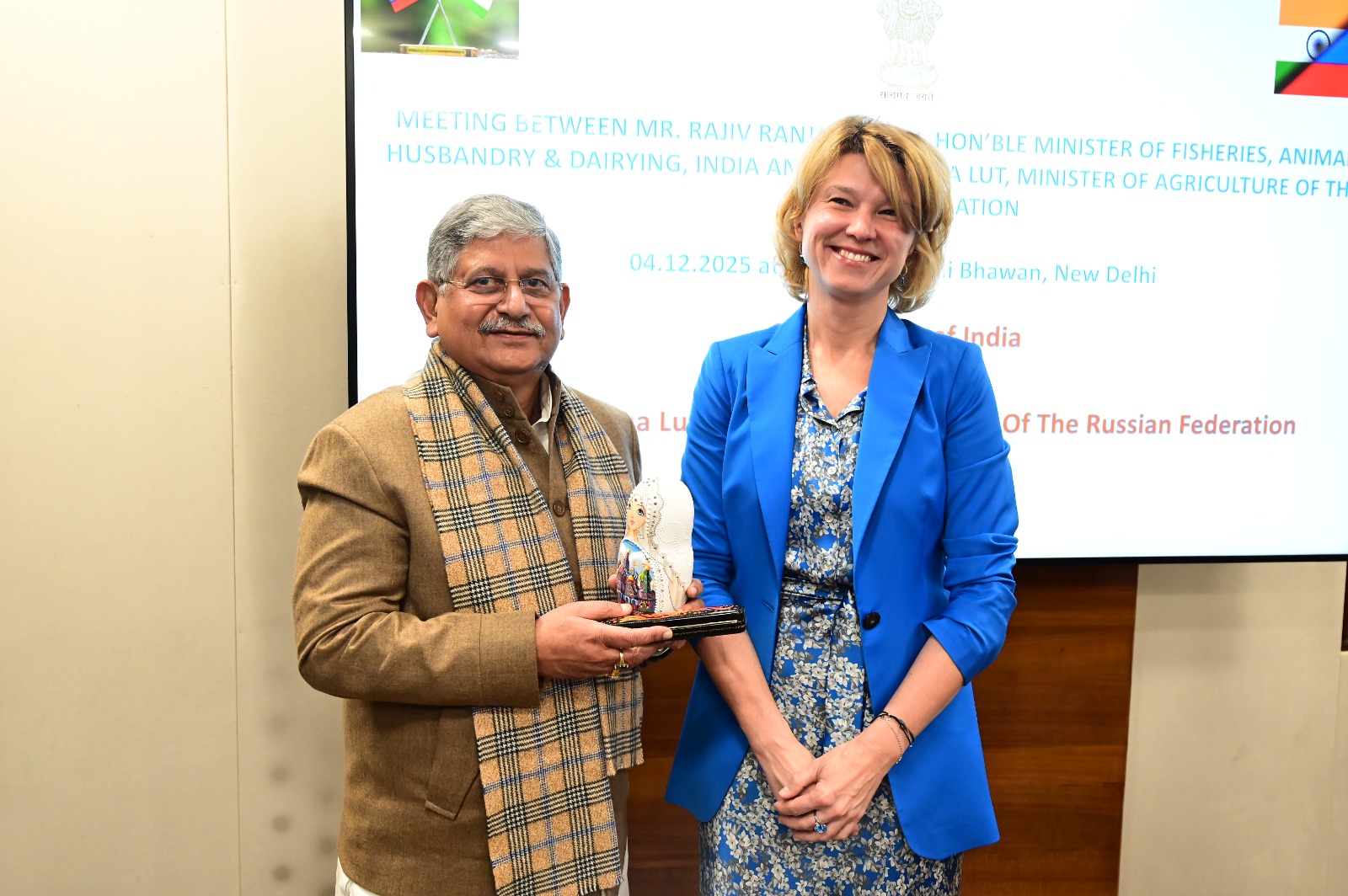
On the side lines of the 23rd India-Russia Annual Summit, Hon’ble Minister of Fisheries, Animal Husbandry & Dairying, Government of India, Mr Rajiv Ranjan Singh alias Lalan Singh held a bilateral meeting with H.E. Ms. Oxana Lut, Minister of Agriculture of the Russian Federation, at Krishi Bhawan, New Delhi today. During the meeting, both the sides discussed expanding mutual trade in fisheries, animal & dairy products, resolving market access issues, and fast-tracking establishment listings for exports. The discussions also focused on collaboration in research, education & emerging aquaculture technologies, including deep-sea fishing vessels, aquaculture emerging technologies and processing.
Hon’ble Minister of FAHD, Government of India emphasized that India exported fish and fishery products worth USD 7.45 billion in 2024-25, including USD 127 million to Russia. He underlined the potential to diversify exports to Russia with products such as shrimp, prawns, mackerel, sardines, tuna, crab, squid, and cuttlefish. Russian side expressed readiness to take products from India, including fish and fishery products, meat and meat products, and showed interest in developing the trout market through a joint technical project that could lead to joint ventures.
He thanked Russia for listing 19 Indian fisheries establishments on the FSVPS platform recently making the total listed Indian establishments to 128 and requested to expedite listing of pending establishments, regular updates of activity details, and revocation of temporary restrictions. He also urged early approvals for Indian entities in dairy, buffalo meat, and poultry sectors, and assured full cooperation from the Indian side in this regard.
For export of butter and dairy products, Hon’ble Minister of FAHD, Government of India specifically mentioned that 12 Indian manufacturing companies of dairy products, including our renowned AMUL/ Gujarat Cooperative Milk Marketing Federation (GCMMF), are awaiting registration with the FSVPS. He requested Russian side to consider approving these establishment for listing in FSVPS.
Hon’ble Minister of FAHD, Government of India further emphasized on cooperation for mutual trade in the fisheries sector for fisheries products, technology transfer for deep-sea fishing vessels, and adoption of advanced aquaculture technologies including Recirculating Aquaculture Systems (RAS) and Biofloc, as highlighted by Union Secretary of India Dr. Abhilaksh Likhi. He stressed the need for capacity building in deep-sea fishing, on-board processing, and value addition, along with collaboration in aquaculture and emerging technologies. Both sides agreed to work on coldwater fisheries including trout, genetic improvement in fisheries and aquaculture.
It was highlighted that cooperation in fisheries, animal husbandry and dairying research and development would be mutually beneficial, as both the sides may get opportunities to take advanced research in these sectors, promoting innovation and strengthening food security. To achieve this, exchange of expertise, including officials, researchers, and students would be taken up by both the sides.
India proposed for creation of a structured mechanism to advance in these areas to strengthen the cooperation through a Memorandum of Understanding (MoU) and requested Russian side to finalize and facilitate signing of the draft MoU already shared with the Russian side.
H.E. Ms. Oxana Lut informed about Russia’s readiness to cooperate in fisheries, animal husbandry and dairy sectors building on the successful history of agricultural collaboration. She noted that some items are manufactured in Russia and some in India, and the products which Russia needs, can be supplied by India and the products which India needs can be supplied by Russia to India for strengthening mutual trade. She stressed upon the fact that India is the second top exporter of shrimp to Russia. She also emphasised for a comprehensive framework for closer ties.
She also emphasized that Russia would like to have cooperation with India in veterinary vaccine development, equipment manufacturing, and animal disease management. She stressed upon further cooperation at the level of Universities, research and development institutes from both the sides and such cooperation will be further strengthen by collaborative courses, exchange of students, academia, scientists for innovation and advance technologies.
Hon’ble Minister of FAHD, Government of India concluded the meeting thanking the Russian delegation with great hope that our historic friendship will be further deepen bringing both the countries more closer to achieve the goals set by Hon’ble Prime Minister of India and H.E. President of Russian Federation.
The high-level meeting was attended by Dr. Abhilaksh Likhi, Union Secretary, Department of Fisheries (DoF), GoI; Mr. Naresh Pal Gangwar, Union Secretary, Department of Animal Husbandry and Dairying (DAHD),GoI, Ms. Varsha Joshi, Additional Secretary, DAHD, Mr. Rama Shankar Sinha, Additional Secretary, DAHD, Shri Sagar Mehra, Joint Secretary, DoF, Ms. Neetu Kumari Prasad, Joint Secretary DoF, Dr. Muthukumaraswamy B, Joint Secretary, DAHD, Dr. Praveen Malik, Animal Husbandry Commissioner, DAHD, Dr. J.K Jena, Deputy Director General (Fisheries Science), ICAR, Mr..D V Swamy, Chairman, Marine Product Export Development Authority.Dr. K. Mohamad Koya, Fisheries Development Commissioner, DoF along with senior officials of the Department of Fisheries and Department of Animal Husbandry and Dairying, GoI and Export Inspection Council of India.
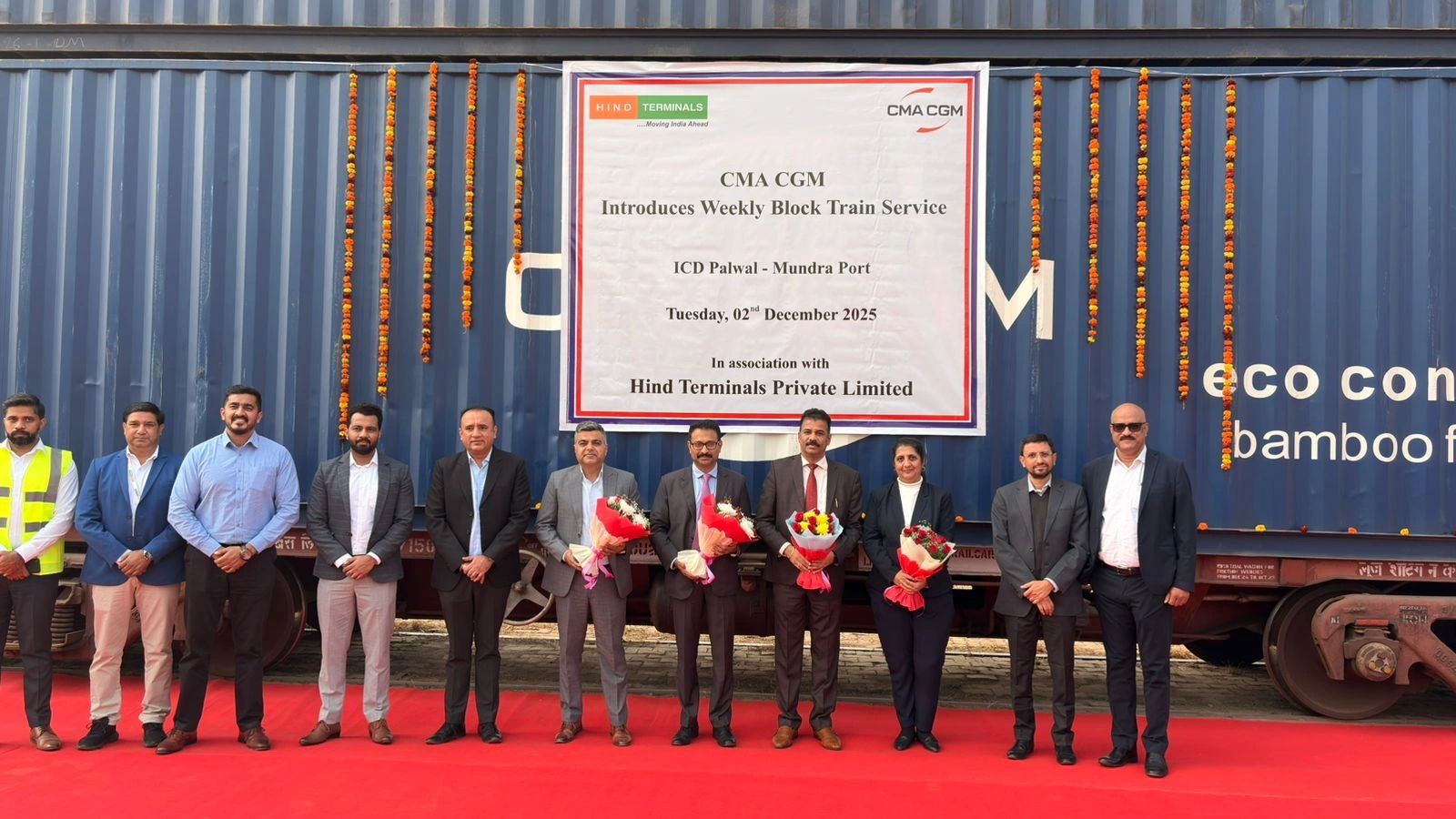
HARYANA: CMA CGM in association with Hind Terminals Private Ltd. has flagged off the latest addition to its North India–Mundra rail network with a dedicated weekly export block train from ICD Palwal — marking the company’s seventh such weekly service connecting the region to Mundra Port.
The train operates in a double-stack configuration to enhance capacity and efficiency in export cargo movement. The fixed-schedule service offers exporters more predictable transit, reduced dependence on road haulage, and improved alignment with vessel schedules at Mundra.
This initiative reinforces CMA CGM’s growing multimodal logistics strategy, providing a seamless rail-to-port link for shippers across the NCR and adjoining industrial clusters. By encouraging a greater shift from road to rail, the service supports sustainability goals through lower emissions and reduced corridor congestion.
CMA CGM continues to scale integrated transport solutions aimed at driving efficiency, cost-effectiveness, and reliability across India’s export supply chain.
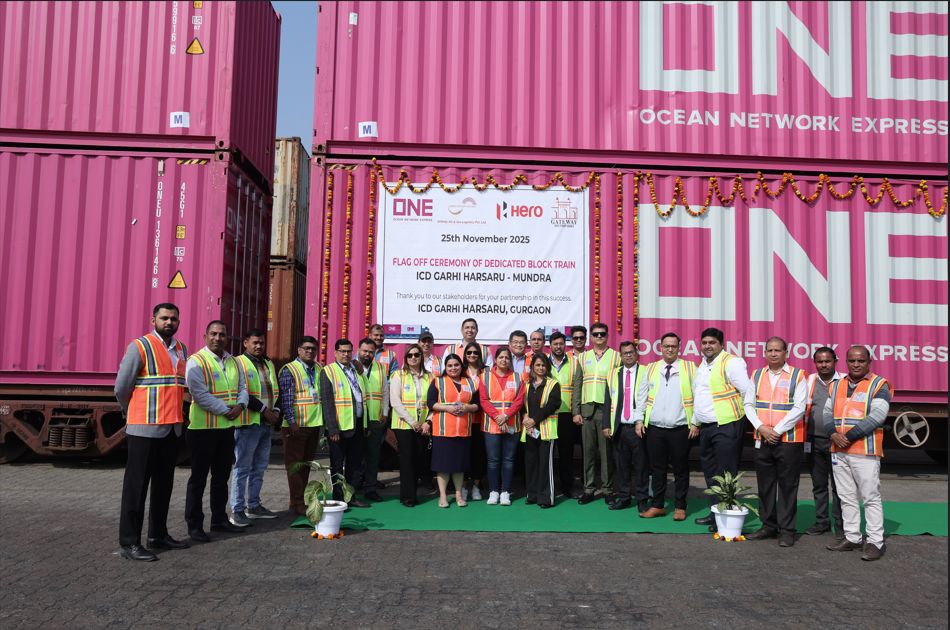
GURUGRAM: In a significant boost to India’s automotive export supply chain, Ocean Network Express (ONE) and Gateway Distriparks Limited (GDL) have jointly flagged off a dedicated export block train from Gurgaon’s Inland Container Depot (ICD) Garhi Harsaru to Mundra Port.
The new service is designed to streamline export logistics for automotive manufacturers and their ancillary suppliers, ensuring faster, more reliable, and end-to-end connectivity to one of India’s largest container ports.
This collaborative initiative reinforces the operational efficiencies developing across the northern logistics corridor and highlights the growing importance of multimodal transportation in supporting India’s expanding export ecosystem.
Officials from both ONE and GDL emphasized that the service marks a key milestone in enabling an agile supply chain for automotive exports while promoting customer-centric logistics solutions.
The launch also reflects strong stakeholder coordination at ICD Garhi Harsaru, showcasing the combined commitment of logistics partners toward enhancing service reliability and strengthening India’s global trade competitiveness.
NEW DELHI: The government on Tuesday (2 December) informed the Rajya Sabha that 78 projects under the Sagarmala programme have been completed, while over 40 projects are currently under implementation across coastal States and Union Territories.
According to the Ministry of Ports, Shipping and Waterways, a total of 124 projects have been sanctioned for funding under the Sagarmala scheme so far.
The ministry stated that the combined cost of these sanctioned projects is Rs 8,670 crore, with the Centre committing Rs 3,238 crore as the Ministry’s share.
Of this, Rs 2,838 crore has already been released to the states and implementing agencies.
According to state-wise data submitted by the ministry, 20 projects have been completed in Maharashtra, which has 33 sanctioned projects costing Rs 2,053 crore, with the Centre so far releasing Rs 774 crore against a share of Rs 835 crore.
In Tamil Nadu, 16 projects have been completed out of 24 sanctioned, with a total project cost of Rs 1,343 crore; the Centre has released Rs 477 crore against its share of Rs 564 crore.
In Gujarat, 5 projects have been completed out of 9 sanctioned, with the state receiving Rs 483 crore from the Centre out of a share of Rs 558 crore.
In Andhra Pradesh, 7 projects have been completed from a sanctioned set of 9 projects costing Rs 1,287 crore, with the Centre releasing Rs 261 crore.
In Goa, 9 projects have been completed out of 11, with a total cost of Rs 757 crore, and Rs 158 crore released.
Karnataka has 4 completed projects out of 8 sanctioned, involving Rs 491 crore in total cost, with Rs 128 crore released.
Kerala has 6 completed projects from 9 sanctioned, with a total cost of Rs 330 crore, and Rs 101 crore released by the Centre.
One project has been completed in Odisha, which has 6 sanctioned projects costing Rs 350 crore, with Rs 111 crore released.
One project has been completed in Puducherry, which has 2 sanctioned projects costing Rs 30 crore, with Rs 30 crore released.
Eight projects have been completed in West Bengal out of 10 sanctioned, with a total cost of Rs 643 crore, and Rs 280 crore released.
In the Andaman & Nicobar Islands, one project has been completed from 3 sanctioned, costing Rs 46 crore, with Rs 35 crore released.
The Sagarmala Programme, launched in March 2015, is the flagship initiative of the Ministry of Ports, Shipping, and Waterways, aimed at revolutionising India’s maritime sector.
With a 7,500 km coastline, 14,500 km of potentially navigable waterways, and a strategic position on key global trade routes, India holds immense potential for port-led economic growth.
Sagarmala aims to streamline logistics, reduce costs, and enhance international trade competitiveness by shifting from traditional, infrastructure-heavy transport to efficient coastal and waterway networks.
The programme focuses on port modernization, industrial growth, job creation, and sustainable coastal development, ensuring minimal infrastructure investment while maximizing economic impact.
The Sagarmala Programme is a key pillar of the Maritime Amrit Kaal Vision 2047 (MAKV), driving India’s ambition to become a global leader in maritime affairs.
Building on Maritime India Vision 2030, MAKV sets ambitious targets, including 4 million GRT of shipbuilding capacity and 10 billion metric tons of port handling annually, aiming to position India among the top five shipbuilding nations by 2047.
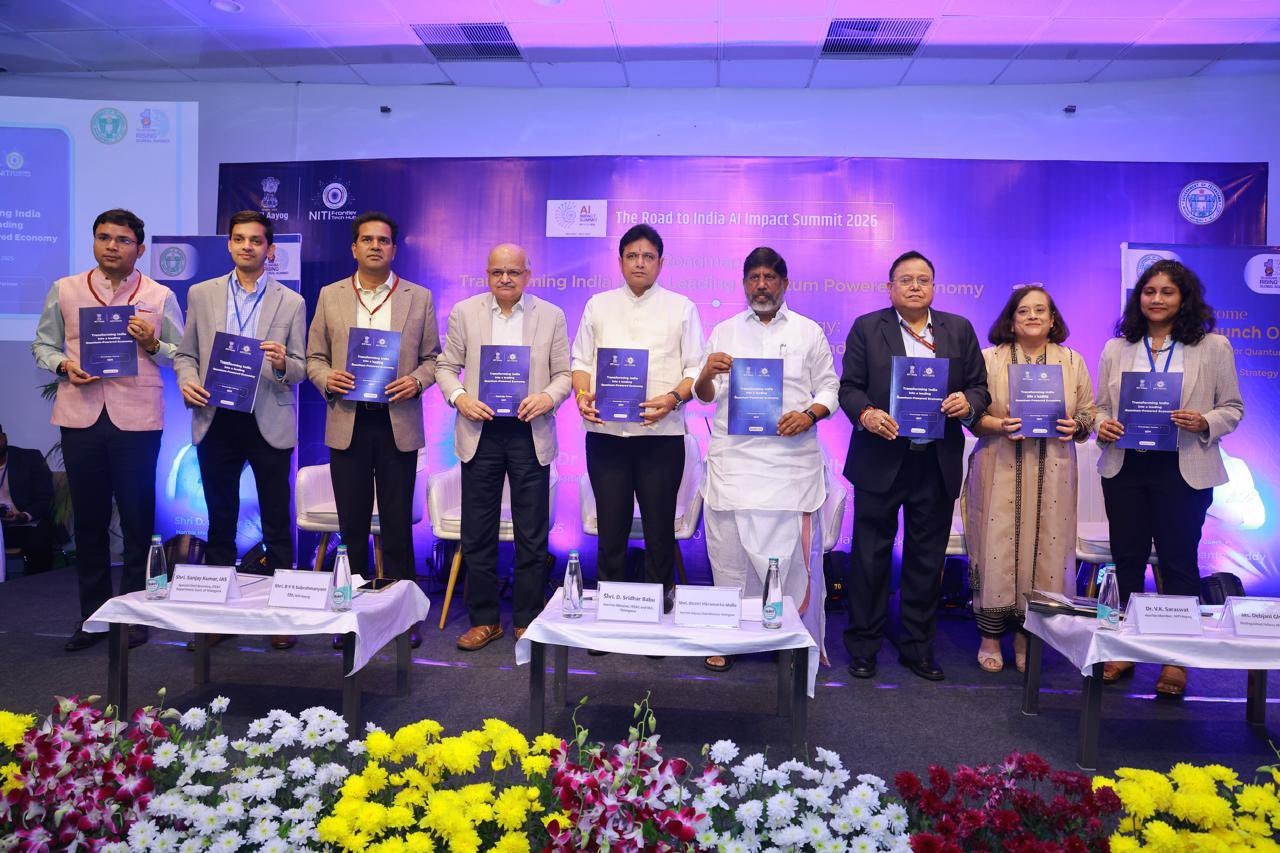
NEW DELHI: NITI Aayog’s Frontier Tech Hub Thursday released a Roadmap on Transforming India into a leading Quantum-Powered Economy. The roadmap was unveiled by Shri Mallu Bhatti Vikramarka, Deputy Chief Minister of Telangana; Shri D. Sridhar Babu, Minister of IT, Telangana; Dr. V.K. Saraswat Member, NITI Aayog; Shri B.V.R. Subrahmanyam, CEO, NITI Aayog; Ms. Debjani Ghosh, Distinguished Fellow, NITI Aayog and other distinguished guests and dignitaries.
Quantum technologies stand at the threshold of becoming one of the most transformative forces of our time. Their impact will cut across sectors, redefining healthcare, finance, logistics, materials, energy and national security. The nations that act decisively today will not only command the next generation of computing, communication, and sensing capabilities, but will also shape the very architecture of global innovation and trust.
For India, the promise of quantum goes far beyond technology. It represents the opportunity to redefine our place in the world — to lead in a frontier domain from the outset, rather than catching up after others have set the rules. Quantum is not just another sector of innovation; it is the foundation upon which the next era of artificial intelligence, biotechnology, advanced materials, and secure digital infrastructure will be built.
The roadmap published by NITI Aayog lays out clear imperatives and actionable pathways for realizing this vision by leveraging the existing National Quantum Mission. It provides a comprehensive analysis of India’s current position, strategic strengths, and critical gaps, and identifies key interventions to accelerate R&D, commercialization, and ecosystem development. The roadmap emphasizes collective ownership—across policymakers, scientists, entrepreneurs, investors, and states—to build a globally trusted and competitive quantum economy.
“Quantum computing represents a turning point where technology moves beyond speed and scale and begins to solve problems once believed impossible, from drug discovery and climate modelling to national security and advanced materials. In just a few years, global commitment to quantum has grown more than tenfold, showing that this field is no longer experimental, but inevitable. Telangana enters this moment with intention and preparation. We are building deep research capabilities, nurturing skilled talent, and creating pathways for industry to innovate and deploy. Our goal is not merely adoption, it is participation and leadership in shaping the quantum future,” said Shri D. Sridhar Babu, Minister for Information Technology, Electronics & Communications, Industries & Commerce, Government of Telangana.
“Quantum technologies are rapidly emerging as a strategic driver of economic growth, national security, and scientific discovery. For India to achieve developed nation status by 2047, we must integrate quantum computing, secure communication, precision sensing, and advanced materials into key national missions and industrial sectors. The National Quantum Mission has enabled important early progress, and this roadmap highlights the milestones required to expand capability, develop specialized talent, and build globally competitive platforms. With the right investments and coordination, India can secure a resilient digital future and establish a differentiated position in the global quantum landscape,” said Dr. V.K. Saraswat, Member, NITI Aayog.
“The coming five years will decide whether India becomes a global supplier of quantum technologies — or a consumer dependent on others. We must combine our unmatched talent base, engineering depth, and digital public infrastructure to build a quantum-powered India: one that is trusted globally, competitive economically, and secure strategically. By working in partnership and acting with urgency, we can reduce technology dependencies and build globally trusted platforms that reflect India’s innovation strengths,” said Shri B.V.R. Subrahmanyam, CEO, NITI Aayog.
“Global competition in quantum is intensifying, and leadership will depend on the ability to develop exportable solutions, shape technical standards, and build secure value chains. This roadmap underscores the need to expand our research infrastructure, streamline innovation-to-market pathways, and cultivate talent at scale. By investing early and building global partnerships, we can establish India as the trusted quantum partner for the Global South and beyond,” said Ms. Debjani Ghosh, Distinguished Fellow, NITI Aayog.
The Roadmap for Transforming India into a leading Quantum-Powered Economy was developed by NITI Aayog’s Frontier Tech Hub, in collaboration with IBM, with guidance from an Expert Council of leaders from industry and academia. The launch saw keen participation from government officials, industry members and development partners, underscoring a collective resolve to advance India’s leadership in Quantum-Powered Economy.
The NITI Frontier Tech Hub is an action tank for Viksit Bharat. In collaboration with over 100 experts from government, industry, and academia, it is shaping a 10-year roadmap across 20+ key sectors to harness frontier technologies for transformative growth and societal development. By empowering stakeholders nationwide and driving collective action, the Hub is instilling urgency to act today, laying the foundation for a prosperous, resilient, and technologically advanced India by 2047.
NEW YORK: Fitch Ratings has revised India’s FY26 growth forecast upward to 7.4 percent, from 6.9 percent earlier, citing stronger-than-expected momentum in private consumption.
“Private consumer spending is the main driver of growth this year, supported by strong real income dynamics, increased consumer sentiment, and the impact of recently implemented goods and services tax reforms,” the agency said on December 4.
The upgrade follows India’s 8.2 percent GDP expansion in the second quarter—the fastest pace in six quarters.
For FY27, Fitch expects growth to ease to 6.4 percent, closer to its estimate of potential, with domestic demand—particularly consumer spending—remaining the key driver. Public investment growth is likely to moderate, while private investment should pick up in the second half of FY27 as financial conditions loosen, it said.
Growth is projected to soften further to 6.2 percent in FY28 as higher imports offset slightly stronger domestic demand.
Fitch also highlighted external risks, noting that India faces one of the highest effective tariff rates on its exports to the US of around 35 percent. A trade agreement that lowers this burden would “boost external demand,” the agency said.
On prices, Fitch expects inflation to average 1.5 percent this fiscal year before rising to 4.4 percent in FY27. India’s consumer inflation fell to 0.3 percent in October. “Base effects will drive inflation above target by end-2026; we expect only a slight decline in 2027,” it added.
The agency said falling inflation should allow the Reserve Bank of India room for one more rate cut in December to 5.25 percent, following 100 basis points of cuts in 2025 and a reduction in the cash reserve ratio from 4 percent to 3 percent. With core inflation edging up and growth expected to remain strong, Fitch believes the RBI is at the end of its easing cycle and will keep rates steady over the next two years.
Economists caution that the rupee’s slide toward the 90-per-dollar mark has complicated the case for an immediate rate cut, especially after the strong second-quarter growth print. The RBI’s Monetary Policy Committee will announce its rate decision on December 5.
Fitch expects the rupee to strengthen next year to around 87 per dollar, compared with its earlier projection of 88.5 for 2025.
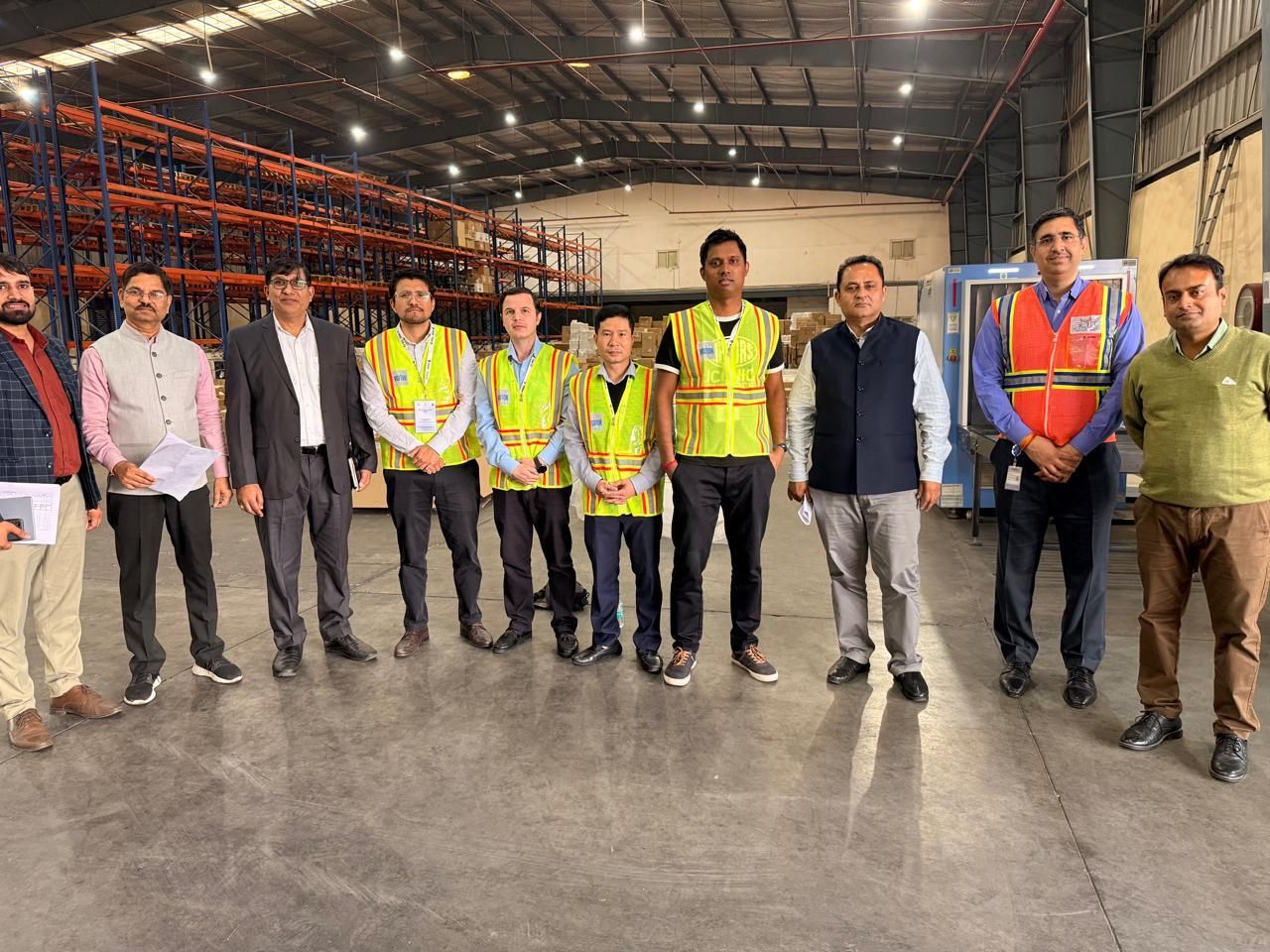
GURUGRAM: A high-level delegation from the World Customs Organization (WCO) visited the Inland Container Depot (ICD) Gurgaon, Garhi Harsaru, as part of their ongoing study tour to India aimed at exploring modern Customs procedures and trade facilitation measures.
Representatives from Jordan, Mauritius, Peru, and Vietnam, accompanied by officials from the Central Revenues Control Laboratory (CRCL) and Indian Customs, toured the facility to gain firsthand insight into the EXIM operations and regulatory frameworks implemented at one of India’s key inland logistics hubs.
During the visit, the delegation was briefed on the deployment of advanced technologies and digital systems that are driving efficiency and transparency at ICD Gurgaon. Demonstrations included Optical Character Recognition (OCR) systems for automated data capture, self-service kiosks to streamline documentation, container tracking through mobile applications, and the use of the NIGAH platform for enhanced cargo visibility.
Officials also showcased a range of tools and equipment utilised by Customs authorities to support faster, more secure cargo clearance, reflecting India’s commitment to a tech-enabled trade environment.
The interaction served as a platform to share best practices while highlighting India’s continuous efforts to strengthen ease of doing business in the export-import (EXIM) sector.
Management of Gateway Distripark Ltd.(GDL) expressed gratitude to the visiting dignitaries, acknowledging their valuable engagement and insights during the knowledge exchange.
MUMBAI: Credlix, the fintech arm of Moglix, has taken a majority stake in Vanik Finance, with an aim to infuse ₹80 crore. This marks a significant step in Credlix’s efforts to expand timely and accessible working capital solutions for India’s MSMEs and exporters.
Founded by Rahul Garg, Moglix has built one of India’s leading B2B commerce ecosystems. Through Credlix, the group is strengthening its financial services capabilities for manufacturers, suppliers, and exporters across industrial sectors. The majority stake in Vanik Finance enhances Credlix’s ability to offer a wider range of secured and unsecured lending products while maintaining a disciplined and customer-focused approach.
“This milestone helps us widen access to timely and reliable capital for MSMEs,” said Rahul Garg, Founder and CEO of Moglix and Credlix.“Our goal is to support the complete financial lifecycle of small and mid-sized businesses in a way that is simple, transparent, and aligned with their growth needs.”
For MSMEs, this translates to quicker access to funds, fewer intermediaries, and greater flexibility in managing cash flows. Vanik Finance will now operate fully under the Credlix brand, leveraging advanced analytics and digital underwriting to simplify credit decisions and accelerate turnaround times.
This development comes at a pivotal moment for India’s economy. MSMEs contribute nearly 30 percent of India’s GDP and about 45 percent of exports, highlighting their role in driving industrial growth. As the Make in India and Atmanirbhar Bharat programs advance, access to affordable finance remains one of the most important levers for strengthening India’s manufacturing base and export capacity.
Across India, business credit is evolving quickly. MSMEs today expect faster, cleaner and more predictable access to capital as they scale, manage cash cycles and invest in growth. Lenders are responding by moving toward smarter business-loan offerings that combine digital onboarding, bank-statement analytics, GST-based assessments and collateral-light structures.
The focus is on reducing documentation, improving transparency and enabling quicker sanctions so that manufacturers, traders and exporters can access working capital without friction. Credlix is building a unified system that brings together technology, credit intelligence and sector understanding to deliver reliable liquidity solutions tailored to the needs of growing businesses.
“MSMEs are the backbone of India’s economy. They need financial partners who understand their realities,” Garg added. “By bringing together technology, supply chain networks, and simplified credit access, we aim to help them grow with confidence.”
Credlix will continue investing in technology-led credit products including digital invoice discounting, export factoring, and anchor-based programs. Pilot initiatives across major industrial clusters have demonstrated strong demand and consistent repayment performance. The company is also exploring partnerships with banks and financial institutions to expand reach and capacity.
Through initiatives such as the India–Mexico Trade Corridor, Credlix is enabling exporters with smoother liquidity flows and better access to international buyers. With a stronger capital base and expanded lending capability through Vanik Finance, Credlix is now positioned to scale these efforts across markets and contribute to India’s participation in global trade.
About Credlix
Credlix, the financial arm of Moglix, is a global supply-chain financing platform that enables SMEs to access fast, collateral-free working capital. With operations across India, the United States, Mexico, and the UAE, Credlix helps businesses scale sustainably and participate in global markets.
AMSTERDAM: IKEA Supply AG has joined DCSA+, the Digital Container Shipping Association’s partnership programme for advancing digital standards across the container shipping industry. As the first shipper to participate, IKEA Supply AG adds the cargo owner perspective to a growing community of carriers, forwarders, terminals, feeders and technology providers working together to improve interoperability and data exchange through shared standards.
IKEA Supply AG, part of Inter IKEA Group’s Supply business, is responsible for the flow of IKEA products from suppliers to franchisees worldwide. The company participates in DCSA+ as part of its broader effort to increase transparency, automation, and consistency across its global container shipping operations. Through DCSA+, IKEA Supply AG contributes to collaboration across the value chain, supporting practical, scalable adoption of digital standards in day-to-day operations.
DCSA+ convenes industry participants to align digital practices and accelerate implementation of open standards that enhance efficiency and reliability across the container transport ecosystem. IKEA Supply AG’s participation further strengthens the programme’s role as a forum for shared learning and coordinated progress between cargo owners, carriers and the wider container shipping ecosystem. IKEA Supply AG is collaborating with DCSA on the development of digital standards that support the development of harmonised data definitions that enhance visibility and predictability across the transport chain.
“At IKEA, we believe collaboration is the way to make global shipping more sustainable and predictable. By joining DCSA+, we can help create digital solutions that make it easier for everyone involved to share information, improve transparency, and in the end – deliver better shopping experiences for IKEA customers around the world by making sure our products are available where and when they need them at an affordable price,” says Ewelina Taylor, Global Transport Manager at Inter IKEA Group.
“Welcoming IKEA Supply AG to DCSA+ reflects the growing recognition of the role that shared digital standards play in making global container shipping more efficient and connected,” said Mariana Bock-Losada, Chief Growth Officer at DCSA.“Having a global category leader engage directly in this work validates the relevance of the DCSA+ model and strengthens collaboration between cargo owners and carriers as we move toward consistent digital practices across the industry.”
As more organisations across the logistics sector engage through DCSA+, the programme continues to extend its reach, enabling greater alignment and collaboration on digital standard implementation worldwide.
About Inter IKEA Group
Inter IKEA Group includes Inter IKEA Systems B.V., IKEA of Sweden AB, IKEA Supply AG and IKEA Industry AB related businesses. Inter IKEA Holding B.V. is the holding company for the Inter IKEA Group.
About IKEA Supply
IKEA Supply is responsible for sourcing, producing, and supplying the global IKEA range, from raw materials to customers. Through strong partnerships with supply partners, IKEA Supply manages a connected, efficient and low-cost supply chain, enabling a better everyday life for the many customers and people connected to our supply chain.
About DCSA+
DCSA+ is a partnership programme designed to accelerate the adoption of digital standards across the container shipping ecosystem. It extends DCSA’s collaborative approach beyond ocean carriers to include technology providers, cargo owners, forwarders, feeders and terminals. Through DCSA+, partners gain structured access to implementation support, early insight into emerging standards and direct opportunities to shape digital solutions that are scalable, practical and industry-aligned.