Home Blog Page 548

Global players must tap the potential of India’s vibrant shipbuilding industry to co-develop next-gen maritime capabilities & create a secure future: Raksha Mantri at Samudra Utkarsh

NEW DELHI : Raksha Mantri Shri Rajnath Singh has urged international partners to tap the potential of India’s vibrant shipbuilding industry and co-develop next-generation maritime capabilities, thereby creating sustainable technologies and resilient supply chains while shaping an innovative, inclusive & secure future for the world. He was delivering a keynote address at Samudra Utkarsh, a seminar organised by the Department of Defence Production, showcasing the capabilities of Indian shipyards, in New Delhi on November 25, 2025.

Raksha Mantri asserted that the Indian shipbuilding industry, composed of the spirited Public Sector Undertakings and dynamic private sector partners, safeguards national interests regionally & globally, and India stands ready to help shape the maritime century by ‘building not only ships, but trust’; ‘not only platforms, but partnerships’. “What truly sets India apart is its integrated end-to-end shipbuilding ecosystem. From concept design and modular construction to outfitting, refit, repairs, and full life cycle support, every stage of the shipbuilding process is indigenously developed and executed. Our public and private shipyards, backed by thousands of MSMEs, have created a robust value chain that spans steel, propulsion, electronics, sensors, and advanced combat systems,” he told the industry stakeholders, foreign partners, delegates and officers from the Armed Forces & Ministries present on the occasion.

Shri Rajnath Singh highlighted that India’s shipbuilding ecosystem stands on the strength of multiple world-class platforms that reflect technological maturity and industrial depth. He pointed out that flagship projects, such as India’s first indigenous aircraft carrier INS Vikrant, Kalvari-class submarines and stealth frigates & destroyers, underline not only the naval strength of the country, but also the expanding design capability, automation, and systems integration expertise.

Raksha Mantri added that Indian shipyards are emerging as major players in the global commercial and dual-use maritime industry, mentioning about the high-end passenger and cargo vessels, coastal ferries, pollution-control & research ships, and the world’s most advanced deep-sea mining support vessel for ISRO and National Institute of Ocean Technology. He commended the private sector for rising as a force multiplier by producing green-fuel vessels, LNG carriers, Roll-On Roll-Off vessels, and high-efficiency commercial ships for domestic use and global clients.

“We are capable of delivering aircraft carriers to advanced research vessels and energy-efficient commercial ships. This integrated capability positions India strongly to become a global hub for shipbuilding, ship repair, and maritime innovation in the coming decade,” said Shri Rajnath Singh.

Raksha Mantri underlined the fact that every ship of the Indian Navy and the Indian Coast Guard currently under construction is being built in Indian shipyards, which stands as a testament to Aatmanirbhar Bharat as envisioned by Prime Minister Shri Narendra Modi. He emphasised that the transformation of India’s shipbuilding sector is underpinned by a series of forward-looking policy reforms including the Maritime India Vision 2030 and Maritime Amrit Kaal Vision 2047, Defence Production & Export Promotion Policy and Defence Procurement Manual 2025.

Shri Rajnath Singh stated that the result of the Government’s efforts is that the Indian Navy has 262 ongoing indigenous design and development projects in advanced stages. “We also boast of high indigenous content of our platforms. Some of our shipyards are on track to secure 100% indigenous content within this decade. This means that any naval vessel supplied from India will suffer minimum supply chains disruptions,” he added.

Raksha Mantri exuded confidence that soon India’s commercial fleet too will be built entirely within the country. “Our shipyards on both coasts now operate modern fabrication lines, advanced material-handling systems, automated design tools, model testing facilities, and digital shipyard technologies. These are all aligned with the global benchmarks,” he said.

Describing Indian shipyards as vital pillars of India’s emerging Blue Economy, Shri Rajnath Singh said that beyond defence platforms, a wide range of specialised vessels are designed & built for deeper scientific understanding of seas, strengthen monitoring of marine ecosystems, ensure sustainable exploitation of fisheries and enhance maritime law-enforcement capabilities across India’s vast coastline and Exclusive Economic Zone. Highlighting the shift towards green, efficient, and sustainable shipbuilding practices, he said the Indian shipyards are increasingly adopting environment friendly technologies, which have positioned them as active contributors to climate-resilient maritime growth.

Raksha Mantri made special mention of the Humanitarian Assistance & Disaster Relief missions carried out by Indian platforms, including Operation Samudra Setu during COVID-19, Operation Brahma during Myanmar earthquake of 2025, and the daring medical evacuation from MV Heilan Star by INS Vikrant this year. These missions, he said, underscore that Indian shipyards build ships which protect borders, save lives, and uphold global maritime stability. These activities are further facilitated by digital transformation, AI-enabled shipyard processes, hybrid propulsion, and future-fuel readiness, aligning India with global benchmarks, he added.

On the increasing number of foreign ships visiting Indian shipyards for complex refits, Shri Rajnath Singh termed it as a clear recognition of India’s capability, reliability, and cost competitiveness. “We want to become the preferred sustainment and repair hub for the entire Indo-Pacific region,” he said.

On the theme of the seminar ‘2500 BCE – 2025 CE… Celebrating 4,524 Years of Shipbuilding Excellence’, Raksha Mantri stated that the theme reflects not just an industrial ambition, but a civilisational continuum. He pointed out that, from Lothal’s ancient docks to the modern shipyards of Mumbai, Goa, Visakhapatnam, Kolkata and Kochi, India’s maritime journey is a story of evolution & resilience. The centuries-old spirit of exploration, innovation and connectivity is being carried forward today as well, he added.

In his address, Raksha Rajya Mantri Shri Sanjay Seth dubbed Samudra Utkarsh as a momentous event that celebrates and showcases India’s shipbuilding capability. “Samudra Utkarsh reminds us of India’s rich heritage and demonstrates its ability and capacity paced with modern cutting edge technologies and stronger national capability in shipbuilding and repair. Under the leadership of PM Modi and guidance of Raksha Mantri, our shipbuilding sector has grown multi-fold. Their vision has provided impetus towards strengthening our maritime sector,” he said.

Shri Sanjay Seth added that Samudra Utkarsh highlights the latest innovations, that provide thrust to the rising confidence of India’s maritime industry. He called for continued focus in the field of innovation, skill development, collaboration, and export competitiveness, terming them as essential ingredients for India to grow as a major shipbuilding nation. He also shed light on India’s long maritime history, stating that right from the Indus Valley civilisation, the thriving shipyards have always connected the country to the world through seas.

Speaking on the occasion, Secretary (Defence Production) Shri Sanjeev Kumar termed the shipyards as pillars of India’s industrial strength and self-reliance, which he said, over the past decade, have transformed to modern, globally competitive yards, adopting digital tools, automation & professional best practices. He emphasised that whether it is complex warships, mid-life upgrades, or commercial repairs, India today offers an ideal combination of capability, location, and quality.

“Our shipyards are not just industrial facilities; they are symbols of India’s maritime resurgence and growing national confidence. The Government remains fully committed to strengthening this sector, supporting modernisation, capacity creation, skilling, industry partnerships, and green shipbuilding for the future. Guided by the vision of the Prime Minister under SAGAR (Security and Growth for All in the Region) and supported by our long-term maritime road maps the Maritime India vision 2030 and maritime Amrit Kaal vision 2047, our shipyards are shaping a self-reliant, innovative, and globally connected maritime India,” said the Secretary (Defence Production).

As part of the event, Raksha Mantri released a coffee-table book ‘Shipyards of Bharat – Infrastructure, Capability, Capability, Outreach’ and two compendiums – ‘Samudra Navpravartan’ and 10-year AI roadmap for Indian shipyards.

Raksha Mantri and Raksha Rajya Mantri also visited the stalls set up by various shipyards, showcasing the modern infrastructure and the expansion plans. Sessions on warship building, submarine construction/refit, unmanned/autonomous systems, and commercial shipbuilding & repair were also organised during the event. Chief of Defence Staff General Anil Chauhan, Chief of the Naval Staff Admiral Dinesh K Tripathi and other senior civil & military officials were present on the occasion.

Strategic gains likely to outweigh trade benefits in India-Israel FTA : GTRI

NEW DELHI : The Global Trade Research Initiative (GTRI) on Monday asserted that the real value of the renewed Free Trade Agreement (FTA) push lies in strategic cooperation rather than merchandise trade.

GTRI added that even with a free trade agreement, India and Israel are unlikely to witness a sharp rise in goods trade due to structural limitations in market size and demand.

The note added, “For both countries, therefore, the value of the renewed FTA effort lies less in merchandise trade and more in strategic cooperation.

“Even with an FTA, the scale of goods trade is unlikely to grow sharply,” the note further added.

Israel, a high-income and technology-driven economy with fewer than 10 million people, offers limited scope for India’s mass-market exports such as textiles, automobiles and general engineering goods.

GTRI notes that in sectors where India is competitive, agriculture, generic pharmaceuticals, steel and chemicals, Israel is either self-sufficient, maintains strict quality and phytosanitary standards, or already provides tariff preferences to major partners like the EU and the U.S., placing Indian exporters at a disadvantage. As a result, bilateral commerce continues to hinge on niche segments including diamonds, rice and ceramic tiles.

India has launched a renewed push to deepen economic ties with Israel by reviving negotiations for a long-pending Free Trade Agreement (FTA), more than a decade after talks first began.

New Delhi and Jerusalem opened FTA discussions in 2010, held multiple rounds through 2012-13, and then allowed the process to stall after 2014 amid disagreements over tariffs, standards and market access for sensitive products. Following a series of high-level exchanges in 2024-25, the two governments have now finalised new Terms of Reference to relaunch negotiations.

After concluding his visit to Israel, Commerce and Industry Minister Piyush Goyal said the two sides may adopt a two-stage model, first concluding a limited package on tariff concessions for goods, followed by a wider agreement covering investment and cooperation in defence manufacturing, technology transfer, space, agri-tech, cyber security, AI, fintech, R&D, innovation and drip-irrigation technologies.

Meanwhile, Israeli President Isaac Herzog on Sunday expressed enthusiasm about the potential for economic ties between India and Israel, adding that the two countries must work hard to strengthen bilateral trade.

“I think that the relations are excellent, but we can even upgrade them more,” Israeli President said. 

The trade base between the two countries remains modest. India-Israel merchandise trade stood at USD 3.6 billion in FY2025. India exported USD 2.1 billion in goods, led by cut and polished diamonds (USD 555 million), rice (USD 102 million), organic chemicals (USD 96 million), ceramic tiles (USD 81 million) and aircraft parts (USD 54 million). 

Imports from Israel totalled USD 1.5 billion, driven by diamonds (USD 333 million), electronics (USD 350 million) including integrated circuits (USD 117 million) and electronic components (USD 66 million), along with fertilizers (USD 135 million), insecticides (USD 63 million) and machinery (USD 91 million).

Source : ANI

Marlink upgrades Eik Teleport to provide customers with enhanced managed services

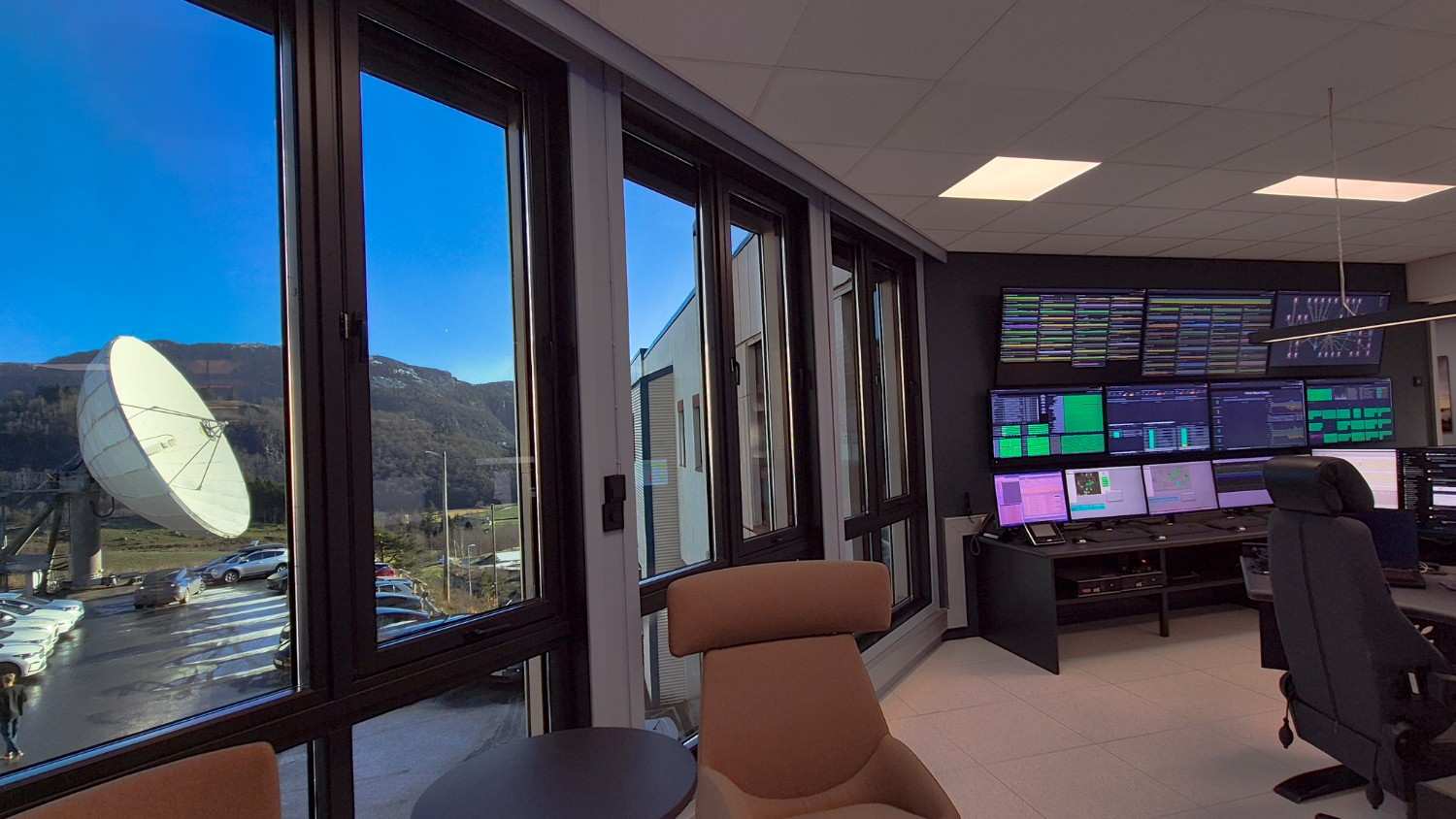
OSLO: Marlink, a leader in managed services for business-critical digital solutions, has transformed its Eik Teleport into a Managed Services Support Centre (MSSC) to support customers in adopting an increasing range of digital solutions.

In addition to providing upgrades and changes to the Managed Services Support Centre, Marlink customers can now evaluate real world fleet network setups in a modern customer laboratory designed specifically for maritime operations.

The upgrade provides Marlink customers with numerous benefits including:

  • Improved delivery of managed services across complete possibility portfolio;
  • Real time access to fleet networks and systems to replicate disruption scenarios;
  • New demonstration and development capabilities for customers

This new approach to client support enables shipowners to ‘sandbox’ in a test environment, developing responses and building strategies that can respond to unplanned events in when sailing in areas where services are geofenced or could be otherwise disrupted.

The Managed Services Support Centre now includes an immersive customer environment developed to provide shipowners with the most realistic simulations of onboard conditions before they are deployed. These include what actions to take in case of loss of connectivity due to local regulations, cyber-attack or spoofing of navigation and safety services.

Marlink has a 40-year history of holding hands-on workshops with customers and partners designing solutions for their specific requirements and supporting digitalisation. The upgrade supports the delivery of all pillars of Marlink’s Possibility Portfolio, spanning connectivity, network orchestration, cyber security, cloud enablement and IIoT services.

“This upgrade to our facilities at Eik gives us the ability to provide real-time, real-world transparency on all the systems and services our customers have onboard their fleets and to make adjustments depending on their requirements,” said Tore Morten Olsen, President, Maritime, Marlink. “Because we are able to simulate what interruptions and loss of service to ships would feel like onboard, we can help vessel operators plan in more detail and so drive safety of their assets and their people.”

MacGregor to deliver new high-performance 165-tonne AHC crane for Construction Support Offshore Vessel

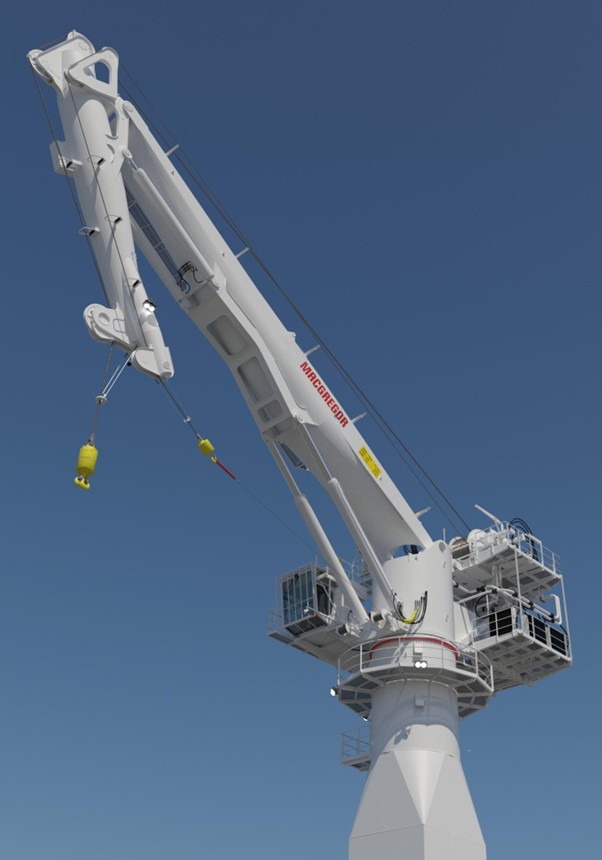
MacGregor has secured a contract to deliver a newly developed high-performance lightweight 165-tonne active heave compensated (AHC) crane to Hong Hua Yard in China. The vessel owner is Atlantic Navigation. Equipment delivery is scheduled for completion by the second quarter of 2027, with an option included for one additional crane.

The order is booked into MacGregor’s fourth quarter 2025 order intake.

The scope of supply includes the complete delivery of a modern 165-tonne AHC crane to be installed on a 90-metre Construction Support Offshore Vessel built to ABS Class standards. This newly developed crane represents the next generation of offshore lifting technology, and is designed to offer superior performance and a competitive edge over traditional 150-tonne solutions.

“This order demonstrates delivery and customer confidence in our next-generation offshore crane technology,” says Pasi Lehtonen, Executive Vice President, Offshore Solutions, MacGregor. “Our lightweight 165-tonne AHC crane provides higher lifting capacity for the same weight as competitor systems, giving our customers a real operational advantage.”

The project reinforces MacGregor’s strong local presence in China. With a dedicated sales team, a large service office, and production located close to Hong Hua Yard, MacGregor can ensure smooth communication and close collaboration throughout the installation and commissioning phases. Experienced local and global personnel will work closely to ensure efficient delivery and meet its customers’ expectations.

Building on a track record of execution excellence

MacGregor Offshore Solutions continues to strengthen its reputation for delivering complex projects on time and to the highest standards.

“We’ve built a stronger foundation for smarter project execution, on-time delivery, and customer confidence,” Pasi Lehtonen continues. “Our ability to combine proven global experience with local execution and service capability ensures that each delivery adds real lifetime value for our customers.”

“We are very satisfied with the collaboration and with the technical competence demonstrated by MacGregor,” a Hong Hua Yard spokesperson commented. “This lightweight, high-performance AHC crane will enhance the vessel’s capability and reliability.”

This order highlights MacGregor’s role as a trusted global partner to the offshore energy industry. With technology that improves lifting efficiency and operational capability, MacGregor continues to enhance lifetime value for customers and contribute to the evolving offshore energy sector.

CPP Investments and IndoSpace expand joint venture with US$300 Million acquisition of Six Logistics Parks

CPP Investments Logo IndoSpace Logo 1 1 CPP Investments and IndoSpace expand joint venture with US$300 Million acquisition of Six Logistics Parks

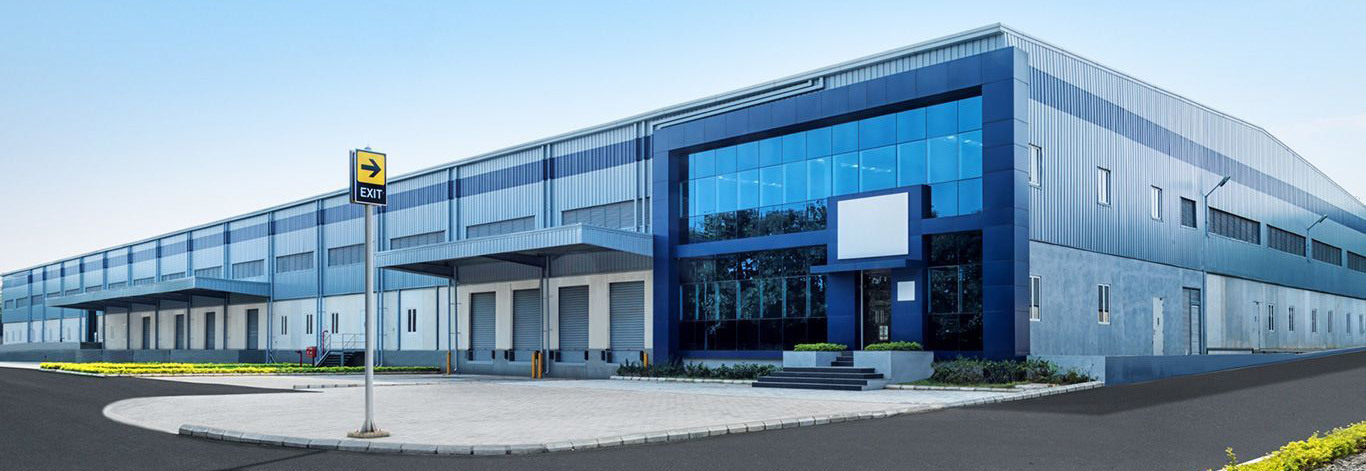
MUMBAI: Canada Pension Plan Investment Board (CPP Investments) and IndoSpace on Tuesday announced the acquisition of six industrial and logistics parks, valued at INR 30 billion (C$471 million), by IndoSpace Core, a joint venture established in 2017 to acquire and develop logistics facilities across India. 

This acquisition strengthens IndoSpace Core’s position as India’s largest operator of stabilized industrial and logistics real estate. CPP Investments will commit INR 14 billion (C$217 million) to fund the acquisition. CPP Investments owns 93% of IndoSpace Core.

The six assets collectively span 380 acres with a leasable area of approximately nine million square feet, adding to IndoSpace Core’s portfolio of fully developed, income-generating parks. These projects are located in India’s key logistics markets, including Bengaluru, Chennai, Delhi, Mumbai, and Pune.

“India’s logistics sector continues to benefit from strong structural growth, driven by urbanization and the expanding manufacturing footprint,” said Hari Krishna V, Managing Director, Head of Real Estate India & Mumbai Office Head, CPP Investments. “Our longstanding partnership with IndoSpace has enabled us to capture high-quality opportunities in this space. We believe this acquisition will deliver attractive, risk-adjusted returns for CPP contributors and beneficiaries.”

Commenting on the development, Anshuman Singh, MD & CEO, IndoSpace, said, “This transaction reflects how India’s logistics sector has evolved into a long-term investment story driven by stable demand and institutional confidence. With over 60 million square feet developed and under development, IndoSpace has established itself as the largest player in India’s industrial and logistics real estate sector. This acquisition further reinforces the strength of our partnership with CPP Investments, built on a shared belief in India’s potential as a global hub.”

He added, “At IndoSpace, our strategy is to remain capital-efficient and proactive in pursuing new development opportunities. As India cements its status as a global manufacturing hub, we are witnessing an increasing demand for high-quality, compliant, and sustainable infrastructure. This is precisely where we envisage our next phase of growth unfolding.”

Following this transaction, IndoSpace Core’s portfolio will expand to 22 million square feet of leasable area across 948 acres, serving over 120 global and domestic companies across six major industrial hubs: Bengaluru, Chennai, Delhi, Hyderabad, Mumbai, and Pune.

About CPP Investments

Canada Pension Plan Investment Board (CPP Investments™) is a professional investment management organization that manages the Canada Pension Plan Fund in the best interest of the more than 22 million contributors and beneficiaries. In order to build diversified portfolios of assets, we make investments around the world in public equities, private equities, real estate, infrastructure, fixed income and alternative strategies including in partnership with funds. Headquartered in Toronto, with offices in Hong Kong, London, Mumbai, New York City, San Francisco, São Paulo and Sydney, CPP Investments is governed and managed independently of the Canada Pension Plan and at arm’s length from governments. At September 30, 2025, the Fund totalled C$777.5 billion.

About IndoSpace

IndoSpace is India’s leading fully integrated supply chain infrastructure platform. With over 60 million sq. ft. of infrastructure across 50+ strategically located hubs since its inception in 2007, IndoSpace powers more than 150 industry leaders across manufacturing, electronics, 3PL, e-commerce, retail, and automotive sectors.

Aligned with the vision of PM Gati Shakti, the National Logistics Policy (NLP), and Make in India, IndoSpace contributes to India’s supply chain industry by delivering scalable and sustainable infrastructure solutions that enhance efficiency and accelerate manufacturing growth. By integrating technology, sustainability, and operational excellence, IndoSpace continues to shape logistics ecosystems and strengthen its role as a key enabler in India’s growth narrative.

Klaipėda port moves closer to becoming the Baltic’s first green hydrogen hub

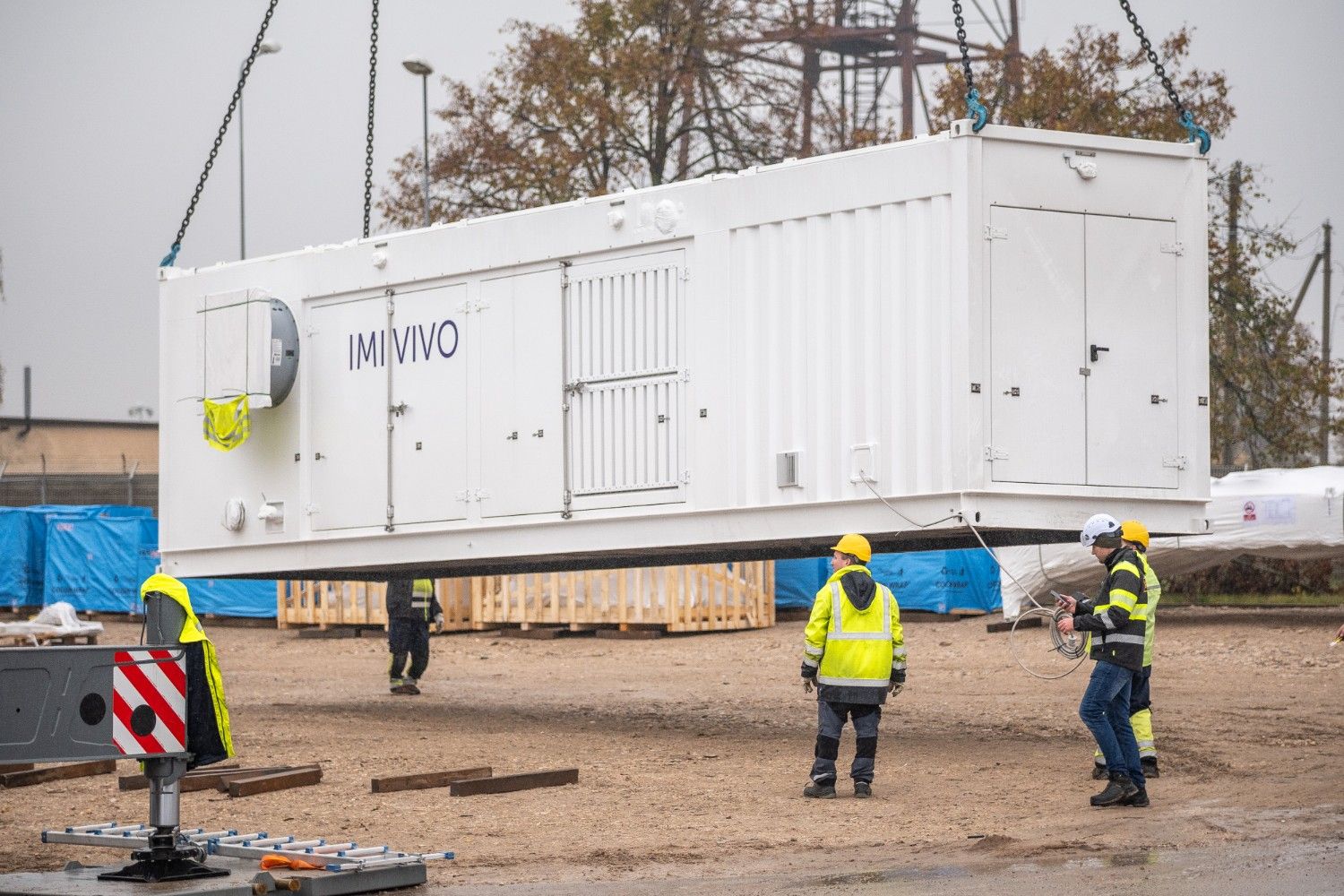
KLAIPEDA: A significant milestone has been reached in the Klaipėda Port green hydrogen production project, which has no analogues in Lithuania or neighboring ports: the equipment has arrived at the site where the hydrogen station will be built. The project developers have moved even closer to their goal following the successful completion of tests on the pipeline installed at the site.

re 0010 E88 0743 1 Klaipėda port moves closer to becoming the Baltic’s first green hydrogen hub

“The arrival of this equipment marks an important step forward for Lithuania’s energy transition. Klaipėda Port is becoming the first port in the Baltic Sea region not only to talk about green energy, but to produce it and apply it in real operations. This milestone opens new opportunities for our maritime sector and industry, and demonstrates that Klaipėda Port is ready to lead with cleaner, more sustainable and future-oriented solutions,” says Algis Latakas, Director General of the Klaipėda State Seaport Authority.

The green hydrogen production and supply station, which will start operating at Klaipėda Port next year, will house a polymer electrolyte membrane (PEM) type electrolyzer. When operating at full capacity, about 127 tonnes of green hydrogen will be produced annually, part of which will be used to power the first vessel in the country driven by green hydrogen, currently nearing completion.

The project is being implemented under the Economic Recovery and Resilience Plan Next Generation Lithuania, funded by the European Union’s NextGenerationEU recovery and resilience facility. The total estimated cost of the hydrogen production and refueling station is approximately €12 million, with around €6 million financed by EU funds.

India and Canada to fast-track FTA negotiations to boost bilateral trade and investment: Piyush Goyal

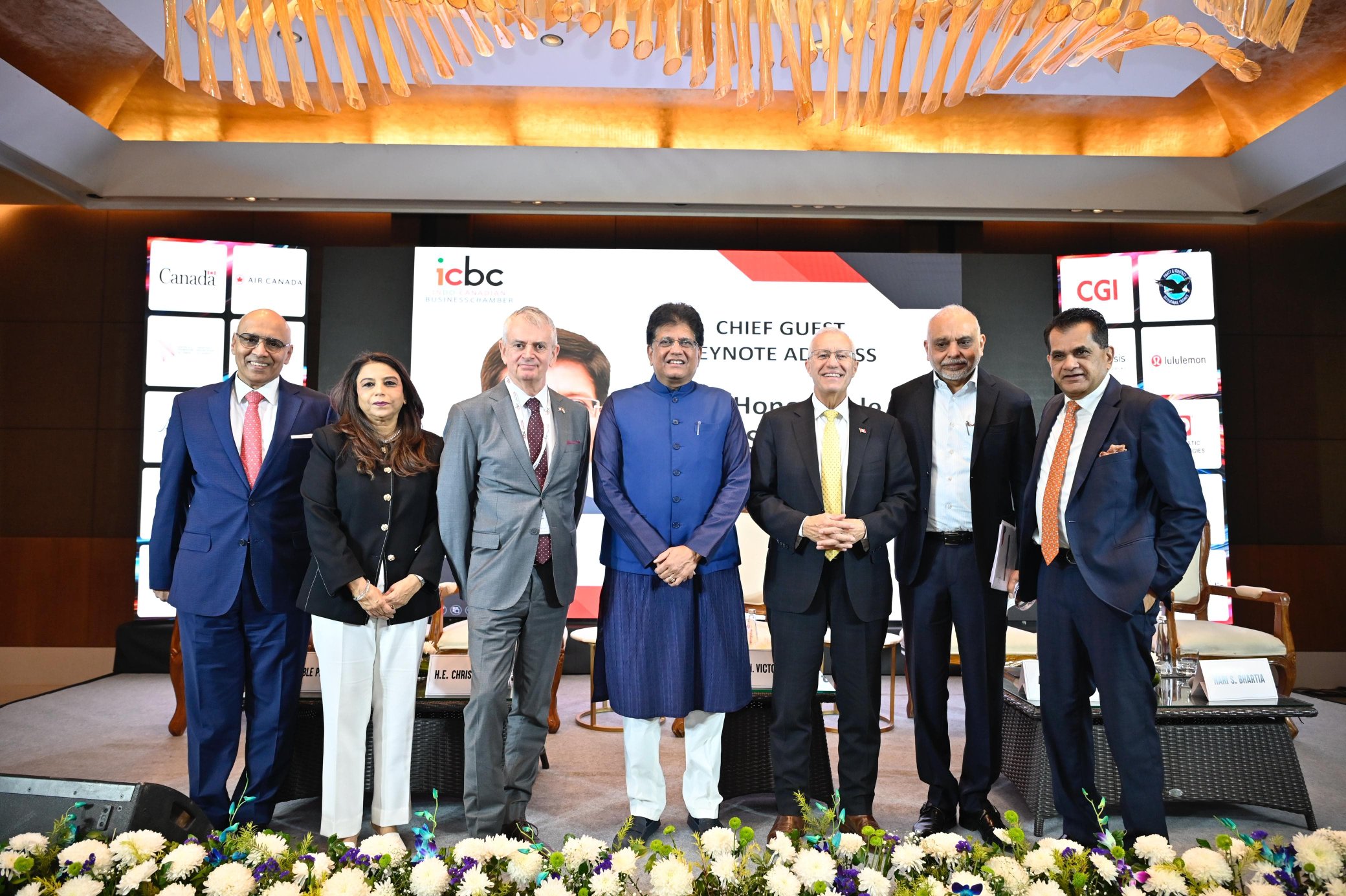
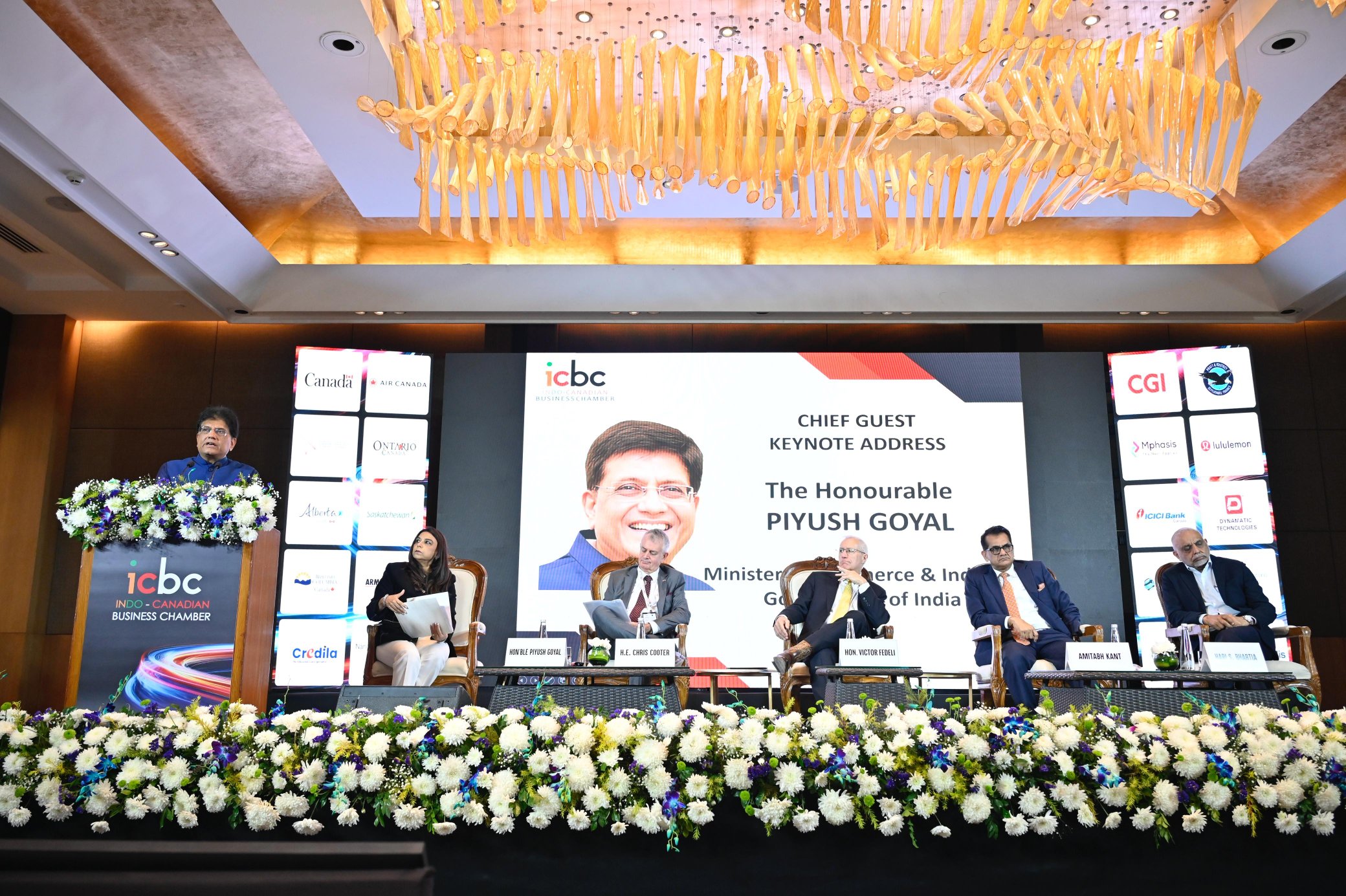
NEW DELHI : Union Minister of Commerce and Industry, Shri Piyush Goyal, while addressing the Indo-Canadian Business Chamber here on Monday, said that India sees considerable scope for collaboration with Canada in critical minerals, mineral processing technologies, clean energy, nuclear energy and supply-chain diversification. He added that India offers strong advantages in emerging technologies such as artificial intelligence, quantum computing, machine learning and next-generation data centres, supported by the world’s largest annual pool of STEM graduates. He noted that Canada and India are natural allies whose complementary strengths create significant opportunities for businesses and investors in both countries.

He further said that the India–Canada partnership continues to be grounded in mutual trust, democratic values and a shared commitment to development. He emphasised that the bilateral relationship remains strong and stable, with steadily growing engagement across trade, investment and emerging sectors.

Referring to the recent meeting between Prime Minister Shri Narendra Modi and Canadian Prime Minister Mr. Mark Carney during the G20 Summit, Shri Goyal highlighted that both leaders agreed to begin negotiations for a high-ambition Comprehensive Economic Partnership Agreement (CEPA) and double bilateral trade by 2030. He said that CEPA reflects the trust between the two countries, strengthens investor confidence and provides a robust framework for addressing issues based on mutual respect.

Shri Goyal underlined that India’s national power grid of 500 GW, including 250 GW of clean energy capacity, provides the resilience required for AI-driven infrastructure. He noted that India’s ambition to double clean energy capacity to 500 GW by 2030 positions the country as a trusted and sustainable partner, and that India is among the few democracies capable of offering genuine 24-hour clean energy at globally competitive rates.

Referring to the seventh Ministerial Dialogue held earlier this month with Canada’s Minister of International Trade, Shri Goyal said both sides agreed to reinvigorate business-to-business engagement and explore two-way business delegations. He appreciated the steady flow of Canadian investments into India, particularly through Canadian pension funds, and noted the increasing interest of Canadian companies in expanding operations in the country.

Shri Goyal also highlighted India’s strong economic fundamentals, stating that the country has moved from the “Fragile Five” to being among the world’s top five economies. He reiterated that India is expected to become the world’s third-largest economy in the next 2–2.5 years, supported by low inflation, a strong banking system, high foreign exchange reserves, robust infrastructure expansion and a vibrant capital market. He noted that India’s stock market has grown nearly four-and-a-half times in the last 11 years, reflecting investor confidence in the Indian economy.

He said that India’s development model rests on macroeconomic stability, inclusive and sustainable growth and welfare measures that ensure 140 crore citizens participate in the nation’s progress. He added that India is powered by a young, skilled and aspirational population, and that the country’s economic momentum is set to remain strong for decades.

Shri Goyal proposed a five-pronged approach to further strengthen India–Canada relations. He emphasised the need to convert dialogue into delivery through actionable outcomes, sectoral roadmaps and measurable progress. He called for revitalising the CEO Forum to enhance business-to-business partnerships and urged Canadian participation in India’s upcoming AI Summit. He encouraged joint innovation, noting India’s strong IPR regime, large datasets and cost-effective innovation environment, supported by the recently announced USD 12 billion fund for research and development.

The Minister said that both countries should identify focused areas of collaboration, including critical minerals, clean energy, aerospace, defence and manufacturing under the Make in India programme. He said Canadian innovation combined with Indian capabilities can create significant opportunities for both nations.

Shri Goyal invited Canadian businesses to partner in India’s journey toward becoming a developed nation by 2047. He said that India offers a stable, transparent and opportunity-rich environment for long-term collaboration and expressed confidence that the India–Canada partnership will continue to grow stronger in the years ahead.

India pushes for deeper trade ties with Canada, eyes CEPA, critical minerals and clean energy

NEW DELHI : India on Monday signalled renewed momentum in its economic partnership with Canada, highlighting opportunities in critical minerals, clean energy, and emerging technologies as both nations look to diversify supply chains and build secure technology ecosystems.

Addressing the Indo-Canadian Business Chamber in the national capital, Trade Minister Shri Piyush Goyal said India’s strengths in artificial intelligence (AI), quantum computing, machine learning, and next-generation data centres—backed by the world’s largest pool of STEM graduates—position the country as a strategic partner for Canada.

The renewed engagement comes as both governments aim to fast-track a high-ambition Comprehensive Economic Partnership Agreement (CEPA) and double bilateral trade by 2030.

While trade talks had stalled, Prime Minister Shri Narendra Modi and Canadian Prime Minister Mark Carney agreed on 18 June, during the G7 Summit in Kananaskis, to revive negotiations. Since then, senior Canadian ministers—including foreign affairs minister Anita Anand (12–14 October) and trade minister Maninder Sidhu (12–14 November)—have visited India to rebuild trust and momentum.

Goyal emphasized that India and Canada remain natural allies, anchored in democratic values and mutual trust, and that bilateral engagement across trade and investment continues to deepen despite past strains. He highlighted India’s expanding national power grid of 500 GW, including 250 GW of clean energy capacity, as a key enabler for AI-driven infrastructure, adding that India aims to double clean energy capacity to 500 GW by 2030 and is among the few democracies able to offer round-the-clock clean energy at competitive global rates.

The minister also noted strengthening financial links, pointing to continued interest from Canadian pension funds and the growing presence of Canadian companies in infrastructure, renewables, and technology. Trade experts say the renewed diplomatic engagement has raised expectations across industry, as both economies aim to stabilize ties and rebuild confidence after a turbulent period.

“India and Canada resuming FTA (free trade agreement) talks is a highly positive signal for exporters,” said Ajay Sahai, Director General, Federation of Indian Export Organisations (FIEO). “Faster market access and lower tariffs can unlock real opportunities for Indian sectors like textiles, engineering goods, pharma and agri-products. A balanced, modern FTA can deepen supply chains, boost competitiveness and open a high-value market—giving India’s export growth a strong strategic edge.”

Rajnish Gupta, partner, Tax and Economic Policy Group, EY India, highlighted the potential in critical minerals, saying, “Canada is the leading producer of potash in the world. It ranks among the top for several critical minerals like lithium, cobalt, graphite. It also has the world’s leading mining finance ecosystem in Toronto…This partnership can help develop secure diversified supply chains for energy transition in India.”

India’s trade with Canada remains slightly in deficit, with exports at $4.22 billion and imports at $4.44 billion in FY25. Exports grew from $3.84 billion in FY24, while imports fell from $4.55 billion.

India imports critical minerals, nuclear and clean-energy equipment, aerospace parts, and agricultural products, including lentils. Its exports to Canada include textiles, auto components, pharmaceuticals, IT services, and food-processing goods, including dairy.

Bilateral relations had sharply deteriorated in 2023 after Canadian Prime Minister Justin Trudeau accused Indian agents of involvement in the killing of a Khalistani separatist. India rejected the allegations, expelled Canadian diplomats, and Ottawa responded in kind. Trade talks paused, visa services were briefly suspended, and diplomatic engagement froze. However, trade between the two countries had continued despite the diplomatic strain.

Adani Group delivers a stellar H1 FY26

AHMEDABAD : The Adani Portfolio—India’s leading infrastructure and utilities portfolio—announced its H1 FY26 Financial Performance and the Credit and Results Compendium. The documents provide an overview of the portfolio’s financial performance and offer detailed insights into its credit strength and long-term resilience.

The disclosures not only provide the latest financial performance but also provide a comprehensive view of the Group’s financial performance, credit strength, and long-term resilience over a longer timeframe, since 2019.

Commenting on the results, Mr Jugeshinder Singh, Group CFO, Adani Group, said: “Our core infrastructure businesses continue to deliver strong double-digit growth even as we execute one of the largest capex programs, aligned with India’s Viksit Bharat capex super cycle. Adjacency businesses are also showing momentum. In H1 FY26, we recorded our highest-ever capex in the first half despite seasonal factors. Importantly, our debt metrics continue to remain below the guided range even after doubling capex to ₹1.5 lakh crore—reflecting strong financial discipline. What took 25 years to build, we are now gearing up to replicate within a single year, and as new assets become operational on schedule, we expect to sustain returns on asset of 15–16%. Our focus remains on flawless execution and world-class operations. With rising AAA domestic ratings and stable USD ratings, our long-tenor infrastructure assets are increasingly attractive to global institutions.”

Adani Portfolio – H1 FY26 and TTM Sept’25 Financial Performance (EBITDA in INR Cr)

SectorH1 FY26H1 FY25Y-o-Y GrowthTTM Sept’25TTM Sept’24Y-o-Y Growth
Utility*23,23922,5033.3%44,11341,5186.3%
Transport12,1259,93822.0%22,65818,84620.2%
AEL – Infrastructure Businesses5,5495,2625.4%10,3718,33024.5%
A. Sub-total (Infrastructure)40,91337,7038.5%77,14268,69412.3%
B. Adjacencies (Cement)4,3053,12037.9%9,8296,99140.6%
Sub-total (Infra+Adjacencies)45,21840,82310.8%86,97175,68514.9%
C. AEL- Existing Businesses2,1573,416(36.9%)5,9727,922(24.6%)
Portfolio EBITDA (A+B+C)47,37544,2397.1%92,94383,60711.2%
  • (Utility: Adani Power + Adani Green Energy + Adani Total Gas + Adani Energy Solutions | Transport: Adani Ports & SEZ | AEL: Adani Enterprises)
  • *Utility segment EBITDA includes prior period incomes in Adani Power of INR 1,075 Cr in H1 FY26 Vs INR 1,020 Cr in H1 FY25
  • EBITDA: PAT + Share of profit from JV + Tax + Deferred Tax + Depreciation + Finance Cost + Forex Loss / (Gain) + Exceptional Items

H1 FY26 & Sep’25 TTM PERFORMANCE HIGHLIGHTS

Record Earnings: EBITDA reached an all-time high of INR 47,375 Cr (USD 5.3 Bn) in H1 FY26, taking TTM EBITDA to INR 92,943 Cr (USD 10.4 Bn) — an 11.2% YoY increase. 83% of H1 FY26 EBITDA came from the Group’s Core Infrastructure platform, which includes:

  • Utilities: Adani Green Energy Ltd, Adani Power Ltd., Adani Energy Solutions Ltd., Adani Total Gas Ltd.
  • Transport: Adani Ports & SEZ Ltd
  • Incubating Infrastructure businesses under flagship incubator Adani Enterprises Ltd. (AEL)

These segments continue to provide stable, long-term cash flows.

Strong and Stable Cash Generation: Cash After Tax / FFO stood at INR 65,016 Cr (USD 7.2 Bn), reflecting healthy operating cash flow across businesses.

Prudent Leverage: Net Debt-to-EBITDA at 3x, comfortably below the guided 3.5x–4.5x range across portfolio companies, highlighting disciplined capital management. The number has slightly increased from six months ago, as the portfolio companies have now accelerated their capex programs.

Accelerated Capex Cycle: Robust cash flows and continued access to capital, enabled by low leverage, resulted in a record asset addition of INR 67,870 Cr (USD 7.6 Bn) in H1 FY26, bringing the total asset base to INR 6.77 lakh Cr (USD 76 Bn). The Group remains on track to deliver its INR 1.5 lakh Cr FY26 capex plan — equivalent to the Adani portfolio’s total asset base until FY19.

Adani Enterprises Ltd., the flagship incubator of the Adani Portfolio, recorded the largest increase in gross assets of INR 17,595 Cr (USD 2 Bn). Adani Green Energy Ltd. and Adani Power Ltd. added assets worth INR 12,314 Cr (USD 1.4 Bn) and INR 11,761 crore (USD 1.3 Bn), respectively.

High Returns on Assets: H1 FY26 ROA stood at 15.1%, despite substantial capital work in progress for new assets. This is one of the highest ROAs globally in the infrastructure sector. Over the past six years, the portfolio has consistently maintained above 15% ROA despite over 3.5x growth in Gross Assets.

Strengthening Credit Quality: 52% of portfolio EBITDA now comes from AAA-rated domestic assets, and 90% from AA- and above. For comparison, in April 2019, only INR 12,186 Cr was generated from AAA assets and AA- assets. The number has now increased to INR 91,879 crore — more than 7.5x. AAA assets alone generated 52% or INR 53,086 Cr of the run-rate EBITDA (including annualized EBITDA of the assets operationalized in mid-year).

This reflects the robustness of the underlying businesses, a consistent focus on financial discipline and the highest level of governance.

Company-wise Financial Performance (EBITDA in INR Cr)

EntityH1 FY26H1 FY25Y-o-Y GrowthSept’25 TTMSept’24 TTMY-o-Y Growth
Incubator
Adani Enterprises17,7068,678(11.2%)16,34316,2520.6%
Utility
Adani Green Energy6,3245,58413.2%11,2729,96613.1%
Adani Energy Solutions4,1443,65413.4%8,2377,15615.1%
Adani Power212,15912,639(3.8%)23,43823,1571.2%
Adani Total Gas612626(2.1%)1,1661,239(5.9%)
Transport
Adani Ports & SEZ12,1259,93822.0%22,65818,84620.2%
Adjacencies
Adani Cement4,3053,12037.9%9,8296,99140.6%
Adani Portfolio47,37544,2397.1%92,94383,60711.2%

AEL includes emerging infrastructure businesses and existing businesses of integrated resource management, mining, and mining services.
APL includes prior period incomes of INR 1,075 Cr in H1 FY26 Vs INR 1,020 Cr in H1 FY25.
H1 FY26 Company-wise Key Highlights:

Adani Enterprises Ltd

ANIL solar modules sales stood at 2.44 GW — up 3%.
Wind Turbine Generator (WTG) sales increased to 63 sets, up 13%
The greenfield Navi Mumbai International Airport was inaugurated; to become operational in the current quarter.
Bagged two new road projects — Munger-Sultanganj project and Sultanganj-Sabour project.
Received Letter of Award for Ropeway Project between Sonprayag and Kedarnath
Adani Green Energy Ltd

Operational capacity increased by 49% YoY to 16.7 GW with the addition of 4.2 GW solar, 491 MW wind plants, and 805 MW hybrid plants.
Capacity Utilization Factor (CUF) at 24.8%, 37.8% and 39.1% for solar, wind, and hybrid plants, respectively.
Adani Energy Solutions Ltd

Secured a new transmission project – WRNES Talegaon line, taking the order book to INR 60,004 Cr at the end of H1 FY26.
Adani Power Ltd

Added 4.5 GW of new Power Purchase Agreements
Target increased to 42 GW by 2032, from the current capacity of 18.15 GW
Adani Ports & SEZ Ltd

Volume grew by 11% to 244 MMT (H1 FY26) from 220 MMT (H1 FY25).
Colombo West International Terminal (CWIT) commenced operations in Apr ’25, handling over 350,000 TEUs, including 100,000+ TEUs in Aug ’25.
Ambuja Cements Ltd

Ambuja Cements achieved 107 MTPA capacity.
Cement sales volume for H1 FY26 at 35 MT (increased by 20% Y-o-Y).

JNPA hosts high-level Argentine Delegation to strengthen maritime cooperation

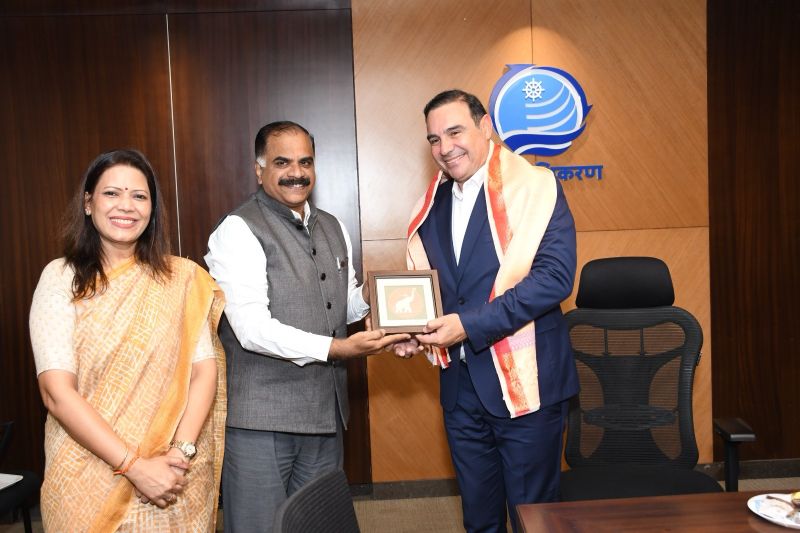
MUMBAI : Jawaharlal Nehru Port Authority (JNPA) welcomed a distinguished Argentine delegation led by Mr. Gustavo Adolfo Valdés, Governor of Corrientes Province, Argentina. The visiting team was received by JNPA Heads of Departments, with the Consul General of Argentina also present during the interaction.

1763704248713 JNPA hosts high-level Argentine Delegation to strengthen maritime cooperation

Shri Girish Thomas, Chief General Manager (Traffic), briefed the delegation on JNPA’s operational capabilities and facilitated an insightful discussion on expanding bilateral cooperation. Key focus areas included strengthening trade ties, enhancing capacity-building and training collaborations, and exploring avenues for future maritime partnership.

The delegation was also updated on the upcoming Vadhvan Port project, which is poised to be a transformative addition to India’s port infrastructure and a catalyst for regional growth.

Reaffirming its commitment to global engagement, JNPA stated that it continues to build meaningful international partnerships aimed at driving innovation, connectivity, and sustainable maritime development.