Home Blog Page 562

Hapag-Lloyd set to order feeder newbuilds

HAMBURG : A 22-ship order currently under negotiation by German container line Hapag-Lloyd is designed to modernise its ageing feeder and shuttle fleet.

CEO Rolf Habben Jansen said that the company was looking to replace its less efficient and older vessels and was, therefore, preparing orders for 1,800 teu, 3,500 teu and 4,500 teu ships, probably at more than one yard.

“We are finalising the process and the final negotiations are [currently] going on and I expect to communicate a little bit more within the next, say, 30 days or so,” said Jansen late last week, adding that “We have a fair number of ships that are starting to reach 25 years of age, particularly in the smaller vessel classes and that means that we are looking at an investment of up to 22 new ships.”

According to Jansen this year’s container demand growth will not “be all that different” to capacity expansion, though he conceded that at 31% of the fleet, the orderbook remains “very significant”.

Nevertheless, Hapag-Lloyd expects that demand will continue to grow at around the 3% mark, as it has done for some time, then the requirement will be an increase of around 15-20% to meet the increase in demand up to 2030.

It must not be forgotten, argued Jansen, that a significant proportion of the current global fleet are approaching 25 years of age or more, and many of these vessels will be phased out before the end of this decade.

“On the environmental front, even if the net zero framework has been postponed, we still have CII and we have still things like EU ETS that will incentivise us to push forward decarbonisation, and we’ll certainly do that, although, the almost easiest and most cost efficient way to do that is to still sail a little bit slower,” explained Jansen.

Shuttle vessels are critical to the hub and spoke system that the Gemini Cooperation has developed with the companies’ offering a high level of schedule reliability for customers that Jansen says customers are increasingly relying on that reliability, adding that the lines must see the carriers get “a fair price for that reliability”.

Nevertheless, the Gemini carriers are subject to the same supply and demand imperatives that all lines are facing and the current glut of capacity, married with the overall decline in demand has seen freight rates tumble.

That year-on-year collapse in spot rates has taken its toll. On the Pacific to Asia to USWC rates were around $5,200 per feu in November last year, while USEC freight was close to $6,000 per feu, today those rates are $2,459 and $3,042 per feu respectively, down around 50%.

It is a similar story on the headhaul trades from Asia to North Europe and the Mediterranean.

Collapsing spot rates have taken their toll on Hapag-Lloyd’s returns, which will likely signal similar effects on other lines.

In the first nine months of this year Hapag-Lloyd’s group profits declined 48%, to $900 million year-on-year, on revenues that were $16 billion, up 5%, and volumes that increased 9% to 10.2 million teu, in the same period.

DFCCIL seeks more wagons for truck-on-train service amid rising demand

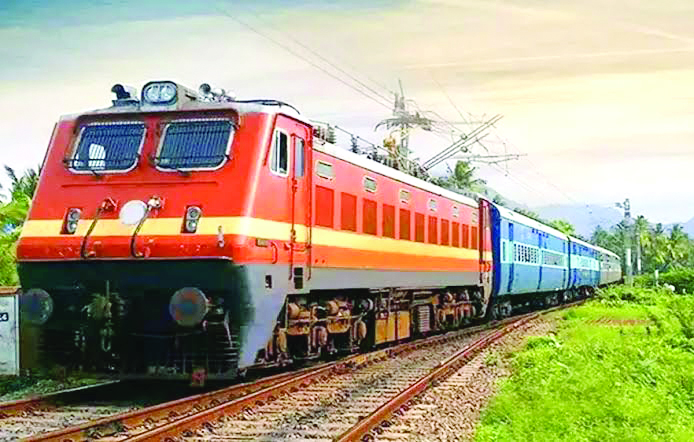
NEW DELHI : The Dedicated Freight Corridor Corporation of India Limited has requested the Railway Board to provide additional wagons suitable for its truck-on-train service, officials said on Sunday.

The truck-on-train (ToT) service enables the transportation of trucks and milk tankers on specially designed wagons. It was launched on the Western Dedicated Freight Corridor on September 18, 2023 and plies between Rewari in Haryana and Palanpur in Gujarat.

The service significantly reduces transportation cost and time, traffic congestion, and air pollution, among other benefits.

Officials said that nearly a year after the launch, the Dedicated Freight Corridor Corporation of India Limited (DFCCIL) wrote to the Railway Board seeking more wagons to tap its growing business potential, and has been pursuing the request since then. However, the Railway Board is yet to fulfil it.

Industry sources said the ToT service requires a specially-designed Flat Multi-Purpose (FMP) wagon, which is currently being manufactured with deliveries expected to begin early next year.

“Currently, we are using Bogie Rail Wagon for ToT services. It is also a flat wagon, but FMP is multi-purpose and suitable for the DFCCIL business model,” a Board official said.

At present, in the ToT service, 30 trucks are loaded onto a freight train every day at Palanpur and transported to Rewari through the corridor covering a distance of 630 kilometres in around 12 hours.

Once the products are delivered, the empty trucks are loaded back onto the train to return to the starting point.

Out of 30 (trucks), 25 are milk tankers which come by road from an Amul dairy in Banas to the Palanpur loading point. The other five trucks carry different products such as vegetables, machinery, diesel oil, etc,” a DFCCIL official said.

“We add a special coach in the freight train for drivers who rest for 12 hours during the journey. The 25 tankers, after getting unloaded at Rewari, are driven by road to Prithala in Faridabad, where Amul has another dairy to package milk and other dairy products,” he added.

According to officials, earlier, the same tankers used to reach Prithala in 30 hours from the Banas dairy. However, the freight corridor has reduced the travelling time by about 20 hours, ensuring the quality of milk remains as good as it was at the time of loading.

Calling the initiative a game-changer for the logistics sector, officials said that while railways commonly face challenges such as limited first- and last-mile connectivity, minimum consignment requirements, and customer concerns regarding high-value freight, the ToT model offers an immediate solution to address these issues.

“This intermodal approach not only saves transit time but also alleviates road congestion, enhances drivers’ quality of life by ensuring adequate rest, and most importantly, reduces carbon emissions,” they said.

“We have demands from various industries to operate similar ToT service from other destinations, and we are waiting for FMP wagons,” a DFCCIL official said.

Bhavnagar Diamond Industry in crisis: 1,500 units remain shut

BHAVNAGAR : Bhavnagar’s Diamond Industry, already battling a prolonged slowdown, continues to reel under pressure as post-Diwali operations fail to pick up. Out of the district’s 3,000 small and large units, nearly 500 units had shut down earlier after Trump’s imposed tariffs, and from the remaining 2,500 units, only around 1,500 have resumed work even after the festival season.

High tariffs, falling demand and rising operational costs have adversely affected the industry. With only 20% business volume visible in the market, Bhavnagar’s daily trade once touching ₹150 crore–₹1500 crore now stands drastically reduced to just ₹20 crore–₹25 crore.

Before the tariff hit, Bhavnagar used to process raw material and export nearly 80% of its polished diamonds abroad. However, the US decision to impose a 100% tariff dealt a severe blow not only to large hubs across the country but also to Bhavnagar’s small and medium units.

Even earlier, nearly 300 factories had shut down, and the tariff pushed another 200 units into closure, forcing thousands of skilled diamond workers to shift to other occupations

Although a marginal revival was seen around the seventh and eighth days post-Navratri, the Diwali vacation halted the momentum. Traditionally, the industry bounces back on Labh Pancham and Agiyaras (eleventh day of Gujarati month), but even those auspicious days failed to revive the market this year.

Adding to the troubles, the rising dominance of lab-grown diamonds is reshaping the industry landscape.

With low-cost synthetic diamonds priced as low as ₹20–₹25 cutting into the market, the impact on sorting and office staff has been severe. As CVD stones require minimal sorting, a large number of employees are finding themselves out of work.

With 1,500 units still shut, shrinking export volumes, and artificial diamonds rapidly eating into the market share, the district’s once-vibrant diamond sector appears to be losing its grip.

Industry voices stress that without targeted export-oriented policies and long-term revival measures, the backbone of Bhavnagar’s diamond economy may continue to weaken in the coming months.

Forwarders leave 3–5% of gross profit on the table, warns OntegosCloud

LONDON: While the industry grapples with vessel oversupply, shifting US–China trade dynamics and softening demand, new OntegosCloud research shows freight forwarders are leaving three to five percent of gross profit unclaimed through unbilled fees, underpriced lanes and capacity routing inefficiencies.

As forwarders set their 2026 priorities, this matters: too many container ships, uneven demand and geopolitics will dominate the backdrop, but the one lever they can fully control is how quickly they turn data into daily commercial decisions.

“Usually freight rate collapses have a positive short-term impact on forwarding profitability because lower buy rates are not passed on to customers immediately,” said Oliver Gritz, Founder & CEO, OntegosCloud. “However, over the medium to long term they tend to compress margins.

“Rate volatility has to be managed, but at OntegosCloud we believe it is overemphasised as a profitability driver. Our analysis shows the bigger opportunity lies in fixing internal leakages: typical forwarders leave 3–5% of gross profit on the table through unbilled fees, underpriced lanes and mis-routed capacity.“

According to OntegosCloud research, the most impactful margin gains come from factors forwarders can directly influence:

  • Full capture of all billable fees – eliminating leakage from incomplete invoicing
  • Prioritising the most profitable lanes rather than chasing volume on low-yield trades
  • Growing value-added services (customs, storage, insurance, trade finance, specialised cargo)
  • Improving capacity utilisation across networks and partners
  • Creative and optimised routing to reduce systematic routing inefficiencies

Together, these steps tackle the root causes of underpriced lanes and capacity mis-routing, rather than just reacting to rate swings.

“Freight forwarding is not simply the buying and selling of freight capacity, but the intelligent design of supply chains,” added Gritz. “There is significant untapped potential here, and digitalisation can unlock it. While macro forces like trade policy and capacity cycles remain outside forwarder control, digital infrastructure and AI decisioning are not. Firms that standardise their systems and operationalise AI this winter will enter 2026 with measurable advantages: clearer lane profitability, fewer unbilled fees and faster cash.”

Outlook 2026

Understanding why internal optimization matters starts with looking at the external pressures coming down the track. OntegosCloud’s 2026 outlook highlights three forces set to define the year ahead.

One, excess container shipping capacity will persist as new vessels outpace cargo demand, a gap that could widen if carriers shift back to the Suez Canal. Two, trade flows will stay uneven, with Asia–US and Asia–Europe cooling while Asia–Africa, LATAM and the Middle East hold up better. And three, geopolitics will remain the alpha variable, as route risk, tariffs and policy shifts keep rewriting the economics of global logistics.

The research also highlights that although leading forwarders such as Kuehne + Nagel, Expeditors and DHL are reporting volume and revenue growth in 2025, margin pressure is increasing, underscoring the need to monetise value-added services and plug revenue leakage.

According to OntegosCloud, the most powerful lever within a forwarder’s control is investment in clean data, billing discipline and AI-driven scenario modelling, which can recover significant margin leakage, accelerate cash conversion and strengthen pricing outcomes.

With 2026 planning already underway, the company notes that this is the right moment to move pilot projects into production and secure measurable ROI.

“The winners in 2026 will be the companies that operationalise AI, eliminate leakage and turn complexity into predictable profit,” concluded Gritz. “That is the discipline OntegosCloud enables.”

About OntegosCloud: 

OntegosCloud is a logistics technology platform and freight forwarder profitability solutions provider. Its innovative methodology for revenue recognition and profit sharing is approved by leading audit firms and globally accepted by tax authorities. OntegosCloud helps freight forwarding companies turn complexity into profit by designing business and data architectures that eliminate chaos, plug revenue leakage and accelerate cash. Its three foundational pillars – organisational architecture, process architecture, and digital architecture, deliver measurable outcomes including faster billing, recovered GP and daily gross profit visibility. 

DHL Global Forwarding Vietnam scales up its Container Freight Station network to cater to redirected trade flows

SINGAPORE:  DHL Global Forwarding, the air and ocean freight specialist of DHL Group, has expanded its Container Freight Station (CFS) network in Vietnam, adding capacity and capabilities in two of the country’s most critical gateways. The Ho Chi Minh City (SGN) CFS has increased from 4,600 square meters (sqm) to 6,800 sqm, and the Hai Phong (HPH) CFS now spans 4,000 sqm.

The enlarged footprint increases bonded and non‑bonded capacity, enables faster cargo consolidation, quicker turnaround times, and greater operational resilience. As global trade patterns shift and Vietnam gains prominence as a strategic sourcing and distribution base, DHL’s investment reflects both the country’s growth potential and its critical position in regional and global supply chains.

Strong Trade Momentum Presents Strategic Opportunity For Vietnam

“According to the latest DHL Global Connectedness Tracker, Vietnam is emerging as a key beneficiary of global trade realignments. Amid rising tariffs and geopolitical tensions, global trade volumes in the first half of 2025 grew faster than in any half-year since 2010 (excluding the pandemic years), with ASEAN countries—especially Vietnam—absorbing a significant share of redirected flows. Notably, China’s exports to Vietnam surged, making it one of the top five destinations for Chinese goods in 2025,” said Laurence Cheung, Managing Director, DHL Global Forwarding, Vietnam.

This shift underscores Vietnam’s growing role in global supply chains, advancing from a traditional manufacturing hub to a transshipment and distribution center. The report also reveals that international flows are stretching farther than ever, with the average distance of goods trade reaching a record 4,990 km in 2025. This trend highlights the importance of strategically located logistics infrastructure, such as DHL Global Forwarding Vietnam’s expanded CFS network, to support long-haul, cross-border trade.

“We are driving logistics transformation by integrating infrastructure, technology, and sustainability to meet the demands of a rapidly shifting trade landscape. Our recent expansions underscore our commitment to help customers navigate complexity with confidence, as we raise the bar for service quality and strengthen Vietnam’s role in global trade,” he added.

Expanded Facilities With Boosted Capacity And Efficiency To Meet Growing Demand

The Ho Chi Minh facility sits at the heart of the Binh Duong–Dong Nai industrial belt under the Ho Chi Minh City area, placing shippers within short reach of key production zones, inland depots, and the city’s primary seaport and airport. With separated DHL operating areas and both bonded and non‑bonded options, the site supports international air and ocean flows, as well as domestic distribution. The facility offers inbound and outbound storage, consolidation, trucking, and customs coordination, as well as a suite of value‑added services including weighing, labeling, pick and pack, re‑packing, garment‑on‑hanger, and palletization. Security is designed for scale and sensitivity alike, with CT‑PAT compliance, 24/7 manned guarding, full‑coverage CCTV, intrusion detection on all doors, immediate generator power backup, and comprehensive fire protection.

In the North, the Hai Phong facility extends DHL’s reach across the manufacturing corridor anchored by the Hai Phong Port. Located inside an inland container depot, the certified ISO 9001 facility provides bonded and non‑bonded solutions with proximity to the port and overland connections to Hanoi’s gateway airport. The operation covers inbound and outbound storage, consolidation, warehouse trucking, and customs. It delivers value‑added services ranging from packing and inside/outside labeling to sorting, weighing, wrapping, pick and pack, and customized handling. Security measures include CCTV with motion sensors, perimeter protection, racking and a fire detection and sprinkler system, as well as reusable pallet wrapping to support safe, high‑position storage.

Integrated Warehousing Solutions in Bac Ninh Enhances Cross-Border Connectivity and High-Value Cargo Handling

Beyond physical capacity, DHL is scaling its Integrated Warehousing Solutions (IWS) to complement its CFS network and offer customers tailored service designed to optimize their operations. Strategically located in Bac Ninh Province, the 3,000 sqm site provides versatile non‑bonded solutions with a dedicated high‑value cargo area and full business and operating licenses compliant with local regulations. The site’s connectivity—within practical distance of Hanoi, Noi Bai International Airport, Hai Phong and Cai Lan seaports, and the Vietnam–China border at Huu Nghi—also supports inbound and outbound flows and agile regional and domestic distribution.

Mature processes for air and ocean freight, inbound and outbound storage, and value‑added services such as labeling, kitting, packing and re‑packing, are paired with options at off‑airport cargo terminals that can simplify procedures, accelerate customs clearance, and deliver tangible time and cost benefits. The location meets top‑tier security standards, including TAPA’s highest levels certifications (FSR‑Level A and TSR‑Level I), with motion‑sensing security statement for high‑value cargo, intrusion detection, immediate UPS and generator backup, as well as robust fire protection.

Sustainable Practices Embedded In Operations

These enhancements come alongside a sustainability milestone. DHL Global Forwarding Vietnam has achieved Leaf 4 Shipper certification under the GFA Labelling and Certification Program, recognizing the company’s progress in implementing sustainable freight practices. The certification is a testament to DHL’s vision as the Green Logistics of Choice—outlined in the Group’s Strategy 2030—linking operational quality with decarbonization across the company’s freight and warehousing portfolio.

DHL – The logistics company for the world​
DHL is the leading global brand in the logistics industry. Our DHL divisions offer an unrivalled portfolio of logistics services ranging from national and international parcel delivery, e-commerce shipping and fulfillment solutions, international express, road, air and ocean transport to industrial supply chain management. With approximately 400,000 employees in more than 220 countries and territories worldwide, DHL connects people and businesses securely and reliably, enabling global sustainable trade flows. With specialized solutions for growth markets and industries including technology, life sciences and healthcare, engineering, manufacturing & energy, auto-mobility and retail, DHL is decisively positioned as “The logistics company for the world”.

DHL is part of DHL Group. The Group generated revenues of approximately 84.2 billion euros in 2024. With sustainable business practices and a commitment to society and the environment, the Group makes a positive contribution to the world. DHL Group aims to achieve net-zero emissions logistics by 2050.

Samskip officially launches direct Morocco-Europe Service: A New Era in Shortsea Shipping

ROTTERDAM: Samskip proudly announces the official launch of its new shortsea service connecting Agadir and Casablanca directly with the UK and the Netherlands, marking a historic moment for Moroccan exports and European trade.

The new Morocco–Europe service is designed to move cargo of all types from fresh produce to industrial materials faster, greener, and smarter, providing a true alternative to long-haul road transport. Supported by dedicated vessels, advanced reefer technology, and seamless multimodal connections across Europe, this service brings unmatched speed, reliability, and sustainability to one of the most dynamic trade corridors of our time.

“This connection marks a milestone for Samskip, as well as for the future of logistics between North Africa and Northern Europe,” said Samskip Group CEO Ólafur Orri Ólafsson. “We’ve listened closely to the needs of growers, exporters, and importers, and built a service that puts their success first, combining reliability, sustainability, and scale.”

With weekly sailings from Agadir and Casablanca to Tilbury and Rotterdam, the Samskip Morocco–Europe service connects exporters directly to more than thirty destinations across Europe. Through Rotterdam, cargo continues via Samskip’s extensive multimodal network, the largest in Europe, reaching Ireland, the UK, the Nordics, and Central Europe with one partner and one seamless logistics chain. In Agadir, the focus remains on refrigerated and frozen produce, while Casablanca now serves as the hub for a broader spectrum of exports, including automotive parts, chemicals, packaging, and construction materials. Together, the two ports form a gateway built for scale, efficiency, and long-term partnership.

To support this route, Samskip has invested in a new fleet of GPS-equipped reefer containers, including 750 forty-foot units and 250 forty-five-foot High Cube Pallet-Wide containers. Equipped with Controlled Atmosphere technology, these containers regulate oxygen, CO₂, humidity, and temperature to keep fruit and vegetables fresh for up to forty-five days ensuring Moroccan products arrive across Europe as fresh as the day they were packed.

“Every shipment represents reliability and trust,” added Ólafur. “With our advanced reefer technology and integrated customs solutions, we’re ensuring that every customer, from farmers to industrial suppliers, can trade with confidence.”

By shifting from road to sea, Moroccan exporters can reduce CO₂ emissions by up to eighty percent while benefiting from a faster, more predictable service. Samskip’s in-house customs clearance and local expert teams in both Morocco and Europe ensure end-to-end simplicity, transparency, and reliability.

NorthStandard takes prudent position on P&I premiums with modest renewal increase

NorthStandard has advised Members of a 5% increase in P&I premiums for the marine insurance year, starting 20 February 2026, to reflect ongoing market unpredictability and risk.

The global marine insurer projects a rise in premium income for 2025-26, as well as better returns on investments, higher reserves, and continued success for its diversification strategy. However, it believes a modest increase for 2026-27 is prudent in the current risk environment.

Based on its position eight months into the insurance year, NorthStandard projects premium income of US$930 million for 2025-26 against US$886 million in the previous year, and free reserves of US$900 million (US$800 million). Investment returns are currently predicted to rise to over 6%, up from 5.9% in 2024-25. The Club maintains its S&P Global ‘A’ rating, with capital strength remaining ‘Stable AAA.’ Its improved capital position has also allowed it to allocate more money to growth assets within the investment portfolio.

While the claims environment is also relatively benign compared to last year’s large number of claim referrals to the International Group (IG) pool, the Club nonetheless believes caution is essential.

“NorthStandard’s investments continue to perform, which is both good for our balance sheet and necessary to maintain our robust underwriting position,” commented Cesare d’Amico, Chair, NorthStandard. “However, a better claims scenario this year must be seen against a background of inflation and volatility. And whilst the claims on the IG so far are fewer, they are once again very large, and the pattern of large claims costing more continues.”

Based on favourable conditions in its retained claims, NorthStandard projects a year-end combined ratio of 104%, which is 10% lower than 2024-25. However, geopolitical-driven disruption to major trade lanes continues, with inevitable consequences for routing decisions and contract terms, while scrapping rates remain subdued. Ship fires and other complex claims also bring unpredictability.

“This year’s cautious outlook provides further evidence of the logic behind our unfolding strategy of diversification,” commented Jeremy Grose, Managing Director, NorthStandard. “Our specialty lines are delivering positive performance across the board. Their average combined ratio of under 90% over a five-year period is strong proof of their contribution to our continuing financial resilience.”

Further strategic initiatives this year have included the Club’s launch of a new Marine & Energy Liabilities portfolio in response to feedback from Members and brokers. Building on its established strength in Offshore & Renewables P&I, the new line provides liability cover beyond traditional P&I. The Club also launched a Hull & Machinery and P&I product to leverage its Sunderland Marine expertise and wider Coastal & Inland capabilities in a combined product offer.

“We will continue to develop with ambition, while maintaining the financial discipline and long-term thinking to underpin our enduring success,” commented Paul Jennings, Managing Director, NorthStandard. “The current risk scenario is not a perfect storm by any means, and the year-to-date is encouraging, but large claims remain inherently unpredictable. Our modest premium increase requirements this year are further vindication of our successful merger in 2023. In the interests of protecting our Members, we meet uncertainty with prudence to ensure that our underwriting position remains robust.”

Klaipėda port’s green course: international ferries will soon be able to switch off their engines while berthed

KLAIPEDA: Port or Klaipėda continues to move along its green course. The port’s terminals have already received the new on-shore power supply systems, and installation is now underway. Testing is planned to begin later this year, and by next year ferries calling at the designated ro-ro terminals will be able to switch off their engines and draw clean electricity from shore -significantly reducing air pollution and noise. The OPS infrastructure being installed in the port is designed specifically for ro-ro vessels, with a total of four shore-power connection points to be set up for ferries.

“Klaipėda Port’s green vision is becoming reality – sustainability here is no longer just a promise. With shore-side electricity, ferries will be able to shut down their engines and reduce their environmental footprint to almost zero. And this is only the beginning. It’s more than a technological milestone – it’s our commitment to the city, its people, and a cleaner future for our sea,” says Algis Latakas, CEO of the Klaipėda State Seaport Authority.

This initiative marks a significant step in Klaipėda Port’s wider shift toward electrification. Earlier this autumn, the port installed its first on-shore power system at the Fleet Base, designed mainly to support the new hydrogen and electric-powered waste collection vessel now nearing completion. The systems now being put in place at the two terminals are specifically tailored for ferries and ro-ro vessels operating between Klaipėda and Denmark, Sweden, Germany and Poland, carrying rolling cargo. In the coming years, similar systems are planned for other terminals as well, enabling shore-side electricity for cruise ships and container vessels.

The electrification of Klaipėda Port’s quays is co-funded by the European Commission under the Connecting Europe Facility (CEF) Transport programme. The project, valued at approximately €10 million, is supported by €8.6 million in EU funding.

Strategic Marine delivers pair of 550-Passenger Low-Emission Catamaran Ferries to the Government of Bermuda

SINGAPORE: Leading aluminium boat builder Strategic Marine has delivered two 40m, 550-passenger low-emission catamaran ferries to the Government of Bermuda ahead of schedule and within budget.

This landmark delivery is the culmination of a two-year process which saw Strategic Marine secure the shipbuilding contract after an extensive and highly competitive global tendering process.

The vessels are ready for deployment in Bermuda’s beautiful waters and are built with modern features to enhance passenger experience, comfort, accessibility, and operational efficiency. They will strengthen the island nation’s public transport and cruise tourism network by providing safe, efficient, and sustainable ferry services.

Designed by One2Three Naval Architects in Sydney, Australia the vessels have been optimised for Bermuda’s current and future operational requirements and will reduce CO2 emissions while cutting operational costs.

The custom designed and built vessels have a capacity for 550 passengers each with designated wheelchair spaces to meet Bermuda’s maritime transportation needs with 25% lower CO2 emissions when compared to the existing ferries on a passenger mile basis.

The successful completion of the project is a significant milestone that further adds to Strategic Marine’s reputation as a leading builder of fast ferries.

Mr Chan Eng Yew, Chief Executive Officer of Strategic Marine remarked: “We are delighted to deliver this pair of modern ferries to the Government of Bermuda, a new client in our rapidly growing portfolio of global customers. These latest vessels showcase our commitment to delivering world-class ferries that exceed the highest standards of safety, quality, and performance while lowering environmental impacts.”

The Honourable Owen Darrell, JP, MP, Bermuda’s Minister of Tourism and Transport, Culture & Sport said: “These ferries are striking vessels — their clean lines, bright interior and wide windows give them a presence that immediately signals progress. When they move across the harbour, they will look every bit as modern as they feel inside. These improvements support our environmental goals and create long-term savings for the taxpayer.”

PM Modi’s Bihar win could help seal India-US trade deal

NEW DELHI : The landslide victory of Prime Minister Shri Narendra Modi’s party in the Bihar Assembly Elections 2025 is likely to chart a new path for the central government to make agriculture-related concessions while negotiating the bilateral trade agreement (BTA) deal, reported the news portal CNBC on Saturday, 15 November 2025.

The State of Bihar is a large producer of corn, which is expected to encourage the central government to conclude the trade deal with the United States, according to the report.

The American negotiators have been pressing for access to the Indian agricultural market, while India still holds its ground to protect the best interests of its farmers and people, being an agriculture-driven nation.

Any agriculture-related concessions or tariff cuts for imports into India will bring more purchases of agro products from the United States, reported the news portal, citing Amitendu Palit, senior research fellow and research lead at the Institute of South Asian Studies. However, these purchases will be “couched in a manner that does not suggest that the government is going to back away on its commitment to domestic farmers,” said Palit, cited in the news portal.

Bihar Election Results 2025
Mint reported earlier, citing the Election Commission of India (ECI) data, that the National Democratic Alliance (NDA) secured more than 200 seats, which marks the majority in the 243-member Parliamentary Assembly.

India-US trade deal update, Trump tariffs
According to a recent report from the news agency ANI, another trade talk round between the United States and India may not be necessary, as both sides are engaged in discussions over sensitive issues and access to sensitive sectors.

The news portal’s report also highlighted that the Commerce Minister Shri Piyush Goyal, during his visit to the US in September, said that they have acknowledged ‘fresh offers’ which include buying corn to produce ethanol amid India’s push towards ethanol-compliant vehicles.

So far, India and the United States have completed five rounds of official negotiations and are expected to finalise the first round of the BTA deal by the end of this year.

US President Donald Trump has imposed a total of 50% tariffs on all imports from India. The tariffs were imposed in two tranches, with the first 25% coming into effect from 1 August 2025, and the additional 25% became effective from 27 August 2025.

Source : Mint