Home Blog Page 561

MoPSW Secretary Vijay Kumar Reviews Key Operations, Unveils New Facilities at Paradip Port

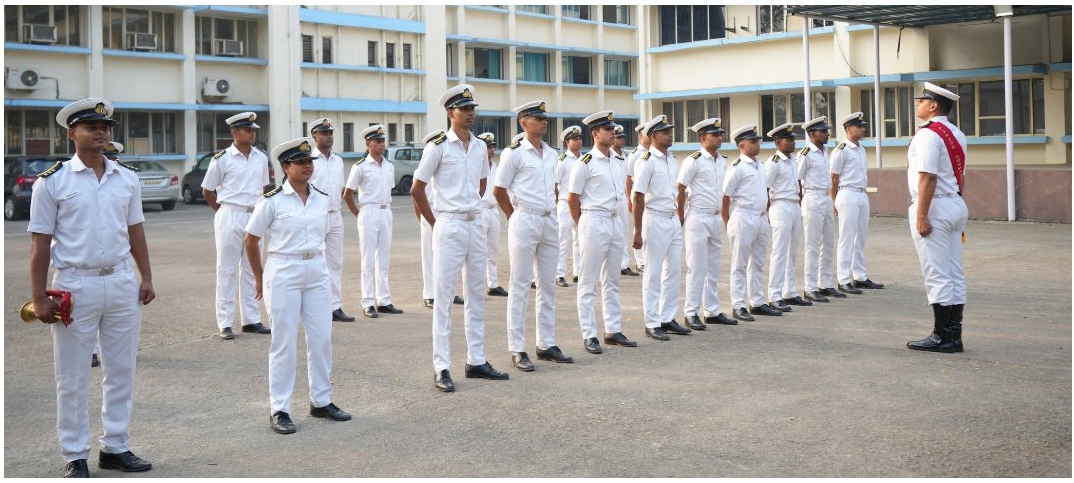
PARADIP: Paradip Port Authority (PPA) undertook an extensive review of its operational, digital and infrastructure capabilities during the two-day visit of Shri Vijay Kumar, IAS, Secretary, Ministry of Ports, Shipping & Waterways (MoPSW), who inspected key facilities across the port.

The Secretary was first welcomed at the Command Control Center at Gate No. 4, where officials briefed him on real-time vessel movement systems, safety monitoring tools, the Digital Access Control System and integrated digital platforms that support the port’s marine operations. The visit reinforced PPA’s push toward smarter, technology-driven port management.

Shri Kumar then inspected the Wet Basin to assess marine and berth operations, including berth readiness and vessel movement coordination. Chairman Shri P. L. Haranadh reaffirmed PPA’s commitment to improving efficiency, safety and preparing for future capacity expansions.

At the Mechanised Coal Handling Plant (MCHP), the Secretary visited the Plant Monitoring Room to review the Rail Receival System and key coal handling functions. He also evaluated mechanised cargo handling infrastructure such as the NIOB Wagon Tippler and the Stacker-Reclaimer system, focusing on wagon unloading efficiency, coal stacking performance and high-capacity cargo evacuation capabilities.

During a visit to the KICT Silo Loading System, Shri Kumar reviewed automated cargo loading operations that enable dust-free handling and faster cargo movement. The Secretary also boarded a vessel at the port to inspect iron ore loading operations, examining onboard systems, safety procedures and the real-time coordination essential for seamless vessel turnaround. He additionally inaugurated the upgraded Dust Suppression System at the MCHP, enhancing PPA’s efforts toward cleaner cargo handling.

PPA MoPSW Secretary Visit 6 1 MoPSW Secretary Vijay Kumar Reviews Key Operations, Unveils New Facilities at Paradip Port

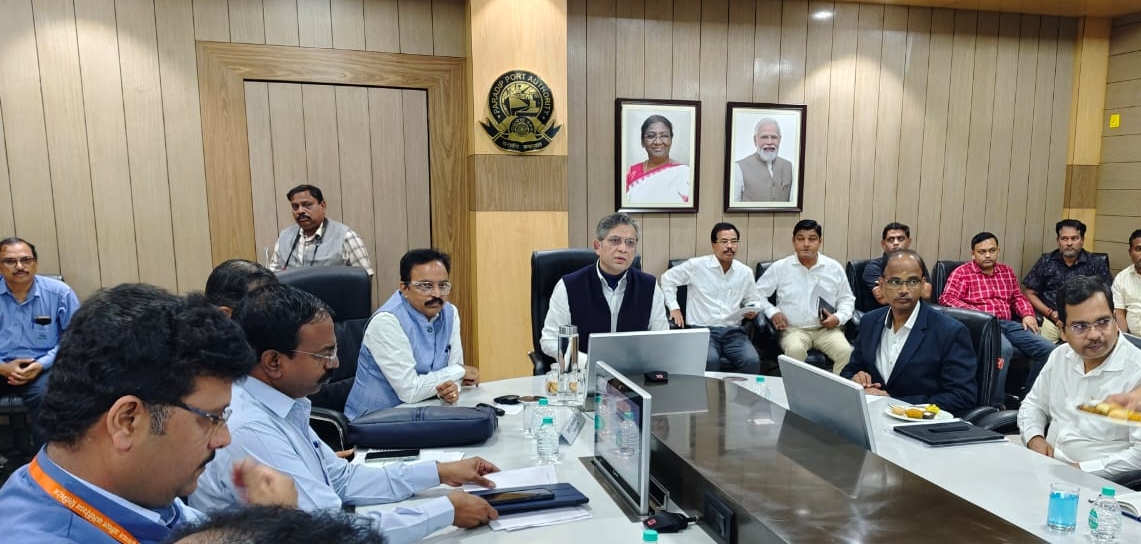
The Secretary later convened a detailed Port Review Meeting with senior officers at the Administrative Building, where he interacted with stakeholders on strengthening logistics infrastructure, improving operational performance and enabling sustainable maritime growth.

Marking a key milestone for the port, Shri Vijay Kumar inaugurated the Integrated Gate No. 1 Complex and the SCADA system for Sub-Stations, in the presence of Chairman Shri P. L. Haranadh. These facilities are expected to boost port security, improve energy management and streamline cargo movement.

As part of community and environmental initiatives, the Secretary also visited the Paradip Golf Course, where he inaugurated one of the holes to enhance recreational amenities for seafarers and port personnel. A tree plantation drive was conducted at the venue, reinforcing the port’s commitment to green development.

The series of reviews and inaugurations underscored Paradip Port Authority’s focus on digital transformation, environmental responsibility and infrastructure modernisation as it continues to strengthen its position as a key gateway for maritime trade.

Allcargo Logistics appoints leaders after domestic business merger

MUMBAI : Allcargo Logistics Limited announced new leadership and its first financial results on 15 November 2025, following the completion of a major corporate restructuring that merged its domestic supply chain operations. The company’s board appointed Ketan Kulkarni as Managing Director and Chief Executive Officer and Deepak Pareek as Chief Financial Officer.

The restructuring, a Composite Scheme of Arrangement approved by the National Company Law Tribunal (NCLT) and effective from 1 November, consolidated the company’s domestic express distribution and contract logistics businesses into Allcargo Logistics Limited. This followed the demerger of its international supply chain business into a separate entity.

Financial Performance Shows Growth

In its first earnings report since the reorganisation, the company posted an 11 per cent growth in revenue for the first half of the 2026 financial year, exceeding Rs 1,000 crore. For the quarter ended 30 September, revenue rose 9 per cent sequentially, with earnings before interest, taxes, depreciation, and amortisation (EBITDA) increasing 23 per cent and profit before tax (PBT) growing 88 per cent from the previous quarter.

The express distribution business registered a 6 per cent year-on-year revenue growth, while its EBITDA saw a significant 32 per cent increase, which the company attributed to a focus on profitable routes and network optimisation. The contract logistics segment delivered even stronger growth, with revenue up 25 per cent and EBITDA rising 22 per cent, driven by new contracts in the e-commerce and chemicals sectors.

Leadership Outlines Unified Strategy

Kulkarni, the newly appointed CEO, linked the financial improvement to operational enhancements. “We have demonstrated healthy numbers on the back of growth in the express logistics and contract logistics businesses,” said Ketan Kulkarni, Managing Director and Chief Executive Officer, Allcargo Logistics Limited.

He added that the revenue increase stemmed from “enhanced service quality, new customer addition for both express logistics and contract logistics segment, along with our continued enhancement in technology and digitalisation that are further strengthening operational efficiency and service reliability.”

The company expects the strong performance from its express business in the second quarter to be sustained through the remainder of the financial year, with further growth anticipated in contract logistics as new customer mandates are executed.

The record date for the corporate arrangement was set for 12 November, determining shareholder eligibility for securities in the demerged and merged entities.

Piyush Goyal holds bilateral meeting with New Zealand Trade Minister to further India–New Zealand FTA negotiations

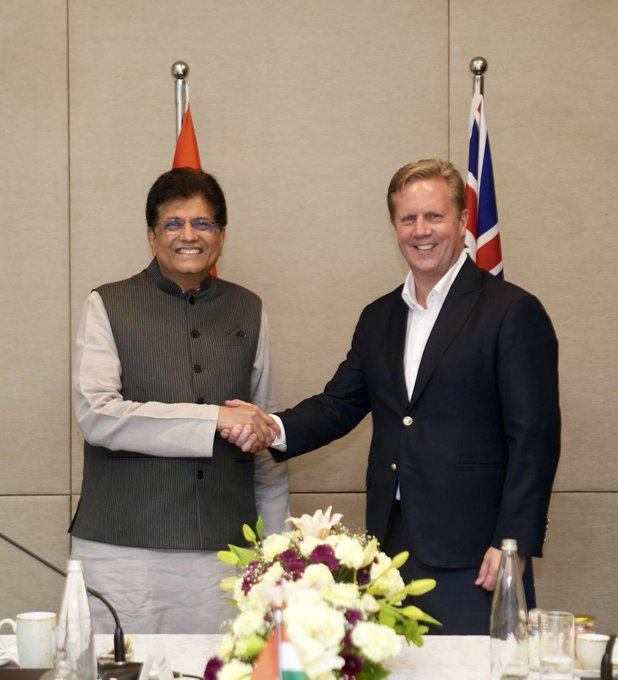
MUMBAI : Union Minister of Commerce & Industry Shri Piyush Goyal on Monday held a bilateral meeting with New Zealand’s Minister for Trade, Todd McClay, in Mumbai to advance discussions on the proposed India–New Zealand Free Trade Agreement (FTA). The engagement marked an important step in the ongoing negotiations, with both Ministers focusing on convergence across key disciplines relating to trade in goods and services.

Both sides acknowledged that the recent round resulted in substantive progress, with closure achieved on several elements and a clear shared understanding emerging on pathways to an early and mutually satisfactory conclusion of the agreement.

The Ministers noted that bilateral merchandise trade between India and New Zealand reached USD 1.3 billion in FY 2024–25, registering a strong growth of nearly 49 percent. They emphasized that a comprehensive and well-balanced FTA would not only accelerate trade flows but also deepen investment linkages, strengthen supply-chain resilience, and provide a transparent, stable, and predictable framework for businesses in both the countries.

Reaffirming their shared commitment to an ambitious and forward-looking partnership, both Ministers expressed confidence that the FTA has the potential to unlock significant opportunities across a wide range of sectors, including services, innovation, and technology collaboration. They agreed to sustain the constructive momentum and to intensify efforts in the coming weeks to facilitate an early, balanced, and mutually beneficial conclusion of the agreement.

First tranche of US-India trade deal is near closure: Commerce Secretary

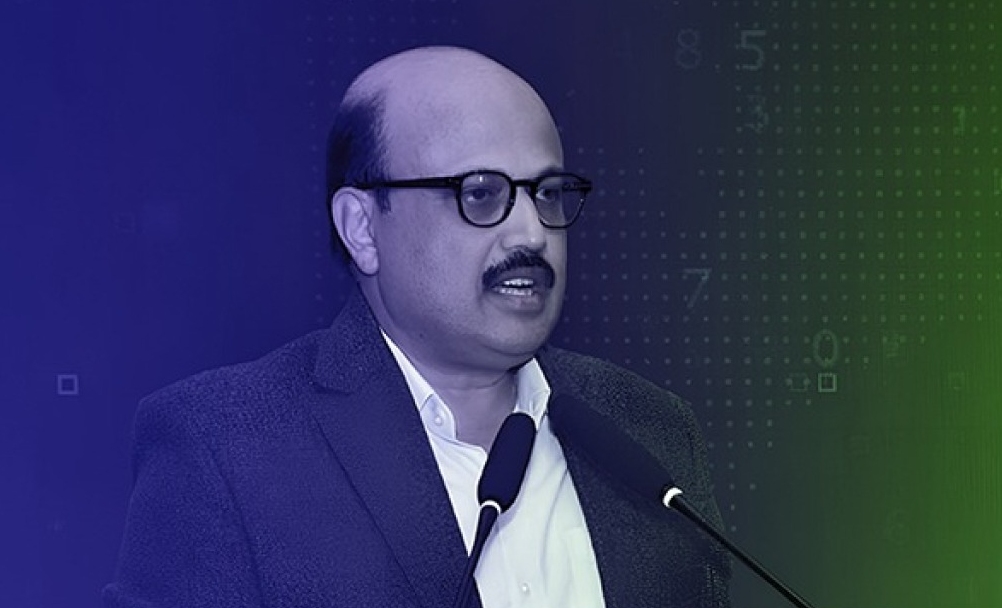
NEW DELHI: India remains engaged with the United States on the proposed Bilateral Trade Agreement (BTA), and the first tranche of the deal, focused on addressing reciprocal tariffs, is now “near closure”, Commerce Secretary Shri Rajesh Agrawal said on Monday while releasing the October trade data.

Agrawal noted that India and the US have been holding virtual discussions on the BTA for months.
The agreement comprises two components, he explained: one that will naturally take more time to negotiate, and a first tranche aimed at resolving tariff-related issues.

“The part relating to reciprocal tariffs should happen sooner rather than later,” he said, while cautioning that specific deadlines cannot be set.

The BTA, formally proposed in February following directives from the leadership of both nations, seeks to more than double bilateral trade, from the current USD 191 billion to USD 500 billion by 2030. Talks were first announced during Prime Minister Shri Narendra Modi‘s visit to Washington earlier this year.

In recent months, negotiations have continued despite tariff escalations by the United States. US President Donald Trump imposed a 25 per cent tariff on Indian goods starting August 1, followed by another 25 per cent increase days later, citing India’s continued purchase of Russian oil. The US has imposed reciprocal tariffs on several countries where it faces trade deficits.

Government officials last week said discussions on the BTA are progressing well and emphasized that the pact would be “highly detailed and fully aligned with WTO norms.” They added that negotiations are being undertaken with sensitivity to key sectors, and an additional round of talks may not be necessary.

Meanwhile, Agrawal confirmed that an India-US LPG supply arrangement, long under consideration, is also moving forward.

He clarified that the prospective LPG purchase is not linked to the trade negotiations but is intended to help maintain the overall trade balance between the two countries.

Over the past few months, both sides have explored an interim trade arrangement; however, India has expressed reservations over US proposals seeking greater access to India’s agricultural and dairy sectors. These sectors remain sensitive for India, given their critical role in employment and livelihoods for millions.

Source: ANI

India merchandise and services exports rise 4.84% to $491.8 billion in April–October

NEW DELHI : The Ministry of Commerce and Industry on Monday said that the cumulative (merchandise and services) exports for April-October 2025 for the current fiscal year (FY26) are estimated to be $491.80 billion, indicating an increase of 4.84 per cent when compared to $469.11 billion of the previous fiscal year’s (FY25) first half of April-October 2024.

The overall worth of goods exports during the period April-October 2025 was $254.25 billion, which is slightly more than the previous year’s $252.66 billion, with a very small growth of 0.63 per cent.

The total non-petroleum exports in this period were $219.90 billion, which is a 3.92 per cent increase over $211.60 billion in April-October 2024, according to the Ministry of Commerce and Industry’s data.

Why did the merchandise export value increase in October?
The main factors behind the increase in the value of merchandise exports in October include electronic goods, meat, and dairy, among others, besides marine products, cashew, and coffee.

The export of electronic goods went up by 19.05 per cent—from $3.43 billion in October 2024 to $4.08 billion in October 2025. Similarly, the export of meat, dairy, and poultry products went up by 30.87 per cent from $0.45 billion in October 2024 to $0.58 billion in October 2025.

In the same period, marine product exports also witnessed a growth of 11.08 per cent from $0.81 billion in October 2024 to $0.90 billion in October 2025. The export of cashew saw a significant increase of 126.85 per cent from $0.03 billion in October 2024 to $0.06 billion in October 2025.

Besides that, coffee exports also increased by 10.91 per cent from $0.12 billion in October 2024 to $0.13 billion in October 2025.

India’s combined exports (merchandise and services) for the month of October reached $72.89 billion. The combined total for October 2025 is the same as that of the previous year, estimated at $94.70 billion, thus showing an increase of 14.87 per cent.

The value of service imports is estimated to be $118.87 billion in April-October 2025, thus making an increase over $114.96 billion in the same months of 2024.

The export of services over imports from April to October 2025 is $118.68 billion, whereas in April-October 2024 it was $101.49 billion.

Data revealed that the top five positive growth countries by value change for October 2025 are China (42.35 per cent), Spain (43.43 per cent), Sri Lanka (29.02 per cent), Vietnam (21.42 per cent), and Tanzania (17.92 per cent).

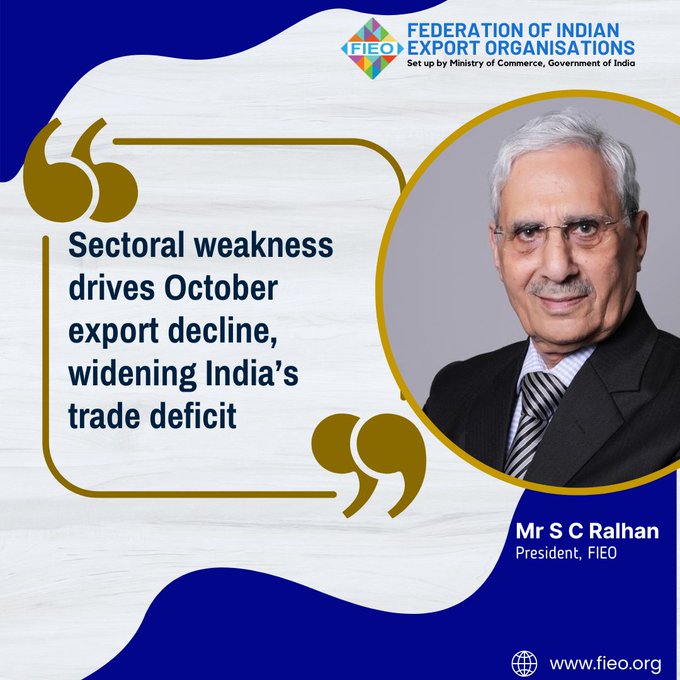
Sectoral weakness drives October export decline, widening India’s trade deficit: President, FIEO

NEW DELHI : Reacting to the October trade data, FIEO President, Mr S C Ralhan, said that the latest figures reflect a mixed trend, with a marginal decline in overall exports and a significant rise in imports, resulting in a wider trade deficit. India’s overall exports for October 2025 stood at US$ 72.89 billion, slightly lower than US$ 73.39 billion recorded in October 2024. Imports, however, increased sharply to US$ 94.70 billion, up from US$ 82.44 billion last year, leading to an overall trade deficit of US$ 21.80 billion for the month.

Mr Ralhan highlighted that the decline in merchandise exports—which fell to US$ 34.38 billion in October 2025 from US$ 38.98 billion a year earlier—was primarily driven by a sharper fall in several dominant export sectors. Key segments such as engineering goods, petroleum products, gems and jewellery, apparels and textiles, organic and inorganic chemicals, pharmaceuticals, and plastic goods witnessed noticeable contraction, weighing down the overall export performance. Meanwhile, merchandise imports rose to US$ 76.06 billion, compared to US$ 65.21 billion in October 2024, pushing the merchandise trade deficit to US$ 41.68 billion.

Commenting further, the FIEO Chief stated that the export contraction mirrors the broader global economic slowdown, marked by geopolitical uncertainties, subdued demand in multiple major markets, and persistent volatility in commodity prices. Despite such headwinds, Indian exporters have displayed resilience, even as elevated logistics costs and fluctuating input prices continue to challenge competitiveness.

He also underlined that the rise in imports—particularly of critical inputs and components—reflects the ongoing dependency of Indian manufacturing on imported raw materials. Strengthening domestic supply chains, ensuring timely raw material availability, and accelerating efforts toward self-reliance in key sectors must remain priority areas, he added.

Highlighting sectoral performance trends for April–October 2025, Mr Ralhan noted that India’s top 10 export commodities included engineering goods, petroleum products, electronic goods, drugs and pharmaceuticals, gems and jewellery, organic and inorganic chemicals, readymade garments of all textiles, cotton yarn/fabrics/made-ups including handloom products, rice, and plastic and linoleum products.

On the import side, the top 10 commodities during the same period comprised petroleum, crude and products, electronic goods, gold, machinery and electrical products, transport equipment, organic and inorganic chemicals, non-ferrous metals, coal and related products, plastic materials, and iron and steel.

Expressing concern over the widening trade gap, Mr Ralhan urged for decisive and timely policy intervention. He reiterated the need for enhanced export support measures, faster release of benefits under various schemes, improved and affordable credit access, and reduction of compliance burdens so that exporters can remain competitive in a challenging global environment.

Mr Ralhan also conveyed his appreciation to the Government for its continued support under the Export Promotion Mission and the Credit Guarantee Scheme for exporters, as well as to the Reserve Bank of India for its timely trade-related relief measures, including the extension of export realisation periods, extended shipment timelines for advance-payment exports, relief on debt repayment for impacted sectors, and relaxations in export credit repayment. He, however, requested the RBI to extend the relief to all exporters impacted by the reciprocal tariff rather than restricting to specified sectors.

FIEO remains optimistic that—with sustained policy support and gradual improvement in global demand conditions—India’s export sector is well-placed to recover strongly in the coming months.

Gati Shakti Vishwavidyalaya and DRDO sign MoU to develop smart tech solutions for national security

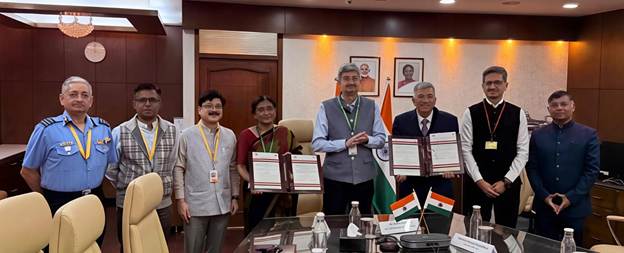
NEW DELHI : A Memorandum of Understanding between Gati Shakti Vishwavidyalaya (GSV) and Defence Research and Development Organization (DRDO) was signed on November 17, 2025 in New Delhi in the presence of Dr. Samir V. Kamat (Chairman – DRDO, and Secretary of Defence R&D). GSV and DRDO joined hands to develop smart technological solutions for national security. Dr. Samir V. Kamat said on the occasion, “the collaboration is expected to facilitate the development of technological solutions for deployment aspects of indigenous defence systems.”

The MoU shall be a medium for collaborative studies and R&D directed toward the areas of Logistics Management, Operational logistics at tactical, operational and strategic level for analysis of concepts and validation of operational logistics plan, Chip Design & Hardware Security and Homomorphic / Block Chain based Encryption.

The key focus shall be to build capacities of researchers and scientists in the operational and military science domain, logistics management and technical research. Both organizations will be involved in conducting research, hold joint seminars/conferences, capacity building and round table workshops. Prof. Manoj Choudhary (Vice Chancellor, GSV) and Dr. Lal Chand Mangal, (DS & DG(TM)) were the signatories.

The university already has strong collaboration with all the 3 defence forces viz. Indian Army, Indian Air Force and Indian Navy for Logistics and Supply chain research and education. Therefore, the MOU with DRDO enables GSV to enhance its value proposition for the sector through cutting-edge research.

Gati Shakti Vishwavidyalaya (GSV), India’s first University in the Transportation and Logistics sector, was established as a Central University by the Act of Parliament in 2022. Working under the Ministry of Railways (Govt. of India), the University covers the entire transportation sector including Railways, Highways, Ports, Aviation, Maritime, Shipping, Inland Waterways, Urban Transport and complete Logistics and supply chain networks. The university is headed by Sh. Ashwini Vaishnaw (Union Minister for Railways, Information & Broadcasting, Electronics & Information Technology) as the University Chancellor.

IMU Celebrates Foundation Day, Marking a New Momentum Year for Maritime Education

CHENNAI: The Indian Maritime University (IMU) celebrated its Foundation Day last Friday on 14th November,2025 at its Chennai campus with students, faculty members, and senior officials coming together to mark the institution’s ongoing progress in the maritime education landscape.

This year holds special significance for IMU, as the university enters a momentum phase driven by strategic collaborations and academic advancements. During the recently held Indian Maritime Week (IMW) 2025, IMU signed 14 Memorandums of Understanding (MoUs) with leading industry partners. These partnerships aim to create new pathways in skill development, research, and academic enrichment for maritime students across the country.

Speaking on the occasion, an IMU spokesperson, PRO VC, Dr Rajoo Balaji, said, “IMU celebrated its foundation day today—we can say that we are in momentum to propel towards maritime growth. Recently, we have had 14 MoUs signed in IMW 25—the objective of one of these MoUs would be to gain some benefits for students, and the other one will be the engagement in research in the industry, so this is going to be the real-life problem solver for the industry.”

The Foundation Day event also reaffirmed IMU’s commitment to nurturing future-ready maritime professionals and strengthening its role as a centre of excellence in education, research, and industry collaboration.

Govt approves 17 projects under electronics component PLI Scheme worth Rs 7,172 crore

NEW DELHI : The Central government has cleared another tranche of applications under the Electronic Component Manufacturing Scheme with a total investment of Rs 7,712 crore, IT Secretary S Krishnan said on November 17.

Krishnan, while addressing an event in New Delhi, said that the government has approved 17 applications in the current tranche out of 249.

Interestingly, the current tranche of applications also secured its first investment from Jammu and Kashmir. Other locations where the companies hail from include Uttar Pradesh, Madhya Pradesh, Karnataka, Maharashtra, Tamil Nadu and several others.

The 10 of the 17 approvals include Aequs Consumer Products Private Limited with a cumulative investment of Rs 1,500 crore, and production of Rs 7,669 crore; Secure Circuits; TE Connectivity India Private Limited with investment of Rs 612 crore, Jabil Circuit Private Limited with investment of Rs 957 crore; Zetfab; Zetchem with an investment of Rs 55 crore, Micropack Pvt with an investment of Ra 54 crore; Asux Safety Components; Uno Minda with an investment of Rs 264 crore, AT&S India; HI-Q; Infopower Technologies Private Limited; Syrma Mobility Private Limited with an investment of Rs 250 crore, J&K-based Meena Electrotech Private Limited with an investment of Rs 111 crore.

“The basic objective is to deepen value chain in India. World is looking at diversification of value chains, and India is a key player in that,” Krishnan said.

Union IT minister Ashwini Vaishnaw said, “To achieve long term success we have to achieve three major things: we have to develop our design teams whatever may be the hard-work that we have to put in, it has to be done. Secondly, our concentration has to be on six sigma quality in every product you manufacture., the focus should be on developing Indian suppliers and ensure they meet quality standards. These are my three asks. We will continue to engage with you on this.”

Additionally, Vaishnaw said that the government will come up with a skilling framework for the electronics sector.

DRI seizes smuggled 30,000 pieces firecrackers worth ₹5 crore at Mundra Port; one arrested

MUNDRA : In a continued effort under operation “Fire Trail” to counter illicit import of firecrackers, the Directorate of Revenue Intelligence (DRI), has successfully busted another sophisticated smuggling attempt involving the illegal import of Chinese-origin fireworks and firecrackers into India.

During the operation, DRI officers intercepted a 40-foot container at Mundra Port, originating from China, which was declared as carrying “water glass set” and “flower receptacle”. A detailed examination revealed 30,000 pieces of concealed Firecrackers/ Fireworks hidden behind a front layer of water glass set. Earlier, during the month of October, 2025 DRI had successfully thwarted the attempts of illegal import of Chinese firecrackers at Mumbai and Tuticorin.

The import of firecrackers is ‘Restricted’ under the ITC (HS) Classification of the Foreign Trade Policy and requires valid licences both from the Directorate General of Foreign Trade (DGFT) and the Petroleum and Explosives Safety Organization (PESO) under the Explosives Rules, 2008. The importer did not have any valid documents to support the import and accepted that the goods have been smuggled for monetary gain. Accordingly, the smuggled Chinese firecrackers along with the cover cargo/goods totally estimated at Rs 5 crore was seized on 15.11.2025 under Customs Act, 1962. The mastermind-cum-financier of the transaction has been arrested.

The unlawful import of such hazardous goods poses grave risks to public safety, national security, critical port infrastructure, and the wider shipping and logistics chain. The DRI remains steadfast in its mission to safeguard public from hazardous contraband and uphold the integrity of the country’s trade and security ecosystem, by detecting and dismantling such organized smuggling networks.