Home Blog Page 564

India may gain slight edge as US exempts several agri products from reciprocal tariffs: GTRI report

NEW DELHI: India is expected to gain a small edge as the US administration has exempted agricultural products from the reciprocal tariffs it had imposed on several countries, said trade think tank GTRI.

The United States has removed a set of agricultural products from the reciprocal tariffs introduced earlier this year, meaning these items will now face only the standard MFN duties.

A White House Executive Order issued on November 12 excludes coffee, tea, tropical fruits, fruit juices, cocoa, spices, bananas, oranges, tomatoes, beef and certain fertilizers from the April 2 reciprocal tariff regime, according to a Global Trade Research Initiative (GTRI) report put out on Saturday.

The exemptions took effect on November 13. These goods are either not produced in adequate quantities domestically or depend on climate conditions the US cannot replicate, GTRI has asserted.

For the tariff-exempt products identified in the order, India today supplies only USD 548 million of America’s USD 50.6-billion import basket–reflecting a narrow export footprint dominated by a few winners, GTRI noted.

US’ demand for these items is heavily concentrated in categories.

India’s exports to the US are concentrated in a handful of high-value spices and niche products: pepper and capsicum preparations (USD 181 million), ginger-turmeric-curry spices (USD 84 million), anise and cumin seed categories (USD 85 million), cardamom and nutmeg (USD 15 million), tea (USD 68 million), and modest quantities of coconuts, cocoa beans, cinnamon, cloves, and fruit products.

“But India has almost no presence in several of the largest exempted lines–tomatoes, citrus fruits, melons, bananas, most fresh fruits, and fruit juices,” GTRI noted. It’s not clear yet whether Indian exports will be exempt from 25 per cent reciprocal tariffs or full 50 per cent tariffs.

“The shift in U.S. tariff policy could marginally strengthen India’s competitive position in spices and niche horticulture, but the broader gains will accrue mainly to major Latin American, African, and ASEAN farm exporters unless India expands scale, builds cold-chain capacity, and diversifies its agricultural export basket,” GTRI concluded.

Source: ANI

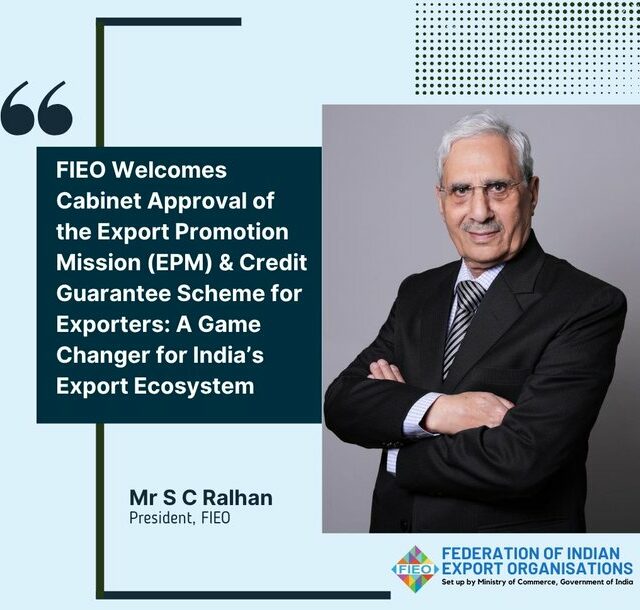
FIEO welcomes Cabinet approval of the Export Promotion Mission (EPM) & Credit Guarantee Scheme for exporters: A game changer for India’s Export Ecosystem

NEW DELHI : The Federation of Indian Export Organisations (FIEO) welcomes the Union Cabinet’s approval of the Export Promotion Mission (EPM) — a flagship initiative announced in the Union Budget 2025–26 — aimed at strengthening India’s export competitiveness, particularly for MSMEs, first-time exporters, and labour-intensive sectors. The Mission, with a total outlay of ₹25,060 crore for FY 2025–26 to FY 2030–31, marks a major structural reform by consolidating multiple export promotion schemes into a comprehensive, outcome-based, and digitally driven framework.

Speaking on the development, Mr S C Ralhan, President, FIEO, said “the Export Promotion Mission reflects a pragmatic and forward-looking vision for India’s trade sector. By bringing together financial and non-financial interventions under a unified framework, the Mission provides much-needed continuity, flexibility, and responsiveness to global trade dynamics. It will particularly empower MSMEs, who often struggle with access to affordable finance and compliance support.”

Highlighting the Mission’s inclusivity, Mr Ralhan added “the EPM is a timely response to the structural challenges that have long blunted the competitive edge of Indian exports — from limited access to finance and high compliance costs to weak branding and logistics bottlenecks. By directly tackling these issues, the initiative will help sustain export momentum, safeguard employment, and diversify India’s export base into new geographies and emerging sectors.”

Under the EPM, special focus will be given to sectors impacted by recent global tariff escalations such as textiles, leather, gems & jewellery, engineering goods, and marine products, thereby ensuring continued export orders and job protection. The Directorate General of Foreign Trade (DGFT) will serve as the implementing agency, managing all processes digitally through an integrated platform to ensure transparency, speed, and ease of access.

Mr. Ralhan further remarked “the Mission’s digital integration with existing trade systems will transform the exporter’s experience — reducing paperwork, improving coordination, and ensuring timely disbursals. This is a significant stride toward creating a smart, tech-enabled export ecosystem aligned with the vision of Viksit Bharat @2047.”

The FIEO President emphasized that the Export Promotion Mission will not only boost MSME participation in exports but also catalyze employment generation across manufacturing, logistics, and allied services, strengthening India’s position in global value chains.

The Credit Guarantee Scheme for exporters will not only provide the collateral free lending but also infuse additional financial liquidity which is the need of the hour , observerd President FIEO.

“FIEO looks forward to working closely with the Department of Commerce, DGFT, and other stakeholders to ensure effective on-ground implementation of the Mission. This is a transformative moment for Indian exports, and we must seize it with full commitment,” concluded Mr Ralhan.

India remains second-largest buyer of Russian Oil despite U.S. pressure

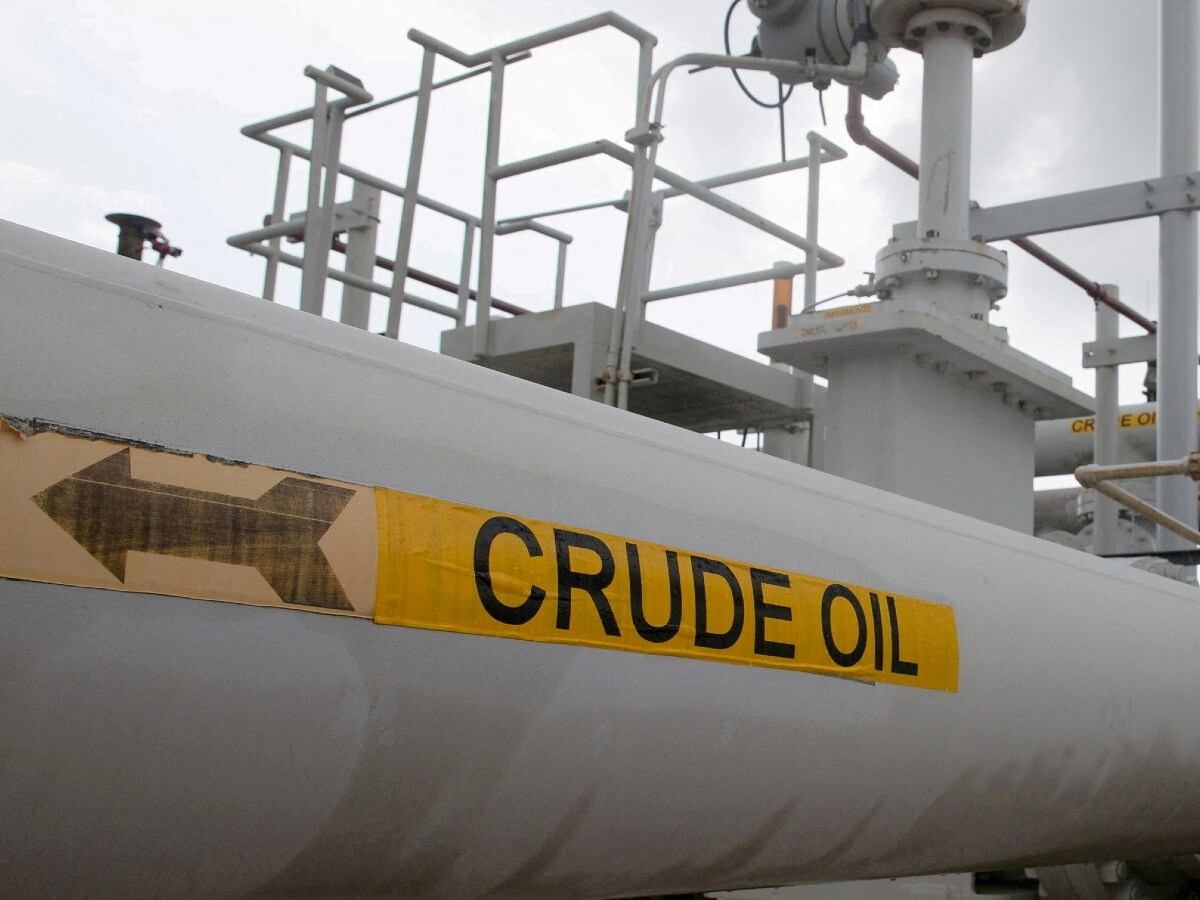
NEW DELHI : India’s crude oil inflows from Russia remained robust in October, touching $2.9 billion, even as the U.S. tightened sanctions on major Russian energy producers. According to new data from the Centre for Research on Energy and Clean Air (CREA), India continued as the second-largest global buyer of Russian fossil fuels, trailing only China.

Sanctions Pressure vs. Energy Security

The U.S. recently imposed sanctions on Rosneft and Lukoil—two of Russia’s biggest oil firms—to restrict Moscow’s financial ability to sustain the Ukraine conflict. This development also came amid President Donald Trump’s repeated assertions that India has significantly reduced its intake of Russian crude after tariffs imposed by Washington.

The sanctions prompted several Indian refiners—Reliance Industries, HPCL-Mittal Energy, and Mangalore Refinery and Petrochemicals Ltd (MRPL)—to temporarily pause purchases. Yet, Russian oil continued to flow into India in substantial quantities. Russia shipped 60 million barrels in October alone, with Rosneft and Lukoil delivering 75% of that volume.

Breakdown of India’s Russian Energy Bill

CREA’s October report highlights:

€3.1 billion (approx. $3.4 billion) total Indian imports of Russian fossil fuels

81% crude oil (€2.5 billion)

11% coal (€351 million)

7% oil products (€222 million)

India’s appetite for discounted Russian oil surged after the 2022 Ukraine invasion, moving from less than 1% of India’s crude imports to nearly 40% at its peak. In September alone, India spent $4.18 billion on Russian energy, indicating consistently high dependence.

State Refiners Ramp Up Purchases

Interestingly, October saw a shift in buying patterns. While private refiners still led purchases, state-owned refiners nearly doubled their Russian crude intake from the previous month.

Adding to this, the Rosneft-owned Vadinar refinery in Gujarat—sanctioned earlier by the EU and UK—operated at 90% capacity in October. Since EU sanctions in July, the refinery has relied exclusively on Russian crude, marking a 32% month-on-month jump in Russian oil arrivals—its highest since the start of the full-scale war.

The refinery’s exports have decreased sharply by 47 per cent compared to the same month last year, reaching the lowest levels since May 2023, according to the report.

“While there was an 8 per cent month-on-month reduction in sanctioning countries’ imports from the six Indian and Turkish refineries using Russian crude in October, the decrease was led chiefly by the EU and UK, which recorded monthly reductions of 9 per cent and 73 per cent,” CREA said.

After Russia invaded Ukraine in February 2022, a series of sanctions was imposed by the United States, the European Union, and other Western nations with the aim to hamper the Russian economy. One of the primary sanctions targeted Russian oil exports, which greatly affected Russia’s capacity to sell oil to European markets.

Consequently, Russia started selling crude oil at heavily discounted rates to attract new buyers. India, with its significant energy demands and an economy sensitive to fluctuations in oil prices, ramped up its purchases.

The discount on Russian oil, which has sometimes been as high as $18-20 per barrel below the market price of other oils, enabled India to buy oil at a cheaper price.

Indian Navy to commission Mahe, first of eight ASW-SWC being built by CSL, Kochi

Mahe1NB0I Indian Navy to commission Mahe, first of eight ASW-SWC being built by CSL, Kochi

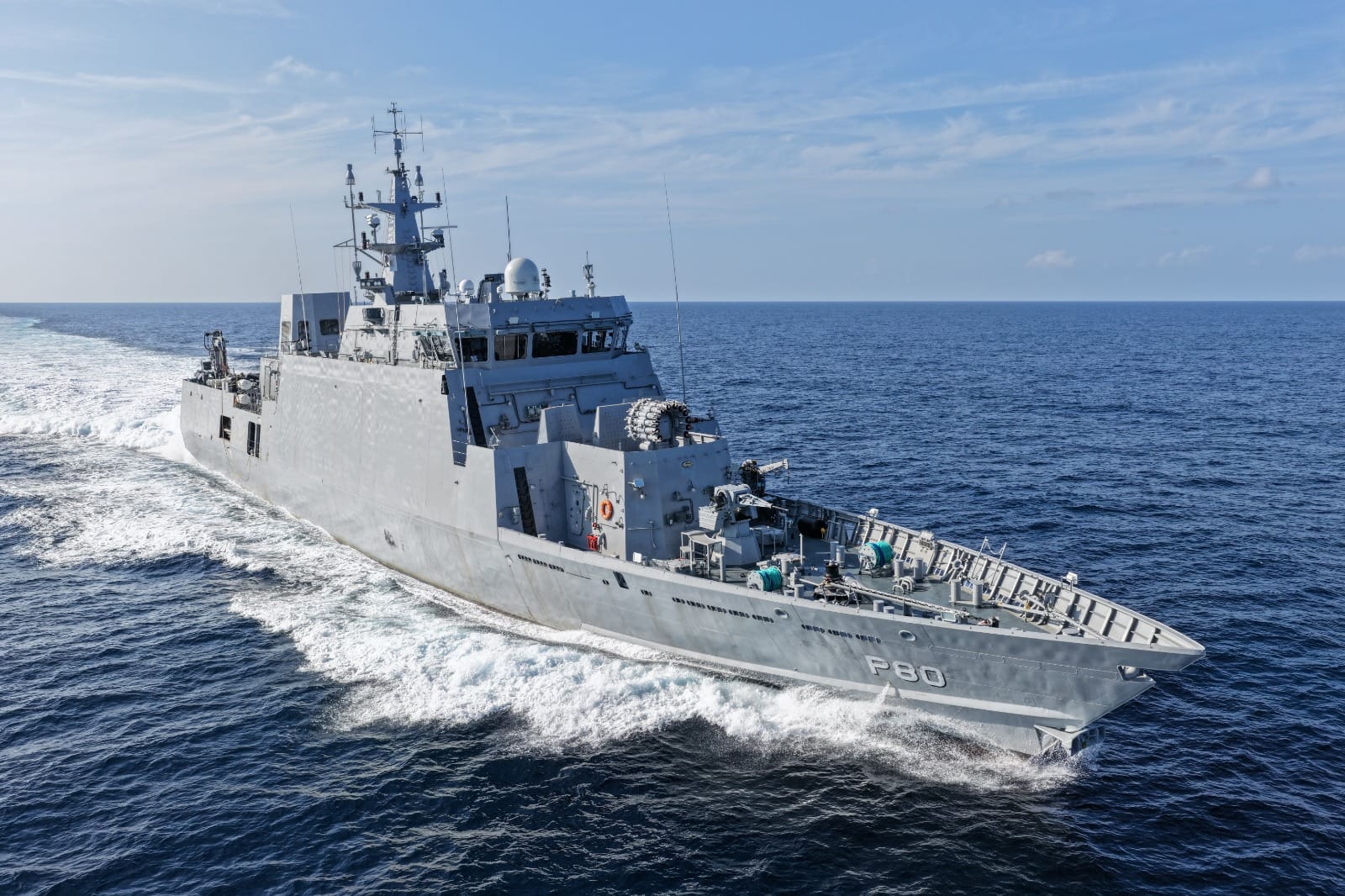
MUMBAI : The Indian Navy is poised to script another milestone in its indigenous shipbuilding journey with the commissioning of Mahe, the first of the Mahe-class Anti-Submarine Warfare Shallow Water Craft (ASW-SWC), at the Naval Dockyard, Mumbai, on 24 Nov 2025.

Built by Cochin Shipyard Limited (CSL), Kochi, Mahe represents the cutting edge of India’s Aatmanirbhar Bharat initiative in naval ship design and construction. Compact yet powerful, the ship embodies agility, precision and endurance – qualities vital for dominating the littorals.

With her blend of firepower, stealth and mobility, the ship is designed to hunt submarines, conduct coastal patrols, and secure India’s vital maritime approaches.

With over 80 percent indigenous content, the Mahe-class showcases India’s growing mastery in warship design, construction and integration. Named after the historic coastal town of Mahe on the Malabar Coast, the ship’s crest features an ‘Urumi’, the flexible sword of Kalaripayattu, symbolising agility, precision, and lethal grace.

The commissioning of Mahe will mark the arrival of a new generation of indigenous shallow-water combatants – sleek, swift, and resolutely Indian.

CMA CGM announces PSS from Europe, the Middle East, Red Sea, Indian Subcontinent, Latin America & North America to Equatorial Guinea

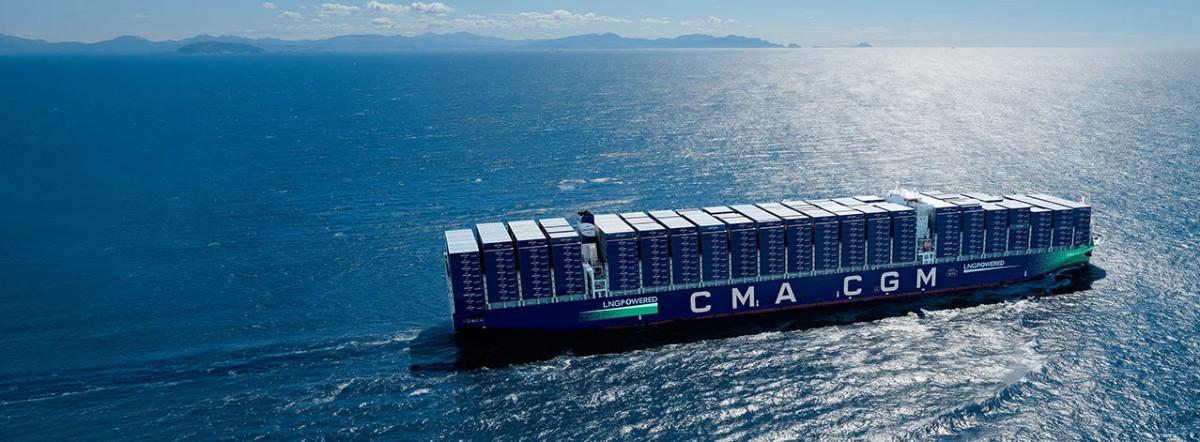
MARSEILLE: In a continued effort to provide their customers with reliable and efficient services, CMA CGM informs its customers of the following Peak Season Surcharge (PSS)*:

From December 1st, 2025, loading date, until further notice:

– Origin range: North Europe (including North Continent, Scandinavia, Baltic), Mediterranean (East/West Mediterranean & North Africa including Morocco), Middle East, Indian Subcontinent (including Sri Lanka) & Red Sea

– Destination range: Bata & Malabo, Equatorial Guinea

– Cargo: All 

– Amount: USD 300 / EUR 300 / GBP 250 per container

– Settlement: with the freight

From December 15th, 2025, loading date, until further notice:

– Origin range: North America (including Canada), Central America, South America & the Caribbean

– Destination range: Bata & Malabo, Equatorial Guinea

– Cargo: All 

– Amount: USD 600 per container

– Settlement: with the freight

CTG Port Authority entering into concession agreement for 30 years with APMT

CHITTAGONG : The Chittagong Port Authority (CPA) is entering into a concession agreement for 30 years of operations plus an extension tied to KPIs with APM Terminals B.V., a wholly owned subsidiary of A.P. Møller – Maersk one of the world’s leading integrated logistics companies, majority-controlled by the A.P. Møller Foundation of Denmark, to design, finance, build and operate the Laldia Container Terminal (LCT) under a Public-Private Partnership (PPP) framework.

The ownership of the port will continue with Chittagong Port Authority (CPA), while APM Terminals & a local JV partner will only be responsible for construction, operations, and management. This will reduce the capital expenditure burden for Bangladesh government.

APM Terminals B.V. is wholly owned by A.P. Moller Maersk, headquartered in Denmark, the #1 country globally for anticorruption. It is one of the world’s leading terminal operators (more than 60 terminals in 33 countries), operating terminals in 10 of the world’s top 20 best-performing container ports (World Bank, 2024). With extensive global experience across the world including East and South Asia (example: China, Singapore, Sri Lanka, Vietnam, and Malaysia), the Laldia project will introduce world class technology and operational excellence to Bangladesh, helping make the country’s logistics sector future-ready in the post-LDC era.

The newest green port will accommodate large container vessels (2x vs current size), reduce per-unit freight cost and enable direct shipping connectivity worldwide. Developed under a revenue-sharing concession model, the project will generate a stable foreign-currency income stream for Bangladesh while minimising public capital expenditure. Along with that 24/7 port operations with night navigation capabilities for ships with permissible length and draught will be enabled for the first time in Bangladesh.

Key benefits:

Foreign direct investment (FDI): Under the Concession agreement, APM Terminals B.V. is expected to bring in Foreign Direct Investments (FDI)’s for an expected amount of about US $550 million via construction of a greenfield port terminal in Ladia, Chittagong. This will be the single largest European equity investment in Bangladesh to date.

A marquee global investor such as APM Terminals entering the port sector also signals confidence to other international financers, crowding-in additional FDI to logistics, manufacturing, and ancillary services.

New container-handling capacity: The terminal is expected to add over 800,000+ TEUs per year (+44% vs current capacity). The terminal is expected to be commissioned by 2030. This will help relieve the current level of congestion at existing container terminals of Chattogram and providing headroom for Bangladesh’s fast-growing trade volumes.

Enhanced revenues for CPA & GOB: Higher throughput and efficiency gains from this LCT project will boost CPA’s annual revenues by receiving a Revenue in USD/TEU) for every container handled by APMT. In addition, there will be contribution from tax payments by APMT and additional revenue from ancillary marine services.

Large-scale job creation: Construction and operations from this Laldia Container Terminal (LCT) project are expected to generate over 500-700 direct and formal jobs plus several thousand indirect jobs in construction, trucking, warehousing, freight forwarding, and local SMEs

Global operating and safety standards: APM Terminals will apply internationally benchmarked health, safety, security, environment protocols, lowering accident rates and improving workforce wellbeing.

Latest technology transfer: Deployment of APM Terminals’ advanced technology in the construction of the port will modernise Bangladesh’s port infrastructure and build local technical expertise. The LCT terminal is expected to be a state-of-the-art modern operational terminal at the end of its construction period.

Lower Trade Costs & Faster Delivery for businesses: Global port operators such as APMT bring efficiency in port operations through – faster vessel turnaround, improved container dwell times via their operations which will result in a cut in the logistics costs for exporters and importers. Lower cost of shipping through reduced waiting time will help Bangladeshi exporters especially in time-sensitive sectors such as ready-made garments, agro-processing, and light engineering meet just-in-time delivery requirements, retain buyers, and compete more effectively in regional and global markets.

Workforce upskilling and knowledge transfer: APM Terminals’ in-house training programmes covering equipment maintenance, digital terminal-operating systems, and international climate and environmental standards will upskill Bangladeshi engineers, technicians, and managers. The creation of a locally trained talent pool raises productivity across the broader logistics sector and improves employability for Bangladeshi seafarers and port professionals abroad. APM Terminals is expected to deploy experienced personnel from other terminals to aid technology and process transfer (e.g.- Integration of LEAN methodology and FLOW operational process framework).

Catalyst for hinterland development: Throughput of over 800,000+ TEUs per annum will encourage private investment in inland container depots, cold chains, and industrial parks along Dhaka-Chattogram and other corridors spreading economic activity beyond port cities. The LCT project is expected to contribute towards the same.

Greener, more climate-resilient port infrastructure: The project will embed energy-efficient equipment and adopt other global climate practices, cutting carbon emissions and enhancing resilience to issues related to climate change. By aligning with global sustainability standards, the terminal supports Bangladesh’s Nationally Determined Contributions (NDC) under the Paris Agreement and positions the country to attract climate-smart investment in other infrastructure sectors.

Demonstration effect for Bangladesh’s broader PPP agenda: A successful long-term concession with a global operator such as APM Terminal signals that Bangladesh can structure, tender, and oversee complex public-private partnerships in line with international best practice. This track record is expected to lower perceived risk, broaden the pool of prospective investors, and catalyze additional PPPs in energy, transport, and social infrastructure helping close Bangladesh’s overall infrastructure financing gap.

DCSA launches Identity Exchange to strengthen identity verification in container trade

The Digital Container Shipping Association (DCSA) has launched Identity Exchange; a digital solution designed to simplify and enhance business identity verification across the shipping and logistics industry.

Global trade relies on trust, but every new partnership begins from zero. Organisations repeatedly perform compliance and KYC checks, collect documents, and verify identities across multiple jurisdictions. The process is slow, inconsistent, and costly, exposing the system to unnecessary risk.

Identity Exchange provides a trusted gateway to verified company information. It helps organisations improve data quality, reduce compliance risk, and accelerate partner onboarding thereby delivering a more reliable foundation for digital trade.

Developed in close collaboration with DCSA’s founding member carriers and industry partners, Identity Exchange reflects the association’s mission to enable and accelerate digital transformation across container trade. This collaboration has been essential in shaping a product that meets real operational needs and is deeply rooted in the workings of global trade.

Niels Nuyens, Chief Product Officer at DCSA, comments “Identity Exchange reflects DCSA’s broader role in driving the industry’s digital transformation. Standards remain fundamental to this mission, but achieving true digitalisation demands stronger digital infrastructure. We are proud to deliver DCSA’s first product, one that enhances daily operations and builds on the foundation the industry needs to digitalise effectively at scale.”

Identity Exchange has demonstrated strong performance in use, achieving a 95% success rate in delivering verified company data. This result underscores its effectiveness as a purpose-built solution that strengthens compliance, improves onboarding efficiency, and adds measurable value to daily operations.

Yossi Bar, Traffic Manager and Missy Barron, Business and Documentation Supervisor, from ZIM’s Global Customer Service Directorate confirm “The Identity Exchange Platform supports our strategy to continue and provide excellent service to our customers while ensuring our compliance with international regulations and sanctions.”

DCSA’s product initiatives are developed collaboratively to accelerate digital transformation across container shipping. Any revenue generated supports the association’s ongoing work, ensuring continued delivery of open standards and industry wide solutions.

Identity Exchange is available immediately through both web interface and API integration. DCSA is offering a limited trial period to organisations wishing to test the product.
Source: DCSA

Baltic Index rises to One-Month High on Strong Vessel Rates

LONDON: The Baltic Exchange’s Dry Bulk Sea Freight index, which monitors rates for vessels moving dry bulk commodities, rose on Friday to a one-month high and logged a small weekly gain, supported by higher vessel rates across all segments.

The main index, which factors in rates for capesize, panamax and supramax shipping vessels, rose 48 points, or 2.3%, to 2,125 points, its highest since October 13. The index recorded a weekly gain of about 1%.

The capesize index added 119 points, or 3.8%, to 3,252 points, but saw a weekly decline of 2.7%.

Average daily earnings for capesize vessels, which typically transport 150,000 to ton cargoes such as iron ore and coal, increased by $988 to $26,968.

Iron ore futures prices moved in a tight range on Friday, as investors were digesting mixed signals: surprisingly firm demand data versus still weak property market data in top consumer China.

The panamax index was unchanged at 1,897 points. It logged a weekly gain of 3.5%.

Average daily earnings for panamax vessels, which usually carry 60,000-70,000 tons of coal or grain, fell by $4 to $17,701.

Among smaller vessels, the supramax index gained 21 points to 1,408 points, and saw a weekly gain of 6.7%.
Source: Reuters

Adani Group to invest Rs 1 lakh cr in Andhra Pradesh

VISAKHAPATNAM : Billionaire Gautam Adani’s ports-to-energy conglomerate will invest over Rs 1 lakh crore across sectors like data centres and cement in Andhra Pradesh over the next decade as it looks to consolidate and grow business in southern India.

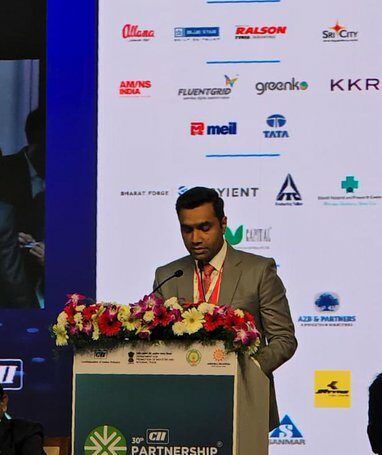
Speaking at Andhra Pradesh 30th CII Investor Summit here, Adani Ports & SEZ Managing Director Karan Adani said the investment, which will span across ports, cement, data centres, energy and advanced manufacturing, is over and above the Rs 40,000 crore already invested. Weeks after stitching a partnership with Google, a mega AI data centre in the state, he also unveiled the Group’s USD 15-billion Vizag Tech Park vision, which includes building one of the world’s largest green-powered hyperscale data-centre ecosystems in partnership with Google.

“The Adani Group’s belief in Andhra Pradesh is not new. We do not just talk about investment – we demonstrate it. So far, we have invested over Rs 40,000 crore, across ports, logistics, cement, infra and renewable energy. And we are not stopping there,” he said. “Over the next ten years, we plan to invest an additional Rs 1,00,000 crore, across ports, cement, data center, energy and advanced manufacturing.”
The conglomerate saw Andhra Pradesh not as a destination for investment, but as a launchpad for India’s next decade of transformation, he said.

At the Vizag Tech Park, he said Adani in partnership with Google will build one of the world’s largest hyperscale data-center ecosystems, powered by green energy. Google and Adani will invest USD 15 billion over the next five years to develop a data centre hub in Vizag. The project is Google’s largest AI hub investment outside the US and will include a purpose-built, gigawatt-scale data center campus.
“This is a combined USD 15-billion vision that perfectly aligns with your twin goals of sustainable and high-tech growth,” he said.

AdaniConneX, a joint venture between the Adani Group and data center operator EdgeConneX, will undertake the project, which will be supported by a subsea cable network and powered by renewable energy. Adani Group will also build new transmission lines, generate renewable power, and build energy storage systems in the state. The facility will help meet India’s growing demand for AI and will also collaborate with telecom tycoon Sunil Bharti Mittal’s Bharti Airtel.

Karan, eldest son of billionaire Gautam Adani, said, Andhra Pradesh is the eastern gateway of India to the world. “But geography alone does not create history. Vision does,” he said, calling Chief Minister N Chandrababu Naidu an “institution” who rewrote the playbook of modern industrial India. “Three decades ago, when many saw uncertainty, you saw opportunity and transformed Hyderabad into a global symbol of Indian intellect and innovation. And today, as you take forward the vision of Swarna Andhra 2047, you once again remind us that governance can be visionary, administration can be entrepreneurial, and a government head can think like a startup founder – always building, always innovating, always believing!,” he said. Naidu, he said, is the original CEO of Andhra Pradesh. “And under your captaincy, this state is ready once again for take-off.”

Nara Lokesh, the chief minister’s son and a minister in the state government, represents a new generation of leadership – agile, data-driven and deeply humane, he said. “Your mantra of ‘Speed of Doing Business’ is not just a slogan, it is a lived experience for investors like us,” he said. “You speak the language of youth, the logic of technology, and the metrics of the boardroom – all, with equal fluency.”

Stating that Adani group’s operations here have already generated over one lakh direct and indirect jobs, he promised to match the speed and scale of the state leadership in the new ventures. “As India marches toward Viksit Bharat 2047, and Andhra Pradesh advances toward Swarna Andhra 2047, I fundamentally believe that the road to a developed India runs through the heart of Andhra Pradesh,” he added.

Source : PTI

RBI announces trade relief measures to support exporters deal with tariff headwind

NEW DELHI : To provide relief to exporters on account of trade disruptions arising due to global headwinds, more specifically tariffs, the Reserve Bank of India (RBI) on Friday (November 14, 2025) announced a host of trade relief measures that could mitigate a part of the impact.

In a notification, the central bank enhanced the maximum credit period from 270 days to 450 days for pre-shipment and post-shipment export credit disbursed till March 31, 2026.

An extension has been provided in the time period for realisation and repatriation of the full export value of goods, software and services exported from India between nine to fifteen months from the date of export from India.

It has also allowed lenders to liquidate packing credit facilities availed by exporters on or before August 31, 2025, where dispatch of goods could not take place, from any legitimate alternative sources, including domestic sale proceeds of such goods or substitution of contract with proceeds of another export order.

The RBI has said these measures were taken “with a view to mitigate the impact of trade disruptions on exports arising on account of global headwinds”.

In order to ease the burden of debt repayments on specific impacted sectors, the regulator allowed moratorium on/deferment of payment of all of term loans and recovery of interest on working capital loans, falling due between September 1 and December 31, 2025. Moreover, lenders have been permitted to recalculate “drawing power” in working capital facilities either by reducing margins or by basis reassessment during the same period.

The RBI has also allowed the increase in the time period for shipment of goods from one year to three years from the date of receipt of advance payment or as per agreement, whichever is later.

As per the Reserve Bank of India (Trade Relief Measures) Directions, 2025, the central bank has attempted to ease the burden on debt repayments on specific impacted sectors which have been worst hit by the tariff.

RBI has granted a moratorium on deferment of payment of all of term loans and recovery of interest on working capital loans, as applicable, falling due between September 1, 2025, and December 31, 2025.

Earlier this week, US President Donald Trump said that they are “pretty close” to reaching a “fair trade deal” with India, adding that America will lower the tariffs imposed on Indian goods at some point. 

“The proposed regulatory measures coupled with the credit guarantee scheme for exporters announced by Government of India could provide liquidity relief to exporters and help them ride out the near-term pressure on cashflows because of deferment of orders or payments. However, we will have to monitor the extent of moratorium or deferment availed by the exporters. A large quantum of borrowers availing either of relief measures could potentially increase the uncertainty on asset quality for the lenders. A five percent provisioning on such loans, where lenders have given a relief to exporters could also result increase in increase in provisions, but unlikely to have a material impact on near-term profitability,” said Anil Gupta, Senior Vice President & Co Group Head – Financial Sector Ratings, ICRA Ltd.