Home Blog Page 565

India, South Korea explore shipbuilding partnership combining Korean tech and India’s manufacturing strength

NEW DELHI: India and South Korea discussed on Friday how the combination of Korea’s advanced shipbuilding technologies and India’s manufacturing base and lower production costs can lead to a mutually beneficial partnership that serves both India’s rising domestic needs and global markets for ships.

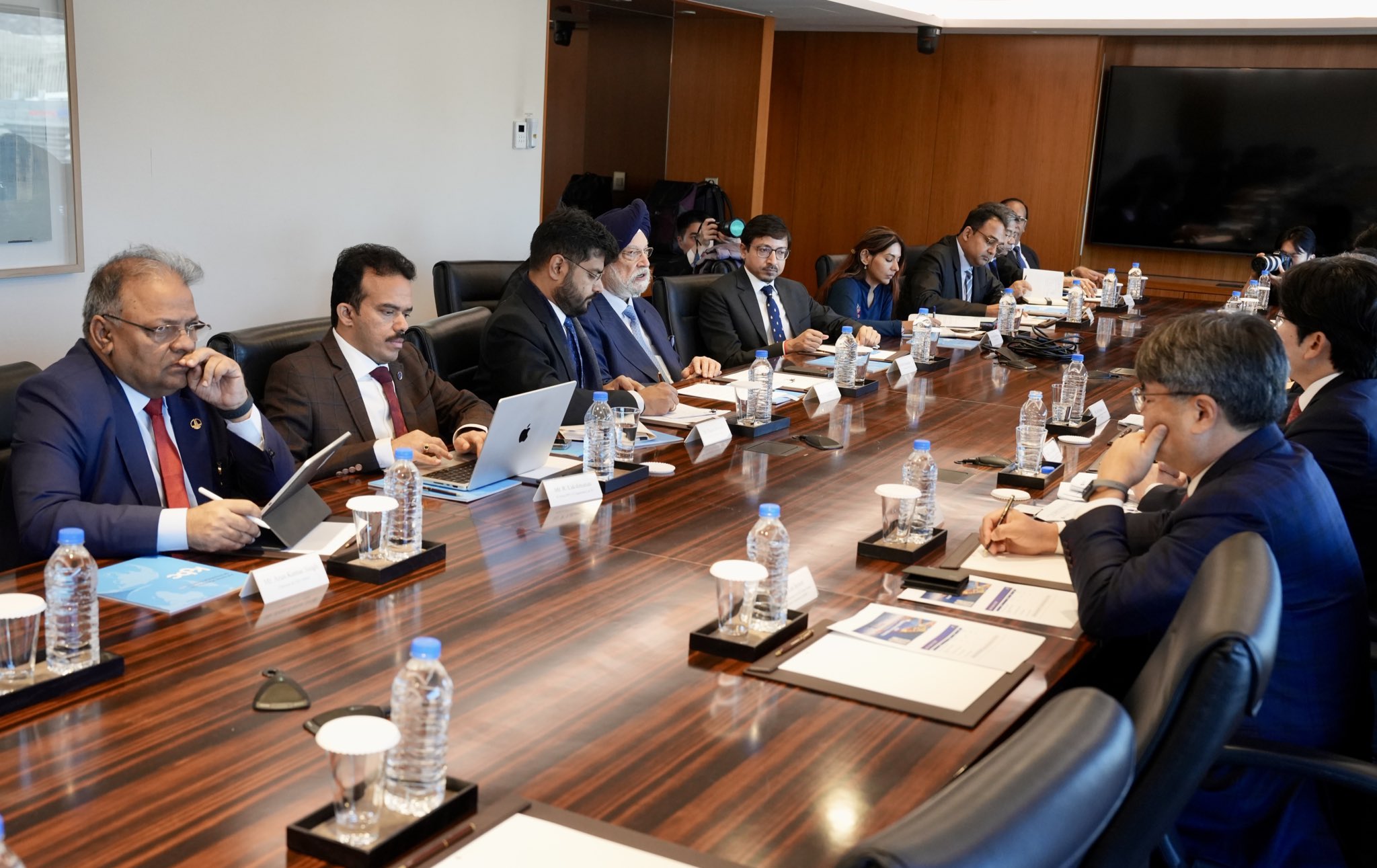
In a post on social media platform X, Union Petroleum and Natural Gas Minister Hardeep Singh Puri wrote that he held a productive meeting with the captains of Korea’s major shipping companies today.
In the post he wrote, “We also discussed how the combination of Korea’s advanced shipbuilding technologies and India’s manufacturing base and lower production costs will lead to a mutually beneficial partnership that can serve our rising domestic needs as well as global markets for ships.”

“Our crude and gas imports worth over USD 150 billion are seaborne, reflecting the scale of our energy and shipping vessel demand. The oil & gas sector alone accounts for nearly 28 per cent of India’s total trade by volume, making it the single largest commodity group at our ports. Yet, only around 20 per cent of this cargo is carried on Indian-flagged or Indian-owned vessels. With India’s demand for crude oil, LPG, LNG, and ethane rising rapidly, and ONGC alone projected to require nearly 100 offshore service and platform supply vessels by 2034, there is a strong impetus for us to build ships in India in partnership with global leaders,” the post added.

The minister met with An Byung Gil, CEO of Korea Ocean Business Corporation (KOBC), Kim Sung Ick, CEO of SK Shipping, Seo Myung Deuk, CEO of H-Line Shipping, and Sung Je Yong, Vice President of Pan Ocean.

“Discussed how energy and shipping are inseparable pillars of our rapidly growing economy under the leadership of PM,” Puri added.

India’s shipbuilding landscape is poised for global recognition as the government unveiled Rs 69,725 crore shipbuilding and maritime reform schemes in September 2025.

Further, the Shipbuilding Financial Assistance Scheme, with an outlay of Rs 24,736 crore, provides financial support, ship-breaking credit notes, and steers domestic manufacturing through the National Shipbuilding Mission.

The government has also established the Maritime Development Fund with an outlay of Rs 25,000 crore, which focuses on investment and interest incentivization. The Shipbuilding Development Scheme provides capital support, risk coverage, and capacity-building for shipbuilding clusters, with an outlay of Rs 19,989 crores.

India’s maritime sector has historically served as a vital link connecting the subcontinent to global trade routes, with centuries of seafaring and commerce shaping its economic foundation. India’s shipbuilding tradition dates back to the Indus Valley Civilisation, with archaeological evidence from sites like Lothal (in present-day Gujarat) indicating the existence of dockyards and maritime trade. Lothal’s dock is considered one of the world’s earliest known tidal docks.

Shipbuilding, often termed the “mother of heavy engineering”, plays a central role by generating employment, attracting investment, and strengthening national security and strategic independence.
India’s shipbuilding sector creates a strong economic impact; each investment boosts jobs 6.4 times and returns 1.8 times the capital, showing its power to drive growth and development.

This industry holds significant promise for creating large-scale employment opportunities in remote, coastal, and rural regions. Its development and promotion are being prioritised as a key driver in advancing the vision of an Atmanirbhar Bharat.

Source: ANI

Hardeep Singh Puri holds key shipbuilding meetings to boost India’s Maritime Vision

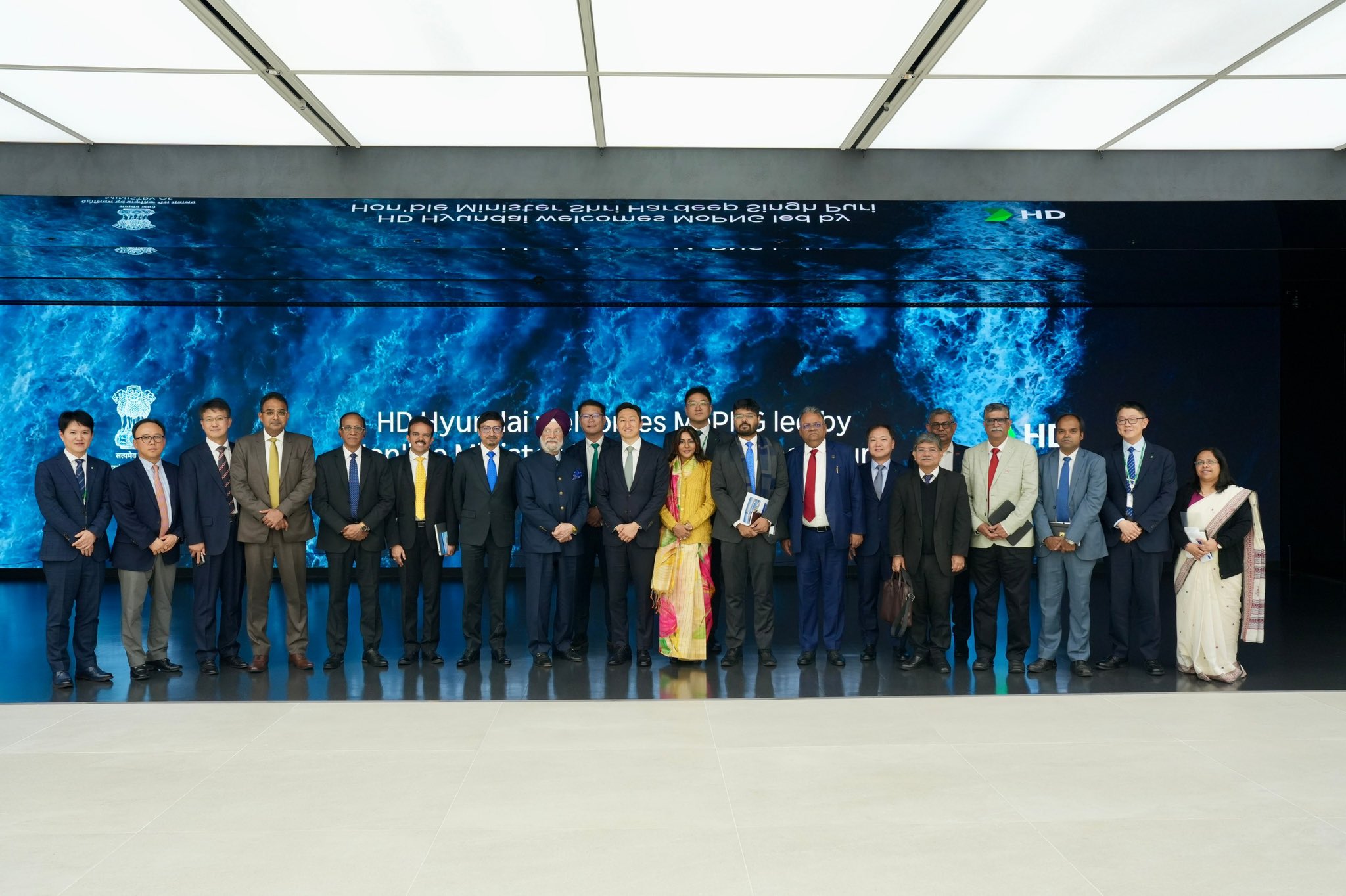
ULSAN : Shri Hardeep Singh Puri, Minister of Petroleum and Natural Gas, visited the state-of-the-art HD Hyundai Heavy Industries Shipyard in Ulsan on Friday as part of a series of high-level meetings held in Korea on 13–14 November 2025 to strengthen maritime and shipbuilding cooperation. These engagements are aligned with India’s Maritime Amrit Kaal Vision 2047, which aims to expand India’s commercial fleet, enhance domestic shipbuilding capacity, and boost global competitiveness across ship operations, shipyards and maritime plant sectors. This visit builds on discussions with Korea’s leading shipbuilding and shipping companies to advance mutually beneficial collaboration.

During this visit to the HD Hyundai Heavy Industries shipyard, the world’s largest shipyard spanning 1,680 acres, the Minister described the experience as highly productive. He noted that India’s rapidly growing energy and shipping sectors, propelled by the Make in India initiative and backed by a youthful population, present a golden opportunity for Korean shipyards to “Make in India for the World.” With nearly 20% of global vessels expected to either come to or go from India in the next 15 years, he highlighted the strategic scope for deeper cooperation. India, as a major importer of energy, already spends USD 5–8 billion annually on freight, and its PSUs alone can procure as many as 59 crude, LNG and ethane vessels. He also reviewed progress under the existing MoU with Cochin Shipyard, noting that plans for a block fabrication facility will be finalised soon.

This visit follows the Minister’s meeting yesterday with HD Hyundai Chairman Mr. Chung Ki-sun at the company’s Global R&D Centre in Seongnam. The delegation was briefed on HD Hyundai’s advanced ship design capabilities and smart shipyard operation systems. Discussions focused on how these engineering strengths can support India’s efforts to strengthen its shipbuilding sector and expand its commercial fleet. HD Hyundai noted that India plans to increase its fleet from 1,500 to 2,500 vessels and invest USD 24 billion under the Maritime Amrit Kaal Vision, including USD 8 billion announced recently for fleet expansion. The company reaffirmed its commitment to partnering with India in realising the country’s maritime ambitions.

Earlier on the day, the Minister also held a productive meeting with the captains of Korea’s major shipping companies, including Mr. An Byung Gil, CEO of Korea Ocean Business Corporation (KOBC); Mr. Kim Sung Ick, CEO of SK Shipping; Mr. Seo Myung Deuk, CEO of H-Line Shipping; and Mr. Sung Je Yong, Vice President of Pan Ocean. The Minister emphasised that energy and shipping are inseparable pillars of India’s rapidly expanding economy under the leadership of Prime Minister Shri Narendra Modi. India’s crude and gas imports worth over USD 150 billion are entirely seaborne, and the oil and gas sector accounts for nearly 28% of India’s total trade by volume. However, only around 20% of this cargo is carried on Indian-flagged or Indian-owned vessels. With rising demand for crude oil, LPG, LNG and ethane, and ONGC’s projected requirement of nearly 100 offshore service and platform supply vessels by 2034, he highlighted that combining Korea’s advanced shipbuilding technologies with India’s manufacturing base and cost advantages offers a strong foundation for long-term cooperation.

The Minister also met Mr. Kim Hee-Cheul, President and CEO of Hanwa Ocean, earlier on Friday in Seoul. He invited the company to explore the expanding opportunities in India’s sunrise shipbuilding sector under the Make in India initiative to “Make in India for the World.” He noted that India’s fast-growing economy and its focus on strengthening energy and hydrocarbons infrastructure offer substantial investment avenues in the shipping industry. Highlighting that the oil and gas sector is the single largest commodity group at Indian ports but carried largely on non-Indian vessels, he reiterated India’s resolve to convert this challenge into an opportunity. He added that Indian PSUs are ready to partner with Korean companies for manufacturing LNG and crude oil carriers, thereby contributing to long-term strategic asset creation.

India emerging as a trusted global partner with Andhra Pradesh contributing to Viksit Bharat @2047 : Piyush Goyal

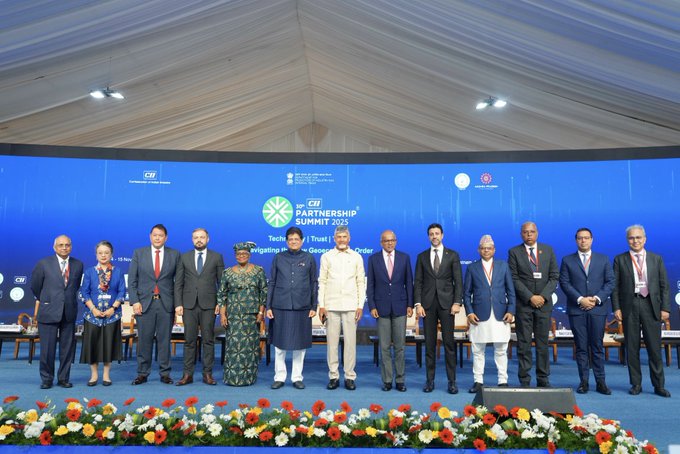
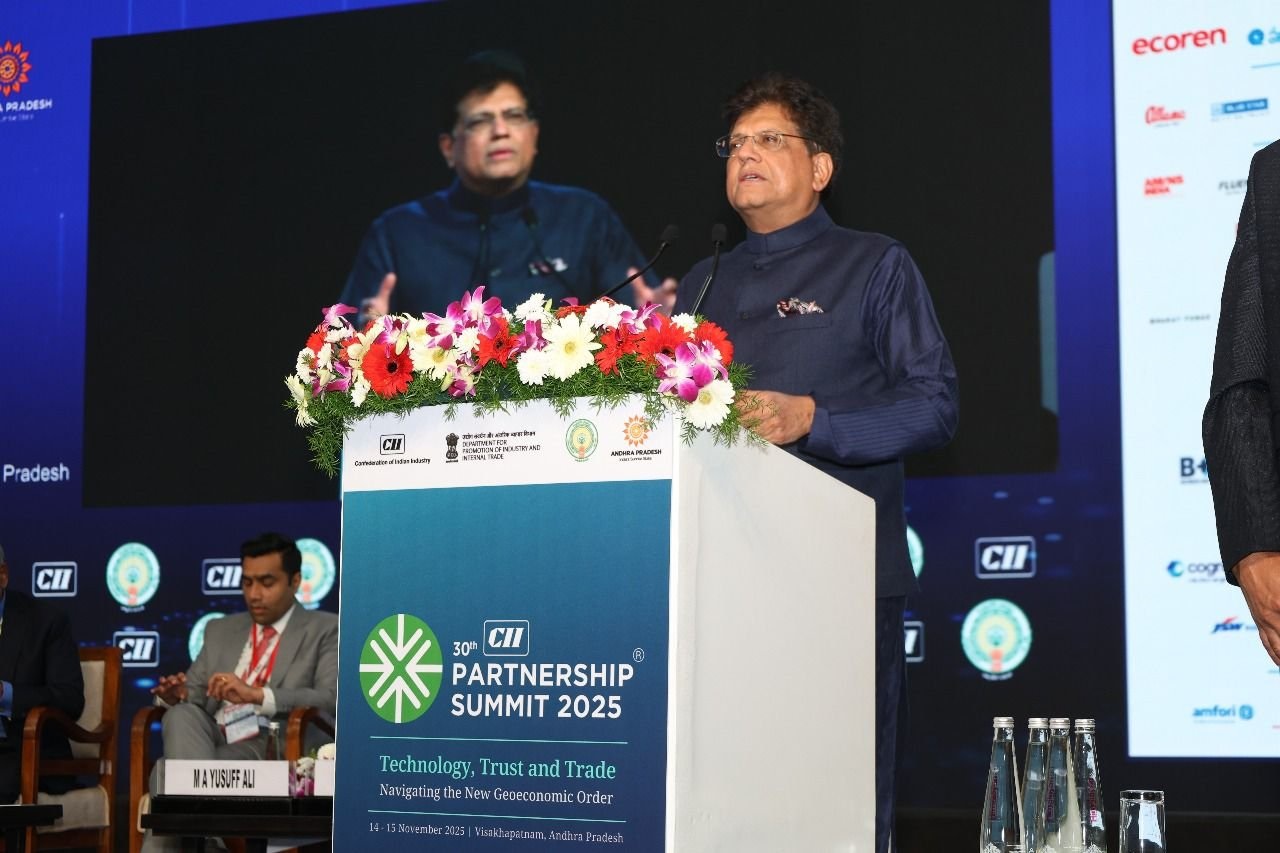
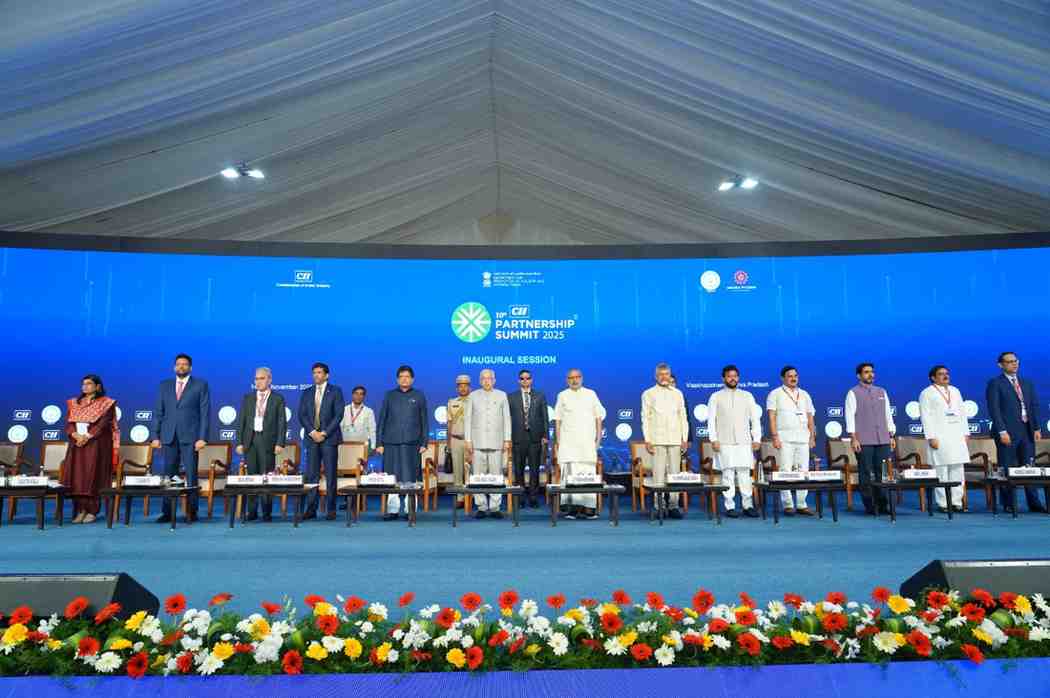
VISAKHAPATNAM : Union Minister of Commerce and Industry, Shri Piyush Goyal, while addressing the 30th Edition of the CII Partnership Summit 2025 organized by the Confederation of Indian Industry (CII) in Visakhapatnam, Andhra Pradesh, highlighted India’s emergence as a trusted global partner and commended the immense contribution of Andhra Pradesh toward achieving the vision of Viksit Bharat @2047. He emphasized India’s growing leadership in semiconductors, clean energy and innovation-driven industries, underscoring the importance of trust, sustainability and policy stability as the foundation of India’s economic framework.

The event, held under the theme “Technology, Trust & Trade – Navigating the New Geoeconomic Order,” was inaugurated by the Vice President of India, Shri C.P. Radhakrishnan, in the presence of the Governor of Andhra Pradesh, Shri Syed Abdul Nazeer. Shri Piyush Goyal and Chief Minister of Andhra Pradesh, Shri N. Chandrababu Naidu, delivered the keynote addresses.

Shri Goyal announced the launch of India’s first Drone City at Orvakal in Kurnool district, marking a major milestone in advancing India’s capabilities in next-generation aerospace and unmanned systems. The launch follows the foundation stone laying of the Kopparthy and Orvakal Industrial Nodes by the Prime Minister on 16 October 2025, underscoring the Government’s commitment to fast-paced progress across India’s industrial corridors. Developed in collaboration with the Government of Andhra Pradesh, the 300-acre Drone City is expected to generate over 40,000 jobs and will house the world’s largest common drone testing facility. It will serve as a fully integrated ecosystem for manufacturing, testing, research, repairs and development, bringing key components of drone innovation under one unified infrastructure.

NICDC is developing three major Greenfield Industrial Smart City nodes in Andhra Pradesh—Krishnapatnam, Orvakal and Kopparthy—located across different industrial corridors, reinforcing the state’s strategic importance in regional industrial development. These projects support the Make in India vision and offer world-class infrastructure for industries in logistics, aerospace, electronics and advanced manufacturing. The Summit also highlighted Andhra Pradesh’s emerging opportunities in green hydrogen, semiconductors, electronics manufacturing, coastal logistics, defence and drone sectors, positioning the state as a prominent hub for sustainable industrial growth.

Shri Rajat Kumar Saini, CEO & MD of NICDC, participated in a plenary session titled “Next-Gen Industrial Corridors 2.0: Building Smart, Connected Ecosystems for Industry 5.0.” He outlined NICDC’s vision of developing Greenfield Industrial Smart Cities as smart, resilient and sustainable hubs for manufacturing and innovation. He highlighted the integration of digital infrastructure, renewable energy, automation and data-driven governance to create globally competitive industrial ecosystems aligned with the Industry 5.0 vision.

The NICDC pavilion at the Summit recorded strong participation and engagement from global investors, policymakers and industry representatives. It showcased NICDC’s flagship initiatives, including Greenfield Industrial Smart Cities, the Unified Logistics Interface Platform (ULIP), Logistics Data Bank (LDB), India Industrial Land Bank (IILB) and PM MITRA Parks, illustrating NICDC’s integrated approach to building digital, efficient and sustainable industrial infrastructure. Delegates expressed notable interest in NICDC’s Smart City projects and digital platforms, seeking information on land availability, investment facilitation and collaboration opportunities under the Industrial Smart City development programme.

As the Government of India’s lead programme for industrial infrastructure development, NICDC continues to develop next-generation Greenfield Industrial Smart Cities under the Delhi–Mumbai, Chennai–Bengaluru, Amritsar–Kolkata, East Coast and other industrial corridors. Through advanced infrastructure and digital innovation, NICDC is driving India’s transition toward Industry 5.0, characterized by sustainability, technology integration and inclusive growth.

National Industrial Corridor Development Corporation Limited (NICDC), under the Department for Promotion of Industry and Internal Trade (DPIIT), Ministry of Commerce and Industry, is mandated to develop world-class Greenfield Industrial Smart Cities that enhance manufacturing competitiveness, attract investment and generate employment. NICDC is implementing multiple city projects and digital initiatives such as ULIP, LDB and IILB, supporting India’s industrial and logistics transformation.

Visakhapatnam is the gateway to global trade; key for steel manufacturing, semi-conductor eco system and sea food : Piyush Goyal at 30th CII Partnership Summit

VISAKHAPATNAM : Union Minister of Commerce and Industry, Shri Piyush Goyal, expressed that Visakhapatnam region today stands as a gateway to global trade—ranging from steel manufacturing to the emerging semiconductor ecosystem and seafood exports at the 30th CII Partnership Summit 2025 organized in Visakhapatnam, Andhra Pradesh on Friday.

Shri Goyal further said that India’s holistic development journey under the leadership of Prime Minister Shri Narendra Modi is firmly moving towards the goal of Viksit Bharat by 2047. He stated that a developed and prosperous India will ensure that every state flourishes, every citizen enjoys a high quality of life, and every child born in Andhra Pradesh has a bright and secure future.

The Minister presented a three-pillar framework inspired by Chanakya’s Arthashastra to guide India’s journey towards becoming a developed nation by 2047.

The first pillar, Prosperity through Technology, reflects India’s digital and innovation-led growth. Shri Goyal said that India’s technology story is one of democratization, scale and speed, driven by talent and skill. He mentioned that India has built a world-class digital public infrastructure serving 1.74 billion citizens, with several countries expressing interest in adopting India’s UPI real-time payment system. Aadhar has provided every Indian with a secure digital identity, while India is building a comprehensive semiconductor ecosystem with current investments of $30 billion and growing. The India AI Mission, he said, is democratizing artificial intelligence for all. One billion Indians are now connected to the Internet, making India the second-largest user base of ChatGPT globally.

From launching the Mars Mission to deploying 104 satellites in one mission, India has demonstrated its capabilities in innovation and scale. Shri Goyal added that India has achieved an installed power capacity of 500 GW, with more than 51 per cent coming from renewable energy sources. The country plans to double clean energy capacity to 500 GW within the next five years, marking one of the fastest energy transitions globally.

He said that India offers its international partners not just markets but also collaborations for shared prosperity and mutual growth. India’s digital infrastructure, vibrant ecosystem and engineering talent provide a strong launchpad for globally scalable solutions.

The second pillar, Trust through Righteousness, highlights India’s increasing stature as a trusted global partner. Shri Goyal said that in the current geo-economic landscape, trust is the most valuable currency. India’s humanitarian efforts, including the free supply of COVID-19 vaccines and medicines to over 100 countries, have strengthened its global credibility.

He noted that India’s trust-based diplomacy is reflected in its expanding network of Free Trade Agreements (FTAs). He mentioned the recently signed FTA with the United Kingdom and the operationalized FTA with the European Free Trade Association (EFTA) bloc, which includes commitments of $100 billion in FDI and the creation of one million direct jobs. India has also signed FTAs with the UAE, Australia and Mauritius and is currently negotiating with the EU, the United States, Oman, New Zealand, Chile and Peru.

The Minister said that India’s credibility stems from predictability through regulatory reforms, transparency through digital governance and reliability in honoring commitments. He highlighted that India has removed more than 42,000 compliances and abolished 1,500 obsolete laws. He added that next-generation GST reforms are further improving ease of doing business and expanding consumer spending. “When you partner with India, you partner with a civilization that views relationships through Dharma—doing what is right,” he said.

The third pillar, Trade through Capability, underscores India’s growing global competitiveness. Shri Goyal said that India’s trade exports reached a record $825 billion last year despite global headwinds, while FDI inflows touched $81 billion—reflecting strong investor confidence. This growth, he said, is driven by the Make in India initiative, market diversification and movement up the value chain through technology investments. He recalled the words of economist Michael Porter, “National prosperity is created, not inherited,” and said that India’s economic growth embodies this principle.

Shri Goyal proposed three key recommendations to expand global partnerships: facilitating two-way investments by lowering trade barriers and enabling freer movement of goods, services and capital; strengthening technology cooperation through co-development of frontier technologies and investment in high-impact innovation; and building trust through transparent governance and predictable policy frameworks that support long-term collaboration.

Highlighting Prime Minister Shri Narendra Modi’s belief in the ancient Indian wisdom of Vasudhaiva Kutumbakam—the world is one family—Shri Goyal said that India’s prosperity rests on achieving self-reliance.

Andhra Pradesh is progressing under the leadership of Chief Minister Shri N. Chandrababu Naidu, who is working to build the state as Swarnandhra by 2047—prosperous, healthy and happy, the Union Minister added. The Minister said that India today stands at an inflection point in global history. The world order that shaped the last several decades is being rewritten, and in these turbulent, volatile and uncertain times, India stands as an oasis of stability and resilience. He recalled the words of Prime Minister Shri Narendra Modi, who has said that “for global peace, stability and prosperity, the world’s most populous country must become self-reliant.”

The Union Minister also suggested that Andhra Pradesh build a permanent facility for organizing large-scale conferences, exhibitions and summits—similar to Bharat Mandapam in New Delhi—and proposed the name “Andhra Mandapam” for this world-class convention centre.

The Union Minister commended CII President Shri Rajeev Vemani and Secretary General Shri Chandrajit Banerjee for their dedicated efforts in advancing India’s growth and strengthening partnerships between government and industry through the CII Partnership Summit.

Comm. Minister and AP CM lay foundation stone for Drone City and Space City in Andhra Pradesh

VISAKHAPATNAM : Union Commerce and Industry Minister Shri Piyush Goyal laid foundation stone for Drone City and Space City in Andhra Pradesh through virtual mode on the sidelines of 30th CII Partnership Summit at Visakhapatnam, along with Andhra Pradesh Chief Minister Shri. Nara Chandrababu Naidu.

Speaking on the occasion, the Union Minister lauded the efforts of Chief Minister Shri Chandrababu Naidu in contributing to the growth of Information Technology both in United Andhra Pradesh and India.

He said the Chief Minister has taken forward the same vision by constructing India’s first Drone City at Orvakal Industrial Node near Kurnool in about 300 acres dedicated to drones. The Minister also mentioned about the effective use of drones and their role in Operation Sindoor. He said that India should be self-reliant in production of high-quality drones and the upcoming Drone City in Kurnool will help in that direction.

The Minister also appreciated the initiative to construct a Space City near Sriharikota which is the hub of Indian rocket launching.

The Minister backed the efforts of Andhra Pradesh Government in incentivising the prospective investors to attract investments by creating an Escrow account for 100% refund of state GST and reimbursement of 20% percent capital investment making the system free of political and bureaucratic interference. Shri Goyal termed this as a huge message to investors.

The Minister concluded by saying that the Prime Minister’s vision of having a drone in every farmer’s field and Smart phone for every Indian will be fulfilled under Swarna Andhra 2047 and Viksit Bharat 2047.

Secretary, Ministry of Textiles reviews activities of textile institutions, export councils, and research associations in Mumbai

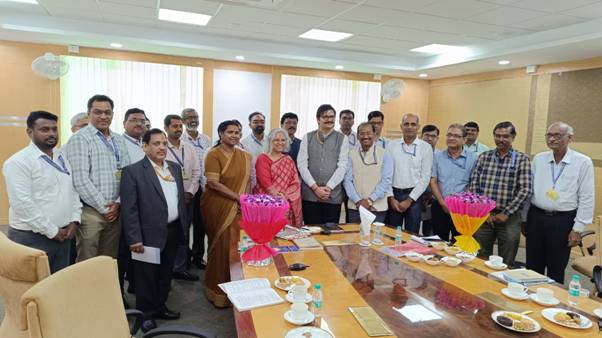
MUMBAI : Smt. Neelam Shami Rao, Secretary Ministry of Textiles and Chairperson, Textiles Committee, began her comprehensive two-day visit to Mumbai from 13th Nov, to review the ongoing programmes, institutional performance, and policy implementation progress of various bodies functioning under the Ministry of Textiles. On the first day of her visit, she reviewed activities related to handlooms and allied sectors, accompanied by Dr. M. Beena, Development Commissioner (Handlooms).

During the visit, Secretary Interacted with Ms Anshu Sinha, IAS, Principal Secretary (Textiles) Government of Maharashtra and other senior officers from Government of Maharashtra and deliberated on bringing in synergy with both state and central implementation of central schemes in the state of Maharashtra and discussed the issues affecting the growth of the sector in the state.

The visit commenced with a detailed review meeting at the Textiles Committee, where the Secretary examined the activities of the organisation vis-à-vis the functions envisaged in the Textiles Committee Act, 1963 by the founding fathers of the Textiles Committee and advised to restructure and reorient its activities so as to meet the objectives of the Act and support the industry to meet the visions of the Ministry of Textiles. She emphasized the growing needs of the industry in scientific, technical & economic research and attributed the functions of the Textiles Committee to these and advised to realign the priorities to meet the aspirations of both the industry and government. The TC should act like a link between the industry and government by providing inputs on the ground realities of the sector so as to help the industry to mitigate these with the help of policy interventions from the Ministry of Textiles.

Following this, Smt. Rao visited the Synthetic & Art Silk Mills’ Research Association (SASMIRA). The review centered on SASMIRA’s ongoing R&D in technical textiles, man-made fibers, and green textile innovations. The Secretary appreciated SASMIRA’s contributions to training & education, promoting technical textile applications, industrial testing facilities, and capacity-building programs aimed at strengthening the synthetic sector’s competitiveness. She emphasized the need to align SASMIRA’s research activities with global sustainability and recycling objectives.

At the Weavers Service Centre (WSC), Office of the Development Commissioner (Handlooms), Smt. Rao and Dr. Beena reviewed the implementation of major schemes including the National Handloom Development Programme, Cluster Development Programme, and marketing interventions such as exhibitions, design innovation, and digital platforms for weavers. The Secretary highlighted the importance of technology integration, e-commerce enablement, and handloom mark promotion to expand the domestic and export reach of India’s handloom products.

Subsequently, the delegation visited the Cotton Textiles Export Promotion Council (TEXPROCIL), where interactions were held with representatives from the cotton textile export sector. The discussions focused on export competitiveness, diversification of markets, Kasturi Cotton Bharat and the promotion of value-added cotton textile products. Smt. Rao appreciated TEXPROCIL’s proactive role in supporting exporters through trade fairs, buyer-seller meets, and international branding initiatives.

A similar review meeting was held at the Man-made Textiles Export Promotion Council (MATEXIL). The Secretary reviewed export performance trends, challenges faced by synthetic and blended textile exporters, and strategies to enhance global visibility for Indian man-made fibers. She encouraged the Council to adopt sustainability-driven export models and to leverage FTAs and trade pacts for greater market access.

In the evening, the Secretary held a comprehensive review meeting at the Office of the Textile Commissioner, focusing on key flagship schemes of the Ministry such as the PM MITRA Parks Scheme, Production Linked Incentive (PLI) Scheme for Textiles, and SAMARTH – Skill Development Scheme. After in the evening, Smt. Rao will chair a meeting with major industry associations, engaging leading representatives from across the textile value chain to discuss policy feedback, sustainability initiatives, and investment promotion.

GDP likely to grow 7.2% in Q2 FY26, driven by private consumption: Ind-Ra

NEW DELHI : India Ratings & Research (Ind-Ra) on Wednesday projected India’s GDP to grow at 7.2 per cent in the second quarter of the current fiscal, with private consumption being the leading growth driver.

The Indian Economy had expanded 5.6 per cent in the Q2 (July-September) of 2024-25 fiscal.

India’s real Gross Domestic Product (GDP) is estimated to have grown at the fastest pace in five quarters at 7.8 per cent in the April to June period of the current fiscal.

The National Statistics Office (NSO) is slated to release the official data on FY26 Q2 GDP growth estimates on November 28. In a statement, Ind-Ra said it expects GDP growth to remain robust at 7.2 per cent year-on-year in the second quarter of FY26.

“From the demand side, private consumption is a leading growth driver due to steady real income growth both in upper- and lower-income households.

The resilient services sector along with the favourable base-led goods exports growth in the manufacturing sector propelled GDP growth from the supply side during Q2 FY26″, Ind-Ra Economist & Associate Director Paras Jasrai said.

The economy has navigated the treacherous waters better than expected due to strong domestic demand. Retail inflation has declined faster than both the agency and the Reserve Bank of India’s expectations, boosting real wages and consumption demand, Ind-Ra report said.

It said the nominal GDP growth is likely to have slipped below 8 per cent Y-o-Y during Q2 FY26, the spillover effect of which is getting reflected in slowing taxes of the government.

“The real GDP growth looks stronger as lower input costs have provided some succour to the growth momentum, despite heightened global economic uncertainty and volatility. Nevertheless, continued weakening nominal GDP growth would be of greater concern as it may complicate the fiscal arithmetic,” Ind-Ra added.

Ind-Ra expects private consumption to have grown 8 per cent Y-o-Y in the second quarter of FY26, as against 7 per cent in Q1 and 6.4 per cent in Q2 FY25.

A favourable base effect, record low inflation, along with steady real rural wage growth, would lift the consumption demand growth to a three-quarter high, it said.

“The consumption demand was also supported by the income tax cuts as announced in the FY26 budget. The private consumption would have grown at an even higher pace, had there been no deferral of buying decisions due to the GST rate rationalisation,” Ind-Ra said.

Ind-Ra believes that the investment demand has grown at a healthy pace of 7.5 per cent Y-o-Y during Q2 FY26. Steady government capex remains instrumental in lifting investment demand at a time of uncertainty, it added.

Source : PTI

Exporters welcome Govt’s ₹45,000 crore export plan, but say more details & allocation needed

NEW DELHI : The Export Promotion Mission (EPM) and the credit guarantee scheme for exporters (CGSE) approved by the Union Cabinet on Wednesday (November 12, 2025) has been welcomed by exporter bodies and trade experts, but there is room for more to be done, and higher allocations to be made, some of them say.

The Union Cabinet on Wednesday approved the EPM, which had been initially announced in Budget 2025. The total outlay of the Mission is ₹25,060 crore and will cover the period 2025-26 to 2030-31. The CGSE aims to provide 100% credit guarantee coverage totaling ₹20,000 crore to lenders on loans they extend to eligible exporters, including MSMEs.

“EPM marks a strategic shift from multiple fragmented schemes to a single, outcome-based, and adaptive mechanism that can respond swiftly to global trade challenges and evolving exporter needs,” the government said in a release.

The Export Promotion Mission (EPM) and the credit guarantee scheme for exporters (CGSE) approved by the Union Cabinet on Wednesday (November 12, 2025) has been welcomed by exporter bodies and trade experts, but there is room for more to be done, and higher allocations to be made, some of them say. 

The Union Cabinet on Wednesday approved the EPM, which had been initially announced in Budget 2025. The total outlay of the Mission is ₹25,060 crore and will cover the period 2025-26 to 2030-31. The CGSE aims to provide 100% credit guarantee coverage totaling ₹20,000 crore to lenders on loans they extend to eligible exporters, including MSMEs.  

According to the government, the EPM is expected to ease access to affordable trade finance for MSMEs, enhance export readiness through compliance and certification support, and improve market access for Indian products in foreign markets, among other things. 

Will enhance doing business

“It will greatly enhance the ease of doing business and strengthen India’s export competitiveness,” Kirit Bhansali, Chairman of the Gem and Jewellery Export Promotion Council said. “The inclusion of key measures such as interest subvention and expanded support for trade fairs will particularly empower MSMEs and first-time exporters, fostering wider global outreach and sustainable growth.” 

Pankaj Chadha, Chairman of the Engineering Exports Promotion Council, too, lauded the scheme for its aim to enhance the ease of doing business for exporters, and for the engineering sector in particular.

“The EPM has given priority to the engineering goods sector along with other sectors which have been hit hard by the disruptive global trade policy, especially the high 50% tariff imposed by the US on most items of India’s trade basket,” Mr. Chadha said.

He added that the EMP will help exporters identify new markets and introduce new products while the credit guarantee scheme would ensure affordable trade finance, especially for MSMEs.

“By focusing on innovation, diversification, and sustainability, the Mission will help Indian exporters regain momentum and reinforce India’s position as a resilient and reliable player in global trade,” Manoj Mishra, Partner at Grant Thornton Bharat said.

Source : The Hindu

Shipping giant MSC turned oceans of the Global South into dumping grounds: Report

KOCHI : Greenpeace South Asia on November 13 released an investigation that could reset global conversations on corporate responsibility at sea.

The 128-page report, Below Deck: The Truth Beneath What You See (Mediterranean Shipping Company – MSC), draws from a decade of inspection records, detentions, court filings and verified documentation to describe what it calls a global pattern of safety failures and environmental neglect by the world’s largest container shipping company.

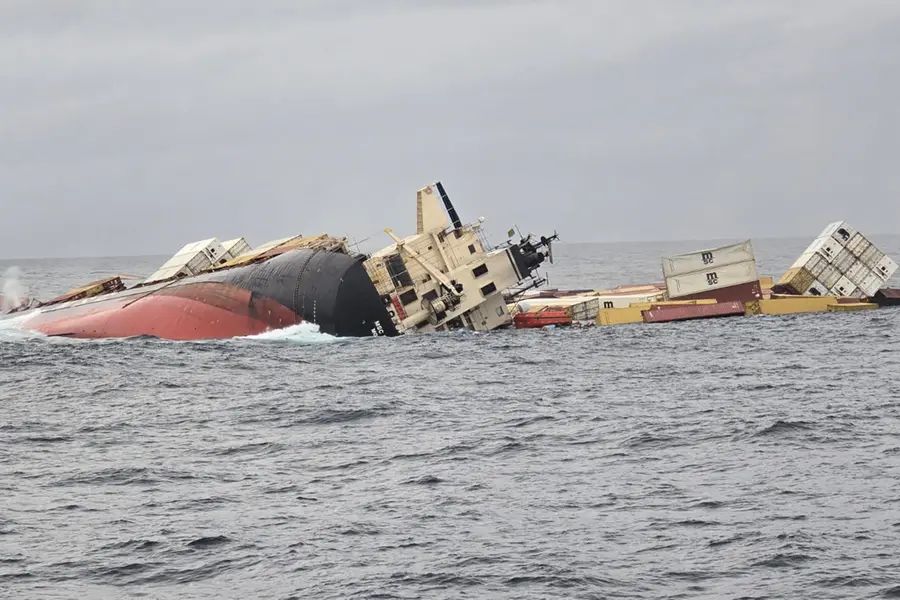
The report comes six months after the MSC ELSA 3, a Liberia-flagged vessel owned by MSC, sank off the Kerala coast, spilling oil and nearly 1,400 tonnes of plastic pellets into the Arabian Sea. Greenpeace argues that the disaster was not an aberration but the foreseeable outcome of corporate decisions that prioritise profit and hide liability. Released in Delhi and Geneva, the study links MSC’s rapid rise to global dominance to a system that moves risks southwards while keeping benefits in the north.

A twin empire on uneven seas
Between 2015 and 2025, MSC built what Greenpeace describes as a dual structure. Its modern mega-ships commanded prime global routes, while older vessels were deployed to Asia, Africa and Latin America. The report shows that many of these ageing ships were registered under flags of convenience in Liberia and Panama, jurisdictions with low taxes and minimal inspection requirements. Once these ships moved out of European regulatory waters, their condition deteriorated. Port records from Asia and Africa repeatedly flagged corrosion, fire hazards and faulty navigation systems. The same issues recurred across vessels and years, pointing to systemic neglect rather than bad luck.

By the mid-2010s, Greenpeace says, MSC’s older fleet had virtually slipped beyond close scrutiny. A researcher quoted in the report said the company had “drifted into invisibility” by shifting high-risk ships to the Global South, where regulatory enforcement is weak and consequences are slow.

A trail of accidents
The report reconstructs a troubling record of MSC accidents. The MSC Flaminia exploded in the Atlantic in 2012, killing three crew members. The MSC Daniela burned off Colombo in 2017. The MSC Messina suffered an engine room fire in the Indian Ocean in 2021. Each time, the company promised reforms. But Greenpeace concludes that the structural issues remained unaddressed.

The worst consequences appeared on May 25, 2025, when the MSC ELSA 3 sank off Thottappally. The 33-year-old vessel carried hazardous materials, diesel, furnace oil and a massive consignment of nurdles. It had been detained in Rotterdam in 2010 for 21 safety deficiencies. Multiple warnings later followed on corrosion and fire safety. Greenpeace says the ship should never have been operational.

When it went down, oil slicks spread quickly and nurdles washed ashore from Kollam to Kozhikode. Fishing halted overnight and beaches turned white. “The sea stopped breathing,” said Suresh Kumar, a fisherman from Alappuzha. Nets came up with oily plastic instead of fish. The Kerala State Disaster Management Authority later estimated losses at Rs 9,531 crore.

A legal fight with global implications
In a significant move, the Kerala government sought full compensation from MSC. The company invoked international conventions that cap ship owner liability and offered only Rs 132 crore, less than two per cent of the state’s assessment. The Kerala High Court has since permitted conditional arrest of MSC’s sister ships entering Indian ports to secure compensation.

Kochi-based lawyer N P Joseph, representing affected fishermen, said global maritime law shields ship owners even in cases of large-scale environmental damage. Kerala’s challenge, he said, may push international bodies to reconsider whether these conventions still serve public interest.

Shipbreaking and the double standard
The Greenpeace report widens the lens to examine MSC’s end-of-life ship practices. Despite public claims of adhering to green recycling, the company continues sending vessels to South Asian beaching yards, especially Alang in Gujarat. These yards depend on labour-intensive, hazardous dismantling on tidal sands. In 2023 alone, MSC sold at least 14 ships to Alang. Between 2006 and 2024, the number reached 125. NGO Shipbreaking Platform named MSC the worst corporate dumper of 2023.

Greenpeace argues that MSC’s contradictory behaviour reflects a larger imbalance in global trade. While Europe demands high environmental compliance, the company disposes of older vessels in the Global South where lives and ecosystems are cheaper.

Science maps the damage
As Greenpeace examined the corporate trail, scientists studied the ecological consequences underwater. Between July 25 and August 21, researchers from CSIR–National Institute of Oceanography (NIO) conducted a detailed survey aboard the research vessel Sagar Sampada. Their observations were alarming. A dead marine turtle was found near the wreck. Oil film patches drifted towards the shore. Coastal waters off Kozhikode, Munambam, Kochi, Alappuzha and Colachel showed oxygen depletion linked to the Arabian Sea’s oxygen minimum zone. Blooming gelatinous plankton and glowing Noctiluca indicated severe ecological stress.

R Manoharan of NIO warned that the marine food web was showing early signs of collapse. If oxygen levels remain low, he said, the ecosystem may take decades to recover. The Kerala government has allocated Rs 10 crore for a long-term scientific assessment, expected in mid-2026.

In its interim report to the National Green Tribunal, the Kerala State Pollution Control Board said the disaster violated the Biological Diversity Act, the Water Act and the Environment Protection Act. The NGT’s Principal Bench took suo motu note of the sinking and described it as a grave ecological accident requiring transnational accountability.

A framework that fails the coast
The report situates the Kerala disaster within a global accountability vacuum. Current liability frameworks allow ship owners to limit compensation even when their negligence destroys coastlines. “Trade moves freely,” the report says, “but responsibility stops at the border.”

Marine ecologists warn that nurdles, which absorb toxins, will persist for decades. Meera Pillai of Cochin University said the pellets already pose risks to biodiversity, fisheries and tourism.

Voices from the shore
Fishing communities remain devastated. In Mararikulam and Purakkad, fishermen speak of waters that no longer yield fish. “Earlier we fought trawlers,” said Kunjumon Thomas. “Now there is no fish left to fight for.” Boats remain idle and families fall deeper into debt. Children play among nurdles that crumble into powder. “The sea has changed colour,” said Mini Paul of Alappuzha. “It is grey now, like grief.”

Even as the Greenpeace findings circulated, the sea revealed another trace. On November 11, a container believed to be from the MSC ELSA 3 was found near Kovalam. Divers from Friends of Marine Life and a Kochi dive team located it wedged among underwater rocks. The ship sank with 640 containers, including hazardous cargo and large quantities of diesel and furnace oil. The newly found container reinforces how the debris continues to emerge months after the sinking.

Source : Down To Earth

Hapag-Lloyd confirms plan to invest in up to 22 new smaller containerships

HAMBURG : Germany’s container shipping firm Hapag-Lloyd has confirmed plans to invest in up to 22 new container ships, as part of the ongoing modernization and decarbonization of its fleet.

The German company has decided to invest in new ships in the segment with capacities of less than 5,000 teu – probably a mix of long-term (L/T) charters and owned vessels.

Despite the volatile development of demand and freight rates in the nine-months of 2025, Hapag-Lloyd took the decision to invest in up to 22 new ships in smaller vessel classes, an important milestone on its path to improve efficiency and net-zero fleet operations by 2045.

The new US tariff policy led to a volatile development in demand and freight rates in the first nine-month period. At the same time, problems at major seaports and the ongoing tense security situation in the Red Sea impacted operational development.

In this challenging market environment, Hapag-Lloyd Group revenue increased by 2.1% to €14.4bn (compared to nine-month period of 2024: €14.1bn).

As the business performance is in line with expectations, the executive board has further narrowed the earnings forecast for the current financial year. Group EBITDA is now expected in the range of €2.8 to 3.2bn (previously: €2.5 to 3.4bn) and Group EBIT in the range of €0.5 to 1.0bn (previously: €0.2 to 1.1bn).

In light of major geopolitical challenges and volatile freight rates, Hapag-Lloyd said the forecast is subject to a high degree of uncertainty.

As of end-September, Hapag-Lloyd’s fleet portfolio consisted of 305 container vessels (31 December 2024: 299) with a transport capacity of 2.5 million TEU (31 December 2024: 2.3 million TEU).

At the same period, Hapag-Lloyd’s order book comprised of 24 newbuilds with a total capacity of 312 TTEU which are to be delivered by 2029.

Rolf Habben Jansen, Chief Executive Officer of Hapag-Lloyd AG, commented: “The first nine months were characterized by a highly volatile market environment, partly due to geopolitical developments and uncertainties surrounding trade policies.

“On the back of strong demand from our customers we delivered strong transport volume growth and achieved a solid overall result. With the Gemini network, we set a new quality benchmark in terms of schedule reliability, which clearly sets us apart from our competitors.

“We see first cost advantages from Gemini and will deliver the planned savings in full in the course of 2026. Additionally, we have further expanded our terminal business under the Hanseatic Global Terminals brand. Looking ahead, we will respond agilely to changes in global trade and maintain strict cost discipline. While doing so, we will not compromise on quality for our customers.”