FRANKFURT : German container shipping company Hapag-Lloyd opens new tab on Thursday said it is noting calmer conditions in the Suez Canal region after a ceasefire in the Gaza conflict but will only reopen its sailings through the waterway once it is fully safe. “For the moment, I don’t see us returning very soon,” Chief Executive Rolf Habben Jansen said in a call with analysts after presenting 9-month financial results, adding his company was observing and talking to shipping partners about the situation.
Vessel owners sail costly alternative routes around Africa because Yemen-based Houthi militants have been attacking vessels in the Red Sea in solidarity with Palestinians over Israel’s war in Gaza since November 2023.
MARSEILLE : CMA CGM is to acquire a 20 per cent stake in Eurogate Container Terminal Hamburg (CTH), a major entry point for imported fresh fruit into northern and central Europe.
The move is part of a broader strategy to expand the group’s infrastructure portfolio in Europe, as a means to support its global shipping network, it said.
By becoming a shareholder, it said it would actively contribute to the terminal’s long-term development, and strengthen its position as a maritime hub.
CTH, which boasts a direct rail connection to Germany’s largest intermodal terminal Eurokombi, is about to embark on a new period of expansion, a move which is expected to add more than a kilometre of new quay wall.
That extension is designed to accommodate next-generation container vessels, enhance the terminal’s operational efficiency, and increase its capacity by around 50 per cent to almost 6mn TEU.
“I am pleased to announce this new partnership with Eurogate, which marks an important step in the development of Hamburg Port and supports its ambition to remain a major gateway for European trade,” said Rodolphe Saadé, chairman and CEO of CMA CGM Group.
“Through our participation, we will help enhance the terminal’s capacity, strengthen its rail connections, and support its move towards more sustainable operations. This reflects our confidence in Germany’s long-term competitiveness and our commitment to contributing to resilient and efficient supply chains in Europe.”
The transaction is expected to be completed in the first half of 2026, subject to regulatory approvals.
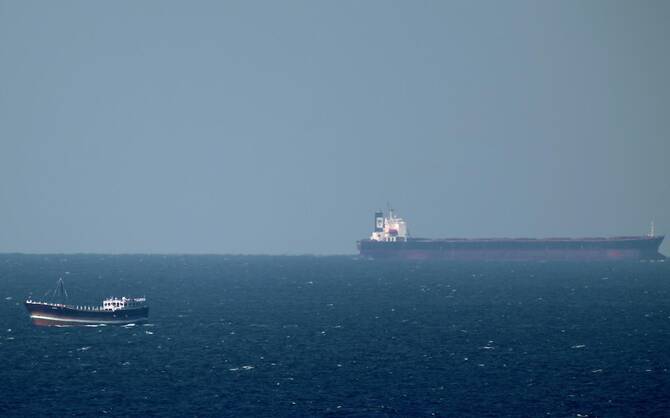
TEHRAN : Iran seized a Marshall Islands-flagged oil tanker as it travelled through the narrow Strait of Hormuz on Friday (November 14, 2025), a U.S. official said, turning the ship into Iranian territorial waters in the first-such interdiction in months in the strategic waterway.
Iran did not immediately acknowledge the seizure, though it comes as Tehran has been increasingly warning it can strike back after facing a 12-day war in June with Israel that saw the US strike Iranian nuclear sites.
The ship, the Talara, had been travelling from Ajman, United Arab Emirates, onward to Singapore when Iranian forces intercepted it, said the US defence official, who spoke on condition of anonymity to discuss intelligence matters.
A US Navy MQ-4C Triton drone had been circling above the area where the Talara was for hours on Friday observing the seizure, flight-tracking data analysed by The Associated Press showed.
A private security firm, Ambrey, described the assault as involving three small boats approaching the Talara.
The British military’s United Kingdom Maritime Trade Operations centre separately acknowledged the incident, saying a possible “state activity” forced the Talara to turn into Iranian territorial waters. The ship’s Greek owners did not respond to requests for comment.
The Navy has blamed Iran for a series of limpet mine attacks on vessels that damaged tankers in 2019, as well as for a fatal drone attack on an Israeli-linked oil tanker that killed two European crew members in 2021.
Those attacks began after U.S. President Donald Trump in his first term in office, unilaterally withdrew from Iran’s 2015 nuclear deal with world powers.
The last major seizure came when Iran took two Greek tankers in May 2022 and held them until November of that year.
Those attacks found themselves subsumed by the Iranian-backed Houthis assaults targeting ships during the Israel-Hamas war in the Gaza Strip, which drastically reduced shipping in the crucial Red Sea corridor.
The years of tensions between Iran and the West, coupled with the situation in the Gaza Strip, exploded into a full-scale 12-day war in June.
Iran long has threatened to close off the Strait of Hormuz, the narrow mouth of the Persian Gulf through which 20% of all oil traded passes. The US Navy has long patrolled the Mideast through its Bahrain-based 5th Fleet to keep the waterways open.
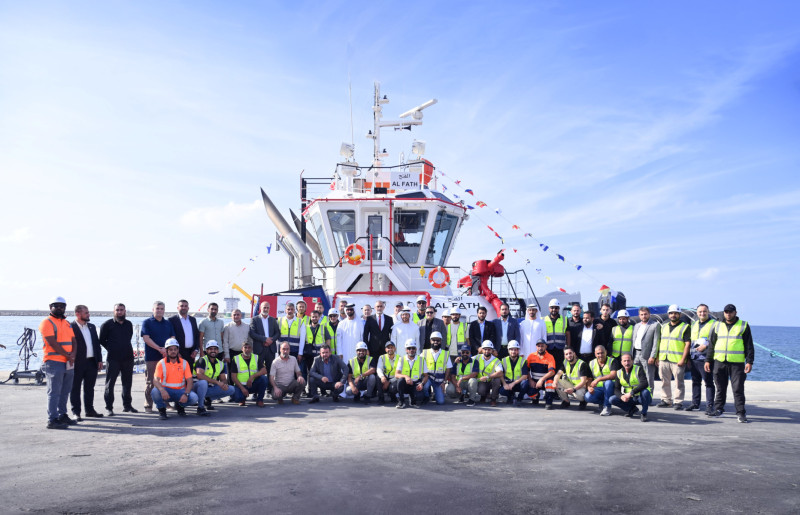
TARTUS, SYRIA: DP World has commenced operations at Tartus Port following a formal handover from the Syrian General Authority for Land and Sea Ports and welcomed the new harbour tug Al Fath into service.
This marks a major milestone under DP World’s 30-year concession agreement for Tartus Port, which includes a planned $800 million investment– representing one of the largest international investments in Syria’s logistics sector in recent years. The concession is designed to support Syria’s economic recovery and transform Tartus into a highly efficient trade and logistics hub.
Fahad Al Banna, CEO of DP World Tartus, said: “We have embarked on a journey to transform Tartus Port into a world-class maritime gateway. Working closely with the Syrian government and General Authority for Land and Sea Ports, we are committed to applying DP World’s global expertise to build a modern and digitally-enabled port that will grow trade, create opportunities and firmly position Tartus as a key trade hub in the Eastern Mediterranean.”
Harbour tugs are used to guide large vessels in confined spaces and as first-response assets in marine emergencies. Tugs support safe and reliable ship calls, improving berth approach control, reducing turnaround times and raising overall port safety. The newly arrived 22-metre Al Fath has a 50-tonne bollard pull with class-rated firefighting water cannons.
Immediate and future development plans
DP World is currently undertaking a comprehensive assessment of the port’s infrastructure including equipment, quay readiness and yard and warehouse facilities. This phase includes technical surveys, operational studies and design planning to develop a detailed redevelopment roadmap.
In the immediate term, the focus will be on dredging port access channels, basins and berths to achieve optimal design depths. Along with the rehabilitation and replacement of existing handling equipment, together with the introduction of new specialised assets, these works will enable the port to meet growing demand for bulk and breakbulk cargo.
DP World will also introduce its proprietary digital platforms to enhance operational efficiency and transparency. Staff training and process optimisation will be implemented in parallel to improve productivity and reduce vessel turnaround times to international benchmarks. As part of this process, DP World is prioritising the highest safety standards across all port operations through comprehensive safety audits and training programmes.
In the medium term, the redevelopment programme will include upgrading port infrastructure and superstructure, expanding handling and storage capacity and investing in bulk handling systems as well as new containerised and non-containerised facilities.
These initiatives will position Tartus Port as a key maritime and logistics hub in the Eastern Mediterranean, supporting both regional and international trade flows and contributing significantly to Syria’s reconstruction and economic recovery efforts.
Appointment of Fahad Al Banna
Fahad Al Banna brings extensive experience to the role, having previously served as Senior Vice President Container Operations at Jebel Ali Port, one of the busiest ports in the world. His appointment underscores DP World’s commitment to applying global expertise and best practices to local markets, supporting long-term economic growth and resilience.
Since joining DP World in 2005, Fahad Al Banna has advanced through a series of leadership positions across port operations, digital transformation and terminal development. His achievements include upgrading port management systems to improve automation and efficiency, as well as managing major infrastructure projects such as Container Terminal 4 in Jebel Ali Port, where he supervised planning, yard operations and equipment selection.
In his new role as CEO of DP World Tartus, Al Banna will oversee the modernisation of Tartus Port, which is set to benefit from significant capital expenditure in infrastructure upgrades, operational efficiency and workforce development.
Reflecting on his appointment, Fahad Al Banna said: “It is an honour to take on this responsibility at such an important moment in Syria’s history. We are grateful to the Syrian Port Authority for their support and collaboration throughout this time and confident that the redevelopment of Tartus Port will contribute to the country’s economic revival, support jobs and strengthen the flow of trade across the region.”
MARSEILLE: The CMA CGM Group, a global player in sea, land, air and logistics solutions, today revealed the winners of the second edition of the CMA CGM Startup Awards, an international innovation competition organized in collaboration with BFM Business, La Tribune, and ZEBOX.
This new edition confirms the success of the CMA CGM Startup Awards, with more than 200 applications received from around the world and 42 finalists selected to present their innovative solutions before a jury made up of experts from across the Group.
The winners were announced following a morning of pitches by the 42 finalist startups at AIM (Artificial Intelligence Marseille), France’s largest Artificial Intelligence event, which gathers nearly 4500 participants for this third edition.
Addressing four key challenges for the CMA CGM Group
In a constantly evolving world, the CMA CGM Group aims to identify the most promising solutions developed by startups to meet four major challenges:
· Disruption Forecast & Transport Tracking: Design accessible, scalable, and intelligent tools to monitor flows and anticipate disruptions. · Safe & Compliant Transportation of Hazardous Goods: Offer innovative technologies to ensure the safety and compliance of sensitive cargo and employee well-being. · Warehouse Humanoid Robotics: Integrate humanoid robots capable of performing complex tasks—independently or in collaboration with humans—in automated warehouse settings. · Media Experience Diversification & Monetization: Imagine new formats and revenue models to enhance audience engagement and develop sustainable business models.
Startups recognized for their impact and collaboration potential with the Group
The selected startups stood out for the viability of their projects, their level of innovation, impact, and synergies with the CMA CGM Group’s activities. The four winners of this second edition are:
• Disruption Forecast & Transport Tracking category: Philippe Lebas, Airudit – Airudit provides a voice-based AI technology to interact with different systems. • Safe & Compliant Transportation of Hazardous Goods category: Charles Irving-Swift, Rux Energy – Rux Energy works on hydrogen storage solutions designed for the aviation, maritime and heavy-transport sectors. • Warehouse Humanoid Robotics category: Kelvin Zhou, Zelos – Zelos develops autonomous electric vehicles intended for use in ports, warehouses and urban environments. • Media Experience Diversification & Monetization category: Ando Eniwumide, Happaning – Happaning designs an AI technology that synchronises and assembles videos.
Tailored support to accelerate their development
Each winner of the CMA CGM Startup Awards will benefit from:
• A collaboration with the CMA CGM Group, enabling them to test and deploy their solutions in real-life operating environments. • One year of support from ZEBOX, the international innovation accelerator dedicated to the positive transformation of the maritime, logistics, and media sectors, bringing together leading experts from these industries and the innovation ecosystem. • Funding of up to €150,000, granted following an investment review, to support project growth.
Startups from the first edition (2024) are scaling up their projects with the Group
One year after the first edition, several winning startups have materialized collaborations with CMA CGM Group entities. In maritime transport, GBMS conducted a pilot project for real-time vessel motion tracking, while Elonroad continues to deploy its electric charging solution at the Malta terminal. In logistics, Optioryx has tested its warehouse optimization tool at several European sites. In the media sector, Argil’s automated video generation technology has been deployed within CMA Media, illustrating its strong integration potential within the Group’s activities.
Pursuing the Group’s dynamic of innovation and entrepreneurship
Initiated by the CMA CGM Group, the CMA CGM Startup Awards aim to identify the most promising startup solutions in transport, logistics, and media worldwide. They also seek to encourage co-innovation between startups and large corporations by providing concrete opportunities for development and deployment.
This event is part of the Group’s broader strategic projects in the field of Artificial Intelligence, including partnerships with leading technology players such as Google and Mistral AI, collaborations with startups such as Happy Robot and XXII, and the Kyutai research laboratory co-founded by Rodolphe Saadé in 2023. Source: CMA CGM
TOKYO: The Maritime Technologies Forum (MTF) on Wednesday announced the publication of guidelines for conducting qualitative risk assessments for alternative-fuelled ships: HAZID and HAZOP.
The use of alternative fuels will be key to addressing the ‘2023 IMO Strategy on Reduction of GHG Emissions from Ships.’ While IMO has developed guidelines for design and operation of ships capable of using them, the Alternative Design and Approval process is required for most alternative fuels until mandatory regulations are in place. And this dictates using qualitative risk assessment to document an equivalent level of safety compared with a vessel designed to operate with conventional fuels.
Existing guidelines, such as MSC.1/Circ.1455 and IACS Rec. 146, remain valuable references to the general process for handling alternative design, independent of technology. With the industry’s expanding adoption of alternative fuels and lessons learned from recent projects, MTF considered that there is a need to make supplement to these documents to cover a wider range of fuels and technologies.
The new MTF report provides guidelines for conducting qualitative risk assessments as a core component of the approval process for alternative-fuelled ships. This addresses both HAZID and HAZOP studies, detailing qualification requirements for involved personnel and outlining the procedural steps involved. The guidelines also specify required input documents, reporting requirements and risk criteria. The guidelines support the identification of potential hazardous events and the development of preventive and mitigative safeguards to manage risks associated with the use of alternative fuels.
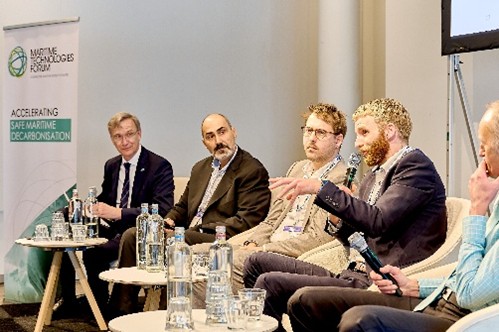
The new guidelines were presented at the MTF Seminar on Safe Maritime Decarbonisation held during Europort on 6 November 2025. With the expected increase in alternative fuelled vessels, both newbuilds and retrofits, panel discussions with industry leaders focused on the relevance of the guidelines and their effective implementation to ensure consistent outcomes providing transparency and trust to the industry stakeholders.
John McDonald, ABS President and Chief Operating Officer, said,“As the industry scales up the use of new fuels, it’s essential to establish consistent and rigorous approaches to HAZIDs and HAZOPs. A unified framework is critical for maintaining safety equivalence as the industry adopts alternative fuel technologies.”
Alf Tore Sørheim, acting Director General, Norwegian Maritime Authority, said, “Consistency across methodologies will also help Administrations take decisions with more confidence. These guidelines are an important contribution, supporting Administrations and industry stakeholders in demonstrating safety for novel fuel systems through an alternative design process, in a more consistent and predictable manner.” View the full guidelines by downloading here. GUIDELINES FOR CONDUCTING QUALITATIVE RISK ASSESSMENTS FOR ALTERNATIVE-FUELLED SHIPS: HAZID AND HAZOP
About MTF MTF is a forum of Flag States and Classification Societies, established to provide technical and regulatory expertise to benefit the maritime industry. The role of the Forum is to work together on research that it publishes to the maritime industry and draw on regulatory expertise to be able to offer unbiased advice to the shipping sector. It seeks to give guidance on the use of alternative fuels and increased levels of automation in the industry. Furthermore, it allows for the safe testing and adoption of new technologies and it helps shape world-leading regulation.
The Flag State administrations include Maritime Bureau, Ministry of Land, Infrastructure, Transport and Tourism, Japan; the Norwegian Maritime Authority; the Maritime and Coastguard Agency, United Kingdom; and the Maritime and Port Authority of Singapore (MPA). The Classification Society members are ABS, DNV, LR and ClassNK.
LONDON: Drewry’s World Container Index decreased 5% to $1,859 per 40ft container this week.
Drewry’s detailed assessment for Thursday, 13 Nov 2025
The Drewry World Container Index (WCI) decreased 5% to $1,859 per 40ft container, marking the first weekly decrease after four weeks of continuous increases.
Spot rates on the Transpacific Headhaul saw a double-digit decrease this week, with rates from Shanghai to New York falling 15% to $3,254 per 40ft container and rates to Los Angeles dropping 12% to $2,328. Although carriers were able to briefly sustain rates using GRIs, that impact proved short-lived as rates softened this week due to waning demand, with retailers having already imported their holiday season merchandise. Hence, Drewry anticipates rates will either soften slightly or hold steady next week.
Spot rates from Shanghai to Genoa increased 4% to $2,193 per 40ft container and from Shanghai to Rotterdam they rose 3% to $2,028. Carriers on the Asia–Europe trade route are trying to push spot rates up by introducing higher FAK rates ranging from $3,000 to $3,650 per 40ft box, effective 15 November, in an attempt to elevate spot rates before the start of the new annual contract negotiation season.
Drewry’s Container Forecaster expects the supply-demand balance to weaken in the next few quarters, particularly if normal Suez Canal transits resume.
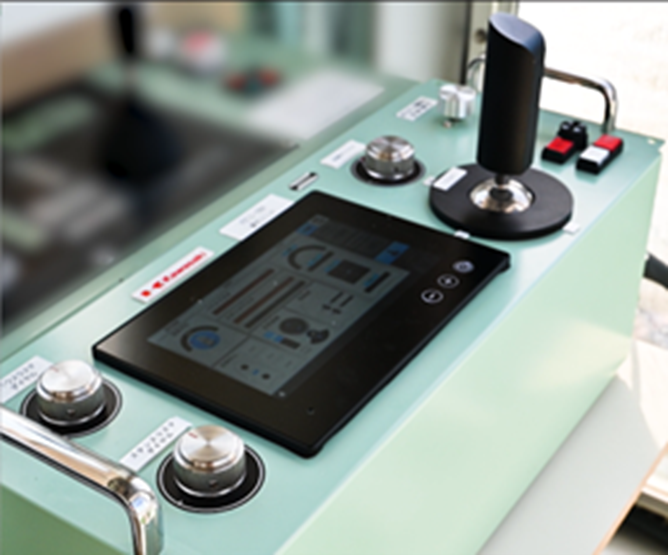
TOKYO: ClassNK has issued an Approval in Principle (AiP) for ‘Safety Berthing/Unberthing Assistance System’ developed by Kawasaki Heavy Industries, Ltd., and granted its Innovation Endorsement for Products & Solutions to the ‘Berthing and unberthing Assistance System-Human Machine Interface’. ClassNK has also confirmed that the ‘a-SAFE’ notation (BSS) *¹ -Berthing Support System, which indicate ships with advanced safety measures, can be applied to ClassNK-registered vessels equipped with Berthing and unberthing Assistance System-Human Machine Interface.
ClassNK is involved in various demonstration projects and continuously works to develop necessary safety standards, in order to support the development and implementation of automated/autonomous operation technologies from a safety perspective. Based on these experiences, ClassNK released its ‘Guidelines for Automated/Autonomous Operation of ships (Version 2.0)’ which comprehensively summarizes the requirements for each stage of conceptual design, design development, installation, and maintenance during the operation of automated/autonomous operation technologies.
For the concept design of ‘Safety Berthing/Unberthing Assistance System‘, ClassNK conducted its safety review based on the requirements of ‘Guidelines for Automated/Autonomous Operation on ships (Ver.2.0)’ and ‘Part D of Rules for the Survey and Construction of Steel Ships’. Having confirmed its compliance with the requirements, ClassNK issued the AiP.
Furthermore, for the ‘Berthing and Unberthing Assistance System – Human Machine Interface,’ ClassNK has granted an Innovation Endorsement for Products & Solutions*², which supports the deployment of products and services through third-party certification for equipment and software technology with innovative functions.
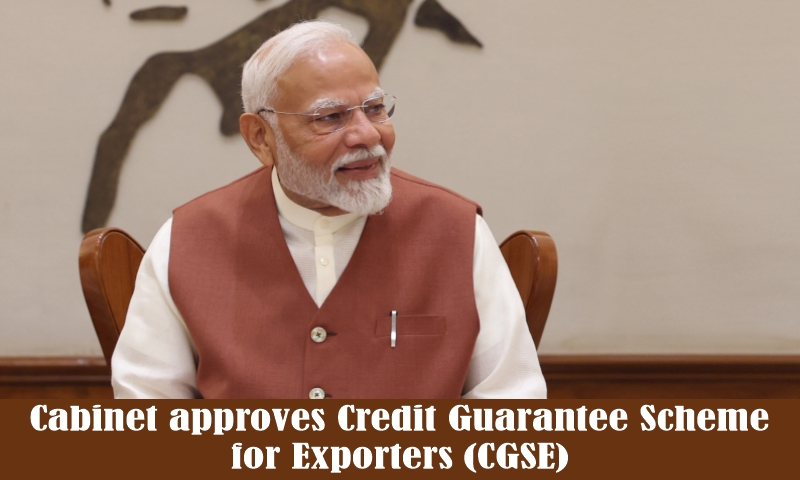
NEW DELHI: The Union Cabinet, chaired by the Prime Minister, Shri Narendra Modi on Wednesday approved introduction of Credit Guarantee Scheme for Exporters (CGSE) for providing 100% credit guarantee coverage by National Credit Guarantee Trustee Company Limited (NCGTC) to Member Lending Institutions (MLIs) for extending additional credit facilities upto Rs.20,000 crore to eligible exporters, including MSMEs.
Implementation strategy and targets:
The scheme shall be implemented by Department of Financial Services (DFS) through National Credit Guarantee Trustee Company Limited (NCGTC) to provide additional credit support by MLIs to the eligible exporters including MSMEs. A management Committee formed under the chairmanship of Secretary, DFS will oversee the progress and implementation of the scheme.
Major Impact:
The Scheme is expected to enhance the global competitiveness of Indian exporters and support diversification into new and emerging markets. By enabling collateral-free credit access under CGSE, it will be strengthen liquidity, ensure smooth business operations, reinforce India’s progress towards achieving the USD 1 trillion export target. This will further reinforce India’s journey towards Aatmanirbhar Bharat.
Background:
Exports are a critical pillar of the Indian economy, accounting for nearly 21% of GDP in FY 2024-25 and contributing significantly to foreign exchange reserves. Export-oriented industries directly and indirectly employ over 45 million people and MSMEs contributing nearly 45% of total exports. Sustained export growth has been instrumental in supporting India’s current account balance and macroeconomic stability.
It is important to extend enhanced financial assistance and adequate time to exporters for diversifying their markets and enhance global competitiveness of Indian exporters. Accordingly, proactive Government intervention to provide additional liquidity support will ensure business growth and also enable expansion of markets.
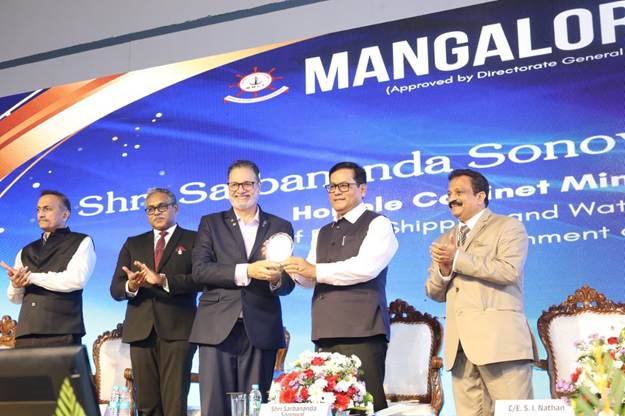
NEW DELHI : Union Minister of Ports, Shipping and Waterways Shri Sarbananda Sonowal joined the Golden Jubilee Celebration of the New Mangalore Port Authority (NMPA) at Mangaluru, marking 50 years of its service as one of India’s leading maritime gateways. The event also witnessed the inauguration, dedication and foundation stone laying of 16 key infrastructure projects and 113 CSR initiatives worth ₹1,500 crore.
The celebration highlighted the remarkable journey of NMPA and its transformation under the visionary leadership of Prime Minister Shri Narendra Modi, from a regional gateway into a technologically advanced and globally competitive maritime hub.
“This Golden Jubilee is not merely the celebration of an institution; it is the celebration of a vision,” said Union Minister Sarbananda Sonowal, while addressing the gathering. “The vision of an Atmanirbhar Bharat under the leadership of our Hon’ble Prime Minister Narendra Modi ji stands tall on the strength of India’s maritime heritage and sails confidently toward a future of innovation, prosperity, and global leadership.”
At the recently concluded India Maritime Week 2025 in Mumbai, MoUs worth over ₹12 lakh crore were signed across India’s maritime sector, of which ₹52,000 crore were by NMPA. “This is a strong signal of the rising confidence of investors in the transformed maritime ecosystem of our nation,” Shri Sarbananda Sonowal said.
Union Minister Sarbananda Sonowal also inaugurated the newly renovated campus of Mangalore Marine College and Technology (MMCT) calling it a milestone in India’s journey toward becoming a top three maritime nation.
Addressing cadets, faculty, and maritime industry representatives, Shri Sonowal said India’s maritime transformation under the leadership of Prime Minister Narendra Modi has been anchored in a vision of sustainability, innovation, and global leadership.
“Hon’ble Prime Minister Narendra Modi Ji has often said — the oceans connect us to the world, and the future of India’s growth is anchored in its maritime strength,” Sarbananda Sonowal said. “Under his visionary leadership, India is charting a new course to emerge among the top three maritime nations of the world.”
The Minister also inaugurated the new ₹9.51 crore office building of the Mercantile Marine Department (MMD), Mangalore, built on land allotted by NMPA. The facility will conduct competency examinations for seafarers from Karnataka and neighbouring states, easing their travel burden for documentation and certification.
Shri Sonowal praised MMCT for its role in maritime education, noting its world-class infrastructure, simulators, and ship-in-campus training. “Institutes like MMCT are shaping high-quality maritime professionals and exemplify the spirit of Skill India and Make in India,” Sonowal said.
Shri Sonowal commended Mediterranean Shipping Company (MSC) — the world’s largest container shipping line — for its collaboration with MMCT. MSC operates more than 900 vessels, has 18,000 Indian seafarers, and handles 2.5 million TEUs of EXIM traffic from India annually. “MSC’s partnership with MMCT ensures global-standard training and opportunities for young Indian mariners,” Sonowal noted.
Tracing the port’s five-decade journey, the Union Minister said that from its modest beginnings in 1975 with four berths and 90,000 tonnes of cargo, NMPA has grown into a powerhouse of progress with 16 berths and a Single Point Mooring facility, handling over 46 million tonnes of cargo annually. The port, with a usable capacity of 74 million tonnes, aims to reach 100 million tonnes by 2047.
Sarbananda Sonowal noted that NMPA has become India’s largest exporter of coffee and second-largest importer of LPG, with 92% mechanisation of its operations, which has enhanced logistics efficiency and safety while promoting ease of doing business. The port serves as a critical node for industries in Karnataka, Kerala, and Tamil Nadu, and its growing role in cruise tourism has revitalised local economies through tourism, hospitality, and small-scale enterprises.
Shri Sonowal emphasised NMPA’s commitment to sustainability, noting that it has become 100% solar powered, adopted digital systems to minimise environmental impact, and launched the Harit Cargo Concession Policy to position itself as a green logistics hub. “NMPA’s green initiatives exemplify India’s resolve for sustainable growth and maritime innovation,” Sonowal said.
During the ceremony, the Union Minister inaugurated multiple infrastructure and CSR projects worth ₹1,500 crore, including a 150-bed multi-specialty hospital built under the PPP model—the first of its kind among India’s major ports. The hospital will provide healthcare services to port employees and nearby communities, including coverage under Ayushman Bharat.
Highlighting India’s forward-looking maritime agenda, Sarbananda Sonowal said that under Maritime India Vision 2030 (MIV 2030) and Maritime Amrit Kaal Vision 2047 (MAKV 2047), ports across the country are being modernised to drive global competitiveness, green transition, and coastal development. “The Narendra Modi government has provided India with two futuristic maritime blueprints—MIV 2030 and MAKV 2047—guiding our nation toward global maritime leadership,” Shri Sonowal said.
The Minister added that NMPA’s 2047 Master Plan envisions doubling its cargo handling capacity, achieving carbon neutrality, and positioning Mangaluru as a major logistics and cruise tourism hub for South India. The port also plans to develop deep draft terminals, LNG infrastructure, and a new outer harbour cruise terminal with seaplane and heli-taxi facilities.
In Karnataka, 32 projects worth ₹6,526 crore are being implemented under the Sagarmala Programme, along with eight additional projects worth ₹420.89 crore. Over 960 acres of port land have been allocated for port-led industries, which are expected to generate ₹7,500 crore in annual revenue and attract ₹68,000 crore in investments, boosting employment and regional growth. He emphasised Karnataka’s strategic importance, with its 320-km coastline, New Mangalore Port, and 12 minor ports, calling it a rising maritime hub of South India.
“Our maritime growth story is not just about ships and cargo; it is about people—our fishermen, entrepreneurs, and coastal communities,” Sarbananda Sonowal said, highlighting government initiatives such as Pradhan Mantri Matsya Sampada Yojana and Deen Dayal Upadhyaya Grameen Kaushalya Yojana, which are helping empower youth, women, and traditional seafaring families.
As the event concluded, the Union Minister paid tribute to all visionaries, leaders, administrators, employees, and workers who have contributed to the port’s success over the past five decades. “May the New Mangalore Port continue to shine as a jewel of the western coast, guiding India toward a prosperous and self-reliant maritime future,” Sonowal said.
The Minister also referenced the success of India Maritime Week 2025, inaugurated last month by Union Home Minister Amit Shah, with participation from 88 countries, 11 global ministers, and over 100,000 delegates. “The event saw MoUs worth over ₹12 lakh crore signed, showcasing the world’s confidence in India’s maritime leadership,” Sonowal said.
Calling this the “golden era of India’s maritime resurgence,” Shri Sonowal urged young cadets to seize the moment, “As our dynamic Prime Minister Modi ji says — Yahi samay hai, sahi samay hai. Work hard and take full advantage of this golden opportunity to contribute to building a Viksit Bharat and an Atmanirbhar Bharat. These are clear indicators of our Prime Minister’s steadfast commitment to maritime transformation. Our investment potential in the sector exceeds ₹80 lakh crore and is expected to generate over 1.5 crore jobs in the coming years.”
Sarbananda Sonowal highlighted that India is now the third-largest seafaring nation, contributing nearly 15% of the global workforce, with the number of Indian seafarers rising from 1.08 lakh in 2014 to over 3.2 lakh today. “By 2030, one in every five global seafarers will be an Indian,” he added. Sonowal concluded by inviting global partners to register ships under the Indian flag, invest in ports & shipyards, expand shipboard training for Indian cadets.
The Union Minister said that the government’s Maritime India Vision 2030 and Maritime Amritkaal Vision 2047 serve as blueprints for modernisation, with more than 300 actionable initiatives to strengthen ports, logistics, inland waterways, and green shipping.
Shri Sonowal highlighted key milestones achieved over the past 11 years under the leadership of Prime Minister Narendra Modi, noting that India’s maritime sector has undergone a remarkable transformation. He cited the launch of the ₹76,000 crore Vadhvan Port Project—poised to become one of the world’s 10 largest ports—the establishment of hydrogen hubs, and the introduction of green port and vessel guidelines under the Harit Sagar and Harit Nauka frameworks. He also pointed to a 700% surge in inland cargo movement, a 200% rise in coastal shipping, and a dramatic reduction in vessel turnaround time from four days to less than one, outperforming countries such as the United States and Germany. Cruise tourism, he said, has expanded nearly fivefold—from 84,000 passengers in 2014 to almost 500,000 last year—while India’s port capacity has doubled from 1,400 MTPA to 2,700 MTPA, and Indian-flagged tonnage has grown from 10 MGT to 13.52 MGT.
Union Minister Pralhad Joshi, along with MP Brijesh Chowta, former MP and former BJP State President Nalin Kumar Kateel, MLAs Dr. Bharath Shetty and D. Vedavyasa Kamath, Director General of Shipping Shyam Jagannathan, NMPA Chairman Dr. Venkata Raman Akkaraju, and Deputy Chairman S. Shanthi graced the Golden Jubilee Celebration of the NMPA.
Member of Parliament Brijesh Chowta, MLA Dr. Bharath Shetty, Director General of Shipping Shyam Jagannathan, Additional Director General of Shipping Sushil Khopde, MSC Crewing Services Managing Director Capt. M. P. Bhasin, Panchayat President Vanitha, and CMC Group of Institutions Chairman and Founder S. I. Nathan were among the dignitaries who attended the MMCT event.