Home Blog Page 569

FM Sitharaman meets Saudi Arabia’s Minister of Investment, discusses early conclusion of Bilateral Investment Treaty

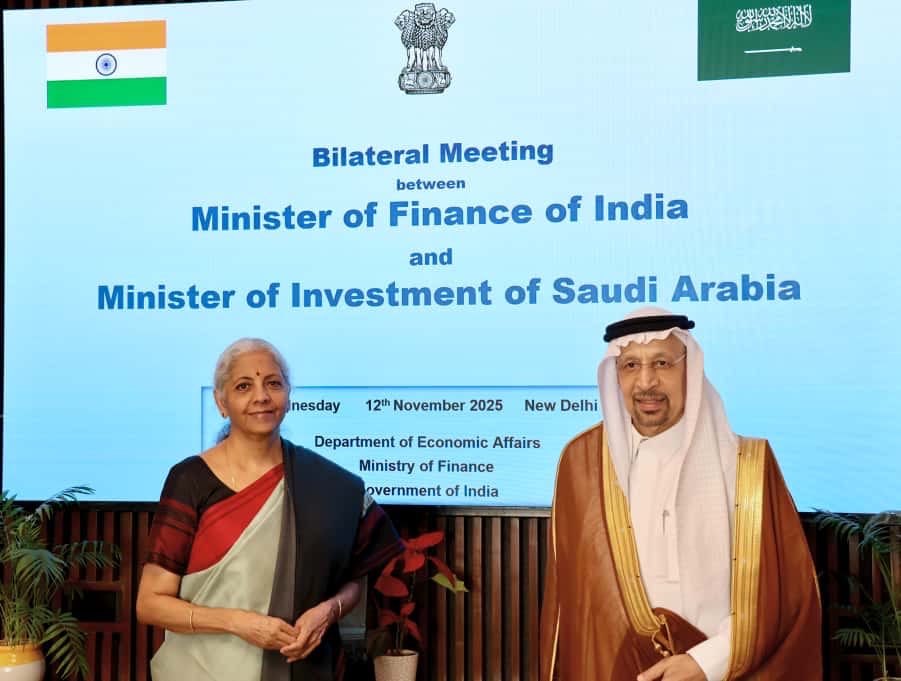
NEW DELHI: Union Finance Minister Smt. Nirmala Sitharaman on Wednesday met Khalid Al Falih, Minister of Investment of Saudi Arabia, here to discuss ways to strengthen economic ties between the two countries.

The two leaders reviewed the progress in the Bilateral Investment Treaty (BIT) between India and Saudi Arabia. They agreed on the need for its early conclusion to help unlock stronger two-way foreign direct investment (FDI) and deepen cooperation.

“Union Minister for Finance and Corporate Affairs Smt. @nsitharaman met H.E. Mr. @Khalid_AlFalih, Minister of Investment @MISA, Saudi Arabia, in New Delhi, today. The two leaders discussed Bilateral Investment Treaty #BIT between India and Saudi Arabia, and also sought an early conclusion of the #BIT to unlock robust two-way FDI and to further deepen mutual cooperation,” Finance Ministry said in a post on X.

Jaishankar calls for Stronger Global Collaboration on Maritime Security at G7 Outreach Session

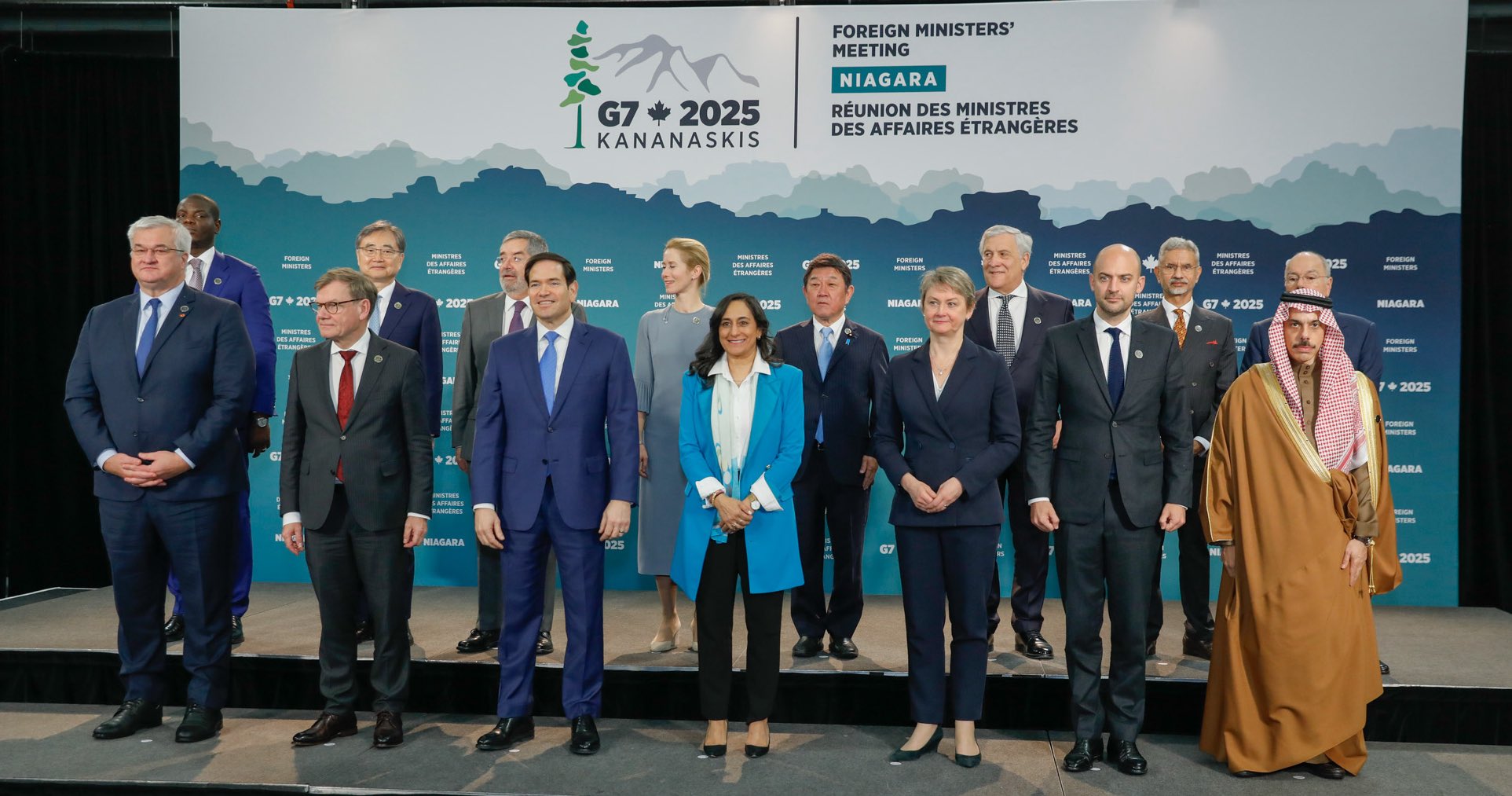
NIAGARA (ONTARIO): External Affairs Minister Dr. S. Jaishankar underscored India’s expanding role in securing global maritime routes and promoting resilient ocean-based economic linkages during the G7 Foreign Ministers’ Meeting (FMM) Outreach Session on Maritime Security and Prosperity.

Participating in the session hosted by the G7 countries, Dr. Jaishankar outlined India’s strategic maritime vision through its MAHASAGAR outlook and Indo-Pacific partnerships, while emphasising the nation’s commitment to port-led development and secure sea lanes.

Dr. Jaishankar highlighted the growing need for trusted and diversified maritime supply chains, noting India’s ongoing efforts to upgrade its shipping infrastructure and build resilient connectivity corridors. With maritime transport handling over 90% of global trade volumes, he said, strengthening these networks is essential for both national and international economic stability.

A key area of discussion at the session was the protection of critical maritime and undersea infrastructure, including communication cables and energy pipelines. The Minister called for enhanced coordination among like-minded countries, warning that disruptions—whether accidental or intentional—carry far-reaching security and economic consequences.

Raising concerns over rising maritime threats, Dr. Jaishankar pointed to piracy, smuggling, and Illegal, Unreported and Unregulated (IUU) fishing as challenges that demand deeper intelligence-sharing and joint operational cooperation. He also reaffirmed India’s growing reputation as a first responder in the region, citing the country’s extensive Humanitarian Assistance and Disaster Relief (HADR) efforts, joint exercises, and expanding logistics agreements across the Indo-Pacific.

He reiterated that India’s maritime doctrine is anchored in the principle that secure and open seas are vital to global prosperity, and that resilient ports and safe waterways form the backbone of global supply chains.

Stressing that global maritime order must be upheld through universally accepted rules, Dr. Jaishankar emphasised that the United Nations Convention on the Law of the Sea (UNCLOS) remains the bedrock of maritime governance and should be respected by all nations.

The G7 Outreach Session brought together key partners to discuss strengthening maritime stability amid rising geopolitical tensions, supply chain vulnerabilities, and competition in the Indo-Pacific.

S. Jaishankar, Rubio hold talks on bilateral ties, trade and supply chains

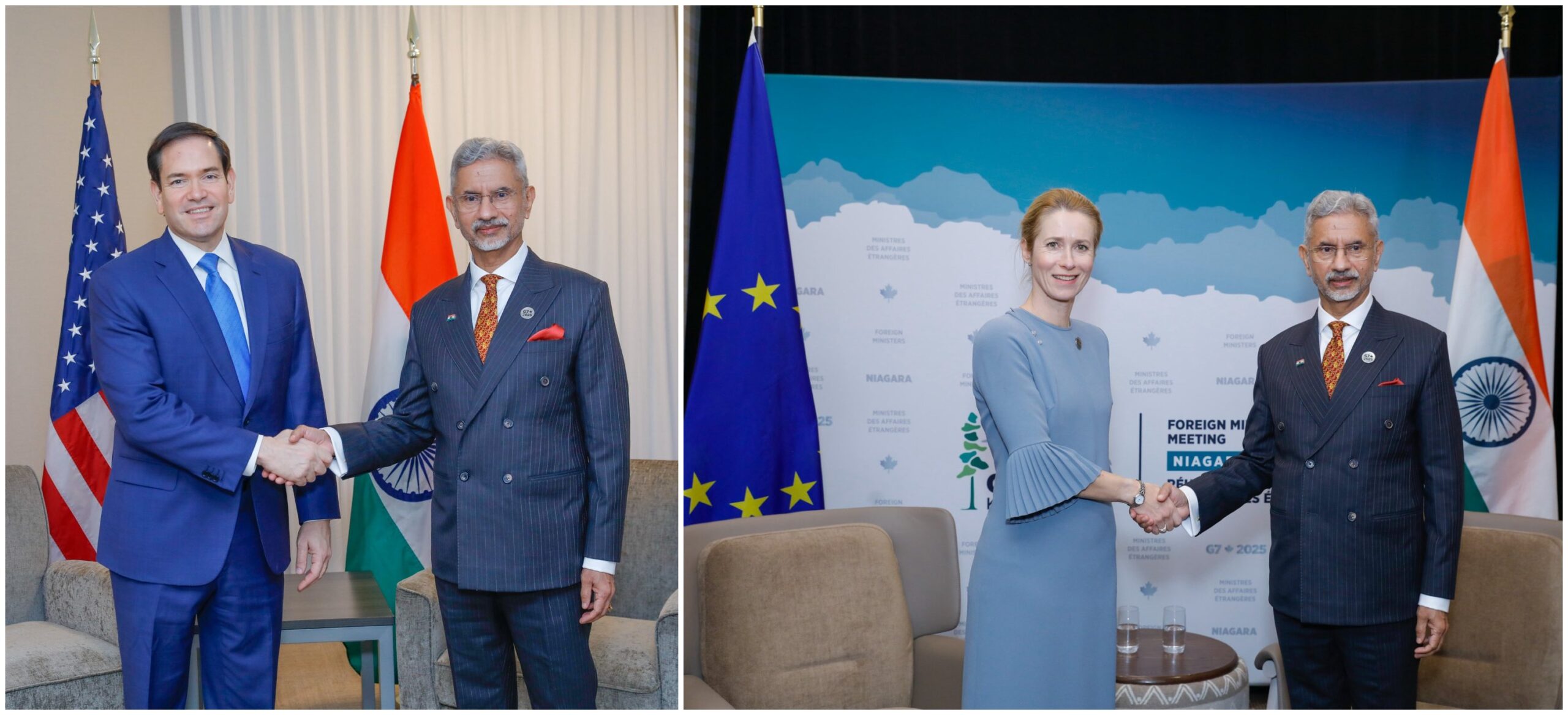
ONTARIO: External Affairs Minister Shri S Jaishankar held a series of bilateral meetings on the margins of the G7 foreign ministers’ meet, headlined by meetings with US Secretary of State, Mr Marco Rubio, and the host for the event, Canada’s Minister of Foreign Affairs Ms. Anita Anand.

The meeting with Rubio was among Jaishankar’s early engagements on Wednesday, the second and final day of the global meeting, which is being held in Niagara-on-the-Lake, a scenic township close to the iconic Niagara Falls.

In a post on X after his meeting with Rubio, Jaishankar expressed his appreciation for the condolences offered on the loss of lives in the Delhi blasts. “Discussed our bilateral ties, focusing on trade and supply chains. Exchanged views on the Ukraine conflict, the Middle East/West Asia situation and Indo-Pacific,” Jaishankar added.

The meeting with Anand on Tuesday evening at the conference venue, was marked by the Canadian Minister describing India as an ““important partner for Canada”. In addition, the readout issued by Global Affairs Canada, the country’s foreign ministry noted this was the third meeting this year, which it said was “a reflection of momentum in the bilateral relationship”.

Jaishankar arrived on Tuesday, and among the others he met during the day were United Kingdom’s Foreign Secretary Yvette Cooper. He said they acknowledged “the positive momentum” in relations and reaffirmed “Vision 2035 for further deepening cooperation across key areas”.

He interacted with France’s Minister for Europe and Foreign Affairs Jean-Noel Barrot. They took stock of the Strategic Partnership between the two countries and discussed “deepening our cooperation in multilateral and plurilateral formats”, Jaishankar posted.

He also engaged with German Foreign Minister Johann Wadephul, Mauro Vieira of Brazil and Dr Juan Ramon de la Fuente of Mexico. The premier of the prairie province of Saskatchewan Scoot Moe also dropped into the venue for a meeting with Jaishankar.

Piyush Goyal calls for united efforts to empower tribal communities and showcase their craftsmanship worldwide

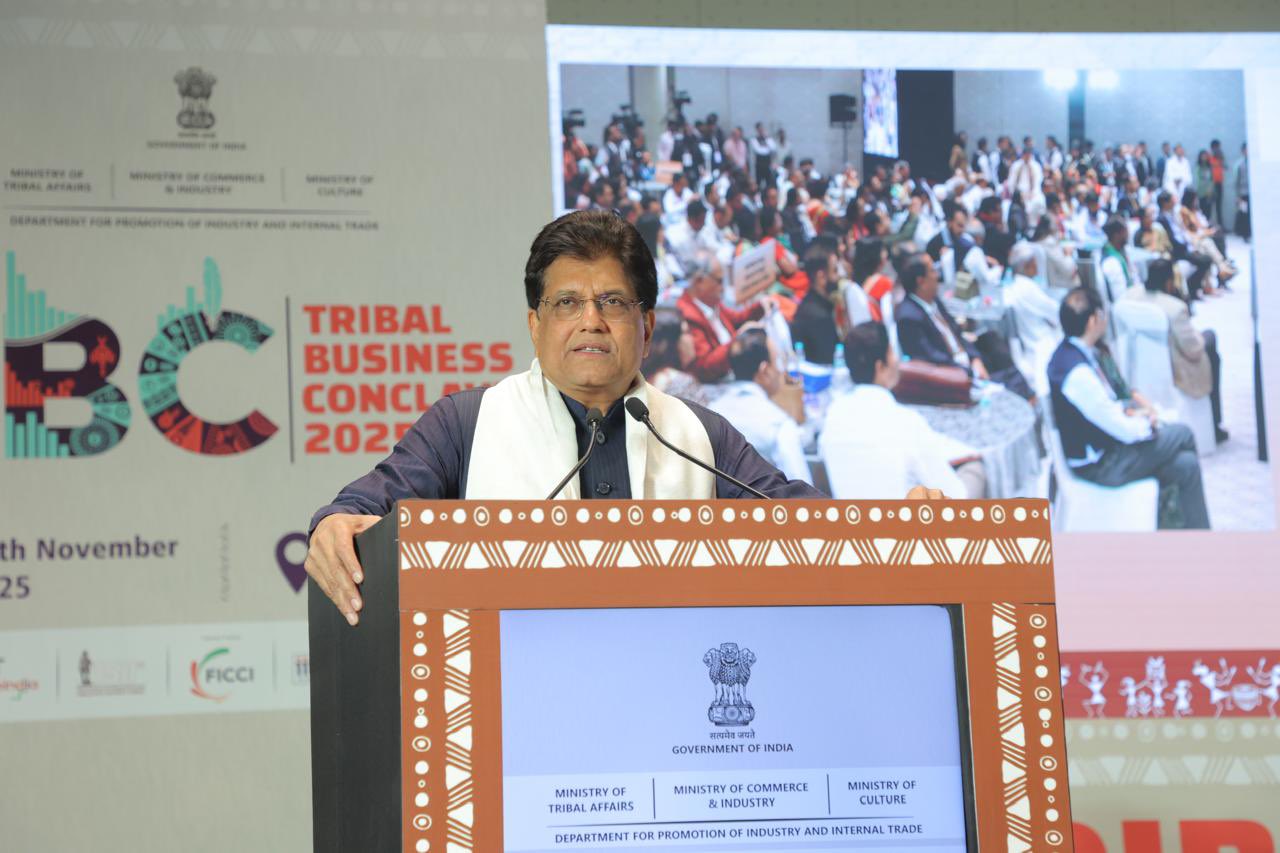
NEW DELHI : Union Minister of Commerce & Industry, Shri Piyush Goyal has said that all tribal products with export potential will be fully supported by the Department of Commerce through various channels, including e-commerce platforms, international warehouses for product display and sales, as well as wholesale and retail trade networks. Shri Goyal said this while addressing the Tribal Business Conclave 2025 in New Delhi on Wednesday in the august presence of Union Minister of Tribal Affairs Shri Jual Oram.

Organized by the Department for Promotion of Industry and Internal Trade (DPIIT), Ministry of Commerce and Industry, in collaboration with the Ministry of Tribal Affairs and Ministry of Culture, the conclave marked a historic moment during Janjatiya Gaurav Varsh, commemorating the 150th birth anniversary of Birsa Munda.

Commerce Minister informed the Conclave that a scheme is currently being developed to strengthen export promotion efforts to ensure that tribal products gain the visibility and market access they rightfully deserve in both domestic and global markets.

Shri Goyal said that both domestic and international markets offer immense opportunities for tribal goods and crafts, and that the Government is taking necessary measures to harness this potential in the coming years.

The Minister emphasised that the Prime Minister believes that the nation can truly prosper only when the indigenous people prosper. He said that India’s growth and development depends on ensuring that progress reaches every household, particularly those in tribal and remote regions. Shri Goyal reiterated that the upliftment of tribal and indigenous communities remains a top priority for the Government, reflecting its commitment to inclusive and sustainable development.

Shri Goyal paid tribute to Birsa Munda and said that he showed direction and leadership to the tribal community. He added that the nation must draw inspiration from Birsa Munda’s life and follow his footsteps to uplift the tribal community, enhance livelihoods, and ensure that every tribal household is filled with happiness and prosperity. Shri Goyal recalled Birsa Munda’s words, “Our land, our kingdom,” and said that the tribal community has historically faced immense deprivation and hardships.

The Minister lauded the tribal community for preserving its values, handicrafts, and traditional skills despite numerous challenges. He said that the way tribal communities have kept their history and heritage alive through resilience and dedication is truly commendable. He expressed deep respect for the strength and determination of the tribal community and said that their contribution to India’s cultural and social fabric is invaluable.

Shri Goyal noted that the Ministry of Tribal Affairs and the Department of Commerce have jointly played a pivotal role in promoting trade and commerce of tribal and indigenous products. He said that schools, colleges, universities, trade bodies, and government institutions have together ensured that quality tribal products from the remotest corners of the country reach marketplaces and consumers across India.

The Minister highlighted that the Government has implemented various schemes and initiatives aimed at improving the welfare of tribal communities. He noted that the President of India, Smt. Droupadi Murmu, stands as a proud and capable representative of both the nation and the tribal community. He mentioned that 3,900 Van Dhan Kendras have acted as catalysts for the upliftment of 12 lakh members of the tribal community.

Shri Goyal informed that the budget allocation for the Ministry of Tribal Affairs has been increased by 50 per cent this year. He added that under the PM-Janman Yojana, approximately 50 lakh families belonging to particularly vulnerable tribal groups have benefitted, with Rs. 24,000 crore disbursed to improve their quality of life.

He said that the tribal community of India is deeply proud of its roots, culture, and traditions. He informed that the fee for obtaining Geographical Indication (GI) tags has been reduced by 80 per cent—from Rs. 5,000 to Rs. 1,000—to encourage more tribal products to be registered and to ensure that India’s history and traditions are preserved through their crafts and heritage.

Concluding his address, Shri Goyal called for the transformation from “Van Dhan to Vyapar Dhan,” envisioning that tribal and indigenous products should reach international platforms, truly realising the vision of “Local Goes Global.” He urged all stakeholders to work together to achieve this shared goal of empowering tribal communities and showcasing their craftsmanship to the world.

FICCI and PRAYOGI also supported the conclave as Industry Partner and Knowledge Partner, respectively. The event celebrated tribal resilience and creativity while positioning tribal enterprise at the heart of India’s development agenda for Viksit Bharat @2047.

The event witnessed participation from over 250 tribal enterprises, with 150 exhibitors and more than 100 tribal start-ups showcasing their innovations at the “Roots to Rise” pitching platform. The initiative provided a direct connection between entrepreneurs, investors, corporates, and government buyers, creating a vibrant ecosystem for collaboration and growth.

The conclave included six high-impact panel discussions and four masterclasses that engaged more than 50 eminent voices from government, academia, and industry. The sessions focused on themes such as investment and partnerships, skilling and empowerment, sustainability and geographical identity, and branding and market innovation.

Buyer-seller meets were also organised to create actionable pathways for market access, skill development, and policy recommendations aimed at strengthening tribal value chains from villages to global markets.

A cultural showcase featuring a thematic pavilion and traditional performances celebrated tribal heritage under the theme “Tribal Bharat @2047: Sustaining Culture, Scaling Commerce.”

Key Announcements at the conclave

  1. Launch of Gramya Yuva Arth Niti (GYAN) Lab: A Public Policy Interactive Lab developed by the Ashank Desai School of Public Policy, IIT Bombay, and PRAYOGI Foundation, with support from the Ministry of Commerce and Industry. The GYAN Lab brings together field experience, technology, and policy to design and test new models for tribal and rural enterprises. Through real-time pilots, policy frameworks, digital innovation, and capacity-building, it will create scalable solutions for inclusive and sustainable enterprise growth.In the coming year, the Lab will roll out pilots such as the Tribal Entrepreneurship Index and micro-equity based incubation models, turning field learning into policy action. This collaboration between government, academia, and industry is a major step toward empowering India’s tribal communities through enterprise and innovation launch of Gramya Yuva Arth Niti – GYAN,
  2. Tribal Affairs Grand Challenge: Announced by the Ministry of Tribal Affairs in association with Startup India and DPIIT, this initiative invites startups and enterprises to design high-impact solutions for tribal communities, offering visibility, mentorship, and funding support.
  3. Roots to Rise: Pitching Session Outcomes

After two rounds of screening, 115 enterprises were selected, of which 43 possess a DPIIT registration number. 10 incubators agreed to provide incubation support to the selected enterprises. 57 enterprises received interest for investment from more than 50 VCs , investors including AIF, VCs, angel investors, who participated with a total commitment of more than INR 10 crore.
33 enterprises attracted investor interest from organizations such as IFCI Venture Capital Funds Ltd. and Arora Venture Partners.
These startups and enterprises have created around 1,500 direct employment and more than 10,000 indirect employments, cumulatively serving over 20,000 tribal people in various sectors.

  1. Another notable outcome was the high engagement on the Government E Marketplace, resulting in 60+ registrations and over 50 positive inquiries for TBC products.
  2. Distribution of GI Certificates – The event also featured the distribution of Geographical Indication (GI) certificates, celebrating the artistry of tribal artisans from across India. Crafts and products such as Kannadippaya (Bamboo Mat) of Kerala, Apatani Textile of Arunachal Pradesh, Marthandam Honey of Tamil Nadu, Lepcha Tungbuk of Sikkim, Bodo Aronai of Assam, Ambaji White Marble of Gujarat, and Bedu and Badri Cow Ghee of Uttarakhand received due recognition for their uniqueness and cultural heritage. The recognition marks a significant step in enhancing market access, brand value, and national visibility for tribal products empowering artisans and preserving India’s rich indigenous legacy.

MoPSW drives special campaign 5.0 with strong commitment to cleanliness and good governance

NEW DELHI : As per the guidelines issued by the Department of Administrative Reforms and Public Grievances (DARPG) under the Special Campaign for Disposal of Pending Matters 5.0 (SCDPM 5.0), the Ministry of Ports, Shipping and Waterways (MoPSW) and its attached/subordinate offices, autonomous bodies and public sector undertakings actively participated in the campaign held from 2nd to 31st October 2025. The campaign focused on institutionalizing cleanliness, promoting sustainability, and ensuring efficient disposal of pending matters across the Ministry and its affiliated organizations.

The Special Campaign 5.0 emphasized key areas such as disposal of e-waste, record management, space optimization, and accelerated grievance redressal, aligning with the Government of India’s vision of Swachhata, Digital Transformation and Good Governance.

During the campaign, MoPSW achieved significant results. Apart from successfully disposing of pending public grievances and other references, a total of 228 campaigns were conducted across various offices. 28,489 physical and e-files were reviewed, out of which 10,755 files were closed or weeded out. The Ministry also generated revenue worth ₹4.14 crore through scrap disposal and freed 1.11 lakh sq. ft. of space, resulting in improved office space management and a cleaner, more environment-friendly workspace.

Several best practices were undertaken by the Ministry and its organizations during Special Campaign 5.0. These included the installation of a Vermi composting Unit for solid waste management, active involvement of NGOs and social enterprises in transforming waste into wealth and utility products, the launch of a Special Campaign 5.0 Rath, removal of dead sea grass from ocean areas, creation of unique structures from scrap material, and effective e-waste management initiatives.

Through these concerted efforts, the Ministry of Ports, Shipping and Waterways has reaffirmed its strong commitment to cleanliness, sustainability, and good governance, ensuring an efficient and environmentally conscious administrative ecosystem across the maritime sector.

Adani Group to plan Investors’ Conference in Singapore to boost global confidence

AHMEDABAD : The Adani Group is set to hold an investor conference in Singapore later this month, aimed at strengthening global investor confidence and widening its international shareholder base.

Scheduled for November 24 and 25, the two-day event will bring together management teams from across the Group’s Chairman Gautam Adani’s diverse business portfolio — spanning ports, energy, infrastructure, and more — for discussions with equity and credit investors, banks, and bond-rating agencies, according to people familiar with the development.

The Group’s senior leadership, including Group Chief Financial Officer Jugeshinder Singh and key executives from various Adani companies, will participate in the meetings to share strategic insights, financial performance updates, and long-term growth outlooks.

The Singapore conference is part of Adani Group’s continued outreach to engage transparently with global investors and reinforce its commitment to sustainable growth and financial prudence.

The two-day event will bring together management teams from across Gautam Adani’s diversified portfolio — including ports, energy, and infrastructure — for meetings with equity and credit investors, banks, and bond-rating agencies, according to people familiar with the matter. Group Chief Financial Officer Jugeshinder Singh and senior executives from various Adani companies are expected to lead the discussions.

On the sidelines of a similar investor event in London earlier this year, Singh had outlined the conglomerate’s plan to reduce leverage over the next five years, reaffirming the group’s focus on balance sheet strength and sustainable expansion.

The latest outreach reflects Adani’s continued drive to rebuild momentum and investor trust, following a short-seller report in 2023 and a U.S. Department of Justice investigation into an alleged bribery case — allegations the group has strongly denied.

In a parallel development, Adani Enterprises Ltd. this week launched a rights issue worth ₹249.3 billion ($2.8 billion), offering shares to existing investors at a 24% discount to market price. The move aims to bolster capital for future growth. Meanwhile, BofA Securities has initiated overweight coverage on select Adani Group dollar bonds, citing strong EBITDA growth prospects as the conglomerate expands capacity while maintaining a disciplined approach to leverage.

RVNL expands beyond rail with ₹5.35 Billion Visakhapatnam Port Authority infrastructure Deal

NEW DELHI : The partnership signals RVNL’s strategic shift from a rail‑focused enterprise to a comprehensive infrastructure provider, in line with its vision of ‘From Rail Infra to All Infra’.

Rail Vikas Nigam Ltd (RVNL), a Navratna public sector enterprise under the Ministry of Railways, has signed a memorandum of understanding (MoU) with Visakhapatnam Port Authority (VPA) for infrastructure development projects worth ₹5.35 billion. The agreement, exchanged on October 28 during India Maritime Week 2025 in Mumbai, marks RVNL’s expansion beyond rail infrastructure into broader connectivity solutions.

The partnership reflects RVNL’s strategic shift from a rail‑focused enterprise to a comprehensive infrastructure provider, aligned with its vision of ‘From Rail Infra to All Infra’, the company said in a statement on Tuesday.

SC Jain, Chairman & Managing Director, RVNL, noted, “The collaboration with Visakhapatnam Port Authority is a clear indication of RVNL’s dedication towards the integrated infrastructure growth of India. Having demonstrated its engineering excellence and round‑the‑clock project execution capabilities, RVNL is now poised to play a major role in modernising port‑linked logistics and connectivity infrastructure.”

Under the MoU, RVNL will undertake four major projects to strengthen internal and external connectivity at Visakhapatnam Port. The largest initiative, worth ₹3 billion, involves the construction of internal flyovers within port limits to streamline cargo movement and eliminate stoppages. A new bridge costing ₹1.00 billion will connect vacant port lands near the airport, creating efficient road links between the main port area and adjoining lands, thereby unlocking additional capacity. Another ₹1 billion project will deliver an additional road and rail bridge at Sardar Patel Bridge, ensuring seamless traffic flow between the port’s eastern and western sectors. Finally, a ₹500 million study will assess and plan the upgradation and modernisation of VPA’s railway system to enhance throughput and operational efficiency.

Together, these initiatives aim to decongest internal traffic, improve multimodal connectivity, and enable seamless cargo flow across the port. They will also unlock the development potential of vacant port lands, strengthen logistics infrastructure, and enhance overall capacity at Visakhapatnam Port.

GST reforms to propel India’s FY26 GDP growth to 7.4% : NIPFP

NEW DELHI : The Indian Economy is expected to grow by 7.4 per cent in the current financial year, as the effect of goods and services tax (GST) rate rationalisation kicks in and the US Economy performs to its potential, said the National Institute of Public Finance and Policy (NIPFP) in its latest mid-year economic review on Tuesday.

In its April review earlier this year, it had estimated the economy to grow by 6.6 per cent in FY26. While the latest Reserve Bank of India (RBI) estimate projected the economy to grow at 6.8 per cent.

“Largely on the back of robust public sector investment, revival in domestic consumption demand in both the rural and urban areas, goods and services tax (GST) rate rationalisation and the external sector, especially the US performing to its potential, the economy is expected to clock this robust growth,” the economy review said.

However, the mid-year economic review by the autonomous research institution under the finance ministry also presented two alternate scenarios, where the output in the US economy either remains above potential i.e optimistic view or remains below the potential i.e pessimistic view.

If the US output remains one per cent above potential, the economy is expected to grow by 8.8 per cent, while if the US output remains one per cent below potential, the economy is expected to grow by 6 per cent in FY26. 

Besides, the NIPFP also projected retail inflation at 1.6 per cent in the current financial year, on account of moderating food inflation. It however, noted that edible oil inflation remains high and the core inflation is on rise due to sharp price rise seen in gold and silver.

“Our inflation projection is quite lower than the 2.6 per cent estimated by RBI. The inflation is expected to remain 1.1 per cent in Q3 and 0.8 per cent in Q4. (However), buoyant domestic demand propelled by GST rate restructuring presents an upside risk, while moderating energy inflation and Trump tariff induced demand moderation presents a downside risk,” the review said. 

On the trade front, the review noted that most bilateral trade deals primarily benefit the US and called for diversification in the services export as the sector has high exposure and faces “real” risk in case the net of Trump tariffs widens.

“Unlike some countries, India holds very little leverage in merchandise exports and they are concentrated in a few sectors only. While, in the case of services, more than half of India’s services export is to the US and they face risk. Hence, diversification is the key,” the review said.

Source : BS

Ashok Leyland Q2 Results: Net profit flat at ₹771 crore, revenue up 9% YoY at ₹9,588 crore; Re 1 dividend declared

CHENNAI : Ashok Leyland, the commercial vehicle manufacturer, on Wednesday reported a standalone net profit of ₹771.06 crore for the second quarter of FY26, registering a minor growth of 0.13% from ₹770.10 crore in the same period last fiscal year.

The net profit was impacted by a one-time loss of ₹40 crore as against a gain of ₹117 crore in the year-ago period.

Ashok Leyland’s revenue from operations in Q2FY26 rose 9.3% to ₹9,588.18 crore from ₹8,768.83 crore year-on-year (YoY). At the operational level, earnings before interest, tax, depreciation and amortization (EBITDA) during the September quarter increased 14.2% to ₹1,162 crore from ₹1,017 crore, while EBITDA margin improved to 12% from 11.6%, YoY, driven by product premiumization, network growth, operational efficiency, cost optimization, and digital enablement.

Both MHCV and LCV industry witnessed positive growth in Q2. Ashok Leyland volume in Q2 saw a jump of 3% in MHCV from 25,542 to 26,307 units, and 6% in the LCV segment, from 16,629 to 17,697 units, on YoY basis.

Ashok Leyland’s Domestic MHCV market share continues to be over 30%. The Company maintained its market leadership in the Bus segment. The LCV domestic market share in the addressable segments has also improved, Ashok Leyland said in a release.

The Export volumes for the quarter were at 4,784 units, growing by 45% on YoY basis.

The Defence, Power Solutions and Aftermarket Businesses continue to perform well and are expected to post good growth in the current fiscal, it added.

“We continue to see stable demand in all segments of trucks and buses. The industry has posted growth, albeit modest, and we are anticipating to witness better growth in the second half. Ashok Leyland has achieved its eleventh consecutive quarter of double-digit EBITDA,” said Shenu Agarwal, Managing Director & CEO, Ashok Leyland.

“We believe we are well positioned to achieve our mid-teen EBITDA goal in the medium term. We remain cash positive,” Agarwal added.

Maersk’s European customers expect supply chain disruptions to continue for at least 12-24 months

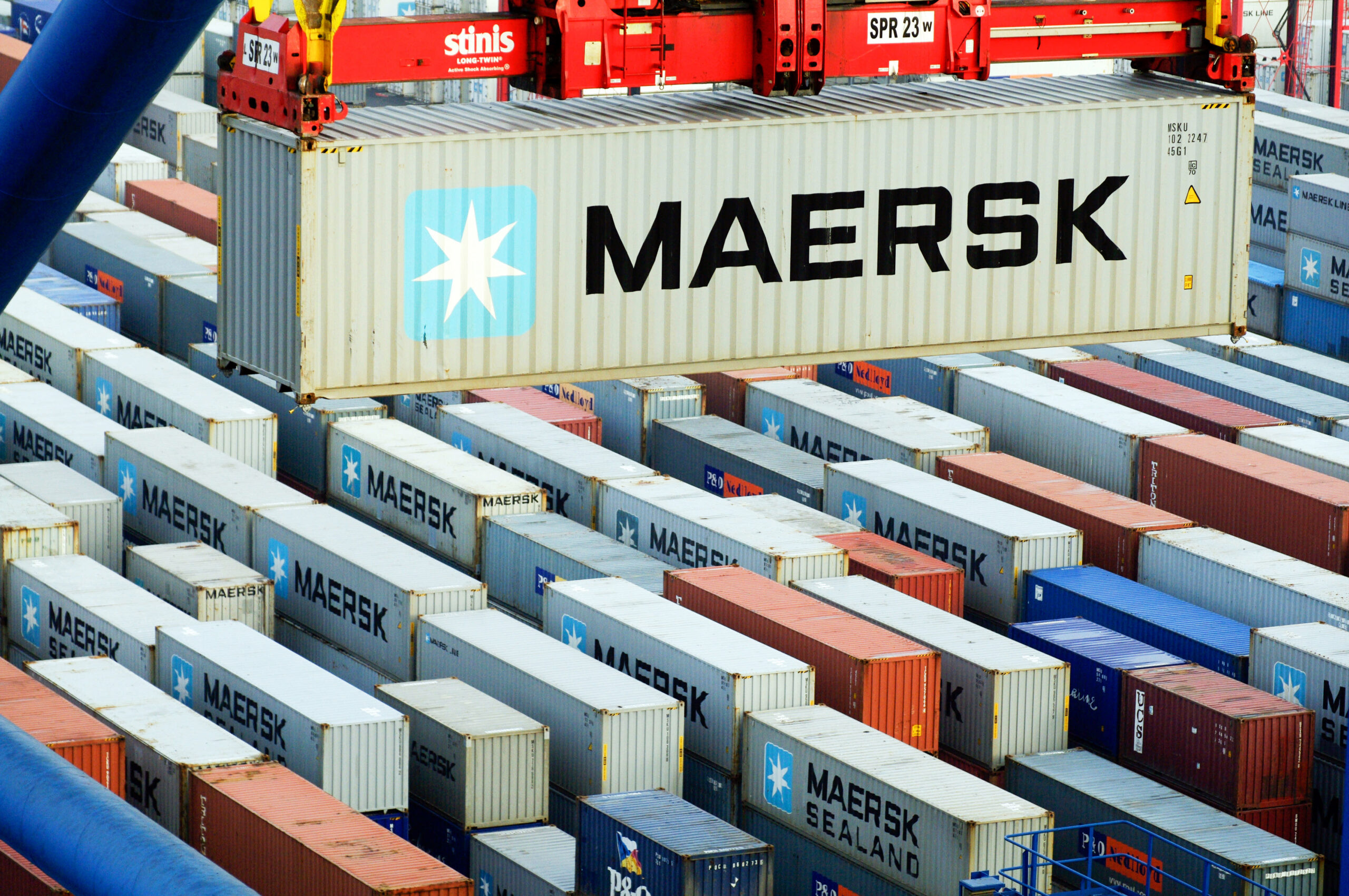
COPENHAGEN : Current disruptions in global supply chains show no signs of abating, and likely won’t for the foreseeable future. That is according to the results of a new AP Moller-Maersk Survey, conducted among its European customer base.

Maersk said the findings reveal a ”significant majority” of cargo owners expect the current volatile environment to persist for at least another 12-24 months.

The survey, which gathered insights from over 900 companies across Europe, highlights the continued strain on supply chains amid geopolitical tensions, shifting trade policies and tariff uncertainties.

More than 78 per cent of the supply chain professionals surveyed said they anticipate that geopolitical dynamics, trade tariffs, and international trade regulations will impact their operations over the next one to two years.

Nearly half (48 per cent) expressed “deep concern” about the geopolitical climate, and four out of five recognised supply chain challenges as a factor impacting their business growth.

To counter these challenges, businesses are actively diversifying their sourcing strategies.

Three out of four respondents indicated they are either already sourcing from multiple geographies or plan to do so – a notable increase from Maersk’s 2024 survey, where only 53 per cent were considering new sourcing locations.

Furthermore, four out of five businesses are strengthening the relationship with their logistics provider and key suppliers; three out of five businesses are investing in supply chain visibility and agility to increase resilience; and three out of four businesses said they’re adapting to alternative trade routes.

”European businesses certainly haven’t had it all their own way over the past five years, and the ever-changing global environment facing them is definitely here to stay for the near future,” said Aymeric Chandavoine, President Europe at AP Moller-Maersk.

”Ultimately, though, it’s about turning the prevailing uncertainty into opportunities.

”One shared attitude among our customers has become abundantly clear: now is not the time to lament the cards we’ve been dealt – now is the time to take action and grow,” Chandavoine urged.

”More and more European businesses are refusing to sit back and wait for volatility to ease.

“Instead, they are looking to build smarter, more resilient networks that support their ambitions for growth,” he noted.

Waiting and doing nothing is the worst thing cargo owners can do, according to Lars Karlsson, Maersk’s global head of trade and customs consulting.

Tariffs stand for the most recent heavy disruption for global trade, and Karlsson and Maersk’s global team of 2,700 customs brokers helped cargo owners across the globe stay on top of developments when the US tariffs hit this year.

“That left many supply chain managers without sleep at night,” he said. “However, with the right tools and partners you can control even such a black swan event.

“You need to be proactive and become more agile in a geopolitical environment like today.

”To achieve this, you need full control of your global customs data, have it digitally in one central platform where you can blend it with the data of sudden tariff changes as they happen,” Karlsson pointed out.

That tariffs will remain top of the agenda going forward is strongly supported by the survey’s results, Maersk said.

The top three challenges that European businesses expect from evolving geopolitics are fluctuations in import and export costs, increased trade tariffs, and uncertainty in global trade policies.