Home Blog Page 575

Andhra Pradesh to showcase Maritime Potential at CII Partnership Summit

VIJAYWADA: As the maritime trade potential of the State’s 1,053 km coast remains largely untapped despite having port access every 280 km, the Government of Andhra Pradesh (GoAP) is going to pull out all the stops to attract investments in non-major seaports and shipbuilding, at the upcoming CII Partnership Summit.

The State government is investing over ₹5,000 crore in greenfield port infrastructure, aiming to complete them by the end of 2026. The goal has the backing of the Andhra Pradesh Maritime Policy 2024-2029, under which operational guidelines were issued late last month. Currently, A.P. ranks 2nd in cargo handling from the non-major ports (118 million metric tonnes per annum), according to official sources.

As per a presentation made by a top official of the Infrastructure and Investments Department at the India Maritime Week held in Mumbai recently, while the construction of Machilipatnam, Ramayapatnam, Mulapeta and Kakinada gateway ports is in various stages, a strong pitch is being made for the development of a shipbuilding cluster at Dugarajapatnam in Tirupati district. For this, efforts are being made to rope in global investors to partner with the GoAP. Besides, medium and small scale shipyards with repair facilities have been planned at Machilipatnam/Mulapeta, and Juvvaladinne/Uppada/Nizampatnam.

The government has identified over 40 coastal and creek sites suited for shipbuilding, with a targeted capacity to build cape-size and ‘Very Large Crude Carriers’ and ‘Very Large Gas Carriers’. The government is in negotiations with some of the world’s leading shipbuilders for developing those facilities, according to the sources.

A slew of tailor-made incentives are being offered to start with, including a subsidy of 12% on Fixed Capital Investment (FCI) for sub-large and large projects, subject to installation of the plant and machinery in five and seven years, and 15% subsidy on FCI, subject to the completion of installations in 10 years in case of mega and ultra-mega projects.

Decarbonisation subsidy on FCI ranging from 15% to 35% is also proposed to be given to accelerate the transition to a sustainable and low-carbon economy. Integration of logistics and industry, i.e. creating warehousing, cold chain, multi-modal logistics park/dry port, container freight station and plug and play industrial zone infrastructure and construction of fishing harbours that constitute an important pillar in the blue economy, has been accorded due priority.
Gujarat’s chemical sector eyes Chinese market amid slowdown in US Exports

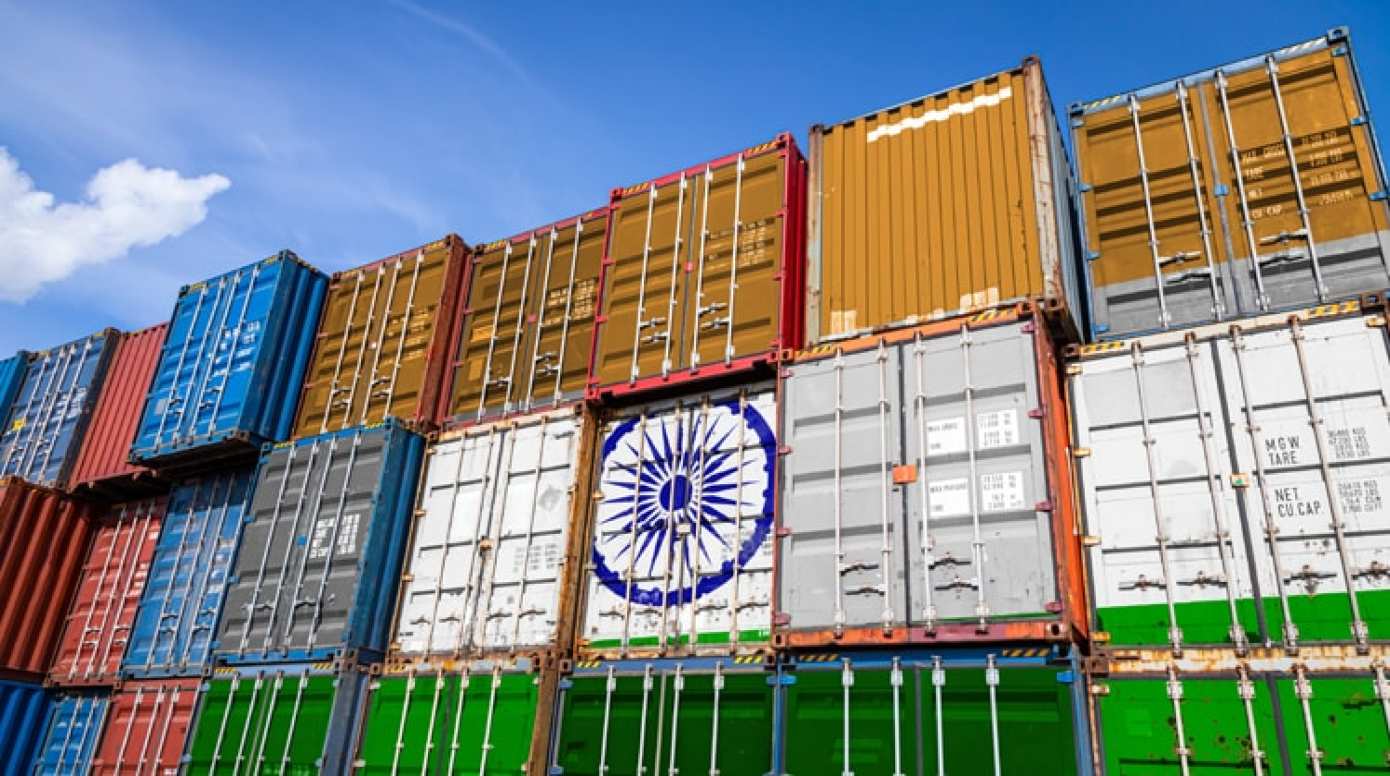
AHMEDABAD : Chemical exports from Gujarat and India to the United States have dropped sharply and are now nearly at a standstill, delivering a severe blow to the country’s chemical industry. The decline follows the imposition of a 25% tariff by the US on Indian chemicals, which has significantly reduced India’s competitiveness in the American market.

Industry sources say that exports to the US have slowed considerably and are “on the verge of stopping entirely,” highlighting the urgent need for alternative markets and strategies amid growing uncertainty in global markets.

The tariff has affected a wide range of chemical segments, including specialty chemicals, dyes, and intermediates. Several mid-sized manufacturers in Gujarat report reduced order volumes, delayed shipments, and uncertainty over long-term contracts with US buyers.

New opportunities emerge with China

Amid the downturn, improving diplomatic and trade relations with China are opening new avenues for India’s chemical and pharmaceutical sectors. China could provide critical raw materials for the pharmaceutical and dye-intermediate industries, as well as advanced automation technologies for chemical manufacturing.

Experts note that adopting Chinese automation systems, which enable chemical processing with minimal human intervention, could significantly reduce production costs. Currently, around 80% of China’s chemical manufacturing units are automated, compared with roughly 10% in India. Automation could potentially cut costs by 10–20%, while access to China’s lower-cost raw materials could further enhance India’s competitiveness.

Industry analysts suggest that strengthening ties with China could also encourage joint ventures and technology partnerships, potentially allowing Indian firms to adopt global best practices in production, safety standards, and environmental compliance, which are increasingly critical for export markets.

High costs challenge Indian manufacturers

Finished chemical products from India are estimated to be about 20% more expensive than comparable products from China. Industry insiders emphasise that integrating Chinese automation technology and sourcing raw materials directly from China could help Indian manufacturers narrow this gap.

While the shift to Chinese raw materials and automation presents opportunities, manufacturers caution that supply chain reliability and regulatory approvals will play a key role in determining the speed and scale of adoption.

Improved connectivity and trade ties

Sources in Ahmedabad’s chemical sector note that new direct flight services between India and China, combined with improving diplomatic relations, are likely to ease the import of essential raw materials. Indian companies already rely heavily on China for base chemicals used in dye intermediates and bulk drugs essential for pharmaceuticals.

Better access to Chinese raw materials and technology could provide “substantial benefits” to India’s chemical and pharmaceutical industries, helping firms reduce costs and regain a stronger position in global trade.

Hapag-Lloyd signs newbuilding contracts for up to 24 feeder ships

HAMBURG : German liner Hapag-Lloyd has shifted its newbuilding focus from large container ships to feeder vessels, placing two orders totalling around $1.58bn. Multiple shipbuilding players said Hapag-Lloyd has inked provisional newbuilding contracts with two shipyards in China for feeder ships of between 3,500 teu and 4,500 teu.

The total value of the order is approximately $1.58 billion, with all vessels featuring methanol dual-fuel propulsion. Industry estimates suggest the individual shipbuilding costs per vessel are $70 million and $60 million respectively.

The report states that the two shipbuilders are CIMC Raffles and Taizhou Sanfu Shipbuilding. CIMC Raffles will be responsible for building 8+6 4,500 TEU container ships, while Taizhou Sanfu Shipbuilding will be responsible for building 6+4 3,500 TEU container ships.

It is worth noting that if these orders are ultimately fulfilled, they will be of landmark significance for both the shipowner and the shipbuilders. Reportedly, this batch of orders will mark CIMC Raffles’ first foray into container ship construction; while Taizhou Sanfu Shipbuilding will officially enter the methanol dual-fuel power vessel construction field through this order.

Not only that, but this will also mark a rare new shipbuilding project for Hapag-Lloyd. It aligns with the recent surge in orders for feeder container ships while also helping the company enhance its regional feeder transport network and achieve diversified development.

In terms of newbuildings, Hapag-Lloyd has historically favored ordering medium-to-large container ships and has never placed large-scale orders for feeder container ships. Instead, it has maintained its presence in this subsector of the shipping market through long-term charters and renewals of feeder container ships.

Official data shows that Hapag-Lloyd currently operates a fleet of 313 vessels, ranking among the world’s leading shipping companies on transatlantic routes, Middle East routes, Latin American routes, and intra-American routes. In the liner shipping market, Hapag-Lloyd maintains a fleet with a total capacity of 2.5 million TEUs and container handling capacity of 3.7 million TEUs, including one of the world’s largest and most advanced fleets of refrigerated container ships.

Notably, another major international shipping company, Singapore-based Eastern Pacific Shipping (EPS), has also placed bulk orders for feeder container ships this year. Reports in August indicated that EPS had ordered 12+6 1,800 TEU feeder container ships from Fujian Shipbuilding’s shipyard.

Due to a backlog of orders from earlier periods and the impact of geopolitical factors, the global new shipbuilding market has been relatively sluggish this year. With order volumes across all ship types performing poorly, the container ship market has become the standout performer this year, with feeder container ships being the most noteworthy sub-market.

In October alone, Chinese shipbuilders secured orders for over 40 new ships, with Huangpu Wenchong Shipbuilding, Yangzijiang Shipbuilding, Zhoushan Changhong International Shipbuilding, Hengli Heavy Industries, and other yards all signing new contracts. In this wave of orders, Chinese shipbuilders are undoubtedly the biggest winners!

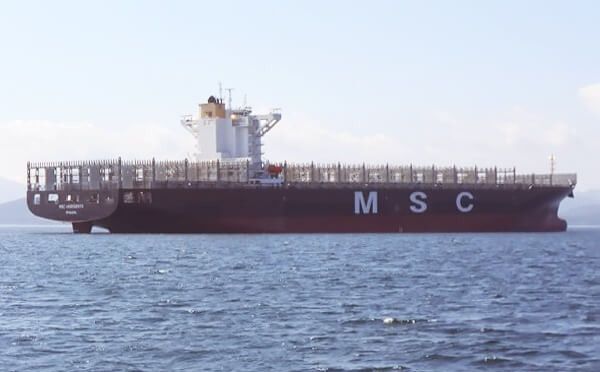
MSC suspends Mali services over fuel, security concerns

GENEVA: Mediterranean Shipping Company (MSC) said it was no longer accepting bookings for Mali due to security issues and a shortage of fuel resulting from a blockade imposed by al Qaeda-linked militants.

The two-month-old fuel blockade on the landlocked West African country by Jama’at Nusrat al-Islam wal-Muslimin (JNIM) has all but paralysed the capital Bamako.⁠

The group has attacked convoys of fuel tankers attempting to reach Bamako, turning the screws on the military-led government and raising concern that the jihadists might try eventually to impose their rule.

“Due to major operational challenges caused by safety concerns and a fuel shortage, road transportation for cargo destined for Mali is temporarily suspended until further notice,” MSC said in a statement posted to its website on last Thursday.

French shipping company CMA CGM said on Thursday its overland transport had been “heavily impacted in ⁠terms of both transit times and costs” because of Mali’s fuel and security issues.

But it reversed a decision to suspend cargo shipments after meeting with officials at Mali’s ⁠transport ministry.

France on Friday became the latest Western country to advise its citizens to leave Mali. The ⁠U.S., Britain and Italy have issued similar notices.
Source: Reuters

Fire on container ship in Malaysian Port takes the lives of 3 crew members

JOHOR : Three men have died, and three others were critically injured after a fire started on a container ship. The incident occurred on the vessel docked at the Malaysian Port of Tanjung Pelepas in Johor state.

State Fire and Rescue Department operations commander Mohamad Anuar Mohamad Amdzah said that the emergency was reported onboard the M.V. Kyparissia vessel which was part of chartered fleet and owned by the shipping company Costamare at the time of the incident.at 12:33 pm on November 7, 2025.

A team of firefighters reached the site in 7 minutes and found that fire had broken out in the under-hatch section of Block 5 while the ship was unloading containers.

Among the deceased are a 59-year-old Malaysian, a Filipino man in his 40s and a Briton also in his 40s, all crew members of the vessel, per reports.

Those injured include a 26-year-old Malaysian man and two Filipino men in their 40s, all of whom were taken to a private hospital for treatment.

Mohamad said that the firefighting efforts were carried out by the PTP Fire and Rescue Team with the help of two tugboats. Per the latest updates, the blaze has come under control, and an investigation has been opened to determine the cause of the incident.

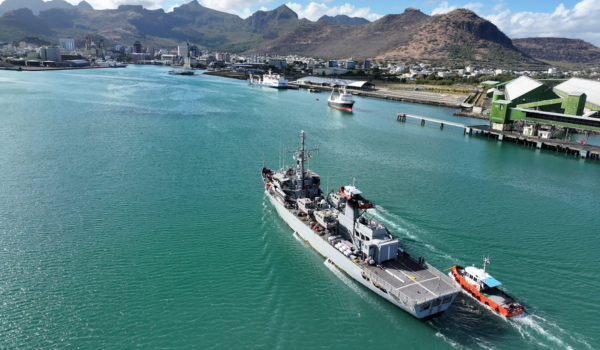
INS Savitri hosts visitors during port call in Mauritius, strengthening India-Mauritius ties

NEW DELHI : In a step to strengthen people-to-people ties between India and Mauritius, Indian Naval Ship (INS) Savitri hosted visitors during its port call at the Mauritian capital Port Louis, showcasing the operational capabilities, cutting-edge technology, and rich heritage of the Indian Navy.

During her Port Call at Port Louis, Mauritius, INS Savitri welcomed visitors on board. The initiative offered a unique opportunity to showcase the operational capabilities, technological advancements, and rich traditions of the Indian Navy. It also served to enhance mutual understanding, foster maritime diplomacy, and strengthen people-to-people connections between India and Mauritius, the Indian Navy’s spokesperson posted on X.

INS Savitri, an offshore patrol vessel (OPV) of the Eastern Fleet, arrived at Port Louis on November 1, as part of a long-range operational deployment to the South West Indian Ocean Region. INS Savitri will undertake crucial joint Exclusive Economic Zone (EEZ) surveillance activities alongside the NCG ships and aircraft.

The joint surveillance is aimed at ensuring security across the maritime zones of Mauritius while simultaneously enhancing interoperability and coordination between the Indian Navy and the National Coast Guard (NCG). During the port call, the ship’s crew will engage in a wide range of professional interactions, including dedicated training sessions for NCG personnel towards refining the Standard Operating Procedures (SOPs) for the conduct of joint operations. The ship’s visit reaffirms the strong defence cooperation between India and Mauritius, a partnership built on mutual trust, shared values, and common maritime interests.

Trump administration seeks to negotiate with China on shipping as it pauses port fees

WASHINGTON D.C. : The Trump administration said on last Thursday it would pursue negotiations with China over its dominance of shipbuilding and ocean logistics as it formalized plans for a one-year pause on U.S. port fees on China-linked vessels as part of a broader deal to reduce trade tensions.

The U.S. Trade Representative’s office said in a Federal Register notice that it would pause for a year starting November 10 all punitive actions against China resulting from its “Section 301” unfair trade practices investigation. USTR added that it would accept public comments on the matter on November 6 and November 7.

The 12-month reprieve on an estimated $3.2 billion annually in U.S. fees for large Chinese-built vessels sailing to U.S. ports was among the agreements reached in South Korea by U.S. President Donald Trump and Chinese President Xi Jinping in late October. Also paused were 100% tariffs on ship-to-shore cranes and container intermodal chassis for trucks.

“Pursuant to this deal, the United States would suspend for one year, beginning on November 10, 2025, the responsive actions taken in this investigation,” USTR said in the notice. “The United States also would negotiate with China pursuant to Section 301 regarding the issues raised in this investigation.”

The notice gave no details about how the negotiations would begin, or what the objectives would be. It said that the U.S. would continue its own efforts to revitalize domestic shipbuilding, including through discussions with key allies and partners.

A USTR spokesperson could not immediately be reached for further comment. China’s embassy in Washington also did not immediately respond to a Reuters query.

China also had agreed to pause its own retaliatory fees on U.S.-linked ships as part of the Trump-Xi de-escalation agreement. Hawaii-based ocean shipping company Matson said on last Tuesday that it had paid $6.4 million in port fees to China since they were implemented on October 14.

State-owned container line COSCO is the Chinese shipper most exposed to U.S. port fees, which analysts said could add up to $1.5 billion annually.
Source: Reuters

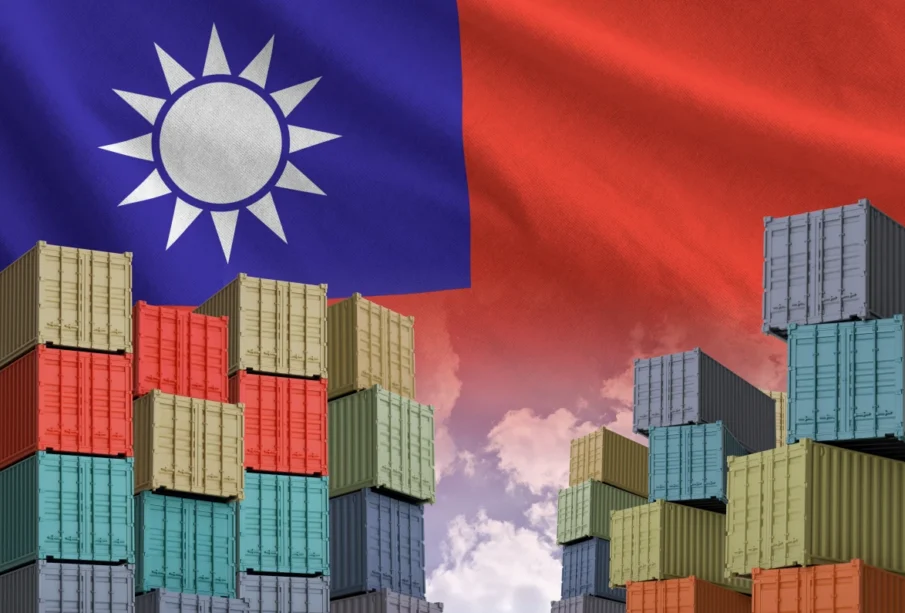
AI boom drives Taiwan’s exports to record $61.8 billion in October

TAIPEI: Taiwan’s exports in October surged 49.7 per cent year-on-year to USD 61.8 billion, a record monthly high, driven by strong global demand for artificial intelligence technologies (AI), according to Focus Taiwan.

The Ministry of Finance (MOF) data, according to a Focus Taiwan report, showed exports totaled USD 61.8 billion, topping USD 60 billion for the first time, while also marking the 24th consecutive month of growth and the largest year-on-year increase in nearly 15 and a half years.

Imports in October totaled USD 39.22 billion, the highest for the month on record, up 14.6 percent year-on-year, according to the data.

The strong export performance pushed Taiwan’s trade surplus to USD 22.58 billion in October, also a record monthly high, Beatrice Tsai, Director-General of the ministry’s Department of Statistics, said, Focus Taiwan report.

Tsai credited the export surge to strong global demand despite US tariffs, the high demand for AI and high-performance computing products, the rollout of new consumer electronics and the seasonal peak for technology product exports.

However, Tsai cautioned that some industries, including metals and metal products and plastics and rubber products, still face overcapacity pressure and weak demand, leading to a decline in exports in October.

In terms of export destinations, Taiwan’s shipments to the United States in October surged to USD 21.14 billion, a 1.4-fold year-on-year increase, with the US accounting for 34.2 percent of total exports, 11 percentage points ahead of the second-largest market, China and Hong Kong.

Tsai said growth in the US market was mainly driven by a surge in shipments of new graphics cards, noting that the US’ 34.2 per cent share of Taiwan’s total exports in October represented the highest monthly level since August 1990.

On the import side, the increase in imports mainly reflected robust global AI supply chain activity and domestic restocking for export demand, Tsai said, as per the news report.

Cumulative exports for the first 10 months of 2025 reached USD 514.45 billion, up 31.8 percent from the same period a year earlier. Tsai said full-year exports are projected to surpass USD 600 billion.

Source: ANI

Grounded container ship MSC Baltic III damaged by ‘extreme wind’ and rough seas

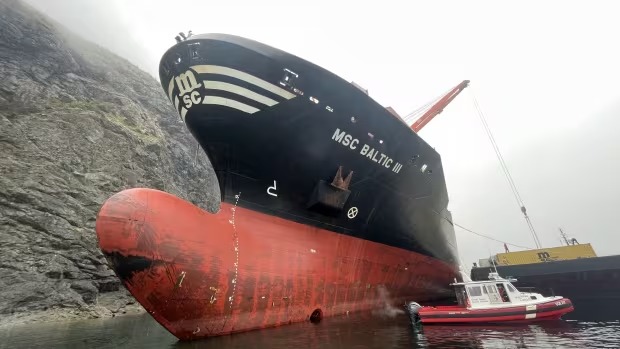
CEDAR COVE : The grounded container ship MSC Baltic III on Newfoundland’s west coast has been damaged by high winds and storm surge in the province over the last few days, according to the Canadian Coast Guard.

An update the agency posted online Friday said extreme conditions have led to “a noticeable change in the condition of the port side of the vessel.”

As well, they wrote they have seen “significant movement” in the bow and stern.

The cargo ship ran aground in Cedar Cove, near Lark Harbour on the island’s west coast in February.

Since that time, cleanup and salvage has been ongoing.

Just last week the senior response officer with the Marine Environmental and Hazards Section of the Canadian Coast Guard, Bruce English, predicted that the vessel wouldn’t be removed until next summer at the earliest, as there was still some oil left in the tanks to be removed.

On Friday the salvage crew reported damage to their equipment onboard the Baltic III, and some debris visible floating in the water and on the shoreline.

Crews were on site conducting an assessment Saturday to determine the extent of the damage.

EU forces free crew after Somali pirate attack on tanker

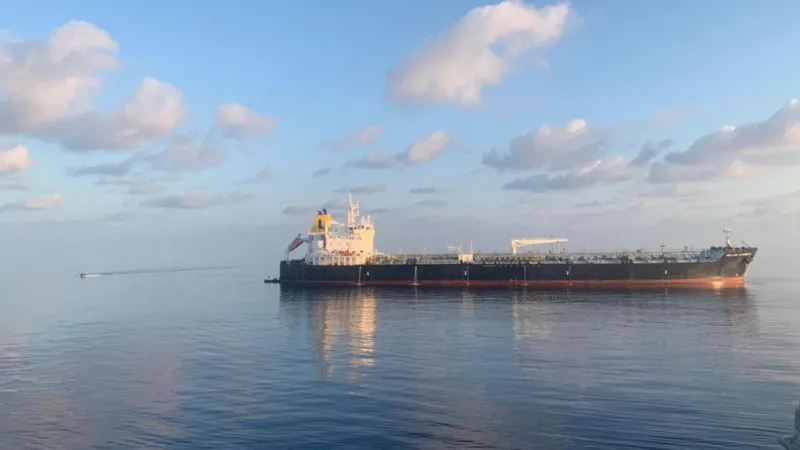
SOMALIA : European Union naval forces have rescued 24 sailors from a Maltese-flagged oil tanker that was attacked by pirates off the coast of Somalia.

The Hellas Aphrodite, carrying petrol from India to South Africa, was seized on Thursday when armed pirates opened fire with machine guns and rocket-propelled grenades before boarding the vessel.

The crew locked themselves inside a fortified citadel while the attackers took control of the ship.

A Spanish warship, the ESPS Victoria, operating under the EU’s anti-piracy mission Operation Atalanta, reached the tanker on Friday afternoon. Special forces boarded the vessel and found all 24 crew members unharmed.

“The crew is safe and no injuries have been reported. Throughout the incident, they remained in the citadel in direct contact with Atalanta,” the EU mission said, adding that a “show of force” had prompted the pirates to abandon the ship before the warship arrived.

It added that the threat risk in the area “remains critical” as the pirates are still in the area.

The rescue operation involved a helicopter, drone and surveillance aircraft. Just hours earlier, another ship in the same area was approached by a small speedboat but managed to evade it.

It is the latest in a spate of attacks that have created concern about a resurgence of piracy in the area.

Such activity had declined when international naval patrols and security measures were introduced after peaking more than a decade ago.

However, attacks by Yemen’s Houthi rebels on ships in the Red Sea, which have been carried out for the past two years, have led vessels to be diverted through East Africa’s Indian Ocean – creating new opportunities for Somali gangs.

There were seven reported incidents of piracy that took place off the coast of Somalia last year, according to the International Maritime Bureau – including three hijackings. It reported only one incident of piracy in 2023.