Home Blog Page 578

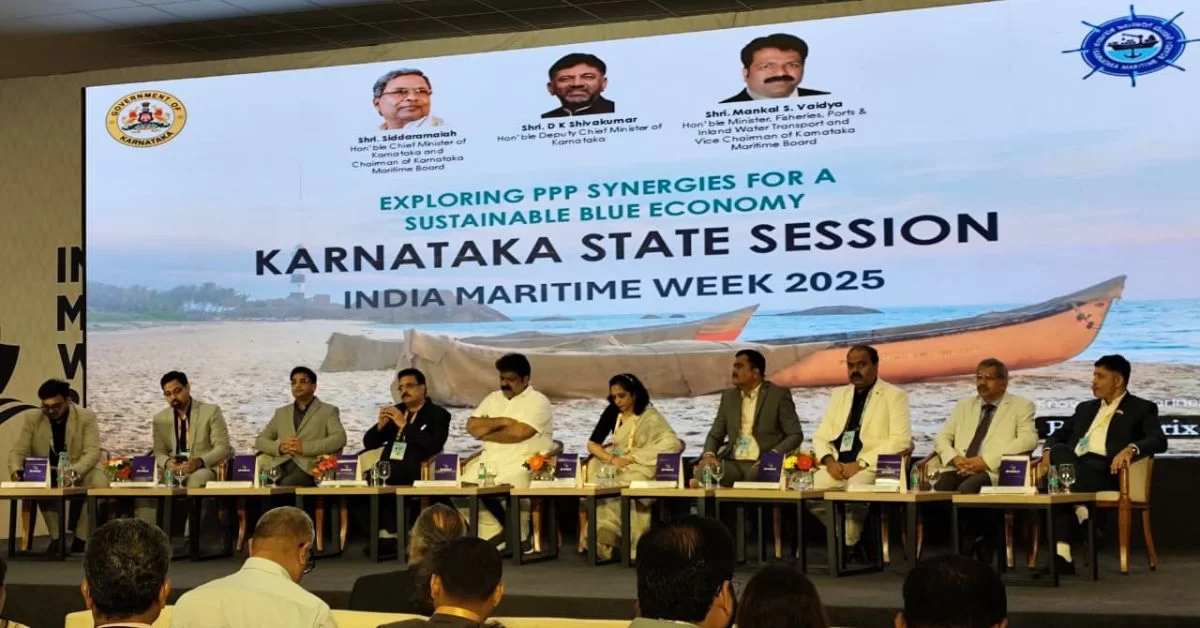
Karnataka Maritime Board signs pacts worth ₹4,500 crore at IMW 2025

MUMBAI : Karnataka Maritime Board (KMB) has signed formal MoUs and a concession agreement with different stakeholders. According to KMB, the MoUs focused on enhancing connectivity, developing critical infrastructure, and modernising the workforce. In all, these agreements would help attract investments worth around ₹4,500 crore in Karnataka’s maritime sector.

During the recently concluded India Maritime Week 2025, KMB exchanged the concession agreement with JSW Infrastructure Ltd for an all-weather deep-water greenfield port at Keni in Uttara Kannada district of Karnataka on a PPP (public private partnership) basis. The project is valued at ₹4,118 crore.

KMB also signed a memorandum of understanding (MoU) with Konkan Railway Corporation Ltd (KRCL) for the development of Amadalli railway siding worth ₹45.88 crore in Uttara Kannada district.

An MoU with the Inland Waterway Authority of India was also signed for the development of national waterways in Karnataka valued at around ₹3,00 crore.

KMB signed an agreement with the National Inland Navigation Institute, Patna, to establish a Centre of Excellence in Inland Water Transport and Navigation in Mangaluru of Dakshina Kannada district.

Apart from this, KMB also signed an agreement with the Karnataka Department of Fisheries for projects worth ₹12 crore in Ballari district. These included cold storage, processing facilities, and a testing lab.

European Delegation visits Green Hydrogen Plant at Kandla Port

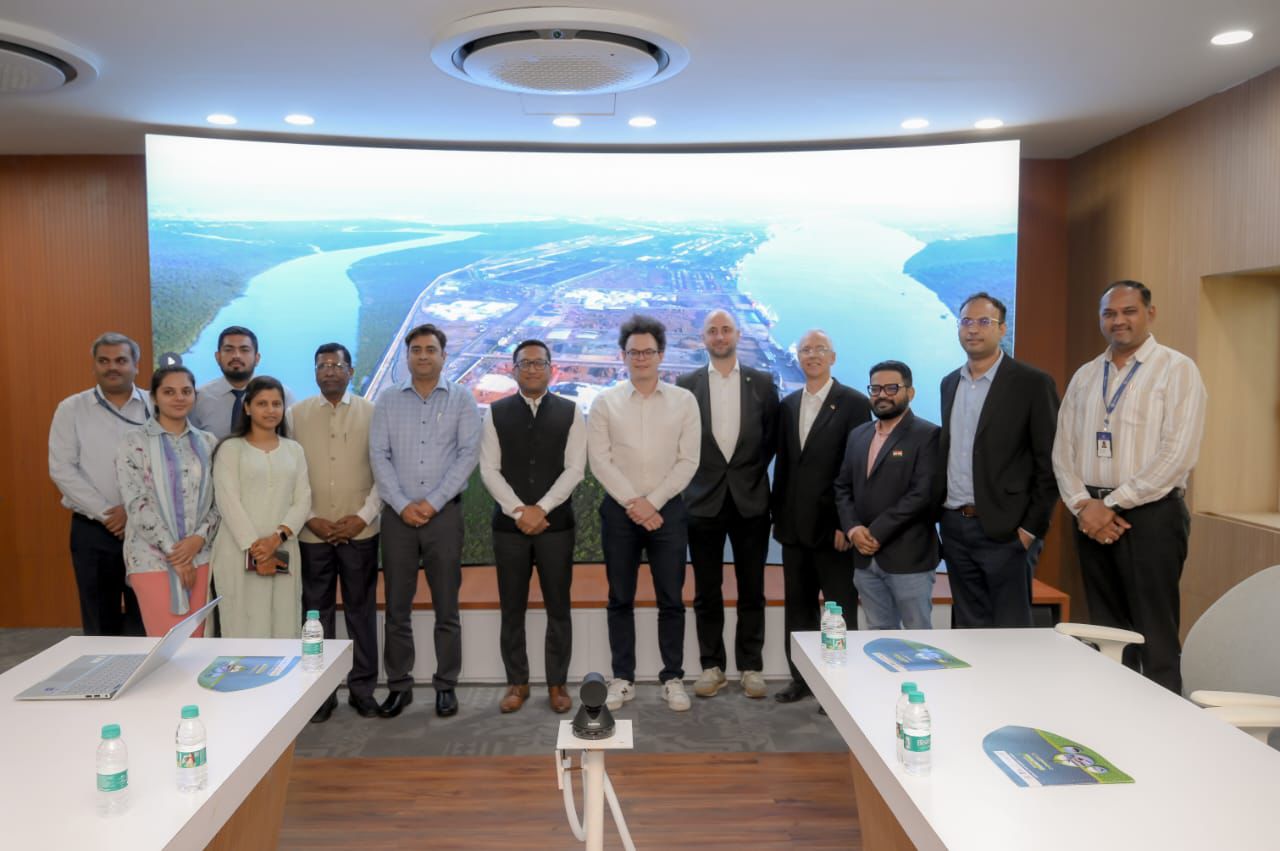
GANDHIDHAM : Deendayal Port Authority Kandla is steadily advancing towards becoming India’s Green Maritime Hub. A Delegation of European experts on certification and EU regulations supported by GH2 India visited Green Hydrogen Plant at Kandla.

Delegation was briefed about Kandla Port’s scale-up plans on green hydrogen and other projects including Bio-Methanol and eMethanol projects in pipeline. Port’s clean energy ambitions were presented to the delegation. Dy Chairman, Shri Nilabhra Dasgupta interacted with the delegates.

AITransmute Solutions unveils breakthrough in maritime AI innovation

MUMBAI : At India Maritime Week 2025, AITransmute Solutions, an early-stage deep-tech startup working on AI-driven port automation, was recognised with the Maritime Excellence Achievers Award under the category of Emerging Indian Entrepreneur of the Year (First Runner-Up). The event was held under the aegis of the Ministry of Ports, Shipping and Waterways.

AITransmuteSolutions AITransmute Solutions unveils breakthrough in maritime AI innovation

AITransmute Solutions, a leading provider of artificial intelligence and data analytics solutions for the maritime industry, has announced a major milestone in its mission to transform global shipping operations through cutting-edge AI technologies.

Founded by Abhay Shukla, AITransmute Solutions has built a suite of systems including I-TAPAS (Intelligent Tugs-and-Pilot Allocation System), the Intelligent Berth Allocation System, and SPERSH (Smart Port Analytics & Reporting Solutions Hub). Each addresses a specific operational gap, aiming to improve efficiency, predictability, and data integration across port management systems. The company’s team combines engineers from IITs and NITs with experienced mariners, reflecting a deliberate effort to bridge domain expertise with emerging technology. Its ongoing work with Jawaharlal Nehru Port, Paradeep Port, and the Indian Ports Association, under the guidance of the Ministry, has also linked it to the India–Middle East–Europe

The company’s latest achievement marks a significant advancement in leveraging artificial intelligence to enhance port efficiency, vessel performance, and predictive logistics across the maritime value chain. By integrating machine learning, digital twins, and real-time analytics, AITransmute Solutions aims to empower port authorities, shipping lines, and logistics operators with smarter decision-making tools that drive sustainability and operational excellence.

“This milestone underscores our commitment to pioneering AI-driven transformation in the maritime sector,” said Abhay Shukla, CEO of AITransmute Solutions. “Our innovations are designed to redefine how the industry approaches safety, efficiency, and environmental responsibility.”

AITransmute’s latest platform upgrade also introduces advanced algorithms for route optimization, emissions monitoring, and cargo visibility — enabling maritime stakeholders to achieve lower operational costs while supporting global decarbonization goals.

With this development, AITransmute Solutions strengthens its position as a frontrunner in digital maritime innovation, aligning with the industry’s broader shift toward automation, sustainability, and smart port ecosystems.

Piyush Goyal holds a series of high-level engagements in Rotorua on Day 2 of his official visit to New Zealand

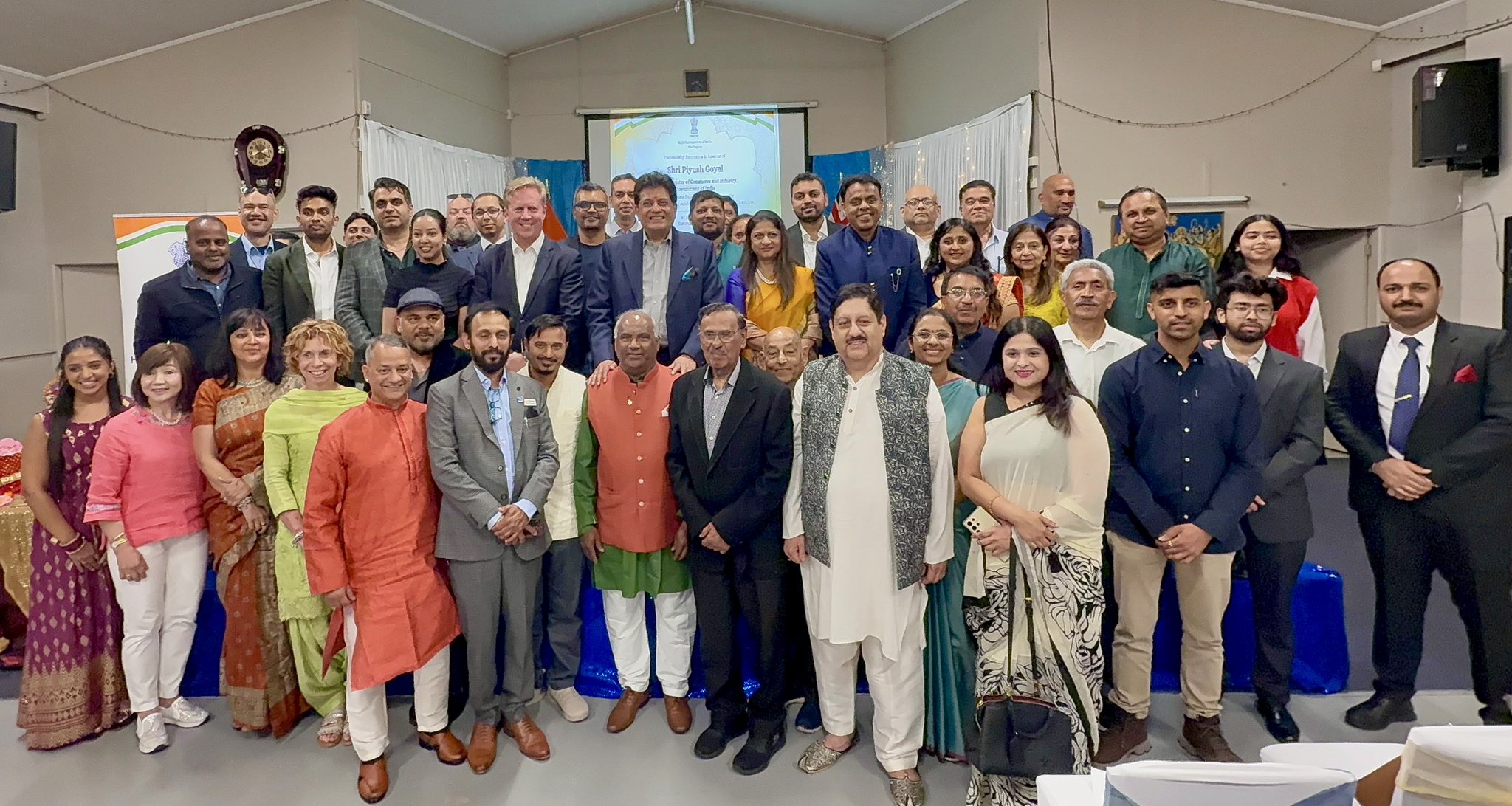
ROTORUA : Union Minister of Commerce & Industry, Shri Piyush Goyal, undertook multiple high-level engagements aimed at deepening bilateral cooperation in trade, investment, connectivity, and cultural exchanges between India and New Zealand on the second day of his official visit to New Zealand.

Earlier in the day, en route to Rotorua, the Minister met CEO, Air New Zealand, Mr. Nikhil Ravishankar. Discussions focused on the airline’s role in enhancing regional and global connectivity. Shri Goyal highlighted India’s rapidly expanding aviation sector and underscored the significant opportunities it offers for strengthening collaboration in air services and tourism.

Upon arrival in Rotorua, Shri Goyal was received by Ms. Tania Tapsell, Mayor of Rotorua. The Minister thanked the Mayor for the warm welcome and commended the city’s unique natural beauty and rich cultural heritage, expressing confidence that greater bilateral engagement would help boost trade and tourism linkages.

At Te Puia, the national centre for Māori culture and arts, Shri Goyal was accorded a traditional Māori welcome (Pōwhiri) in the presence of Mr. Todd McClay, Minister for Trade of New Zealand. The ceremony, which included customary chants and the hongi greeting, reflected the warmth and mutual respect between the two nations. Shri Goyal appreciated the Māori community for their rich cultural traditions and noted the resonance between Māori values and India’s own civilisational ethos, particularly in their shared reverence for nature and community.

Later, Shri Goyal and Mr. Todd McClay co-chaired the India–New Zealand CEOs Roundtable, which brought together leading business representatives from both countries. Addressing the gathering, Shri Goyal highlighted India’s rapidly transforming economic landscape and emphasized the vast potential for collaboration in technology, agriculture, education, clean energy, tourism, and sustainability. He welcomed the strong participation of Indian-origin business leaders and encouraged New Zealand industry to explore deeper partnerships with India for mutual growth.

Shri Goyal conveyed his gratitude to Minister McClay for the gracious hospitality extended in his hometown of Rotorua and affirmed that both sides are committed to advancing India–New Zealand relations towards greater friendship, prosperity, and shared progress.

India strengthens maritime sustainability agenda at Stakeholders’ Workshop on Shipping & Ports

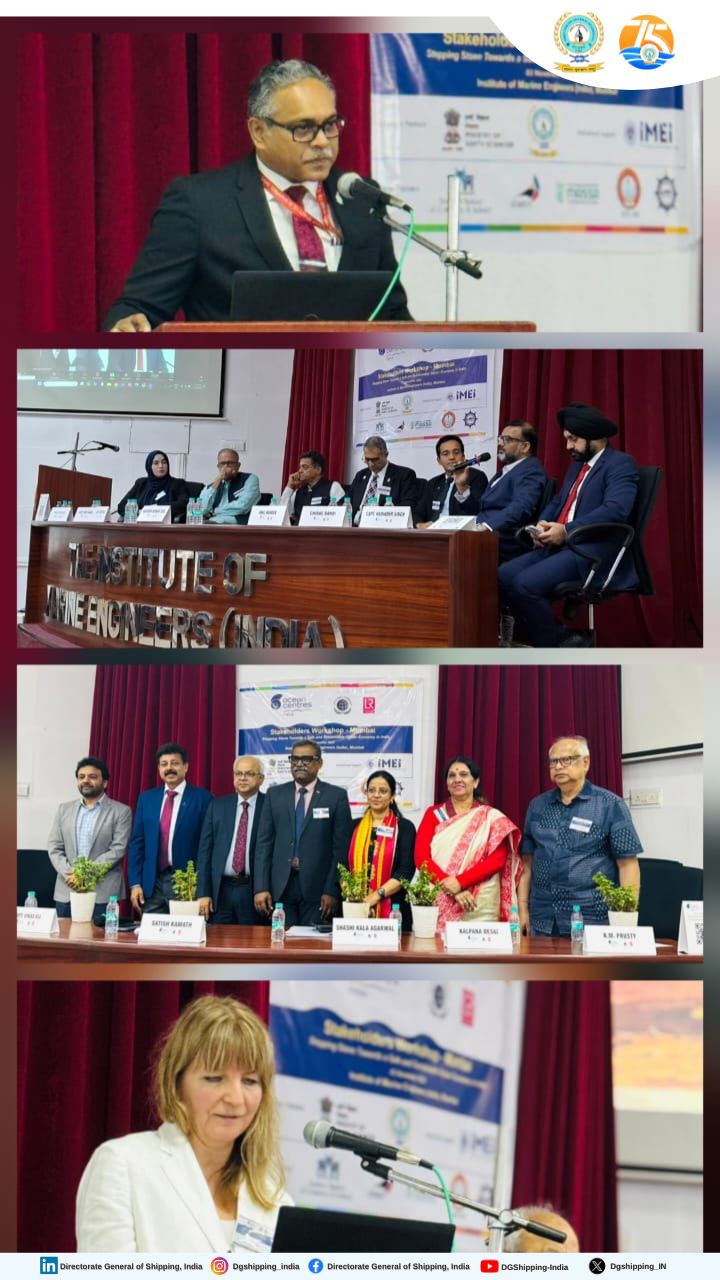
MUMBAI : The Directorate General of Shipping (DGS), Ministry of Ports, Shipping and Waterways, actively participated in the Stakeholders’ Workshop on “Stepping Stone Towards a Safe and Sustainable Ocean Economy in India”, held at the Institute of Marine Engineers (India), Nerul, Mumbai, on 3rd November.

Organised by the UN Global Compact Network India and Ocean Centres, India, with support from the Lloyd’s Register Foundation, the workshop brought together key stakeholders from government, industry, and academia to advance discussions on safety, sustainability, and the green transition in India’s maritime and port sectors.

Director General of Shipping, Shri Shyam Jagannathan, IAS, delivered the Keynote Address, underscoring India’s leadership in maritime safety, digitalisation, and decarbonisation initiatives. He emphasised the nation’s growing commitment to shaping a sustainable and resilient ocean economy aligned with global environmental goals.

1762193870401 1 India strengthens maritime sustainability agenda at Stakeholders’ Workshop on Shipping & Ports

Senior DGS officers — Shri Satish Kamath, Dy. Chief Surveyor-cum-Sr. DDG (Tech.), and Capt. Harinder Singh, Nautical Surveyor-cum-DDG (Tech.) — participated as moderators and speakers in high-level sessions on:

Putting Safety at the Heart of Sustainability: Issues & Challenges in the Indian Shipping Sector

Transitioning to Green Ports in India: Issues & Challenges

The deliberations focused on strengthening collaboration among maritime stakeholders to foster innovation, enhance safety culture, and accelerate the shift toward cleaner, greener, and more efficient port and shipping systems.

The event reaffirmed India’s commitment to its #MaritimeAmritKaal vision — steering the nation’s maritime sector towards a sustainable and globally competitive future.

‘Made in India’ may soon be etched on the World’s Ships: Supal Shah

MUMBAI: For decades, the Indian flag fluttered quietly in world shipping registers, overshadowed by Panama, Liberia and the Marshall Islands. Today, it’s at the centre of a remarkable turnaround. Within months, global heavyweights CMA CGM, Maersk and MSC have all signalled intent to register vessels under the Indian flag – an industry first that could rewrite the global shipping order. “The phrase ‘Made in India’ may soon extend to the very ships that carry global trade itself.” says Mr. Supal Shah, CEO of Sarjak Container Lines Pvt Ltd. (SCL). “For India, this moment is more than symbolic, it’s structural,” he adds.

A Policy Wave Unlocks Sea of Potential

The reflagging surge is underpinned by the Government of India’s ₹ 70,000-crore shipbuilding and port-modernisation package and a series of liberalised vessel-registration reforms. By declaring shipbuilding and shipyards as “infrastructure,” policymakers have unlocked long-term credit, tax incentives, and easier access to capital. Projects such as the ₹ 76,000-crore Vadhwan Port and a string of non-major port expansions aim to make India not just a port of call, but a port of origin.

Foreign lines see opportunity in this shift. CMA CGM has placed a ₹ 3,000-crore order for six LNG-powered 1,700 TEU ships at Cochin Shipyard. Maersk has re-flagged two feeder vessels, Maersk Vilnius (1,810 TEU) and Maersk Vigo (1,740 TEU) from Singapore to India, citing “robust economic fundamentals and progressive maritime reforms.” MSC has since confirmed similar plans.

Why Reflagging Benefits Go Far Beyond Symbolism

Under India’s cabotage rules, foreign-flag vessels cannot move cargo between Indian ports. Indian-flagged ships can, giving reflagged carriers direct access to the country’s fast-growing coastal and first-/last-mile trade. The Competition Commission of India has added further incentive, linking continued antitrust immunity for vessel-sharing agreements to the deployment of at least 5 % of capacity on Indian-flagged tonnage. “The combination of carrot and stick has made India’s registry more attractive than at any point in recent memory” notes Shah.

A Move Beyond Geopolitics

While Red Sea and South China Sea disruptions have prompted carriers to diversify risk, Shah argues that India’s momentum is not reactive, it’s structural. “India’s emerging role in shipbuilding, repair, crewing and financing is transforming it from a manpower hub into a maritime ecosystem.”  he says. “If executed well, we could evolve from being the world’s largest supplier of seafarers to a ship-owning nation of consequence.”

A New Chapter at Sea

As global carriers register vessels under the Indian flag, the ripple effects will reach deep into domestic industry, stimulating demand for local spares, dry-dock services and shipyard orders. That, in turn, could create new employment and accelerate India’s ambition to become a regional shipbuilding hub by 2030. “For Indian shipyards, this is a commercial inflection point.” adds Shah. “Flagging creates the pipeline; building creates the capability.”  With the world’s top shipping companies now hoisting the Indian tricolour at their stern, the country’s maritime transformation appears no longer aspirational but underway.

About Sarjak Container Lines Pvt Ltd.

Sarjak Container Lines Pvt Ltd is India’s leading project logistics and container shipping specialist, headquartered in Mumbai and serving 84 countries through 275 ports worldwide. Founded in 2003 with a focus on over-dimensional (ODC/OOG) cargo, Sarjak revolutionised the industry by investing in a dedicated fleet of flat-racks and open-top containers for complex infrastructure and heavy-lift projects. Today, Sarjak delivers end-to-end logistics solutions, from vessel chartering and break-bulk movements to road/rail stuffing, customs clearance, and on-site delivery, backed by a global network, advanced systems, and specialised equipment. Its mission is to provide innovative, digitally enabled, customer-centric project-cargo logistics while fostering sustainable growth and trusted partnerships. 

9th Round of India-Peru Trade Agreement and 3rd Round of India-Chile CEPA negotiations successfully concluded

NEW DELHI : India has successfully concluded two key rounds of trade negotiations with partner countries in Latin America, underscoring the Government’s commitment to expanding economic cooperation and deepening trade linkages with the region.

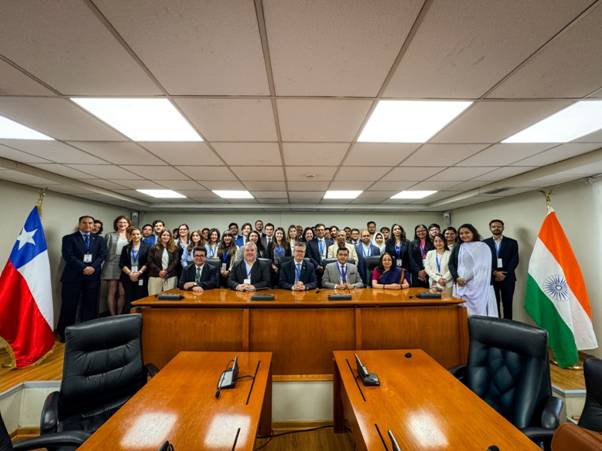
The 9th Round of India–Peru Trade Agreement negotiations was held in Lima, Peru, from 3rd to 5th November 2025. The discussions witnessed substantive progress across key chapters of the proposed Agreement including Trade in Goods and Services, Rules of Origin, Technical Barriers to Trade, Customs Procedures, Dispute Settlement, and Critical Minerals.

image001DKOZ 9th Round of India-Peru Trade Agreement and 3rd Round of India-Chile CEPA negotiations successfully concluded

The closing ceremony was attended by H.E. Ms. Teresa Stella Mera Gómez, Minister of Foreign Trade and Tourism of Peru, and H.E. Mr. César Augusto Llona Silva, Vice Minister of Foreign Trade, along with senior officials. The Indian side was represented by H.E. Shri Vishvas Vidu Sapkal, Ambassador of India to Peru and the Indian delegation led by Shri Vimal Anand, Joint Secretary and Chief Negotiator.

In her remarks, Minister Gómez reaffirmed Peru’s commitment to the timely conclusion of the negotiations, highlighting the complementarity between both economies and expressing optimism that the Agreement will enhance trade and investment flows. Ambassador Sapkal underlined India’s sustained growth momentum and noted that the Agreement would create new opportunities for cooperation in areas such as critical minerals, pharmaceuticals, automobiles, textiles and food processing.

Both sides agreed to hold intersessional meetings to address pending issues ahead of the next round of negotiations proposed to be held in New Delhi in January 2026.

Earlier, the 3rd Round of India–Chile Comprehensive Economic Partnership Agreement (CEPA) negotiations was held in Santiago, Chile, from 27th to 30th October 2025. Discussions covered a wide range of chapters including Trade in Goods and Services, Investment Promotion, Rules of Origin, Intellectual Property Rights, TBT/ SPS measures, Economic Cooperation and Critical Minerals. Both sides reaffirmed their shared commitment to an early and time-bound conclusion of the CEPA negotiations, which aim to enhance market access, strengthen supply chain resilience and deepen economic integration.

India’s growing trade engagement with Peru and Chile reflects its strategic focus on building stronger partnerships with the Latin American region through mutually beneficial and comprehensive economic cooperation frameworks.

Maersk announces strong performance for Q3 2025 with EBITDA at USD 2.7bn and EBIT at USD 1.3bn amid operational gains

COPENHAGEN : Maersk reported strong financial results in the third quarter of 2025, driven by operational improvements and proactive cost measures. The company achieved sequential growth across all business segments. Based on this, Maersk refines the full-year 2025 financial guidance.

Executive Summary

  • Excellent Ocean performance with higher volumes and broadly stable loaded freight rates compared to Q2
  • Record volumes and profitability in Terminals
  • Continued margin improvement in Logistics & Services
  • Distribution of cash to shareholders during the quarter was USD 578m, entirely from share buy-backs
  • Maersk refines the full-year 2025 financial guidance by raising the lower end as per the table below.
  • The expected global container market volume growth has also been revised to be around 4% (previously between 2% and 4%
  • REVENUE: USD 14.2bn (USD 15.8bn in Q3 24), EBITDA: USD 2.7bn (USD 4.8bn), EBIT: USD 1.3bn (USD 3.3bn)

We have delivered a strong third quarter across our business. Our performance reflects our ability to execute and continuously improve, as well as the trust customers place in us. The new East-West network has strengthened our Ocean performance, delivering industry-leading reliability, higher volumes and lower costs. Terminals achieved another record quarter with strong volume growth, and Logistics & Services continued to enhance profitability. As market conditions fluctuate, we are well positioned to help our customers adapt and maintain stability across their supply chains.

Vincent Clerc

CEO at Maersk

Segment Performance

Ocean

  • The Gemini Cooperation enabled significant cost savings and supported 7% loaded volumes growth year-on-year; freight rates were broadly stable quarter-on-quarter
  • EBIT: USD 567m, up from USD 229m in the previous quarter. Was USD 2.8bn in Q3 24

Logistics & Services

  • Profitability improved further to 5.5% (up from 4.8% in the previous quarter) driven by cost control and the performance in Fulfilled by Maersk, particularly in Warehousing
  • EBIT: USD 218m, up from USD 175m in the previous quarter. Was USD 200m in Q3 24

Terminals

  • Momentum continued with record-high volumes, revenue, EBITDA, and EBIT; Volumes grew 8.7% driven by strong demand across Americas, Europe, and Africa; high utilisation at 89% with some terminals nearing their full potential
  • EBIT: USD 571m, up from USD 461m in the previous quarter. Was USD 338m in Q3 24

Financial Guidance

Maersk refines the full-year 2025 financial guidance by raising the lower end as per the table below. The expected global container market volume growth has also been revised to be around 4% (previously between 2% and 4%). The Red Sea disruption is expected to last for the full year.

Guidance 2025EBITDA Underlying
(6 February: 6.0-9.0)
(7 August: 8.0-9.5)
EBIT Underlying
(6 February: 0.0-3.0)
(7 August: 2.0-3.5)
Free cash flow or higher
(6 February: -3.0 or higher)
(7 August: -1.0 or higher)
CAPEX 2024-2025
(6 February: 10.0-11.0)
(7 August: Unchanged)
CAPEX 2025-2026
(Unchanged)
USDbn9.0-9.53.0-3.51.0~10.010.0-11.0

Highlights Q3

Revenue

USD million20252024
Ocean9,17711,107
Logistics & Services3,9833,893
Terminals1,4481,183
Unallocated activities, eliminations, etc.-402-421
A.P. Moller – Maersk consolidated14,20615,762

EBITDA

USD million20252024
Ocean1,7874,002
Logistics & Services468431
Terminals501424
Unallocated activities, eliminations, etc.-70-60
A.P. Moller – Maersk consolidated2,6864,797

EBIT

USD million20252024
Ocean5672,834
Logistics & Services218200
Terminals571338
Unallocated activities, eliminations, etc.-72-63
A.P. Moller – Maersk consolidated1,2843,309

CAPEX

USD million20252024
Ocean897561
Logistics & Services141211
Terminals154160
Unallocated activities, eliminations, etc.129
A.P. Moller – Maersk consolidated1,204941

Sensitivity guidance

Financial performance for Maersk for 2025 depends on several factors subject to uncertainties related to the given uncertain macroeconomic conditions, bunker fuel prices and freight rates. All else being equal, the sensitivities for 2025 for four key assumptions are listed below:

FactorsChangeEffect on EBIT (Rest of 2025)
Container freight rate+/- 100 USD/FFE+/- USD 0.3bn
Container freight volume+/- 100,000 FFE+/- USD 0.01bn
Bunker price (net of expected BAF coverage)+/- 100 USD/tonne+/- USD 0.1bn
Foreign exchange rate (net of hedges)+/- 10% change in USD+/- USD 0.0bn

About Maersk
A.P. Moller – Maersk is an integrated logistics company working to connect and simplify its customers’ supply chains. As a global leader in logistics services, the company operates in more than 130 countries and employs around 100,000 people. Maersk is aiming to reach net zero GHG emissions by 2040 across the entire business with new technologies, new vessels, and reduced GHG emissions fuels*.

A Decade on the Stock Exchange: Hapag-Lloyd Marks 10 Years of Sustainable Growth and Value Creation

HAMBURG: Hapag-Lloyd celebrates the tenth anniversary of its listing on the Frankfurt Stock Exchange. Since its IPO in November 2015, the Hamburg-based company has evolved into one of the world’s leading liner shipping companies – combining profitable growth with prudent capital allocation and a consistent dividend policy. 

The IPO laid the groundwork for this long-term development. By placing 13.2 million new shares at EUR 20 each, Hapag-Lloyd raised around EUR 265 million (USD 300 million). The proceeds were used to modernize and expand Hapag-Lloyd’s vessel and container fleet, thereby creating an important basis for the consistent growth of recent years. Since the IPO, Hapag-Lloyd has been able to return more than 120 Euro of dividend per share and combined with an appreciation of the share price to well over 100 Euro the returns for those who were prepared to invest in Hapag-Lloyd in 2015 have been very attractive.

“Our IPO in 2015 was a turning point in our company’s history. Access to capital markets enabled us to invest in our fleet, strengthen our network, and accelerate our strategic transformation. Ten years on, Hapag-Lloyd stands for quality, growth and performance toward our shareholders and customers alike,” said Rolf Habben Jansen, CEO of Hapag-Lloyd.

“Since its listing, Hapag-Lloyd has distributed more than EUR 21 billion in dividends and created substantial value for its shareholders while maintaining a strong balance sheet and prudent financial policy,” said Mark Frese, CFO/CPO of Hapag-Lloyd.

Hapag-Lloyd’s dividend policy aims to distribute at least 30 percent of the Group’s net profit to shareholders – balancing attractive returns with a focus on long-term growth and stability. While the current market environment remains challenging, Hapag-Lloyd’s solid balance sheet, disciplined capital allocation, and clear strategic direction provide a strong foundation for sustainable performance and long-term stakeholder value. 

Maersk orders eight new LNG containerships

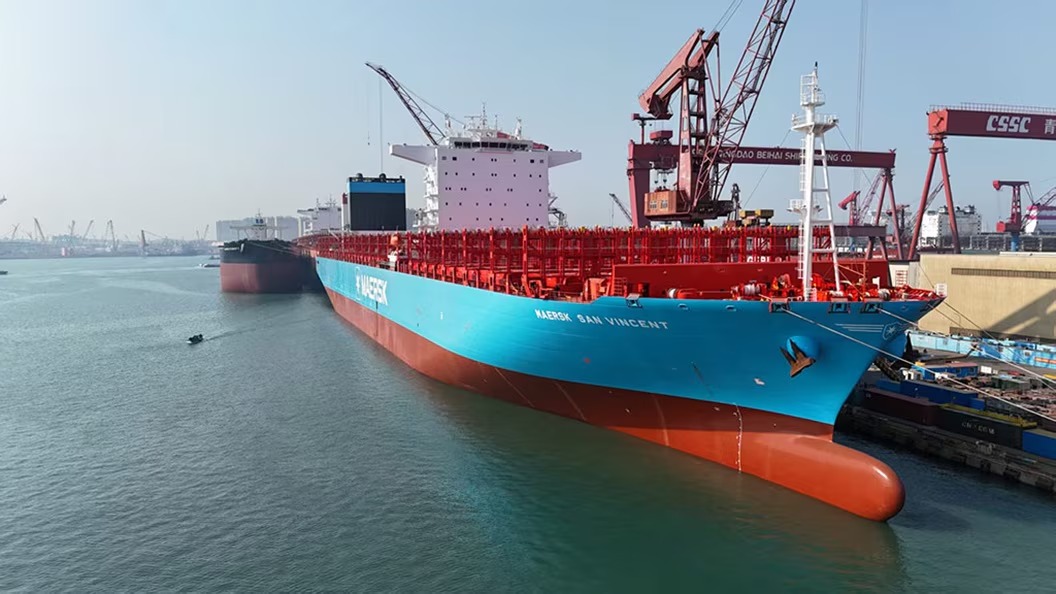
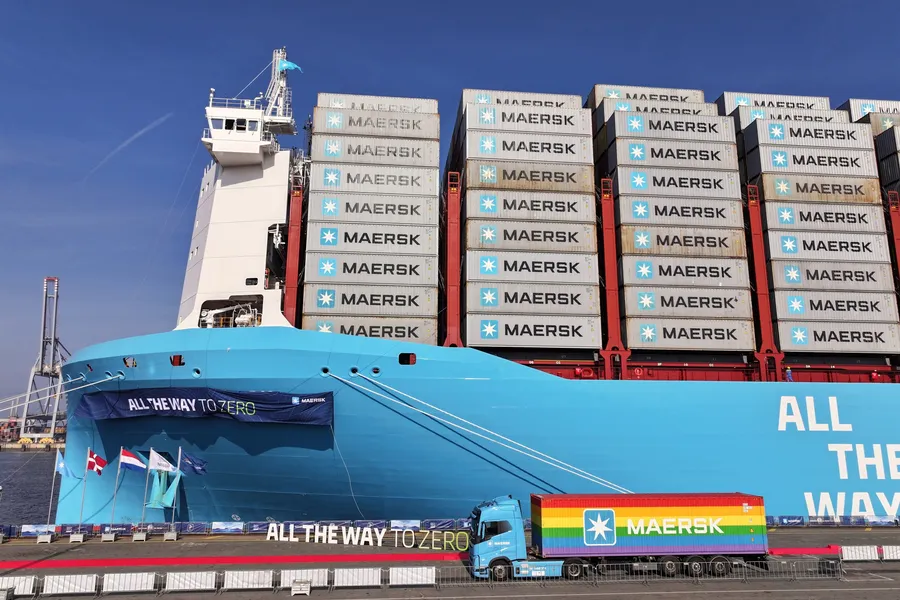
COPENHAGEN : In a significant move to modernize its fleet, Maersk has placed an order for eight LNG dual-fuel containerships at New Times Shipbuilding (NTS), with options for four additional vessels. Each ship is priced at approximately $193 million, and deliveries are expected between 2028 and 2029. This order reinforces Maersk’s commitment to sustainable shipping practices while enhancing its existing partnership with the Jiangsu-based shipyard.

Details of the Major Order
The latest order represents a strategic addition to Maersk’s ongoing fleet renewal initiative. Over the next four years, the Danish shipping giant is on track to receive a total of 26 LNG dual-fuel newbuildings from NTS. This impressive lineup includes a variety of vessel sizes, with ten 16,800 TEU ships—split evenly between SFL Corp and Seaspan—six owned 15,000 TEU units, and ten 8,700 TEU vessels from Capital Ship Management.

This order not only expands Maersk’s operational capabilities but also highlights the company’s focus on environmentally friendly shipping solutions. The transition to LNG-powered vessels aligns with the global push towards reducing carbon emissions in the maritime industry. By the time the new 18,000 TEU series is delivered, Maersk will have acquired over 30 large LNG-powered ships from NTS alone, marking a significant milestone in its fleet transformation efforts.

As the shipping industry continues to evolve, Maersk’s proactive approach in securing these new vessels positions the company favorably in a competitive market. The investment reflects a broader trend within the industry, where sustainability and efficiency are increasingly prioritized.