Home Blog Page 579

Trump administration seeks to negotiate with China on shipping as it pauses port fees

WASHINGTON : The Trump administration said on Thursday it would pursue negotiations with China over its dominance of shipbuilding and ocean logistics as it formalized plans for a one-year pause on U.S. port fees on China-linked vessels as part of a broader deal to reduce trade tensions.

The U.S. Trade Representative’s office said in a Federal Register notice, opens new tab that it would pause for a year starting November 10 all punitive actions against China resulting from its “Section 301” unfair trade practices investigation. USTR added that it would accept public comments on the matter on November 6 and November 7.

The 12-month reprieve on an estimated $3.2 billion annually in U.S. fees for large Chinese-built vessels sailing to U.S. ports was among the agreements reached in South Korea by U.S. President Donald Trump and Chinese President Xi Jinping in late October. Also paused were 100% tariffs on ship-to-shore cranes and container intermodal chassis for trucks.
“Pursuant to this deal, the United States would suspend for one year, beginning on November 10, 2025, the responsive actions taken in this investigation,” USTR said in the notice. “The United States also would negotiate with China pursuant to Section 301 regarding the issues raised in this investigation.”

The notice gave no details about how the negotiations would begin, or what the objectives would be. It said that the U.S. would continue its own efforts to revitalize domestic shipbuilding, including through discussions with key allies and partners.
A USTR spokesperson could not immediately be reached for further comment. China’s embassy in Washington also did not immediately respond to a Reuters query.
China also had agreed to pause its own retaliatory fees on U.S.-linked ships as part of the Trump-Xi de-escalation agreement. Hawaii-based ocean shipping company Matson , opens new tab said on Tuesday that it had paid $6.4 million in port fees to China since they were implemented on October 14.
State-owned container line COSCO, opens new tab is the Chinese shipper most exposed to U.S. port fees, which analysts said could add up to $1.5 billion annually.

Source : Reuters

US tariffs hit Indian solar exports, trigger supply glut in domestic market: ICRA

NEW DELHI: Tariffs by the United States on solar imports have dealt a heavy blow to Indian solar module exporters, forcing manufacturers to redirect volumes back into the domestic market, according to a report by ICRA.

The development has aggravated the existing oversupply situation in India’s solar module industry and is expected to squeeze margins and accelerate consolidation among smaller players.

ICRA estimates India’s solar photovoltaic (PV) module manufacturing capacity to rise sharply to over 165 gigawatts (GW) by March 2027 from around 109 GW at present. Mainly driven by policy measures such as the Approved List of Models and Manufacturers (ALMM), basic customs duty (BCD) on imported modules and cells, and the production-linked incentive (PLI) scheme. However, with domestic annual solar installations expected to hover around 45-50 GW direct current (GWdc), the country’s production capacity is projected to far exceed demand.

“The recent imposition of tariffs by the USA and growing regulatory uncertainty are likely to dampen export volumes, putting pricing pressure on domestic OEMs,” said Ankit Jain, Vice President and Co-Group Head, Corporate Ratings, ICRA. “Operating profitability for ICRA’s sample set of Indian solar OEMs, which remained elevated at around 25 per cent in FY2025, is expected to moderate due to competitive pressures and capacity overhang.”

The diversion of modules initially meant for export to the domestic market has intensified the supply glut, pushing down prices and challenging the sustainability of smaller or pure-play module manufacturers. ICRA anticipates a wave of industry consolidation, with vertically integrated companies.

ICRA also noted that while India is rapidly expanding its domestic manufacturing ecosystem, the global supply chain remains dominated by China, which accounts for over 90 per cent of global polysilicon and wafer production and about 80-85 per cent of cell and module capacity. This dependency poses long-term strategic and geopolitical risks for Indian manufacturers seeking backward integration.

On the policy front, the implementation of ALMM List-II for solar PV cells from June 2026 is expected to drive a surge in domestic cell manufacturing, with capacity likely to jump from 17.9 GW currently to around 100 GW by December 2027.

ICRA cautioned that stabilising this expanded capacity will be critical, especially since modules made with Indian cells could cost 3-4 cents per watt more than those using imported cells.

However, despite near-term headwinds, ICRA believes vertically integrated players could gain long-term advantages from greater supply chain control and reduced import reliance. For now, though, the combination of global trade barriers, rapid domestic capacity additions, and weakening exports is expected to keep the pressure on margins and trigger a realignment within India’s solar manufacturing sector.

Source: ANI

Lloyd’s Register to provide new construction services to BAE Systems Australia’s frigates for Royal Australian Navy

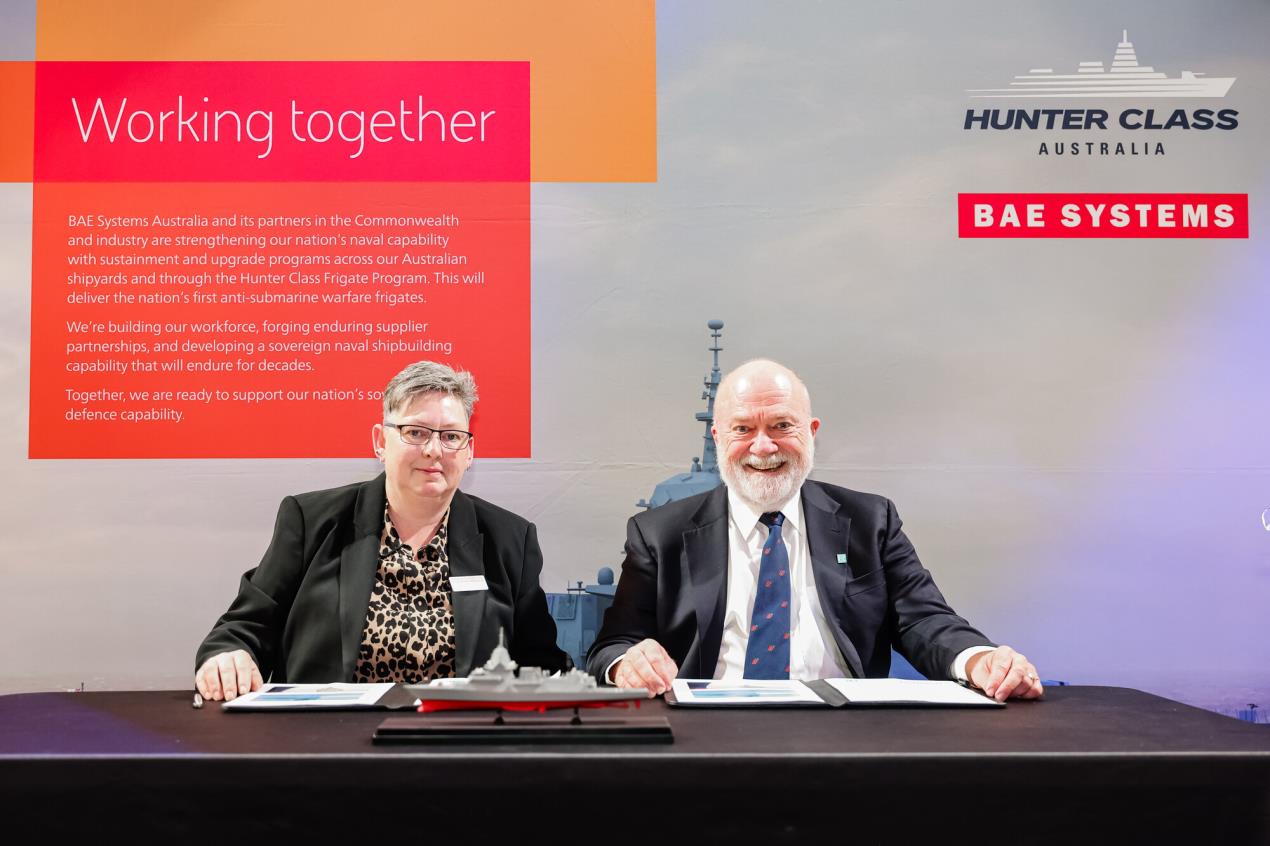
LONDON: Lloyd’s Register (LR) has been awarded a contract from BAE Systems Maritime Australia (BAESMA) for Naval Classification New Construction Services for the first three Royal Australian Navy Hunter class frigates. The Hunter class frigates are based on the design of the UK Type 26 frigate and are being built at Osborne Naval Shipyard in South Australia.

Under the contract, LR will ensure that the design and construction of the anti-submarine warfare frigates are compliant with LR Rules and Regulations for the Classification of Naval Ships.

The contract will continue through to entry into service of the third ship and ensure all three frigates meet the requirements of international ship standards for quality, safety, and reliability to help protect Royal Australian Navy sailors.

Working onsite at the Osborne Naval Shipyard, LR has been involved with the Hunter Class Frigate Program since 2020, bringing trusted and embedded knowledge of the project’s processes and procedures.

BAESMA and LR are committed to delivering Hunter class frigates to the Commonwealth, with LR’s Naval Classification ensuring that the Royal Australian Navy has the capability it needs at sea.

Andy Coxall, Delivery Director – Acquisition, BAE Systems Maritime Australia, says: “Partnering with Lloyd’s Register for the Hunter class frigates is a demonstration of our commitment to delivering world-class naval vessels built to the highest standards of safety and reliability.

“At BAE Systems, our mission is to protect those who protect us. By working alongside Lloyd’s Register, we’re ensuring the Royal Australian Navy receives advanced capability tailored to its operational needs and the courageous men and women serving aboard the Hunter class can have confidence in the safety of their vessel.”

Steve McDowall, Director of Naval Business Australasia, Lloyd’s Register, says: “We are proud to continue our close collaboration with BAE Systems Maritime Australia on the Hunter Class Frigate Program. Having worked together on this program for over five years, we are honoured to be contracted to deliver Naval Classification services for the first three ships in this strategic programme for the Royal Australian Navy and the Australian Department of Defence.”

David Lloyd, Vice-President Naval and Government Business, Lloyd’s Register, says: “The Hunter Class Frigate Program is a key element in Australia’s continuous naval shipbuilding objective and all in LR are proud to have been chosen to deliver our New Construction Naval Classification services in support of the design and construction of these highly capable ships for Australia’s Navy.”

GEODIS joins the European I3FLOAT consortium to foster innovation in floating offshore wind

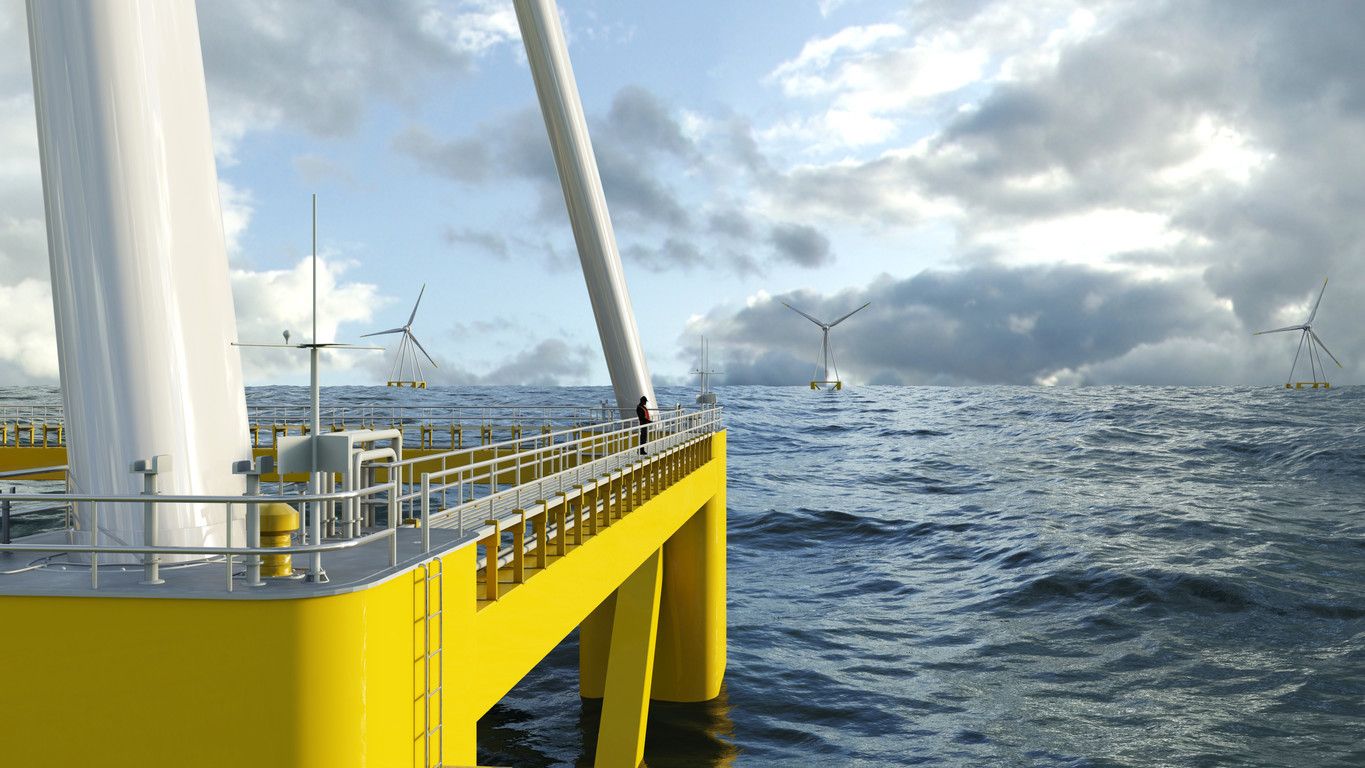
LEVALLOIS-PERRET: GEODIS is among the 24 partners from eight European regions participating in I3FLOAT, launched in Brussels in October to strengthen and scale up the floating offshore wind value chain. The initiative is structured around four Innovation Hubs — Basque Country (Spain), Andalusia (Spain), Occitania / Provence-Alpes-Côte d’Azur (France), and Flanders (Belgium) — each driving technological development in the sector.

GEODIS takes part in the French Innovation Hub, led by EOLINK, an engineering company specialized in floating wind turbines. EOLINK develops an innovative pyramidal floating-wind technology. Using fewer materials, thus lighter, and suited to high-capacity turbines, EOLINK offers a competitive solution that can be deployed worldwide, starting with the Atlantic coast. As part of the consortium, GEODIS will play a key role in optimizing the transport and logistics of the EOLINK floaters, contributing its proven know-how in complex heavy-lift logistics and engineering support.

“This participation in the I3FLOAT project builds on GEODIS’ expertise alongside key players in the offshore floating wind industry. Our know-how was recently demonstrated through the transport and float-off of three floating wind foundations carried out in collaboration with Eiffage Metal in the Mediterranean Sea for the EFGL project. We are now delighted to continue our close partnership with the EOLINK team in the years to come.” said Nicolas Bonnier, Global Manager Offshore Wind Solution, Project Logistics at GEODIS.

*Co-funded by the European Union through the Interregional Innovation Investments (I3) – Strand 1, managed by the European Innovation Council and SMEs Executive Agency (EISMEA).

HPC to develop final business case for Port of Newcastle’s Clean Energy Precinct

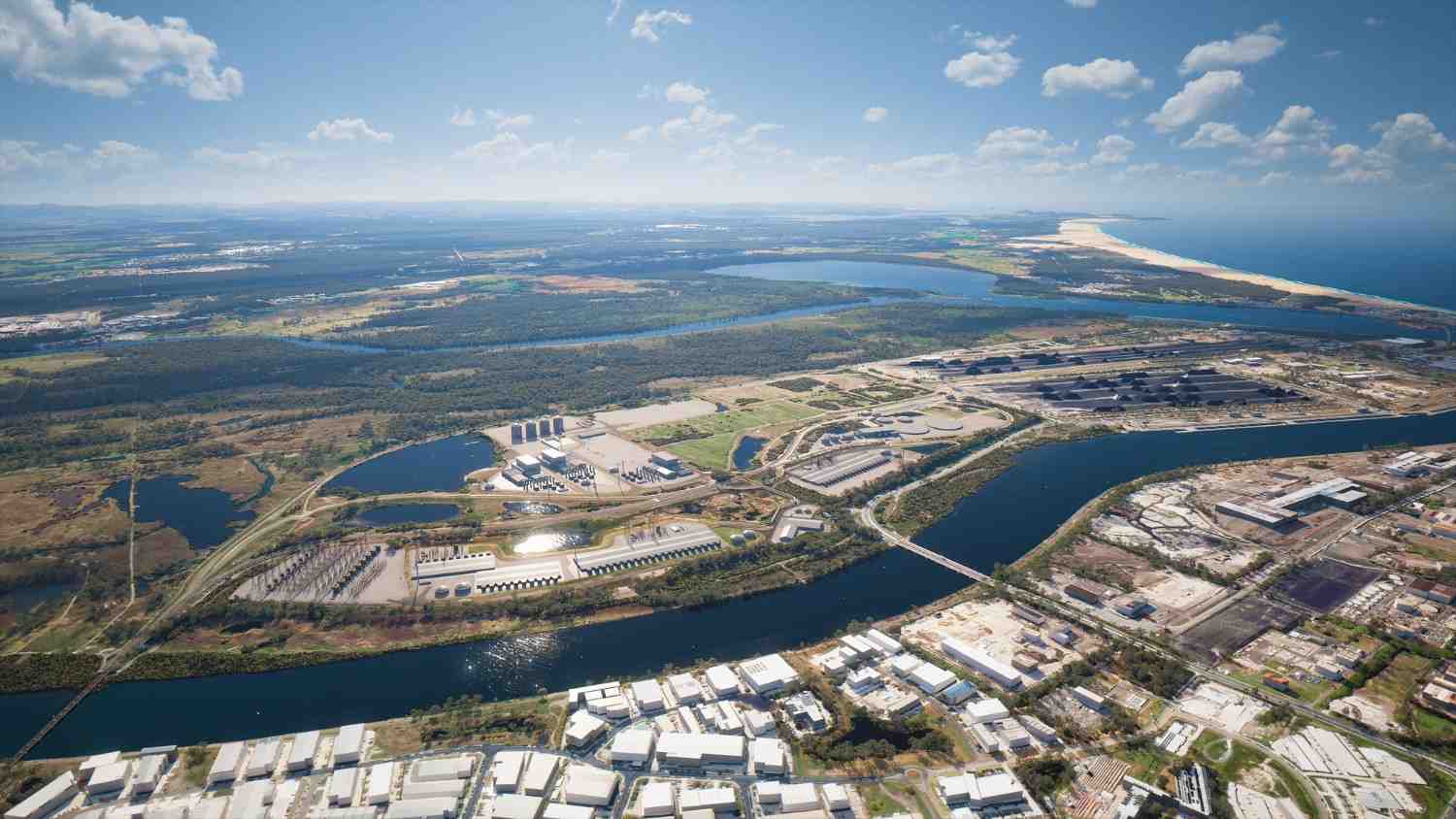
HAMBURG: HPC Hamburg Port Consulting (HPC) has been appointed by Port of Newcastle to develop a final business case for its Clean Energy Precinct (CEP), reflecting Australia’s deepening energy cooperation with Europe. Drawing on its global track record in port operations and hydrogen logistics, HPC will assess the market and business potential for green ammonia production, storage, and export at the CEP site.

Supporting a once‑in‑a‑generation transformation

The CEP is Australia’s most advanced clean‑energy value chain project which spans 220 hectares of redeveloped industrial land in Newcastle. Backed by A$100 million in Federal Government funding, the project is set to cut around 660,000 tonnes of domestic and 1 million tonnes of export carbon emissions each year, with green ammonia shipped to international markets. For a port long defined by energy exports, this marks a generational shift toward a low‑carbon, diversified future.

HPC’s remit is to translate the vision into a commercially viable plan, identifying market opportunities, partnerships, and investment models aligned with global hydrogen demand. The work will position Port of Newcastle as a key gateway in the international hydrogen supply chain, supporting Australia’s export ambitions and Europe’s decarbonisation goals.

Statements from the partners

“Developing a final business case that reflects stronger Australia-Europe energy links is essential to realising our clean‑energy vision,” said Craig Carmody, CEO of Port of Newcastle.

“It builds on our partnerships, including the Port of Hamburg agreement for a green shipping corridor, and will give us the insights needed to attract investment and guide infrastructure funding through schemes like H2Global. This is about applying commercial discipline to achieve our Net Zero 2040 commitment.”

“Port of Newcastle is writing the next chapter of its history, and we’re excited to contribute,” said Christina Prieser, Associate Partner at HPC. “Our role is to help structure the business case in a way that balances ambition with commercial logic – looking at how green ammonia could fit into future transport flows, where market demand might emerge, and what it takes to move from potential to practical next steps.”

Bridging clean energy logistics with sound economic planning

HPC has supported numerous public and private sector clients in assessing the technical and economic feasibility of port-related investments. Its work spans business case development, infrastructure evaluation, and market analysis for both conventional and emerging energy systems.

In recent years, HPC has been increasingly involved in projects focused on the integration of hydrogen and its derivatives into transport chains – advising on storage, handling, and distribution concepts across terminals, industrial clusters, and logistics networks.

This combined expertise – in both energy logistics and strategic planning – will contribute to the development of a robust final business case for the Clean Energy Precinct, aligning Port of Newcastle’s ambitions with market realities and long-term investment logic.

Through this partnership, HPC will help Port of Newcastle finalise a robust business case that supports targeted investment, risk reduction, and infrastructure planning, further establishing the Port as Australia’s leading hub for sustainable trade and clean‑energy exports.

RINA expands in Southeast Asia with New Open Innovation Hub in Singapore

SINGAPORE: RINA, the multinational consulting engineering, inspection and certification group, has this week marked crucial milestones in its open innovation strategy with the activation of its Singapore Open Innovation Hub.

First announced at the end of 2024, the hub, one of seven RINA is establishing worldwide, is now operational and designed to integrate seamlessly into Singapore’s dynamic innovation landscape, further reinforcing the city-state’s role as a global decarbonisation and maritime leader, and a hub for advanced technologies.

By aligning with Singapore’s strategic vision for growth and sustainability, the objective of RINA’s Open Innovation Hub is to accelerate collaboration, drive technological breakthroughs, and contribute to the city-state’s central role in shaping the future of the maritime sector and beyond.

Carlo Luzzatto, Chief Executive Officer and General Manager of RINA, commented, “Singapore is a global innovation powerhouse and a knowledge-driven, entrepreneurial economy. Innovation at scale, advancing sustainability and fostering knowledge sharing are the pillars of RINA’s growth strategy. By investing in research, building strong partnerships, and attracting talent, we aim to deliver tangible impact for the region’s ecosystem and create lasting value across its strategic industries.”

Reflecting its strategic focus and investments in Singapore, RINA hosted and took part in a series of events from 3 to 5 November, led by senior management, to actively strengthen ties with the city state.

Singapore Open Innovation Hub Advisory Committee – to leverage shared knowledge

Held on 4 November, RINA inaugurated its first Singapore Open Innovation Hub Advisory Committee, bringing together industry leaders, advanced research and education organizations, innovators, technology specialists, maritime experts and policymakers to advance the dialogue on innovation and sustainability.

The event showcased Singapore community’s continued commitment to exploring opportunities presented by emerging technologies and collaborative innovation. During the meeting, participants discussed strategic priorities including the development of port digital twins, the use of digitalisation as a pathway to decarbonisation, and insights from the marine fuels sector to support the industry’s energy transition. Case studies on learning in the marine market along with discussions on ecosystem development and scaling innovation further enriched the agenda.

Michael Phoon, Senior Adjunct Fellow, MPA Academy, and Chairman of RINA’s Singapore Open Innovation Hub Advisory Committee, said “Innovation thrives when knowledge flows freely. By bringing together diverse expertise this Committee creates a unique platform for collaboration. In Singapore, where innovation is rapidly shaping global trade, initiatives like this not only accelerate the exchange of ideas but also empower industries to turn vision into actionable growth.”

MoU with the Singapore Institute of Technology – to nurture next-generation maritime talent

RINA and the Singapore Institute of Technology (SIT), Singapore’s premier university of applied learning, signed a strategic Memorandum of Understanding (MoU) on 3 November to drive innovation and nurture talent in the maritime sector.

The partnership integrates RINA’s global industry expertise with SIT’s applied learning approach through the university’s work-study and industrial postgraduate programmes. Students will gain practical experience in ship and offshore inspection, guided by RINA professionals, preparing them for certification and leadership roles in maritime safety and engineering assurance.

The MoU outlines joint efforts in academic exchanges in Singapore and the co-development of SIT programmes to equip participants with the skills needed to meet the evolving demands of the maritime industry. RINA and SIT will also collaborate on research in maritime technologies, sustainable energy, process certification, and infrastructure. These initiatives will contribute to the Future Ship and System Design programme focused on next-generation vessels, digital simulation, and systems integration.

Bernard Nee, Deputy President (Industry & Community Group) at SIT, commented: “The Singapore Institute of Technology’s partnership with RINA offers SIT students and researchers exposure to real-world maritime operations and inspection work. Through applied learning, joint research and industry collaboration, we are committed to nurturing future maritime leaders, and strengthening the talent pipeline for a safer, resilient and more sustainable maritime future.”

MoU with the Maritime Port Authority of Singapore – to establish technology demonstration centre and accelerate digitalisation and decarbonisation

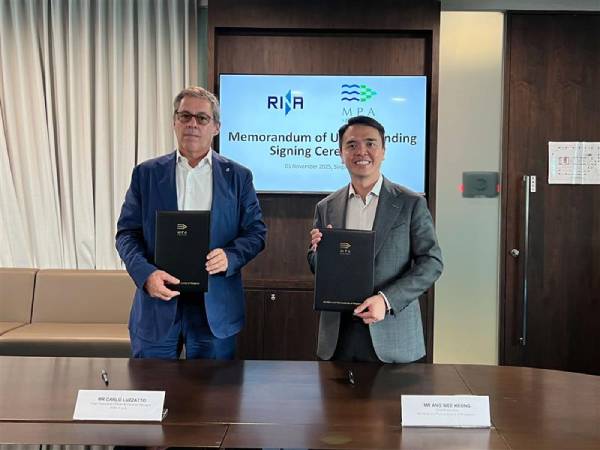
On 5 November, the Maritime and Port Authority of Singapore (MPA) and RINA signed a Memorandum of Understanding (MoU) to establish a technology demonstration centre and collaborate on maritime innovation, digitalisation, decarbonisation, and talent development.

The partnership will establish a technology demonstration centre as part of RINA’s Open Innovation Hub in Singapore, to serve as a collaborative platform to co-create innovative solutions for maritime digitalisation and decarbonisation. It will support the development of smart maritime systems, and provide integrated platforms to validate new technologies and accelerate their deployment in realworld operations.

The parties will collaborate with Singapore’s research ecosystem, accelerating the adoption of technologies in areas such as smart ships, low-carbon marine fuels, battery systems, and digital ports. Talent development is another key focus, with education, training, internship and scholarship opportunities aimed at preparing the next generation of maritime professionals.

Mr Ang Wee Keong, Chief Executive, Maritime and Port Authority of Singapore, said, “The MoU with RINA marks an important step in strengthening Singapore’s maritime innovation ecosystem. By working with international partners like RINA, as well as our local industry and research community, we aim to accelerate the testing and adoption of emerging technologies that will make the sector smarter, safer, and more sustainable.”

PIER 71: Smart Port Challenge Grand Finals – to empower startups in driving innovation

To further support Singapore’s dynamic start-up landscape and vibrant maritime innovation scene, RINA is honoured to be an Innovation Partner of the PIER71 (Port Innovation Ecosystem Reimagined at BLOCK71) Smart Port Challenge 2025. Through this platform driving maritime innovation, RINA has priority access to high potential maritime start-ups and technologies, opening doors for co-creation and pilot projects aligned with its strategic focus on digitalisation and sustainability.

In addition, RINA was privileged to serve as a member of the judging panel for the Smart Port Challenge semi-finals. At the Great Circle Grand Finals on 5 November,

RINA sponsored and presented the Digitalisation award to OneCare Group for its holistic, tech-enabled approach to crew wellness, through a proactive, predictive, and preventative approach. Their solution addresses a critical industry gap in seafarers health and wellbeing thanks to digital integration, exemplifying how innovation can humanize maritime operations and enhance safety at sea. PIER 71’s initiative accelerates innovation and technology adoption in Singapore’s maritime industry, encouraging exploration of new growth areas through collaboration with start-ups.

PIER71 was founded in 2018 by the Maritime and Port Authority of Singapore (MPA) and the National University of Singapore (NUS), through its entrepreneurial arm NUS Enterprise, PIER71 aims to grow Singapore’s maritime innovation ecosystem by creating opportunities for the exchange of knowledge and ideas, attracting investments into start-ups and accelerating ventures. The PIER71 Smart Port Challenge is an annual innovation challenge, driven by innovation opportunities put forth by the maritime industry, to attract start-ups with breakthrough technology-driven solutions.


Ned Marine Services signs exclusive European distribution agreement with Innovative Manufacturing Inc.

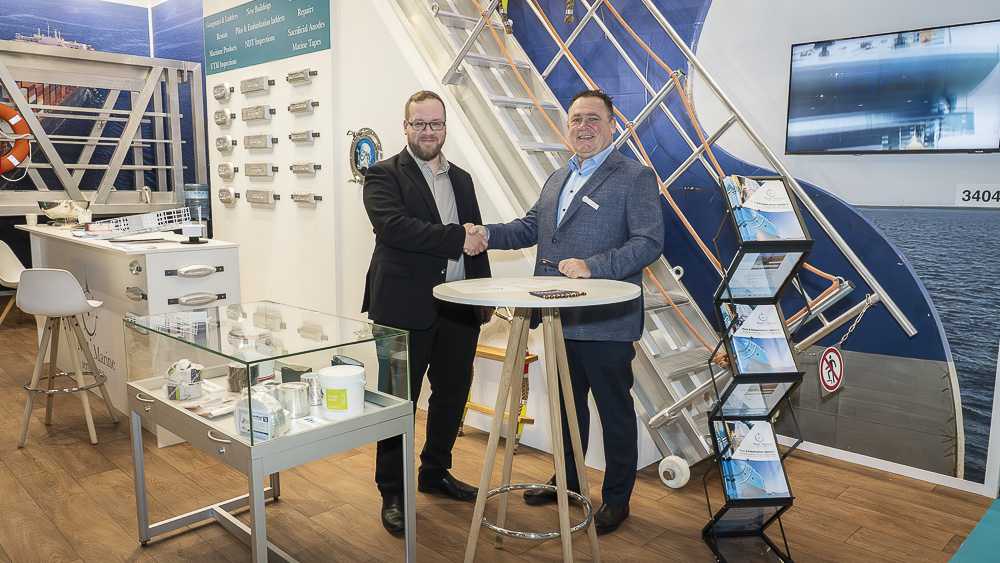
RIDDERKIRK: During Europort 2025, one of the largest maritime events in Europe, Ned Marine Services (NMS) signed an exclusive distribution agreement with Innovative Manufacturing, a Canadian manufacturer specializing in anti-corrosive protection tapes for piping systems, offshore structures, and industrial installations.

Under the new partnership, Ned Marine Services becomes Innovative Manufacturing’s exclusive master distributor for all regions between Turkey and Finland, i.e. covering Europe and the Baltic states. The agreement strengthens NMS’s position as a leading provider of corrosion protection and marine maintenance solutions.

“We were looking for a strong, knowledgeable distributor with deep roots in the maritime industry,” says Adam Eweida, Managing Director of Innovative Manufacturing. “We’ve held several talks with European potential partners, and Ned Marine Services stood out for their dedication, technical understanding, and proactive approach towards customers.”

Innovative Manufacturing (est. 1948), headquartered near the port of Vancouver, designs and produces innovative protective tapes designed to prevent corrosion or repair leakages onboard vessels and offshore constructions. The company’s products are widely used in the energy, offshore, and shipbuilding industries.

“We are very proud to represent Innovative Manufacturing in Europe,” comments Ger Monster, Managing Director at Ned Marine. “Their quality and innovative manufacturing methods perfectly complement our existing cathodic protection and marine supplies range. This partnership enables faster delivery, closer customer support, and a stronger European presence for both companies.”

“Indeed,” adds Adam, “the fact that Leo and his team already offer a portfolio akin to ours and deliver certified products in many maritime markets, also contributed to this match. “They’ve made a flying start: starting this week, Innovative Manufacturing products will already be available from Ned Marine’s inventory!”

INTERCARGO reaffirms unity and momentum at 45th Anniversary AGM in Athens

ATHENS: The International Association of Dry Cargo Shipowners (INTERCARGO) held its Annual General Meeting and Semi-annual meetings at the Four Seasons Astir Palace in Athens on 3–4 November 2025, marking continued growth and important milestones in representing the dry bulk shipping sector.

The events coincided with the Association’s 45th Anniversary Gala Dinner, attended by senior figures from the Greek and international maritime community.

The meetings brought together members and guests from around the world for two days filled with discussions on the Association’s initiatives for safer, quality-driven, and sustainable dry bulk shipping, in collaboration with stakeholders worldwide. The agenda covered a broad range of issues, including bulk carrier safety and security, operational excellence, seafarers’ welfare, DryBMS, digital initiatives, environmental challenges such as decarbonisation, as well as other dry bulk–specific technical topics. Expert presentations were delivered by members, contributing valuable insight and perspective to the discussions.

The Association’s leadership remains unchanged, with John Xylas continuing as Chairman, Metaxia Psalti and Capt. Uttam Kumar Jaiswal serving as Vice-Chairpersons, Kostas Gkonis as Secretary General, Dimitris Monioudis as Technical Committee Chair, and Cesare D’Api as Technical Committee Vice Chair. Together, they ensure stability and continuity as INTERCARGO advances its long-term strategic priorities.

In his address to members, Mr. Xylas reflected on a year of meaningful progress and engagement, noting INTERCARGO’s strengthened presence at international fora as the trusted global voice of quality dry bulk shipping.

A short video celebrating INTERCARGO’s 45-year journey was also presented as a tribute to the people and values that shaped the Association.

“From a small group of shipowners in 1980, INTERCARGO has grown into a truly global association representing more than 350 members from over 35 countries, including more than 180 Full Members managing more than 4,400 bulk carriers totalling nearly 420 million DWT — approximately 40% of the world’s dry bulk carrier fleet. Our unity and shared purpose remain our greatest strengths as we look ahead to the next decade of transition for our sector, which will be defined by collaboration, innovation, and leadership,” Mr. Xylas said.

As INTERCARGO looks toward 2026, its focus remains on ensuring that the dry bulk sector continues to operate safely, sustainably, and efficiently, while further strengthening collaboration across its expanding global membership.

MarTrust and ISWAN Unite to Strengthen Seafarer Wellbeing

LONDON: MarTrust, part of Marcura, and the crew payments solution supporting more than 150,000 seafarers worldwide, has partnered with the International Seafarers’ Welfare and Assistance Network (ISWAN), the international not-for-profit maritime organisation providing 24/7 helplines and welfare resources for seafarers and their families.

The partnership is designed to improve awareness and access to mental health and financial wellbeing support across the maritime sector. 

Data and insight to strengthen crew welfare
A financial donation from MarTrust will support ISWAN’s welfare and outreach programmes, including the launch of a new Power BI Dashboard. The dashboard will bring together data and insights from ISWAN’s helplines on key wellbeing themes such as financial strain, fatigue, isolation, and contractual concerns.

It will help shipowners and managers better understand the pressures their crews face and take proactive measures to support them, while ensuring that ISWAN’s services remain relevant to the evolving needs of seafarers globally.

Meeting seafarers where they are
Each year, ISWAN’s multilingual helplines are contacted by crew seeking practical and emotional support. Calls range from simple enquiries to complex issues involving family and financial worries, stress, fatigue, and at times thoughts of suicide.

Many seafarers spend long periods at sea with limited connectivity and little awareness of where to turn for help. This challenge is particularly evident among younger crew, who are more likely to seek assistance through digital channels.

As part of the partnership, ISWAN’s resources will now be made accessible directly through the MarTrust crew app, giving seafarers clear visibility of support options and guidance. 

A partnership that makes sense

“We take around 450 new contacts each month, but that’s just a fraction of the seafarers who could benefit from our support,” said Simon Grainge, CEO of ISWAN. “Through this partnership, we can reach more crew digitally; at a moment when they’re often thinking about their money, their family, and their wellbeing; and connect them to the right help when they need it most.”

“Financial worries are a major cause of anxiety both on board and at home,” added Stuart Gregory, CEO of MarTrust. “By working with ISWAN, we can connect more crew to trusted support at the moment they need it and remove unnecessary stress from daily life at sea. This partnership allows us to combine our digital platform with ISWAN’s expertise to make a tangible difference to seafarer wellbeing around the world.”

A foundation for long-term collaboration
Both organisations emphasise that this is the beginning of a long-term collaboration. Beyond integrating welfare content, the partnership will explore ways to scale awareness of crew welfare resources, co-create future digital tools, and increase industry engagement through shared data insights.

Baltic Index extends gains to hit Over Two-Week High on Strong Vessel Rates

LONDON: The Baltic Exchange’s main sea freight index, which tracks rates for ships carrying dry bulk commodities, rose to a more than two-week high on Thursday, buoyed by firmer rates across all vessel segments.

The main index, which tracks rates for capesize, panamax and supramax shipping vessels, rose 60 points, or 3%, to 2,063 points, its highest level since October 22.

The capesize index gained 158 points, or 5.1%, to 3,242, its highest in over three weeks.

Average daily earnings for capesize vessels, which typically transport 150,000-ton cargoes such as iron ore and coal, increased $1,315 to $26,888.

Dalian iron ore futures prices snapped a four-session losing streak to end higher on Thursday due to a fall in global shipments, although lingering concerns about oversupply curbed gains.

The panamax index rose 24 points, or 1.3%, to 1,817.

Average daily earnings for panamax vessels, which usually carry 60,000-70,000 tons of coal or grain, was up by $211 to $16,351.

Among smaller vessels, the supramax index gained 5 points, or 0.4%, to 1,312.
Source: Reuters