SHANGHAI : Premier Li Qiang said on Wednesday that China’s Economy will exceed 170 trillion yuan ($23.87 trillion) by 2030, presenting a big market opportunity for the world as trade restrictions rise globally. In his speech at the opening ceremony of the China International Import Expo (CIIE) in Shanghai, Li criticized tariffs and said that China wanted to reform the global economic trading system to make it more reasonable and transparent, especially for developing countries.
Tariffs are “seriously undermining international economic and trade rules, and also disrupting the normal operation of enterprises in various countries,” he said, without mentioning the United States. “In five years, China’s economy is expected to exceed 170 trillion yuan, which will make new and important contributions to global economic growth,” Li added. China has said its GDP will top 140 trillion yuan this year, and the projection by 2030 is in line with proposals for its upcoming five-year plan that predicted annual growth of 4.17% over the next five years. CIIE was launched under President Xi Jinping in 2018 to promote China’s free trade credentials and counter criticism of its trade surplus with many countries.
But the expo has its sceptics, as the country’s trade surpluses with other markets have only grown in the years since. While China’s supply of manufactured goods to the world is growing, its contribution to global demand is less significant, with imports barely growing – a dynamic economists have said fuels trade tension abroad and deflationary pressure back home. Global trade this year has been heavily disrupted by tariffs imposed by U.S. President Donald Trump and have launched the U.S. and China into a fresh trade war that has ebbed and flowed in tit-for-tat actions through this year. Last week, Xi and U.S. President Donald Trump met in South Korea to reach a trade truce. The U.S. agreed to reduce some tariffs on Chinese goods and pause some export controls, and China agreed to pause new export restrictions on rare earth minerals and magnets and resume purchases of American soybeans.
But analysts say it may be no more than a fragile truce in a trade war with root causes still unresolved. Li in his speech said China wanted to increase its imports of high quality products and repeatedly stressed that it was open to business and trade. “Let enterprises from all over the world develop in China with more peace of mind, more comfort and more confidence,” he said. China’s trade surplus is set to exceed last year’s record of roughly $1 trillion as exporters offset a plunge in U.S. sales due to higher U.S. tariffs by selling more to the rest of the world, often at a loss in pursuit of market share. Exports to the U.S. fell about 27% in September versus the same month a year prior, while shipments for the European Union, Southeast Asia and Africa grew 14%, 16% and 56% respectively. More than 155 countries, regions and organisations plan to participate in this year’s CIIE, the commerce ministry said. Over 4,100 overseas enterprises will take part, with U.S. companies maintaining the largest exhibition area for the seventh consecutive year.
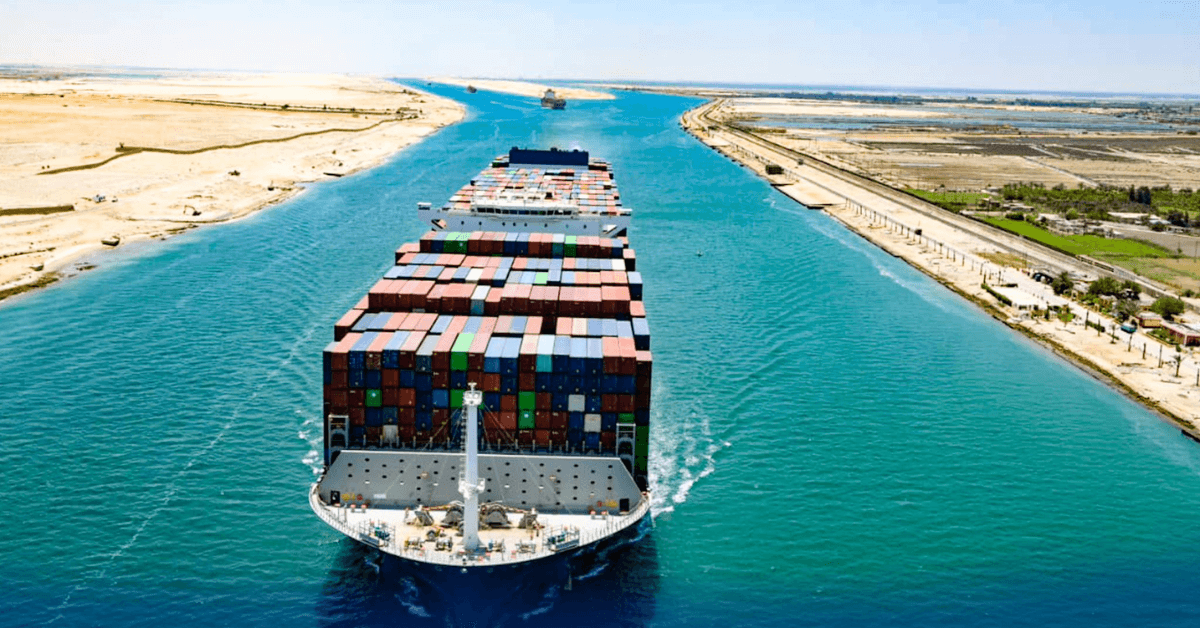
CAIRO : The Suez Canal Authority (SCA) has met with representatives of major shipping lines to try and convince them to return to transiting the key waterway that connects Europe to Asia via the Red Sea.
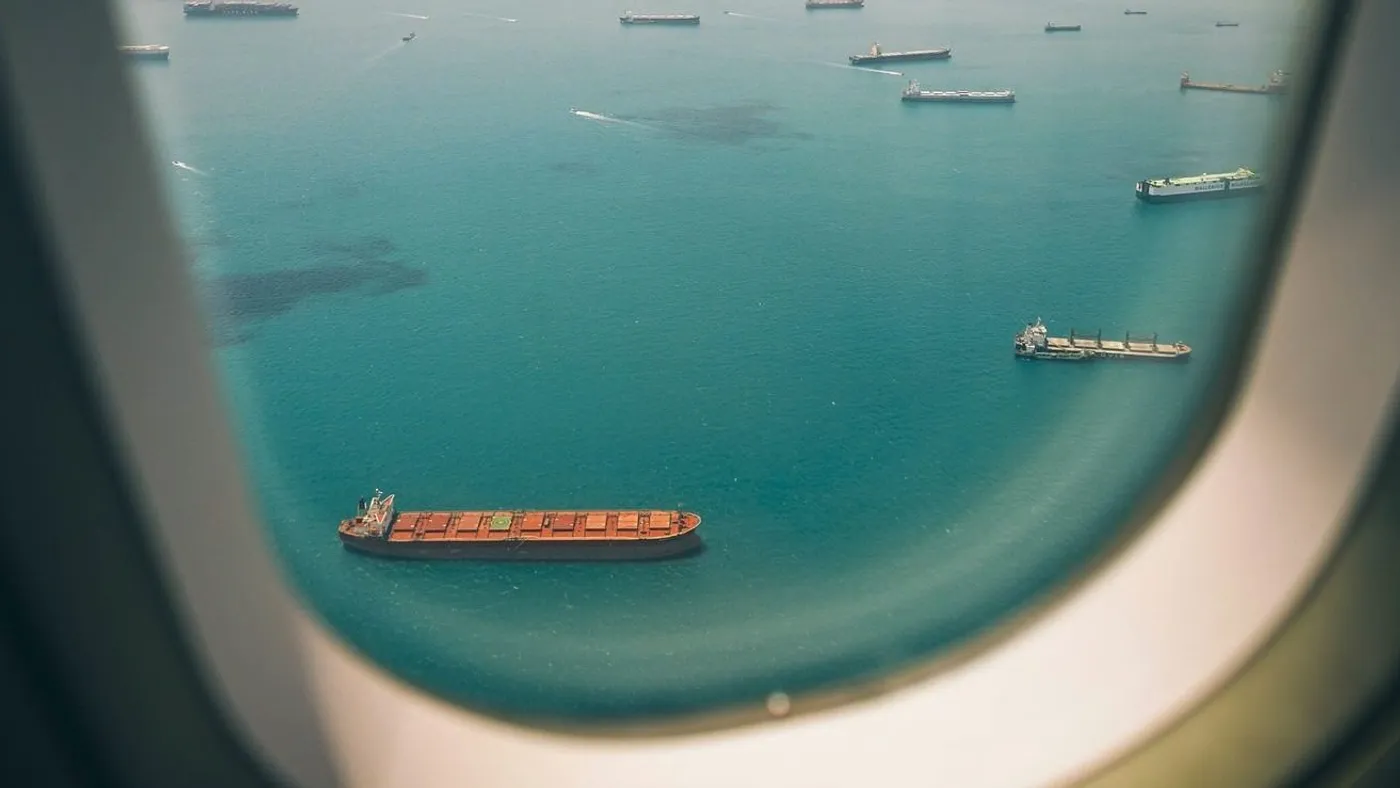
Admiral Ossama Rabiee, Chairman of the SCA, met with the representatives of 20 shipping lines and shipping agencies to discuss developments in the Red Sea and Bab el-Mandeb region. Major container lines, and many other shipping companies have diverted vessels via the Cape of Good for much of the last two years to avoid attacks in the Red Sea by the Houthi in Yemen. With peace continuing hold between Israel and Hamas in Gaza the Houthi have stopped attacking commercial shipping in the Red Sea region.
The Admiral invited all shipping lines to conduct trial voyages of their container ships through the Suez Canal and commended French line CMA CGM for making two transits of the canal.
Two container ships operated by French carrier CMA CGM recently transited the Suez Canal on their eastbound voyages to Asia, marking what consultant Linerlytica calls the “first tentative steps” in the return of shipping lines to the Red Sea.
CMA CGM’s two vessels were both operating on its FAL1 service, which, like most other lines, have been diverted around the Cape of Good Hope over the last two years, following Houthi attacks on ships linked to, or calling at, Israeli companies or ports.
“Notably CMA CGM has not diverted any North Europe headhaul ships westbound on the Suez [Canal] and is only redeploying ships on selective eastbound backhaul voyages in order to bring the ships and empty containers back to Asia following severe delays at European ports recently,” commented Linerlytica in its weekly market report.
However, while the transits by 18,000 teu vessels are significant, CMA CGM is the only major container line that has continued to make adhoc transits of the Red Sea and Suez Canal over the last two years with the support of the French navy.
The Marseille-headquartered line is looking to further Suez Canal transits. According to the SCA Tariq Zaghloul, CMA CGM Egypt & Sudan Cluster CEO told the meeting with the authorities that he “anticipated an increase in the group’s voyages through the Suez Canal in the coming period”.
The authority also reported MSC was looking to return to the canal on the backhaul to Asia. SCA said that Ehab Fathy, Operations Manager of the shipping line MSC in the Suez Canal region of Egypt, “anticipated a swift return of southbound vessels in the coming period, given the improved stability in the region”.
Hapag-Lloyd meantime said it was monitoring developments in the Red Sea, while Maersk affirmed its commitment to investments in Egypt.
According to the SCA October saw the highest number of vessels returning to transit the canal with 229 ships returning to the waterway.
For container shipping any return to the much shorter Suez route would release 130 ships, 5.9% of global capacity, for redeployment, “which would trigger severe disruptions to the freight and charter markets,” according to Linerlytica analysis.
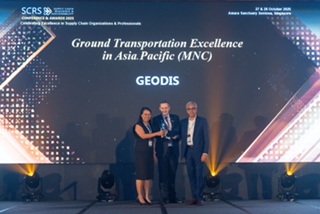
SINGAPORE: A leading global logistics provider, GEODIS was recognized at the 2025 Supply Chain Resilience & Sustainability Awards for its outstanding achievements, earning two distinctions for its road network operation in Asia – Ground Transportation Excellence in Asia Pacific (MNC) and Corporate Social Responsibility Excellence. The awards, organized by the Transported Asset Protection Association (TAPA) APAC, celebrates companies that demonstrate exceptional performance in strengthening supply chain resilience and sustainability worldwide.
The Ground Transportation Excellence Award rewards GEODIS’ secure cross-border transport solution which delivers reliability, security and sustainability across the region. With scheduled departures, day-definite deliveries and end-to-end visibility, this solution offers a competitive alternative more cost-effective than air freight and faster than ocean freight. The road network operation employs advanced IoT (Internet of Things) technology and equipment for transporting goods securely for the high tech, automotive, semiconductor, industrial, retail and fast-moving consumer goods sectors. The network is certified to TAPA TSR 2023 Level 1, the highest in road freight security, for Singapore and Malaysia. This is achieved through end-to-end visibility through GPS tracking, sensor-equipped prime movers, trailers, and containers. All movements are monitored 24/7/365 by a professional Security Operations Centre.
The Corporate Social Responsibility Excellence Award underscores GEODIS’ focus on safety, security, and environmental responsibility across its road network. GEODIS continues to develop more fuel-efficient road transport in Asia having introduced Euro-5 trucks, fueled by B10 (10% biodiesel blended with conventional diesel), resulting in up to 25% reduction in carbon emissions. GEODIS containers are fitted with double-deck racking which protects cargo from compression damage while optimizing each single trip load, reducing both transportation cost and tailpipe emission per pallet. In addition, GEODIS utilizes route‑optimization algorithms to prioritize the most fuel‑efficient paths, minimizing unnecessary detours and idle time at border crossings.
“We are honored to receive these awards, which are a testament to the dedication and expertise of our teams across Asia Pacific.” said Lakshmanan Venkateswaran, GEODISCluster Managing Director, Southeast Asia. “At GEODIS, we are committed to redefining road transportation by integrating innovation and excellence into every aspect of our operations. The recognition by TAPA reinforces our ongoing mission to deliver reliable and responsible logistics solutions for our customers.”
Since pioneering cross-border road transportation between Malaysia and Thailand in 1995, GEODIS’ road network now connects Singapore, Malaysia, Thailand, Vietnam, and key gateways in mainland China.
KOCHI : The Indian Navy is poised to enhance its hydrographic survey capabilities with the commissioning of Ikshak, the third vessel of the Survey Vessel (Large) [SVL] class and the first to be based at the Southern Naval Command. The ship will be formally commissioned into service in presence of Adm Dinesh K Tripathi, Chief of the Naval Staff, at a ceremony at Naval Base, Kochi on 06 Nov 2025.
Built by Garden Reach Shipbuilders and Engineers (GRSE) Ltd., Kolkata, Ikshak stands as a shining example of India’s growing self-reliance in shipbuilding. The vessel embodies over 80% indigenous content, reflecting the success of the Aatmanirbhar Bharat initiative and collaborative synergy between GRSE and Indian Micro, Small and Medium Enterprises (MSMEs).
The name ‘Ikshak’, meaning ‘Guide’ in Sanskrit, aptly defines the ship’s role as a sentinel of precision and purpose. The vessel is designed to undertake full-scale coastal and deep-water hydrographic surveys of ports, harbours, and navigational channels. The data generated will be vital for ensuring safe navigation at sea, strengthening India’s maritime safety framework.
Equipped with state-of-the-art hydrographic and oceanographic equipment, including a high-resolution multi-beam echo sounder, Autonomous Underwater Vehicle (AUV), Remotely Operated Vehicle (ROV), and four Survey Motor Boats (SMBs), Ikshak brings unmatched versatility and capability to the Navy’s hydrographic fleet. The ship is also fitted with a helicopter deck, extending its operational reach and enabling multi-domain missions.
The commissioning of Ikshak marks a significant milestone in the Indian Navy’s ongoing efforts to augment its survey and charting infrastructure. As a symbol of indigenous strength, technical excellence and maritime stewardship, Ikshak is ready to serve the nation — charting the unknown and safeguarding India’s vast maritime frontiers.
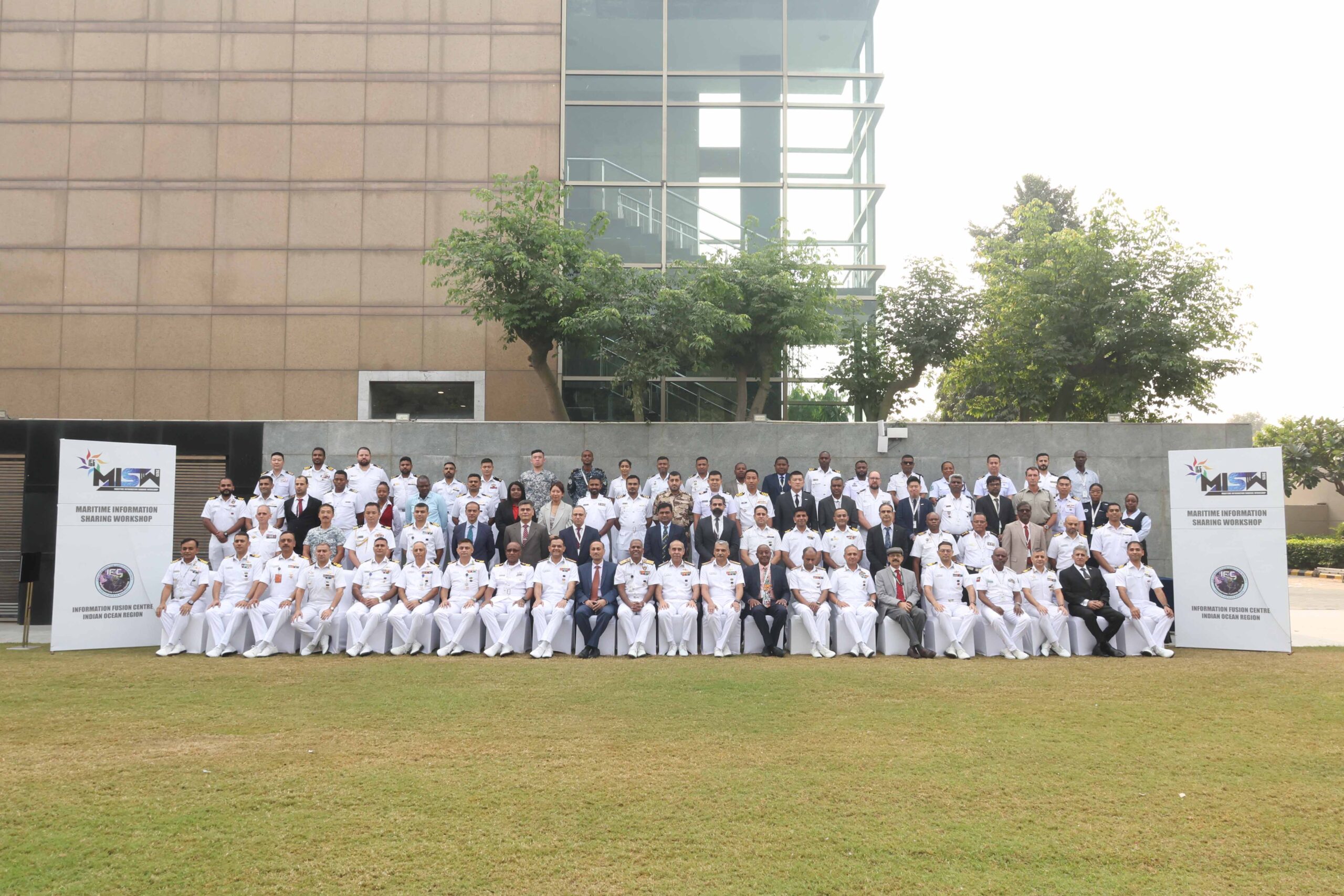
Hosted by IFC-IOR in Gurugram, the three-day MISW-25 brought together 57 participants from 30 countries to enhance real-time coordination, interoperability, and information sharing through focused deliberations and a practical table-top exercise using the indigenous MANTRA software
NEW DELHI : The Maritime Security Seminar, conducted as part of the Maritime Information Sharing Workshop (MISW) 25, concluded on 04 Nov 25. The ongoing three-day workshop (03-05 Nov 25), themed “Enhancing Real-Time Coordination and Information Sharing Across the Indian Ocean Region,” is being hosted by IFC–IOR and has brought together over 57 participants from 30 countries, including representations from IORA, DCoC/JA, and BIMSTEC.
The seminar commenced with an opening address by Vice Admiral Tarun Sobti, Deputy Chief of Naval Staff, who underscored the importance of collaboration, interoperability, and trust-based partnerships to address the evolving maritime challenges in the Indian Ocean Region. This was followed by a Keynote Address by Mr. Sushil Mansing Khopde, IPS, Additional Director General, Directorate General of Shipping, who highlighted India’s maritime initiatives and efforts towards strengthening the region’s maritime security architecture through cooperative engagement and regulatory alignment.
Over the two days of the seminar, participants deliberated on a wide range of topics shaping the maritime security landscape, including aspects of regional security dynamics, the role of information networks, operational coordination, maritime law, industry perspectives, and transnational maritime crime. The sessions underscored the importance of technological integration, data interoperability, and collective commitment in building a resilient and responsive maritime security framework. The seminar concluded with an address by Rear Admiral Nirbhay Bapna, (CS NCO), who highlighted the need for synergy among regional information-sharing frameworks and reaffirmed that collaboration and sustained dialogue remain central to ensuring a safe and secure maritime domain.
On 05 Nov 25, the MISW-25 will feature a Table Top Exercise (TTX) at IFC–IOR, where the principles of information sharing, interoperability, and coordinated response will be put into practice through simulated maritime security scenarios. The TTX will be conducted on the indigenously developed Maritime Analytical Tool for Regional Awareness (MANTRA) software. Delegates will be tasked with responding to simulated maritime situations including piracy incidents, drug smuggling, irregular human migration and distress-at-sea scenarios. The exercise will focus on multi-agency coordination, rapid information sharing and synchronised response planning. The exercise aims at refining real-time information sharing in achieving coherent maritime security outcomes, exposing participants to the complex dynamics of maritime incident reporting from detection and verification to dissemination and coordinated response.
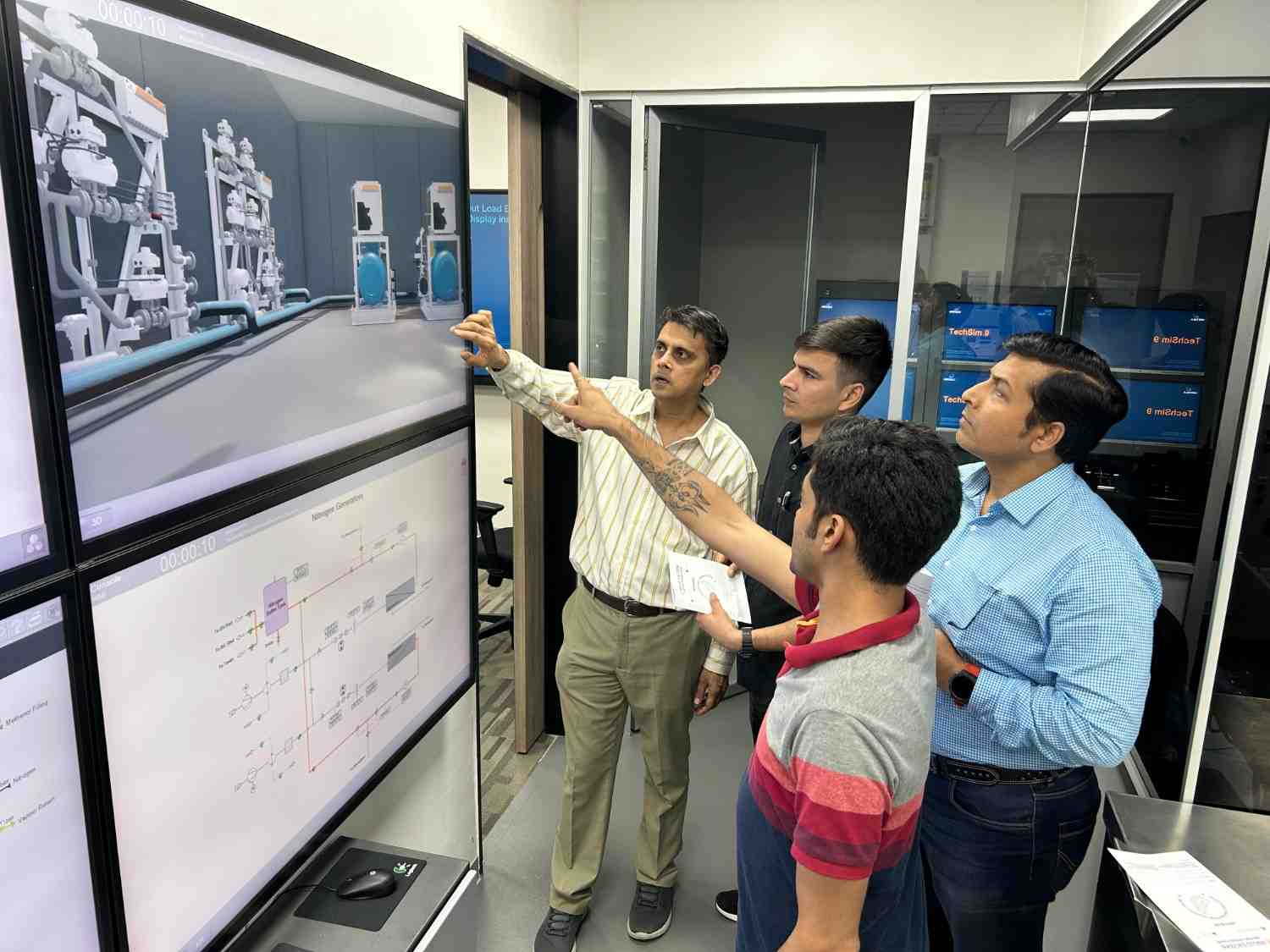
HONG KONG: Anglo-Eastern Univan Group (“Anglo-Eastern”), a global leader in independent ship management, introduced its methanol bunkering simulator in October, developed in collaboration with Wärtsilä. This state-of-the-art system delivers both theoretical and practical training for the safe handling of methanol as a marine fuel, in line with the International Maritime Organization’s guidelines for low-flashpoint fuels.
These developments follow the launch of the world’s first functional LNG ((Liquefied Natural Gas))/ammonia bunkering station skid at the Anglo-Eastern Maritime Academy (AEMA) in Karjat, Mumbai in February.
Alongside the training skid, Anglo-Eastern has introduced basic and advanced Methanol and bunkering courses ensuring its seafarers are fully prepared for emerging fuel-handling requirements and servicing on vessels powered by methyl/ethyl alcohol (methanol). These specialised courses are designed to equip maritime professionals with the knowledge and skills required to safely and efficiently operate ships using alternative fuels.
Delivered over three days, the programme comprises three distinct one-day modules tailored to varying levels of operational responsibility and technical familiarity: basic training for service on ships using methyl/ethyl alcohol as fuel; advanced training for service on ships using methyl/ethyl alcohol as fuel; and introductory familiarisation on ME-LGIM engine and fuel gas supply system.
By building competence in methanol fuel handling and engine operations, Anglo-Eastern is supporting the global transition to low-emission shipping, assisting its partners in adopting alternative fuels as part of the global effort to build a more sustainable maritime future.
Capt. Aalok Sharma, Group Director of Training at Anglo-Eastern, commented: “Decarbonisation is not just about adopting new technologies; it’s also about preparing the people who will operate them. By investing in these advanced training facilities, we are ensuring our seafarers and industry partners have the skills to safely and efficiently handle alternative fuels and propulsion systems.”
Francis Akkara, Principal and Director of AEMTC remarked on the new training offerings, “As the maritime industry accelerates its shift toward alternative fuels, it is essential that our training evolves in tandem. These new offerings reflect Anglo-Eastern’s commitment to equipping seafarers with the operational readiness and safety mindset needed to navigate the complexities of methanol and ammonia fueled propulsion technologies.”
Anglo-Eastern’s dual fuel capabilities span LNG, LPG, ammonia, methanol to hydrogen and WAPS. Presently, the company is actively engaged with 130+ dual-fuel vessels and 130 newbuilding projects as of October.
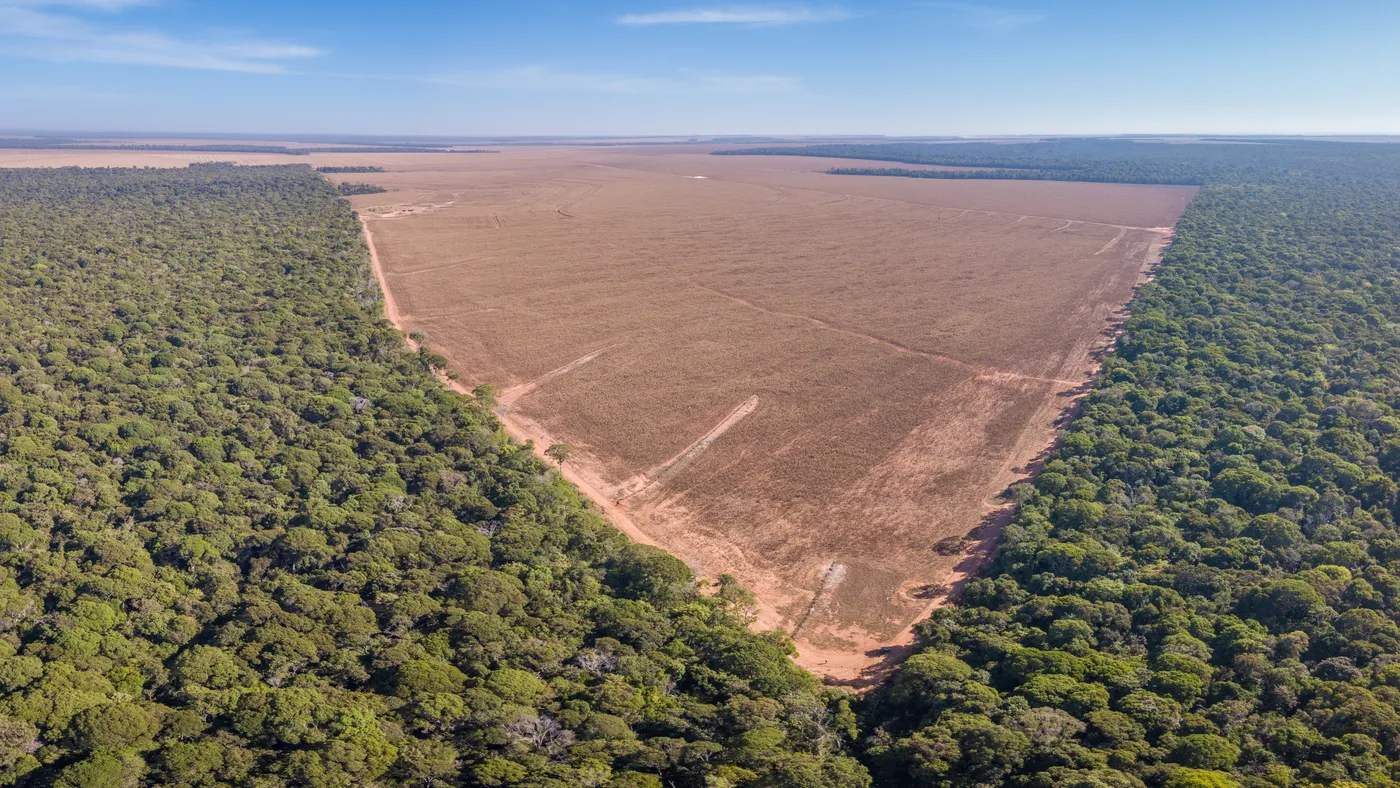
BRUSSELS: Ahead of the COP30 climate change negotiations, which open next week in Belém, Brazil, nearly 100 members of the global scientific community, including representatives from the Union of Concerned Scientists, have signed on to a letter calling on global leaders to limit a dangerous expansion of biofuels.
The letter comes as Brazil seeks high-level support for a leaders’ pledge to quadruple so-called “sustainable fuel” use—including a doubling of biofuels consumption—as a major component of the international community’s response to the climate crisis.
But mounting scientific evidence shows that, far from being a climate-friendly solution as many governments claim, on average the energy source is today globally responsible for 16% more emissions than the fossil fuels they replace. By 2030, biofuels are projected to emit, every year, 70 MtCO₂e more than the fossil fuels they replace, the equivalent of putting 30 million new diesel cars on the road.
The letter also warns that such an expansion would have devastating environmental impacts in some of the world’s most biodiverse regions, consume scarce water resources, and contribute to agricultural runoff. Moreover, the scientists also caution that increased biofuels use will exacerbate global hunger by raising food prices, intensifying food price volatility, and diverting calories from human consumption.
Curbing unrestrained biofuels use is not without precedent. In 2020, the EU agreed to cap conventional (first-generation) crop-based biofuels at a 7 percent share of its transport energy.
In biofuel producer nations, like Brazil and Indonesia, local NGOs are calling for a holistic approach to manage negative impacts, including caps on cultivation, better traceability, and investments in community-based governance and decentralized energy.
Brazil’s biofuels push reflects a dangerous resurgence of biofuels as a global commodity that threatens to repeat the mistake of the “biofuels gold rush” in the mid-2000s that prompted large-scale deforestation, biodiversity loss, and human rights abuses.
“The evidence is clear, burning crops for fuel is a bad idea. We can’t ignore the effects they have on the climate, ecology and food security. Governments must turn to truly sustainable alternatives rather than pushing solutions that, in many cases, do more harm than good,” said Cian Delaney, biofuels campaigner at T&E.
BRUSSELS: The Sustainable Transport Investment Plan (STIP)published today (5th November, 2025) contains promising steps to boost e-fuels production, T&E has said. But the EU needs to follow through rapidly if it is to retain its industrial leadership on the technology. E-fuels projects in the EU have yet to materialise due to the high costs and a lack of long-term offtake agreements.
Auctions should be for e-fuels only
A commitment to set up an EU-wide double-sided auction for aviation and maritime fuels – based on a pilot e-SAF auction – will provide real money to kick start production, T&E said. But this should be limited to e-fuels. In the short term, STIP proposes relying on existing tools – the Hydrogen Bank and the Innovation Fund – which are now beginning to back e-fuels projects, including e-SAF. While this sends a positive signal, these tools alone have so far been unable to de-risk industrial scale e-fuels production. The plan’s most impactful measures may arrive too late as action on e-fuels is needed by 2026.
Antony Froggatt, senior director for aviation, shipping and energy at T&E, explains: “The plan clearly acknowledges the important role of e-fuels in decarbonising aviation and shipping. For the first time, the EU will develop an effective financial instrument to kickstart production. The EU must now follow through on these commitments if it is to help preserve Europe’s technological leadership in e-fuels. Leaving the door open to biofuels will only detract from this.”
The European Commission will “launch preparations” for the creation of a market intermediary to run the double-sided auctions. T&E welcomed this tool as it is needed to spur the nascent e-fuels industry and match the requirements of e-fuels producers for long-term certainty with the short-term contracts used in aviation and shipping.
A soft stance on biofuels
Worryingly, the plan leaves the door open for biofuels being included in double-sided auctions. Biofuels is a more mature industry and could hog the limited resources of the market intermediary. It is crucial that only e-fuels be eligible for the auctions as there are no market barriers for biofuels production, T&E said. The plan also lacks support for battery-powered vessels and developing the potential of batteries in planes.
STIP promotes the continued use of biomethane in shipping. The limited stocks of biomethane should be prioritised for sectors that currently depend on fossil gas and need to urgently reduce their dependence on imports, such as household heating and heavy industry. This is especially concerning because currently ships only buy green certificates for biomethane while the fuel is actually burned in household boilers and other sectors.
The potential of carbon market revenue
STIP only “encourages” member states to use existing carbon market (ETS) revenues to decarbonise shipping and aviation. T&E believes that the review of the ETS in 2026 should consider incorporating a requirement to use ETS revenues for e-fuels investments. Furthermore, STIP does not recognise the untapped potential of higher ETS revenues should the carbon markets be extended in scope. More than €7 bn could have been raised last year by extending the ETS to all long-haul flights, T&E estimated. Around €2.4 bn a year in extra revenues could be raised between 2028 and 2035 by including small shipping vessels.
STIP failed to recommend much needed EU-level supply mandates for marine e-fuels in European ports, which most EU countries have failed to implement despite clear guidance from the EU Renewable Energy Directive. Finally, the plan missed an opportunity to mobilise the European Investment Bank to invest in e-fuel production.
HONG KONG: Organised by amfori, a leading global business association for sustainable trade, “amfori Asia Sustainability Summit 2025” was successfully concluded today at Hotel ICON in Hong Kong, China. This flagship regional event is well supported by the China National Textile & Apparel Council, EU-ASEAN Business Council, European Chamber of Commerce in Hong Kong, German Chamber of Commerce in Hong Kong, International Organization for Migration, Invest Hong Kong, Hong Kong Productivity Council and Hong Kong Trade Development Council.
The Summit attracted more than a hundred participants from multiple countries in Asia and Europe, including sustainability practitioners and business leaders, policymakers and key stakeholders. Under the theme, “Supply Chain Resilience in Asia in the Face of Challenges in a Volatile World”, the Summit underscored the vital importance of developing resilient and sustainable supply chains in the region. Key topics included the evolution of ESG regulations, business risk management, climate-change issues, and the imperative for enhanced collaboration among supply chain stakeholders to strengthen resilience and advance sustainability.
In her welcome remarks, Ms Linda Kromjong, President of amfori, said, “Two words matter most: agility and resilience. In today’s unpredictable world, agility is what keeps us responsive. Resilience is what allows us to absorb shocks and bounce back stronger, protecting not only our operations, but our people and our planet.” she added further, “For amfori, we are here to help you manage and build resilience across your supply chains. We will continue to think global, act local with our solutions and support our members and business partners as expectations evolve.”
Ambassador Harvey Rouse, Head of the European Union Office to Hong Kong and Macao, said in his opening keynote, “In a global context of increased barriers to trade – the EU stands as an anchor of stability and predictability. The EU also remains committed to becoming the first climate neutral continent by 2050, providing global companies with clarity and transparency and supporting the green transition in Asia. Businesses in Hong Kong are well known for being among the most efficient, innovative and agile in the world. There is no doubt in my mind that they will quickly and seamlessly incorporate EU’s sustainability rules into their business practices and supply chains. This early adoption will provide Hong Kong businesses with a competitive advantage over slower-moving competitors in Asia and globally. My office is committed to continuing support to Asian and Hong Kong companies in this process”
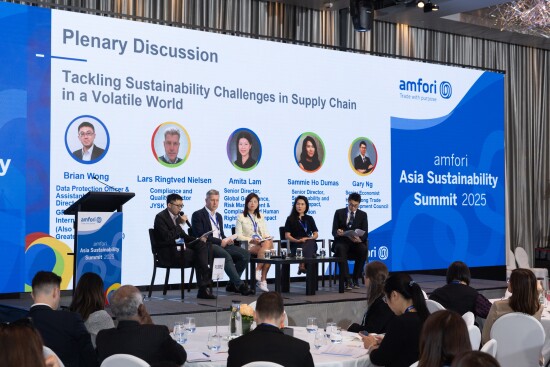
The plenary discussion session themed “Tackling Sustainability Challenges in Supply Chain in a Volatile World” was moderated by Mr Brian Wong, Data Protection Officer & Assistant Sustainability Director, GP Batteries International Limited (Vice Chair of the amfori Greater China Network). The discussion brought together key speakers, including Mr Lars Ringtved Nielsen, Compliance and Quality Director, JYSK, Ms Amita Lam, Senior Director, Global Governance, Risk Management & Compliance and Human Rights & Social Impact, Mattel, Ms Sammie Ho Dumas, Senior Director, Sustainability and Social Impact, Thai Union, and Mr Gary Ng, Senior Economist, Hong Kong Trade Development Council. They shared insights into navigating the complex pressures of rising tariffs, evolving ESG due diligence rules, export restrictions, supply chain fragmentation and geopolitical tensions, while maintaining sustainability at the core of supply chain management.
During her keynote speech, Ms Helen Kaestner, Head of Operations at amfori, underscored the critical role of amfori’s tools and services in helping companies enhance their ESG performance while strengthening supply chain sustainability in today’s volatile environment.
The Summit also featured parallel breakout sessions addressing critical sustainability topics in supply chain management. The workshop-style breakout session on “Decarbonisation in Global Supply Chains: How to Address Scope 1, 2 and 3 Emissions Effectively” featured speakers including Dr Keith Choy, General Manager of Green Living and Innovation Division, Hong Kong Productivity Council and Mr Lars Ringtved Nielsen, Compliance and Quality Director, JYSK. Participants explored practical strategies for implementing existing tools like amfori BEPI for measuring and reducing emissions across different disciplines.
Concurrently, the session on “Sustaining Audit Quality and Integrity with Strengthened Assurance Systems in Responsible Supply Chains”, brought together speakers including Lisa Krnel, Compliance Manager, APSCA, Billy Lai, Deputy Director of Business Assurance, SGS, and Jonathan Thorngreen, Sustainability Expert Social, amfori. The session examined how robust assurance frameworks, skilled auditors, and cross-sector collaboration uphold audit quality and integrity amid complex supply chains.
During the session on “Navigating the Evolving Landscape of Human Rights Due Diligence Regulations in Asia: Best Practices for Businesses,” Ms Kathy Roussel, Head of Advocacy & Engagement for amfori, delivered the Opening Remarks, highlighting that businesses are embedding human rights due diligence into daily operations while tailoring action to local realities. Speakers for this session included Mr David Williams, Project Manager (Resilient, Inclusive and Sustainable Supply Chains (RISSC) project), International Labour Organization (ILO), Ms Wang Jing, Researcher, China National Textile and Apparel Council, and Ms Natasha Majumdar, Director South Asia of amfori. Participants explored best practices for integrating Human Rights Due Diligence (HRDD) into supply chain management and gained more in-depth understanding in improving social performance.
In parallel, the session titled “Quality Management in Practice: Enhancing Consistency Compliance and Continuous Improvement in Governance” discussed overcoming quality management challenges in building resilient and sustainable supply chains. Speakers including Mr KT Ting, Chief Operating Officer of Hong Kong Quality Assurance Agency (HKQAA), Mr Filippo Monti, Managing Director of TGI Technology, Mr Jimmy Po, Divisional Vice President, Shanghai / Quality Management & Sustainability, Asia for OBI Group Sourcing Hong Kong, and Mr Gabriel Amouyal, Audit Service Director for QIMA, shared insights on the implementation of amfori QMI to strengthen governance practices with practical examples.
About amfori amfori advocates for a world in which trade serves a purpose: delivering social, environmental and economic benefits for everyone.
As a global business association, amfori supports its members at every step of their due diligence journey, offering a comprehensive range of ESG products and services. From supply chain mapping and assessment to reporting, from capacity building to facilitating stakeholder engagement, amfori provides a holistic approach to responsible business practices.
Founded in 1977, and recognised for its flagship product amfori BSCI, amfori leverages decades of expertise and close collaboration with more than 2400 member companies as well as auditing companies, producers, factories, and other stakeholders such as policymakers. Representing a diverse array of industries in over 50 countries, that cover trade streams in over 100 countries, amfori continues to have a positive impact on fostering sustainable trade.
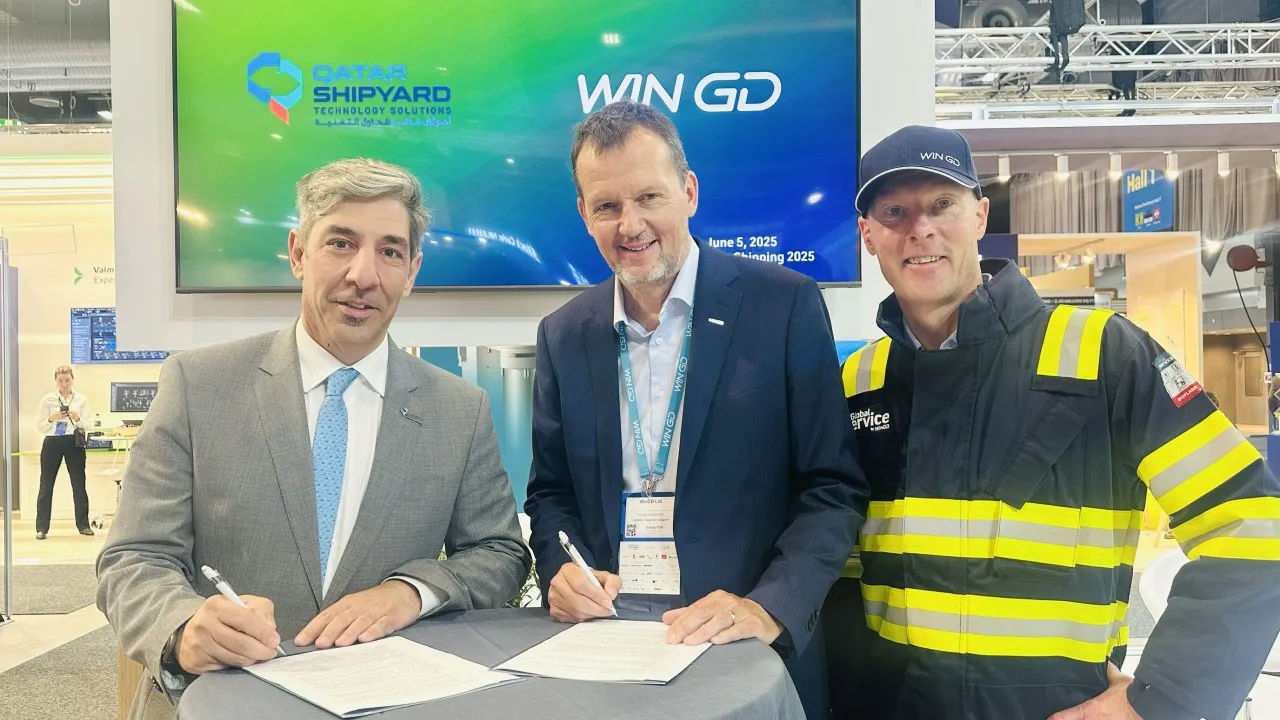
RAS LAFFAN : Qatar Shipyard Technology Solutions, a shipbuilding and repair yard in Ras Laffan, Qatar, has signed an MoU with WinGD to expand its technical services and aftercare for the Swiss manufacturer’s engines.
The yard — a joint venture between Nakilat, QatarEnergy and Keppel Offshore & Marine — will become part of WinGD’s new Global Service programme, offering services to ship operators in the Middle East. Global Services is a network of WinGD partners with expert field service personnel, certified spare parts, and 24/7 technical support from the manufacturer.
The partners have revealed more details of the agreement which was signed in June this year, adding that the MoU was well-timed as more than 100 vessels with WinGD engines are due to be serving Qatari projects from 2026.
Qatar Shipyard Technology Solutions will offer in-service support and technical advisory across a vessel’s entire lifecycle, extending its previous remit of direct support during the engine warranty period. WinGD said the agreement boosts regional engine maintenance, repair, overhaul, and retrofitting capacity.
WinGD director of global service, Rudolf Holtbecker, said: “Shipowners today are looking for trusted partners who can provide expert support at every stage of an engine’s life. This MoU establishes one footprint in the Middle East area as part of our commitment to delivering tailored, OEM-quality services worldwide – ensuring vessels remain efficient, compliant, and profitable over the long term.
“This isn’t just about engine service, it’s about trusted partnership,” added Holtbecker. “Through this agreement, our customers in the Middle East can access the WinGD engineering and know-how they rely on precisely where they need it for their growing fleets.”
Qatar Shipyard Technology Solutions CEO, Jos J.A.A. Goris, added: “WinGD is the ideal partner to make sure our customers have access to the very best engine advice, remote support and retrofit solutions. This collaboration enhances our offer to shipowners and operators seeking to maintain and enhance operational efficiency across their fleets and extend vessel compliance.”