Home Blog Page 588

India to host historic Maritime Convergence with International Fleet Review 2026, Milan 2026, and Ions Conclave of Chiefs

The mega event will mark a key step in operationalising the Hon’ble PM’s vision of MAHASAGAR, while highlighting India’s indigenous naval capabilities and its commitment to being a Preferred Security Partner across regions

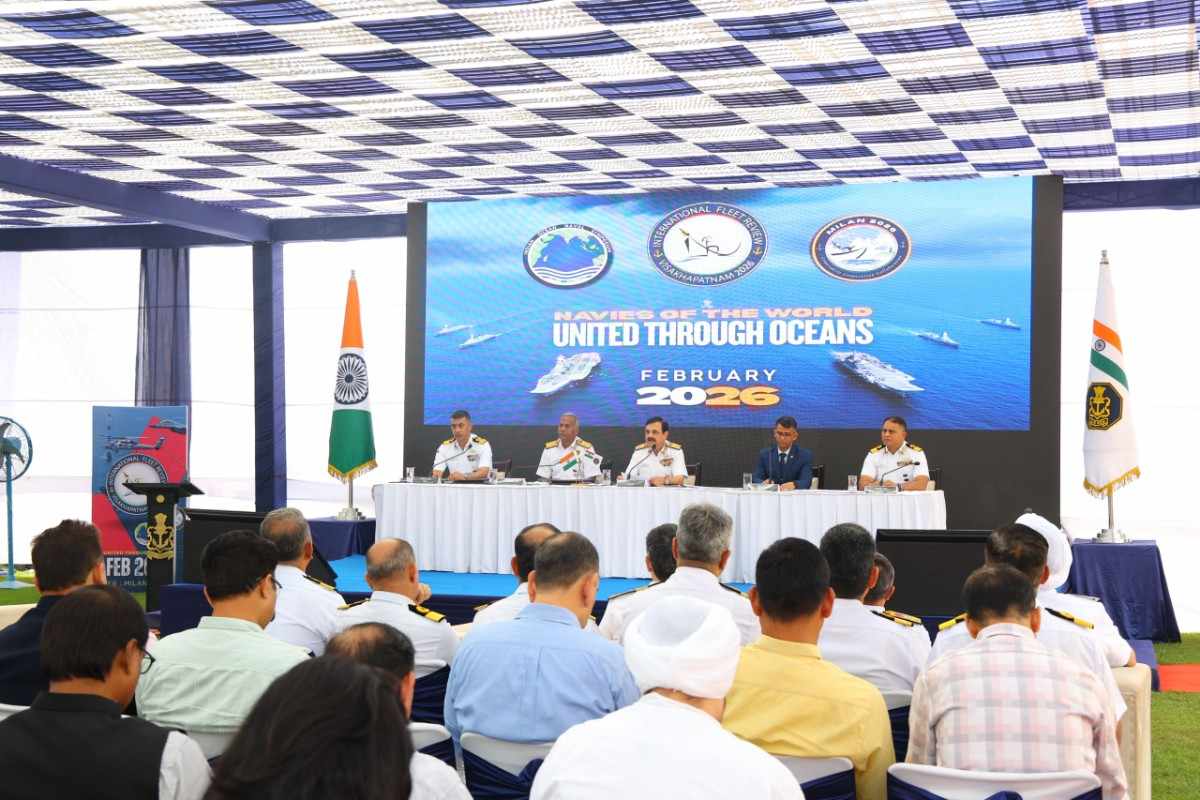
NEW DELHI : India will host three major international maritime events in Feb 2026 at Visakhapatnam, namely, the International Fleet Review (IFR) 2026, Exercise MILAN 2026, and Indian Ocean Naval Symposium (IONS) Conclave of Chiefs, scheduled to be conducted from 15 to 25 Feb 2026. This marks India’s maiden conduct of these major maritime events simultaneously.

The event realises the Hon’ble Prime Minister Shri Narendra Modi’s MAHASAGAR vision (Mutual and Holistic Advancement for Security and Growth Across Regions), announced in 2025.

Pic1Q7KX India to host historic Maritime Convergence with International Fleet Review 2026, Milan 2026, and Ions Conclave of Chiefs

MAHASAGAR extends India’s SAGAR (Security and Growth for All in the Region) philosophy from the Indian Ocean to across regions, emphasizing sustainability, resilience, and collective responsibility of the maritime commons. The Feb 2026 convergence is a major operational manifestation of this vision, demonstrating India’s commitment to being a ‘Preferred Security Partner’ for all friends and partners.

Invitations have been extended to navies from across the globe to participate in this historic gathering at Visakhapatnam, India’s eastern maritime gateway and home to the Eastern Naval Command. The event will reflect India’s commitment to free, open and inclusive seas, anchored in strategic frameworks including MAHASAGAR, the Act East Policy, IONS, and the Indo-Pacific Oceans Initiative (IPOI).

The event will feature a Presidential Fleet Review at Sea by the Hon’ble President of India, showcasing indigenous platforms including INS Vikrant (India’s first domestically built aircraft carrier), Visakhapatnam-class destroyers, Nilgiri-class stealth frigates, and Arnala-class anti-submarine warfare corvettes—reflecting India’s transformation into a ‘Builder’s Navy’. The Indian Navy ships would be joined by a diverse congregation of ships from friendly foreign countries, the Indian Coast Guard and the Merchant Marines.

Exercise MILAN’s Sea and Harbour Phases will focus on interoperability, maritime domain awareness, anti-submarine warfare, air defence, and search-and-rescue operations. The International City Parade will feature contingents from participating navies, Indian Army, and Indian Air Force marching through Visakhapatnam’s iconic beachfront, the RK Beach, showcasing maritime diplomacy directly to citizens.

An International Maritime Seminar will gather maritime strategists, defence officials, academics, and industry leaders to discuss contemporary issues including maritime collaboration, technology and humanitarian support. The IONS Conclave of Chiefs, during which the Indian Navy would assume Chairmanship for the second time (2025-2027), will bring together Naval Chiefs from 25 members, 9 observers, and specially invited nations to deliberate on maritime security, HADR, and information sharing.

India’s IFR tradition began with the 2001 Mumbai edition hosting 20 foreign navies and reached greater heights with the 2016 Visakhapatnam IFR welcoming navies from around the world. Exercise MILAN, launched in 1995 with four navies at Port Blair, has evolved into a premier Multilateral Exercise with partner navies across the globe participating in 2024. India’s forthcoming IONS Chairmanship and the MAHASAGAR vision reinforce its role as a convenor of regional maritime security cooperation.

Visakhapatnam’s proven infrastructure, strategic location, and maritime museums make it an ideal host. Coordinated preparations by the Indian Navy along with the Ministry of Defence, the Ministry of Home Affairs, the Ministry of External Affairs, the Ministry of Tourism, the Ministry of Culture at national level, and the Government of Andhra Pradesh, local administration at the state level would ensure seamless execution of this landmark convergence. Significant economic benefits for the region are anticipated through hospitality, tourism, and service sector activities during the event.

This convergence transforms naval tradition into strategic cooperation, turning this grand spectacle into meaningful diplomacy and operational synergy. It would strengthen India’s position as a responsible maritime power committed to mutual advancement, holistic security, and growth across regions.

Cochin Shipyard sails toward sustainability with rooftop solar solutions

ERNAKULAM : The shipbuilding industry has long been synonymous with high energy consumption, from operating dry docks and welding bays to powering massive cranes and fabrication units. For a sector so dependent on heavy machinery, energy efficiency isn’t just about cost savings, it’s a defining factor in building a sustainable future.

Recognizing this shift, Cochin Shipyard Limited (CSL), India’s leading shipbuilding and maintenance company based in Ernakulam, Kerala, has embarked on a decisive move toward renewable energy. In a landmark step, the company has partnered with Orb Energy, one of India’s most trusted providers of made-in-India solar panels and turnkey solar solutions, to commission a 200 kWp rooftop solar system at its Ernakulam facility.

The system, part of Orb Energy’s Solectric series, integrates 800 high-efficiency modules of 250 Wp each, supported by nine 20 kVA inverters and two 15 kVA inverters. Designed to withstand the operational demands of a large industrial site, the installation now generates clean, renewable power that directly supports Cochin Shipyard’s core operations.

Beyond the impressive technical footprint, the project underscores CSL’s commitment to sustainable industrial transformation. The system is expected to deliver annual savings of nearly ₹20 lakh, with a payback period of just three years and six months, proving that going green is also good business.
“Cochin Shipyard’s solar initiative shows that even energy-heavy sectors can take decisive steps toward sustainability without compromising performance. This is the future of any environmentally responsible industry,” says Damian Miller, CEO and Co-founder of Orb Energy.

For Orb Energy, the project is a testament to how renewable energy can seamlessly integrate with India’s heavy industrial ecosystem, from ports and shipyards to manufacturing plants. It aligns perfectly with the nation’s broader goal of transitioning key industries toward cleaner, self-reliant power generation.
By investing in solar, Cochin Shipyard is reducing its carbon footprint, cutting dependency on grid power, and setting a new benchmark for sustainability in the maritime sector. The initiative demonstrates how traditional industries can embrace modern clean-tech solutions without disrupting operations or efficiency.

As the shipyard continues to power its progress through the sun, its partnership with Orb Energy stands as a beacon for India’s industrial transition, one where innovation and sustainability sail together toward a greener horizon

Gulftainer launches India-Gulf Express (GIX), strengthening maritime bridge connections

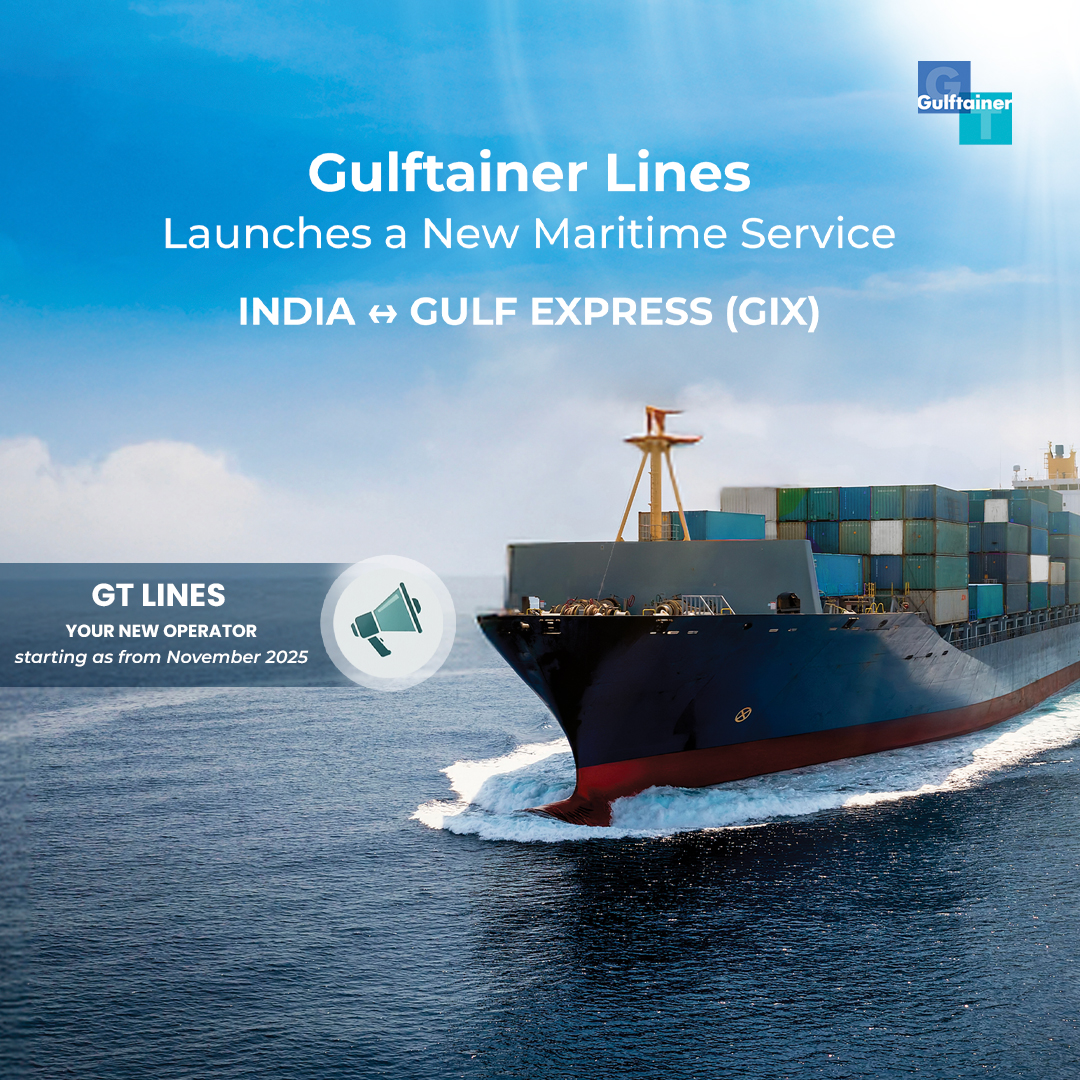
SHARJAH : Gulftainer, a global trusted leader in integrated maritime and logistics solutions, has launched its India-Gulf Express (GIX) —newest maritime service designed to enhance regional trade and logistics between West India and the Gulf countries.

GIX represents a major step forward in Gulftainer’s commitment to delivering smarter, faster, and more connected logistics solutions. This service creates a seamless maritime bridge between Nhava Sheva and Mundra in India and key Gulf gateways including Sharjah, Sohar, Hamad, and Jebel Ali, supported by Gulftainer’s robust infrastructure and integrated logistics capabilities.

GIX offers direct weekly sailings with reliable and consistent service from India to the UAE, Oman, and Qatar, leveraging Gulftainer’s terminals, bonded logistics hubs, and trucking fleet to ensure smooth cargo movement. In addition, it will fast lead times and reduce port stay durations for quicker turnaround, enhancing connectivity across Gulf ports for regional distribution.

This new service is designed to meet the growing demand for agile and dependable shipping solutions in the region, offering full visibility, operational reliability, and competitive transit times.

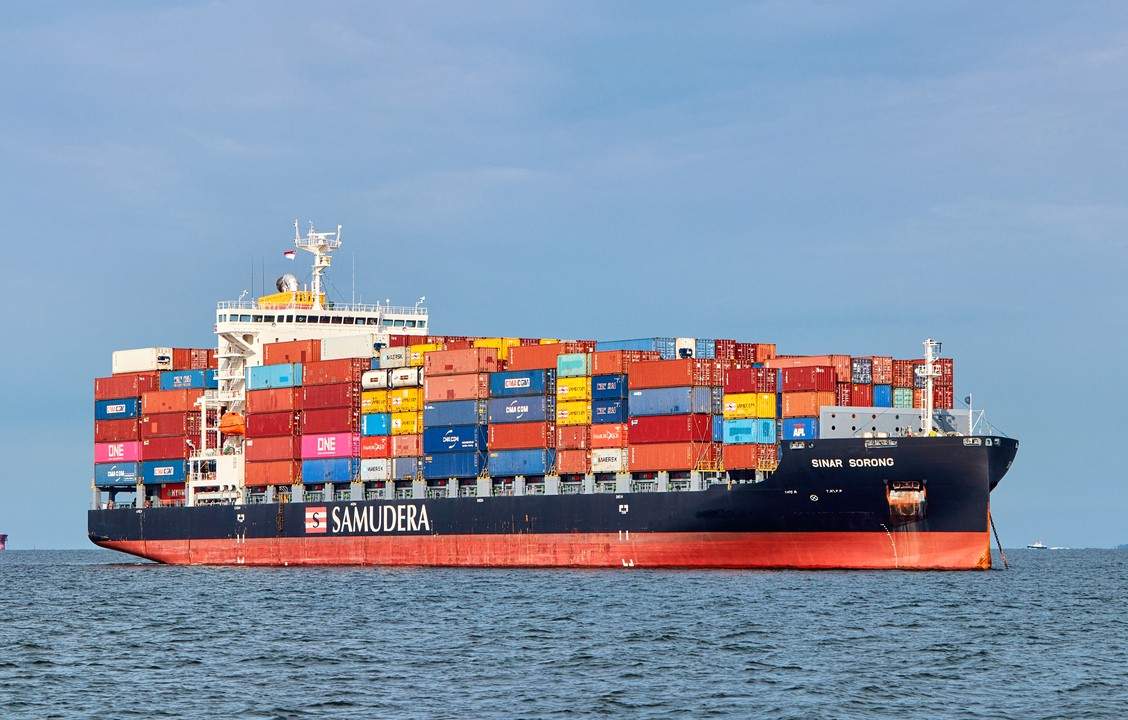
Samudera Shipping Line reports higher y-o-y container shipping volumes of 503,000 TEU for 3QFY2025

SINGAPORE: Samudera Shipping Line has released its 3QFY2025 ended Sept 30 business update, which saw container shipping volumes rise to 503,000 twenty-foot equivalent unit (TEU), up from the 486,000 TEU previously.

However, average freight rate for the 3QFY2025 was lower q-o-q and y-o-y at US$252, compared to US$263 and US$287 respectively.

The group adds that the market environment remains volatile for the container shipping segment.

For the group’s bulk and tanker business segment, all vessels are employed under charter contracts. The segment’s operating margins however have been adversely impacted due to ongoing operational challenges and high dry docking costs related to certain vessels.

Meanwhile, for its logistics segment, the group reported 627,000 pallet equivalent handled in the quarter, a higher q-o-q and y-o-y volume due to increased activities in the fourth-party and third-party logistics businesses.

Shares in Samudera Shipping Line closed 1 cent higher or 1.026% up at 98.5 cents on Oct 29.

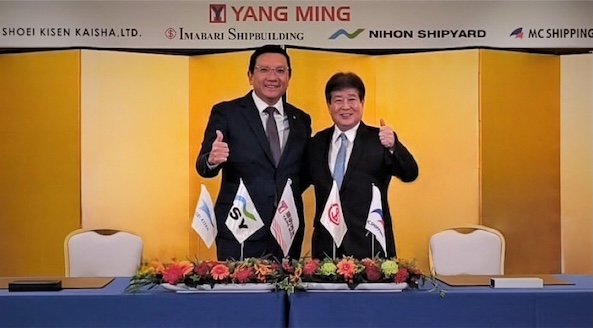
Yang Ming completes orders for Six Methanol Dual-Fuel-Ready Containerships

KEELUNG CITY: Yang Ming Marine Transport Corporation (“Yang Ming”) signed contracts for six 8,000 TEU-class methanol dual-fuel-ready containerships with Nihon Shipyard Co., Ltd. (“Nihon Shipyard”), Imabari Shipbuilding Co., Ltd. (“Imabari Shipbuilding”), and Shoei Kisen Kaisha, Ltd. (“Shoei Kisen”).

The contracts include the purchase of three containerships and newbuilding orders for another three, signed by Dr. Chuck Tsai, Chairman of Yang Ming, and Mr. Yukito Higaki, Director of Nihon Shipyard.

These vessels are scheduled for delivery starting in 2028, marking a key step in Yang Ming’s fleet optimization plan to secure mid- to long-term capacity supply and strengthen its global service network.

The 8,000 TEU-class containerships will be the first batch in Yang Ming’s fleet to adopt methanol dual-fuel-ready specifications. Upon delivery, the new vessels will gradually replace Yang Ming’s 5,500 TEU-class containerships that have been in service for over 20 years. With advanced energy-efficient designs, the newbuildings will enhance Yang Ming’s competitiveness and operational flexibility across multiple main services while contributing to continuous carbon intensity reduction in compliance with international environmental regulations. Through its long-standing collaboration with Nihon Shipyard, Imabari Shipbuilding, and Shoei Kisen, Yang Ming continues to advance ship decarbonization technologies

The main engine design of these vessels is prepared for future conversion to green methanol fuel, and the propulsion system will feature high-efficiency propeller, energy-saving rudder, and rudder fin to further optimize performance. These features provide the flexibility to adapt future energy strategies in line with evolving green methanol technologies and environmental regulations, underscoring Yang Ming’s dedication to supporting customers’ decarbonization goals and promoting sustainable transportation.

Focusing on the steady growth of its core container shipping business, Yang Ming will continue to monitor market dynamics, medium- to long-term service planning, and international regulatory developments. By optimizing fleet resources to enhance operational competitiveness, Yang Ming aims to build a comprehensive global transport network, expand its operational scale in line with global trade growth, and provide customers with safe, reliable, and low-carbon transportation services.

Source: Yang Ming Marine Transport Corporation

Baltic Exchange and TAC Innovation launch extended FCA-compliant daily air cargo spot price benchmarks to strengthen market risk management

LONDON : Baltic Exchange, in partnership with TAC Innovation, has officially launched the extended Baltic Air Freight Spot Indices (BAI Spot) to include a comprehensive set of routes originating from Hong Kong, India and Korea.

These are the first-ever daily spot air freight indices developed under the UK Financial Conduct Authority’s (FCA) benchmark guidelines, using the Baltic’s established methodology with panellist assessments to ensure greater data integrity and market confidence.

Built on the Baltic’s 40 plus years of ocean freight benchmarking expertise and developed with input from leading airlines and freight forwarders, BAI Spot provides a daily, independent assessment of spot air cargo rates. The indices are designed for settling index-linked physical contracts (ILAs), price benchmarking, and risk management solutions (such as futures and derivatives), offering stakeholders a credible and consistent measure of market performance.

As air cargo continues to play a prominent role in maintaining supply chain resilience, particularly for pharmaceuticals, electronics, apparel and e-commerce sectors, BAI Spot Indices deliver much-needed clarity in a historically opaque market, and come at a time of fluctuating demand, capacity constraints, and shifting global trade routes.

With the new routes now live, there are plans in place to extend coverage to more airports in Asia as well as Europe and the Americas, reflecting the shifting dynamics of global supply chains.

BAI Spot is increasingly recognised by airlines, freight forwarders and multinational shippers as the foundation for next-generation air freight risk management instruments. They are already being used to benchmark contract negotiations, assess rate movements and support hedging discussions, demonstrating their practical value in real-world decision-making.

“The collaboration with TAC Innovation on BAI Spot marks a significant step forward in building a transparent and data-driven framework for the global air cargo market,” said Mark Jackson, CEO of Baltic Exchange. “For the first time, the industry has an FCA-regulated benchmark that reflects true market conditions. This development is about bringing the same level of transparency seen in other major transport and commodity markets to air freight and enabling better decision-making across the global supply chain. The launch reflects strong industry engagement and a growing recognition of the value our benchmarks bring to operational and financial decision-making.”

John Peyton Burnett, Founder and Managing Director of TAC Innovation, said, “The extension of BAI Spot reflects the value of bringing much-needed transparency to the air cargo market. This is just the beginning, not only for BAI Spot but also for TAC Innovation. While we’re known for the neutral, transparent and precise data that TAC Index delivers to the industry, we’re expanding our suite of risk management information services and subscription models to broaden and democratise tools for air cargo risk management. We believe there is significant scope to make air cargo more efficient for all market players, and are actively working with the industry to innovate new solutions to solve critical pain points.”

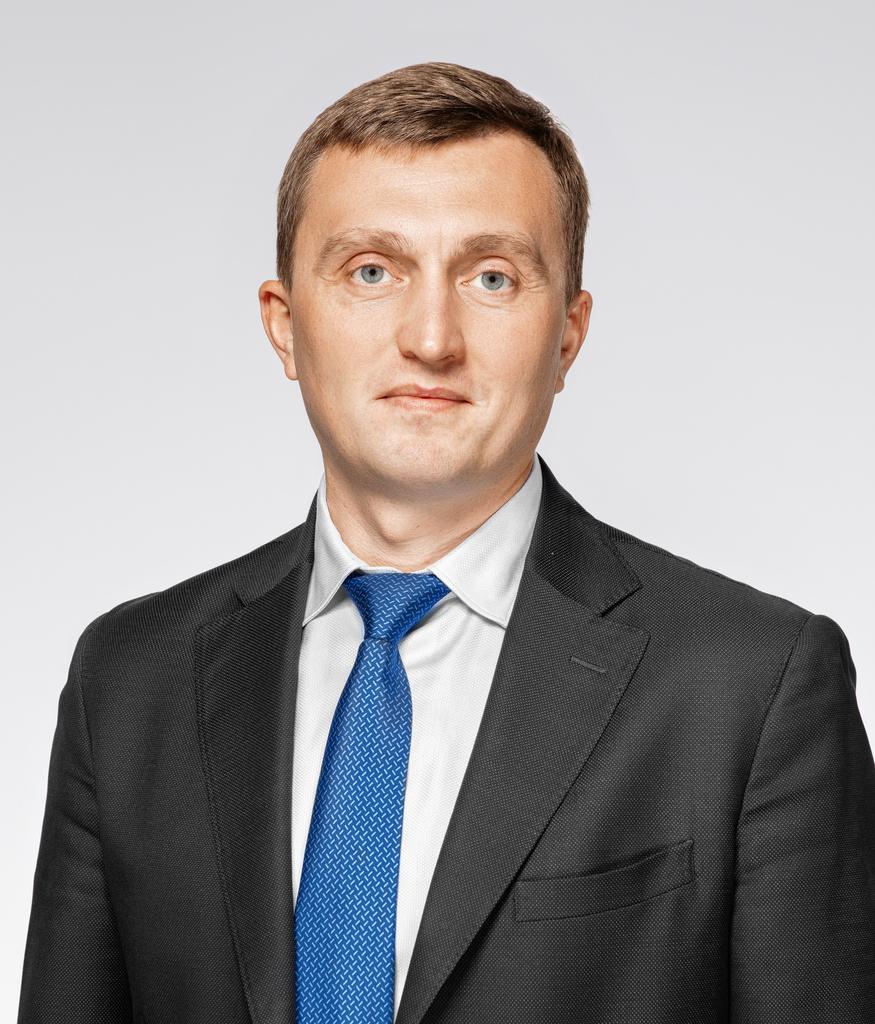
Russia and India are writing a new logistics chapter in bilateral relations

By Oleg Poleev, CEO of JSC “Russian Railways Logistics”

Last few years have become pivotal for global transport logistics market and for Russia-India cooperation in transport sector, in particular. In new geopolitical conditions, not only did both countries confirm their commitment to strengthening economic and logistics ties, but also revealed new opportunities for trade growth.
Which factors give confidence that logistics will help India and Russia to reach an ambitious goal set by the two countries to achieve $100 billion trade turnover by 2030?
Fast development of the International North-South Transport Corridor
In the new economic reality, the INSTC has turned into one of the main logistics trends, being a subject of active dialogue between the member-states and rapidly expanding its geography.
The Eastern route of the INSTC, which connects Russia and India by rail and sea through the territories of Kazakhstan, Turkmenistan and Iran, is especially in high demand today. This route has good throughput capacity, relies on highly developed transport infrastructure and offers consigners comfortable financial conditions of delivery.
Being a nominated operator along the Eastern branch of the INSTC, RZD Logistics is actively involved in the organization of seamless transportation on this route and notes significant progress in the joint work of the corridor member states, which is reflected mainly in shortened time and cost of delivery.
Due to the partners’ efforts the average time of railway transportation along the Eastern route (across Turkmenistan and Kazakhstan) to Iranian port of Bandar Abbas from Moscow region today is 16 days, from Chelyabinsk region – 11 days, which is approximately three times faster than two-three years ago, during the route launch. A task for the nearest perspective is to reduce the railway delivery time from Moscow to Iranian port Bandar Abbas to 10 days.
By joint efforts of the corridor member states the net cost of the service along the Eastern route of the INSTC has been reduced by 60% since the project launch, while the volume of transportation along this route in January-September 2025 increased in comparison to the same period of 2024 by 1,9 times.

Course for diversification of India-Russia trade turnover

The trade turnover between Russia and India has a distinct tendency for diversification. The share of industrial and agricultural products in Russian export, as well as import from India is constantly growing, which defines demand for reliable logistics on alternative routes for all kinds of products.
The Eastern route of the INSTC is developing in accordance with this tendency and presents a working logistics solution for the delivery of wide range of cargo. The list of goods imported today to Russia from India along the Eastern route of the INSTC includes construction supplies, clothing and footwear, haberdashery, rice, plastics, rolled iron, confectionery, seasoning and food concentrates. Leading positions in Russian export to India hold paper products, lumber, hygiene products, furniture, roofing materials, food and other types of goods.
Pharmaceutics is a very perspective industry in this regard. Today the Eastern route of the INSTC is ready to deliver Indian and Russian pharmaceutical products that require special conditions of transportation. This logistics solution is especially relevant and timely taking into consideration the fact that India is among the leading suppliers of medications to Russian market and is planning to additionally increase the volume of supplies in the nearest future.

High potential of the INSTC
The Eastern route of the INSTC is a subject of close cooperation between railways of Russia, India, Kazakhstan, Iran and Turkmenistan. Step by step, by united efforts the partners are developing paperless technologies of transportation, working on special tariff conditions and increase the frequency of container trains running.
Significant work aimed at the increase of throughput capacity of the Eastern route has been done in the area of transport infrastructure modernization along the Eastern route. The volume of cargo transported by rail is constantly growing due to reliability and speed of railway delivery.
The number of Russian regions that use the Eastern route of the INSTC is constantly growing. Today the geography of export shipments includes Moscow and North-West region, as well as Ural and West Siberia. In parallel, more and more consigners from India show interest in Russian market, the percent of high-tech, chemical cargo and equipment shipments is gradually rising.
Today logistics ties between Russia and India have reached a new level partly due to the development of the INSTC and have totally adapted to the needs of exporters and importers from both countries, making it possible to achieve the goal of $100 billion trade turnover by 2030.

Author :

Mr. Oleg Poleev, CEO of JSC “Russian Railways Logistics”

Baltic Index records first monthly drop since April

LONDON: The Baltic Exchange’s main sea freight index, which measures rates for ships carrying dry bulk commodities, edged lower on Friday and recorded its weakest monthly performance since April.

The main index, which tracks rates for capesize, panamax and supramax shipping vessels, fell 17 points, or 0.9%, to 1,966 points. It was down about 7.9% for the month. Its last monthly fall was in April, when it posted a 13.3% loss.

The capesize index lost 16 points, or 0.5%, to 2,929 and logged its biggest monthly fall in six months.

Average daily earnings for capesize vessels, which typically transport 150,000-ton cargoes such as iron ore and coal, decreased $140 to $24,288.

Iron ore futures slid on Friday, weighed down by dwindling demand and rising inventories in top consumer China, but hopes of a trade deal between the world’s two-largest economies kept prices on track for weekly and monthly gains.

The panamax index fell 28 points, or 1.5%, to 1,821. However, the index climbed 2.5% in October.

Average daily earnings for panamax vessels, which usually carry 60,000-70,000 tons of coal or grain, was down by $254 to $16,389.

Among smaller vessels, the supramax index lost 10 points, or 0.8%, to 1,326.
Source: Reuters

Drewry: World Container Index up 4% last week

LONDON: Drewry’s World Container Index increased 4% to $1,822 per 40ft container last week.

Drewry’s detailed assessment for Thursday, 30 Oct 2025

  • The Drewry World Container Index (WCI) increased 4% to $1,822 per 40ft container. This is the third straight week of increase, following a prolonged decline over 17 consecutive weeks.
  • Spot rates from Shanghai to Los Angeles increased 6% to $2,438 per 40ft container and those to New York rose 4% to $3,568. Drewry expects a slight rate increase next week, driven by the implementation of GRIs on 1 November. However, this momentum is likely to be short-lived, with rates expected to decline soon after.
  • Spot rates from Shanghai to Rotterdam increased 3% to $1,795 per 40ft container and from Shanghai to Genoa rose 5% to $1,955. Carriers on the Asia–Europe trade route are trying to push spot rates up by introducing increased FAK rates effective from 1 November in an attempt to elevate spot rates before the start of the new annual contract negotiation season.
  • Drewry’s Container Forecaster expects the supply-demand balance to weaken in the next few quarters, which will cause spot rates to contract.

Ocean spot market freight rates against 6,700 global port pairs

If you need spot market container freight rate information on other routes to those above, find out more about our Container Freight Rate Insight (CFRI) online service, which covers 6,700 global port pairs updated monthly (2,450 updated fortnightly).
Source: Drewry

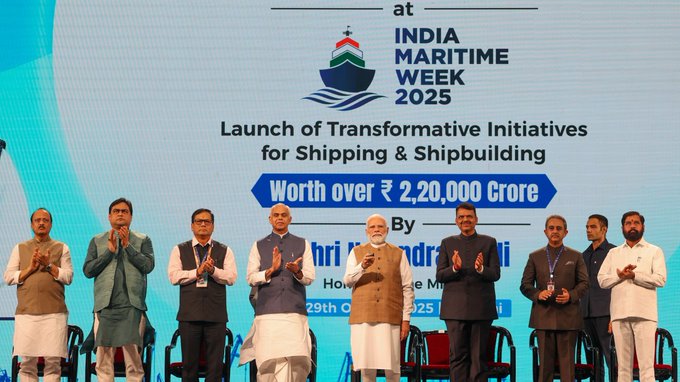
PM Modi shares vision of India’s maritime renaissance, invites global investment

MUMBAI : The Prime Minister, Shri Narendra Modi has shared his thoughts on India’s emergence as a leading destination for investment in the maritime sector. He emphasised that India is the perfect harbour when it comes to investing in the maritime sector. We have a very long coastline. We have world-class ports. We have infrastructure, innovation and intent. Come, invest in India, Shri Modi further added.

In a detailed post on his LinkedIn page, the Prime Minister outlined how India’s strategic location, modern port infrastructure, and commitment to innovation are opening up tremendous opportunities for investors in ship-building, port operations, logistics, coastal shipping and allied services.

He said that with a coastline exceeding 7,500 km, and an expanding network of globally competitive ports, India is poised to become a major maritime hub- offering not only connectivity but value-added services, green shipping initiatives, and industry-friendly policy frameworks.

The Prime Minister called on domestic and international investors to “come, invest in India” and be part of the country’s maritime growth story- underpinned by robust infrastructure, clear intent and emerging innovation ecosystems.

Sharing his thoughts written on LinkedIn, the Prime Minister wrote on X ; “India is the perfect harbour when it comes to investing in the maritime sector. We have a very long coastline. We have world-class ports. We have infrastructure, innovation and intent. Come, invest in India!”