Home Blog Page 590

Inland waterways can open export avenues for small farmers: Former DG Shipping Amitabh Kumar

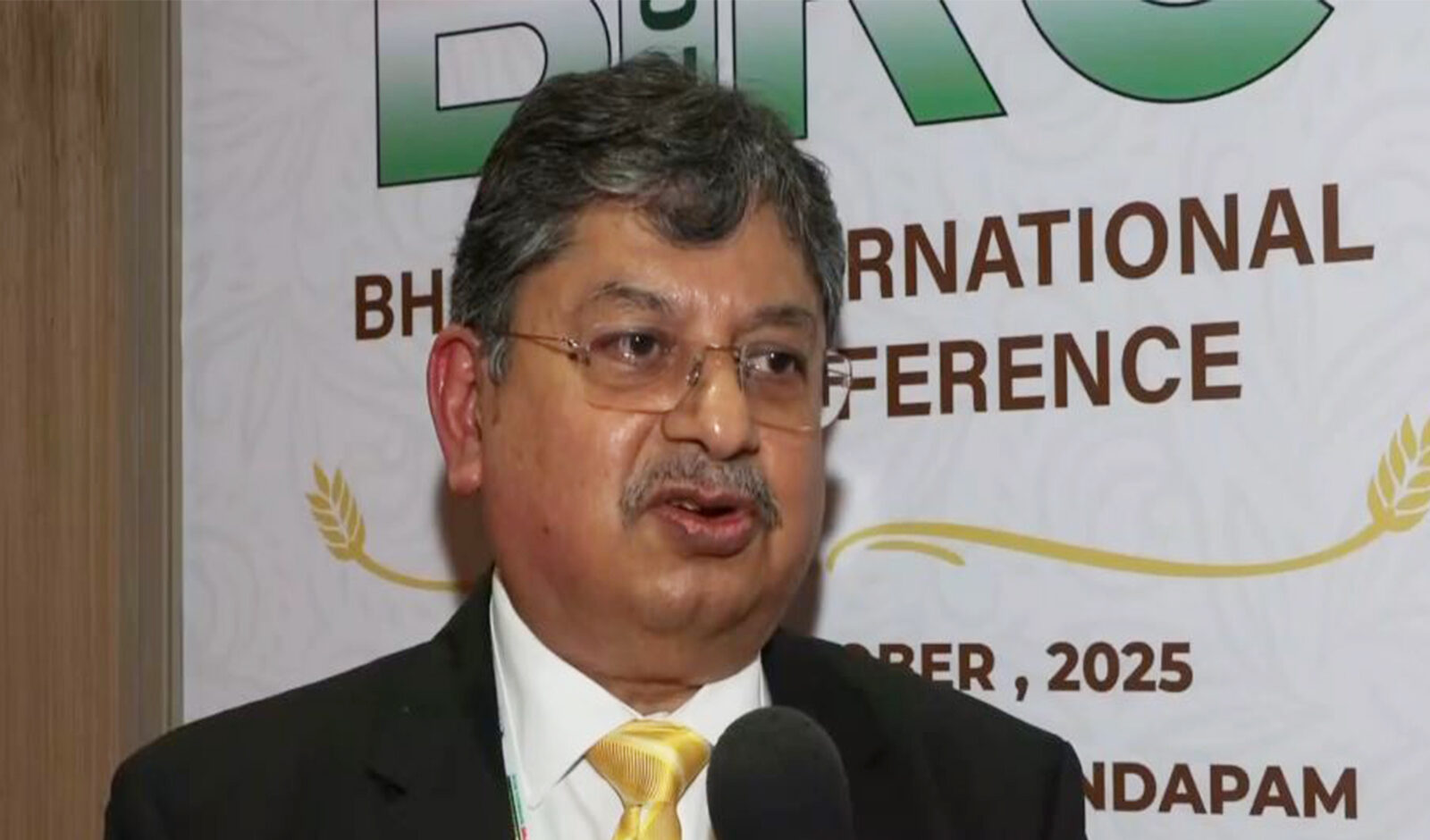
NEW DELHI: Former Director General of Shipping Shri Amitabh Kumar has said that the rapid development of inland waterways in India can be a “boon” for the agriculture sector, creating new export avenues for small and marginal farmers in riverine regions.

“Inland waterways can provide small vessels, where these small cargo holders can charter a container or a small vessel and ferry it to the nearest port from where these goods can be exported,” Kumar said, talking to ANI, on the sidelines of Bharat International Rice Conference 2025.

“It will be a boon for the agriculture sector because uh both the Ganges belt and the Brahmaputra belt are mostly agricultural, where the land size of farmers is shrinking gradually. These farmers may not be in a position to charter a whole ship for their exports, but they would have enough surplus to export in containers. Inland waterways can provide small vessels , where these small cargo holders can charter container or a small vessel and ferry it to the nearest port from where these goods can be exported.”

“As of now, these states (around the Ganges and Brahmaputra basin) do not have access to exports. Inland waterways can provide that channel for small farmers to also look for exports as a market.”

Shri Kumar was speaking about India’s evolving logistics landscape and the government’s ongoing efforts to improve shipping infrastructure and streamline trade processes.

Highlighting the importance of coordination and foresight in export operations, Kumar stressed that advance planning is crucial for minimizing delays and optimizing logistics.

“So when you plan your exports well in advance, you indicate the export requirements in future to the shipping lines. And when that is done on a mass basis, cumulatively, through an organization or an association, then the exporters know how much is to be exported at what time, what place, and the shipping lines also know as to how many containers would be required to carry this export or how many cargo ships would be needed,” he said.

“This kind of transparency helps shipping companies, ports and exporters plan their affairs in a better manner,” he added.

According to Kumar, proper planning prevents container shortages and congestion at ports.

“Otherwise, there is a possibility of everyone demanding containers at the same time, and shipping lines being unable to provide that kind of capacity when needed. There are enough ships available around the world; only thing is to plan our affairs in such a way that exports go in time,” he said.

He emphasized that better logistics management would ensure minimum turnaround time and reduced wastage in both exports and imports.

Shri Kumar also praised the government’s continued push for reform in the shipping and logistics sector, noting that several new legislations have been introduced to modernize procedures and encourage trade growth.

The government is working on many fronts — infrastructure development, policy reforms, and resolving regulatory bottlenecks that existed five or ten years ago, he said. With these steps, India is well-positioned to increase its exports, Kumar asserted.

Source: ANI

Manoj Kumar Das appointed as Chief Secretary of Gujarat

GANDHINAGAR : Manoj Kumar Das (IAS: 1990: GJ) has been appointed as the new Chief Secretary of the state. He will take charge on October 31, 2025 succeeding Pankaj Joshi (IAS: 1989: GJ) who is superannuating on the same day. Currently serving as the Additional Chief Secretary in the Home Department of the Gujarat government, Das is set to retire on December 20, 2026.

Sources indicate that Joshi, who has led the state bureaucracy since 2023, is likely to be given a special advisory role post-retirement, marking a smooth transition at the top of Gujarat’s administrative hierarchy.

The formal announcement came through an official state notification on Tuesday, confirming what had been widely speculated in bureaucratic circles for months.

Currently serving as the Additional Chief Secretary in the Home Department of the Gujarat government, he is set to retire on December 20, 2026.

Notably, he is the only officer to make a return to the Gujarat Chief Minister’s Office.

Das will formally assume office on October 31, 2025, taking over from Pankaj Joshi, who is due to retire the same day. Sources indicate that Joshi, who has led the state bureaucracy since 2023, is likely to be given a special advisory role post-retirement, marking a smooth transition at the top of Gujarat’s administrative hierarchy.

Das has long been viewed as one of the most influential officers in the Chief Minister’s Office. He is known for his technical acumen and administrative command.

His presence alongside Chief Minister Shri Bhupendra Patel at nearly every major event–from cabinet meetings to development reviews–had signaled his rising profile and inevitable elevation to the state’s top bureaucratic post.

Piyush Goyal chairs meeting with EPCs and Industry Associations

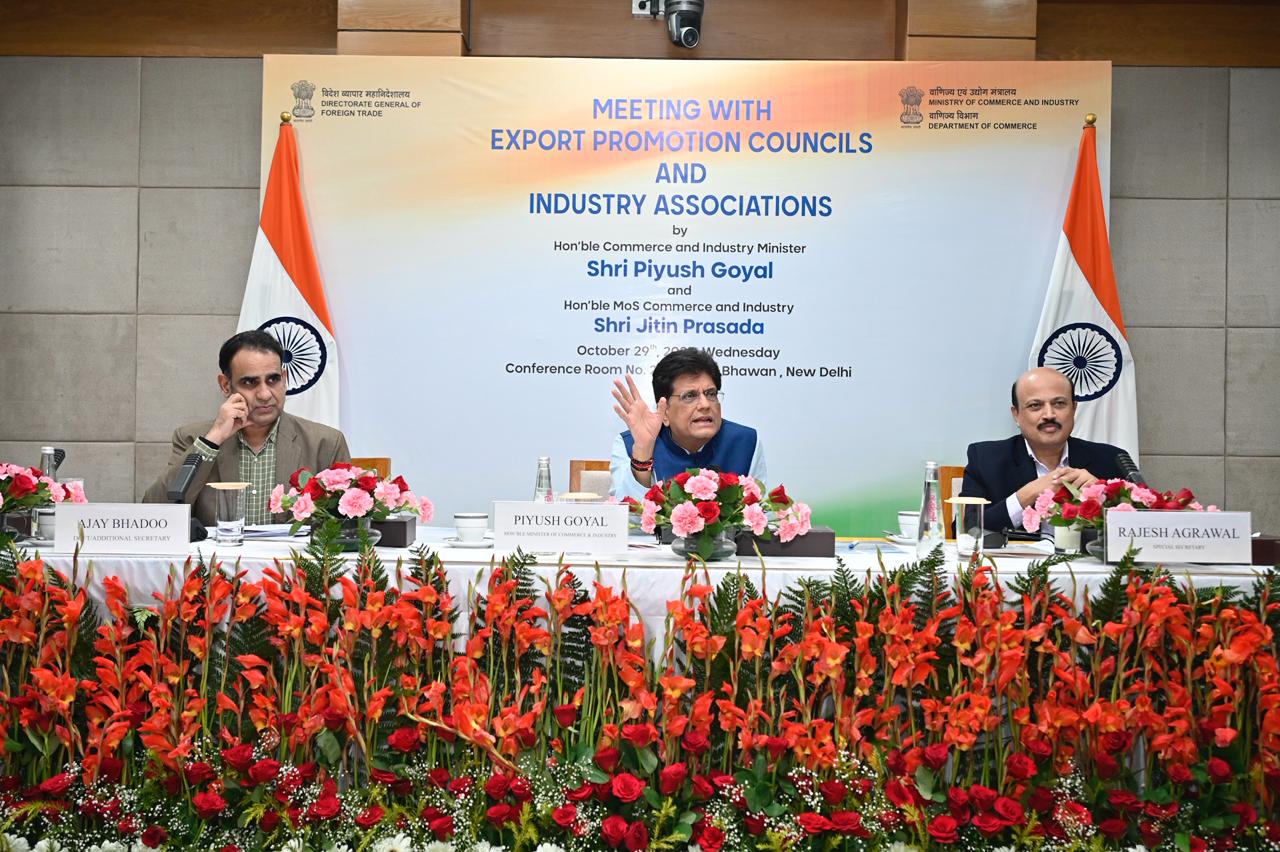
NEW DELHI : The Union Minister of Commerce and Industry, Shri Piyush Goyal, chaired a meeting with Export Promotion Councils (EPCs) and Industry Associations at Vanijya Bhawan, New Delhi on 29 October 2025.

The meeting witnessed participation from representatives of the Department of Commerce, Department of Revenue, Department for Promotion of Industry and Internal Trade (DPIIT), Export Promotion Councils, and various Industry Associations.

During the session, the Directorate General of Foreign Trade (DGFT) and the Department of Commerce made detailed presentations on the major reforms undertaken during the first half of FY 2025–26, upcoming reform measures aimed at facilitating exports, and the export performance during the period.

The discussions focused on issues and challenges faced by the industry, achievements in export diversification, and the views and expectations of stakeholders for further promotion of exports from the country.

Representatives from various sectors—including FIEO, Textile, Apparel, Engineering, Gems & Jewellery, Medical Devices, Pharmaceuticals, Services, EPCH, Telecom, Leather, CII, FICCI, PHDCCI, SIAM, ASSOCHAM, and NASSCOM—commended the efforts of the Union Minister and the Ministry of Commerce and Industry in fostering a conducive trade environment and expanding market opportunities for Indian exporters.

Shri Piyush Goyal reaffirmed the Government’s continued commitment to strengthening a facilitative trade ecosystem through ongoing initiatives for ease of doing business and the creation of enhanced global market access for Indian exporters.

Central Govt. plans to set up transport authority to drive multimodal corridors

MUMBAI : The Central Government is planning to set up an integrated transport planning authority for faster and comprehensive planning among multiple transport ministries such as highways, railways, and shipping & ports. This will enable corridor-based development and speed up connectivity works.

“There is a connectivity planning document for the next decade. Moreover, the government is in the process of planning an integrated transport planning authority, which will convert the current structure into a robust institutional framework that will be able to drive convergence and long-term planning across modes of transport,” R Lakshmanan, Joint Secretary at the Ministry of Ports, said at the India Maritime Week 2025 here. There have been successful examples from other countries on this, he added.

Moreover, in a bid to promote public private partnerships, the government will provide viability gap funding (VGF) to new technology and green transition projects in Sagarmala 2.0, which will run over the next decade. Sagarmala 2.0 is a revamped programme with new focus on shipbuilding, repair, breaking, and recycling. Backed by ₹40,000 crore budgetary support, it aims to catalyse investments worth ₹12 trillion over the next decade.

The government is also working on new investment models like Hybrid Annuity Model (HAM), which has never been tried out in the ports sector before, and co-investment models. Under co-investment models, state-run port authorities will be co-investors in projects with private port operators in the form of joint ventures. The multi-front efforts, the industry hopes, will take the port economy much beyond ports to being integral economic drivers.

According to Dubai-based global ports giant D P World, India would benefit from port-led industrialisation similar to the success witnessed in West Asia.

“When we started the Jebel Ali Port, the value proposition was essentially transhipment. We soon realised that transhipment alone will not help. We built the Jebel Ali Free Zone (Jafza). Over the last 25 years, it attracted 11,000 companies. Between Jafza and Jebel Ali Port, the contribution to Dubai’s gross domestic product (GDP) is more than 40 per cent,” Rizwan Soomer, Chief Executive Officer (CEO) and Managing Director (MD) for D P World’s North Africa & India Subcontinent, said at the event.

Adani Ports and Special Economic Zone, a large infrastructure conglomerate in India, is also moving fast on establishing clusters and special industrial zones. Speaking at the same event, the company’s whole time director and CEO Ashwani Gupta said India is on track to become one of the world’s best port ecosystems.

“Three requirements for that are technology, talent, and ease of doing business. This also includes special economic zones and coastal regulation zone. Investing in technology for efficiency, and investing in operators who can leverage manpower to make technology effective will be important,” he said.

Gupta also added that India is in a key position to become an ease of doing business hub in the surrounding geography, and the country should have a policy framework which takes care of both business and sustainability.

Source : BS

CMA CGM receives Green Ship Award at the Singapore Registry of Ships Forum 2025

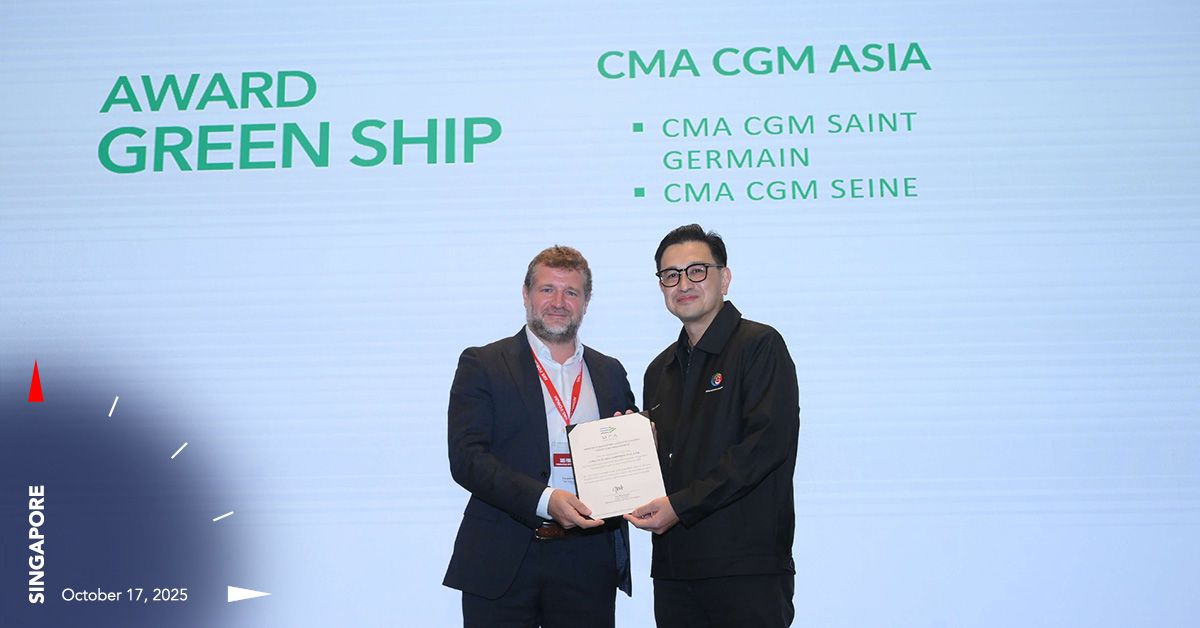
SINGAPORE : CMA CGM has received the Green Ship Award at the Singapore Registry of Ships Forum 2025, marking concrete progress in reducing the environmental impact of shipping.

The CMA CGM SEINE and the CMA CGM SAINT GERMAIN – 23,000 TEUs, dual-fuel LNG-powered, Singapore-flagged vessels – were honored during this event.

Presented by the Maritime and Port Authority of Singapore (MPA), the Green Ship Award recognizes vessels that adopt lower-carbon fuels and advanced technologies which go beyond the International Maritime Organization’s Energy Efficiency Design Index standards.

cma cgm21 1 CMA CGM receives Green Ship Award at the Singapore Registry of Ships Forum 2025

RSGT and CMA CGM join forces to shape the future of maritime logistics

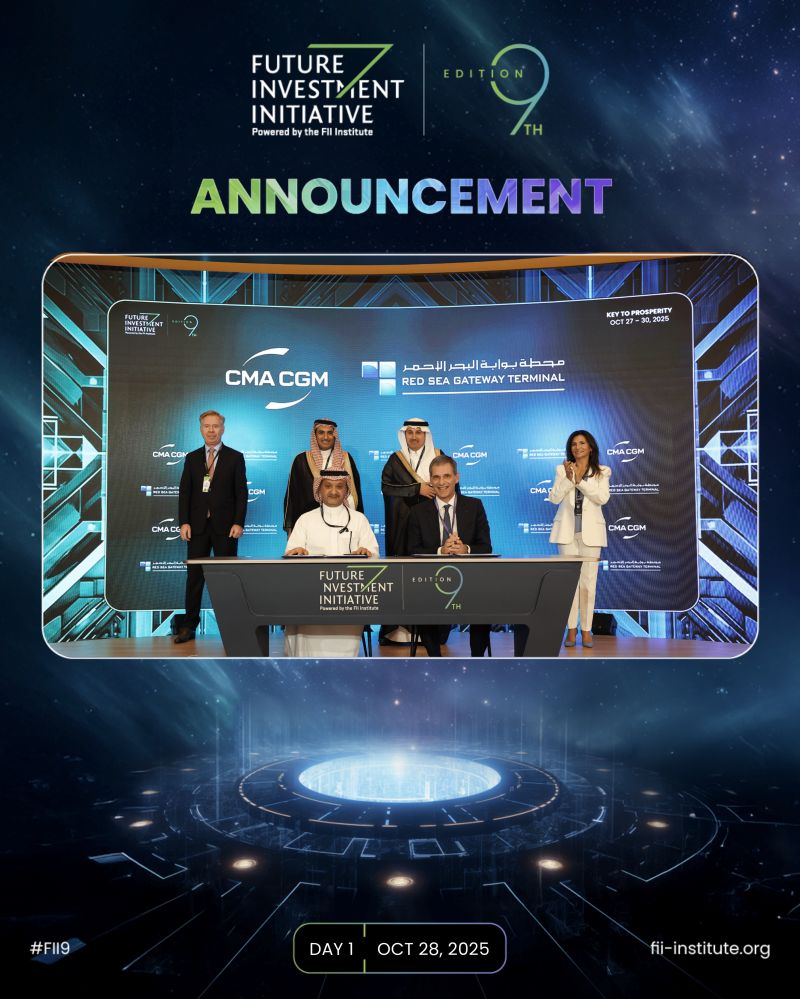
RIYADH : CMA CGM Group, a global player in sea, land, air and logistics solutions and Red Sea Gateway Terminal (RSGT), Saudi Arabia’s national champion terminal operator, have signed through its fully owned subsidiary CMA Terminals, a Term Sheet for a potential joint venture during FII9 in Riyadh, setting a clear pathway to build and operate Terminal 4 at Jeddah Islamic Port. The potential sub-concession would be structured under RSGT’s existing long-term concession with Mawani and forms part of RSGT’s option to expand Jeddah Islamic Port’s capacity on the allocated Terminal 4 area, as stipulated in the 2020 concession agreement. The JV will operate as a separate 2.6 million TEU container terminal adjacent to the existing RSGT terminals.

1900px CMA RSGT T4 SigningBis 1 RSGT and CMA CGM join forces to shape the future of maritime logistics

The planned Terminal 4 SAR 1.7 billion (US$450 million) investment will deliver a 2.6 million TEU state-of-the-art new infrastructure, advanced handling equipment, and next-generation digital and sustainability capabilities, demonstrating both partners’ shared commitment to operational excellence, modernization, and customer-centric service at one of the Red Sea’s most strategic ports.

Through this partnership with CMA CGM at T4, RSGT continues to advance Saudi Arabia’s Vision 2030 by scaling its annual handling capacity up to 8.8 million TEUs and further establishing Jeddah container terminals as the region’s leading economic and logistics hub. The initiative also underscores RSGT’s close collaboration with Mawani, whose framework enables private-sector investment and continuous improvement across Saudi ports.

“This Term Sheet reflects a shared intent to bring additional capacity, reliability, and technology to Jeddah Islamic Port,” said Jens O. Floe, Group CEO of RSGT. “By structuring a sub-concession under our existing framework with Mawani, and bringing CMA CGM to consolidate their volumes on T4, we can accelerate upgrades and service enhancements while maintaining continuity and high standards across the terminal.”

“This partnership exemplifies the Kingdom’s commitment to achieving Vision 2030 by transforming Saudi ports into world-class logistics hub. Mawani is honored to facilitate strategic collaborations that enhance capacity, connectivity, and innovation within our network. We remain committed to strengthening the Kingdom’s role as a global gateway for trade, fostering economic growth, and contributing to a more competitive and sustainable future,” stated H.E. Eng. Suliman Almazroua, President of the Saudi Ports Authority (Mawani).

Rodolphe Saadé, Chairman and CEO of the CMA CGM Group, stated: “I am pleased to announce this partnership with RSGT, which represents a new step in the development of Jeddah Islamic Port and supports Saudi Arabia’s Vision 2030. By combining CMA CGM’s global expertise with RSGT’s local strength, we will contribute to making Jeddah a key logistics gateway on the Red Sea. This investment reflects our confidence in the Kingdom’s long-term ambitions and our commitment to supporting its economic transformation.”

With the new Terminal 4 capable of berthing and operating mega containerships with maximum efficiency, the planned collaboration aims to strengthen service quality and network connectivity for all Saudi customers, to prove and enhance the efficiency of Jeddah port as a central transhipment hub in the Red Sea area through leveraging CMA CGM’s global network with RSGT’s proven operational expertise at Jeddah Islamic Port. It supports the Kingdom’s broader logistics strategy to increase gateway throughput, expand transshipment, and reinforce the Red Sea’s pivotal role along the Europe–Asia–Africa corridor.

INTERCARGO celebrates record membership ahead of 45th Anniversary AGM in Athens

LONDON: The International Association of Dry Cargo Shipowners (INTERCARGO) is marking its 45th anniversary in 2025 with record membership, expanded global reach and a renewed focus on the industry’s future priorities. The Association now counts more than 350 members from more than 35 countries, comprising more than 180 Full Members, representing more than 4,400 bulk carriers totalling near 420 million DWT. This equates to approximately 40% by DWT of the global dry bulk carrier fleet, highlighting INTERCARGO’s growing influence and representation across the sector. 

Since its foundation in 1980, INTERCARGO has steadily expanded its global reach, welcoming shipowners, managers, operators, and service providers across dry bulk shipping. Its membership today spans every major bulk shipping region and reflects a shared commitment to quality, safety, and environmental performance. 

As a recognised Non-Governmental Organisation at the International Maritime Organization (IMO) and a member of the Round Table of International Shipping Associations, INTERCARGO continues to play an influential role in shaping international regulation and advancing quality standards across the dry bulk sector. Its advocacy work has centred on safety and sustainability, and the recognition of dry bulk shipping’s essential services to the peoples and economies around the world. 

Members will convene in Athens, Greece, on 3-4 November 2025 for INTERCARGO’s 45th Annual General Meeting (AGM), as well as its committees’ semi-annual meetings where they will review the Association’s progress and agree priorities for the year ahead.

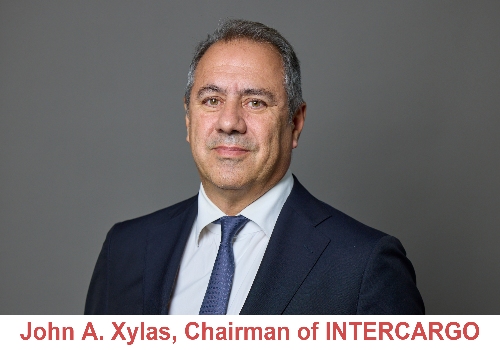
John A Xylas, Chairman of INTERCARGO, said: “INTERCARGO’s strong growth and 45-year legacy reflect the trust of our members and the importance of a united voice for dry bulk shipping. INTERCARGO is strongly positioned to continue supporting our members and the wider industry through the challenges ahead.” 

“As we look to the future, our focus will remain on promoting quality, safety and sustainability, and ensuring that the voice of responsible dry bulk owners is heard where it matters most,” he added.

FIATA launches the 2026 Young Logistics Professionals Award

GENEVA : The 2026 Young Logistics Professionals (YLP) Award, presented by FIATA and the TT Club, is now open for applications! This competition invites talented young individuals from around the world to showcase their expertise, insights, and innovative thinking in the logistics industry.

About the YLP Award

The YLP Award empowers young professionals to shine by tackling real trade challenges from their region in a 4,000 to 6,000-word dissertation. It is more than a writing exercise, it is a chance to demonstrate insight, research skills, and the ability to think critically about complex import and export issues. The competition not only builds confidence and professional skills but also celebrates creativity and analytical thinking.

Curious about what success looks like? Read through the winning dissertations from past global winners to see the impressive range of ideas and expertise showcased by previous finalists.

An Unforgettable Experience for the Winners

One of the highlights of the YLP Award is the final round, taking place at the 2026 FIATA World Congress in Milan, marking FIATA’s 100th anniversary. The four regional finalists will have the rare opportunity to present their work in a dedicated panel session, exchanging ideas with industry leaders and peers from around the world. This stage is a memorable professional experience. For a taste of what to expect, have a look at last years live presentations:

FIATA’s Commitment to Youth and Professional Development

The YLP Award reflects FIATA’s commitment to the next generation, offering young professionals a platform to share their ideas and develop their skills. Through this initiative, FIATA seeks to support emerging talent, encourage fresh perspectives in logistics, and contribute to a more inclusive future for the industry.

FIATA invites all its Members to promote this year’s YLP Award and help make it a meaningful and inspiring experience.

For more details about the competition and to download the supporting document, visit the FIATA Website. Information is available in English, Spanish and Chinese.

How Can FIATA Association Members Support The Competition?

FIATA Association Members play a crucial role in the YLP Award’s success by promoting the competition within their networks and encouraging young talents to participate. Beyond promotion, Members can also serve as mentors, guiding participants throughout their journey, providing useful insights, and helping refine their skills. This mentorship strengthens the Association’s role in fostering future leaders and showcases its dedication to youth development in logistics.

FLOWRA and ClassNK to collaborate

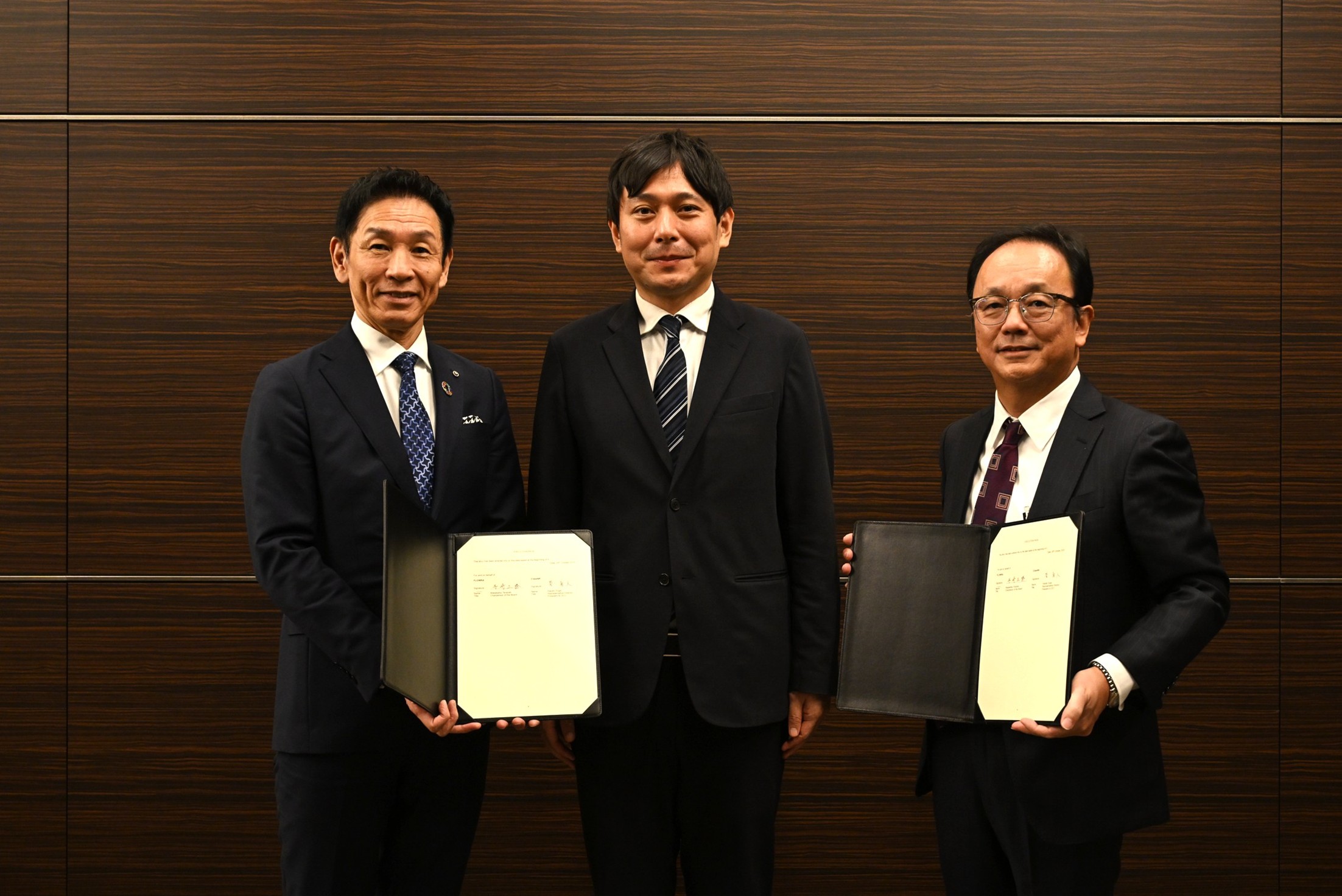
TOKYO: The Floating Offshore Wind Power Technology Research Association (FLOWRA) of Japan and Nippon Kaiji Kyokai (ClassNK) have signed, a Memorandum of Understanding to explore technology development cooperation in the field of floating offshore wind. FLOWRA and ClassNK will explore the possibilities of collaboration in floating offshore wind development.

FLOWRA is a technical research association that works with overseas organisations to research and develop common basic technologies for floating offshore wind to reduce costs and risks.

ClassNK is an independent, non-profit international classification society, ensuring maritime safety and environmental protection through comprehensive inspection and certification services across a global network.

Comments by Masakatsu Terazaki, Chairperson of FLOWRA Board of Directors

ClassNK is a globally respected classification society with a long history and proven achievements. It has consistently contributed to maritime safety, the protection of human life, and the preservation of the marine environment. In recent years, it has taken on a key role in promoting a carbon-neutral society by providing impartial inspection and certification services in the renewable energy sector, including offshore wind.

Since FLOWRA was founded, we have built a strong working relationship with ClassNK through technical exchanges and expert advice on the development and standardisation of floating offshore wind technologies. Signing this formal agreement strengthens our partnership and supports the advancement of technology and its early integration into society.

Comments by Hayato SUGA, President & CEO of ClassNK

The development of technologies, standards, and specifications that FLOWRA aims to establish as a common foundation for floating offshore wind power will play a vital role in the large-scale deployment and industrialization of floating offshore wind power in the future. We fully endorse this objective and have consistently worked with FLOWRA, and, and we are honored to formally conclude a Memorandum of Understanding (MoU) with FLOWRA.

ClassNK has been engaged in the field of floating offshore wind power to promote its safe implementation in society, including involvements in Wind Farm Certification, class registration, and Marine Warranty Survey for demonstration projects off the coasts of Fukushima, Goto, and Kitakyushu (cities in Japan) as well as in the formulation of standards in cooperation with the Government of Japan. Leveraging the knowledge and experience we have accumulated through these activities, we will work together with FLOWRA to contribute to technological development, standardization, and the accelerated social implementation of floating offshore wind power.

Global Trade: The Pathway to Economic Prosperity

By Bryn Heimbeck, President and Co-Founder of Trade Tech

Warren Buffett recently affirmed a principle at the heart of global progress: “balanced trade is good for the world,” noting, “the more prosperous the rest of the world becomes, … the more prosperous we’ll become.” His words reflect more than economic logic. They highlight the essential truth that trade creates reciprocal value, strengthening nations, industries, and communities alike.

Global trade is not a zero-sum game but a multiplier of shared prosperity, stability, and opportunity. It is both a driver of economic growth and a foundation for enduring partnership, proving that when nations invest in each other’s success, everyone benefits. In that sense, global commerce is less about competition and more about collaboration.

That belief is the foundation of our initiative, Global Trade Is Good, which is a movement built on the conviction that when nations trade, they don’t just exchange goods; they create prosperity, partnership, and progress.

Why Global Trade Is Good

Trade strengthens economies, creates jobs, and builds connections across borders. From the coffee we drink in the morning to the technology we rely on daily, our lives reflect the quiet efficiency of global trade networks. But the impact goes well beyond convenience. Trade helps lift communities, encourages innovation, and expands opportunity. In today’s climate of rising skepticism about globalization, it’s worth restating what remains true: trade is a force for good.

The Broader Impact: Jobs, Growth, and Infrastructure

Trade continues to be a powerful engine for job creation. According to the World Trade Organization, trade-related jobs tend to be more stable, better paid, and more productive than those in non-trade sectors. In the United States alone, exports support over 41 million jobs. In developing countries, access to global markets has helped create millions of new positions in manufacturing, logistics, and services. That’s nearly one in every five U.S. jobs, according to the U.S. Department of Commerce.

In developing economies, Trade has also played a central role in reducing poverty worldwide. The World Bank estimates that open trade policies were a major factor in lifting more than one billion people out of extreme poverty between 1990 and 2015. When countries engage in trade, there is growth. This growth means people gain access to better education, healthcare, and quality of life.

As nations expand their role in the global economy, they invest in roads, ports, rail networks, and digital systems. The U.S. The Department of Commerce estimates that every $1 billion increase in U.S. exports is associated with over 6,000 additional jobs and boosts investment in ports, rail, and digital systems. These improvements benefit not just the movement of goods, but also the development of entire communities. From sub-Saharan Africa to Southeast Asia, trade has supported long-term economic growth and regional integration.

Global Trade: Looking Back And Moving Forward

While some look nostalgically at the postwar American economy as a period marked by high tariffs and tightly controlled capital, it was less dynamic than it’s often remembered. One analysis described it as “productive but remarkably static,” where corporate leaders were unresponsive to markets and innovation was mostly confined to industrial labs.

By contrast, today’s economy is fast-moving and open. It rewards bold ideas, encourages competition, and creates space for new players to challenge incumbents. That kind of dynamism can feel disruptive, but it is also what fuels meaningful progress.

Enabling the Future of Global Trade

At Trade Tech, we believe in enabling and accelerating this transformation. Our global logistics platform brings visibility, speed, and intelligence to the movement of goods. We help shippers, carriers, and forwarders simplify global trade, reduce inefficiencies, and respond in real time to shifting market conditions. Trade Tech is proud to support this global movement by making trade easier, smarter, more efficient, and more inclusive.

Global trade is not about preserving the status quo. Global Trade has been good for America; our economy is the envy of the world. It has also brought prosperity to much of the world and is still growing rapidly. It’s brought friendship and far greater mutual understanding. The current world order is an unprecedented success that only the foolish would want to overturn. Let’s take a good look and see the value it’s created because when trade flows, prosperity follows.

About Trade Tech

Since 1997, global logistics solutions provider Trade Tech has been developing world-class applications that link shippers, importers, Customs House Brokers, consignees, NVOCCs, carriers, truckers, warehouses, and forwarders, providing visibility of the movement of goods throughout the supply chain. The Trade Tech multi-tenant platform offers its customers a streamlined approach to elevate efficiency within their supply chains, enhancing visibility, increasing connectivity, reducing costs, and minimizing errors. Trade Tech customers enjoy access to the latest applications and data anywhere in the world every time they log on to the Trade Tech network – without any software downloads. Leveraging its Global Customs expertise, Trade Tech developed cargofiling.com as a resource to educate the industry on current and future regulatory requirements, facilitate compliance and support supply chain fluidity. 

Author:

Bryn Heimbeck, President and Co-Founder of Trade Tech