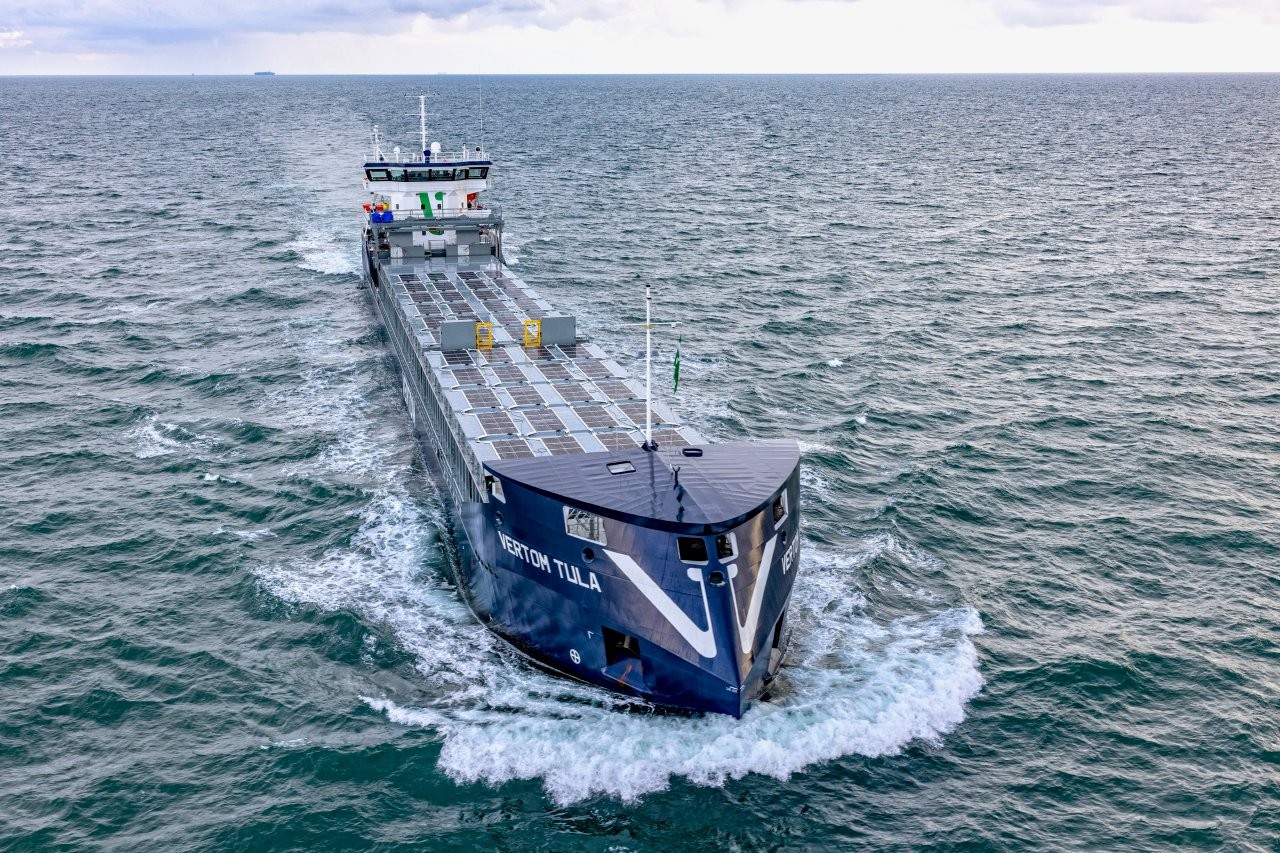
ROTTERDAM: Dutch maritime solar innovator Wattlab has delivered a seaworthy solar energy system for globally operating shipping, trading, and maritime services company Vertom. The recently delivered ‘MV Vertom Tula’ is a 7,280 dwt diesel-electric multipurpose cargo vessel. The solar system represents a major technical milestone and a step forward for sustainable shipping. Wattlab has delivered and installed 44 Solar Flatracks that will provide power to onboard systems, reducing 20% of the hotel load.
Vertom operates a fleet of over 100 vessels, ranging from 1,500 to 12,000 DWT. In addition to Shipping & Trading, Vertom’s portfolio consists of Port Agencies & Freight Forwarding, Maritime Services, Tanker Chartering, and Liner Services.
The company has a strong track record in the Short Sea Shipping market, and aims to operate as sustainable as possible. To understand and test Wattlab’s new technology and benefits, Vertom executed two pilot projects with Wattlab before deciding to fully outfit this newbuild.
Fast installation
After production and assembly in September in Wattlab’s brand new production facilities in Rotterdam, the 44 Solar Flatracks were installed onboard within a day in the Port of Harlingen. Bo Salet, co-founder and CEO of Wattlab, explains that the Solar Flatracks can be installed in a minimum amount of time using container twist lock fittings:
“For shipowners, time is money, so speed and ease of use are important. Furthermore, we know that ‘space is money’ too. Hence, should the panels need to be removed to make way for a special type of cargo, the crew can easily stack and store them all on the footprint of one 20ft container.”
He continues: “We thank Vertom for their trust and the smooth collaboration in the past three years. Without them we could not have achieved this milestone; that goes both for the vessel itself as for the technology. We wish the Vertom Tula and its crew fair winds and following seas! In addition, we thank the EU’s Just Transition Fund (JTF), which co-financed this project.”
Happy crew
“During the pilots, the test results showed that the Solar Flatrack system performs well in the tough coastal shipping environment,” says Thomas van Meerkerk, Business Development Manager at Vertom.“Based on the results of our own and TNO’s research in the past months, we consider Wattlab’s Solar Flatrack an effective option for reducing GHG and pollutant emissions. Of course, these things also depend on the conditions our vessels operate in, but it’s clear that the system can provide both a positive ROI and contribute to CO₂ reduction in shipping.
Bo adds: “Another benefit is that the panels can stay on the hatch covers during loading and discharging operations. The crew was sceptical at first, fearing a lot of extra work. However, they soon learned that in practice, Solar Flatracks are easy to use and require minimal maintenance. For example, there’s no salt crust formation, because the water can drain freely from the panels.”
Validation and recognition
Dutch independent and globally acknowledged research organisation TNO has validated the CO2 emission reduction and ROI time of the system. Their report will be published shortly.
In recent weeks, Solar Flatrack has been nominated for the IBJ Awards, both for the Environmental Protection Award, and the Bulk Ship of the Year Award, together with Vertom.
Bo: “For those wanting to learn more, we welcome clients at our new production hall and office in the Port of Rotterdam. Also, you can meet us at Europort on 4-7 November, Hal 8 Booth 8201, where we will show our Solar Flatrack live for the first time.”
Scalable solar solutions for coastal vessels
Having a first full-scale system operational on a coaster marks an important step in the evolution of maritime decarbonisation strategies. With rising regulatory pressure (e.g. FuelEU Maritime, EU ETS) and volatile fuel prices, shipowners and operators are seeking ways to diversify their onboard energy mix. Wattlab’s scalable solar solution now offers a practical and proven solution for coastal and short sea vessels.
This project sets the stage for wider adoption across the sector; delivering emission reductions, fuel savings, and energy resilience without compromising deck space or cargo flexibility.
India’s maritime sector is advancing with great speed and energy: PM
We have replaced over a century-old colonial shipping laws with modern, futuristic laws suited for the 21st century: PM
Today, India’s ports are counted among the most efficient in the developing world; in many aspects, they are performing even better than those in the developed world: PM
India is accelerating efforts to reach new heights in shipbuilding, we have now granted large ships the status of infrastructure assets: PM
This is the right time to work and expand in India’s shipping sector: PM
When the global seas are rough, the world looks for a steady lighthouse, India is well poised to play that role with strength and stability: PM
Amid global tensions, trade disruptions and shifting supply chains, India stands as a symbol of strategic autonomy, peace and inclusive growth: PM
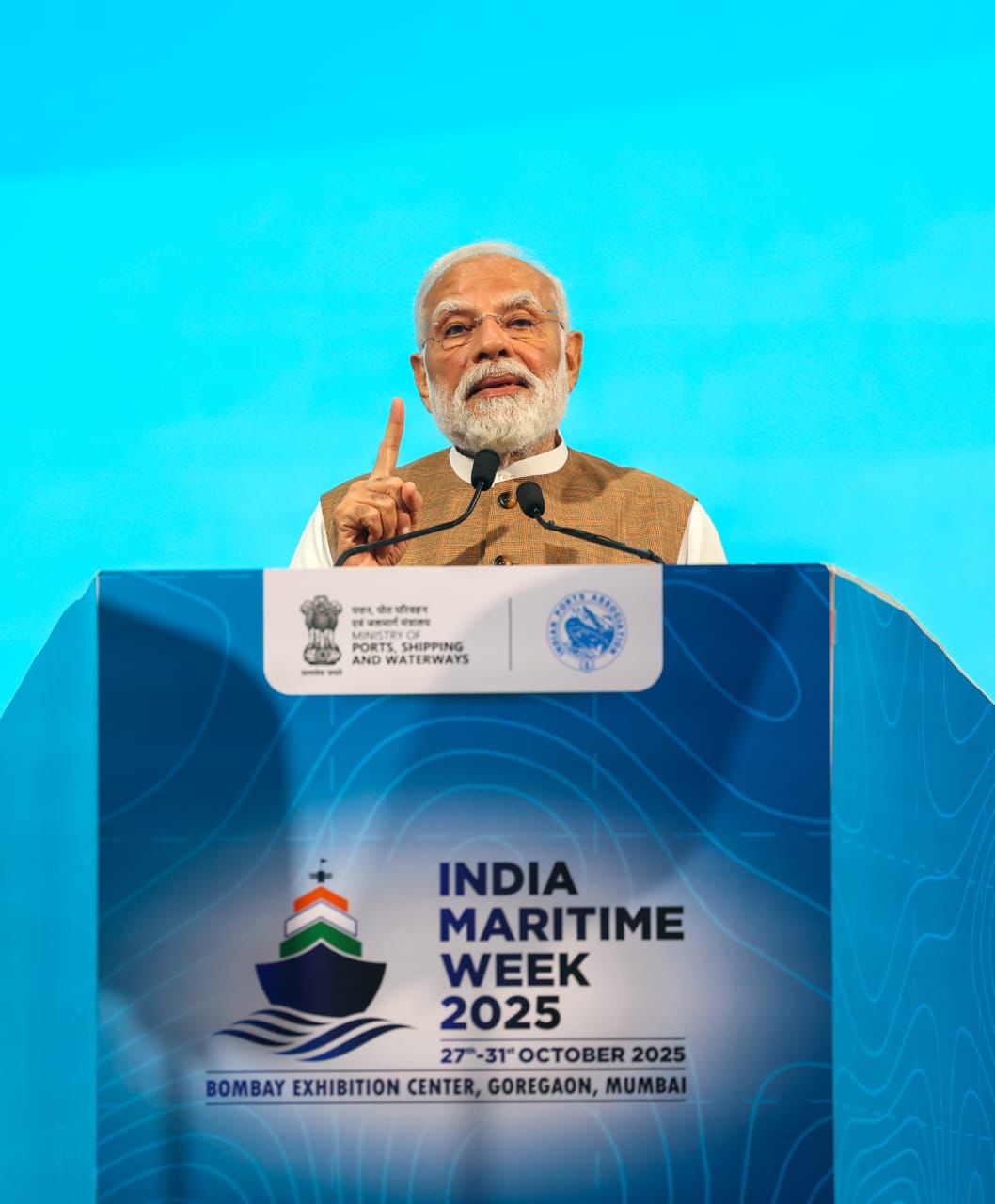
MUMBAI : Prime Minister Shri Narendra Modi addressed the Maritime Leaders Conclave and chaired the Global Maritime CEO Forum at India Maritime Week 2025 here in Mumbai, Maharashtra on Wednesday. Speaking on the occasion, Prime Minister welcomed all participants to the Global Maritime Leaders Conclave. He remarked that the event began in Mumbai in 2016 and expressed happiness that it has now evolved into a global summit. Shri Modi highlighted that participation from over 85 countries sends a strong message. He noted the presence of CEOs of major shipping giants, startups, policymakers, and innovators, all gathered at the event. He further acknowledged the attendance of representatives from small island nations and stated that their collective vision has significantly enhanced the synergy and energy of the summit.
Noting that several projects related to the shipping sector have been launched at the conclave, Shri Modi highlighted that Memorandums of Understanding worth lakhs of crores of rupees have also been signed in the shipping sector. The Prime Minister remarked that this reflects the global confidence in India’s maritime capabilities, adding that the presence of participants at the event stands as a symbol of their common commitment.
“In the 21st century, India’s maritime sector is advancing with great speed and energy”, emphasised the Prime Minister highlighting that the year 2025 has been particularly significant for the sector and shared key achievements. He remarked that Vizhinjam Port, India’s first deep-water international trans-shipment hub, is now operational, noting that the world’s largest container vessel recently arrived at the port, marking a proud moment for every Indian. Shri Modi further stated that in 2024–25, India’s major ports have handled the highest cargo volumes ever, setting a new record. He announced that for the first time, an Indian port has launched a megawatt-scale indigenous green hydrogen facility, an achievement credited to Kandla Port. He added that another major milestone has been achieved at JNPT, where Phase 2 of the Bharat Mumbai Container Terminal has commenced. “This has doubled the terminal’s handling capacity, making it India’s largest container port”, said the Prime Minister, emphasizing that this was made possible due to the largest FDI in India’s port infrastructure and expressed special gratitude to partners from Singapore for their contribution.
Prime Minister stated that this year, India has taken major steps towards next-generation reforms in the maritime sector. “The colonial shipping laws, over a century old, have been replaced with modern and futuristic legislation suited for the 21st century”, said the Prime Minister, remarking that these new laws empower State Maritime Boards, strengthen safety and sustainability, and expand digitization in port management.
Further noting that under the Merchant Shipping Act, Indian laws have been globally aligned with international conventions, Shri Modi said, this alignment has enhanced trust in safety standards, improved ease of doing business, and reduced government intervention. He expressed confidence that these efforts will further boost the confidence of stakeholders and investors.
Prime Minister stated that the Coastal Shipping Act has been designed to simplify trade and strengthen supply chain security. He emphasized that the Act ensures balanced development along India’s extensive coastline. Highlighting the One Nation, One Port Process, which will standardize port-related procedures and significantly reduce documentation requirements, Shri Modi remarked that these reforms in the shipping sector are a continuation of India’s decade-long reform journey. Reflecting on the past ten to eleven years, he noted that the transformation in India’s maritime sector has been historic. Under the Maritime India Vision, more than 150 new initiatives have been launched, resulting in nearly doubling the capacity of major ports, substantial reduction in turnaround time, and a new momentum in cruise tourism. The Prime Minister added that cargo movement on inland waterways has increased by over 700 percent, with the number of operational waterways rising from three to thirty-two. He further stated that the net annual surplus of Indian ports has increased ninefold over the past decade.
“India’s ports are now counted among the most efficient in the developing world, and in many cases, are outperforming ports in the developed world”, exclaimed the Prime Minister. He shared key performance statistics, noting that the average container dwell time in India has reduced to less than three days, which is better than several developed nations. He highlighted that the average vessel turnaround time has dropped from ninety-six hours to just forty-eight hours, making Indian ports more competitive and attractive for global shipping lines. Shri Modi added that India has shown significant improvement in the World Bank’s Logistics Performance Index. He further emphasized India’s growing strength in maritime human resources, stating that the number of Indian seafarers has increased from 1.25 lakh to over 3 lakh in the past decade. Today, India ranks among the top three countries globally in terms of seafarer numbers.
Remarking that a quarter of the 21st century has passed, and the next 25 years are even more critical, Shri Modi emphasized that India’s focus is on the Blue Economy and Sustainable Coastal Development. He highlighted the government’s strong emphasis on green logistics, port connectivity, and coastal industrial clusters.
“Shipbuilding is now among India’s top priorities”, underscored the Prime Minister. Recalling India’s historical prominence in shipbuilding, he noted that the country was once a major global center in this field. He pointed out that not far from the venue lie the Ajanta Caves, where a Sixth Century painting depicts the design of a three-masted ship. The Prime Minister remarked that this design, seen in ancient Indian art, was adopted by other countries centuries later.
Underlining that ships built in India were once a vital part of global trade, Shri Modi noted that India later advanced in the ship-breaking sector and is now accelerating efforts to reach new heights in ship-making. He mentioned that India has granted infrastructure asset status to large ships, a policy decision that will open new avenues for all shipbuilders present at the event. He highlighted that this will provide new financing options, reduce interest costs, and ease access to credit. To propel this reform, the Prime Minister declared that the government will invest nearly ₹70,000 crore. This investment will enhance domestic capacity, promote long-term financing, support the development of greenfield and brownfield shipyards, build advanced maritime skills, and generate millions of jobs for youth. He added that this initiative will also unlock new investment opportunities for all stakeholders.
Prime Minister remarked that the land hosting the conclave is the land of Chhatrapati Shivaji Maharaj, who not only laid the foundation of maritime security but also asserted Indian strength across the trade routes of the Arabian Sea. He highlighted Shivaji Maharaj’s vision that the seas are not boundaries but gateways to opportunity, and stated that India is moving forward with the same thinking.
Emphasising India’s commitment to strengthening global supply chain resilience and noting that the country is actively building world-class mega ports, Shri Modi announced that a new port is being constructed in Vadhavan, Maharashtra at a cost of ₹76,000 crore. He added that India is working to quadruple the capacity of its major ports and increase its share in containerized cargo. The Prime Minister affirmed that all stakeholders present are key partners in achieving these goals and welcomed their ideas, innovations, and investments. He reiterated that India permits 100 percent FDI in ports and shipping, and that public-private partnerships are rapidly expanding. Under the “Make In India, Make For The World” vision, incentives are being provided, and states are being encouraged to attract investments. He urged investors from various countries to seize this moment to engage and expand in India’s shipping sector, stating that this is the right time.
Underlining India’s vibrant democracy and reliability as a defining strength, the Prime Minister remarked, “when the global seas are rough, the world looks for a steady lighthouse, India is well poised to play that role with strength and stability”. Amid global tensions, trade disruptions, and shifting supply chains, Shri Modi stated that India stands as a symbol of strategic autonomy, peace, and inclusive growth. He emphasized that India’s maritime and trade initiatives are integral to this broader vision. Citing the India–Middle East–Europe Economic Corridor as an example, he noted that it will redefine trade routes and promote clean energy and smart logistics.
Emphasising India’s focus on inclusive maritime development, the Prime Minister stated that this goal can only be achieved by empowering Small Island Developing States and Least Developed Countries through technology, training, and infrastructure. He highlighted the need for collective action to address climate change, supply chain disruptions, economic uncertainty, and maritime security. Shri Modi called upon all participants to move together towards peace, progress, and prosperity, and to build a sustainable future. Concluding his address, the Prime Minister extended his warm greetings and appreciation to all attendees for being part of the summit.
The Governor of Maharashtra, Shri Acharya Devvrat, Chief Minister of Maharashtra, Shri Devendra Fadnavis, Union Ministers, Shri Sarbananda Sonowal, Shri Shantanu Thakur & Shri Kirti Vardhan Singh were present among other dignitaries at the event.
Background
The Global Maritime CEO Forum, the flagship event of India Maritime Week 2025, will bring together CEOs of global maritime companies, major investors, policy-makers, innovators, and international partners to deliberate on the future of the global maritime ecosystem. The Forum will serve as a key platform for dialogue on sustainable maritime growth, resilient supply chains, green shipping, and inclusive blue economy strategies.
The Prime Minister’s participation reflects his deep commitment to an ambitious, future-oriented maritime transformation, aligned with the Maritime Amrit Kaal Vision 2047. This long-term vision, built on four strategic pillars — port-led development, shipping and shipbuilding, seamless logistics, and maritime skill-building — aims to position India among the world’s leading maritime powers. India Maritime Week 2025 serves as the Government of India’s premier global platform to translate this vision into action, bringing together leading stakeholders across shipping, ports, shipbuilding, cruise tourism, and blue economy finance.
Being organised from 27th to 31st October 2025, under the theme “Uniting Oceans, One Maritime Vision”, IMW 2025 will showcase India’s strategic roadmap to emerge as a global maritime hub and a leader in the
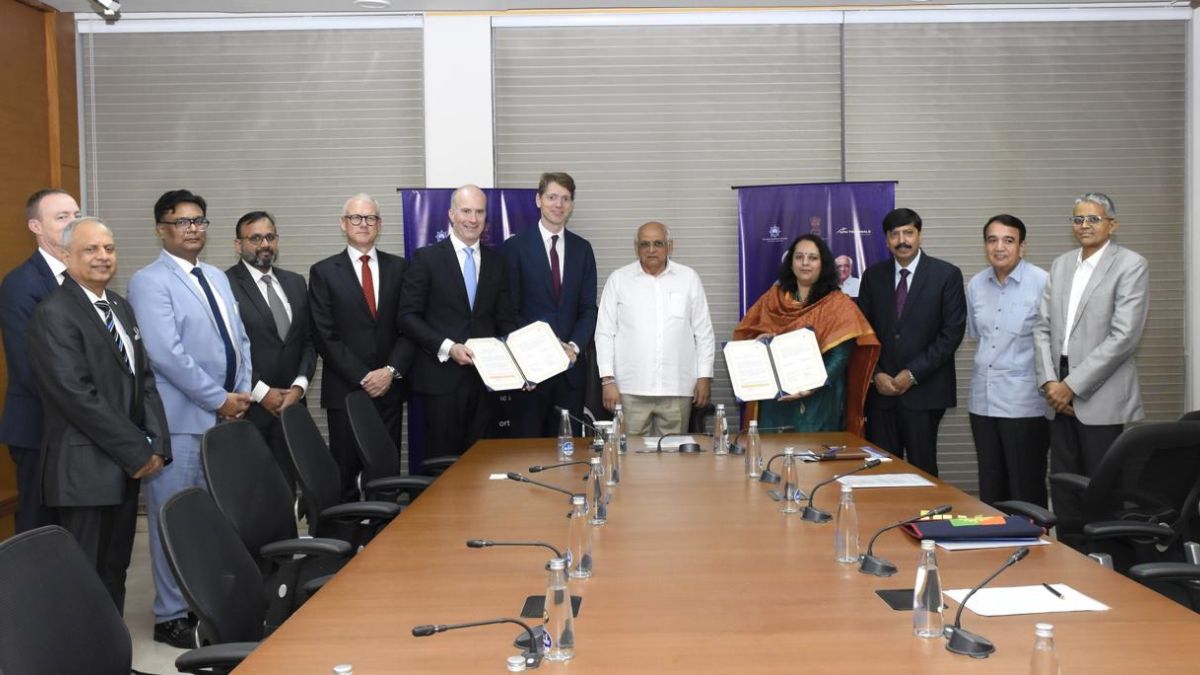
GANDHINAGAR : The Gujarat Maritime Board (GMB) and Gujarat Pipavav Port Limited (APM Terminals) on Wednesday signed a Memorandum of Understanding (MoU) for an investment of ₹17,000 crore. The MoU aims to strengthen Gujarat’s maritime sector through advanced infrastructure development and capacity expansion at Pipavav Port. The project is expected to generate nearly 25,000 direct and indirect employment opportunities, giving fresh momentum to the local economy and improving the standard of living in rural areas.
With the expansion, Pipavav Port’s handling capacity for container, bulk, liquid, and Ro-Ro cargo will increase, enabling faster and more efficient port operations. The investment will also facilitate the development of new liquid cargo berths, mechanized bulk handling systems, modern container terminals, digital operation platforms, and eco-friendly infrastructure.
Chief Minister Shri Bhupendra Patel appreciated the initiative, stating that the expansion of Pipavav Port will further enhance Gujarat’s established identity as India’s ‘Maritime Gateway’. He added that the development will strengthen the state’s port network, benefiting industries, exporters, and the logistics sector by reducing both the time and cost of import–export operations. Industrial, warehousing, and supply chain infrastructure in surrounding areas will also see significant growth, giving a boost to Gujarat’s overall economic activity.
Jon Goldner, CEO of APM Terminals Asia and Middle East, said that the investment is not only about expanding Pipavav Port but also about unlocking new opportunities for Gujarat, India, and global trade. He emphasized that their goal is to transform Pipavav into a model of world-class efficiency and green growth while creating lasting prosperity for local communities and reinforcing India’s leadership in maritime trade.
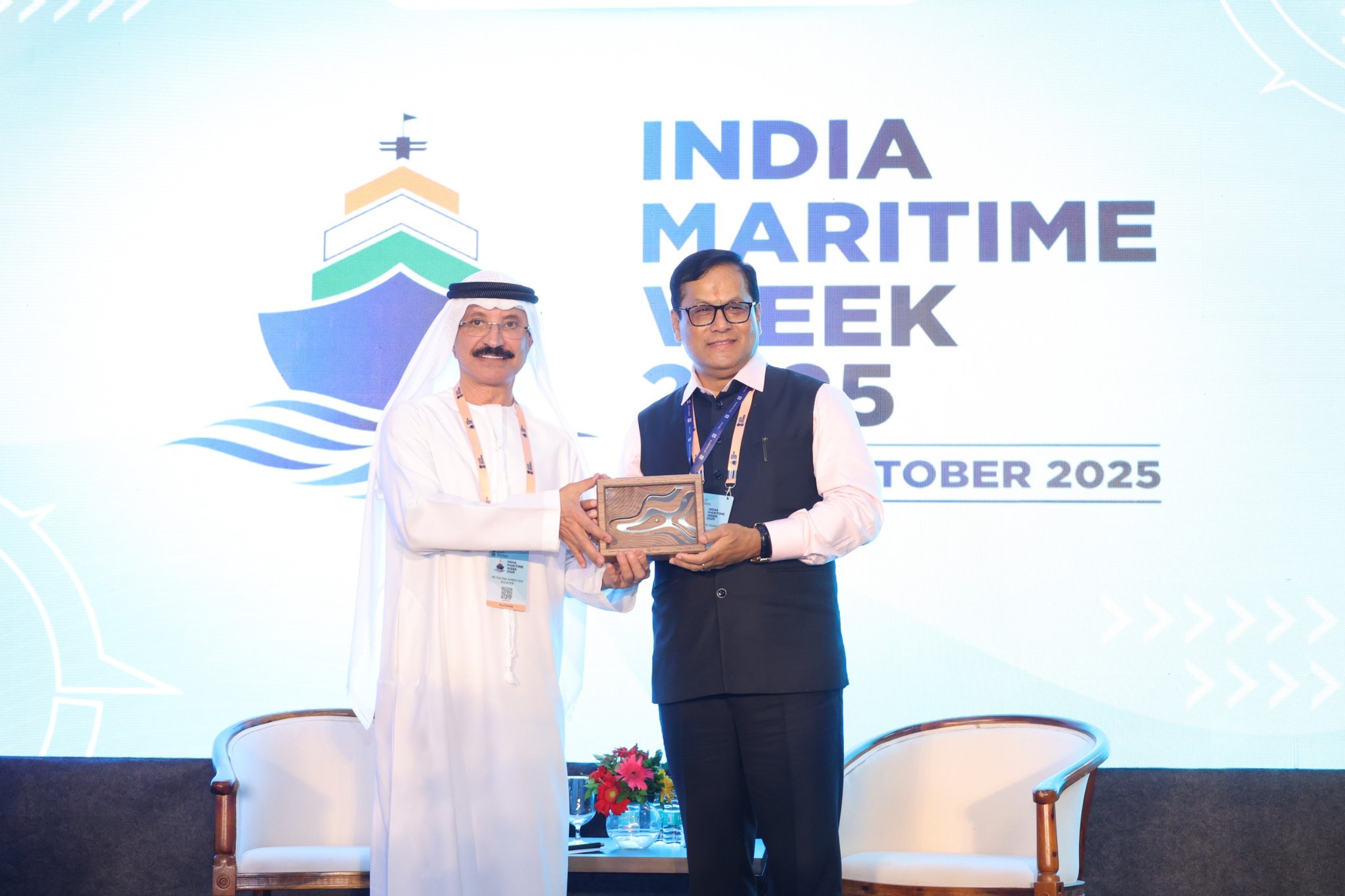
MUMBAI: At India Maritime Week 2025 in Mumbai, five Memorandums of Understanding (MoUs) worth over Rs 4,000 crore were signed by DP World of Saudi Arabia, marking a major step in India’s maritime growth journey.
The agreements aim to strengthen port infrastructure, shipbuilding, and logistics capacity, aligning with the government’s long-term plan to make India a global maritime hub.
Union Minister for Ports, Shipping and Waterways Shri Sarbananda Sonowal said, “Today, five MoUs worth over Rs 4,000 crores have been signed by DP World. It is a great initiative, and I believe this is how we are building our ecosystem of business policy and engagement in this maritime sector. This is mutual growth.”
Shri Sonowal noted that these collaborations are part of India’s mission to create a robust maritime ecosystem backed by public-private partnerships. He said the Indian Port Act 2025 establishes a new governance framework aligned with global best practices and sustainability. The government has planned total investments of about Rs 80 lakh crore in the maritime and port logistics sector, he added.
“From USD 7.9 million in 2014-15 to USD 13.5 million in 2024-25, India’s port performance has improved significantly,” the minister said. “Average turnaround time declined from 96 hours to 49.5 hours, and pre-berthing detention dropped to 3.8 hours.”
The MoUs signed by DP World are in line with the government’s Maritime India Vision 2047, which focuses on transforming port operations, shipping, and shipbuilding. “Public-private partnership is not just welcome, it is foundational,” Sonowal said. “The government remains open to co-design and co-invest with the private sector so that market insight meets state strategy.”
DP World Chairman Sultan Ahmed Bin Sulayem said the partnerships reflect a “shared commitment and belief in the strength of India’s economy.” He said, “Today marks another step forward in strengthening our partnership with India’s maritime and industry sectors. Together, we are building a more connected, competitive, and sustainable maritime future for India.”
He added that the company’s collaboration with Cochin Port Authority would upgrade infrastructure and improve handling capacity for next-generation vessels. “Together with Cochin Shipyard and the Centre of Excellence in Maritime and Shipbuilding, we are investing in skills and training to make India a global hub for shipbuilding and ship repair talent,” Sulayem said.
DP World’s initiatives include projects at Kandla Port, where new technology pilots will introduce high-speed, sustainable freight movement and clean energy in port operations. “This is a pilot project that will be born in India, a technology born in India, and we will take it to the world,” Sulayem said.
Shri Sonowal concluded that these MoUs “serve as milestones on the future pathway,” building a maritime ecosystem that is “resilient, dynamic, inclusive, competitive, and future-ready.”
MUMBAI : In a significant step towards strengthening maritime collaboration, Gujarat Maritime Board (GMB), Government of Gujarat, executed a Memorandum of Understanding (MoU) with Deendayal Port Authority (DPA) during India Maritime Week 2025 held in Mumbai.
The MoU underscores a shared commitment to enhancing operational efficiency, fostering innovation, and promoting sustainable development across Gujarat’s maritime sector. Through this partnership, both organizations aim to leverage their strengths in port management, logistics, and infrastructure development to create an integrated and resilient maritime network.
This collaboration is expected to drive technological advancements, capacity building, and green initiatives, aligning with India’s broader vision of becoming a global maritime hub.
Speaking on the occasion, senior officials from GMB and DPA highlighted that the agreement marks a pivotal milestone in public sector synergy, reinforcing Gujarat’s leadership role in shaping India’s maritime growth trajectory.
MUMBAI : State-owned Container Corporation of India Ltd (CONCOR) on Wednesday (October 29) said it the company and Jawaharlal Nehru Port Authority (JNPA) have signed a Memorandum of Understanding (MoU) to collaborate on the development and management of Common Rail Handling Operations for all upcoming container terminals at the proposed Vadhvan Port.
Under the MoU, CONCOR will serve as the Common Rail Handling Operator, providing consultancy and operational support in rail coordination, infrastructure planning, and container handling at the common rail yard. The project involves an estimated investment of about ₹500 crore and will be implemented in a phased manner, with operations expected to commence in 2030.
The MoU was signed on Wednesday, in Mumbai, during India Maritime Week 2025, by Sanjay Swarup, Chairman & Managing Director of CONCOR, and Unmesh Sharad Wagh, Chairman of JNPA and CMD of Vadhvan Port Project Limited.
The partnership represents a major step towards enhancing multimodal connectivity and developing an efficient logistics ecosystem at Vadhvan Port. It reinforces the shared commitment of JNPA and CONCOR to strengthen India’s port-led growth and infrastructure development framework.
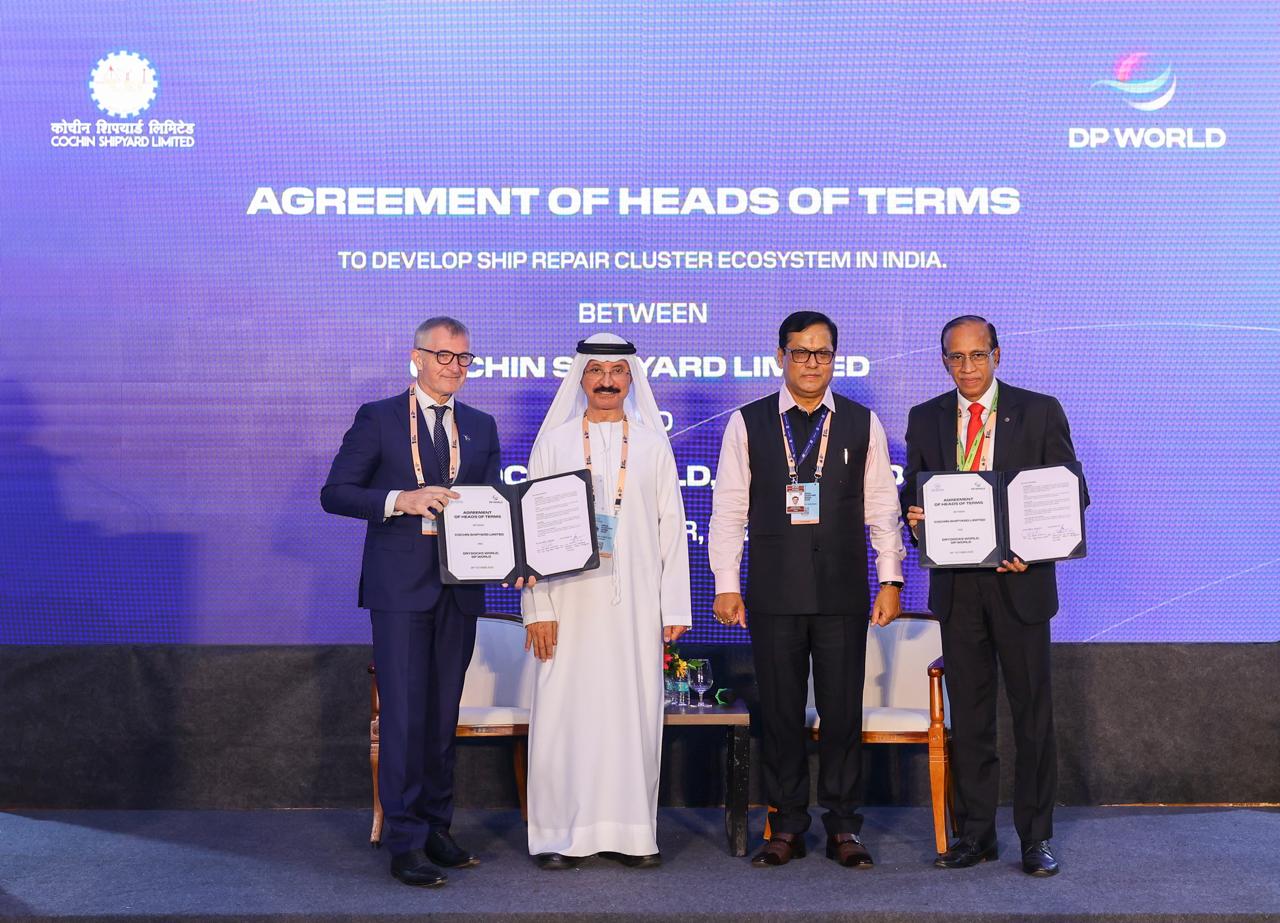
MUMBAI : Drydocks World, a DP World Company has signed a tripartite Memorandum of Understanding (MoU) with Cochin Shipyard Limited (CSL) and the Centre of Excellence in Maritime and Shipbuilding (CEMS), an entity promoted by Indian Register of Shipping to jointly develop an industry-ready maritime workforce of international standards. The tripartite MoU aims to enhance the capabilities of the Indian maritime workforce and support India’s efforts in becoming a global hub for skilled shipbuilding and repair focused talent.
The MoU was exchanged in the august presence of the Union Minister of Ports, Shipping and Waterways (MoPSW), Shri Sarbananda Sonowal, and H.E. Sultan Ahmed bin Sulayem, Group Chairman and Chief Executive Officer of DP World, among Captain Rado Anotolovic, PhD, CEO, Drydocks World; Madhu S Nair, Chairman and Managing Director, Cochin Shipyard Limited; and Arun Sharma, Chairman, Centre of Excellence in Maritime & Shipbuilding, during India Maritime Week 2025 in Mumbai.
The objective of the tripartite MoU is to enhance the capabilities of the Indian maritime workforce by positioning India as a hub for skilled shipbuilding and ship repair professionals. It aims to bridge skill gaps through training aligned with international standards, improve job prospects for certified trainees both in India and abroad, and foster collaboration between industry and training institutions. The MoU will facilitate annual training of candidates across key domains with a balanced mix of theoretical and practical learning.
Training will be conducted using advanced infrastructure at CSL, CEMS facilities, and Drydocks World sites, supported by industry experts from India and the UAE. Through its focus on innovation, sustainability, and skill development, DP World, in partnership with the Government of India, is supporting the goals of Maritime Amrit Kaal Vision 2047.
Capt. Rado Antolovic, PhD, CEO, Drydocks World, said, “Developing the next generation of maritime professionals is critical to sustaining the future of global shipbuilding. This collaboration represents a powerful step towards strengthening the maritime talent pipeline from India, reflecting our commitment to nurturing talent and transferring the technical expertise that underpins global maritime excellence. Together with Cochin Shipyard and CEMS, we are developing a capable, globally competitive workforce, which will strengthen India’s shipbuilding ecosystem and support the industry’s long-term growth.” Mr. Madhu S Nair, Chairman and Managing Director, Cochin Shipyard Limited said, “Cochin Shipyard is proud to be part of this collaborative initiative with Drydocks World and CEMS that will shape the future of India’s maritime workforce. By integrating advanced training infrastructure with global industry standards, we aim to create a talent pool that can support the growing demands of shipbuilding and repair, both domestically and internationally.”
Mr. Arun Sharma Chairman, Centre of Excellence in Maritime & Shipbuilding said, “At CEMS, we are committed to bridging the skills gap in India’s maritime sector through cutting-edge training and industry-aligned curriculum. This collaboration with Cochin Shipyard and Drydocks World, enables us to deliver immersive, hands-on skilling programs that empower youth with globally benchmarked capabilities.
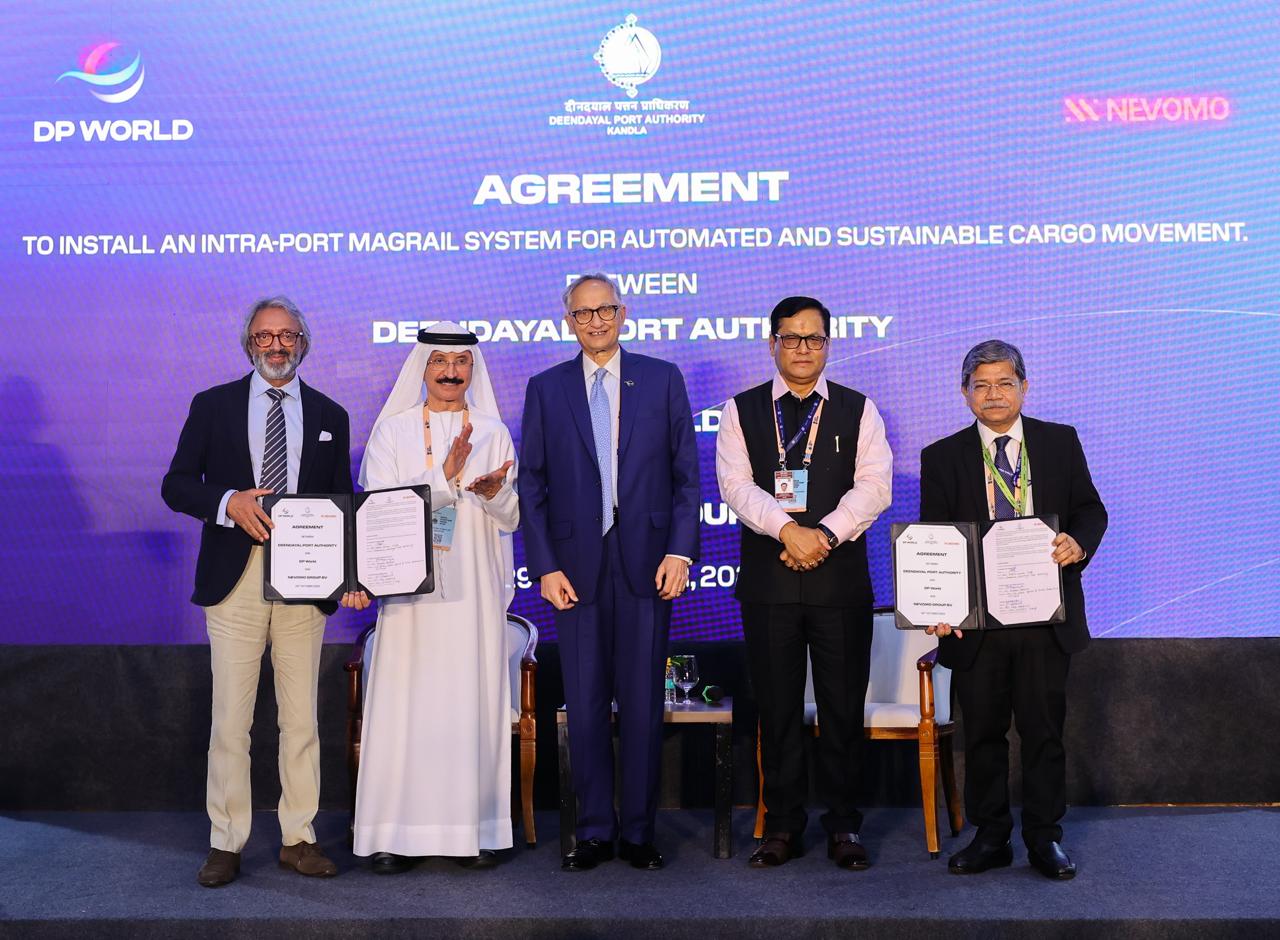
MUMBAI : DP World has signed an Agreement with Deendayal Port Authority (DPA) and Nevomo to deploy a first-of-its-kind magnetic propulsion solution that enables self-propelled rail movement of bulk cargo and containers at Deendayal Port. DP World will leverage the European deep-tech company Nevomo’s proprietary MagRail Booster technology to demonstrate its use in a live Indian port environment. The initiative marks a significant step toward setting the stage for the next generation of automated, low-emission port operations in India.
The MoU was exchanged in the august presence of the Union Minister of Ports, Shipping and Waterways (MoPSW), Shri Sarbananda Sonowal and H.E. Sultan Ahmed bin Sulayem, Group Chairman and Chief Executive Officer of DP World, between Shri Sushil Kumar Singh, IRSME, Chairman, Deendayal Port Authority (DPA), and Yuvraj Narayan, Deputy CEO and Chief Financial Officer of DP World, during India Maritime Week 2025 in Mumbai.
Under the agreement, Deendayal Port Authority (DPA), DP World, and Nevomo will collaborate to design and install a 750-metre MagRail Booster pilot track within the port. The system will demonstrate fully automated and sustainable cargo movement using existing rail infrastructure, reducing the need for conventional locomotives while improving port capacity (throughput), efficiency and safety. Alongside this installation, a strategic feasibility study will assess the potential for large-scale deployment of MagRail technology across Indian ports, aligned with the Government of India’s PM Gati Shakti Master Plan and the Harit Sagar Green Port Guidelines.
The implementation of MagRail technology marks a major advancement in modernising cargo movement within the port ecosystem. MagRail systems are designed to automate short-haul cargo transfers, which refer to the movement of goods over short distances within or near the port, such as between terminals, warehouses, and container yards. The equipment will be installed directly onto the existing rail tracks and existing rolling stock modified, requiring no new track construction, ensuring minimal disruption and quicker low cost deployment. With existing track access rights in line with the project schedule, this system will help reduce reliance on diesel-powered road vehicles, lower carbon emissions, and enhance yard efficiency. The implementation of advanced solutions like the MagRail will further virtually increase operational performance and position the port as a test bed for next-generation, sustainable transport technologies in India.
Commenting on the collaboration, Shri Sushil Kumar Singh, IRSME, Chairman, Deendayal Port Authority (DPA), said, “This partnership marks an important milestone in Deendayal Port’s journey towards technological modernisation and sustainable growth. By introducing MagRail innovation in collaboration with DP World, we are taking a decisive step towards automating cargo movement and setting new standards in operational efficiency. This initiative not only strengthens India’s port infrastructure but also reinforces our commitment to building greener, smarter gateways that support the nation’s long-term trade and logistics ambitions.
Yuvraj Narayan, the Deputy CEO and Chief Financial Officer of DP World, said, “This agreement with Deendayal Port Authority and Nevomo marks a pivotal step in reimagining how cargo moves within India’s ports. By facilitating the implementation of MagRail technology at Deendayal Port with Nevomo, we are showcasing India’s readiness to adopt next-generation logistics that are faster, safer, and more sustainable. This initiative sets a benchmark for future port modernisation across the country — turning innovation into a blueprint for scalable, greener infrastructure.”
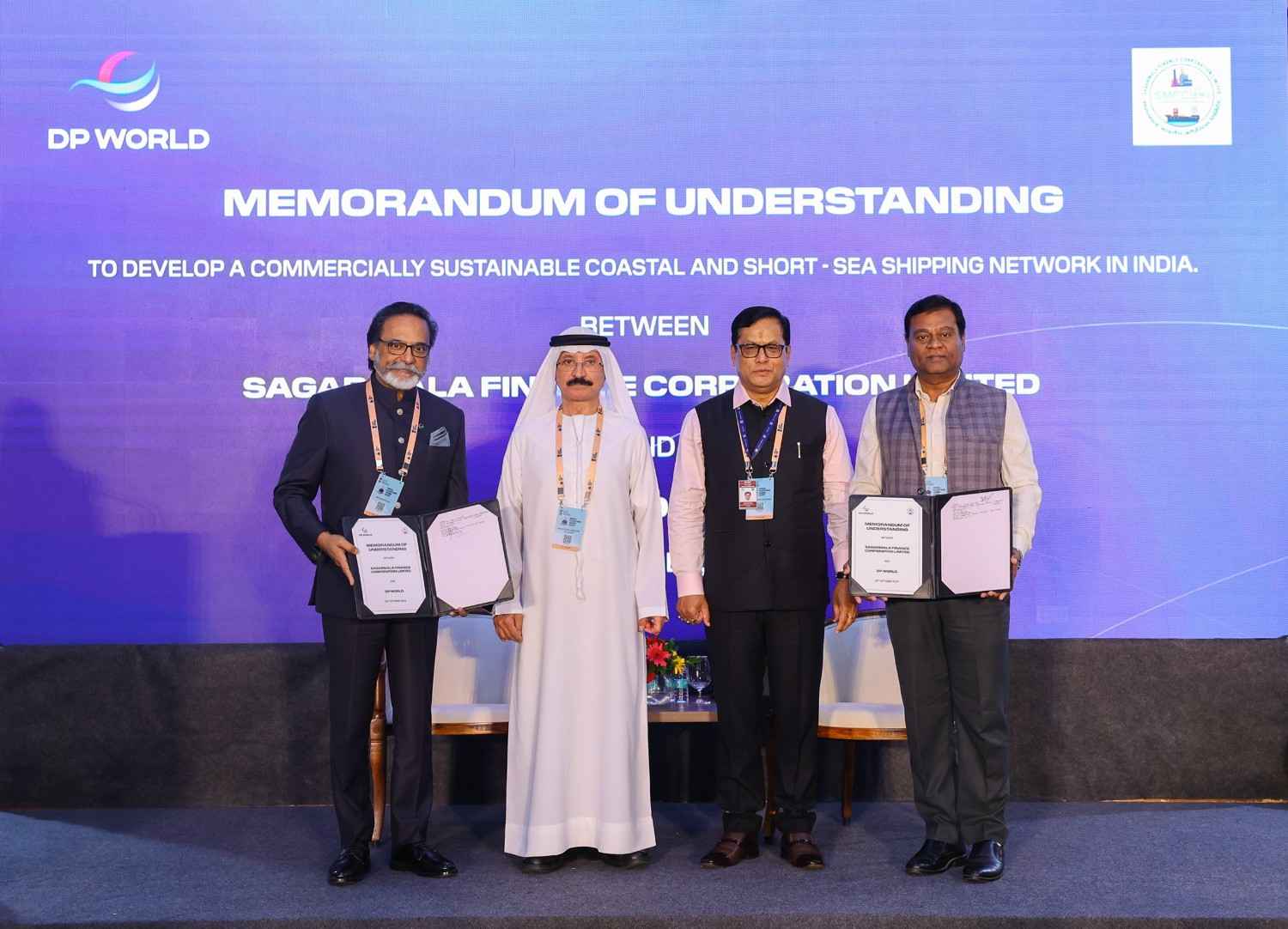
MUMBAI: Unifeeder, a DP World company, has signed a Memorandum of Understanding (MoU) with India’s Sagarmala Finance Corporation Limited (SMFCL), a Government of India Enterprise under the Ministry of Ports, Shipping and Waterways to collaborate on developing and scaling commercially sustainable coastal and shortsea shipping services across India.
By aligning public sector financing with private sector operational expertise, the partnership aims to drive greener, more efficient coastal logistics and accelerate India’s maritime transformation.
The MoU established a framework for joint action to design and finance coastal shipping corridors that support India’s ambitions to decongest roads, lower logistics costs, and decarbonize transportation. SMFCL will utilize its Maritime Development Fund to design low-cost financing and credit-enhancement instruments, while Unifeeder will contribute its operational expertise, multimodal infrastructure, and digital capabilities.
The MoU was exchanged in the august presence of the Union Minister of Ports, Shipping and Waterways (MoPSW), Shri Sarbananda Sonowal, and H.E. Sultan Ahmed bin Sulayem, Group Chairman and Chief Executive Officer of DP World, between Mr. Ganesh Raj, Global COO – Marine Services, DP World, and Shri S. T. Selvam, Director (Projects), Sagarmala Finance Corporation Limited, during India Maritime Week 2025 in Mumbai.
In its initial phase, Unifeeder and SMFCL will jointly evaluate, and spearhead use cases across operational excellence, shipping corridors, and DFC integration, as well as aligning initiatives with the national green shipping programmes. The initiative aims to create a commercially viable and scalable model that shifts cargo from road to sea, reducing emissions and improving multimodal connectivity across India’s supply chains.
Shri S. T. Selvam, Director (Projects), Sagarmala Finance Corporation Limited, said, “This partnership represents a pivotal step towards building a sustainable coastal shipping ecosystem for India. By combining Sagarmala Finance Corporation’s financial innovation with Unifeeder’s operational scale and expertise, we aim to deliver efficient, low-emission shipping solutions that complement national priorities under Sagarmala and Gati Shakti. Together, we are unlocking new opportunities for coastal connectivity, strengthening port-hinterland integration, and driving investment in green maritime infrastructure.”
Ganesh Raj, Global COO, Marine Services DP World said, “Through Unifeeder, DP World is partnering with Sagarmala Finance Corporation Limited to further advance India’s vision for sustainable and resilient maritime logistics. This collaboration reflects our commitment to enabling Viksit Bharat 2047 through co-creation of cleaner, smarter trade corridors. By piloting the combination of innovative financing and green shipping solutions, the aim is to help reduce logistics costs, accelerate modal shift to sea, and enhance India’s position as a global leader in maritime transformation.”
The collaboration complements India’s Sagarmala Programme, PM Gati Shakti, and the Maritime Amrit Kaal Vision 2047, charting a shared pathway toward sustainable growth, enhanced connectivity, and global competitiveness.
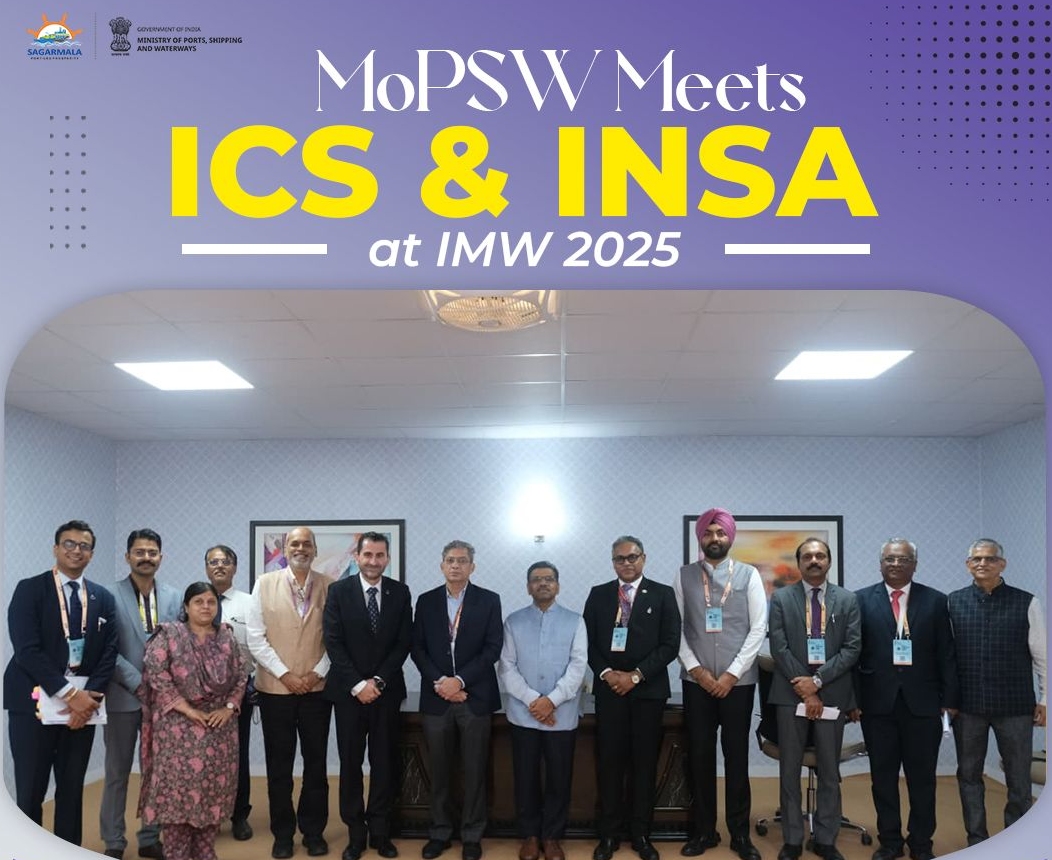
MUMBAI: On the sidelines of India Maritime Week 2025, a high-level meeting was convened between Shri Vijay Kumar (IAS), Secretary, Ministry of Ports, Shipping and Waterways (MoPSW); Shri Shyam Jagannathan, Director General of Shipping; Mr. Thomas Kazakos, Secretary General, International Chamber of Shipping (ICS); and senior officials from the Indian National Shipowners’ Association (INSA).
The discussions focused on enhancing collaboration in global maritime governance and exploring INSA’s re-engagement with the ICS to strengthen India’s participation in international shipping policy frameworks.
Key areas of deliberation included decarbonisation, digitalisation, safety at sea, and seafarer welfare — aligning with global efforts to create a more sustainable, safe, and human-centric maritime ecosystem.
The meeting underscored India’s proactive role in shaping the future of global shipping, promoting responsible maritime practices, and reinforcing its position as a key stakeholder in the international maritime community.