Home Blog Page 596

JNPA extends a warm welcome to the new Chairperson Gaurav Dayal

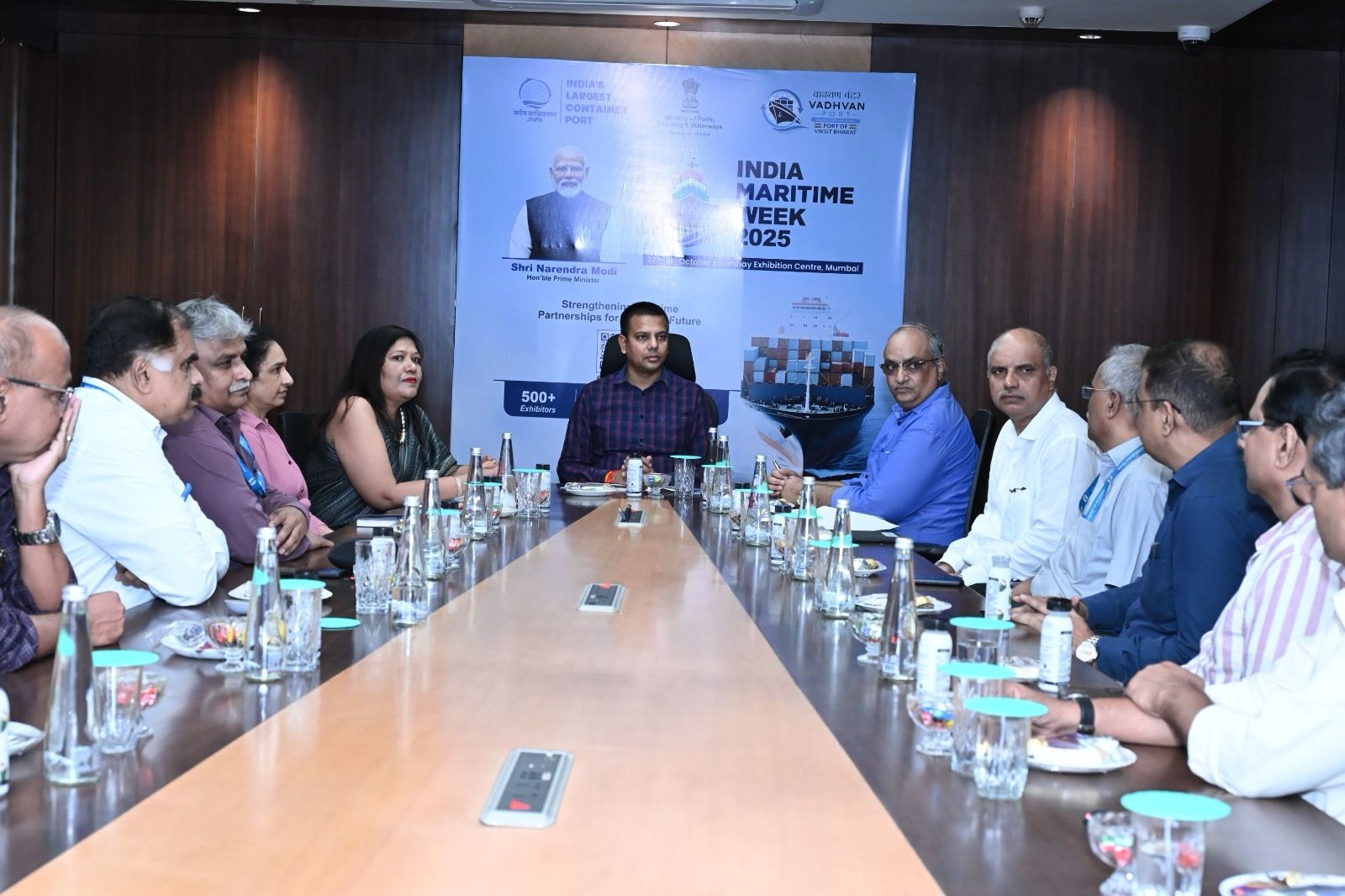
MUMBAI : Jawaharlal Nehru Port Authority (JNPA) extended a warm welcome to its new Chairperson, Shri Gaurav Dayal, IAS, who assumed charge recently. He was received by Shri Unmesh Sharad Wagh, IRS, Deputy Chairperson, JNPA, along with other Heads of Departments and senior officials of the Port Authority.

1761397837094 1 JNPA extends a warm welcome to the new Chairperson Gaurav Dayal

During the visit, Shri Dayal was briefed on JNPA’s operational framework, strategic vision, and mission, highlighting its pivotal role as India’s leading container port. Officials also presented a detailed overview of ongoing and upcoming projects, including a special film on the Vadhvan Port project, one of India’s most ambitious greenfield port developments.

The new Chairperson was taken on a comprehensive tour of the port facilities, where he reviewed key infrastructure such as the Centralised Parking Plaza, container terminals, and logistics zones. The visit offered Shri Dayal firsthand insights into JNPA’s modernization efforts, digital transformation, and sustainability initiatives aimed at enhancing port efficiency and competitiveness.

1761397837834 JNPA extends a warm welcome to the new Chairperson Gaurav Dayal

Shri Dayal appreciated the coordinated efforts of the JNPA team and emphasized the importance of innovation, capacity expansion, and environmental responsibility in driving India’s maritime growth. His leadership is expected to further strengthen JNPA’s position as a key facilitator of trade and logistics excellence in the region.

Adani Ports to showcase Blue Economy leadership at India Maritime Week 2025

AHMEDABAD: Adani Ports and Special Economic Zone Ltd (APSEZ), India’s largest port developer and operator, is set to showcase its role in shaping the nation’s Blue Economy at the ensuing India Maritime Week (IMW) 2025.

India Maritime Week (IMW) 2025 is taking place at the Bombay Exhibition Centre in Mumbai from October 27-31.

Adani Ports will showcase how technology, inclusion and indigenous innovation are powering the nation’s journey towards a self-reliant and sustainable maritime future.

Through its pavilion, Adani Ports will highlight how technology, inclusion, Make-in-India innovation and sustainability are redefining India’s maritime growth story. At IMW 2025, the APSEZ Pavilion is built around four key pillars — Aatmanirbhar Bharat, Women Empowerment, AI-powered Logistics and Impact. A major focus this year is the MoU signings that will advance India’s port, dredging and harbour capabilities under the Make-in-India framework.

Prime Minister Narendra Modi‘s attendance on October 29, followed by the Global Maritime CEO Forum, will further underscore India’s ambition to lead the maritime world.

India Maritime Week (IMW) 2025 is a vision of India’s maritime resurgence.

Organised by the Indian Ports Association (IPA) under the Ministry of Ports, Shipping and Waterways, the event is expected to bring together over 1,00,000 delegates, 500+ exhibitors, 200+ global speakers and participants from 100+ countries to chart the future of the global maritime economy.

Over the past decade, India’s maritime policy landscape has evolved rapidly under the twin frameworks of Sagarmala and India Maritime Vision 2030, encompassing more than 150 initiatives across ports, shipping and inland waterways.

These flagship programmes aim to position India as a global maritime hub by driving port-led development, lowering logistics costs and promoting sustainable coastal infrastructure — all key enablers of Aatmanirbhar Bharat.

APSEZ, part of the diversified Adani Group, has emerged as a key enabler of India’s port-led growth.
From a single port at Mundra, Gujarat, in the late 1990s, APSEZ now operates 15 ports across India and four overseas, supported by 12 multimodal logistics parks, 132 rakes and a 5,000+ vehicle fleet.

Handling nearly one-fourth of India’s total cargo, APSEZ today represents the nation’s largest integrated transport utility.

Under its Harbour Business, APSEZ will sign multiple long-term MoUs that reinforce its leadership in marine services:

With Mumbai Port Authority (MBPA) for the supply and charter hire of six ASTDS tugs for seven years and one Green (GTTP) tug for 15 years.

With VO Chidambaranar Port Authority (VOCPA), Tuticorin, Tamil Nadu, for the charter hire of two harbour tugs for seven years.

With Chennai Port Authority (ChPA) for the charter hire of one 60 TBP Escort Tug Vessel (ETV).

With the Directorate General of Shipping (DGS) for the construction of twelve tugboats, to be signed on October 29 in the presence of PM Modi.

In the dredging segment, APSEZ will sign an MoU for the construction of a self-propelled grab dredger, marking another milestone in indigenous maritime engineering.

APSEZ will ink MoUs for new and strategic developments at Vadhvan Port, Haldia Port, Vizhinjam LNG bunkering and Dighi Port, showcasing its commitment to capacity creation and green infrastructure.

A key highlight of APSEZ’s showcase is India’s first Trailing Suction Hopper Dredger (TSHD) simulator, designed indigenously by ARI Simulation for APSEZ under the Make-in-India programme — a milestone that reinforces India’s engineering prowess and supports Sagarmala’s goal of expanding port capacity through domestic manufacturing.

Inclusivity also anchors the APSEZ story. At Vizhinjam Port in Kerala, India’s first transhipment hub, APSEZ has trained and deployed the country’s first women quay crane operators, exemplifying how technology and skill development can create equitable opportunities in maritime operations.

Its Zero Touch Multi-Modal Logistics Platform integrates ports, rail, road and inland waterways using AI-driven predictive analytics, directly contributing to lower logistics costs and improved efficiency — key to boosting India’s trade competitiveness.

India’s Blue Economy, contributing about 4 per cent to GDP (USD 13.2 billion), is fast becoming a growth frontier spanning fisheries, renewables, coastal tourism and logistics.

With 100per cent FDI allowed in port infrastructure and green initiatives such as the Green Tug Transition Programme (GTTP) and Harit Sagar Guidelines, sustainability and self-reliance are converging.

With a global footprint spanning Haifa (Israel), Colombo (Sri Lanka), Queensland (Australia) and Dar es Salaam (Tanzania), APSEZ, in many ways, strengthens India’s SAGAR Vision (Security and Growth for All in the Region), enhancing regional cooperation and trade resilience.

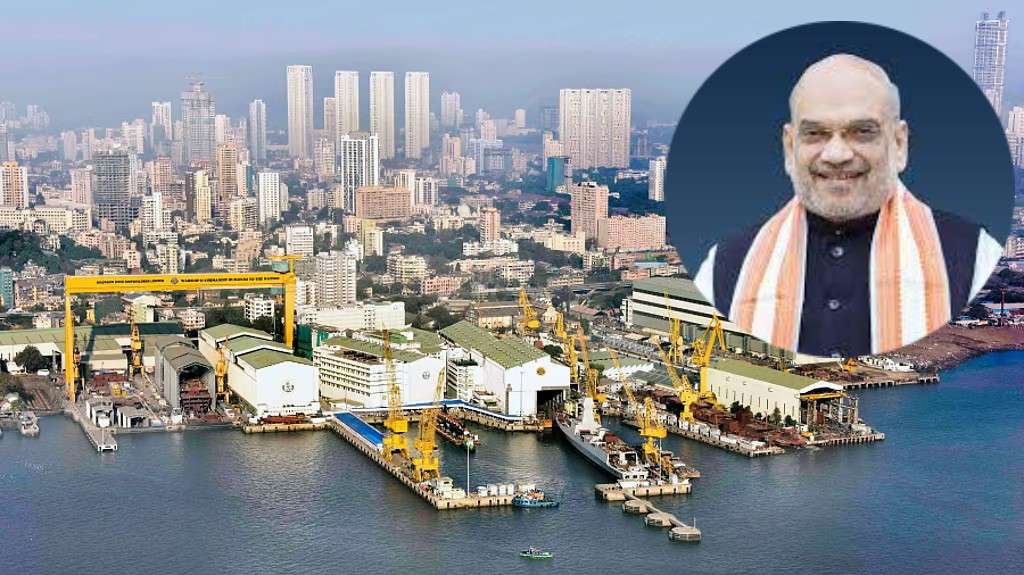
Amit Shah to inaugurate Deep-Sea Fishing Vessels at Mazagon Dock, Mumbai today

MUMBAI: Union Home Minister and Minister of Cooperation Shri Amit Shah will distribute the state-of-the-art Deep-Sea Fishing Vessels at Mazagon Dock, Mumbai today. Shri Devendra Fadnavis, Chief Minister of Maharashtra; Shri Eknath Shinde and Shri Ajit Pawar, Deputy Chief Ministers of Maharashtra and Shri Murlidhar Mohol Union Minister of State (Cooperation) will be present on the occasion.

The handing over of the keys of deep-sea fishing vessels to beneficiaries by Union Cooperation Minister Shri Amit Shah will mark a historic milestone in cooperative-led deep-sea fishing which will symbolize India’s commitment to self-reliance, sustainability and empowering cooperatives in the fisheries sector.

Deep Sea Fishing Vessels are being given to the beneficiaries under Pradhan Mantri Matsya Sampada Yojna with unit cost of Rs 1.2 Cr with financial support from Government of Maharashtra, the National Cooperative Development Corporation (NCDC) and Department of Fisheries, Government of India. This initiative is a testament to the Modi Government’s commitment to realizing the vision of Aatmanirbhar Bharat and strengthening the Blue Economy. Under the leadership of Prime Minister Shri Narendra Modi, it marks a significant step towards modernizing India’s Marine fisheries sector, enhancing deep-sea fishing capacity, and promoting cooperative-led growth in coastal regions. It aims to explore fisheries resources in the Indian EEZ and High Seas.

In view to accelerate cooperative-led deep-sea fishing initiatives through cooperatives and FFPOs  a Joint Working Group (JWG) has been constituted by the Department of Fisheries, Ministry of Fisheries, Animal Husbandry and Dairying, Government of India and Department of Cooperatives, Ministry of Cooperation, Government of India.  

India’s marine fisheries sector has traditionally operated on a modest scale, with fishermen relying on conventional vessels and techniques, typically venturing only up to 40–60 nautical miles from the coastline. This limited operational range has constrained catch volumes and economic returns.

This initiative will empower fisheries cooperative societies and FFPOs to sustainably harness the vast potential of India’s Exclusive Economic Zone (EEZ) and High Seas, particularly in regions like Lakshadweep and Andaman & Nicobar Islands. It is expected to unlock new opportunities in high-value fisheries such as tuna, thereby enhancing India’s seafood exports and strengthening coastal livelihoods.

Background – Significance of the Event

The inauguration of deep-sea fishing vessels at Mazagon Dock represents a pivotal moment in the modernization of India’s marine fisheries infrastructure. These newly constructed vessels are equipped with advanced technologies that enable sustainable harvesting of marine resources, ensuring minimal ecological disruption while maximizing economic returns. The integration of onboard digital systems will enhance traceability, safety, and operational efficiency, aligning India’s marine practices with global standards of responsible fishing.

A central focus of the event is the strengthening of fisheries cooperatives, which play a vital role in empowering coastal communities. The initiative supports the development and scaling of Fish Farmer Producer Organizations (FFPOs) and cooperative societies, enabling them to function as self-reliant entities. Importantly, the initiative places strong emphasis on promoting women-led cooperative enterprises, recognizing their critical role in driving inclusive growth, leadership, and socio-economic transformation in coastal communities.

The event also highlights the convergence of government schemes and institutional support mechanisms aimed at transforming the fisheries landscape. The schemes like Pradhan Mantri Matsya Sampada Yojana (PMMSY) and the Fisheries and Aquaculture Infrastructure Development Fund (FIDF) are instrumental in developing cold-chain and value-chain infrastructure for marine produce, enhancing the quality, shelf-life, and marketability of fishery products. Additionally, efforts are being made to improve market access, ensuring better price realization and economic sustainability.

Finally, the strategic role of fisheries cooperatives in advancing India’s Blue Economy and securing coastal livelihoods will be underscored. The deep-sea fishing initiative is expected to generate substantial employment opportunities in coastal belts, contributing to socio-economic upliftment. It will also bolster India’s seafood exports, reinforcing the country’s position in global marine trade. By promoting sustainable fishing practices and responsible resource management, the initiative supports national goals of food and nutritional security, while safeguarding the long-term health of marine ecosystems.

HUDCO signs MoU with JNPA for infra collaboration worth ₹5,000 crore

MUMBAI : Housing and Urban Development Corporation Limited (HUDCO) has signed a non-binding Memorandum of Understanding (MoU) with the Jawaharlal Nehru Port Authority (JNPA) to explore cooperation in infrastructure development and project financing at the Jawaharlal Nehru Port.

Under the agreement, both entities will collaborate on existing and upcoming infrastructure projects, including financing and refinancing of port-related initiatives, with an estimated value of ₹5,000 crore.

The MoU was signed in Mumbai on Friday (October 24) by HUDCO Chairman and Managing Director Sanjay Kulshrestha and JNPA Chairman Unmesh Sharad Wagh.

According to HUDCO, the understanding marks the beginning of efforts to identify potential areas for partnership in enhancing port infrastructure and supporting the financing needs of development projects at JN Port.

India sets sail toward Global Shipbuilding Leadership by 2047 at Kochi Summit

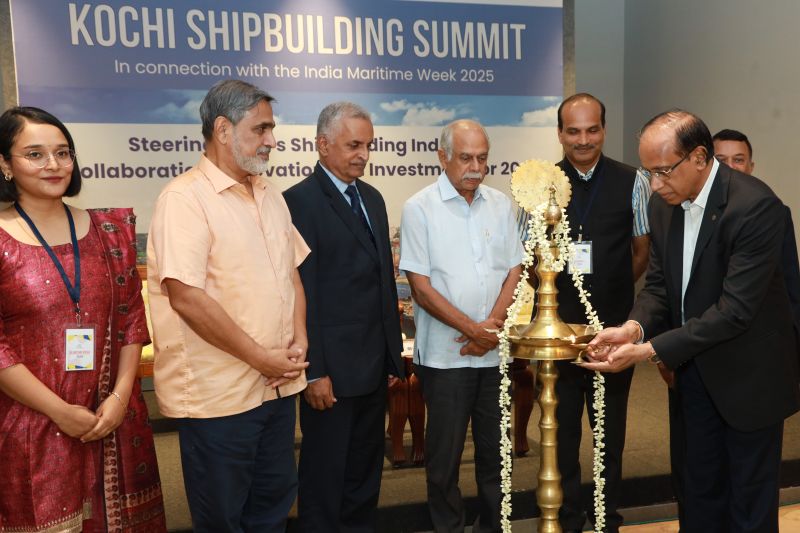
KOCHI : The Kochi Shipbuilding Summit 2025, jointly organised by the Centre for Public Policy Research (CPPR) and Cochin Shipyard Limited (CSL), concluded in Kochi with a strong call to position India as a global leader in shipbuilding by 2047.

Held as a prelude to India Maritime Week 2025, the summit brought together leading experts from the maritime industry, academia, and policy circles under the theme “Steering India’s Shipbuilding Industry: Collaboration, Innovation and Investment for 2047.”

The event was inaugurated by Shri Madhu S Nair, Chairman and Managing Director of Cochin Shipyard Ltd., who described shipbuilding as a “mother industry” driving economic growth, employment generation, and technological advancement.

Also present were Dr. D Dhanuraj, Chairman of CPPR, and Dr. Dhritishree Bordalai, Senior Research Associate at CPPR. In his address, Dr. Dhanuraj emphasized the importance of fostering strong partnerships between industry and academia to enhance capabilities and spur innovation in the shipbuilding sector.

The #KochiShipbuildingSummit showcased India’s growing maritime potential and underscored the need to leverage its industrial strength, skilled workforce, and supportive policy framework to propel the nation into the ranks of the world’s top five shipbuilding nations by 2047.

Odisha to unveil Inland Vessel Rules 2025 and  ink key maritime MoUs at India Maritime Week

MUMBAI : Odisha will unveil the Odisha Inland Vessel Rules, 2025 during the India Maritime Week (IMW) 2025, at Mumbai underscoring its commitment to strengthening inland water transport and sustainable maritime growth.

During IMW-2025, the state will formally unveil the Odisha Inland Vessel Rules, 2025, reinforcing regulatory support for inland water transport. In a bid to enhance infrastructure and tourism, several MoUs will also be signed with the Indian Ports Association (IPA), Paradip Port Authority (PPA), Indian Port Rail and Ropeway Corporation Ltd (IPRCL) and Inland Waterways Authority of India (IWAI).

Two key publications, including a coffee table book on Odisha’s maritime journey from ancient Kalinga’s naval prowess to its modern-day maritime ambitions, and a white paper on the Odisha Maritime Perspective Plan (OMPP) outlining the long-term vision for integrated maritime development will also be released.

Chairing the 6th Board Meeting of the Odisha Maritime Board (OMB), Chief Secretary Manoj Ahuja reaffirmed the state’s determination to revive its maritime legacy and position Odisha as a leading coastal economy.

Maritime sector drives India’s economic surge as 95% of trade moves through sea routes

NEW DELHI: Nearly 95 per cent of India’s trade by volume and about 70 per cent by value moves through maritime routes, underlining the sector’s centrality to India’s economy and competitiveness. Data from a government press release highlights that the maritime sector is the backbone of India’s global trade and growth story.

From crude oil and coal to electronics, textiles, and farm goods, most of India’s imports and exports pass through its ports. This makes the efficiency of maritime transport vital for national competitiveness and global integration.

To strengthen this lifeline, India has implemented the Maritime India Vision 2030 (MIV 2030), a comprehensive roadmap featuring more than 150 initiatives with an investment projection of Rs 3-3.5 lakh crore. Supported by a Rs 69,725 crore package for shipbuilding, the plan aims to modernise ports, expand shipping capacity, and boost inland waterways. In FY 2024-25, major ports handled about 855 million tonnes of cargo, marking a steady rise from 819 million tonnes the previous year.

Over the past decade, India’s port capacity has nearly doubled from 1,400 to 2,762 million metric tonnes per annum, while cargo handled has grown from 972 to 1,594 million tonnes. Operational performance has improved sharply, with average vessel turnaround time cut from 93 hours to 48 hours. Financial results also show the sector’s net annual surplus rising from Rs 1,026 crore to Rs 9,352 crore, and operating ratios improving from 73 per cent to 43 per cent.

The shipping sector too has expanded, with the number of Indian-flagged vessels increasing from 1,205 to 1,549 and gross tonnage from 10 to 13.52 million tonnes. Coastal shipping has nearly doubled to 165 million tonnes, offering an efficient and eco-friendly mode of transport. India’s seafarer workforce has more than doubled to over three lakh, now forming 12 per cent of the global seafaring community.

Inland water transport has emerged as a key growth area. The Inland Waterways Authority of India (IWAI) recorded a cargo movement of 146 million tonnes in 2025, a jump of more than 700 per cent since 2014. The number of operational waterways increased from three to twenty-nine. New terminals and multimodal hubs, including the Haldia facility in West Bengal, are advancing logistics under the Public Private Partnership model.

The Sagarmala Programme, central to MIV 2030, targets 840 projects worth Rs 5.8 lakh crore by 2035 to cut logistics costs and generate jobs. The government has also outlined a long-term Maritime Amrit Kaal Vision 2047, with nearly Rs 80 lakh crore earmarked for ports, shipbuilding, green shipping, and inland waterways.

Source: ANI

IAPH led the Collaboration of Chennai and Kamarajar Ports with SIX Japanese Ports to Enhance Global Maritime Excellence

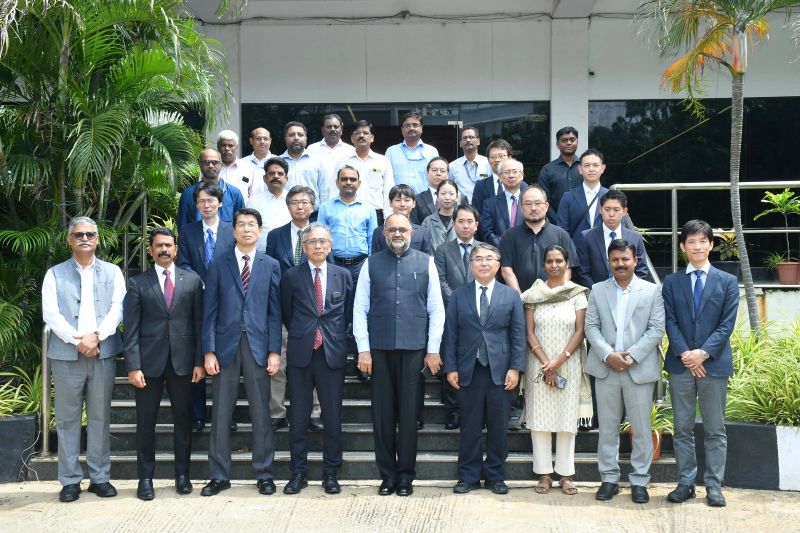
CHENNAI : Chennai Port Authority (ChPA) and Kamarajar Port Limited (KPL), in association with IAPH, Tokyo successfully hosted a three day knowledge exchange program with six major ports from Japan.

The program brought together senior leadership teams from prominent Japanese ports, including Tomakomai, Osaka, Kobe, Tokyo, Yokohama, and Nagoya, as well as two Japanese universities, Kyoto and Kanagawa. The 15-member delegation, led by Dr. Masahiko Furuichi, Secretary General of IAPH, included esteemed senior maritime leaders, Dr. Inchimo Motono, Senior Executive Director of Yokohama Port Corporation & Vice President of IAPH, Asia, Mr. Sanada Hitoshi, President of North Japan Port Consultancy Pvt Ltd, and Dr. Ennarasu Karunesan, Regional Director of IAPH India.

The knowledge exchange program focused on key areas, including:

  1. Decarbonisation:
  2. Climate and Energy:
  3. Digitalization:
  4. Risk Resilience of Ports:

The event was inaugurated by Mr. Sunil Paliwal IAS, Chairman of Chennai Port & KPLand IPA, who emphasized the importance of global collaboration in driving India’s maritime growth. “This initiative aligns perfectly with the Prime Minister’s vision of Amritkaal India 2047, where India aims to become a developed nation, not only in terms of economy but also as a global maritime nation,” he said.

Ms. Irene Cynthia IAS, MD of KPL, shared the best practices of KPL on efficiency and cargo growth, achieved with a significantly lean team of about 100 plus direct employees, compared to the industry average of 1000 employees for similar volumes in age old ports, which is a reflection of a modern port in India.

Mr. S. Vishwanathan IAS, Dy. Chairman of Chennai Port Authority, highlighted the strong bilateral relations between India and Japan, with an annual trade of $26 billion. Japan exports $18 billion worth of goods to India, while India exports $8 billion to Japan.

This collaboration will provide opportunities for both countries maritime sectors development, leveraging the growing bilateral trade between Japan and India, said Mr. Sanada Hitoshi, President, North Japan Port Consultancy Pvt. Ltd.

Indian and Japanese ports is expected to enhance their competitiveness and sustainability, paving the way for a new era of cooperation and growth in the maritime sector, benefiting both India and Japan as remarked by Dr Ichio Motono, Sr Executive Director, Yokohama Port Corporation, Japan.

Maritime trade is a key driver of economic growth, and collaborations like this India-Japan ports initiative are timely and crucial. As India marches towards becoming the world’s third-largest economy, such partnerships will play a vital role in facilitating international trade and fueling growth, said Dr. Ennarasu Karunesan, Regional Director of IAPH, India, who spearheaded this initiative.

31 customs notifications consolidated into 1 to enhance Ease of Doing Business

NEW DELHI: In a step towards simplification, transparency, and enhancing Ease Of Doing Business, the Central Board of Indirect Taxes and Customs (CBIC) consolidated 31 separate Customs Duty notifications into a single comprehensive document.

This new notification — Notification No. 45/2025, dated October 24, 2025 — will come into force on November 1, 2025.

It essentially retains all the existing benefits and duty exemptions from those older notifications but organises them into a unified, structured format. Also, this consolidation marks another milestone in the government’s ongoing efforts to promote the Ease of Doing Business in India.

Over the years, importers and customs officers have had to navigate a complex web of multiple notifications to determine applicable duty rates, exemptions, and conditions. From November 1, 2025, importers, exporters, and customs brokers will only need to refer to Notification No. 45/2025-Customs for applicable exemptions or duty reliefs, instead of consulting multiple prior notifications.

The new consolidated notification effectively merges all relevant exemptions and procedural details into a single framework, eliminating redundancy while preserving the substance of existing benefits.

Understandably, this will make it easier for both businesses and customs officials to access accurate information in a single source, improving consistency in customs administration.

On a broader level, DPIIT, the Nodal Department for coordinating the initiatives under Ease of Doing Business, coordinates with Ministries/Departments and States/UTs for initiatives to reduce compliance burden on citizen and business activities. The objective of this exercise is to improve Ease of Doing Business and Ease of Living by Simplifying, Rationalising, Digitising and Decriminalizing Government to Business and Citizen Interfaces across Ministries/States/UTs.

CONCOR has entered into two strategic MoUs with Adani Cement

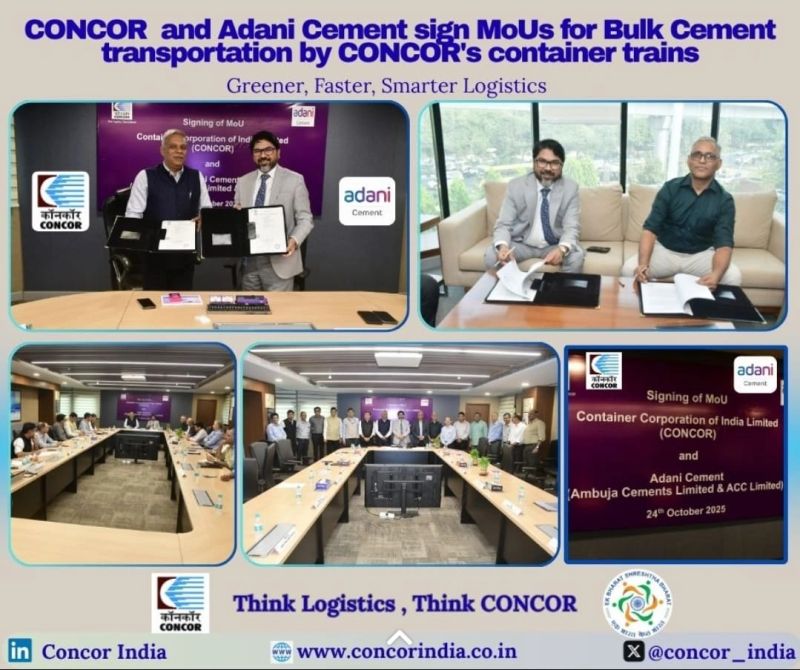
NEW DELHI : In a major step towards advancing sustainable logistics and promoting modal shift from road to rail, Container Corporation of India Ltd. (CONCOR) has signed two strategic Memorandums of Understanding (MoUs) with Adani Cement to facilitate the rail-based transportation of bulk cement using specialized tank containers.

Under these MoUs, CONCOR will deploy dedicated container rakes across key industrial and consumption corridors, utilizing its pan-India network of terminals and multimodal logistics expertise. The collaboration aims to deliver a seamless, cost-efficient, and environment-friendly logistics solution for the cement sector, reducing dependence on traditional road transport.

The agreements were signed in New Delhi in the presence of Shri Sanjay Swarup, Chairman & Managing Director, CONCOR, and Shri Vinod Bahety, Chief Executive Officer, Adani Cement, along with directors and senior officers from both organizations.

Strategic Impact

Optimized Network Synergies: The partnership will leverage the extensive terminal infrastructure and operational strengths of both CONCOR and Adani Cement to ensure efficient cargo handling and turnaround.

Enhanced Supply Chain Efficiency: Lower logistics costs, faster movement, and improved reliability are expected to transform the cement distribution landscape.

Sustainability Milestone: By shifting bulk cement movement from road to rail, the initiative will contribute significantly to reducing CO₂ emissions, easing road congestion, and enhancing the resilience of India’s logistics network.

Alignment with National Priorities: The initiative directly supports the goals of the National Logistics Policy (NLP) and India’s Net Zero 2070 vision, promoting decarbonized freight mobility.

Scalable, Replicable Model: The rail-based bulk logistics framework developed under this partnership can be expanded to other commodities and industrial sectors, setting a new benchmark for integrated logistics innovation.

Speaking on the occasion, Shri Sanjay Swarup highlighted, “This collaboration reflects CONCOR’s commitment to driving green logistics through multimodal connectivity. By partnering with Adani Cement, we aim to unlock new efficiencies in bulk transportation while contributing to India’s sustainability objectives.”

Shri Vinod Bahety added, “Rail-based bulk cement movement is the future of sustainable supply chains. This partnership with CONCOR will help us optimize our logistics footprint, lower emissions, and strengthen our delivery reliability across markets.”

With this landmark partnership, CONCOR and Adani Cement are paving the way for a modern, efficient, and climate-resilient logistics ecosystem, reinforcing India’s leadership in sustainable industrial transportation.