Home Blog Page 604

China unveils initiative to promote international green shipping corridors

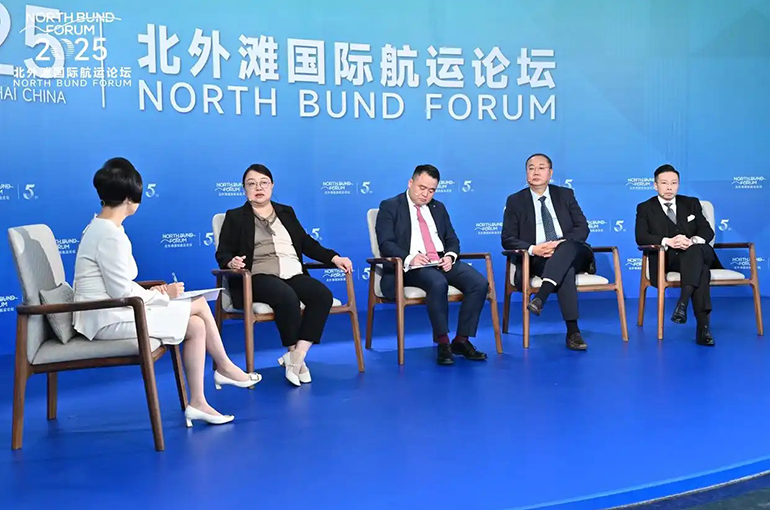
SHANGHAI: China’s Ministry of Transport launched the Initiative for International Cooperation on Green Shipping Corridor on Sunday during the 2025 North Bund Forum in Shanghai, calling for joint efforts to build a safer, more efficient, and greener global shipping ecosystem.

The initiative outlines seven key measures to promote international cooperation on green shipping corridors.

The measures include expanding green shipping corridors in phases, accelerating the development of green and low-carbon vessels, developing (near) zero-carbon ports, enhancing green fuel supply capacity, leveraging government-market collaboration, sharing best practices, and supporting innovation.

Several cooperative achievements in building green shipping corridors were announced at the forum, including the joint establishment of a green shipping corridor between Qingdao Port in east China and the Port of Hamburg, Germany.

According to the ministry, China has maintained its top global ranking in maritime connectivity for several consecutive years, with steadily expanding openness and international cooperation in the sector. As of April this year, China had signed bilateral or multilateral maritime agreements with 70 countries and regions.

Major ports across China, including Shanghai Port and Ningbo-Zhoushan Port, have accelerated the development of green fuel supply infrastructure.

The 2025 North Bund Forum, the fifth edition of the event, is co-hosted by the Ministry of Transport and the Shanghai Municipal People’s Government. It will run through Oct. 21.
Source: Xinhua

New Chair announced for Cargo Handling Industry Body

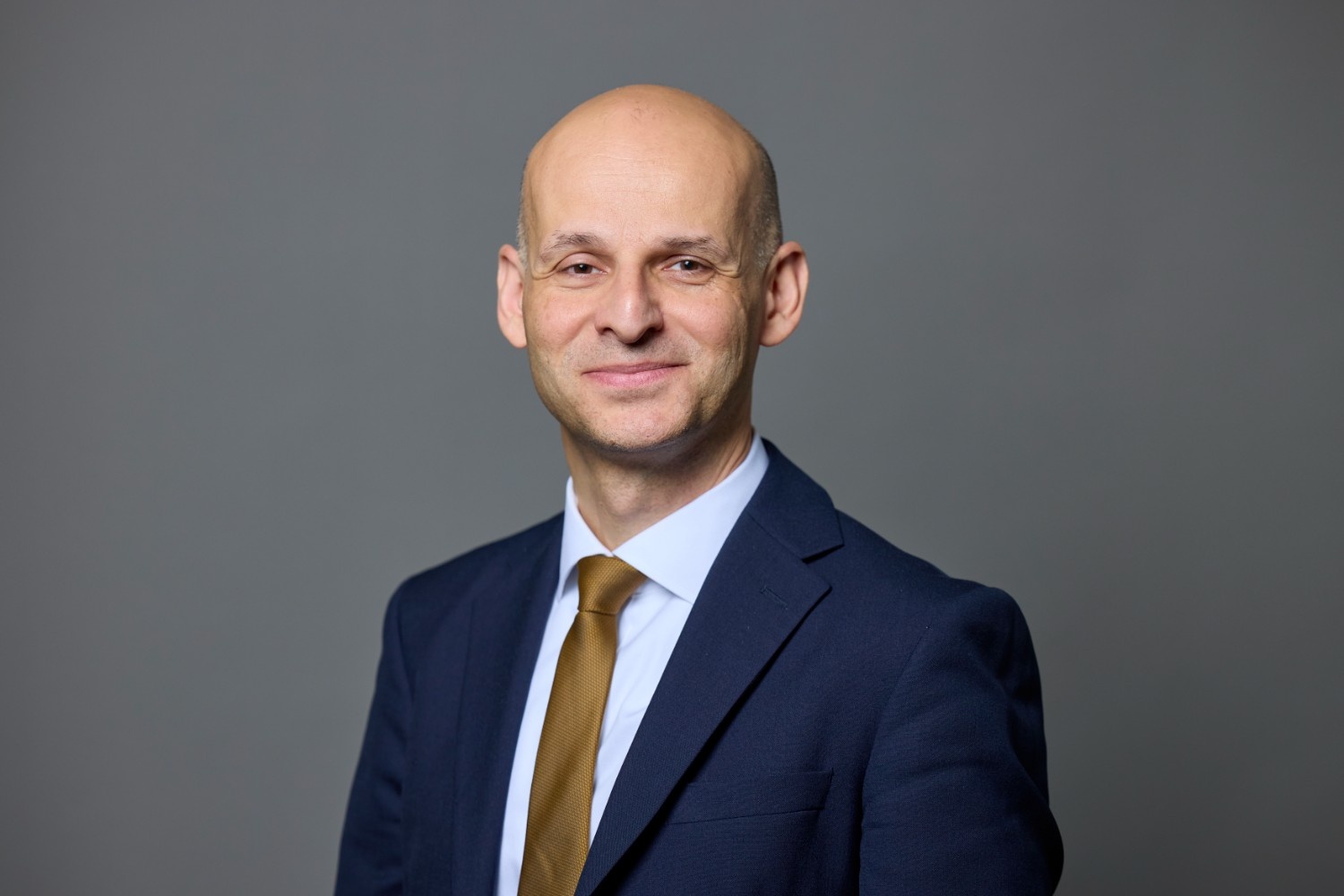
International Cargo Handling Association (ICHCA) has a new chair. Australian Scott McKay has been elected, effective 30 September  

LONDON: With members from the port, terminal, shipping and cargo handling community throughout the world, ICHCA remains committed to improve the safe working environment of all those handling cargo throughout the international maritime supply chain.

The appointment of McKay, a veteran with nearly forty years experience of supply chain management is seen as reinforcing that mission, particularly regarding the Association’s attempts to disseminate safety performance data and innovations to cargo handlers and the broader industry.  McKay commented, “I see that ICHCA has a fantastic opportunity to further develop gathering, analysing and sharing safety data and best practice to help improve safety decisions and cultural change along and across the cargo supply chain.”

McKay joined a state chapter of ICHCA Australia seven years ago.  He was appointed Chair and became a member of the international board in November 2023. Formerly a chartered accountant at KPMG and a principal at Aurecon a design and delivery global infrastructure consultancy, he has vast experience in the supply chain industry, including senior roles in Europe, Asia and Australia as CEO in warehousing and road transport, container rail and intermodal and bulk ports operations.

Currently, as founder and chief executive of Flywheel Advisory, he helps organizations and businesses using supply chain as a differentiator to drive profitability and service levels. He is also CEO of T Ports, a bulk grain handler that develops and operates bulk ports and transhipping operations for global grain traders in Australia. T Ports provides innovative solutions for bringing deep seaports closer to the grain grower.

McKay replaces John Beckett who steps down as Chair after 18 years of service, including eight as Chair. “I believe Scott is a highly appropriate professional to be taking on the role of ICHCA Chair. He inherits a membership which is growing rapidly and has diverse members of all sizes and nationalities that share a common goal to maintain, and where possible improve safety regimes for all operators in the industry.  I wish him and the ICHCA community every success in the future.”

About ICHCA International

Established in 1952, ICHCA International is an independent, not-for-profit organisation dedicated to improving the safety, productivity and efficiency of cargo handling and movement worldwide. ICHCA’s privileged NGO status enables it to represent its members, and the cargo handling industry at large, in front of national and international agencies and regulatory bodies, while its Technical Panel provides best practice advice and develops publications on a wide range of practical cargo handling issues.

Operating through a series of national and regional chapters, including ICHCA Australia, ICHCA Japan and plus Correspondence and Working Groups, ICHCA provides a focal point for informing, educating, lobbying and networking to improve knowledge and best practice across the cargo handling chain.

Statement from INTERCARGO on the Extraordinary Meeting of MEPC

LONDON: The International Association of Dry Cargo Shipowners (INTERCARGO) released Statement on the Extraordinary Meeting of MEPC.

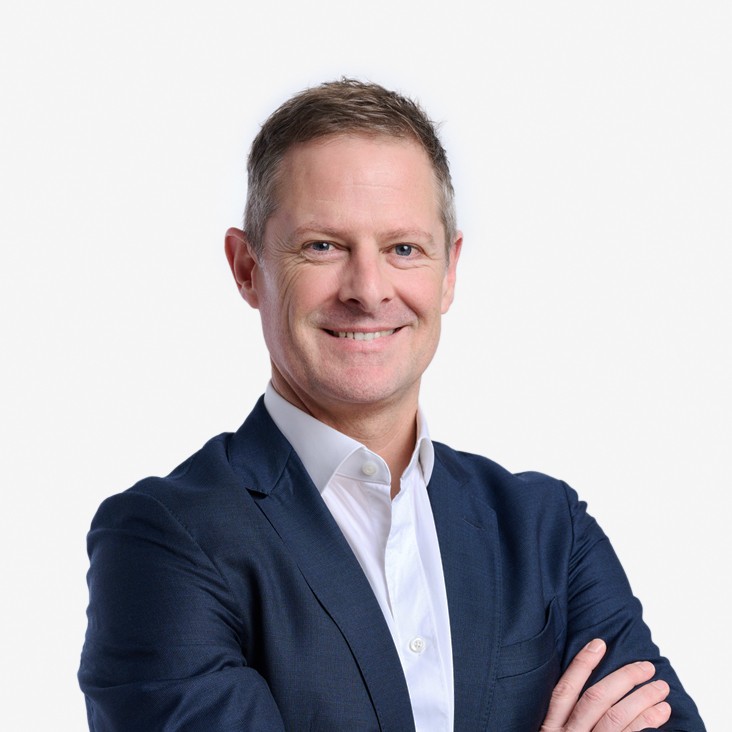
Dr Kostas Gkonis, Secretary General of INTERCARGO said: “Following IMO’s decision regarding the Net Zero Framework, INTERCARGO reaffirms its support to the IMO as the sole global regulator capable of delivering coherent and effective measures for international shipping. We wish to see the current postponement as an opportunity for further dialogue. The time ahead should be used constructively and effectively to bridge differing positions among IMO Member States and to also ensure that the industry’s voice and input are heard and taken onboard. 

“We invite Member States at IMO to work more closely among them but also in partnership with the shipping community towards agreeing on a regulatory framework that is realistic, practical, and globally workable.”

New study reveals Korean and Chinese financiers and major European banks could be most exposed to climate risks in shipping

LONDON: A substantial portion of ship financing is tied to fossil fuel carriers that face risks of stranding in the global shift to a low-carbon energy system. A comprehensive study by researchers at UCL (University College London) has mapped the global landscape of shipping finance and uncovers the financial arrangements and institutions behind USD 378 billion of maritime assets, about 30% of the global vessel fleet value.

Whilst most financiers maintain diversified portfolios across various shipping segments, certain institutions show concentrated exposure to specific fossil fuel carrier types. Based on the identified transactions, five financiers have over half of their shipping portfolio tied to fossil fuel carriers, including China Merchants Group and Korea Eximbank (KEXIM). They are followed by mostly European banks, including Standard Chartered, ABN AMRO, ING Bank, SEB, Nordea and SMBC who have over one-third of their portfolio tied to fossil fuel carriers. BNP Paribas, the financier with the largest portfolio recorded in the dataset (USD 9 billion), was also found to have almost a quarter of its portfolio invested in fossil fuel carriers (USD 2 billion).

The research, which compiled data from over 3,000 financial transactions – loans, bonds, leases, and equity investments – provides the first detailed assessment of which financiers and economies are most invested in vessels that transport oil and gas. To maintain a liveable planet as stated in the Paris Agreement’s climate goals, demand for these fossil fuels must decline. Vessels that transport these commodities may then be in oversupply and potentially become a ‘stranded asset’. Previous analysis identified gas carriers and oil tankers as segments that are particularly exposed to this demand-side risk. The demand for the transport of coal is also set to decline but options to switch to carrying other cargoes which will increase in demand, such as grains, and without major conversion costs, keeps the bulk carrier fleet at a low risk. In contrast, the young fleet of LNG carriers has a very high newbuild value and a purpose-specific design; repurposing to other commodities, if possible, would require high additional investments, reducing the fleet’s competitiveness and ability to generate profit., would require high additional investments, reducing the fleet’s competitiveness and ability to generate profit.

Dr Marie Fricaudet, Senior Research Fellow at UCL Shipping & Oceans Research Group and lead author, said: “To our knowledge, this is the first attempt to map climate risk to shipping financiers’ portfolios. The results show many financiers have a substantial part of their portfolio linked to fossil fuel transportation and highlight that more transparency is needed to properly anticipate and price-in the climate risk carried by shipping financiers.”

Banks that finance the fossil fuel carrying fleet could be holding toxic assets: the study could identify financial arrangements of liquified gas carriers of approximately USD 36 billion – only counting those where the analysis was able to match a financier with a vessel. Among the identified transactions, loans account for over half of the amount (USD 21 billion) making them the most important LNG carrier financing instrument, followed by direct ownership and leases (USD 11 billion) and equity (USD 7 billion). For oil tankers, equity financing plays a more prominent role, accounting for about 40% of a total of USD 35 billion identified transactions. Bank loans represent around the same (USD 14 billion). This highlights that the financial risks do not only sit in the loan portfolio of banks, but a large chunk is spread across global capital markets.

Based on the headquarters of financiers, the United States, South Korea, France, PR China, and the United Kingdom dominate the financing of LNG carriers, with France and South Korea being heavily invested through bank loans. China, the United States, and Hong Kong dominate oil tanker financing, with bonds being the preferred instrument in Hong Kong, Asia’s leading bond issuance hub. South Korea seems most exposed to stranded asset risks, with nearly half of its shipping investments directed toward LNG carriers.

Dr Tristan Smith, Professor of Energy and Transport at UCL Energy Institute Shipping & Oceans Research Group said: “These risks exist regardless of the IMO’s adoption of the NZF. However, reflecting on the NZF being delayed, this subject has now increased in salience – regulation has not gone away but is now more uncertain. And understanding and managing that risk will now be of even greater importance than ever.”

The methodology combined data from the Dealscan database, London Stock Exchange Group (LSEG), Marine Money database, and Clarksons World Fleet Register and Clarksons Shipping Information Network. The dataset covers approximately half of the shipping loan portfolio, which is just under USD 300 billion, and 25–40% of the global fleet value – equivalent to around USD 1 to 1.5 trillion. The coverage of the compiled dataset varies across segments, with cruise being by far the best covered segment. European banks and several other large institutions have better coverage, whereas several Asian financiers remain less covered by the dataset due to limited publicly available data. The analysis and the figures from the study should therefore be seen as a representative sample for some of the key financiers.

Dr Nishatabbas Rehmatulla, Principal Research Fellow at UCL Shipping & Oceans Research Group said: “The gaps in data highlight an urgent need for much greater transparency in shipping finance. Building this dataset from various sources, whilst complex and novel, underscores the current failure of disclosure in the sector. Whilst initiatives such as the Poseidon Principles have made an attempt at this, the climate alignment scores are aggregated at the portfolio level, meaning that data cannot be traced back to individual vessels. Furthermore they provide only an annual snapshot on GHG emissions intensity, but to really assess exposure to stranded asset risks, more forward-looking understanding is needed.” To date, the Poseidon Principles reporting has focused on the GHG intensity of the financed fleet and have not considered demand-side climate risk i.e. the exposure to risks in major reconfigurations due to climate policy related energy transition.

Last month UCL Shipping & Oceans Research Group and Kuehne Climate Centre published an interactive online tool ‘Investment Risk Monitor for Fossil Fuel Carrying Ships’, available at https://shipping-transition.org/, which provides users with high-level fleet-wide estimates of the future overall supply and demand balance for maritime transport services of different fossil fuel carrying ship types under different climate and energy scenarios. The findings show that particularly LNG carriers can be expected to be in oversupply over the next decade and thus face a risk of being written off.

NorthStandard appoints new Head of Asia Pacific to drive strategy for growth

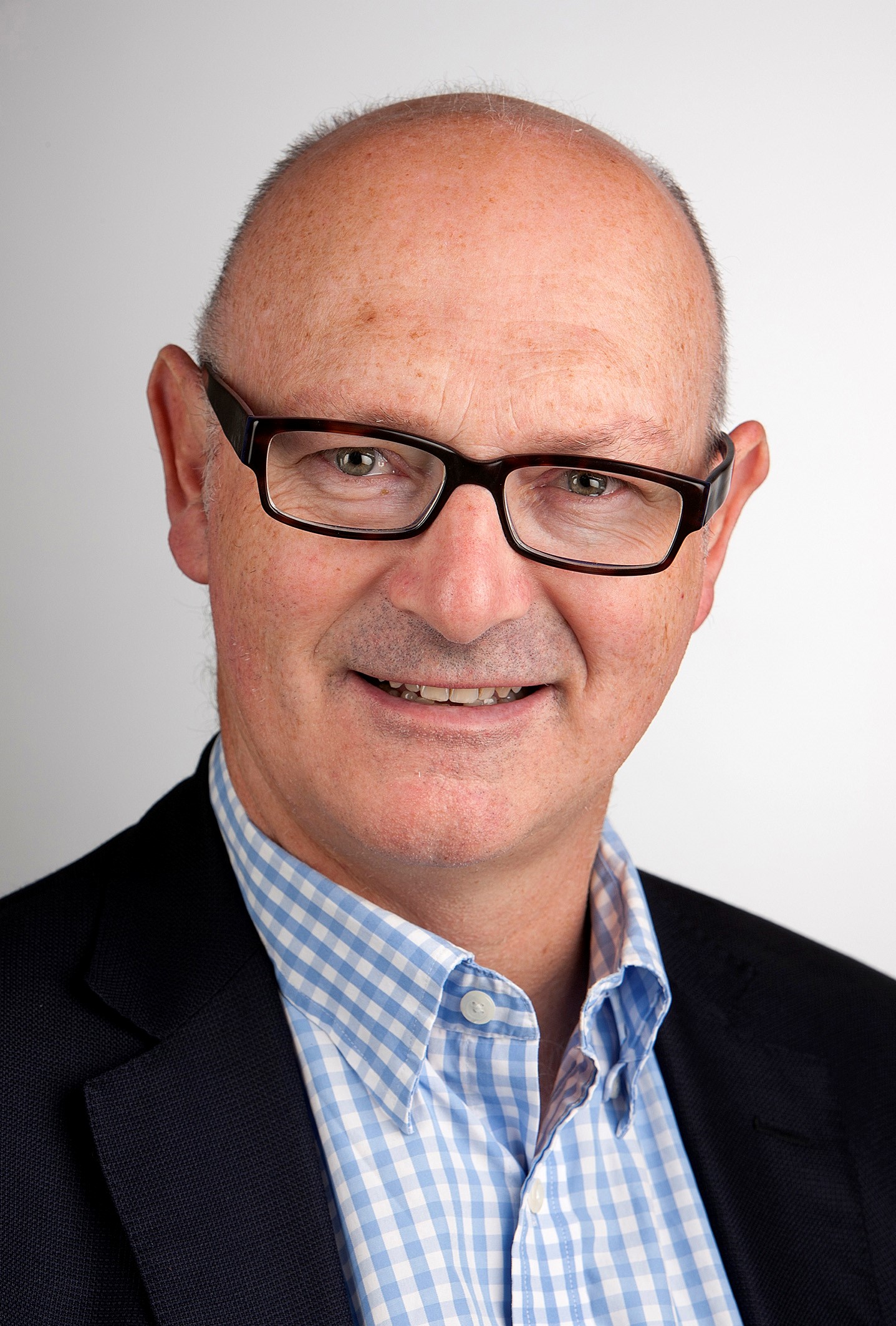
LONDON: NorthStandard has announced Michael Hustler as its new Head of Asia Pacific, in an appointment which reinforces the global marine insurer’s focus on growth, service expansion and diversification in the region.

With a formal start date of 27th October, Mr Hustler brings 16 years of Claims and Underwriting with NorthStandard to his new role – most recently as Head of Underwriting, Asia Pacific. As Head of Asia Pacific, he replaces David Roberts, who will leave NorthStandard in February 2026.

Located in Singapore, Mr Hustler will take responsibility for NorthStandard’s day-to-day business operations across the Asia Pacific region, working closely with local teams to deliver and develop services to members. He will also ensure regional initiatives align with the club’s overall priorities, reporting to NorthStandard Chief Strategy Officer, Ed Davies.

“Mike’s risk management expertise and understanding of member needs have been making a vital contribution to growing our Asia Pacific presence and relationships, while our underwriting strategy across the region has benefited significantly from his leadership,” said Mr Davies.

“I am thrilled to take on this role at such a crucial time in the development of NorthStandard’s services in the Asia Pacific region. I look forward to playing my part in the continued growth of NorthStandard’s market-leading services” added Mr Hustler.

North Standard operates from nine locations across Asia Pacific with offices in Singapore, Tokyo, Imabari, Shanghai, Seoul, Hong Kong, Melbourne, Brisbane and Nelson.

Jeremy Grose, Managing Director, NorthStandard, commented: “Matching the ambitions of Asia Pacific economies is pivotal for future success in P&I, FD&D and specialist marine insurance lines. Mike’s appointment reflects our commitment to drive forward with our strategy to grow and serve these dynamic and diversified needs. We have an exceptionally talented team in the region, delivering outstanding service and the collaborative approach to grow member engagement.”

Louisville & Indiana Railroad’s Leah Windell Recognized with Railway Age 2025 Women in Rail Award

JEFFERSONVILLE: Louisville & Indiana Railroad (LIRC) proudly announces that Leah Windell, Customer Service Manager, has been named a recipient of the Railway Age 2025 Women in Rail Award. The national honor recognizes women whose leadership, innovation, and commitment are shaping the future of the rail industry.

With more than 20 years of experience, Windell has been a catalyst for LIRC’s modernization and customer-focused transformation. She served as project manager of the company’s digital overhaul, leading to the transition of a new platform designed to improve accuracy, efficiency, and responsiveness while maintaining the strong relationships that define LIRC’s service.

“Leah embodies the best of our industry by being innovative, resilient, and people-first,” said Kathleen Sackett, Senior Director of Sales and Marketing at LIRC. “Her leadership has transformed how we operate and how we serve our customers. This recognition from Railway Age is richly deserved.”

Guided by her philosophy, “See a problem, solve a problem,” Windell exemplifies leadership through action. She is respected for her collaborative approach, mentorship, and ability to bridge technology with operational excellence while inspiring women to take on leadership roles in the industry. 

A champion of safety and team culture, Windell partners across departments to strengthen LIRC’s operational integrity and employee engagement. Her balance of technical expertise and people-centered leadership ensures both performance and safety remain top priorities.

Beyond her professional achievements, Windell is deeply committed to community service. She volunteers with Repair Affair and Kentucky and Indiana Paralyzed Veterans of America, offering transportation for disabled adults. Windell also maintains a pen-pal relationship with a retired rail worker in a local nursing home.

About Louisville & Indiana Railroad
The Louisville & Indiana Railroad (LIRC) was formed in March 1994 to acquire 106 miles of rail line between Indianapolis and Louisville. LIRC connects with CSX, NS, INRD, and PAL railroads. The line serves numerous major companies and an efficient inland port facility. LIRC has experienced significant organic and new growth in emerging markets. anacostia.com/our-companies/lirc/

About Anacostia Rail Holdings
Anacostia Rail Holdings is a privately held company that owns and operates freight railroads throughout the U.S. Combined, ARH’s six railroads handle the equivalent of over two million carloads annually. ARH provides freight services to major metropolitan centers and small communities operating on more than 600 miles of track. www.anacostia.com

ClassNK to class Japan’s first hydrogen fueled tugboat TEN-OH built by TSUNEISHI

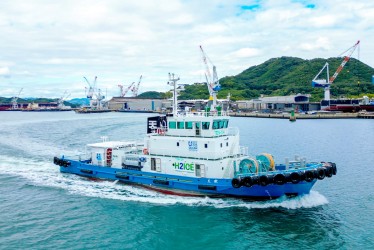
TOKYO: ClassNK has added Japan’s first hydrogen-fueled tugboat TEN-OH to its register, which is built by TSUNEISHI SHIPBUILDING Co., Ltd.

This vessel was developed and build under the ‘Nippon Foundation Zero Emission Ships Project’, a grant program by The Nippon Foundation aimed at developing ships with zero CO2 emissions.

Based on discussions among the parties involved during the planning stage of the vessel, ClassNK reviewed the safety requirements and countermeasures for hydrogen-fueled ships by applying Part GF of its ‘Rules and Guidance for the Survey and Construction of Steel Ships’ etc.

These reviews focused on issues such as preventing explosions caused by the high ignitability of hydrogen and mitigating the potential impacts of hydrogen fuel leakage on crew members and the environment.

On completion of the necessary surveys in line with the relevant class rules etc., ClassNK added the vessel to its register on 9 October 2025.

Going forward, ClassNK will continuously support the safe operation of the vessel through surveys in service, and not only that, support industry’s effort toward decarbonization through utilizing the knowledge and experience gained from the surveys for keeping its guidelines up to date and contributing to establishment of the appropriate international standard.

India Maritime Week 2025: Empowering the Next Generation Through Unmatched Educational Opportunities

MUMBAI: India Maritime Week (IMW) 2025, India’s premier international maritime event is set to play a transformative role in shaping the professional journeys of students aspiring to enter the maritime and allied industries. The event is scheduled from October 27–31, 2025, at the Bombay Exhibition Centre, Mumbai, this event organized by the Ministry of Ports, Shipping and Waterways (MoPSW) and the Indian Ports Association (IPA) will bring together an unparalleled assembly of industry leaders, innovators, educators, and policymakers from over 100 countries. 

With 500+ exhibitors, 200+ global speakers, and participants from delegates will represent every facet of the maritime sector. IMW 2025 promises a rich, immersive environment for learning and career advancement. Students will gain firsthand exposure to the latest technological innovations, sustainability initiatives, and transformative business models shaping the future of maritime activity.

Empowering Students and Building Future Leaders

At the heart of IMW 2025 lies a commitment to foster young talent and nurture next generation of maritime professionals. The event will feature curated educational sessions, expert-led workshops, and interactive panel discussions, enabling students to learn directly from industry pioneers in ports, shipping, logistics, green technology, and global trade. The dedicated networking sessions will connect students with potential mentors, employers, and academic partners from India and abroad, to create invaluable pathways to professional growth.

Student-Centric Initiatives and Opportunities

This year, IMW 2025 introduces several initiatives specifically designed to enhance student engagement and opportunity, including:

  • Facilitated internship access through collaborations with leading maritime stakeholders
  • On-the-spot recruitment drives conducted by industry leaders
  • Exclusive scholarship programs recognizing exceptional academic performance and innovation.

These efforts aim to ensure that students emerge from IMW 2025 with enhanced practical skills, deeper industry awareness, and a clearer understanding of career pathways within India’s rapidly evolving maritime ecosystem.

Aligning with India’s Maritime Vision

Beyond personal development, IMW 2025 is a strategic platform aligned with the Maritime India Vision 2030 and Maritime Amrit Kaal Vision 2047—the Government of India’s long-term blueprints for sustainable and inclusive maritime growth. Through active participation, students are empowered not only to pursue individual ambitions but to contribute meaningfully to India’s emergence as a global maritime leader.

Recent FTAs open new opportunities for Indian exporters, promote industrial collaboration and supply chain resilience: Piyush Goyal

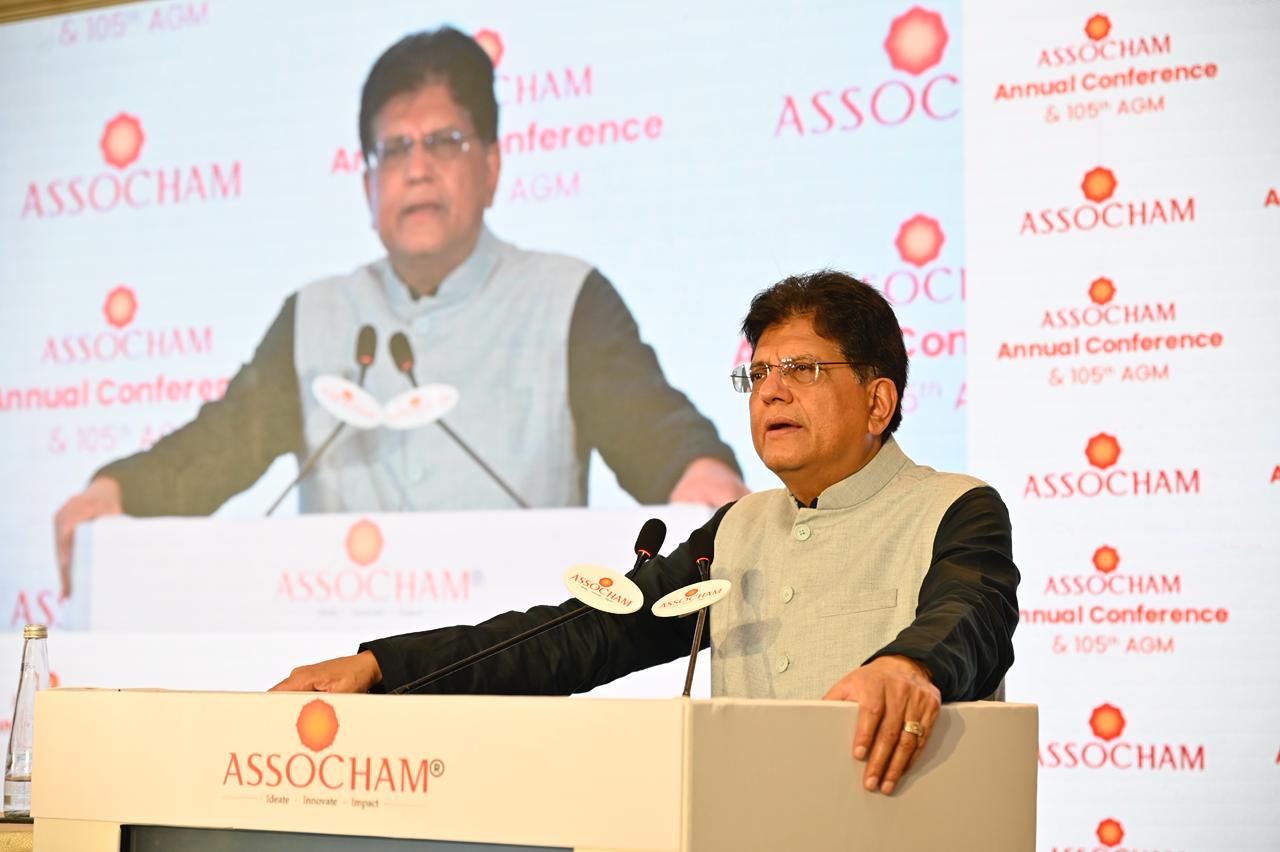
NEW DELHI : Union Minister of Commerce and Industry, Shri Piyush Goyal, emphasised that India has undergone a significant shift in recent years and that it now negotiates from a position of strength, reflecting the country’s growing economic confidence and global stature in terms of India’s approach to Free Trade Agreements and other trading arrangements. The Minister said that at the Annual Conference and 105th Annual General Meeting of ASSOCHAM in New Delhi on Friday. He said that the country is now engaging primarily with nations that are not competitors to India, ensuring that trade partnerships are balanced and mutually beneficial.

He noted that this strategic approach allows India to safeguard its domestic industries, promote exports, and create opportunities for investment and technology collaboration, while avoiding agreements that could disproportionately benefit the other party at India’s expense.

The Minister informed that India’s foreign exchange reserves continue to be robust at around USD 700 billion, reflecting the strong fundamentals of the Indian economy. He said that in every respect, the people of India, businesses, and industry together represent a new dynamism, enthusiasm, and confidence that were not witnessed a few years ago.

The Minister said that the world today recognises India as an important trading partner and a trusted country to work with. He observed that the days when India used to negotiate trade agreements from a position of weakness are over, and that the Indian passport now commands respect and value across the world. Shri Goyal pointed out that while the world is facing challenging global times, India continues to demonstrate resilience and remains the fastest-growing economy. He referred to the recent IMF projection that raised India’s growth forecast from 6.4 to 6.6 percent and also mentioned that retail inflation in September had been the lowest in eight years at 1.54 percent.

The Minister stated that gone are the days when India entered into imbalanced free trade agreements without recognising its own strengths. He said that the Indian economy has been systematically prepared to address present and future challenges, guided by a clear vision and a strong commitment to the nation-first philosophy. He recalled the five principles, the Panch Pran, articulated by the Prime Minister on 15 August 2022, which he said encapsulate the pathway towards making India a developed nation by 2047.

The Minister elaborated that the Free Trade Agreements (FTAs) signed with Mauritius, Australia, the United Arab Emirates, and the European Free Trade Association (EFTA) countries mark a new chapter in India’s trade engagement with the world. He said that these agreements have been structured with a strategic and balanced approach, keeping India’s economic priorities and long-term growth objectives at the forefront. Shri Goyal highlighted that unlike many other trade partners, these countries do not directly compete with India in key manufacturing sectors, which allows Indian industries to benefit from greater market access without facing the risk of unfair competition.

He underlined that the recent FTAs has open new opportunities for Indian exporters by creating access to high-income markets, encouraging investments, and enabling the flow of advanced technologies. He said these partnerships are designed to promote industrial collaboration, enhance supply chain resilience, and support the government’s vision of making India a global manufacturing hub. The Minister pointed out that these agreements also have strong provisions for cooperation in innovation, research, and skill development, thereby ensuring that Indian businesses remain competitive in a rapidly evolving global landscape.

Shri Goyal further added that the government has ensured that India’s interests are fully safeguarded in these FTAs, particularly in sensitive sectors. He noted that through these comprehensive and forward-looking trade pacts, India is not only strengthening its position in global trade but also paving the way for more equitable and sustainable economic growth.

He said that the government has worked to make India an attractive destination for business through ease of doing business measures, decriminalisation of laws and simplification of processes and compliance. The Minister added that India is fully committed to its sustainability goals and has already achieved 250 gigawatts of renewable energy capacity, representing 50 percent of the country’s transmission grid. He said that by 2030, India will achieve 500 gigawatts of clean energy capacity, making it one of the best destinations for data centres and clean energy investments.

The Minister emphasised that India recognises services as its core strength and expressed confidence that in another two years, the country’s services exports will likely exceed merchandise exports. He stated that India holds a clear advantage in the services sector, which not only generates employment and drives economic activity but also provides a strong impetus to manufacturing, real estate, and the overall demand for goods and services. The Minister mentioned that the government is actively engaging with start-ups working on recycling waste to extract rare earth elements such as loam and aldo. He added that discussions are also underway with start-ups to establish rare earth processing facilities in India, a domain currently concentrated in a limited geography. Highlighting the importance of self-reliance and resilience, he urged all stakeholders to regularly assess and strengthen their respective supply chains.

The Minister stressed the critical importance of assessing and strengthening supply chains to ensure long-term resilience and sustainability. He said that recent global disruptions have highlighted the need for countries and industries to build secure, diversified, and self-reliant supply networks. Shri Goyal observed that India must carefully evaluate every link in its supply chains—from raw material sourcing to production and distribution—to reduce dependence on a few geographies and avoid potential vulnerabilities.

He mentioned that the government has been actively encouraging industry stakeholders to map their supply chains and identify areas where domestic capacities can be enhanced. He said that through greater collaboration between the public and private sectors, India can develop robust value chains that not only meet domestic demand but also serve as reliable partners in the global trade ecosystem. The Minister noted that this effort aligns with the government’s broader vision of “Aatmanirbhar Bharat,” aimed at promoting self-reliance while integrating India more deeply into global value chains.

Shri Goyal also referred to his interactions with various Export Promotion Councils (EPCs) and industry associations, where he has repeatedly emphasised the need to strengthen supply chains through innovation, local manufacturing, and efficient logistics. He stated that India’s focus should be on building agility and adaptability into its trade systems so that industries can respond effectively to future challenges and opportunities.

He said that the MSME sector faces several challenges and that collective efforts by industry bodies like ASSOCHAM can help address them effectively. He praised ASSOCHAM for its role in engaging with startups, MSMEs and industries across India, and said that the organisation has been an important partner in policy dialogue, trade facilitation and international cooperation. Shri Goyal said that with shared resolve, teamwork and commitment, India can continue to overcome challenges and move steadily towards becoming a developed and self-reliant nation by 2047.

PSA Mumbai welcomes Largest Container Ship call with arrival of MSC MICOL

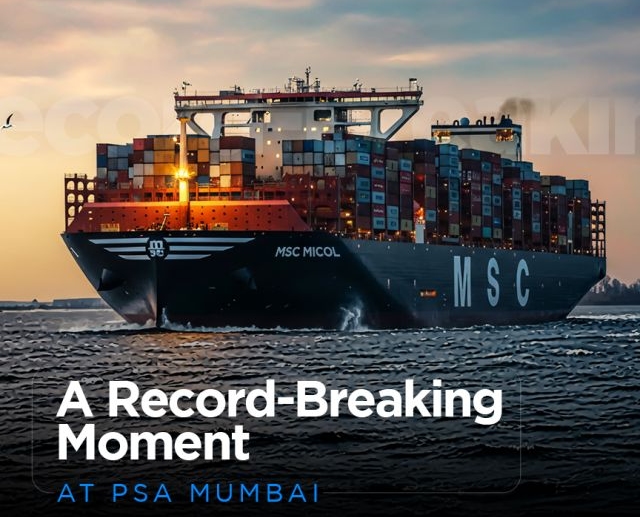
MUMBAI: In a landmark achievement, PSA Mumbai successfully handled the MSC MICOL, the largest container vessel ever to call at PSA Mumbai and the Jawaharlal Nehru Port Authority (JNPA).

With a capacity of 24,346 TEU, the vessel measures 399.9 metres in length and 61.3 metres in width, following the advanced MGX24 design that spans 24 bays long and wide.

The arrival of MSC MICOL marks a major milestone in mega-ship handling capabilities at PSA Mumbai, reaffirming the terminal’s readiness to accommodate next-generation vessels and further strengthening India’s position in global container shipping networks.