Home Blog Page 606

Asia Pacific strengthens role in global trade amid rising tariff pressures : DHL Global Connectedness Tracker, 2025 Special Update

DHL NYU logo 1 Asia Pacific strengthens role in global trade amid rising tariff pressures : DHL Global Connectedness Tracker, 2025 Special Update

SINGAPORE : Media OutReach Newswire – 17 October 2025 – Asia Pacific is playing an increasingly central role in driving global trade resilience, even as international flows face mounting challenges due to policy shocks. DHL and New York University’s Stern School of Business have released a special update to the DHL Global Connectedness Tracker, offering the first systematic assessment of how international trade and business investment are reacting to shifting U.S. trade policy under President Trump’s second term.

“Asia Pacific’s performance stands out due to its adaptability and strategic positioning, and the latest data shows how collaboration in the region is deepening even amid global uncertainty,” said Ken Lee, CEO for Asia Pacific, DHL Express. “From ASEAN’s rising role in absorbing trade flows to countries in the Asia Pacific region engaging more intensively with their neighbors, businesses in our region are proving agile and forward-looking. DHL is well-positioned to support our customers in navigating any shifts in trade patterns, and we will continue to build capabilities where our customers want to be.”

Global trade defies tariff turbulence while Asia leads in trade lane growth

The DHL Global Connectedness Tracker reveals that, in the first half of 2025, international trade grew at a faster rate than in any half-year since 2010, excluding the pandemic rebound. U.S. imports surged early in 2025 as buyers rushed to frontload purchases ahead of tariff hikes. Even after the frontloading wave in the U.S. subsided, global trade volumes remained above prior-year levels.

Zooming into the world’s 100 largest trade lanes, six of the 10 fastest-growing were exports originating from an Asian economy, underscoring the region’s pivotal role in driving global trade momentum. Additionally, among the 50 largest trading nations, Hong Kong SAR, Thailand, Malaysia and Vietnam were among the top 10 markets that saw the fastest trade value growth, indicating the Asia Pacific region’s growing influence and resilience in supply chain networks.

Shorter trade distances indicate robust momentum for intra-Asia trade

Intra-Asia trade showed signs of continued integration and expanding connections, with East Asia & Pacific’s intra-regional trade share rising from 55% to 56%. Among the 50 largest trading nations, the trade distances declined the most in countries starting with Thailand (-79 km), China (-76 km), Singapore (-71 km), and Hong Kong SAR (-61km). This reflects Asian economies’ pivoting of trade flows toward regional partners to maintain growth. It also signals the region’s efforts to enhance its infrastructure and connectivity, making it more attractive to participate in cross-border trade.

Asean gains prominence as key destination for Chinese exports

Despite a 15% drop in exports to the U.S. in the first eight months of 2025, China fully offset this decline with a 15% increase in exports to ASEAN region. In fact, ASEAN emerged as a key growth destination for Chinese exports, highlighting the region’s rising importance in China’s trade portfolio. Notably, Vietnam, Thailand, and India saw the largest increases in their share of China’s exports, while the U.S., Russia, Korea, Brazil, and Mexico experienced declines.

“Trade and international business investment trends so far in 2025 do not support the view that globalization has gone into reverse,” said Prof. Steven A. Altman, Director of the DHL Initiative on Globalization at NYU Stern’s Center for the Future of Management. “While it would be a mistake to disregard current policy threats to globalization, companies are not generally pulling back from international markets, trade is crossing the longest average distance on record, and geopolitical conflicts have reshaped only a small fraction of the world’s international activity. The latest data show companies managing the risks and opportunities of a connected world rather than retreating to within countries or regions.”

About the DHL Global Connectedness Tracker

The DHL Global Connectedness Tracker is a concise report and interactive website that provides regular updates on globalization and global trade. It complements the renowned DHL Global Connectedness Report, published regularly since 2011. Drawn from over 25 public, private, and academic sources, the Tracker analyzes more than 20 million data points on international flows of trade, capital, information, and people.

It includes interactive online charts that make it easy for users to explore trends by region, geopolitical alignment, and for individual countries. It also supports easy data and chart downloads for offline use.

The DHL Global Connectedness Tracker is commissioned by DHL and authored by Prof. Steven A. Altman and Caroline R. Bastian of New York University Stern School of Business. The DHL Global Connectedness Tracker and further resources are available at dhl.com/globalconnectedness.

DHL is the leading global brand in the logistics industry. Our DHL divisions offer an unrivalled portfolio of logistics services ranging from national and international parcel delivery, e-commerce shipping and fulfillment solutions, international express, road, air and ocean transport to industrial supply chain management. With approximately 400,000 employees in more than 220 countries and territories worldwide, DHL connects people and businesses securely and reliably, enabling global sustainable trade flows. With specialized solutions for growth markets and industries including technology, life sciences and healthcare, engineering, manufacturing & energy, auto-mobility and retail, DHL is decisively positioned as “The logistics company for the world”.

DHL is part of DHL Group. The Group generated revenues of approximately 84.2 billion euros in 2024. With sustainable business practices and a commitment to society and the environment, the Group makes a positive contribution to the world. DHL Group aims to achieve net-zero emissions logistics by 2050.

New York University Stern School of Business
New York University Stern School of Business, located in the heart of Greenwich Village and deeply connected to the City after which it is named, is one of the United States’ premier management education schools and research centers. NYU Stern offers a broad portfolio of transformational programs at graduate, undergraduate, and executive levels, all of them enriched by the dynamism and profound resources of one of the world’s business capitals. NYU Stern is a welcoming community that inspires its members to embrace and lead change in a rapidly transforming world. Visit www.stern.nyu.edu.
US fails to block world’s first global carbon price, but adoption delayed

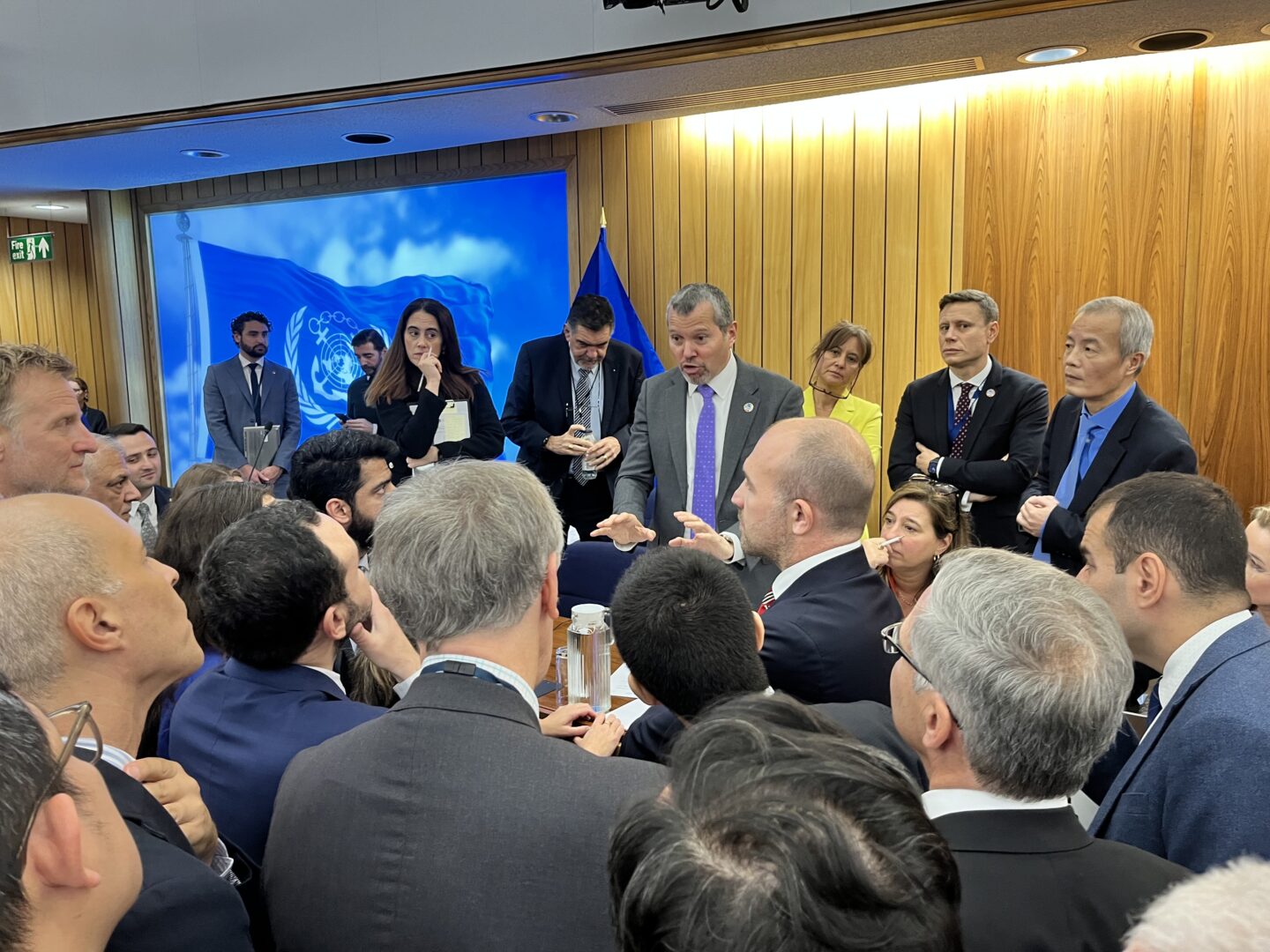
LONDON: The IMO agreed to delay the planned adoption of the Net-Zero Framework for one year in a vote this Friday due to delay tactics and procedural sabotage by the US, Saudi Arabia, Russia and other petrostates at this week’s negotiations. The motion to delay was put forward by Singapore and called to a vote by Saudi Arabia.

A clear majority of countries at the MEPC E.2 supported the adoption of the Framework, which was agreed in principle in a vote in April. In April, 63 countries voted yes (including the EU27, Brazil, China, India, Canada, UK, Korea and Japan) versus a minority opposition from 16 oil-producing states.

In the lead up and throughout the meeting, the Trump Administration threatened retaliatory tariffs and sanctions, especially on developing and most climate-vulnerable states, if they support the Framework. Delegates from many developing countries described this extraordinary pressure on their capitals as “bullying”, “unprecedented”, and “undiplomatic”.

The US and Saudi Arabia also tried to create a delay by proposing to change the IMO’s regular adoption process by consensus to an ‘explicit’ adoption process which would impose additional hurdles to enforce the Framework, especially for many developing countries.

Some delegates believe that putting the talks on hold will give countries more time to find consensus on this flagship climate law. Others fear that the US will further ramp up pressure on developing countries to oppose adoption at a later stage.

Countries voted to delay adoption of the NZF at MEPC E.2 with the following votes:

57 countries in favour of delay

49 countries against the delay

21 abstentions

As the world’s first, the mechanism would require ships to pay fees for non-compliance with gradually increasing carbon intensity targets, expected to generate up to $15 billion per year in finance from 2030.

The IMO is still set to meet again for technical discussions (ISWG-GHG-20) on 20-24 October, to discuss key policy details on design and implementation of the NZF, including green energy incentives and the revenue disbursement.

The original entry into force of the NZF was planned for March 2027. This timeline will now have to be reviewed. 

Quotes on the record:

Hon. Ralph Regenvanu, Minister for Climate Change, Energy, Meteorology, Geohazards, Environment and Disaster Management for the Republic of Vanuatu, said: “We came to London in reluctant support of the IMO’s Net-Zero Framework. While it lacks the ambition that climate science demands, it does mark a significant step. We regret that IMO members followed Singapore’s initial proposal to delay the adoption of the framework by 12 months, which Saudi Arabia called to a vote. This is unacceptable given the urgency we face in light of accelerating climate change. Moreover, the ICJ and ITLOS Advisory Opinions have made it crystal clear that taking climate action is not optional. But the IMO’s failure to adopt the framework this week marks a failure of this United Nations agency to act decisively on climate change. This makes the road to Bélem and beyond more difficult. But we know that we have international law on our side and will continue to fight for our people and the planet.”

Alisa Kreynes, Director for Ports & Shipping at C40, said: “The inability to reach an outcome is a missed opportunity to accelerate a just and equitable transition in global shipping. Another chance to scale and invest in clean fuels has been missed, stalling inclusive climate action yet again. Small Island States and the Global South will continue to pay the biggest price for this inaction. The success of global maritime decarbonisation hinges on the sector’s ability to both deliver on equity and to leverage locally-led action. The needs of cities, local port communities, and workers must be taken into account. Despite the failure of multilateral negotiations to adopt the Net-Zero framework, cities continue to demonstrate their leadership as just transition catalysts. They are advancing equitable port decarbonisation, promoting inclusive engagement with local communities, leading with data, and pioneering unprecedented partnerships beyond their traditional powers.” 

Full reaction will be published on the C40 website.

Emma Fenton, Senior Diplomacy Director at Opportunity Green, said: “This outcome is a devastating indictment of Member States’ lack of courage to stand in solidarity with climate vulnerable countries to achieve a just and equitable maritime transition. Faced with pressure, too many governments chose political compromise over climate justice, and in doing so, abandoned the countries bearing the brunt of the climate crisis. We now look to ambitious states, including those driving the Global Solidarity Levies Taskforce, to step up, act decisively, and demonstrate the nature of true multilateralism.”

Teresa Bui, Senior Climate Campaign Director, Pacific Environment, said: “Delaying the vote on the International Maritime Organization’s Net Zero Framework is frustrating and a betrayal of the world’s most vulnerable nations. We urge IMO member states to adopt the Framework as soon as possible. The world is watching, and we will not rest until global shipping delivers real cuts in emissions, air pollution, and climate damage.”

Natacha Stamatiou, IMO GHG Lead, Global Shipping, Environmental Defense Fund, said: “Today’s delay in adopting the Net Zero Framework is a missed opportunity — and a setback that risks derailing the timeline countries agreed to under the International Maritime Organization’s 2023 Strategy. Every delay means that innovation will struggle to scale, inequities will deepen, and the transition to clean shipping will become harder and more costly. We know progress is possible when governments act together, now they have the opportunity to prove it. We cannot afford to wait any longer. It is vital that Member States return to the negotiating table and deliver a measure that reflects wise ambition — one that delivers a just, equitable and effective energy transition to secure a cleaner, more equitable future for generations to come.”

Anaïs Rios, Shipping Policy Officer, Seas At Risk, said: “Getting the Net-Zero Framework adopted in this MEPC ES.2, however imperfect, was fundamental for shipping to stay within reach of its own decarbonation targets. Emotions have run high this week at the IMO, with once high-ambitious alliances wavering and strategies eclipsing reason. This isn’t the United States of Shipping — no single flag should dictate the world’s climate course. With countries like Saudi Arabia leading efforts to delay, few expected a postponement to prevail but here we are. What matters now is that countries rise up and come back to the IMO with a louder and more confident yes vote that cannot be silenced. The planet and the future of shipping does not have time to waste.”

Source: Global Strategic Communications Council (GSCC)

An extraordinary IMO meeting with extraordinary circumstances for the future of shipping

LONDON : A week of tension and uncertainty has drawn to a close at the International Maritime Organization (IMO) , ending with a delay for shipping decarbonisation and the future of our planet. With big players like the USA and Saudi Arabia applying pressure and using every tactic to slow progress, Seas At Risk is disappointed that the adoption of the Net Zero Framework (NZF) has been officially postponed for another year, leaving shipping adrift on its pathway to decarbonisation.

Even though the NZF is far from perfect, delays and further IMO discussions result in business as usual, polluting ships and IMO’s own decarbonisation strategy targets becoming unobtainable.

The NZF, as it stands, is the result of three years of discussions from national delegate countries and is the only global regulation for greenhouse gas reduction measures, which aims at avoiding patchworked national regulation. What should have been a clear path toward climate action was clouded by politics, emotion and division.

Shipping needs to clean up its act, regardless of today’s outcome. Now it relies on countries listening to their citizens and industry. Scaling up wind propulsion, which saves on fuel costs and lowers emissions, and making expensive zero emission fuels financially competitive with their polluting counterparts. Business as usual means rising costs, rising seas and the harshest climate impacts falling on those least able to withstand them.

“Getting the Net-Zero Framework adopted in this MEPC ES.2, however imperfect, was fundamental for shipping to stay within reach of its own decarbonation targets”, said Anaïs Rios, Senior Shipping Policy Officer, Seas At Risk. “Emotions have run high this week at the IMO, with once high-ambitious alliances wavering and strategies eclipsing reason. With talk of unity versus division, no single flag should dictate the world’s climate course. With countries like Saudi Arabia leading efforts to delay, few expected a postponement to prevail but here we are. What matters now is that countries rise up and come back to the IMO with a louder and more confident yes vote that cannot be silenced. The planet and the future of shipping does not have time to waste.

About Seas At Risk

Seas At Risk is an association of environmental organisations from across Europe, with the mission to promote ambitious policies for marine protection at European and international level. With over 36 members representing the majority of European countries, Seas At Risk speaks for millions of citizens that care deeply about the health and well-being of seas and oceans.

Adoption of the IMO NZF delayed. Regional, national and corporate actors action urged to fill the gap: UCL

LONDON: A scheduled Extraordinary Session of the IMO’s Marine Environment Protection Committee has ended without adopting the policy measures agreed upon in principle in April 2025. These measures are intended to reduce emissions from the shipping sector and kick-start the sector’s energy transition.

The meeting failed to complete the next milestone toward the entry into force of the “Net Zero Framework”. In the decision taken at the end of the week, a vote was called for by Saudi Arabia to adjourn the meeting for one year. The vote resulted in 57 countries accepting the motion, forming a majority of those present and voting, and the meeting was subsequently adjourned.

Dr Tristan Smith Professor of Energy and Transport at UCL Energy Institute Shipping Oceans Research Group Adoption of the IMO NZF delayed. Regional, national and corporate actors action urged to fill the gap: UCL

Dr Tristan Smith, Professor of Energy and Transport at UCL Energy Institute Shipping & Oceans Research Group said: “This is catastrophic for confidence, and therefore also for the equitable and ambitious decarbonisation we need. We will now have to double-down on other means to drive shipping GHG reduction and energy transition. Climate science tells us that the challenge of decarbonisation does not go away, it gets harder. This delay therefore means those with the means must step up and lead more than ever, until this multilateral process can regain its composure.”

A vote was also called at the MEPC 83 meeting in April 2025, agreeing in principle to the legal amendment to MARPOL Annex VI. A number of countries changed their positions relative to that vote, providing evidence that well-publicised threats from the United States, including tariffs and reprisals for any country that supported the Framework, and related pressure, were effective at changing positions. On this occasion, that pressure appears to have been effective.

Dr. Annika Frosch Adoption of the IMO NZF delayed. Regional, national and corporate actors action urged to fill the gap: UCL

Dr Annika Frosch, Research Fellow at UCL Energy Institute Shipping & Oceans Research Group said: “The adoption of the Net Zero Framework by the IMO would have marked a crucial step forward for shipping decarbonization. Although adoption has been postponed, the process remains underway, with key technical guidelines now the focus before potential adoption in 2026.”

The decision on the IMO’s Net Zero Framework does not override or change the foundation of the GHG Reduction Strategy that was adopted at MEPC 80 in 2023. This unanimously adopted strategy commits the organisation to absolute GHG emission reductions of 20-30% in 2030 and 70-80% in 2040, on a pathway to reaching net-zero emissions by/around 2050. As long as that is the stated strategy, the IMO should in theory make progress toward adopting regulations in line with it. However the outcome at IMO means further work on regional and national regulation of international shipping has now been vindicated, making current regulations such as those in EU likely to be prolonged. We could now see more regions taking similar action.

Pinar Langer Adoption of the IMO NZF delayed. Regional, national and corporate actors action urged to fill the gap: UCL

Dr Pinar Langer, Research Fellow at UCL Energy Institute Shipping & Oceans Research Group said: “This unexpected delay highlights both the complexity and the high stakes of reaching global alignment on shipping’s net-zero transition. The year ahead offers a vital window for constructive engagement and for strengthening the evidence base to ensure that when the framework is finally adopted, it is both equitable and actionable across diverse national contexts.”

Even with the outcome to defer the conclusion of the current adoption of the NZF, work on the underpinning guidelines can continue, with next week’s meeting (Intersessional Working Group 20th session) going ahead as planned. These guidelines will specify important details on definitions, calculations, and methods for determining how the policy incentivises and evaluates different technology and fuel options needed for decarbonisation, how the fund will be set up and run, and how its key parameters will be revised on an ongoing basis.

UCL Adoption of the IMO NZF delayed. Regional, national and corporate actors action urged to fill the gap: UCL

About UCL Energy Institute

The UCL Energy Institute hosts a world leading research group which aims to accelerate the transition to an equitable and sustainable energy and trade system within the context of the ocean. The research group’s multi-disciplinary work on the shipping and ocean system leverages advanced data analytics, cutting-edge modelling, and rigorous research methods, providing crucial insights for decision-makers in both policy and industry. The group focuses on three core areas: analysing big data to understand drivers of historical emissions and wider environmental impacts, developing models and frameworks to explore energy and trade transition to a zero emissions future, and conducting social science research to examine the policy and commercial structures that enable the decarbonisation of the shipping sector. For more information visit www.shippingandoceans.com

UCL Shipping & Oceans research group would like to thank IMO observer organisations Clean Shipping Coalition (CSC), Zero Emissions Ship Technology Association (ZESTAs), Pacific Environment and Environment Defense Fund (EDF) for accrediting many of the team and enabling their attendance to follow the discussions. Dr Tristan Smith attends IMO as a delegate of the Institute of Marine Engineers Science & Technology (IMarEST) https://www.imarest.org. He chairs the IMarEST’s Working Group on IMO GHG regulation. IMarEST has a dedicated Special Interest Group (SIG) working on “Ship Energy and Environment”: https://www.imarest.org/group/ship-energy-and-environment.html

Baltic Index logs weekly gain as All Vessel Segments rise in tandem

LONDON: The Baltic Exchange’s Dry Bulk Sea Freight index, which monitors rates for vessels moving dry bulk commodities, rose on Friday and posted a weekly gain, lifted by broad-based strength across all vessel classes.

The main index, which factors in rates for capesize, panamax and supramax shipping vessels, rose 23 points, or 1.2%, to 2,069 points. The index logged a 6.9% weekly gain.

The U.S. and China have imposed new port fees on each other’s vessels, disrupting trade routes and increasing freight costs, and making the high seas a key front in the trade war between the world’s two largest economies.

China’s “new measures, mirroring similar U.S. actions, are set to gradually increase over the coming years, heightening uncertainty across global shipping markets,” Nikos Tagoulis, senior analyst at Intermodal said in a note earlier this week.

The capesize index rose 63 points, or 2.1%, to 3,121 points, and climbed 11.5% for the week.

Average daily earnings for capesize vessels, which typically transport 150,000-ton cargoes such as iron ore and coal, increased by $524 to $25,882.

However, iron ore futures are headed for a weekly loss, with concerns surrounding the demand outlook due to U.S.-China trade tensions coinciding with prospects of rising ore supply for the remainder of the year.

The panamax index rose one point to 1,827 points and saw a 3.6% weekly rise. The index was also at its highest since September 26.

Average daily earnings for panamax vessels, which usually carry 60,000-70,000 tons of coal or grain, rose by $13 to $16,446.

Among smaller vessels, the supramax index rose two points to 1,424 points, its highest since October 7, and posted a 1.6% weekly gain.
Source: Reuters

Drewry: World Container Index up 2% last week

LONDON: For many years, World Container Index has been the go-to, independent, global reference for index-linked contracts. 

Drewry’s World Container Index increased 2% to $1,687 per 40ft container last week.

Drewry’s detailed assessment for Thursday, 16 Oct 2025

  • The Drewry World Container Index (WCI) increased 2% to $1,687 per 40ft container. The index recorded its first increase following 17 consecutive weeks of decline.
  • Spot rates from Shanghai to Los Angeles increased 1% to $2,195 per 40ft container and those to New York rose 1%, reaching $3,236. Drewry expects further rate hikes next week, driven by the GRIs that carriers implemented yesterday. However, this momentum is expected to be short-lived, with rates likely to decline soon. Carriers could follow up with new GRI attempts on 1 November and 15 November to counteract this drop, if it happens.
  • Spot rates on the Asia–Europe route showed modest increases this week: The rate from Shanghai to Rotterdam jumped 6% to $1,669 per 40ft container and from Shanghai to Genoa rose 2% to $1,821. These increases follow an industry-wide effort by carriers that introduced new Freight All Kinds (FAK) rates effective 15 October to stop the market’s post-Golden Week rate slump.
  • Drewry’s Container Forecaster expects the supply-demand balance to weaken in the next few quarters, which will cause spot rates to contract.
    Source: Drewry

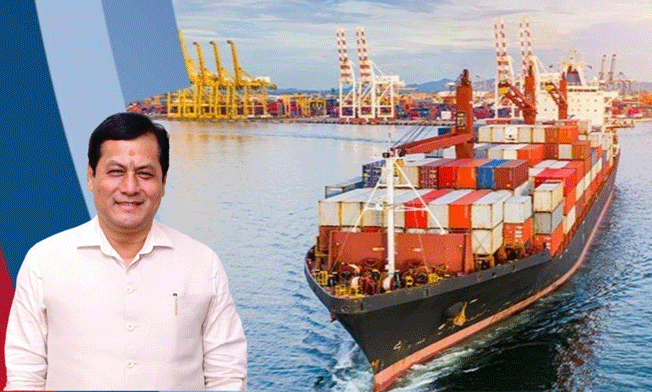
Sarbananda Sonowal announces 840 maritime projects worth ₹5.8 lakh crore to drive sectoral growth

NEW DELHI : Union Minister for Ports, Shipping and Waterways Shri Sarbananda Sonowal said on Wednesday that 840 projects with planned investments to the tune of Rs 5.8 lakh crore will be implemented under the Sagarmala Programme till 2035 to boost growth in India’s maritime sector.

Of these 272 projects worth Rs 1.41 lakh crore have been completed, while 217 projects worth Rs 1.65 lakh crore are currently underway.

Inaugurating the curtain raiser ceremony of the golden jubilee celebrations of New Mangalore Port (NMPA) at Bharat Mandapam here, the minister launched eight major maritime development projects aimed at boosting India’s port infrastructure, logistics efficiency, and sustainability. The projects include a state-of-the-art cruise terminal, modern covered storage facilities, a 150-bed multi-speciality hospital, expanded truck terminals, and upgraded port access infrastructure designed to improve user experience and operational capacity.

Sonowal also launched a commemorative postal stamp, a commemorative coin, and the official Golden Jubilee Anthem of the NMPA to celebrate the port’s five decades of contribution to India’s maritime trade and regional growth.

“Today marks a momentous milestone for all of us. The New Mangalore Port, our ninth major port established in 1975, has evolved into a key hub for importers and exporters in the region. From handling just a few thousand tonnes of cargo in its early years, it has grown to handle 46.01 million tonnes in the last financial year, with a total capacity of 104 million tonnes per annum. A new deep-draft general cargo berth is also under construction and will commence operations soon,” he added.

Reflecting on India’s long-term goals, Sonowal said: “As we move towards ‘Viksit Bharat 2047’ under the visionary leadership of Prime Minister Narendra Modi, our ports will play a crucial role in achieving the target of making India a $30 trillion economy. To become a ‘Viksit Bharat’ and ‘Atmanirbhar Bharat’, we must also become a Viksit Atmanirbhar Maritime Nation by 2047.”

The minister underscored the need for sustainable and environmentally responsible growth, commending the NMPA’s efforts toward green operations.

“The economy should not grow at the cost of ecology and environment. The green initiatives undertaken by the NMPA are commendable. The port has embraced sustainability as a guiding principle and continues to integrate environmentally conscious practices in its operations,” he said.

The minister said India’s Maritime Amrit Kaal Vision 2047, aligned with the principles of the Blue Economy, charts a long-term roadmap to strengthen India’s maritime capabilities, with planned investments of Rs 80 lakh crore projected to generate millions of jobs through the Sagarmala Programme.

The Golden Jubilee of NMPA will be celebrated later this year, marking 50 years of the port’s role in advancing India’s maritime trade and regional development.

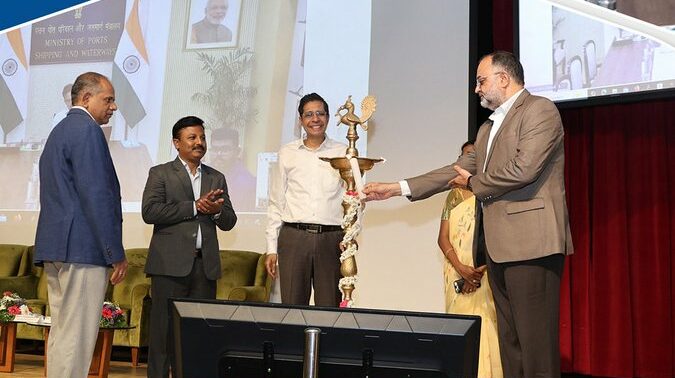
First Maritime Hackathon, MAR-a-THON 2025, inaugurated at IIT-Madras Research Park

CHENNAI : India’s first Maritime Hackathon, MAR-a-THON 2025, was inaugurated at IIT-Madras Research Park, Chennai in Tamil Nadu. The event brings together innovators to develop modern tech-driven solutions for maritime operations.

Shri R Lakshmanan, Joint Secretary (Ports, PPP and Sagarmala) of MoPSW, joining through video conferencing, highlighted how the ministry’s framework rests on the pillars of RISE (Research, Innovation, Start-Up & Entrepreneurship) and aligns with the S2I2 ecosystem in transforming laboratory concepts into practical real-life solutions.

Also present on the occasion were Shri Sunil Paliwal and Shri S. Viswanathan, Chairman & Deputy Chairman of Chennai Port Authority. The event was also graced by Dr V Kamakoti, Director of
IIT Madras
and faculty members of the premier institute, amongst other esteemed dignitaries

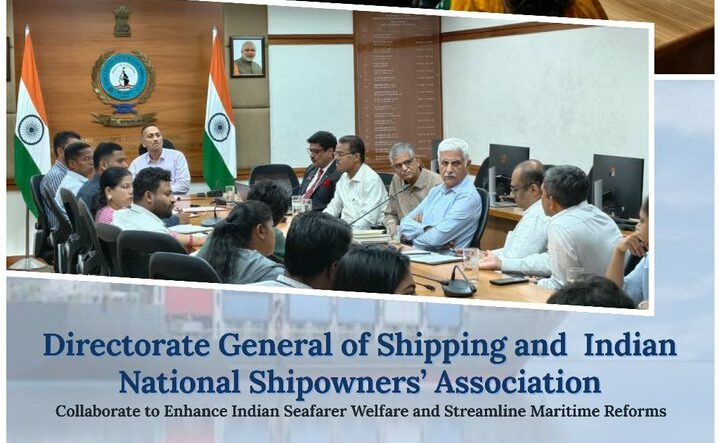
DG Shipping strengthens collaboration with INSA

MUMBAI : Directorate General of Shipping announced the strengthening Collaboration with INSA for Indian Seafarer Welfare and Maritime Reforms.

The Crew Branch, Directorate General of Shipping, held a constructive meeting with representatives from the Indian National Shipowners’ Association (INSA). The discussions focused on critical issues concerning the Indian seafarers employed onboard on Indian vessels and seafarer welfare.

The key points of the discussions were :-

1.Taxation challenges faced by Indian seafarers.
2. Addressing procedural challenges in visa processing and documentation, with emphasis on alignment with Seafarers’ Identity Document (SID) Conventions.
3. Reviewing technical and procedural issues in the Approval of Articles (AOA) module, including restricted editability of key fields such as the shipowners’ column, redundancy in form fields, and the requirement for six copies of the AOA.
4. Examining the need for immigration clearance for coastal vessels operating within harbour limits or along the Indian coast, to ensure smoother compliance and operational efficiency.
5. Considering INSA’s proposal to adopt a merit-based approach—rather than one based solely on nationality—for the engagement of foreign seafarers on Indian vessels.

The meeting underscored the shared commitment of DG Shipping and INSA to work jointly towards streamlined regulatory frameworks, improved digital systems, and holistic welfare measures for India’s seafarer community.

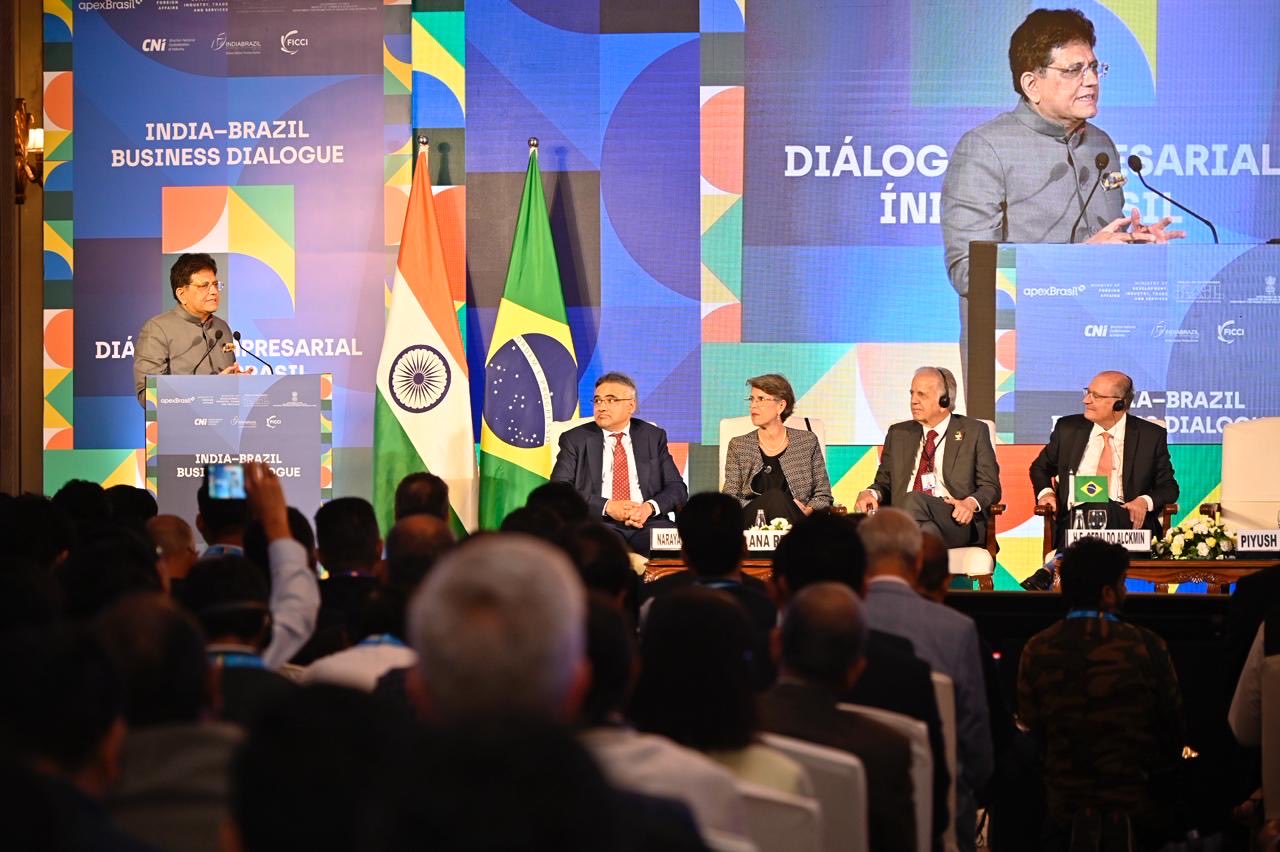
Brazilian VP Geraldo Alckmin, Minister of Defense, José Múcio Monteiro Filho and Piyush Goyal address India–Brazil Business Dialogue

NEW DELHI : Union Minister of Commerce and Industry, Shri Piyush Goyal, addressed the India–Brazil Business Dialogue on Thursday, highlighting India’s strong economic growth and deepening bilateral partnership with Brazil.

Shri Goyal expressed gratitude to the Vice President of Brazil, H.E. Mr. Geraldo Alckmin, and the Minister of Defense, H.E. Mr. José Múcio Monteiro Filho, for their participation. He described the visit as a reflection of the strong commitment of both nations to deepen their strategic and economic ties.

Marking World Food Day, the Minister highlighted the shared agricultural strengths of India and Brazil—two leading agri-producing nations that contribute significantly to global food security. He expressed optimism that the dialogue would lead to greater collaboration in agri-business and food processing.

Quoting Prime Minister Shri Narendra Modi, Shri Goyal said that India–Brazil relations should be “as colourful as a carnival and as passionate as football.” He also appreciated Brazil for including yoga and Ayurveda in its healthcare systems, noting that traditional knowledge and wellness practices can further strengthen cultural and health cooperation between the two nations.

He noted that India’s GDP grew by 7.8 percent in the first quarter, making it the fastest-growing large economy in the world for the past four years. The Minister expressed confidence that India would continue this momentum for at least the next two decades.

Shri Goyal underlined that under the leadership of Prime Minister Shri Narendra Modi, India’s growth story rests on three strong pillars. The first pillar, he said, is the creation of robust macroeconomic fundamentals. The Government has maintained low inflation, ensured consistent growth, fortified the banking system, and built one of the strongest foreign exchange reserve positions in the world. With USD 700 billion in foreign exchange reserves, India is among the top five countries globally in terms of forex strength. Shri Goyal emphasized that these strong macroeconomic fundamentals provide the threshold for the country to pursue ambitious growth targets and accelerate its development journey.

The second pillar, Shri Goyal noted, focuses on taking modern, high-quality infrastructure to the remotest corners of the country. He said that good infrastructure is the foundation of competitiveness and a driver of equitable growth across India. Investments in infrastructure, he emphasized, not only improve connectivity and reduce logistics costs but also strengthen India’s ability to expand businesses and create jobs. These investments provide opportunities for young men and women to contribute to nation-building, support entrepreneurs and start-ups, and open new avenues for business and innovation. Shri Goyal underlined that infrastructure development has been one of the major focus areas of the Government over the last decade.

The third pillar of India’s growth story, the Minister said, is focused on improving the quality of life for the people. He noted that the Government has reduced the income tax burden on the middle class and simplified the Goods and Services Tax (GST) system to make business processes easier. The recent GST reforms, activated on 22nd September, have significantly reduced tax rates and improved compliance. Shri Goyal highlighted that these measures enable citizens to have greater spending capacity and a better quality of life for their families. He emphasized that the Government’s continued efforts aim to ensure that every individual benefits from economic growth and that development remains inclusive and broad-based.

Referring to the recent statement by the IMF Chief praising India’s bold reforms, Shri Goyal highlighted that the IMF has revised India’s growth projection for 2025 upward from 6.4 percent to 6.6 percent. He noted that in the last 12 years, 250 million Indians have been lifted out of poverty, creating a strong and aspirational middle class that now drives the nation’s consumption and growth story.

The Minister emphasized that India’s welfare and infrastructure investments are working in tandem to create a more inclusive and sustainable economy—ensuring that every citizen has access to food, housing, education, healthcare, electricity, digital connectivity, and clean water.

He reiterated the government’s commitment to structural reforms, ease of doing business, and reducing compliance burdens. He said these efforts have strengthened investor confidence and positioned India to become the world’s third-largest economy in the near future, aiming for a USD 30–35 trillion economy by 2047.

Shri Goyal underscored that India’s mission to become a developed nation by 2047 is being powered by the collective resolve of 1.4 billion citizens. He reaffirmed India’s commitment to inclusive growth, global cooperation, and expansion of trade and investment partnerships through Free Trade Agreements with advanced and emerging economies alike.

Concluding his address, the Minister quoted Brazilian President Luiz Inácio Lula da Silva, saying, “No one can reap the fruit before planting the trees.” He remarked that India has planted the seeds of long-term growth and partnership, and expressed confidence that the friendship between India and Brazil will yield lasting prosperity for both nations.