Home Blog Page 627

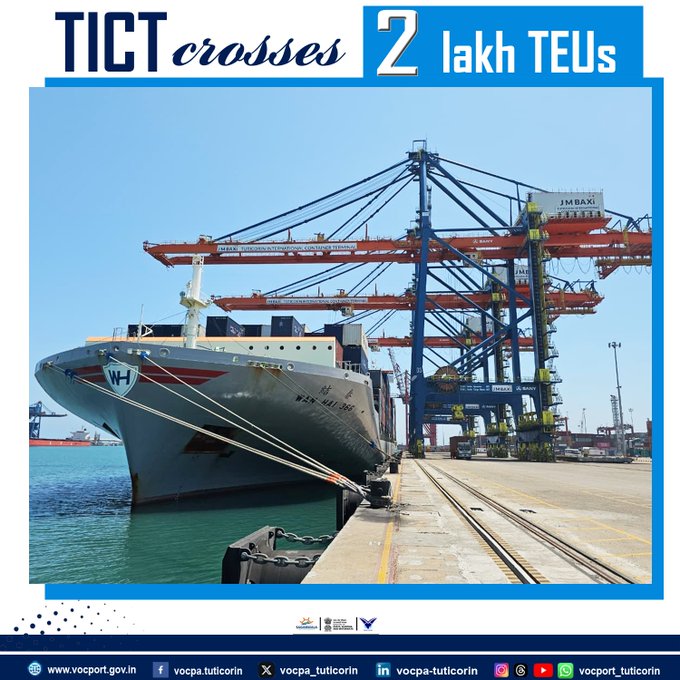
VoC Port’s TICT crosses 2 lakh TEU landmark

TUTICORIN : In a significant achievement, V.O. Chidambaranar Port Authority’s Tuticorin International Container Terminal (TICT) has successfully handled more than 2,00,000 Twenty-foot Equivalent Units (TEUs) of containers, marking a key operational milestone in the port’s growing container traffic.

The achievement underscores the port’s steady growth in containerized cargo movement and its emergence as a major gateway for trade in South India. TICT, operated under a Public-Private Partnership (PPP) model, has witnessed consistent growth driven by enhanced vessel handling efficiency, improved hinterland connectivity, and strategic engagement with shipping lines and logistics partners.

Officials at the V.O.C. Port Authority stated that the terminal’s advanced infrastructure and state-of-the-art equipment, including modern quay cranes and yard handling systems, have contributed significantly to improved turnaround times and productivity. The port’s ongoing digitalization initiatives, such as paperless operations and smart logistics systems, have further enhanced operational efficiency.

The milestone comes at a time when V.O.C. Port is focusing on expanding its capacity and upgrading facilities under the Maritime India Vision 2030. The Port Authority is also pursuing several initiatives to strengthen its transshipment capabilities and attract more mainline vessels, positioning Tuticorin as a key logistics hub on India’s southeastern coast.

Speaking on the occasion, a senior port official remarked,“Crossing the 2 lakh TEU mark is a testament to the coordinated efforts of the port workforce, terminal operators, and trade stakeholders. We remain committed to further enhancing our handling capacity and ensuring world-class services for our customers.”

With this performance, TICT continues to play a pivotal role in supporting the region’s export-import trade, especially in sectors such as textiles, automotive components, seafood, and agro-products, which rely heavily on efficient container movement.

The V.O.C. Port Authority aims to further increase its annual container throughput by leveraging infrastructure modernization, green port initiatives, and improved multimodal connectivity, aligning with India’s broader vision of becoming a global maritime and logistics leader.
VoC Port handles 21.29 Million Tonnes of cargo

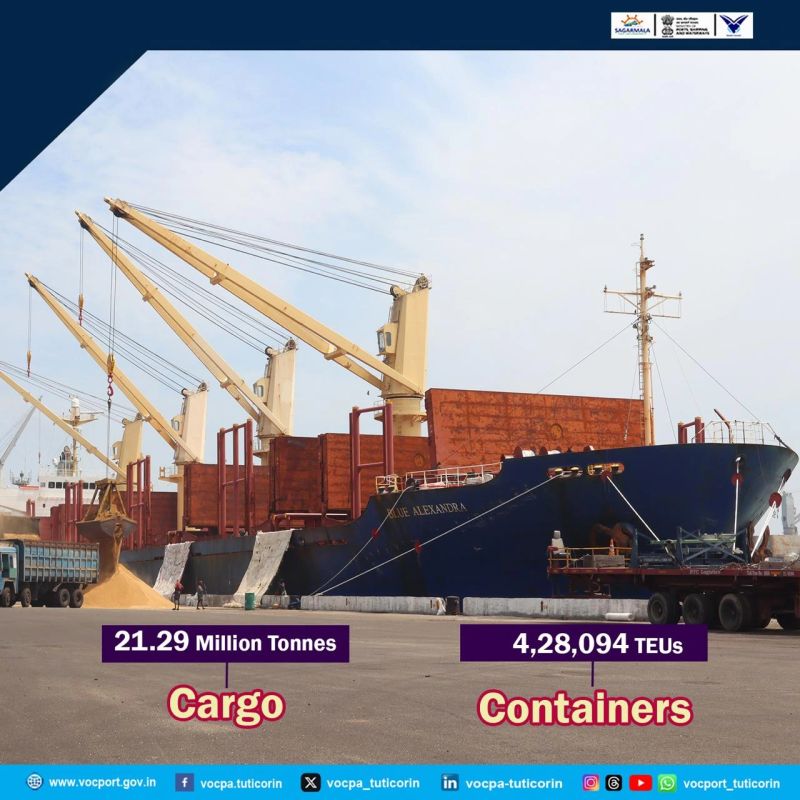
TUTICORIN : V.O.Chidambaranar Port Authority has handled 21.29 Million Tonnes of cargo, including 4,28,094 TEUs of containers, up to September in the financial year 2025–26. This reflects a 1.32% growth in overall cargo traffic and a 6.52% growth in container traffic compared to the 21.01 Million Tonnes of cargo and 4,01,902 TEUs handled during the same period of the previous financial year 2024–25.

The Port is surging ahead in efficiency & service excellence, strengthening its role as a preferred gateway for global trade.

Gateway Terminals India optimises truck handling with new Truck Appointment System

MUMBAI : Gateway Terminals India (GTI) – APM Terminals Mumbai – becomes the first terminals in Jawaharlal Nehru Port Authority (JNPA) to implement an automated Truck Appointment System (TAS).

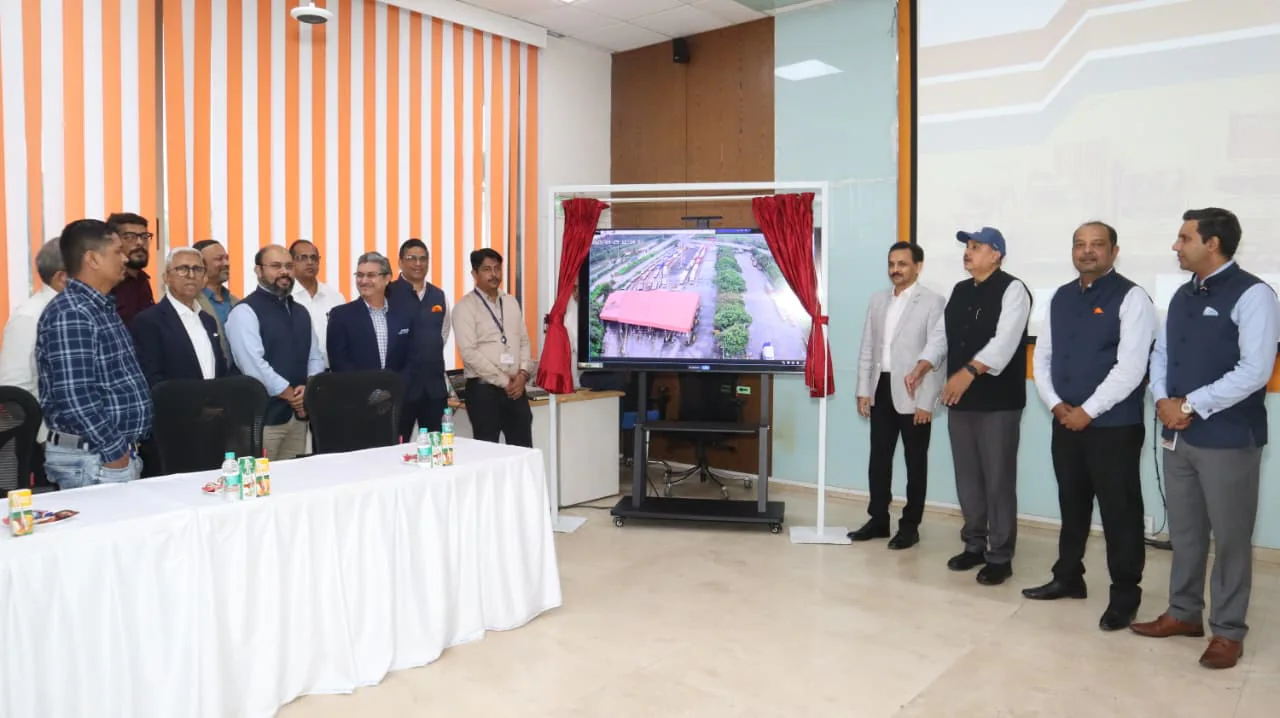
With an unwavering commitment to delivering the best possible service to customers and users of the port, Gateway Terminals India (GTI) – also known as APM Terminals Mumbai – has implemented a state-of-the-art Truck Appointment System (TAS). The system, which went live on September 29, 2025, is a significant leap forward in optimising terminal operations and enhancing planning for all stakeholders cutting down truck turn times and enabling smoother pick-ups and deliveries. The system was inaugurated by Shri Vimal Kumar Srivastava, Chief Commissioner of Customs Mumbai Zone-II along with Shri Arunjay Kumar Singh, Chief Executive Officer, GTI.

Mr. Kumar Divya, Chief Commercial Officer, Gateway Terminals India, said “Our ambition is to be the country’s best terminal company for all stakeholders. This TAS not only helps us bring higher predictability into gate operations but also allows CFSs [container freight stations] and transporters to better utilise their assets. Such visibility will go a long way in increasing reliability and flexibility for the entire port ecosystem, while addressing traffic fluctuations between peak and lean periods.”

The new TAS is designed to regulate truck arrivals through a time-slotting mechanism, effectively levelling peak hours and minimising congestion at the JNPA port, Mumbai. This automated process requires truckers to choose an available time slot to enter the terminal, ensuring a smooth and predictable flow of the traffic. Prior to its official launch, GTI conducted a thorough run-through of the system in partnership with all stakeholders to ensure seamless implementation. The new automation initiative is expected to significantly reduce turnaround times, providing truckers with a more efficient and reliable process.

Commenting on the inauguration, Shri Vimal Kumar Srivastava, Chief Commissioner of Customs, Mumbai Zone-II, stated “The inauguration of the TAS Operating System is a testament to innovation and operational excellence. This cutting-edge automated system will play a crucial role in enhancing efficiency and significantly minimising port congestion at JNPA. By being the first terminal in JNPA to implement this technology, GTI is setting a new standard for the industry. I extend my warmest congratulations and wish GTI all the very best, as we look forward to more such transformative initiatives.”

Mr. Umesh Grover, Secretary General – CFSAI (Container Freight Station Association of India) added “Congratulations to the entire team GTI on the successful launch of TAS. After months of hard work and close collaboration with stakeholders, the TAS application is now fully implemented by GTI. This is a significant achievement that will help optimise road traffic during lean and busy hours. TAS is a clear demonstration of GTI’s commitment to excellence. It will help distribute containers over 24 hours, save time and achieve the desired purpose.”

CWC, iWare launches green channel rail cargo service from Gandhidham to Delhi

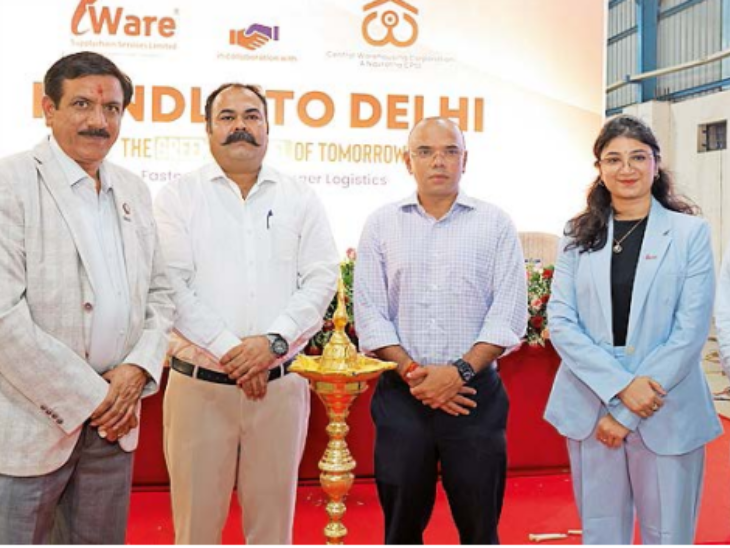
NEW DELHI: The logistics landscape in India witnessed a significant step forward with the inauguration of the Green Channel Rail Cargo Service connecting Gandhidham (Kandla) to RWC Shakurbasti, New Delhi. This initiative is a collaborative effort between the Central Warehousing Corporation (CWC), Ahmedabad Region, and iWare Supplychain Services Ltd., aimed at enhancing efficiency, reducing transit times, and promoting environmentally sustainable trade practices.

The newly launched service utilizes CWC’s , providing end-to-end cargo solutions from port pick-up to last-mile delivery in Delhi. By combining rail transport with modern warehousing facilities, the service ensures smooth, reliable, and time-efficient logistics operations for businesses moving goods between western ports and northern markets.

Speaking at the inauguration, Mr. Ashish Dhania, Area Railway Manager, Western Railway, Gandhidham, said: “With CWC’s rail-side infrastructure and logistics companies like iWare introducing new services, this initiative is a step towards cost-effective and environmentally sustainable supply chain connectivity.”

Officials from CWC, including Shri Dheeraj Sharma and Shri Pradeep Kumar, emphasized that the Gandhidham facility strengthens rail-centric logistics models, integrating storage, cargo movement, and last-mile distribution.

The event also saw the presence of senior officials from Western Railway, along with industry leaders such as Mr. Krishna Tanwar, Founder & MD, and Ms. Twinkle Tanwar, CEO of iWare Supplychain Services Ltd., highlighting the importance of collaboration between public and private sector players in modernizing India’s logistics network.

Speaking on the occasion, Mr. Krishna Tanwar, Founder and Managing Director of iWare Supplychain Services Ltd., said: “This milestone reflects our commitment to building a greener and more efficient logistics ecosystem for India. The dedicated cargo rail service will not only ensure faster and safer deliveries but also contribute to reducing the industry’s carbon footprint. We see this as a crucial step towards making supply chains more resilient, sustainable, and future-ready.”

Benefits of the Green Channel Service

The Green Channel Rail Cargo Service is designed to:

  • Reduce transit time by offering a direct rail corridor from western ports to northern consumption hubs.
  • Promote sustainable trade, cutting down the carbon footprint by optimizing rail transport.
  • Enhance logistics efficiency through integrated warehousing and last-mile delivery solutions.

By streamlining cargo movement and enabling faster deliveries, this service is expected to boost trade competitiveness, strengthen supply chains, and contribute to India’s broader goals of sustainable and efficient transportation networks.

The Gandhidham-Delhi Green Channel sets a new benchmark for rail-based logistics in India, reflecting a strong partnership between government infrastructure and private enterprise to drive growth and sustainability in the sector.

Govt launches probe into E-Commerce platforms over extra charges classified as ‘Dark Pattern’

NEW DELHI : The Department of Consumer Affairs has received several complaints against e-commerce platforms for charging extra fees under various names, a practice that the government has classified as a “dark pattern” that misleads and exploits consumers. Union Minister for Consumer Affairs, Food and Public Distribution, and New and Renewable Energy, Pralhad Joshi, shared the information on X, saying that the ministry has started a detailed investigation into the matter.

He said, “The Department of Consumer Affairs has received complaints against e-commerce platforms charging extra for Cash-on-Delivery, a practice classified as a dark pattern that misleads and exploits consumers. A detailed investigation has been initiated and steps are being taken to scrutinize these platforms closely. Strict action will be taken against those violating consumer rights to ensure transparency and uphold fair practices in India’s growing e-commerce sector.”

The post followed a user on X sharing a screenshot from an e-commerce website that listed multiple additional fees, including “Offer Handling Fee,” “Payment Handling Fee,” and “Protect Promise Fee.”
These charges comparatively increased the total cost of the item, even after discounts were applied, resulting in customers paying more than the displayed price.

Following the minister’s response, several users joined the discussion, expressing their dissatisfaction and sharing similar experiences. Many pointed out that such extra charges were becoming common across different platforms, making online shopping more expensive and confusing. Some users also questioned the transparency of these practices, calling for stricter monitoring and regulation.

Dark patterns refer to manipulative design strategies or pricing tactics employed by digital platforms to deceive consumers into making unintended purchases or incurring hidden fees. The Department of Consumer Affairs has been actively identifying and warning against such practices in recent months, with a focus on protecting users in India’s rapidly expanding digital market. As consumers increasingly rely on online shopping, the ministry’s move is expected to bring more scrutiny to digital platforms and reinforce fair trade standards.

Source : ANI

Maruti Suzuki becomes first carmaker to dispatch vehicles by rail to Kashmir

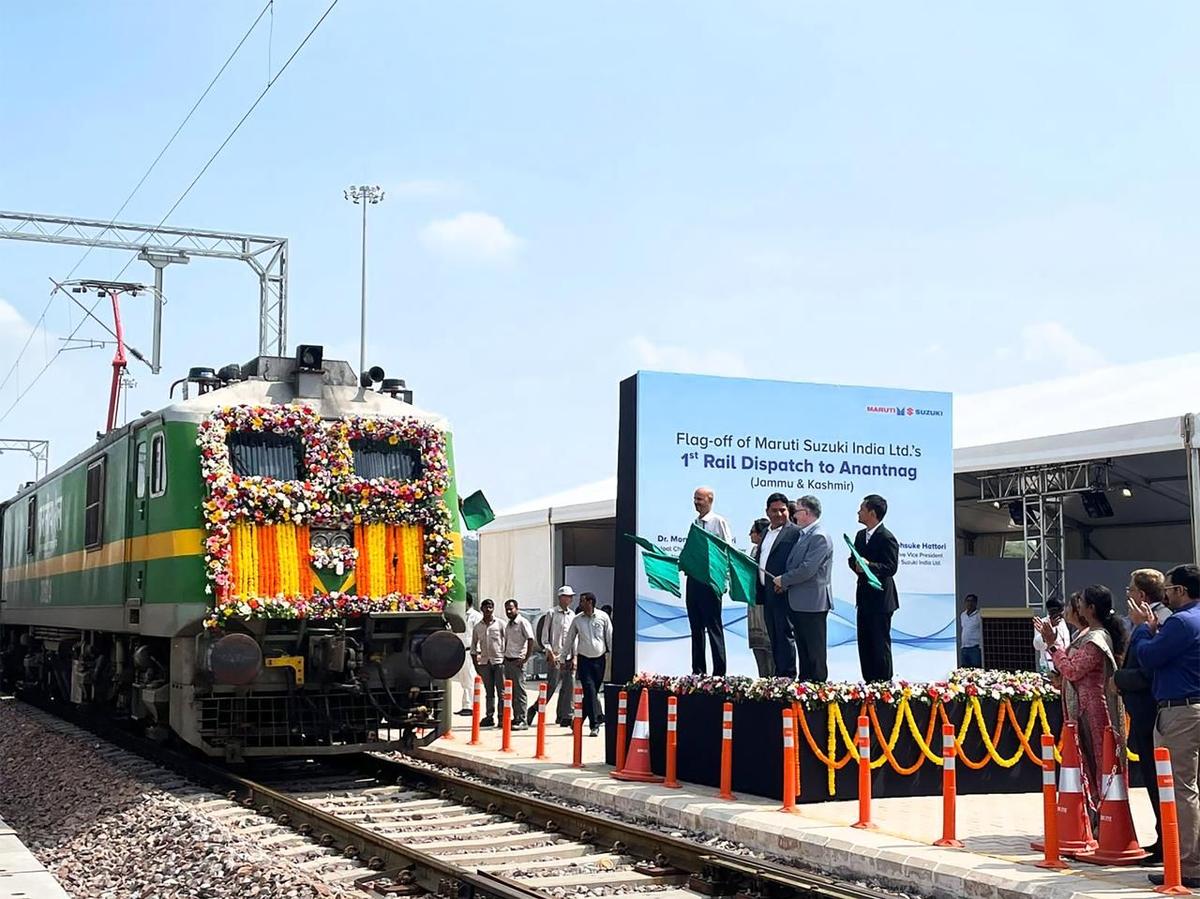
NEW DELHI: In a historic move for India’s automobile and logistics sector, Maruti Suzuki India Limited has become the first car manufacturer to transport vehicles by rail to the Kashmir Valley. The company’s first batch of cars, comprising over 100 units including models like Brezza, Dzire, WagonR and S-Presso, reached the newly inaugurated Anantnag railway terminal.

The consignment began its journey from Maruti Suzuki’s recently commissioned in-plant railway siding at Manesar, Haryana, travelling more than 850km to Anantnag. In the process, the train crossed the world’s highest railway arch bridge over the Chenab river, an engineering marvel inaugurated earlier this year as part of the Udhampur-Srinagar-Baramulla Rail Link (USBRL) project.

Union Railway Minister Shri Ashwini Vaishnaw hailed the development, calling the Jammu–Srinagar rail line a “game changer” for the region. “In recent times, apples from the valley have been transported using the Jammu & Kashmir rail link. Now, Maruti Suzuki cars will be transported to Kashmir valley by rail. This railway line is transforming logistics and lives in J&K,” the minister said.

Maruti Suzuki Managing Director and CEO Hisashi Takeuchi underlined the strategic importance of rail logistics for the company. “Railway dispatches are central to our logistics strategy. The Chenab bridge is a landmark infrastructure project that now allows us to serve customers in the Kashmir valley with greater efficiency. We are grateful to the Hon’ble Prime Minister, under whose leadership transformative infrastructure projects have come up across the country,” he said.

As part of its commitment to the PM GatiShakti National Master Plan, Maruti Suzuki currently operates two in-plant railway sidings, at Manesar and Gujarat that enable direct vehicle movement from its factories to various regions in India.

Maruti Suzuki has been steadily expanding its green logistics footprint by promoting rail as a cleaner alternative to road transportation. It was the first automaker in India to obtain an Automobile Freight Train Operator (AFTO) license in 2013. Since FY2014-15, the company has transported over 2.6 million vehicles via Indian Railways, reducing road congestion and cutting carbon emissions significantly.

The arrival of vehicles in the Kashmir valley by rail not only marks a milestone for Maruti Suzuki but also reflects the growing role of Indian Railways in boosting regional connectivity, trade and sustainability.

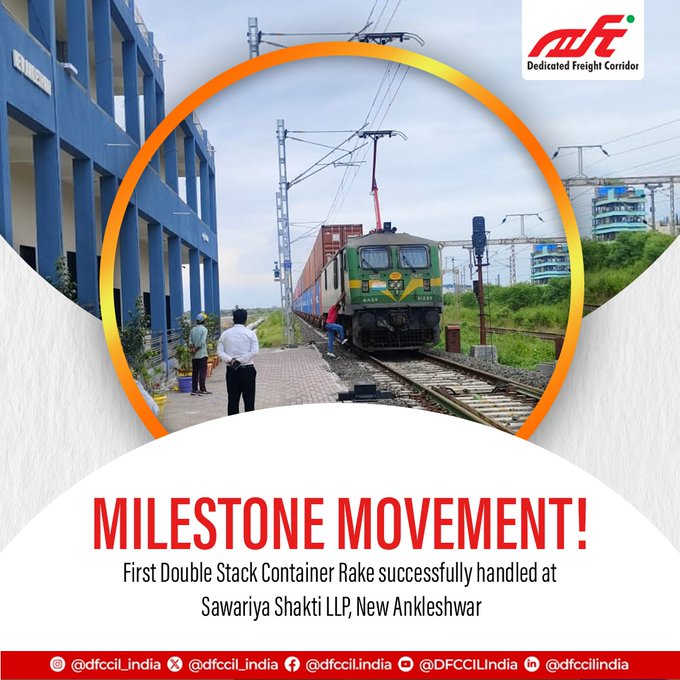
First double-stack container rake reaches Sawariya Shakti GCT at New Ankleshwar

NEW DELHI : In a significant development for India’s freight transportation sector, the first double-stack container rake has successfully arrived at Sawariya Shakti, New Ankleshwar – the first privately developed Gati Shakti Multi Modal Cargo Terminal (GCT) on private land along the DFC network,

This milestone underscores the rapid progress under the PM Gati Shakti National Master Plan, aimed at integrating logistics infrastructure and enhancing multimodal connectivity across India. The arrival of the double-stack rake marks the operational readiness of Sawariya Shakti GCT to handle high-capacity, cost-efficient containerized cargo movement.

Strategically located in New Ankleshwar, Gujarat, the Sawariya Shakti terminal is expected to play a vital role in serving industries across Ankleshwar, Bharuch, and the adjoining industrial belts, offering seamless rail connectivity to ports on the western coast and major inland destinations.

The facility, developed on private land, represents a pioneering model under the Ministry of Railways’ GCT policy framework, encouraging private participation in logistics infrastructure along the DFC. By facilitating faster and more economical freight movement, the GCT will help decongest roads, lower logistics costs, and improve supply chain reliability.

Officials noted that the double-stack rake operation on this route demonstrates the high-loading capacity and operational efficiency achievable through the DFC network, which supports longer and heavier freight trains at higher speeds.

With this successful movement, Sawariya Shakti GCT is poised to emerge as a key multimodal logistics hub, supporting India’s vision to make rail freight greener, faster, and more competitive.

This landmark achievement redefines logistics and freight movement in Gujarat, powered by seamless integration with the Western Dedicated Freight Corridor (WDFC) developed by DFCCIL

Indian Railways expands Freight Services to Nagaland following Mizoram launch

NEW DELHI: Indian Railways has commenced freight train operations from Nagaland, building on the successful launch of passenger and cargo services from Mizoram. Rail connectivity in Mizoram was linked to the national network after Prime Minister Shri Narendra Modi inaugurated the Bairabi-Sairang rail line project on September 13.

Freight Train Operations Begin in Nagaland

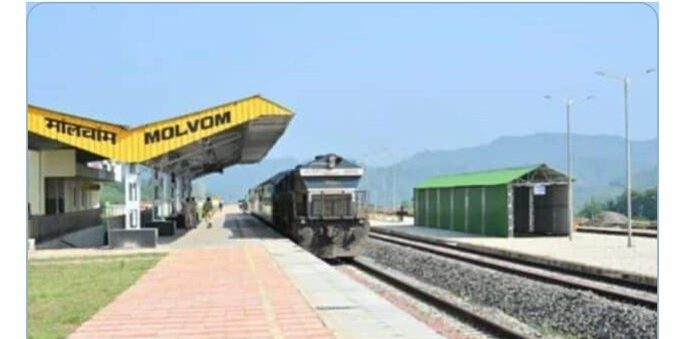
In September, the Ministry of Railways launched freight train operations from Molvom station in Nagaland. The first inward rake, carrying 41 wagons of cement from Telangana, arrived at Molvom on September 24. This was followed by the first outward rake on September 29, which transported 42 wagons of stone chips from Molvom to Jirania.

Freight Train Services Commence in Mizoram

Last month, Indian Railways unloaded a total of eight rakes at Sairang station in Mizoram. The first rake, which arrived on September 14, carried 21 wagons of cement from STAR Cement Siding in Tetelia near Guwahati. It was followed by three rakes of stone chips, one rake of automobiles, one rake of RMC, and one rake of sand from Bairabi.

In a statement, the national transporter said: “The growing demand for both passenger and freight services showcases how railway connectivity is transforming lives in the Northeast. Beyond convenience, these new links promise economic growth, better market access for local products, and new opportunities for trade and employment.”

In a statement, Indian Railways said, “The rising demand for both passenger and freight services highlights how railway connectivity is transforming lives in the Northeast. Beyond improved convenience, these new links are set to drive economic growth, enhance market access for local products, and create new opportunities for trade and employment.”

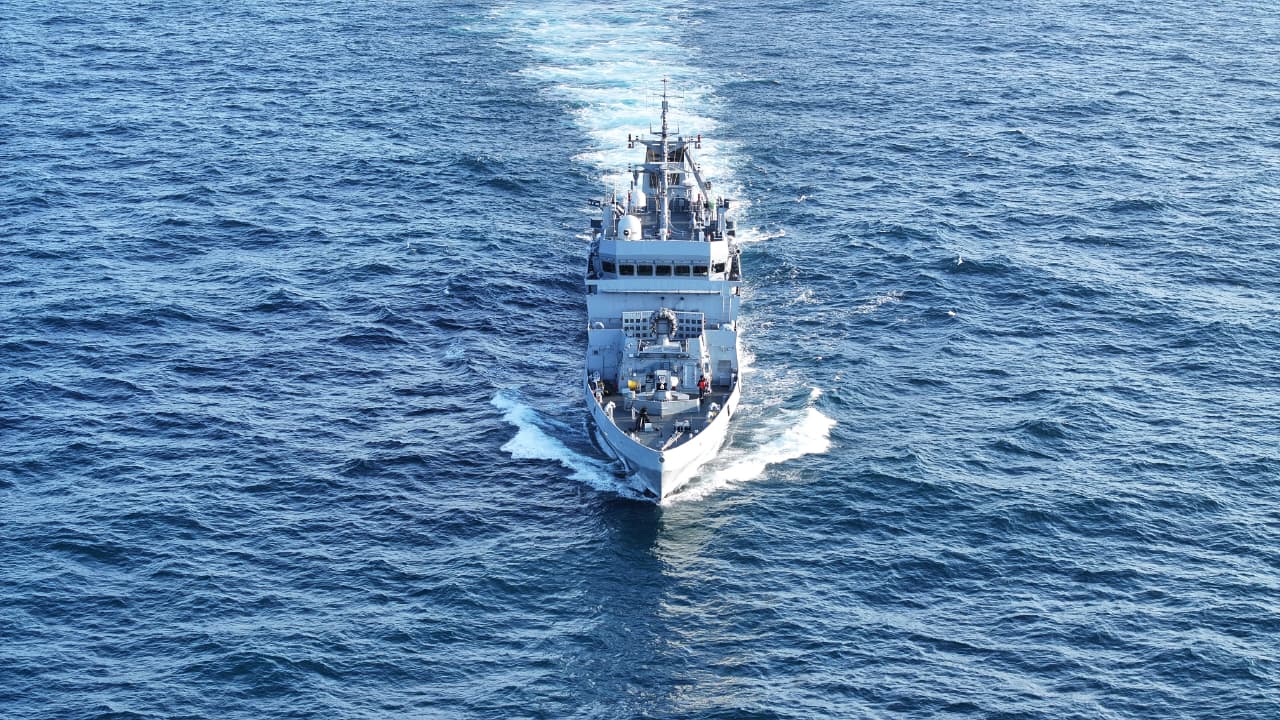
Indian Navy is set to commission ‘Androth’– a steady march with new indigenous inductions

VISAKHAPATNAM : The Indian Navy is set to commission Androth, the second Anti-Submarine Warfare Shallow Water Craft (ASW-SWC), at a ceremonial event scheduled to be held on 06 Oct 2025 at the Naval Dockyard, Visakhapatnam. The ceremony will be presided over by Vice Admiral Rajesh Pendharkar, Flag Officer Commanding-in-Chief, Eastern Naval Command.

The commissioning of Androth, marks yet another milestone in the Indian Navy’s steady stride towards capability enhancement and indigenisation. The induction is part of a larger momentum that has seen several state-of-the-art warships join the naval fleet in recent months.

Built by Garden Reach Shipbuilders and Engineers (GRSE), Kolkata, Androth is a testimony to India’s growing maritime self-reliance with over 80% indigenous content. The ship underscores the Navy’s commitment to enhancing indigenous capability through innovative technologies and home grown solutions.

The commissioning of Androth will significantly bolster the Navy’s ASW capabilities, especially in countering threats in littoral waters. It reflects the Navy’s sustained emphasis on indigenisation, innovation, and capability enhancement, while also highlighting the vital role of GRSE in strengthening India’s maritime security architecture.

Together, these inductions in recent months — Arnala, Nistar, Udaygiri, Nilgiri, and now Androth — reflect the Navy’s balanced growth across the spectrum of maritime operations. Above all, they embody the spirit of Aatmanirbharta (self-reliance), with a high percentage of indigenous content, design expertise and home grown innovation coming from Indian shipyards and industries.

Port of Los Angeles unveils plan for first new container terminal in a generation

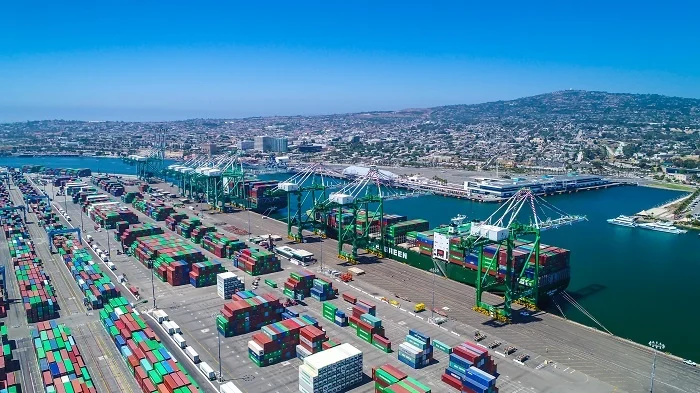
LOS ANGELES : The Port of Los Angeles has issued a request for proposal for the pre-development of Pier 500, a new marine container terminal that would be the first built at the port in a generation.

As the Western Hemisphere’s busiest container port, this expansion represents a significant investment in U.S. maritime infrastructure. The project aims to meet future global supply chain demands while enhancing efficiency and sustainability.

The proposed 200-acre terminal would feature two new berths and approximately 3,000 linear feet of new available wharf on the southern tip of Terminal Island. Located in natural deep water, the site would accommodate larger, next-generation containerships, significantly increasing port cargo efficiency.

“For the first time in a generation, the Port of Los Angeles plans to build a new container terminal to meet global supply chain demand for decades into the future,” said Port of Los Angeles Executive Director Gene Seroka. “The development of the cleanest terminal possible would enhance our efficiency and sustainability while creating new jobs in our communities.”

The port is seeking a public-private partnership for the project, with the selected entity entering into a pre-development agreement to assess financial feasibility, secure necessary entitlements, and handle other pre-construction requirements.

The proposed site leverages existing infrastructure – a submerged area of 124 acres added during the construction of the adjacent Pier 400, which was completed in 2002. Pier 400 is currently the port’s largest container terminal.

The pre-development process will include comprehensive environmental assessments under both California and federal regulations. From pre-development through full operation, the entire Pier 500 project is expected to take approximately 10 years to complete.

The Port of Los Angeles handled 10.3 million Twenty-Foot Equivalent Units (TEUs) in 2024, its second-busiest year on record and a nearly 20% increase from 2023.

Interested parties have until January 29, 2026, to submit proposals.