Home Blog Page 628

Xeneta Weekly Ocean Container Shipping Market Update: Average Rates Retreat

OSLO:  The average spot rates of all trades slightly declined from last week. Ranging from -6.6% to -4.6%. This follows from last week, when there were sharper drops across the board.
• September was a month of turmoil and upheaval for the US-bound short-term market out of Far East. There was a significant jump in spot rates on 1 September and then some turbulence during the month, but by 30 September the earlier spike had been wiped out.
• On 2 October, rates from Far East into US East Coast and US West Coast are both down 8% compared to end-August.
• Less drama into Europe from the Far East where short-term rates were consistently in decline throughout September.
• 10 days ago, short-term rates into North Europe from the Far East eclipsed that ‘summer-bubble’ that developed from June and spiked in first half of July. Now at USD 1703 per FEU compared to USD 1912 per FEU at end-May.
• Spot rates are less volatile from North Europe into US East Coast – falling 5.5% from one week ago, 5.8% from two weeks ago and 10.2% from end-August.
• North Europe to US East Coast is now at a 21-month low and the lowest point since end-2023.
• The latest average spot rate data is provided in the attached documents ‘Xeneta – weekly market update 2.10.25’ and ‘Xeneta – weekly market update chart 2.10.25’.

Xeneta weekly market update chart 2.10.25 Xeneta Weekly Ocean Container Shipping Market Update: Average Rates Retreat

Data highlights
• Market average spot rates – 2 October 2025:
o Far East to US West Coast: USD 1681 per FEU (40ft container)
o Far East to US East Coast: USD 2638 per FEU
o Far East to North Europe: USD 1703 per FEU
o Far East to Mediterranean: USD 2220 per FEU
o North Europe to US East Coast: USD 1648 per FEU

Xeneta analyst insight – Transpacific and FE-Europe
Peter Sand, Xeneta Chief Analyst: “Average spot rates on the Transpacific trade are now below the levels at the end of August, with the unexpected spike at the beginning of September more than wiped out.

“The September spot rate spike should act as a reminder that markets are still volatile. Freight rates will continue a steady decline for the rest of 2025, but there is always the potential for drama on the way.

“China has passed legislation allowing them to take countermeasures against any nation it believes is acting against its national trade interests. The lights are still flashing red on the geo-political dashboard so it would be foolish for shippers to believe there is not potential for more pain as we look ahead to 2026.”
SHIPPING: Most carriers will not add surcharges or service fees to offset USTR port charges

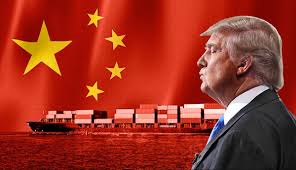
NEW YORK: New port charges from the US Trade Representative (USTR) for Chinese-built and China-based operators are set to take effect on 14 October, and several carriers have announced that they will not implement surcharges or service fees to offset the additional costs.

So far, ocean carriers ONE (Ocean Network Express), HMM, CMA CGM, and Maersk have told customers that they will not add additional charges.

HMM and ONE also said they will not adjust US port rotations or customers’ existing service plans.

ONE said they will continue to closely monitor the regulatory changes and provide immediate updates should new information become available.

CMA CGM said it has used the 180 days since the announcement to implement a robust and adaptive contingency plan.

“We currently expect to both maintain our service coverage to all scheduled US ports and minimize any impacts of the upcoming USTR fees,” the company said in a notice to customers. “Despite the challenges this new service fee may create for our operations, based on the current structure and applicability of the service fee, CMA CGM does not plan to implement a surcharge at this time to cover USTR-related fees as currently structured.”

It is more difficult for Chinese carriers such as COSCO.

COSCO said it remains confident in its ability to ensure stable and reliable services in the US.

“At the same time, we are actively enhancing our product portfolio to meet the evolving demands of the US market,” COSCO said. “We will maintain competitive rates and surcharges, along with related policies that align with market conditions.”

China’s Hede Shipping is impacted by the new USTR regulation since, as a Chinese company, they cannot avoid significant fees on all their operated vessels when calling the US.

They have announced a closure of their HDS2 Pacific service leaving only their HDS in place on the Pacific.

Some companies are looking at other ways to avoid the new USTR charges.

Seaspan, which is the world’s largest charter owner of container vessels, moved their headquarters from Hong Kong to Singapore effective 1 October and is planning to reflag about 100 vessels to the Singaporean flag.

“This is the largest direct impact we have seen of the coming USTR fees which applies to Chinese built, owned and operated vessels,” Lars Jensen, president of consultant Vespucci Maritime, said.

CHINA ANNOUNCES COUNTER MEASURES
Jensen said China issued new rules on maritime transport which appear to have the purpose of retaliating against the USTR fees.

“Under the revised regulations, China will take necessary countermeasures against countries or regions that impose or support discriminatory bans, restrictions, or similar measures targeting Chinese operators, vessels, or crew engaged in international maritime transport and related services,” the Chinese government said, noting that its new rules went into effect on 28 September.

These measures could potentially include:
• Fees on vessels when calling at Chinese ports
• Blocking or restricting vessels’ port access in China
• Blocking or restricting organizations or individuals from accessing China-related maritime data or from engaging in international shipping and related services to and from Chinese ports.

“Such measures will be enacted unless relevant treaties or agreements offer adequate and effective remedies, according to the decree,” the Chinese government said.

QUESTIONS REMAIN CONCERNING USTR FEE STRUCTURE
In relation to the USTR rules Jensen said questions have been raised to USTR regarding details of the practical implementation.

In a note, the USTR has responded to some of the bodies making the inquiries.

“We are working to provide additional clarity to outstanding questions raised by stakeholders,” the USTR said. “We are aware of the upcoming 14 October fees and working diligently to release this information in advance.”

Container ships and costs for shipping containers are relevant to the chemical industry because while most chemicals are liquids and are shipped in tankers, container ships transport polymers, such as polyethylene (PE) and polypropylene (PP), are shipped in pellets. Titanium dioxide (TiO2) is also shipped in containers.

They also transport liquid chemicals in isotanks.

Source: ICIS

Sarbananda Sonowal chairs review meeting for India Maritime Week 2025

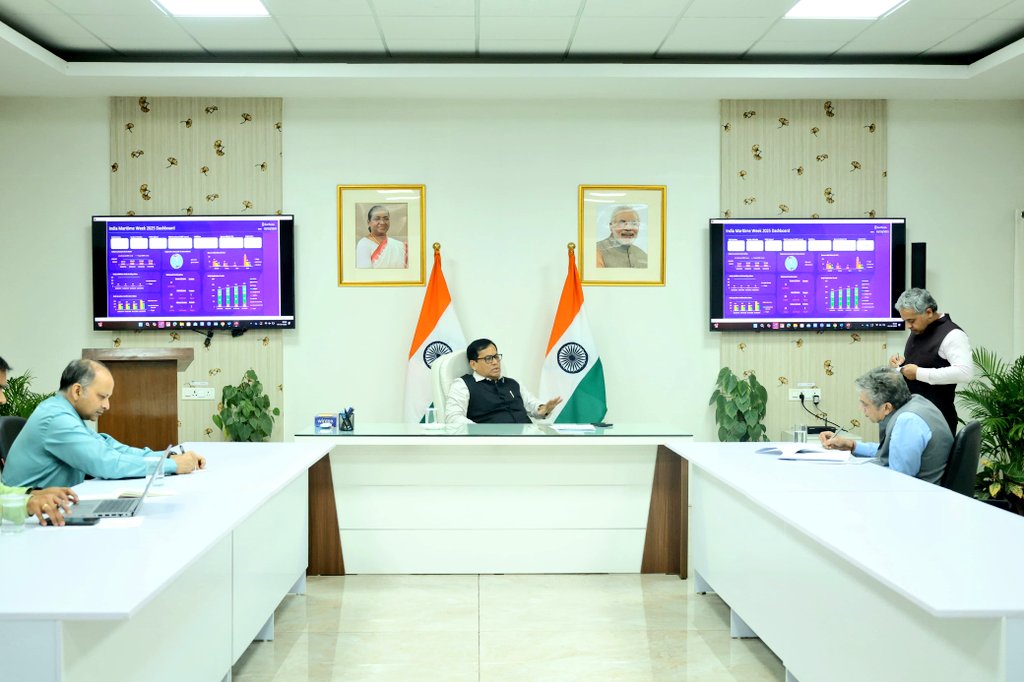
NEW DELHI : Union Minister of Ports, Shipping and Waterways, Shri Sarbananda Sonowal, chaired a high-level review meeting with senior officials of the Ministry to assess the ongoing preparations for India Maritime Week 2025, scheduled to be held in Mumbai from October 27–31, 2025.

During the meeting, the Minister took stock of the arrangements being made to ensure the successful conduct of the event, which is expected to attract global participation from policymakers, industry leaders, shipping companies, port operators, logistics providers, and technology innovators.

Highlighting the importance of India Maritime Week, Shri Sonowal said, “This flagship event will showcase India’s maritime growth story, promote investment opportunities, and foster international collaboration in the shipping and port ecosystem. Our focus will be on sustainable growth, innovation, and positioning India as a global maritime hub.”

Officials apprised the Minister about the preparations for key sessions, including maritime infrastructure development, shipbuilding and repair, green shipping, digitalisation in port operations, inland waterways, cruise tourism, and skill development in the maritime sector. Special emphasis is being laid on promoting next-generation fuels such as LNG, methanol, and hydrogen, in line with India’s commitment to clean energy transition in shipping.

The Ministry is also coordinating with state maritime boards, industry associations, and global stakeholders to ensure widespread participation. A series of B2B meetings, exhibitions, startup showcases, and technology demonstrations are planned to highlight the opportunities in India’s expanding maritime sector.

The Minister directed officials to ensure seamless coordination across agencies, robust infrastructure at the venue, and enhanced stakeholder engagement for the event. He further stressed the need for showcasing India’s rich maritime heritage alongside its modernisation drive, to present a comprehensive narrative of progress.

India Maritime Week 2025 is expected to serve as a major platform for policy dialogue, business partnerships, and knowledge exchange, reinforcing India’s role in shaping the future of global shipping and trade.

Adani Ports reports record cargo and rail volumes in H1FY26

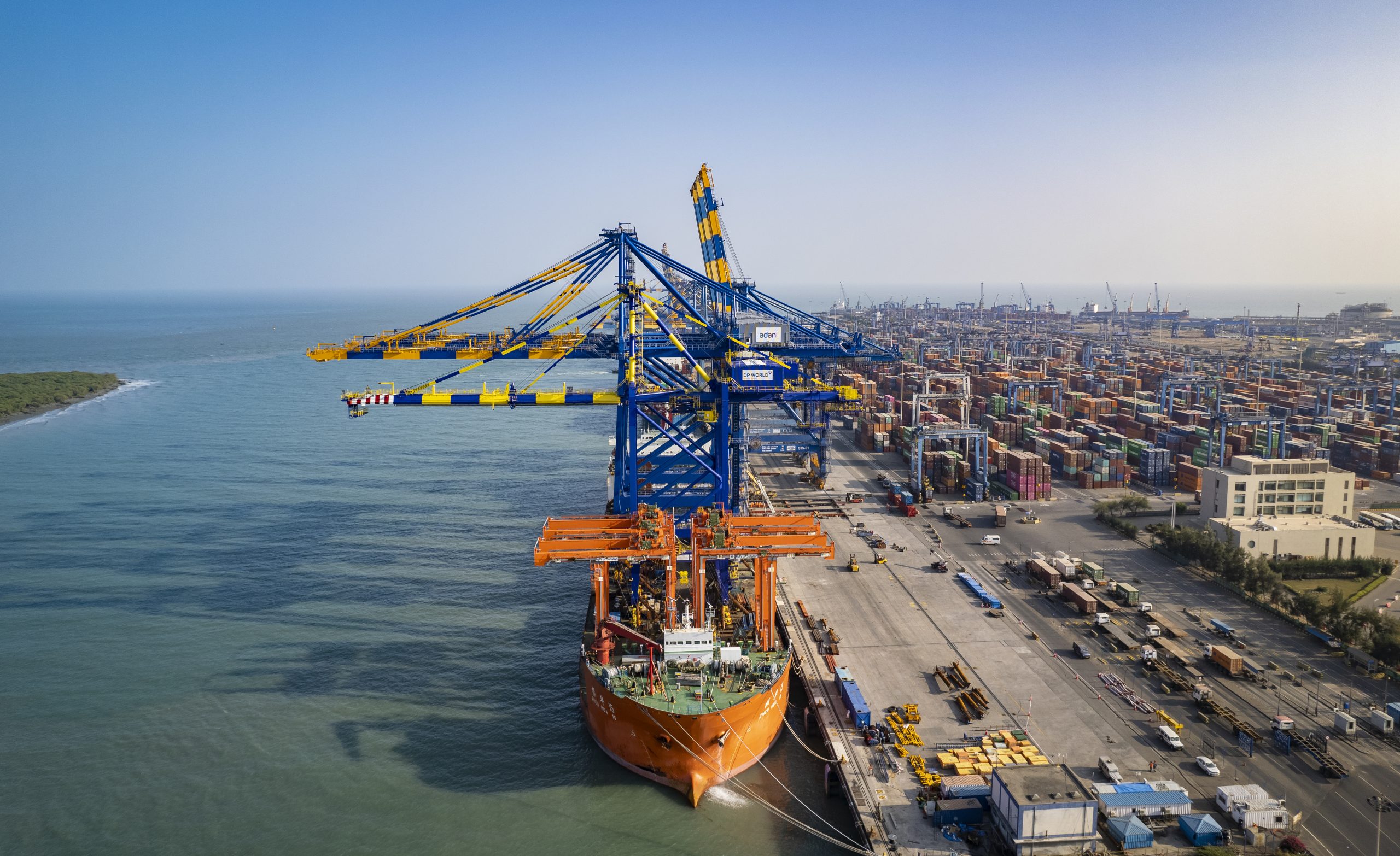
AHMEDABAD : Adani Ports and Special Economic Zone Ltd. reported business update for September 2025 and the first half of FY26, with the company handling its highest-ever cargo and rail volumes during the period.

In September alone, port cargo volumes rose 11% year-on-year to 41.6 million metric tonnes, driven by a 14% growth in container volumes. The company’s logistics rail segment also saw growth, with volumes increasing 22% YoY to 60,640 TEUs.

For the first half of FY26, APSEZ handled 244.2 MMT of cargo, marking an 11% increase YoY and setting a new record for half-yearly volumes. Container volumes led the growth with a 20% rise over the same period last year.

In logistics, the company recorded an all-time high rail volume of 358,406 TEUs in H1 FY26, up 15% YoY. Meanwhile, GPWIS volumes remained stable in September at 1.63 MMT, and rose 3% YoY to 10.98 MMT for the half-year.

The scrip fell as much as 0.72% to Rs 1,412.50 apiece. It pared losses to trade 0.36% lower at Rs 1,417.60 apiece, as of 01:12 p.m. This compares to a flat NSE Nifty 50 Index.

It has fallen 0.53% in the last 12 months. Total traded volume so far in the day stood at 0.41 times its 30-day average. The relative strength index was at 57.

Out of 22 analysts tracking the company, 21 maintain a ‘buy’ rating, one recommend a ‘hold,’ and none suggest ‘sell,’ according to Bloomberg data. The average 12-month consensus price target implies an upside of 20.8%

JNPA signs MoU with ICPP, Ashoka University to develop Logistics Cost Index

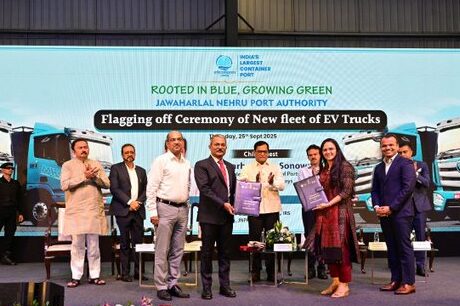
MUMBAI: Jawaharlal Nehru Port Authority (JNPA) signed an MoU with the Isaac Centre for Public Policy (ICPP), Ashoka University, Delhi, in the august presence of Shri Sarbananda Sonowal, Hon’ble Union Minister of Ports, Shipping & Waterways.

The MoU aims to develop a Logistics Cost Index – a pioneering reference framework that will enable port authorities to determine tariffs through both cost benchmarking and port benchmarking, tailored to different cargo types and commodities.

A Logistics Cost Index designed for India’s trade profile will help track logistics cost efficiency, identify bottlenecks, and serve as a baseline for ports to move towards market-driven tariffs in the future.

Piyush Goyal undertakes official visit to Singapore to strengthen Strategic and Economic Partnership

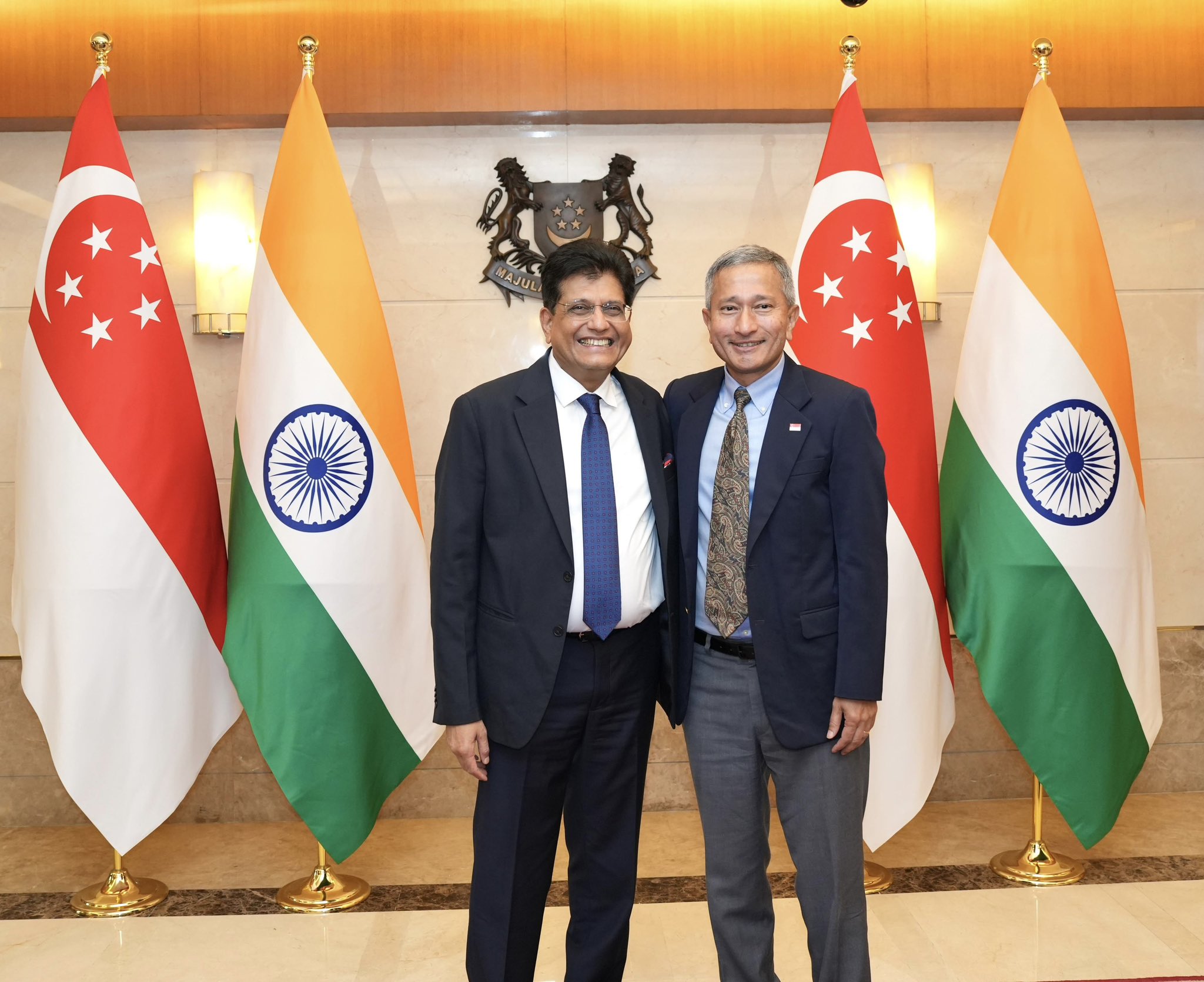
SINGAPORE : Union Minister of Commerce & Industry Shri Piyush Goyal, undertook a three-day official visit to Singapore to further strengthen bilateral economic and trade relations between the two countries. The visit highlighted India’s strong growth trajectory, commitment to investment-led reforms, and the vast opportunities available for global partners across manufacturing, infrastructure, financial services, and the green economy.

During his engagements with Singapore’s leadership, Shri Goyal called on Mr. Lawrence Wong, Prime Minister of Singapore, where discussions focused on strengthening trade and investment linkages, enhancing cooperation in innovation and digital connectivity, and exploring new opportunities in sustainable development. He also met Dr. Vivian Balakrishnan, Minister for Foreign Affairs, where both sides reaffirmed strategic trust and alignment on regional and global economic priorities. In his bilateral meeting with Mr. Gan Kim Yong, Deputy Prime Minister and Minister for Trade and Industry, the discussions centered on further deepening industrial and trade cooperation between India and Singapore.

A major highlight of the visit was the Business Roundtable on Foreign Direct Investment in the Manufacturing Sector, which was attended by key decision-makers from AmCham, EuroCham, the German Chamber of Industry & Commerce, and other business leaders. Delivering the keynote address, the Hon’ble Minister underscored India’s robust economic growth, pro-investment policies, and strategic initiatives aimed at strengthening its position as a global manufacturing hub.

In addition to these leadership engagements, Shri Goyal also held strategic business meetings with leading Singaporean corporates and institutional investors. At SIA Engineering Company (SIAEC), discussions focused on India’s fast-growing Maintenance, Repair & Overhaul (MRO) sector and the need to fast-track the India–Singapore Skilling Centre for MRO professionals in collaboration with Indian universities. CapitaLand Investment conveyed its commitment to expand renewable energy solutions for data centres in Maharashtra, while also exploring opportunities in industrial parks, worker housing models, and potential entry into credit financing. Royal Golden Eagle (RGE) shared updates on its tissue and pulp operations in India, discussed operational challenges, and expressed interest in knowledge exchange on sustainable forestry and reforestation practices. The Union Minister also had meetings with Group CIO, GIC Mr. Bryan Yeo and CEO of Temasek Mr. Dilhan Pillay, which focused on scaling up India-focused portfolios across infrastructure, hospitality, renewable energy, financial services, and urban development.

The visit reaffirmed the strong and growing strategic and economic partnership between India and Singapore, with both sides agreeing to deepen cooperation in manufacturing, infrastructure, the green transition, the digital economy, and financial investments.

Ashwini Vaishnaw and Japanese Minister H.E. Hiromasa Nakano visit Surat and Mumbai sites of Mumbai–Ahmedabad High-Speed Rail Project

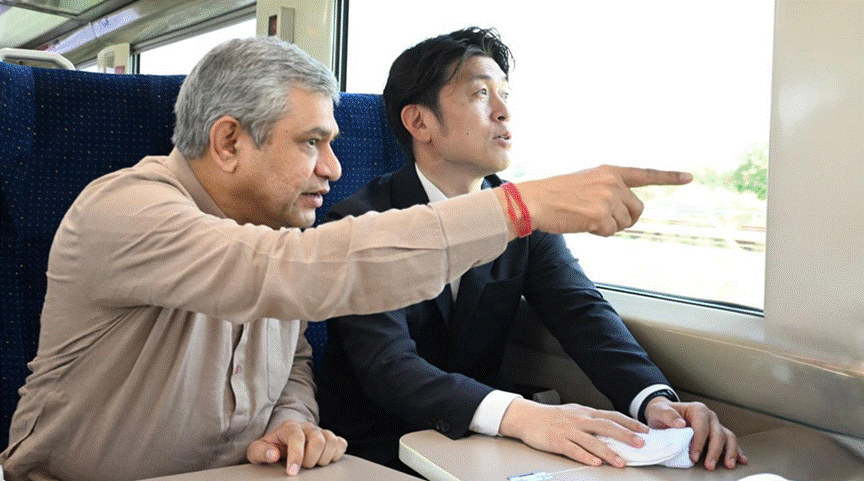
MUMBAI/SURAT : Union Minister for Railways, Information & Broadcasting, and Electronics & Information Technology Shri Ashwini Vaishnaw, along with Japan’s Minister of Land, Infrastructure, Transport & Tourism H.E. Hiromasa Nakano visited High-Speed Rail (HSR) construction sites of the Mumbai–Ahmedabad Bullet Train project in Surat and Mumbai on Friday.

H.E. Nakano was welcomed at Surat international airport with traditional Garba. Surat’s MP Shri Mukesh Dalal, Mayor Shri Daxesh Mavani, Chairman Railway Board, senior officials of Railways, NHSRCL and the district administration were also present at the Japanese Minister’s reception.

Visit to the Track Slab Laying Site at Surat: The Ministers visited the track construction base at the Surat High-Speed Rail site, where they witnessed the installation of the J-slab ballast-less track system on the viaduct. Track slab installation and permanent rail laying are progressing rapidly.

Recently, Union Minister Shri Vaishnaw also witnessed the first track turnout installation near Surat HSR station.

Visit to BKC HSR Station, Mumbai: The Ministers travelled from Surat to Mumbai via Vande Bharat Express. They reviewed the progress of the Bandra Kurla Complex (BKC) bullet train station in Mumbai. Minister Nakano and the Japanese team expressed happiness at the quality of Vande Bharat train.

Key Features of the BKC Bullet Train Station, Mumbai: The Bandra Kurla Complex (BKC) station will be an underground facility on the Mumbai–Ahmedabad High-Speed Rail corridor. Excavation has reached a depth of over 30 metres, equivalent to a 10-storey building, with approximately 84% of the work already completed. The station will feature three levels: platform, concourse, and service floor, and will offer both road and metro connectivity. Two entry and exit points are planned—one near the Metro station and another near the MTNL building. Designed for passenger comfort, the station will provide spacious areas and modern amenities, along with skylights to allow natural lighting.

Bullet train project progress (September, 2025): The Mumbai–Ahmedabad Bullet Train corridor is 508 km long. Of the total viaduct, 323 km has been completed, along with 399 km of pier work. Key bridge construction milestones include the completion of 17 river bridges, 5 PSC bridges, and 9 steel bridges. A total of 211 km of track bed has been laid, and over 4 lakh noise barriers have been installed along the corridor. Excavation is underway for seven mountain tunnels in Palghar, while 5 km of the 21 km NATM tunnel between BKC and Shilphata has achieved breakthrough. Rolling stock depots at Surat and Ahmedabad are under construction. Superstructure work on all Gujarat stations is at an advanced stage. Work has begun on all three elevated stations in Maharashtra.

The Japanese Minister’s visit reflects strong collaboration between India and Japan in implementing India’s first High-Speed Rail corridor.

MoPSW highlights ₹24,736 Crore boost for Shipbuilding and Recycling Ecosystem

NEW DELHI : The Union Cabinet chaired by Prime Minister Shri Narendra Modi has recently approved a ₹24,736 crore package for FY 2026–36 under the Shipbuilding Financial Assistance Scheme (SBFAS) and National Shipbuilding Mission (NSbM), informs a communique from Ministry of Ports, Shipping & Waterways.

SBFAS MoPSW highlights ₹24,736 Crore boost for Shipbuilding and Recycling Ecosystem

The package includes ₹20,554 crore for shipbuilding assistance, ₹4,001 crore for ship breaking credit notes, and ₹181 crore for the mission, aimed at incentivising shipbuilding projects worth nearly ₹96,000 crore.

The scheme will boost India’s shipbuilding capabilities, promote a circular economy through ship breaking and recycling, generate employment, and strengthen the country’s position as a global maritime hub.

Maritime community explores ocean opportunities in Dubai

World Maritime Day Parallel Event focuses on advancing innovation and growth while protecting the ocean

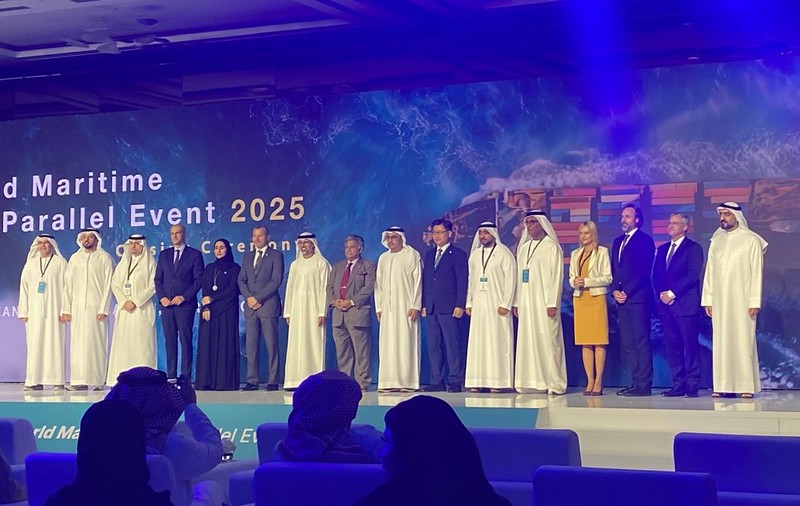
DUBAI: Dubai, in the United Arab Emirates, was the stage to exchange ideas, showcase innovation and strengthen international cooperation during the celebration of the 2025 World Maritime Day Parallel Event (WMDPE) this week.

The event (30 September – 1 October) was hosted by the United Arab Emirates Ministry of Energy and Infrastructure in collaboration with the International Maritime Organization (IMO).

54824866263 786daa9c68 c Maritime community explores ocean opportunities in Dubai

Welcoming delegates, the Minister of Energy and Infrastructure, H.E Suhail bin Mohamed Al Mazrouei, said: “This gathering gives us an opportunity to unite our efforts toward achieving that balance of economic growth with protecting the oceans which connect us together and keeping them healthy for the next generation.”

54824597351 d440432461 c Maritime community explores ocean opportunities in Dubai

IMO Secretary-General Mr. Arsenio Dominguez said: “By facing environmental challenges, we can unlock a plethora of opportunities for everyone. The shipping sector, for instance, creates a stream of jobs and training prospects not only for seafarers on the ship, but in logistics, law, new technologies and AI, economics and others.”

He highlighted that IMO continuously updates its global regulations to keep up with changes in the industry, while carefully considering their impact on Member State economies.

A call for dialogue and action

The event combined a maritime exhibition showcasing innovations in sustainable shipping, with a series of five panel discussions over two days, featuring experts and policy makers:

  • Panel 1: Our Ocean, Our Obligation, Our Opportunity underscored the links between ocean health, prosperity and governance, while highlighting opportunities in the blue economy and the importance of ocean literacy and youth engagement.
    • Panel 2: Decarbonization and climate change examined pathways to net-zero emissions in shipping, including the use of alternative fuels, green corridors, carbon pricing and climate-resilient ports.
    • Panel 3: Actions to address marine plastic litter explored regulatory gaps, onboard waste innovations, port reception facilities and the role of seafarers as “frontline defenders” against plastic pollution.
    • Panel 4: The BBNJ treaty and shipping reviewed how the new global framework for protecting marine biodiversity beyond national jurisdiction (BBNJ) will affect shipping lanes and high seas governance.
    • Panel 5: Capacity development for sustainable oceans spotlighted IMO-led projects and programmes designed to bolster capacity among Member States, especially in developing countries, through maritime training, upskilling and ensuring decent work and wellbeing in the green transition. 

    Republic of Korea to host 2026 WMDPE

    The event concluded with the ceremonial handover of the World Maritime Day Parallel Event flag to the Republic of Korea, which will host the 2026 edition in Busan.  

    DP World and PayPal to collaborate on Cross-Border digital trade payments

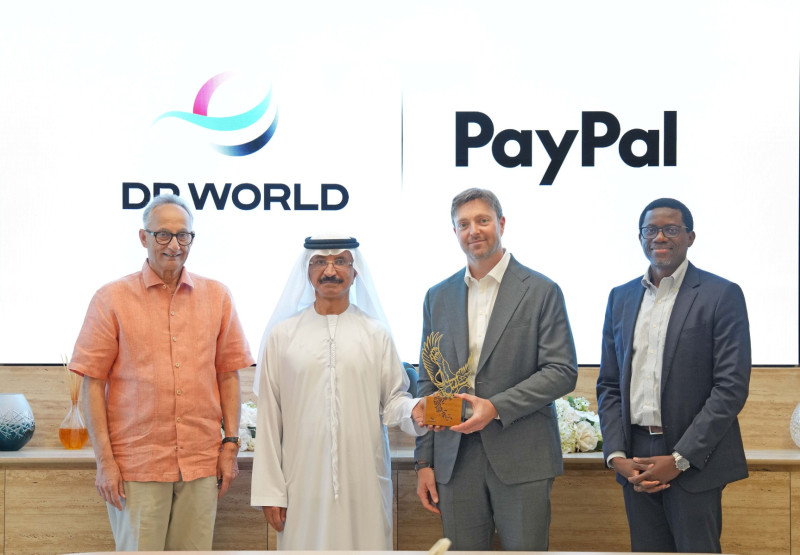
    DUBAI : DP World has signed a Memorandum of Understanding (MOU) with global commerce platform PayPal to collaborate on a first-of-its-kind digital payments initiative designed to simplify and speed-up cross-border trade.

    The agreement, which could see transactions executed in minutes rather than taking up to a week reflects DP World’s continued commitment to creating a secure and scalable marketplace for digital payments. DP World’s Digital Payments initiative will enable international merchants, shippers, exporters, importers, and marketplaces to complete cross-border payments with greater transparency, lower costs, and faster settlement times.

    dp world paypal DP World and PayPal to collaborate on Cross-Border digital trade payments

    Sultan Ahmed bin Sulayem, DP World Group Chairman and CEO, said: “In logistics, speed and transparency mean everything and payments linked to logistics are no different, which is why we have undertaken our Digital Payments initiative. Our collaboration with PayPal is part of this initiative which aims to provide our customers with reliable options for cross-border payments that are faster, and more transparent, than traditional systems without compromising security. By simplifying global transactions, we are enabling businesses of every size to grow, move faster, and operate more efficiently across markets.”

    “This solution marks another important step in DP World’s journey to transform the supply chain and make trade flow more efficiently. These partnerships allow us to bring trusted, digital-first solutions to global commerce, helping businesses and individuals trade more efficiently,” the chairman added.

    Alex Chriss, President and CEO of PayPal, said: “Global trade works best when payments are fast, transparent, and secure. That is exactly what this partnership with DP World is delivering. For too long, global businesses have been underserved by traditional cross-border payment systems. Today, we are setting a new standard. I am proud to mark this milestone in a region that is becoming a global hub for digital innovation, as we continue building more connected and inclusive financial services for businesses worldwide.”

    By combining DP World’s global supply chain expertise with PayPal’s trusted and secure payments infrastructure, the platform is designed to reduce friction in international trade and support businesses with greater efficiency and confidence.