Home Blog Page 632

Policy support, tax measures in pipeline to power maritime growth : Sonowal

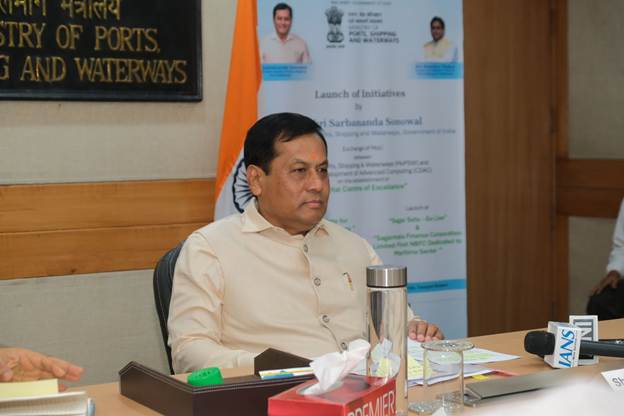
NEW DELHI : Union Minister for Ports, Shipping and Waterways Shri Sarbananda Sonowal has said that the government is “actively exploring” tax and policy interventions to further strengthen India’s maritime sector. The move comes in addition to the recently approved ₹70,000 crore package aimed at boosting shipbuilding and allied industries, which is expected to provide a major thrust to the country’s maritime growth.

Highlighting the government’s focus on making India a global maritime hub, Sonowal said that supportive fiscal and policy frameworks will be critical in driving investments, enhancing competitiveness, and accelerating the modernization of shipbuilding and shipping infrastructure. He stressed that India’s vast coastline, growing trade volumes, and rising global demand for shipping services present immense opportunities that require a robust policy push.

The ₹70,000 crore package, cleared by the Cabinet last month, is designed to encourage domestic shipbuilding, create employment, and promote allied industries such as marine equipment manufacturing and port services. Industry stakeholders believe that additional tax incentives and regulatory support could further reduce operational costs, attract private players, and help India capture a larger share of the global shipbuilding market.

Sonowal underlined that the government’s approach is in line with the vision of Atmanirbhar Bharat, with an emphasis on strengthening self-reliance in maritime capabilities while also contributing to India’s export competitiveness.

Sonowal said the government is closely reviewing industry proposals for fiscal support to enhance the competitiveness of the sector. Key areas under consideration include reforms in vessel registration, tax relief for Maintenance, Repair and Overhaul (MRO) services, rationalisation of Tax Deducted at Source (TDS) for maritime professionals, and incentives for domestic manufacturing of marine-grade steel.

He further highlighted growing international interest in India’s maritime opportunities. “There is strong interest from East Asia and Europe, including global shipbuilders, engine and propulsion majors, and specialised system suppliers in next-generation fuels such as LNG, methanol, and ammonia. Several of these discussions are already at the Expression of Interest stage,” the minister noted.
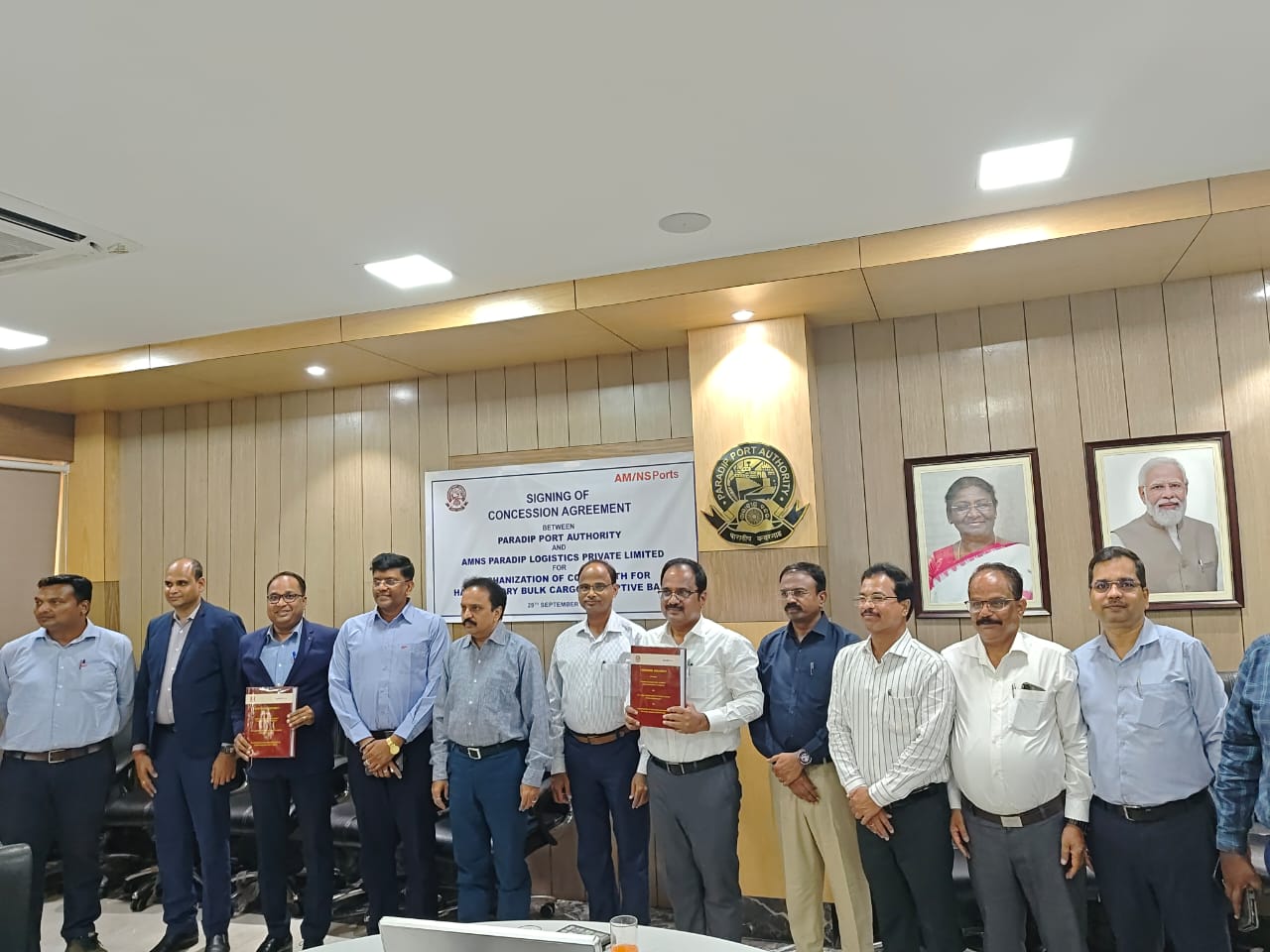
Paradip Port Authority signs concession agreement with AM/NS Ports

PARADIP : Paradip Port Authority (PPA) and AM/NS Ports have signed a Concession Agreement for the mechanization of the CQ-III berth to handle dry bulk cargo. This marks a significant step toward enhancing port infrastructure and operational efficiency.

The project is for a concession period of 30 years. It envisages the shipment of iron ore pellets of AM/NS India through mechanised conveying and a ship loader system equipped with state-of-the-art handling facilities. The agreement highlights a strong, long-term commitment to sustainable and efficient cargo handling.

WhatsAppImage2025 09 29at4.44.10PM7FS8 Paradip Port Authority signs concession agreement with AM/NS Ports

The agreement was executed by Shri Himanshu Sekhar Rout, Chief Engineer, PPA, and Shri Subhakant Dash, Authorized Signatory, AM/NS Ports. The signing ceremony was graced by Shri P.L. Haranadh, IRTS, Chairman, Paradip Port Authority, and Shri Suresha G, Chief – Odisha Operations, AM/NS India, along with senior officials and employees from both organizations.

Speaking on the occasion, Shri P.L. Haranadh emphasized that the project is an important step towards improving berth productivity and promoting eco-friendly coastal cargo handling operations.

Shri Suresha G said, “This partnership marks a pivotal moment in our journey to modernise port operations and support industrial growth in the region. The mechanization of CQ-III berth will reinforce our commitment to operational excellence and environmental sustainability.”

This Project will transform PPA into a world-class port hub and strengthen AM/NS India’s logistics capabilities

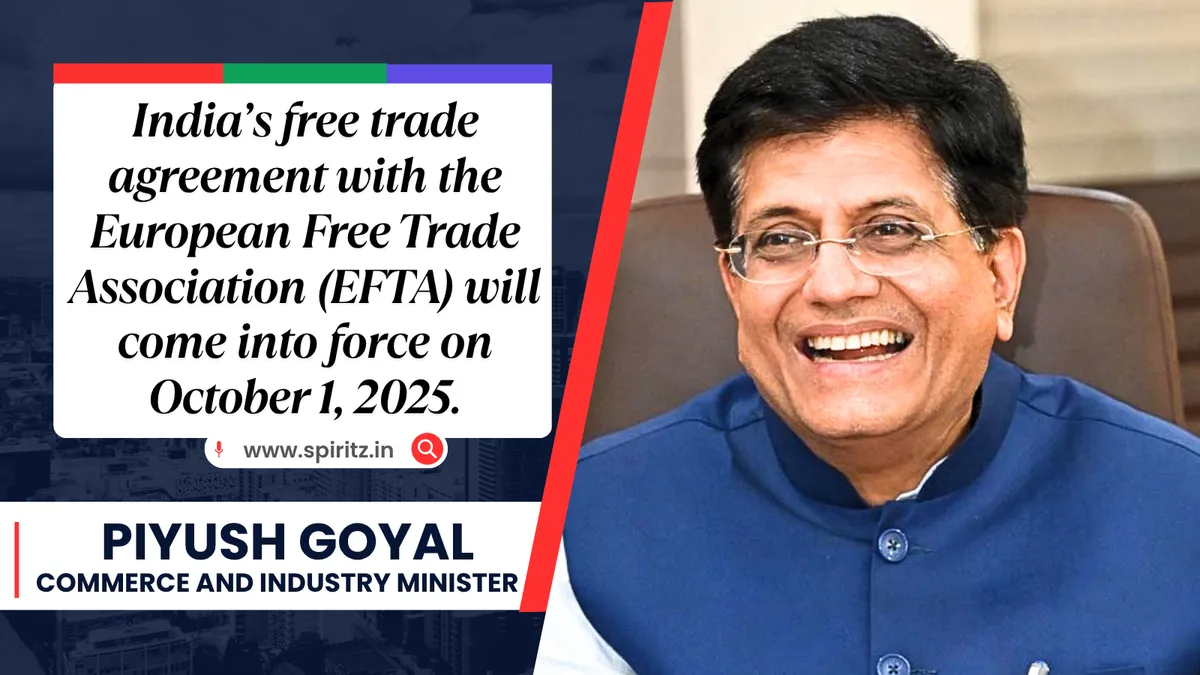
India-European Free Trade Association and TEPA to come into effect from today

NEW DELHI : India-European Free Trade Association(EFTA) Trade and Economic Partnership Agreement (TEPA) will come into effect on 01 October 2025. The agreement was signed on 10th March 2024 at New Delhi.TEPA is a modern and ambitious agreement that incorporates, for the first time in any Free Trade Agreement (FTA) signed by India, a commitment linked to investment and job creation.

The agreement comprises of 14 chapters with main focus on market access related to goods, rules of origin, trade facilitation, trade remedies, sanitary and phytosanitary measures, technical barriers to trade, investment promotion, market access on services, intellectual property rights, trade and sustainable development and other legal and horizontal provisions.

The EFTA’s market access offer under TEPA covers 100% of non-agri products and tariff concession on Processed Agricultural Products (PAP). Sensitivity related to PLI in sectors such as pharma, medical devices & processed food etc. have been taken while extending offers.

The agreement goes beyond goods and services and committed to promote investments with the aim to increase the stock of foreign direct investments by USD 100 billion in India in the next 15 years, and to facilitate the generation of 1 million direct employment in India, through such investments.

Key features of the agreement

EFTA is an important regional group, with several growing opportunities for enhancing international trade in goods and services. EFTA is one important economic block out of the three (other two – EU &UK) in Europe. Among EFTA countries, Switzerland is the largest trading partner of India followed by Norway.

The TEPA will empower India’s exporters by providing access to specialized inputs and create conducive trade and investment environment. This would boost exports of Indian made goods as well as provide opportunities for services sector to access more markets.

Investment and Employment Commitments

As per Article 7.1 of TEPA , the EFTA States shall aim to increase foreign direct investment (FDI) from their investors into India by USD 50 billion within 10 years from the entry into force of the Agreement, and an additional USD 50 billion in the succeeding 5 years, amounting to a total of USD 100 billion over 15 years. Concurrently, the EFTA States shall aim to facilitate the generation of 1 million direct jobs in India resulting from these investment inflows.

This investment commitment explicitly excludes foreign portfolio investment (FPI), focusing on long-term capital for productive capacity building.

Market Access for Goods

Under TEPA, EFTA has offered 92.2% of tariff lines encompassing 99.6% of India’s exports. Includes 100% of non-agricultural products and tariff concessions on Processed Agricultural Products (PAP).

India’s offer to EFTA covers 82.7% of tariff lines, accounting for 95.3% of EFTA exports. Over 80% of these imports are Gold, with no change in effective duty on Gold. Sensitive sectors protected, including pharma, medical devices, processed food, dairy, soya, coal, and sensitive agricultural products.

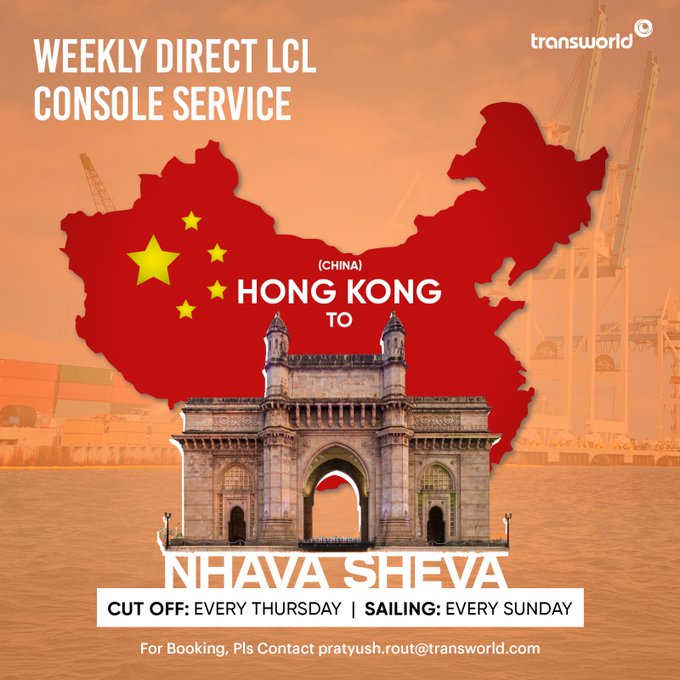
Transworld launches weekly direct LCL console service from Hong Kong to Nhava Sheva

DUBAI : Transworld announced their expansion of trade lane network with the introduction of a Weekly Direct LCL Console Service connecting Hong Kong to Nhava Sheva. The new service offers shippers greater reliability and efficiency with a fixed cut-off every Thursday and smooth sailings every Sunday.

The new service will provide consistent schedules and seamless operations, Transworld’s aims are to simplify shipments for customers while maximizing supply chain efficiency. This strategic addition underscores the company’s commitment to delivering dependable, customer-focused logistics solutions across key trade routes.

MatchLog collaborates with Ocean Network Express to streamline container reuse and cut down inefficiencies across India’s EXIM corridors

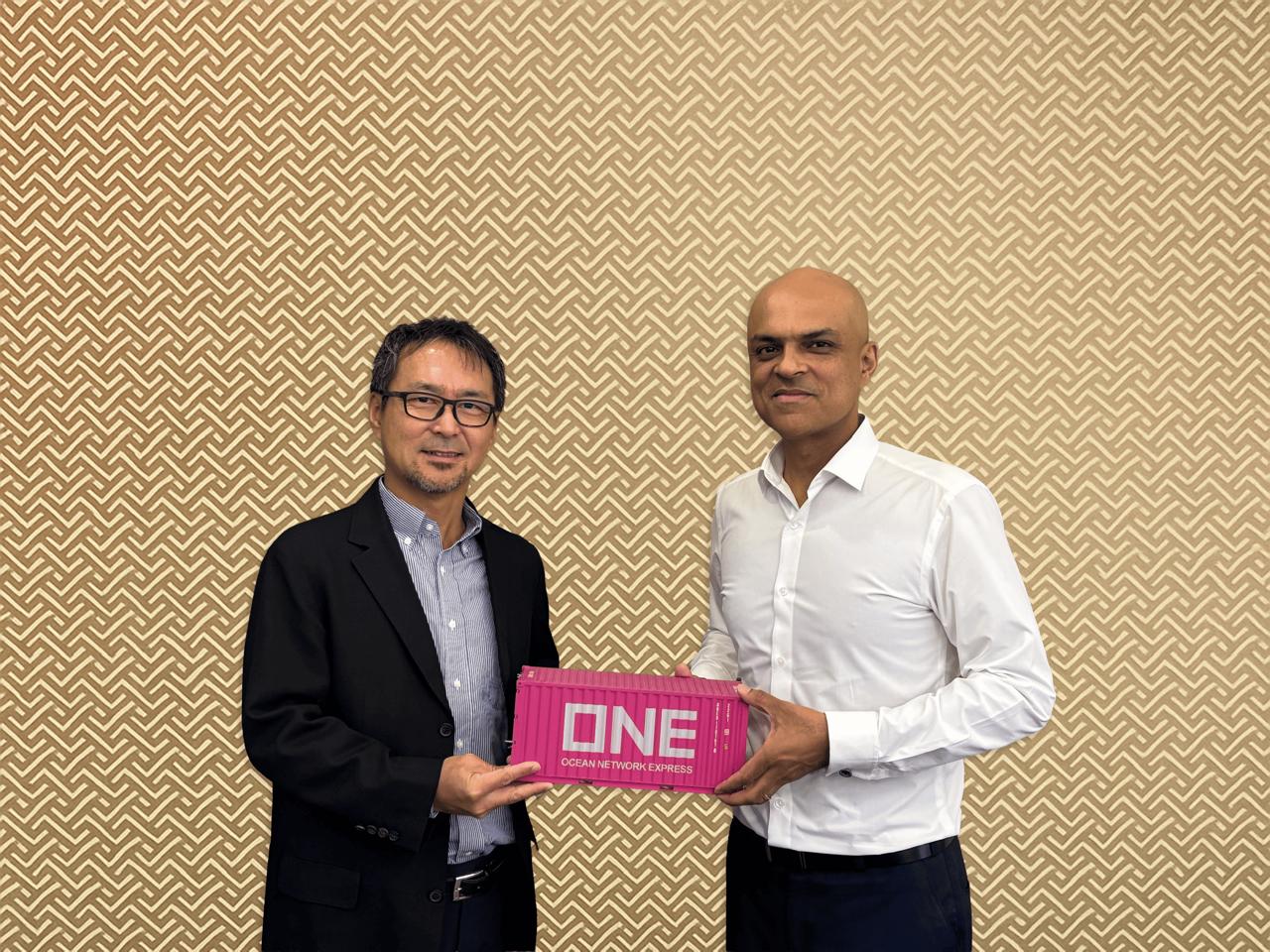
MUMBAI: MatchLog Solutions, a pioneer in sustainable logistics and supply chain optimization, has collaborated with Ocean Network Express (ONE), one of the top container liner shipping companies, to enable large-scale reuse of import containers for export movement across Indian ports. This strategic collaboration aims to significantly reduce empty container trips, cut down turnaround times, and improve network velocity across major trade hubs.

India’s port infrastructure is operating under increasing pressure, even as trade volumes grow. In this environment, the ability to improve asset utilization without creating additional stress on roadways, drivers, or yards is critical. The collaboration between MatchLog and ONE Line directly addresses this challenge by focusing on real-time triangulation and reuse, using technology to repurpose incoming containers for outbound shipments, eliminating inefficient legs and unnecessary repositioning.

ONE, with its global fleet and strong presence in India, will bring scale and routing predictability to the reuse operations. MatchLog will leverage its AI-led platform, triangulation engine, and integrated yard ecosystem to execute container reuse with high visibility, speed, and accuracy.

Speaking about the partnership, Mr. Dhruv Taneja, Founder & Global CEO, MatchLog Solutions, said, “This partnership represents a shared commitment to rethinking how logistics is done in a market like India, where demand is high, but capacity, infrastructure, and environmental margins are tight. By aligning with a forward-looking partner like ONE Line, we are strengthening our mission to reduce wasteful movement and bring predictability into the container logistics chain. This is reuse at scale, built on data, driven by purpose.”

Adding further, Masahiro Sakikubo, Managing Director, Ocean Network Express India Pvt. Ltd. “We are pleased to partner with MatchLog to operationalize sustainable container logistics at scale in India. As a global carrier, we see immense potential in integrating intelligent reuse systems that not only reduce cost and complexity, but also support our decarbonization goals. Together, we aim to enable faster turnarounds, better equipment planning, and smarter movement of trade.”

This collaboration also aligns with MatchLog’s broader vision to eliminate 10 billion kilometres of unnecessary container movement across the global EXIM supply chain. With this partnership, the companies are setting a new precedent for how asset-light, data-first models can help India’s logistics sector scale without compromising efficiency or sustainability.

About MatchLog

Established in July 2019, MatchLog is revolutionizing the logistics sector by optimizing cargo, container, and trailer movements, significantly reducing operational wastage. Utilizing advanced container matching algorithms and a sophisticated technology-driven platform, MatchLog ensures seamless integration across the logistical ecosystem. This enhances equipment utilization and optimizes transport routes. Committed to sustainability and innovation, MatchLog aims to eliminate 10 billion km of unnecessary travel globally in the EXIM container supply chain, continuing to set new standards in the industry.

India extends RoDTEP export incentive scheme till March 31, 2026, exporters welcome the move

NEW DELHI : The Government has extended the Remission of Duties and Taxes on Exported Products (RoDTEP) incentive scheme for exporters until March 31, 2026. Exporters have welcomed the move, saying it removes substantial uncertainty and also comes at a time when Indian exports are facing significant headwinds.

Started in 2021, the RoDTEP scheme provides refunds to exporters for any embedded duties, taxes, and levies incurred by them that are not already refunded under other schemes.

The scheme had earlier been available until February 5 this year. In May, following significant lobbying by exporters, the government restored the RoDTEP scheme for exporters done by Advance Authorization (AA) holders, Export-Oriented Units (EOUs), and units in Special Economic Zones (SEZs).

urpose only. | Photo Credit: K.R. Deepak

The Government has extended the Remission of Duties and Taxes on Exported Products (RoDTEP) incentive scheme for exporters until March 31, 2026. Exporters have welcomed the move, saying it removes substantial uncertainty and also comes at a time when Indian exports are facing significant headwinds.

Started in 2021, the RoDTEP scheme provides refunds to exporters for any embedded duties, taxes, and levies incurred by them that are not already refunded under other schemes.

The scheme had earlier been available until February 5 this year. In May, following significant lobbying by exporters, the government restored the RoDTEP scheme for exporters done by Advance Authorization (AA) holders, Export-Oriented Units (EOUs), and units in Special Economic Zones (SEZs).

Advertisement
“The RoDTEP Scheme shall remain in force and be applicable to exports made from Domestic Tariff Area (DTA) units, Advance Authorisation (AA) holders, Special Economic Zone (SEZ) units, and Export Oriented Units (EOUs) up to 31.03.2026,” the Directorate General of Foreign Trade said in its notification on Tuesday (September 30, 2025).

However, the DGFT also added that the scheme would operate within the current budgetary allocations.

“The timely extension of RoDTEP has removed the uncertainty that was weighing on the exporting community,” S.C. Ralhan, President of the Federation of Indian Export Organisations said.

“This step comes at a critical juncture when exporters are navigating global headwinds, and it provides the much-needed policy continuity to plan exports with greater confidence,” he added.

India strengthens supply chains with self-reliance, confidence to aim higher: Piyush Goyal

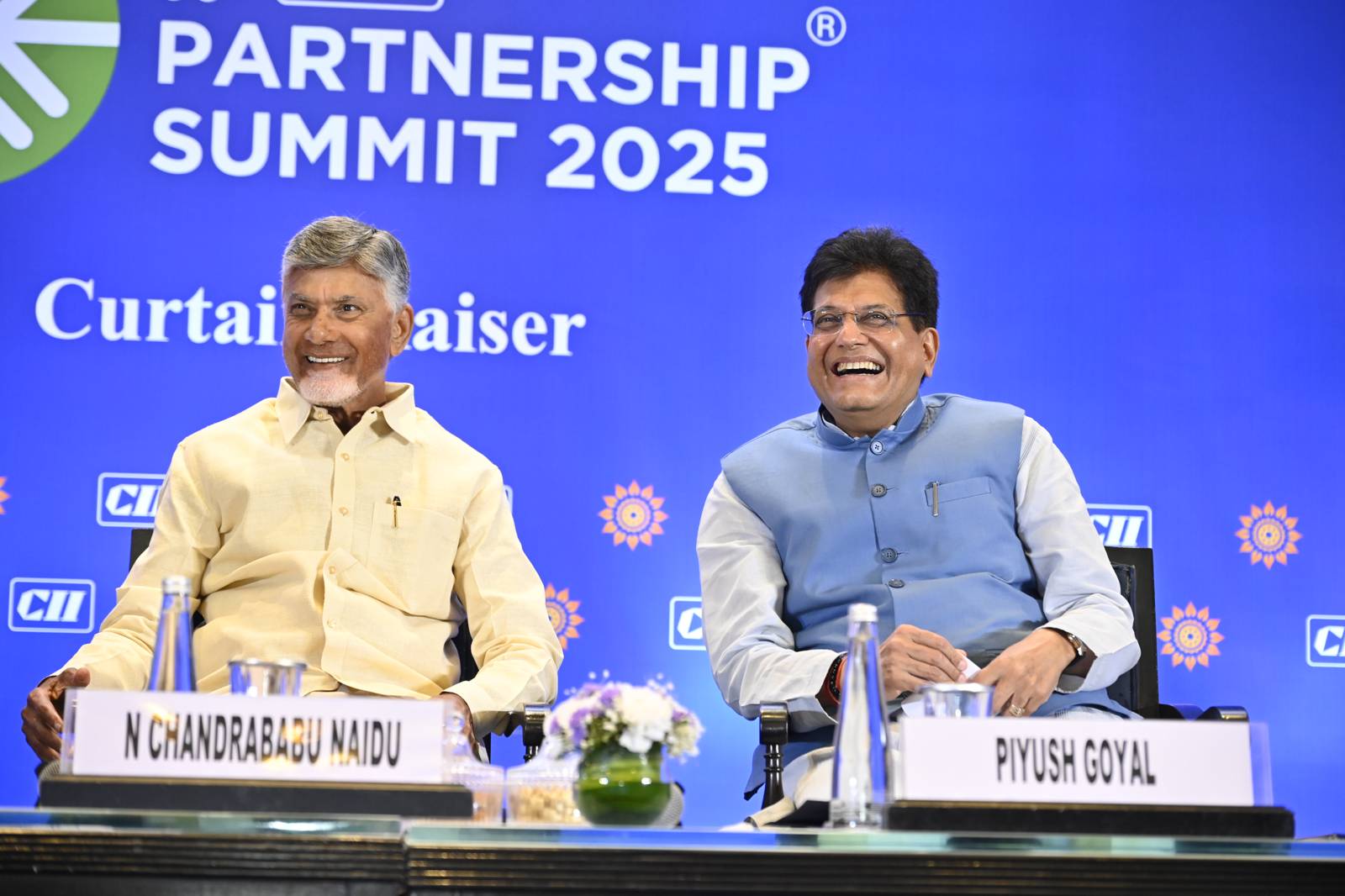
NEW DELHI : India’s thrust is for Self-Reliance (Atmanirbhar) to secure our supply chains; Self-Confidence (Atmavishwas) to aim for big goals; and Self-Protection (Atmaraksha) to protect the interests of India, said Union Minister of Commerce and Industry, Shri Piyush Goyal. Delivering the address at the Curtain Raiser event for the 30th CII Partnership Summit in New Delhi , the Minister underlined that great partnerships are built on technology, trust, trade, talent, and tradition.

piyush goyal at 30th CII Partnership Summit India strengthens supply chains with self-reliance, confidence to aim higher: Piyush Goyal

He elaborated that Atmanirbharata is about building resilient supply and value chains that can withstand global shocks, avoid the weaponization of trade, and ensure that India is always in a position to meet its international obligations. On Atmavishwas, he said that India today engages with the world from a position of strength, with the confidence to pursue ambitious goals while partnering as an equal stakeholder in the global economy. Atmaraksha, he added, is about safeguarding Indians and protecting the larger interests of mankind, in line with the G20 Summit theme of Vasudhaiva Kutumbakam—“One World, One Family, One Future.”

The Minister noted that the day coincided with Durgashtami, symbolizing strength, resilience, and the triumph of good over evil. He remarked that in a world of turbulence, volatility, and uncertainty, India stands as an oasis—the world’s fastest growing economy, driven by young aspirational citizens striving for a better quality of life and committed to making the world a better place. He welcomed dignitaries and participants from across the globe.

Highlighting the contribution of Andhra Pradesh in India’s development journey, Shri Goyal commended Chief Minister Shri N. Chandrababu Naidu for promoting technology-driven governance, pioneering the high-tech city in Hyderabad, and working towards the creation of a modern capital at Amaravati. He added that Andhra Pradesh is the only state in India with three upcoming industrial corridors at Krishnapatnam, Orvakal, and Kopparthy.

The Minister also emphasized that the recent overhaul of the GST system will simplify processes, reduce the tax burden on consumers, and give a strong boost to consumption-led growth of the Indian economy.

Looking ahead to the 30th CII Partnership Summit in Visakhapatnam, Shri Goyal expressed confidence that India, along with its international partners, can build stronger and more resilient collaborations. He underlined that CII continues to play a vital role as a bridge between India and the global community.

In his address, Andhra Pradesh Chief Minister, Shri N. Chandrababu Naidu invited investors to attend the Partnership Summit in Vishakhapatnam in November and explore investment opportunities in Andhra Pradesh.

RITES signs MoU with Etihad Rail to further augment business collaboration

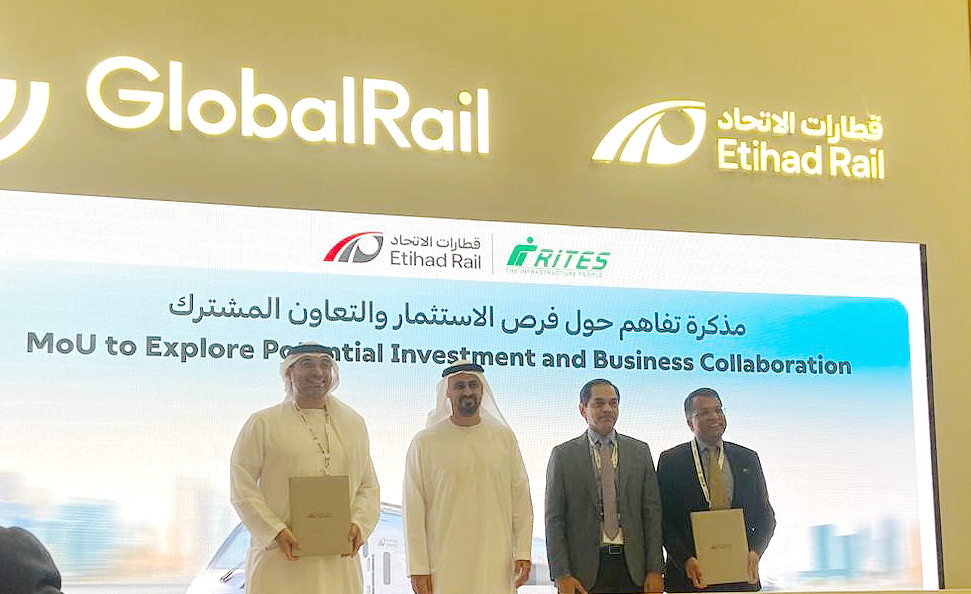
GURUGRAM: RITES Limited, the leading Transport Infrastructure Consultancy and Engineering firm, Tuesday signed a memorandum of understanding (MoU) with Etihad Rail for business collaboration with its subsidiary National Infrastructure Construction Company (NICC) LLC, a UAE-based infrastructure construction company, to take forward further business collaboration with Etihad Rail in the mobility sector in the geographies of UAE and beyond.

The MoU was signed by H.E. Shadi Malak, CEO of Etihad Rail, and Mr. Rahul Mithal, Chairman and Managing Director of RITES Ltd., in the presence of His Highness Sheikh Theyab bin Mohamed bin Zayed Al Nahyan, Chairman of Etihad Rail, and Hon’ble Ambassador of India to the UAE H.E. Sunjay Sudhir during the Global Rail Transport Infrastructure Exhibition & Conference held in Abu Dhabi.

This partnership aims at combining RITES’ five decades of expertise in consultancy, transport infrastructure, and engineering solutions with the execution capabilities of NICC, thereby creating synergies for shaping infrastructure projects in the region. With this MoU, RITES strengthens its international footprint under its strategic initiative ‘RITES Videsh’ and reaffirms its ethos: ‘We Shape What Shapes Lives’.

Commerce Ministry warns of negative impact on marine exports from US Tariffs

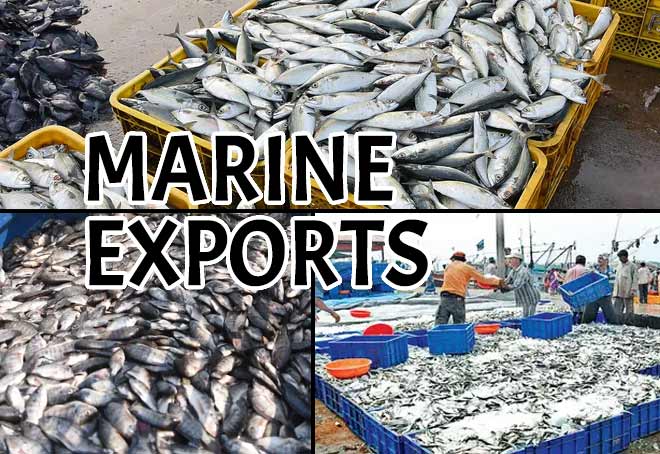
NEW DELHI : The Ministry of Commerce and Industry on Monday told Parliament’s Public Accounts Committee (PAC) that marine exports are likely to be “negatively” impacted by the 50% US tariff, as it places India at a disadvantage compared to competitors like Ecuad…

India’s marine exports are likely to come under severe pressure following the United States’ decision to impose a steep 50% tariff on seafood and related products, the Commerce Ministry has cautioned.

According to ministry officials, the additional duty—announced recently as part of Washington’s trade measures—will significantly raise costs for Indian exporters, threatening their competitiveness in the world’s largest seafood market. India has been among the top suppliers of shrimp and other marine products to the US, with the sector contributing substantially to the country’s overall export basket.

“The new tariff will negatively impact export volumes and profitability for India’s marine sector, which is already grappling with rising input costs and global demand fluctuations,” a senior ministry official said.

Industry experts point out that the move could trigger a decline in India’s seafood shipments to the US, forcing exporters to seek alternative markets in Europe, East Asia, and the Middle East. The measure is also expected to have ripple effects on coastal economies, particularly in Andhra Pradesh, Gujarat, Odisha, and Kerala, where a large number of livelihoods depend on marine exports.

The Commerce Ministry has indicated that it is closely monitoring the situation and exploring avenues for dialogue with the US trade authorities. “We are assessing the extent of the impact and will consider appropriate measures to safeguard the interests of Indian exporters,” the ministry noted in its statement.

India’s seafood exports had crossed USD 8 billion in FY25, with the US accounting for a significant share. The tariff hike, analysts warn, could reduce that growth trajectory and undermine India’s efforts to expand its share in global seafood markets.

IIFT hosts 15th Indian Management Conclave 2025

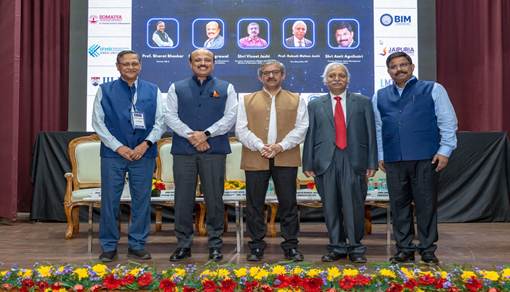
NEW DELHI : The Indian Institute of Foreign Trade (IIFT), New Delhi, in partnership with MBAUniverse.com, successfully hosted the 15th Indian Management Conclave (IMC) 2025. Widely regarded as India’s most respected platform on management education, the conclave attracted more than 400 participants including directors and deans of leading B-schools such as IIM Ahmedabad, IIM Ranchi, IIM Sambalpur, MDI Gurgaon, SPJIMR Mumbai, IMT Ghaziabad, Jaipuria Institute of Management, XLRI Jamshedpur and senior leaders from Deloitte, McKinsey & Company, IndiGo, Yatra.com and AACSB International to deliberate on the theme “Leveraging Artificial Intelligence in Business and B-Schools to Enhance Competitiveness.”

Across two days, the conclave featured high-level plenaries, an international research conference, master classes, and the IMC Awards. Sessions ranged from “Leveraging AI in Indian B-Schools: Current State, Future Outlook” to a roundtable on “Artificial Intelligence in B-Schools: Insights, Challenges & the Road Ahead.” Faculty from IIT Delhi, INSEAD, University of Southampton, IFMR Graduate School of Business and other institutions shared research on AI-enabled pedagogy, ethics, employability and globalisation of management education.

The Valedictory Session saw the presentation of the IMC IRC Best Research Paper Award 2025, the IMC Awards for Excellence in Management Education 2025, and the IMC Distinguished Alumni Award 2025. This year’s Distinguished Alumni Award went to Shri Rajesh Aggarwal, Special Secretary, Department of Commerce, for his contribution to trade policy and economic diplomacy. Thanking his alma mater, he said that IIFT had shaped his values and outlook and called the AI theme “timely and forward-looking,” emphasising the need for B-schools to reimagine curricula, pedagogy and industry collaboration.

The conclave opened with an Inaugural Session featuring a welcome address by Prof. Rakesh Mohan Joshi, Vice Chancellor, IIFT, and an address by Mr. Amit Agnihotri, Founder & Chair, Indian Management Conclave. Dr. T.G. Sitharam, Chairman, AICTE, delivered the Inaugural Address as Guest of Honour, setting the tone for the two-day event. He underscored the critical role of Artificial Intelligence in enhancing competitiveness and called for Indian management institutions to embrace innovation and multidisciplinary learning in line with the National Education Policy 2020.

The Valedictory Session, held on September 26, was graced by Shri Vineet Joshi, Secretary, Department of Higher Education, Ministry of Education, as Chief Guest. In his address he congratulated IIFT for creating a platform of global relevance and underlined that India is “moving from being a receiver of global education to becoming an exporter of world-class management education.” He highlighted IIFT’s expansion into Dubai and its LinkedIn Top 50 Global MBA Program ranking as examples of India’s rising intellectual capital, and urged B-schools to integrate Artificial Intelligence into curricula and pedagogy while maintaining ethics and human-centred values.

With participation from leading Indian and international institutions, the 15th IMC reaffirmed IIFT’s position as a thought leader in international business education and as a catalyst for preparing future-ready managers who will lead with competence, conscience and a global outlook.