Home Blog Page 631

Tata Motors invests Rs 120 Crore in Freight Tiger for AI-powered logistics push

JAMSHEDPUR : Tata Motors has invested an additional Rs 120 crore in Freight Commerce Solutions Private Limited — operator of Freight Tiger, which is one of India’s leading digital freight platform. This follows an earlier Rs 150 crore investment in October 2023, bringing total funding to Rs 270 crore.

The official release stated that the partnership combines Tata Motors’ extensive truck network with Freight Tiger’s digital freight platform to deliver enhanced efficiency and transparency across the logistics value chain, creating more intelligent and connected solutions for customers.

AI-Driven Transformation
The funding comes as artificial intelligence reshapes the freight sector, with companies leveraging technology to improve service quality while reducing costs.

Freight Tiger said it will use the capital to develop AI-powered tools that enhance operational efficiency, generate business intelligence, and automate administrative workflows.

TV Swaminathan, Vice President and Head of Digital Business at Tata Motors Commercial Vehicles, said the investment represents a fundamental reimagining of logistics through AI. “With this investment, we’re not just funding technology – we’re fundamentally reimagining logistics through artificial
intelligence. Freight Tiger’s advanced AI capabilities will create India’s first truly integrated logistics ecosystem. This isn’t incremental change – it’s about building a unified digital backbone that will transform how freight moves across our nation. Our enhanced investment reaffirms Tata Motors’ commitment to not only powering India’s logistics infrastructure, but also shaping its digital future by enabling smarter, more connected, and customer-centric freight operations for businesses and consumers,” he said.

Freight Tiger now serves major Indian corporations across steel, cement, consumer goods, automotive, construction, and e-commerce sectors, including Saint-Gobain, JSW Steel, Asian Paints, Amul, Birla Pivot, Apollo Tyres, and Zepto.

Freight Tiger’s founder and CEO Swapnil Shah described the investment as accelerating their AI-powered vision, combining their digital platform with Tata Motors’ fleet to create a logistics intelligence network powering India’s economic growth.

The company plans to launch several AI-powered innovations in Q4 2025, including a Vehicle Supply Density Platform, upgraded Dispatch Planning and Procurement Module, and Integrated Freight Desk, while recruiting senior executives to support expansion.
HCC and Konkan Railway partner to bid for large-scale transport projects

MUMBAI : Hindustan Construction Company (HCC) and Konkan Railway Corporation Limited (KRCL) have signed a strategic Memorandum of Understanding (MoU) to jointly pursue and execute large-scale railway and multi-modal transport projects.

The partnership will combine HCC’s expertise in heavy civil construction with KRCL’s capabilities in rail systems, operations, and project implementation. They plan to jointly bid for complex assignments, including underground and elevated metro systems, NATM tunnelling, and large railway bridges, under various contractual models like EPC and PPP.

Corruption won this battle’: Cargo firm Wintrack to cease operations in India, accuses Chennai Customs of harassment

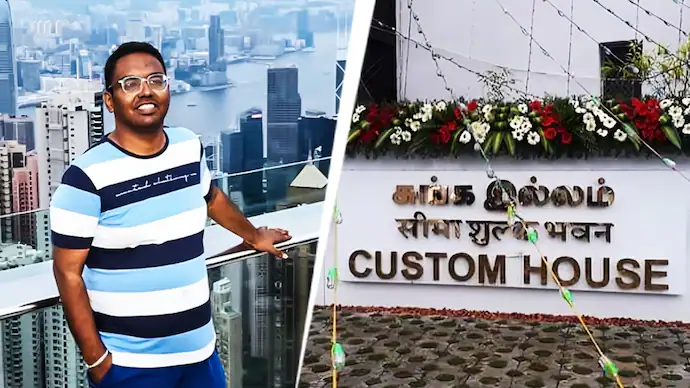
CHENNAI : Tamil Nadu-based logistics firm Wintrack announced that it has ceased all import-export activities in India, effective 1 October 2025, citing harassment by Chennai Customs officials over the past 45 days.

In a post on X (formerly Twitter), the company claimed that the “relentless harassment” was triggered after it twice exposed the bribery demands of the officials this year. This retaliation has left Wintrack’s business “crippled and destroyed” in India, it said in the post.

However, the Chennai customs department denied the claims and wrote a detailed response to the post, alleging that the company was making false accusations in the face of scrutiny.

What the company claimed
Wintack claims in its X bio that it has exposed bribery taken by Chennai customs and, as a result, faced revenge, which forced the company to shut its operations in India. “Corruption won this battle, they can destroy our business, not our voice,” the bio read.

Wintrack founder Prawin Ganeshan reiterated the allegations, naming several officials from the Special Intelligence and Investigation Branch (SIIB) and claiming that his wife’s company was forced to pay ₹1.5 lakh in bribe for a shipment. He further alleged that officers even offered a 10 per cent “discount” during the negotiations.

Chennai customs deny allegations
Chennai customs issued an official statement on X to refute the allegations, stating that the company was caught for misclassification of goods, undeclared USB charging cables, and failure to provide mandatory Extended Producer Responsibility (EPR) certification under the Battery Waste Management Rules, 2022.

Customs maintained that hearings were conducted, delays were accommodated, and bonding permissions were granted to reduce demurrage, but no bribe was sought from the company.

“This importer has an established pattern of making unsubstantiated allegations of corruption and bribery on this platform, only to delete such posts once factual rebuttals are provided by this department,” the statement read.

Public figures respond to post
Shashi Tharoor, Congress leader and Lok Sabha member, reposted Wintrack’s X post on his social media handle and called the situation “truly dismaying”.

“Corruption remains rampant across the system and most companies simply comply as part of the “price of doing business”. It doesn’t have to be this way. Indeed it must not be like this if the country is to grow and prosper,” he wrote on X.

Mohandas Pai, the former CFO of Infosys, also responded to the logistics company’s post. He tagged Finance Minister Smt. Nirmala Sitharaman and Prime Minister Shri Narendra Modi in a X post, saying, “You have failed to stamp out systemic corruption in our ports Please act.”

Source : Mint

Maersk to retrofit 200 container ships

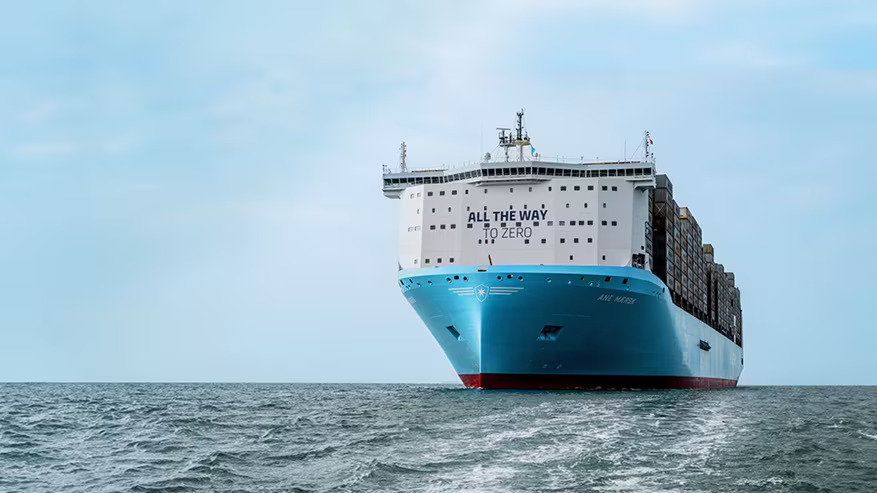
COPENHAGEN : Container shipping giant Maersk has launched a major fleet retrofitting programme that will see some 200 of the company’s time-chartered vessels in the shipyard for updates.

Maersk said the main aim of the programme is to reduce its slot cost through improvements in fuel efficiency and cargo-carrying capacity that will lead to a decrease in both cost and greenhouse gas emissions. Slot cost or slot rate is the price that a shipping company pays to the shipowner or operator for one standard-sized container.

“Our medium- and long-term chartered fleet makes up a significant proportion of our operations as well as of our total fuel consumption. By working closely with our partners, we aim to implement solutions that not only reduce emissions but also enhance the overall competitiveness of our fleet,” Maersk head of asset strategy and strategic partnerships, Ahmed Hassan said.

Maersk has set the target of a 35% absolute reduction in its scope 1 greenhouse gas emissions by 2030 compared to the 2022 baseline year.

Mr Hassan continued: “While fuel transition is needed to reach our long-term goal of net-zero emissions by 2040, investments in existing fleet efficiency enhancement technologies is a powerful tool to gain significant emissions reductions in the short term. Consequently, this strong emphasis on efficiency measures can deliver tangible progress towards our 2030 goal. That goes for owned as well as chartered vessels.”

In total, Maersk and time-charter partners have executed more than 1,500 individual projects across 200 vessels with 50 shipowners, and an additional 1,000 projects are in the process of execution, scheduled to be finalised by 2027. The investment cost for these solutions is split between Maersk and the vessel owners.

Mr Hassan commented: “We have, from experience, found that this model is a win-win. At Maersk, we can reduce both emissions and fuel costs, while the owners get the long-term value of a modernised vessel.”

A statement explained that of the around 200 vessels being retrofitted, a common and significant change to the vessel configuration is the replacement of the propeller or bulbous bow. Alongside this, the replacement of propellers combined with Pre-Swirl Devices “plays a crucial role in maximising thrust while minimising energy loss”.

“Many of these ships were designed and constructed at a time when container vessels in general were sailing at faster speeds. To bring down fuel consumption, we have, over the years, introduced less compressed vessel schedules, but the propellers and bulbs optimised for faster speeds have been kept. There lies a big efficiency potential in replacing them,” Mr Hassan added.

Other retrofit solutions, such as auxiliary engine waste heat recovery systems, allow steam production from auxiliary engine heat, reducing the reliance on fuel-oil-fired boilers. Similarly, the installation of shaft generator systems cuts down auxiliary engine usage, contributing to significant fuel savings.

Maersk said that cargo-carrying capacity is also being enhanced through a range of structural and technical improvements: elevating the wheelhouse to improve line of sight and increase intake, raising the lashing bridges, strengthening the vessel’s deadweight capacity for deeper drafts, and upgrading both lashing systems and loading computer functionalities.

Suez Canal Authority urges Maersk to resume transits, citing strategic role in global trade

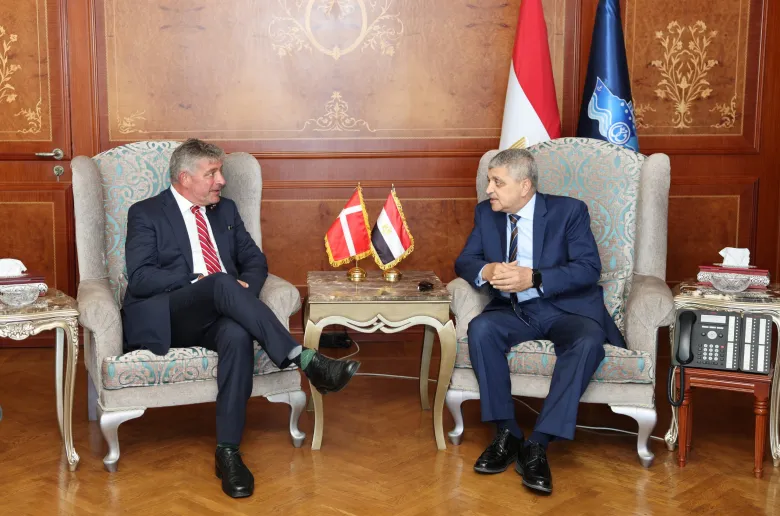
CAIRO : Chairperson of the Suez Canal Authority (SCA), Osama Rabie, has called on global shipping leader Maersk to gradually resume transits through the Suez Canal, underscoring the waterway’s central role as a vital artery for international commerce and a long-standing partner for major shipping lines.

The appeal was made during Rabie’s meeting with Danish Ambassador to Cairo, Lars Bo Møller, who was joined by a high-level delegation and SCA Vice Chairperson Ashraf Atwa, at the Authority’s headquarters in Ismailia. The discussions focused on strengthening cooperation and exploring new avenues for joint development.

Rabie expressed pride in the enduring partnership between the SCA and Maersk, which has yielded significant successes in recent years, including major development and expansion projects. He highlighted the imminent inauguration of the new expansion at the Suez Canal Container Terminal in East Port Said as a milestone achievement.

The SCA chief also pointed to the Authority’s broader strategy of advancing ambitious projects in maritime industries and logistics services. He stressed that the Canal’s unique geographic position continues to offer unparalleled opportunities for creating added value through global trade, especially amid ongoing challenges in international shipping.

Discussions also addressed recent developments in the Red Sea and their repercussions for maritime transport and supply chain resilience.

For his part, Ambassador Møller reaffirmed the importance of the SCA-Maersk partnership and praised the expansion at the Suez Canal Container Terminal, noting that it would significantly boost East Port Said Port’s competitiveness. The project, he said, would help transform the port into a leading regional hub for trade and development, while reinforcing the robustness of global supply chains.

Møller further emphasised the inevitability of major shipping lines returning to the Suez Canal, describing it as “the main gateway for global trade.” He revealed that Maersk is closely monitoring the situation in the Red Sea as it prepares for the eventual resumption of regular transit operations through the Canal.

Netherlands calls on EU to sanction Yemen’s Houthis after ship attack

ADEN : The Netherlands called on the EU on Wednesday to sanction Yemen’s Houthis as a terrorist group, after the organisation claimed responsibility for an attack on the Dutch-flagged general.

The Netherlands called on the EU on Wednesday to sanction Yemen’s Houthis as a terrorist group, after the organisation claimed responsibility for an attack on the Dutch-flagged general cargo ship Minervagracht in the Gulf of Aden.

The Iran-aligned group has launched numerous assaults on vessels in the Red Sea since 2023, targeting ships they deem linked to Israel in what they describe as solidarity with Palestinians over Israel’s war on Gaza.

“The Houthis have long posed a serious threat to freedom of navigation,” the Dutch Foreign Ministry said in a statement.

Countries including the United States, Israel, Canada and Australia have labelled the Houthis, formally known as Ansar Allah, as a terrorist organisation.

EU DECISION WOULD IMPLY ECONOMIC SANCTIONS

A potential EU decision to add the group to its terrorist list — which currently includes 13 individuals and 22 groups or entities — would imply economic sanctions and the freezing of funds and assets.

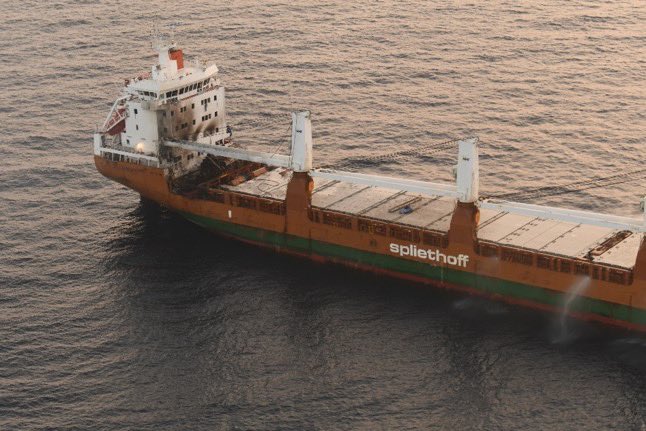
Monday’s strike on the Minervagracht injured two sailors and forced a helicopter evacuation of 19 crew members, according to the EU maritime mission Aspides and the vessel’s operator.

The Houthis’ military spokesperson said the attack was carried out by a cruise missile.

Amsterdam-based operator Spliethoff said Minervagracht was in international waters in the Gulf of Aden when it was hit, suffering substantial damage and a fire.

The Houthis said they attacked Minervagracht because its owner violated “the entry ban to the ports of occupied Palestine”.

It was the first Houthi attack on a commercial ship since September 1, when they targeted Israeli-owned tanker Scarlet Ray near Saudi Arabia’s Red Sea port city of Yanbu.

In July, the Houthis attacked and sank the Magic Seas bulk carrier and Eternity C cargo ship in the Red Sea.

The last significant Houthi attack in the Gulf of Aden was on the Singapore-flagged Lobivia container ship in July, 2024.

GEODIS strengthens its ambitions in the Aerospace and Defense Sectors

LEVALLOIS-PERRET: In response to the rapid changes taking place in the international environment and growing logistics needs in the aerospace and defense sectors, GEODIS is accelerating its development in these strategic markets. The Group remains firmly committed to becoming the partner of choice for industrial and institutional players in the sector. To support this ambition, Brigadier General Arnaud Weixler (Ret.) will head GEODIS’s operations in the aerospace and defense sectors.

In a rapidly changing geopolitical and international environment, GEODIS is developing its aerospace and defense business. The Group is seeking to establish a long-term presence in these sectors and become a key player, notably by supporting the growing needs of France’s Defense Industrial and Technological Base (BITD). The modernization of military equipment and the accelerated renewal of army hardware are driving rapid growth in the aerospace and defense markets.

Resulting from the substantial growth in defense and security budgets, increasingly complex and strategic logistics presents challenges that GEODIS is well positioned to address. GEODIS already supports numerous aerospace and defense leaders, providing them with its full range of expertise. With its strong local and international presence, the Group meets a wide range of demanding requirements, including Aircraft on Ground (AOG) logistics requiring the rapid delivery of essential parts and services, oversized special transportation, high value-added warehousing and secure supply chain management.

One of GEODIS’s principal references is KNDS, for which it inaugurated a state-of-the-art automated logistics facility in Montbeugny, central France, in 2023, illustrating the Group’s ability to support the leading players in the sector with innovative and high-performance solutions.

With the aim of achieving these ambitions, the aerospace and defense sectors will now be directed by Brigadier General Arnaud Weixler, whose international expertise and in-depth knowledge of the challenges faced by the sector will be valuable assets for GEODIS. He attended the 121st session of the NATO Defense College and has held senior positions within NATO and the French Army. He has also planned and led numerous logistics operations at home and abroad, working closely with industry as well as relevant private and public entities.

ClassNK grants Approval in Principle for  Methanol Superstorage

TOKYO: Nippon Kaiji Kyokai (ClassNK) has granted approval in principle (AiP) to SRC for Methanol Superstorage, the innovative tank design concept that uses a Sandwich Plate System (SPS) technology to almost double shipboard storage capacity for both methanol and ethanol.

The ClassNK AiP confirms that Methanol Superstorage is feasible for the intended application in accordance with the Society’s ‘Guidelines for Ships Using Alternative Fuels, Part A: Guidelines for Ships Using Methyl/Ethyl Alcohol as Fuels (Edition 3.0.0)’.

In contrast to traditional fuel tanks, where internal and external walls are separated by a cofferdam of at least 600 mm, Methanol Superstorage features SPS technology – a solid elastomer core ‘sandwiched’ between two steel plates that is 25-millimetre-thick. The solution delivers 85% more storage capacity than a conventional tank. 

“With many methanol-ready ships now in operation, under construction or on order and ethanol also gaining traction, fuel storage has become an area of intense industry interest,” said Mr Ryohei Sakai, Manager (Project Hull), Technical Solution Department, ClassNK. “Because of its low volumetric energy density compared to HFO, a methanol tank would need to hold over twice the volume to generate the same energy, for example. This has consequences for ship range and design. SRC’s methanol fuel tank concept represents an approach to addressing this challenge.”

Methanol-fuelled vessels must follow the alternative design process, in which the final approval rests with the flag state. To reflect this, Panama’s expertise was brought into the review, with Panama also granting AiP to Methanol Superstorage. For final approval of an actual fuel tank design applied to a specified ship, a complete set of documentation covering design details would need full approval in accordance with relevant Regulations, Rules and Guidelines.

At the initial stage of designing or before the specific target ship to be implemented is decided, the design is examined based on the existing regulations such as international conventions and ship classification rules, and an Approval in Principle (AiP) is issued as proof of conformity with requirements. It also prevents rework of regulatory aspects in the post-process, shortens the examination time at the time of class registration, and can be used as a technical basis for external appeal of the design status.

“Receiving Approval in Principle for Methanol Superstorage from both ClassNK and Panama Maritime Authority represents a major step forward for SRC in our mission to achieve widespread industry acceptance for the solution,” commented Alex Vainokivi, Innovation Manager, SRC Group. “A Methanol Superstorage tank delivers almost twice the fuel storage volume of a traditional tank, while the SPS provides a triple barrier for fire protection, leak prevention and higher impact protection. It can also be retrofitted with minimal impact on the vessel’s general arrangement.”

Successful Installation of Anemoi Rotor sails on U-Ming’s Grand Pioneer VLOC at COSCO Zhoushan Shipyard

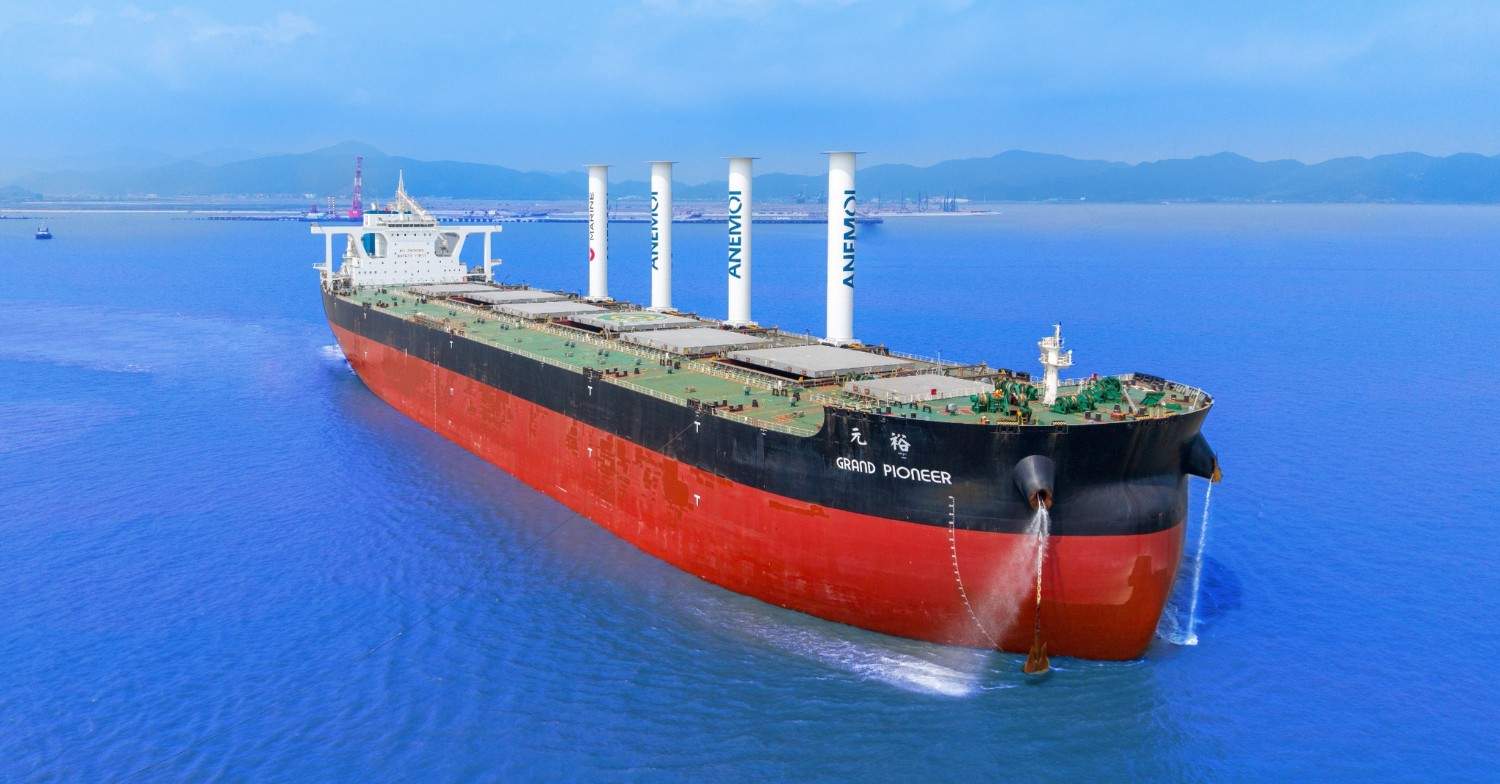
ZHOUSAN: U-Ming Marine Transport Corporation (U-Ming) and leading wind propulsion technology provider Anemoi Marine Technologies Ltd. (Anemoi) are pleased to announce the successful completion of the Rotor Sail installation on U-Ming’s Grand Pioneer, a 325,000 DWT Very Large Ore Carrier (VLOC).

U-Ming is the first Taiwanese shipowner to adopt Rotor Sails, marking a major milestone in the company’s decarbonisation strategy and underlining its role as a first mover in deploying innovative clean technologies.

The four 35m tall, 5m diameter folding (tilting) Rotor Sails were delivered fully assembled and dynamically balanced from Anemoi’s production base on the Yangtze River and transported by barge to COSCO Zhoushan shipyard. In a streamlined plug-and-play process unique to Anemoi, the sails were lifted directly onto the deck and secured in place. This method significantly reduces the shipyard’s scope of work and keeps installation time short. For this installation, it took only 1.5 days to lift and fix the Rotor Sails in position onboard, with a further 5 days for commissioning and testing all four Rotor Sails and folding systems once the shipyard had completed their works during the vessel’s scheduled dry-dock in September 2025.

Anemoi’s specialist team were present throughout the process overseeing the installation and will sail on the vessel’s maiden voyage from Zhoushan to Singapore, with the Rotor Sails deployed and operational. This is to ensure crew training and operational handover will be completed smoothly, equipping U-Ming’s seafarers with the skills and confidence to operate the technology from day one.

Mr Jeff Hsu, Vice Chairman of U-Ming added, “The installation of Rotor Sails on Grand Pioneer marks an important step in U-Ming’s decarbonisation journey and reflects our belief that the future of global shipping must be both sustainable and competitive. Through the collaboration with our forward-thinking partner Anemoi, we are turning strategy into action by reducing emissions, enhancing efficiency, and delivering long-term value. This initiative also demonstrates our commitment to innovation and our contribution to the industry’s shared ambition of achieving net zero by 2050.”

Clare Urmston, CEO of Anemoi, commented, “We are proud to have delivered another successful Rotor Sail installation, providing fully assembled technology that minimises time in the yard and maximises value for our customers. U-Ming’s decision to adopt Rotor Sails, particularly as the first in the Taiwanese market to do so, demonstrates their strength, ambition and clear focus on decarbonisation. Our collaboration reflects the growing momentum behind wind propulsion as a critical pathway to lower emission shipping, and we look forward to analysing the performance data from upcoming voyages.”

Following completion of the installation, Grand Pioneer will resume deep-sea service between Brazil and China under a long-term charter with Brazilian mining company Vale. The vessel is projected to achieve annual fuel and emissions reductions of approximately 10–12% on average.

This milestone underscores the importance of industry collaboration in driving meaningful change. By taking decisive action as a first mover, U-Ming is reinforcing its decarbonisation strategy while setting an important example for the global shipping community, demonstrating how innovative partnerships and proven technologies like Rotor Sails can accelerate the sector’s transition towards a net-zero future.

Falling Rates across Vessel Segments drag Baltic Index to Over One-Month Low

LONDON: The Baltic Exchange’s dry bulk sea freight index, which monitors rates for vessels moving dry bulk commodities, extended losses on Thursday and fell to a more than one-month low, weighed down by falling rates across all vessel segments.

The main index, which factors in rates for capesize, panamax and supramax shipping vessels, fell 71 points to 1,909 points, its lowest since August 21. The index was down for its fifth straight session.

The capesize index dropped 170 points to 2,720 points, the lowest level in over a month.

Average daily earnings for capesize vessels, which typically transport 150,000-ton cargoes such as iron ore and coal, decreased by $1,406 to $22,562.

The panamax index lost 40 points to 1,685 points, its lowest since August 20.

Average daily earnings for panamax vessels, which usually carry 60,000-70,000 tons of coal or grain, fell by $357 to $15,164.

Among smaller vessels, the supramax index slipped for its fifth consecutive session. It was down 11 points at 1,456 points.
Source: Reuters