Home Blog Page 648

How Maersk & Coca-Cola use AI for improved supply chains

COPENHAGEN : With 86% of economists advocating for AI adoption up and down supply chains, businesses like Maersk & Coca-Cola are getting ahead and deploying new systems. The age of globalisation has made international trade seem easy.

While it’​​​​​​​s true that trade has never been easier, global supply chains are still precarious things, susceptible to shocks and externalities.

One needs only look back over the past five years for examples of this.

The COVID-19 pandemic, the crash of the Ever Given in the Suez and the recent cyberattacks on UK supermarkets have all destabilised supply lines, leading to shortages of goods and fluctuations in costs.

In an effort to boost the resilience of their supply lines, many companies are now turning to AI.

With the World Economic Forum’​​​​​​​s Chief Economist recently revealing that 86% of economists believe businesses must take the lead in implementing AI infrastructure, this seems like a sensible move for the interests of companies and consumers all around the world.

The role of AI in the modern supply chain
Global trade faces increasing challenges as geopolitical tensions rise, with more than 60 countries preparing retaliatory measures in response to tariffs imposed by US President Donald Trump.

These developments have forced organisations to reconsider trade routes and prepare for uncertainty.

However, agentic AI systems offer sophisticated solutions for supply chain management, capable of detecting regulatory changes, rerouting shipments and updating documentation autonomously.

These systems can monitor global events, including weather patterns, sanctions and cyber threats in real-time, while performing compliance checks to prevent costly delays and fines.

How digital twins are transforming ports around the world
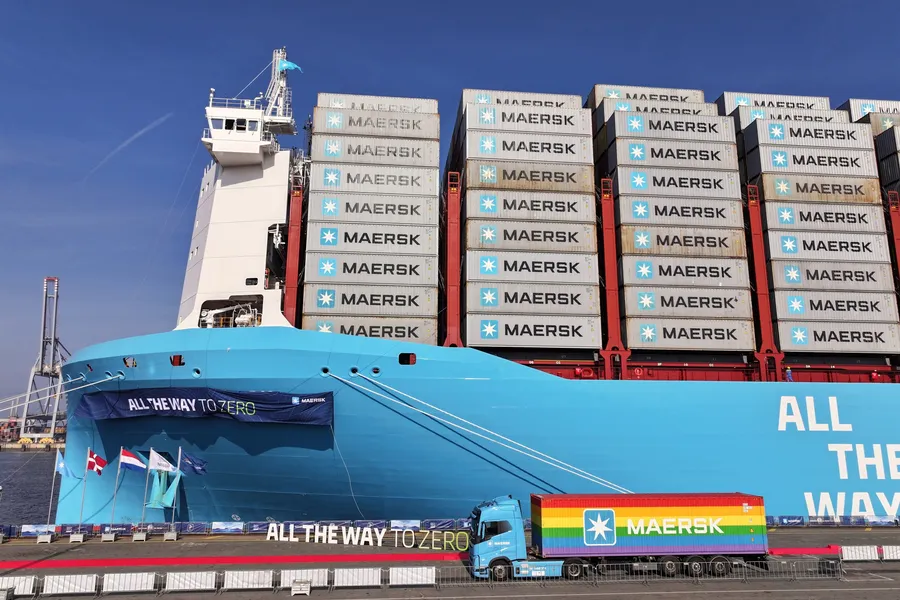
Maersk exemplifies successful AI implementation in supply chain operations through its digital twins technology.

“We have all these inputs from our terminals, from different sensors and data,” explains Krishnan Srinivasan, Chief Data Officer at Maersk.

“And we have actually created a complete digital twin of the whole terminal.”

The technology enables Maersk to conduct scenario testing without real-world resource commitment.

“This provides us with the capability to do ‘what if’ scenarios – much ahead of time,” Krishnan adds.

What used to take days takes hours.”

Managing demand with AI
Coca-Cola demonstrates another successful application of AI in supply chain management through its Customer Demand & Supply Planning system.

The company utilises machine learning (ML) for scenario planning and sales forecasting, ensuring efficient product distribution.

José Antonio Echeverría, Chief Customer Service & Supply Chain Officer for Coca-Cola Europacific Partners, says: “This will help us to deliver better service for our customers and move forward on our journey to realise what the factory of the future looks like.”

“We are adopting and continually exploring new technology to improve and enhance how we work – creating an efficient, safe and sustainable supply chain,” he continues.

While AI offers clear advantages for supply chain management, adoption rates remain below optimal levels.

Companies that hesitate to implement AI-assisted systems risk facing increased challenges and uncertainty in supply chain operations.

To maintain competitiveness and resilience, business leaders must embrace intelligent infrastructure within their trade ecosystems.
Einride and Port of Antwerp-Bruges launch Belgium’s first autonomous transport test

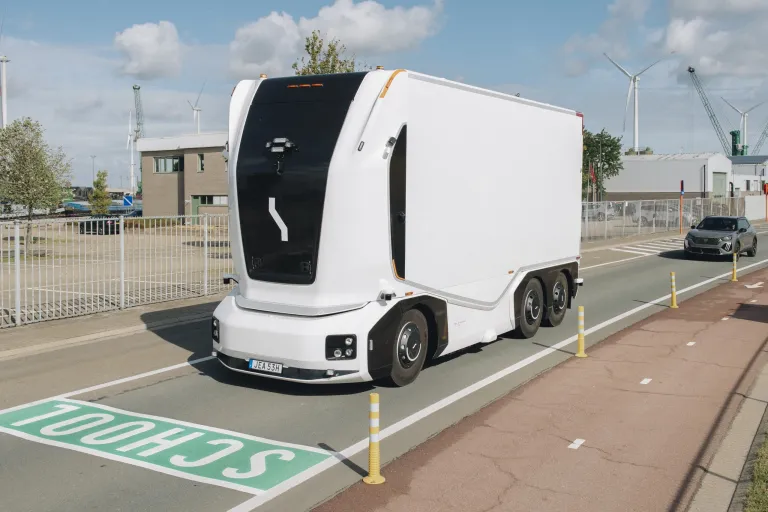
BELGIUM : Einride and the Port of Antwerp-Bruges recently heralded a significant milestone in the realm of autonomous transport in Belgium. Their pilot test involving ‘autonomous’ trucks has been touted as a groundbreaking achievement, fueling optimism about the future of freight transport. However, the highly regulated environment in which this testing occurred raises pressing questions about the viability of such technologies in real-world applications.

Henrik Green, CTO and General Manager for Einride Autonomous Technologies, said: “Today in Antwerp, we showcase how public and private sectors can come together toward shared goals. European Ports, such as Antwerp-Bruges, are essential for decarbonising logistics and secure our supply chains; and with the European Commission acknowledging autonomous vehicles as key to EU competitiveness, we’re proud to showcase a clear example of how innovation and regulation can be balanced for safer, more efficient and sustainable logistics.”

The Port of Antwerp-Bruges is testing a range of autonomous systems, including drones for monitoring and inspection, remotely piloted vehicles, and uncrewed or semi-autonomous vessels.

These technologies are intended to enhance safety by reducing human exposure to high-risk and repetitive tasks, while also improving efficiency and lowering emissions. The port has emerged as a preferred testing ground due to its operational complexity and scale. Trials are being supported by public and private sector collaboration, alongside regulatory efforts at the European, federal, and Flemish levels to create “sandbox” environments for emerging technologies.

Jacques Vandermeiren, CEO of Port of Antwerp-Bruges, stated: “With this event, we are demonstrating that autonomy in our port is not a distant concept. Autonomous solutions are already making us smarter, safer and more sustainable today. And that is exactly what we need to continue to strengthen our role as a world port. After all, we want to be a gateway for goods, but also a gateway to the future.”

The port’s ongoing focus on automation is closely tied to broader objectives around climate performance, cost control, and global competitiveness in the maritime and logistics sectors.

The charmed narrative showcasing autonomous trucks inevitably dances around a crucial point: the strict limitations imposed by the test environment. With stringent protocols governing the operations, the pilot may not accurately reflect the complexities of public road usage. As advocates herald these advancements, one must ponder: what challenges lie ahead when these vehicles are thrust into the unpredictable dynamics of everyday traffic? Industry experts warn that the transition from controlled environments to public thoroughfares is laden with legal, ethical, and technological hurdles. According to a 2021 study by the International Transport Forum, the vast majority of current autonomous technology remains untested in varied and real-time scenarios, suggesting a steep hill to climb before full deployment becomes feasible.

AD Ports Group breaks ground on Noatum Ports Luanda Terminal

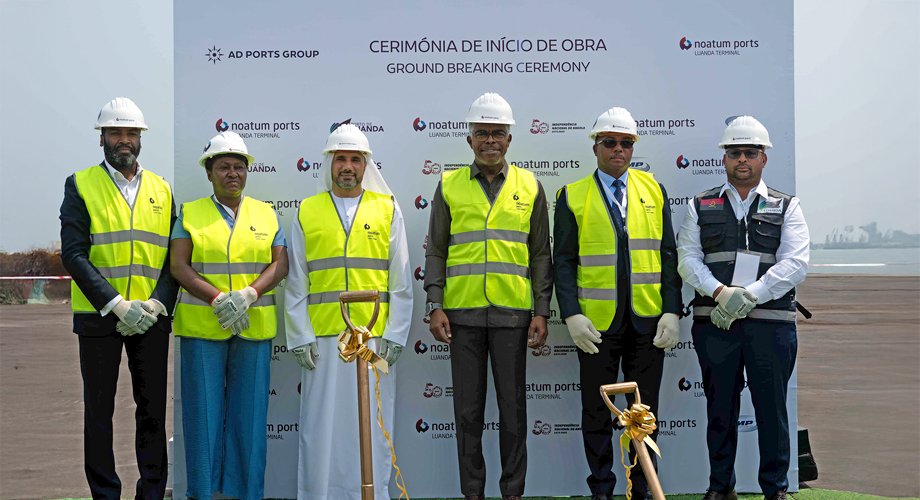
ABU DHABI : AD Ports Group, a leading global enabler of trade, logistics, in partnership with Unicargas and Multiparques, laid the foundation stone for the Noatum Ports Luanda Terminal at the Port of Luanda, marking the commencement of one of the most significant port modernisation and expansion projects in Angola.

With an initial investment of USD 250 million over the first three years, the project is expected to reach a total investment of up to USD 380 million over the 20-year concession period, which is extendable until 2055. Construction at the Noatum Ports Luanda Terminal will span 18 months and will deliver state-of-the-art infrastructure, cutting-edge technology, and sustainable equipment—positioning the Port of Luanda as one of the most competitive ports in Central and West Africa.

AD Ports Group holds an 81% stake in the multipurpose terminal and a 90% stake in the joint venture Noatum Unicargas Logistics, which is responsible for integrated logistics operations and fleet modernisation, including refrigerated trucks and transport platforms.

Mohammed Al Tamimi, Chief Executive Officer – Noatum Ports, said: “Breaking ground on the Noatum Ports – Luanda Terminal marks a transformative moment for AD Ports Group, for Angola, and for the wider region. This flagship project reflects our long-term strategy to deliver world-class infrastructure, advanced technology, and sustainable solutions that not only enhance trade and logistics but also create meaningful opportunities for the local community. By modernising this vital gateway, we are helping position Luanda as a leading maritime and logistics hub in Central and West Africa. In addition, we are unlocking new jobs, supporting skills development, and driving inclusive economic growth alongside greater connectivity for businesses and communities where we operate.”

The ongoing modernisation of the Luanda terminal will transform it into a state-of-the-art facility for general cargo, container, and Ro-Ro operations. Spanning 192,000 square metres with a 16-metre draft, it will be the only terminal in the Port of Luanda capable of accommodating Super Post-Panamax vessels of up to 14,000 TEUs.

The upgraded terminal will feature three Super Post-Panamax STS cranes and eight hybrid Rubber Tyred Gantry (RTG) cranes, supported by advanced IT systems to enhance operational efficiency, promote sustainability, and streamline logistics operations. Upon completion in Q1 2027, container capacity will increase from 25,000 TEUs to 350,000 TEUs, with Ro-Ro volumes exceeding 40,000 vehicles.

Leveraging its global network, AD Ports Group will attract new shipping lines to the Port of Luanda, integrating Angola into key international logistics corridors. This will support increased exports, lower import costs, and enhance both national and regional competitiveness.

The project is expected to generate thousands of direct and indirect jobs across sectors such as logistics, maintenance, and terminal operations. It will also include training programmes and corporate social responsibility initiatives aimed at supporting and empowering the local community.

With this investment, Angola strengthens its position as a regional logistics hub, reinforcing its economic sovereignty and creating the foundation for broader industrial and commercial development.

Over the past three years, AD Ports Group expanded into Africa, announcing more than USD 800 million in planned investments in the maritime and shipping, ports and logistics sectors in Egypt, the Republic of the Congo, Tanzania and Angola.

Drewry: World Container Index Down 6% Last Week

LONDON: Drewry’s World Container Index decreased 6% to $1,913 per 40ft container last week.

Drewry’s detailed assessment for Thursday, 18 Sep 2025

  • The Drewry World Container Index (WCI) fell 6% to $1,913 per 40ft container, marking the 14th consecutive week of decline. After two weeks of moving in opposite directions, the major trade routes, Transpacific and Asia–Europe, are now aligned in a downwards trajectory, although each is moving at a different pace.
  • Transpacific spot rates have started declining again, slipping back to levels last seen at the start of September. The spot rates from Shanghai to Los Angeles decreased 4% to $2,561 per 40ft container, while those from Shanghai to New York decreased 5% to $3,571 per 40ft container. Despite a brief uptick, the momentum from GRIs and blank sailings has now faded, which led to the reduction in rates.
  • Asia–Europe spot rates fell this week again, as rates declined 11% ($1,910/feu) on Shanghai–Rotterdam and 9% ($2,131/feu) on Shanghai–Genoa. This decline comes as carriers struggle to match increased capacity—due to new vessels entering the trade—with softening demand. As blank sailings increase ahead of China’s Golden Week holidays, which begin on 1 October, Drewry expects rates continue to decline in the upcoming weeks.
  • Drewry’s Container Forecaster expects the supply-demand balance to weaken again in 2H25, which will cause spot rates to contract. The volatility and timing of rate changes will depend on Trump’s future tariffs and on capacity changes related to the introduction of US penalties on Chinese ships, which are uncertain.
    Source: Drewry

Xeneta Weekly Ocean Container Shipping Market: Rates on the Rise

OSLO: The average spot rates from Far East have increased in the past week into both the US East Coast and US West Coast, up 4.3% and 4.3% respectively.

Prior to the latest uptick, spot rates had been softening from a significant spike on 1 September when average spot rates increased 13.5% into the US East Coast and 27.9% into the US West Coast.

Compared to 31 August, average spot freight rates on 18 September are up 30% in US West Coast and 16.2% into US East Coast.

The current spread in average spot rates between the two US coasts is widening again, now standing at USD 942 per FEU.

It is a different story from Far East to North Europe and Mediterranean where average spot rates continue to decline, down 22.5% and 14% respectively from 31 August.

From a week ago, the average rate is down 7.6% into North Europe and 4.4% into the Mediterranean.

Average spot rates on the Transatlantic trade from North Europe to US East Coast have not fallen further and stagnated in the past week at 1806 USD.

The latest average spot rate data is provided in the attached documents ‘Xeneta – weekly market update 18.09.25’ and ‘Xeneta – weekly market update chart 18.09.25’.

Market average spot rates – 18 September 2025:
Far East to US West Coast: USD 2375 per FEU (40ft container)
Far East to US East Coast: USD 3317 per FEU
Far East to North Europe: USD 2052 per FEU
Far East to Mediterranean: USD 2680 per FEU
North Europe to US East Coast: USD 1806 per FEU

Xeneta analyst insight – Far East to US

Peter Sand, Xeneta Chief Analyst: “The sharp spot rate spike on the Transpacific at the start of September was a surprise to many and we see another uptick mid-month. Shippers will be wondering what on earth is driving this increase when the expectation was for further softening in freight rates.

“If shippers are prepared to call the carriers’ bluff, we will see the mid-month increases fall away pretty quickly with softening spot rates for the remainder of the month.”

Xeneta analyst insight – Far East to Europe

Peter Sand, Xeneta Chief Analyst: “The decline in average spot rates has been much harder into North Europe compared to Mediterranean, but that could change in the coming weeks.

“Rolling weekly average capacity on the trade into Mediterranean is set to increase to 208 000 TEU by the end of the month while remaining fairly steady into North Europe. This could see the pace of spot rate decline quicken into Mediterranean and a narrowing spread with rates into North Europe.”
Source: Xeneta

Baltic Exchange’s Container Report – Week 38

LONDON: Official stats show that exports from China to the USA fell by a third in August, Chinese and American negotiators had their fourth round of talks last weekend in Madrid, time will tell if a fair deal can be made that will satisfy both countries.

Since the beginning of August we have seen FBX01 (China/East Asia – USA West Coast) go from a high of $2,369 at the start of August to a low of $1,728 at the end of August and hover in the low $2,000’s throughout September ending up today at $2,295. FBX03 (China/East Asia – USA East Coast) has followed a similar pattern over the same period, start of August the rate was $3,705, on Friday, 19 September it stands at $3,630, with a low of $2,703 at the end of August. FBX11 (China/East Asia – North Europe) has declined steadily starting August at $3,457 and today has reached $2137, a drop of $1,320 in 7 weeks. FBX13 (China/East Asia – Mediterranean) started August at $3,206 and has seen a similar decline of $855 to $2,351 today. It’s interesting to see that the key routes of FBX01 and FBX03 have managed to avoid a decline in rates, perhaps this is in preparation for USTR port fees coming in next month.

Source: Baltic Exchange

PM to inaugurate and lay the foundation stone of multiple development projects worth over Rs 34,200 crore at Bhavnagar today

PM to participate in ‘Samudra se Samriddhi’ event

Projects cater to multiple sectors: maritime, LNG infrastructure, renewable energy, highways, healthcare and urban transport

BHAVNAGAR: Prime Minister Shri Narendra Modi will visit Gujarat on 20th September. He will participate in ‘Samudra se Samriddhi’ event and inaugurate and lay the foundation stone of multiple development projects worth over Rs 34,200 crore, at around 10:30 AM, at Bhavnagar. He will also address the gathering on the occasion.

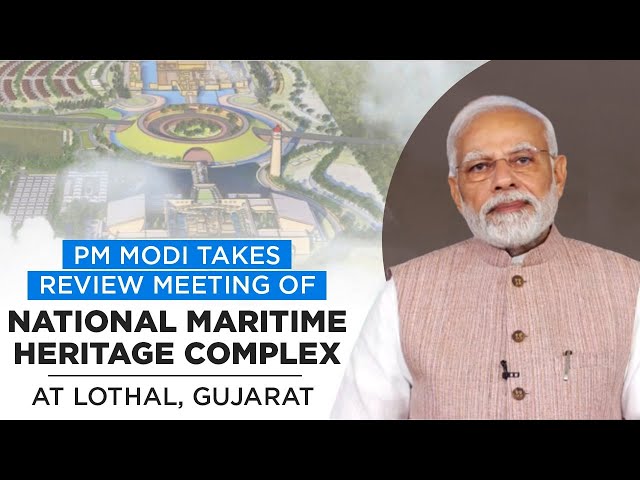
Thereafter, Prime Minister will undertake an aerial survey of Dholera. At around 1:30 PM, he will chair a review meeting and visit the National Maritime Heritage Complex at Lothal.

In a major boost to the maritime sector, Prime Minister will inaugurate and lay the foundation stone for multiple development projects related to the maritime sector worth over Rs 7,870 crore. He will inaugurate the Mumbai International Cruise Terminal at Indira Dock. He will lay the foundation stone of a new container terminal and associated facilities at Syama Prasad Mookerjee Port, Kolkata; new container berth, cargo handling facilities, and associated developments at Paradip Port; the Tuna Tekra Multi-Cargo Terminal; firefighting facilities and modern road connectivity at Kamarajar Port, Ennore; coastal protection works including sea-walls and revetments at Chennai Port; sea-wall construction at Car Nicobar Island; a multi-purpose cargo berth and Green Bio-Methanol Plant at Deendayal Port, Kandla; and ship repair facilities at Patna and Varanasi.

In line with his commitment to holistic and sustainable development, Prime Minister will inaugurate and lay the foundation stone of multiple projects of the central and state government, worth over Rs 26,354 crore, catering to various sectors in Gujarat. He will inaugurate HPLNG Regasification Terminal at Chhara Port, Acrylics & Oxo Alcohol Project at Gujarat IOCL Refinery, the 600 MW Green Shoe Initiative, PM-KUSUM 475 MW Component C solar feeder for farmers, the 45 MW Badeli Solar PV Project, complete solarization of Dhordo village among others. He will lay the foundation stone of LNG infrastructure, additional renewable energy projects, coastal protection works, highways, and healthcare and urban transport projects, including expansions at Sir T. General Hospital in Bhavnagar, Guru Govind Sinh Government Hospital at Jamnagar, and the four-laning of 70 km of national highways.

Prime Minister will also undertake an aerial survey of the Dholera Special Investment Region (DSIR), envisioned as a greenfield industrial city built around sustainable industrialization, smart infrastructure, and global investment. He will also visit and review the progress of National Maritime Heritage Complex (NHMC), at Lothal, being developed at a cost of around Rs 4,500 crore, to celebrate and preserve India’s ancient maritime traditions and serve as a centre for tourism, research, education and skill development.

PM Modi to review National Maritime Heritage Complex at Lothal today

AHMEDABAD : Prime Minister Shri Narendra Modi will be on a visit to Gujarat today on September 20, where he will review the progress of the National Maritime Heritage Complex (NMHC) at Lothal in Ahmedabad district. He will also inspect the works completed so far and hold a detailed review meeting with officials regarding the ongoing projects at the site.

Lothal, once a prominent trading hub of the Indus Valley Civilisation, is a symbol of India’s maritime strength and prosperity. “NMHC will seamlessly blend history, education, research, and entertainment. Lothal, which served as a thriving port and ship-repair centre 5,000 years ago, will be revitalised, showcasing its illustrious maritime legacy. Visitors will experience India’s remarkable maritime heritage through state-of-the-art technology,” officials said.

Boost to local economy
“Built to international standards, NMHC will stand alongside the world’s finest museums. Beyond attracting visitors, the project will boost the economy of the Bhal region, generate employment for thousands, and open new opportunities for the growth of various cottage industries,” they said.

The Heritage Museum in Lothal is being built so that every citizen can easily understand its history, they said. “Using cutting-edge technology, the project aims to recreate the grandeur of that ancient era. Lothal, a key city of the Harappan civilisation, is famed for housing the oldest man-made dockyard. The National Maritime Heritage Museum at Lothal will be a vital initiative to preserve the city’s historical legacy,” they said.

Besides the review meeting, the Prime Minister will also address a public rally in Bhavnagar.

Paradip Port Authority, Odisha Maritime Board join forces to build Shipbuilding Cluster & Satellite Port

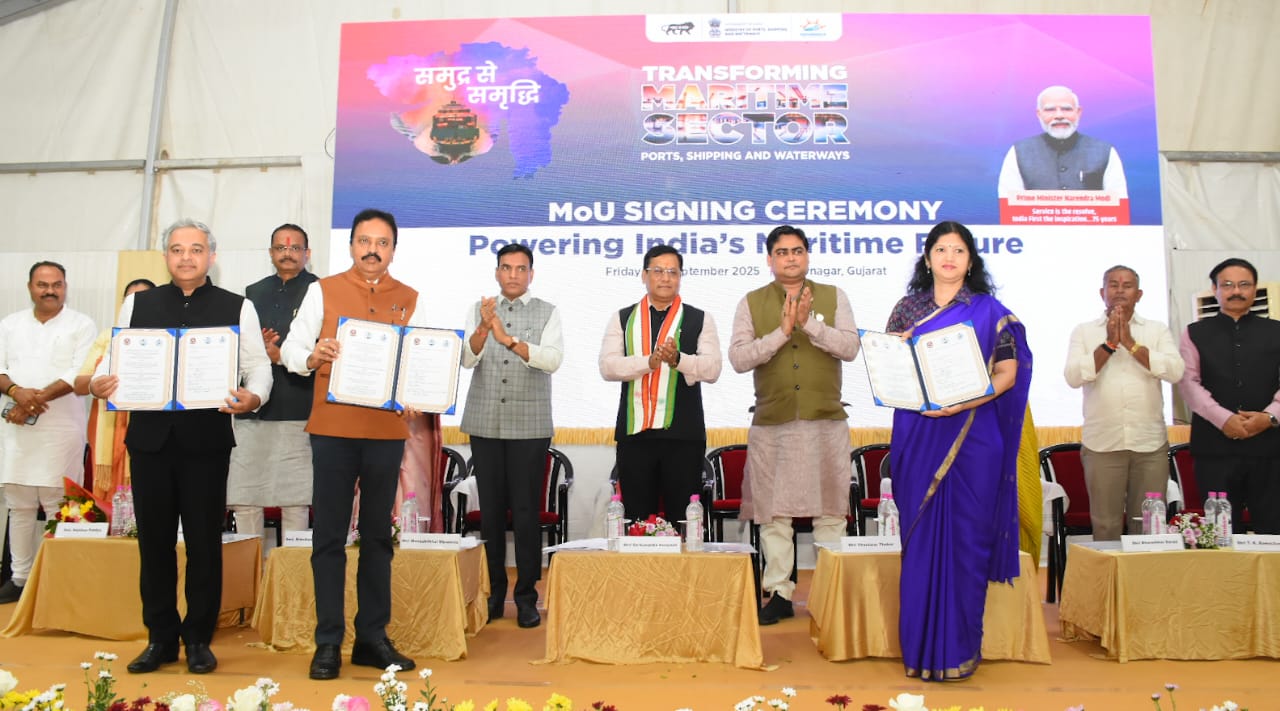
BHAVNAGAR: In a transformative move for India’s maritime sector, the Paradip Port Authority (PPA) and the Odisha Maritime Board (OMB) have signed a Memorandum of Understanding (MoU) to establish a state-of-the-art shipbuilding cluster in Odisha.

PPA OMB MoU Paradip Port Authority, Odisha Maritime Board join forces to build Shipbuilding Cluster & Satellite Port

This landmark agreement, inked on September 19, 2025, aligns with India’s Maritime Amrit Kaal Vision 2047, which aims to elevate the nation to one of the top five shipbuilding countries globally.

The proposed shipbuilding cluster, to be developed along the Mahanadi riverbank in Kendrapara district opposite the IFFCO Plant in Paradip, carries an estimated investment of Rs.24,700 crore. Spanning 2,000-2,500 acres with a dedicated waterfront of 2.0-2.5 km, the cluster will feature one or more large shipyards capable of producing 1.0-1.2 million Gross Tonnage (GT) annually. The project will foster a fully integrated ecosystem, including ancillary industries such as engine manufacturing, steel fabrication, and equipment supply, alongside shared infrastructure like administrative offices, training centres, and R&D facilities. This cluster-based approach is designed to attract investment, boost competitiveness, and drive sustainable growth in India’s commercial shipbuilding sector.

In a parallel development, Paradip Port Authority (PPA), Odisha Maritime Board (OMB) & Sagarmala Finance Corporation have also signed an MoU for the 150 MTPA Bahuda Satellite Port in Odisha with an investment of ₹21,500 Crore. The MoU was exchanged between Shri P. L. Haranadh, Chairman, PPA, Ms. Usha Padhee, IAS, Chairperson, OMB, and Shri Vikas Narwal, IAS, Managing Director, IPA & SMFCL.

This strategic initiative aims to enhance port connectivity, streamline logistics, and support the burgeoning maritime infrastructure in the region. Together, these projects mark a significant step towards positioning Odisha as a hub for maritime innovation and economic growth.

By fostering public-private partnerships and leveraging Odisha’s strategic coastal location, these initiatives are poised to create thousands of jobs, stimulate local economies, and contribute to India’s vision of becoming a global maritime powerhouse by 2047.

Piyush Goyal’s visit to UAE advances Investment Dialogue and deepens Economic Partnership

Piyush Goyal Dubai Piyush Goyal's visit to UAE advances Investment Dialogue and deepens Economic Partnership

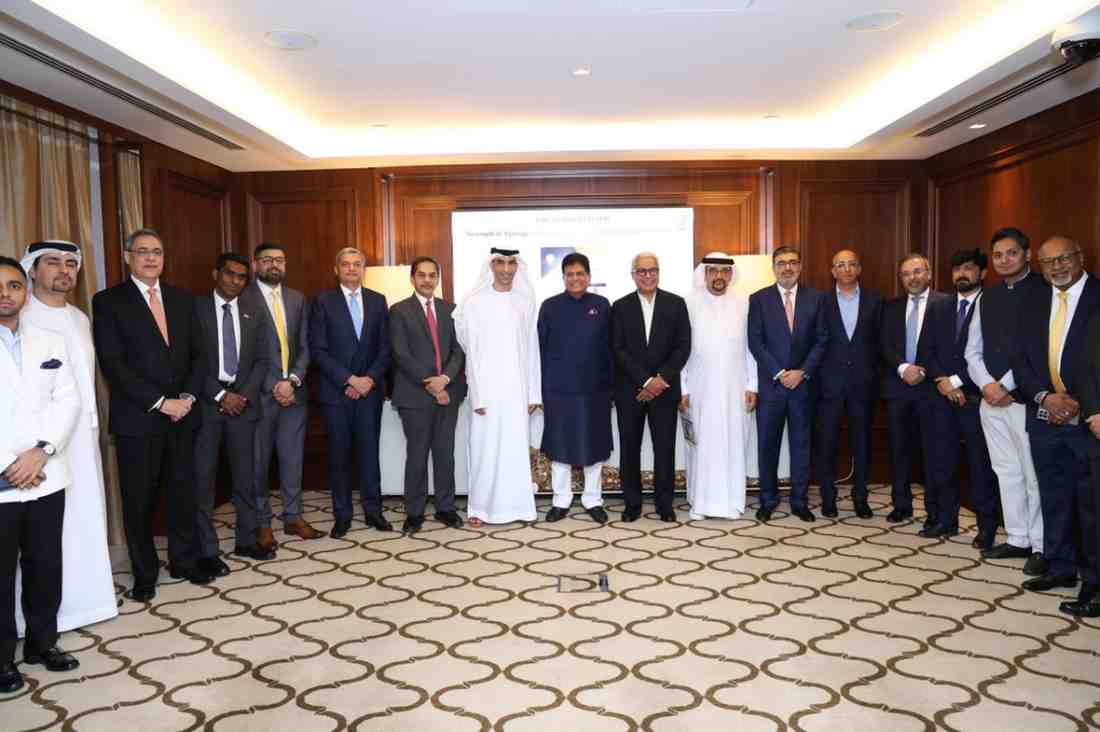
DUBAI : The Hon’ble Minister of Commerce and Industry, Shri Piyush Goyal, held a series of meetings in the United Arab Emirates (UAE) focused strengthening bilateral trade, deepening investment ties, and exploring new avenues of cooperation to further enhance India-UAE relations.

The Hon’ble Minister engaged with CEOs of prominent Indian and UAE companies during the UAE–India Business Council (UIBC) Roundtable, which he co-chaired alongside His Excellency Dr. Thani bin Ahmed Al Zeyoudi, Minister of Foreign Trade, UAE. Both leaders expressed deep satisfaction over the ever-growing economic partnership between India and UAE. They highlighted the significant role played by the business community in furthering the relationship between the two countries. There were discussions around exchange of views on enhancing bilateral trade and investment flows, strengthening business partnerships, and identifying new areas of economic collaboration. Progress on key cornerstone projects like Bharat Mart and India UAE Friendship Hospital were also discussed and the role they would play in enhancing bilateral trade and investments as well as impact on the wider Indian diaspora in UAE were also outlined. The Hon’ble Minister and His Excellency Dr. Thani also noted the increasing role of business leaders in philanthropic initiatives and further commented on the constructive role of these initiatives for the wider community. Both the leaders invited businesses to not just explore opportunities in India and in the UAE but also widen their scope and ambition to other regions, such as Africa, Europe and Central Asia.

An interaction session between Hon’ble Minister and prominent UAE business leaders was coordinated by Mr. Nilesh Ved, Chairman of the Apparel Group. Discussions focused on expanding the investment outreach and highlighting India’s potential to support UAE companies’ regional and global ambitions. The Hon’ble Minister outlined the recent progress made by the Indian economy in terms of macroeconomic growth, infrastructure development and social inclusion and further emphasized India’s growth path towards ‘Viksit Bharat’. He invited UAE businesses to leverage the upcoming growth opportunities in India.

During these engagements, UAE investors shared constructive perspectives on further enhancing the investment environment, including issues related to market access, regulatory processes, and dispute resolution. Matters such as arbitration frameworks and predictability of enforcement were also discussed in a forward-looking manner. The Hon’ble Minister reiterated India’s commitment to providing a transparent and facilitative business environment, and highlighted the Government’s sustained focus on reforms to strengthen investor confidence. India’s recent economic performance – recording 7.8% GDP growth in the last quarter (Q1 of FY 2025-26) with inflation remaining under control-was noted as a reflection of both resilience and momentum, positioning India as one of the most attractive global investment destinations.

The Hon’ble Minister held focused discussions with Ms. Hana Al Rostamani, CEO of First Abu Dhabi Bank, Mr. Irfan Allana, IFFCO Group and Mr. Sharafuddin Sharaf, Sharaf Group. These discussions focused on growth pathways for the companies to enhance their India presence and deepen financial and economic partnerships between businesses of both countries.

The Hon’ble Minister also interacted with representatives of the India People’s Forum, reflecting the continued engagement with the Indian diaspora and its integral role in strengthening the cultural and economic bonds between India and the UAE. He highlighted the significant contributions made by the Indian diaspora in the UAE and its role in driving economic partnership between both countries.

UAE is amongst India’s most important strategic partners. Their comprehensive strategic partnership is marked by deep political engagement, strong economic integration through landmark agreements, and collaboration across sectors like energy, defence, technology, and food security.