Home Blog Page 659

DPA Kandla Dy. Chairman, highlights strategies to strengthen Gujarat as a global export gateway at CII Gujarat Export Conclave 

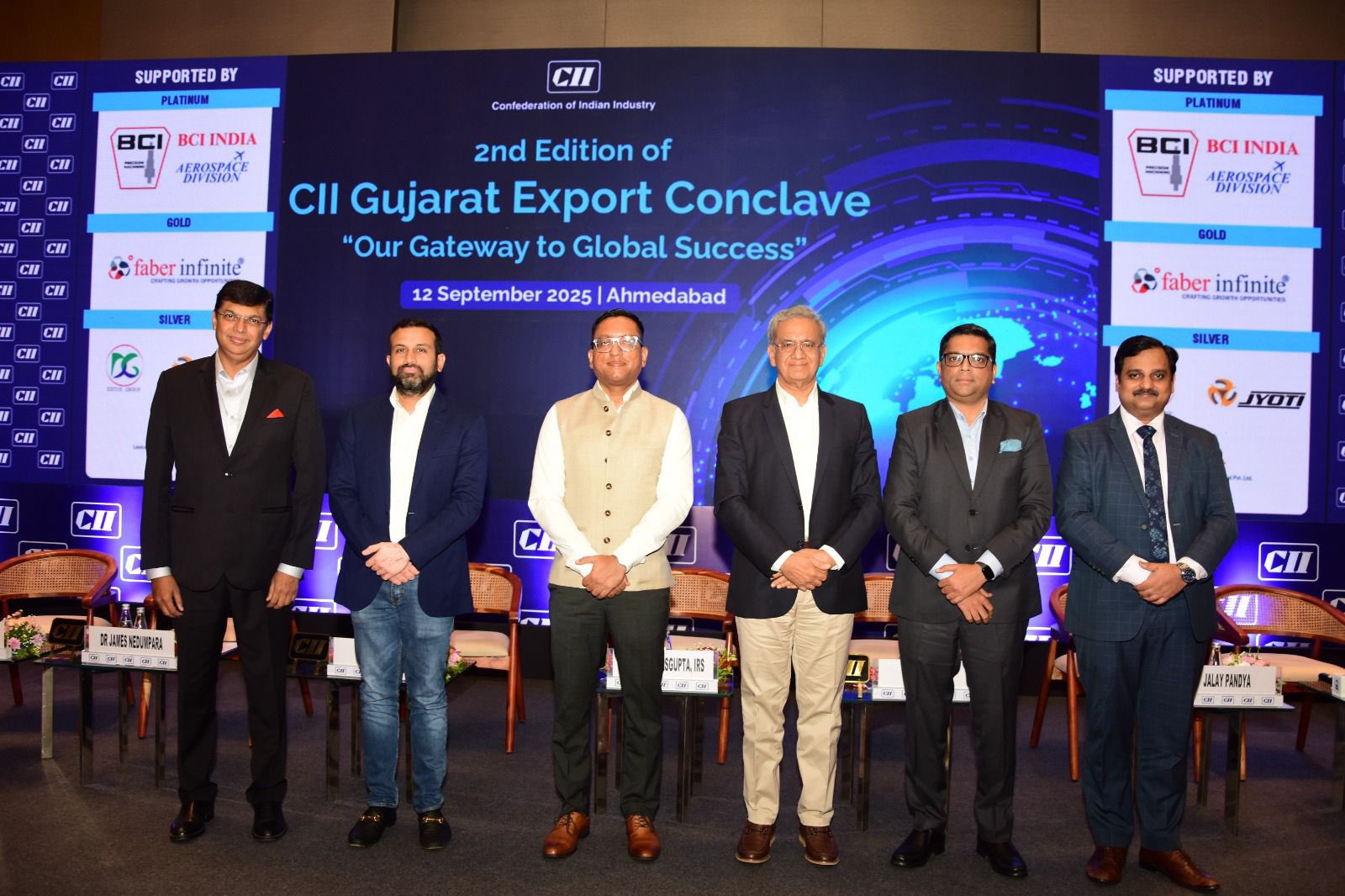
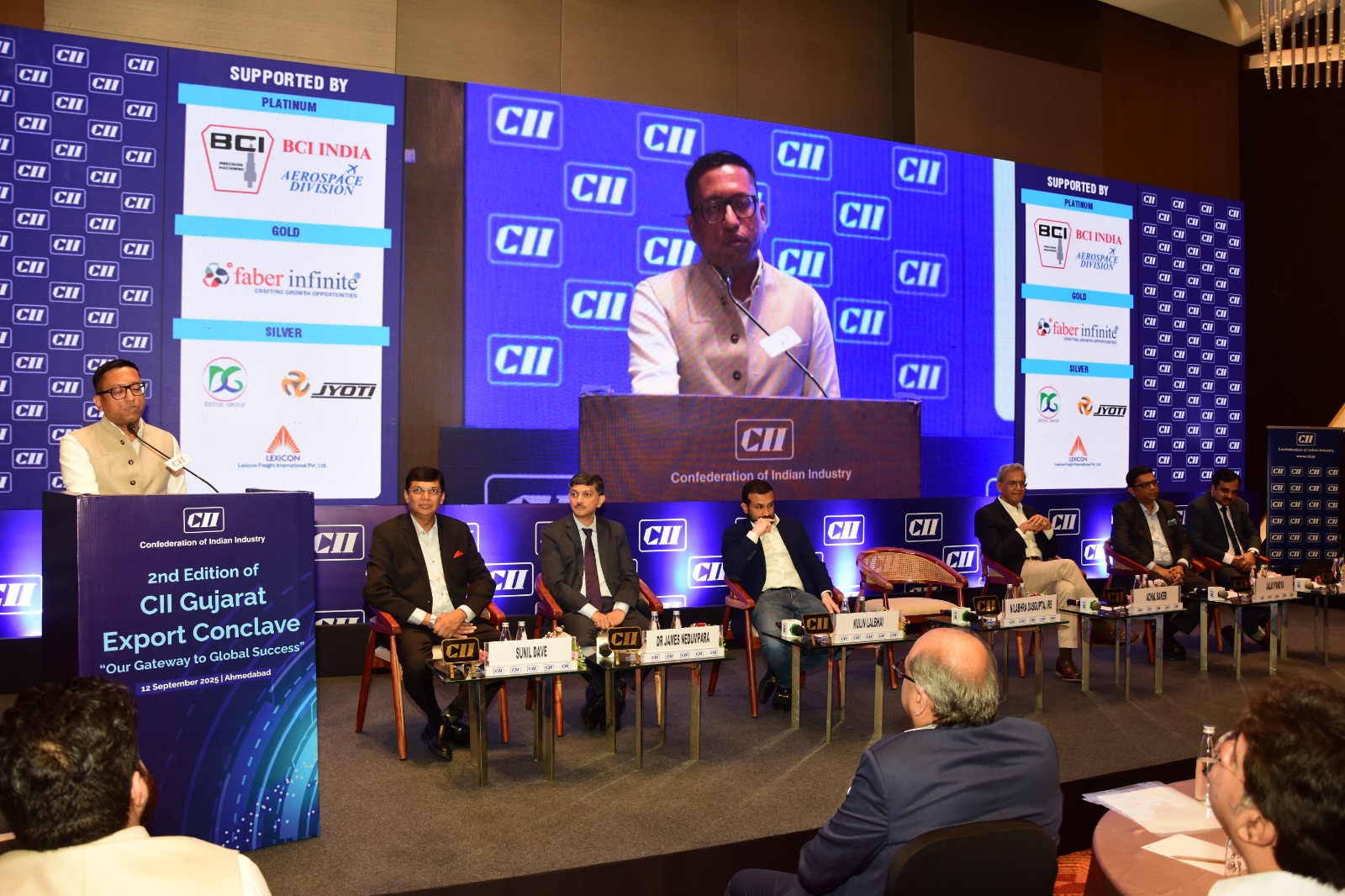
AHMEDABAD : Shri Nilabhra Dasgupta, IRS, Dy. Chairman, Deendayal Port Authority, highlighted strategies to strengthen Gujarat as a global export gateway and the role of DPA as a partner in such growth at CII Gujarat Export Conclave here on 12th September.

He emphasised the significance of Gujarat’s ports, which handle more than 40% of India’s total cargo traffic, play a pivotal role in driving the nation’s trade ambitions. Notably, DPA’s green initiatives drew strong attention and vibrant discussions among the gathered delegates. He said,”By leveraging advanced port infrastructure and seamless connectivity, we can transform Gujarat into India’s premier export gateway.”

A key focus of his speech was on DPA’s commitment to sustainability. He elaborated on the port’s ongoing and planned green initiatives, which include renewable energy integration, eco-friendly logistics solutions, and measures to minimize the environmental footprint of port operations. These initiatives, he noted, are not only vital for aligning with India’s net-zero goals but also serve as a model for responsible and future-ready port management.

The second edition of the CII Gujarat Export Conclave, themed “Our Gateway to Global Success”, concluded on Friday with international diplomats, industry leaders, and over 100 delegates deliberating on strategies to position Gujarat as a global export hub and empower MSMEs in navigating the international trade landscape.

2nd Edition of CII Gujarat Export Conclave :- “Our gateway to global success”

AHMEDABAD : The 2nd CII Gujarat Export Conclave concluded on Friday after bringing together key government officials, international diplomats, and over 100 industry delegates to empower Gujarat’s MSMEs with strategic insights for navigating the global trade landscape.

While setting the context, Mr Sunil Dave, Convenor, CII Gujarat Panel on International Trade and MD, BC Instruments India Pvt Ltd, highlighted India’s remarkable export performance: “India’s total exports reached a historic high of $824.9 billion in FY25, marking 6.01% growth, with the services sector achieving $387.5 billion – a robust 13.6% increase.”

WhatsApp Image 2025 09 15 at 8.38.14 AM 1 2nd Edition of CII Gujarat Export Conclave :- "Our gateway to global success"

Mr. Achal Bakeri, Vice-Chairman of CII Gujarat State Council, emphasized leveraging Gujarat’s global diaspora and cultural heritage as soft power assets, calling for transforming “Ease of Doing Business” into “Ease of Exporting 2.0” through deep-seated reforms.

The session gained a sense of purpose and continuity with the address by Mr. Kulin Lalbhai, Immediate Past Chairman, CII Gujarat State Council. Referencing his participation in the first edition of the conclave, he urged MSMEs to embrace innovation to adapt to rapidly evolving global trade dynamics.

With focus on the importance of a well-rounded approach towards exports, Mr Nilabhra Dasgupta, IRS, Deputy Chairman, Deendayal Port Authority, Kandla, delivered a special address on Gujarat’s maritime infrastructure: ” Gujarat’s ports handle over 40% of India’s cargo traffic, making them the backbone of our export ecosystem. By leveraging advanced port infrastructure and seamless connectivity, we can transform Gujarat into India’s premier export gateway. The synergy between efficient port operations and robust logistics networks will be crucial in achieving our ambitious export targets.”

WhatsApp Image 2025 09 15 at 8.38.15 AM 2nd Edition of CII Gujarat Export Conclave :- "Our gateway to global success"

A strategic panel discussion on the Export Opportunities and Roadmap for MSMEs panel, was moderated by Mr. Jalay Pandya, featured industry experts including Ms Aenna Jagga (Adani Ports & SEZ), Mr Subir Das (ECGC), Mr Deval Shah (Senores Pharmaceuticals Ltd), Mr Sanjay Notani (Economic Laws Practice), Mr Kartik Pancholi (FFFAI), and Dr Rajeev Sharma (EDII), who provided actionable strategies on credit security, legal compliance, and skill development.

The Global Partners’ Forum facilitated direct engagement with international diplomats, including Mr. Yann Sinclair (Australian Consulate), Ms. Eva Verstraelen (Flanders,Belgium), and Mr. Stephen Hickling and Ms Nandita Rajput (British Deputy High Commission), exploring bilateral trade opportunities in innovation, technology transfer, and sustainability.

In his closing remarks, Mr. Sunil Dave expressed optimism: “Today, we have not just discussed the roadmap; we have collectively started building it. We are not just opening gateways to global success—we are building bridges to a brighter, more connected world.”

The conclave was well attended by 150 experts from the field of exports, logistics, MSMEs and various sectors. It successfully demonstrated strong public-private partnership commitment to empowering MSMEs and strengthening Gujarat’s pivotal role in India’s export-driven growth story.

18 per cent GST on garments leaves textile industry, consumers worried

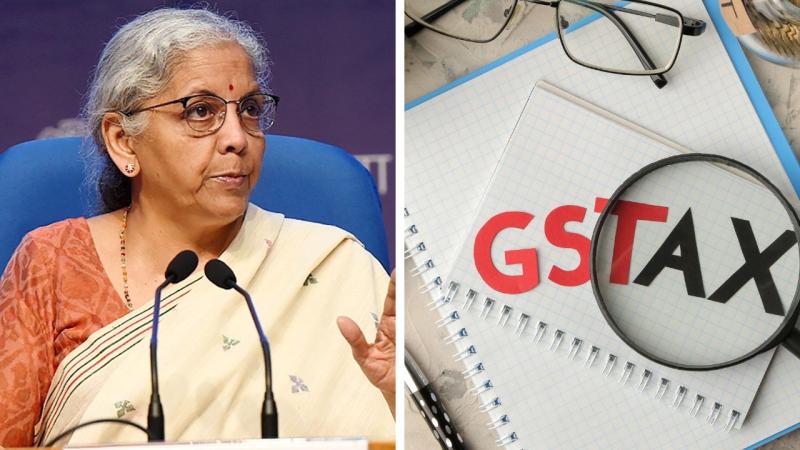
NEW DELHI : As the wedding season draws near, lovers of ready-to-wear traditional Indian attire are bracing for a financial pinch. The recent decision to hike GST from 12 per cent to 18 per cent on garments priced above Rs 2,500 has stirred discontent across the textile industry and among consumers.

An increase from 12 per cent to 18 per cent will also increase the retail price of commonly and essentially used garments, thereby reducing affordability for middle-class consumers.

For those who cherish rich embroidery, handloom fabrics and festive wear, Rs 2,500 is hardly extravagant — especially when artisan-crafted lehengas, sarees and sherwanis often start well above that range.

“The move feels like a penalty on culture,” said a Ludhiana-based retailer, Kanwaldeep Singh, and President of the Punjab Textile Merchants Association.

“Hand embroidery isn’t just decoration but livelihood for thousands of artisans. And now, it’s being taxed like a luxury”? he questions.

The Ludhiana-based industry, already reeling under the deluge of cheap Chinese and Bangladesh winter clothing, will face one more mountain to overcome in their struggle to survive.

The common domestic manufacturers are facing tough competition from cheap imports from China, Vietnam, etc. Domestic production is costlier due to better quality and higher rental, electric and labour charges. Higher rate of GST slab of 18 per cent will directly impact adversely as cheap imported goods affect domestic products, adds another garment retailer, Vishal Kapoor.

The average price of woolen clothing, which are essential in North India, North East and East India, and ethnic wear are priced above Rs 2,500.

“Nowhere would a good quality sweater or Jacket, worn as much by the middle class as well as the affluent class, be available for below Rs 2,500, other than second-hand clothing or surreptitiously smuggled imported clothes. All these essential woolen garments will now be hugely costlier to average middle class citizens,” said a woollen garment manufacturer.

The textile and apparel sector, country’s second-largest employer after agriculture, supports over 45 million people directly and nearly 100 million indirectly — many of them women and rural artisans. The GST hike, though aimed at streamlining taxation, is having unintended consequences. Small businesses and MSMEs are feeling the heat, with fears that the added cost will push buyers towards unorganised sellers, who avoid billing and compliance.

Industry bodies such as the Clothing Manufacturers Association of India (CMAI) have urged the government to reconsider the decision. “Garments above Rs 2,500 are not just for the elite,” said CMAI president Santosh Katariya.

“They represent our heritage — block printing, weaving and embroidery. Taxing them at 18 per cent risks eroding that legacy,” he added.

Families preparing for weddings are now facing emotional and financial strain.

“Dressing up your daughter for her big day should not be a burden,” said a parent from Ludhiana, adding “but with this tax, even modest outfits feel out of reach.”

Daman, who is set to tie the knot this November, expressed concern over the rising cost of formal wear. “You don’t get anything decent in that price range — Rs 2,500 barely covers daily wear,” she said.

“Formal and embroidered outfits are already expensive and now, the government has added an extra burden with 18 per cent GST,” she added.

ACMA’s 65th Annual Session highlights Supply Chain Resilience amid global shifts

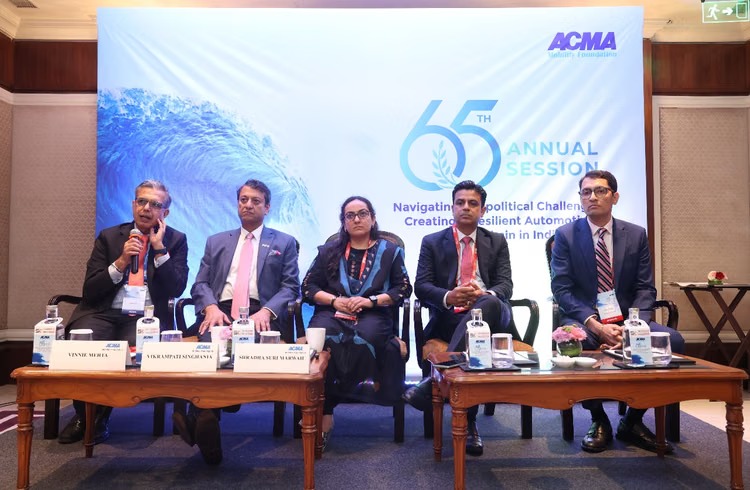
NEW DELHI : The Automotive Component Manufacturers Association of India (ACMA) held its 65th Annual Session in New Delhi, focusing on building resilient automotive supply chains amid evolving geopolitical challenges. The event brought together over 1,200 delegates, including senior government officials, industry executives, and international stakeholders.

The session featured participation from key government ministers including Shri Nitin Gadkari (Road Transport & Highways), H.D. Kumaraswamy (Heavy Industries & Steel), and Shri Piyush Goyal (Commerce & Industry), alongside European Commissioner for Trade and Economic Security Maroš Šefčovič.

ACMA President Shradha Suri Marwah highlighted the industry’s growth trajectory, noting that India’s auto component sector expanded beyond $80 billion in FY25, with exports exceeding $23 billion. She emphasized the sector’s evolution into a trusted global partner despite facing various market challenges.

A significant highlight was the release of the ACMA-McKinsey Study projecting the industry to reach $200 billion by 2030. The study identified growth drivers including robust domestic demand, expanding export opportunities, and emerging opportunities in electric vehicle components and connected solutions. However, it also flagged potential risks from trade tariffs, carbon taxes, and import dependencies on rare earth materials and semiconductors.

Minister H.D. Kumaraswamy outlined government policy support, citing the Production Linked Incentive (PLI) scheme’s success in attracting over ₹29,500 crore in investments and creating more than 45,000 jobs. He also referenced the PM-eDRIVE programme’s role in promoting electric mobility across various vehicle segments.

The discussions addressed strategies for supply chain diversification, technology localization, and competitiveness enhancement. Industry representatives from companies including Sona Comstar, Switch Mobility, Volkswagen Group India, Hero MotoCorp, and Bosch India participated in panel discussions exploring these themes.

Minister Nitin Gadkari articulated the government’s vision to establish India as a global hub for smart, sustainable, and affordable mobility by 2030. He emphasized the role of clean fuel adoption including electricity, ethanol, hydrogen, and biofuels in achieving this objective.

Commerce Minister Piyush Goyal highlighted ongoing India-EU trade negotiations and announced the reduction of GST on auto parts to 18 percent as a measure to formalize supply chains and support sector growth.

European Commissioner Šefčovič emphasized the potential for enhanced India-EU collaboration, noting existing trade worth $140 billion and the opportunity to combine European technology expertise with Indian manufacturing capabilities.

The session underscored India’s growing significance in global automotive supply chains and the industry’s focus on building resilience against geopolitical uncertainties while pursuing growth opportunities in traditional and emerging vehicle technologies.

Shell Energy India gets Green Nod for ₹21,600-Cr Hazira LNG Terminal expansion

AHMEDABAD : Shell Energy India Pvt Ltd, a subsidiary of Shell Gas BV under Royal Dutch Shell, has received environmental clearance to expand its Liquefied Natural Gas (LNG) terminal at Hazira Port, Gujarat. The project involves an investment of ₹21,600 crore and will scale up the terminal’s capacity from 6.28 million metric tonnes per annum (MMTPA) to 26.2 MMTPA.

The expansion includes raising regasification capacity to 25 MMTPA and truck loading capacity to 1.2 MMTPA, up from the current 0.28 MMTPA. Planned infrastructure additions include new LNG storage tanks, a jetty for conventional LNG carriers, a breakwater, and dredging of 2.8 million cubic meters to deepen the channel.

The Ministry of Environment, Forest and Climate Change’s Expert Appraisal Committee cleared the proposal on September 2. Shell had earlier attempted to expand the terminal to 10 MMTPA, but the plan stalled in 2021 due to pending forest clearance. The Gujarat government has since granted approval, removing the last obstacle.

Commissioned in 2005 with 2.5 MMTPA capacity, the Hazira terminal was expanded to 5 MMTPA in 2013 and later to 6.28 MMTPA. The latest upgrade marks its largest expansion to date.

The new truck loading facilities will supply LNG to industries and also support its use as a transport fuel, aligning with the government’s plan to promote LNG adoption in heavy-duty vehicles.

DRI seizes Pak goods worth Rs 12 cr at Mumbai Port ; 2 held

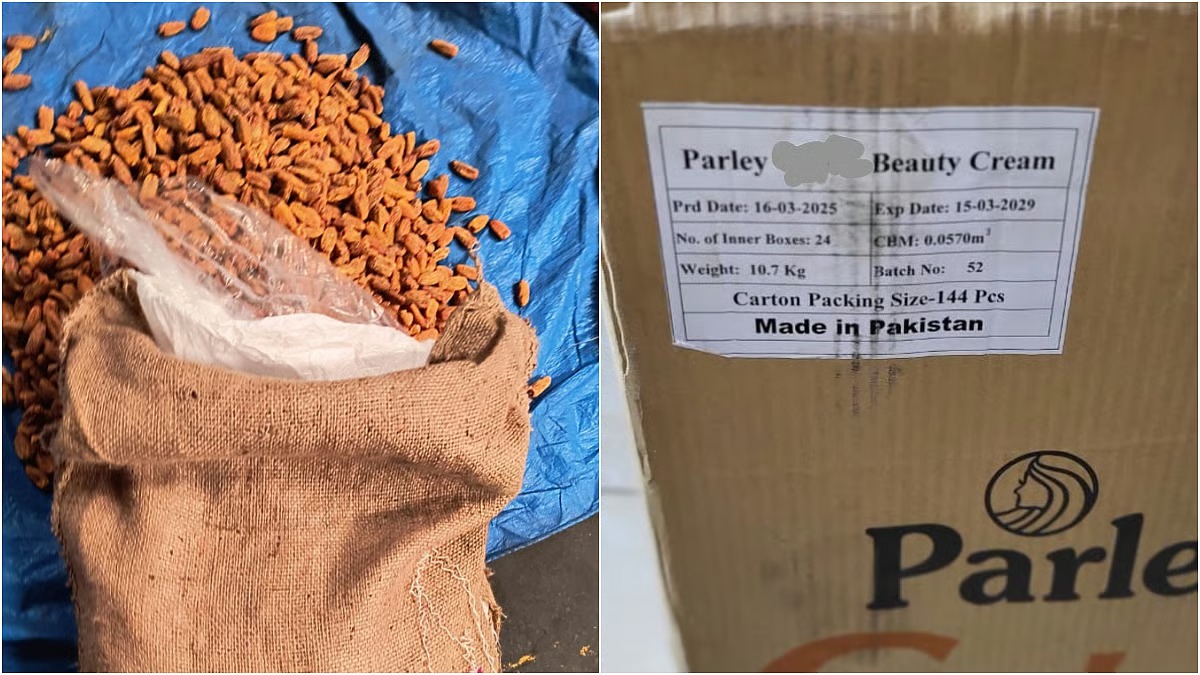
MUMBAI : The Directorate of Revenue Intelligence(DRI) has seized 28 containers carrying cosmetics and dry dates of Pakistani origin and valued at about Rs 12 crore at the Nhava Sheva Port in Navi Mumbai and arrested two persons in this connection, officials said.

The consignments were procured by three Indian importers in blatant violation of prohibitions imposed by the government on the import of Pakistani-origin goods, the officials of the Directorate of Revenue Intelligence (DRI) said on Saturday.

A Dubai-based Indian national, operating on a commission basis, facilitated the transhipment of dry dates from Pakistan by issuing fabricated invoices. He allegedly used his firms to disguise the sea transport trail. The containers were routed through the Jebel Ali port in Dubai by misdeclaring them as of the UAE origin, the officials said.

Under ‘Operation Deep Manifest’, India’s top anti-smuggling unit seized 28 containers loaded with 800 tonnes of cosmetics and dry dates of Pakistani origin, an official said.

The goods were sent through a complex web of transactions involving Pakistani, Indian and UAE nationals, to obscure their true origin.

Money was also routed from India to Pakistan through him, the official said, adding the supplier has been arrested.

A Customs broker has also been arrested for facilitating the smuggling of cosmetics from Pakistan by falsely declaring the country of origin, he said.

In the wake of the April 22 Pahalgam terror attack that claimed the lives of 26 persons, the Centre on May 2 imposed a complete ban on direct or indirect import of Pakistani-origin goods.

The DRI subsequently launched an operation to seize goods imported from the neighbouring country in violation of the ban.

Indian Diamond and Jewellery exporters considering overseas units to bypass US tariffs: Industry insiders

NEW DELHI: Indian diamond and jewellery exporters are looking to set up production units in friendly countries to avoid the impact of US tariffs and maintain competitiveness in the American market, according to industry insiders.

However, despite the anticipation of industry insiders, no significant player has officially announced such a move so far.

The US currently has a 50 per cent tariff on Indian diamonds and gems, which took effect on August 27, 2025.

“Our American market is like a major market, and that is a major segment of our exports. But naturally, to circumvent that, people are finding out ways where they can have a partial making in India and then try to finish the product somewhere else. So that technically it is not from India and it’s not subject to heavy tariffs,” said Hetal Vakil Valia, former National Chairperson of the India Bullion and Jewellers Association (IBJA) women’s wing. She said this on the sidelines of the 13th Edition of the Delhi Jewellery & Gem Fair 2025 in the national capital on Sunday.

Yogesh Mudras, Managing Director, Informa Markets, said industry players are trying to look at different markets to export, like Europe, Southeast Asia, and the Middle East.

“Industry is also trying to understand that there’s risk at this moment,, so they are trying to look at different markets to export, especially markets like Europe, Southeast Asia, and the Middle East. They’re trying to reroute the jewellery by semi-processing and then going to countries like Oman, where they can process it fully and then export to the US,” Mudras told ANI.

On the need to diversify trade, Prasoon Dewan, Scientific Gemologist and CEO of Divish Aurum Private Limited, which exports to markets in Europe and other geographies, said, “Policy shifts create tensions; tariff risks are always an integral part of any export business. This should never be seen as the end of the road. I think it is wiser for every business house to have multiple and alternative market avenues into different markets.”

Encouraging businesses to think beyond traditional markets, Dewan added, “It’s important for the new Bharat to step out of its comfort zone and explore emerging markets. Latin American countries, for instance, may offer a warm entry for our goods, alongside untapped potential in Eastern Europe.”

He concluded by urging a balanced and inclusive global trade outlook: “Every market should be treated equally. We must venture into all potential regions with a fair and open trade approach.

According to Crisil Intelligence, Micro, small and medium enterprises (MSMEs) in sectors such as textiles, diamonds and chemicals, which together account for nearly 45 per cent of India’s total exports, are likely to be the most affected by the imposition of higher tariffs by the US.

In the gems and jewellery sector, Surat’s diamond polishers, who dominate the country’s exports with over 80 per cent share, will also be severely affected.

Diamonds form over half of India’s total gems and jewellery exports, with the US being a major consumer, accounting for nearly a third of shipments.

Source: ANI

Government reopens application window for PLI Scheme for White Goods (ACs and LED Lights) for 30 days from 15th September, 2025

NEW DELHI : The application window for the PLI Scheme for White Goods (ACs and LED Lights) is being reopened based on the appetite of the industry to invest more under the Scheme, which is an outcome of the growing market and confidence generated due to manufacturing of key components of ACs and LED Lights in India under the PLIWG Scheme. The application window is being opened on the same terms & conditions stipulated in PLIWG Scheme notified on 16.04.2021 and PLIWG Scheme Guidelines issued on 04.06.2021, as amended from time to time.

The application window for the Scheme shall remain open for the period from 15th September, 2025 to 14th October, 2025 (both dates inclusive) on the same on-line portal having URL as https://pliwg.dpiit.gov.in/ . No application shall be accepted after the closure of the application window.

In order to avoid any discrimination, both new applicants as well as existing beneficiaries of PLIWG who propose to invest more by way of switching over to higher target segment or their group companies applying under different target segment would be eligible to apply subject to fulfilling the eligibility conditions as mentioned in the Para 5.6 of the Scheme Guidelines and adhering to investment schedule as mentioned in Appendix-1 or Appendix-1A of the Scheme Guidelines, as applicable.

Consolidated Scheme Guidelines is available at:https://pliwg.dpiit.gov.in/docs/Consolidated_Guidelines_PLIScheme_23October2023.pdf and scheme notification is available at: https://dpiit.gov.in/sites/default/files/PLIWG-Notification-16042021_10May2021.pdf

In terms of Para 6.4 of the PLIWG Scheme and Para 9.3 of the Scheme Guidelines, applicants shall only be eligible for incentives for the remainder of the Scheme’s tenure. The applicant approved in the proposed fourth round would be eligible for PLI for maximum two years only in the case of new applicants and beneficiaries opting for GP-2 (i.e. upto March 2023) seeking to move to higher investment category. For beneficiaries opting for GP-1 (i.e. upto March 2022) seeking to move to higher investment category in the proposed fourth round would be eligible for PLI for one year- only. Existing beneficiaries opting for the above, in case they are not able to achieve the threshold investment or sales in a given year will be eligible for submitting the claims as per their original investment plan. However, this flexibility will be provided only once during the Scheme period.

So far, 83 applicants with committed investment of Rs 10,406 crore have been selected as beneficiaries under the PLI scheme. The investments will lead to manufacturing of components of Air Conditioners and LED Lights across the complete value chain including components which are not manufactured in India presently with sufficient quantity.

The Union Cabinet had given approval for the PLI Scheme for White Goods for manufacture of components and sub-assemblies of Air Conditioners (ACs) and LED Lights on 07.04.2021 in pursuance of the clarion call of the Prime Minister, Shri Narendra Modi, for ‘Atmanirbhar Bharat’ to bring manufacturing at the centre stage and emphasise its significance in driving India’s growth and creating jobs. The Scheme is to be implemented over a seven-year period, from FY 2021-22 to FY 2028-29 and has an outlay of Rs. 6,238 crore.

India’s Logistics & Industrial leasing hits 30.7 MSF in H1 2025: Cushman & Wakefield Report

NEW DELHI: India’s logistics and industrial real estate sector recorded double-digit growth in the first half of 2025, with total leasing at 30.7 million square feet (MSF) – a 21.6 per cent increase YoY and 12.1 per cent higher than H2 2024, according to Cushman & Wakefield’s latest H1 2025 Logistics & Industrials Marketbeat Report.

The growth is driven by strong demand across warehousing and manufacturing segments, the report added.

The performance underlines the sector’s strong fundamentals, with leasing activity surpassing 50 MSF annually for the last three consecutive years. With momentum holding strong, gross leasing is expected to cross 60 MSF by year-end, setting a new benchmark for India’s Logistics & Industrial market.

According to the report, warehousing remained the dominant driver, accounting for 21.9 MSF of leasing and representing 71.3 per cent, while industrial space contributed 8.8 MSF, making up 28.7 per cent of the total leasing.

From a sectoral perspective, Engineering & Manufacturing (E&M) led overall leasing with 9.7 MSF, accounting for 32 per cent of total absorption and recording a 37 per cent YoY growth.

3PL operators leased 7.4 MSF, representing a 24 per cent share and showcasing stable growth, indicating market maturity after earlier expansion waves.

The E-commerce sector recorded the sharpest annual surge, with 158 per cent YoY growth to reach 4.6 MSF and capture a 15 per cent share of total leasing, driven by festive season stocking and last-mile network expansion.

Abhishek Bhutani, Managing Director, Logistics & Industrial Services India, Head- Gujarat, Cushman & Wakefield, said, “H1 performance reinforces how India’s logistics and industrial sector has moved beyond cyclical swings to demonstrate structural strength. The consistency of demand across segments highlights that occupiers are no longer only chasing capacity but also efficiency, location, and long-term value.”
In terms of cities, Mumbai led the leasing activity in H1 2025 with 7.0 MSF, accounting for a 23 per cent share, recording a remarkable 131.3 per cent YoY growth, driven by strong warehousing and industrial demand. Ahmedabad, though smaller in absolute volume at 1.7 MSF, posted the highest YoY growth at an impressive 192.2 per cent, making up 5.4 per cent share, underscoring its rising prominence in the logistics and industrial landscape.

Delhi NCR recorded 5.1 MSF with 17 per cent share, and Pune reported 4.5 MSF with 15 per cent share, leading the overall leasing. Chennai registered 4.4 MSF with 14 per cent share, Bengaluru 3.3 MSF with 11 per cent share, Hyderabad 2.7 MSF with 9 per cent share, and Kolkata 2.0 MSF and 7 per cent share, also recorded steady leasing activity.

The report added that a healthy supply pipeline of 25 MSF of Grade-A warehousing is expected over the next 2-3 years, and supportive policy measures, driven by strong demand, are expected to maintain India’s logistics and industrial real estate sector’s upward trajectory through 2025. Growth will be driven by sustained manufacturing expansion, e-commerce penetration into Tier-II and Tier-III cities, and continued adoption of technology in supply chain management, the report added.

India poised to export sugar in new season due to ample stocks

NEW DELHI: India, the world’s second biggest sugar producer, will have sufficient surplus stocks of the commodity to allow exports in the season beginning October 1, a senior government official said on Friday.

Exports by India could weigh on global prices, but would help the Indian government support local sugar prices and ensure farmers receive the guaranteed minimum price for their cane from sugar mills.

“There will be scope for sugar exports in the new season,” Ashwini Srivastava, joint secretary at the Department of Food and Public Distribution, said at a global conference, without estimating how much might be available for shipment abroad.

India allowed 1 million metric tons of exports in the current marketing year ending in September, despite a drop in production.

Srivastava said next season’s output looked good, and that after meeting domestic consumption and the requirement for ethanol production, there would be sufficient stocks for export, he said.

A record 4.8 billion litres of ethanol is likely to be produced in the new season from sugarcane-based feedstock, he said.

The Indian Sugar and Bio-energy Manufacturers Association on Thursday estimated that production would rise to 34.9 million metric tons in the 2025/26 marketing year starting October 1.

The country’s sugar consumption in the new season is likely to rise to between 28.5 million and 29 million metric tons from the current year’s 28 million, Srivastava said.

India will start the new marketing year with carryover stocks of 5 million metric tons, down from 8 million at the start of the current year.