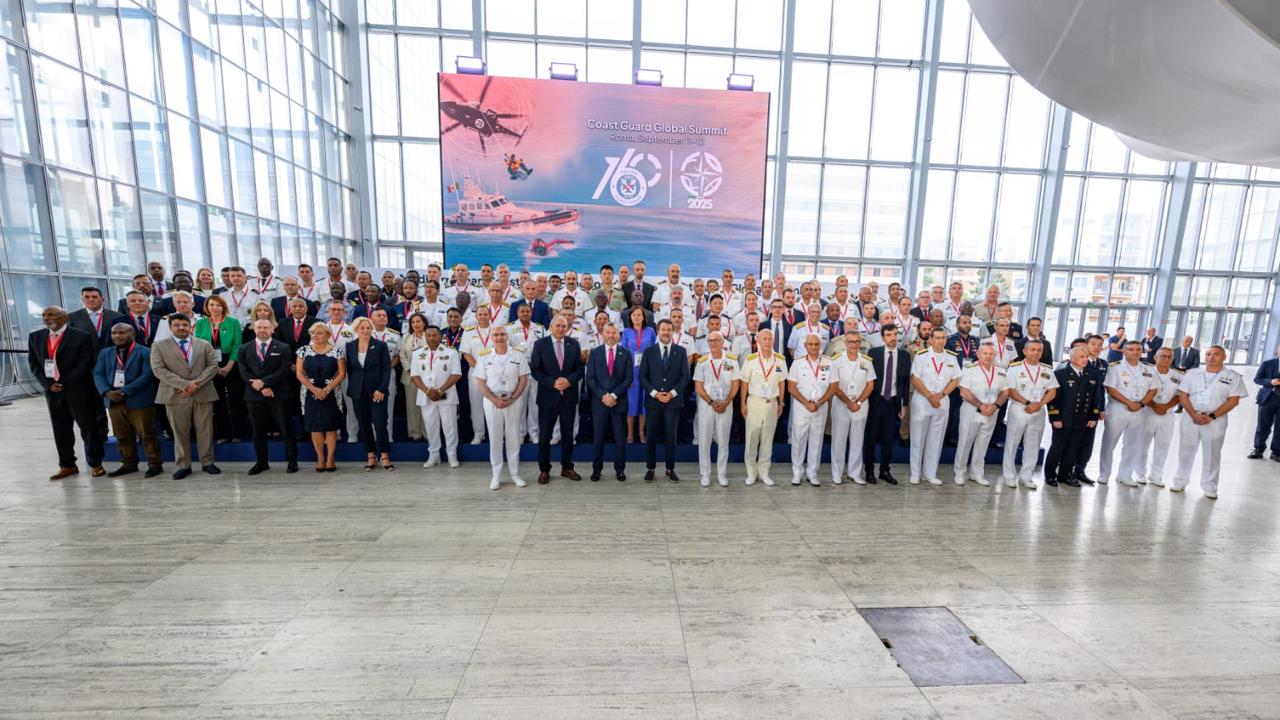
CHENNAI : Reaffirming its leadership in international maritime cooperation, India will host the 5th Coast Guard Global Summit (CGGS) in Chennai in 2027, coinciding with the Golden Jubilee celebrations of the Indian Coast Guard (ICG). The three-day event will include an International Coast Guard Fleet Review and a World Coast Guard Seminar, providing a global platform for dialogue on emerging maritime challenges and showcasing international maritime unity. The decision was taken unanimously at the 4th CGGS held in Rome, Italy, from September 11-12, 2025, which was attended by delegates from 115 countries and international organisations.
Director General (DG) ICG Paramesh Sivamani emphasised that no single nation can address the full spectrum of maritime issues alone, and underlined that the Chennai Summit in 2027 will serve as an inclusive forum to foster interoperability, trust, and stronger cooperation among Coast Guards worldwide.
During the ceremonial handover of the CGGS Presidency, DG ICG hailed the Summit as a beacon of global Coast Guard cooperation in addressing shared maritime challenges, while expressing gratitude to the Italian Coast Guard for its hospitality and to the Japan Coast Guard for its role as CGGS Secretariat.
On the sidelines of the Summit, DG ICG also met the Commandant of the Italian Coast Guard. Discussions, held under the framework of the Defence Cooperation Clause of the India–Italy Joint Strategic Action Plan 2025–2029, underscored both sides’ commitment to enhancing cooperation in Maritime Search and Rescue (M-SAR), Marine Pollution Response, environmental protection, countering transnational maritime crimes, information exchange, maritime domain awareness, capacity building, training, and technical assistance
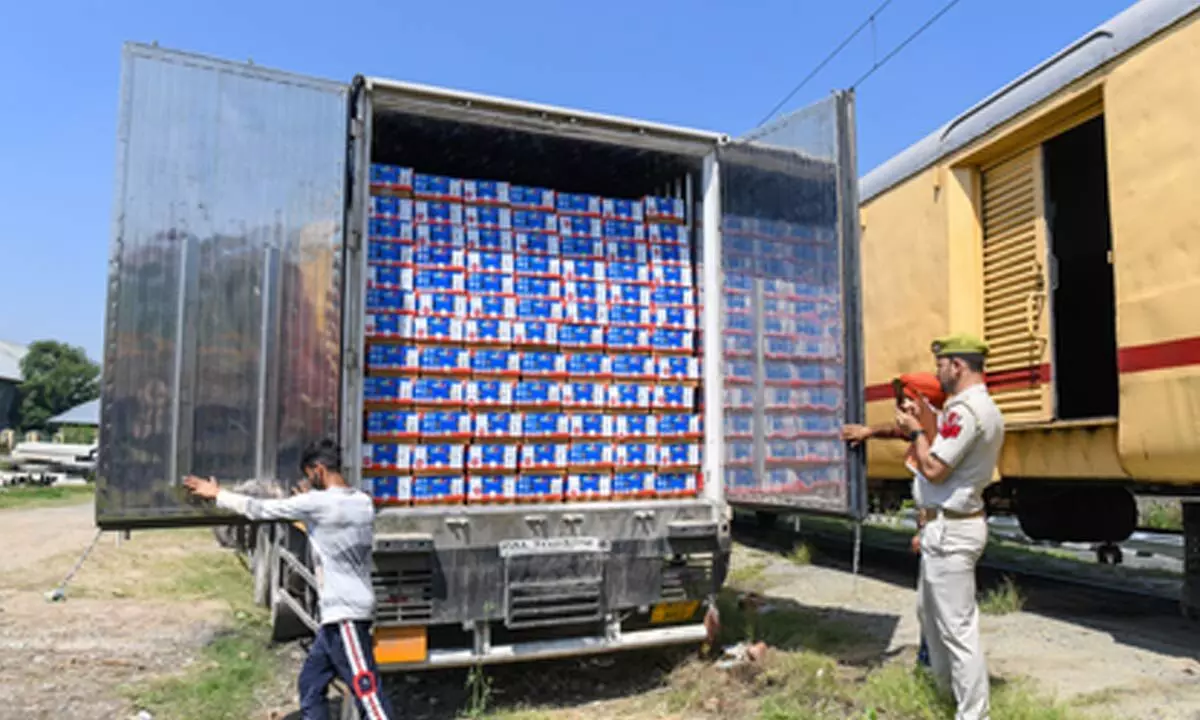
SRINAGAR : : In a major relief to apple growers hit by frequent closures of the Srinagar-Jammu National Highway, the Railways flagged off two apple-laden parcel vans from Budgam railway station to Delhi and announced a daily freight service started on September 13.
Union Railway Minister Shri Ashwini Vaishnaw said in a post on X: “Empowering Kashmir’s apple growers. Railways are introducing a daily timetabled parcel train from Budgam in Kashmir to Adarsh Nagar station in Delhi starting 13th September.” He said the service will improve connectivity and help Kashmiris reach markets faster.
Railway officials said the daily train, consisting of eight parcel vans, will depart Budgam at 6:15 am and reach Adarsh Nagar in Delhi at 5 am the next day, enabling apples to hit the markets early in the morning. Facilities for attaching vans at intermediate stations are also being provided.
Explaining today’s early run, a Northern Railway official at Badgam said, “As highway is closed, we preponed it and ran a special train. It is on a trial basis but has already relieved growers. From 15th September, an eight-car daily train will operate. Security has been tightened with police and the Railway Protection Force deployed along the route. The train is faster and smoother than the road, which often suffers jams and blockages.”
The Chief Minister Omar Abdullah said that he had assured growers he would take up the matter with the Railway Minister. “That promise stands fulfilled . I was in constant touch with the Railway Minister, the Railway Department, Secretariat officials, the Agriculture Production Department, and our growers,” he said.
He said two coaches are now being used for cargo transportation, which is a compulsion at present. “In the future, I want this to become a regular feature with special cargo trains running continuously from Kashmir. These should include refrigerated containers so that our fruits can reach markets fresh, while essential goods needed in J&K can also be brought in by train,” he added.
Growers and traders expressed relief. “The National Highway 44 has been closed for 12-13 days. When I spoke to the Railway Department, they arranged everything in 2-3 days. I am thrilled that they acted so quickly,” said an apple trader from Srinagar.
He added that sending freight by truck to Delhi costs nearly Rs. 1.25 lakh for a 10-tonne load, while the train may bring the cost down to Rs. 60,000, which is nearly half. “It will also save time. Trucks take four to five days, while the train will reach Delhi in about 20 hours.”
Officials said the move marks the beginning of a “transformative era” in Kashmir’s logistics. “By reducing dependence on vulnerable road routes, these direct rail services signify a bold new chapter for commerce in the region,” a railway official said.
“The Principal Chief Commercial Manager of Northern Railway and the Divisional Railway Manager of Jammu Division are in constant touch with J&K authorities, the Horticulture Department, fruit growers’ associations, and traders,” the official said.
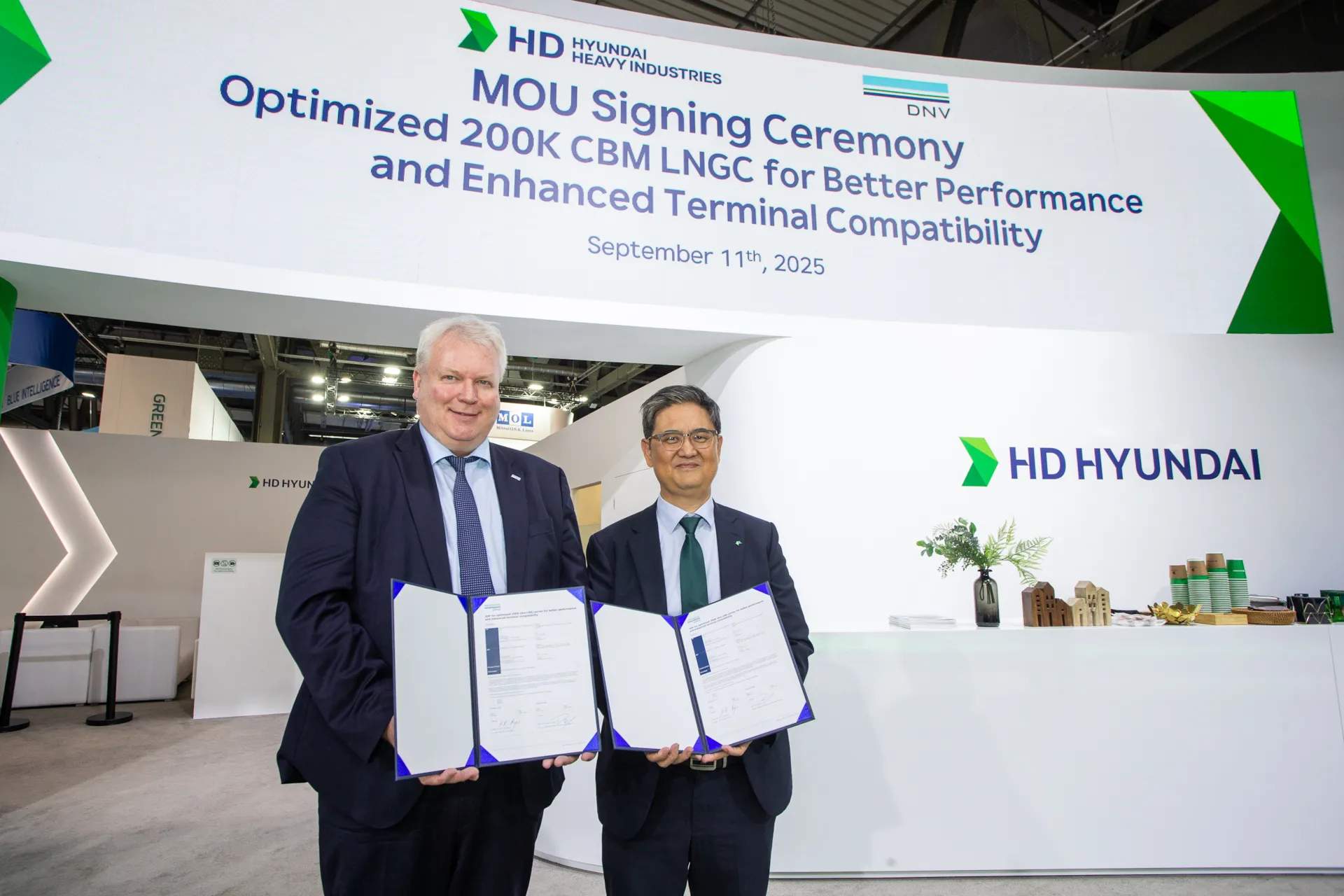
MILAN: DNV and HD Hyundai Heavy Industries (HD HHI) have signed a Memorandum of Understanding (MOU) to collaborate on the development and verification of an optimized 200,000 cubic meter LNG carrier. The new design aims to deliver improved operational efficiency and enhanced terminal compatibility compared to previous vessel designs. The MOU was signed by Vidar Dolonen, Regional Manager for Korea & Japan at DNV, and Mr. Ryu Hongryeul, Chief Technology Officer at HD HHI, during the Gastech 2025 trade fair in Milan.
Under the agreement, DNV will carry out design verification of HD HHI’s streamlined LNG carrier, focusing on ensuring higher efficiency in operations and better compatibility with a wider range of terminals worldwide.
Hongryeul Ryu, CTO of HD HHI, added: “The optimized 200K LNG carrier represents our dedication to advancing ship design to meet customer needs. Through this partnership with DNV, we will further enhance the performance and global operability of our vessels.”
Vidar Dolonen, Regional Manager for Korea & Japan at DNV, said: “This collaboration underscores DNV’s commitment to supporting innovation in LNG shipping. By working closely with HD HHI, we can combine our expertise to enhance safety, efficiency, and sustainability. Together, we can drive innovation and support the transition to cleaner energy at sea. This collaboration reflects our shared commitment to excellence and responsible shipping. And we look forward to turning this agreement into tangible results based on our shared focus on advancing technology to enable safer, more efficient, and sustainable LNG transportation.”
OSLO: • The average spot rates from Far East into both Europe and North America all declined steadily from a week ago. This follows from last week, where we saw differing directions – with US-bound trades rising solidly and Europe-bound trades increasing the pace of decline. • The development from the end of August shows average spot freight rates into the US West Coast are up 27.1%, whereas the rate into US East Coast is up 11.8%. • Current spread in average spot rates between the two US coasts (USD 868 per FEU) shows their ‘normal’ relationship is out of balance after reaching a more recognizable USD 1027 per FEU on 31 August. • This indicates that US-bound trade lanes are impacted differently by current conditions, but also that the imbalance will reverse when the markets ‘calm down’. • The development from end of August shows average spot freight rate into the Mediterranean has fallen 8.1%, whereas the rate into North Europe is down 12.9%. • From a week ago, the average rate is down 1.7% and 2.2% into Mediterranean and North Europe respectively. • Spot market rates into the Mediterranean and North Europe have now been consistently falling since mid-June and early-July respectively. • Meanwhile, it’s ‘steady as you go’ on the Transatlantic trade where the average spot rate is down just USD 3 per FEU (-0.2%) from last week and USD 50 per FEU (-2.6%) from 31 August.
Data highlights Market average spot rates – 11 September 2025: o Far East to US West Coast: USD 2322 per FEU (40ft container) o Far East to US East Coast: USD 3190 per FEU o Far East to North Europe: USD 2328 per FEU o Far East to Mediterranean: USD 2861 per FEU o North Europe to US East Coast: USD 1838 per FEU
Xeneta analyst insight – Transpacific Peter Sand, Xeneta Chief Analyst commented: “Carriers are swapping out China-built vessels on services into the US ahead of USTR port fees coming into force next month. This could be one of the factors behind increasing spot rates on Transpacific trades.
“Swapping out China-built ships may not result in lower capacity or blanked sailings, but it will cause disruption with the potential to impact rate development.
“For example, Gemini is swapping out a total of 60 000 TEU across six China-built vessels on the US2 service, which calls at both the US East Coast and US West Coast. It’s clear this is a concerted effort to minimize China-built TEU on these trades.”
Xeneta analyst insight – Far East to North Europe Peter Sand, Xeneta Chief Analyst commented: “On 1 August, average spot rates on trades from Far East to North Europe and Mediterranean were completely aligned, but that spread has now increased to USD 500 per FEU.
“This is a fascinating story because the spread is caused by North Europe falling harder while Mediterranean is holding firmer on both short and long term markets. One factor is found in stronger demand at ports in the Western Mediterranean, which is helping to hold spot rates up in comparison to North Europe.” Source: Xeneta
LONDON: For many years, World Container Index has been the go-to, independent, global reference for index-linked contracts. If your organisation is considering index-linked contracts or requires regional visibility/coverage beyond the eight trade lanes provided below, contact our ocean freight cost benchmarking team.
Drewry’s World Container Index decreased 3% to $2,044 per 40ft container last week.
Drewry’s detailed assessment for Thursday, 11 Sep 2025
The Drewry World Container Index (WCI) fell 3% to $2,044 per 40ft container, marking the 13th consecutive week of decline. For the second week in a row, spot rates on major trade lanes followed opposing trends. While freight rates on Transpacific trade lanes increased, those on Asia–Europe decreased.
Transpacific spot rates are on the rise due to GRI announcements by several carriers. Spot rates from Shanghai to Los Angeles increased 6% to $2,678 per feu, while those from Shanghai to New York jumped 2% to $3,743 per feu. Despite the upcoming Golden Week holidays in China, it is unlikely that these rates will be sustained without further cuts to shipping capacity. Hence, Drewry expects rates to remain stable in the upcoming weeks.
Asia–Europe spot rates fell this week, as rates declined on Shanghai–Rotterdam by 10% ($2,143/feu) and on Shanghai–Genoa by 12% ($2,342/feu). This decline comes as carriers struggle to match increased capacity—due to new vessels entering the trade—with softening demand. With the rise in blank sailings ahead of China’s Golden Week holidays, which begins on 1 October, Drewry expects rates to decrease slightly in the upcoming weeks.
Drewry’s Container Forecaster expects the supply-demand balance to weaken again in 2H25, which will cause spot rates to contract. The volatility and timing of rate changes will depend on Trump’s future tariffs and on capacity changes related to the introduction of US penalties on Chinese ships, which are uncertain. Source: Drewry
LONDON: The Baltic Exchange’s dry bulk sea freight index rose to its highest in more than a month on Friday, supported by higher rates across all vessel segments.
The main index, which factors in rates for capesize, panamax and supramax shipping vessels, increased by 15 points, or 0.7%, to 2,126 points, its highest level since July 28. The weekly contract was up 7.4%, its best week since July 21.
The capesize index rose 29 points, or 1%, to 3,070 points, with the weekly contract up about 8.3%, its strongest week since July 21.
Average daily earnings for capesize vessels, which typically transport 150,000-ton cargoes such as iron ore and coal, added $239 to $25,457.
Iron ore futures were range-bound on Friday, and set to gain for a third straight week, aided by improving demand in top consumer China and supply concerns over Guinea-based projects, although higher ore and steel inventories capped gains.
The panamax index gained 8 points, or 0.4%, to 2,006 points, its highest level since May 2024. The contract posted its best week since July 7, rising 11.3%.
Average daily earnings for panamax vessels, which usually carry 60,000-70,000 tons of coal or grain, increased by $73 to $18,056.
Among smaller vessels, the supramax index rose 8 points, or 0.5%, to 1,492 points. The contract was up 2.5% for the week.
NEW DELHI : Prime Minister Shri Narendra Modi on Friday shared an article explaining the Great Nicobar Island Project, which is of strategic, defence and national importance, transforms the region into a major hub of maritime and air connectivity in the Indian Ocean Region.
The ambitious scheme has drawn sharp criticism from Congress, which has described it as a ‘major threat’ to the ecological balance of the region. The Prime Minister described the project as one of strategic, defence and national importance and said that this will transform the region into a major hub of maritime and air connectivity in the Indian Ocean Region.
Responding to a post by Union Minister Shri Bhupender Yadav on X, the PM said: “Union Minister Shri Yadav explains that the Great Nicobar Island Project, which is of strategic, defence and national importance, transforms the region into a major hub of maritime and air connectivity in the Indian Ocean Region. He highlights it as a prime example of economy and ecology complementing each other.”
Bhupendra Yadav, the Cabinet Minister for Environment, Forest and Climate Change, on Friday penned an article in a leading daily about the advantages of the Great Nicobar project while also affirming the Modi government’s commitment to promoting economy and ecology together.
“The decision to develop Great Nicobar Island has been taken after due consideration of its ecological, social and strategic aspects,” he said in a post on X while sharing a detailed explainer on the contentious project.
He informed that the Great Nicobar Island Project is an ambitious project with an integrated development plan that comprises an international container transhipment terminal (ICTT) with a capacity of 14.2 million TEU (Twenty-Foot Equivalent Unit), a greenfield international airport, a 450 MVA gas and solar-based power plant, and a township of an area of 16,610 hectares.
“The project is designed to transform Great Nicobar into a major hub of maritime and air connectivity in the Indian Ocean Region and poses no threat to the island’s tribal groups, does not come in the way of any species, and does not jeopardise the eco-sensitivity of the region,” the Union Minister explained, while brushing aside Opposition’s reservations over the project.
Days ago, Congress leader Sonia Gandhi penned a column on the Great Nicobar Island Project and raised concerns that it threatens “one of the world’s most unique flora and fauna ecosystems and is highly susceptible to natural disasters”.
“The totally misplaced Rs 72,000 crore expenditure poses an existential danger to the Island’s indigenous tribal communities,” she stated.
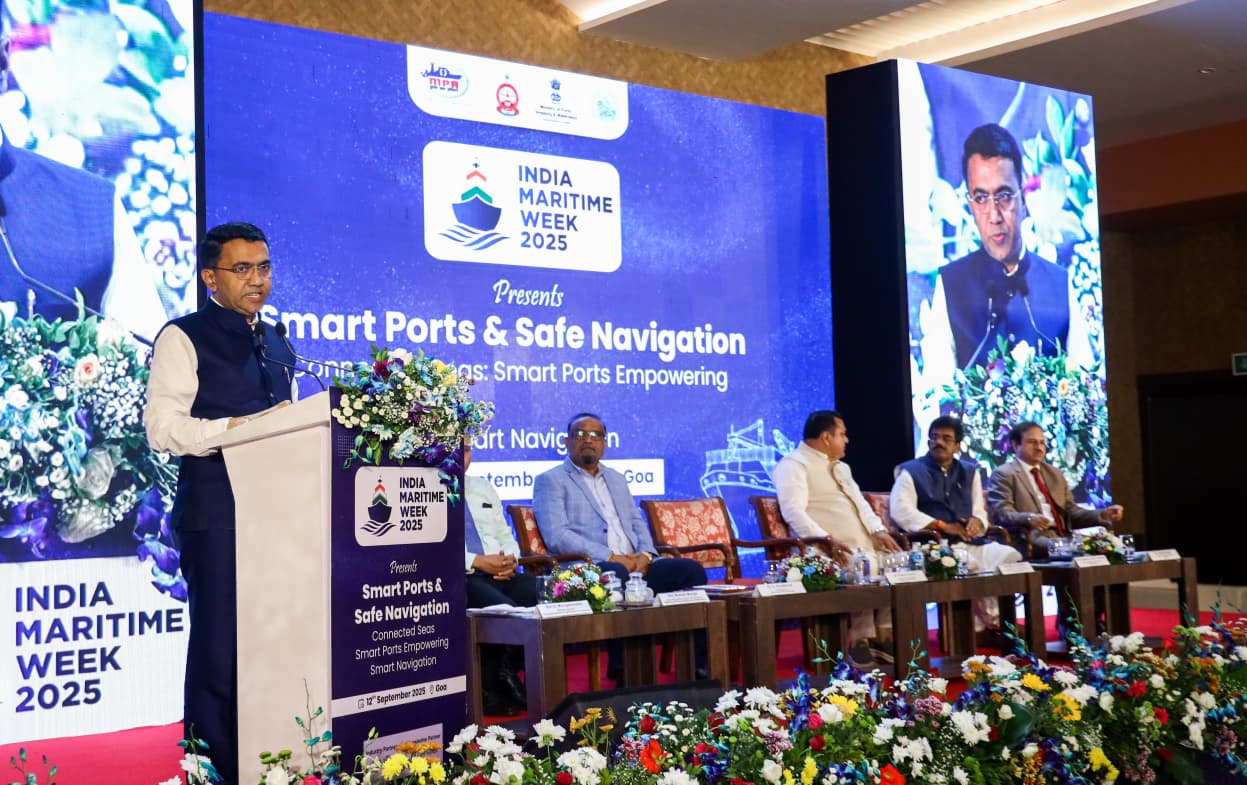
GOA: The Directorate General of Lighthouses and Lightships (DGLL) along with the Mormugao Port Authority (MPA) under the egis of The Ministry of Ports, Shipping and Waterways (MoPSW) and Indian Ports Association (IPA), successfully concluded a landmark roadshow in Goa on Friday (12 September 2025), marking a significant milestone in the lead-up to India Maritime Week 2025. The event, themed “Smart Ports & Safe Navigation: Connected Seas – Smart Ports Empowering Smart Navigation,” brought together maritime industry leaders, government officials, and technology experts at the Taj Cidade De Goa Heritage in Panaji. The Knowledge Partner of IMW 2025, Grant Thornton Bharat LLP (GT) along with the roadshow industry Partner PHD Chamber of Commerce and Industry (PHDCCI) played a pivotal role in the success of the event.
Dr. Pramod Sawant, Hon’ble Chief Minister of Goa
The roadshow was graced by Dr. Pramod Sawant, Hon’ble Chief Minister of Goa, who served as the Chief Guest. In his address, Dr. Sawant emphasized Goa’s maritime renaissance over the past five years, highlighting the modernization of Mormugao Port, development of inland waterways, and the upcoming state-of-the-art cruise terminal.
Addressing the gathering, CM said, “Goa is entering a new era of development—one that brings meaningful jobs and opportunities for our people. The transformation of the maritime sector will be a key driver, with increased cargo movement through Mormugao Port and a thriving cruise tourism industry contributing significantly to our economy. The revamped port is opening new doors for Goans, and the theme of this event could not be more timely.”
He added, “Goa remains fully committed to the growth of the state, the preservation of our environment, and to fostering long-term partnerships. We will continue to provide support at every stage of this journey. I urge leaders in the maritime sector and industry partners to come forward and contribute to this transformative vision.”
CM further said, “India Maritime Week 2025 will be a global event—an important leap toward Viksit Bharat. As India moves toward becoming a maritime leader, Goa stands as a proud and committed partner. Let this be a collective action, powered by the support of all stakeholders.”
A key highlight of the event was the panel discussion on “Smart Ports of the Future: How Digitization is Reshaping Global Maritime Trade,” moderated by Dr. Ranjit S. Patil from BITS Pilani Goa. The distinguished panel featured industry leaders including Shri Kiran Naik, Vice President – Head IT & Digital Solutions at JSW Infrastructure; Shri Pradeep Desai, Global Chief Technology Officer at DP World; Shri V J Christopher, Wireless Advisor at Department of Telecommunications; and Dr. D. Kumaran Raju, Principal Scientist at NTCPWC, IIT-M.
The panel deliberated on critical aspects of port digitization, including AI and machine learning integration, connectivity frameworks, cybersecurity challenges, and the role of emerging technologies like blockchain and IoT in redefining port operations.
Several distinguished guests including ministers addressed the gathering, outlining their commitment to maritime development.
Shri Mauvin Godinho, Hon’ble Minister for Transport & Industries, Trade and Commerce
Shri Mauvin Godinho, Hon’ble Minister for Transport & Industries, Trade and Commerce, highlighted the state’s commitment to multimodal logistics corridors, green shipping practices, and supporting maritime technology startups.
“Global competitiveness has arrived in India’s maritime sector, and Goa is poised to lead from the front. With visionary leadership at Mormugao Port Authority and the full-scale utilization of our waterways, we now have immense scope to drive both cargo and tourist vessels—making Goa a true gateway to maritime growth.”
He added, “The maritime sector holds a pivotal role in India’s economic development. It is high time that the people of Goa and industry leaders come together to seize this opportunity. As a government, we are committed to acting as a catalyst—supporting infrastructure development and fostering collaboration across private and public sectors.”
He further said, “We are fortunate to have a vibrant youth force, and with their energy, combined with institutional support, success is within reach. Just as India has made remarkable strides in the space sector, we must now channel our efforts to elevate maritime to that level of excellence.”
Goa is a land of possibilities. With heart and soul, and the support of all stakeholders, we can shape a maritime future that is bold, inclusive, and globally competitive.”, the Minister added.
Shri Sadanand Shet Tanavade, Hon’ble MP (Rajya Sabha), emphasized the importance of community engagement and inclusive growth in maritime development. He highlighted recent achievements including the restoration of the Air India Goa-London Gatwick flight and stressed the need for resilient, sustainable port infrastructure.
The event was jointly organized by Mormugao Port Authority (MPA) and the Directorate General of Lighthouses and Lightships (DGLL), with PHDCCI serving as the industry partner. Dr. N. Vinodkumar, Chairperson of MPA, delivered the welcome address, showcasing MPA’s smart port initiatives including SAP-based digital platforms, RFID access control systems, and advanced Vessel Traffic Management Systems.
Shri N. Muruganandam, Director General of DGLL, highlighted the organization’s extensive network of 203 major lighthouses, advanced navigation aids, and the National Automatic Identification System comprising 87 shore stations. He emphasized DGLL’s commitment to ensuring maritime safety across India’s 7,500-kilometer coastline.
The technical session featured four specialized presentations covering Goa State Maritime Master Plan, AI and Big Data applications in Vessel Traffic Management Systems, future Aids to Navigation technologies, and space-based AIS for maritime use cases.
Looking Ahead to IMW 2025
This roadshow serves as a crucial precursor to the India Maritime Week 2025 for which Grant Thornton Bharat LLP are the knowledge partners. The event is scheduled from October 27-31, 2025, in Mumbai at the NESCO Exhibition Centre. IMW 2025 is expected to witness participation from over 100 countries, 10,000 delegates, 500 exhibitors, and 1,00,000 attendees, making it a landmark event in the global maritime calendar.
The Goa roadshow successfully demonstrated the collaborative spirit between central and state governments, industry stakeholders, and academic institutions in driving India’s maritime transformation. The event reinforced India’s commitment to becoming a global maritime powerhouse through smart technology adoption, sustainable practices, and inclusive growth strategies.
The roadshow concluded with networking sessions that facilitated meaningful dialogue between government officials, industry leaders, and maritime professionals, setting the stage for continued collaboration toward achieving India’s maritime ambitions in the Amrit Kaal vision leading to 2047.
GANDHIDHAM : Deendayal Port Authority Kandla, in Gujarat is expected to become the first major port in India to expand into other states. Currently the port authorities are engaged in high-stakes negotiations for taking over operations of strategic port terminals across Gujarat, Maharashtra and Karnataka.
“We are in active discussions with certain ports in Maharashtra and Karnataka. We are also in talks with Gujarat Maritime Board to take over and collaborate on some part of their business and run it in an efficient manner by replicating our operations at Kandla,” said a senior official from Deendayal Port Authority (DPA) in Kandla on conditions of anonymity.
“We are looking to expand our footprint by subsuming some terminals in some of the ports in these states,” the official said that DPA was looking to take over operations at these ports. Last year Kandla handled over 150 million tonne of cargo and stood as the second largest major port in terms of volumes in the country missing the top slot to Paradip for a second consecutive year. When asked if DPA was looking to take over operations of terminals in government or privately held ports, the official said, “We are ownership agnostic. We can go for government or private ports.”
Talking about the advantages of the expansion, the official said, “We will be able to generate more throughput. The same time we will also be able to replicate the best practices and thirdly it will help in decongestion.” While 60 per cent of the total cargo handled by Kandla is petroleum, oil and lubricants (POL), the port also handles 70 per cent of India’s salt exports, 90 per cent of India’s timber imports, foodgrains, edible oil, chemicals and containers.
DPA is already in the process of setting up a deep draft multicargo berth that will handle 18 million tonne per annum (18MTPA) of dry bulk, project cargo and break-bulk cargo at Kandla. It is also constructing a new 2.3 million TEUs container berth at Kandla under the PPP mode which is expected to be commissioned around September 2027.
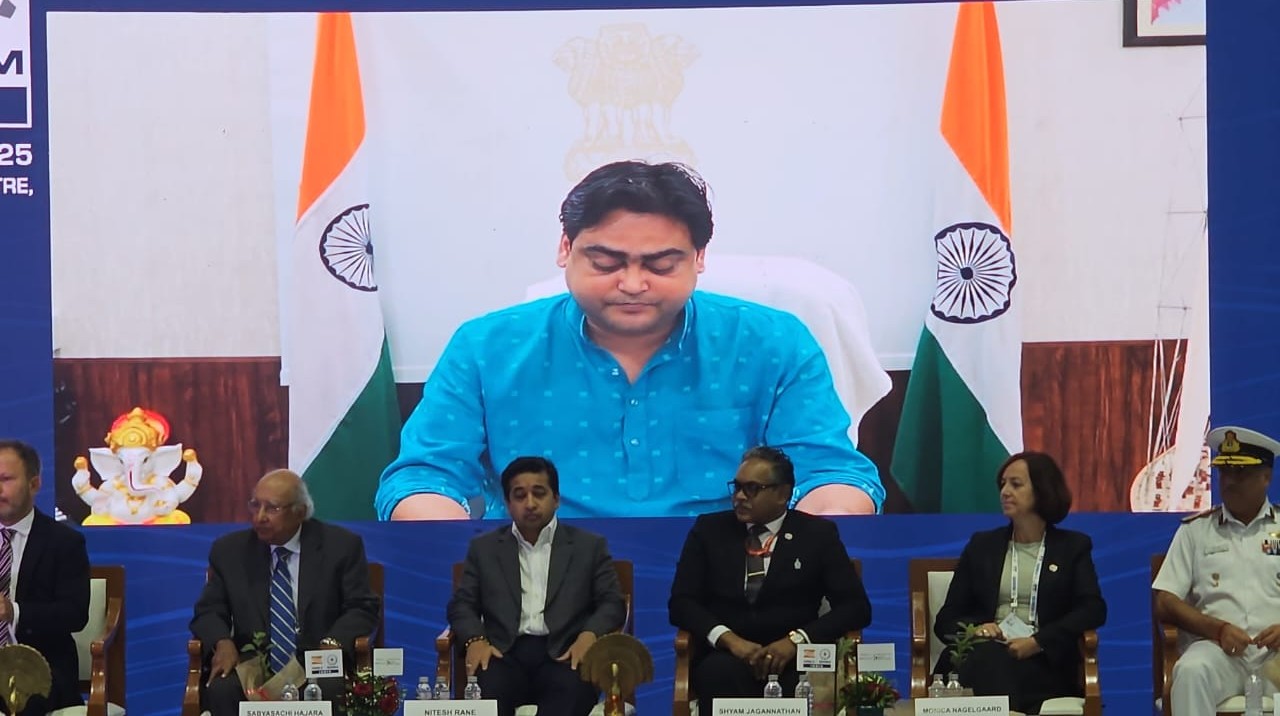
MUMBAI : Informa Markets in India, successfully hosted the 14th edition of INMEX SMM India 2025, South Asia’s premier maritime event at the Bombay Exhibition Centre, Mumbai. The show runs from 10th to 12th September 2025, bringing together global and domestic maritime stakeholders under the central theme “Building India’s Blue Economy: Shipbuilding & Repair as Growth Drivers”. With 250+ leading maritime brands, 20+ international pavilions, 80+ expert speakers, and 9,000+ visitors, INMEX SMM India 2025 continues to serve as a catalyst for knowledge exchange, strategic collaborations, and sustainable growth in South Asia’s maritime ecosystem.
The event was inaugurated in the presence of esteemed guests including Shri Nitesh Rane, Hon’ble Minister of Fisheries & Ports Development, Government of Maharashtra; Shri. Shantanu Thakur, Hon’ble Minister of State, Ministry of Ports, Shipping and Waterways, Govt of India; Shri Shyam Jagannathan, Director General of Shipping, Ministry of Ports, Shipping and Waterways; Mr. Sabyasachi Hajara, Chairman, INMEX SMM India Advisory Board; Inspector General Bhisham Sharma, PTM, TM, Commander, Indian Coast Guard Region (West); Ms. Monica Nagelgaard, Consul General, Royal Norwegian Consulate General Mumbai; Mr. Ulas Boyaci, COO Exhibitions, Hamburg Messe und Congress GmbH and Mr. Yogesh Mudras, Managing Director, Informa Markets in India.
Shri Nitesh Rane, Hon’ble Minister of Fisheries & Ports Development, Govt of Maharashtra, said “Shipbuilding and repair have historically shaped maritime powers, and today more than 95% of global shipbuilding is concentrated in Asia, led by China, Korea, and Japan, with India’s share still less than 1%. Guided by the Maritime India Vision 2030 and the Maritime Amritkal Vision 2047, India has set clear ambitions—to be among the top 10 shipbuilding nations by 2030 and the top 5 by 2047. The Government of India has reinforced this mission with initiatives such as the ₹25,000 crore Maritime Development Fund, the Shipbuilding Financial Assistance Policy 2.0 extended till 2036, incentives for green fuel vessels, infrastructure status for shipyards, and the right of first refusal for Indian-built ships. Maharashtra, as the gateway of India’s maritime trade with 877 km of coastline, two major ports, 16 non-major ports, and the upcoming Vadhavan Port, has taken a pioneering step by introducing India’s first Shipbuilding, Ship Repair, and Ship Recycling Policy 2025. The policy aims to contribute one-third of India’s shipbuilding and repair targets under MIV 2030 and MAKV 2047, with six planned shipyard clusters at Dighi, Jaigarh, Dabhol, Vijaydurg, Nandgaon, and Bankot, along with 11 stand-alone shipyards at strategic coastal locations. Key features include a 15% capital subsidy on project costs during execution, fiscal stimulus of up to ₹5 crore or 60% of project costs for infrastructure, R&D, and upskilling, and ₹1 crore or 50% of annual costs for workforce recycling and training. This framework is expected to unlock investments of over ₹18,000 crore and create more than 1.4 lakh jobs by 2047. Complementing this, the state is also advancing initiatives such as policy frameworks for land management and waterfront allotment, DPRs for passenger water transport in the Mumbai Metropolitan Region, and techno-economic feasibility studies for shipyard clusters.”
Shri. Shantanu Thakur, Hon’ble Minister of State, Ministry of Ports, Shipping and Waterways, Govt of India, said“The Government of India, through the Ministry of Ports, Shipping and Waterways and the Directorate General of Shipping, is committed to positioning India as a new hub for shipbuilding. The nation has a clear goal of ranking among the top 10 maritime nations by 2030 and among the top 5 by 2047. Shipbuilding and repair will serve as vital growth engines of India’s blue economy, generating employment, enhancing global competitiveness, and driving sustainability through green shipping initiatives and modernized infrastructure.”
Shri Shyam Jagannathan, Director General of Shipping, Ministry of Ports, Shipping and Waterways, said “India’s strong economic momentum is evident with a GDP of 4.2 trillion dollars today and projections reaching between 26 and 35 trillion dollars in the coming decades. While the maritime sector currently contributes 4% to India’s GDP and just 1% of global tonnage, the vision is to raise its share to 12% of national GDP and advance from the 16th position globally to the 5th by 2047. Indian seafarers already represent 12% of the global workforce, with a goal to expand this to around 25%, making shipbuilding and repair central to this transformation. The government is strongly supporting this ambition through initiatives such as the Shipbuilding Finance Assistance Scheme, the Maritime Development Fund, shipbuilding and repair clusters, a national shipbuilding mission, the Shipbreaking Credit Note scheme, and upfront subsidies of up to 30 percent for non-conventional builds. Under Maritime India Vision and Amrit Kaal Vision, India is firmly on course to emerge as a global maritime superpower.”
Mr Sabyasachi Hajara, Chairman, INMEX SMM India Advisory Board, said“The Government of India has taken unprecedented measures to boost the maritime sector, including the establishment of a $3 billion Maritime Development Fund, with nearly 45% earmarked for shipbuilding and ship repair, and 20% for building Indian tonnage, alongside investments in port infrastructure and coastal shipping. While India currently accounts for about 1% of global tonnage with around 18 million deadweight and ranks 16th globally, these initiatives are expected to help the nation move into the top 10 maritime powers. Similarly, though India’s share in the $200 billion global shipbuilding industry is under 1%, the country is making remarkable strides in building green ships, reflecting its commitment to sustainable growth and global competitiveness.”
Inspector General Bhisham Sharma, PTM, TM, Commander, Indian Coast Guard Region (West), said “With 11,000 kilometers of coastline, 1,300 islands, and a 2.3 million square kilometer exclusive economic zone, India’s vast maritime domain presents both immense opportunities and complex challenges, including piracy, smuggling, and environmental risks. As the fourth-largest Coast Guard in the world, the Indian Coast Guard has consistently safeguarded these waters—saving lives, averting ecological disasters through firefighting operations, and neutralizing narcotics consignments—true to its motto Vayam Rakshamah, We Protect. In this backdrop, INMEX SMM India emerges as a strategic platform, aligning operational imperatives with innovations in unmanned systems, AI-enabled surveillance, pollution mitigation, and advanced communication networks, while complementing the Hon’ble Prime Minister’s Amrit Kaal vision for advancing India’s blue economy.”
Ms Monica Nagelgaard, Consul General, Royal Norwegian Consulate General Mumbai, said, “Norway leads globally in maritime innovation, from LNG-powered vessels to battery, hydrogen, ammonia, and methanol technologies. India, with its extensive coastline, growing fleet, and trillion-dollar maritime investment plans, is a key partner in advancing the green transition. The India–EFTA Trade and Economic Partnership Agreement will further strengthen the synergy between Norway’s innovation and India’s scale, talent, and ambition, setting new benchmarks for sustainable maritime growth.”
Mr Ulas Boyaci, COO Exhibitions, Hamburg Messe und Congress GmbH, said “INMEX SMM India has established itself as South Asia’s premier maritime exhibition and conference, held in alternate years with SMM Hamburg, the world’s leading maritime trade fair. This year’s edition highlights a remarkable European presence with the Greek pavilion featuring 8 exhibitors, the Netherlands debuting with 10 specialized exhibitors, and Germany showcasing its largest-ever participation in India with eighteen exhibitors supported by the Federal Ministry of Economic Affairs and Energy. Together, these initiatives reflect the growing strength of Europe–India collaboration and reinforce a shared commitment to innovation, sustainable growth, and long-term maritime partnerships.”
Speaking at the inauguration of INMEX SMM India, Mr. Yogesh Mudras, Managing Director, Informa Markets in India, said “India’s maritime sector is steadily emerging as a cornerstone of the nation’s growth story, with shipbuilding and repair positioned as pivotal drivers of the Blue Economy. A key enabler of this transformation is the increasing private sector participation, supported by progressive policies such as 100% FDI under the automatic route in shipping and shipbuilding. Public-private partnerships are also playing a defining role, with the government’s USD 82 billion investment plan to expand port capacity by 2035 marking a decisive step toward modernizing infrastructure. Simultaneously, India’s active participation in global initiatives such as the India-Middle East-Europe Economic Corridor (IMEC) highlights its growing importance in securing strategic access to global trade routes and strengthening its role in the Global South.”
Industry Overview
India’s maritime and shipping sector is witnessing significant momentum, driven by strong policy support and rising investments. The Union Budget 2025–26 extended the Shipbuilding Financial Assistance Policy (SBFAP) 2.0 with an outlay of Rs. 18,090 crore (US$ 2.08 billion), providing subsidies to Indian shipyards to reduce costs and enhance domestic competitiveness.
To strengthen Inland Water Transport (IWT), the government introduced the “Jalvahak” Cargo Promotion Scheme in December 2024, offering 35% reimbursement on operational costs and initiating scheduled cargo services along key national waterways. In parallel, Sagarmala 2.0 has been launched with Rs. 40,000 crore (US$ 4.64 billion) support to drive shipbuilding, repair, breaking, and recycling, aiming to attract Rs. 12 lakh crore (US$ 139.11 billion) in investments over the next decade.
Additionally, in FY25, 962 acres of land were allocated for port-led industrialization, with potential to generate Rs. 7,565 crore (US$ 887.80 million) and future investments. Reflecting this progress, India’s maritime freight market, valued at USD 34.90 billion in 2024, is projected to reach USD 50.70 billion by 2033, growing at a CAGR of 3.80% during 2025–2033.
Strong Industry & Association Support
The event is further strengthened by the support of leading industry bodies, including the Shipyard Association of India, International Ship Engineering Service Association (ISES), Institute of Marine Engineers India, Foreign Owners Representatives and Ship Managers Association (FOSMA), Indian National Shipowners’ Association (INSA), Emirates Shipping Association, Netherlands Maritime Technology, VDMA Power Systems, the Maritime Association of Shipowners, Ship Managers and Agents (MASSA), the Busan Chamber of Commerce and Industry, Enterprise Greece, and HEMEXPO—highlighting the platform’s credibility and industry-wide reach. Key exhibitors participating are Chowgule & Company (SBD), Colombo Dockyard Ltd, Marine Electrical, DYNAMICNORD GmbH, Volvo Penta, Wilhelmsen, Henkel, Synergy Shipbuilders, Class NK and many more.
A major highlight of INMEX SMM India 2025 is its three-day conference including the Maritime Leaders’ Forum and CTO Conclave addressing strategic growth, green shipping, automation, and AI. Dedicated sessions are also spotlighting skill development, seafarer wellness, and women in maritime leadership. On the exhibition floor, international pavilions from the Netherlands, Germany, Korea, and Greece, along with a Domestic Shipyard Pavilion, are showcasing advanced shipbuilding and repair capabilities. Adding to the momentum, the Maritime Excellence Awards are honouring industry stalwarts and change makers driving innovation, sustainability, and growth.