Home Blog Page 662

GRSE and IPRCL explore collaboration to strengthen India’s Logistics Network

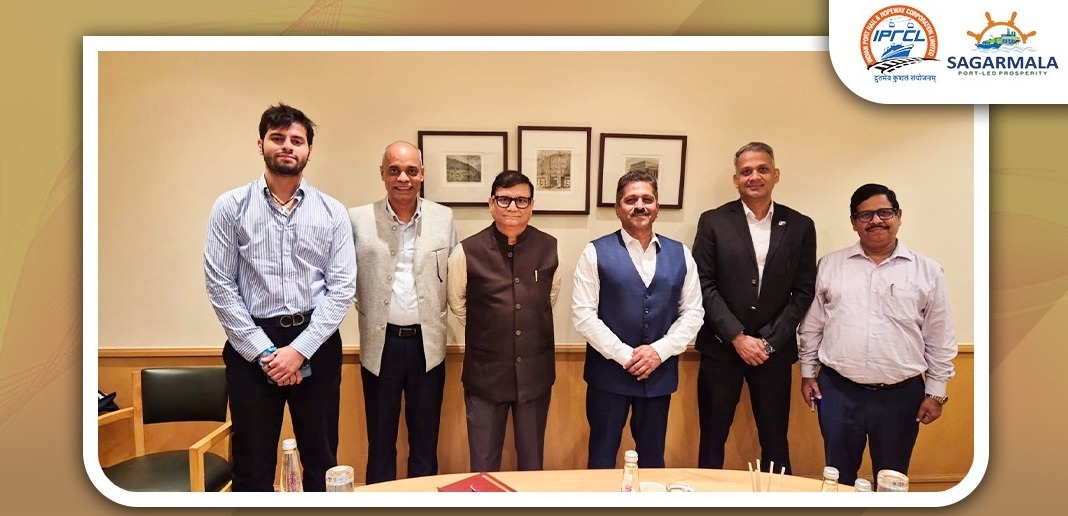
MUMBAI : In a move that could strengthen India’s integrated transport and logistics ecosystem, Commodore P.R. Hari (Retd.), Chairman and Managing Director of Garden Reach Shipbuilders & Engineers (GRSE), and Dr. M.K. Semwal, Managing Director of Indian Port Rail & Ropeway Corporation Ltd. (IPRCL), have come together to explore avenues of collaboration. The focus of their engagement is on improving last-mile rail connectivity, promoting multimodal transit, and modernising freight terminals, informs a communique.

Both GRSE and IPRCL bring complementary expertise to the table. While GRSE has been diversifying its role in infrastructure and logistics beyond its core shipbuilding operations, IPRCL has been at the forefront of strengthening port-rail linkages and multimodal connectivity across the country. Their collaboration aligns with national priorities under the PM Gati Shakti Master Plan, Sagarmala, and the National Logistics Policy, which seek to reduce costs, improve efficiency, and enhance India’s export competitiveness.

Although details of specific projects are yet to be formalised, the partnership is expected to pave the way for integrated solutions that address existing bottlenecks in freight movement. If successful, it could provide a major boost to India’s logistics future by ensuring seamless movement of goods through ports, rail, and inland corridors.

Croatia’s Rijeka Gateway Terminal marks official start of operations

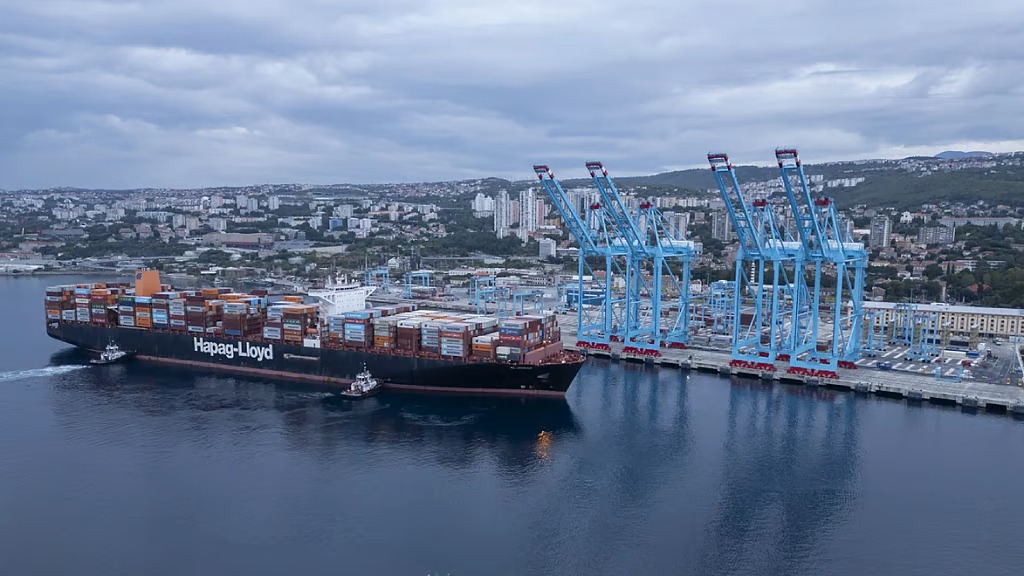
Following months of trial operations during the summer, the operational phase at the newly opened Rijeka Gateway Terminal at the Port of Rijeka in Croatia officially began with the arrival of its first commercial vessel earlier this week.

The first commercial vessel to berth at the terminal is Al Jasrah, a 368-metre container vessel operated by Germany’s Hapag-Lloyd. The ship arrived in Rijeka after having earlier departed Port Said in Egypt.

The Rijeka Gateway Terminal has been included in the Gemini Cooperation between Maersk and Hapag-Lloyd. Regular vessel calls are expected to strengthen Croatia’s connectivity to global supply chains and contribute to economic growth across the region.

Johan Sigsgaard, Chief Product Officer for Ocean at A.P. Moller – Maersk, said that the Rijeka Gateway Terminal offers direct access to Croatia and its hinterland, being strategically located on the country’s Adriatic coast.

The beginning of operations comes after two years of construction and equipping of the terminal, which represents the largest private investment in logistics in Croatia, being worth €380 million (US$450 million). This was the result of a joint venture between APM Terminals and Croatian logistics specialist the Enna Group.

In its first phase, the terminal features 400 metres of quay, a depth of 20 metres, and an annual capacity of 650,000 TEUs. Enna said that, after the planned expansion, this will grow to 680 metres of quay and a capacity of over one million TEUs.

Lloyd’s Register grants AiP for innovative VLGC with forward accommodation and wind-assisted propulsion

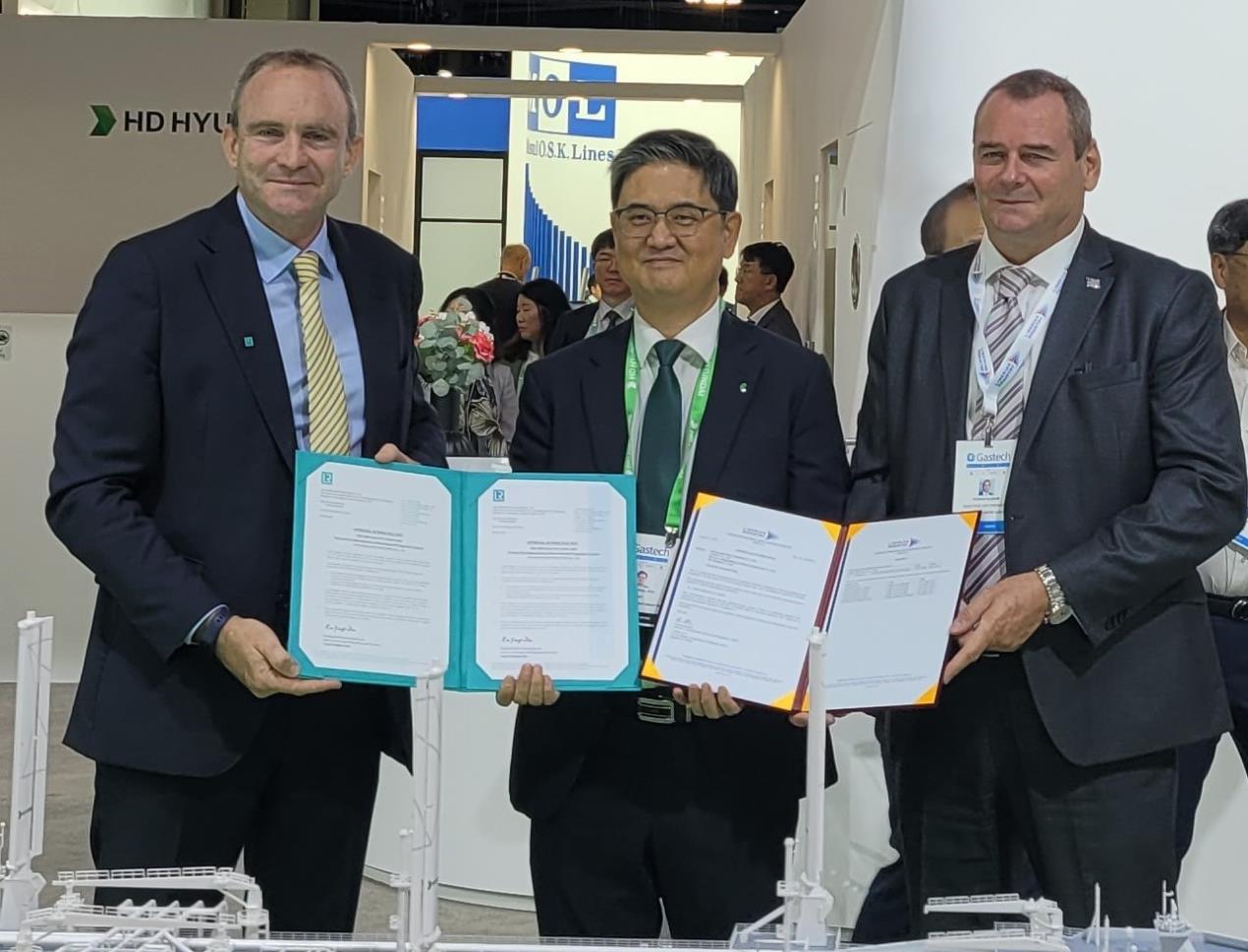
MILAN : Lloyd’s Register (LR) has awarded Approval in Principle (AiP) to HD Hyundai Heavy Industries (HHI) for a new Very Large Gas Carrier (VLGC) design that features a forward accommodation block and integration of wind assisted propulsion systems (WAPS). The announcement was made during a ceremony at Gastech 2025. 

By relocating the bridge and accommodation block to the bow, the vessel’s aerodynamic profile is dramatically improved, reducing headwind resistance and improving overall propulsion efficiency.  

The fore-deckhouse configuration also provides clear, unobstructed space from midship to the stern, allowing for optimised sail spacing and placement of WAPS technologies. This flexibility also supports integration of other sustainable technologies such as onboard carbon capture systems (OCCS), alternative fuel modules for ammonia or hydrogen, and battery energy storage systems. 

The AiP was awarded in collaboration with the Liberian International Ship and Corporate Registry (LISCR), whose involvement will support future regulatory alignment and flag approval pathways. 

Panos Mitrou, LR’s Global Gas Segment Director, said: “By rethinking traditional vessel architecture and embracing wind-assisted propulsion, this design shows how class, flag state, and industry can collaborate to enable practical, scalable solutions in line with GHG intensity ambition.” 

Hong-Ryeul Ryu, CTO and Executive Vice President at HHI, added:“This vessel concept is expected to become a future platform capable of flexibly responding to stringent environmental regulations.” 

Lloyd’s Register approves SHI’s next-generation SnapWind Float offshore wind design

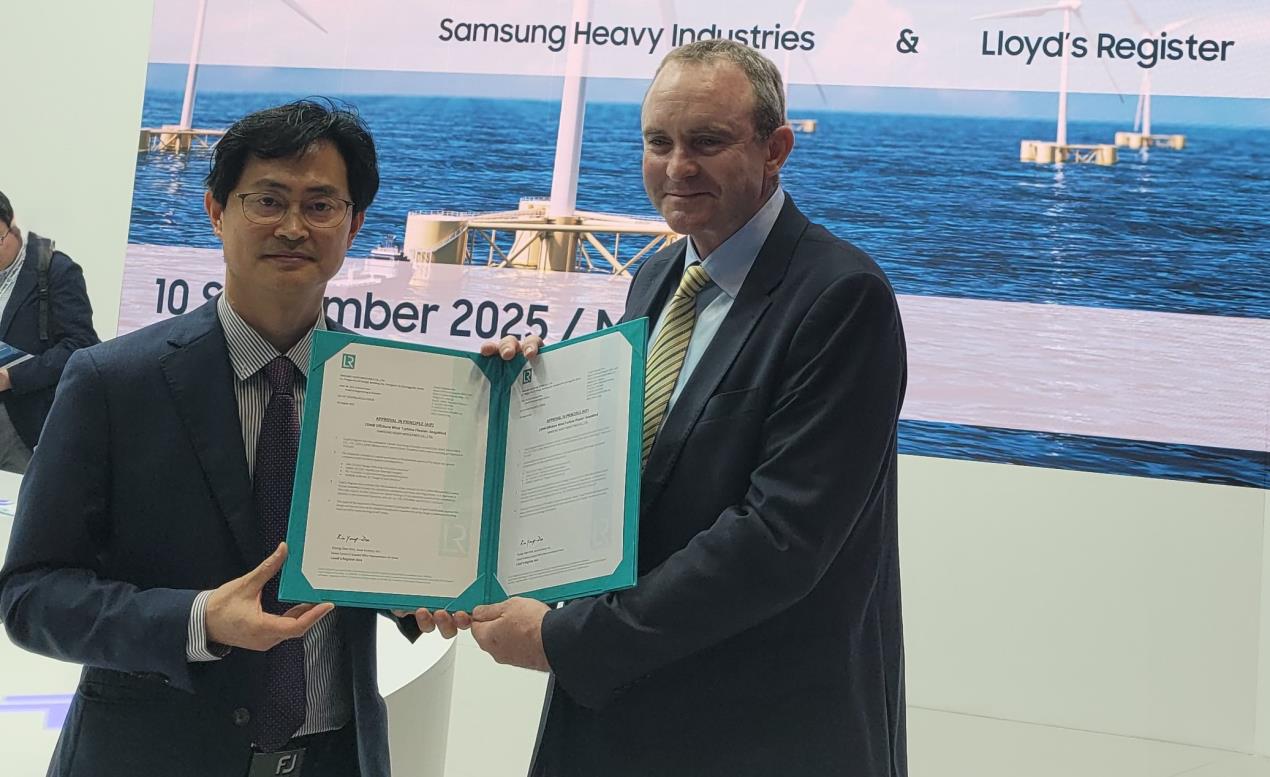
MILAN: Lloyd’s Register (LR) has granted Approval in Principle (AiP) to Samsung Heavy Industries (SHI) for its new Floating Offshore Wind Turbine (FOWT) design, SnapWind Float.  

Announced this week at Gastech 2025 in Milan, SnapWind Float has been developed to deliver floating wind solutions that can unlock deeper water sites and higher-capacity renewable energy sites worldwide. 

In addition, the SnapWind Float design is optimised for the development of floating offshore wind farms in regions where skilled workforce, heavy lifting equipment and sufficient workspace are limited. 

SHI’s engineering team completed the concept and basic design, while LR carried out a comprehensive review, in accordance with its rules and international standards, to verify the feasibility and safety of the design and clears the way for its progression towards commercial deployment. 

Sean van der Post, LR’s Global Offshore Business Director, said: “As the offshore wind industry seeks new solutions to unlock deeper waters and higher capacity sites, the SnapWind Float demonstrates significant progress toward establishing floating wind as a commercially sustainable solution at scale.” 

Hae-Ki Jang, Chief Technology Officer at Samsung Heavy Industries, said: “The SnapWind Float is designed to meet the challenges of offshore wind developers who require efficient and commercially viable solutions. Receiving AiP from Lloyd’s Register is an important milestone that validates our technology and supports the next stage of offshore wind development worldwide.” 

ClassNK issues Approval in Principle (AiP) for large liquefied CO2 carrier developed by DSOC and NODRI

TOKYO: ClassNK has issued an approval in principle (AiP) for a large liquefied CO2 carrier (50,000m3) jointly developed by Dalian Shipbuilding Offshore Co., Ltd. (DSOC) and Nantong Offshore Design & Research Institute Co. Ltd (NODRI). The certification confirms the feasibility of the vessel from regulatory and safety perspectives.

ClassNK reviewed the design concept of the vessel based on its ‘Rules and Guidance for the Survey and Construction of Steel Ships’, including Part N, which incorporates the IGC Code, an international code for the construction and equipment of ships carrying liquefied gases such as LCO2 and LNG in bulk. Upon confirming compliance with the prescribed requirements, ClassNK issued an AiP.

ClassNK will continually strive to contribute to advanced decarbonization initiatives through safety assessments and more.

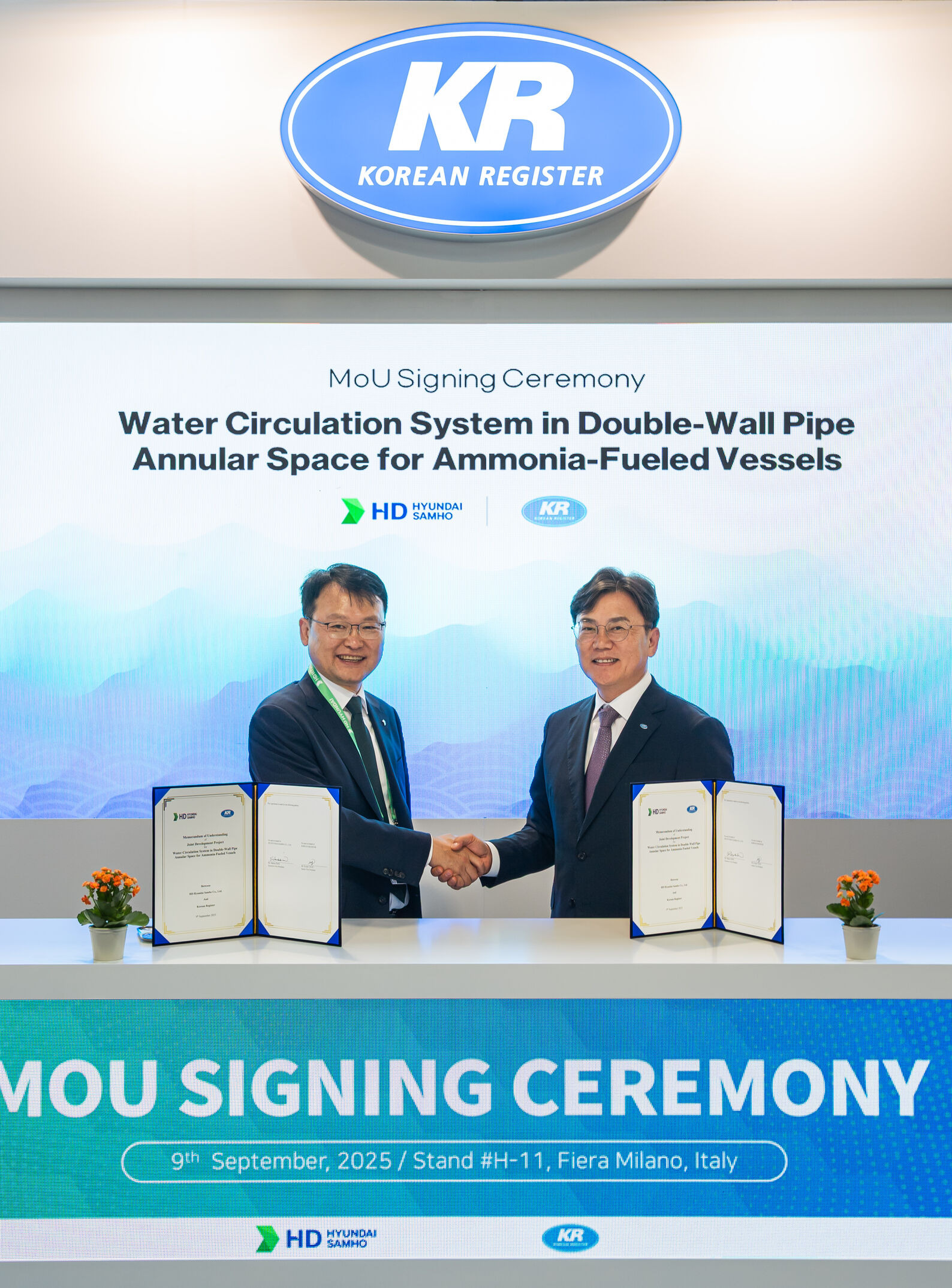
KR and HD Hyundai Samho launch Joint Development of Ammonia Fuel Piping Safety System

MILAN: KR (Korean Register) signed a Memorandum of Understanding (MoU) with HD Hyundai Samho on September 9 at Gastech 2025 in Milan, the world’s largest gas and energy exhibition. The two companies will jointly develop a water circulation system for the double-wall pipe annular space of ammonia-fueled vessels, aiming to enhance the safety of next-generation ships powered by ammonia.

Ammonia is drawing attention as a next-generation carbon-free fuel, but its toxicity and corrosiveness have raised critical safety concerns in ship design and operation. In particular, practical measures to mitigate potential leakage risks in fuel piping have yet to be established, making effective safety measures urgently needed.

Ammonia fuel pipes are designed with a double-wall structure, leaving a ring-shaped annular space between the inner and outer pipes. This joint development project seeks to circulate freshwater through this space to enhance the safety of fuel supply piping and minimize potential leakage risks to the atmosphere during operation. Under the collaboration, HD Hyundai Samho will be responsible for system design and development, while KR will verify its safety.

Once completed, HD Hyundai Samho plans to apply the system to its ammonia-fueled ship designs and advance its commercialization. KR, for its part, intends to propose the need for relevant safety standards to the International Maritime Organization (IMO) and continue its role as a proactive contributor to international rulemaking on alternative fuels.

SHIM Hakmu, Executive Vice President of HD Hyundai Samho, said: “This joint development marks an important step in accelerating the transition to ammonia-fueled vessels. Through collaboration with KR, we will generate technological synergies and enhance our competitiveness in the global market.”

YEON Kyujin, Senior Vice President of KR, added: “With this partnership, we aim to secure key safety technologies for ammonia-fueled vessels at an early stage and lead the development of future international regulations. By working closely with shipbuilders such as HD Hyundai Samho, KR can bridge the gap between innovative design and safe, globally recognized standards.”

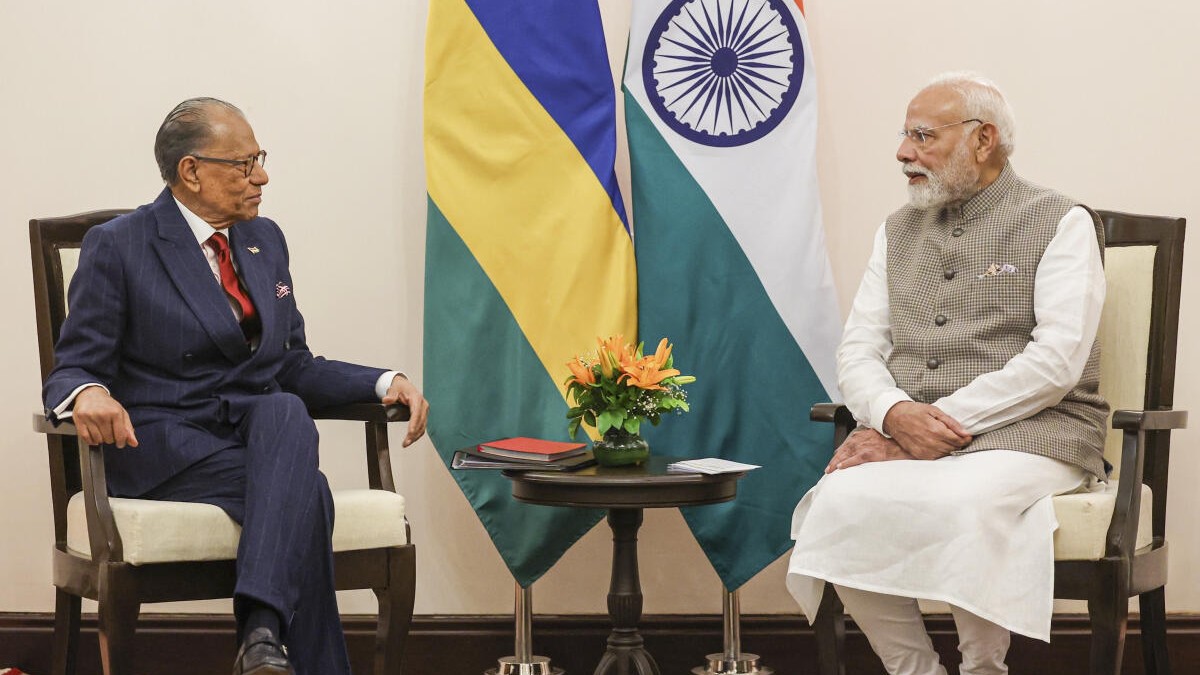
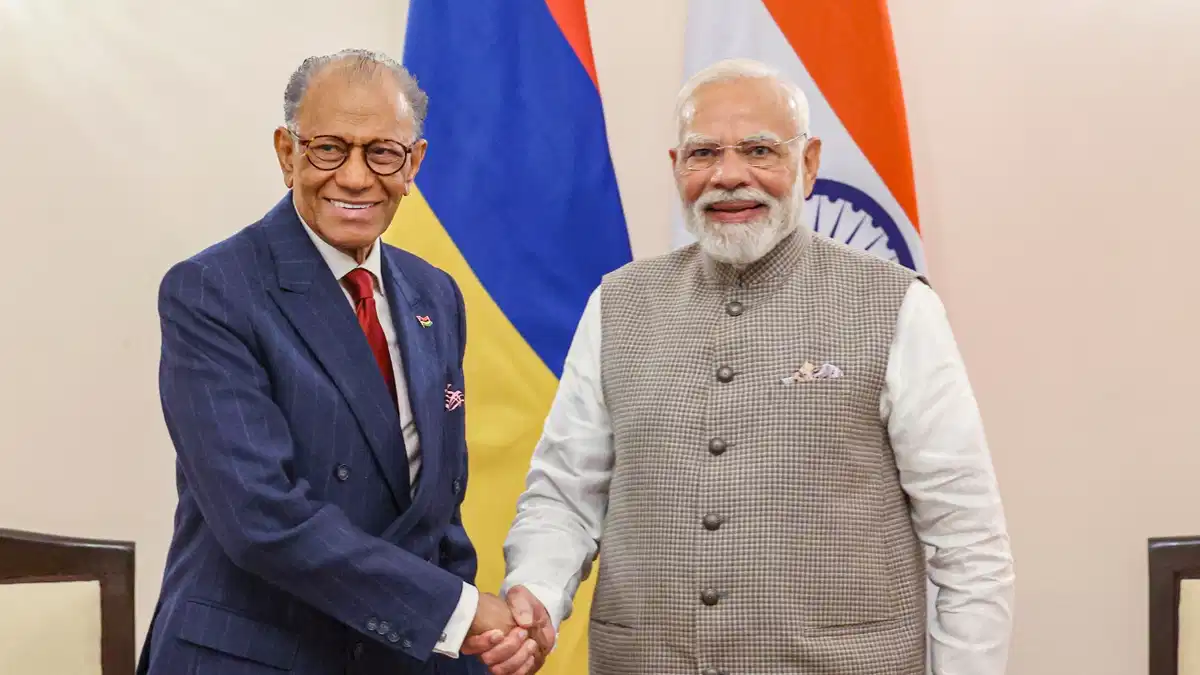
India, Mauritius to work towards facilitating bilateral trade in local currencies: PM Modi

VARANASI: India and Mauritius will work towards enabling bilateral trade in local currencies, Prime Minister Shri Narendra Modi said on Thursday after holding wide-ranging talks with his Mauritian counterpart Navinchandra Ramgoolam.

In his remarks to the media, Modi, delving into close ties between the two nations, said India and Mauritius are two countries, but their dreams and destiny are one.

The prime minister said that a free, open, secure, stable and prosperous Indian Ocean is a shared priority of both India and Mauritius.

“In this context, India is fully committed to strengthening the security and maritime capacity of Mauritius’ Exclusive Economic Zone,” he said.

“India has always stood as the first responder and a net security provider in the Indian Ocean region,” he added.

Modi also congratulated Ramgoolam and the people of Mauritius on the conclusion of the Chagos agreement, describing it as a “historic victory” for the island nation’s sovereignty.

“India has always supported decolonisation and the full recognition of Mauritius’s sovereignty. And in this, India has stood firmly with Mauritius,” he said.

In May, the United Kingdom decided to hand over the sovereignty of Chagos Islands, including tropical atoll of Diego Garcia, to Mauritius under a historic deal.

The UK is giving up the rights of the islands after more than 50 years.

Under the agreement, the UK will have full responsibility for security of strategically-located Diego Garcia.

Ramgoolam is currently on a state visit to India from September 9 to 16.

It is Ramgoolam’s first overseas bilateral visit to India in his present term.

Prime Minister Modi visited Mauritius in March.

India, Mauritius sign major agreements; over USD 680 million development package announced

VARANASI: India and Mauritius on Thursday deepened their strategic and developmental partnership with the signing of multiple agreements and the announcement of a comprehensive Special Economic Package exceeding USD 680 million.

The announcements came during the ongoing State visit of Mauritian Prime Minister Dr. Navinchandra Ramgoolam to India.

The two leaders, ahead of their joint press briefing in Varanasi, held wide-ranging discussions covering bilateral, regional, and global issues, culminating in the signing of seven Memorandums of Understanding (MoUs) across diverse sectors, including science and technology, oceanography, public administration, power, small development projects, hydrography, and space cooperation.

Key agreements included a space collaboration deal for the establishment of telemetry, tracking, and communication stations, and a renewed commitment to maritime research and hydrographic mapping.
In the education sector, MoUs were also announced between the Indian Institute of Technology, Madras and the University of Mauritius, as well as between the Indian Institute of Plantation Management, Bengaluru and the University of Mauritius.

Additionally, it was confirmed that NTPC Ltd. will soon send a team to Mauritius to finalise an agreement for the development of a 17.5 MW Floating Solar PV Project at Tamarind Falls.

A significant highlight of the visit was the India-Mauritius Joint Announcement of a Special Economic Package. On a grant basis, India has agreed in principle to fund the construction of a new Sir Seewoosagur Ramgoolam National Hospital, establish an AYUSH Centre of Excellence, develop a Veterinary School and Animal Hospital, and provide helicopters for various public uses. The estimated cost of these grant-based projects is approximately USD 215 million or MUR 9.80 billion.

On a grant-cum-line of credit basis, both countries have agreed to complete the construction of a new Air Traffic Control tower at SSR International Airport, develop Motorway M4 and Ring Road Phase II, and facilitate the acquisition of port equipment by the Cargo Handling Corporation Ltd. The combined estimated value of these projects is USD 440 million or MUR 20.10 billion.

Strategically, the two sides have also reached in-principle agreements on the redevelopment and restructuring of Mauritius’ main port and on Indian assistance for the development and surveillance of the Chagos Marine Protected Area. Additionally, India will provide Mauritius with USD 25 million in budgetary support for the current financial year.

The Indian government reaffirmed its consistent support for Mauritius’s sovereignty and development goals. Prime Minister Modi, during the press briefing, congratulated PM Ramgoolam on the recent progress regarding the Chagos Archipelago, calling it a historic victory for Mauritius’s independence and reiterating India’s longstanding support for decolonisation.

Prime Minister Ramgoolam expressed deep appreciation for India’s role in Mauritius’s progress, highlighting that the bilateral relationship is now rooted not only in historical ties but also in shared values, mutual respect, and a forward-looking development agenda.

The visit of Prime Minister Ramgoolam, which runs from September 9 to 16, continues to solidify India’s role as a trusted partner in Mauritius’s national development and regional stability.

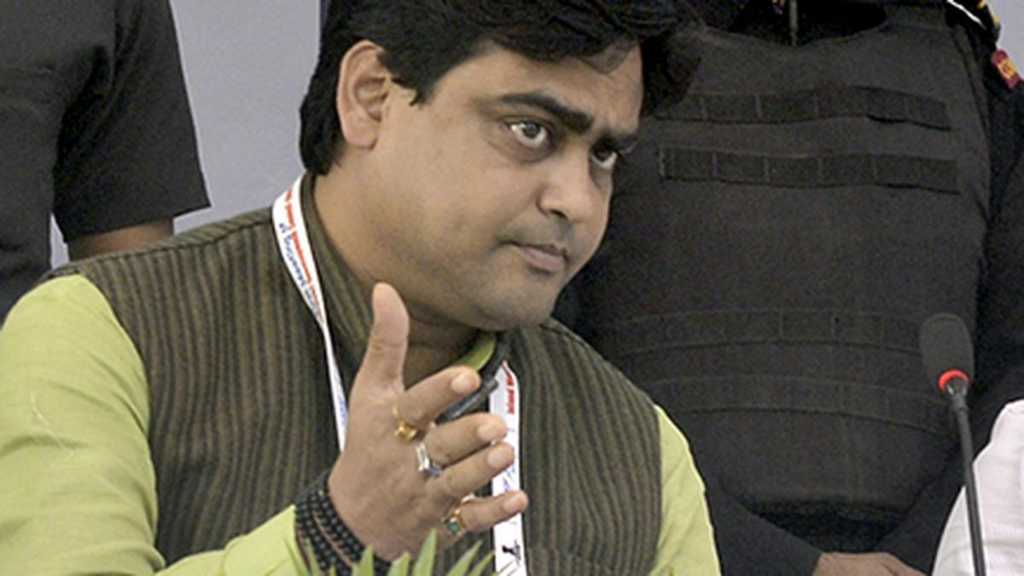
India poised to be among top 5 shipbuilding nations by 2047 : Shantanu Thakur

MUMBAI : With less than 1% share in global shipbuilding currently, India is on course to be among the world’s top five countries in this arena by 2047, according to the Centre. “The Government of India, through the Ministry of Ports, Shipping and Waterways and the Directorate General of Shipping, is committed to positioning India as a new hub for shipbuilding,” Shri Shantanu Thakur, Minister of State, Ministry of Ports, Shipping and Waterways, Government of India, said here on Wednesday.

“The nation has a clear goal of ranking among the top 10 maritime nations by 2030 and among the top 5 by 2047,” he said, while speaking at INMEX SMM India 2025, a maritime event organised by Informa Markets in India.

He said shipbuilding and repair would serve as vital growth engines of India’s ‘blue economy’, generating employment, enhancing global competitiveness, and driving sustainability through green shipping initiatives and modernised infrastructure.

“While the maritime sector currently contributes 4% to India’s GDP and just 1% of global tonnage, the vision is to raise its share to 12% of national GDP and advance it from the 16th position globally to the fifth by 2047,” said Shyam Jagannathan, Director General of Shipping, Ministry of Ports, Shipping and Waterways.

“Indian seafarers already represent 12% of the global workforce, with a goal to expand this to around 25%, making shipbuilding and repair central to this transformation,” he said.

He said the government was strongly supporting the ambition through initiatives such as the Shipbuilding Finance Assistance Scheme, the Maritime Development Fund, shipbuilding and repair clusters, a National Shipbuilding Mission, the Shipbreaking Credit Note scheme, and upfront subsidies of up to 30% for non-conventional builds.

“Under Maritime India Vision India is firmly on course to emerge as a global maritime superpower,” he emphasised.

Sabyasachi Hajara, Chairman, INMEX SMM India Advisory Board, said, “The Government of India has taken unprecedented measures to boost the maritime sector, including the establishment of a $3 billion Maritime Development Fund, with nearly 45% earmarked for shipbuilding and ship repair, and 20% for building Indian tonnage, alongside investments in port infrastructure and coastal shipping.”

“While India currently accounts for about 1% of global tonnage with around 18 million deadweight and ranks 16th globally, these initiatives are expected to help the nation move into the top 10 maritime powers,” he said.

“Similarly, though India’s share in the $200 billion global shipbuilding industry is under 1%, the country is making remarkable strides in building green ships, reflecting its commitment to sustainable growth and global competitiveness,” he added.

Speaking at the three-day industry event, Yogesh Mudras, Managing Director, Informa Markets in India, said, “India’s maritime sector is steadily emerging as a cornerstone of the nation’s growth story, with shipbuilding and repair positioned as pivotal drivers of the Blue Economy.”

“A key enabler of this transformation is the increasing private sector participation, supported by progressive policies such as 100% FDI under the automatic route in shipping and shipbuilding. Public-private partnerships are also playing a defining role, with the government’s $82 billion investment plan to expand port capacity by 2035 marking a decisive step toward modernizing infrastructure,” he added.

India’s first Green Methanol Bunkering & Refueling Facility Ground breaking ceremony initiated

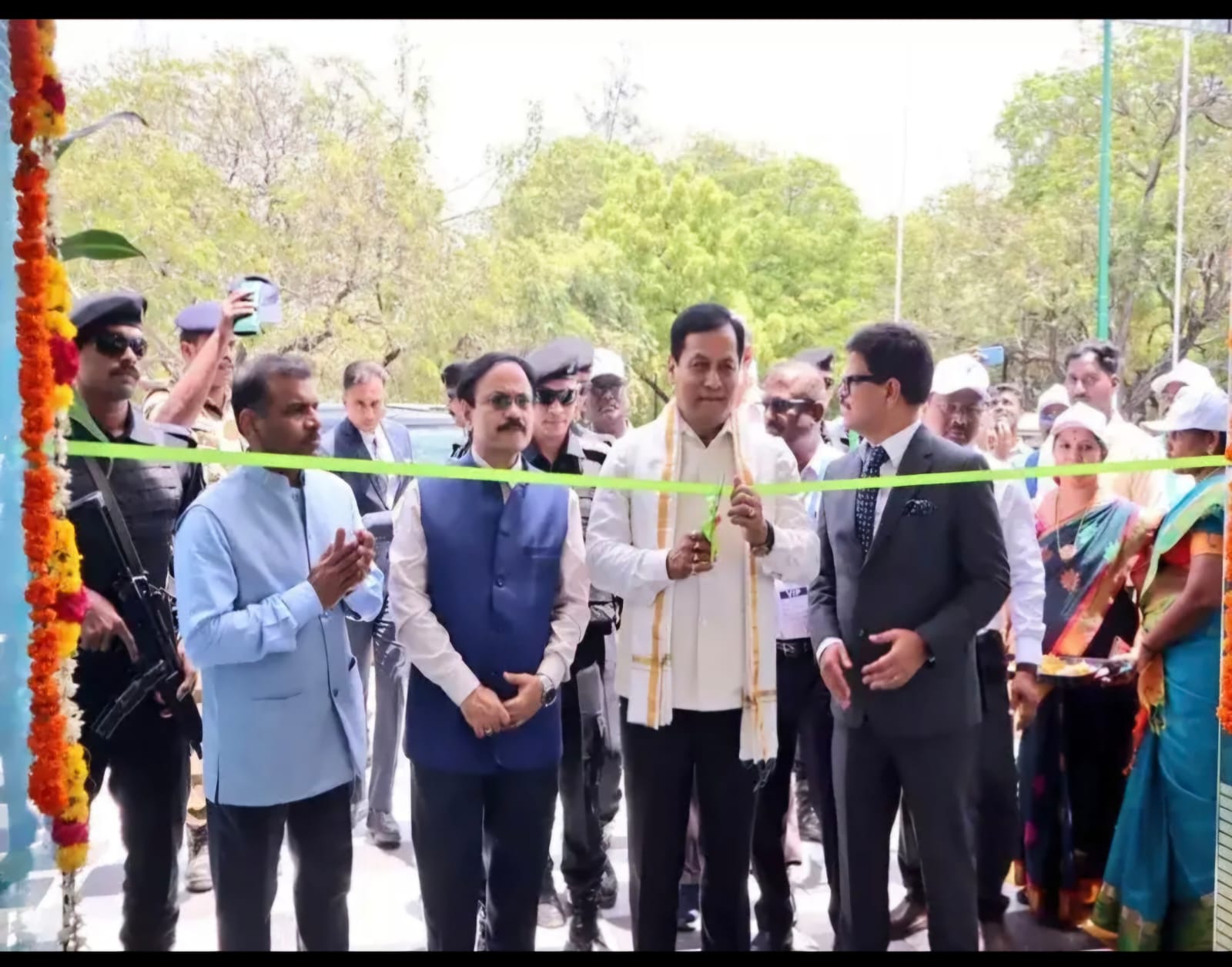
PUNE: Pune based SOPAN Group in collaboration with VOC Port Authority (VOCPA) laid the foundation for  India’s first Green Methanol Bunkering & Refueling Facility, a pioneering advancement in sustainable maritime infrastructure in the country

The landmark facility was inaugurated by Hon’ble Union Minister Shri Sarbananda Sonowal, under the aegis of the Ministry of Ports, Shipping and Waterways, representing a significant step towards decarbonizing Indian ports and supporting the country’s clean energy transition.

Project Highlights:

  •  Entire project executed by M/s SOPAN as the EPC Contractor
  • Development of a 750 m³ Green Methanol Storage & Bunkering Terminal
  • Construction of complete Storage Facility and Plant Infrastructure
  • Project delivered on a pilot basis
  • Delivered through a comprehensive EPC model

This green methanol facility aligns with India’s commitment to Net Zero emissions and the goals of Maritime India Vision 2030, promoting clean fuels and sustainable port development.

Shri Sarbananda Sonowal, the Honourable Union Minister for Ports, Shipping & Waterways laid the foundation stone for launching India’s first pilot scale port decarbonisation project focussing on Green Methanol as a fuel source for Shipping at the VO Chidambaranar Port Authority, earlier known as Tuticorin Port Trust on 5th September 2025. The project involves development of a 750 m³ Green Methanol Bunkering and Ship Refueling Terminal.

 Chairperson of VOCPA Shri Susanta Purohit said “The Govt of India has set a vision for India to achieve Net Zero by 2070. VOC Port in line with this vision is taking bold steps in advancing its Green Port mission and have successfully completed a pilot green hydrogen project. In our pursuit of sustainability and set global standards, VOCPA is establishing India’s first Green Methanol Bunkering & Refueling facility. VOCPA is pleased to partner with India’s SOPAN Group, an experienced player in the Green Energy ecosystem and EPC Projects.

Shri Aniruddha Kadvekar, the Director of SOPAN said, “Today, SOPAN is not just building a facility; we are laying the foundation for India’s green maritime future. By establishing the nation’s first dedicated Green Methanol Bunkering Hub at VOC Port Tuticorin, we are enabling a reduction of up to 95% in CO2 emissions for ships and positioning India as a key player in the global alternative fuel market. This marquee project is a testament to our ‘Make in India’ capabilities and a monumental leap towards Net-Zero, ensuring Indian ports become the preferred choice for sustainable shipping. We thank VOC Port Authority in reposing trust in us and Ministry of Ports, Shipping and Waterways for supporting this bold vision.